Biology - bioenergetics*
 Call Kai
 Learn
Learn Practice Test
 Spaced Repetition
 Match
Match Flashcards
 Knowt Play
1/72

There's no tags or description
Looks like no tags are added yet.
Name | Mastery | Learn | Test | Matching | Spaced | Call with Kai | Chat |
|---|
No analytics yet
Send a link to your students to track their progress
73 Terms
What are the parts of a leaf?
Waxy Cuticle
Palisade Mesophyll
Guard Cells
Upper and lower epidermis
Spongy Mesophyll
What is the waxy cuticle?
Waterproof layer which reduces water loss by evaporation, and acts as a a barrier to the entry of pathogens.
What is the upper epidermis?
A transparent layer of cells to let light through
What is the palisade mesophyll?
The part of the leaf where most photosynthesis takes place
What is the spongy mesophyll?
A part of the leaf that contains big air spaces to allow gases to diffuse in and out of cells
What is the lower epidermis?
Layer of cells on the bottom of the leaf with many pores called stomata which allow carbon dioxide to diffuse into the leaf.
What is the xylem?
tissue that transports water and dissolved minerals from the roots, up through the plant and out the leaf stomata in one direction
What is transpiration?
evaporation of water from plant leaves
What are guard cells?
cells that open and close the stomata
How does transpiration work?
● Water evaporates from the leaf surface via the stomata.
● Water molecules cohere (stick) together - more water is pulled up the xylem in an unbroken column.
● More water is taken up from the soil - creating a continuous transpiration stream.
What is the phloem?
tissue that transports dissolved products of photosynthesis in various direction around the plant
What is translocation
The movement of sugars through a plant in the phloem
How does translocation work?
1. Sugars are made in the leaves by photosynthesis.
2. These sugars are loaded into the phloem in the leaves (the source).
3. Water moves into the phloem by osmosis, creating a high pressure in the phloem at the source.
4. The sugary solution is pushed along the phloem tubes.
At parts of the plant that need sugars (the sinks, such as roots or fruits), sugars are unloaded from the phloem.
5. Water then moves out of the phloem, lowering the pressure.
- This movement from high pressure to low pressure is called mass flow.
What is a sink?
parts of the plant that need sugars such as roots or fruits
How are leaves adapted for photosynthesis?
- Leaves are broad,- they are thin so gases can diffuse quickly
- they have chloroplasts in the palisade layer to makinmies photosunthesis
- they have air spaces to allow for easy gas exchange
- they have stomata
Why are leaves broad?
so theres are large surface area exposed to light
How does transpiration work?
- water enters the plant through the root hairs by osmosis
- it travels up the xylem
- water moves from the roots into the stem and leaves
- the water evapourates from the surface of the messophyll cells and diffuses out of the stomata
- as water leaves the leaf, more water molecules are pulled up through the xylem due to cohesion
What is cohesion?
Attraction between molecules of the same substance
Why is transpiration important
- it helps transport water and minerals to the leaves
- it cools down the plant through evaporation
it keeps plant cells turgid
What factors affect the rate of transpiration?
Light intensity, temperature, humidity and wind
How does temperature affect the rate of transpiration?
- increasing the temperature increase teh rate of transpiration
- water evaporates more quickly, and the water molecules have more kinetic energy, meaning that they can move out of the stomata faster
How does wind speed affect the rate of transpiration?
- Wind increases the rate of transpiration by blowing away water vapour that accumulates around the leaf surface.
- By removing this moisture, wind maintains a steep concentration gradient between the wet interior of the leaf and the drier outside air, allowing water to diffuse out of the stomata more quickly.
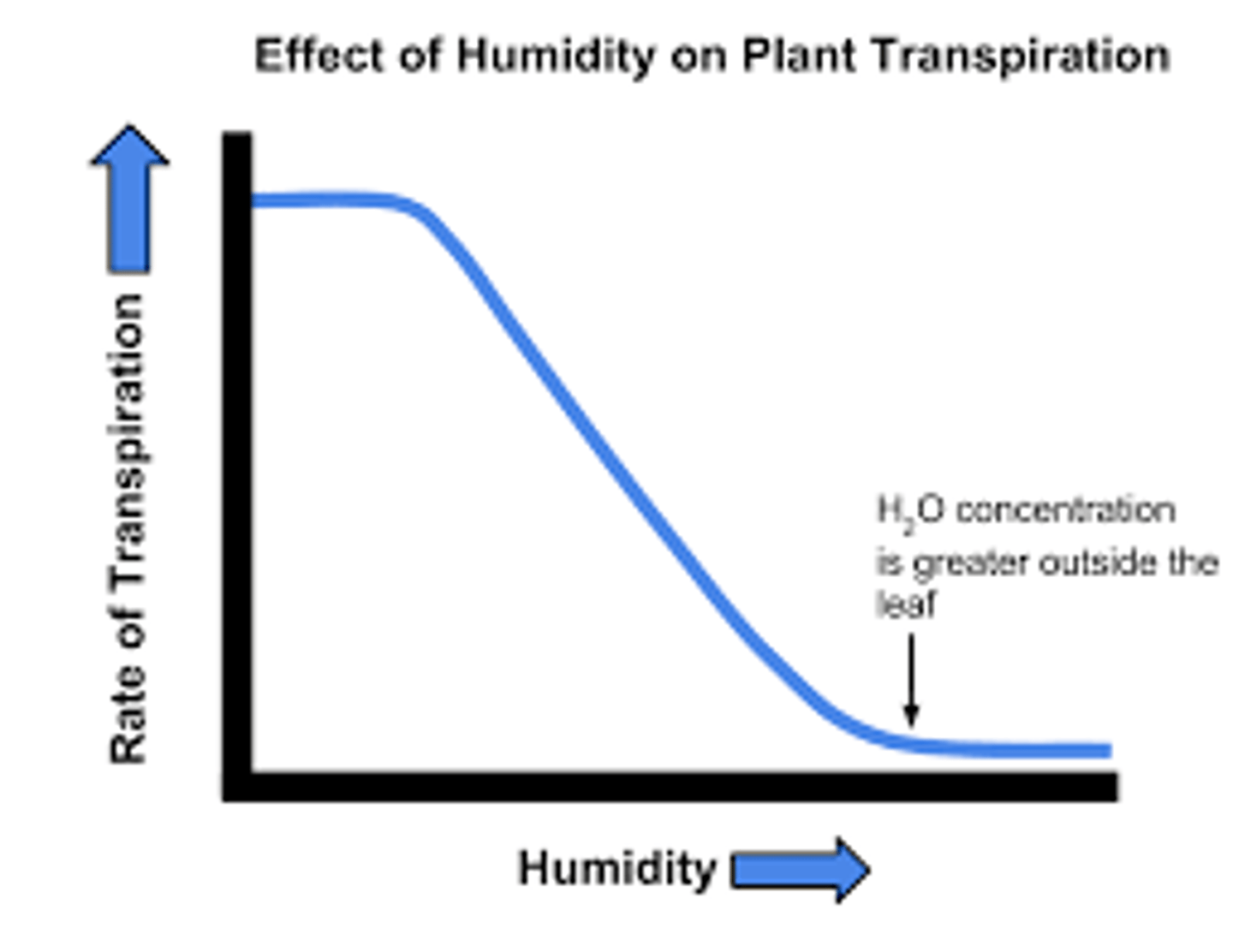
How does humidity affect the rate of transpiration?
High humidity decreases the rate of transpiration because it reduces the concentration gradient for diffusion
How does light intensity affect the rate of transpiration?
- Increased light intensity boosts the rate of transpiration by stimulating the stomata to open wider for photosynthesis, allowing more water vapour to escape
What are autotrops?
organisms that make their own food
How do autotrophs make their own food?
photosynthesis
Formula for photosynthesis
6H₂O + 6CO₂ + Light Energy → C₆H₁₂O₆ + 6O₂
water + carbon dioxide + light energy →glucose + oxygen
Why does photosynthesis need sunlight?
to provide energy for the reaction
Is photosynthesis an exothermic or endothermic reaction?
endothermic
What are the steps of photosynthesis?
1. light absorption
- Chorpyll absorbs sunlight. This provides the energy needed to power the reaction
2. The reactants enter teh leaf
3. glucose formation
How does CO2 enter the leaf?
through the stomata
How does water enter the leaf?
through the roots and is transported by the xylem
Why is photosynthesis important
- it produces energy for growth. Excess glucose is stored as starch
- it provides oxygen
- plants are at the base of the food chain, so it provides energy for all other organisms
what factors affect the rate of photosynthesis?
- light intensity
- carbon dioxide concentration
- temperature
- chlorophyll content
- water availability
- leaf health
- nutrient availability
How does light intensity affect the rate of photosynthesis?
- The brighter the light, the faster the rate of photosynthesis, because more energy is supplied to the plant
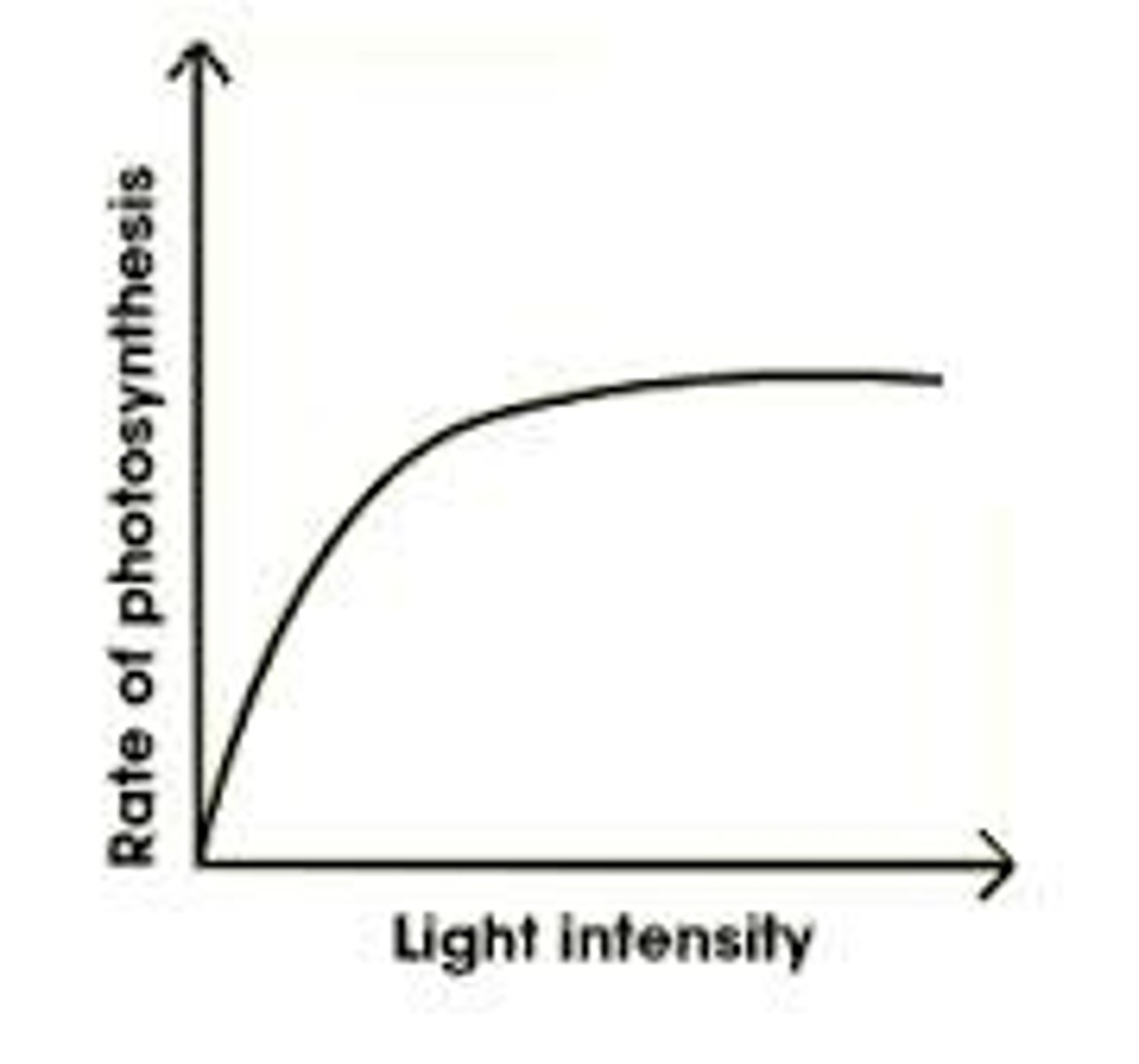
What is the light saturation point?
The point at which additional light does not lead to increased photosynthesis.
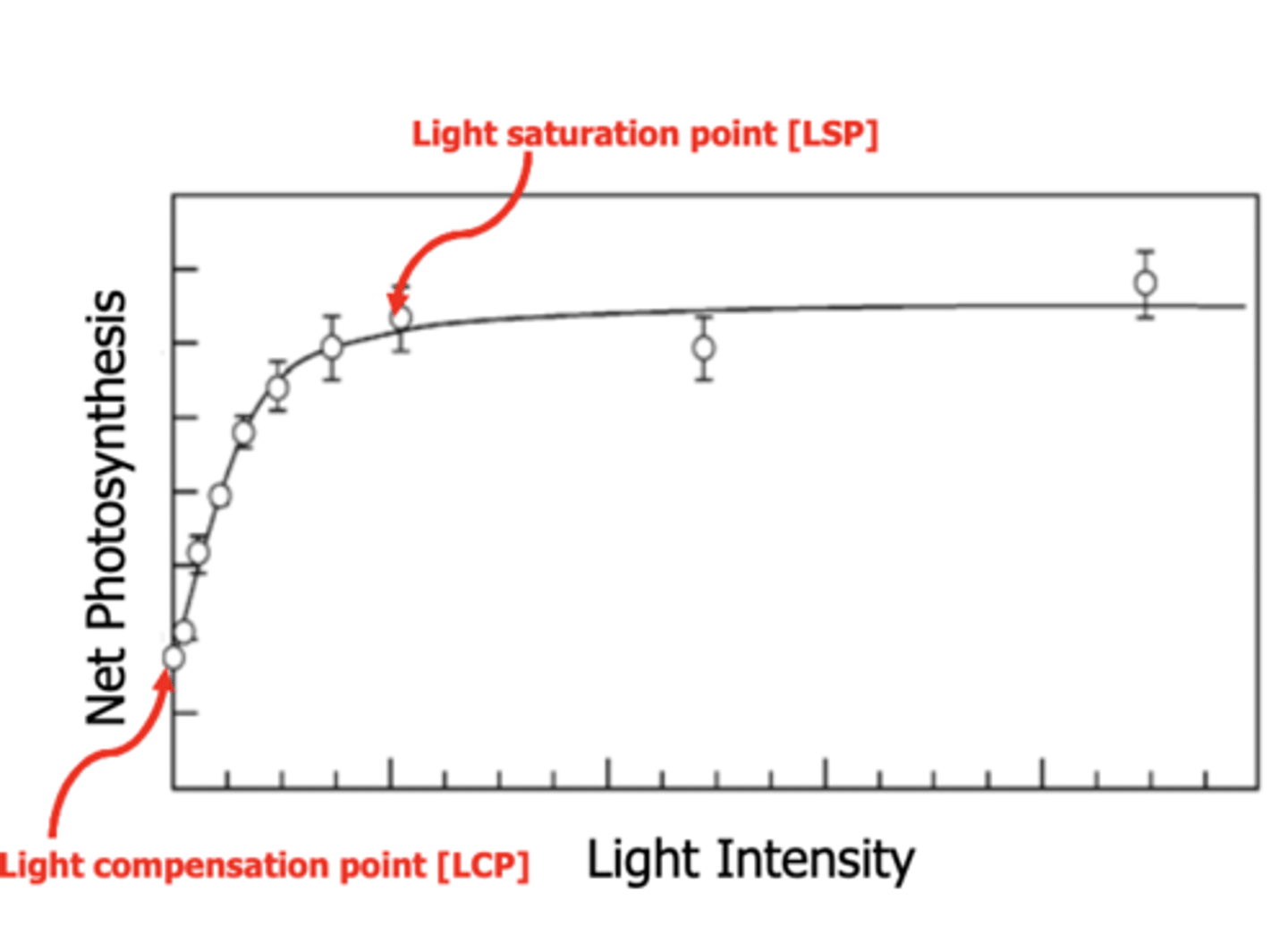
Why does the rate of photosynthesis eventually plateau even if light intensity continues to increase?
because other factors (like CO2 or temperature) become limiting
How does temperature affect the rate of photosynthesis?
- Increasing the temperature increases the rate because it increases the kinetic energy of the molecules, leading to more collisions between the enzymes and substrates
- Photosynthesis relies on enzymes, which have an optimal temperature range
- if it is too low, reactions slow down
- if it is too high, the enzymes will denature
How does carbon dioxide concentration affect the rate of photosynthesis?
Increasing carbon dioxide concentration increases the rate of photosynthesis because it is one of the reactants
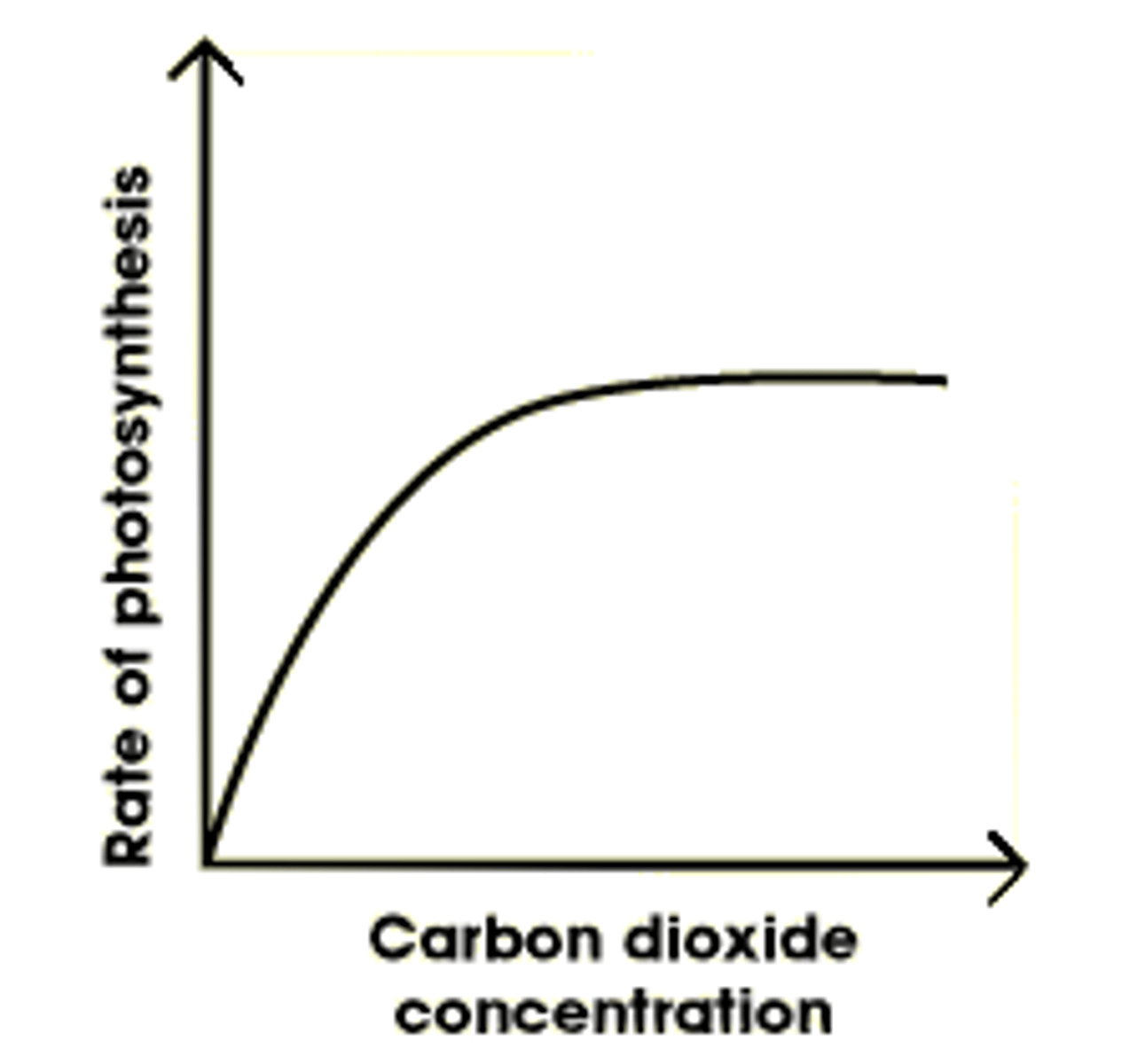
Why does the rate of photosynthesis eventually plateau even if carbon dioxide concentration continues to increase?
because the enzymes processing it are working at maxum capacity
How does water availability affect the rate of photosynthesis?
- a lack of water causes the stomata to close preventniig evapouration, reducing CO2 intake and slowing photosynthesis
How does chlorophyll content affect the rate of photosynthesis?
- Chlorophyll absorbs light, more pigment means more energy captured
- Deficiency lowers the rate
How does nutrient availability affect the rate of photosynthesis?
- Magnesium is used to make chlorophyll, and nitrogen is used to make enzymes
- So deficiencies will reduce the rate of photosynthesis
How does leaf health affect the rate of photosynthesis?
The thickness of the leaf, stomata density and presence of the disease can impact how light or CO2 is captured
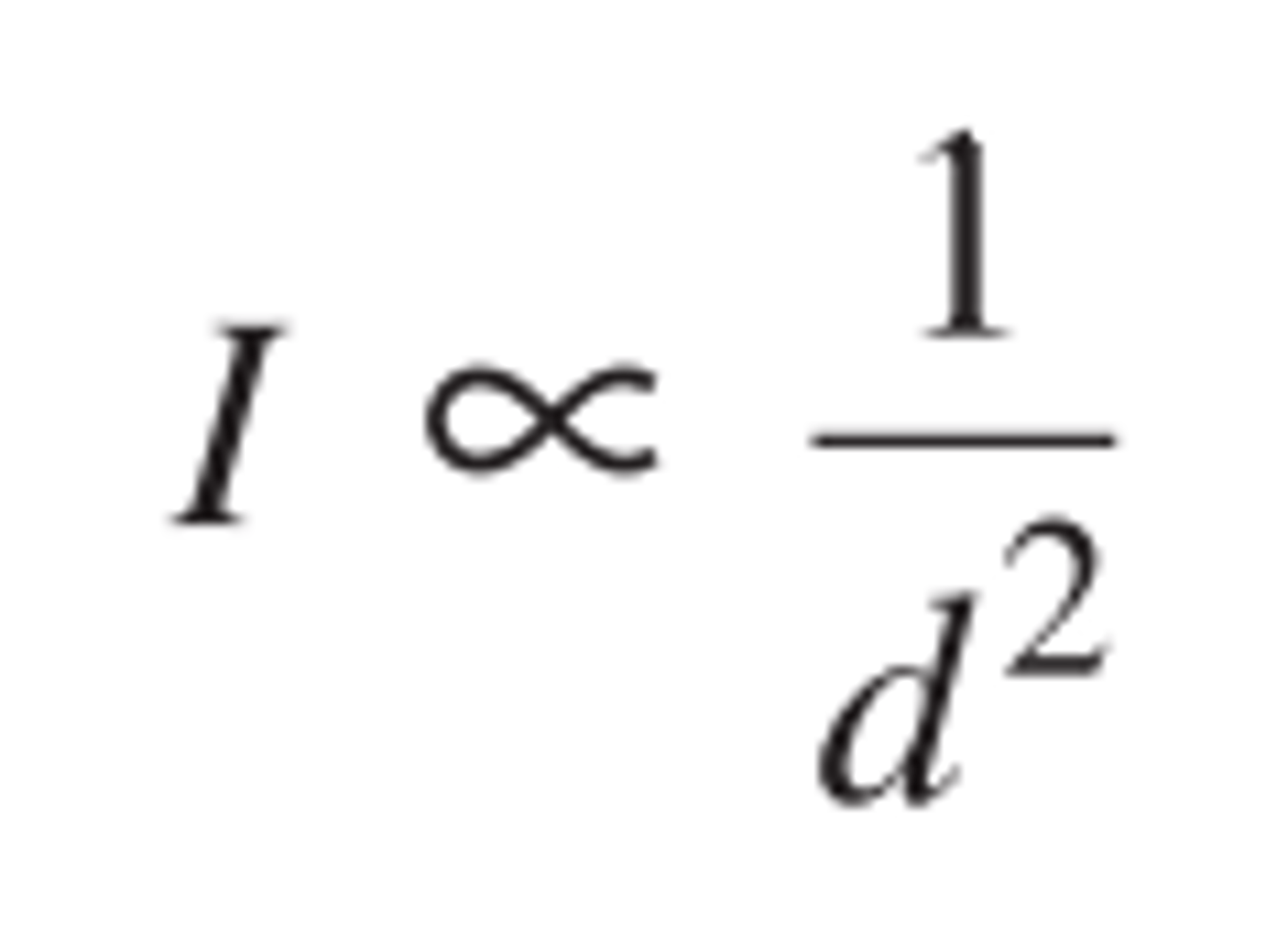
What is the light intensity square law?
- as the distance of the light from the plant increases, the intensity decreases
- for example, if you double the distance, the light intensity falls by a quarter
What do plants use glucose for?
- respiration
- making amino acids
- making fats and oils
- making starch and cellulose
How do plants use glucose to make starch?
- excess glucose is turned into starch and stored in leaves, seed, root or vegetables
- starch is insoluble, unlike glucose, so it doesn't mess with the cell water balance
What do plants use starch for
- Stored starch can be converted back into glucose. it provides an energy store for when it is dark or the light levels are low
What do plants use cellulose for?
To strengthen their cell walls
How do plants use glucose to make amino acids?
- Glucose is combined with nitrate ions to make amino acids, which are then made into proteins for growth and repair and also to make enzymes
How do plants use glucose to make oils and fats?
- glucose can be converted into lipids for:
- energy store
- strengthening cell walls
- waterproofing, like the waxy cuticle on leaves
What is respiration?
The process of transferring energy from glucose which goes on in every cell
What is aerobic respiration?
The process of breaking down glucose using oxygen to produce energy (ATP), water, and carbon dioxide within cells
Is respiration an exothermic or endothermic reaction?
exothermic
Where does aerobic respiration take place?
in the mitochondria
What is the equation for aerobic respiration?
- C6H12O6 + 6O2 → 6CO2 + 6H2O + ATP
- glucose + oxygen → carbon dioxide + water + ATP
What type of respiration releases the most energy?
aerobic
What is anaerobic respiration?
a type of cellular respiration that produces energy (ATP) from glucose without using oxygen
Where does anaerobic respiration take place?
cytoplasm
What happens during anaerobic respiration?
Glucose is not fully broken down, resulting in less energy released
What is the equation for anaerobic respiration in animals?
glucose → lactic acid + ATP
What is the equation for anaerobic respiration in plants?
glucose →ethanol + carbon dioxide + ATP
What is oxygen debt?
the extra oxygen required after high-intensity exercise to break down accumulated lactic acid and restore energy stores
What is fermentation?
an anaerobic process where yeast converts glucose into ethanol and carbon dioxide, producing energy
What is anaerobic respiration in yeast cells called?
fermentation
What is fermentation used for?
to make bread and alcoholic drinks
Why does lactic acid need to be broken down?
because it is toxic
Why does the heart and breathing rate still stay high after exercise?
to repay the oxygen debt
What is respiration used for?
- Muscle contraction
- protein synthesis
- cell division
- active transport
- growth
- the passage of nerve impulses
- maintenance of a constant body temperature.
How does the body respond to exersise?
- the heart rate increases and the arteries suppling blood to the muscles dialate. this increases the rate of supply of oxygen and glucose for the increased celluar respiration rate need
- it also increases the rate of carbon dioxide is removed from the muscles
- the breathing rate also increases and you breathe more deeply. this means that more oxygen is brought into the lungs and the rate of oxygen carried to the muscles increases.
- the rate of carbon dioxide is removed from the body also increases
- glycogen stored in the muscles are converted back into glucose to supply the cells with fuel they needed for increased cellular respiration
How are muscle cells adapted for exercise?
- muscle cells need a lot of energy to carry out their functions
- they need a lot of energy to contract, so they have lots of mitochondria to carry out aerobic respiration
- muscles can store glucose as glycogen, which can be quickly converted back into glucose when needed
What breaks down lactic acid?
Oxygen breaks its down into CO2 and H2O
What is the formula for the breakdown of lactic acid?
lactic acid + oxygen→carbon dioxide + water