3.1 Biological molecules
 Call Kai
 Learn
Learn Practice Test
 Spaced Repetition
 Match
Match Flashcards
 Knowt Play
1/111

There's no tags or description
Looks like no tags are added yet.
Name | Mastery | Learn | Test | Matching | Spaced | Call with Kai | Chat |
|---|
No analytics yet
Send a link to your students to track their progress
112 Terms
What are monomers?
Monomers are small units that are the components of larger molecules, such as monosaccharides, amino acids, and nucleotides.
What are polymers?
Polymers are molecules made from many monomers joined together.
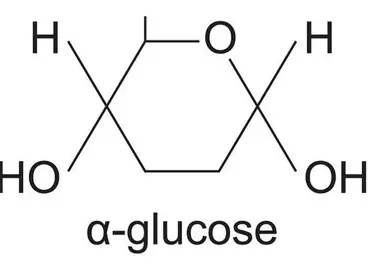
Alpha glucose structure?
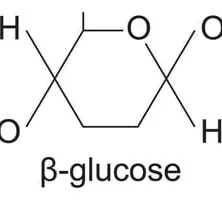
Beta glucose structure?
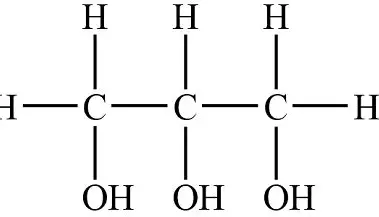
Glycerol structure?
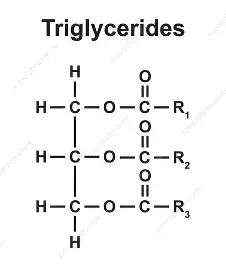
triglyceride structure
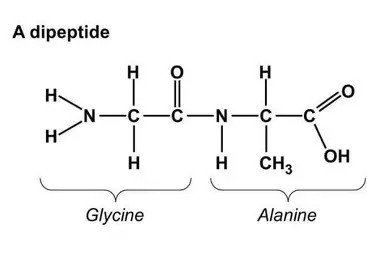
Dipeptide structure
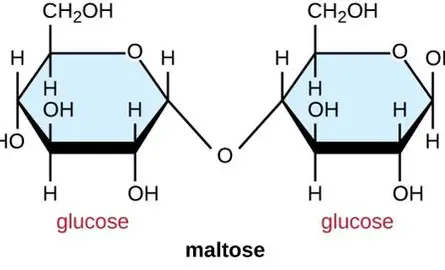
Maltose formation diagram
What is a condensation reaction?
A condensation reaction is a chemical process where monomers are joined by a chemical bond, eliminating a water molecule.
What is hydrolysis?
Hydrolysis is the opposite of a condensation reaction, where water is added to break a chemical bond between two molecules.
What are carbohydrates?
Carbohydrates are molecules consisting only of carbon, hydrogen, and oxygen, formed as long chains of sugar units called saccharides.
What is a monosaccharide?
A monosaccharide is a single sugar unit, with examples including glucose, galactose, and fructose.
What is a disaccharide?
A disaccharide is formed when two monosaccharides join together in a condensation reaction, producing a molecule of water.
What are the three dissacharide reactions?
glucose +glucose → maltose + water
glucose + galactose → lactose + water
glucose + fructose → sucrose + water
What is a polysaccharide?
A polysaccharide is formed from many monosaccharides joined together, such as glycogen, starch, and cellulose.
How is maltose formed?
Maltose is formed by the condensation of two glucose molecules, creating a 1,4 glycosidic bond.
What is glycogen and its function?
Glycogen is the main energy storage molecule in animals, formed from alpha glucose and has many side branches for quick energy release.
How is glycogen good as a storage molecule?
Insoluble so doesn't affect water potential, large so does not diffuse out of cells, compact so a lot can be stored in a small space. Has many side branches due to 1,6 glycosidic bonds, so more ends that can be simultaneously acted on by enzymes to hydrolyse it, so energy (glucose) can be released faster
What is starch and its structure?
Starch is an energy storage polysaccharide in plants, made of branched or unbranched chains of alpha glucose monomers joined by glycosidic bonds.
Why is starch a good storage molecule?
It is coiled, making it compact
It has branched ends for fast hydrolysis of terminal glucose monomers
It can provide glucose for respiration
It is a large molecule, so cannot cross the cell membrane
What is cellulose and its role in plants?
Cellulose is a polysaccharide composed of long, unbranched chains of beta glucose, providing structural support in plant cell walls.
Cellulose structure
Long unbranched chains of beta glucose joined by 1,4 glycosidic bonds. Alternate molecules are inverted to from straight chains running parallel. Chains are joined by hydrogen bonds which causes microfibrils to form.
What is the Benedict's test used for, and what is the process?
The Benedict's test is used to test for the presence of reducing sugars. It is an alkaline solution of copper (II) sulfate, which is reduced to form copper (I) oxide (insoluble red precipitate) in the presence of a reducing sugar. Add 2cm3 to the sample, heat gently in a water bath, and a positive result is brick red, yellow or green.
What is the procedure for testing non-reducing sugars?
To test for non-reducing sugars, do the reducing sugars test first. If negative, hydrolyse the sample with dilute hydrochloric acid, neutralize with sodium hydrogencarbonate, then retest with Benedict's reagent.
What indicates the presence of starch in a solution?
The presence of starch is indicated by a color change to blue/black from orange when iodine solution is added.
What are lipids?
Lipids are biological molecules made of carbon, hydrogen, and oxygen, soluble only in organic solvents like alcohols.
What are triglycerides?
Triglycerides are a type of lipid formed from glycerol and three fatty acids, joined by ester bonds in a condensation reaction.
What are phospholipids?
Molecules where one of the fatty acids of a triglyceride is replaced by a phosphate group.
What is the general formula for monosaccharides?
The general formula for monosaccharides is (CH2O)n, where n can be any number from three to seven.
What is the role of microfibrils in cellulose?
Microfibrils are strong threads made of cellulose chains that provide structural support to plant cell walls.
What are triglycerides made of?
Triglycerides are made of one molecule of glycerol and three fatty acids joined by ester bonds.
What distinguishes saturated lipids from unsaturated fatty acids?
Saturated lipids do not contain carbon-carbon double bonds - all the carbon atoms are saturated with hydrogen
What is a monounsaturated fatty acid?
fatty acid with one carbon double bond
Polyunsaturated fatty acid?
a fatty acid containing two or more carbon-carbon double bonds
Why are unsaturated fats liquid at room temperature?
Unsaturated fats contain double bonds that cause bending in the chain, preventing tight packing.
How does triglyceride structure relate to properties?
They release water when oxidized, providing an important source of water in dry environments. They provide an excellent energy store due to the long hydrocarbon chains which allows for a lot of chemical energy to be stored
Functions of lipids?
Source of energy - when oxidised they release twice the energy as the same mass of carbohydrates. Waterproofing - insoluble in water do used as waxy cuticles.
Protection - fat is found around delicate organs
Insulation - heat retention as lipids are slow conductors, and also electrical (myelin sheath).
Biological membranes - phospholipids contribute to membrane flexibility.
What is the structure of phospholipids?
Phospholipids consist of a glycerol backbone, two fatty acids, and a phosphate group.
What property of phospholipids allows them to form a bilayer in aqueous environments?
They are polar, with hydrophilic heads and hydrophobic tails, so in an aqueous environment a bilayer forms with the hydrophilic heads facing outwards and the hydrophobic tails facing inwards. This forms a hydrophobic barrier between the cell and the environment.
Emulsion test process?
Shake with ethanol then add water. A cloudy emulsion will appear if positive
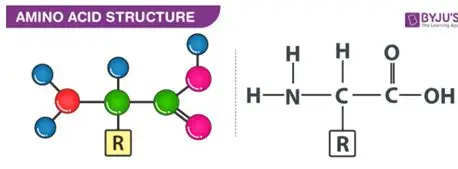
What are the basic components of amino acids?
Amino acids contain an amino group (NH2), a carboxylic acid group (COOH)
Amino acid basic structure:
How are amino acids linked to form proteins?
Amino acids are joined by peptide bonds formed through condensation reactions.
How are dipeptides formed and broken down?
Via a condensation reaction where a water molecule is eliminated by a peptide bond forming between adjacent carboxyl and amine groups. Broken down by the hydrolysis of the peptide bond
What defines the primary structure of a protein?
The primary structure is the specific sequence and number of amino acids in the protein, formed by a series of condensation reactions. A change in one amino acid in a sequence can change the whole protein shape.
Secondary protein structure definition?
Different sections of the polypeptide are attracted to each other and form weak hydrogen bonds that hold the polypeptide in a specific shape, either the alpha helix or beta pleated sheet.
How is the tertiary structure formed, and why is it important?
The twisted structure continues to fold to give the complex 3D shape. Interactions between R groups cause bonds to form that hold it in place - ionic bonds, H bonds and disulfide bridges. It gives the protein its 3D shape and functionality, allowing the protein to be recognised and interact in a specific way.
What is quaternary structure of a protein?
2 or more polypeptide chains weakly associating with each other, and there may be the addition of a non protein group.
What is the difference between globular and fibrous proteins?
Globular proteins are compact (e.g., enzymes), while fibrous proteins are long and form fibers (e.g., keratin).
What does the Biuret test detect?
The Biuret test detects the presence of peptide bonds in proteins. Lilac = present, blue = not present
How do enzymes function in biochemical reactions?
Enzymes lower the activation energy, increasing the rate of reaction.
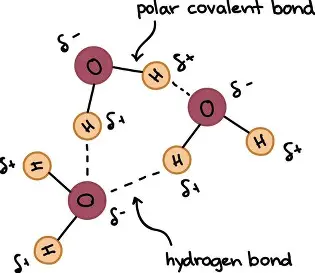
Water structure?
What makes water a polar molecule?
Water is polar due to the uneven distribution of charge, with oxygen attracting electrons more strongly than hydrogen.
Why is water a dipole and how do the H bonds form?
There is a large difference in electronegativity, so the Hydrogen has a slight + charge and the O has a slight
What role does water play in metabolic reactions?
Water acts as a metabolite in condensation and hydrolysis reactions such as photosynthesis , forming and breaking chemical bonds.
Why is water being cohesive useful?
Water molecules stick together due to hydrogen bonds, meaning columns of water can move through xylem in plants or blood vessels in animals.
Why is water considered a good solvent?
Water allows gases, enzymes, and waste products to readily diffuse due to its polar nature. Substances can dissolve in water, so chemical reactions can occur in cells, and these substances can easily be transported.
What is the significance of water's high specific heat capacity?
Water's high specific heat capacity minimizes temperature fluctuations in living organisms, so water acts as a buffer against sudden temperature variations
How does water's latent heat of vaporization benefit organisms?
Water's high latent heat of vaporization (means that much energy is needed to vaporise it) provides a cooling effect with minimal water loss, such as during sweating.
How is water being transparent an advantage?
Allows for photosynthesis
Significance of high surface tension of water?
Benefits small aquatic organisms like pond skaters
What is the structure of ATP?
Consists of an adenine (nitrogenous base), ribose pentose sugar and 3 phosphate chains.
Why can ATP store a lot of energy?
The bonds between the phosphate groups are unstable so have a low activation energy - easily broken. When broken they release lots of energy.
Why is ATP a phosphorylated nucleotide?
It has more phosphate groups as it has two extra ones
How is energy released from ATP?
It is hydrolysed into ADP (adenosine diphosphate) and Pi (inorganic Phosphate), and this is an exothermic reaction that uses water. The terminal phosphate group is hydrolysed
What enzyme catalyses the hydrolysis of ATP?
ATP hydrolase
How is ATP resynthesised?
The reaction is reversible, so an inorganic phosphate can be added to ADP to reform ATP (phosphorylates it). This is a condensation reaction and the reaction is catalysed by ATP synthase.
What can inorganic phosphate also be used for?
To phosphorylate other compounds, often making them more reactive, which lowers activation energy in enzyme- catalysed reactions
Why is ATP not a good long term energy store and what is it used for instead?
Its bonds are unstable, so carbohydrates are better for long term storage. ATP is the immediate energy source of a cell, so large quantities of it are not stored.
Why is ATP a better immediate energy source than glucose?
ATP releases less energy than each glucose molecule so energy can be released in smaller more manageable quantities. The hydrolysis of ATP is a single process whereas the breakdown of glucose is a series of reactions so takes longer.
Name the functions of ATP in cells?
Metabolic processes - building up macromolecules from their smaller units
Movement - provides energy for muscle contractions - filaments of muscle slide over each other to shorten the length of a muscle fibre
Active transport - change the shape of carrier proteins to allow molecules to be transported against the conc gradient
Secretions - needed to for lysosomes to secrete cell products
What is the structure of a nucleotide?
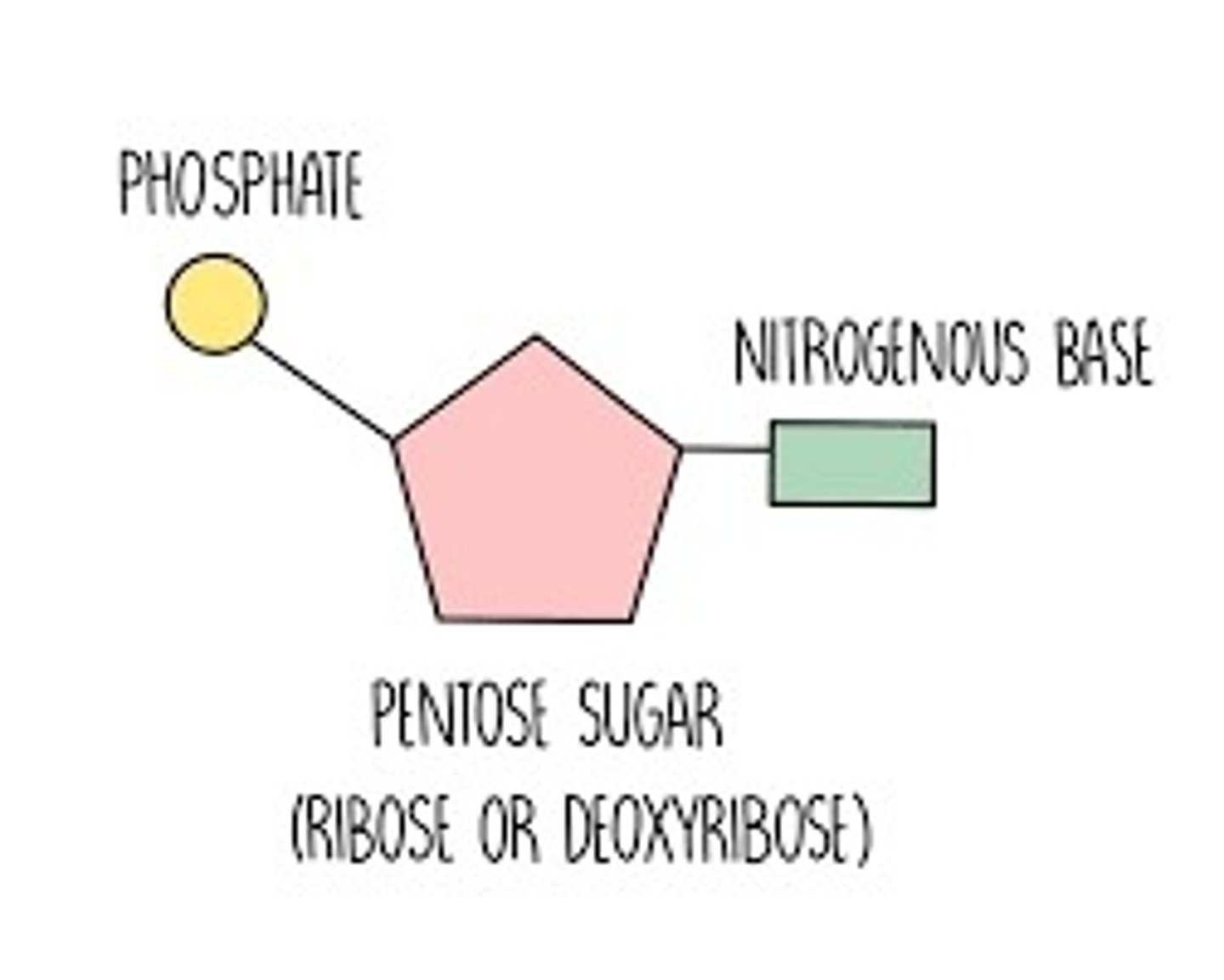
What are the two types of nucleic acids?
deoxyribonucleic acid (DNA) and ribonucleic acid (RNA)
What are nucleotides made of?
Pentose sugar (deoxyribose in DNA, ribose in RNA), nitrogenous base and phosphate group.
What are the bases, and what pairs with what?
Adenine pairs with Thymine (Uracil in RNA) via 2 H bonds, Cytosine pairs with Guanine via 3 H bonds.
How are the components of a nucleotide joined together?
Via condensation reactions - an ester bond forms between the phosphate and pentose sugar, and a glycosidic bond between sugar and base.
How are the bases categorised?
Purines (A and G) have a double ring structure and pyramidines (T and C, as well as U) have a single ringed structure
How are two nucleotides joined together to form a dinucleotide?
Via condensation reaction to form a phosphodiester bond between the deoxyribose sugar of one nucleotide and the phosphate group of another.
What is RNA?
Polymer made of nucleotides, quite short and has a ribose pentose sugar. One type of RNA is involved in transferring genetic info from DNA to ribosomes, another is involved in protein synthesis. Also single stranded
How was the structure of DNA discovered, and who discovered it?
Watson and Crick worked out the structure following pioneering work by Rosalind Franklin on the X-ray patterns of DNA.
What is the structure of the polymer of DNA and how does it relate to its function?
Each molecule is made of 2 strands joined by hydrogen bonds at the bases - allows for strand separation in DNA replication. Very large so it can carry immense amounts of info. It has a strong sugar phosphate backbone that is joined by strong covalent bonds which protects weak interactions between bases.
Has complimentary base pairing so DNA can be used as a template to build complimentary strands.
How would you describe the structure of DNA as a whole?
Double helix as the two strands twist around each other. The two strands run anti parallel in opposite directions.
What is the function of DNA?
Holds genetic info to pass from one generation to the next - important for evolution, and is a stable structure that only rarely mutates. Codes for protein molecules too.
How is each end of the DNA molecule described?
Either as the 5'' end - the 5th Carbon is bonded to the Phosphate or as the 3'' end as the 3rd carbon is pointing down - this is opposite for the two strands.
What are the requirements for semi conservative replication to take place?
The four types of nucleotides - each with their bases must be present, and both strands of DNA act as a template for the attachment of these nucleotides, the enzyme polymerase must be present, and a source of chemical energy.
Describe the process of semi conservative replication:
1. Double helix unwinds and unzips using DNA helicase to break the hydrogen bonds.
2. The double helix separates into its two strands, which act as a template to which free nucleotides of DNA bind by specific base pairing
3. Nucleotides are joined together in a condensation reaction by the enzyme DNA polymerase to form phosphodiester bonds between them.
4. DNA winds back up.
Why is it named 'semi conservative' replication?
Because each new DNA molecule contains one strand of the original DNA and one strand of the new DNA, so half is old.
What was the conservative model for DNA replication?
Suggested that the original model remained intact and that a separate daughter DNA molecule was built up from new nucleotides. Of the two molecules produced one would be entirely old and one entirely new.
What the process of the experiment to find evidence for semi conservative replication?
They first grew the bacteria (original DNA) on a medium of 15-N (slightly heavier than 14-N). They extracted the DNA and spun it in a centrifuge - scientists could then analyse the position of the DNA band. For the first gen the band would be near the bottom due to the heavier 15-N. They then transferred the bacteria to a medium of 14-N to allow it to replicate many times until almost all of it was 14-N - formed a thick band near the top as it is lighter. They then took a sample and grew it on 15-N and allowed DNA replication once. They extracted and spun it. They then allowed it to replicate once more on 15-N.
What were the findings of the DNA semi conservative replication experiment?
They found that the sample grown on 14-N then 15-N after one replication produced a band of DNA in between the band for 14-N and 15-N - shows one strand is 15-N and one is 14-N. So, it must have replicated semi conservatively. After another replication on 15-N, there were two bands - one in between the 15 and 14-N, and one nearer the bottom. This is because 2 of the 4 molecules contain a strand with 14-N and 15-N, and two contain only 15-N.
What would the results be if the conservative model was correct?
After one round of replication on 15-N, one molecule would be fully 15-N and one would be fully 14-N, and after two rounds, one would still be fully 15-N, but the other 3 would be fully 14-N.
What are enzymes?
Globular proteins that act as catalysts, as they are not used up in the reaction.
What is activation energy?
the minimum amount of energy needed to start a chemical reaction
How do enzymes allow reactions to take place at a lower temperature?
They lower activation energy
What are similarities and differences between the lock and key and induced fit model?
Similarity: both have enzymes that dont get used up or changed as a catalyst, and increase rate of reaction at room temperature. Difference is in the induced fit the active site changes shape and enzyme substrate complex forms.
How do they lower activation energy?
Hold the substrate in a way that bends the bonds so they react more easily. Bonds are broken and reformed so the products have less energy.
How does the substrate bind and react with the enzyme?
Has a complimentary shape to the active site, so fits neatly into the depression to form an enzyme substrate complex. Held in the active site by weak interactions.
How does pH affect how an enzyme works?
Change in pH away from the optimum alters the charges on amino acids that make up the enzyme active site. The differences in H+ ion concentration affects hydrogen and ionic bonding, which causes a change in the tertiary enzyme structure, which changes the active site. This prevents enzyme substrate complexes forming as they are no longer complimentary. If the change is extreme, the enzyme may be denatured by the active site permanently changing shape.
Effect of temperature on enzyme activity
As temp goes up the kinetic energy of the molecules goes up, so there are more frequent collisions between them, that are more successful, so more enzyme substrate complexes form, so rate increases. Rising beyond the optimum temperature causes H bonds to break, which changes the enzyme's tertiary structure and the shape of the active site, so less enzyme-substrate complexes will form.
What happens to the enzyme at very high temperatures?
It denatures, and this is a permanent change to the active site, causing the enzyme to not be able to function.