3 - Pharmacology and Pharmaceutic Principles of Drugs for Ischemic Heart Disease
 Call Kai
 Learn
Learn Practice Test
 Spaced Repetition
 Match
Match Flashcards
 Knowt Play
1/59

There's no tags or description
Looks like no tags are added yet.
Name | Mastery | Learn | Test | Matching | Spaced | Call with Kai | Chat |
|---|
No analytics yet
Send a link to your students to track their progress
60 Terms
Why does the heart have a high O2 demand?
The heart produces ~10 kg of ATP/day → requiring a large O2 supply.
What determines myocardial O2 supply?
Regional flow distribution → how much blood/O₂ is delivered to different regions of the heart
O2 extraction → how much O2 the heart takes out of the blood
Coronary blood flow → how much blood flows through the coronary arteries
What determines myocardial O2 demand?
Heart rate
Cardiac contractility
Myocardial wall tension
What happens when myocardial O2 demand exceeds O2 supply?
Myocardial ischemia results → often causes chest pain / angina
What is ischemic heart disease?
Heart disease caused by inadequate myocardial O2 supply relative to demand
Very broad term, could be referring to many different types of HD
What is angina pectoris?
Chest pain or discomfort due to myocardial ischemia → not even O2 supply for demand
What are common symptoms of angina pectoris?
Heavy weight or pressure on the chest
Numbness/tingling in the arms
Pain (occasionally)
Shortness of breath
How is angina classified?
Demand → also called classic or effort
Supply
Demand angina?
Chronic stable angina
Supply angina?
Unstable angina
Variant / Vasospastic angina
What causes stable angina?
Atherosclerosis
Episodes can be triggered by → exercise, cold, stress, emotion, or eating
What are the therapeutic objectives of stable angina?
Increase myocardial blood flow → dilate coronary arteries/arterioles → increasing O2 supply
Decrease cardiac load (preload + afterload) → decreasing O2 demand
Increase Heart rate → decreasing O2 demand
Decrease fatty acid metabolism → decreasing O2 demand (newer class)
What characterizes unstable angina?
Change in character, frequency, or duration of angina in patients with stable angina, or angina occurring at rest
What causes unstable angina?
Small platelet clots at a ruptured atherosclerotic plaque → may cause local vasospasm
Why is unstable angina more dangerous than stable angina?
Unstable angina → higher risk of myocardial infarction (MI) than stable angina
What are the therapeutic objectives of unstable angina?
Inhibit platelet aggregation and thrombus formation → Increase O2 supply
Decrease cardiac load (preload and afterload) → Decrease O2 demand
Vasodilate coronary arteries → Increase O2 supply
What causes variant angina?
Transient vasospasm of the coronary vessels → temporary tightening of the coronary vessels
Usually associated with underlying athermas
Chest pain may develop at rest
What are the therapeutic objectives for variant angina?
Decrease vasospasm of the coronary vessels → increasing O2 delivery
CCB → are efficacious in >70% of patients → increase O2 delivery
What is the broad therapeutic objective in treating angina?
Relieve the O₂ supply–demand mismatch in the heart
What is the effect of nitrates in stable angina?
Decrease O2 demand
What is the effect of nitrates in variant angina?
Increase O2 supply
What is the effect of β-blockers in stable angina?
Decrease O2 demand
What are the effects of calcium channel blockers in stable angina?
Decrease O2 demand
Verapamil and Diltiazem → only
What are the effects of calcium channel blockers in variant angina?
Increase O2 supply
What are the effects of pFOx inhibitors in stable angina?
Decrease O2 demand
Switches the heart from fatty acid metabolism to glucose metabolism → glucose requires less O2 to make energy → less O2 needed by the heart
What are the effects Ivabradine in stable angina?
Decrease O2 demand → lowers heart rate
What drugs are not used in variant angina?
B-Blockers
pFOx
Ivabradine
need vasodilators → (CCBs + nitrates)
MOA of Nitrates?
Increase NO, which → increases cGMP. This lowers intracellular Ca²⁺, causing smooth muscle to relax and blood vessels to dilate.
Decrease both preload and afterload
What is the prototype nitrate drug?
Nitroglycerin (NTG)
What happens when nitrites and nitrates are broken down?
They are “denitrated”
They release a free nitrite ion and NO
NO is the bioactive compound that causes → vasodilation
Which drug is the only nitrite in the nitrite/nitrate group?
Amyl nitrite
It is the only nitrite → the rest are nitrates
It is a volatile liquid that can be inhaled
Which drugs are nitrates in the nitrite/nitrate group?
NTG
Isosorbide Dinitrate
Isosorbide Mononitrate
Nitrate compounds → administered via oral, sublingual, topical, transfermal and IV
What is the primary effect of nitrites/nitrates?
The primary effect is the dilation of VEINS
Veins hold more blood → so less blood returns to the heart
Dilate veins > arteries → decreases venous return → decreases preload → decreases O2 demand
What is the secondary effect of nitrites/nitrates?
Dilate large coronary arteries → increase coronary blood flow
Decreases preload → decreases wall stress → improves blood flow to the subendocardium → increases O2 supply
What are other effects of nitrites/nitrates?
NTG → via NO stimulates → guanylyl cyclase in platelets → decrease platelet aggregation
Pharmacokinetics of NTG and Isosorbides Dinitrate (ISDN)?
High first pass metabolism → due to hepatic nitrate reductase in the liver
LOW oral availability → 10-20%
Hepatic blood flow and disease → hepatitis → can affect the PK of both
What formulation of NTG and Isosorbide dinitrate bypasses the first pass metabolism?
Sublingual or Transdermal
What form of nitrites/nitrates is 100% orally available?
Isosorbide mononitrate → 5-ISMN
Is not subject to first-pass metabolism
Why can continuous/frequent nitrate exposure cause tolerance?
Can lead to the inactivation of aldehyde dehydrogenase
A mitochondrial enzyme that converts nitrate/nitrite to NO
Adverse effects of nitrites/nitrates?
Orthostatic hypotension → BP drop while standing
Reflex tachycardia → heart rates goes up while BP drops
Severe throbbing headache
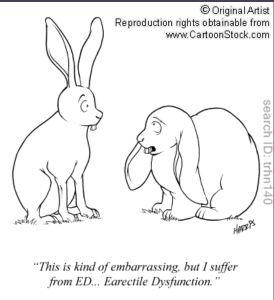
Why should nitrates NOT be used with PDE5 inhibitors (e.g., Viagra)?
Nitrates → increase NO → increase cGMP
While PDE5 inhibitors → prevent cGMP breakdown → too much cGMP → excessive vasodilation →
Causes Dangerously LOW BP
What drugs are major contraindicated with nitrites/nitrates?
Sildenafil
Vardenafil
Tadalafil
ANY PDE-5 INHIBITOR used with erectile dysfunction
How long should you wait if you are taking a PDE5 inhibitor with a nitrovasodilator?
Should not be taken within 6 hours of taking the nitrovasodilator
When are nitrates contraindicated?
Elevated intracranial pressure
Examples of pFOxs?
Ranolazine → used in US, also a Class 1 anti-arrhythmic
Trimetazidine → widespread in other countries
Perhexiline → used in australia/new zealnd
What is a pFOx?
Partial Fatty-acid oxidation inhibitor
How do pFOx inhibitors work?
Switch heart fuel from fatty acids → to glucose → glucose uses less O2 to make ATP → overall decreases O2 demand
Do pFOx inhibitors cause hemodynamic changes?
No → they decrease O2 demand without changing heart rate, BP, or other hemodynamics
What is the primary MOA of Ranolazine / Ranexa ?
Inhibits late Na⁺ current → decreases Ca2+ entry during phase 2 → decreasing inotropic effect, weaker contraction → overall decreasing O2 demand
Similar to Class 1B effect
What else does ranolazine do at higher doses?
Acts as a pFOx inhibitor → shifts heart from fatty acids → glucose → decrease O2 demand
Why does ranolazine combine well with other anti-anginal drugs?
No hemodynamic changes → can be combined with other anti-anginal medications
How is ranolazine metabolized?
Hepatically → CYP3A4
What is a major contraindication with ranolazine?
Risk of long QT → avoid/caution with other QT-prolonging drugs
CYP3A4
What are the minor adverse effects of ranolazine?
Dizziness
Constipation
What drugs interact with ranolazine?
CYP3A4 inhibitors → macrolides, diltiazem, verapamil
QT-prolonging drugs → Class IA/IC, Class III, antipsychotics
What does ivabradine inhibit?
Blocks the “funny current” (If) in pacemaker cells of the SA/AV nodes and Purkinje fibers → slows their automatic firing → decreasing HR
What is the “funny current” (If)?
Na⁺/K⁺ current that helps pacemaker cells generate their next heartbeat
What is the main effect of ivabradine?
Blocks If → decrease HR without decreasing contractility
Slows the heart rate → but the heart still contracts with the same strength
Adverse effects of Ivabradine?
Visual disturbances → “halo-ing” and luminous objects
High doses → excessive decrease in HR → bradycardia + AV block (signals blocked between atria and ventricles)
Contraindications and drug interactions of Ivabradine?
Sick sinus syndrome → already abnormal HR → alternating brady/tachycardia → ivabradine can worsen bradycardia
Verapamil/diltiazem or β-blockers → additive decrease HR → excessive bradycardia