5. Binocular and Spatial Vision - Eye Movements & Binocular Vision Summer 2026
 Call Kai
 Learn
Learn Practice Test
 Spaced Repetition
 Match
Match Flashcards
 Knowt Play
1/99

There's no tags or description
Looks like no tags are added yet.
Name | Mastery | Learn | Test | Matching | Spaced | Call with Kai | Chat |
|---|
No analytics yet
Send a link to your students to track their progress
100 Terms
Two-eyed vertebrate vision comes in 2 varieties. What are these?
1) Utrocular
2) Ambicular
What is the meaning of utrocular?
2 eyes function separately
What is the meaning of ambiocular?
2 eyes work together (true binocular vision)
What is binocular vision?
the coordinated behavior of the 2 eyes in the perception of space
With utrocular vision, eye movements are _________
independent
With utrocular vision, there is ______ of the optic nerves
complete crossing
What types of animals have utrocular vision?
lower vertebrates
With ambiocular vision, eye movements are _________
coordinated (Hering's Law of Equal Innervation)
With ambiocular vision, there is ______ of the optic nerves
partial decussation -- at the optic chiasm
What types of animals have ambiocular vision?
mammals
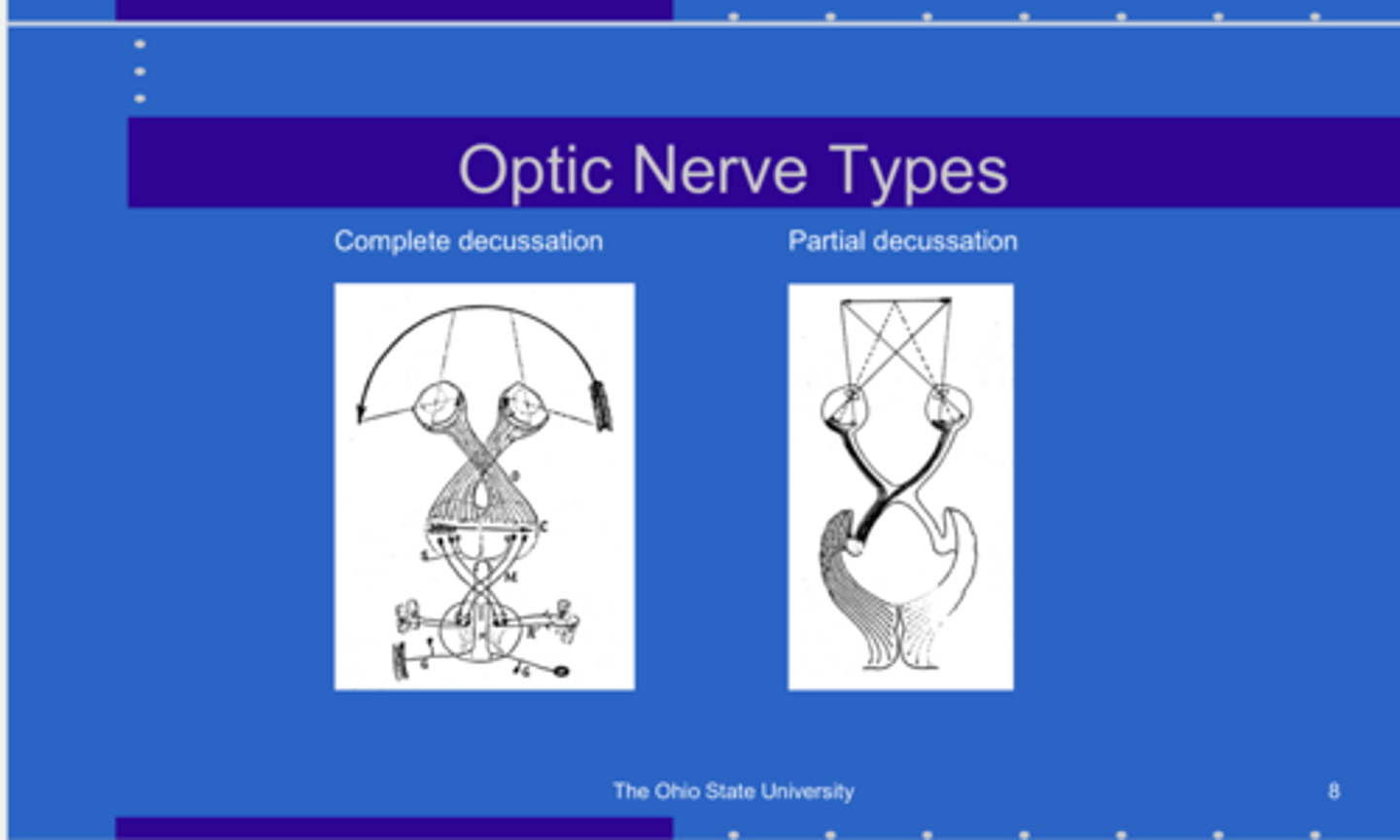
Optic Nerve Types -- Complete Decussation and Partial Decussation (Pic)
Optic Nerve Types -- Complete Decussation and Partial Decussation (Pic)
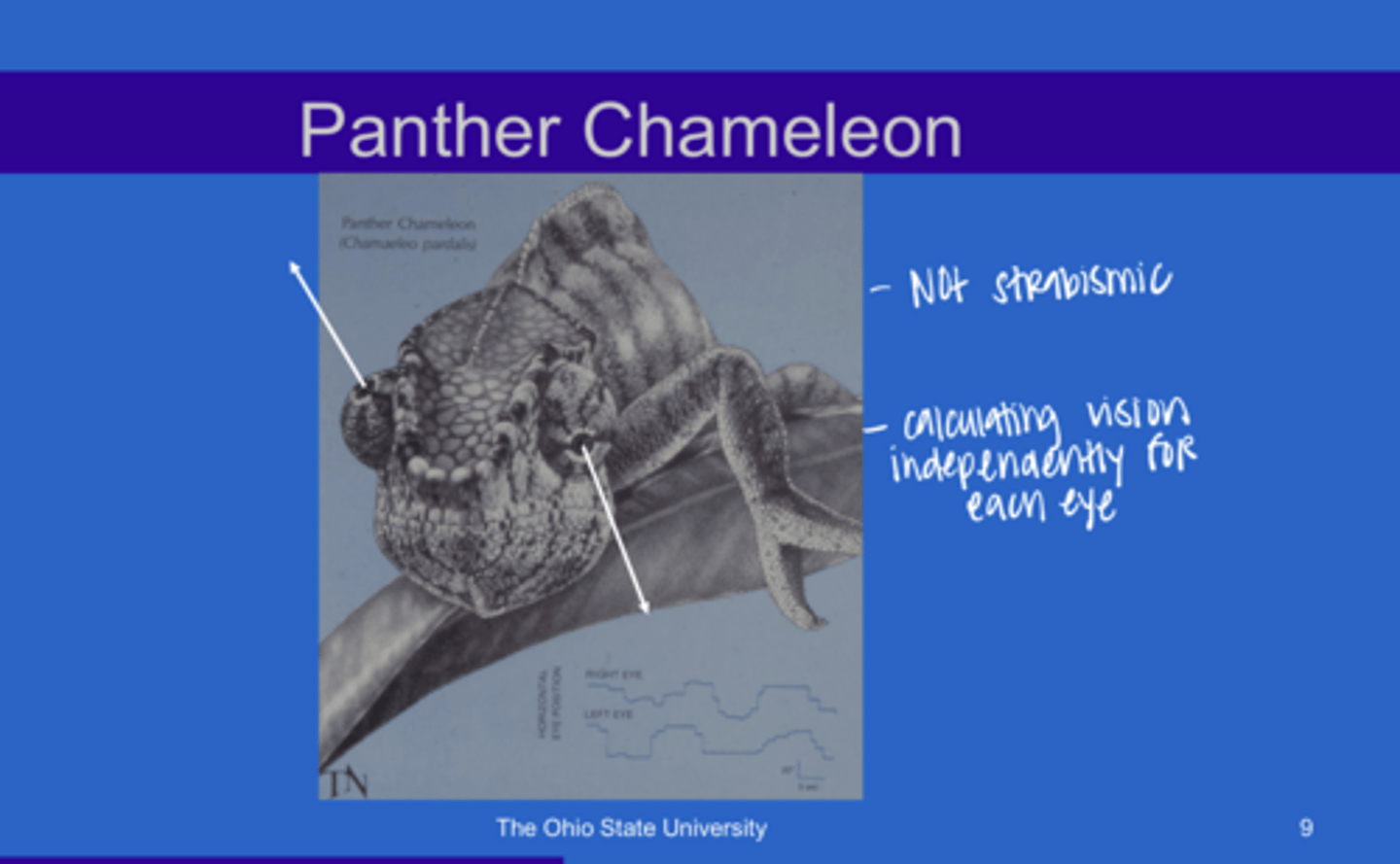
Is this animal strabismic?
No -- eye movements are independent. Vision calculated FOR EACH EYE.
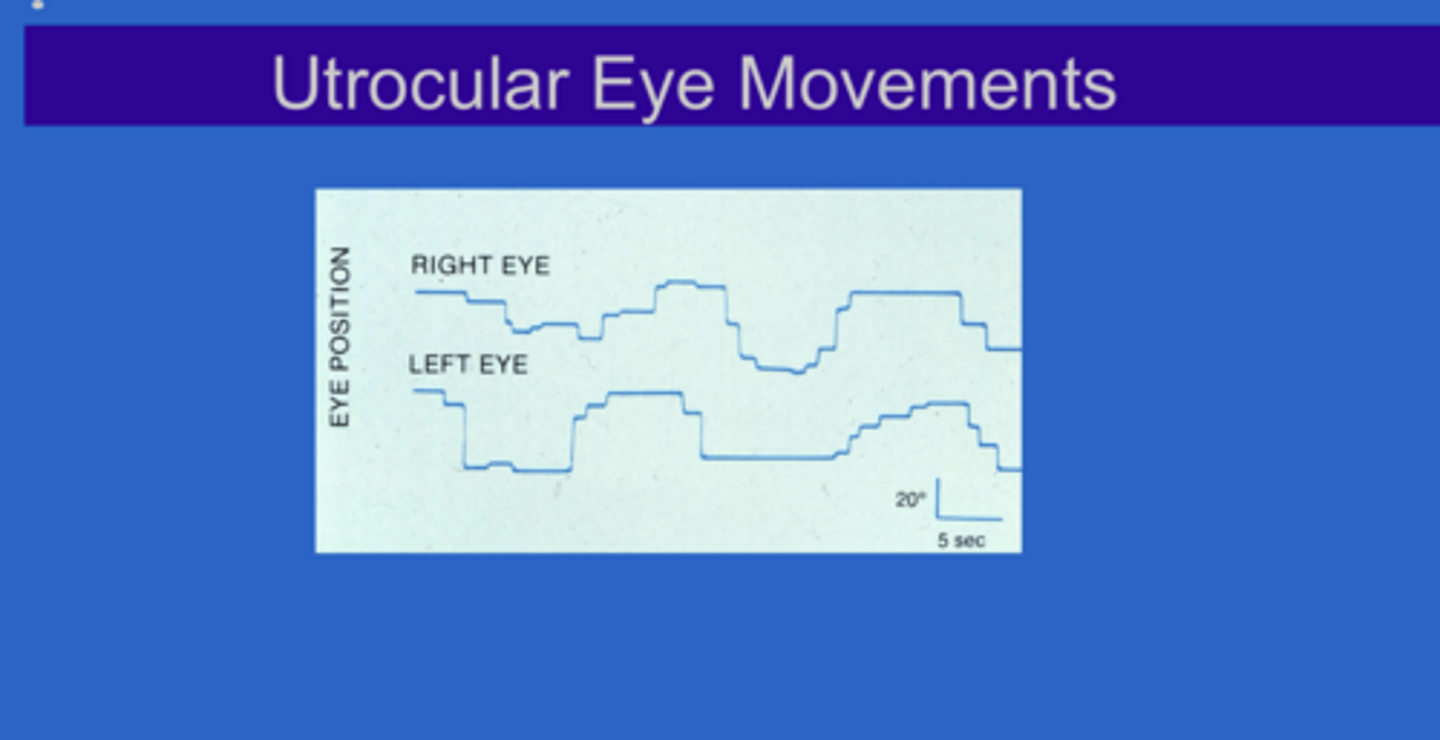
Utrocular Eye Movements (Pic)
Utrocular Eye Movements (Pic)
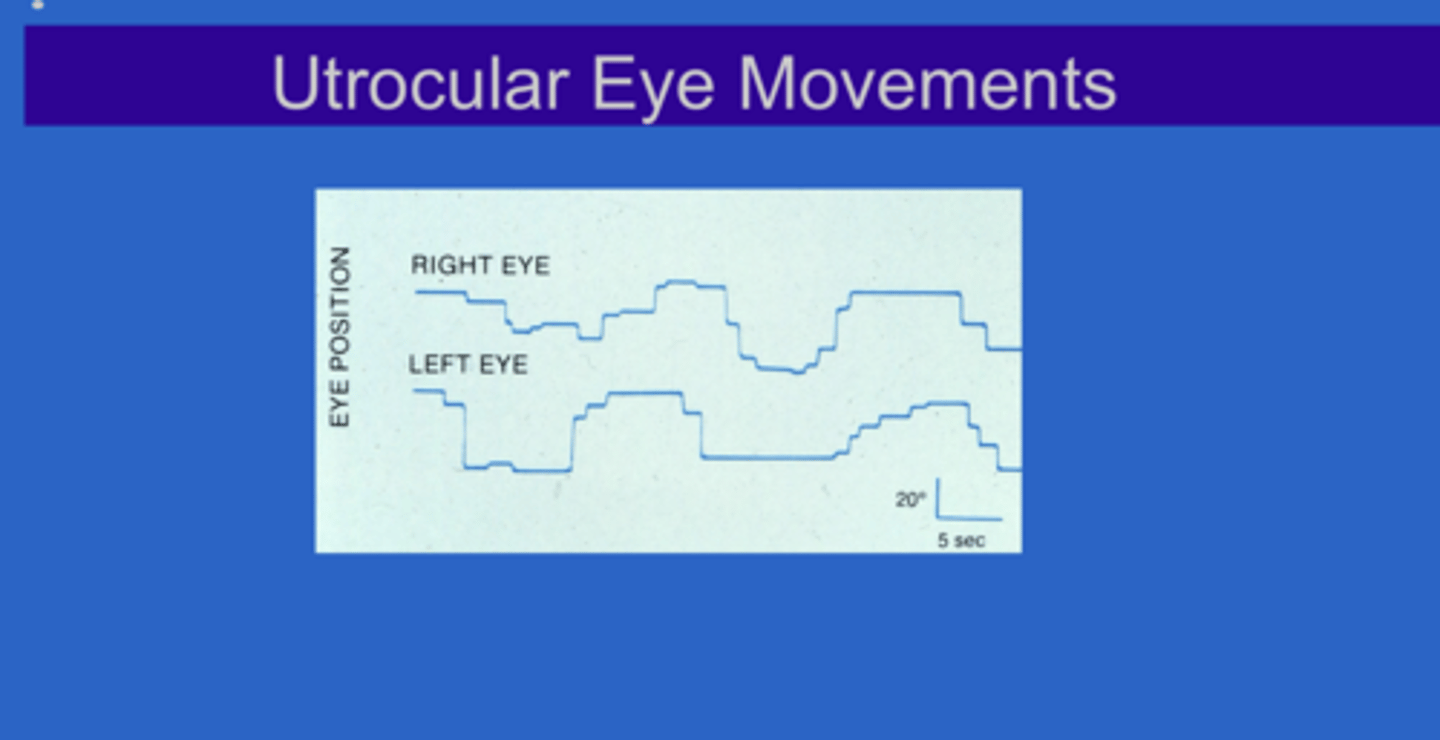
Do utrocular eye movements follow Hering's Law of Equal Innervation?
No
Frontal eyes facilitate what?
ambiocular vision
Are frontal eyes required for ambiocular vision?
No
Prey animals usually have (lateral/frontal) eyes. Why?
lateral -- provide safety through panoramic view
Predator animals usually have (lateral/frontal) eyes. Why?
frontal -- provide better depth perception and visual acuity for offensive behavior
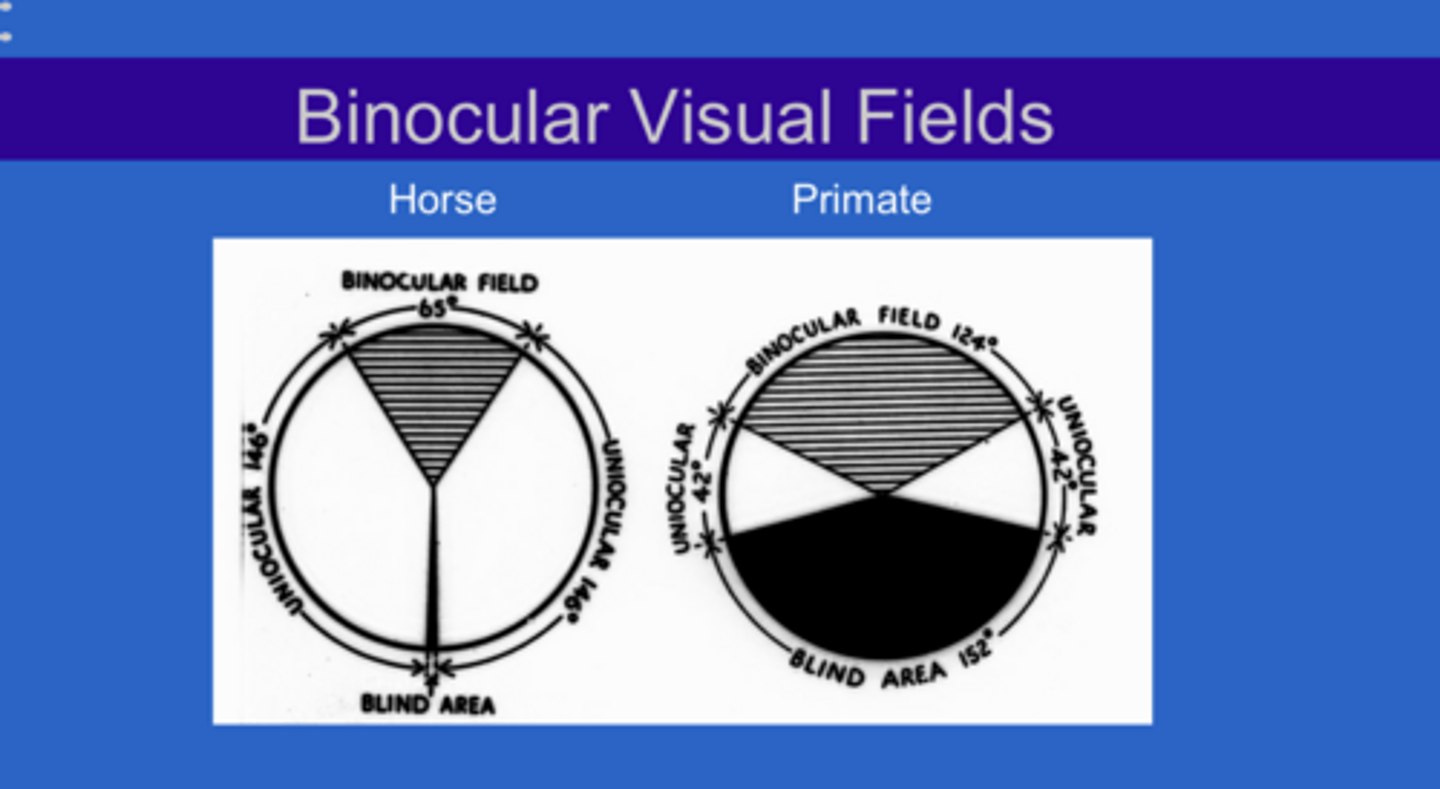
Binocular Visual Fields -- Horse and Primate (Pic)
Binocular Visual Fields -- Horse and Primate (Pic)
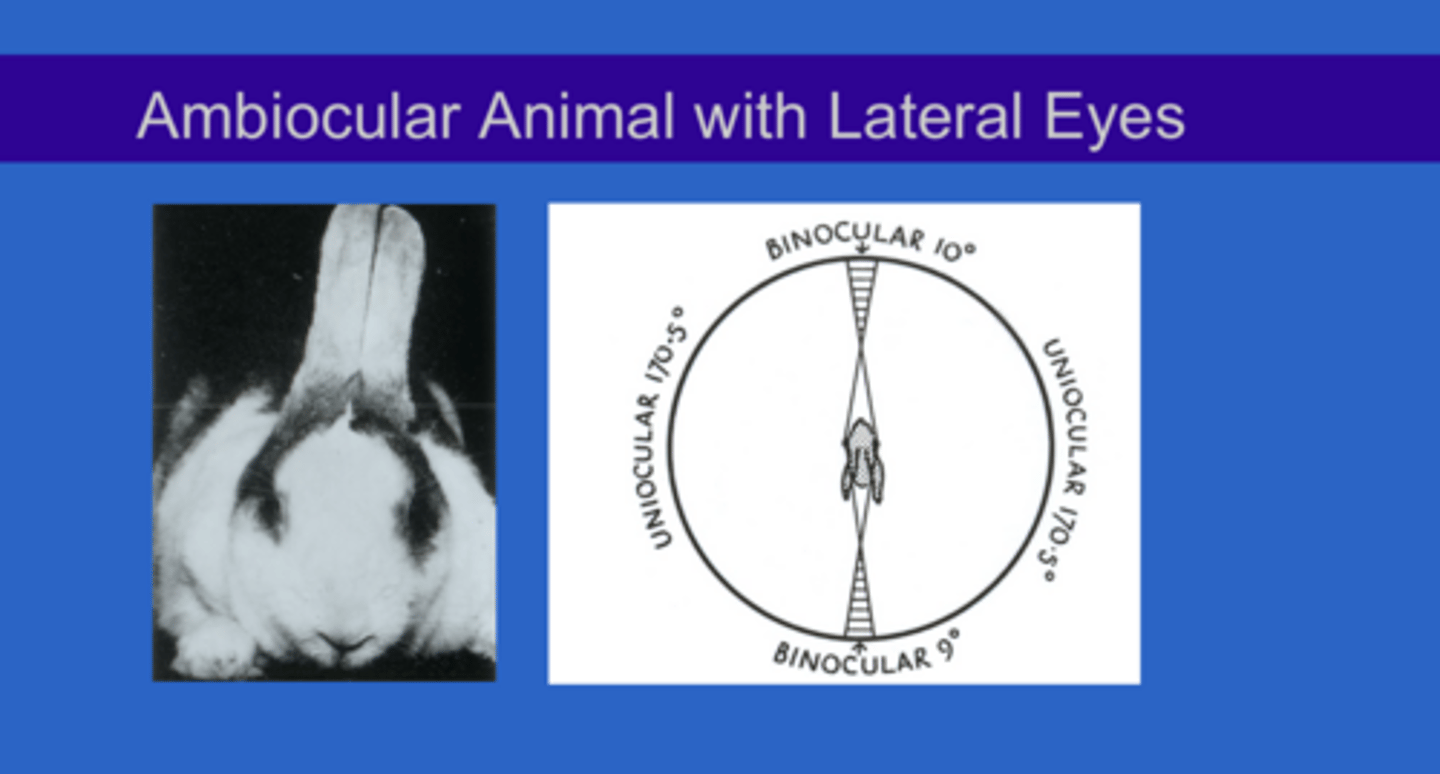
Can a rabbit see 360º around its body?
Yes
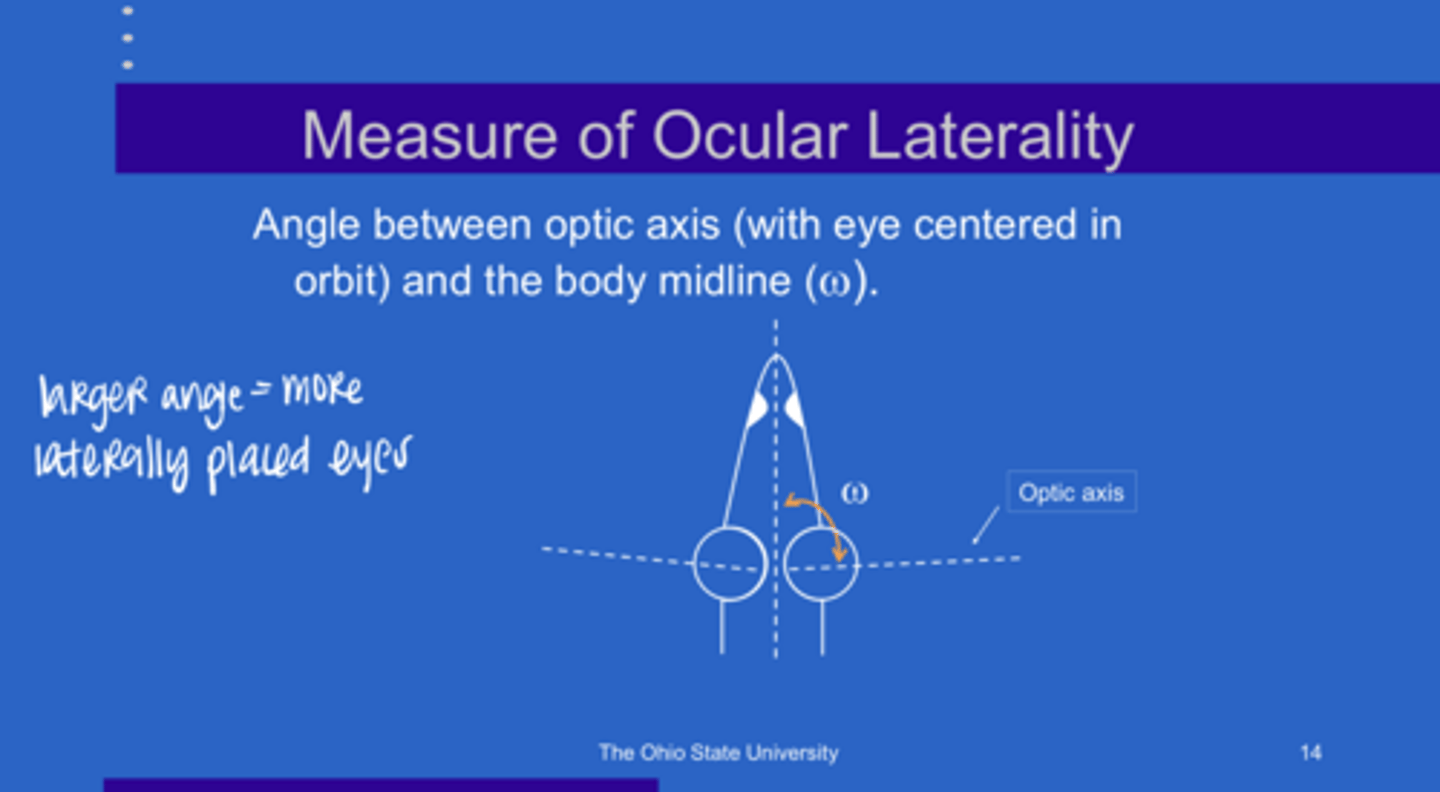
What is ocular laterality?
Angle between optic axis (with the eye centered in orbit) and the body midline
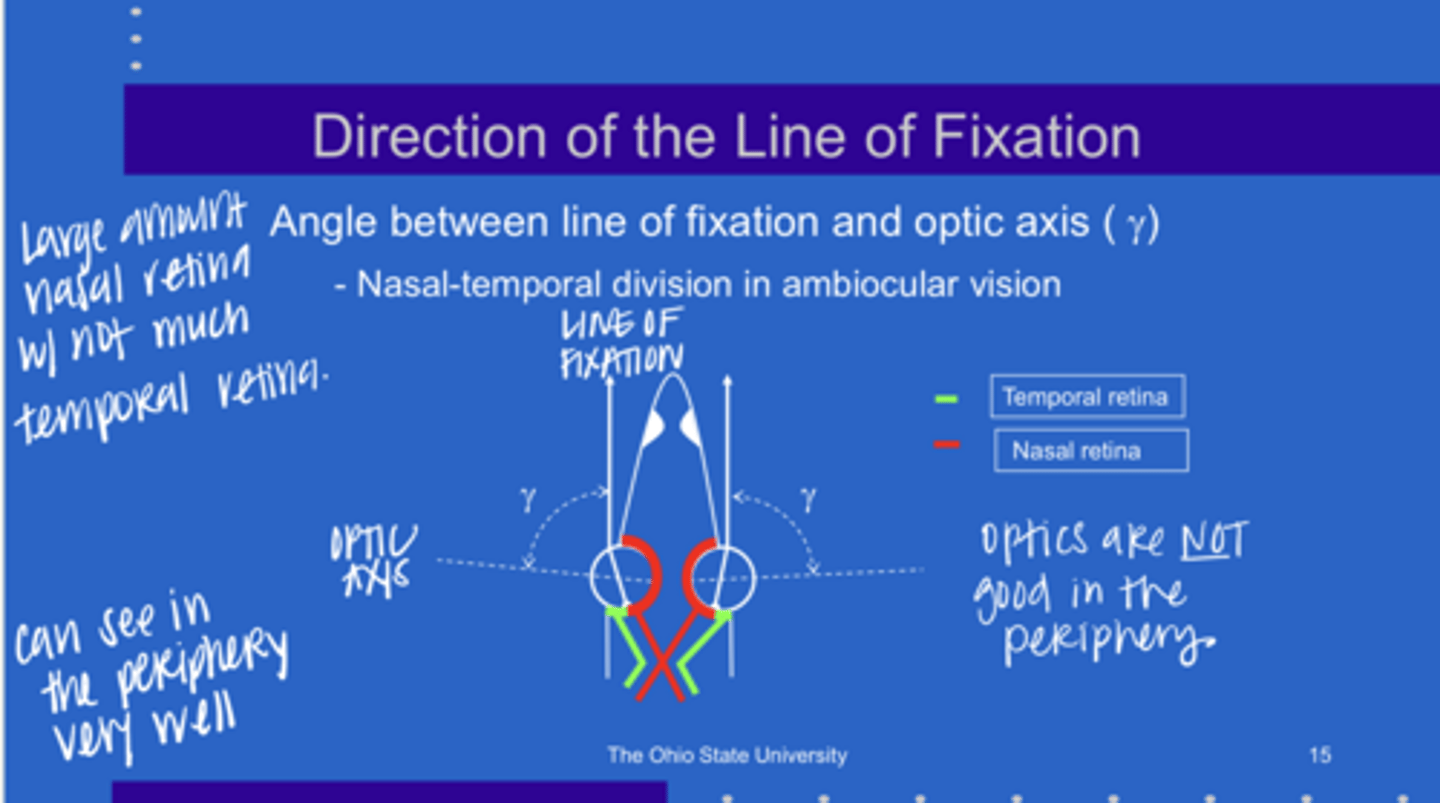
What is angle γ when talking about binocular vision?
angle between the line of fixation and the optic axis
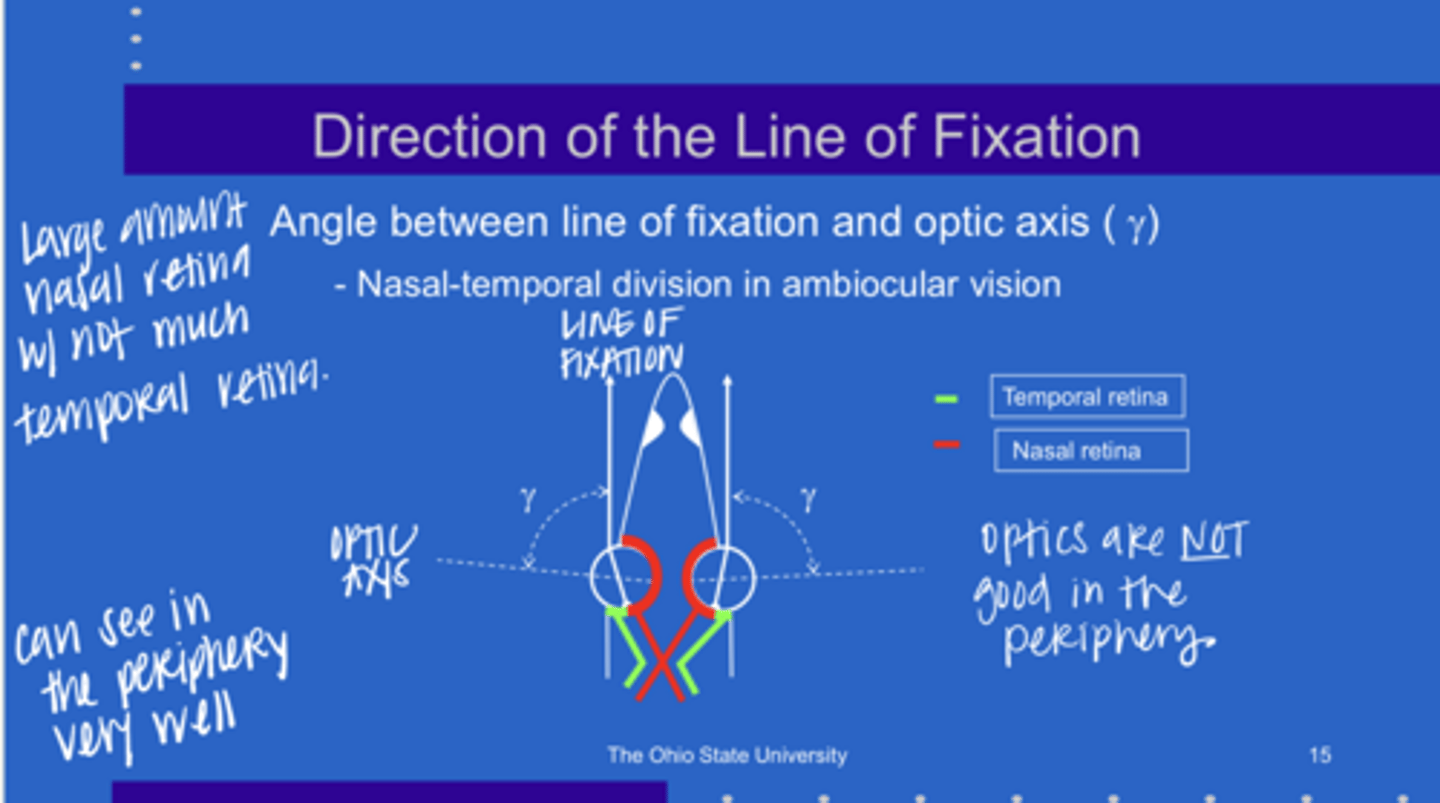
There is a _____ division in ambiocular vision
nasal-temporal
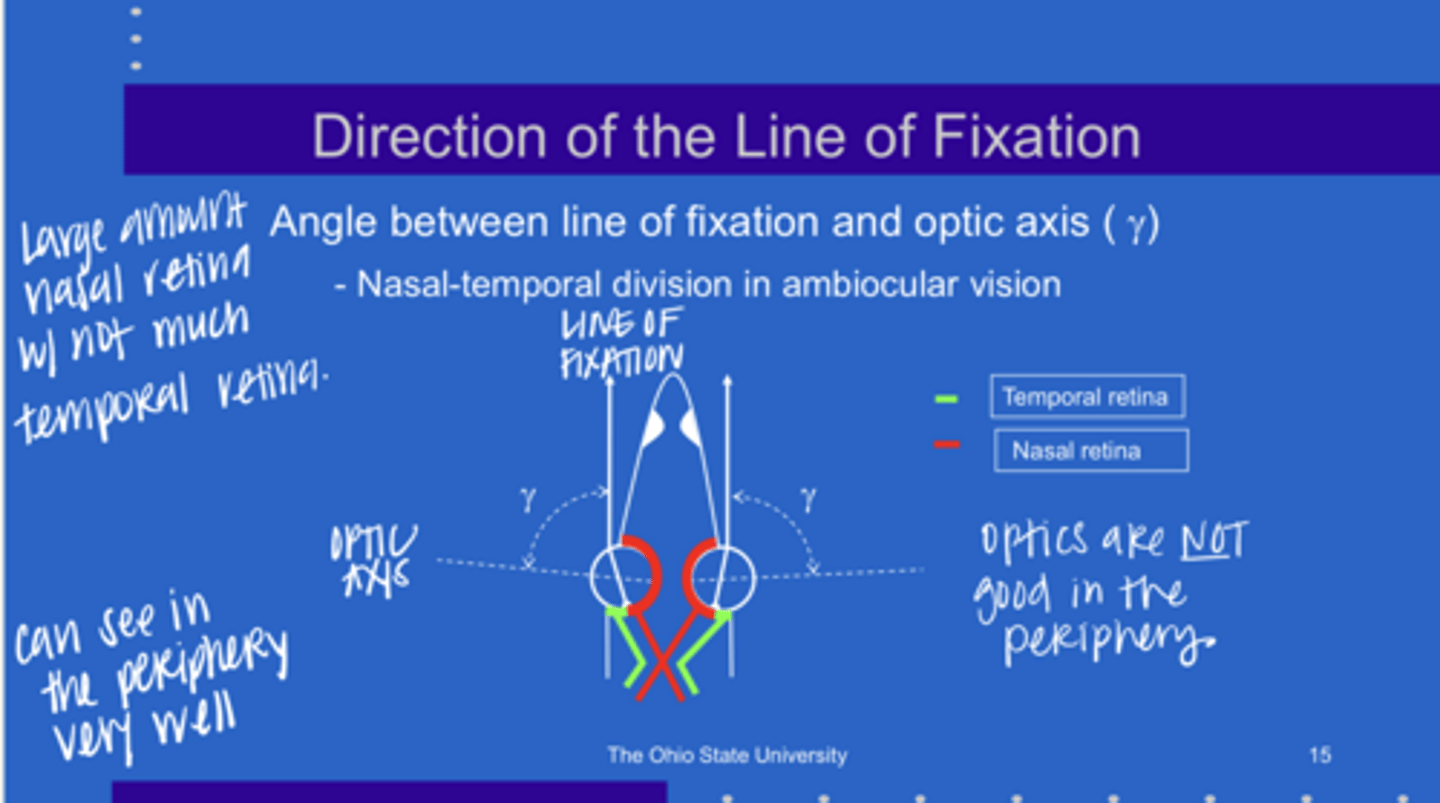
In an animal with a larger angle γ, are the optics (VA) good in the periphery?
NO
Why is ambiocular vision important?
-for stereopsis
-for better VA
What is stereopsis?
the specific sensation of depth characteristic of ambiocular vision
Stereopsis is made possible by what?
coordinated eye movements and retinal correspondence
Why does ambiocular vision lead to better visual acuity?
since frontal eyes have a smaller angle γ they have better optics
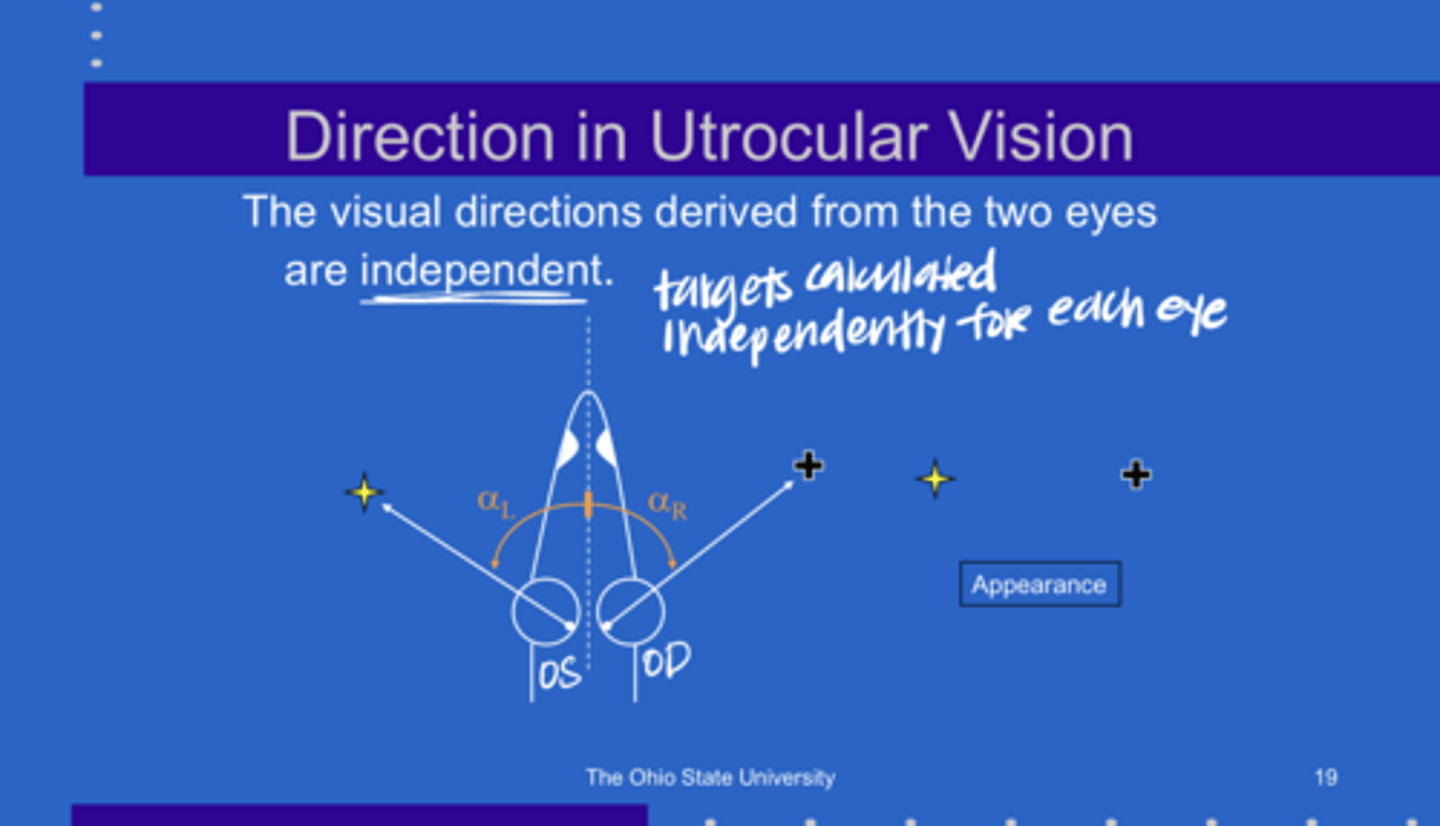
With utrocular vision, the visual directions derived from the 2 eyes are _______
independent
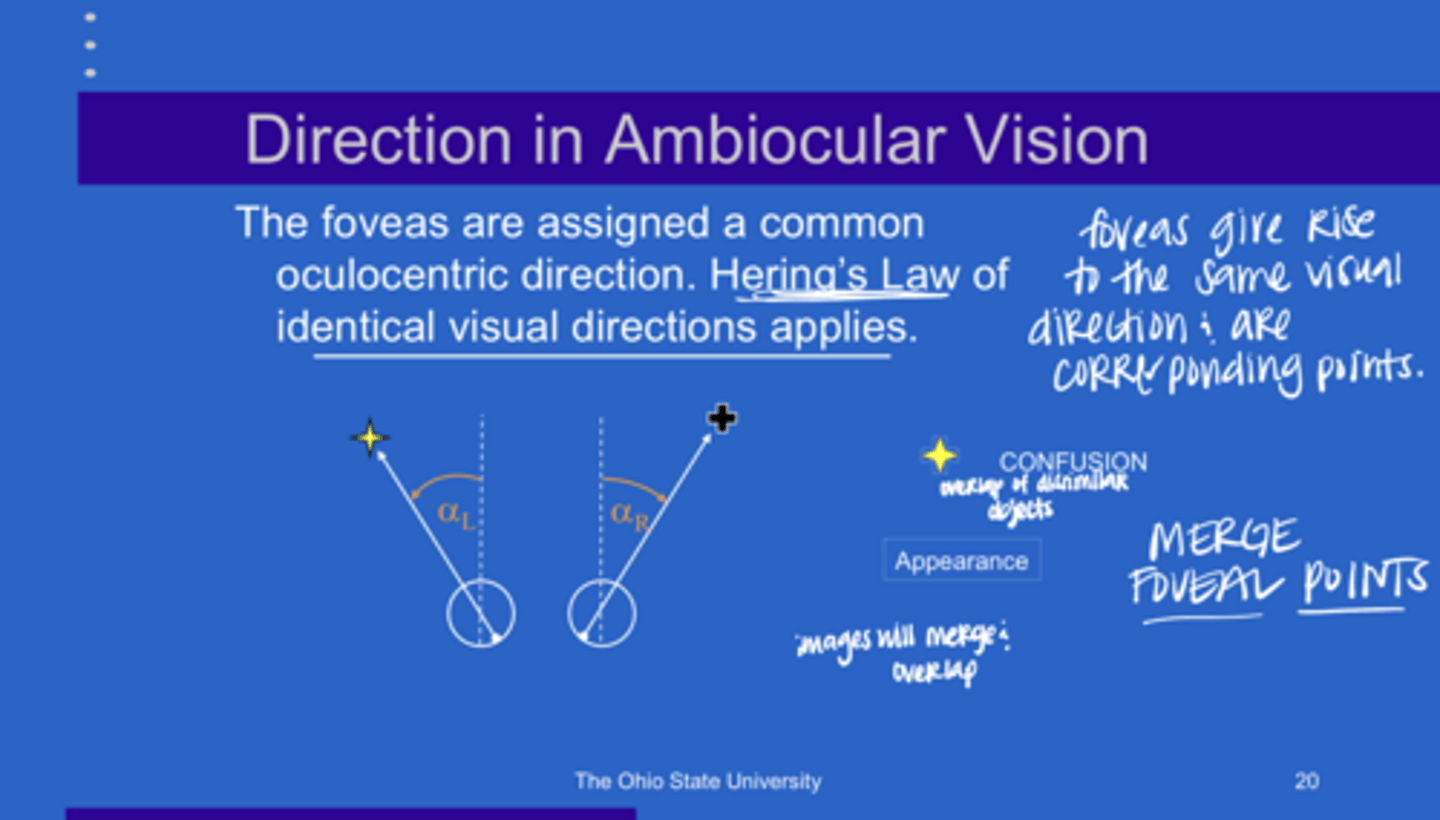
With ambiocular vision, the foveas are assigned a common _________
oculocentric direction
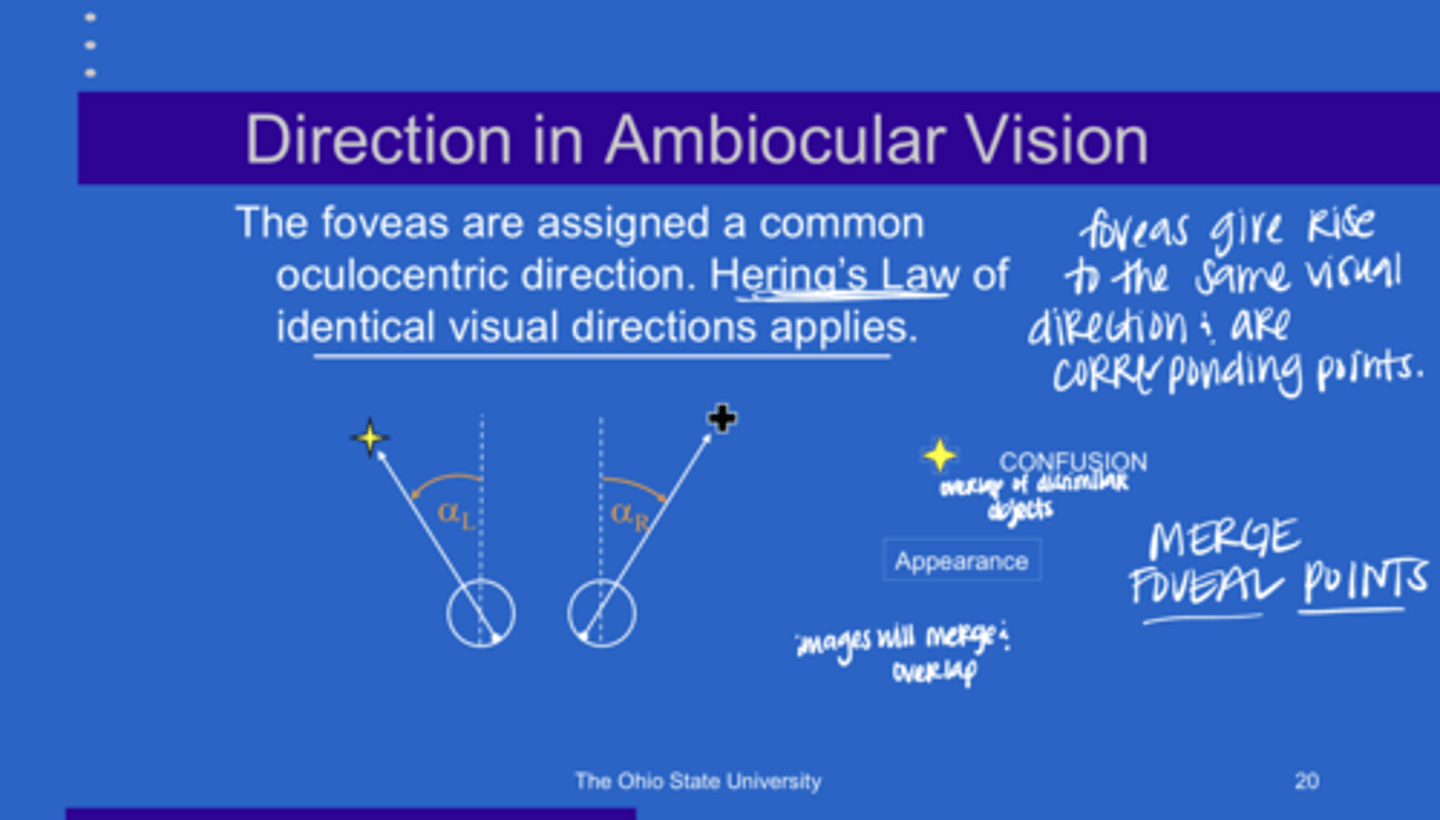
With ambiocular vision, what Law applies?
Hering's Law of Identical Visual Directions
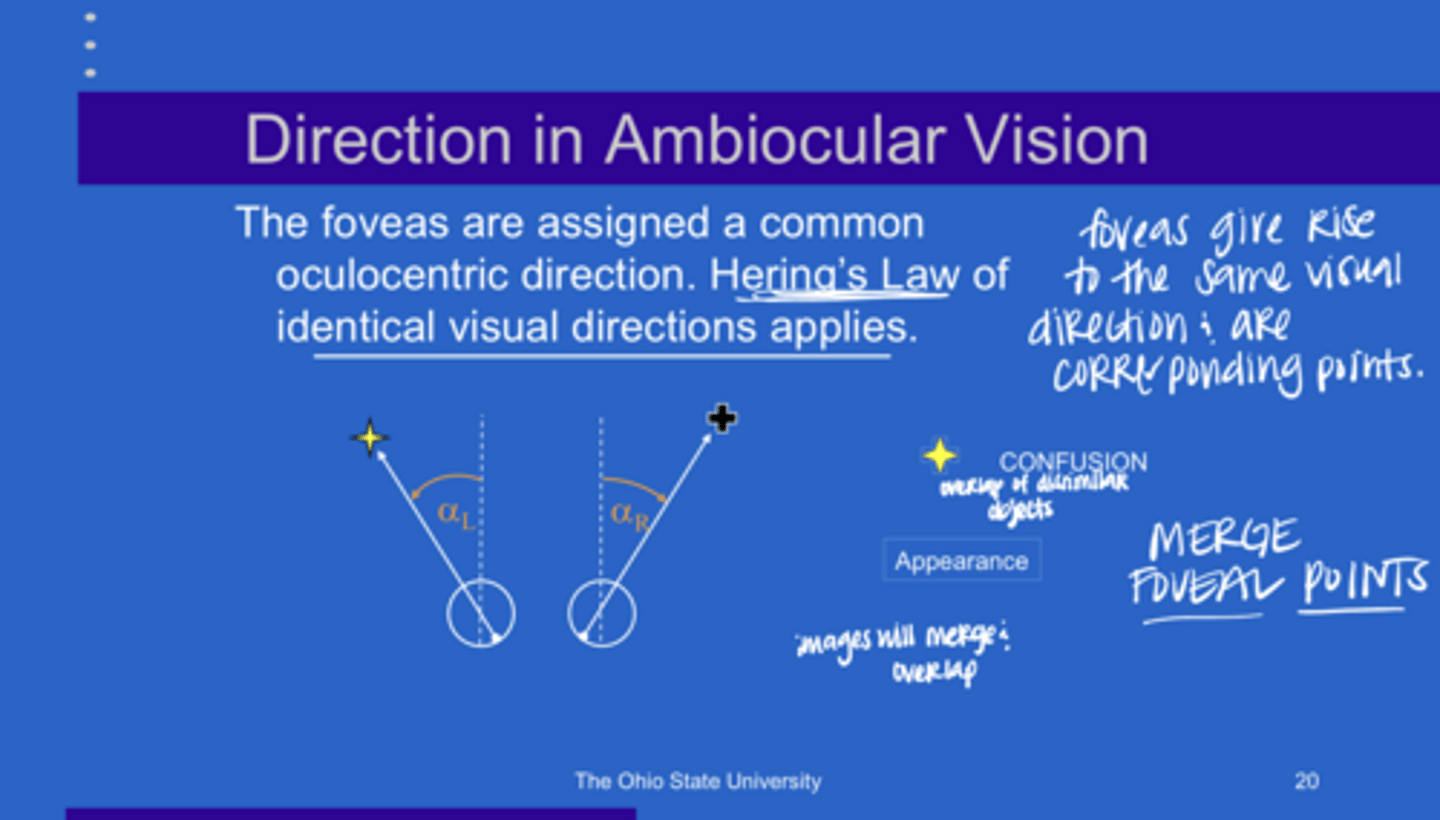
Are the foveas in ambiocular vision corresponding points?
Yes
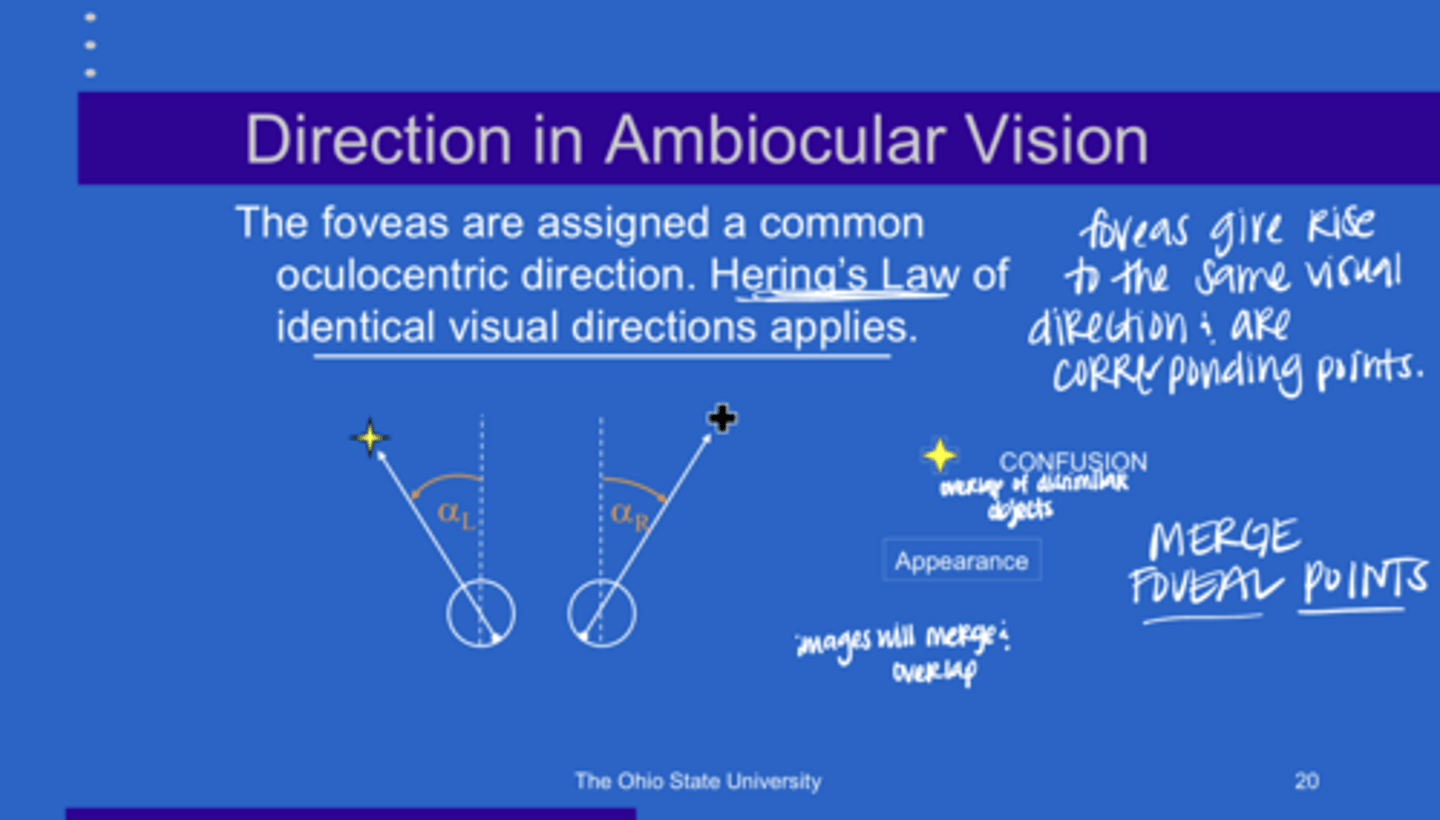
overlap of dissimilar objects
confusion
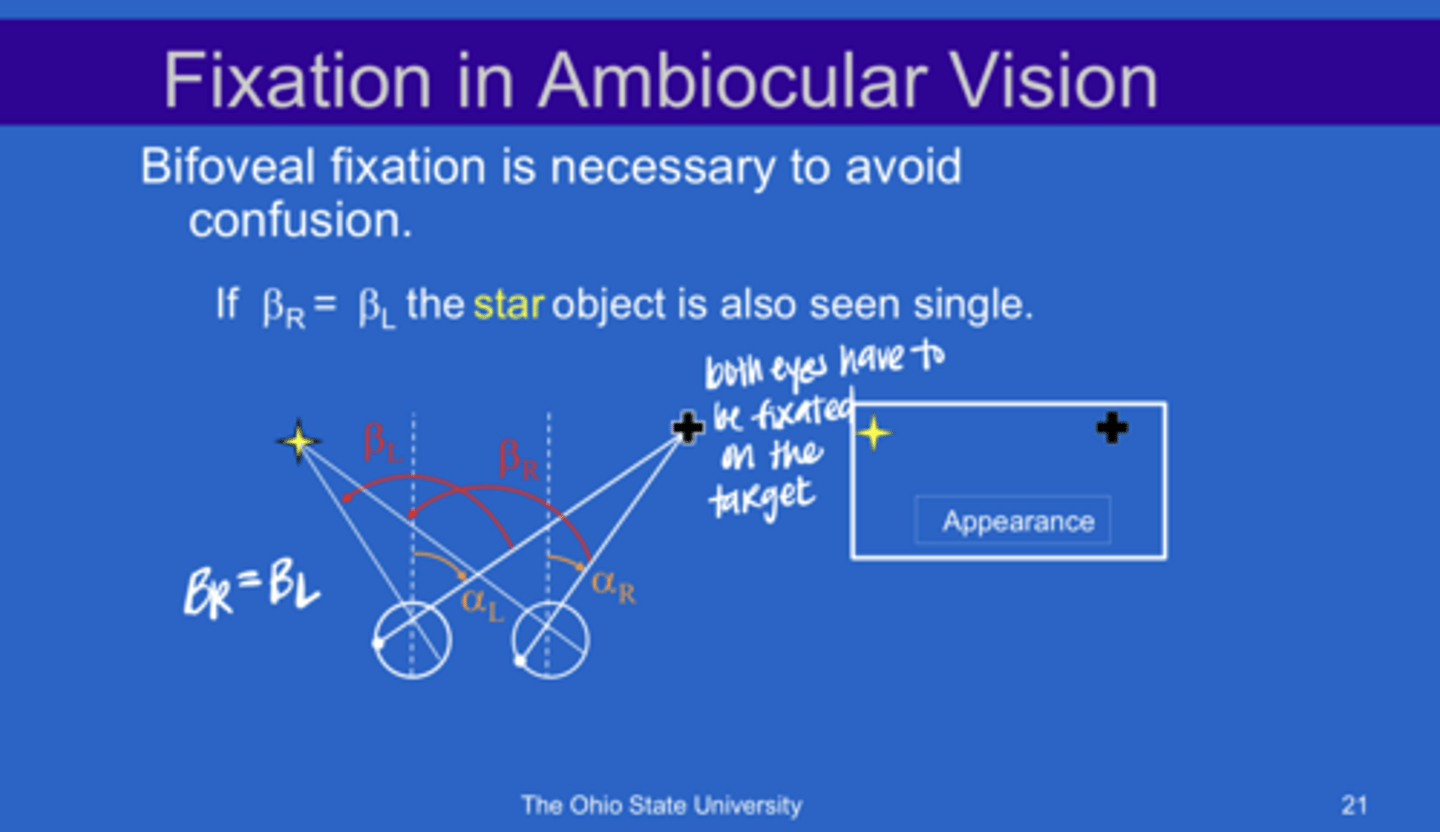
______ is necessary to avoid confusion
Bifoveal fixation
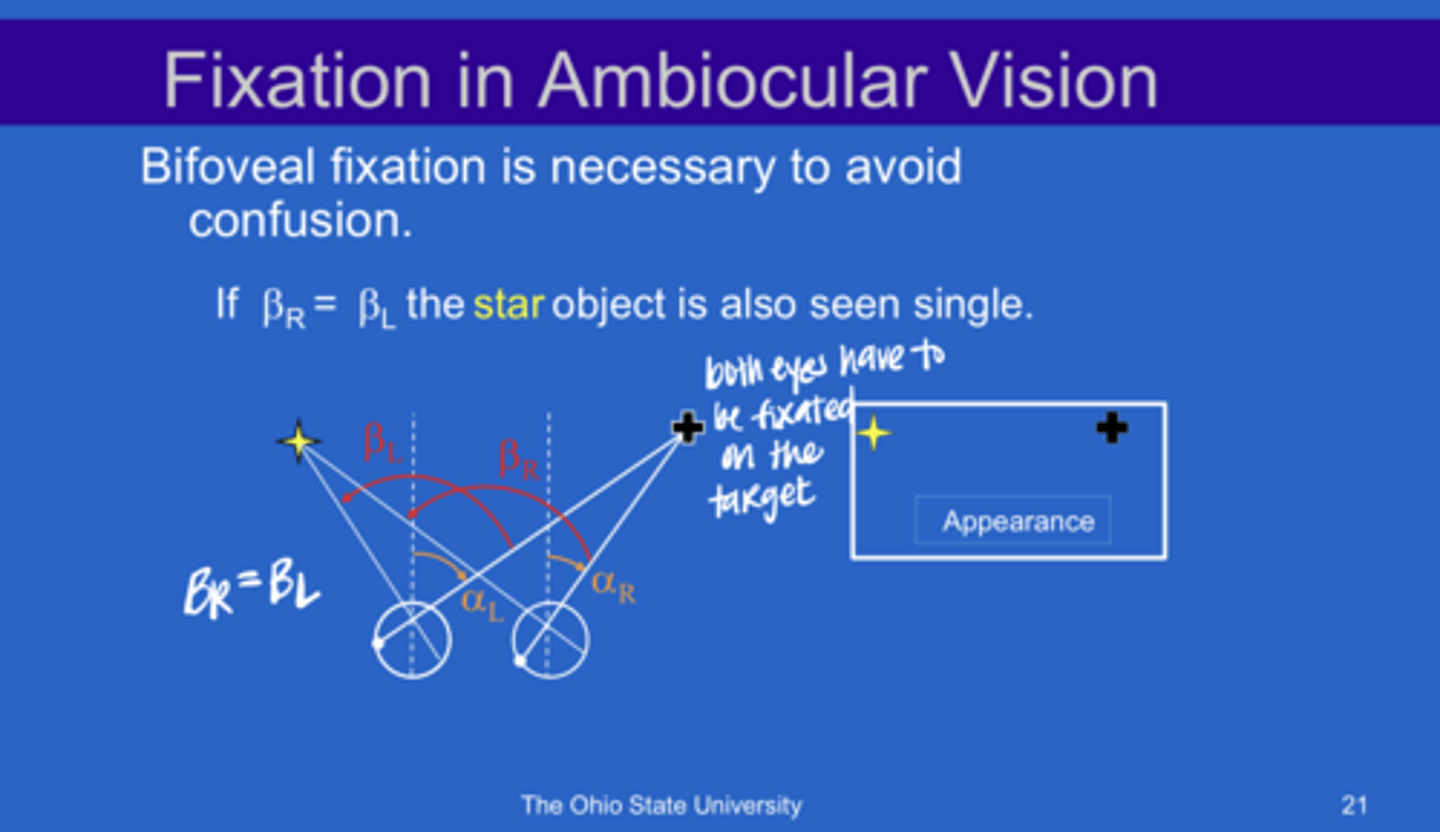
If βR = βL, the star object will also be seen as ______
single
How does monocular vision differ from binocular vision in humans?
-depth perception
-brightness perception
-light adaptation
-light detection threshold
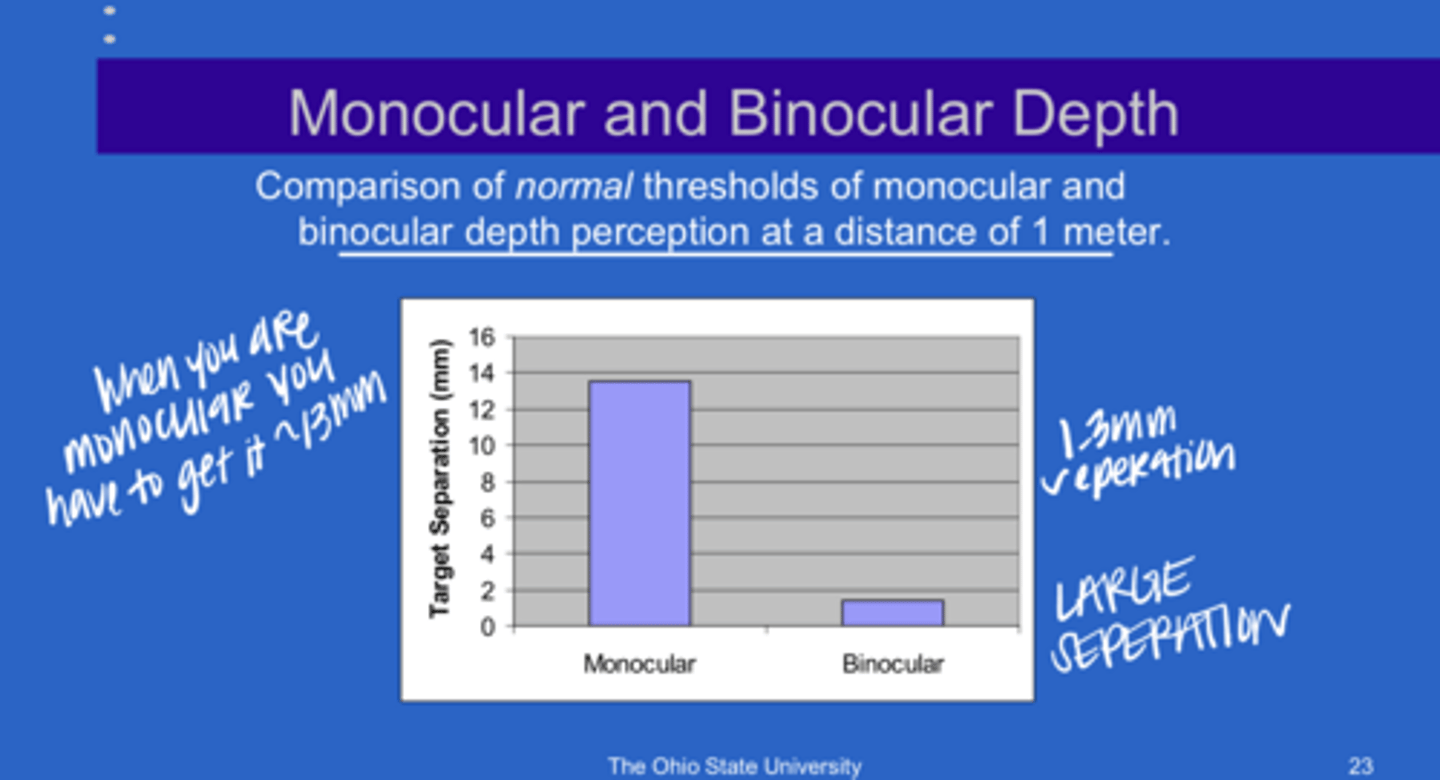
Comparison of Normal Thresholds of Monocular and Binocular Depth Perception at a Distance of 1m (Pic)
Comparison of Normal Thresholds of Monocular and Binocular Depth Perception at a Distance of 1m (Pic)
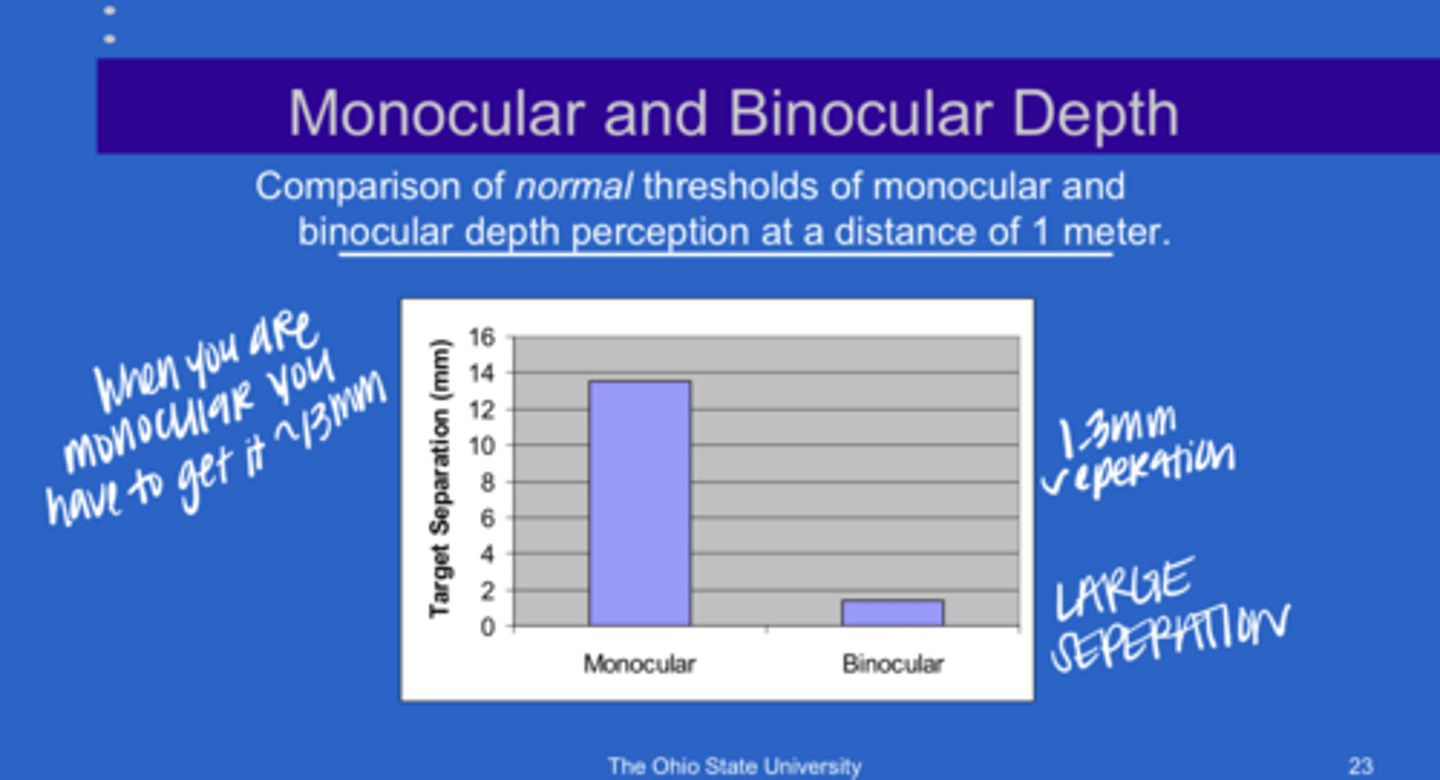
Depth Perception is ___x stronger binocularly at near distances
10
True or False:
Brightness viewing with both eyes is normally brighter than viewing with one eye only
false -- brightness viewing with both eyes is normally the same as with one eye
Why is brightness viewing with both eyes normally the same as with one eye?
the luminances of the 2 eyes are the avg NOT the sum of the luminances between the eyes
True or False:
The eyes dark adapt independently of each other
true
What is an example of dark adapting one eye only?
Patching one eye will allow that eye to dark adapt without affecting the other eye
What is the probability of seeing with 2 eyes?
75%
What are the direction specifications?
-ocular or eye direction (α)
-oculocentric or relative direction (B)
-egocentric or absolute direction (χ)
Sign Convention for Directions
Right
+
Sign Convention for Directions
Left
-
Sign Convention for Directions
Up
+
Sign Convention for Directions
Down
-
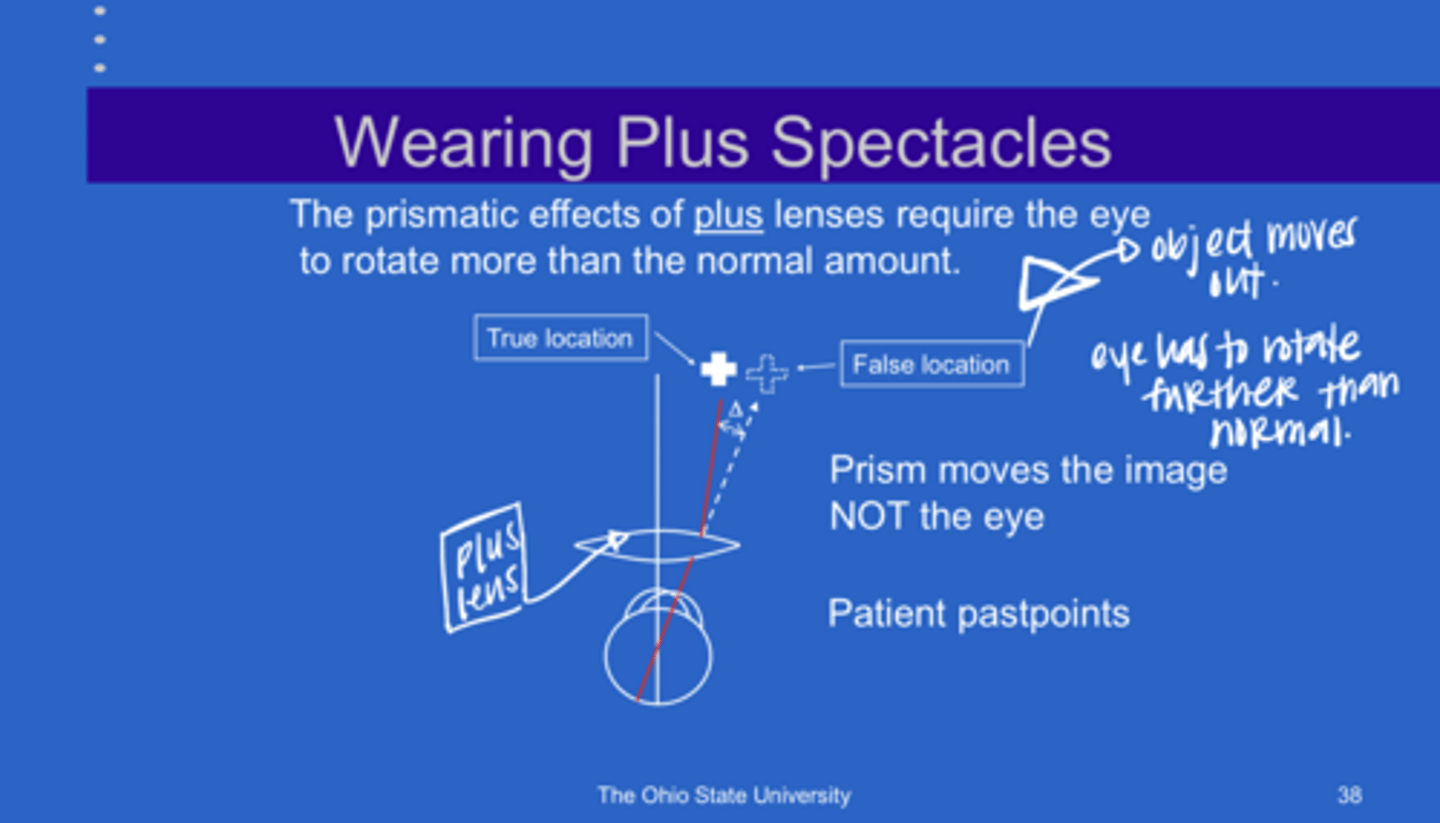
The prismatic effects of plus lenses will require the eye to do what?
require the eye to rotate more than the normal amount
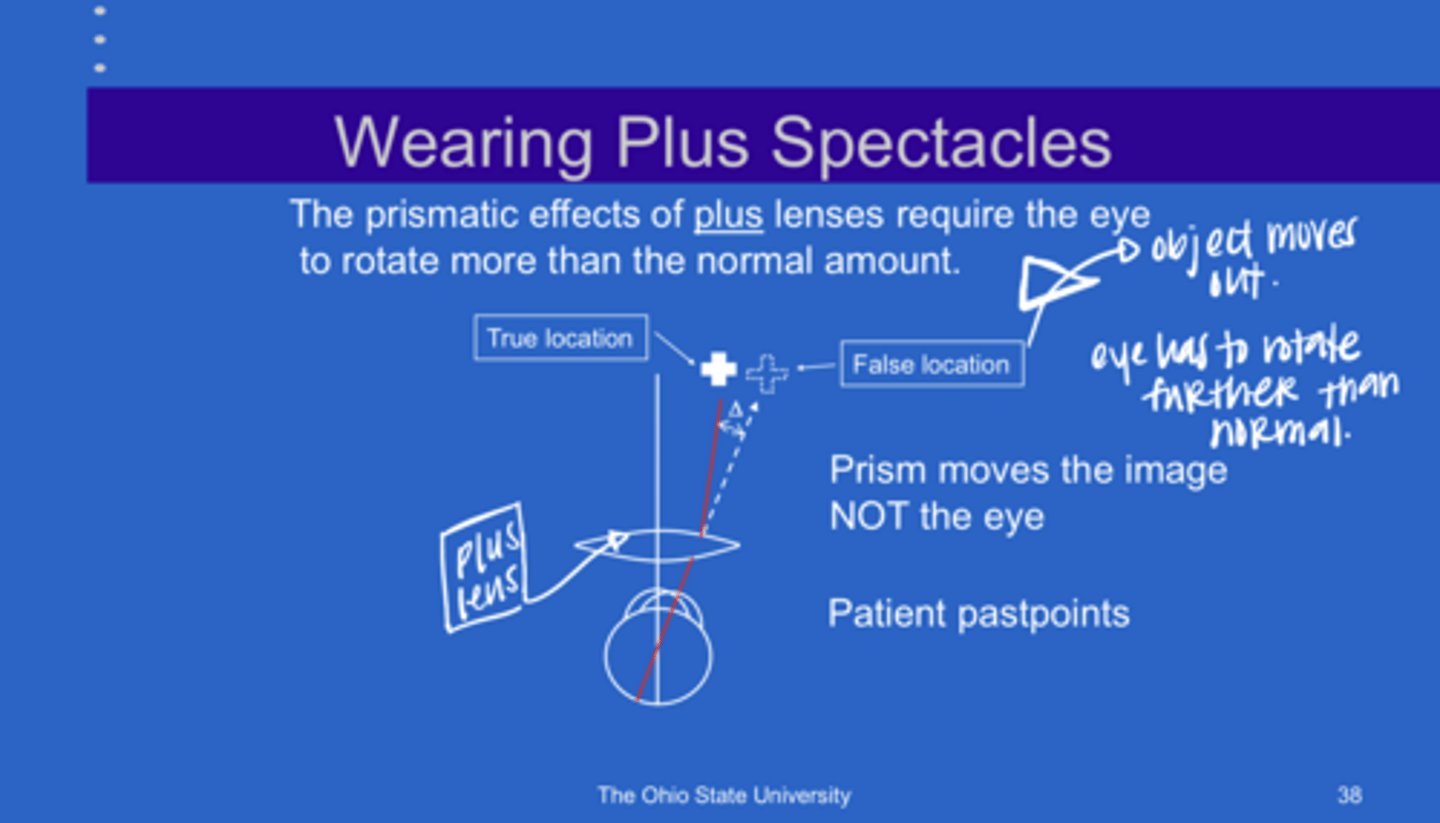
Prism will move the ____ not the ____
image, eye
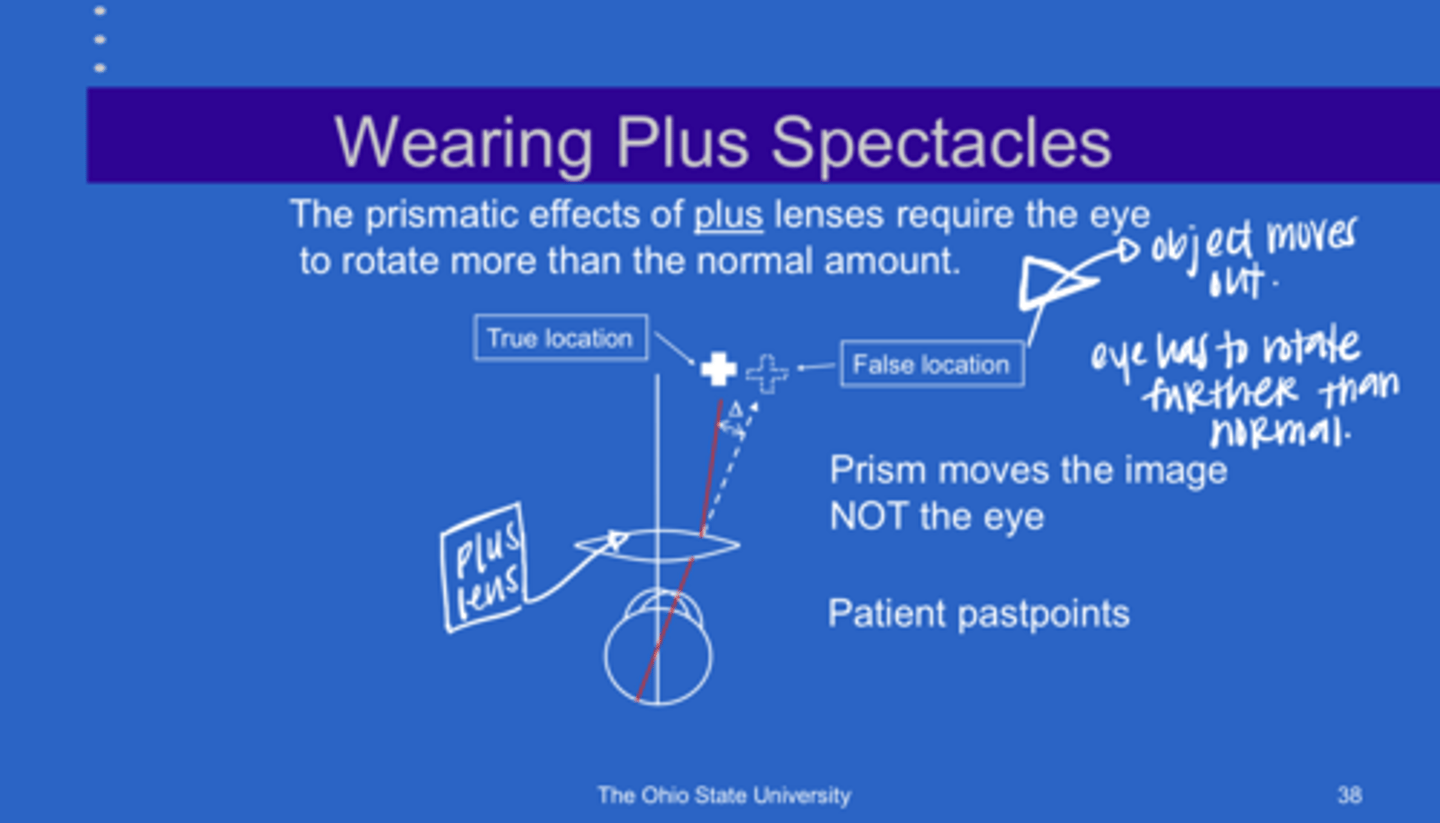
When patient is wearing plus lenses, _____ is possible
pastpointing
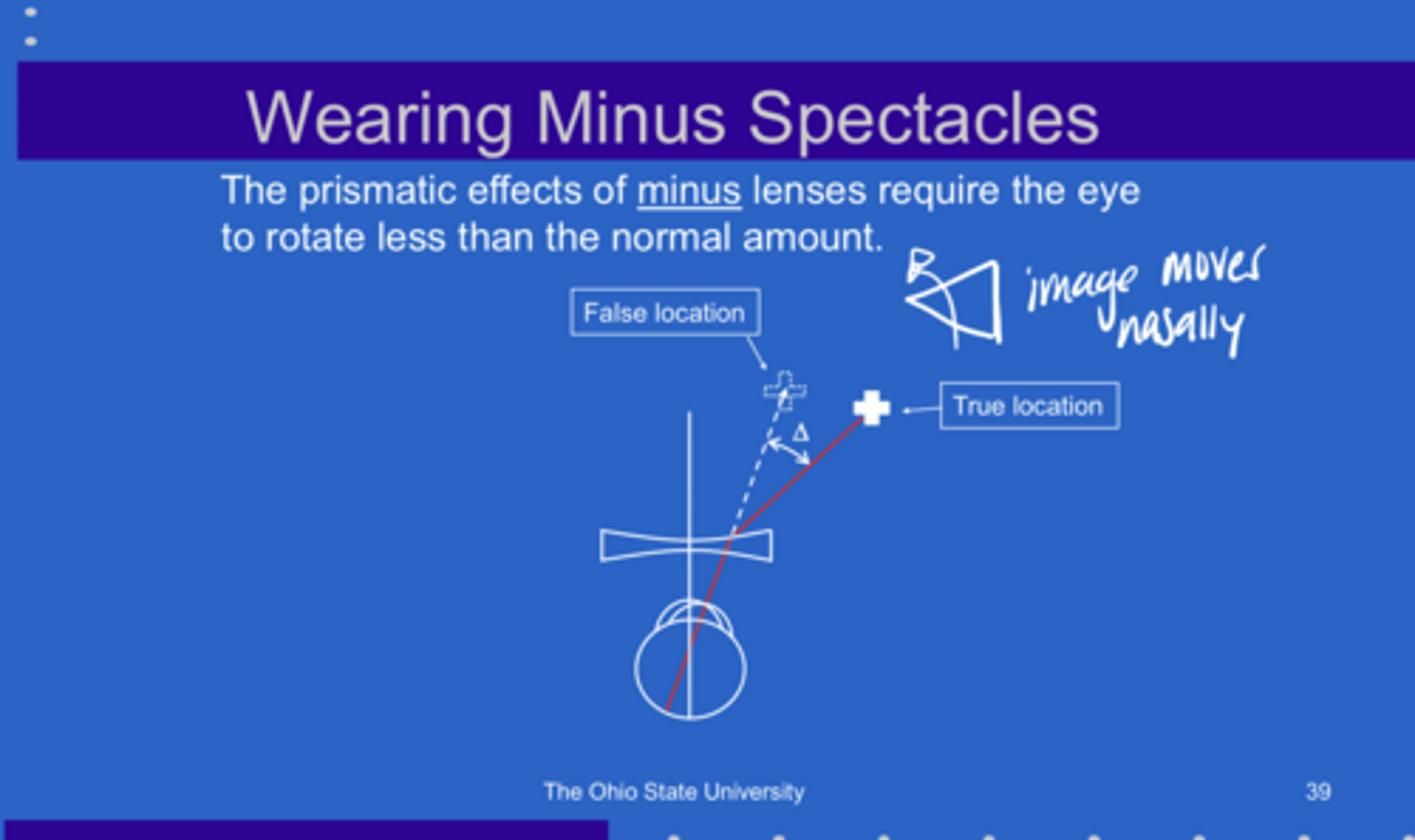
The prismatic effects of minus lenses will require the eye to do what?
require the eye to rotate less than the normal amount
True or False:
Patients will adapt their limb proprioception to match vision
true
Over time, patients can have two separate _____ if they switch from glasses to CLs often
matrixes
Switching from glasses to CLs is disorienting for what patients?
TBI patients whose visual adaptation is poor
Are bifocals disorienting for TBI patients whose visual adaptation is poor?
Yes
Types of Binocular Direction
-ocular
-oculocentric
-egocentric
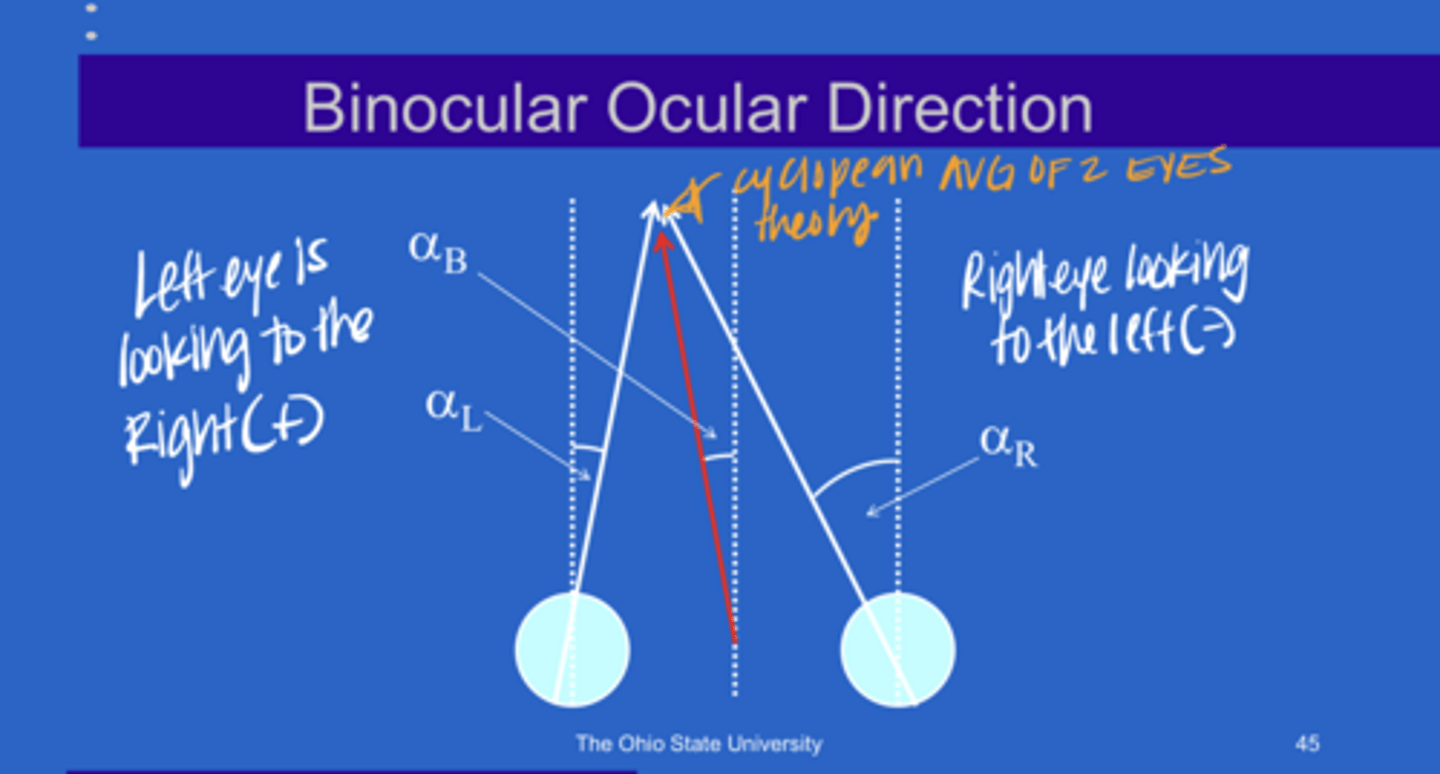
How are ocular directions (αR and αL) from each eye combined in binocular vision?
1) Dominant Eye Theory
2) Cuclopean Theory
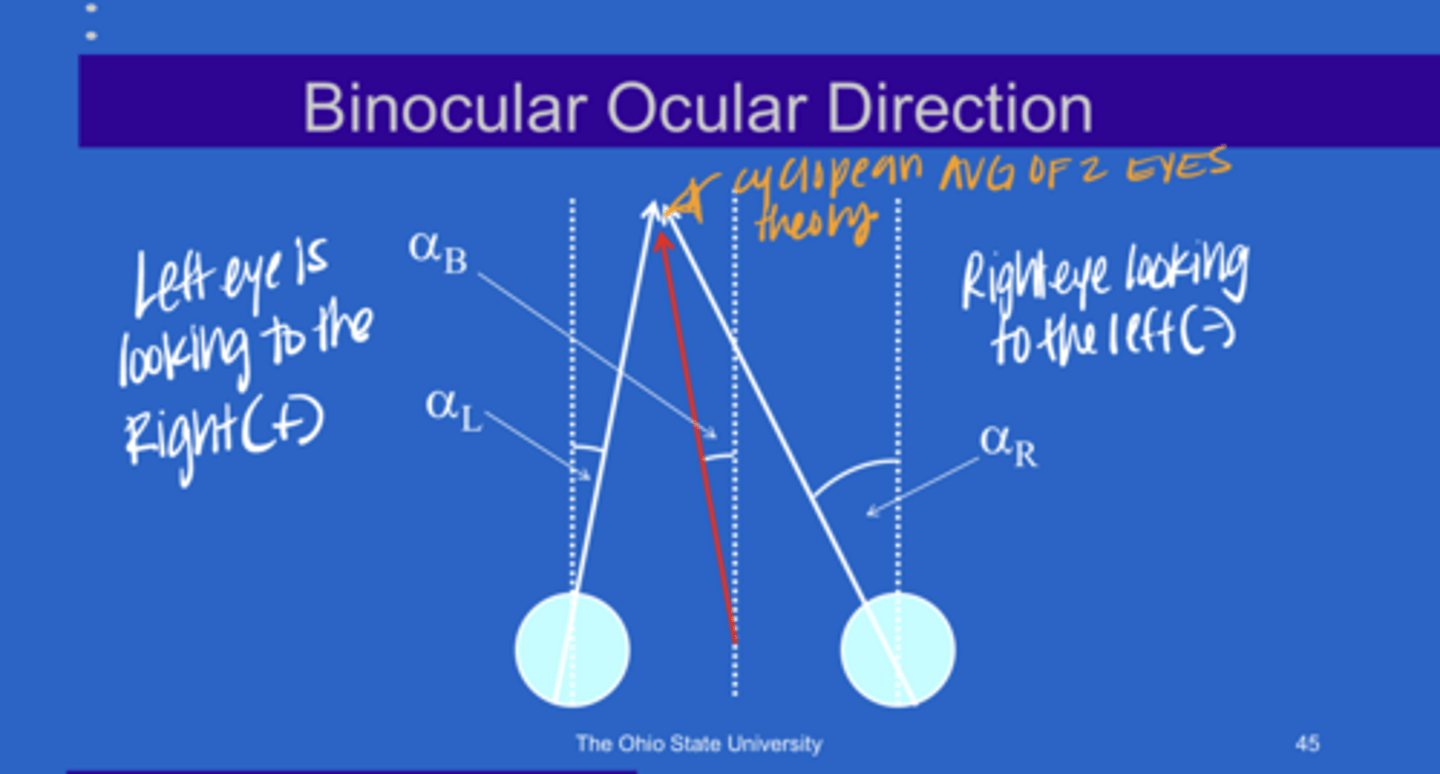
What is the dominant eye theory of binocular ocular direction?
Direction is that of the dominant eye (αR OR αL)
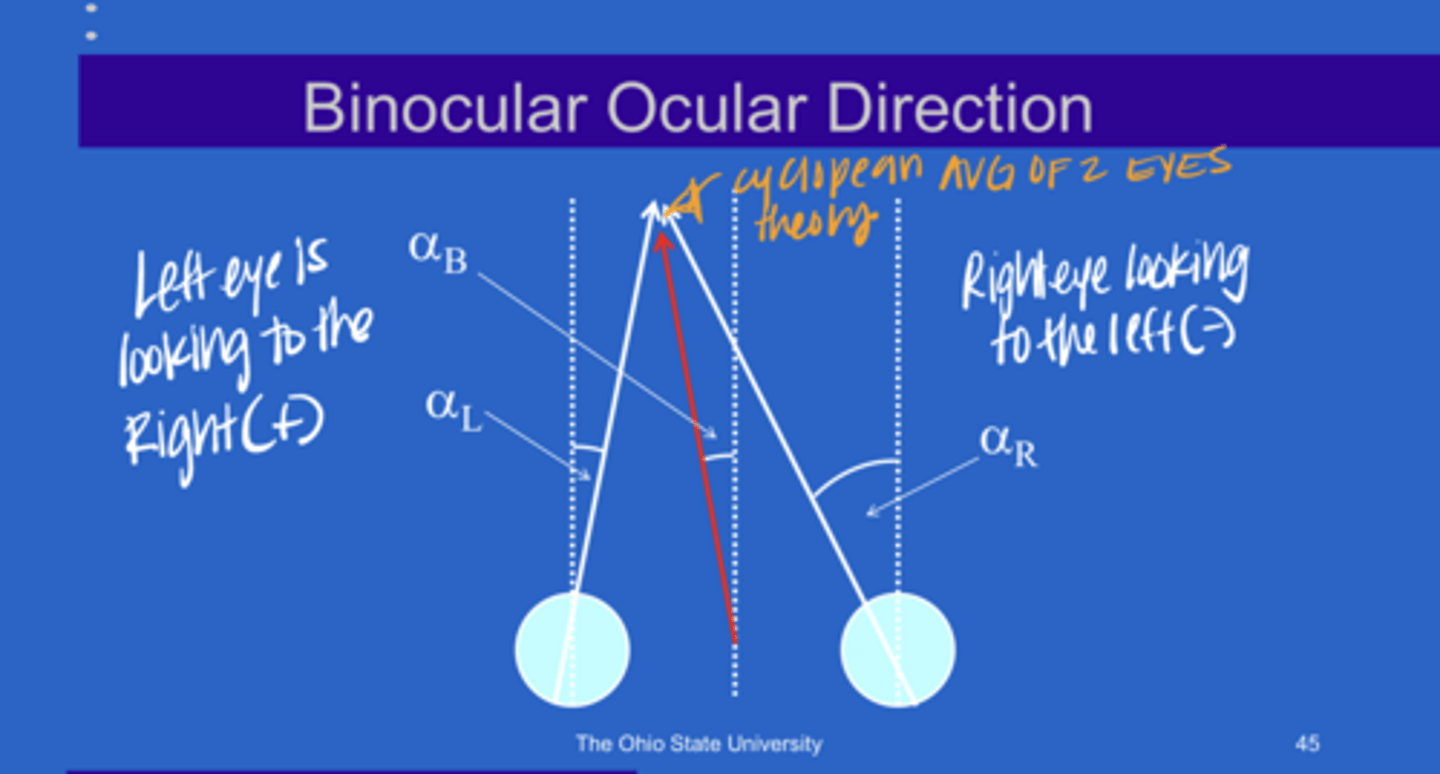
What is the Cyclopean Theory of binocular ocular direction?
The direction is the avg of the 2 eyes (αR + αL) / 2
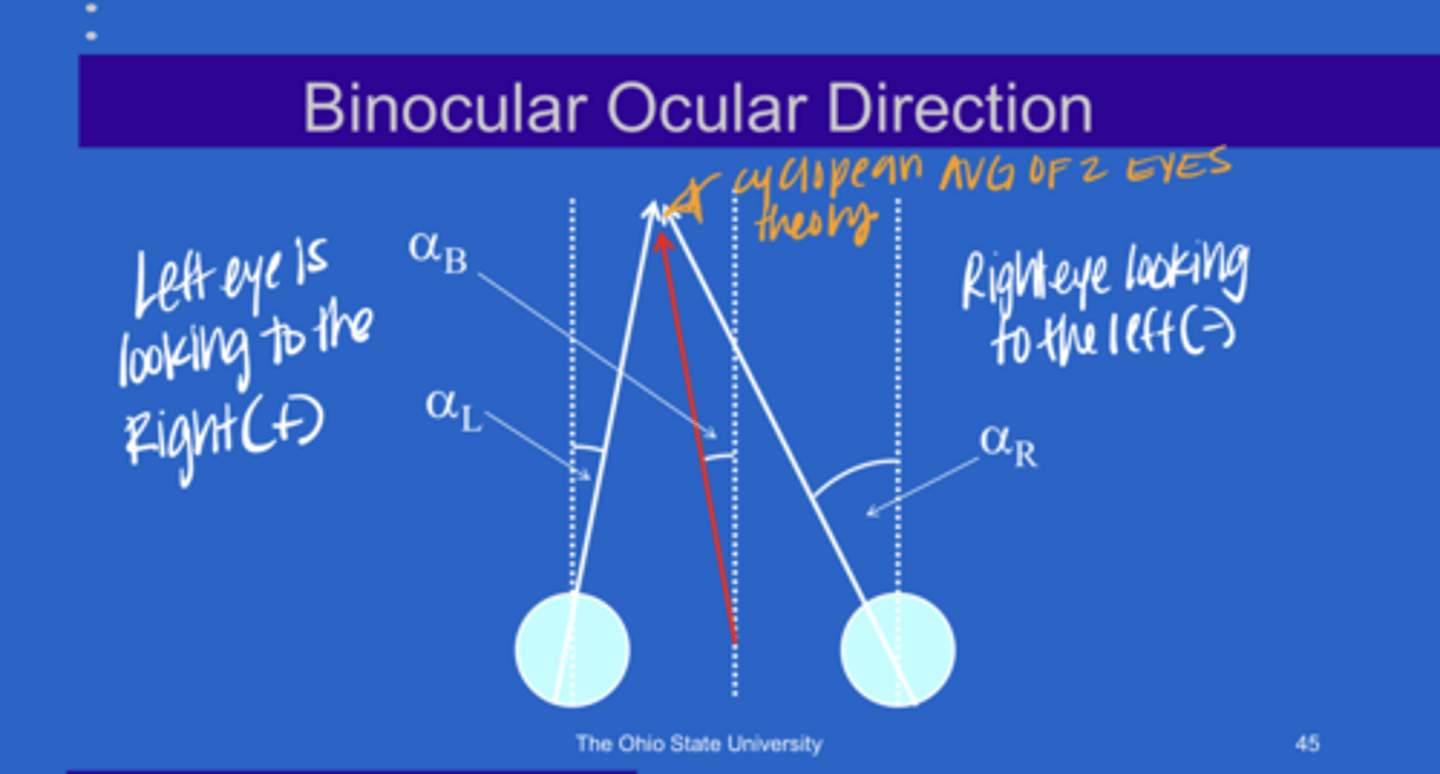
Binocular Ocular Direction -- Combining aR and αL (Pic)
Binocular Ocular Direction -- Combining aR and αL (Pic)
How are oculocentric directions (βR and βL) combined in binocular vision?
1) Dominant Eye Theory
2) Cyclopean Theory
What is the dominant eye theory of binocular oculocentric direction?
Either βR or βL is suppressed and direction is given by the other
What is the Cyclopean theory of binocular oculocentric direction?
βR and βL are averaged
How is egocentric information (a + β) for each eye combined in binocular vision?
1) Dominant Eye Theory
2) Cyclopean Theory
What is the dominant eye theory of binocular egocentric direction?
either (αL + βL) or (αR + βR)
What is the Cyclopean theory of binocular egocentric direction?
Ego = (αL + βL) + (aR + βR) / 2
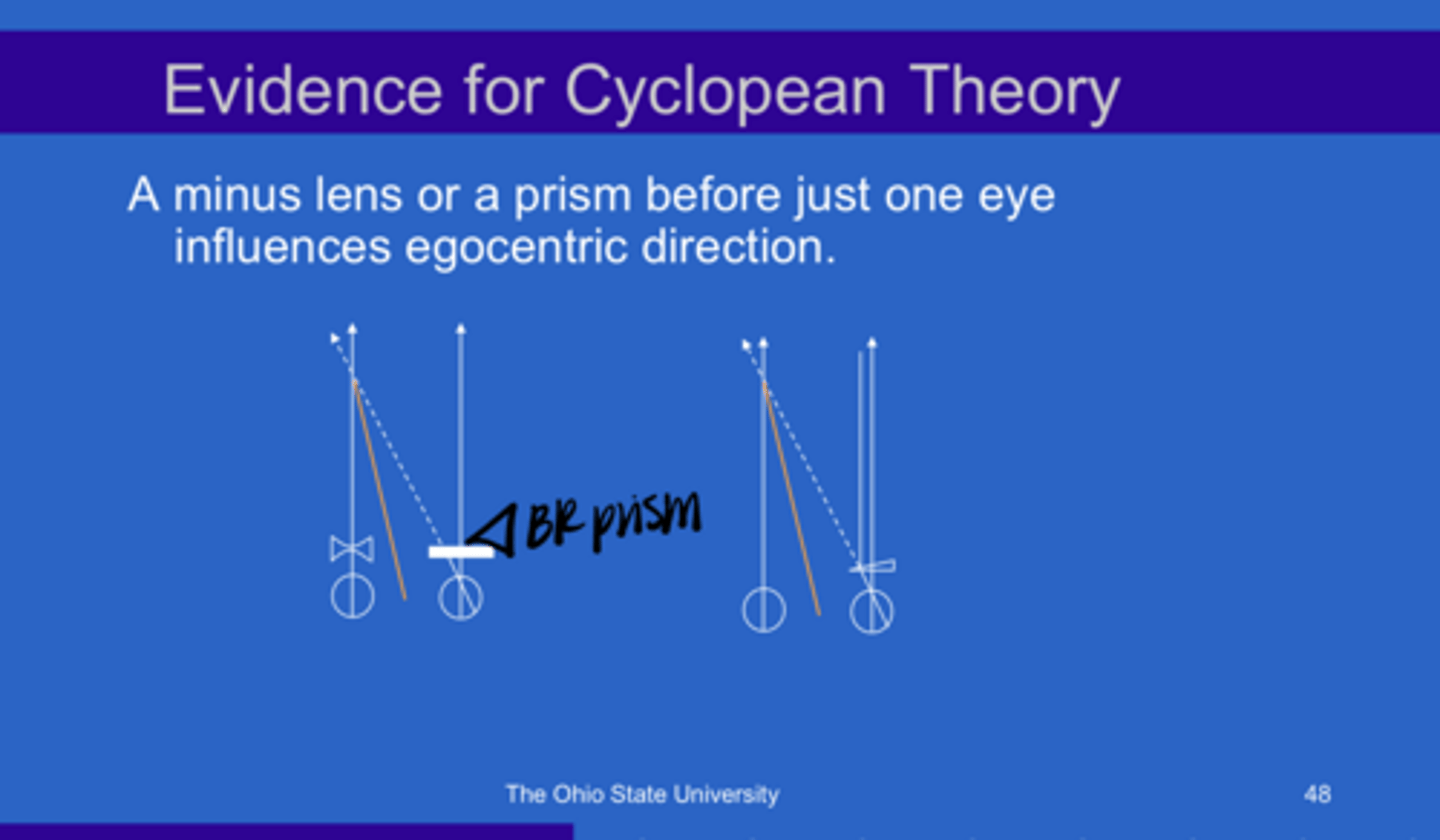
True or False:
A minus lens or a prism in front of just ONE EYE will influence egocentric direction
true
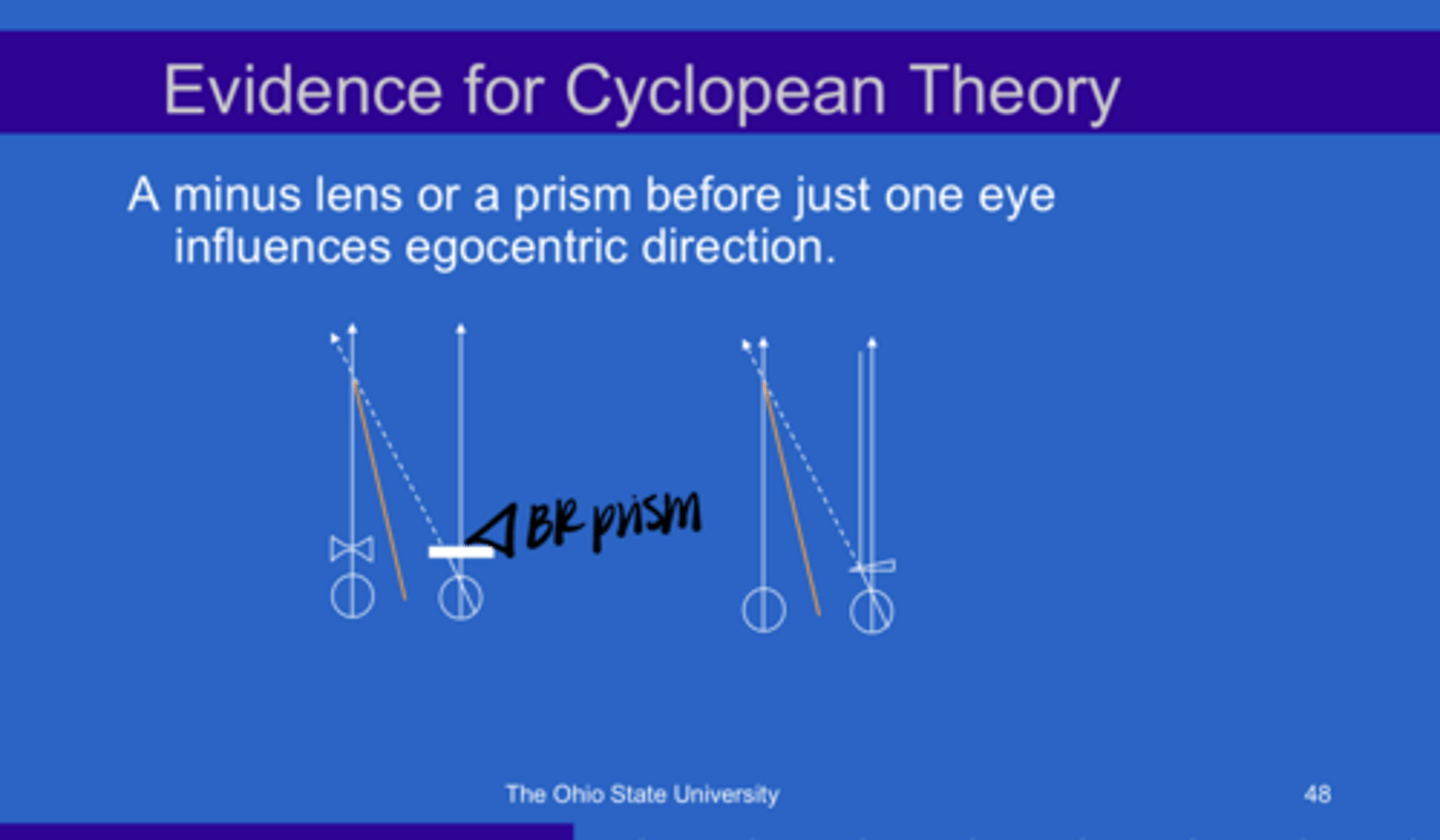
A minus lens or a prism before JUST ONE EYE, (will/will not) influence the egocentric direction of the target
will
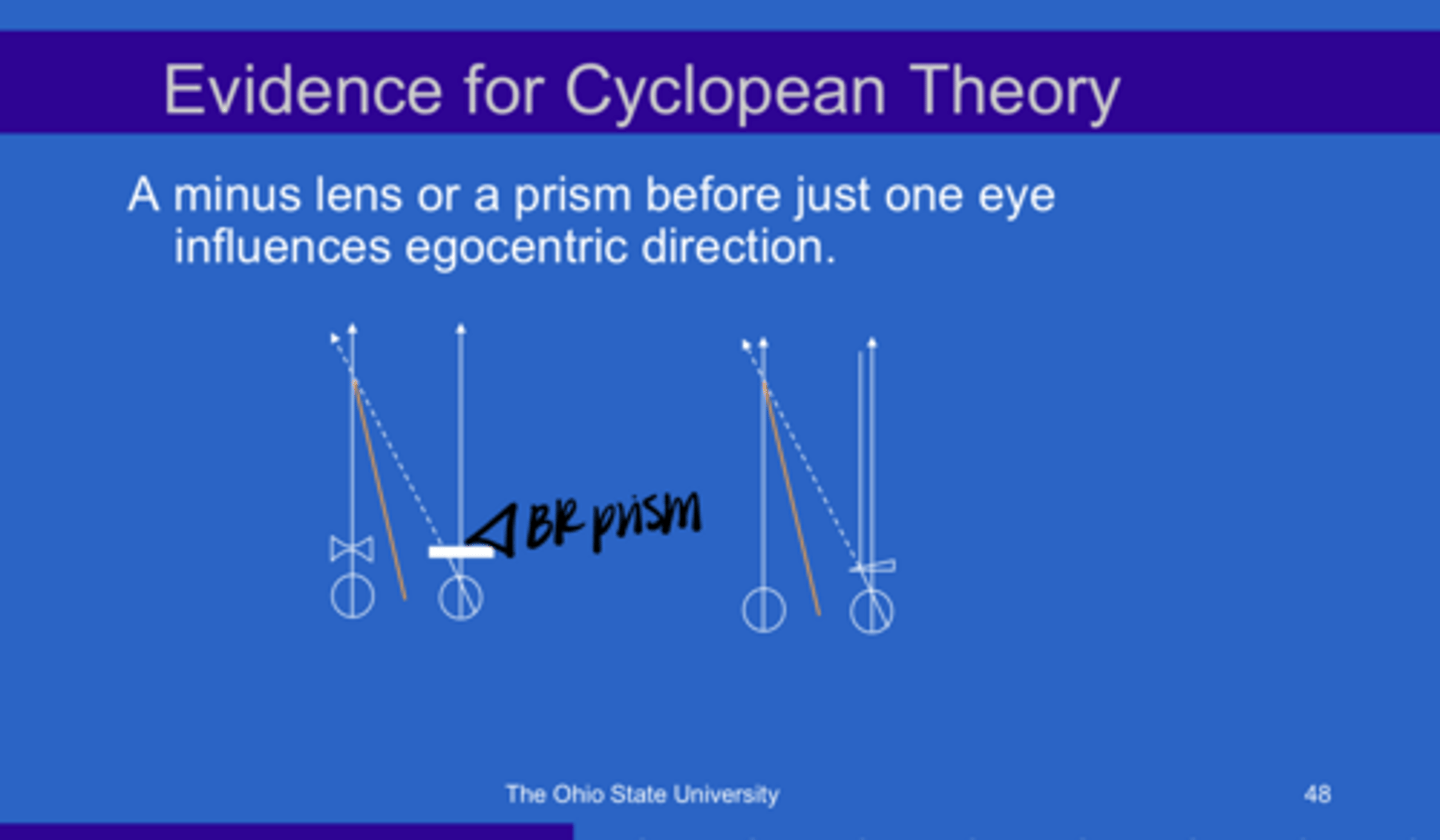
If BR prism is placed in front of ONE EYE, will the target appear to move binocularly?
Yes -- moves to the left no matter which eye you put it in front of
What is the egocenter?
the body reference point for egocentric direction
What is the location of the egocenter?
-dominant eye theory states egocenter is at the dominant eye (COR)
-cyclopean theory states egocenter is midway between the eyes
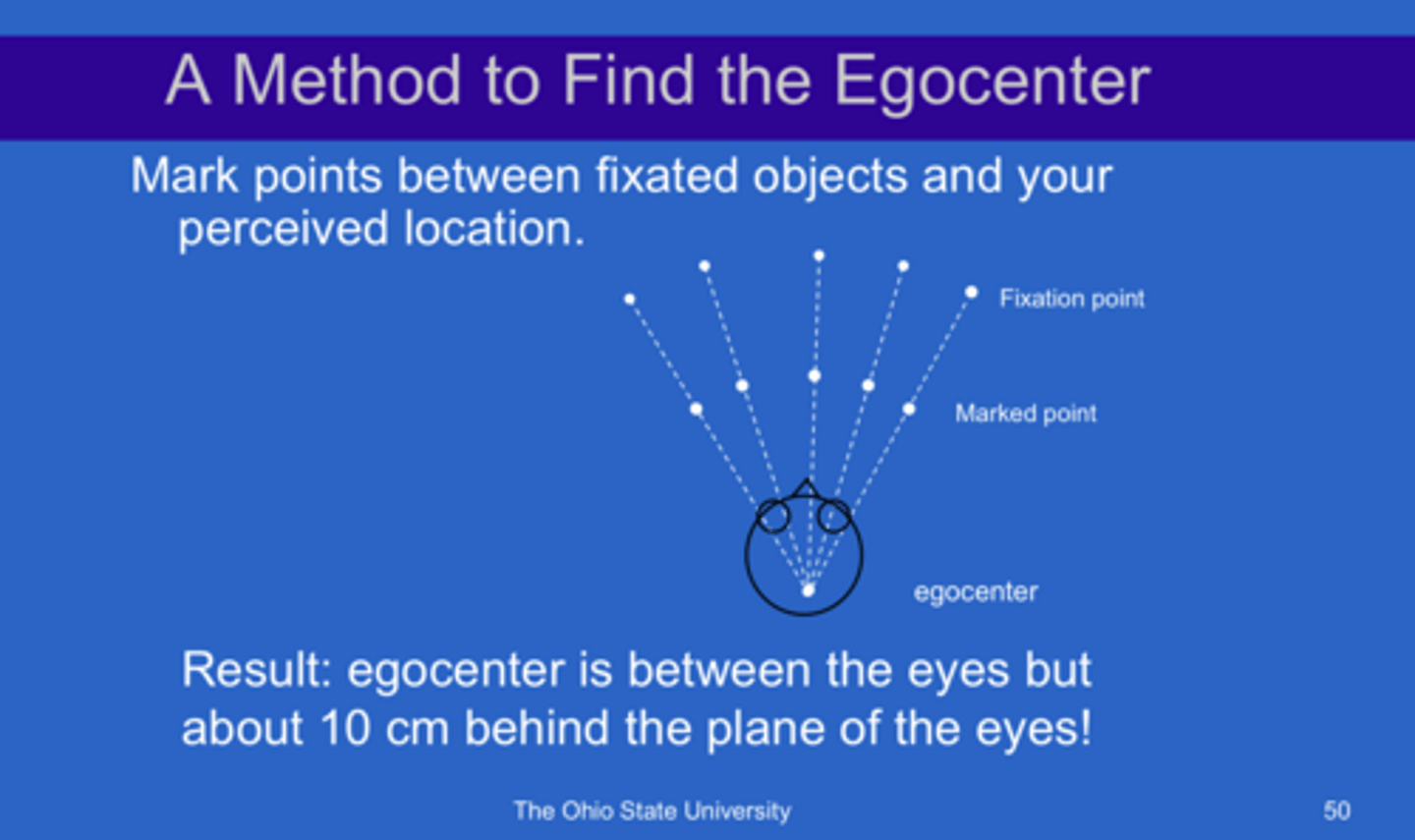
Method to Find the Egocenter?
mark points between fixated objects and your perceived location
-repeat process at different viewing angles
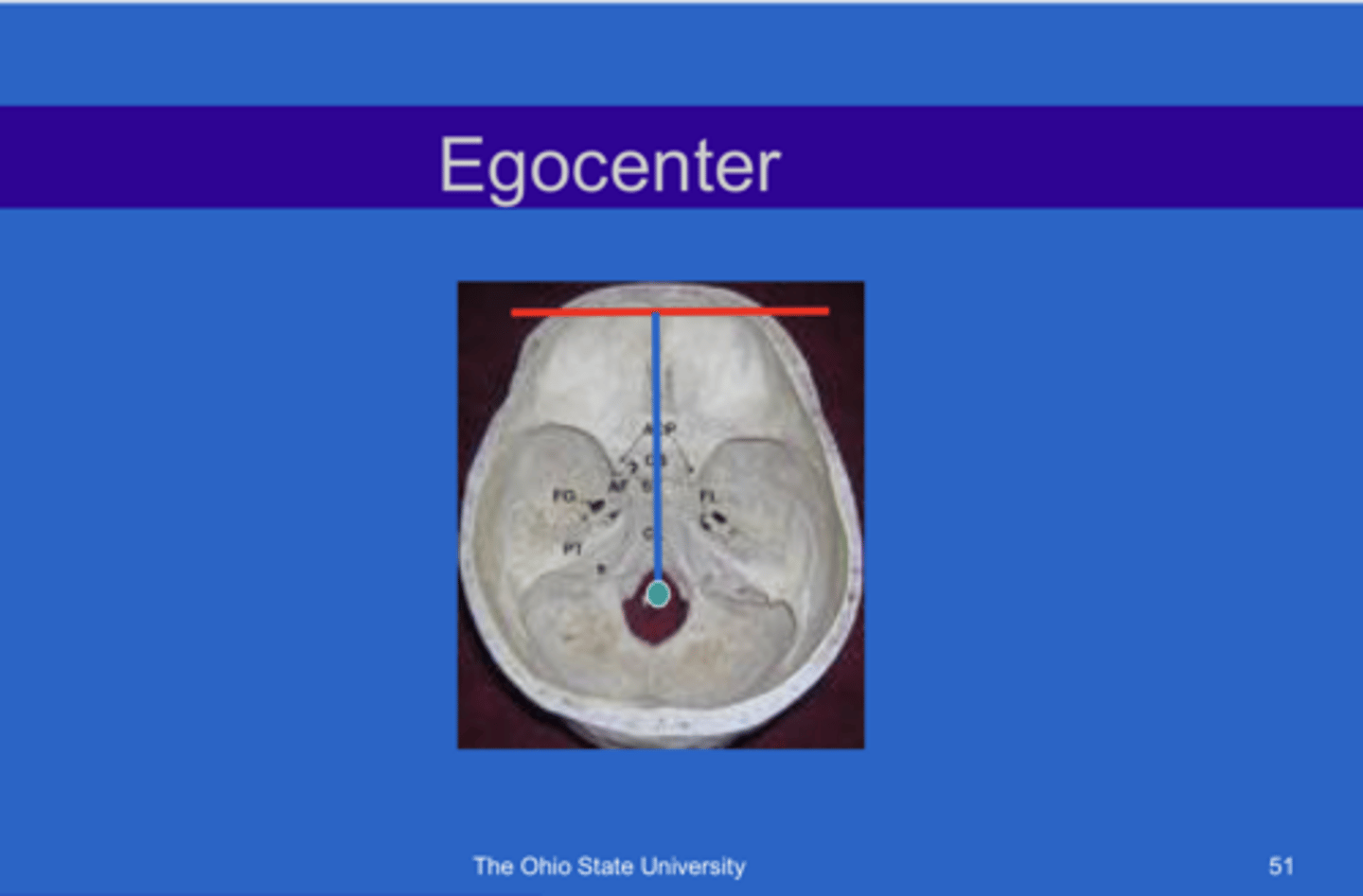
What is the result of finding the egocenter?
egocenter is between the eyes but about 10cm behind the plane of the eyees (above the foramen magnum)
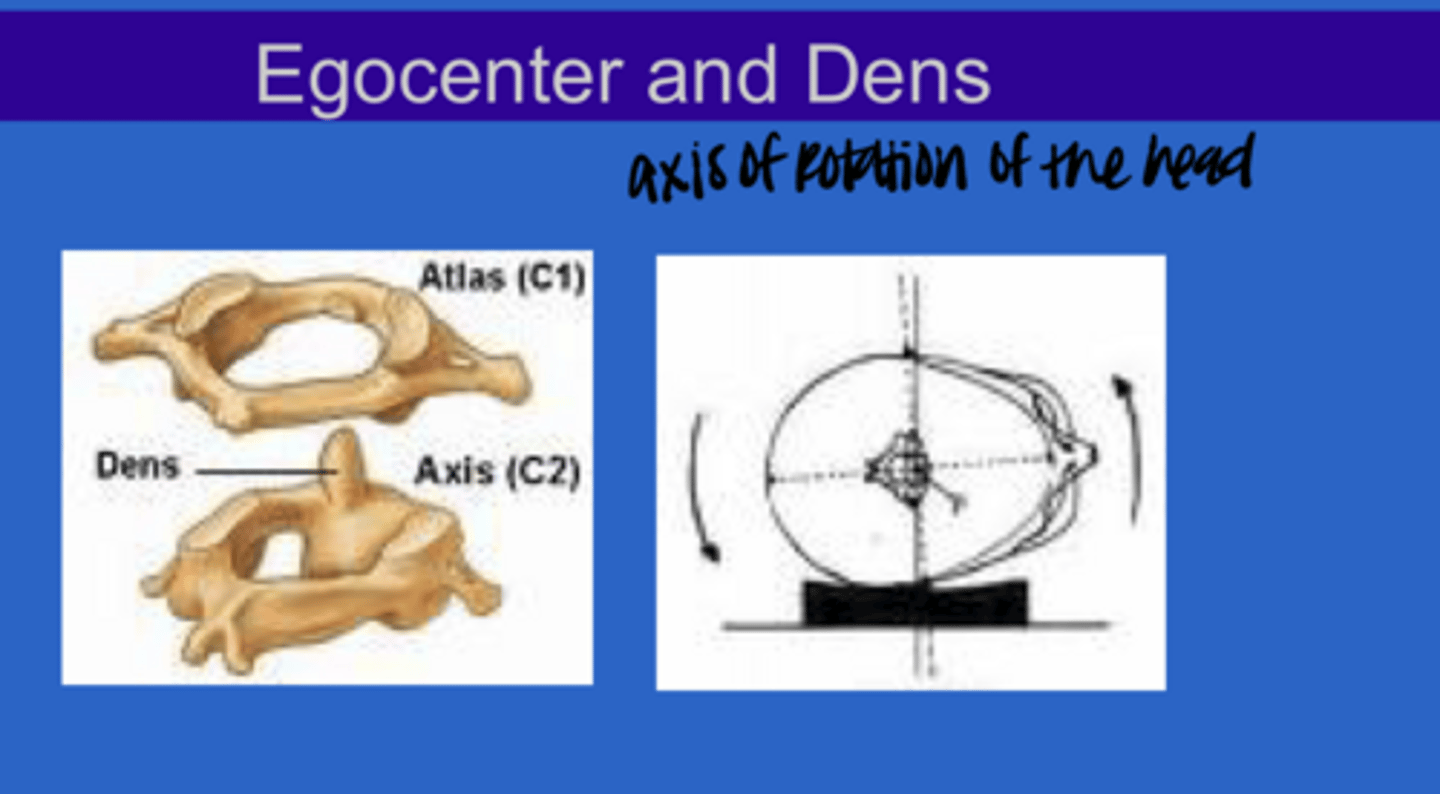
What is the dens?
axis of rotation of the head
Retinal points, one in each eye, having the same oculocentric direction
corresponding points
Are there oculocentric directions for EACH EYE?
Yes -- βR and βL are corresponding points
Theoretically, when do corresponding points occur?
When βR = βL
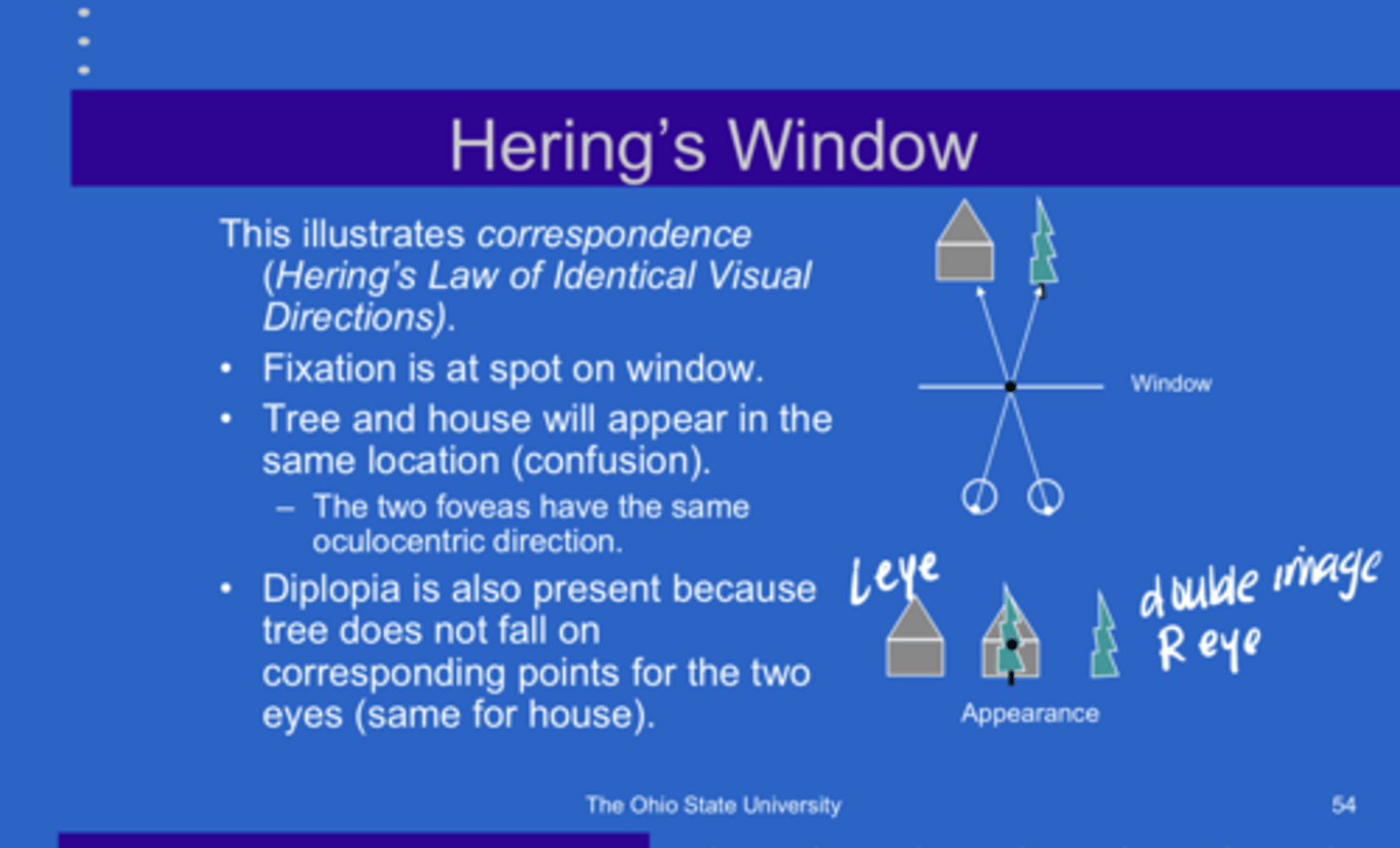
What does Hering's Window illustrate?
correspondence (Hering's Law of Identical Visual Directions)
Where is fixation at with Hering's window?
on a spot on the window
The tree and house will appear in the _______ with Hering's window
same location (confusion)
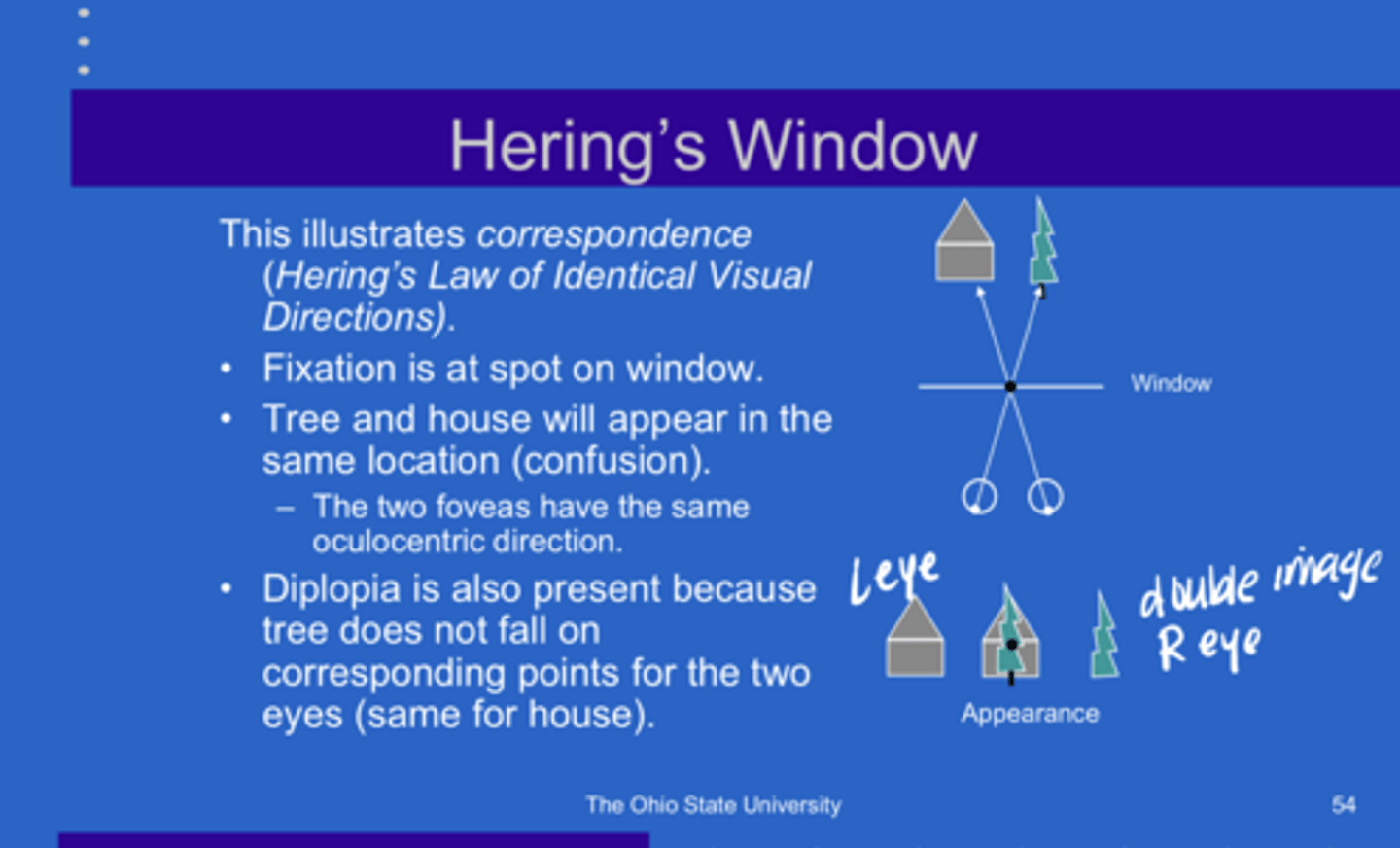
_____ is present in Hering's window because the tree DOES NOT fall on corresponding points for the two eyes
diplopia
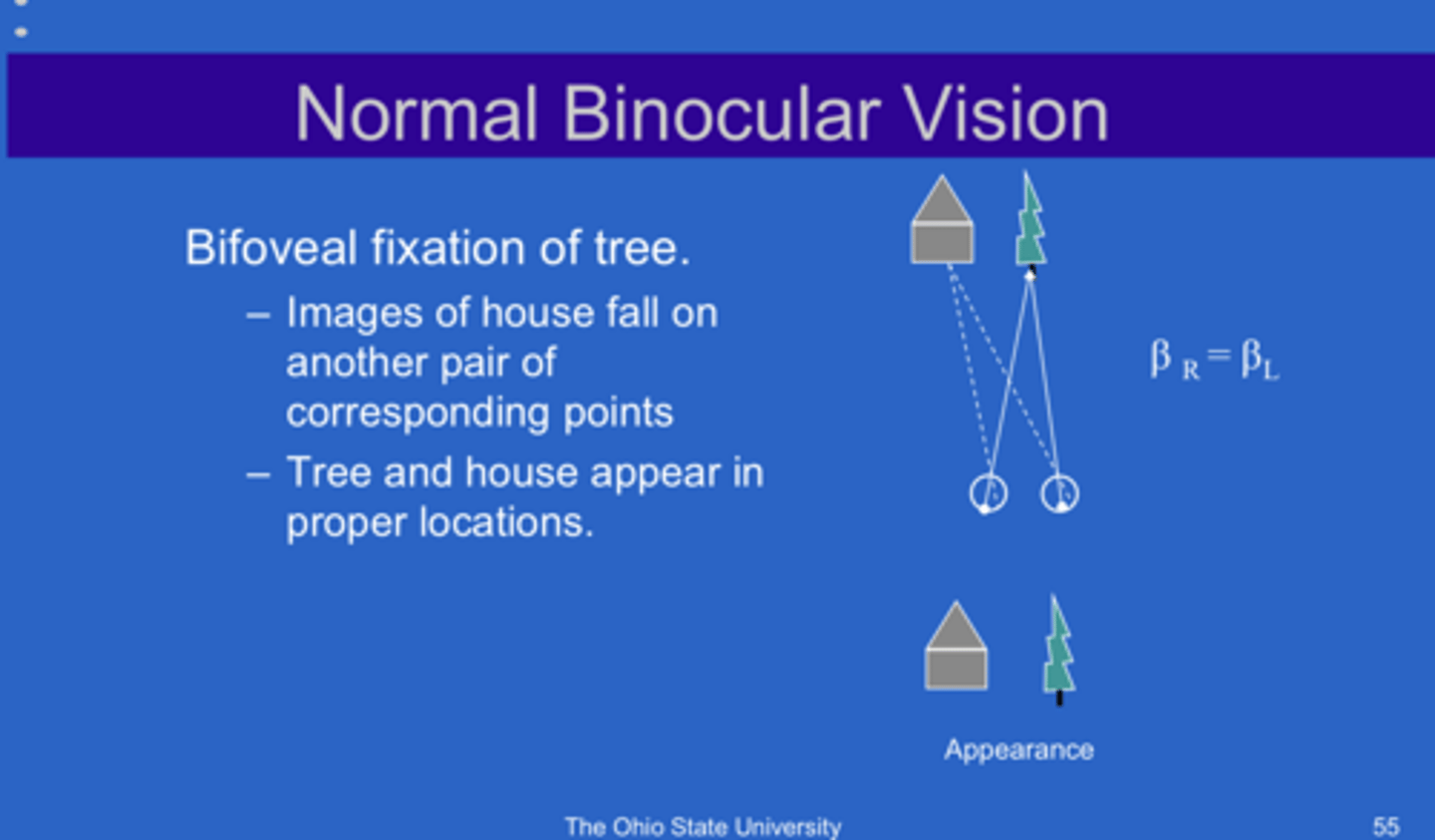
_____ of the tree will cause normal binocular vision and in its proper location
Bifoveal fixation
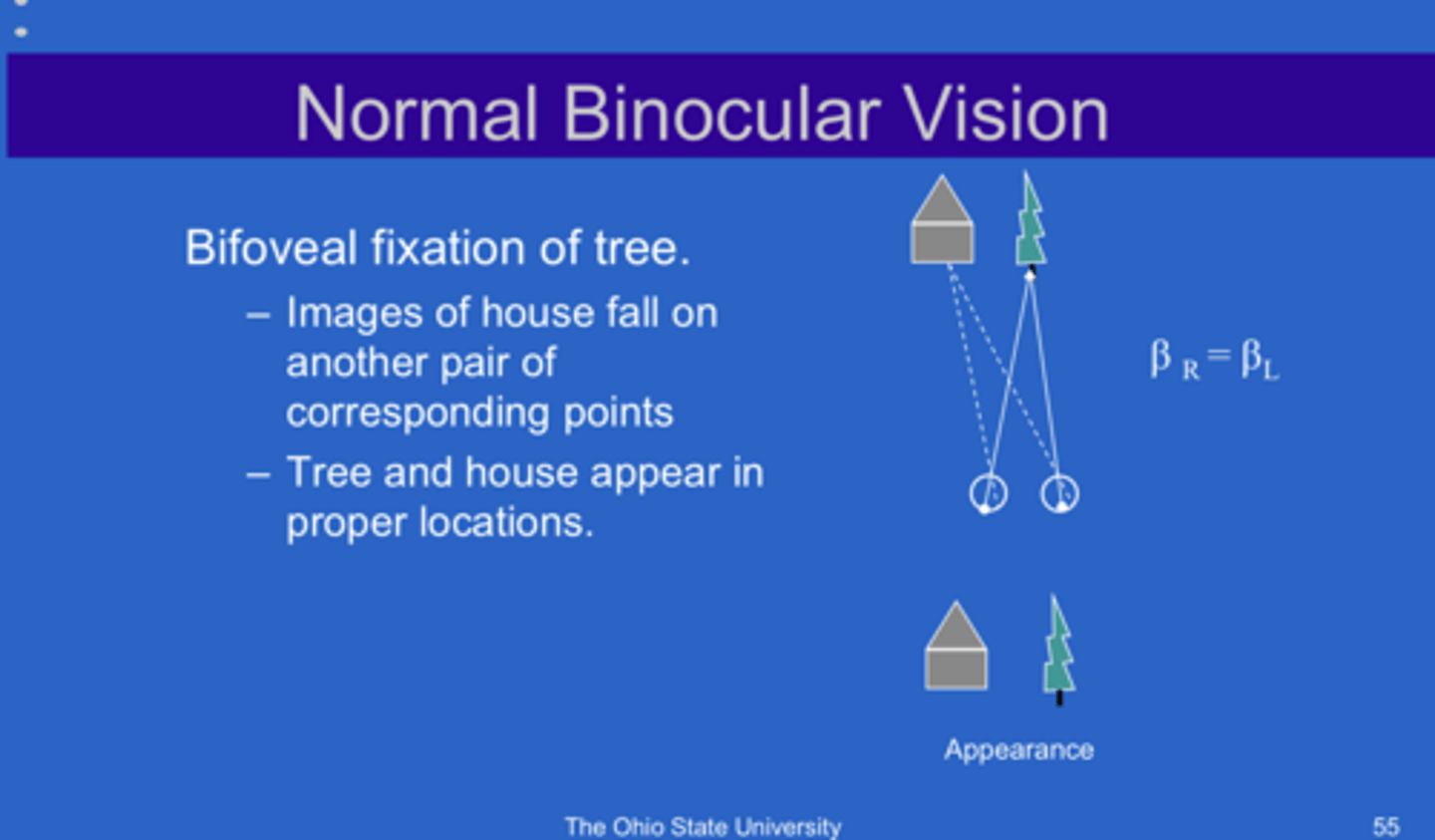
If the images of the house fall on another pair of corresponding points, how do we perceive the house?
single as well
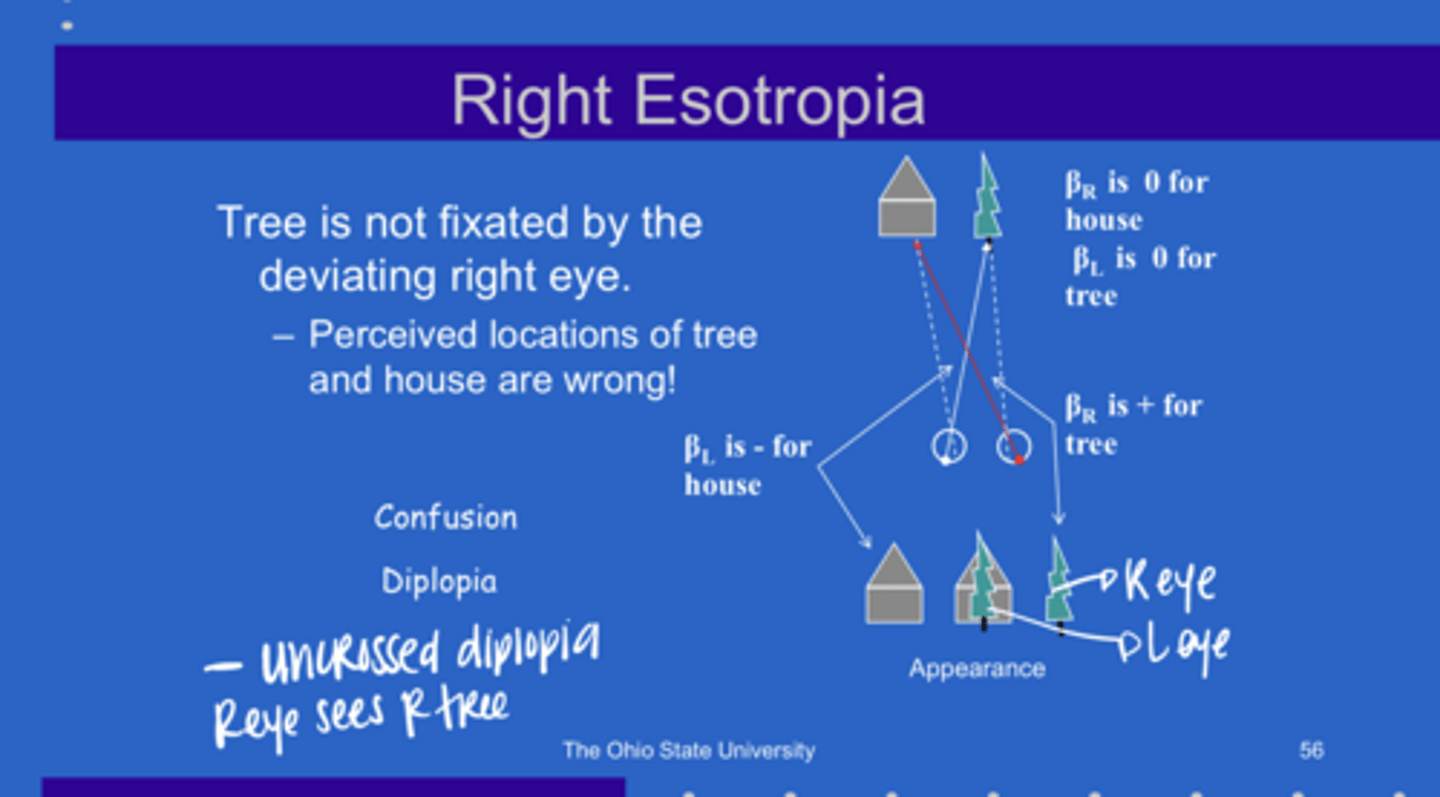
When patient has a R esotropia, the ____ is not fixated by the deviating R eye
tree
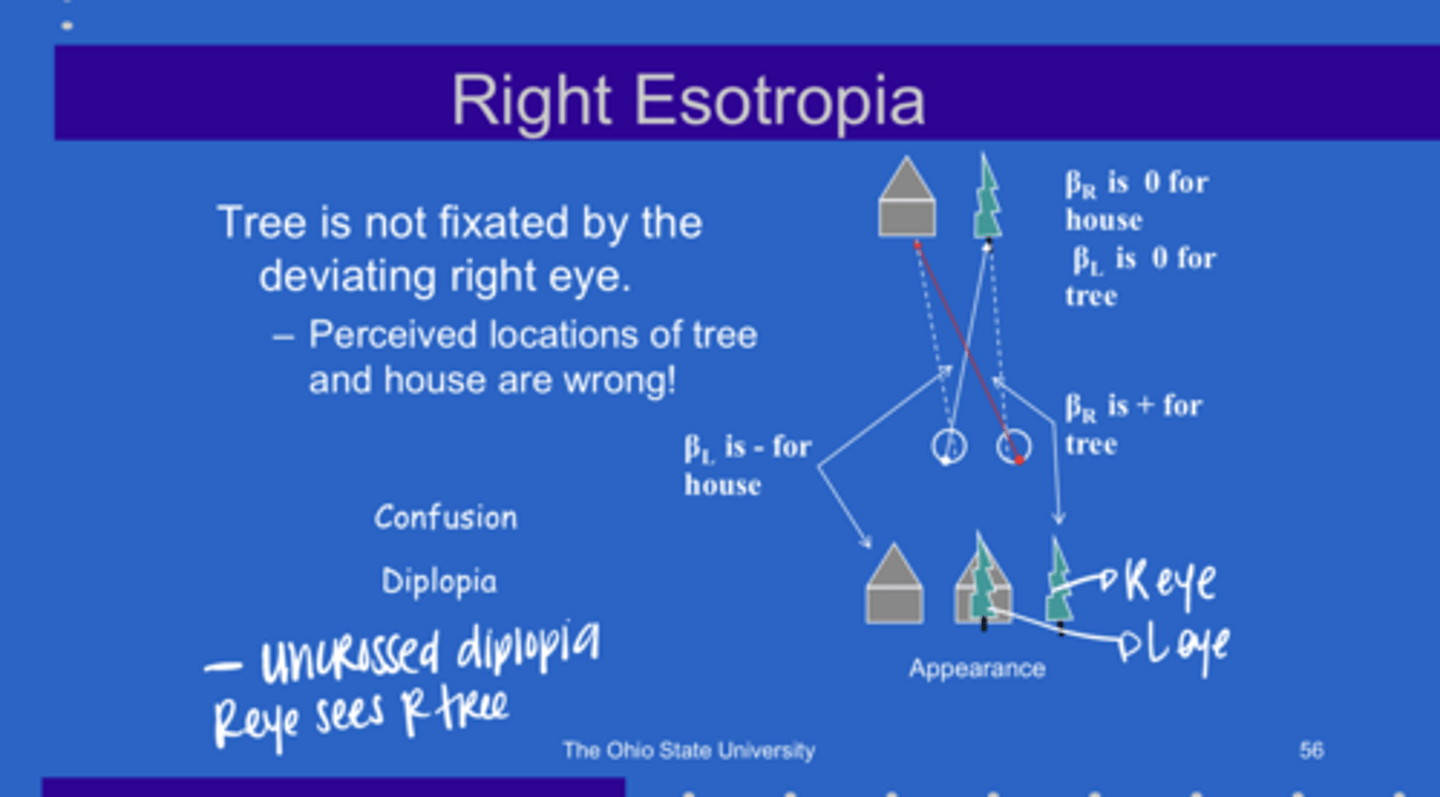
When patient has a R esotropia, will the perceived locations of the tree and house be correct?
No -- perceived locations will be wrong and confusion will present
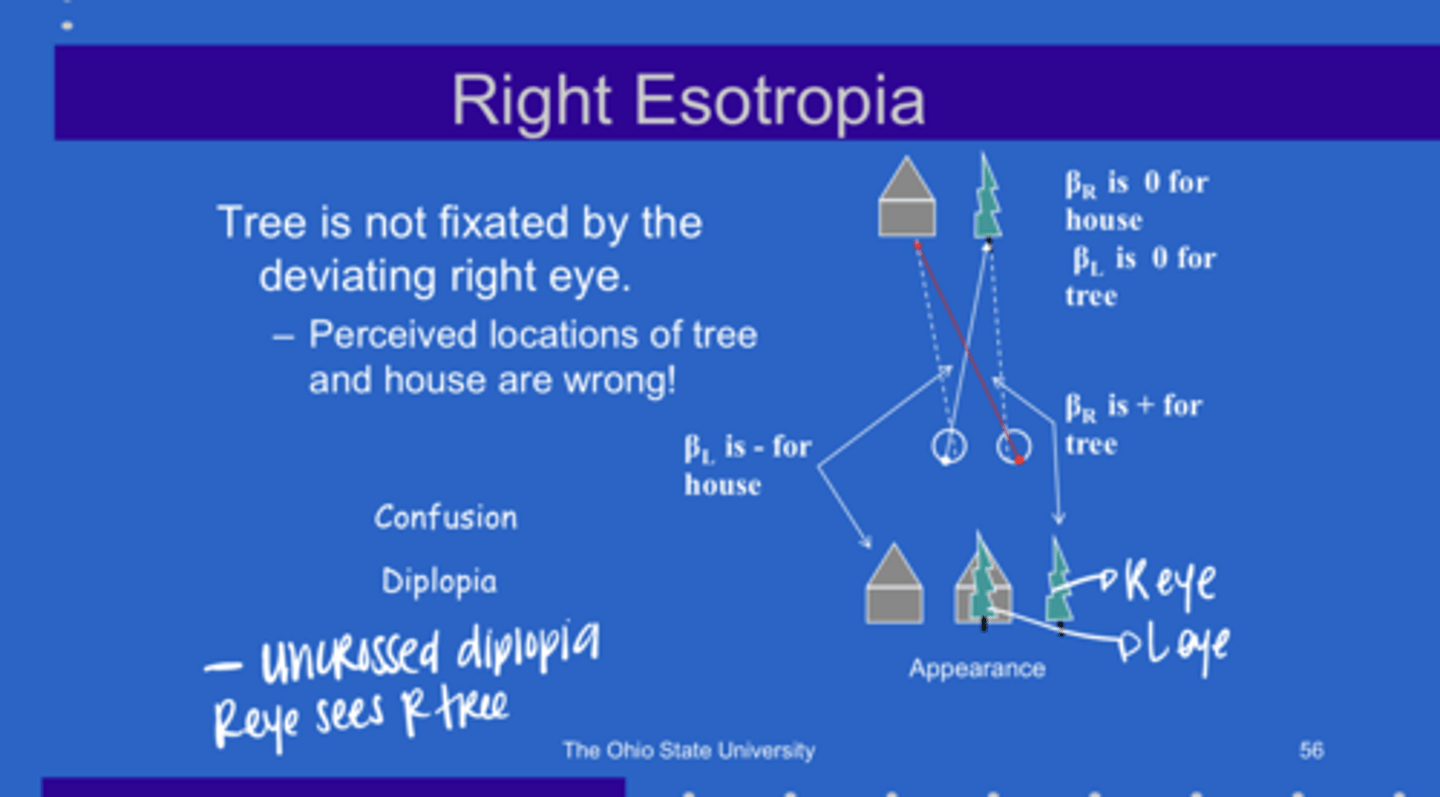
When patient has a R esotropia, will diplopia be present?
yes
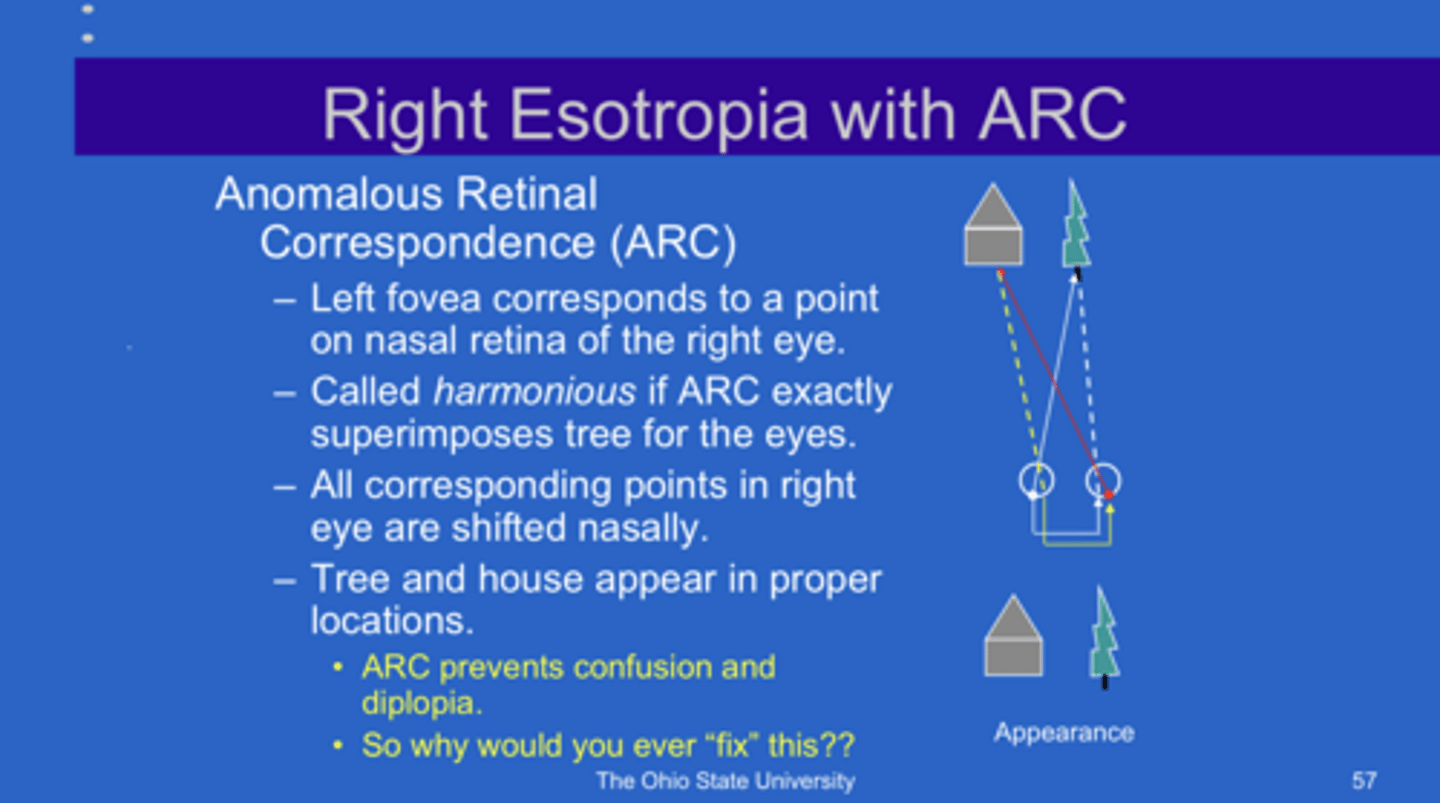
For a patient with right esotropia, what happens when anomalous retinal correspondence occurs?
left fovea will correspond to a point on nasal retina of the right eye
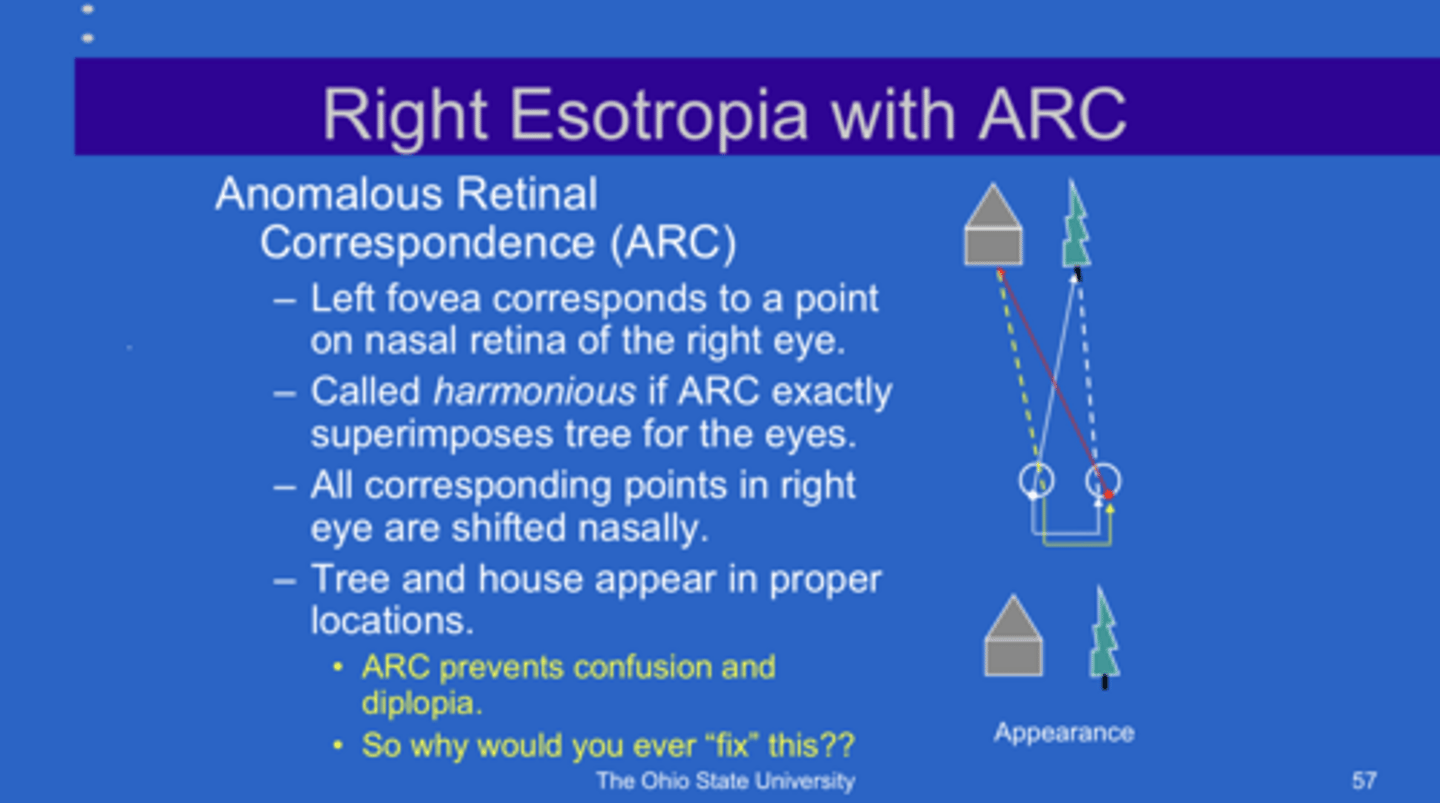
If ARC EXACTLY superimposes the target for both eyes... what is this called?
harmonious anomalous retinal correspondence
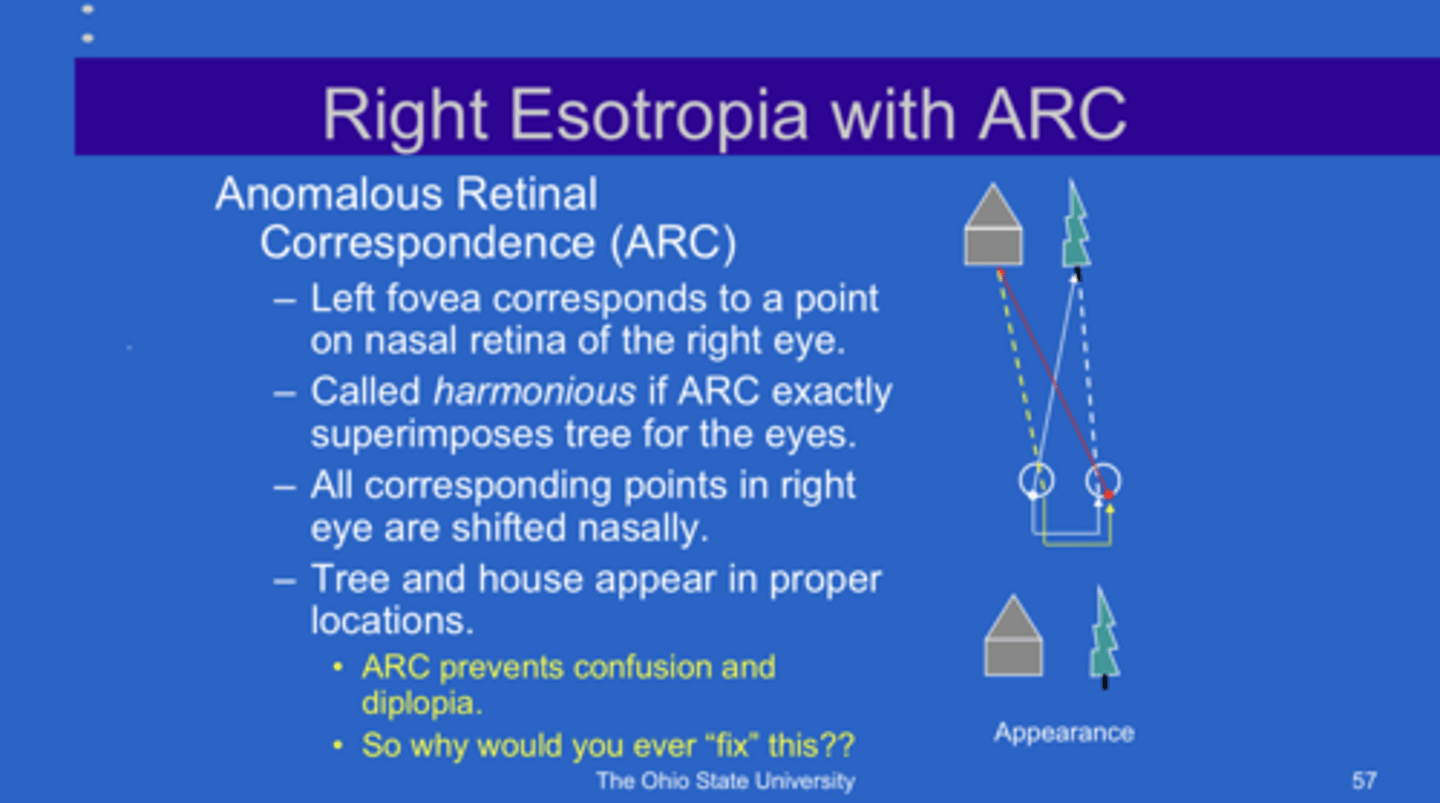
With anomalous retinal correspondence with right esotropia, all corresponding points in right eye are shifted (nasally/temporally)
nasally
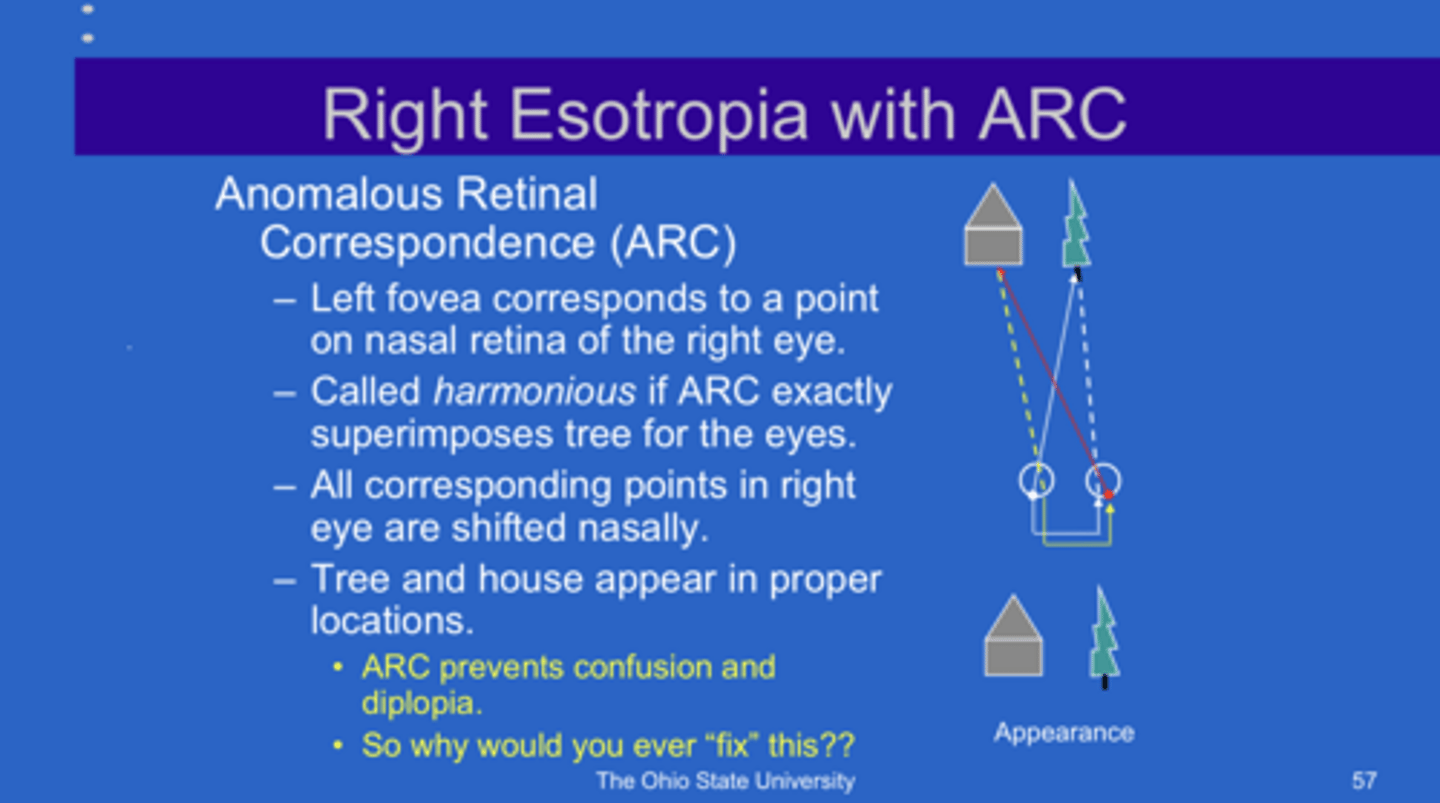
When a patient with a right esotropia develops anomalous retinal correspondence, targets will appear how?
in proper locations
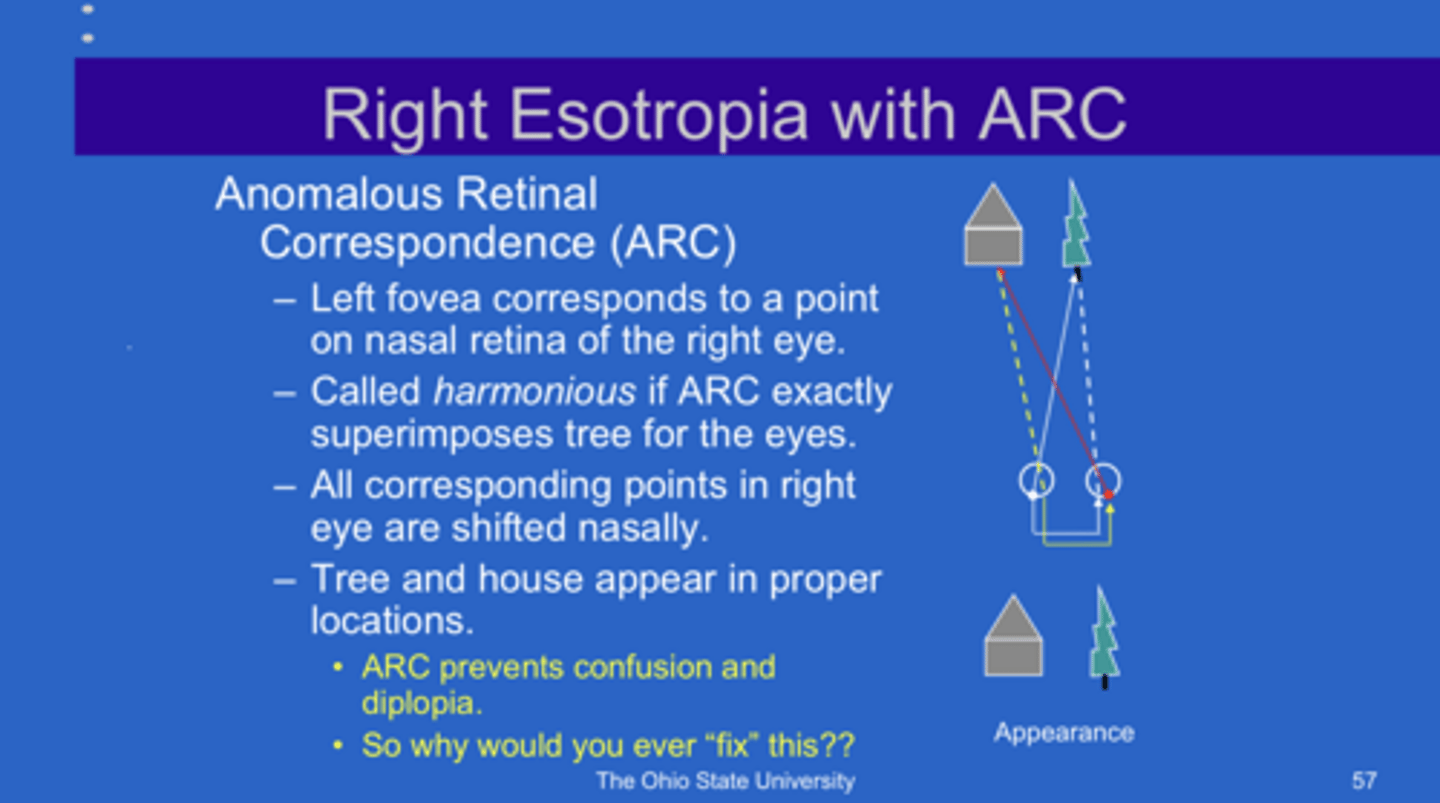
Anomalous retinal correspondence prevents what?
confusion and diplopia
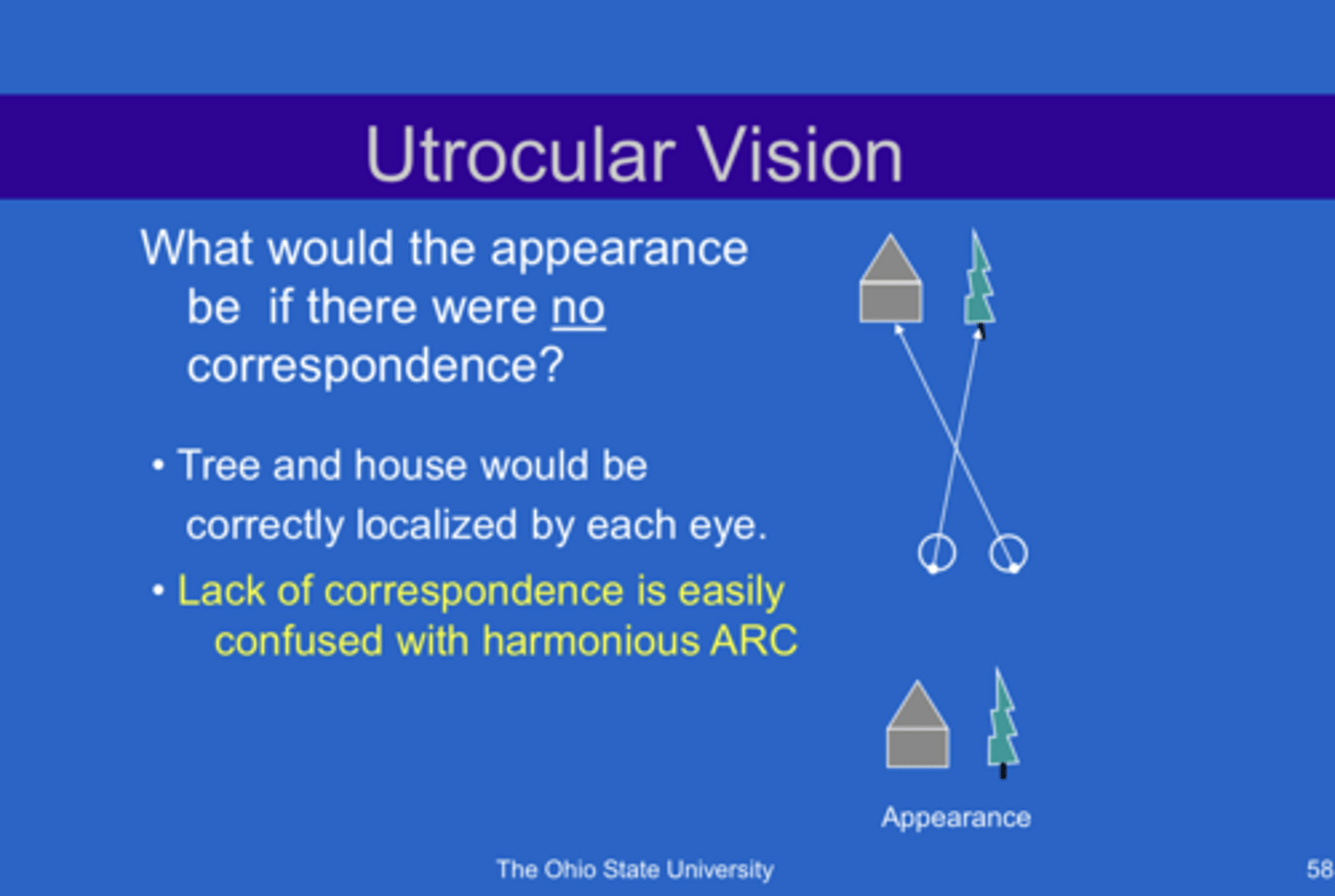
If patient has UTROCULAR vision, what would be the appearance if there was NO correspondence?
-Tree and house would be correctly localized by each eye
-Lack of correspondence is easily confused with harmonious ARC but they are different
corresponding points are retinal positions, one in each eye, that have identical oculocentric directions
corresponding retinal points
The _____ are corresponding points
foveas
_______ = _____ for all corresponding points
βL = βR
Results from stimulation of non-corresponding retinla points
retinal or absolute disparity
What is the equation for retinal disparity?
βL - βR
The _____ of images in the two eyes is equal to the disparity
angular separation
When βL = βR, then retinal disparity is ____
0