Micro Bio Final ALL
 Call Kai
 Learn
Learn Practice Test
 Spaced Repetition
 Match
Match Flashcards
 Knowt Play
1/81

Earn XP
Description and Tags
Consists of a great deal of words and vocab esque questions term
Name | Mastery | Learn | Test | Matching | Spaced | Call with Kai | Chat |
|---|
No analytics yet
Send a link to your students to track their progress
82 Terms
Antibiotics that target
Bacterial cell membrane
Polymyxin, Tyrocidn and Gramicidin
Polymyxin (colistin, polymyxin B)
Target Outer-membrane of Gram - bacteria by binding to lipopolysaccharides LPS and phospholipids. Disrupts membrane integrity and causes leakage of cell contents. Impact on host Major Toxicities- Nephrotoxicity (liver damage) and Neurotoxcity Only used in severe resistant infections
Tyrocidin
Cyclic peptide antibiotic disrupts bacterial membrane causes loss of ion gradients and leakage and rapid bacterial death- For gram POSITIVE bacteria Impact on host is too toxic for systemic use as it damages mammalian membrane with higher exposure
Gramicidin
Linear peptide forms ion channels (pores) in bacterial membranes allows uncontrolled flow of monovalent ions collapses membrane potential mainly gram positive too toxic for systemic use— think A gram is one and monovalent ion
Antibiotics that affect DNA synthesis and Integrity
Metronidazole. Sulfonamides and Quinolones
Metronidazole
Is activated after being metabolized by microbial protein cofactors ferredoxin found in anaerobic and microaerophilic bacteria - aerobic microbes are resistant as they don’t have the ETC proteins that reduce metronidazole— Think METROOO sound dude and fear cuz he scary cuz it pops out of nowhere and ferredoxin is like fear
Sulfonamides
Inhibit nucleic acid synthesis by blocking folic acid which is needed for tetrhydrofolate (coenzyme) folic acid is made from PABA in bacteria. the drug competitively inhibits the enzyme Dihydropteroate synthase which uses PABA in folate synthesis they act as PABA anaolgs No folic acid production
this is bacteriostatic
SULFUR -FOLIC SURFOLIC
Quinolones
DNA gyrase bound to DNA and inactivated by a quinolone will block progression of a DNA replication fork
topoisomerase 2
Quinolone
quinolone wants to be together and not separates into a fork so it stops that
Antibiotics targeting RNA Synthesis
Rifampin
Rifampin
Selectively binds to bacterial RNA polymerase and prevents transcriptoin
also treats tuberculosis and menigococcal meningitis
Bacterial RNA polymerase B subunit
Antibiotics that inhibit Protein synthesis
All the translation ones targetting 30s and 50s
30s subunit translation antibiotic
Aminoglycosides tetracyclines and glycylcyclines
50 s ribosomal affecting antibiotics
chloramphenicol, macrolides, lincosamides, oxazolidinones, and streptogramins
Aminoglycosides
cause misreading of mRNA and inhibit peptidyl-tRNA translocation
Tetracyclines
Bind to the 30S subunit and prevent tRNA carrying amino acids from entering the A site
Glycylcyclines
bind to 30S subunit and inhibit entry of aminoacyl-tRNA into the A site; able to function in tetracyline resistant cells
chloramphenicol
Prevents peptide bond formation by inhibiting peptidyltransferase in the 50S subunit—think ora ora ora 50 punches
macrolides
bind to 50S subunit and inhibit translocation of tRNA from the A site to the P site—think macros think a to p think location is macro not micro and macro has 5 letters so 50
lincosamides
bind to peptidyltransferase and prevents peptide bond formation from the ribosome—— lin think lena think 5 foot tall for 50S and think Rib as she has ribs so ribosome
oxazolidinones
bind to 50S and prevent assembly of the 70S ribosome— idk think that z looks like a 7 or think that X in oxo is an X to building that ribosome
Streptogramins
Bind to 50S and block tRNA entry into A site while blocking exit of a growing protein from the ribosome— think about that one time i got strep throat and i was older than 5 so 50 and i was unable to eat and enter food into my mouth and i was not growing as there was no food
Anti Virals
Amantadine, Oseltamivir(tamiflu) and zanamivir (Relenza), and Zidovudine and Acyclovir, and Protease Inhibitors Nelfinavir and lopinavir , and then the entry inhibitors CCR5 inhibitor Maraviroc
Influenza contains what 2 things
Hemagglutinin-binds to the host membrane receptors for entry by phagocytosis and Neuraminidase-cleaves sialic acids to allow virus particles to escape from infected cells
Amantadine
Prevents virus from uncoating and exiting by changing the pH of the phagolysosome—think manta ray and they change pH with their stinger
Oseltamivir(Tamiflu) and zanamivir (Relenza)
neuraminidase inhibitors prevent the virus particles from leaving the cell- think zany is neuronic aliens and Oselta is frocking nothin bro just memorize it
Zidovudine
A nucleoside reverse transcriptase inhibitor that terminates viral DNA chain synthesis
Acyclovir
A guanosine analogue inhibits viral DNA polymerase causing chain termination
Protease inhibitors- target the HIV protease enzyme
Nelfinavir and lopinavir
Entry inhibitors Maraviroc
Block virus envelope protein gp120 from binding to host receptor CCR5 and stops viral membrane fusion with the host cell
Antifungal agents
Polyenes, Azoles, Allylamines, Echinocandins, Griseofulvin, Flucytosine
Polyenes
Disrupts membrane integrity
Azoles
Interferes with ergosterol synthesis
Allylamines
Interferes with ergosterol synthesis
Echinocandins
Blocks fungal cell wall synthesis
Griseofulvin
blocks cell division
Flucytosine
inhibits DNA synthesis
Anti Parasitic agents
Anti Protozoan- Metronidazole and Chloroquinine, Primauqine most are fairly toxic and then Anti-helminthic agents Niclosamide Praziquantel Mebendazole and albendazolee and ivermectin
Metronidazole
Causes DNA breakage. Used to treat giardiasis and Trichomonas infections
Chloroquinine, Primaquine(antimalarials)
Increased accumulation of iron radicals in red blood cells
Niclosamide
Blocks ETC and prevents ATP generation in Tapeworms
Praziquantel
increase uptake of calcium alters membrane permeability
Bebendazole and albendazole
Interferes with beta tubulin polymerization and blocks nutrient absorption
Ivermectin
Increase inflow of Cl ions reduces cell polarity in neuronal cells and leads to paralysis of helminths
Nosocomial disease
acquired in hospital setting
Subclinical disease
no noteacable signs or symtpoms inapparent infection
subacute disease
symptoms between acute and chronic in
Virulence factors
Toxins, Adhesion factors, capsules, Enzymes are examples
Stages of infectious disease
Incubation, Prodromal, Invasive phase , decline phase, Convalescence phase
zipper mechanism
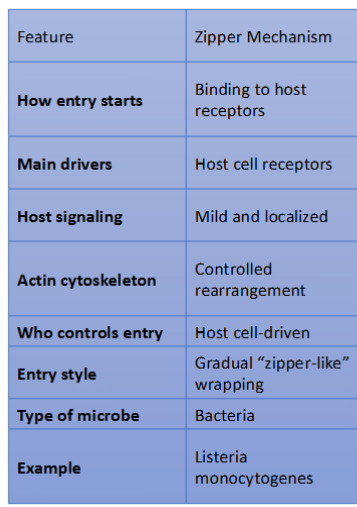
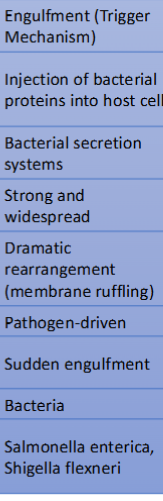
Englufment
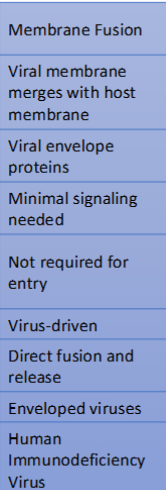
membrane fusion
GLycohydrolases
Degrades hyluronic acid that cements cells together to promote spreading through tissues
Nucleases
Degrades DNA released by dying cells (bacteria and host cells) that can trap the bacteria thus promoting spread
Phospholipases
degrades the phospholipid bilayer of host cells causing cellular lysis and degrade membrane of phagosomes to enable escape into cytoplasm
proteases
degrades collagen in connective tissue to promote spread
Focal infection
systemic infection that began as a local infeciton
Sepsis
toxic inflammtory condition arising from spread of microbes especially bacteria or their toxins from a focus of infection
septicemia
growth of bacteria in blood
Exotoxin
Gram positive, Protein composition, Effect- specific damage to cells , most are heat sensitiev, Low LD50
ENdotoxin
Gram negative , Compositive Lipid A component of lipopllysacchardie, general systemi symptoms of inflammation and fever, heat stable, high LD50
Super antigens
streptococcus and staphlycoccus -Stimulates excessive activation of immune cells and release of cytokines from immune system, life threatening fever inflammation and shock are result
Intraceullar targeting toxins
Cholera - Actiation of adenylate cyclase increased cAMP and scretion of fluids etc out of cell causing diarrhea, Tentanus toxin ihibits the release of inhibitory- botulin inhibits release of neurotransitter flaccid- Dipthereia inhibition of protein synth causing death
Membrane disrupting toxins
Streptococcus and staph A proteins that assembes into pores in cell membrane disrupting function and killin cell- and alphatoxin and beta toxin phopholipaes that degrade cell membrane phosophlipids disrupting membrane function and killing cell
dipthereia
blocks protein synthesis by inavtivatin elongation factor 2 leading to cell death
Methyl mismatch repair (wrong base insertion)
The parental DNA is methylated, which allows it to serve
as a template for the DNA repair machinery to identify and
correct errors in the newly synthesized DNA strand.
Base excision repair (damaged base)
Recognizes a specific damaged base (deamination) and
removes it from the DNA backbone
SOS save our ship repair
The SOS response is activated in bacteria when DNA is heavily
damaged. It induces error-prone repair enzymes to quickly fix DNA,
allowing survival but often introducing mutations.
• Coordinated cellular response to damage that can introduce
mutations in order to save the cell.
• DNA polymerase IV and V performs translesion synthesis
Sterilization
All dead
sanitation
to safe levels
disinfection
disease producing dead
antisepsis
removal on living tissue
Ethanol Iodine Chlorine
Highly reactive compounds that damage proteins lipids and DNA
Surfactants such as detergents
Help in the mechanical removal of microbes
Aldehydes
Combine with and inactive proteins and nucleic acids
Phenols
Denature proteins and disrupt membranes
Heavy metals
Bind to proteins and inhibit enymatic activity
Peroxygen
Strong oxidizers, produce free radicals that damage cellular macromolecules
Streptococcus infections
Gram pos Cocci, S pyogenes spread by respiratoory droplets contact with fomites, sometimes other transmission- many ezymes contribute to the disease and many of its exotoxins are phage encoded- Scarlet fever is known to cause strep throat Erysipelas skin infection, pyoderman and impetigo alone or in combination make skin infection that makes pus-ceullilitis deeper than erysipelas necrotizing fascilits - treatment is antibiotics prevention is vaccines long term complications
HIV Aids
Transmission-sex blood exposure, perinatal- SIV is primate equivalent - HIV evolved from it after humans evolved it is a pos SSRNA and has 2 idential SSrna reverse transcirptase, inegrase, and protease and envelope and the envelope spikes are gp120. HIV 2 is weak mutation not found outside africa, Incubation 9months -20years person to person sexually or needles to CD4 receptor on a bunch of cells- Early symptoms fever fatugue swollen lymph nodes, diarrhea weight loss, cough and shortness of breath. Late symptoms soaking night sweats fever higher than 100 cough and shortnesss of breath chronic diarrhea. —Persistant white sponts or unusal lesions on tongue or mouth headaches weight loss skin rashes or bumps- diagnoesed though elisa pcr western blots— no cure
Gonorrhea
std incubation is 2-30 days person to person humans only hosts transmitted for 5-15 years by carriers 1000 organisms enough to infect. IgA protease break down mucus to get it - Pili help bacteria adhere to mucosal membrane - lipooligosaccharide LOS: causes inflammation and tissue damage. site of infection ASS PENIS CERVIX. SYmptomes painful urination for men and pus discharge. Women few symptoms but complication such as PID. men 95% pus drip in 14days- Most women asymptomatic 50-80 men 10-20 asymptomatic Pelvic inflamatorry disease infertility and pain and men get epidydmitis testicular pain infetitloity
Beta LActamase enzyme
ARE KILLED BY CLAVICULAR acid doing suicide attacks