Biomechanics 2 Anatomy
 Call Kai
 Learn
Learn Practice Test
 Spaced Repetition
 Match
Match Flashcards
 Knowt Play
1/59

There's no tags or description
Looks like no tags are added yet.
Name | Mastery | Learn | Test | Matching | Spaced | Call with Kai | Chat |
|---|
No analytics yet
Send a link to your students to track their progress
60 Terms
support
Organs and tissues held in place
protection
vital organs
movement
base for muscle attachment
production and storage
manufacture red and white blood cells and store minerals
structure of skeleton
206 bones found in an adult skeleton, divided into two main groups: axial and appendicular
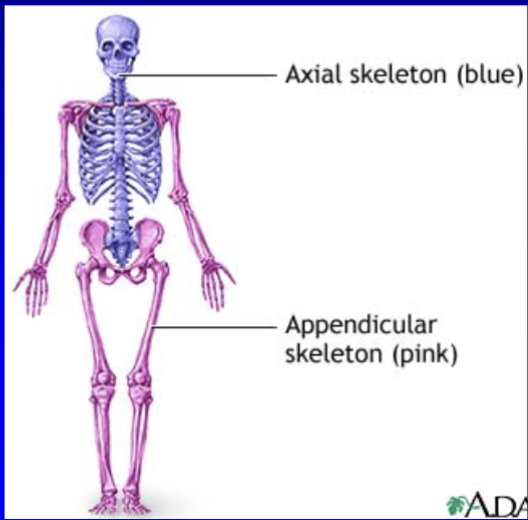
axial skeleton
Forms long axis of the body: Skull, vertebral column, and rib cage
Protection, support, and carrying other body parts

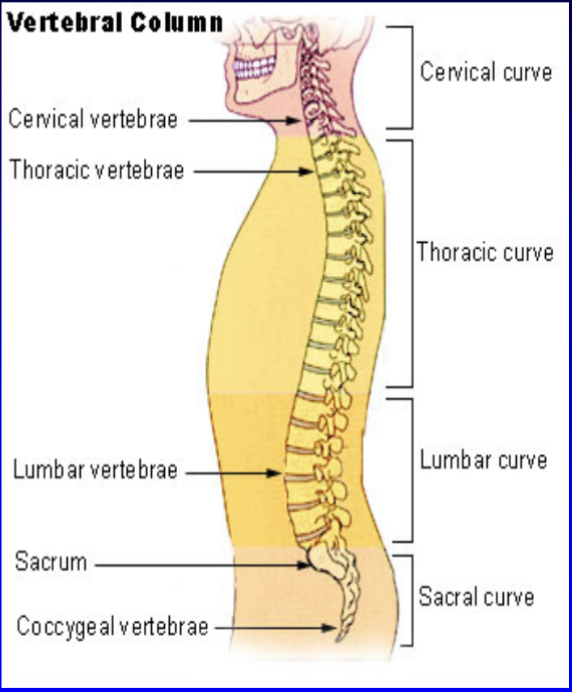
vertebral column
Divided into 5 main regions:
(1) Cervical spine (7)
(2) Thoracic spine (12)
(3) Lumbar spine (5)
(4) Sacrum (5)
(5) Coccyx (4)
The 5 sacrum vertebrae and 4 coccyx vertebrae are fused to form one solid bone.
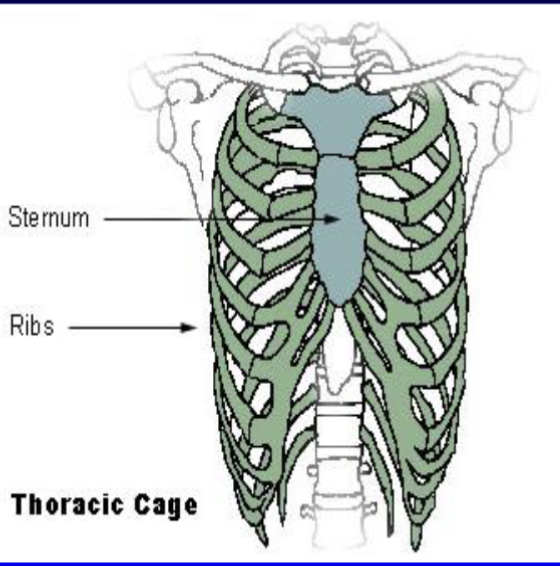
Thorax
12 pairs of ribs. Joined to thoracic vertebrae. Top 10 ribs joined to sternum. Remaining two have free ends = ‘floating’
appendicular skeleton
Upper & lower limbs. Girdles (pectoral & pelvic). Locomotion and manipulation of the environment
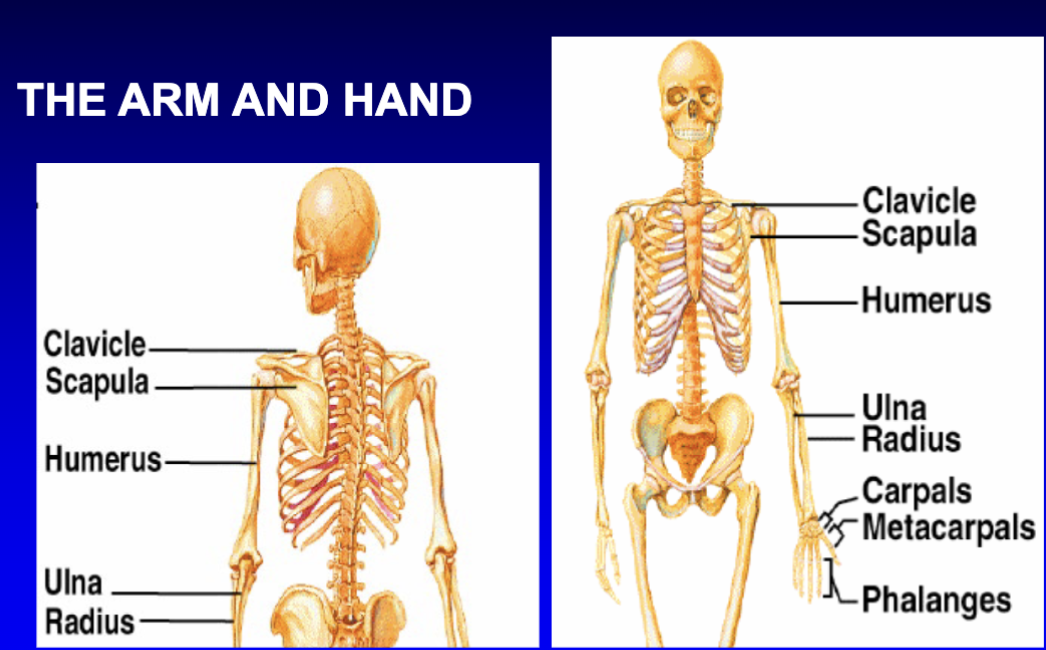
pectoral girdle
2 scapulae: Articulates with humerus
2 clavicles: Articulates with sternum & scapula
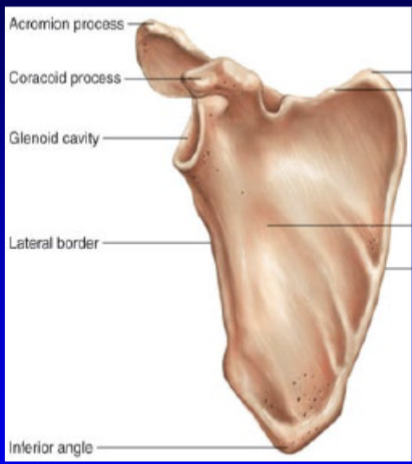
upper limb
humerus, radius, and ulna
humerus
between shoulder and elbow
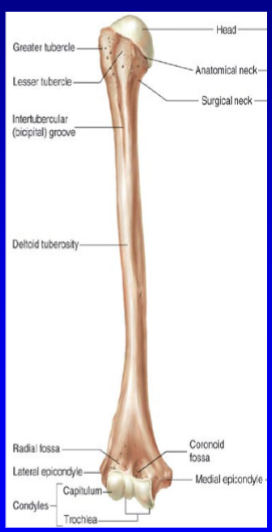
radius
lateral or thumb side

ulna
medial or little finger side
pelvic girdle
a ring of bone that articulates the lower limbs with the trunk, consisting of the two innominate bones and the sacrum, and it provides stability for weight transfer while supporting the pelvic viscera and facilitating muscle attachments.
Ilium, ischium, and sacrum
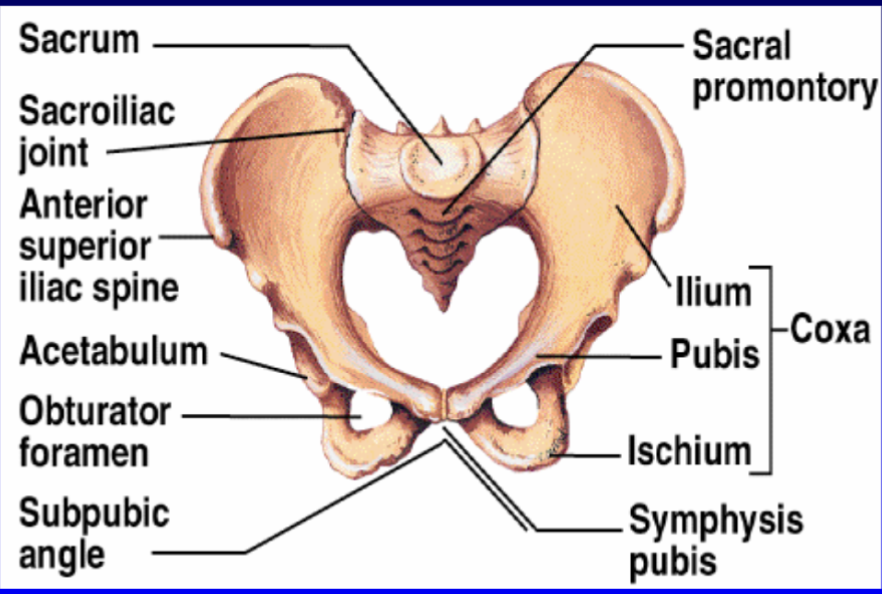
lower limb
femur (between hip and knee), patella, tibia (shin), fibula

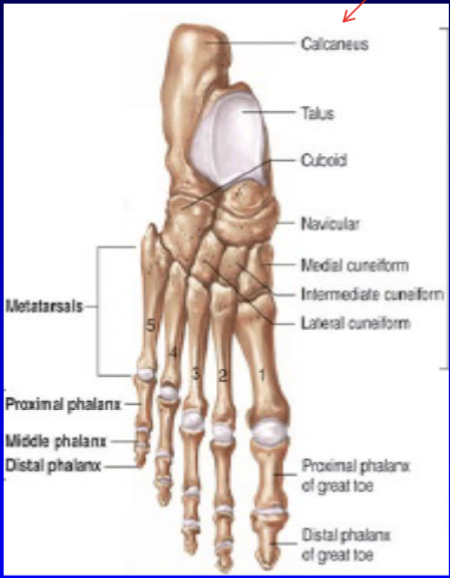
foot
Ankle → 7 tarsals
Calcaneus forms heel
This: 5 metatarsals and 3 phalanges per digit
anatomical position
Standing erect, arms at side with palms anterior & thumbs lateral
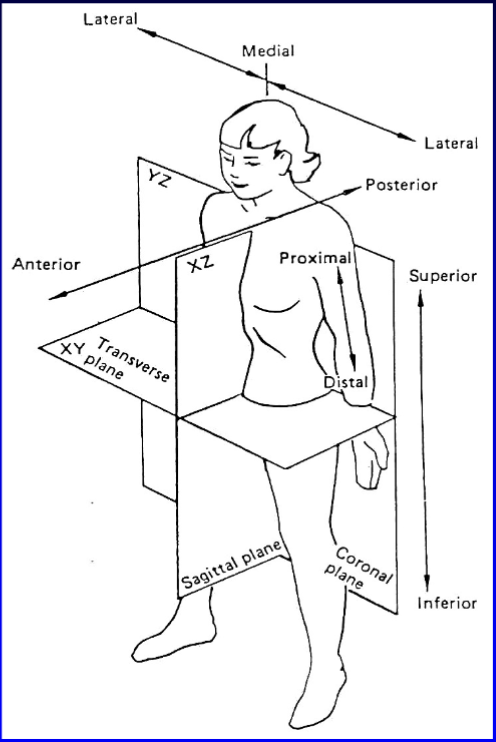
sagittal
body plane that is from anterior to posterior. a vertical line that splits the body or organ into left and right sides

frontal/coronal
body plane that is from side to side. an imaginary vertical line that divides the body into front (anterior) and back (posterior) halves

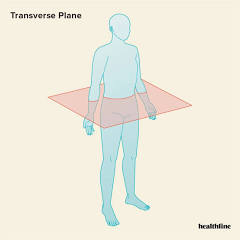
horizontal/transverse
body plane that is front to back horizontally. an imaginary horizontal line that divides the body into upper (superior) and lower (inferior) halves
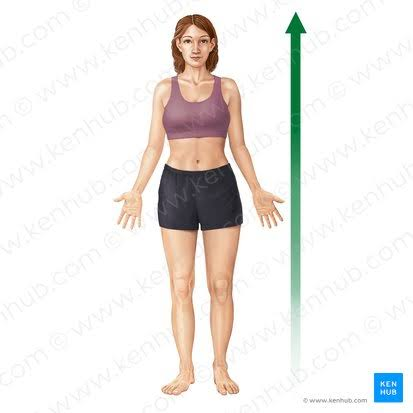
superior/cranial
above torso. toward the head
inferior/caudal
below torso. toward the feet

anterior
ventral - front.

posterior
dorsal - back

medial
toward the midline (inside)
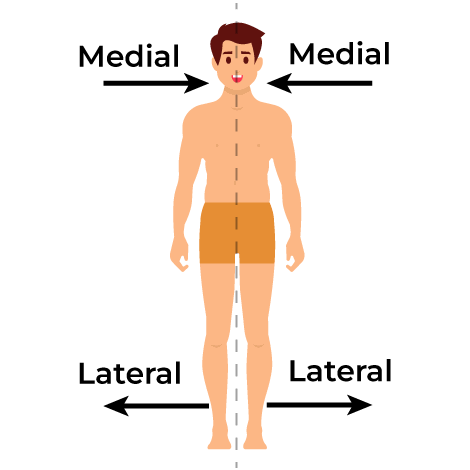
lateral
toward the side (outside)

proximal
nearer the trunk
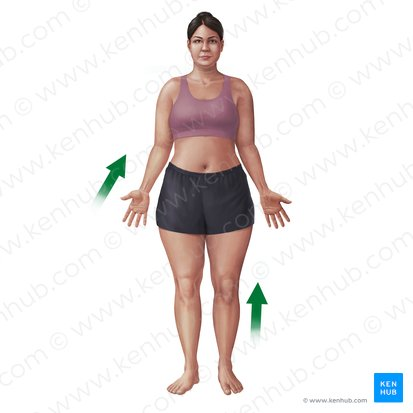
distal
further from the trunk

prone
face down (on stomach)
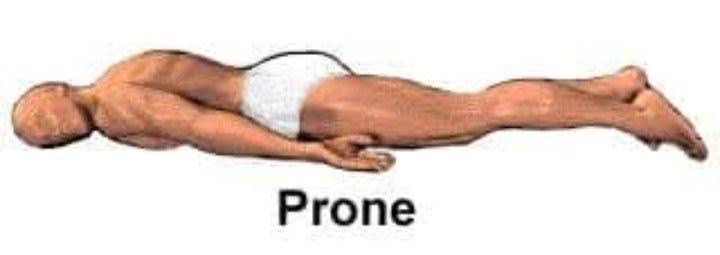
supine
face up (on back)

Flexion/Extension
sagittal plane. foot plantar flextion/dorsiflexion

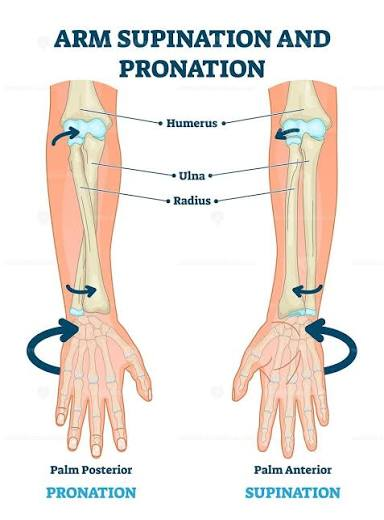
pronation/supination
transverse plane. forearm/hand
abduction/adduction
coronal plane

inversion/eversion
opposite movements of the foot that turn the sole toward or away from the midline of the body

medial/lateral rotation
transverse plane. femus/humerus. movements of body parts around their long axis, where medial rotation is turning toward the center of the body and lateral rotation is turning away from it

circumduction
a conical body movement where the base of a limb or digit stays relatively fixed while the distal end describes a circle

protraction/retraction
opposite movements of the shoulder blades (scapulae). (1) moves the shoulder blades forward and away from the spine, causing the upper back to round. (2) pulls the shoulder blades backward and together toward the spine, opening up the chest.
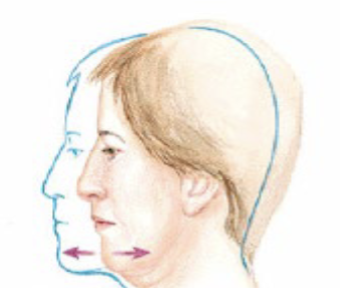
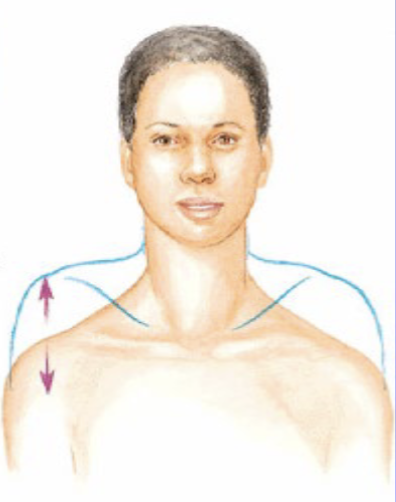
elevation/depression
opposing movements in a superior (upward) or inferior (downward) direction
anthropometric data
systematic, quantitative measurements of the size, shape, and physical characteristics of the human body, needed to build models.
Empirical science concerned with physical static and functional/dynamic dimensions of human body
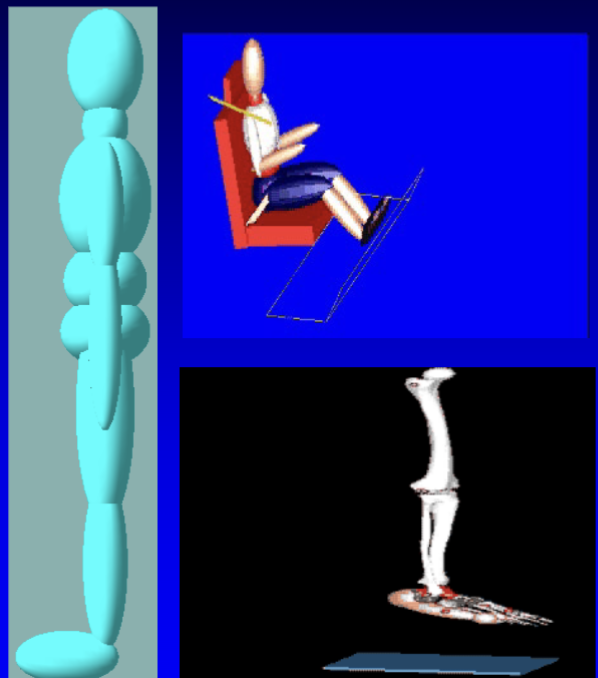
anthropometrics
Measurement of physical characteristics of humans. Measurement of body segment parameters. Examples of anthropometric variables? Needed for: Biomechanical analysis of postures, Development of biomechanical models
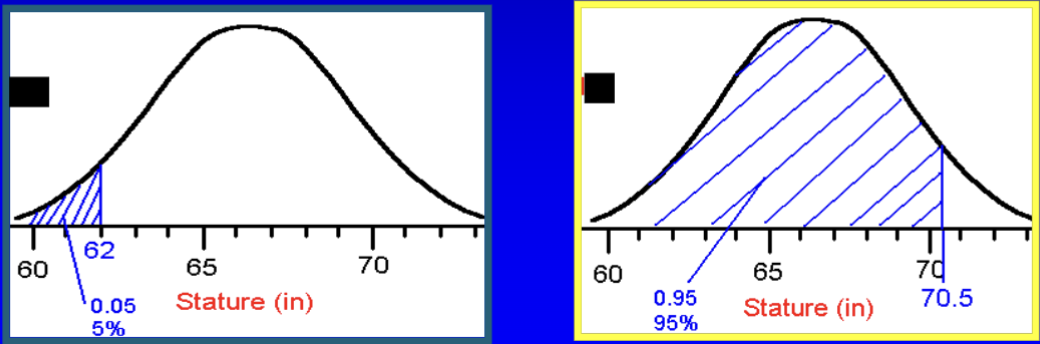
normal distribution
Most anthropometric variables are distributed this way. Other names: Gaussian or Bell distribution - defined by mean and standard deviation

histogram
variable on x-axis, & no. of individuals on y-axis
Normal distribution: symmetric shape histogram

percentile
Indicates percentage of distribution that is equal to or below it
assumptions in biomechanics
Body segments behave like rigid bodies
Modeling some parts of the body as one single body when they consist of several segments
Validity at the scale of gross body movements
Measurement of Body Segment Link Length
Instruments: Anthropometer, Calipers, Tapes
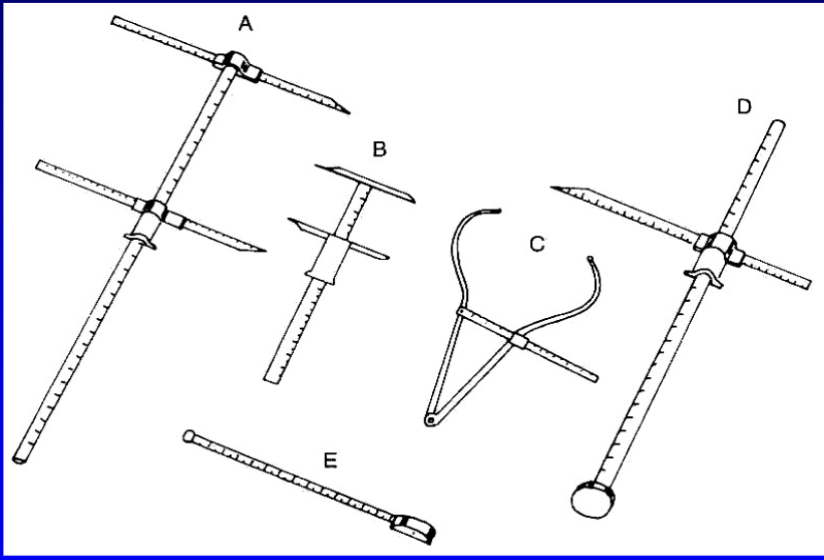
Body Segment Link Length Data
Lengthsegment = Constant x Stature

methods for deriving BSP
Four general approaches
Cadaver studies
Mathematical modeling
Scanning and imaging techniques
Kinematic measurements
most recent studies use a combination of approaches
Cadaver studies
Inertial variables are somewhat difficult to determine for a living person. Coefficient method based on proportions of body mass and body height to predict body segment parameters
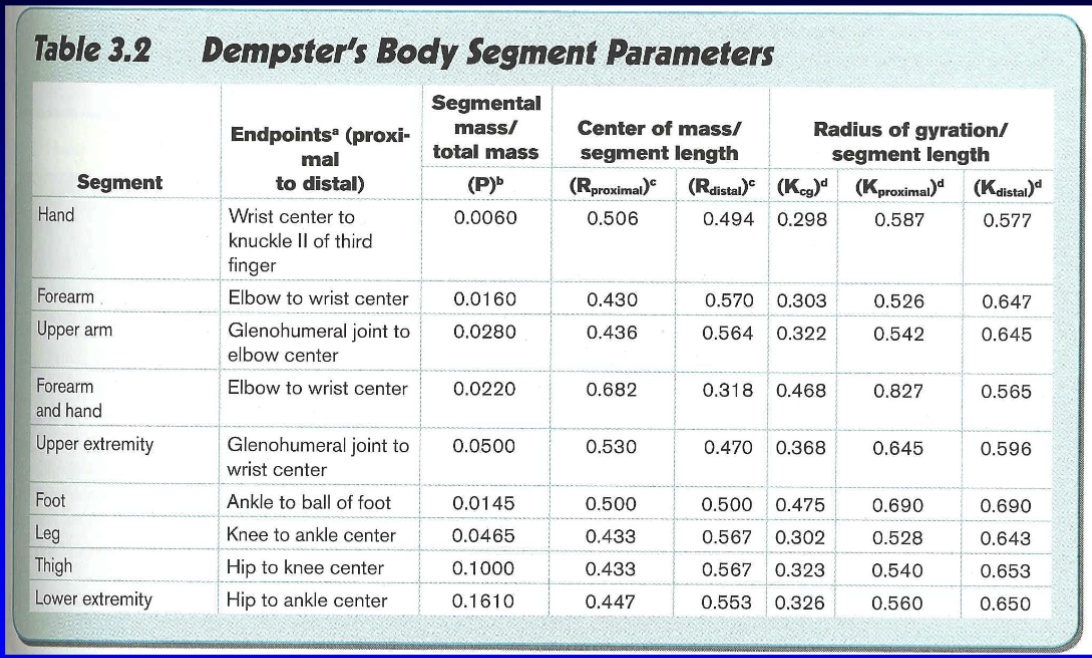
Example: Dempster (1955)
8 cadavers - Segments defined based on joint centers (see table 3.1)
See table 3.2 for variables that can be derived from coefficient method based on Dempster data.
other cadaver studies
Clauser et al. (1969), Handler (1975): Body segments defined using palpable bony landmarks instead of joint centers (see Table 3.3)
Additional number of cadavers compared to Dempster’s study
13 were used by Clauserre used by Chandler
Results presented in tables similar to Dempster’s data (see Table 3.4)

mathematical modeling
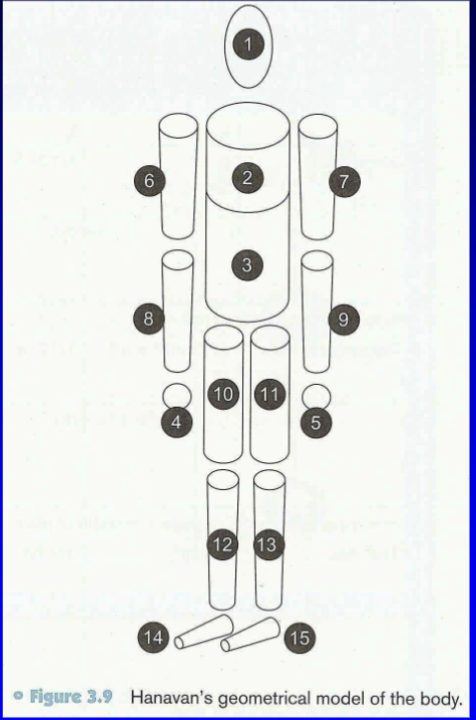
Assumption: body segments can be modeled as geometrical shapes with constant distribution of mass
Geometrical shape
Frustrum (most segments)
Sphere (hand)
Ellipsoid (head)
imaging techniques
Dual energy X-ray Absorptiometry (DXA)

kinematic techniques
Base BSP derivation based on kinematic characteristics
Oscillation technique- Hatze (1975)
Segment mass, segment com, segment moment of inertia
Body part set into oscillation with an instrumented spring
Muscles must be relaxed so that they do NOT influence limb-spring system
CanNOT be used on trunk
Small oscillation theory to estimate segment parameters
moment of inertia
in kinematic techniques, this is estimated based on quick-release method.
Assume muscles are relaxed. Acceleration of a rapidly accelerated segment is affected by segment’s rotational inertia

segment mass
2D computational method example: Weigh subject and multiply total mass by appropriate proportion (P-value) for a segment of interest

center of mass
2D computational method example: Represent distances from proximal/distal ends to segment com as proportions (R-values) of segment length (l)

moment of inertia (rotational inertia)
Definition: resistance to rotational motion
Equivalent of mass in translational motion
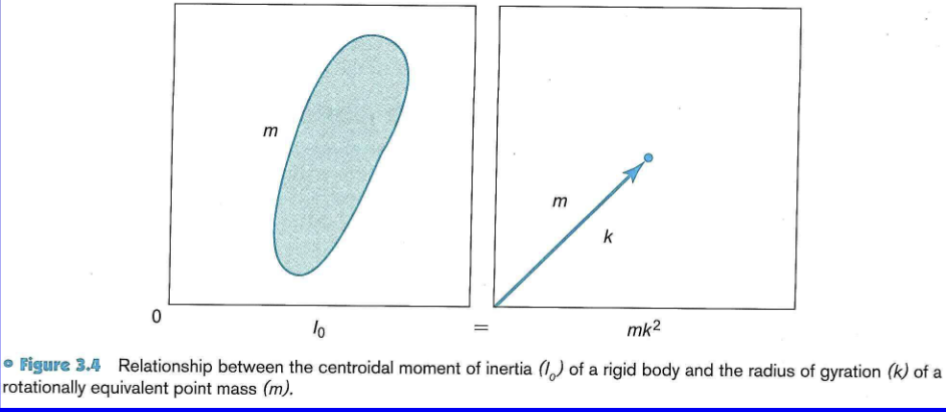
Can be calculated using radius of gyration. Radius of gyration = k = how far the mass of a rigid body would be from an axis of rotation if its mass was concentrated at that point.
Iaxis = ∫r²dm
radius of gyration
moment of inertia → compute this. Minimum when body rotates about own COG = centroidal moment of inertia.
the root-mean-square distance of an object's mass or cross-sectional area from a specific axis of rotation or centroidal axis

factors affecting measurements
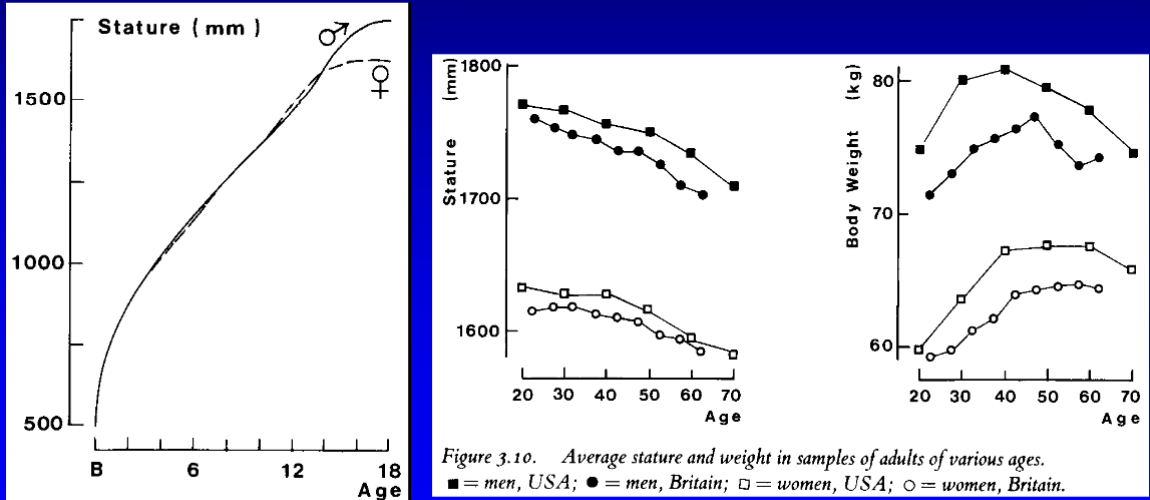
Ethnic origin: e.g. stature
Gender: e.g. size, strength
Age: e.g. disc compression & stature, e.g. reach, range of motion
Disability: e.g reach, range of motion
anthropometry varies across populations and ethnicity
“If a piece of equipment was designed to fit 90% of the male U.S. male population, it would fit roughly 90% of Germans, 80% of Frenchmen, 65% of Italians, 45% of Japanese, 25% of Thais and 10% of Vietnamese”
