Life Science Grade 10 Term 1
0.0(0)
Studied by 7 people Call Kai
 Learn
Learn Practice Test
 Spaced Repetition
 Match
Match Flashcards
 Knowt Play
Card Sorting
1/51

Last updated 8:23 PM on 3/9/23
Name | Mastery | Learn | Test | Matching | Spaced | Call with Kai |
|---|
No analytics yet
Send a link to your students to track their progress
52 Terms
1
New cards
Cells
Well organized structures where metabolic processes of the body take place
2
New cards
Basic structure of cells
\-surrounded by cell membrane (and cell wall in plant cells)
\-contain cytoplasm and organelles
\-contain cytoplasm and organelles
3
New cards
Cytoplasm
Jelly-like substance that fills the cell; mainly consists of water, mineral salts, gases and inorganic substances such as glucose and proteins
4
New cards
Functions of cytoplasm
\-gives cell it's shape
\-solvent for water-soluble substances
\-transport medium for dissolved substances
\-storage area for water insoluble substance (carbohydrate/lipid/protein molecules)
\-storage and circulation of substances within the cell
\-solvent for water-soluble substances
\-transport medium for dissolved substances
\-storage area for water insoluble substance (carbohydrate/lipid/protein molecules)
\-storage and circulation of substances within the cell
5
New cards
Organelles
Structures found within cell that carry out various functions
6
New cards
Examples of organelles
Mitochondria, chloroplasts, vacuoles, nuclei, golgi bodies, endoplasmic reticulum
7
New cards
Cell membrane
\-also known as plasmalemma
\-consist of phospholipid molecules (types of fat molecules)
\-consist of phospholipid molecules (types of fat molecules)
8
New cards
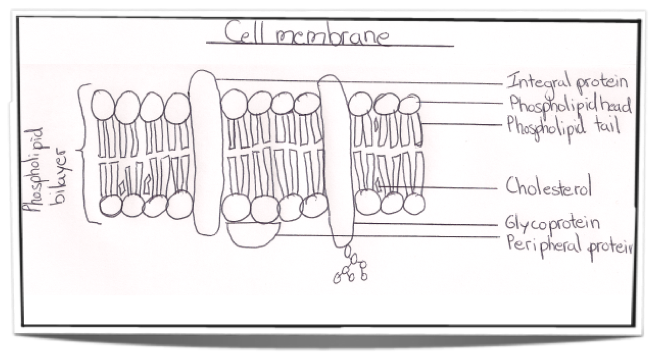
Fluid mosaic model
\-known as phospholipid bilayer
\-each phospholipid has a head and tail
\-heads attract water (hydrophilic)
\-tails repel water (hydrophobic)
\-protein molecules are embedded into the phospholipid bilayer
\-each phospholipid has a head and tail
\-heads attract water (hydrophilic)
\-tails repel water (hydrophobic)
\-protein molecules are embedded into the phospholipid bilayer
9
New cards
Function of proteins in the phospholipid bilayer
\-have various structures and functions
\-shift around in bilayer
contribute to mechanical strength of the membrane
\-shift around in bilayer
contribute to mechanical strength of the membrane
10
New cards
Function of cell membrane
\-semi-permeable (controls the movements of substances in and out of the cell)
* dissolved gasses (O2), sugars, amino acid and nutrients enter the cell (respiration and nutrition)
* waste products leave (excretion)
* hormones and enzymes secreted
\-provides support and flexibility to the cell
\-allows cells to grow and move
* dissolved gasses (O2), sugars, amino acid and nutrients enter the cell (respiration and nutrition)
* waste products leave (excretion)
* hormones and enzymes secreted
\-provides support and flexibility to the cell
\-allows cells to grow and move
11
New cards
Diffusion
movement of molecules from high to low concentration (passive transport)
12
New cards
Osmosis
movement (diffusion) of water from a high concentration to low concentration
13
New cards
Isotonic solution
Equal amount of water in and outside the cell
\-animal cell remains the same
\-plant cell becomes flaccid
\-animal cell remains the same
\-plant cell becomes flaccid
14
New cards
Hypotonic solution
High conc. of water outside the cell and low conc. inside the cell
\-water diffuses into plant/animal cell via osmosis
\-animal cell swells and bursts
\-plant cell becomes turgid
\-water diffuses into plant/animal cell via osmosis
\-animal cell swells and bursts
\-plant cell becomes turgid
15
New cards
Hypertonic solution
Low conc. of water outside the cell and high conc. in the cell
\-water diffuses out of cell via exosmosis
\-animal cell shrinks and shrivels
\-plant cell becomes plasmolysed
\
\-water diffuses out of cell via exosmosis
\-animal cell shrinks and shrivels
\-plant cell becomes plasmolysed
\
16
New cards
Active transport
large molecules (amino acids, glucose) actively carried through membrane by proteins in membrane
\-use energy
\-goes against concentration gradient
\-from low conc. to high conc.
\-use energy
\-goes against concentration gradient
\-from low conc. to high conc.
17
New cards
Nucleus
\-control center of the cell
\-rounded structure
\-centered in animal cells and off centered in plant cells
\-rounded structure
\-centered in animal cells and off centered in plant cells
18
New cards
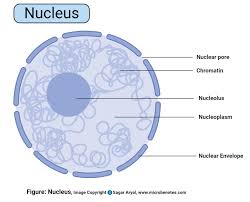
Structure of nucleus
\-covered by nuclear membrane
\-filled with fluid called nucleoplasm
\-contains long threads of chromosomes folded and packed, forming the chromatic network
\-nucleolus inside
\-filled with fluid called nucleoplasm
\-contains long threads of chromosomes folded and packed, forming the chromatic network
\-nucleolus inside
19
New cards
Functions of nucleus
\-contains hereditary info in DNA
\-controls metabolic processes in cell
\-regulate cellular activity
\-nuclear pores allow substances in and out of nucleus
\-ribosome are made in nucleus
\-controls metabolic processes in cell
\-regulate cellular activity
\-nuclear pores allow substances in and out of nucleus
\-ribosome are made in nucleus
20
New cards
Structure of DNA
Two long strands of genetic info made of sugars, phosphates and nitrogen bases
21
New cards
Structure of double helix
Two DNA strands bonded together by weak hydrogen bases, spiraled around eachother
22
New cards
Histones proteins
Give double helix support and together, form a chromosome
23
New cards
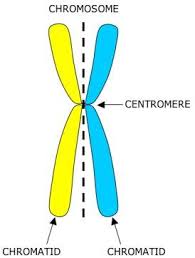
Chromosome
Strand of DNA twisted around a backbone of histones proteins
24
New cards
Centromere
joins chromatids in double-threaded chromosomes
25
New cards
Genes
Sections of DNA located on chromosomes; contain the info responsible for unique characteristics in organisms
26
New cards
Centriole
found in cytoplasm; arranged at right angles to eachother
27
New cards
Function of centriole
\-play a role in mitosis
\-control the formation of spindles involved in the anaphase of mitosis
\-control the formation of spindles involved in the anaphase of mitosis
28
New cards
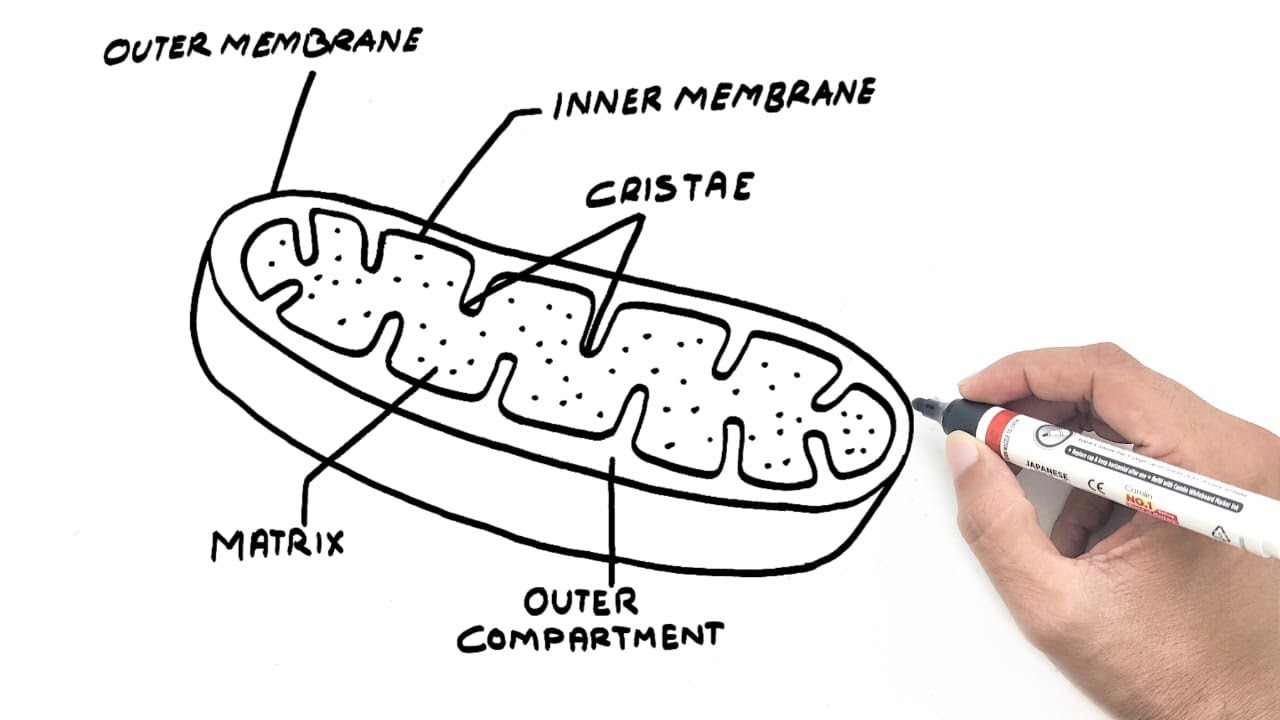
Structure of mitochondrion
Outer membrane
\-smooth
\-control substances that enter and leave
Inner membrane
\-folded
\-finger-like projection (cristae)
\-granules that contain enzymes for respiration
\-fluid called matrix
\-smooth
\-control substances that enter and leave
Inner membrane
\-folded
\-finger-like projection (cristae)
\-granules that contain enzymes for respiration
\-fluid called matrix
29
New cards
Function of mitochondrion
\-in charge of respiration
\-oxygen breaks down food in the cell
\-energy (ATP) is released and used to drive functions in the cell
\-products of respiration = CO2 and H2O
\-oxygen breaks down food in the cell
\-energy (ATP) is released and used to drive functions in the cell
\-products of respiration = CO2 and H2O
30
New cards
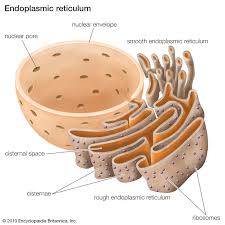
Endoplasmic reticulum
\-consists of double membranes that fold and form channels
\-increases surface area of the cell
Rough ER - ribosome attached
Smooth ER - synthesis site if lipids anf other substances
\-increases surface area of the cell
Rough ER - ribosome attached
Smooth ER - synthesis site if lipids anf other substances
31
New cards
Functions of ER
Makes, stores and transports carbohydrates, lipids and proteins in the cell
32
New cards
Ribosomes
small granules found in cytoplasm (some are attached to rough ER)
\
\
33
New cards
Function of ribosomes
\-make proteins; vital role in growth
\-(in cytoplasm) produce proteins needed by cytoplasm
\-(attached to ER) produce proteins that form part of membranes or are secreted
\-(in cytoplasm) produce proteins needed by cytoplasm
\-(attached to ER) produce proteins that form part of membranes or are secreted
34
New cards
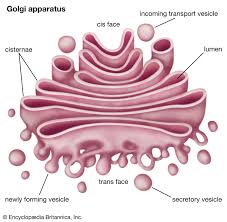
Golgi bodies
consist of a stack of membranes called cisternae; membranes pinch off to form vesticles that contain lipids and proteins
35
New cards
Function of Golgi bodies
\-distribute molecules from ER to different parts of the cell
\-secrete proteins (hormones or enzymes) needed in the body
\-form lysosomes
\-secrete proteins (hormones or enzymes) needed in the body
\-form lysosomes
36
New cards
Organelles found only in animal cells
Vesicles and vacuoles, and lysosomes
37
New cards
Vesicles and vacuoles
\-smaller than in plant cells
\-vesicles = small vacuoles
\-any structure filled with fluid and surrounded by membrane
\-some only contain water and perform osmoregulation (contractile vacuoles)
\-vesicles = small vacuoles
\-any structure filled with fluid and surrounded by membrane
\-some only contain water and perform osmoregulation (contractile vacuoles)
38
New cards
Lysosomes
tiny sacs formed from vesicles produced by golgi bodies
\
\
39
New cards
Functions of lysosomes
\-destroy foreign material outside the cell
\-digest and breakdown food particles
\-breakdown dead cells and organelles
\-digest and breakdown food particles
\-breakdown dead cells and organelles
40
New cards
Secretion
release of a chemical substance that has a beneficial effect for the cell or the whole body
41
New cards
Organelles only found in plant cells
Cell wall, plant vacuoles and plastids
42
New cards
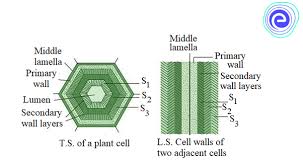
Structure of cell wall
\-surrounds cell membrane
\-made of cellulose fibers and lignin (which strengthens the wall)
\-permeable to water and minerals
\-openings contain cytoplasm called plasmodesmata which connects adjacent cells
\-cell walls of adjacent cells are joined by lamella
\-made of cellulose fibers and lignin (which strengthens the wall)
\-permeable to water and minerals
\-openings contain cytoplasm called plasmodesmata which connects adjacent cells
\-cell walls of adjacent cells are joined by lamella
43
New cards
Function of cell wall
gives the cell it's shape and supports and protects the cell
44
New cards
Structure of plant vacuoles
\-large fluid sac that often fill most of the cell
\-surrounded by membrane called tonoplast
\-liquid inside is cell sap
\-surrounded by membrane called tonoplast
\-liquid inside is cell sap
45
New cards
Functions of plant vacuoles
\-stores sugars, minerals, and pigments in water
\-gives cell shape
\-plays a role in digestion and secretion of cellular waste
\-absorbs and releases water in response to changes in and around the cell
\-gives cell shape
\-plays a role in digestion and secretion of cellular waste
\-absorbs and releases water in response to changes in and around the cell
46
New cards
Turgor pressure
force exerted by vacuoles on cell wall
47
New cards
Cell wall pressure
force exerted by cell wall on expanding vacuole
48
New cards
Plastids
\-cholorplast, chromoplasts, leucoplasts
\-disc shaped organelles
\-disc shaped organelles
49
New cards
Chloroplasts
\-present in all plant cells that produce glucose via photosynthesis
\-contain chlorophyll
\-chlorophyll absorbs sunlight, which provides energy for photosynthesis
\-contain chlorophyll
\-chlorophyll absorbs sunlight, which provides energy for photosynthesis
50
New cards
Structure of chloroplast
\-made up of gelatinous substance called stroma
\-contains enzymes for photosynthesis
\-stroma surrounded by double membrane
\-thylakoids (stacks of membrane-like structures which contain chlorophyll) are suspended in stroma
\-contains enzymes for photosynthesis
\-stroma surrounded by double membrane
\-thylakoids (stacks of membrane-like structures which contain chlorophyll) are suspended in stroma
51
New cards
Photosynthesis formula
Reactants = carbon dioxide and water
Chlorophyll and sunlight
Products = glucose C6H1206 and oxygen
Chlorophyll and sunlight
Products = glucose C6H1206 and oxygen
52
New cards
Chromoplasts and leucoplasts
chromoplast - pigment
leucoplast - colorless and stores starch
leucoplast - colorless and stores starch