Chapter 4.4: Oxidation-Reduction (Redox) Reactions
 Call Kai
 Learn
Learn Practice Test
 Spaced Repetition
 Match
Match Flashcards
 Knowt Play
1/17

Name | Mastery | Learn | Test | Matching | Spaced | Call with Kai | Chat |
|---|
No analytics yet
Send a link to your students to track their progress
18 Terms

Redox reaction
A reaction involving the oxidation and reduction of two substances at the same time
Contributes to both ionic and covalent compounds as electrons are transferred or shifted
Seen with 2Na+ + Cl2- → 2NaCl, as Na loses a negative charge (oxidized) and Cl gains a negative charge (reduced)
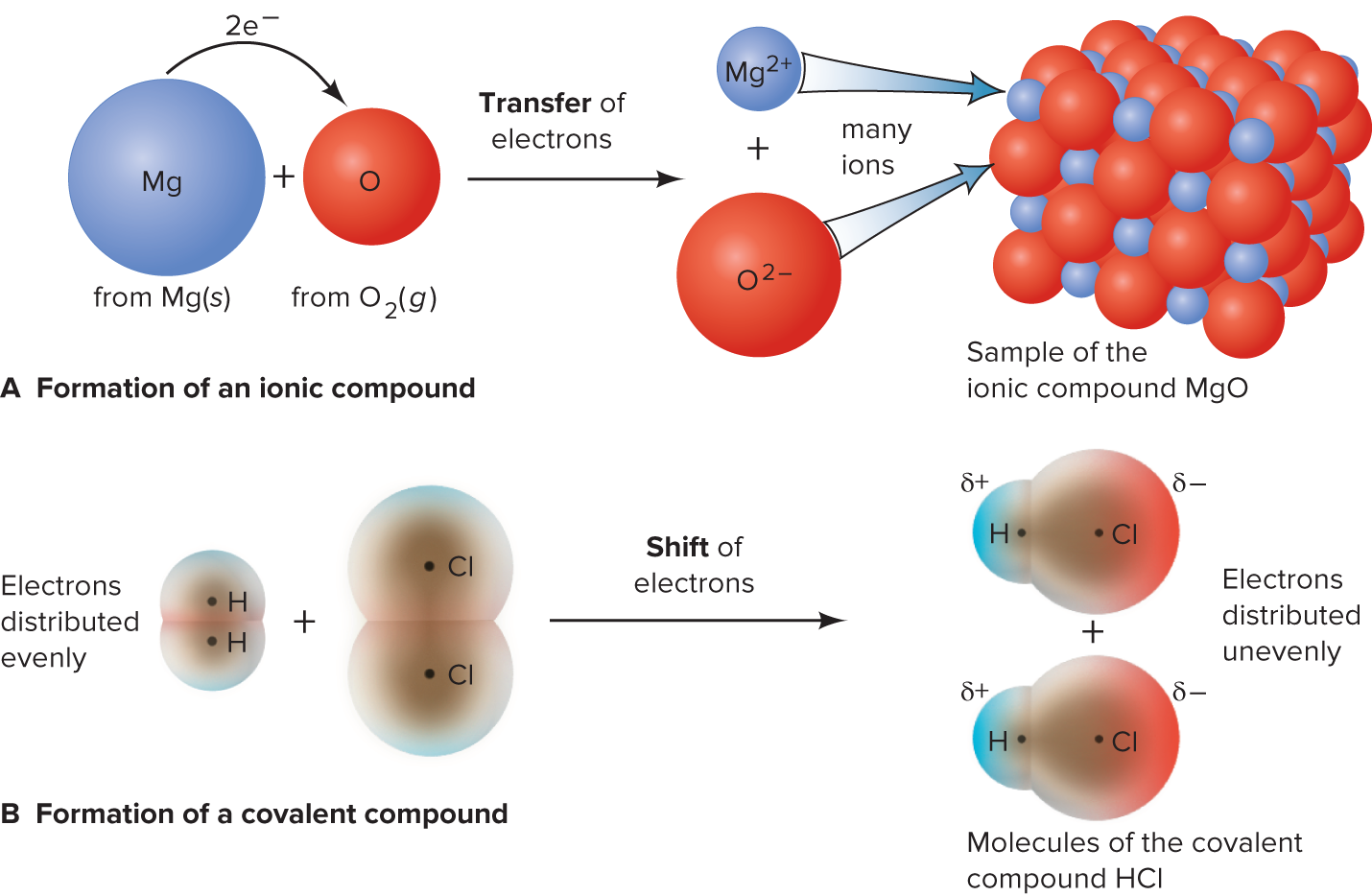
Electron transfer
What occurs between atoms in an ionic compound

Electron shift
What occurs between atoms in a covalent compound, with no ions formed yet still a difference in charge
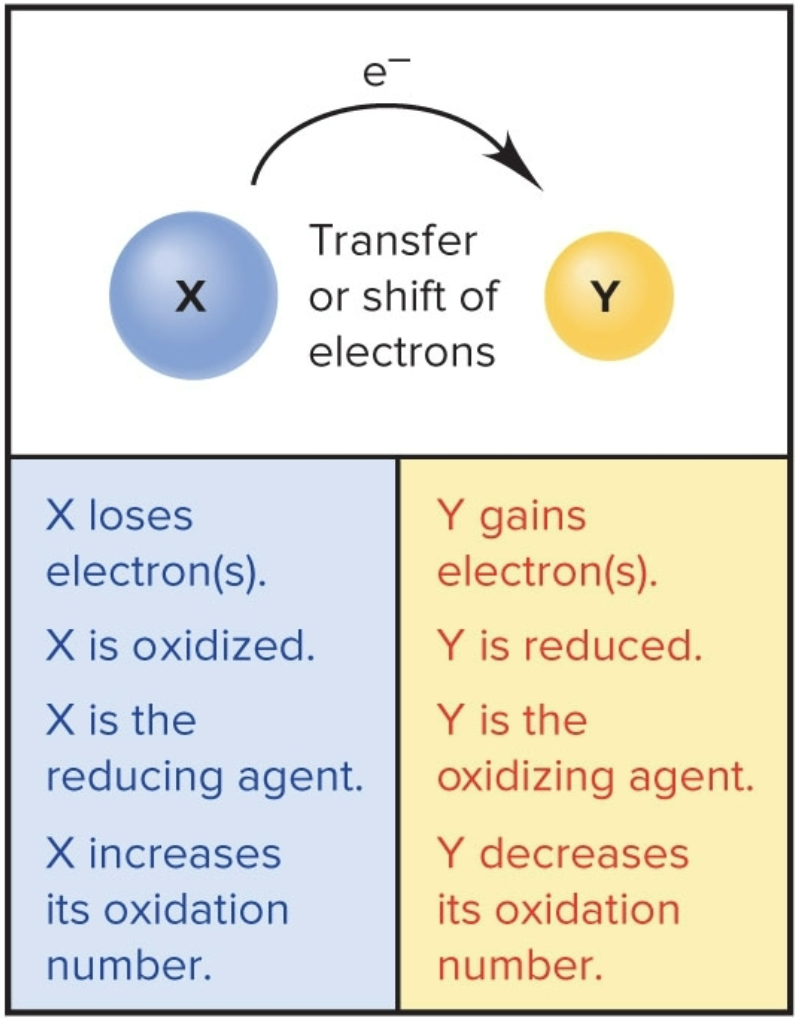
Oxidation
The loss of electrons to an oxidizing agent
In 2Na+ + Cl2- → 2NaCl, Na has this done to it as it loses negative electrons to Cl
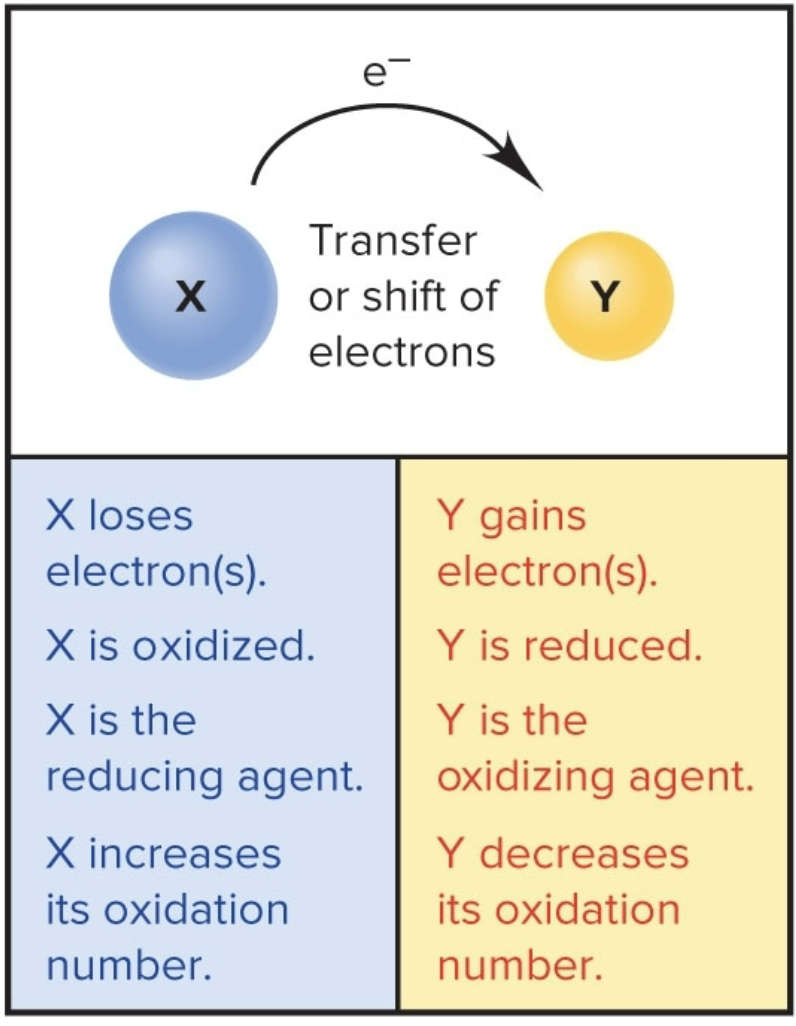
Reduction
The gain of negatively-charged electrons to a reducing agent
Term refers to the total positive charge going down
In 2Na+ + Cl2- → 2NaCl, Cl has this done to it as it gains negative electrons from Na

Oxidizing agent
What receives the negatively-charged electrons from an oxidized atom, thus becoming reduced with more negative charges
Term refers to the other substance’s change after losing electrons
In 2Na+ + Cl2- → 2NaCl, Cl is this as it removes electrons from Na
Makes something more positive by becoming more negative
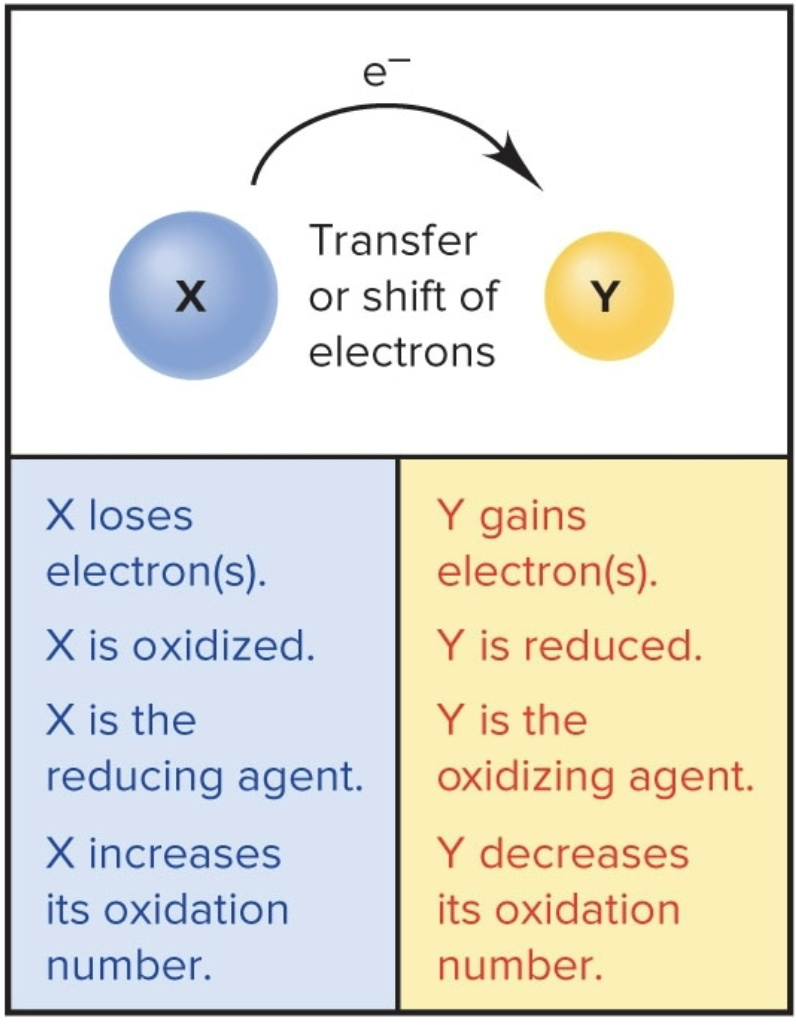
Reducing agent
What loses electrons to a reduced atom, thus becoming oxidized with fewer negative charges
Term refers to the other substance’s change as it gains negatively-charged electrons
In 2Na+ + Cl2- → 2NaCl, Na is this as it contributes electrons to Cl
Makes something more negative by becoming more positive

Oxidation number (ON)
A number stating the charge an individual atom would have, if all its shared electrons were transferred to the atom that attracts them more strongly
Sum of multiplied charges must equal 0 or stated charge
Written as (+2) and not (2+)
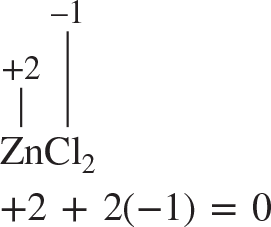
Ion charge
What is the oxidation number for each element in a binary ionic compound?
0 or the stated charge
What must the sum of all multiplied oxidation numbers be in an equation?

Oxidation rules
The oxidation number for each element in a covalent compound is determined by these
0
What is the oxidation number for an atom in its elemental form, like Na or C?
-1
What is always the oxidation number for F?
-1
What is the oxidation number for O, when in a peroxide?

-2
What is the oxidation number for O outside of a peroxide or compounds with F?

+1
What is the oxidation number for H when bound to a nonmetal?
-1
What is the oxidation number for H when bound to a metal or B?

-1
What is the oxidation number for elements in group 17, when bound to metals, non-O nonmetals, and non-F halogens?