3.3.7 Optical isomerism
 Call Kai
 Learn
Learn Practice Test
 Spaced Repetition
 Match
Match Flashcards
 Knowt Play
1/21

There's no tags or description
Looks like no tags are added yet.
Name | Mastery | Learn | Test | Matching | Spaced | Call with Kai | Chat |
|---|
No analytics yet
Send a link to your students to track their progress
22 Terms
What type of isomerism is optical isomerism?
Stereoisomerism
What property must a carbon atom have for the molecule to display optical isomerism about that carbon atom?
4 different atoms/functional groups attached to one carbon atom (chiral carbon)
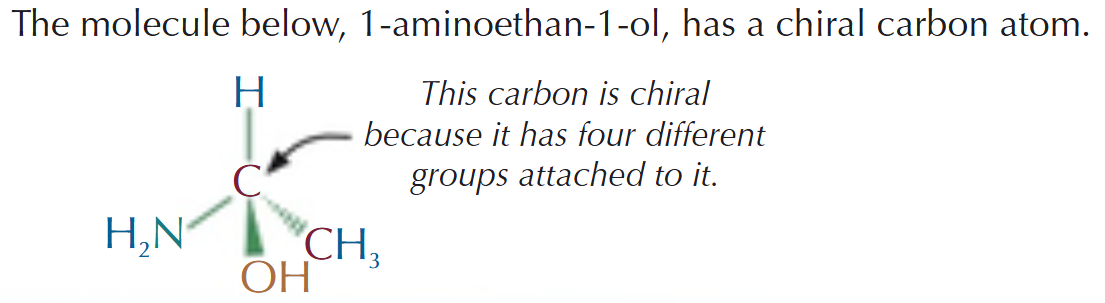
What are the similarities & differences between two optical isomers?
Same atoms & bonds, but they are non-superimposable mirror images of one another
They are not necessarily identical in chemical properties
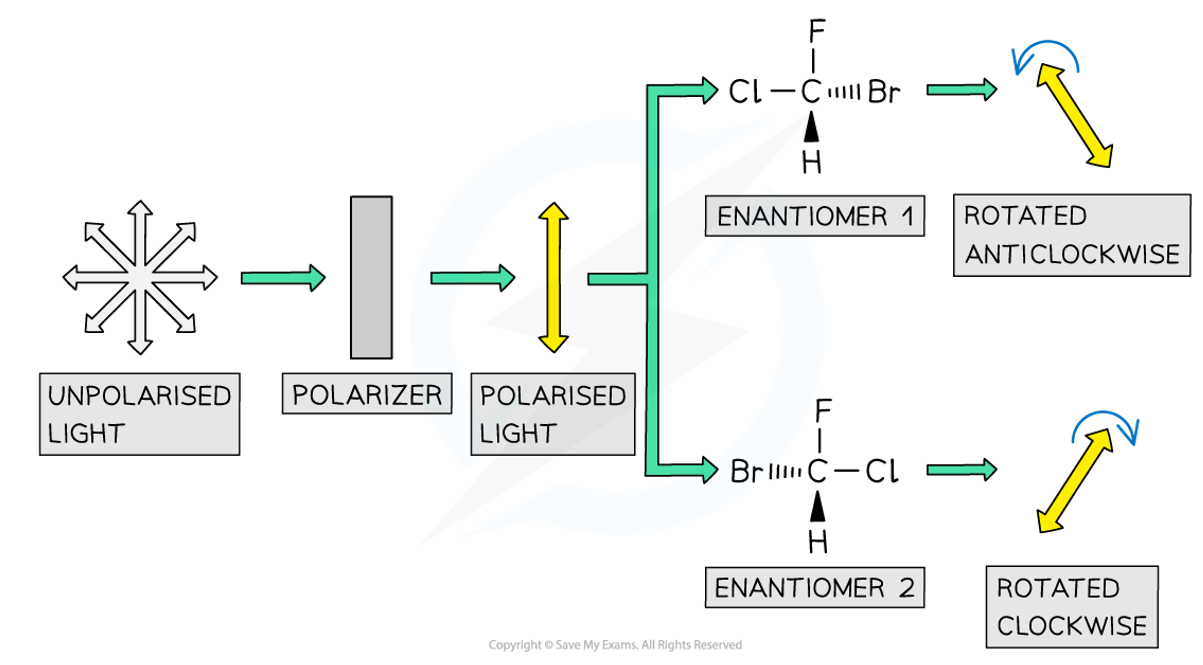
They differ in the way they rotate plane polarised light (rotate plane of polarisation by the same angle but in opposite directions)
What word is used to describe optically active molecules?
Chiral
What are the pair of isomers called?
Enantiomers
What is the chiral carbon centre?
The carbon atom that has 4 different atoms/groups of atoms attached to it
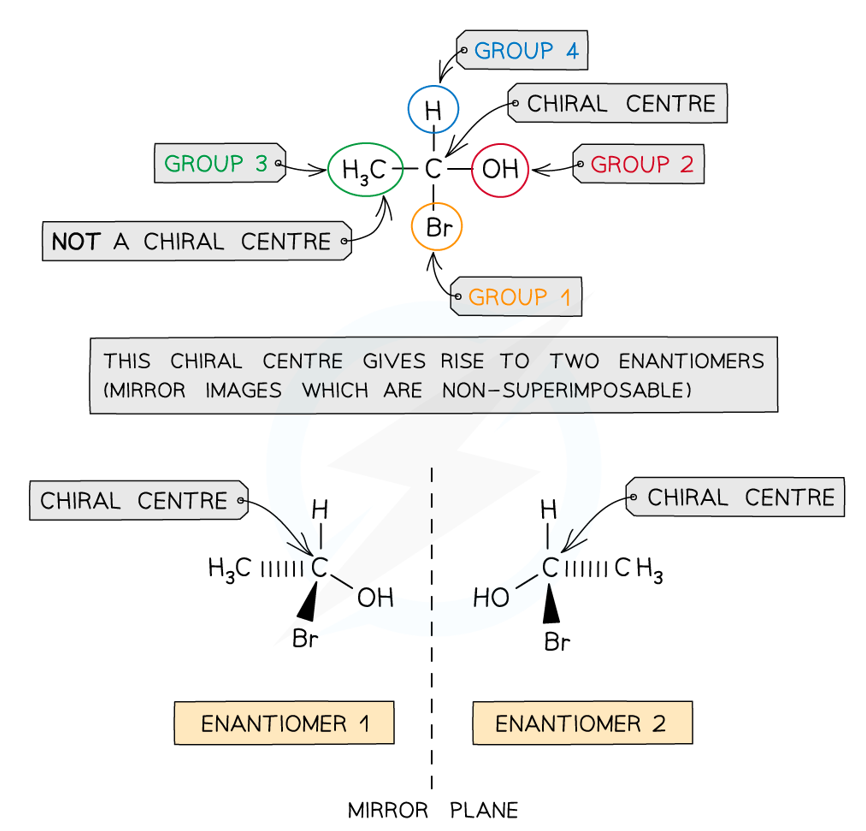
How is the chiral carbon/centre denoted?
C* (star on the C)
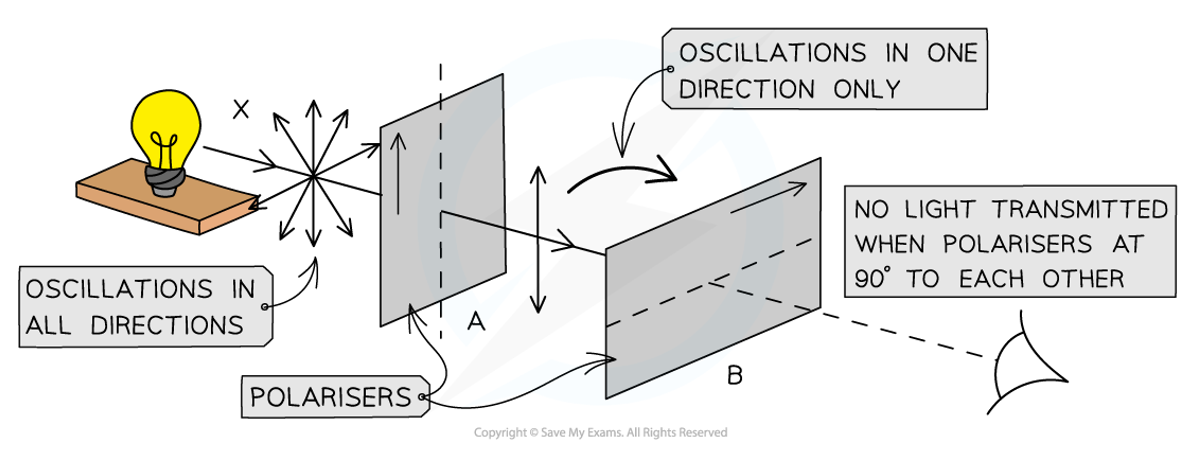
How is light polarised?
By passing it through a polaroid filter, so oscillations are only in one plane
What is the definition of a racemic mixture?
Equal mixtures of enantiomers
Why are racemic mixtures formed?
The carbonyl group is planar, so a nucleophile can attack from either above & below the bond (equal probability)
What effect does the racemic mixture have on plane polarised light?
None, as the rotation by each enantiomer cancels out to nothing
What effect does the + isomer have on plane polarised light?
Rotates plane of polarisation by x° clockwise
What effect does the - isomer have on plane polarised light?
Rotates plane of polarisation by x° anti-clockwise (same angle, but opposite direction as + isomer)
What is the structure of a polarimeter?
Light source (unpolarised light)
Polarising filter (polarised light)
Polarised light passes through compartment containing sample
Detector determines the angle of rotation of the plane polarised light
What are polarimeters used for?
To identify which enantiomer is present
The identify the purity & concentration of the sample
Are racemic mixtures formed in nature?
Not often, as enzyme mechanisms are 3D, so only form one enantiomer
Why is optical isomerism a problem for the drug industry?
Sometimes, only one enantiomer is effective due to enzyme’s active site being 3D
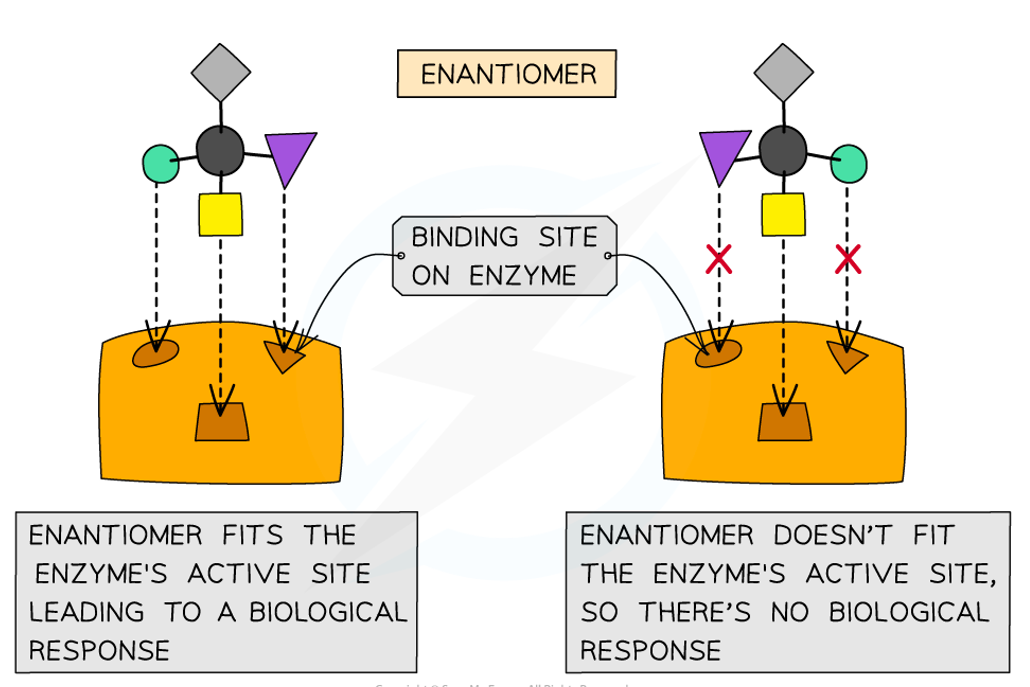
What are the options to resolve the issue of only one enantiomer being effective?
Separate the enantiomers (difficult & expensive, as they have very similar properties)
Sell the racemate; it is wasteful because half is inactive
Design an alternative synthesis to only produce one enantiomer
What are two examples of optically active drugs?
Ibuprofen & thalidomide
Draw the two enantiomers of 2-hydroxypropanoic acid
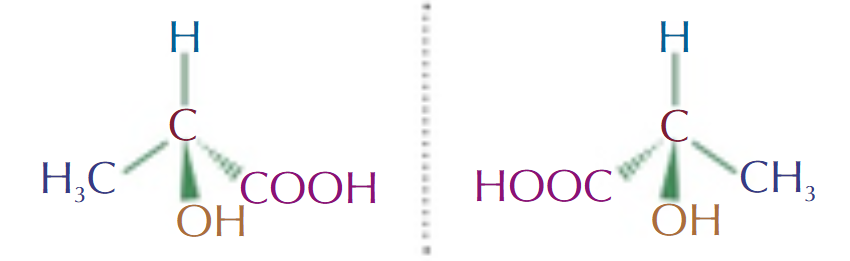
What is the relationship between two chiral molecules with the same structural formula?
They are non-superimposable mirror images of each other
By considering the mechanism of the reaction of the reduction of butanone, explain why the product has no effect on plane polarised light (6 marks)
The carbonyl group in butanone is planar. During the reduction, a hydride ion (H-), from NaBH4, acts as a nucleophile & attacks the carbonyl carbon. Because the carbonyl group is planar, the H- ion can attack from either above or below the C=O bond with equal probability
This forms butan-2-ol, which has a carbon atom bonded to 4 different functional groups, so exists as two chiral forms (enantiomers)
Since attack occurs equally from either side of the planar carbonyl group, equal amounts of each enantiomer are produced, giving a racemic mixture
The two enantiomers rotate plane-polarised light by equal amounts in opposite directions, so the effects cancel out & there is no overall rotation of plane-polarised light