CHEM 1312 Chapter 11 Chemical Kinetics
 Call Kai
 Learn
Learn Practice Test
 Spaced Repetition
 Match
Match Flashcards
 Knowt Play
1/35

There's no tags or description
Looks like no tags are added yet.
Name | Mastery | Learn | Test | Matching | Spaced | Call with Kai |
|---|
No analytics yet
Send a link to your students to track their progress
36 Terms
reaction rate
how quickly concentration changes over time
average rate
Δ[concentration] / Δt over a time interval (slope of secant line)
instantaneous rate
rate at one specific moment (slope of tangent line)
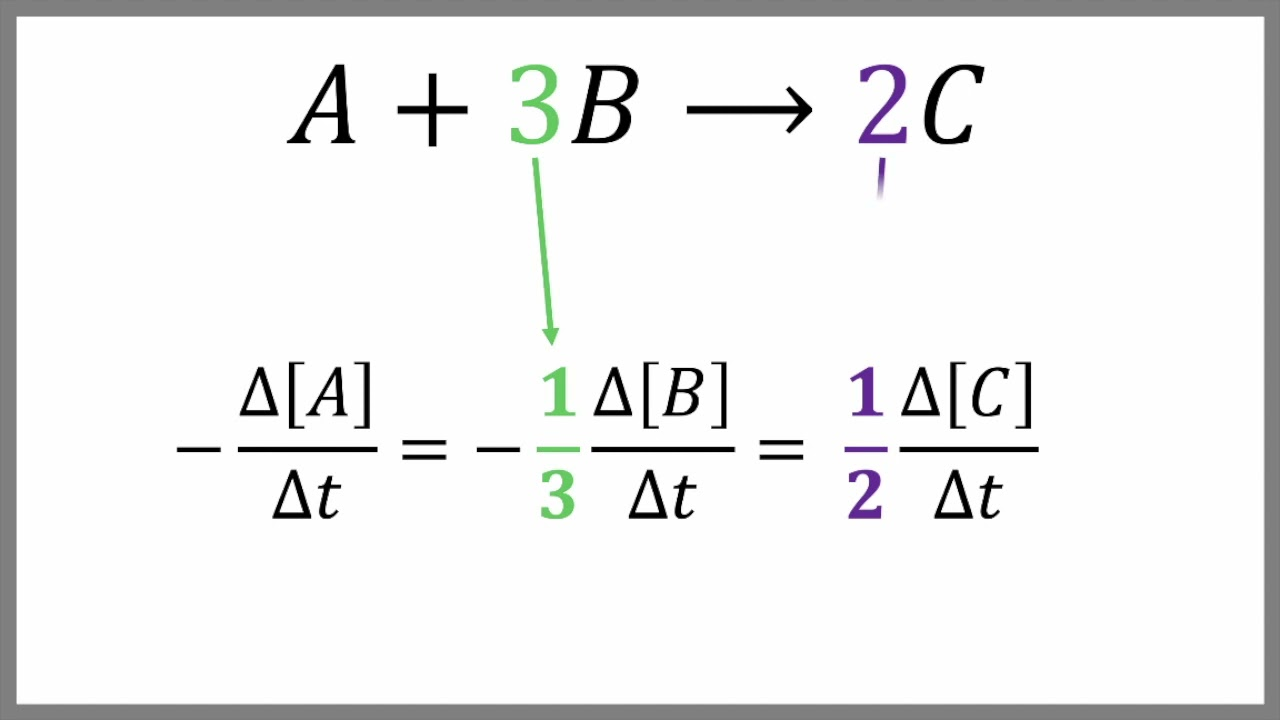
rate (with stoichiometry)
rate law
rate = k[A]m[B]n
rate constant (k)
fixed value for a given reaction at a given temperature; doesn’t change with concentration
reaction order
exponent on a reactant’s concentration in the rate law; must be determined exponentially
overall reaction order
sum of all individual orders (exponents, m+n)
method of initial rates
technique using multiple trials (changing one concentration at a time) to determine reaction orders from data
0th order k unit
M/s
1st order unit of k
1/s
2nd order unit of k
1/(M*s)
3rd order unit of k
1/(M²*s)
integrated rate law
equation relating concentration directly to time (rather than rate to concentration)
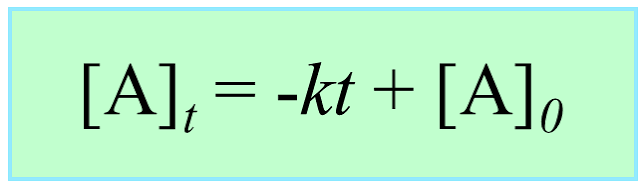
Zero-order integrated rate law
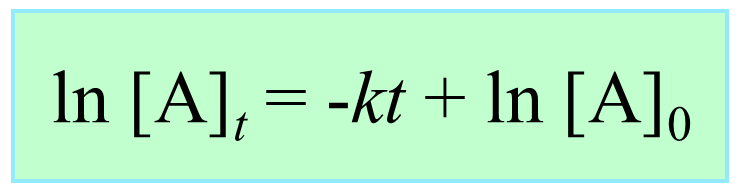
first order integrated rate law
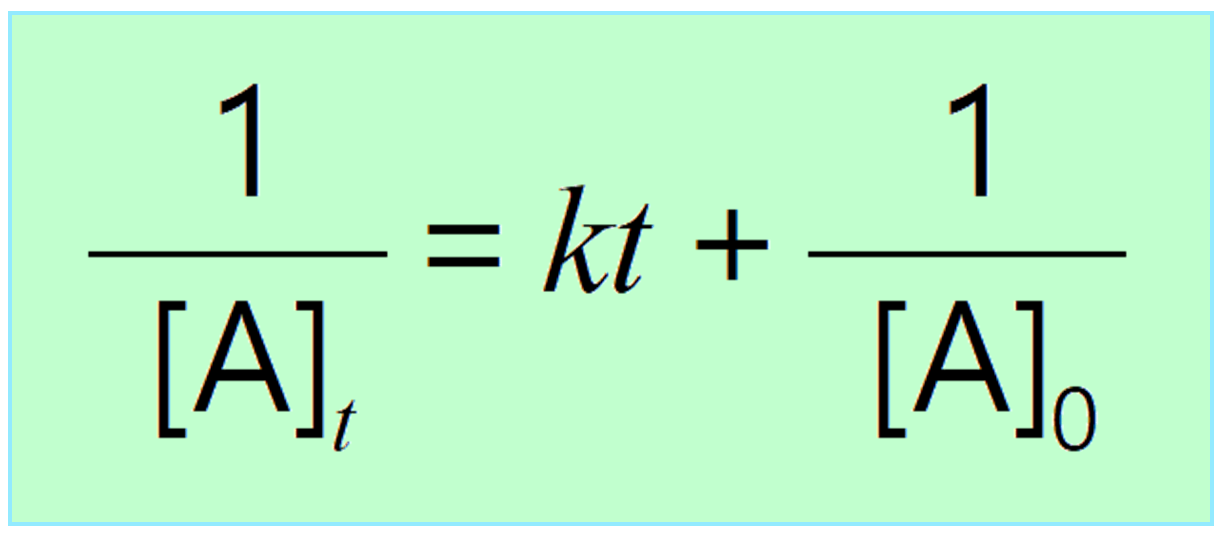
second order integrated rate law
half life (t1/2)
time required for concentration to drop to half its value
zero order half life
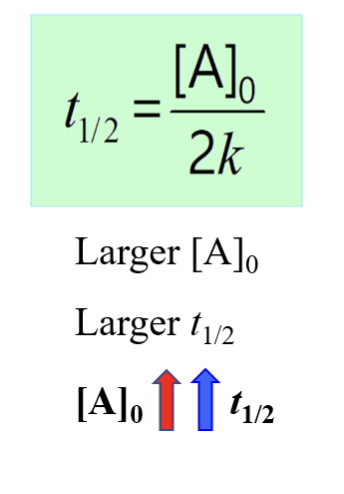
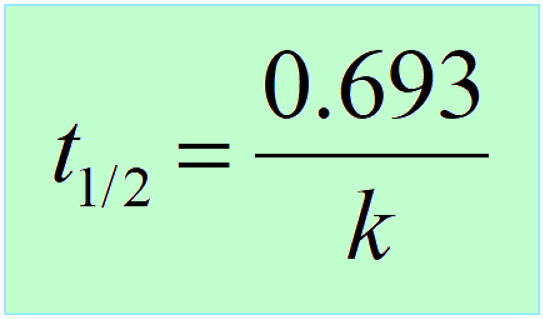
first order half life
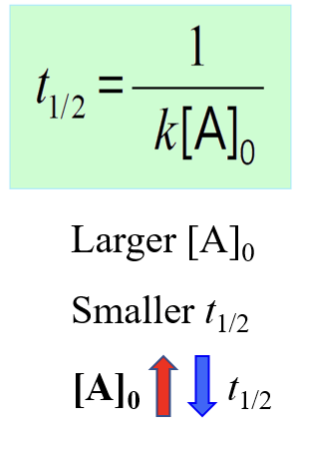
second order half life
activation energy (Ea)
minimum energy molecules need upon collision for a reaction to occur
Arrhenius equation
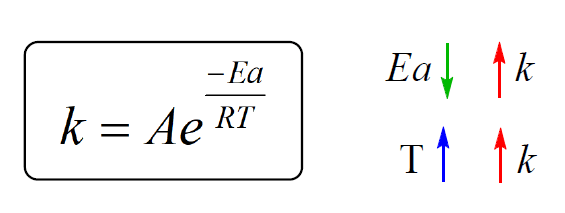
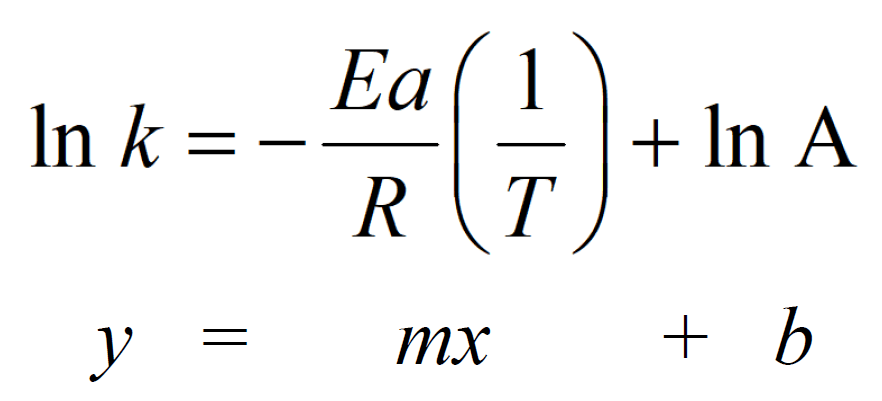
Linearized Arrhenius equation
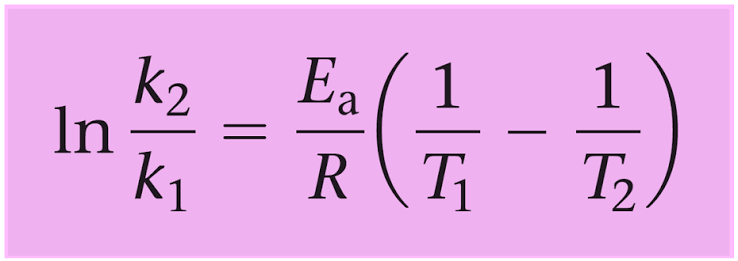
two-point arrhenius equation
elementary step
a single molecular event/collision; cannot be broken down further
molecularity
number of molecules colliding in an elementary step (unimolecular, bimolecular, termolecular)
intermediate
species produced in one step and consumed in a later step; does not appear in overall equation or final rate law
Rate-determining step
the slowest elementary step; controls the overall reaction rate
rate law for an elementary step
read directly from the coefficients
fast equilibrium step substitution
method for eliminating an intermediate step from a rate law using an earlier fast, reversible step
catalyst
speeds up a reaction without being consumed; provides a lower Ea pathway
catalyst v. intermediate
catalyst is present at the start, consumed early, regenerated later
intermediate is produced during the reaction, never present at the start
transition state
highest energy point of an individual elementary step (top of a peak)
overall activation energy (multi-step)
energy of the highest peak in the diagram minus energy of the true starting reactants
ΔH (catalyzed vs. uncatalyzed)
unchanged by a catalyst; only the height of the energy barrier changes