3. limiting factors

0.0(0)
studied byStudied by 0 people
0.0(0)
full-widthCall Kai
learnLearn
examPractice Test
spaced repetitionSpaced Repetition
heart puzzleMatch
flashcardsFlashcards
GameKnowt Play
Card Sorting

1/7

encourage image

There's no tags or description

Looks like no tags are added yet.

Study Analytics
Name
Mastery
Learn
Test
Matching
Spaced

No study sessions yet.

8 Terms

1
New cards

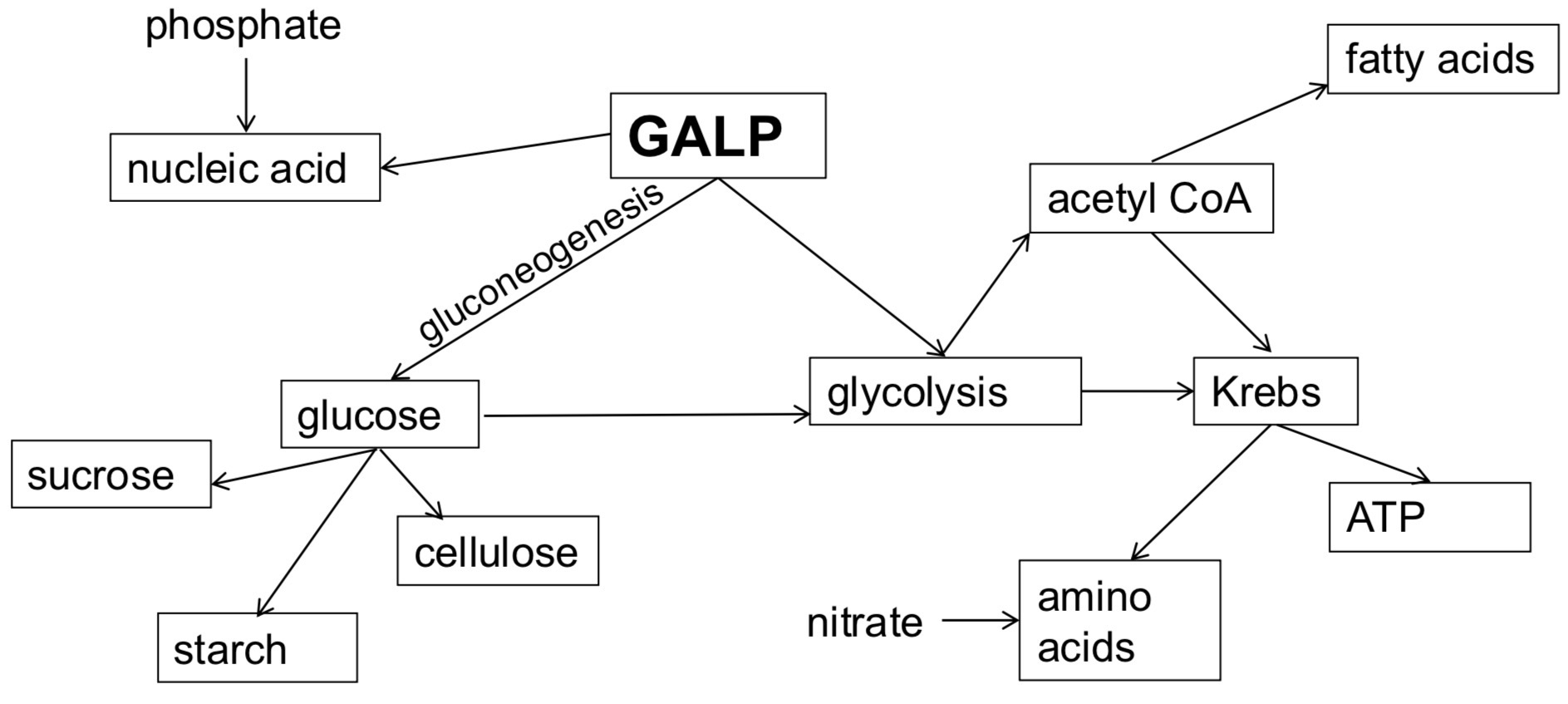
PRODUCTS OF PHOTOSYNTHESIS- DIAGRAM

knowt flashcard image
2
New cards

C3 PLANTS

  • fix CO2 directly into 3C compounds (eg GP / GALP)

3
New cards

4C PLANTS

  • fix CO2 into a 4C compound that can then be used to raise CO2 levels w/in plant cells, minimising photorespiration

4
New cards

CAM PLANTS

  • live in hot, dry climates where water loss could be a real problem

  • so open stomata at night and shut stomata during day

  • in dark (when stomata are open) they fix CO2 into a compound that acts like a CO2 store

  • then during day CO2 can be released to the cells to be used for photosynthesis

5
New cards

LIMITING FACTORS

  • LIMITING FACTOR- variable that limits the rate of a chemical reaction

  • light, CO2 and temp

  • rate of photosynthesis can be measured by volume of O2 produced, or volume of CO2 taken in

6
New cards

LIGHT

  • low levels of light will reduce amount of ATP and reduced NADP produced during light-dependent stage, therefore limit rate of light-independent reactions
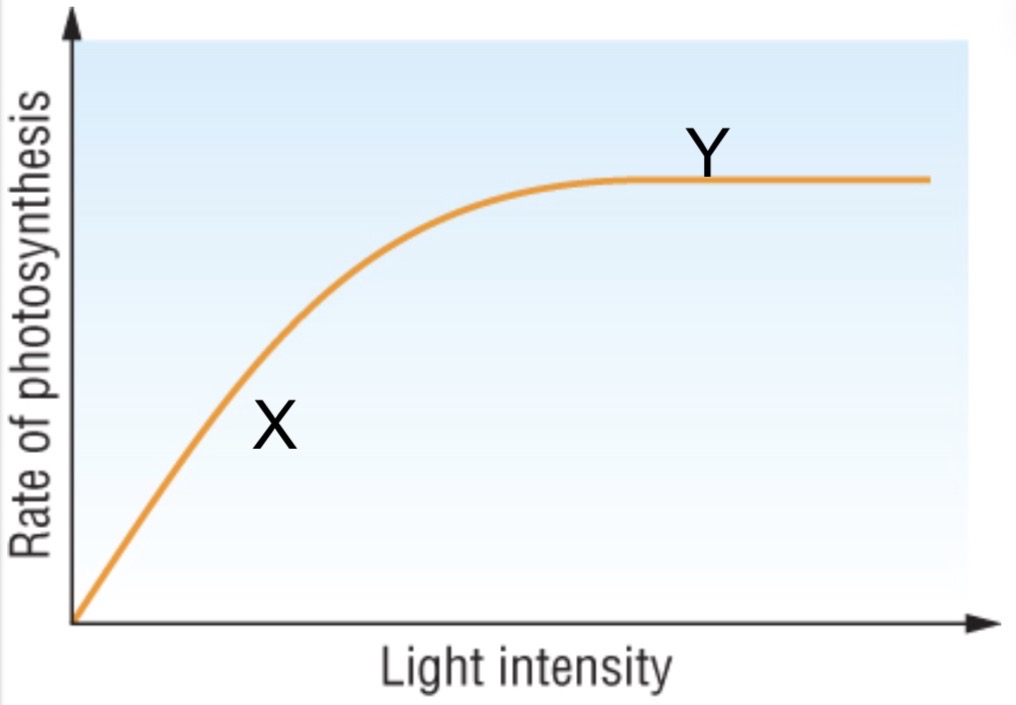
<ul><li><p>low levels of light will reduce amount of <mark data-color="red" style="background-color: red; color: inherit;">ATP</mark> and <mark data-color="red" style="background-color: red; color: inherit;">reduced NADP</mark> produced during light-dependent stage, therefore limit rate of light-independent reactions</p></li></ul><p></p>
7
New cards

CARBON DIOXIDE

  • lack of CO2 means that less RuBP can be converted into GP then GALP
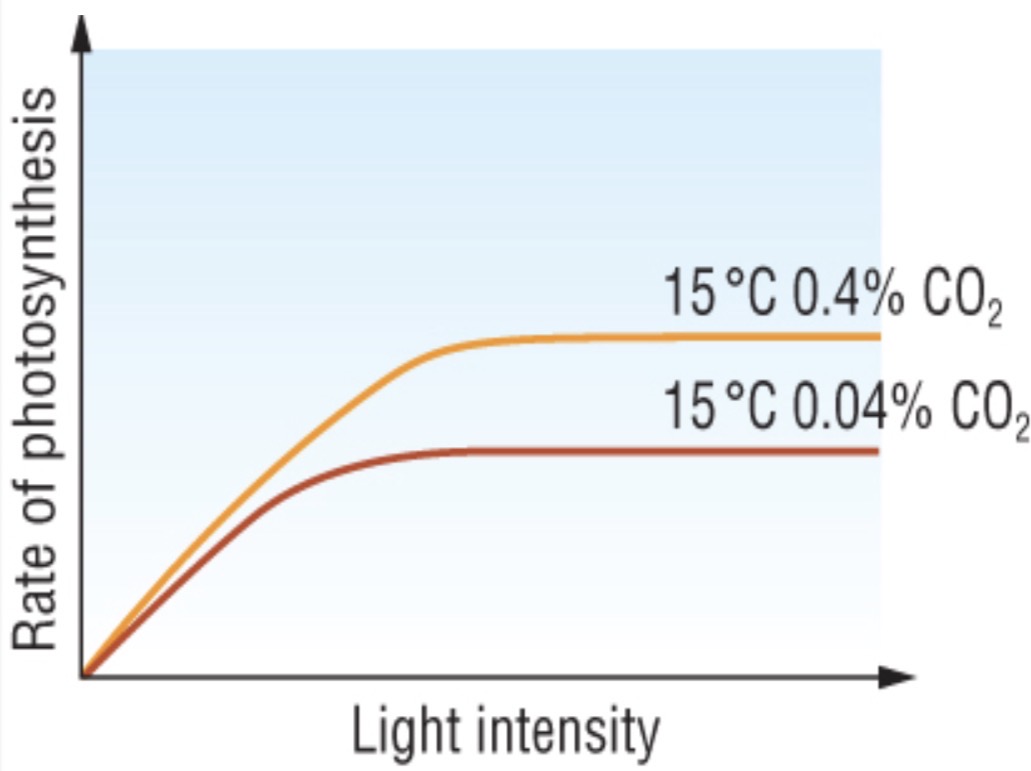
<ul><li><p><span>lack of CO2 means that <mark data-color="yellow" style="background-color: yellow; color: inherit;">less RuBP</mark> can be converted into <mark data-color="yellow" style="background-color: yellow; color: inherit;">GP</mark> then <mark data-color="yellow" style="background-color: yellow; color: inherit;">GALP</mark></span></p></li></ul><p></p>
8
New cards

TEMPERATURE

  • many reactions in photosynthesis (particularly light-independent stage) involve enzymes

  • enzymes need to have enough KE to collide w/ substrates and form enzyme-substrate complexes

  • but at temps above optimum, enzymes will be denatured as their active site changes shape
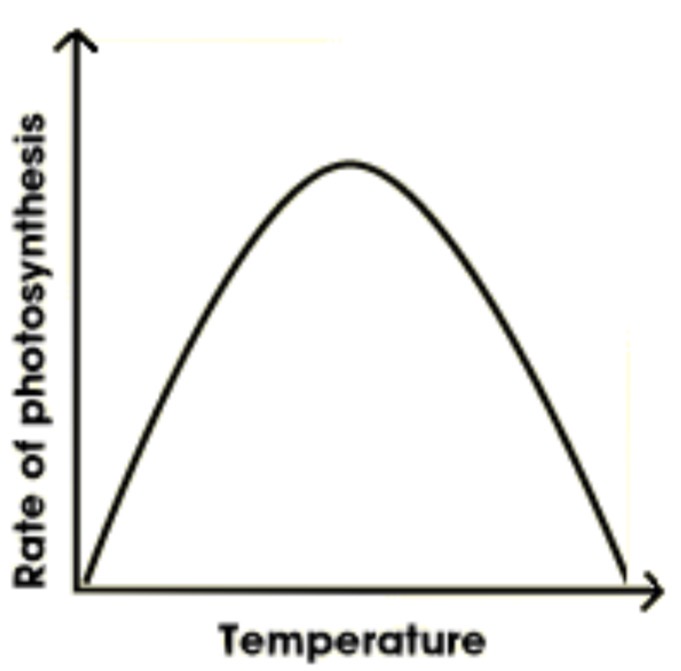
<ul><li><p><span>many reactions in <mark data-color="green" style="background-color: green; color: inherit;">photosynthesis</mark> (particularly light-independent stage) involve enzymes</span></p></li><li><p><span>enzymes need to have enough <mark data-color="green" style="background-color: green; color: inherit;">KE</mark> to collide w/ substrates and form <mark data-color="green" style="background-color: green; color: inherit;">enzyme-substrate complexes</mark></span></p></li><li><p><span>but at temps <mark data-color="green" style="background-color: green; color: inherit;">above optimum</mark>, enzymes will be <mark data-color="green" style="background-color: green; color: inherit;">denatured</mark> as their active site changes shape</span></p></li></ul><p></p>