Acute Otitis Media and Acute Bacterial Rhinosinusitis
 Call Kai
 Learn
Learn Practice Test
 Spaced Repetition
 Match
Match Flashcards
 Knowt Play
1/38

There's no tags or description
Looks like no tags are added yet.
Name | Mastery | Learn | Test | Matching | Spaced | Call with Kai | Chat |
|---|
No analytics yet
Send a link to your students to track their progress
39 Terms
Objectives
Determine whether antibiotic therapy is warranted for patients presenting with symptoms of acute otitis media (AOM) and acute bacterial rhinosinusitis (ABR).
Develop a patient-specific pharmacotherapy plan (drug, dose, route, frequency, and duration) for patients with AOM and ABR based on patient-specific factors:
Age
Symptoms and duration
Previous treatment
Medication allergies
Educate patients on the most likely adverse effects of antibiotic treatments used to treat AOM and ABR.
Provide appropriate counseling and monitoring recommendations for patients treated for AOM and ABR
Common Signs/Symptoms
Otalgia
Fever
Sleep disturbances
Hearing difficulties
Ear tugging
Bulging of tympanic membrane
Otorrhea (discharge)
Presentation in Infants/Young Children
Fussy/irritable
Crying more than usual
Trouble sleeping
Pulling at ears
Fever
Otorrhea
Presentation in Older Children and Adults
Otalgia
Feeling of fullness or pressure in the ear
Hearing impairment
Vertigo, nystagmus, tinnitis
AAP Diagnostic Criteria
Any 1 of the following
Moderate to severe bulging of the tympanic membrane
New onset of otorrhea not due to otitis externa
Mild bulging of the tympanic membrane with recent onset of ear pain or intense erythema
Severe symptoms
Toxic-appearing
Persistent ear pain lasting > 48 hours
Temperature ≥102.2°F
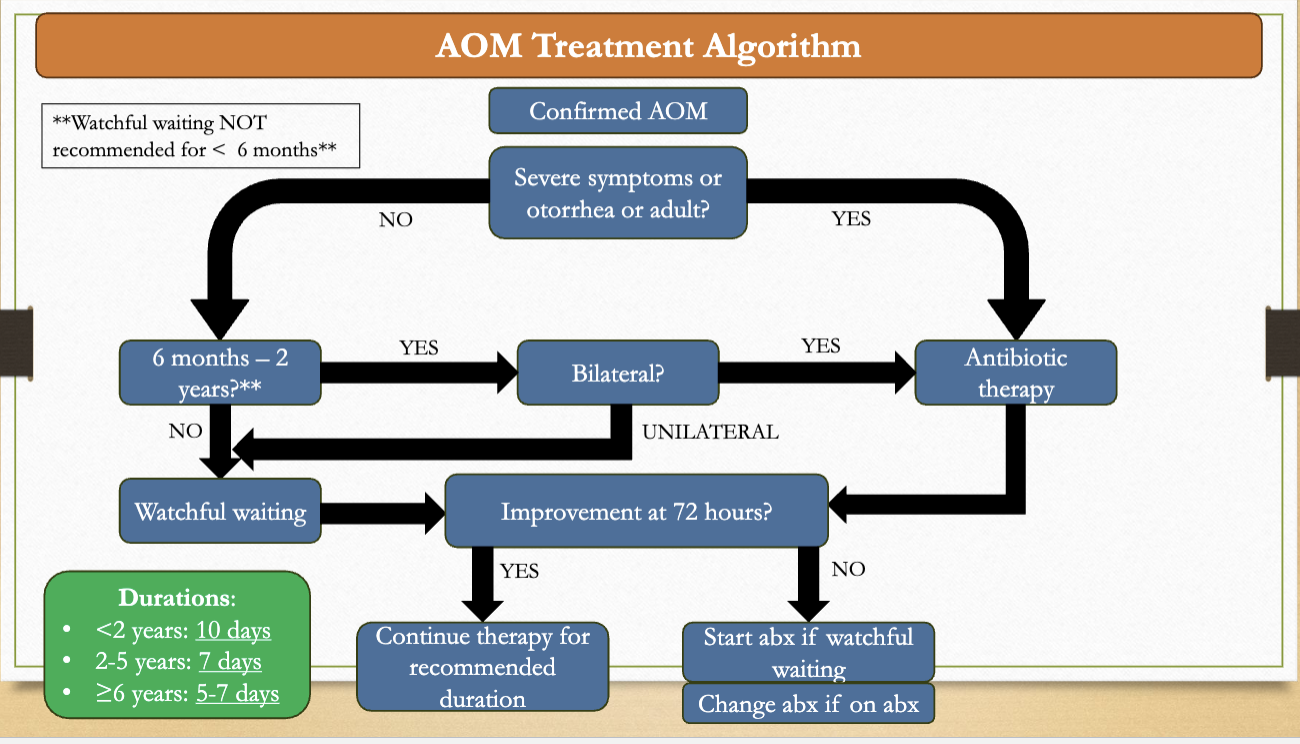
When would you do watching waiting (observation)?
Children 6 months – 23 months with non-severe unilateral AOM without otorrhea
Children ≥ 2 years with non-severe bilateral or unilateral AOM without otorrhea
Initiate antibiotics if the child’s symptoms worsen or decline within 48-72 hours of symptom onset
**if they have discharge → they getting treatment
***Treat with antibiotics if severe symptoms, otorrhea, or adult
Antibiotic Therapy
Children ≥ 6 months with severe symptoms
and/or otorrhea
Children 6-23 months with bilateral AOM
Adults with AOM
Antibiotics for AOM
Amoxicillin
Amoxicillin-Clavulanate
Cefdinir, cefuroxime, cefpodoxime, ceftriaxone
Azithromycin
What is first-line for AOM?
Drug, dose, duration
Amoxicillin 80-90 mg/kg PO daily given as 2 doses
What criteria would patients have to be first line for Amoxicillin-Clavulanate?
Amoxicillin use in last 30 days
Concurrent purulent conjunctivitis
History of recurrent infection unresponsive to amoxicillin
Adult AOM
Second line if symptoms worsen after 48-72 hours of initial antibiotic
What is the dose and duration for Amoxicillin-clavulanate?
90 mg/kg (Amoxicillin) PO daily given as 2 doses
Adults: 875 mg/125 mg BID
What is second-line treatment for AOM? When would these be used?
When would it be used as second line?
Cefdinir, cefuroxime, cefpodoxime, ceftriaxone (IM or IV only)
Use as second-line treatment
Or if patient has non-severe PCN allergy
Amoxicillin- clavulanate
Symptoms worsen after 48-72 hours of initial antibiotic
What is Azithromycin first line for?
What is the duration?
First-line for patients with type 1 PCN hypersensitivity
3 days
What is the duration of therapy based on age?
<2 years: 10 days
2-5 years: 7 days
≥6 years: 5-7 days
What should you avoid in type 1 PCN allergy?
beta-lactam antibiotics
What are ADR of penicillins?
Dermatological reactions, GI ADRs (N/V/D)
LFT elevations
interstitial nephritis
cytopenia
hemorrhagic cystitis
C. difficile infection
What are ADR of cephalosporins?
Dermatological reactions, GI ADRs (N/V/D)
LFT elevations
interstitial nephritis
hemolytic anemia
cytopenias
C. difficile infection
What are ADR of Macrolides?
GI intolerance
diarrhea
prolonged QTc/torsade de pointes
drug induced liver injury
ototoxicity
dermatological reactions
What are some counseling points for Amoxicillin?
Shake suspension before each dose
Take +/- food; suspension can be mixed with milk/juice
Can be stored at room temp for up to 14 days
What are some counseling points for Amoxicillin-Clavulanate?
Shake suspension before each dose
Take with food; suspension can be mixed with milk/juice
Should be stored in the fridge for up to 10 day
What is considered Recurrent AOM?
3 episodes in 6 months
4 episodes in 1 year with one episode in the preceding 6 months
Concerning because recurrent episodes can lead to hearing loss and language and learning disabilities
How would you monitor for AOM?
Clinical signs of improvement within 48-72 hours and usually asymptomatic within 7 days
Reassess treatment plan if symptoms worsen or decline within 48-72 hours
If watchful waiting used initially, switch to antibiotics
If antibiotics used initially, switch antibiotic
Continually monitor pain, fever, adverse effects/adherence to antibiotics
What are some prevention strategies?
Breastfeeding
Avoid second-hand smoke
Eliminate bottle propping and pacifiers
Check for undiagnosed allergies leading to chronic rhinorrhea
Xylitol gum use
Pneumococcal and annual influenza vaccine
Draw out AOM Treatment Algorithm
TIPS FOR ANTIBIOTIC USAGE
Amoxicillin first line at 80-90 mg/kg/day in 2 divided doses
Augmentin if risk factors for bacterial resistance or failure of amoxicillin therapy
Cephalosporins if non-severe PCN allergy/second line
Macrolides if type 1 PCN allergy
Ibuprofen and acetaminophen recommended for pain
Reassess treatment plan if symptoms worsen or decline within 48-72 hours
If watchful waiting – start antibiotics
If on antibiotics change regimen
Influenza and pneumococcal vaccines recommended for prevention
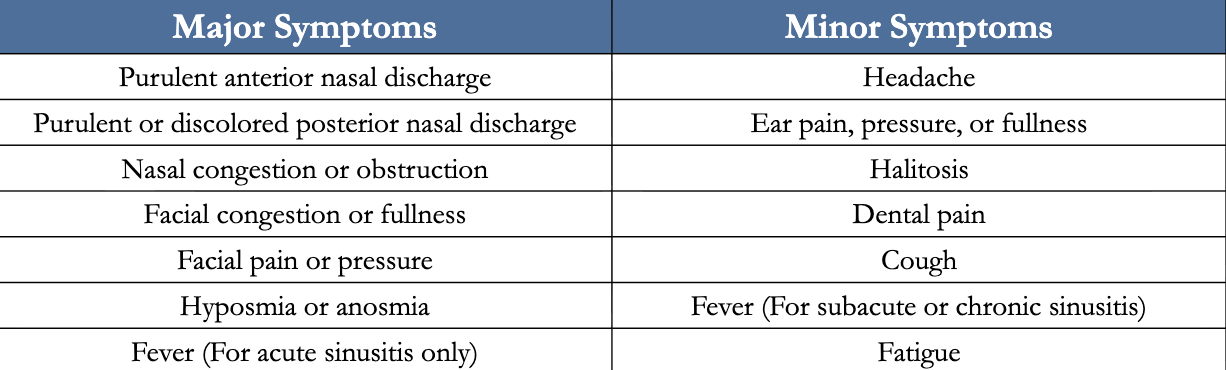
Signs and Symptoms Acute Bacterial Rhinosinusitis
(ABR)
Purulent anterior nasal discharge
Purulent or discolored posterior nasal discharge
Nasal congestion or obstruction
Facial congestion or fullness
Facial pain or pressure
Fever
Headache
Ear pain/pressure/fullness
Halitosis
Dental pain
Cough
Fatigue
Diagnosis of Acute Bacterial Rhinosinusitis
Gold standard: Recovery of bacteria in high density from the cavity of the paranasal sinus (≥ 104 CFU/mL)
Diagnosis typically via assessment of signs and symptoms and observation of pattern of illness
Distinguish between bacterial vs. viral infection
What does the diagnosis of Acute Bacterial Rhinosinusitis contain?
Diagnosis consists of at least 2 major symptoms or 1 major and 2 minor symptoms
What are key differences in the characteristics of Bacterial vs. Viral SInusitis?
Symptoms
Nasal discharge
Fever
Other symptoms
Peak symptom time
Duration

When would you treat for ABR?
ANY ONE OF THE FOLLOWING
Onset with persistent signs/symptoms compatible with acute rhinosinusitis lasting for ≥ 10 days without any evidence of clinical improvement
Onset with high fever (39°C or 102.2°F) and purulent nasal discharge or facial pain lasting for at least 3-4 consecutive days at the beginning of illness
Onset of new fever, headache, or increase in nasal discharge following a typical viral URTI that lasted 5-6 days and was initially improving (“double sickening”)
What are some Symptomatic Management of ABR?
Relieve symptoms due to nasal drainage and obstruction
Analgesics for pain
Intranasal saline irrigation with either physiological or hypertonic saline
Intranasal corticosteroids, especially in those with a history of allergic rhinitis
Topical or oral decongestants or antihistamines are not recommended as these agents dry out mucosa and disturb clearance of mucosal secretions
In children with ABR
What is the first line treatment?
What is second line?
What if they have Type 1 PCN allergy?
What is they have a non-severe PCN allergy?
Severe infection requiring hospitalization
Risk for antibiotic resistance or failed initial therapy?
What is the duration?
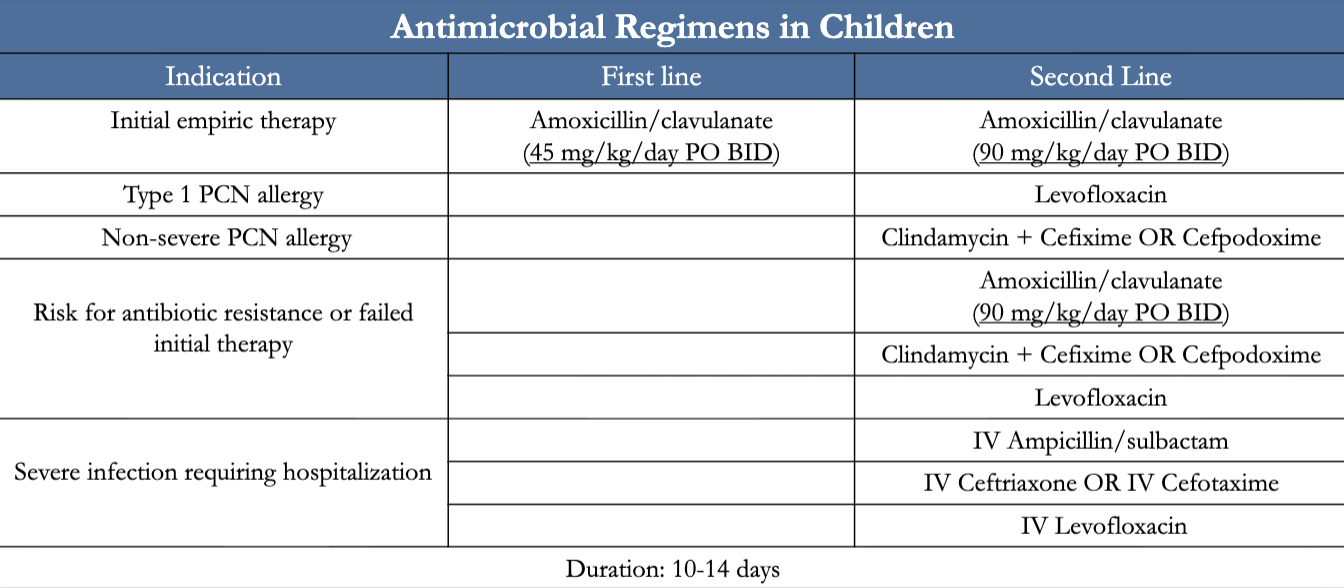
For children - High dose amoxicillin/clavulanate as initial treatment if:
Immunocompromised
attendance at day care
< 2 years old, recent hospitalization
antibiotic use in the last 30 days
regions with high endemic rates of penicillin resistant S. pneumo, severe infection (systemic toxicity + ≥ 102.2°F + risk of suppurative complications)
In adults with ABR
What is the first line treatment?
What is second line?
What if they have Type 1 PCN allergy?
Severe infection requiring hospitalization
Risk for antibiotic resistance or failed initial therapy?
What is the duration?

For adults - High dose amoxicillin/clavulanate as initial treatment if:
Immunocompromised, > 65 years old
recent hospitalization
antibiotic use in the last 30 days
regions with high endemic rates of penicillin resistant S. pneumo
severe infection (systemic toxicity + ≥ 102.2°F + risk of suppurative complications)
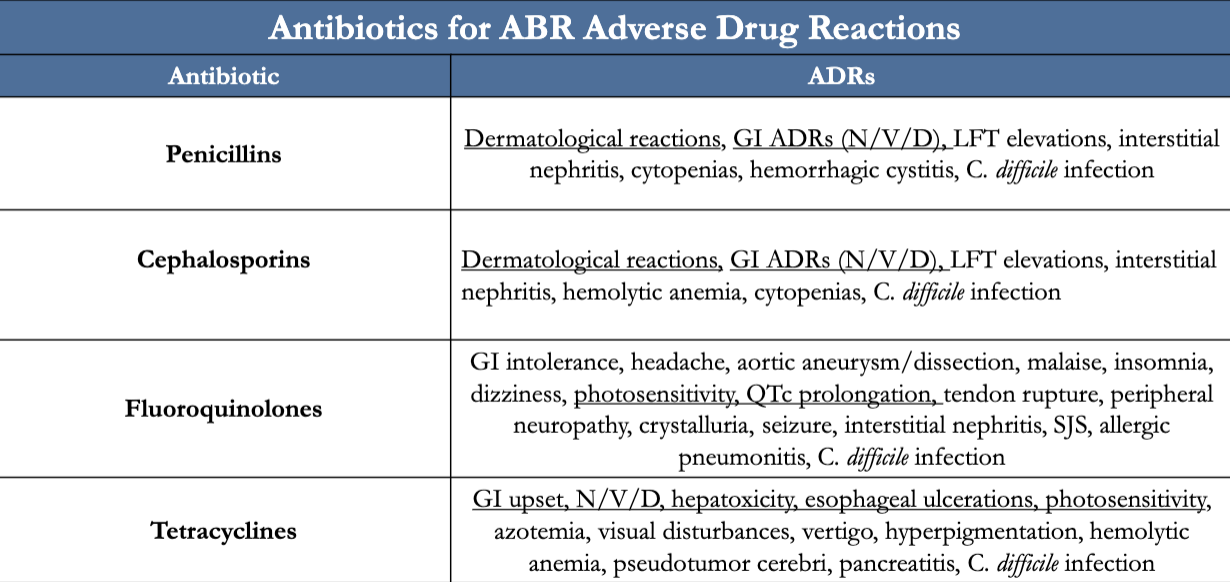
Antibiotics for ABR Adverse Drug Reactions
Monitoring for ABR
Reassess treatment plan if symptoms worsen or decline within 48-72 hours of initial antibiotic therapy
Reassess treatment plan if individuals fail to improve despite 3-5 days of initial antibiotic therapy
Evaluate for possibility of resistant pathogens, or other causes of treatment failure and consider alternative antibiotics
Alternative/initiation of antibiotics should be considered
Those who do not respond to first- or second-line therapies should be referred to a specialist
ABR Treatment Algorithm
