HBS Quiz 1.1.2-1.1.4 Directional vocab, Regional Terms, Microscope, Tissues, Skull bones, Long Bone anatomy
 Call Kai
 Learn
Learn Practice Test
 Spaced Repetition
 Match
Match Flashcards
 Knowt Play
1/130

There's no tags or description
Looks like no tags are added yet.
Name | Mastery | Learn | Test | Matching | Spaced | Call with Kai | Chat |
|---|
No analytics yet
Send a link to your students to track their progress
131 Terms
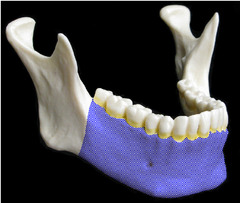
mandible
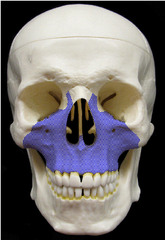
maxilla
Zygomatic bone

frontal bone

temporal bone

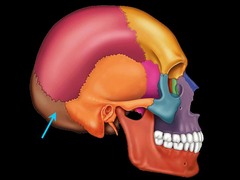
occipital bone

parietal bone
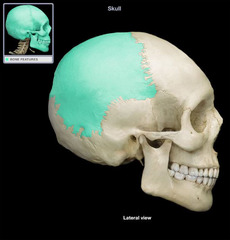
axial skeleton
skull, ribs, vertebrae

Appendicular skeleton
limbs,pelvis

What are the four types of bones in the skeletal system?
Long, short, flat, and irregular bones.
What is the periosteum?
The periosteum is a dense layer of vascular connective tissue enveloping the bones except at the surfaces of the joints.
What is found in the medullary cavity of long bones?
The medullary cavity contains bone marrow, which can be red or yellow.
What are the two types of bone marrow?
Red marrow (produces blood cells) and yellow marrow (stores fat).
What is the Haversian canal?
The Haversian canal is a central channel in bone that contains blood vessels and nerves.
What are osteocytes?
Osteocytes are mature bone cells that maintain bone tissue.
What are canaliculi?
Canaliculi are small channels that connect osteocytes to each other and to the Haversian canal, allowing for nutrient exchange.
What are the primary functions of the skeletal system?
The skeletal system provides support, protection, movement, mineral storage, and blood cell production.
What is the function of bone marrow?
To produce red blood cells.
What are bony trabeculae?
Plate-like structures that form the framework inside spongy bone for the bone marrow.
How does the structure of spongy bone reduce weight?
Its honeycomb-like structure is very porous, making it less dense.
Why do bones need blood vessels?
To supply bone cells with oxygen and nutrients and to transport materials in and out.
Why is understanding bone composition important for physical therapists?
It helps them develop exercises that avoid harming specific areas of bone that may be more fragile in construction.
What are the main components of a long bone?
Epiphysis, diaphysis, metaphysis, periosteum, compact bone, spongy bone, and bone marrow.
What is the role of the periosteum?
It is the LIVING outer layer of bone that provides protection and attachment for muscles.

What is the difference between red and yellow bone marrow?
Red bone marrow produces blood cells, while yellow bone marrow stores fat. You lose red bone marrow as you age and gain more yellow.
What is the diaphysis?
The shaft or central part of a long bone.
What is the epiphysis?
The end part of a long bone, which is covered with articular cartilage.
What is the metaphysis?
The region between the diaphysis and epiphysis where bone growth occurs.
What is the significance of the honeycomb structure in spongy bone?
It provides strength while minimizing weight.
How do nutrients reach osteocytes?
Through canaliculi that connect them to the Haversian canal.
What is the primary function of compact bone?
To provide strength and support to the skeletal structure.
What diagnosis might Rio's doctor want to confirm with a chest CT scan?
Heart issues related to Marfan syndrome.
What is spongy bone?
Porous bone that contains red marrow and is typically less dense.
What is compact bone?
Hard, solid bone layer that covers all bones.
What are long bones?
Bones with spongy ends and a compact shaft; examples include femur, humerus, and tibia.

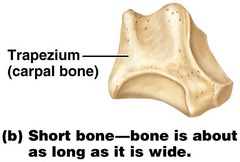
What are short bones?
Cube-shaped bones mostly made of spongy bone; examples include carpal and tarsal bones.
What are flat bones?
Thin layers of compact bone surrounding a layer of spongy bone; examples include skull bones like the frontal bone.

What are irregular bones?
Bones with a mix of spongy and compact bone in atypical shapes; examples include vertebrae and facial bones like the maxilla.

What is the function of blood vessels in bones?
They travel through the length of the bone to nourish and maintain it.
What is the medullary cavity?
The cavity in a hollow long bone that stores yellow marrow.
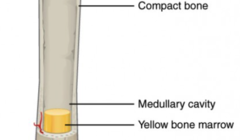
What does yellow bone marrow store?
Fat and stem cells.

Why is a complete medical history important?
It helps doctors make accurate diagnoses and avoid complications from missing information.
What might happen if a patient does not provide an accurate medical history?
It could lead to misdiagnosis or inappropriate treatment.
Directional terms
words used to describe the location of one structure in relation to another, indicates specific bones or organs

A microscope's low power lens' total magnification
40x
A microscope's medium power lens' total magnification
100x
A microscope's high power lens' total magnification
400x
microscope stage
the flat platform where you place the slide

Microscope stage adjustments (X & Y)
moves the stage left & right, forwards & back (mirrored)

Microscope body tube/eyepiece
through which light passes from objective to ocular lens

Microscope objective lenses
Magnification lenses ranging from low to high power
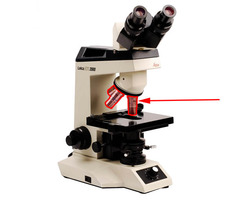
Microscope diaphragm
part of the microscope that controls the amount of light to the object being viewed
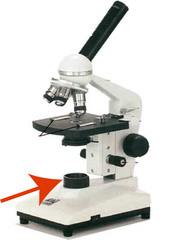
Microscope condenser
small substage lens that concentrates the light on the specimen

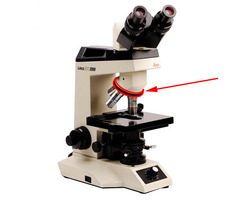
Rotating nosepiece
contains objective lenses, allowing for changing of lenses for variable magnification of slide image
Regional Terms
words used to describe specific regions or locations on the body

anatomical position
To stand erect with arms at the sides and palms of the hands turned forward/thumbs up, and everything is talked about from their point of view (our left is their right when looking at them)
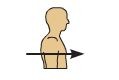
Anterior
in front of
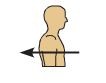
Posterior
behind
Inferior
towards the lower part of the body

Superior
towards the upper parts of the body

Medial
Toward the midline of the body
Lateral
Away from the midline of the body
Proximal
Closer to the point of attachment/origin

Distal
Farther from the point of attachment/origin

Superficial
On or near the surface, shallow

Deep
Farther from the surface of the body, more internal

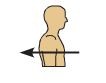
Dorsal
toward the back of the body *careful!*
Ventral
Toward the belly-side

Ipsilateral
on the same side of the body as another structure

contralateral
on the opposite side of the body from another structure

intermediate
between two structures
Abdominal
Abdomen

Antecubical
Anterior surface of the elbow (front of the elbow)

Axillary
Armpit

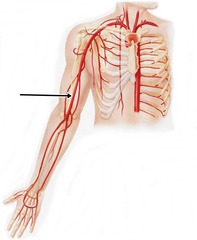
Brachial
Pertaining to the (whole) arm
Buccal
cheek

Calcaneal
Heel of the foot

Carpal
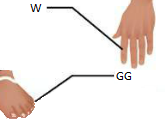
Wrist

Cephalic
Head

Cervical
Neck

Coxal
hip

Digital
Fingers/toes
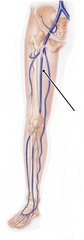
Femoral
Thigh
Gluteal
Buttock
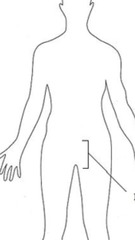
Inguinal
groin
Lumbar
Lower back

Nasal/Rostral
nose
Occipital
lower back of head
Olecranal
back of elbow

Oral
mouth
Orbital
Eye
Patellar
Kneecap
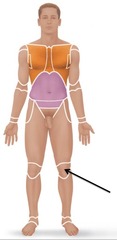
Pelvic
Pelvis
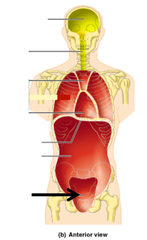
Popliteal
Back of knee

Sacral
between hips

Scapular
shoulder blade

Sternal
breastbone
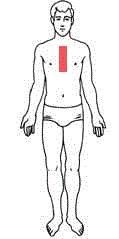
Tarsal
Ankle
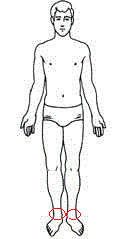
Thoracic
chest

Umbilical
Naval
