forensics quiz 2
 Call Kai
 Learn
Learn Practice Test
 Spaced Repetition
 Match
Match Flashcards
 Knowt Play
1/21

There's no tags or description
Looks like no tags are added yet.
Name | Mastery | Learn | Test | Matching | Spaced | Call with Kai | Chat |
|---|
No analytics yet
Send a link to your students to track their progress
22 Terms
what does firearm identification include?
1) bullet comparison
2) knowledge of weapons
3) restoration of removed serial numbers
4) gun shot residue characterization
5) what was this gun used for
how can you compare bullets?
1) each gun has its own inner surface markings that will score the bullet at the base/exterior, as the bullet leaves the inner surface of the gun leave individual surface markings
2) test fire a bullet and compare the markings made
3) if there is a match you have a gun/suspect because the way the barrel of the gun scratches the bullet is individual to the gun
what are characteristics of the barrel of a gun
1) inner surface has irregular random microscratches (individualized)
2) inner surface is impressed with a spiral, grooves are known as rifiling
what are lands
the original bore between two grooves

what is a caliber
the distance between two lands (recorded in hundreths of an inch or mm)
how can you determine the number of lands and grooves from a bullet
1) grooves come from land, lands come from grooves
2) must know caliber
3) measure groove impression
4) measure land impression
—> (caliber) / (groove diameter + land diameter) * pi
what is a metal jacket
coating on outside of projectile (bullet), usually copper
what is a wad cutter
a bullet best for upclose
1) jacketed: coated
2) plain lead: no coating
what is a hoxie
best for upclose
1) partial jacketed
- Ball at end up bullet increases fragmentation, can get in between bones
- low accuracy
what is a jacketed flat nose
has more accuracy, but still mostly used for upclose
- all lead with small slits in the metal jacket
- when you hit the bullet will expand
what is a round nose
has more accuracy, but still used for upclose
38 caliber
- fully jacketed, doesnt expand (mushroom) as much
what are hollow hips
still handgun, not best accuracy
- fully jacketed (copper)
- has a hole which expands and blows up everything
what are talons
military use ONLY, “cop killers”
45 caliber
- spreads open like talons of an eagle
- cuts through a bullet proof vest because of tungsten tip, penetrates steel
what are the mechanics behind pulling a trigger of a gun
1) pull trigger
2) firing pin strikes primer
3) ignites powder inside
4) powder expands
5) projectile moves out
as bullet moves forward, casing moves backwards with equal force
strikes breechblock marking the casing (individual characteristic)
firing pin marks primer uniquely (unique class characteristic)
semiautomatic bullets
1) date, brand, caliber, and primer on bottom
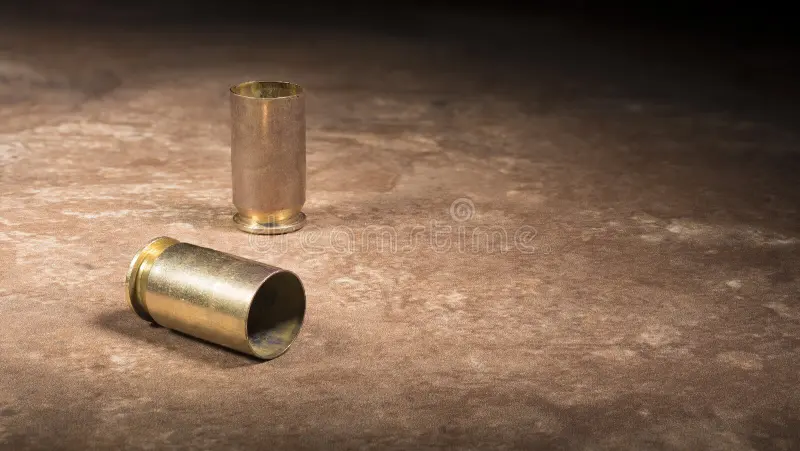
2) has no lip at the base of the cartridge
revolver shell casings
1) date, brand, caliber, and primer on bottom
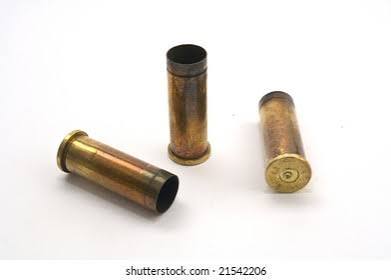
2) has a lip at the base of the cartridge
how do cops find guns?
integrated ballistic ID system (IBIS)
contains ~800,000 images of
spent cartridges
fire bullets
how can you determine the distance of where someone shot a person?
based on powder distribution
closer shot - less dissipation of powder
burn intensity - suicide has less spread of powder and higher burns
how do you locate gunshot residue on someone?
1) usually found on back/webbing of hand
gas comes out of the back of the gun
2) most primers are lead, barium and antimony based (except 0.22)
3) swab the hand with 5% nitric acid, the metals will dissolve
can use AAS or SEM w/ x-ray analyzer to determine
what are ghost guns
guns that have been manufactered by a criminal and can’t be located in the data base
how do investigators identify etched off serial number
1) use and etching material such as HCl
2) the stressed area will dissolve faster than an area not touched (since serial numbers are stamped deep a criminal cant get rid of it completely)
3) should be able to locate atleast most of the serial number (usually 7-9 numbers long)