gene expression external
 Call Kai
 Learn
Learn Practice Test
 Spaced Repetition
 Match
Match Flashcards
 Knowt Play
1/32

There's no tags or description
Looks like no tags are added yet.
Name | Mastery | Learn | Test | Matching | Spaced | Call with Kai | Chat |
|---|
No analytics yet
Send a link to your students to track their progress
33 Terms
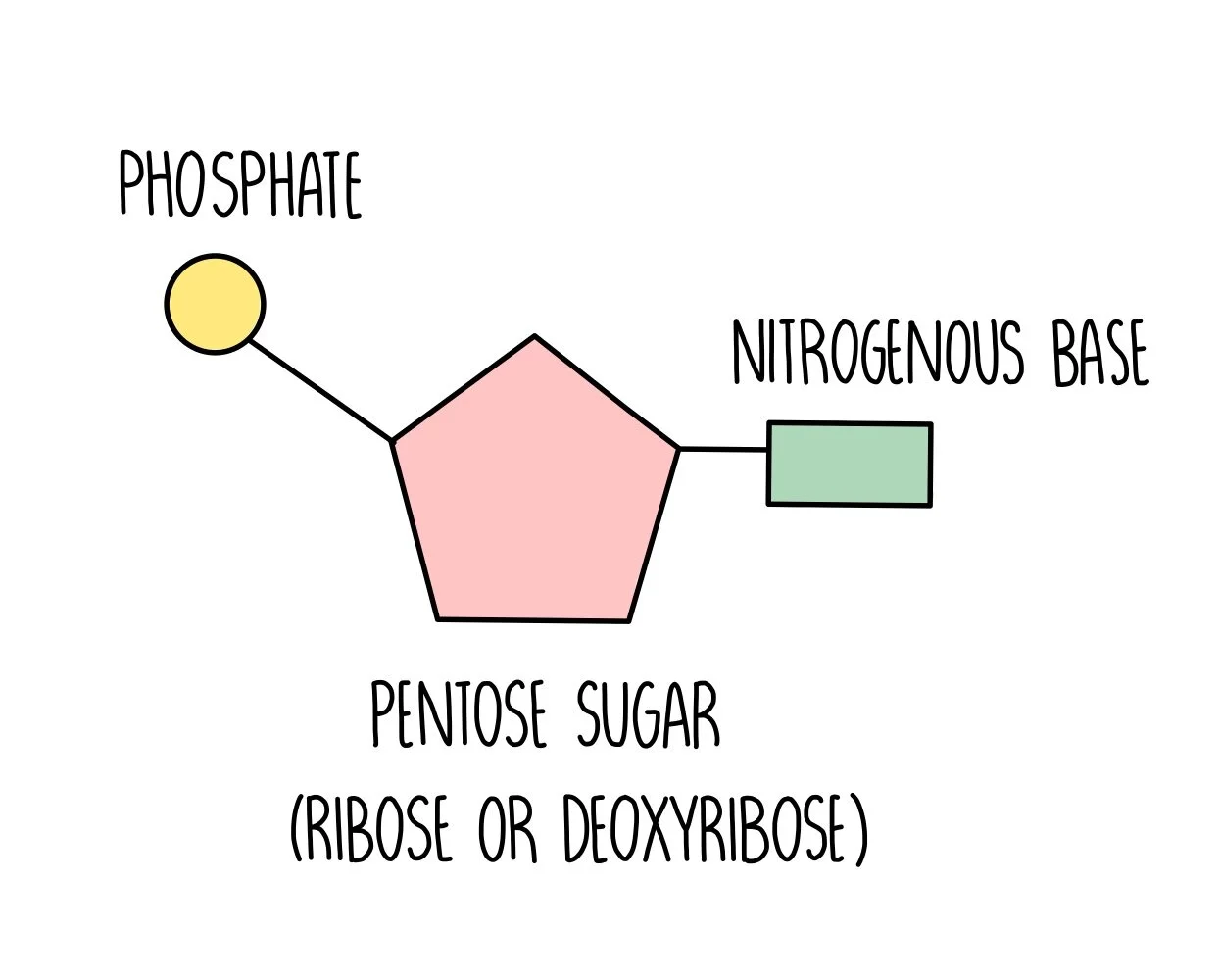
nucleotides
repeating unit of DNA. bases = A, T (or uracil = U), C, G
DNA is antiparallel - sugar phosphate backbones run in opposite directions
genes and proteins
codes a protein (polypeptides made from a series of amino acids)
20 different amino acids and the order determines the protein structure - attraction and repulsions between non-adjacent amino acids results in 3D folding of polypeptides chain into specific shapes
proteins perform body functions

protein synthesis
process in which proteins are constructed from individual amino acids

RNA
ribonucleic acid - uses ribose sugar, starts out in nucleus but travels out to deliver message (difference from DNA)
kinds of RNA
mRNA = messenger RNA - job is to carry message based of DNA
tRNA = transfer RNA - job is to transfer the message
rRNA = ribosomal RNA - job is to help with making proteins and ribosomes
analogy about cake
DNA = grandma’s precious recipe book
ribosomes = your kitchen at your house
RNA = copy of one recipe
protein = ‘cake’ or meal
amino acids = ingredients
transcription full process
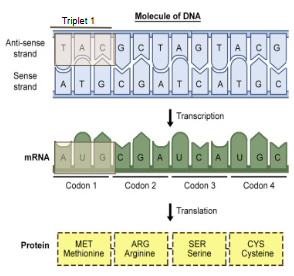
process in which information from gene in DNA strand is copied into a new molecule of messenger RNA (mRNA)
mRNA is complementary strand to the template strand (that provides template) of the DNA → other DNA strand is coding strand
CODING STRAND IS THE SAME CODE AS THE MRNA
gene is switched on, RNA polymerase attaches to the start of the gene. polymerase moves along the DNA, making a strand of messenger RNA out of free bases in the nucleus
before mRNA can be used as a template for protein production, it must be processed - removing and adding sections of RNA.
mRNA the moves out of nucleus into cytoplasm

promoter and terminator
promoter - section of gene where RNA polymerase binds
terminator - section of DNA telling enzyme to stop
transcription factors
many proteins are not needed in all cells or not needed all the time
sometimes a repressor will present to prevent the RNA polymerase from triggering the protein

activators
transcription factors help initiate transcription by helping polymerase bind to the gene

transcription
step 1 - RNA polymerase binds to promoter (section of DNA telling enzyme where to start)
step 2 - RNA nucleotides bind with DNA to create strand of mRNA. enzyme stops transcription when it reaches the terminator region
step 3 - mRNA detaches from DNA
step 4 - mRNA travels out of nucleus, exiting through nuclear pore
step 5 - mRNA arrives at ribosomes, ready to make proteins
notes
note 1 - coding strand remains on site of transcription to increase durability of DNA and prevent DNA from being damaged
note 2 - DNA doesn’t leave nucleus as it is a very large molecule containing all genes for organism, so therefore can only survive in nucleus
note 3 - when gene is switched off, enzyme cannot bind to promoter
translation - second phase
translation occurs within ribosomes, mRNA is used to create protein with correct amino acid sequence
mRNA read by ribosomes, tRNA brings in specific amino acids to build protein
process - mRNA is read three bases at a time. each three bases (codon) code one amino acid. e.g. AUG = methionine
ribosomes use codons to join the correct amino acids together, tRNA assists by bringing the correct amino acid to the growing polypeptide
codons, different kinds of codons
codon = three consecutive bases on mRNA coding amino acid. codons are complementary to DNA triplets (opposite of triplets)
start codon = establish start of translation (AUG = start codon)
stop codon = translation terminated/stopped (UAA, UAG, UGA = stop codon)
degeneracy
20 amino acids and 64 codons → know as degeneracy when two or more codons can specify the same amino acid
tRNA functions
molecule that transports the correct amino acids to ribosomes VIA binding tRNA to anti codons via complementary base pairing

note section 2
note 1 - tRNA anticodons will have a specific amino acid that they code to
note 2 - ribosome moves along mRNA to read codons (3 pairs at a time)
translation in more detail
when ribosomes reads AUG start codon, polypeptide chain begins
codons and anti codons temporarily bind to join amino acids
translation ends when stop codon is reached
polypeptides fold into 3D shape to form proteins
various video notes
mRNA doesn’t copy entire stands of DNA, only the parts it wants - only 2% of DNA codes proteins, most does nothing
ribosomes are made of proteins and RNA - ribosomal RNA
amino acids form peptide bonds to link together
STOP codons do not code for amino acids, they just let ribosomes know when to stop the peptide chain
kinds of mutations
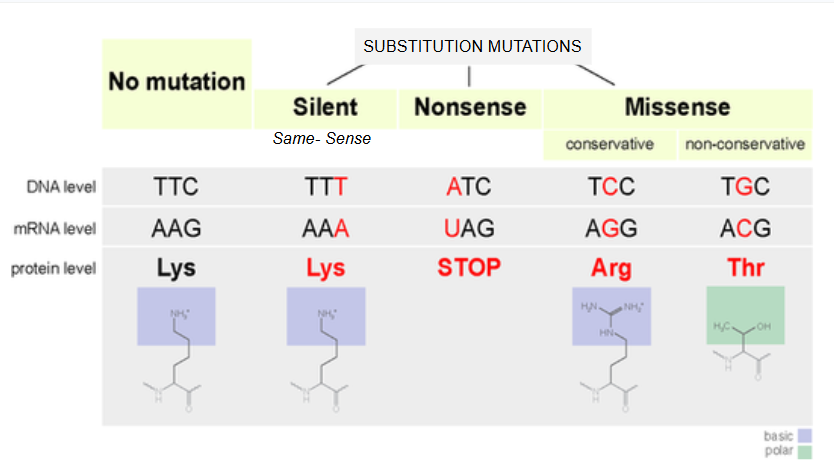
substitution - one DNA base is replaced with another
insertion - one new base is added to the DNA
deletion - one base removed from DNA
mutations must occur in protein section of DNA to affect protein synthesis
substitution
may lead to no change if bases switched still code for the same protein e.g. CAA and CAT code val → silent mutation
more likely to occur in 2nd or 3rd letter of gene substitutions
if letter changed changes amino acid, this may alter structure/function of the protein → missense mutation (conservative = swapped amino acid for similar one, non - conservative = swapped for amino acid with very different properties)
if protein is cut short because base change codes stop codon, most likely non-functioning protein → nonsense mutation
frameshift mutations
insertion or deletion of base
ALL codons/triplets after mutation are affected → will likely code for new amino acid
this has significant and serious effects on protein’s shape (which will likely code for stop early)
inversion
section of DNA is inverted end to end
factors affecting mutation = mutagens
external = radiation (UV, x-ray), chemicals (cigarette smoke, nitrate preservatives)
internal = DNA replication issues during interphase, chromosome mutation (extra genes are duplicated)
also deletion where genes are cut out or insertion where broke chromosome section is reversed
chromosomes are vulnerable during meiosis
interesting fact - everyday, a section of DNA in your cells gets damaged. specialized enzymes can help repair some of those issues
enzyme
special protein speeding up chemical reactions
substrate
a reactant molecule binding to activate site of enzyme → enzyme helps accelerate reaction of substrate
catalyst
substance lowering the activation energy so reactions can happen faster
product
end result of reaction
metabolic pathway
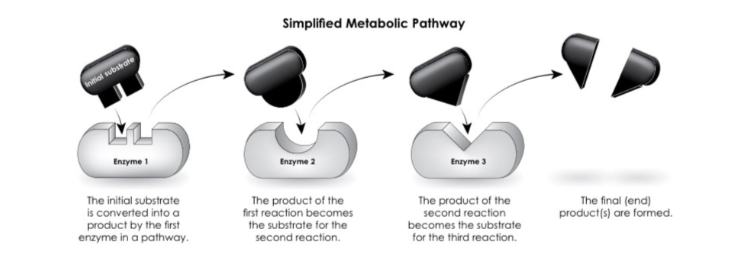
a series of enzyme controlled chemical reactions, initial substrate is modified by the first enzyme to form a product, becoming a substrate for the next reaction acted on by another enzyme (until a final product is reached). once surplus of final product is made, end product goes back to inhibit the first enzyme from producing more
→ this process is essential for producing and breaking down many compounds in the cell
protein synthesis helps code enzymes
understanding metabolic pathways
names next to arrows = enzymes
first name = first substrate
last name = final product
mutations in metabolic pathways
if mutation occurs, substrate with build up and become toxic. in this diagram, B is building up and becoming toxic

genome
all genes combined = codes for an entire organism
phenotype and environmental impact
identical twins both coded for ‘being tall’ - one who didn’t eat/sleep as much would not be as tall.
most traits are influenced by lots of different environmental factors AND genes (note = so many different genes because of so many different proteins)
evolution and natural selection
beneficial mutation = more likely to survive (natural selection)
evolution = inheritance of certain characteristics in a population over multiple generations could lead to change in the whole species
ways environments affect proteins
certain environmental factors can switch genes on or off (transcribe or not transcribe them)
environmental conditions existing internally or externally can both effect phenotype (genotype unable to be expressed if environment works against it)
environment changes substance in cell (example - different amounts of initial substrates present in cell mean metabolic pathways may occur differently)
environment changes protein (enzyme) (example - can stop enzyme from functioning, meaning chemical reaction can no longer take place because it cannot be catalyzed in cell so specific substance cannot be made, affecting genotype)
