Bio Unit 2 Animal Physiology Chp. 1: Breathing and Gas Exchange
 Call Kai
 Learn
Learn Practice Test
 Spaced Repetition
 Match
Match Flashcards
 Knowt Play
1/27

There's no tags or description
Looks like no tags are added yet.
Name | Mastery | Learn | Test | Matching | Spaced | Call with Kai | Chat |
|---|
No analytics yet
Send a link to your students to track their progress
28 Terms
OBJQ + OBJR
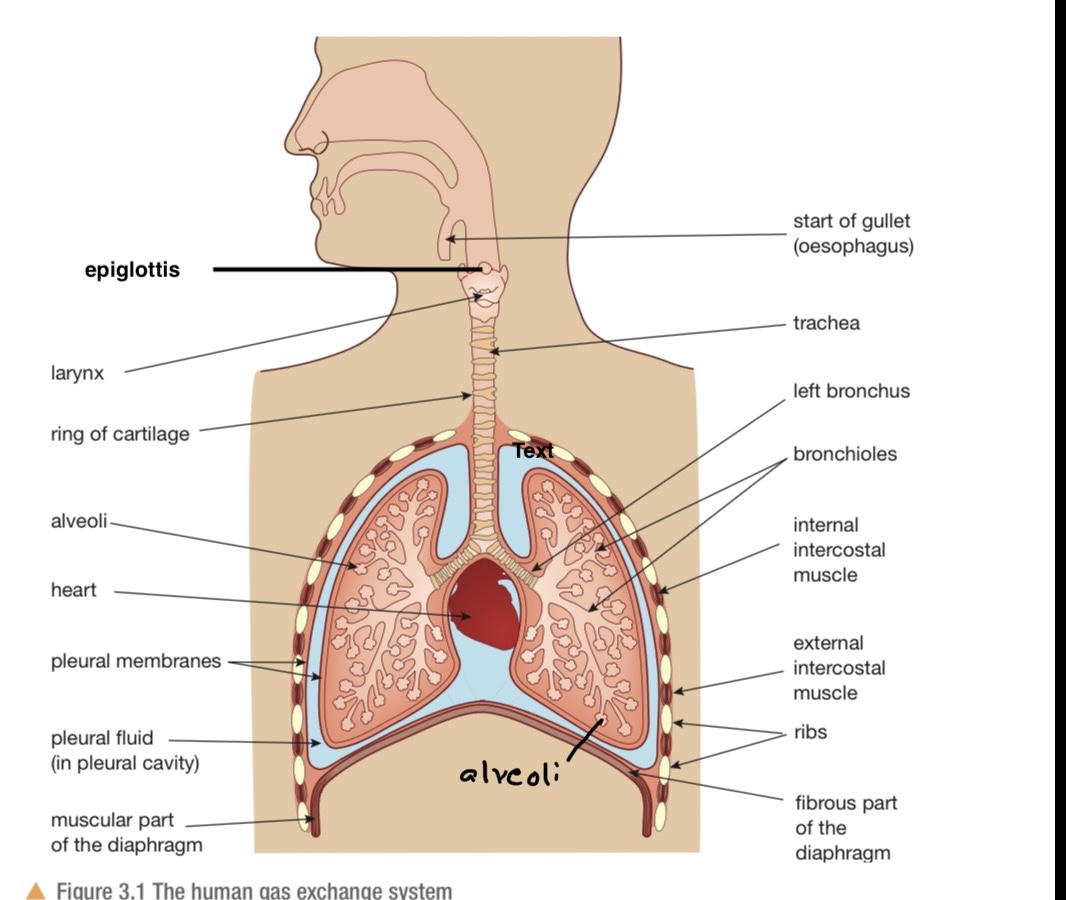
Name the structures involved in gas exchange.
Nose, Epiglottis, Larynx, Trachea, Bronchi, Bronchioles, Alveoli, Pleural membrane, rib
OBJQ + OBJR
Name the muscles involved in ventilation or respiration
Internal intercostal muscle
External intercostal muscle
Diaphragm

OBJQ
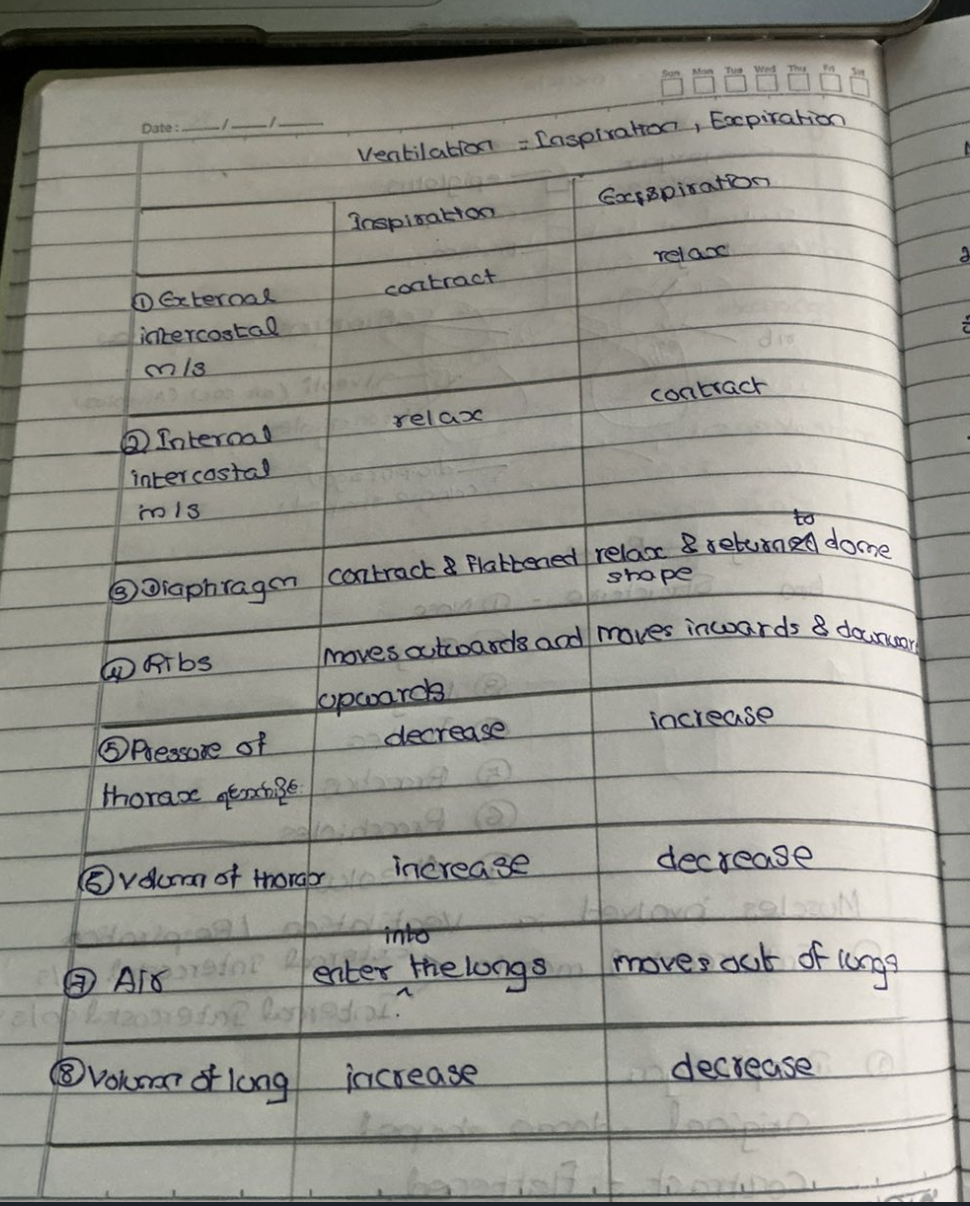
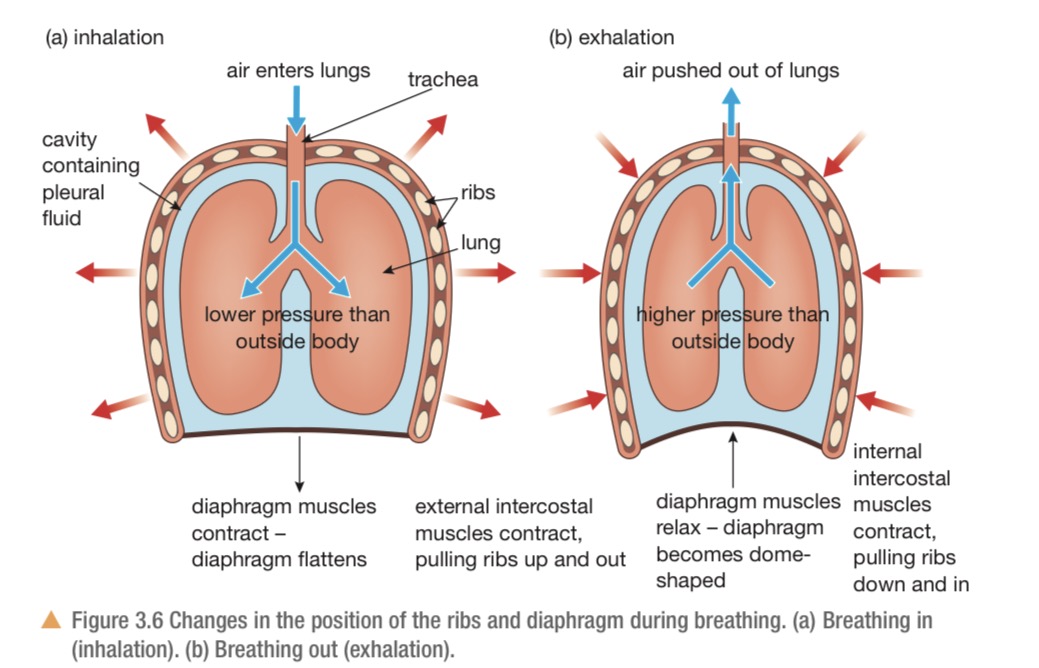
Explain the differences between inspiration and expiration
OBJQ
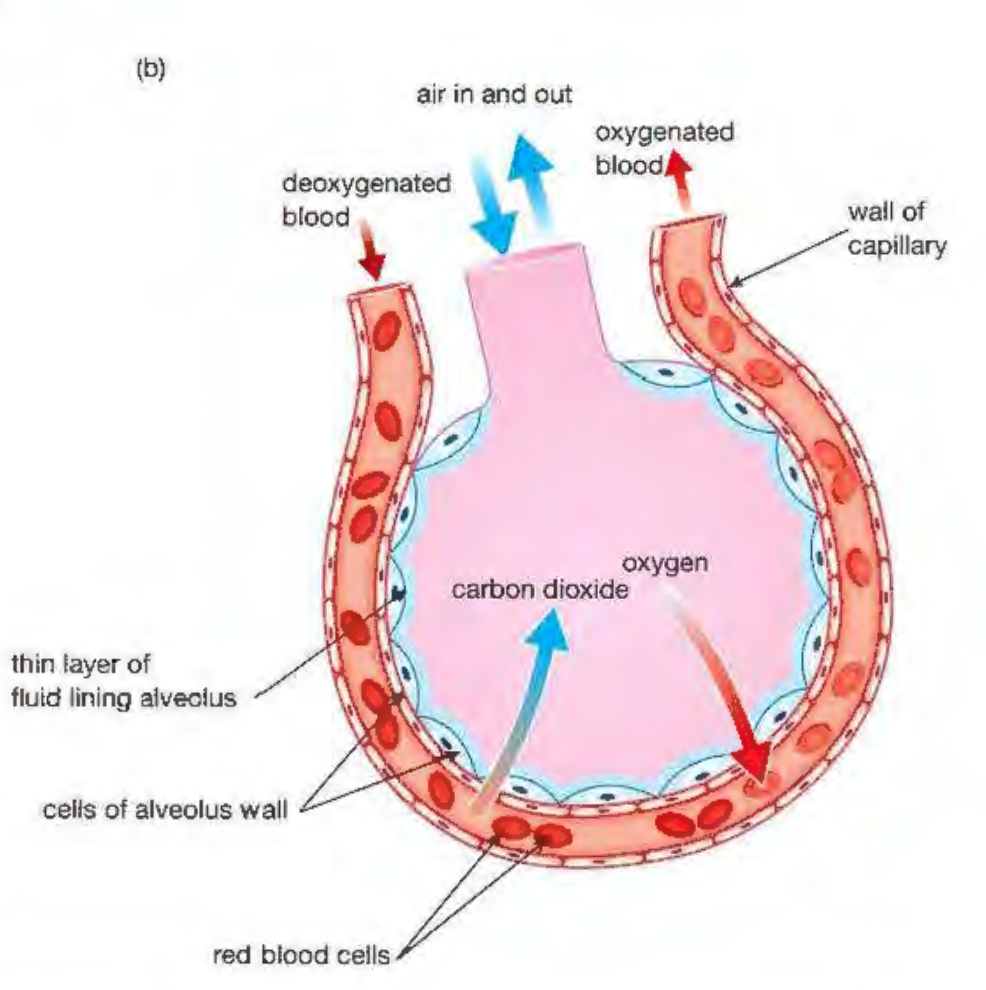
What are the adaptive features of alveoli/alveolar membrane?
Numerous→increase surface area→diffusion of O2 and CO2
Moist→dissolve gas
Thin (one cell thick)→easy diffusion of gases
Network of capillaries→maintain concentration gradient
Short distance→easy diffusion
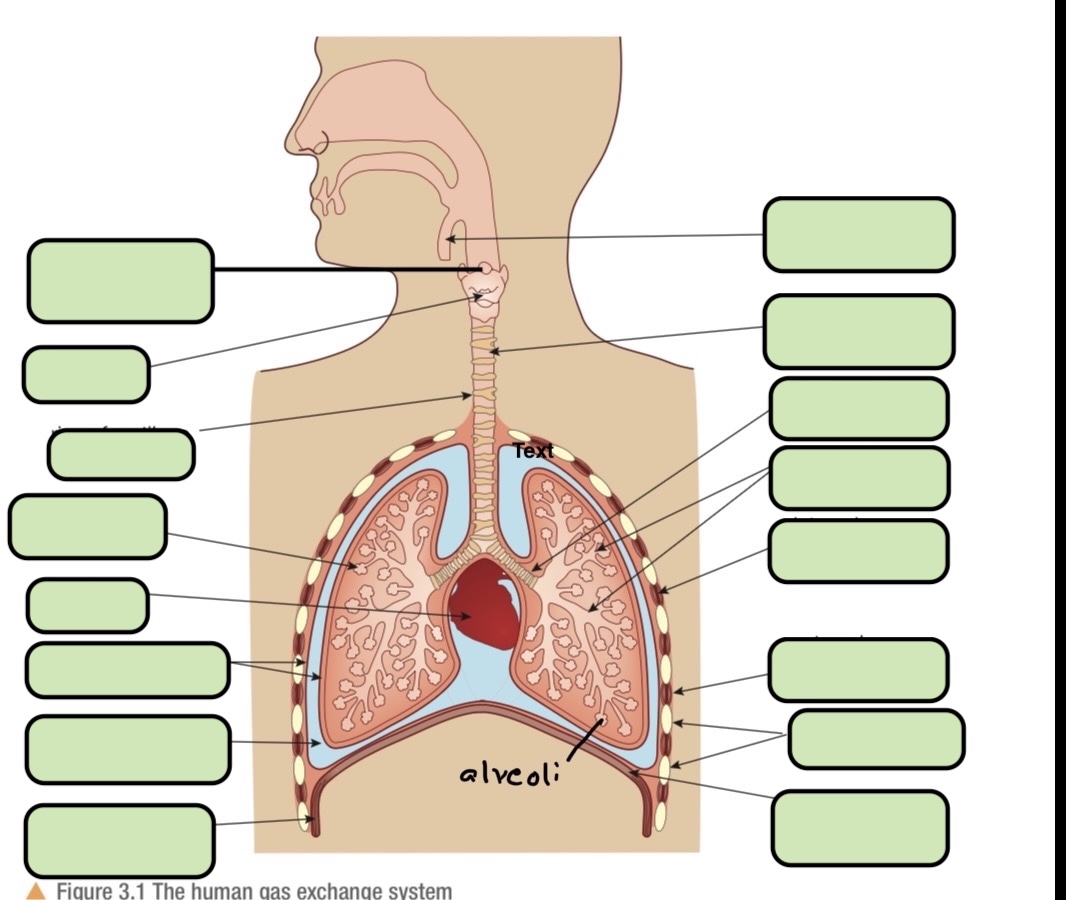
Label the structures involved in respiration/ventilation
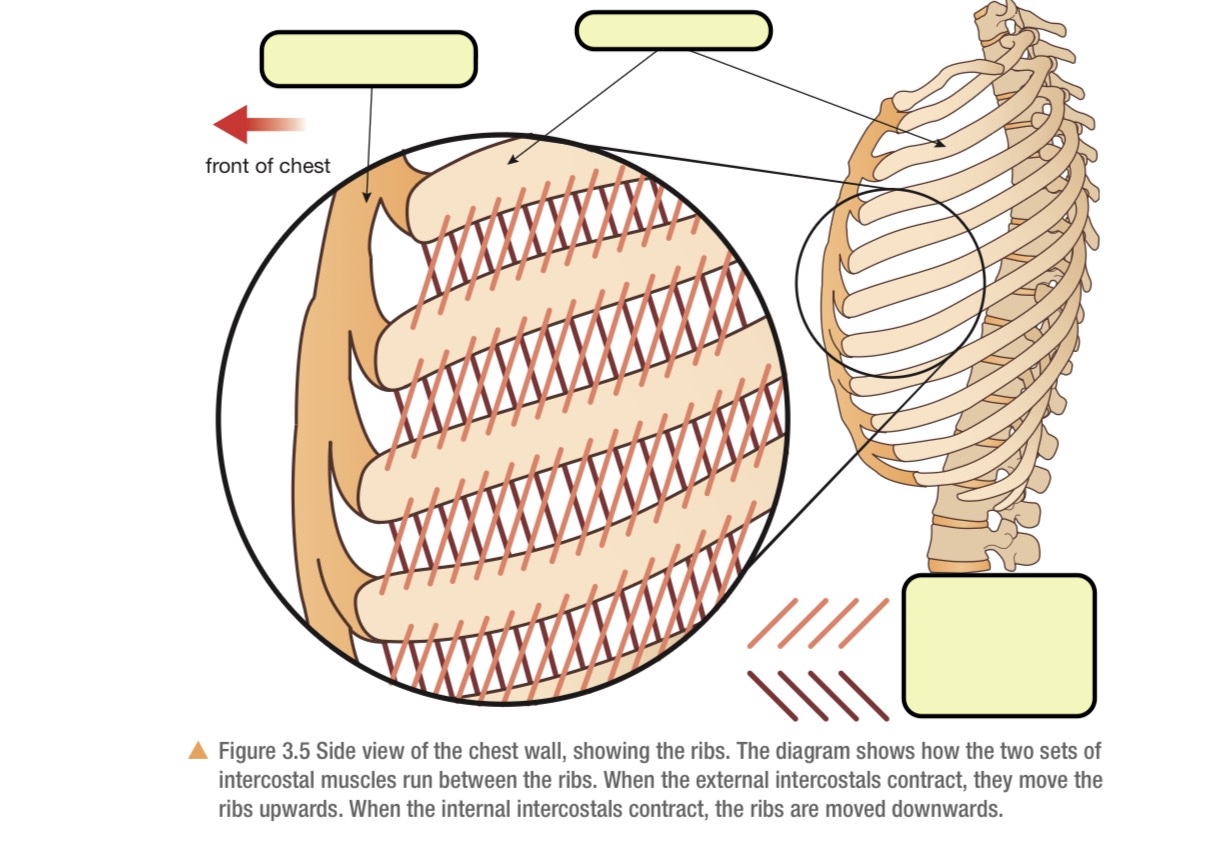
Label the intercostal muscles
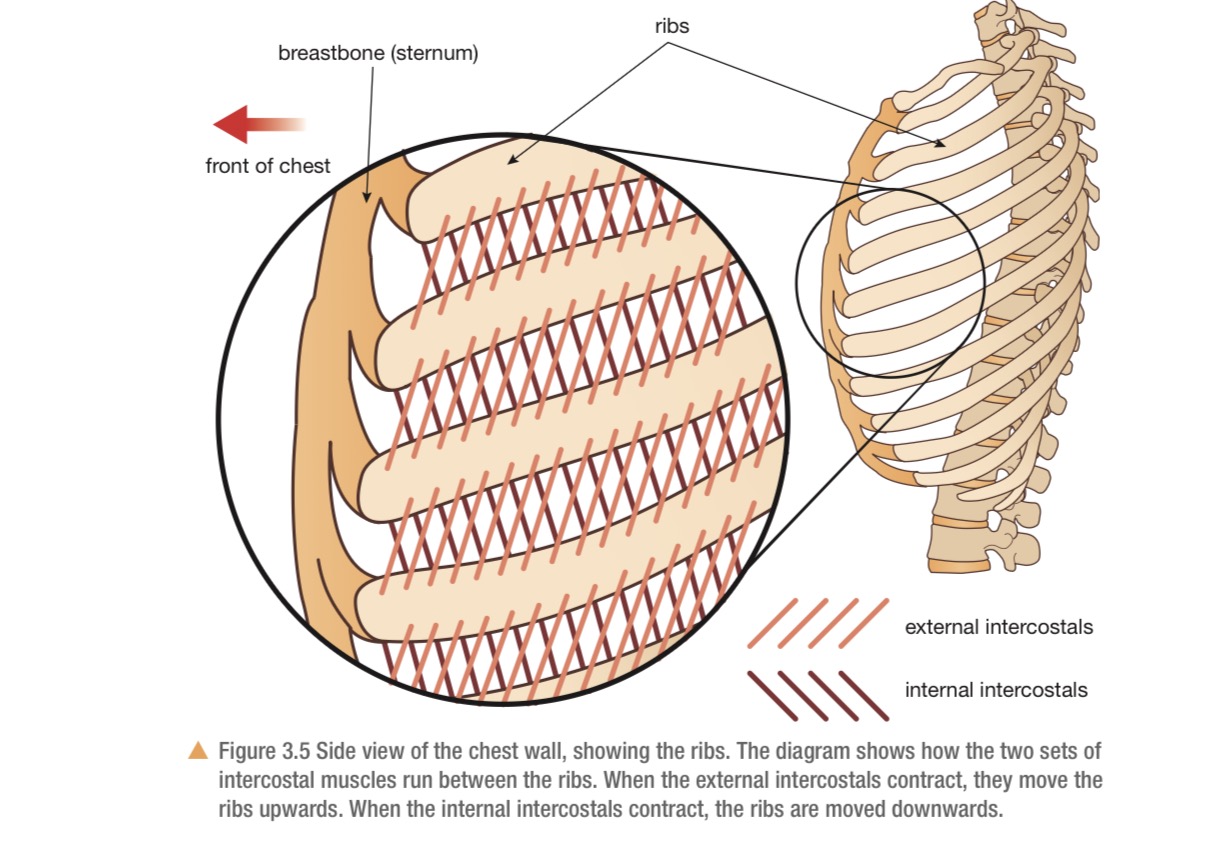
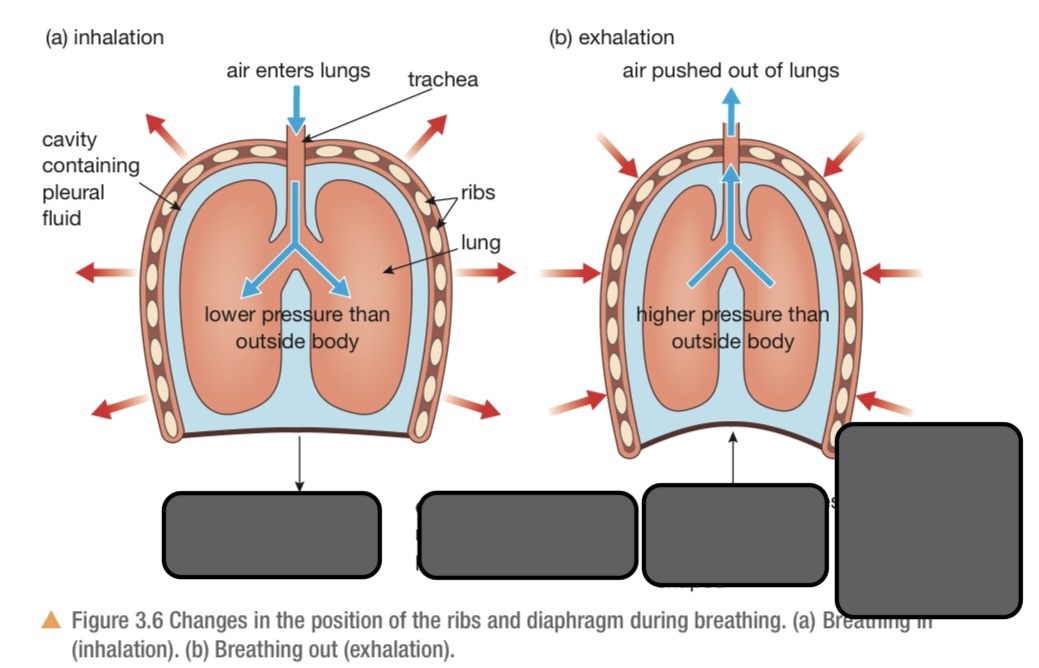
Define the differences between muscles and ribs during inhalation and exhalation
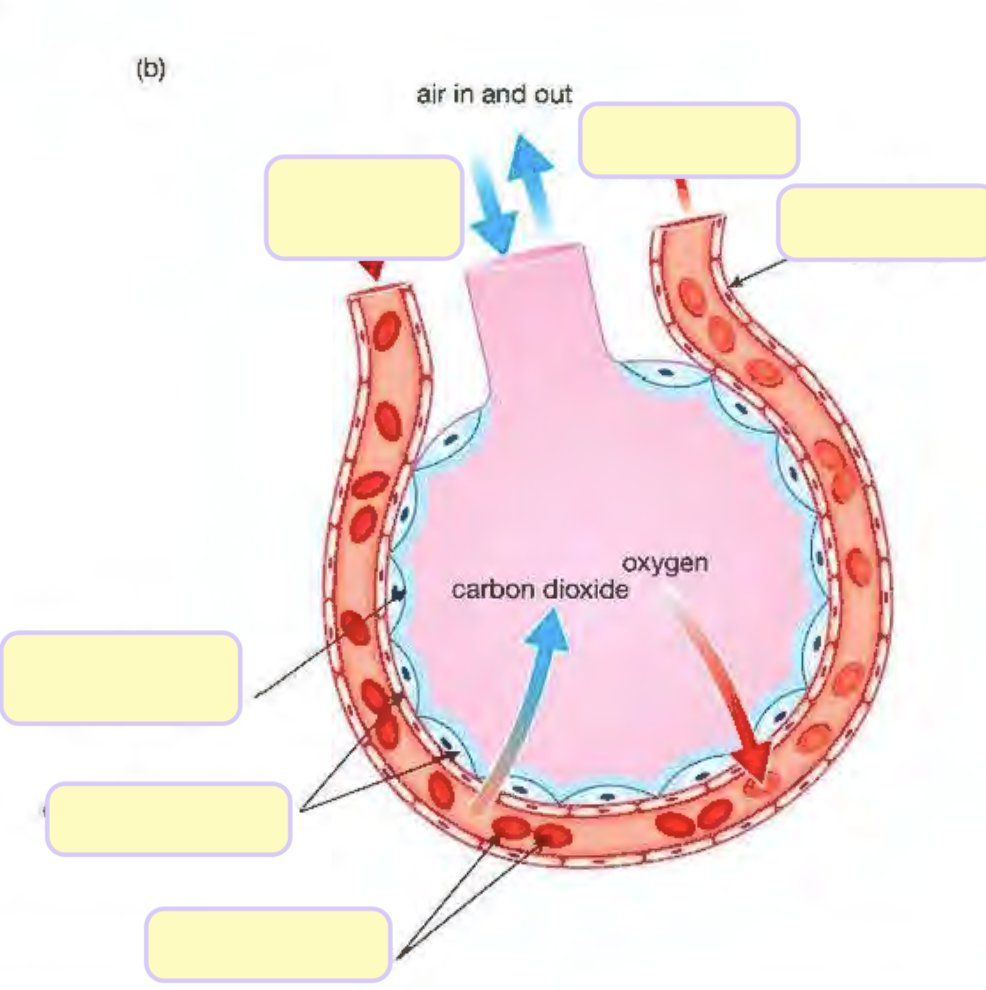
Label this part of alveoli
FAQ
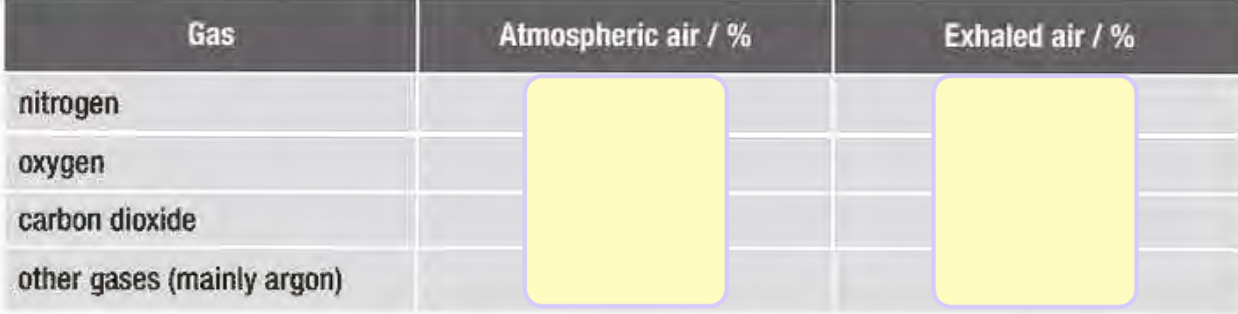
What is the composition of inspired and expired air?
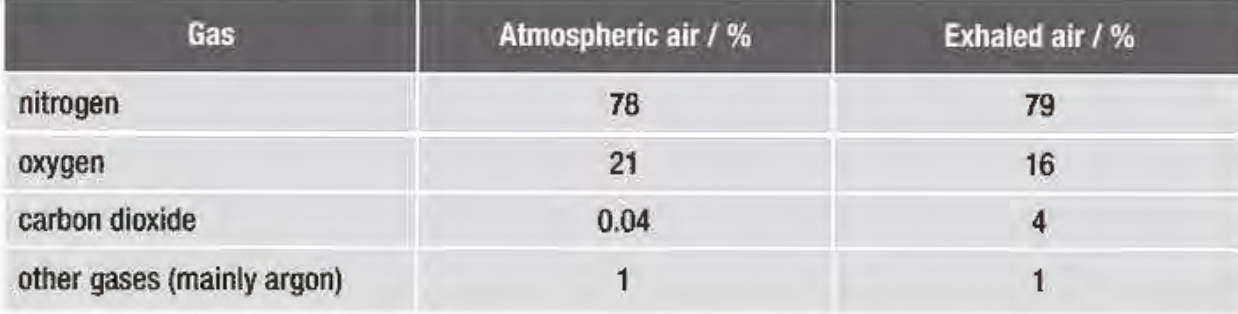
Why is O2 % low in expired air?O₂
O₂ in expired air has a lower % because O₂ is used up in aerobic respiration.
Why is CO2 % hair? the CO₂igh in expired air?the CO₂
CO2respiration. in expired air has a higher % because CO₂CO₂ is produced in aerobic respiration.CO₂
What is the function of mucus and cilia in the airway?
Mucus→trap dust and bacteria→trapped pathogenic particle,
Cilia→have flicking movement forward and backward→sweep trapped particles away from the lungs and prevent infection of the lungs
What are 6 smoking-related diseases?
Bronchitis
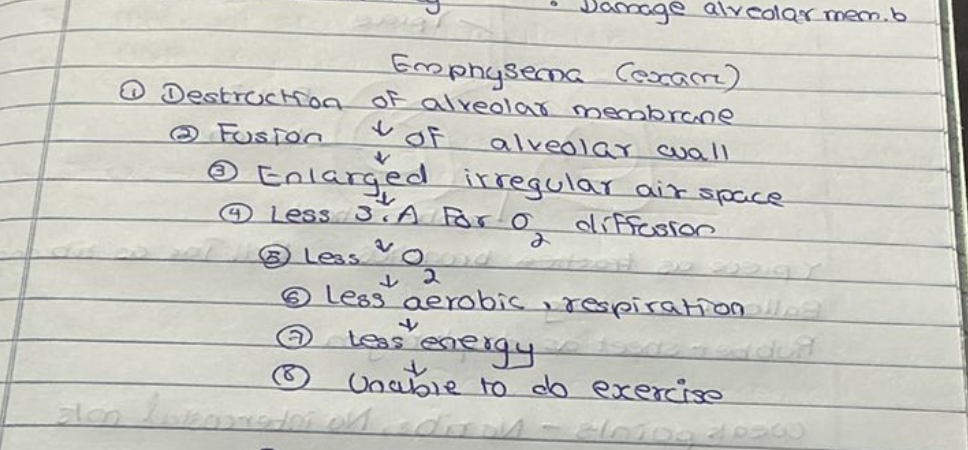
Emphysema
Lung cancer
Coronary heart disease
Ulcers of stomach/intestinal
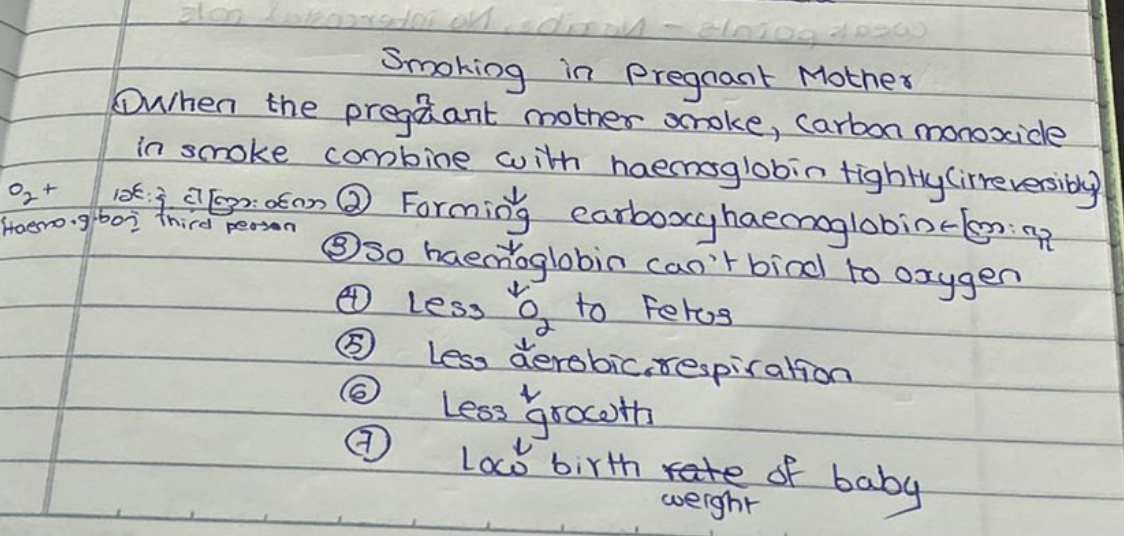
Underweight babies of pregnant woman
OBJQ
Explain coronary heart disease
Smoke → chemicals in nicotine enter as a deposit in the coronary artery
Hardening of blood vessels
Blood pressure increases
Coronary heart disease.
Explain lung cancer
Chemicals in smoke, nicotine and other chemicals → deposit in the lungs
Carcinogen form (cancer-producing substances)
Mutation
Lung cancer
Explain intestinal/stomach ulcers.
Nicotine and chemicals irritate the epithelial cells lining the intestine or stomach

Explain COPD (Chronic obstructive pulmonary disease) and bronchitis
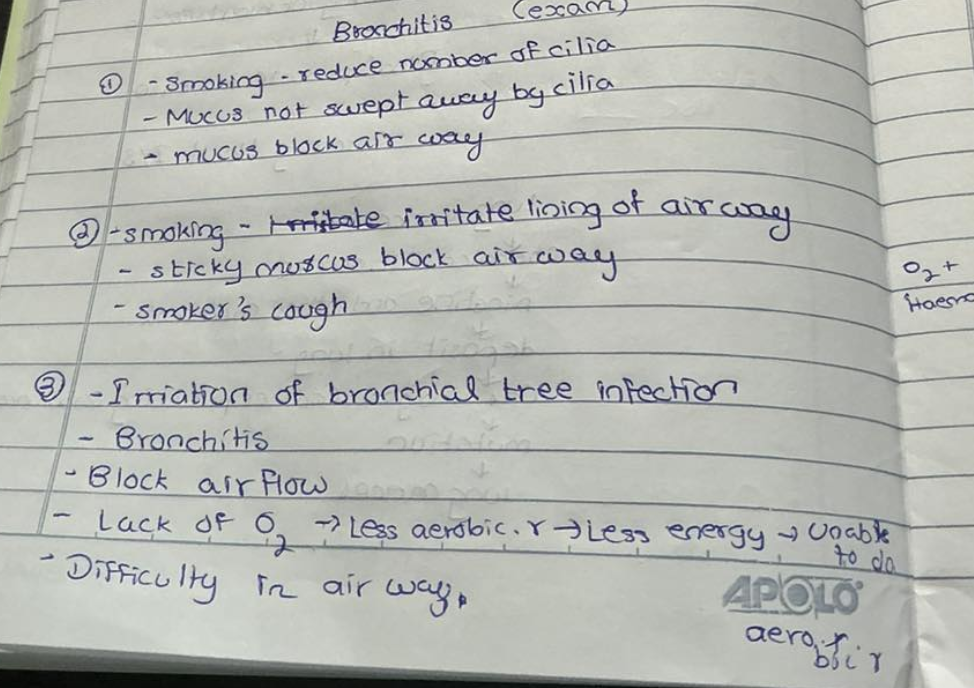
Explain COPD (Chronic obstructive pulmonary disease) and emphysema (8 points)
Explain the effects of smoking in a pregnant mother (7 points)
What is the yellow staining in teeth and hands called and why aren’t they nicotine?
Yellow staining is called tar. They aren’t nicotine because nicotine is a colourless and odourless chemical.
State how ex-smokers can quit smoking?
Vaping, nicotine patches, nicotine chewing gum, drugs to reduce withdrawal symptoms, acupuncture, hypnotism
Name the basic chemicals included in cigarettes: nicotine
Carbon monoxide
Arsenic
Ammonia
Formaldehyde
Cyanide
Benzene
Toluene
P.A
Explain by comparing the carbon dioxide content of the inhaled and exhaled air. Describe apparatus first, then test procedure, result and interpretation
Apparatus
2 Test tubes, A and B
Delivery tube
Stopper
Lime water or hydrogen carbonate indicator
Test procedure
- Add one-third full of lime water or hydrogen carbonate indicator to each test tube
- Breathe gently in and out through the middle tube.
-Exhaled air passes out through one tube of indicator solution
-inhaled air is drawn in through the other tube
Result
If limewater is used, the limewater in the 'exhaled' tube will turn cloudy before the limewater
in the 'inhaled' tube.
If hydrogen carbonate indicator solution is used, it changes from red to yellow.
Interpretation
Carbon dioxide concentration is higher in exhaled air than inhaled air; this causes colour
changes of indicator solution from red to yellow/ cloudy (limewater)
FAQ
Why does breathing rate/heart rate increase during exercise?
During exercise, skeletal muscle needs muscle contraction.
More muscle contraction is needed.
Muscle contraction needs more energy.
To supply more energy, more aerobic respiration has to be done
To do more aerobic respiration, more O₂ & glucose are needed.
To supply more O₂ & glucose, breathing rate and heart rate is increased
FAQ
Why is the breathing rate still increased after vigorous exercise?
During vigorous exercise, aerobic respiration as well as anaerobic respiration are needed
Anaerobic respiration produces lactic acid
Lactic acid accumulation causes fatigue (because pH went down)
To break down lactic acid in the liver, O₂ is needed. This is called oxygen debt.
To repay O₂ debt, breathing rate is increased after vigorous exercise.
FAQ
Explain how breathing rate is controlled
During exercise, skeletal muscle needs muscle contraction.
More muscle contraction is needed.
Muscle contraction needs more energy.
To supply more energy, more aerobic respiration has to be done
As a result of aerobic respiration, CO2 concentration increases in the blood
Increased CO2 concentration is detected by the brain.
The brain sends impulses to the diaphragm and intercostal muscles to control breathing.
In this way, breathing is controlled.
P.A
Explain the investigation into the Effect of Exercise on Breathing Rate
Apparatus
Stop watch
2 students
Method
• Work out student A's breathing rate at rest
• Count the number of breaths for 15 seconds and multiply by 4
• Repeat several times to calculate an average
• Student A should then exercise for a set time (at least 4 minutes)
• Immediately after exercising, count the breaths taken in 15 seconds and multiply by 4
to obtain the breathing rate per minute
• Compare the result to the breathing rate at rest and change in breathing rate as a result
of exercise
• Repeat this last step every minute after exercise for 5 minutes
• Repeat the process for student B
• Finally, repeat the whole investigat
What are the withdrawal symptoms?
-Craving for cigarettes, restlessness and tendency to put on weight