Animal repro exam content
 Call Kai
 Learn
Learn Practice Test
 Spaced Repetition
 Match
Match Flashcards
 Knowt Play
1/249

Earn XP
Name | Mastery | Learn | Test | Matching | Spaced | Call with Kai |
|---|
No analytics yet
Send a link to your students to track their progress
250 Terms
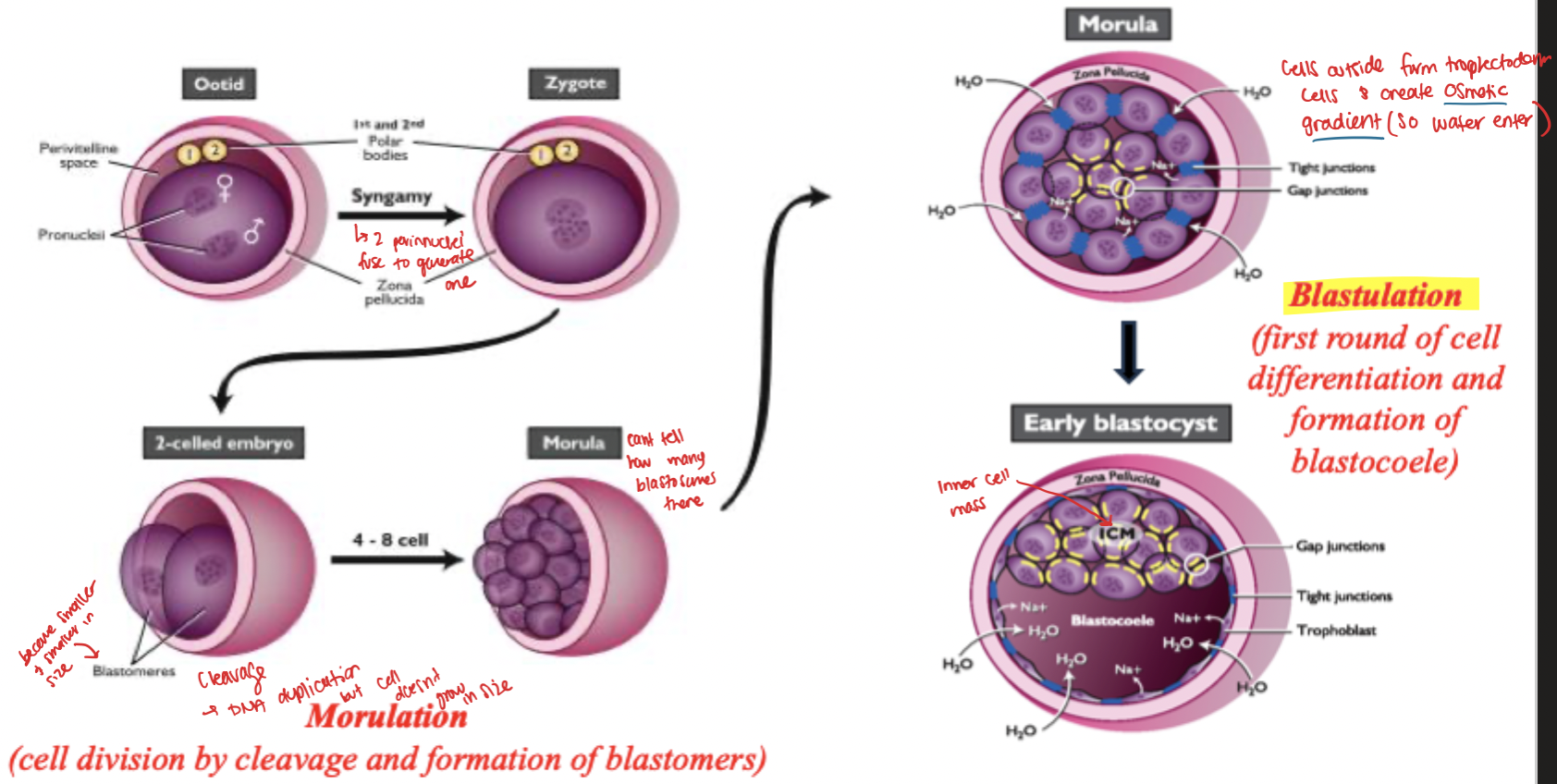
what is syngamy
2 prenuclei fuse to generate one
what does early embryonic development look like
syngamy creates a zygote
blastosomes multiply and become smaller and smaller
Morula filled with lots of vlastosomes
Cell forms trophectoderm and creates osmotic gradient (water can enter)
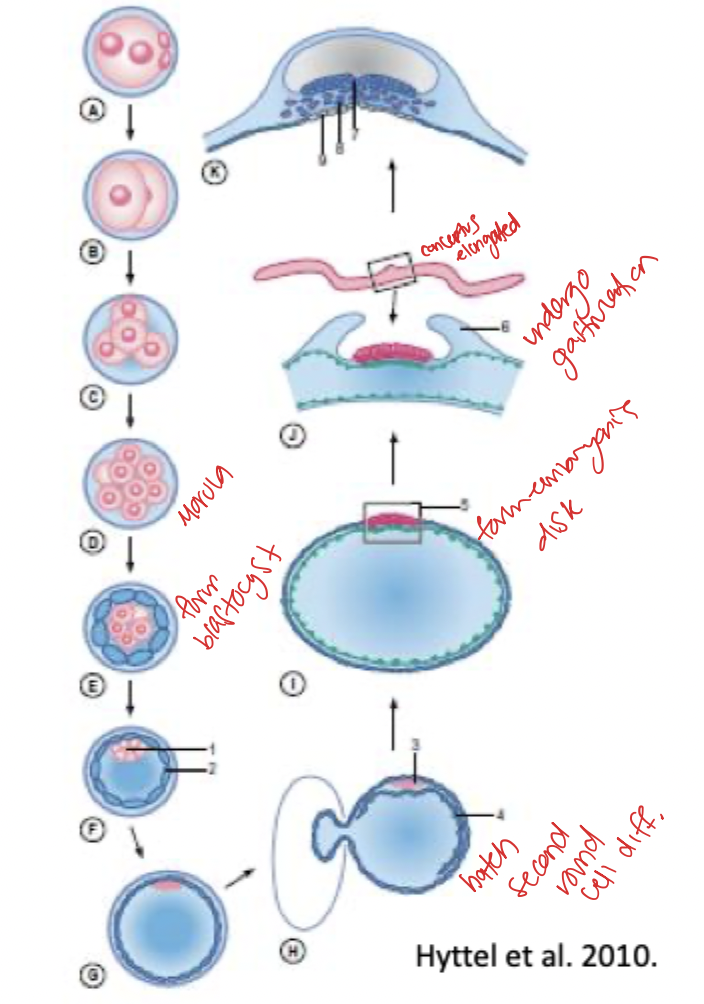
Blastulation (First round of cell differentiation and froomation of blastocoele)
Creation early blastocyst
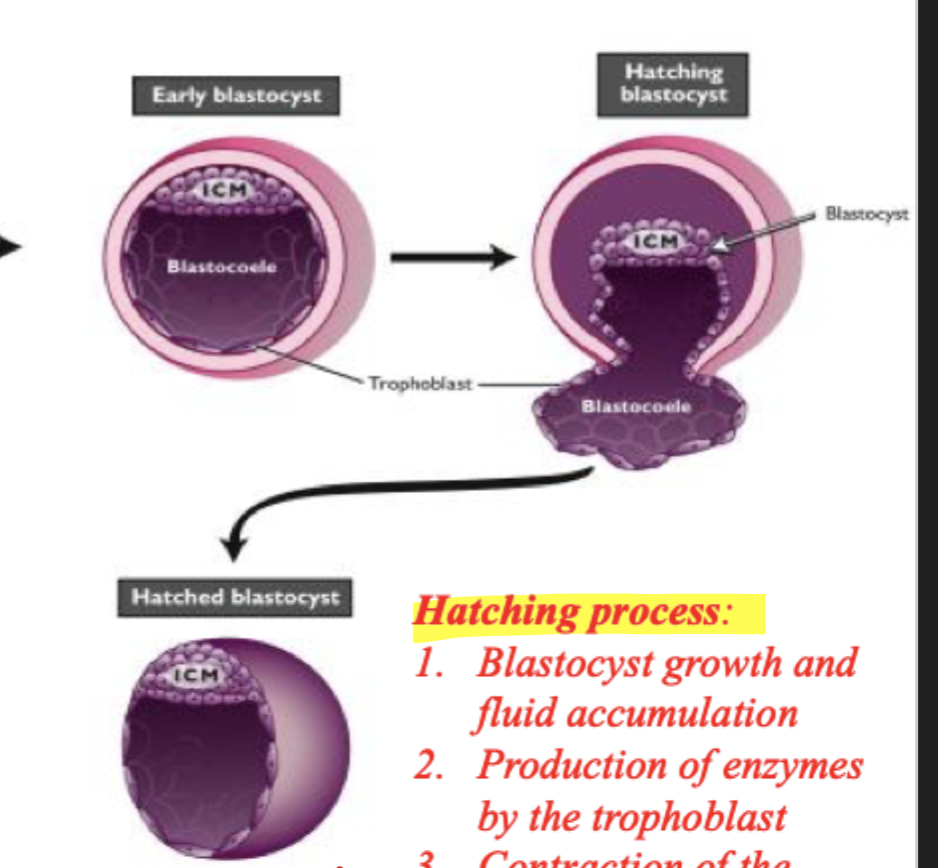
Hatching occurs after this how?
blastocyst growth and fluid accumulation
production of enzymes by trophoblast
Contraction of blastocyst
the hatched blastocysts has more cell, more fluid and therefore lots pressure. Trophectoderm secretes enzymes for ZP to get weaker this creates a crack so cells have direct contact with cells of endoderm
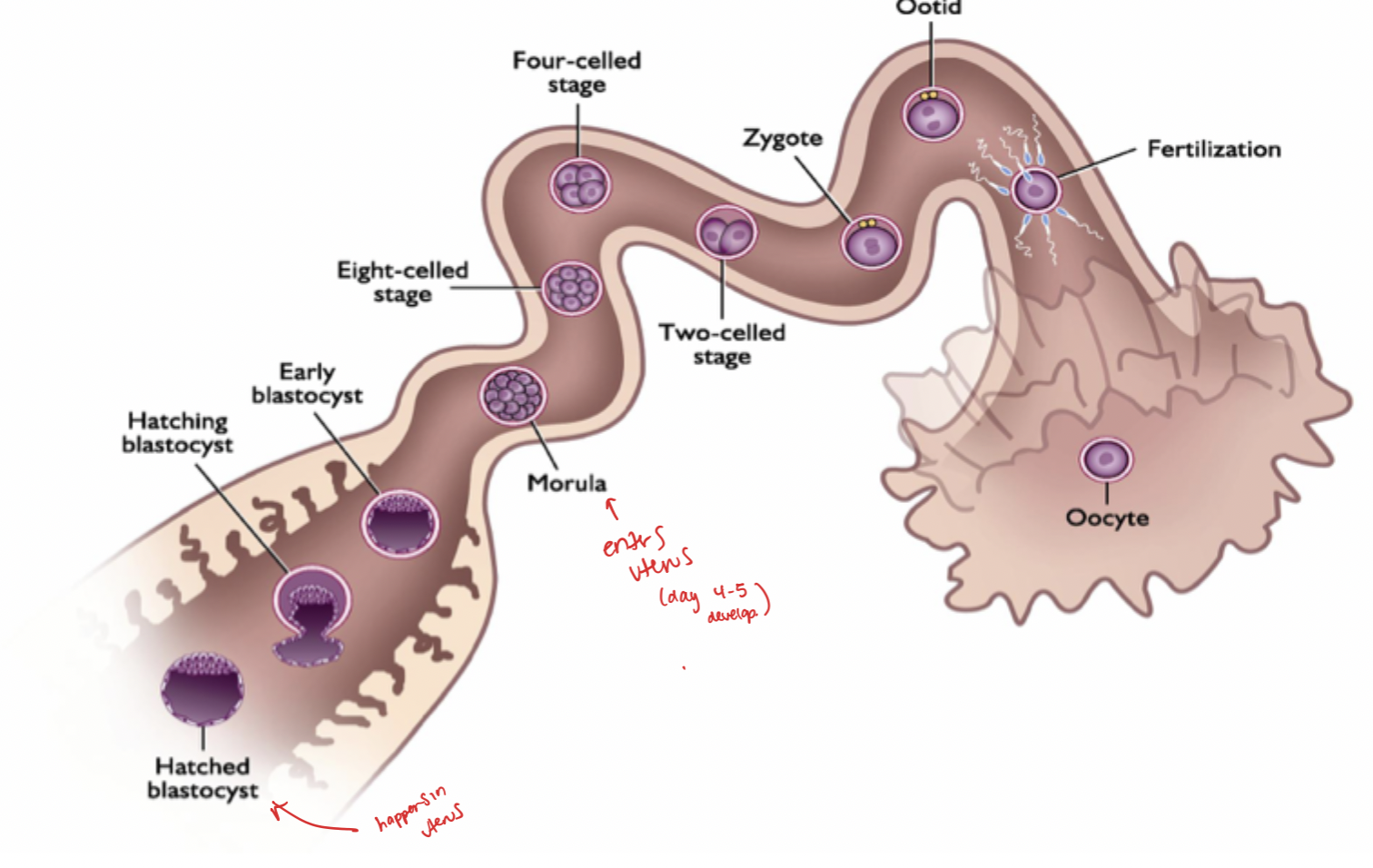
where is this all occurring
Embryonic Genome Activation (Maternal-to-Embryonic Transition)
degradation of maternal RNA and proteins accumulated in ooplasm during oogenesis
Embryo genome activation and replacement of maternal-derived w/ embryo transcripts
embryo takes ‘ownership’ of gene expression and cell biology of blastomeres
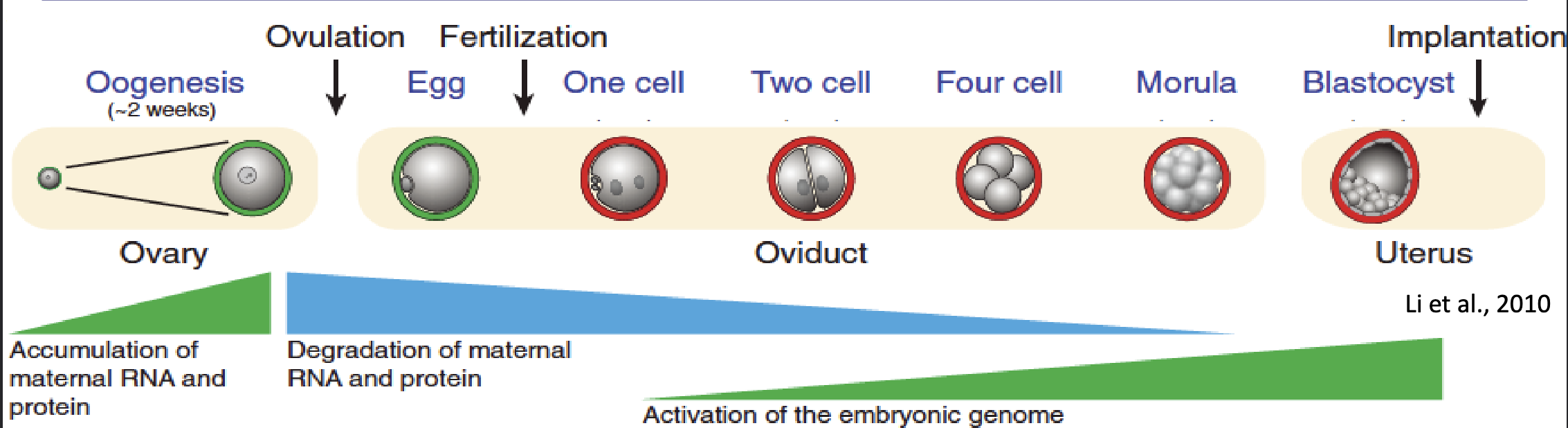
When does this happen
Ruminants: 8-16 cells
Swine 4 cell stage
human 4 cell stage
mice 2 cell stage
When does attachment and implantation in primates and rodents happen
shortly after hatching of blastocyst
blastocyst activation, highly invasive trophoblast cells
enter the endometrium for development
what occurs after hatching blastocyst
conceptus forms
How does materbnal recognition of pregnancy occur
Development of conceptus signals its presence to prevent luteolysis and make sure CL is sustained and secretion of P4 continues
In ruminants how does this happen
Secretion of Interferon tau (IFNT) by the conceptus
trophectoderm cells secrete at this time only, peaks at implantation and as embryo gets bigger have increased IFNT
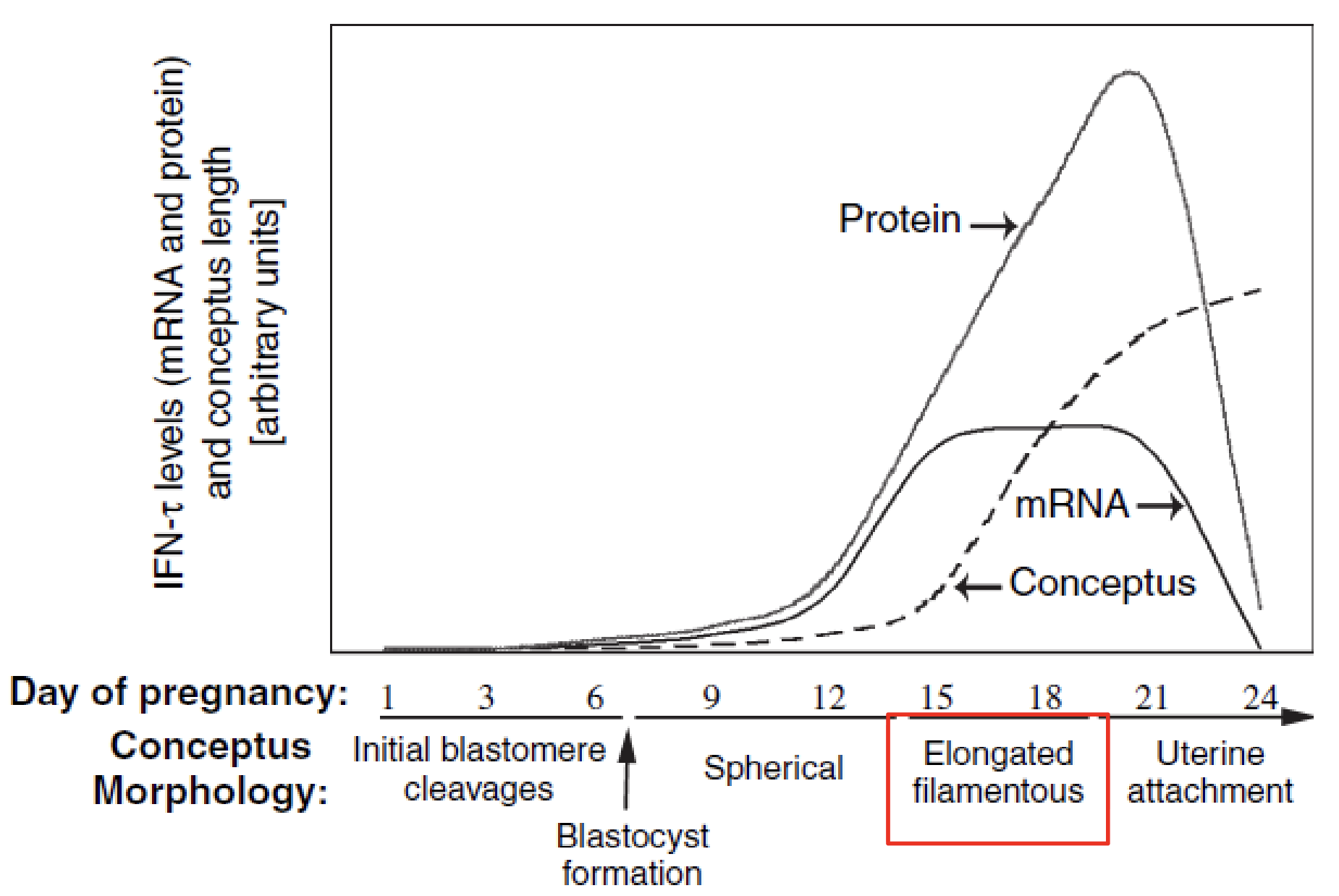
What happens when conceptus is present vs when not ruminants
No conceptus:
Non-pregnant cyclic cow, oxytocin receptors expressed in endometrium at late diestrus
Binding of oxytocin to receptors in endometrium induces pulsatile secretion of PGF2aplha causing luteolysis
Conceptus:
IFNT blocks upregulation of oxytocin receptors in endometrium at late diestrus
No pulsatile secretion of PGF2alpha by endometrium
Maintain CL and progesterone
crosswalk between conceptus and endometrium ruminants
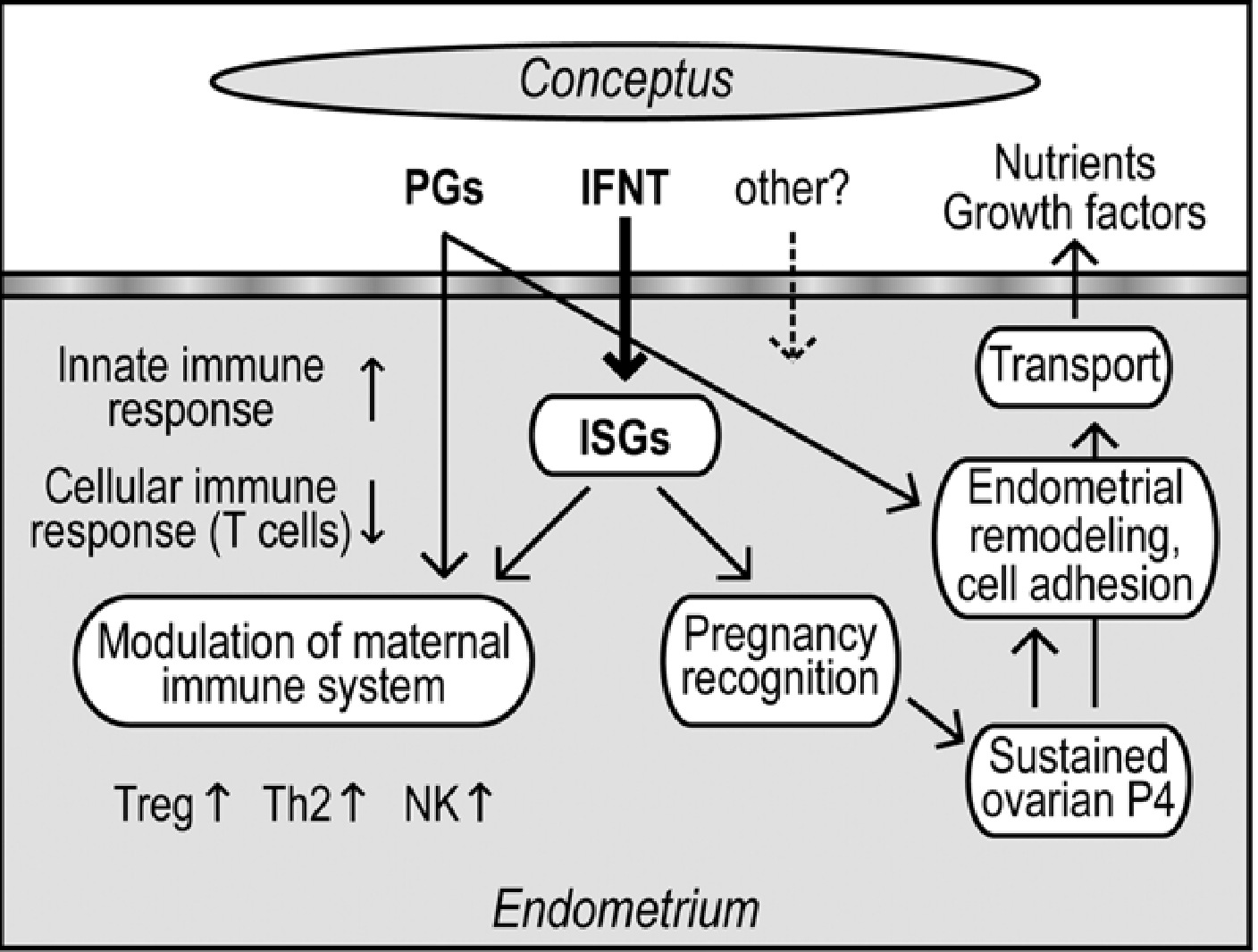
How does this process look in the repro tract
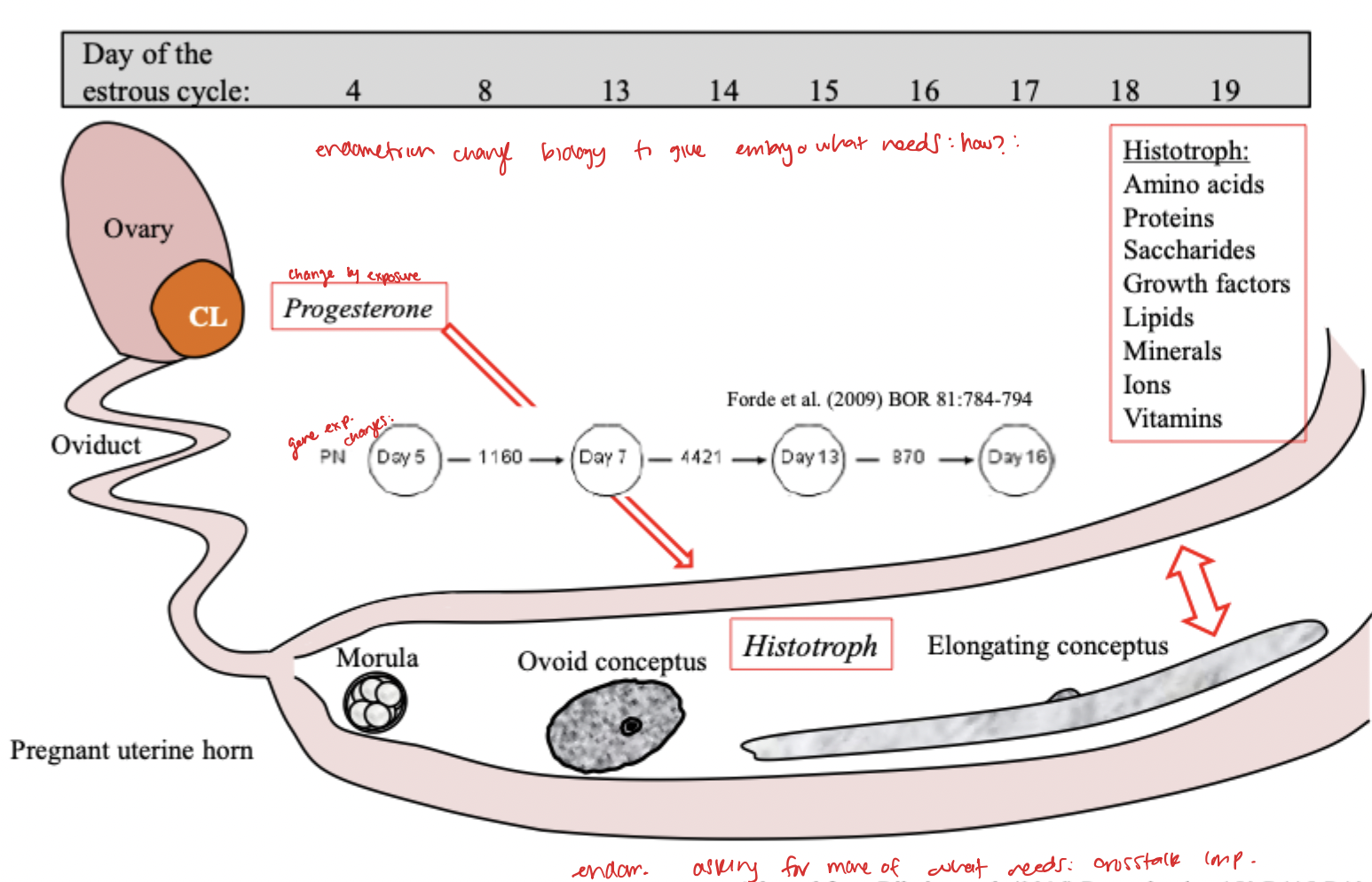
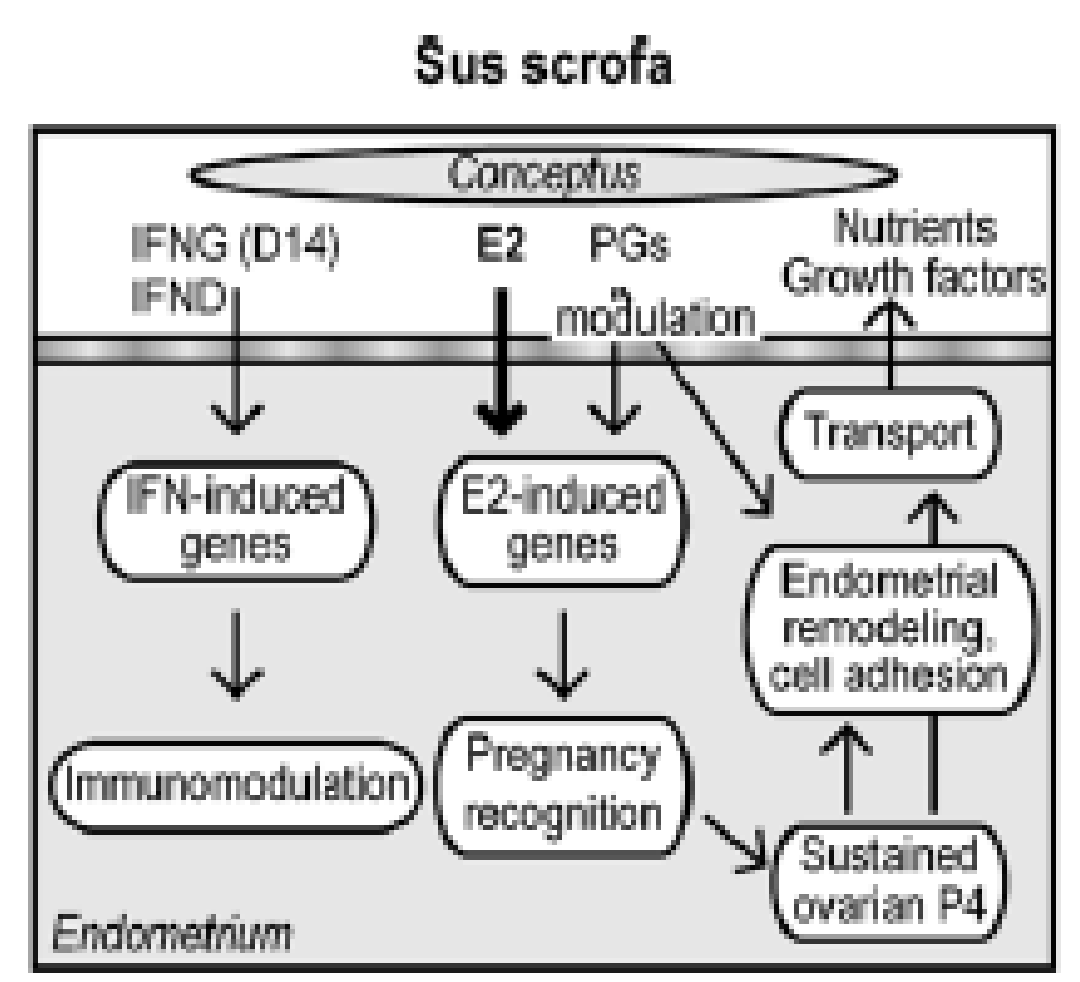
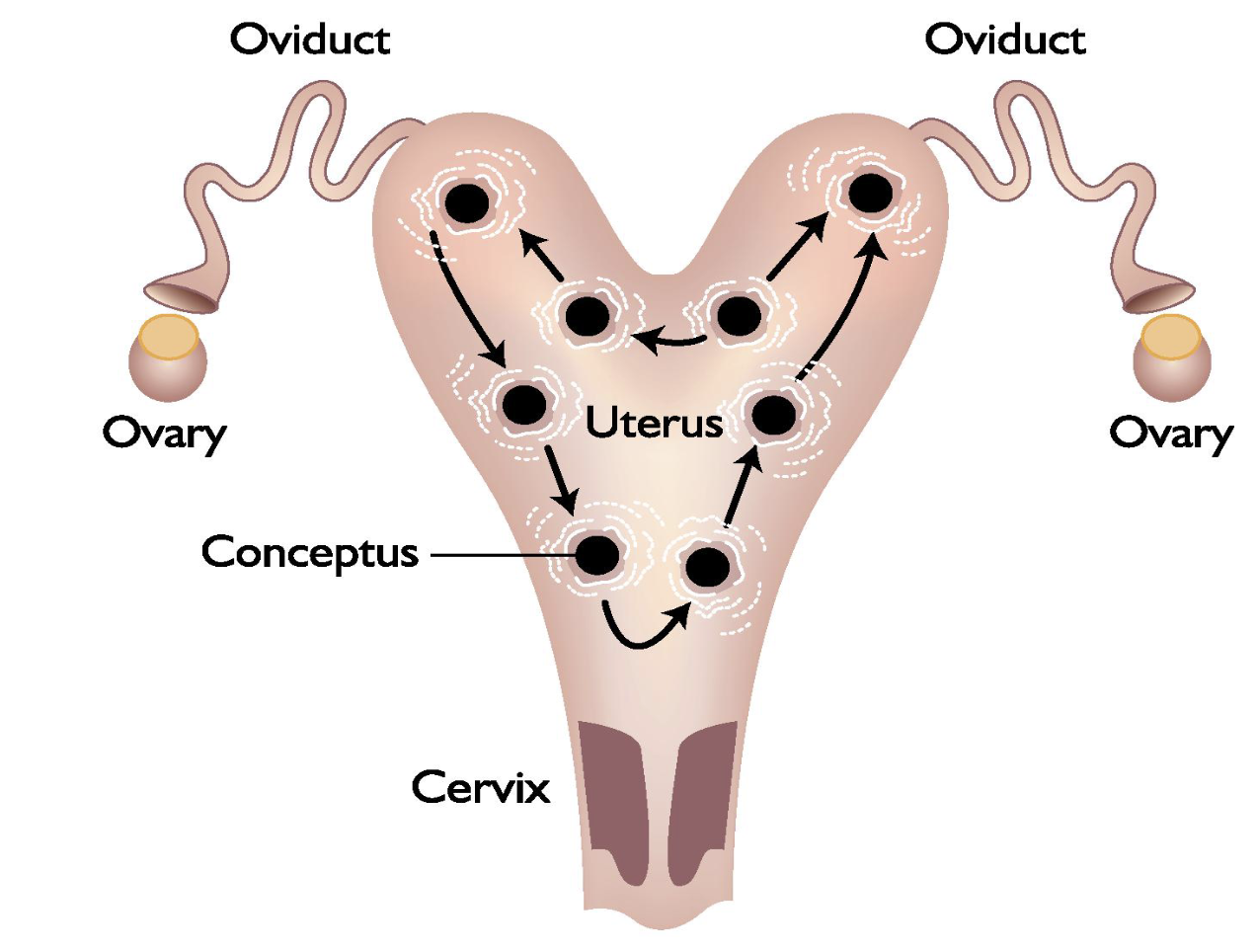
Preimplantation development of porcine conceptus
no IFNT
Filamentous = multiple elongating parts
Conceptus produces lots of Estradiol which reroutes endometrial PGF2alpha not the uterine lumen (so cant go to circulation)
What is required to block luteolysis in pigs
at least 2 in each uterine horn needed tom block luteolysis
Crosswalk between porcine conceptus and endometrium
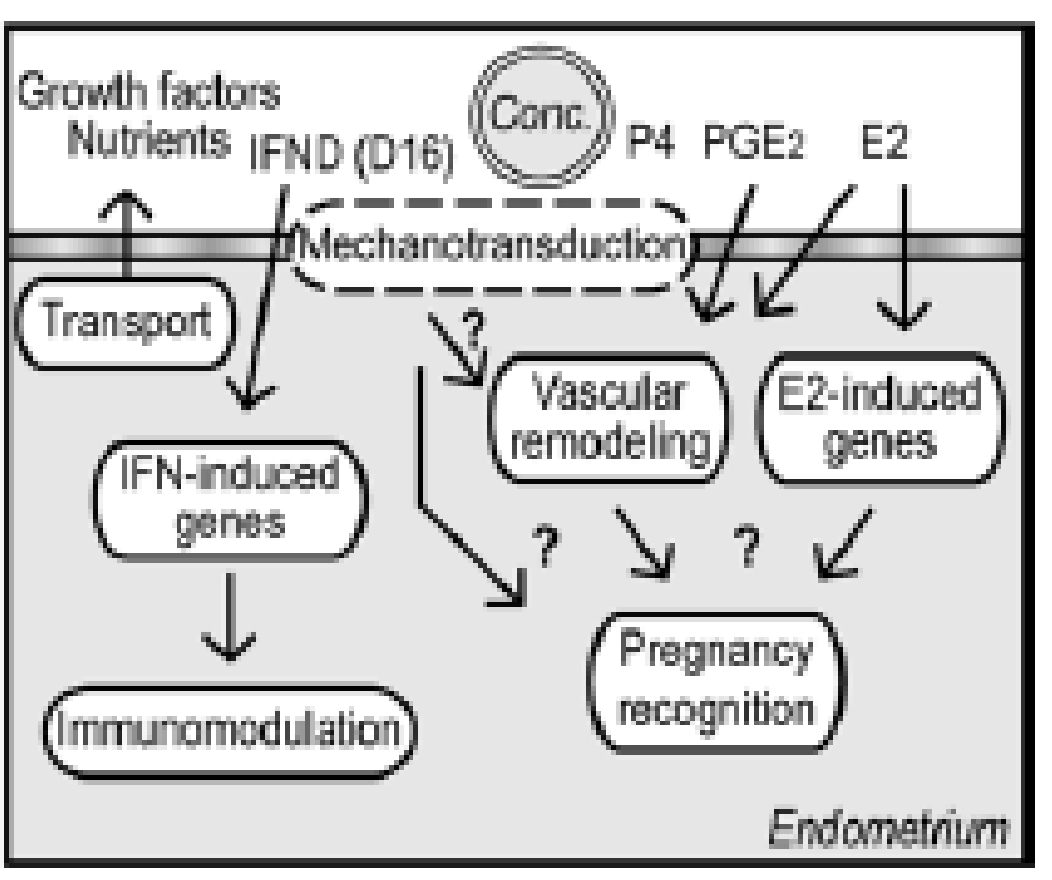
maternal recognition of pregnancy in equine
No elongation of preimplantation conceptus
between day 9-16 of pregnancy conceptus secretes PGF2alpha and PGE2, induces local myometrial contractions and extended mobility of conceptus in uterus
endometrial pulsatility secretion of PGF2alpha is attenuated (reduced), blocking luteolysis
If limit movement of embryo luteolysis will happen must move around - movement is sugnal to mother to tell her she is pregnant
Glycoprotein capsule surround it
Around d16 conceptus stops moving and fixed in place because lumen tighter and conceptus bigger so cant move anymore
crosswalk between equine conceptus and endometrium
What about maternal recognition in companion animals (dogs and queens)
Maternal recognition not required
duration luteal phase is similar between non-pregnant cycles and during pregnancy
What are two periods in development deom zygote to offspring
embryonic period (d0 to 42)
Start formation zygote after fertilization
Morulation
Blastulation
Gastrulation
Ends formation basic structure organs
Fetal period (d43 to term)
Growth, maturation, remodeling of organ system
Ends birth offspring
Cell differentiation during embryogenesis
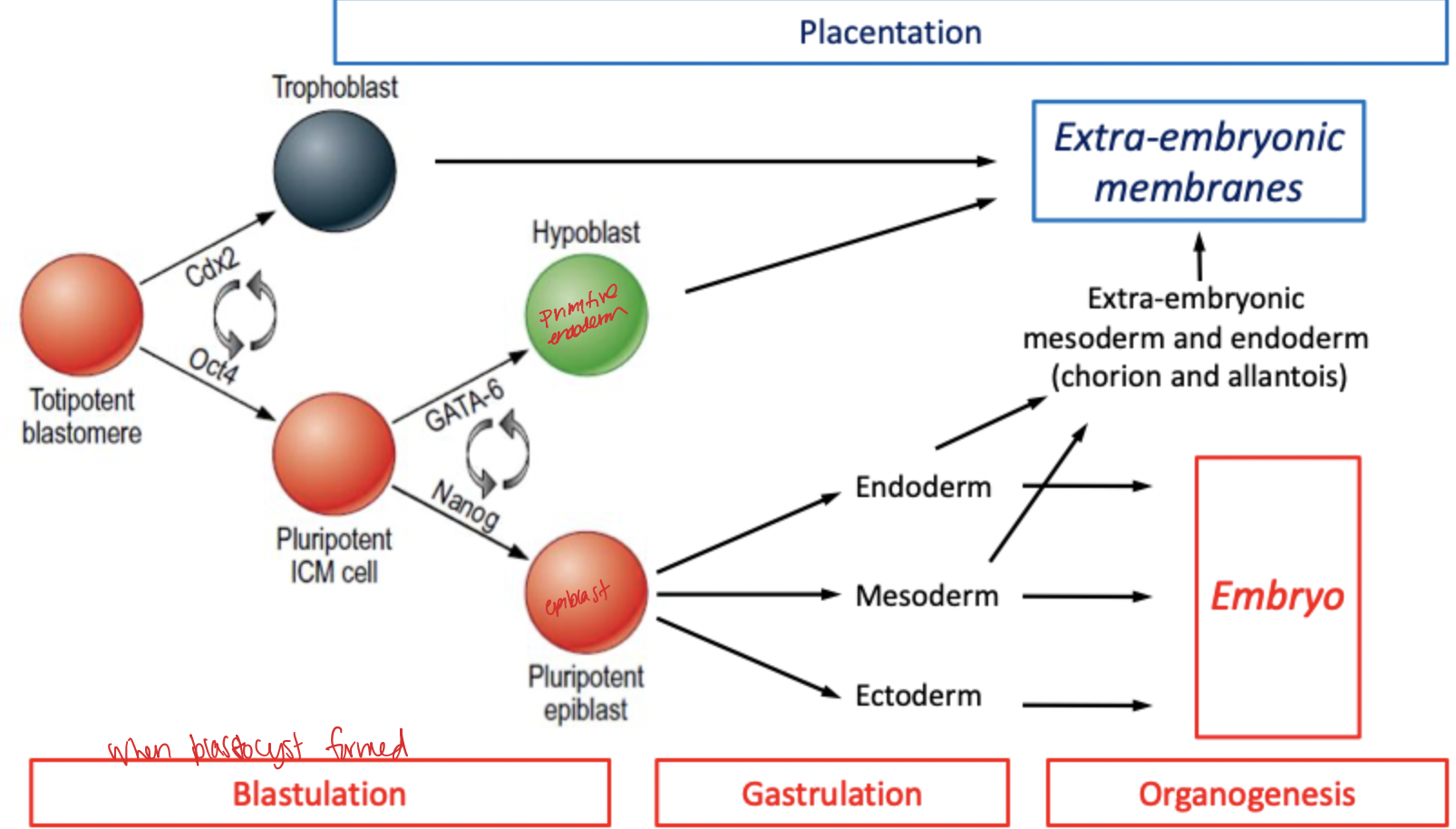
Gastrulation summary
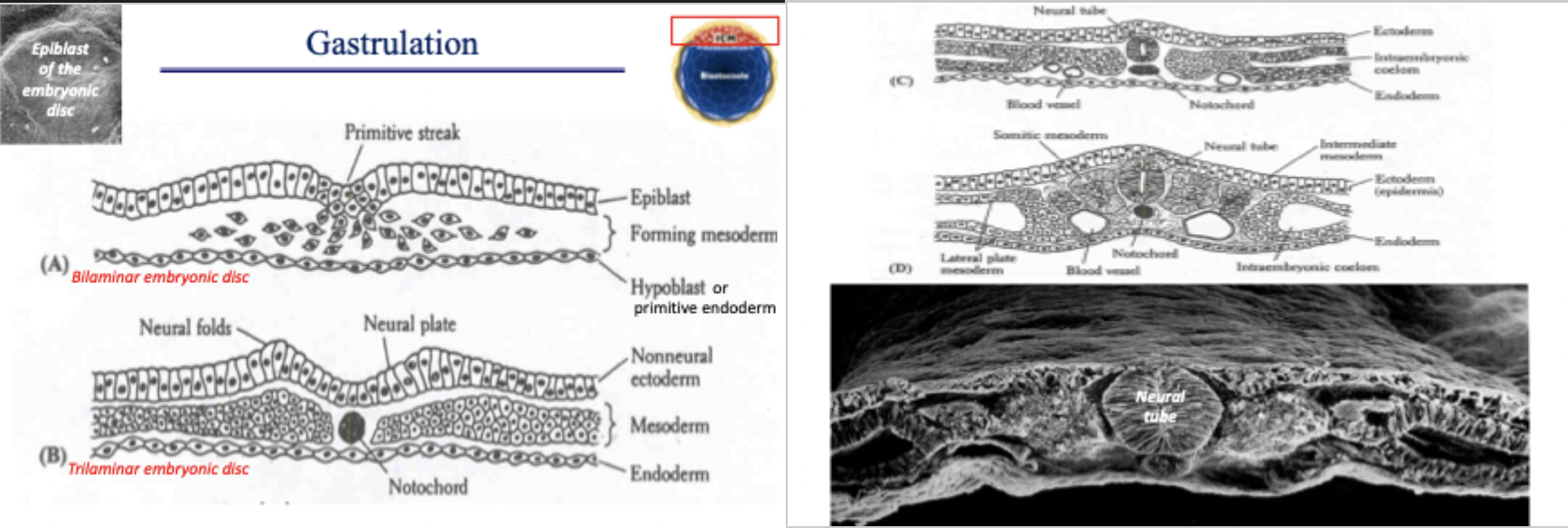
Formation of neural tube
Process is the foundation of the first embryonic organ system = the central nervous system
Creates brain (disc) and spinal cord (tube)
results in the formation of antero-posterior axis
How does this look in timeline
after gastrulation form all organ systems defining end embryonic period
Fetal period: Fetal growth factors
Hyperplasia (cell proliferation)
Hypertrophy (increase in cell size)
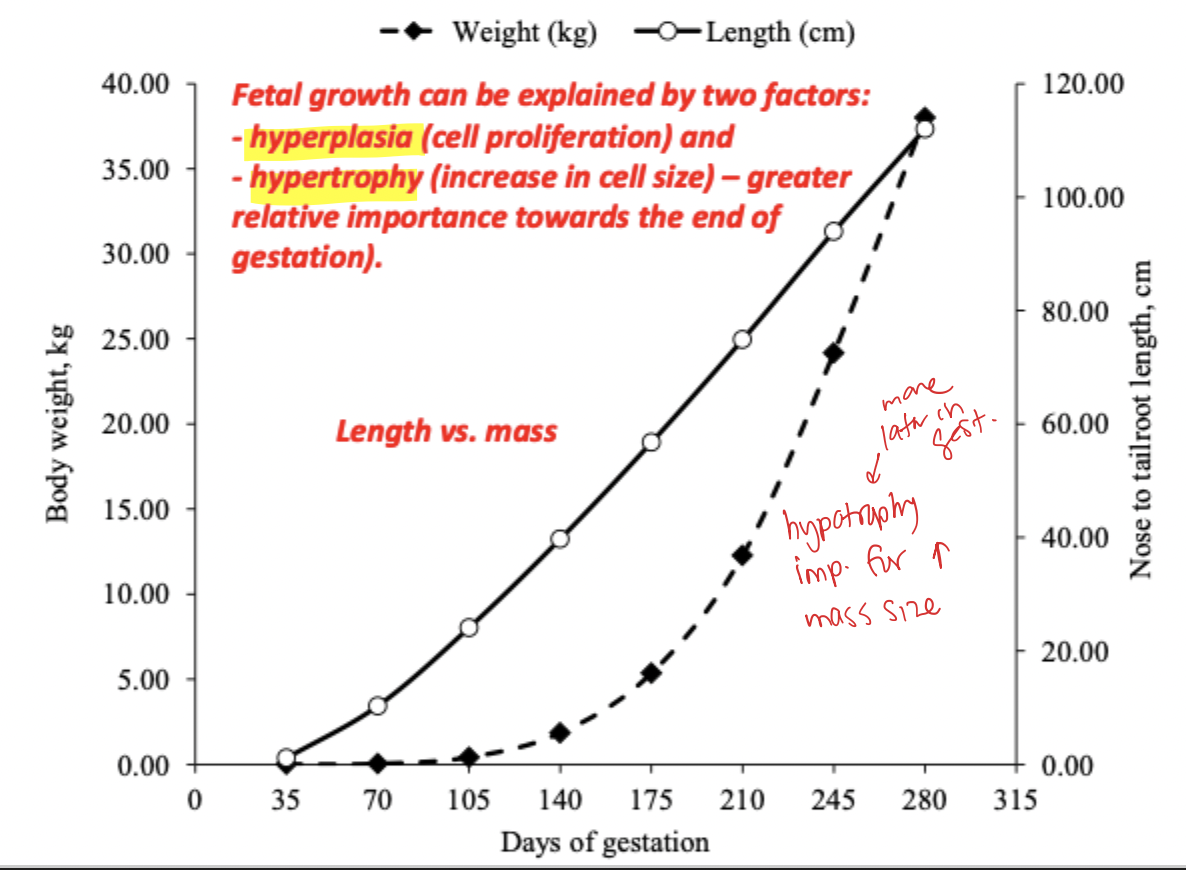
What do need to ensure health of fetus and mother during this period
Feed properly to support mother and developing fetus especially once this growth period starts at end of gestation
what causes variability in body weight at birth
genetics of dam (effect uterine env)
Genetics of embryo (capacity to grow)
Type of embryo (IVF etc)
Nutrition and health of dam
maternal maturity (younger =smaller offspring)
Infectious diseases
environmental stressors
Gestation length
twins (smaller because competing)
litter size (larger litter is smaller size)
What are the consequences of these weight stuff
dystocia (larger=harder patruition)
health
performance
carcass traits
how does uterus control fetal size and development
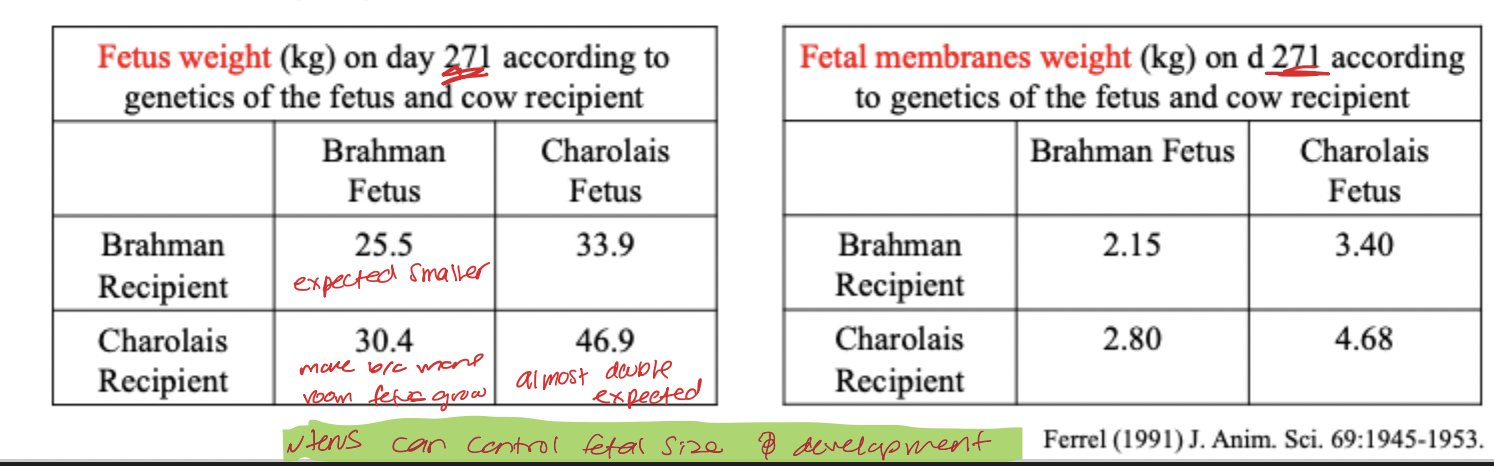
What is placentation
formation of placenta - transient organ of pregnancy
What is the function of placenta
protection
physical- shock, trauma
Biological - maternal immune system, toxins
Fetal/maternal exchange
Nutrients, gases, waste, hormones
Diffusion, active transport
Endocrine organ
progesterone, estridiol, placental lactogen, glycoproteins, eCG, hCG
What are components of placenta
Embryonic/fetal - extraembryonic membranes
Start to form before implantation in domestic species
Maternal - endometrium
Forms by differentiation of endometrial cells during implantation
what does formation of extraembryonic membrane look like
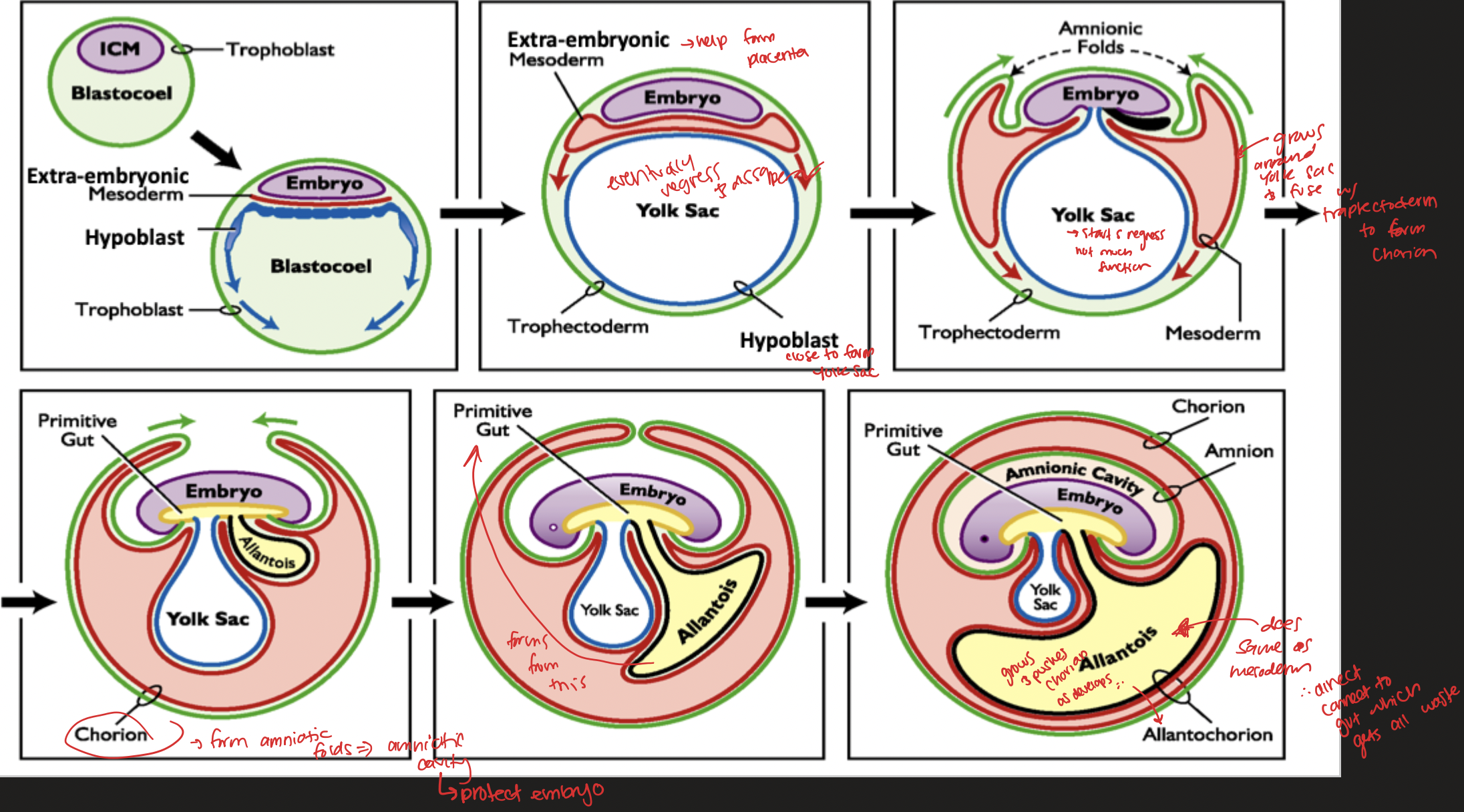
How does this differ between species
in ruminants and pigs chorion and dorsal portion of amnionitic wall remain fused in mesamnion
In horses, dogs, cats the allantois surrounds amnion completely
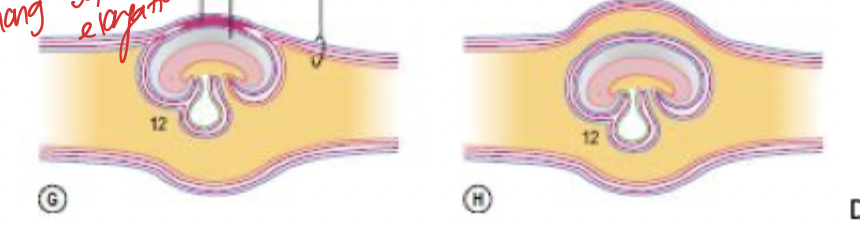
What is implantation
Penetration of conceptus into the endometrium
rodents and primates have true implantation
The embryo actually invades the uterus
It goes through the epithelium
It becomes embedded in the uterine tissue
In domestic species, just attachment of the conceptus in the endometrium - the conceptus stays in the uterine lumen
The embryo does NOT invade deeply
It stays inside the uterus
It only attaches to the surface
Nutrition of conceptus
pre and peri implantation: Histotoph
becomes a limitation with the development of conceptus
Post implantation with functional placentaL haemotroph
allow exchange of nutrients, hormones, gases and waste between fetal and maternal blood circulation
What are the 2 ways to categorize placenta
According to distribution of chorionic villi
According to the integrity of endometrium structure and number of placental layers separating maternal and fetal blood
Placenta according to chorionic villi:
Diffuse
Sows and mares
Homogenous distribution across placenta
Cotyledonary
ruminants
Doscoid
Primates and rodents
Disk in front of fetus (embedded in blood)
Zonary
band
placenta according to endometrial and placental layers
Epitheliochorial
Synepithelialchorial
Endotheliochorial
Hemochoriol
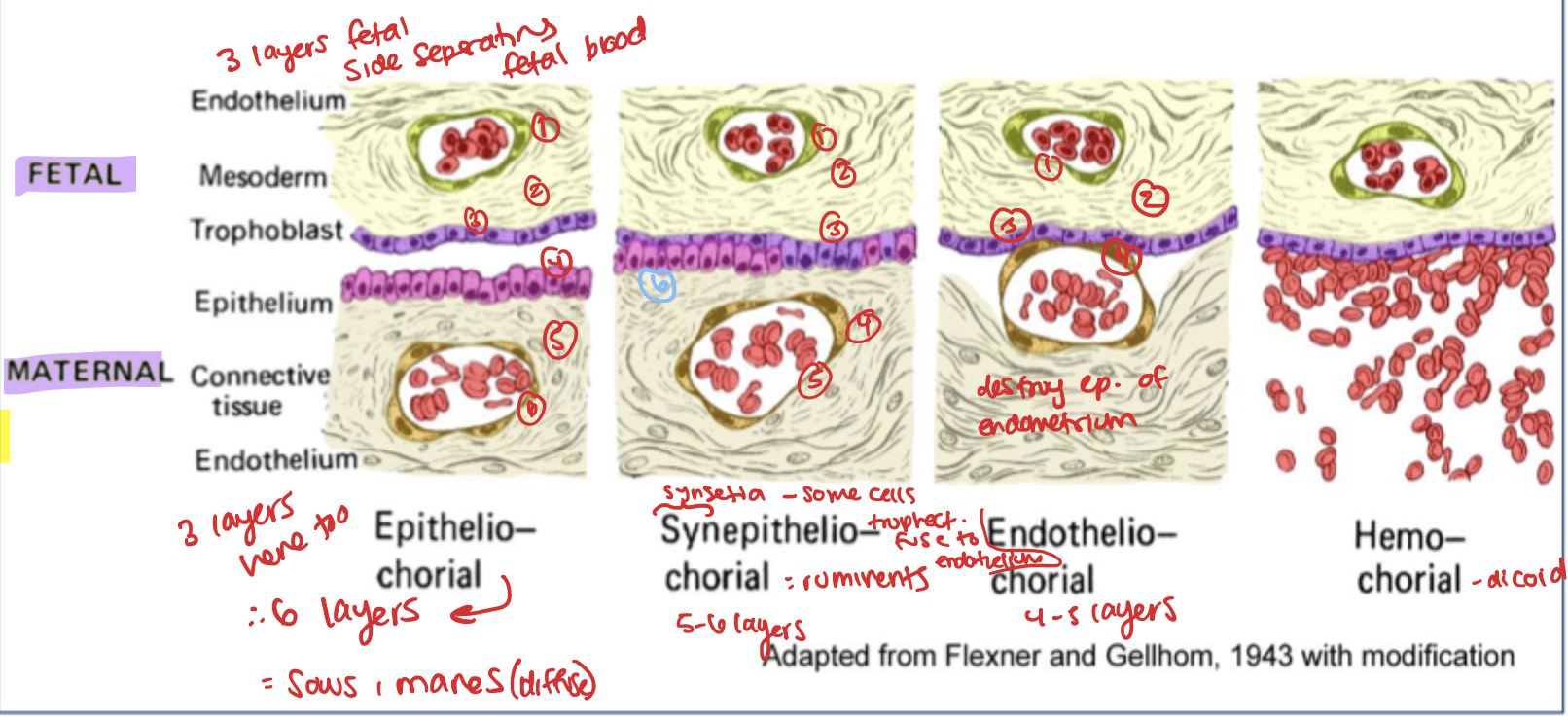
What are 3 layers always present in scenarios
3 fetal layers
Endothelium blood vessels
connective tissue
chorionallantois
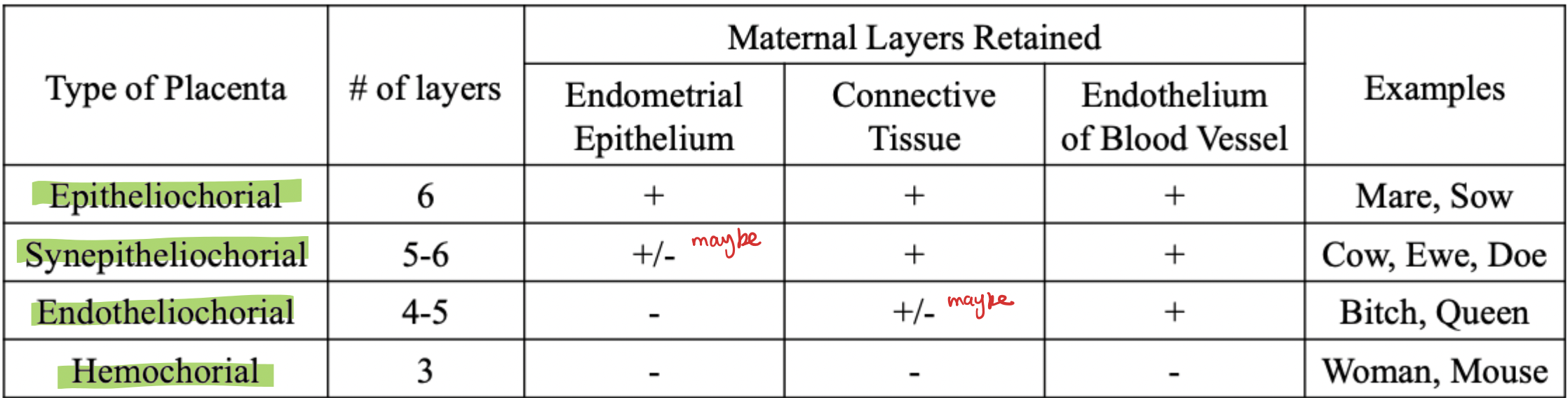
What connection between the 2 types
Diffuse=epitheliochorial (sows and mares)
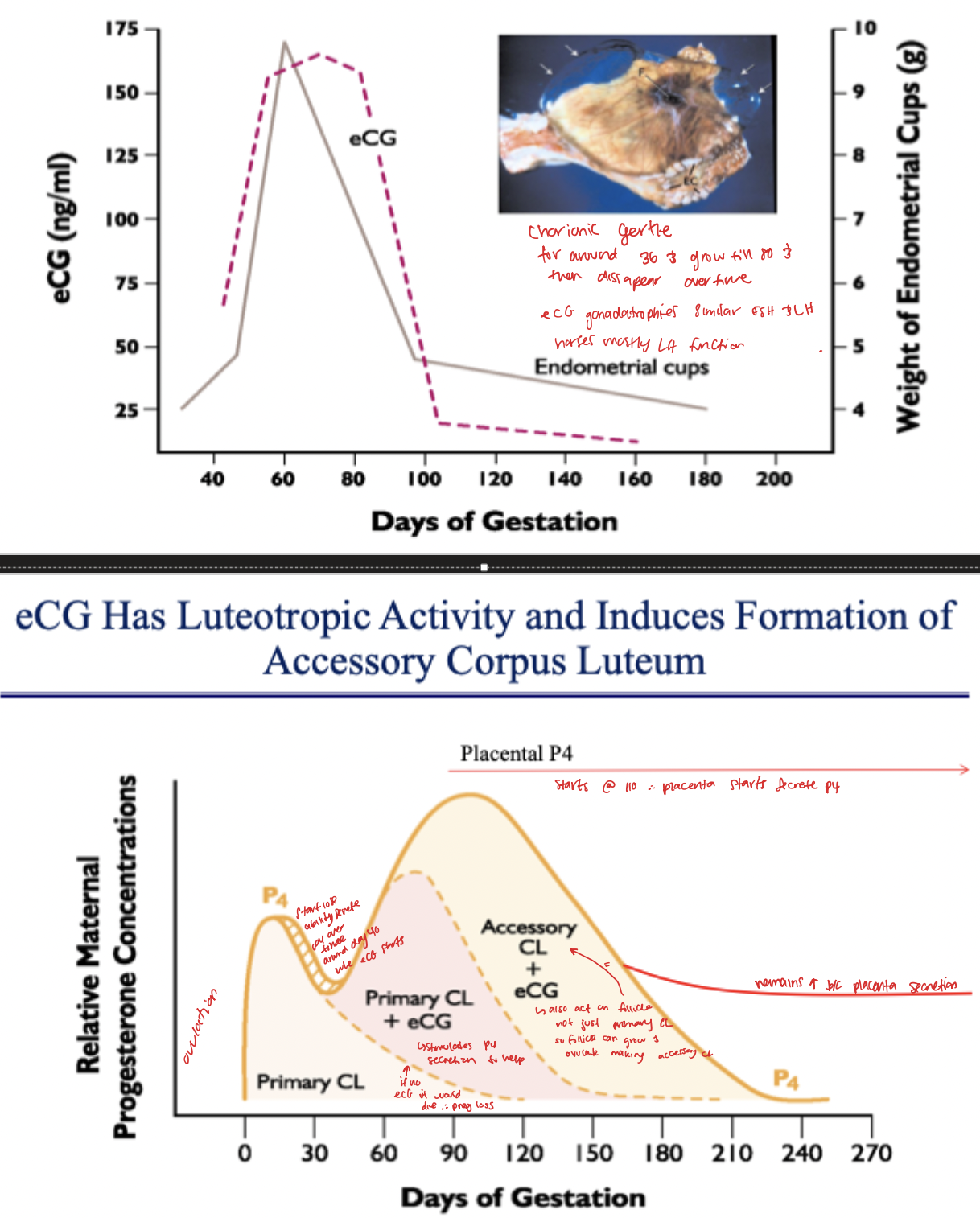
Microcotyledons, chorionic girdle, endometrial cups (equine)
Cotyedonary=synepitheliochorial (ruminants)
Binucleate giant cells - create bags (help preg diagnosis, no bags=nopregnancy) - fuse with endometrium
Cotyledon + caruncle = placentome
Flat- deer, convex-cows and giraffe, concave - ewes and does
Zonary = endothelial placenta (canines and felines)
Discoid = Hemochorial placenta (primates and rodents)
How does bunucleated giant cell in synepitheliochorial placenta work
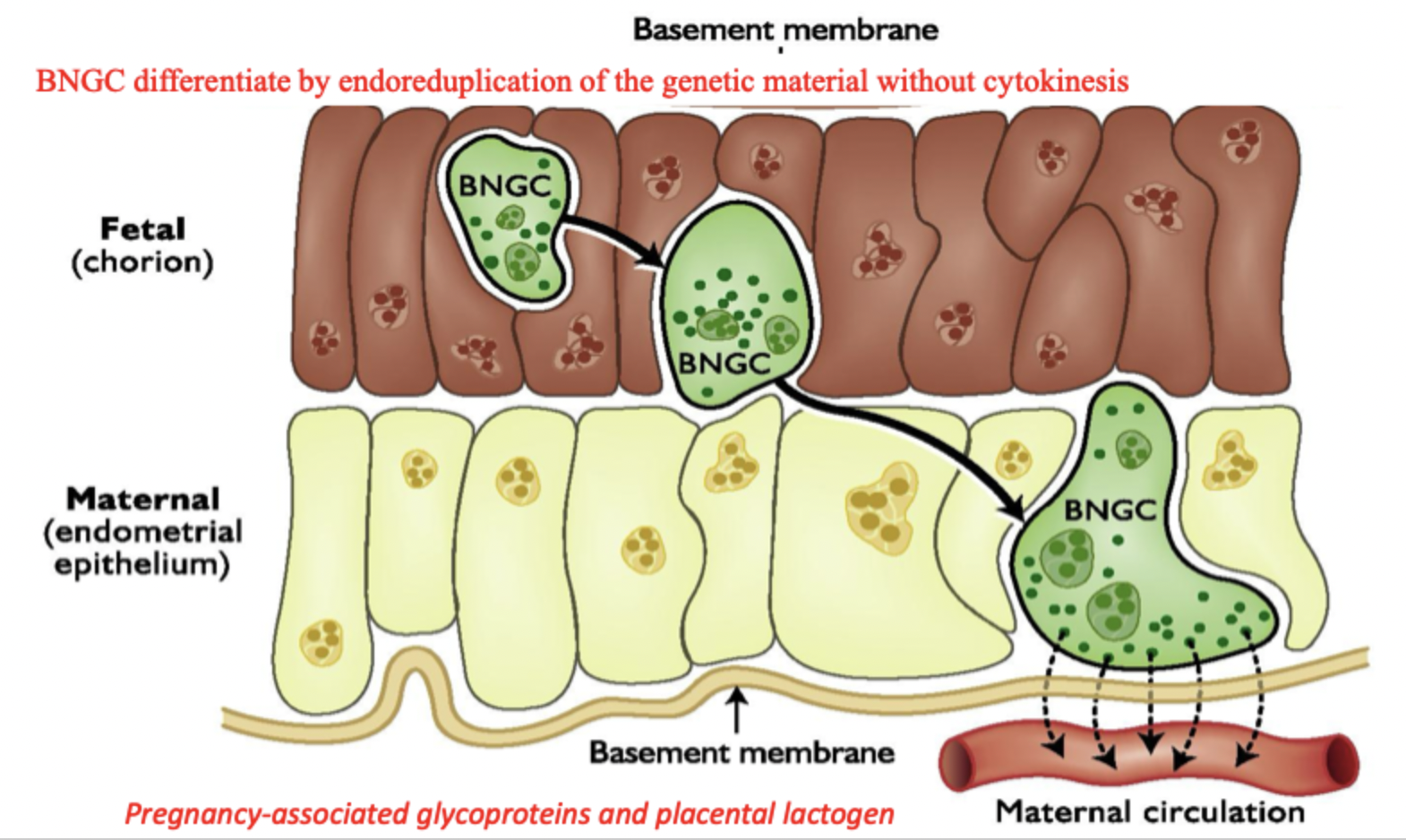
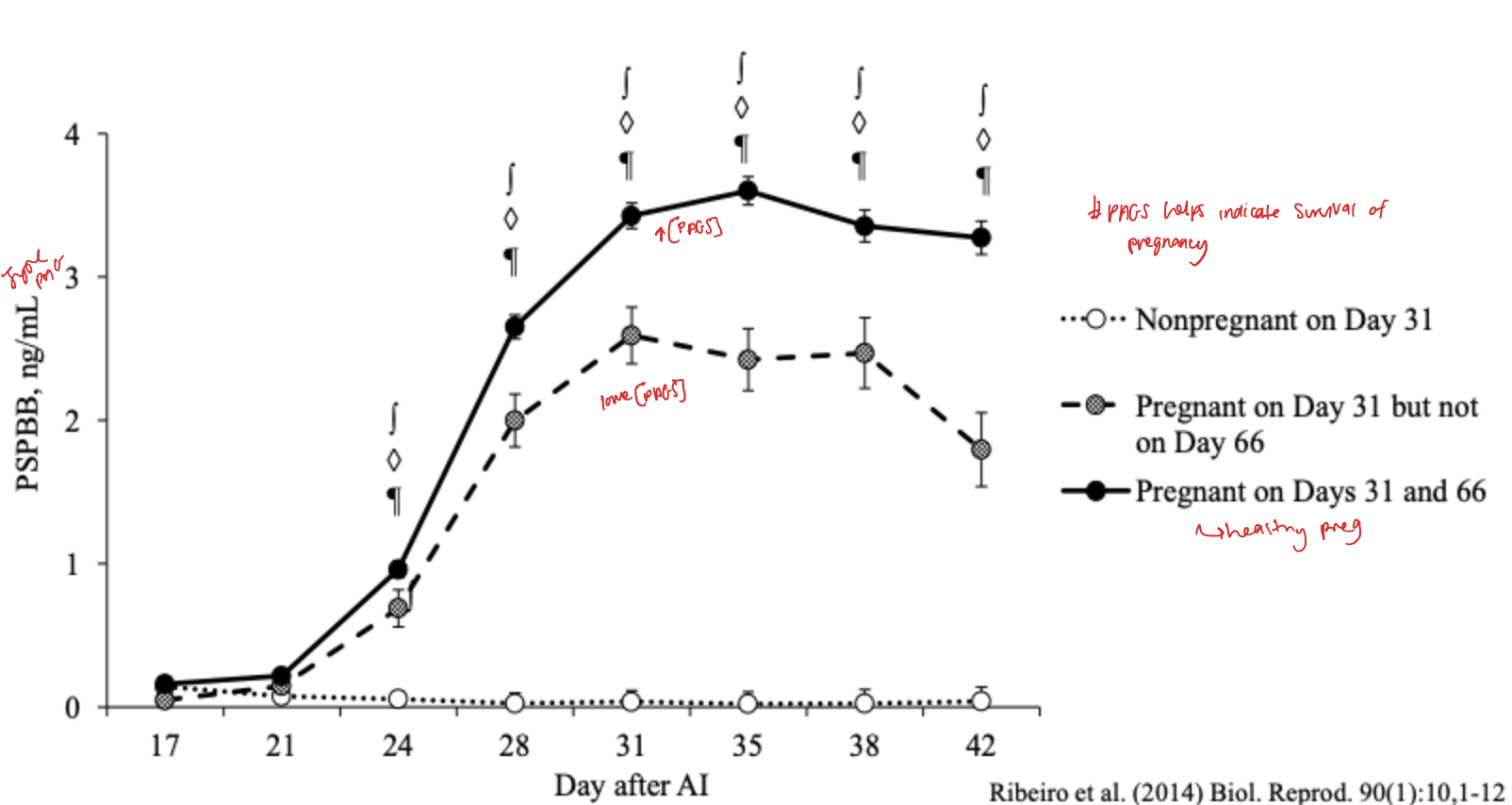
How do PAGs concentration change throughout gestation and why
They increase after AI and help indicate the survival of pregnancy
Can be used for preg diagnosis
Equine epitheliochorial placenta secrete what
Equine chorionic gonadotropin (eCG)
Similar to FSH and LH
Has lutetropic activity and induces formation of accessory CL
**hCG is what is in humans and used for pregnancy tests
When does P4 start to be released by placenta in different animals
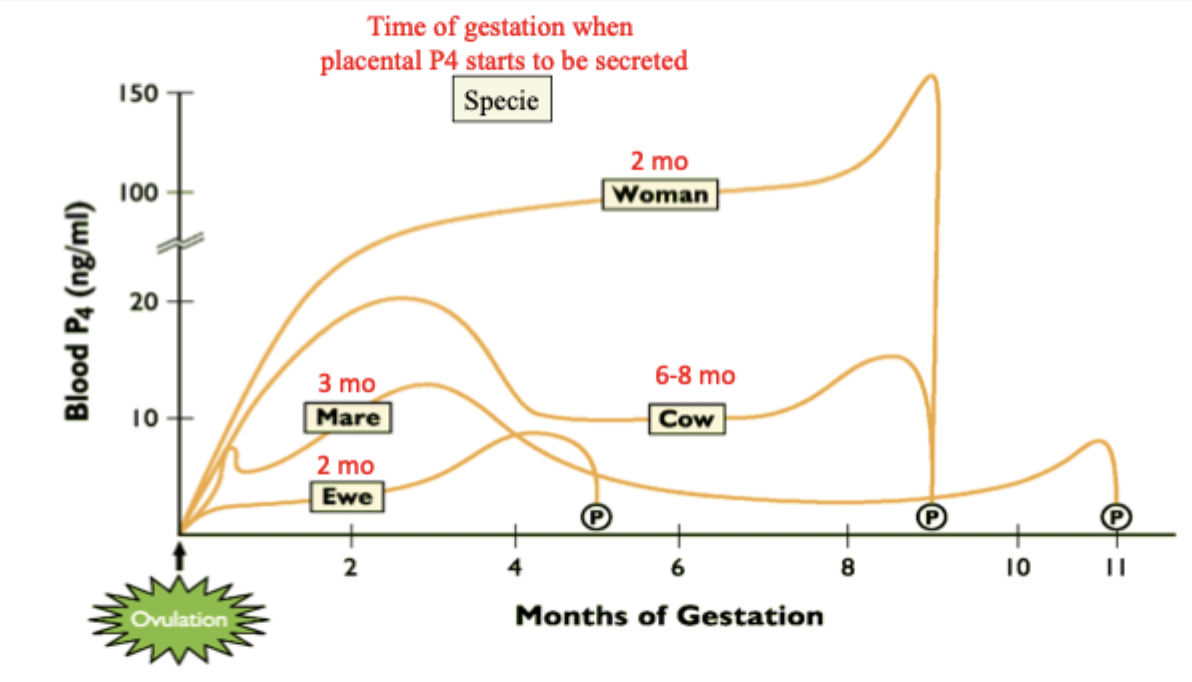
Many species placenta does not secrete P4. which ones?
Secreted by CL only
dog
sow
queen
All these have multiple fetuses, so multiple CL and rely only on that, if you remove the ovaries there will be pregnancy loss because there is no other source of P4 so dies
Somatotropic and lactogenic activities of placental lactogen
ASK CLARIFICATION
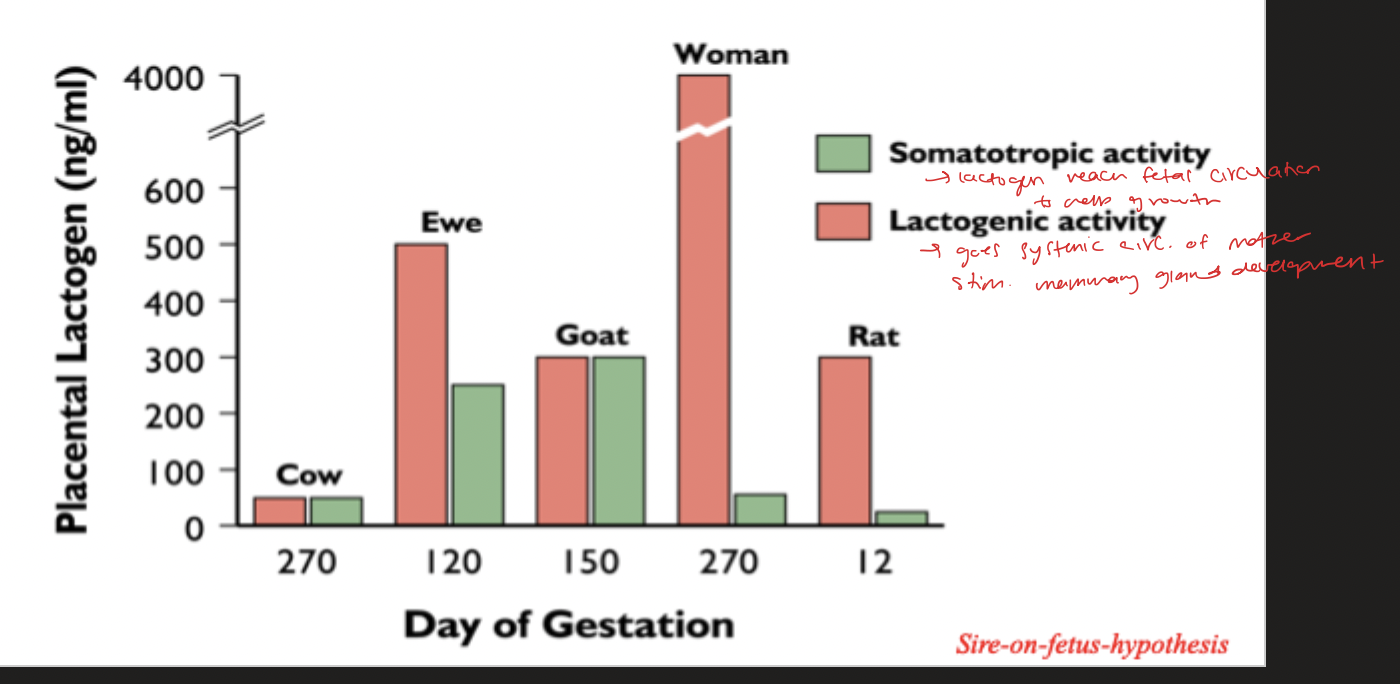
Does sec fetus cahnge milk production in following lactation
Yes if have a girl produce more milk in following lactation
what effect of gestation lengths
If short = higher morbidity for cows and calves
If long = higher morbidity for cows
What triggers parturition
The fetus
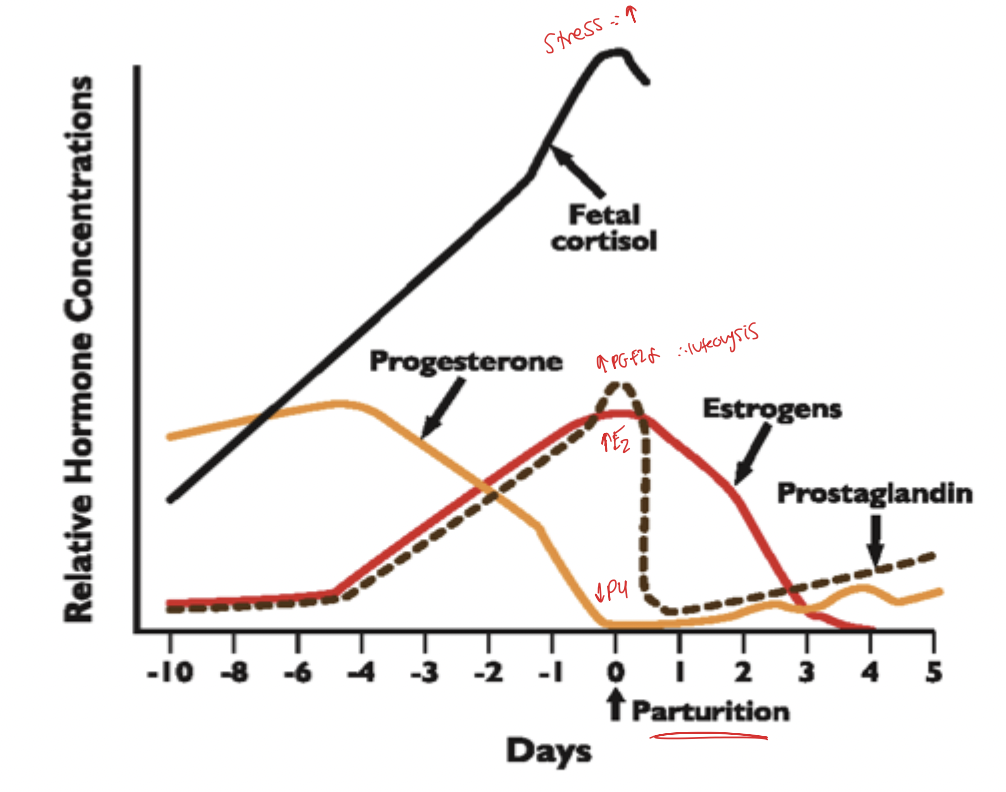
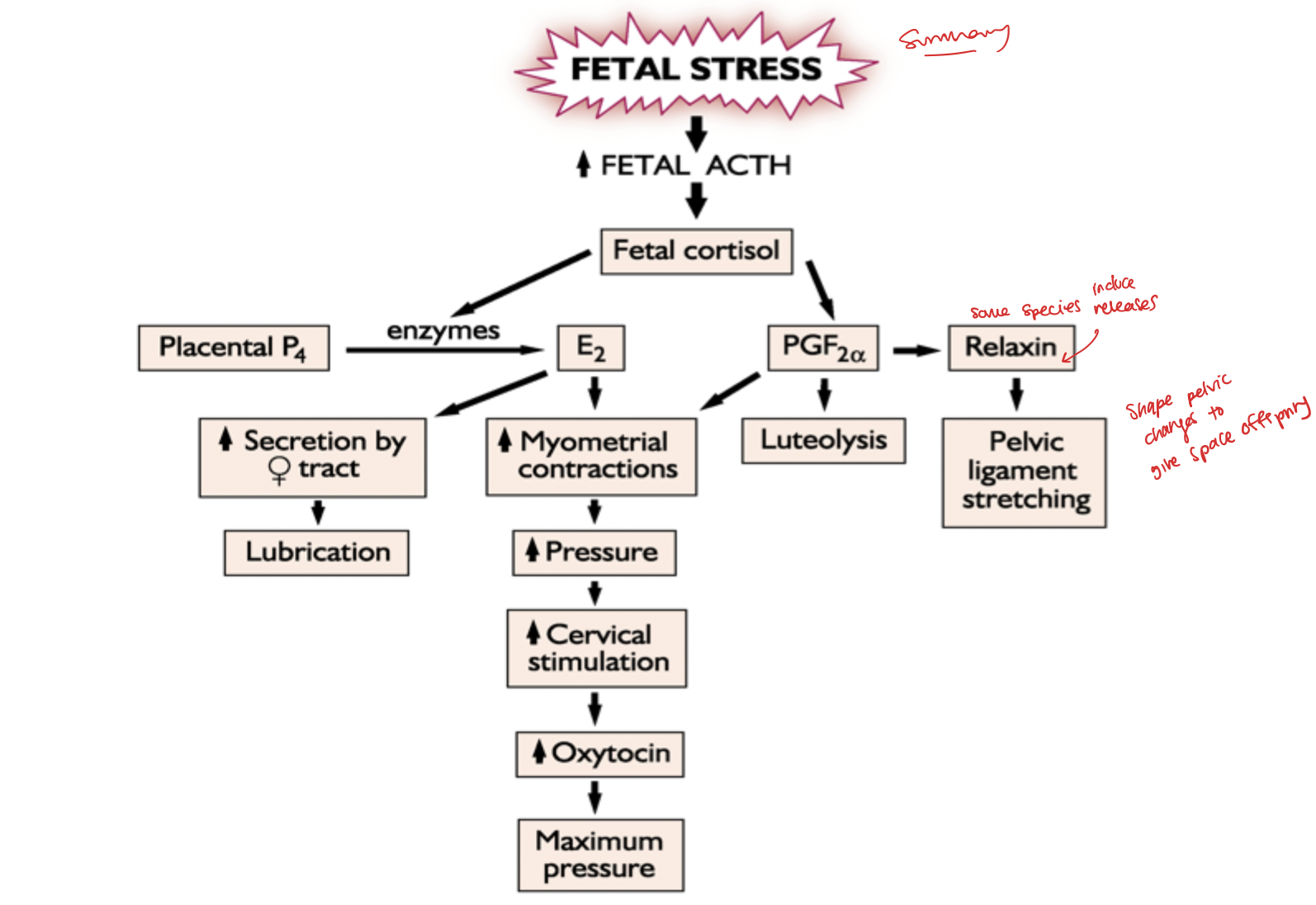
Fetus gets stressed and wants to get out therefore releases fetal cortisol this cortisol reaches the placenta and changes the enzymatic machinery releasing placental PGF2alpha which goes to the ovary and causes luteolysis
Changes enzymes and converts P4 to estradiol
What is Ferguson reflex
Positive feedback loop
P4 had negative feedback on myometrium (no contractions) now that this is decreaseed and estridiol is increased it stimulates contractions and induces secretion of mucus for lubrication of biorth canal
E2 increase → Anterior pituitary secretes oxytocin → pressure →oxytocin →increasing contractions etc etc etc
overall summary of what happening at parturition starting form fetal stress
What are 3 stages of parturition
Myometrial contractions/cervical dilation (can range 1-42h depending on species)
Fetal expulsion (12-120 min)
Fetal membrane expulsion (1-12h)
Do not get involved unless exceeds the time that these stages should be, takes a long time
what is dystocia
Difficulty at birth might result in serious complications for fetus and dam
What factors effect dystocia
size fetus (genetics, gender)
twins (monovulatory species)
Multiple fetuses in birth canal (polyovulatory species)
maturity of female
uterine torsion
nutrient deficiencies
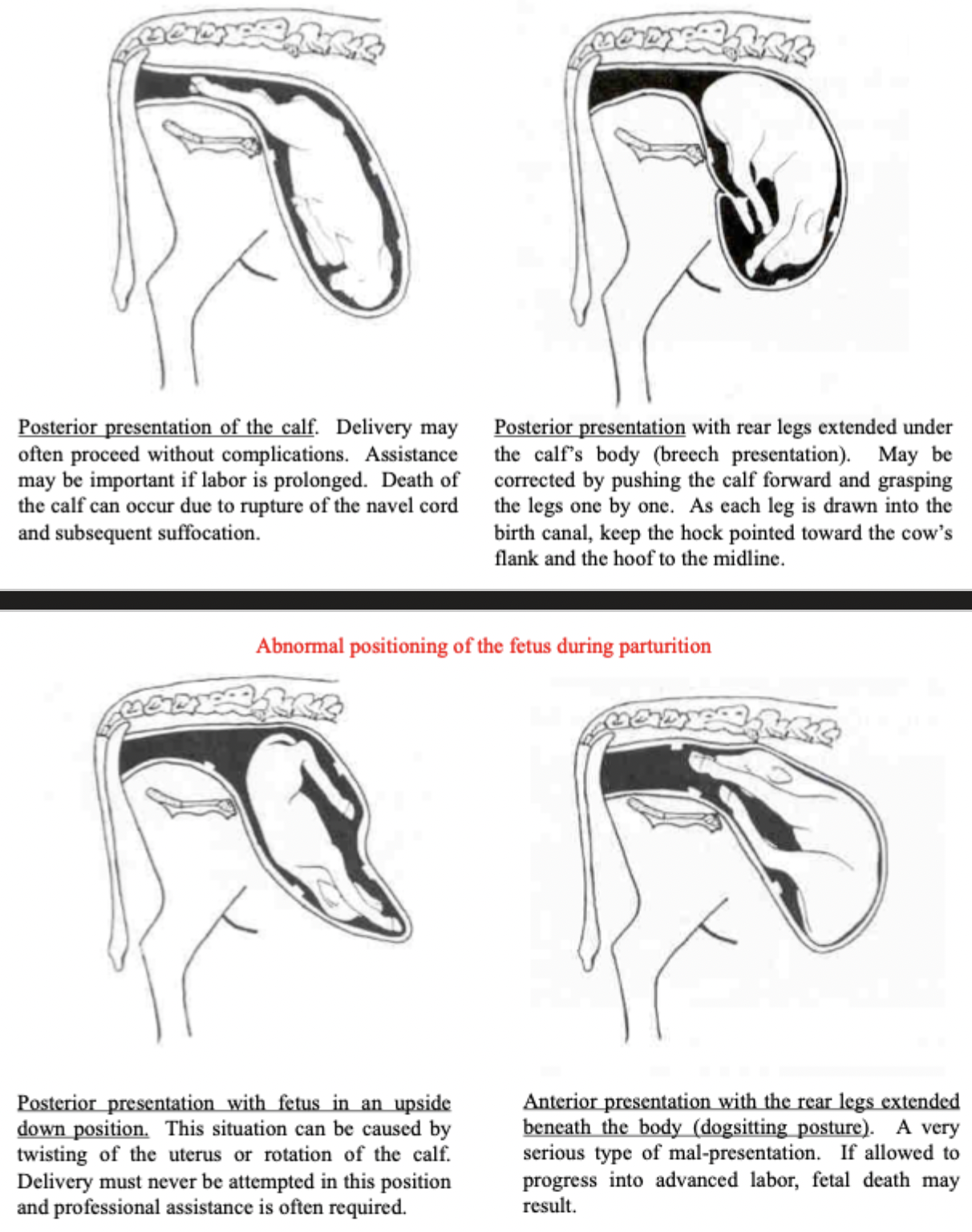
position fetus
What are options if dystocia
Assistance
C-section
Fetotomy - usually fetus dead so cut piece by piece and make sure not to contaminate mother
What normal position fetus to be in
Want 3 parts - head and 2 legs, tail legs etc
different abnormal positions
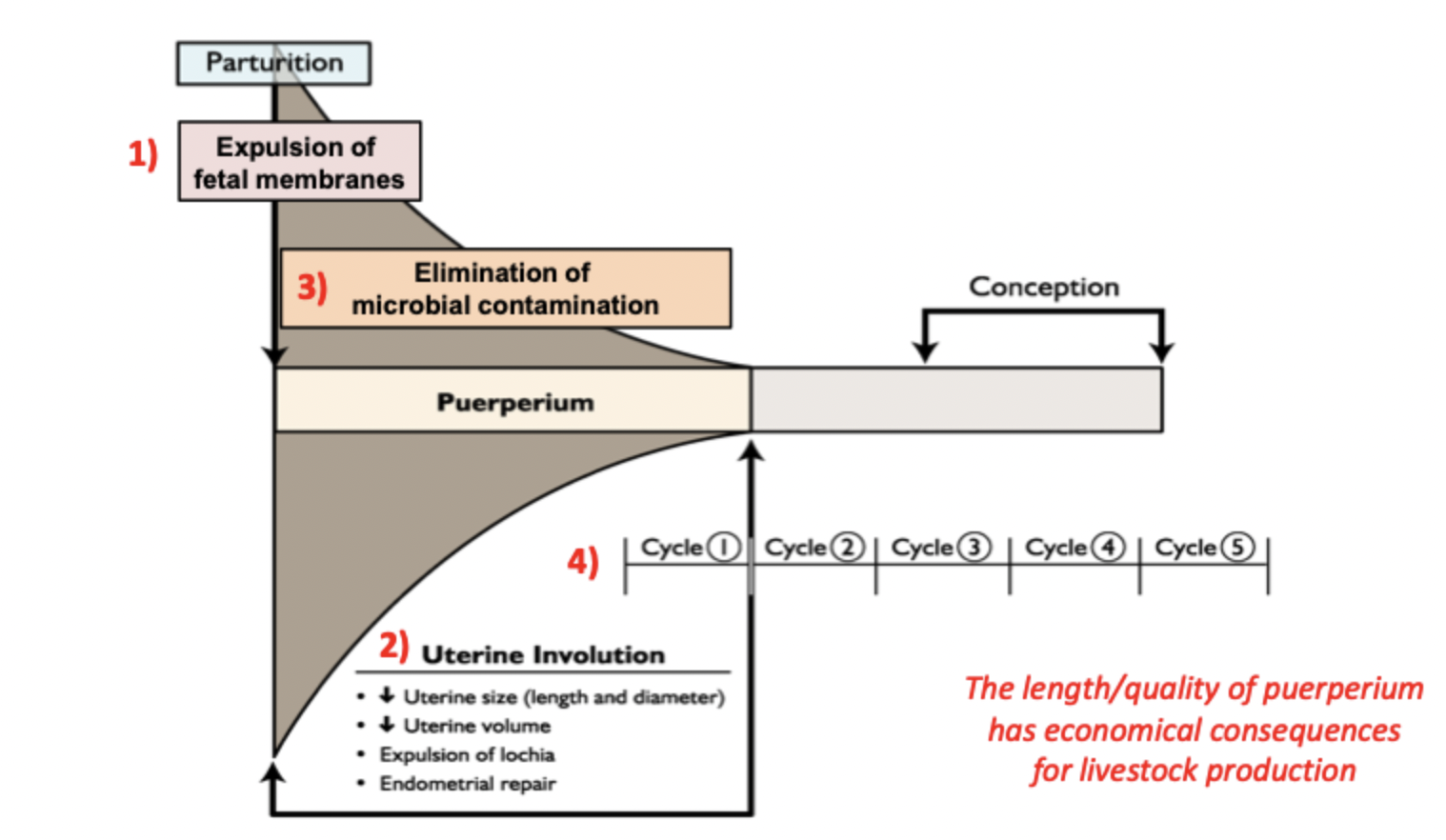
Puerperium
postpartum period when reproductive tract returns to nonpregnant condition so can become preg again
initiated immediately after parturition and lasts until reproductive function is reestablished
**What are main events of puerperium
Expulsion fetal membrane and lochia
uterine involution and endometrial repair
Elimination of microbial contamination of reproductive tract
Resumption of regular ovarian function and estrous cyclicity
What is process of expulsion of fetal membranes
Maturation of chorionic villi prepartum - periparturient endocrine changes lead to activation of collagenases and breakdown of cotyledon- caruncle interface
Myometrium contractions and vasoconstriction (increase estraidiol help eliminate fetal membrane, restrict nutrients to tissue)
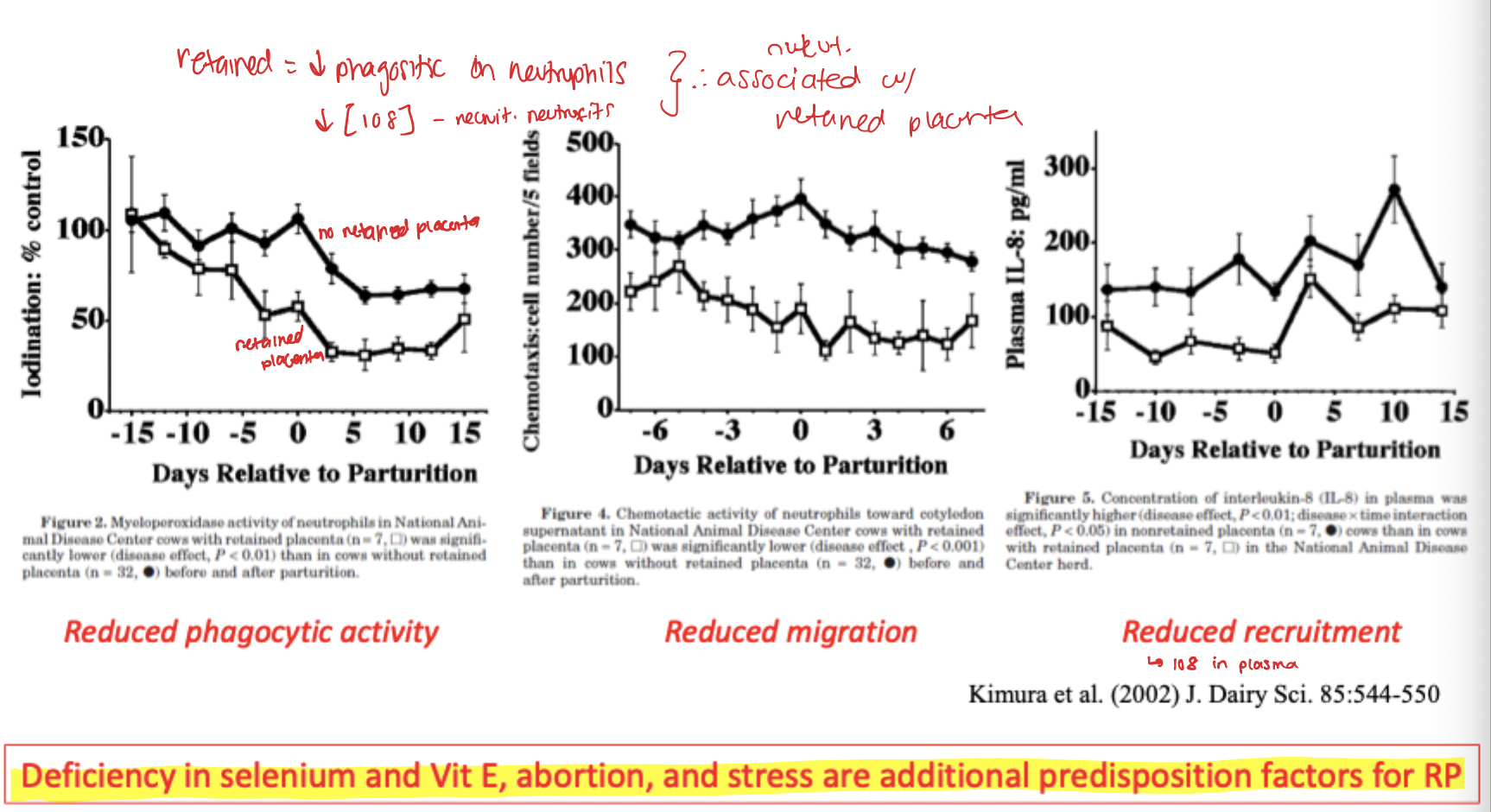
Recognition of fetal membranes as foreign by maternal immune system and production of cytokines
Migration of neutrophils to the maternal-fetal interface
Detachment of chronic villi
Expulsion of fetal membranes
Failure: retained fetal membrane - increases susceptibility to uterine infections and development of metritis
ruminants tough can handle lots but mares arent can get very sick
Impaired Neutrophil Function and Retained Placenta in Cattle
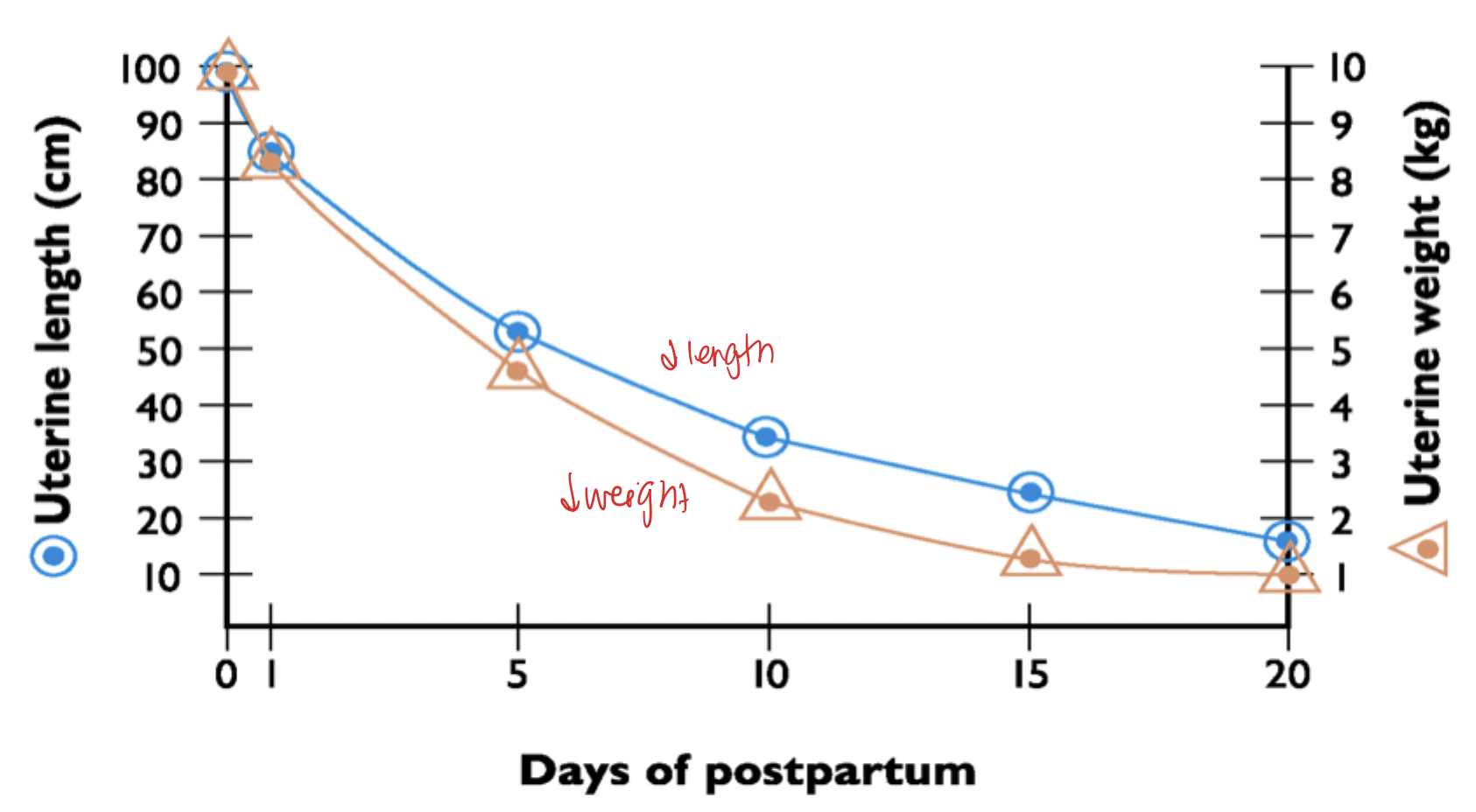
Uterine involution (shrinking) in postpartum cows
uterine length and weigth shrinks/ goes down as postpartum goes on
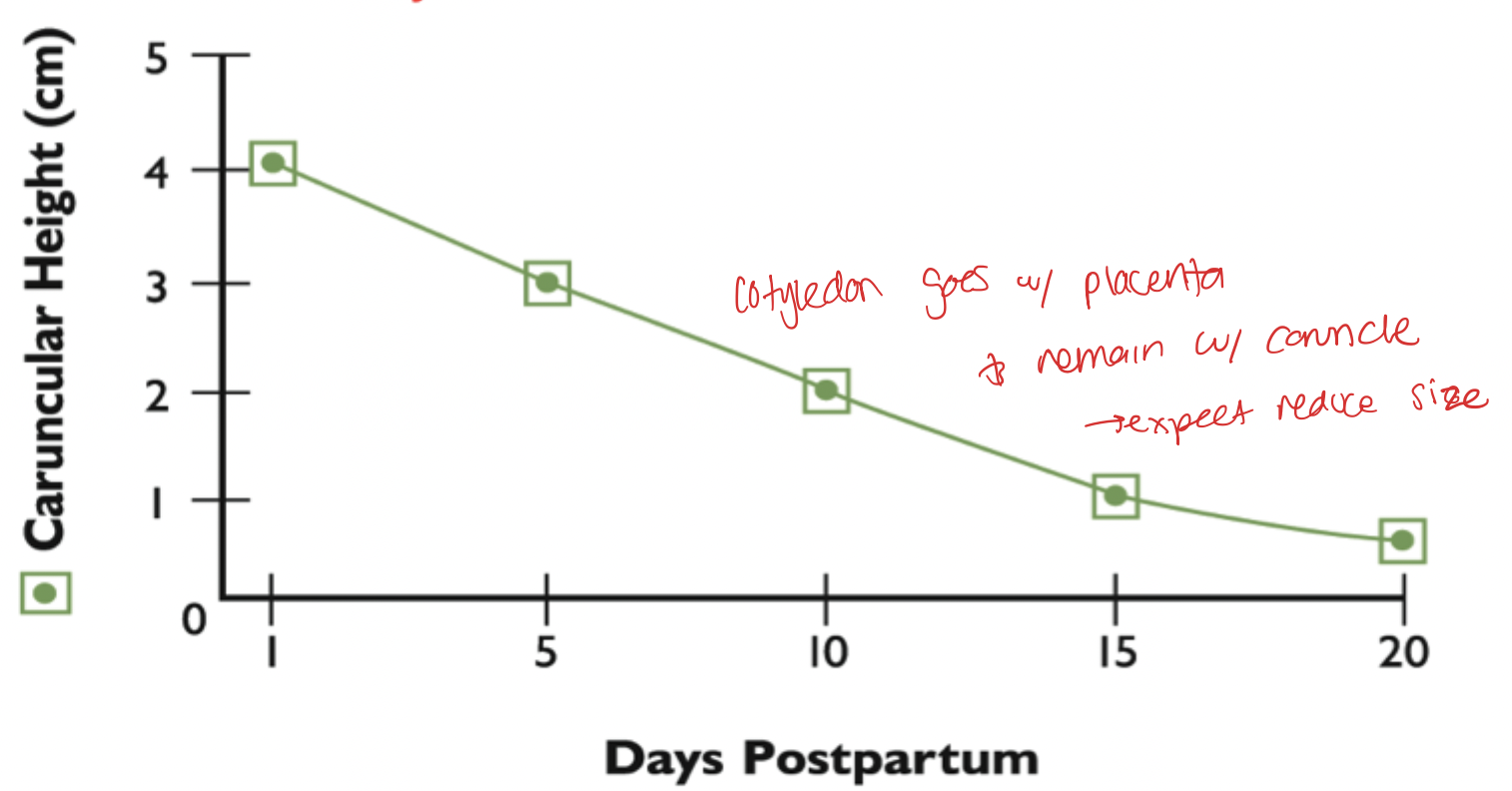
Uterine involution and endometrial repair in postpartum cow
Vasoconstriction induces necrosis and sloughing of caruncles. reastablishment of caruncles and intercaruncular endometrium
what is lochia
Amniotic and allantoic fluid + blood + placental cellular debris (fluid in postpartum uterus)
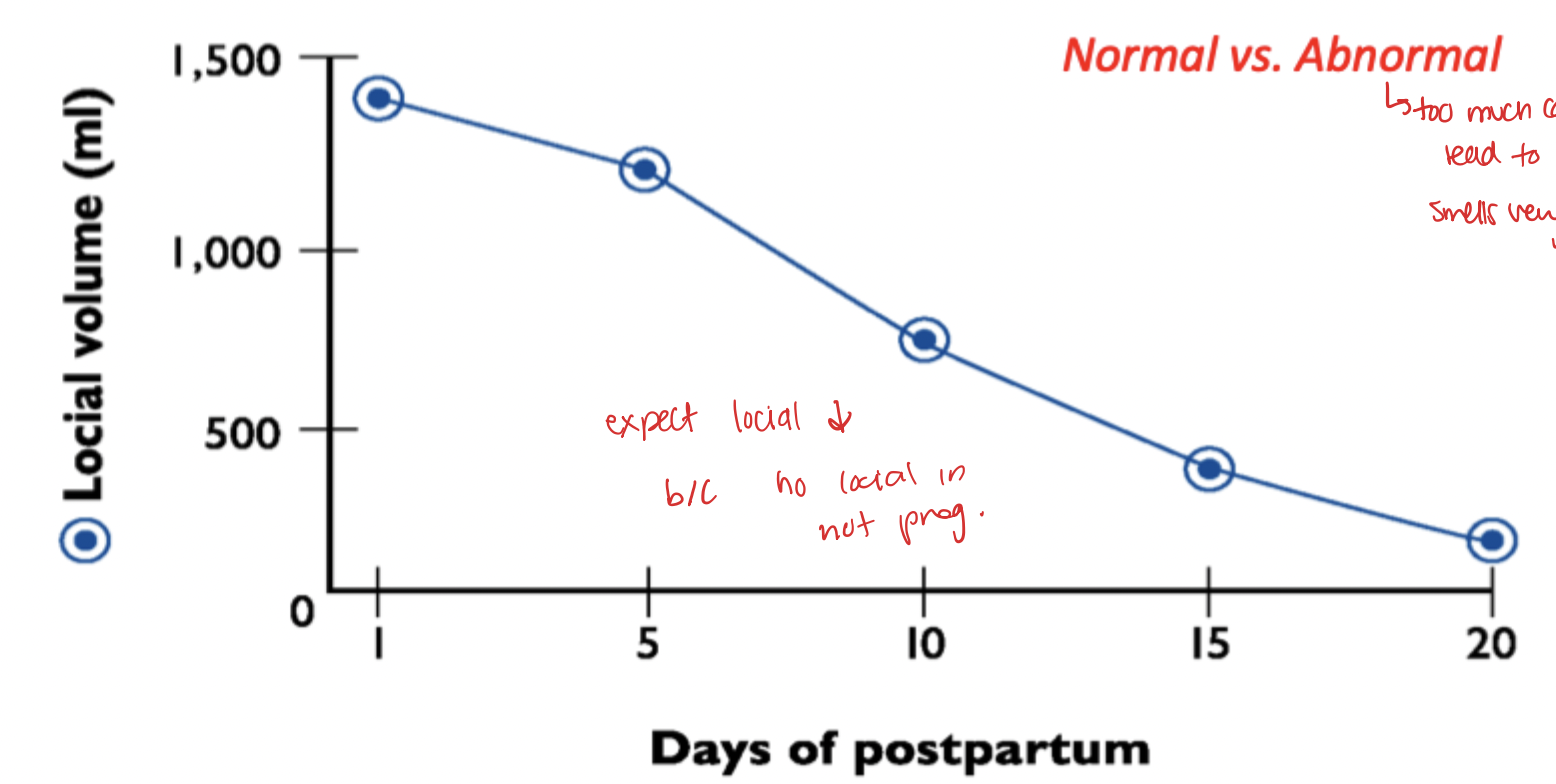
Expulsion of lochia postpartum
Normal vs abnormal
Abnormal too much contamination and smells very bad
As postpartum goes on expect lochia to decrease because not pregnant anymore
Uterus as time goes on after calving
Day 1: Long/big uterus, caruncles large
day 4: cervix starts close, shorter size, smaller caruncles
day 10-15: all smaller
day 20: almost normal size, small caruncles
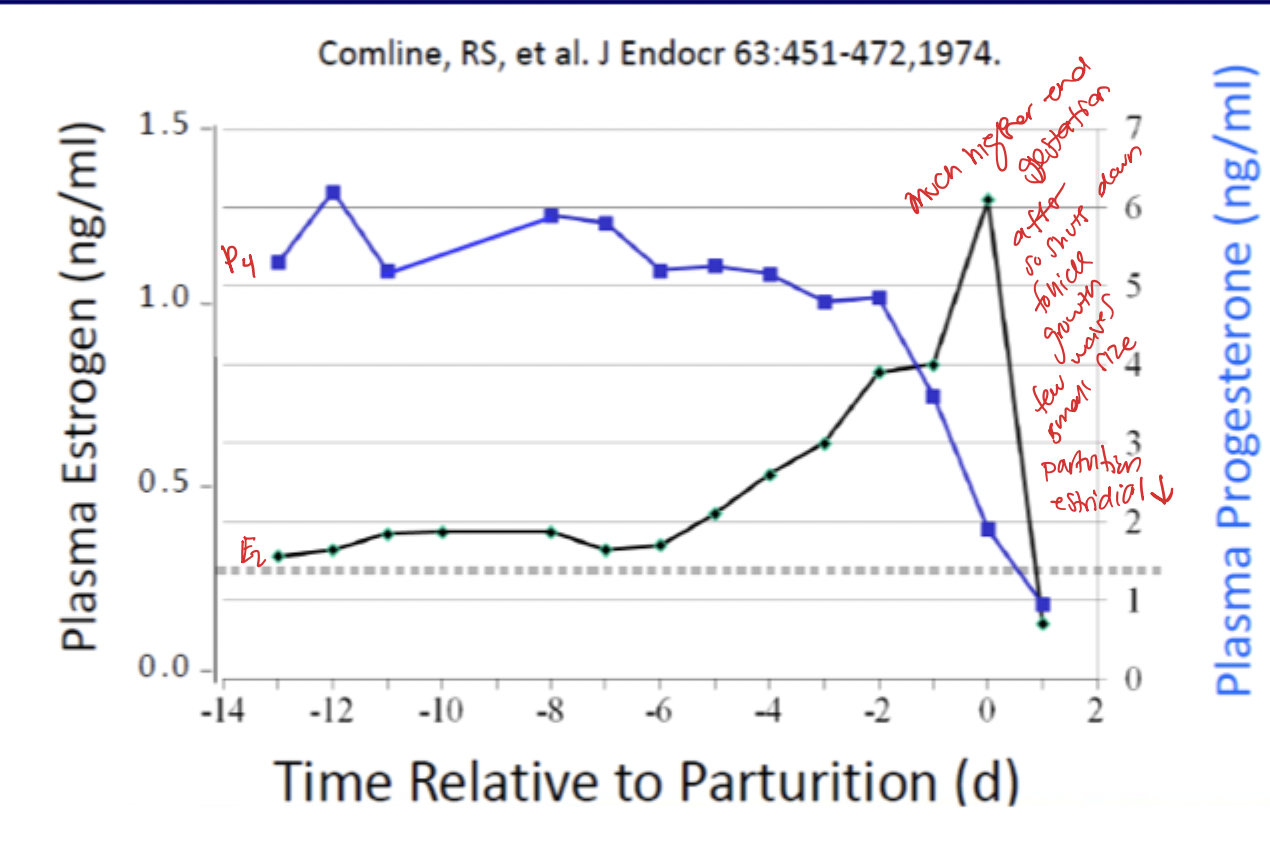
What is happening in endocrine system during pregnancy and parturition
P4 is high during pregnancy and E2 is low
Right before parturition P4 starts to drops and E2 starts to rise
Directly after partuition E2 goes down after spike after both are low again FSH surge happens and new cycle/follicular wave can occur
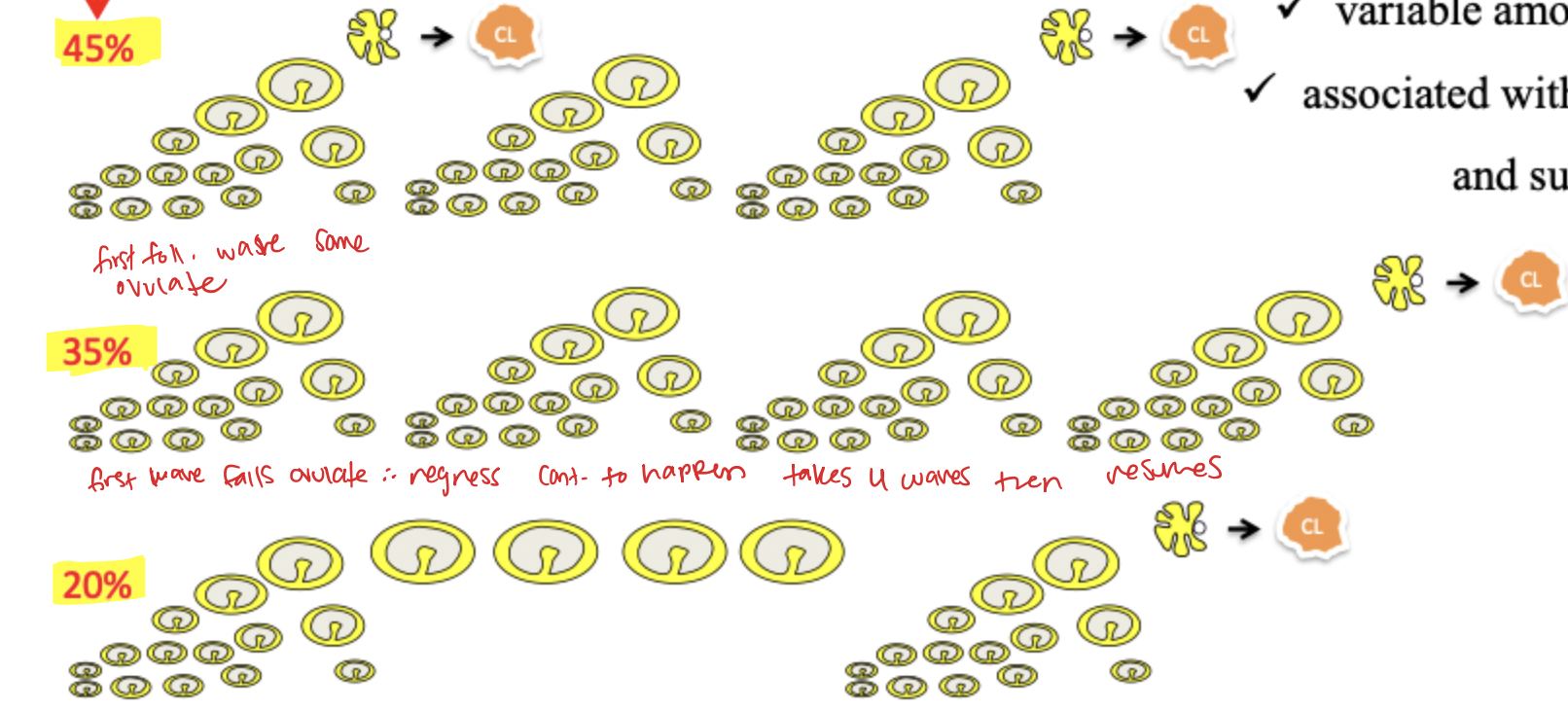
Resumption of Estrous cyclicity in cows: freq basis
Variable depending on cow
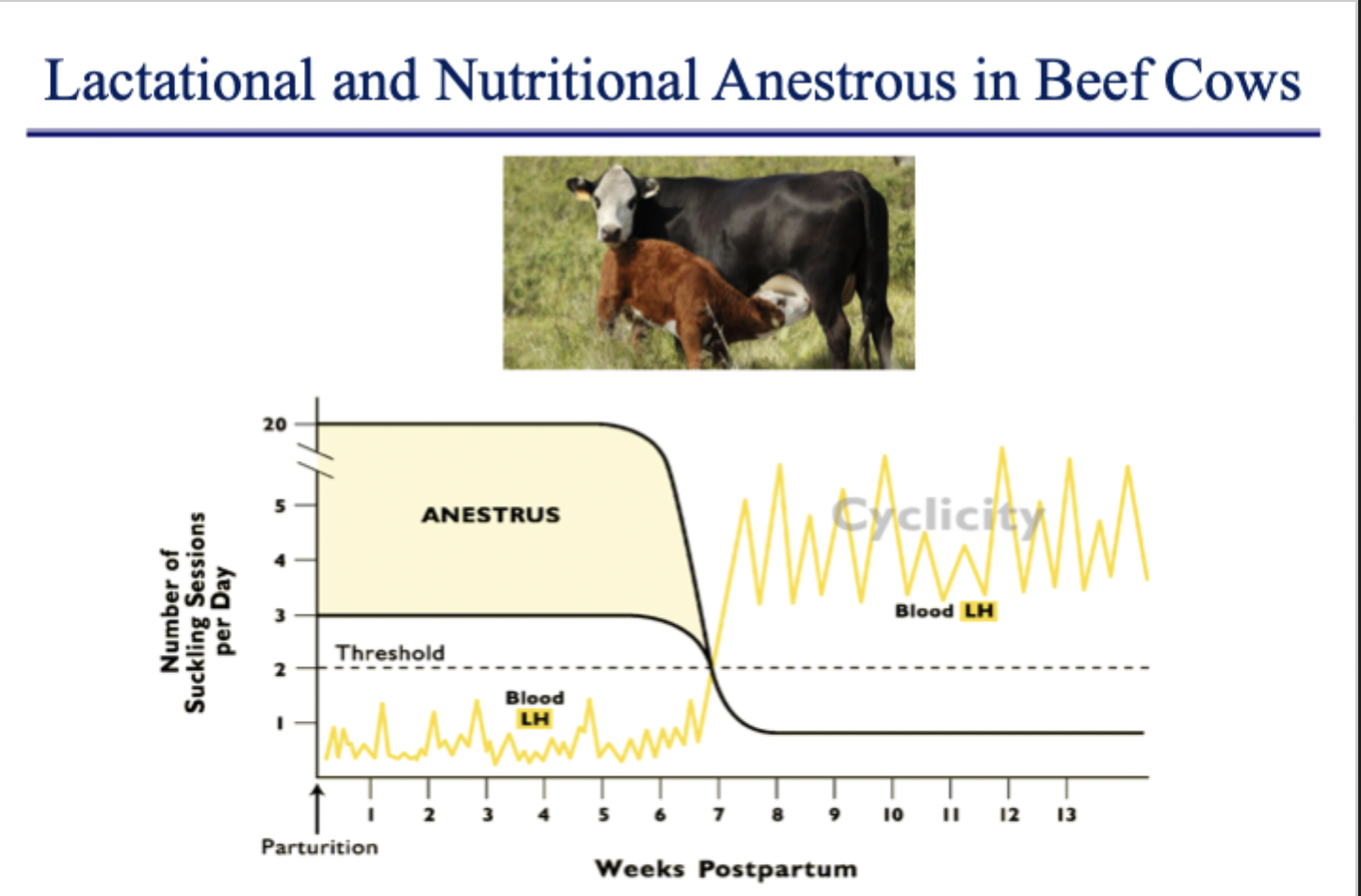
associated with energy status and suckling activity
in 45% cows ovulate after wave
35% fist wave fail ovulate so regress and continues to happen until finally resumes
20% keeps growing but doesnt ovulate - ovarian cyct
Resumption of estrous cyclicity: hormone basis and anestrous
GnRH pulses increase with positive feedback estridiol lead to surge in GnRH
LH follows and surge causing ovulation
some species suckling or with offspring release opioids to brain that negatively affect secretion GnRH
Also depending on energy status can effect ability to cycle
If dont eat as much and in - E balance = less glucose, insulin, GH receptors, therefore causing less IGF1 - at this point using body reserves = ketogenesis so increased BHBA and NEFA
This makes it much harder to return to cyclicity without these factors follicles cant start to grow
how BCS effect anovular cows
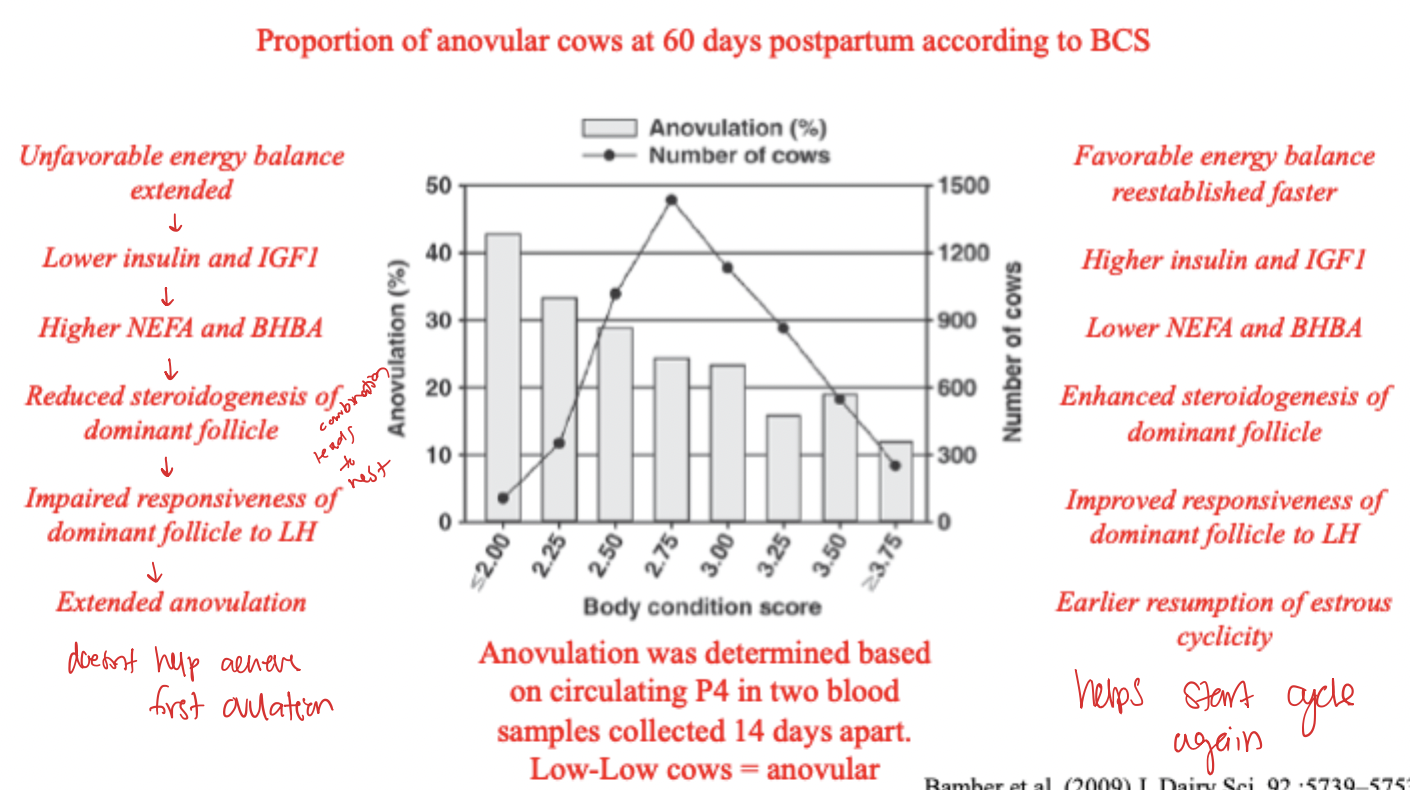
****WHAT ASK
2 slides - respond physiologically by presence of calf
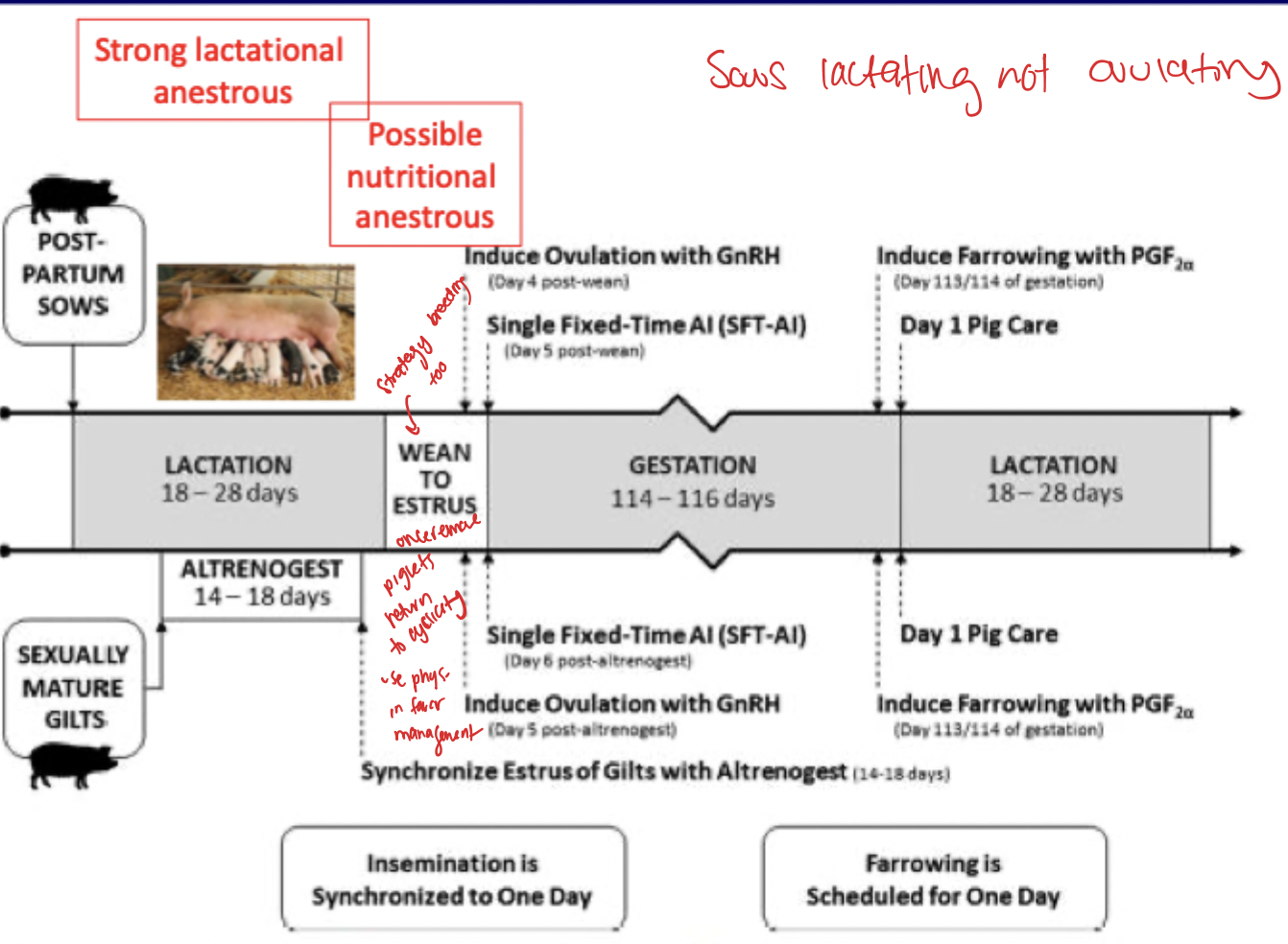
Lactation and Nutritional Anestrous in Sows
2 reasons anestrous
sows dont ovulate when lactating
Because suckling → inhibits GnRH → ↓ LH → no ovulation
Nutritional anestrous
If sow loses too much weight during lactation- delayed estrous after weaning
Once suckling stops estrus starts so use this as breeding strategy
Suckling stops → GnRH returns → LH ↑ → ovulation (~4–6 days after weaning)
This is weaning to estrus and allows producers to control and synch
Seasonal, Nutritional and Lactational Anestrous in Ewes and Does
seasonal: if out of season then seasonal anestrous. lambing and kidding season is outside of breeding season
Once proper light (in season) then nutritional and lactation anestrous important
Mares anestrous
If in good condition dont have lactational anestrous - even when feeding foal can still ovulate
Foal heat: estrus occurs 7-12 days postpartum
Horses are seasonal breeders (long-day breeders)
Gestation is long (~11 months)
If they didn’t breed again quickly, they would miss the season
Queen anestrous
Weak or no anestrous
High fertility animals, go back into heat and get preg very fast
Dogs anestrous
Dogs have a very long anestrus period because they are monoestrous, meaning they only cycle about once every several months
= physiological anestrous
anovulation in woman
Women who bottlefed children returned to period faster then those lactated
What is lactation
synthesis, secretion and removal of milk from mammary gland for nourishment and survival of newborn
initiated after parturition and last until weaning
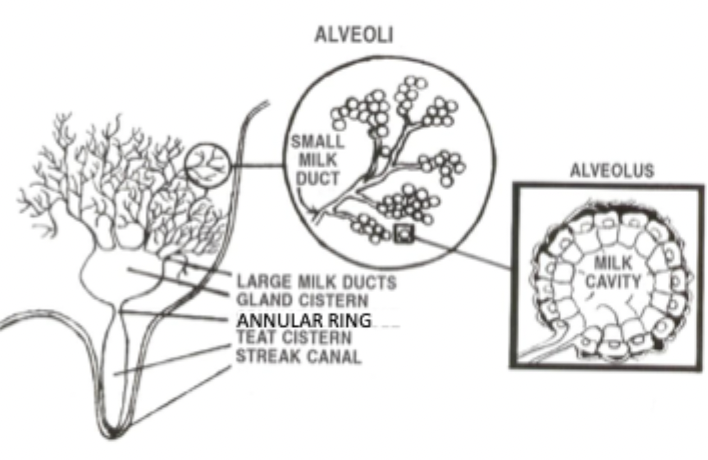
Anatomy of mammary gland
Parenchyma (cells synth milk)
Derived from ectoderm
Glandular or secretory portion of gland
epithelial cells, alveoli, ducts and cisterns
embedded in stroma
Stroma (support tissue)
Derived mesoderm
Cellular: adipose tissue, blood vessels, nerves, myoepithelial cells, fibroblasts, immune cells
Acellular: supportive connective tissue, extracellular matrix and collagen
Parenchyma structure dairy cows
Alveolus - secretory basic unit of gland lines by secretory epithelial cells
Ducts - drained of milk from alveoli
Lobules - group adjacent alveoli drained by a common duct and encased in connective tissue septum
Lobes - group of adjacent lobules drained by common duct and encased in connective tissue septum
Gland cistern - storage approx 400 mL
Teat cistern - storage approx 40 mL
Streak canala and sphincter muscle - holds milk in and bacteria out
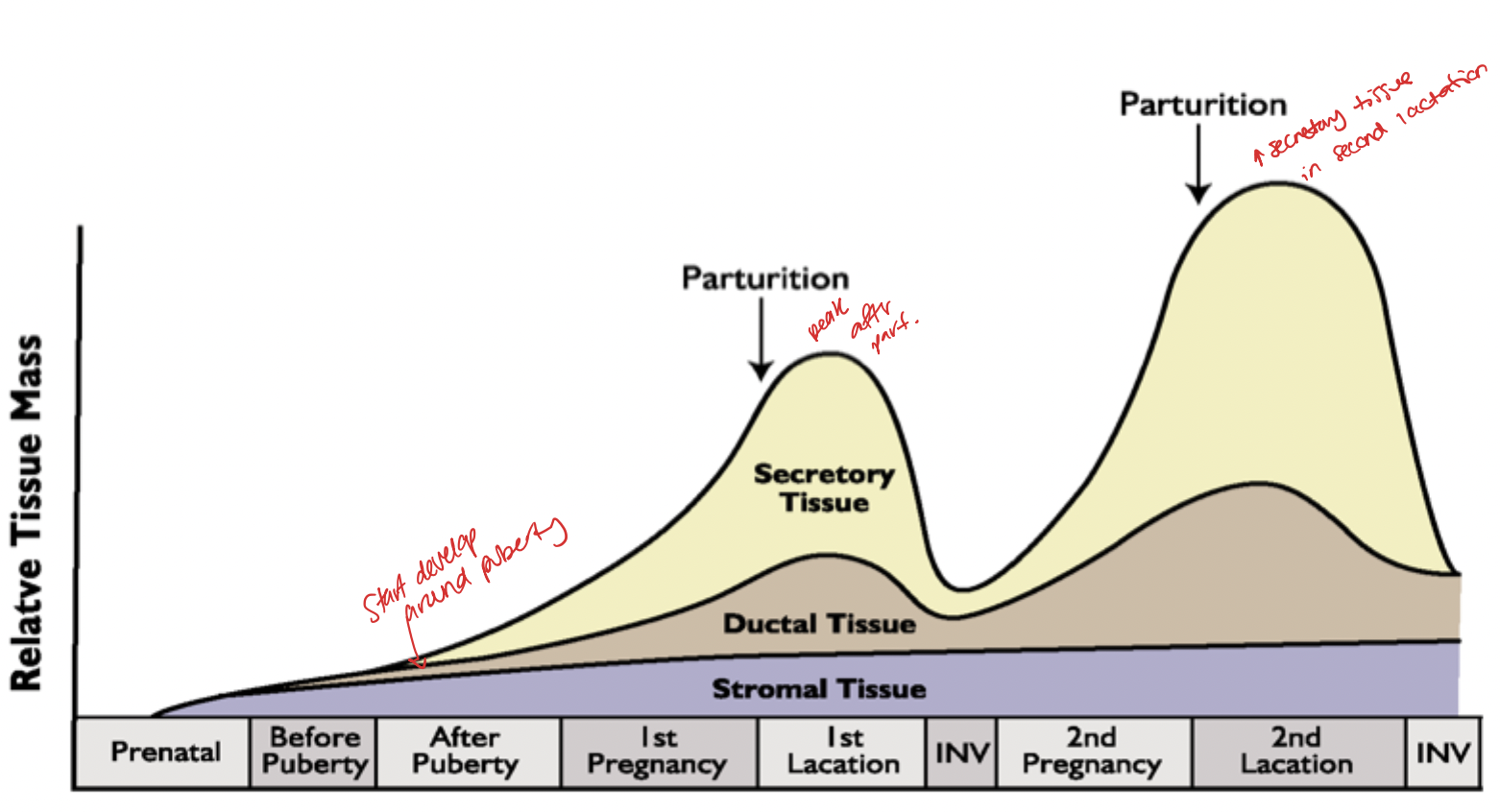
Tissue proliferation in Mammary gland
peak secretory tissue in 3rd lactation
How milk ejection work
Oxytocin secreted causes contraction and squeeze alveoli to go to duct so milk let down
dairy production cycle
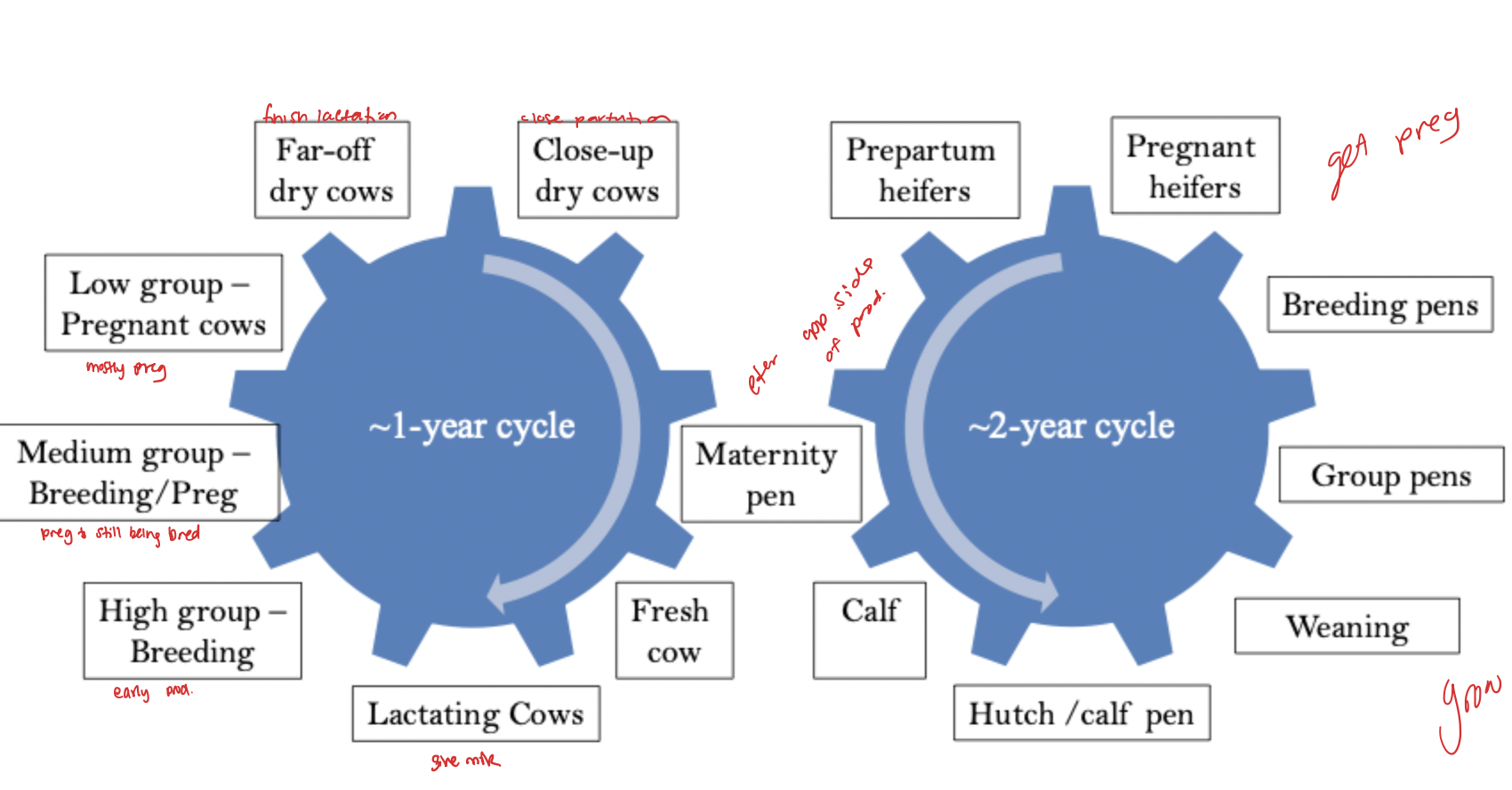
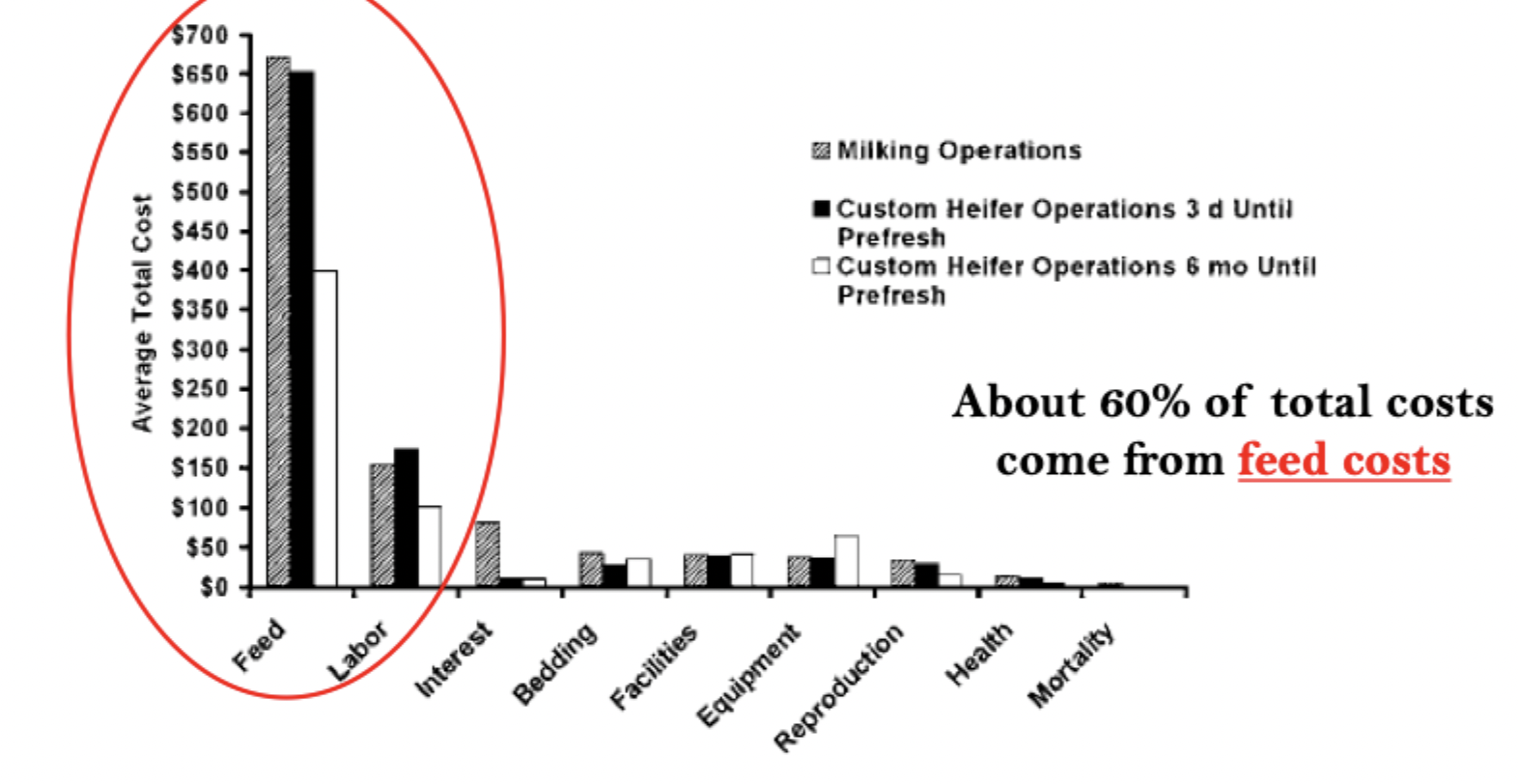
What is second largest expense in dairy operation
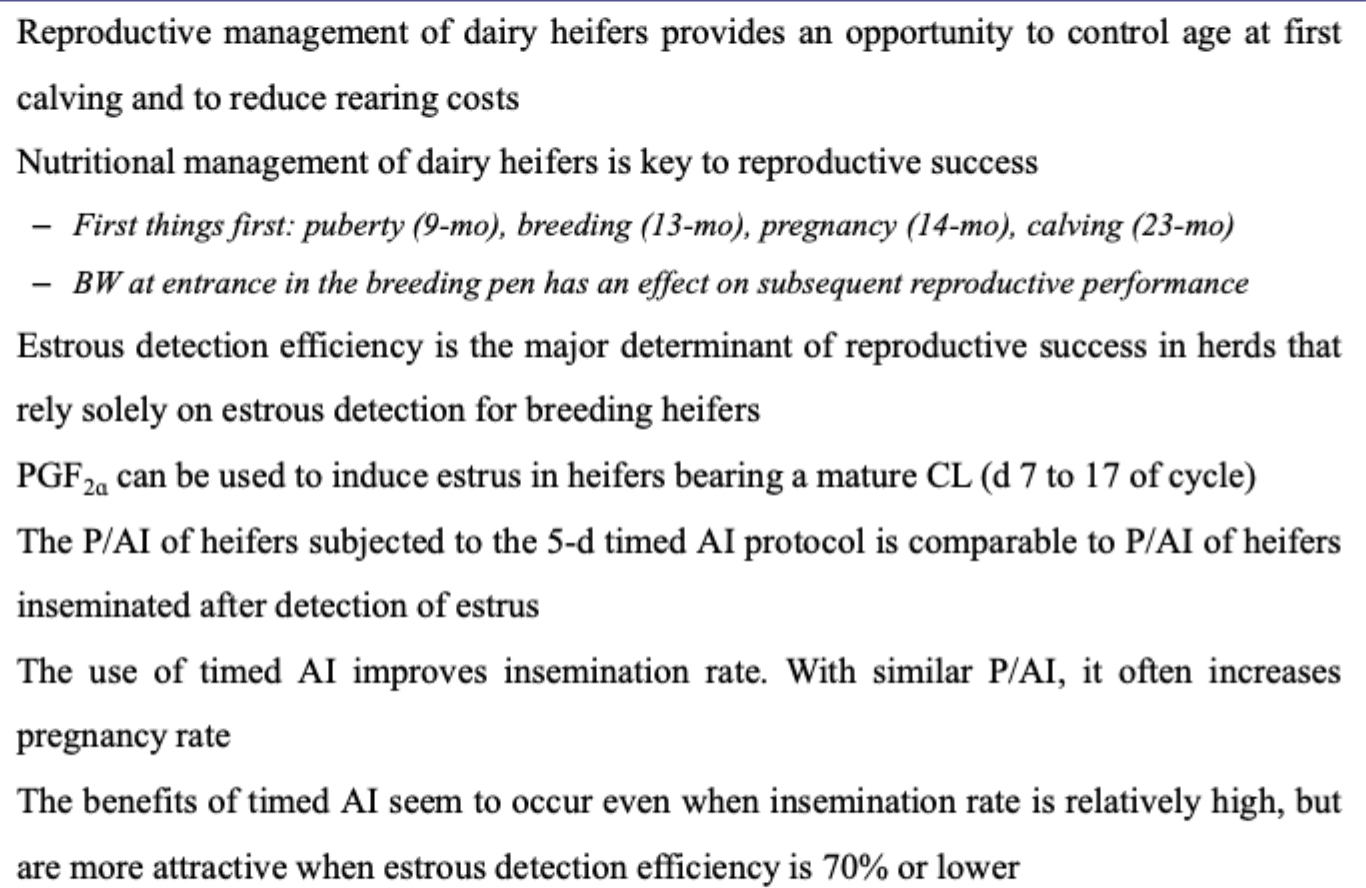
Rearing replacement heifers
BUT they are future of operation so super important - investment in feed. labor and capital without receiving any realized reward or benefit
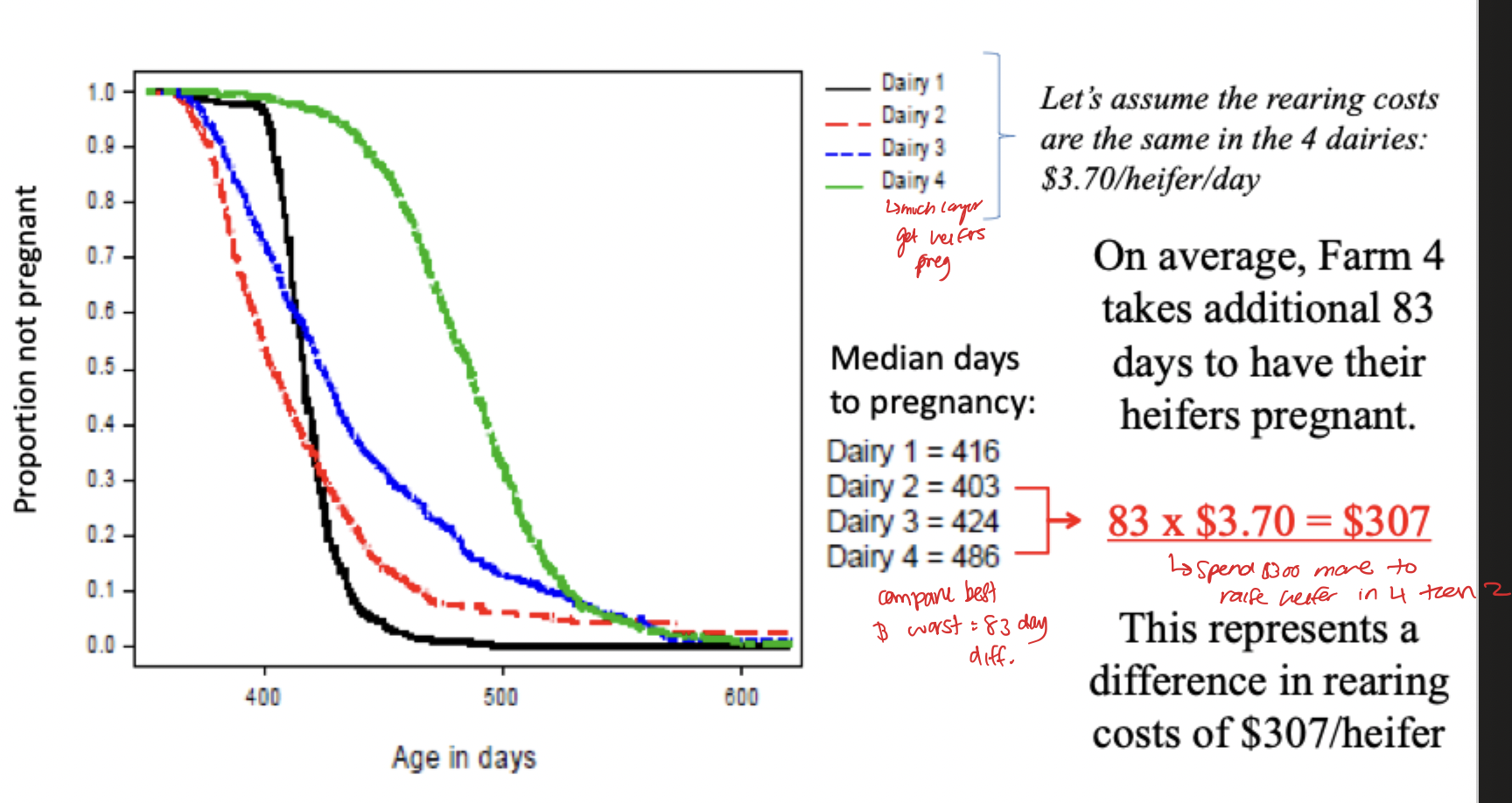
How cost relevent/ economic impact with calving timing
$3.70/d
Delay in age at first calving very costly
Each day not pregnant is another 3.70 dollars
what is goal of reproductive program for heifers
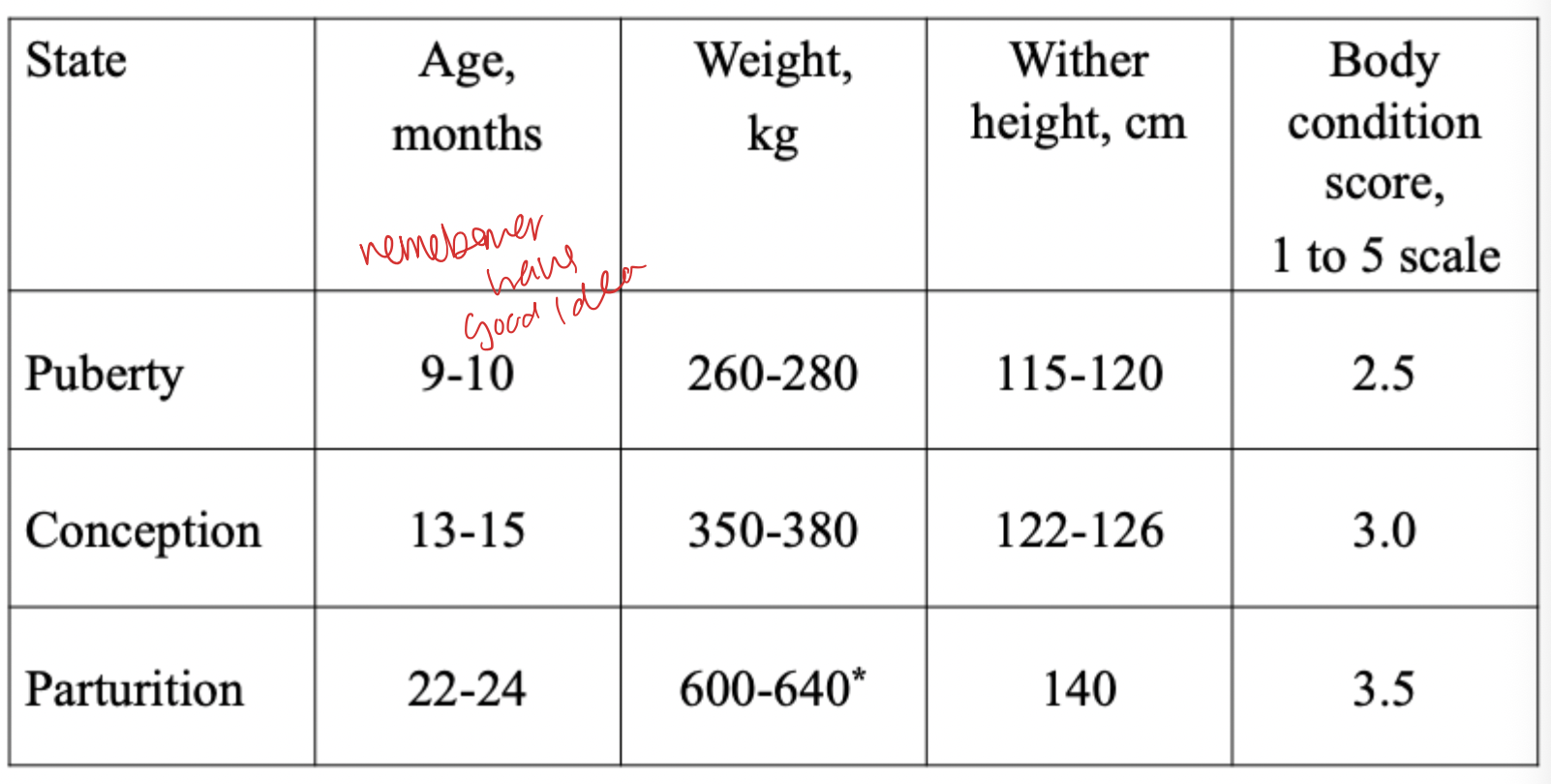
Decrease age at first calving with good body size and without compromising mammary development and future lactation performance
Puberty at 9-10 months - BW: 260-280 kg
economically sound
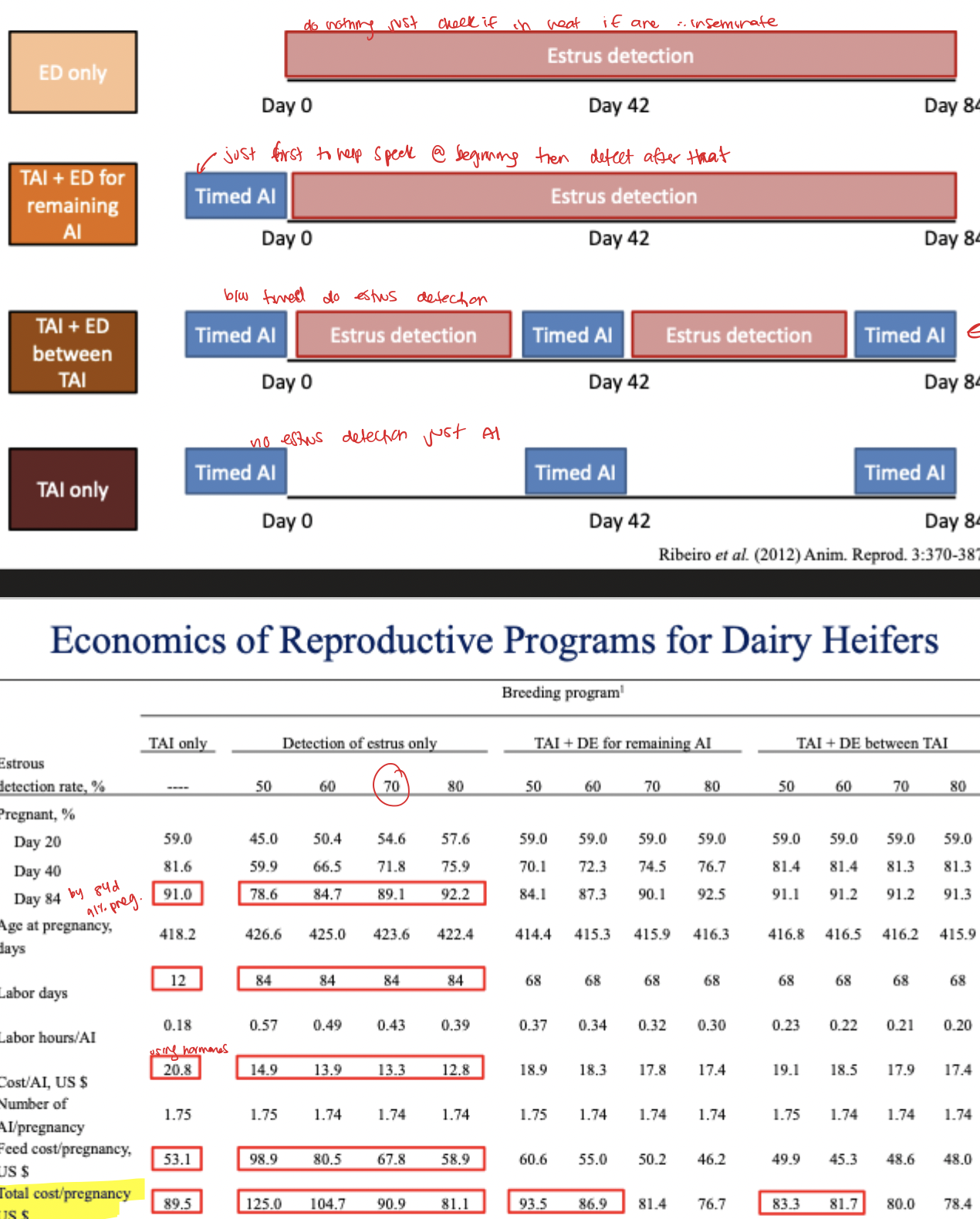
Timed AI programs for heifers are economically attractive when estrous detection rate is <70%
1st AI after third estrous cycle
Preg at 13-15 months BW: 350-380 kg
Calving 22-24 months, 82% mature BW- 600-640 pre or 540-570 kg post calving
BCS < 3.75 at calving
What ideal average daily gain example
One farm that grow 720 g daily target it 800g so because lower then what want suggest chnages
summary goal holstein heifers
What is the effect of prepubertal ADG on performance during first lactation
Milk production increases as ADG increases → up to a point- production decreases if ADG gets too high
Relationship = quadratic
If heifers grow too fast before puberty- Too much fat in mammary gland= Lower milk production later
If ADG is too low- Late puberty, Small body size, Poor development = less milk
increase cost, delayed income, lower lifetime production, increase risk dystocia if smaller (other health problems)
Must be in middle range between 750-850 g/d
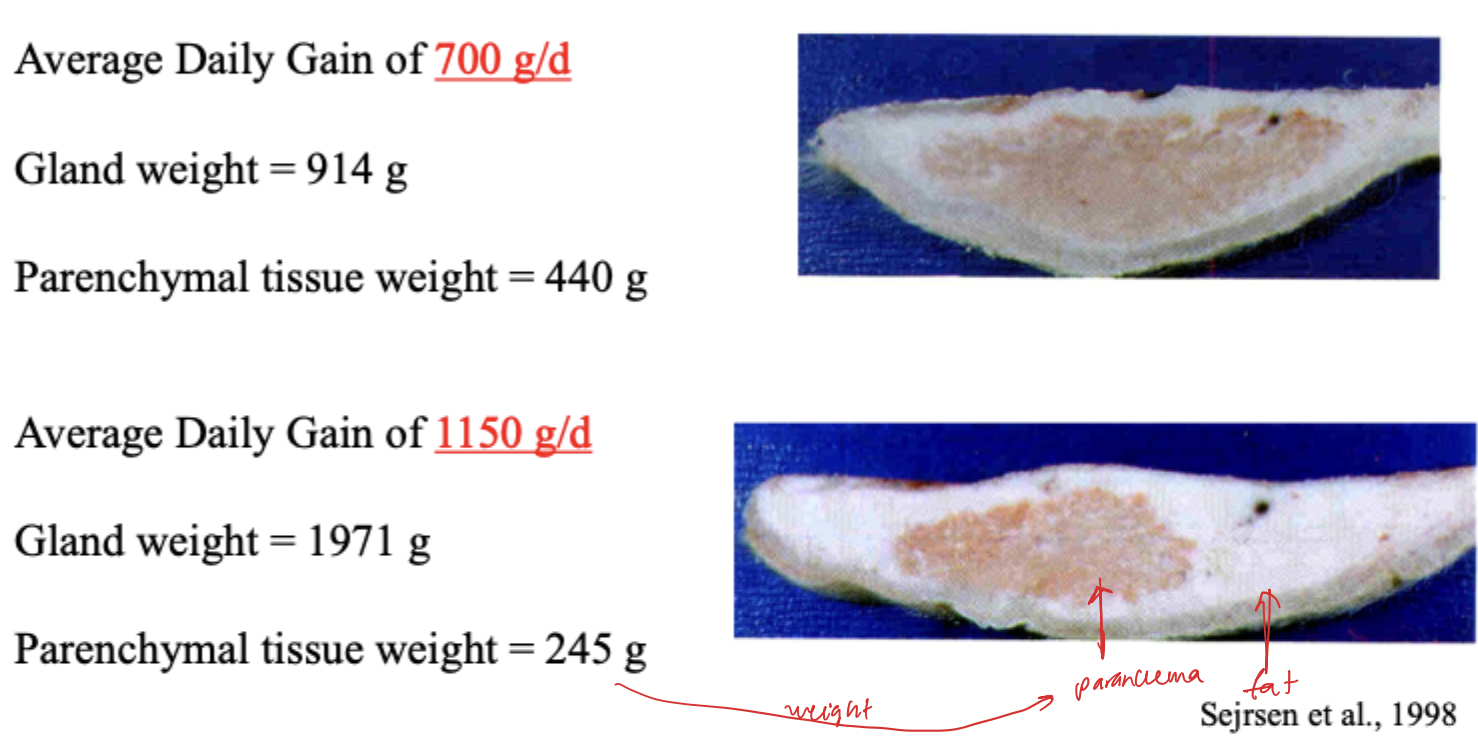
Reasons slower growth rates
Poor management
Feeding forage poor quality/ quantity
Underfeeding grain
Inadequate bunk space
What is the importance of reproductive efficiency in heifers
reduce rearing costs
Reduce variability in age at first calving
What is essential for good insemination rate
Efficiency of estrous detection
What is benefit of timed AI
no need for estrous detection
Maximize insemination rate and improve pregnancy rate
What is synchronization protocol (Cosynch)
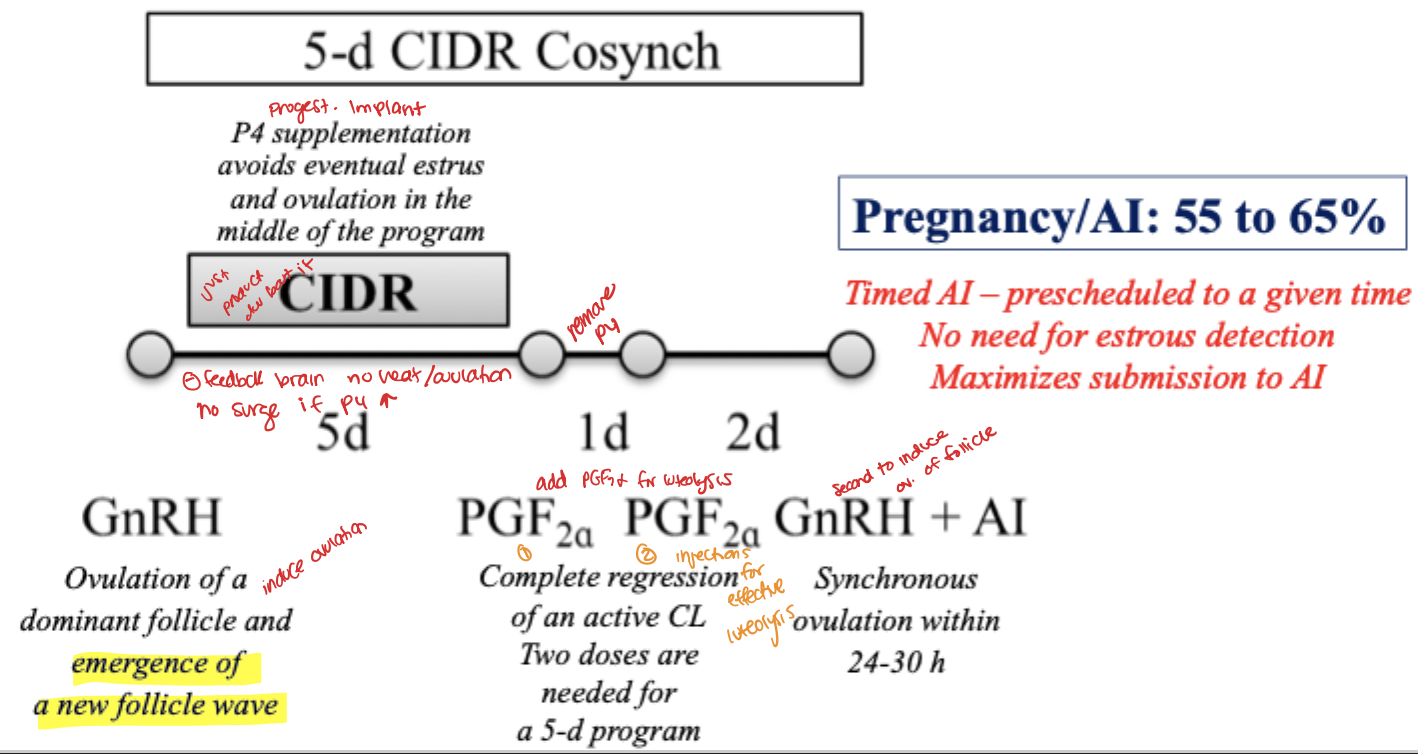
What is economics of these programs
most herds do mix most rero efficiency
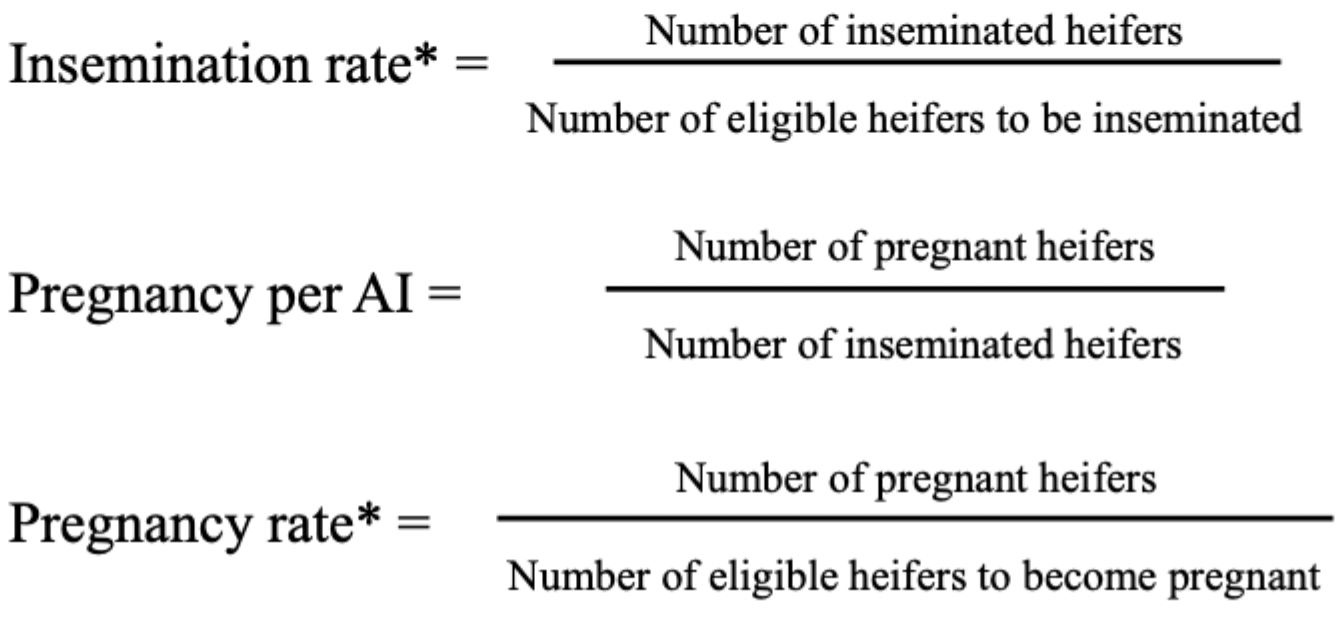
What equation for insemination rate, Pregnancy per AI, Preg rate
Summary
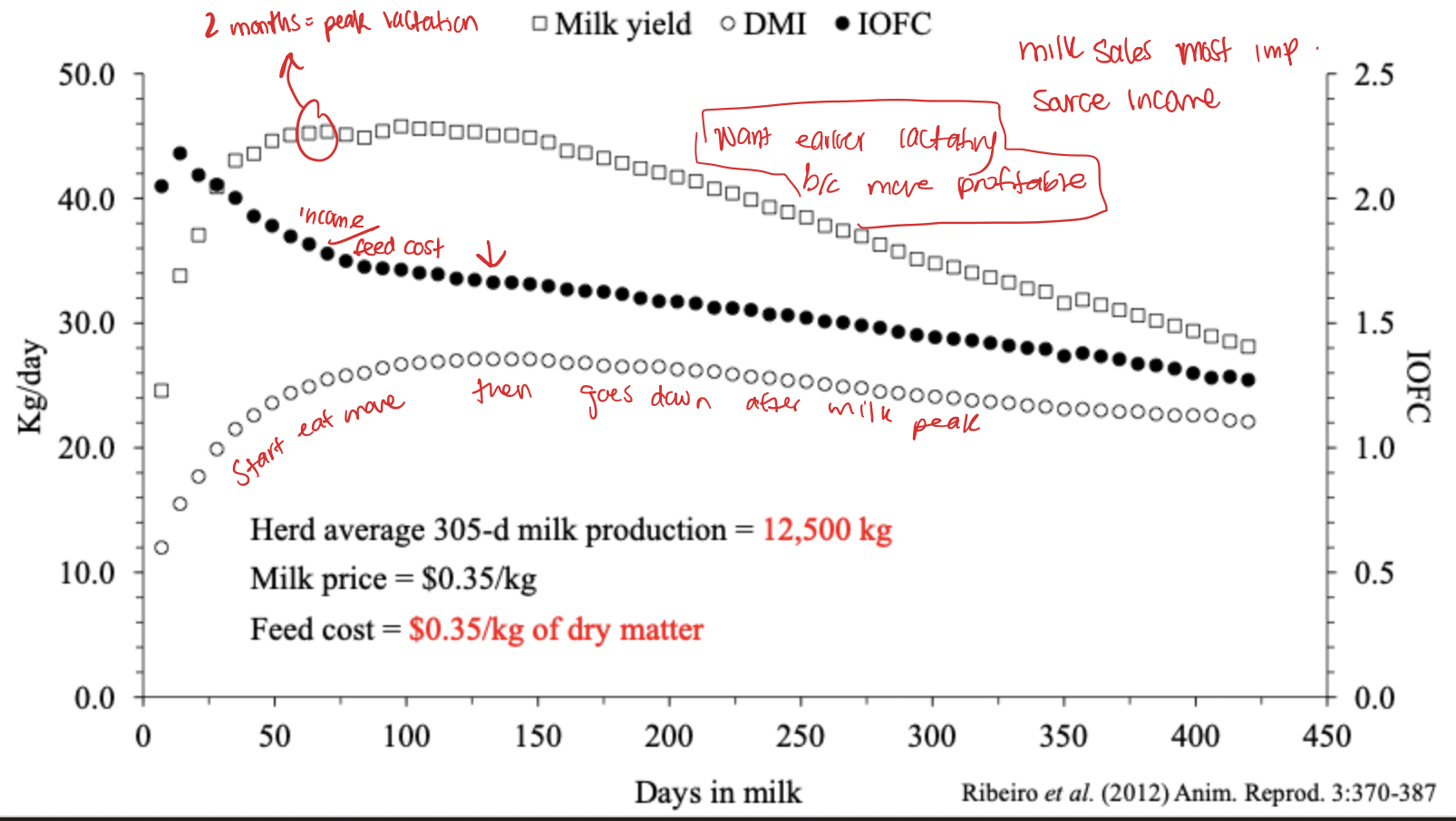
When do you want lactation to start and why
want earlier lactation because more profitable (2 months)
How does timing of pregnancy effect milk yield
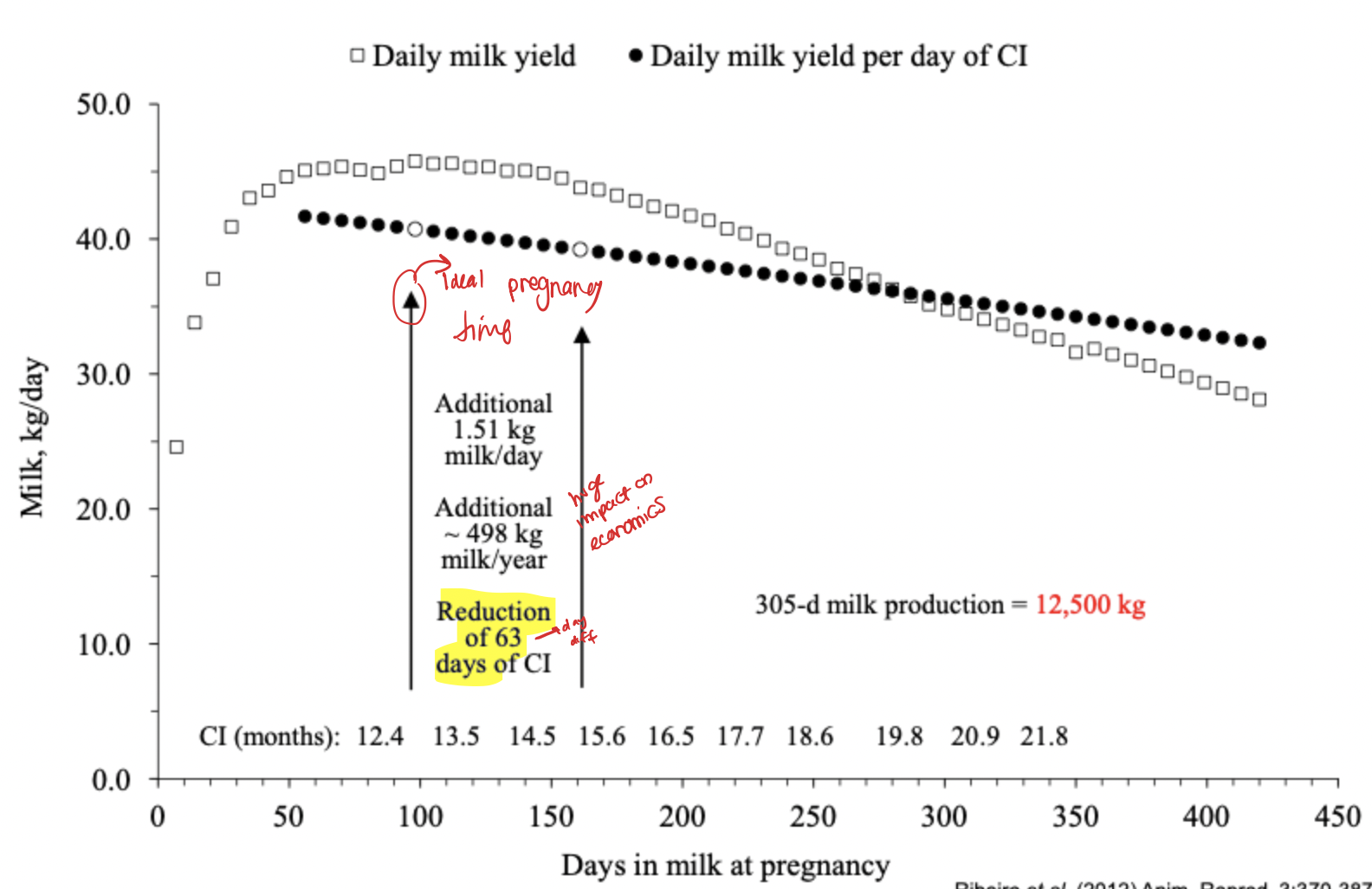
Calving interval (CI) is key
A short calving interval is good because can enter pregnancy and lactation faster. But if have longer calving interval, losing milk per day
in diagran by shortening CI by 63 days get 489 kg milk more/ year
**also want one calf per year and if preg too late might not get that