Lecture 8: Volcanoes
 Studied by 0 people
 Call Kai
 Learn
Learn Practice Test
 Spaced Repetition
 Match
Match Flashcards
 Knowt Play
1/55

There's no tags or description
Looks like no tags are added yet.
Name | Mastery | Learn | Test | Matching | Spaced |
|---|
No study sessions yet.
56 Terms
Where are most volcanoes located?
Near plate boundaries
~65% are found along the ‘Ring of Fire’ surrounding the Pacific Ocean
Subduction zones (convergent) and mid-ocean ridges (divergent) allow molten rock to reach the surface
Where is magma found?
deep within the crust and upper mantle
Where is lava found?
flowing from an erupting volcano
essentially magma on the Earth’s surface
magma → in crust / mantle
lava → at surface
What is magma made of?
Silicon + Oxygen —> Silica
also contains small amounts of gases (water vapour, co2, so2)
What are volcanic rocks names based off of?
the amount of silica present
Types of volcanic rocks from low —> high silica content
Basalt → lowest silica content
Andesite
Dacite
Rhyolite → highest silica content
Volcanoes have different shapes based on what two factors of their magma?
Chemistry
Viscosity
* both based on silica content
What is viscosity?
resistance to flow
Magma viscosity is determined by what 2 things?
silica content
temperature
Magma with high silica content:
cooler
more viscous
more gases
more explosive
Magma with low silica content:
hotter
less viscous
fewer gases
less explosive
What magma types produce the most explosive eruptions?
Ryholitic
Dacitic
→ highest silica content
What magma types produce the least explosive eruptions?
Basaltic
Andesitic
→ lowest silica content
Volcanoes are classified based on what?
shape
appearance
eruption style
What are the 4 types of volcanoes?
Shield
Composite
Volcanic dome
Cinder cone
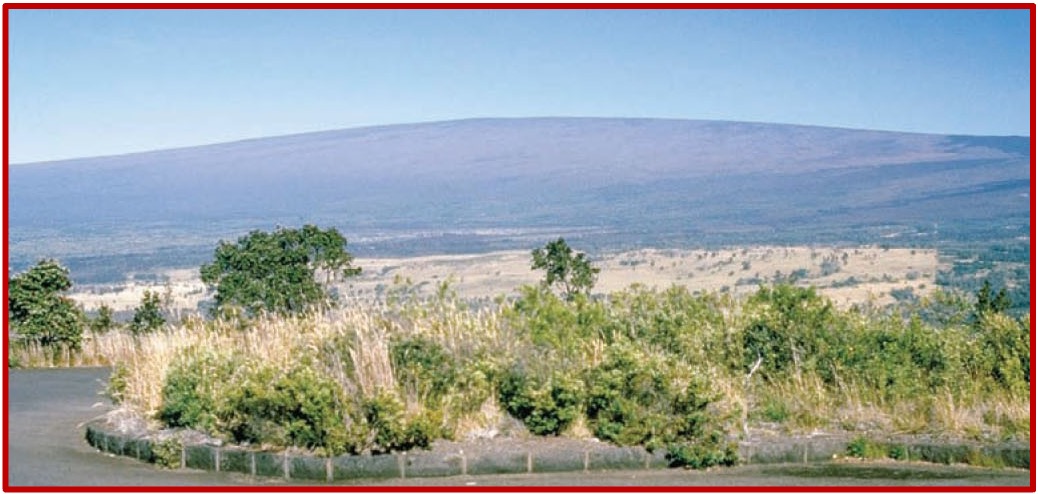
Shield volcanoes:
The largest volcanoes on Earth
Shaped as broad arcs (like warrior shields) built from lava
They are associated with basaltic magma
least violent eruptions
Eruptions consist of well-flowing lava (very liquid)
some eruptions can contain tephra —> pyroclastic deposits/rock
Common in Hawaii, Iceland, and around the Indian Ocean
What is tephra?
fragmented material blown out during an eruption
accumulations of tephra are referred to as pyroclastic deposits.
If compacted together, these deposits are called pyroclastic rock.
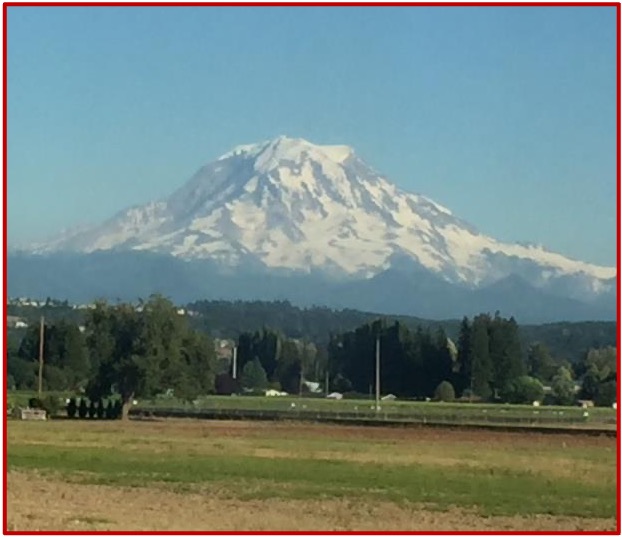
Composite volcanoes:
cone-shaped
built from a combination of lava flows and pyroclastic deposits
also called stratovolcanoes
term arises from stratified layers of lava and deposits
Eruptions are more dangerous and explosive but less frequent than shield volcanoes
common along the west coast from Alaska to Northern California
Examples: Mt. Rainier, Mt. St Helens
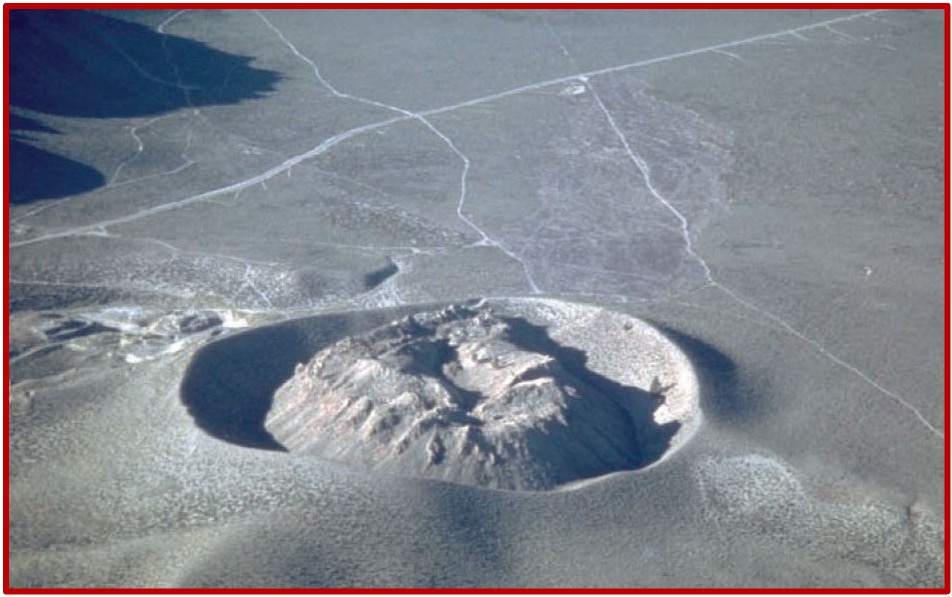
Volcanic domes:
contain highly viscous rhyolite magma
very explosive - high silica
steep-sided mounds that form around vents
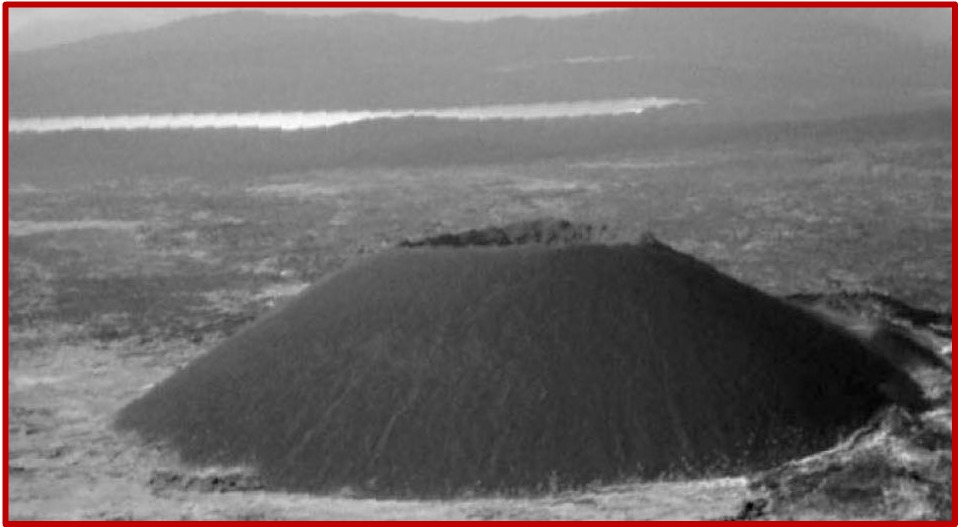
Cinder cone volcanoes:
relatively small volcanoes composed of small forms of tephra
they are round to oval shaped and typically contain a crater at the top
These volcanoes are found in Mexico
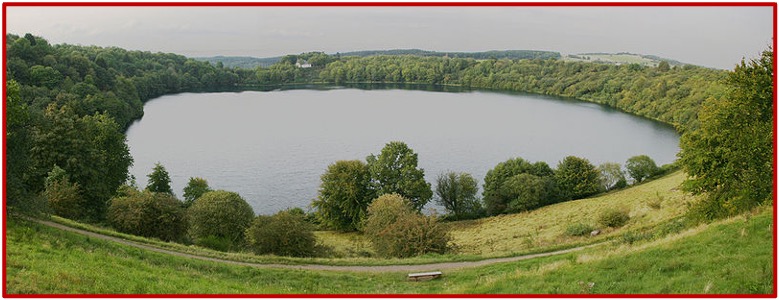
What is a maars?
A circular volcanic crater produced by an explosion filled with water
caused by groundwater encountering magma, creating the explosion
derived from Latin mare meaning sea - resembles a large lake
What are jokulhlaups and how are they caused?
Floods produced by the melting of huge quantities of ice due to volcanic eruptions beneath or alongside glaciers
Caused by ice-contact volcanoes
Where are ice-contact volcanoes found?
Iceland & British Columbia
What is a crater?
A depression formed by the explosion of a volcano top
They can be up to 2 km in diameter
What is a volcanic vent?
An opening on the surface through which lava and pyroclastic debris erupt
Most vents are circular, but some are elongated cracks called fissures
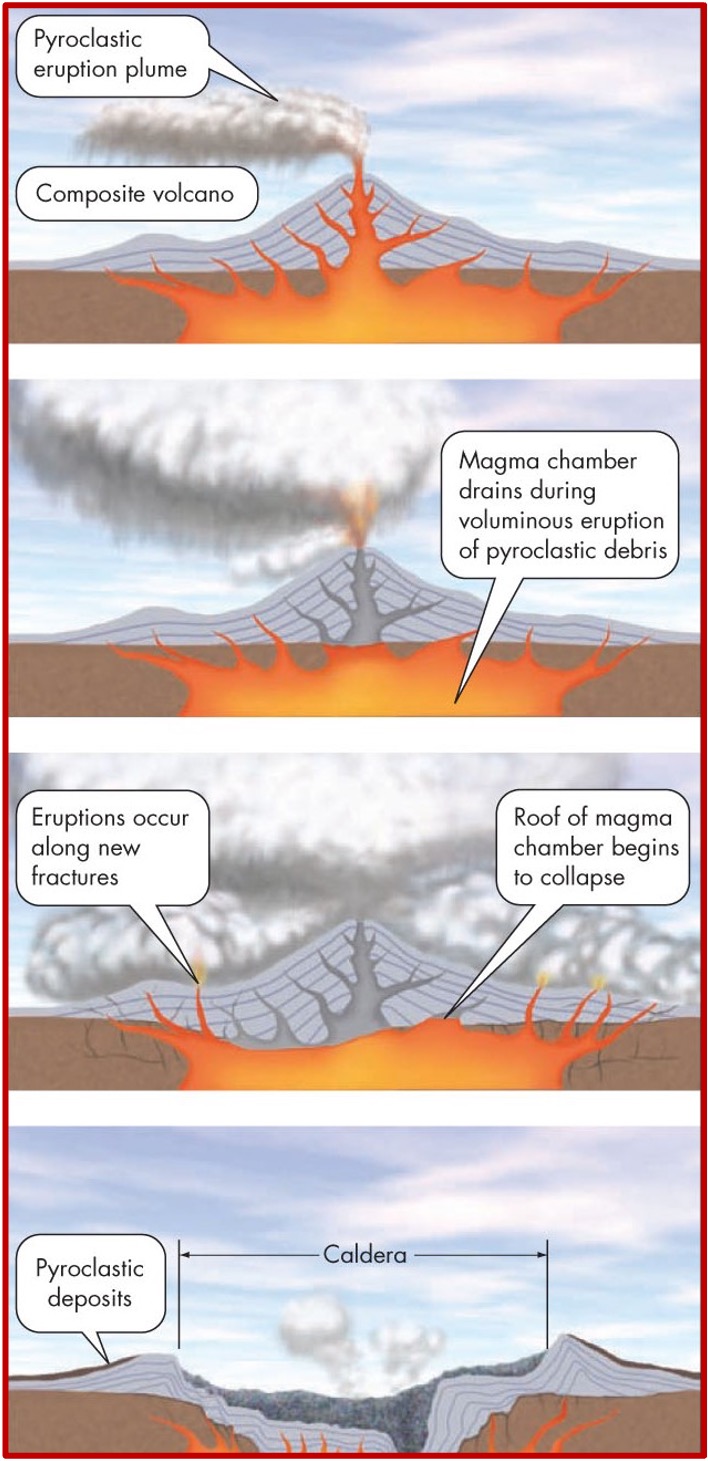
What is a caldera?
A circular to oval depression formed during the collapse of a volcano
They can be up to 25 km in diameter
Eruptions that form calderas are the largest and most deadly eruptions on earth
formed by the collapse of a magma chamber below a composite volcano during an explosive eruption
What is a geyser?
The release of steam or water produced where groundwater boils in an underground chamber
where are the majority of geysers on Earth?
Yellowstone National Park
What’s the most famous geyser in the world?
Old Faithful
erupts to a height up to 50m with eruptions lasting for 2-3 minutes
What are super eruptions?
The products of supervolcanoes and are extremely rare events
they occur when a large volume of magma rises to shallow depths in the continental crust over a hot spot
The magma is originally unable to break through the crust à pressure continues to build until the crust can longer contain it
Map of past supereruptions
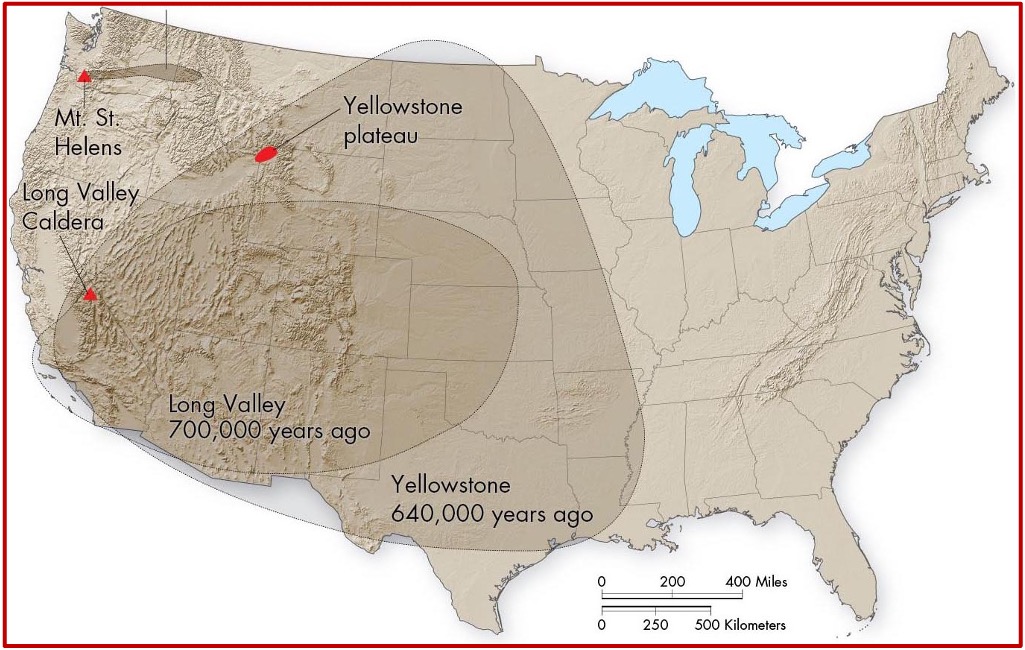
Yellowstone Supervolcano:
the National Park sits on a massive caldera created from the last eruption of the Yellowstone Supervolcano
located over a continental hot spot
Super eruptions occurred there 2.2 Mya, 1.3 Mya, and 640,000 years ago
Earthquakes in the park are monitored continuously.
A super eruption could last for weeks and spread ash over half of the U.S.
Ash fall would be over 1000 times that released by Mt. St. Helens.
Millions of people would die from ash suffocation and the U.S. agriculture economy would be destroyed from a super eruption
Where are volcanoes found in Canada?
British Columbia
Southern Yukon
Which volcano poses the greatest risk to Canada?
Mt. Baker in Washington State
Climatic effects of volcanoes:
ash and gases reflect solar radiation, causing a cooling
2 notable eruptions impacting climate:
Mt. Tambora (1815, Indonesia) —> “the year without a summer”
Mt. Pinatubo (1991, Philippines) —> caused one of the coolest years worldwide in the 20th C
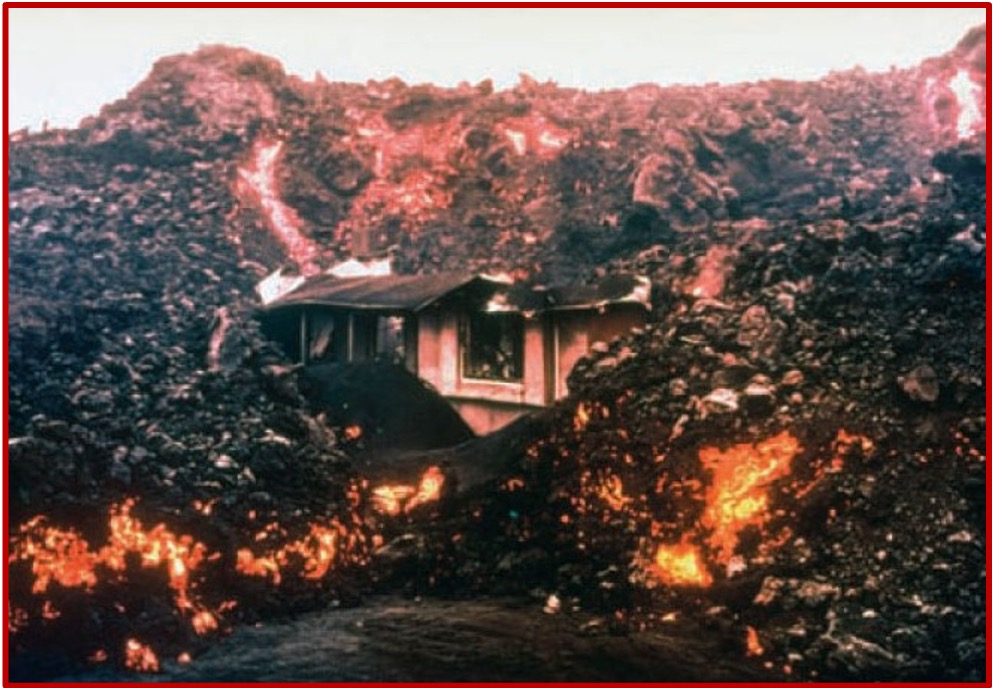
What is a lava flow?
When magma flows out of a central crater or a fissure along the side of a volcano
Pahoehoe basaltic lava:
low viscosity (a few km per hour)
high temp
when hardened, has a smooth texture
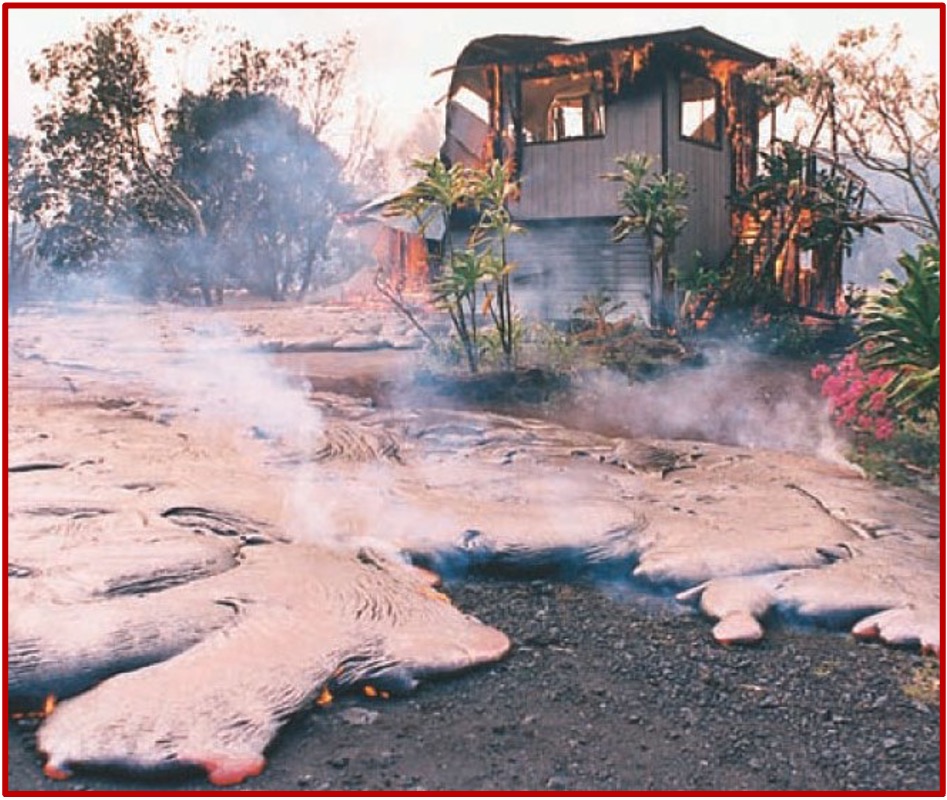
Aa basaltic lava:
high viscosity (a few m per hour)
lower temp
when hardened, has a blocky texture
What is lateral blast?
An eruption directed away from a volcano where materials are blown parallel to the surface
Example: a lateral blast from Mt. St. Helens flattened forests for over 20 km
What is pyroclastic flow?
An avalanche of ash, gas, and rock fragments that travels down the slopes of a volcano during an explosive eruption.
Speeds can reach 150 km/h and the flow can travel up to 30km from the source
More people have been killed by pyroclastic flows than any other volcanic phenomenon
What is ash fall?
Particles of ash can be carried downwind hundreds of kilometres from an eruption site
What are some hazards of ash fall?
Destroys vegetation
Contaminates surface water
Health impacts to people and animals
Causes aircraft engine failure
Poisonous gas hazard of volcanoes:
Volcanoes emit numerous gases at high quantities.
Eruptions containing sulphur dioxide can burn holes in leaves and lead to the formation of acid precipitation.
A type of smog knows as vog can be produced; this may induce asthma attacks and respiratory problems.
High amounts of carbon dioxide released at once can kill animals
What is sector collapse?
When the flank of a volcano collapses - can happen at any time
As magma travels up an inner channel, the volcano can form a bulge where its slopes have become over-steepened
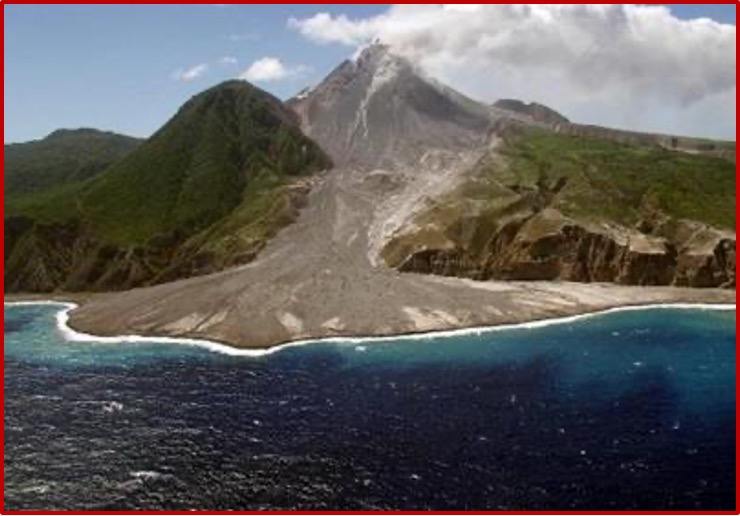
What is lahar?
A large amount of material that has become saturated with water and moves downslope.
an Indonesian word
also referred to as mudflows
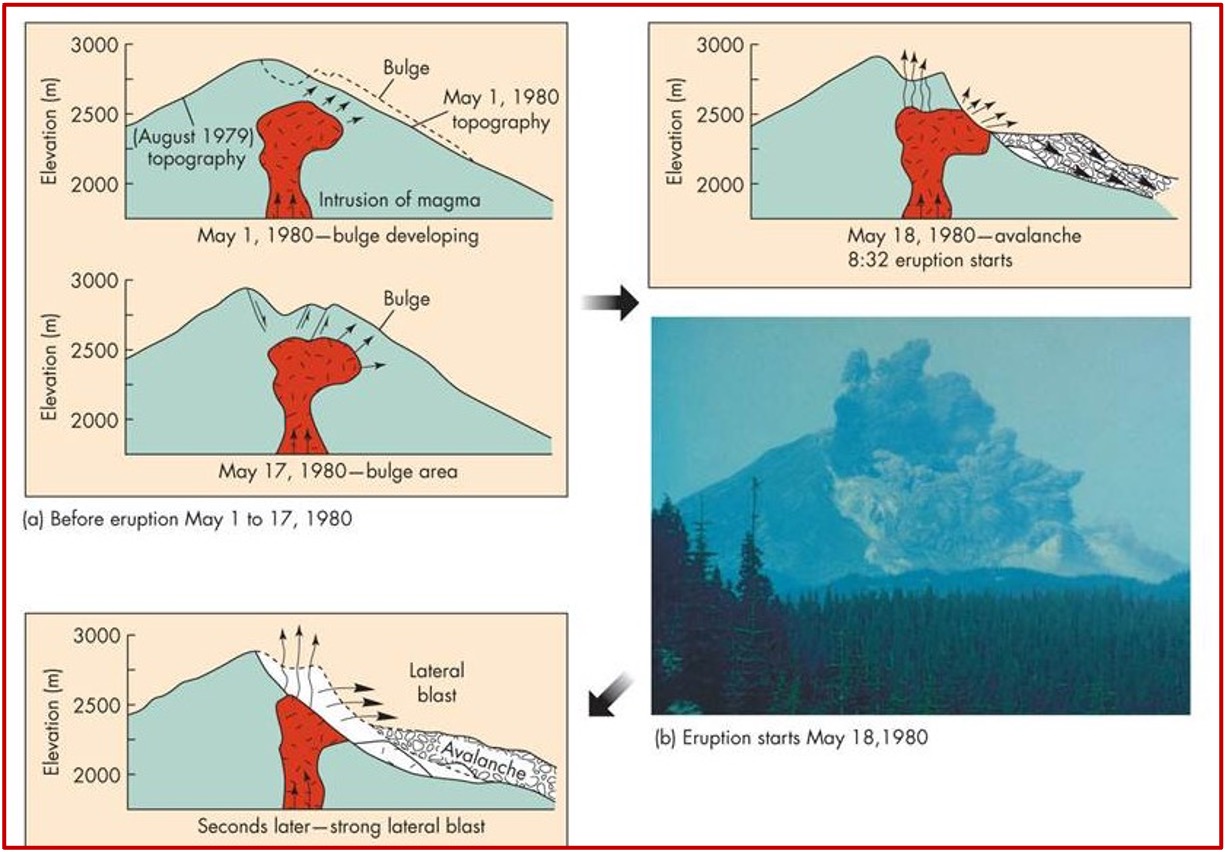
Mt. St. Helens eruption:
before its eruption, it was dormant for 120 years
in March 1980, small explosions occurred due to groundwater contacting magma
A bulge began growing on the flank of the mountain
On May 18, 1980, a M 5.1 earthquake (at convergent boundary) caused the bulge to break off and fall downslope.
A lateral blast occurred from the area of the former bulge and the entire north slope was destroyed.
Ash was ejected from the central crater, reached heights of 19km, and travelled around the world
It killed 57 people, mainly from pyroclastic flows
The eruption left behind a barren landscape that is slowly reforesting naturally.
What is the deadliest aspect of volcanic eruptions?
Pyroclastic flows
Natural service functions of volcanoes:
Ancient volcanoes provided the gases that now form the atmosphere and sustain life on Earth.
Internal heat from volcanoes can produce renewable geothermal energy (ex. geysers).
Volcanic landscapes attract tourism and recreation
Eruptions have created new land (Hawaii, Iceland)
What is an eruption forecast?
a statement containing the probability that a volcano will erupt within a given timespan
Forecasts are based on information provided by what 4 things?
Monitoring seismic activity
Thermal and hydrologic monitoring
Land surface monitoring
Monitoring volcanic gas emissions
Analyzing the local geologic history
Monitoring seismic activity
Shallow earthquakes can precede eruptions
Short warning times from this information are a concern
2. Thermal and hydrologic monitoring
An accumulation of magma changes properties of the rock and soil
Increased heat may melt snow or glaciers above
3. Land surface monitoring
Involves checking for the growth of bulges, swelling, and opening for cracks
4. Monitoring volcanic gas emissions
Increases in carbon dioxide or sulphur dioxide may indicate magma is moving toward the surface
5. Analyzing the local geologic history
Mapping of volcanic rocks
Dating of pyroclastic deposits