Bio discrete questions
 Call Kai
 Learn
Learn Practice Test
 Spaced Repetition
 Match
Match Flashcards
 Knowt Play
1/208

There's no tags or description
Looks like no tags are added yet.
Name | Mastery | Learn | Test | Matching | Spaced | Call with Kai | Chat |
|---|
No analytics yet
Send a link to your students to track their progress
209 Terms
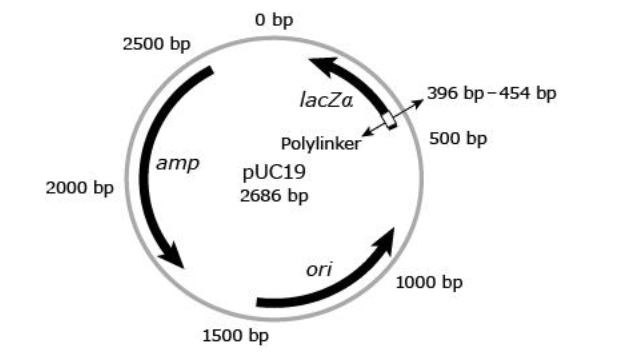
The map of the pUC19 plasmid, consisting of 2686 base pairs (bp), is shown.
If researchers wanted to express an exogenous protein using this plasmid, in which portion of the plasmid will the researchers most likely insert its gene-encoding sequence?
A. Between 0 and 350 bp
B. Between 396 and 454 bp
C. Between 1000 and 1500 bp
D. Between 2000 and 2500 bp
B
Researchers are studying protein X, which is specifically expressed by spermatocytes. Where are protein X-expressing cells located in the testes?
A. The center of the lumen of the seminiferous tubules
B. Next to the basement membrane within the seminiferous tubules
C. Adjacent to the basement membrane outside of the seminiferous tubules
D. Within the seminiferous tubules between the basement membrane and the center of the lumen
D
Which mature cells always lack Barr bodies?
A. Erythrocytes
B. Hepatocytes
C. Lymphocytes
D. Melanocytes
A
Which hormone diffuses through the cell membrane of its target cells to reach its receptor?
A. Aldosterone
B. Epinephrine
C. Glucagon
D. Thyroid-stimulating hormone
A
What do pepsin and trypsin have in common?
A. They are active at the same pH.
B. They are secreted as zymogens.
C. They are produced by the same cells.
D. They are only able to hydrolyze polysaccharides.
B
Which process would be the first affected if dividing eukaryotic cells were treated with an inhibitor of spindle fiber elongation?
A. Aster formation
B. Attachment of fibers to centromeres
C. Positioning of chromosomes on the midline
D. Chromosome movement toward the poles
A
Which terms best define tRNA?
A. Molecule consisting of a double RNA strand of approximately 1000 nucleotides
B. Molecule consisting of a single RNA strand of approximately 1000 nucleotides
C. Molecule carrying the attachment site for an amino acid at its 3′ end
D. Molecule carrying the attachment site for the ribosome at its 5′ end
C
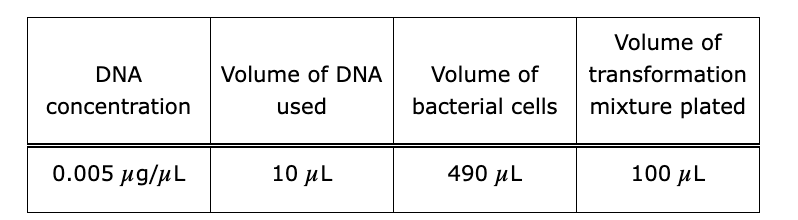
The table shows the conditions used to transform bacterial cells.
What is the transformation efficiency if the number of colony-forming units (CFU) is 4?
A. 4000 CFU/µg DNA
B. 400 CFU/µg DNA
C. 40 CFU/µg DNA
D. 4 CFU/µg DNA
B
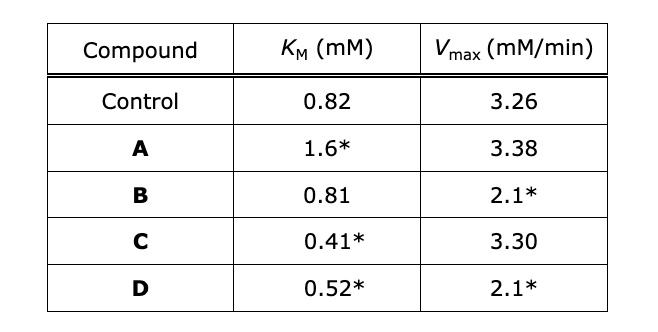
The table shows kinetic parameters of an enzymatic reaction in the presence of various compounds.
(Note: * indicates p < 0.05 compared to control.)
Which compound is a non-competitive inhibitor?
A. A
B. B
C. C
D. D
B
Which enzyme is required for the production of cDNA from an RNA template?
A. Deoxyribonuclease
B. Peptidyl transferase
C. Reverse transcriptase
D. RNA polymerase
C
A PCR reaction is performed using non-radioactive nucleotides and a DNA template labeled with radioactive phosphate on both strands. After two rounds of PCR, what percentage of DNA molecules will contain radioactive phosphate on at least one strand?
A. 0%
B. 25%
C. 50%
D. 100%
C
Which action will most likely increase FADH2 production in the citric acid cycle?
A. Inhibiting fumarase
B. Increasing fumarate levels
C. Decreasing succinate levels
D. Activating succinate dehydrogenase
D
What is the most direct impact of a mutation that prevents cyclin binding to Cdk1 during the cell cycle?
A. Cells do not enter M.
B. Cells do not enter S.
C. Cells progress through G1 more rapidly.
D. Cells progress through G2 more rapidly.
A
Which structure(s) is(are) most likely found in cholesterol.
A. A benzene ring
B. Four hydrocarbon rings
C. Two monosaccharide rings
D. Two aromatic ring-containing amino acids
B
Which neuronal structure is most likely to generate a postsynaptic potential in direct response to neurotransmitters?
A. Dendrite
B. Axon hillock
C. Axon terminal
D. Node of Ranvier
A
Which event is associated with the first four weeks following fertilization?
A. The corpus albicans forms.
B. The oocyte completes meiosis I.
C. The corpus luteum is maintained.
D. Progesterone secretion decreases.
C
Researchers expose cultured cells to Compound A and do not detect any Compound A within the cells. Following an experimental manipulation, researchers observe Compound A in the intracellular space. Which manipulation did researchers potentially perform?
A. Treating cells with an activator of exocytosis
B. Increasing the osmolarity of extracellular solution
C. Decreasing the extracellular concentration of Compound
D. Treating cells with an activator of membrane transporters
D
Considering that the Henry's law constant for CO2(g) is 30 L•atm•mol–1, what is the concentration of CO2(aq) in blood serum from breathing atmospheric air containing 6% CO2?
A. 2.0 mM
B. 3.0 mM
C. 4.0 mM
D. 5.0 mM
A
What is the chemical formula of a natural fatty acid that most increases the fluidity of the membrane bilayer structure?
A. C11H23COOH
B. C13H27COOH
C. C15H29COOH
D. C17H35COOH
C
The standard free energy change for the conversion of dihydroxyacetone phosphate (DHAP) to glyceraldehyde 3-phosphate (GADP) is estimated to be +5 kJ/mol. Which expression gives the ratio of GADP to DHAP at equilibrium?
(Note: Use RT = 2500 J/mol.)
A. e–2
B. e–0.5
C. e0.5
D. e2
A
Which enzyme is active in both the gluconeogenesis and glycogenolysis pathways?
A. Glucose 6-phosphate dehydrogenase
B. Glucose-6-phosphatase
C. Phosphoglucomutase
D. Hexokinase
B
Which two enzymes are used in an RT-PCR reaction?
A. DNase followed by RNA polymerase
B. DNA polymerase followed by RNase
C. RNA polymerase followed by reverse transcriptase
D. Reverse transcriptase followed by DNA polymerase
D
How does histone acetylation affect access to genomic DNA?
A. Histone acetylation neutralizes lysine's positive charge, thus increasing access to genomic DNA.
B. Histone acetylation neutralizes lysine's positive charge, thus decreasing access to genomic DNA.
C. Histone acetylation neutralizes glutamate's negative charge, thus increasing access to genomic DNA.
D. Histone acetylation neutralizes glutamate's negative charge, thus decreasing access to genomic DNA.
A
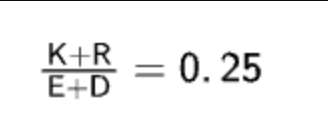
Amino acid sequencing of a 25-residue synthetic peptide showed the following ratio.
Assuming that the peptide is composed of only charged amino acids, what is the charge of this peptide at physiological pH?
A. –15
B. –5
C. +5
D. +15
A. –15
How does a noncompetitive inhibitor affect the slope and the x- and y- intercepts of a Lineweaver–Burk plot?
A. The slope decreases, the x-intercept becomes more negative, and the y-intercept shifts downward.
B. The slope decreases, the x-intercept remains the same, and the y-intercept shifts downward.
C. The slope increases, the x-intercept becomes less negative, and the y-intercept remains the same.
D. The slope increases, the x-intercept remains the same, and the y-intercept shifts upward.
D
Which amino acid contains an unbranched alkyl side chain?
A. Ala
B. Ile
C. Leu
D. Val
A
The stereochemical designators α and β distinguish between:
A. enantiomers at an epimeric carbon atom.
B. enantiomers at an anomeric carbon atom.
C. epimers at an anomeric carbon atom.
D. epimers at a non-anomeric carbon atom.
C
Which ideal solution exhibits the greatest osmotic pressure?
A. 0.1 M MgCl2
B. 0.2 M NaCl
C. 0.2 M CaCl2
D. 0.5 M Glucose
C
Which event is directly mediated by a ligand-gated ion channel?
A. Release of Ca2+ from the sarcoplasmic reticulum of a muscle fiber to initiate muscle contraction
B. Influx of Na+ across the axon membrane of a somatic neuron during action potential propagation
C. Influx of Na+ across the motor end plate resulting in the depolarization of the muscle fiber membrane
D. Re-entry of Ca2+ back into the sarcoplasmic reticulum of a muscle fiber to end muscle contraction
C
A single point mutation in a gene results in a nonfunctional protein. Individuals heterozygous for this mutation were identified using a Southern blot. Which pair of wild-type (WT) and mutant alleles most likely contains the mutation?
_
A
WT | 5′–TAGTCGAAGCTTAGGCATCT–3′ |
Mutant | 5′–TAGTCGATGCTTAGGCATCT–3′ |
B
WT | 5′–TAGTCGAAGCTTAGGCATCT–3′ |
Mutant | 5′–TAGTCGAAGCTTAGGCATAT–3′ |
C
WT | 5′–TAGTCGAAGCTTAGGCATCT–3′ |
Mutant | 5′–TAGTCGAAGCTTAGGCATGT–3′ |
D
WT | 5′–TAGTCGAAGCTTAGGCATCT–3′ |
Mutant | 5′–TCGTCGAAGCTTAGGCATCT–3′ |
A
In a species of beetle, red body color is dominant to brown. Two red beetles are crossed and produce 31 red and 9 brown offspring (F1 generation). If two red F1 beetles are crossed, what is the probability that both red and brown beetles will appear in the F2 generation? (Note: Assume Mendelian inheritance patterns.)
A. 4/9
B. 1/2
C. 2/3
D. 3/4
A
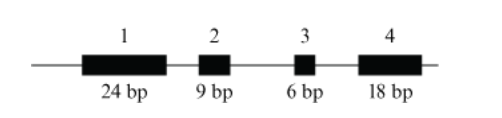
The diagram shows the size and position of the exons (numbered) and introns (lines) of a gene that codes for hypothetical Protein X, which can exist as two isoforms (either 16 or 17 amino acid residues long).
Which technique can be used to determine if a sample of cells expresses both isoforms?
A. Synthesize cDNA from Protein X mRNA using primers overlapping exons 1 and 4, followed by gel electrophoresis and band visualization.
B. Separate Protein X mRNA by gel electrophoresis and visualize band pattern using a DNA probe complementary to exon 3.
C. Perform a PCR of Protein X genomic DNA using primers overlapping exons 1 and 3, followed by gel electrophoresis and band visualization.
D. Perform a restriction digest of Protein X genomic DNA using an endonuclease that cuts in the middle of exon 2, followed by gel electrophoresis and band visualization.
A
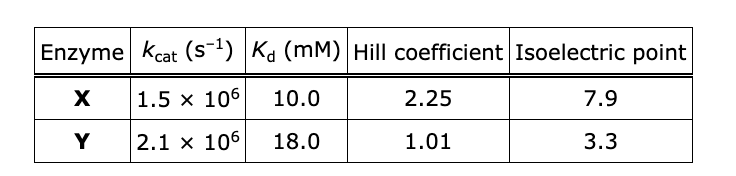
The kinetic properties of two enzymes are shown in the table. Both enzymes have the same substrate.
Based on the data, which statement best describes how Enzyme X differs from Enzyme Y?
A. The maximal velocity of the reaction catalyzed by Enzyme X is higher than that of the reaction catalyzed by Enzyme Y.
B. Enzyme X has a higher molecular weight than Enzyme Y.
C. Enzyme X exhibits cooperativity, whereas the activity of Enzyme Y does not.
D. Enzyme X has a lower binding affinity for the substrate than Enzyme Y.
C
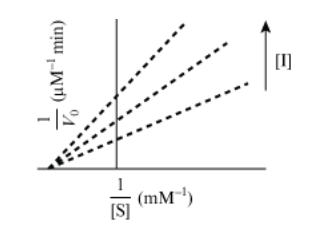
Rate experiments were performed to determine the effect of an inhibitor on the kinetics of a reaction catalyzed by an enzyme. The results were plotted, as shown.
Based on the data, which statement best describes the interaction between the inhibitor and the enzyme? The inhibitor:
A. irreversibly binds the enzyme.
B. can only bind the enzyme after the enzyme has already bound substrate.
C. binds the enzyme and the enzyme–substrate complex with the same affinity.
D. prevents the binding of the enzyme to its substrate by occupying the enzyme’s active site.
C
Two gel electrophoresis analyses are performed on a sample of purified protein with unknown structure: SDS-PAGE (1 band appears) and SDS-PAGE under reducing conditions (2 bands appear). Which prediction about the protein is directly supported by these results? The protein:
A. is posttranslationally glycosylated.
B. contains a high proportion of charged residues.
C. contains no disulfide bonds.
D. is composed of multiple subunits.
D
Which type of interaction does NOT contribute to the stabilization of the tertiary structure of a protein?
A. Disulfide bond
B. Phosphodiester bond
C. Hydrogen bond
D. Salt bridge
B
Which type of inhibitor does NOT alter the KM/Vmax ratio of an enzyme?
A. Competitive
B. Uncompetitive
C. Noncompetitive
D. Mixed
B
An enzyme is more effectively inhibited by uncompetitive inhibitors when:
I. the substrate concentration is decreased.
II. the substrate concentration is increased
III. the inhibitor concentration is increased.
A. I only
B. III only
C. I and III only
D. II and III only
D. II and III only
Which peptide sequence is most likely found in a transmembrane helix of a protein?
A. Ala–Ile–Phe–Val–Leu
B. Ala–Thr–Lys–Asn–Leu
C. Lys–Thr–Arg–Asn–His
D. Val–Thr–Pro–Tyr–Ser
A
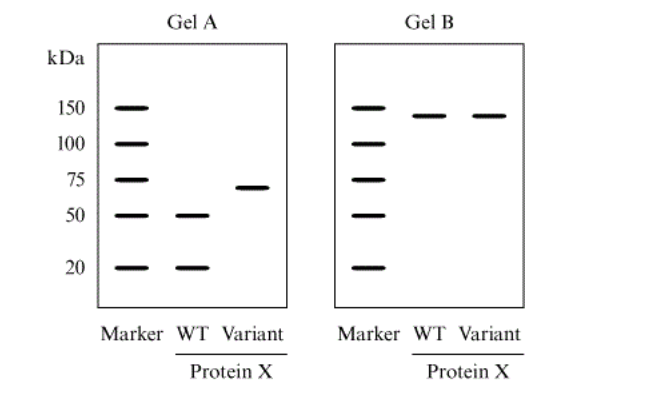
Researchers purified the wild-type and a variant form of a 140 kDa protein (Protein X). The researchers performed a native gel and an SDS gel electrophoresis under non-reducing condition and observed the following electrophoretic patterns.
Which conclusion is NOT valid?
A. Gel B is a native gel.
B. Protein X is a tetramer composed of 2 identical heterodimers.
C. The variant form contains covalently linked subunits.
D. The largest subunit of Protein X is approximately composed of 120 amino acids.
D
Which methods separate proteins based on their charge?
I. SDS-PAGE
II. Isoelectric focusing
III. Ion-exchange chromatography
IV. Affinity chromatography
A. I and II only
B. II and III only
C. I, II, and III only
D. II, III, and IV only
B. II and III only
How many molecules of reduced electron carrier are generated during conversion of α-ketoglutarate to oxaloacetate in the citric acid cycle?
A. One
B. Two
C. Three
D. Four
C
Which enzyme is used both in gluconeogenesis and glycogenolysis?
A. Phosphoglucomutase
B. Glucose 6-phosphatase
C. Hexokinase
D. Glucokinase
B
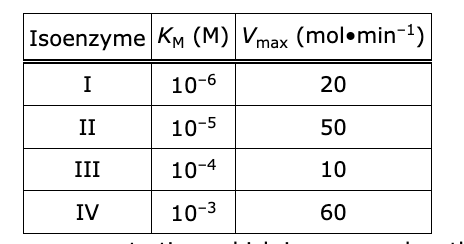
The kinetic parameters of several isoenzymes are shown.
Assuming the same isoenzyme concentration, which isoenzyme has the highest catalytic efficiency?
A. I
B. II
C. III
D. IV
A. I
Which of the following compounds is NOT a gluconeogenic precursor or substrate?
A. Lactate
B. Glycerol
C. Oxaloacetate
D. Phosphogluconate
D
Which type of enzyme removes the chemical groups that are added to proteins by kinases?
A. Phosphorylase
B. Cyclase
C. Phosphatase
D. Acetylase
C
Under physiological conditions, increased activity of succinyl–CoA synthetase will most likely result in:
I. increased levels of succinyl–CoA.
II. increased levels of succinate
III. increased levels of GTP.
A. I only
B. II only
C. I and III only
D. II and III only
D
The pentose phosphate pathway results in the generation of:
A. NADPH, which is used as a reductive agent in cellular respiratory processes.
B. NADPH, which is used as an oxidative agent in cellular respiratory processes.
C. NADH, which is used as a reductive agent in cellular respiratory processes.
D. NADH, which is used as an oxidative agent in cellular respiratory processes.
A
The Vmax of an enzymatic reaction is altered by which types of inhibitors?
I. Competitive
II. Noncompetitive
III. Uncompetitive
IV. Mixed
A. I and II only
B. I and IV only
C. I, II, and III only
D. II, III, and IV only
D. II, III, and IV only
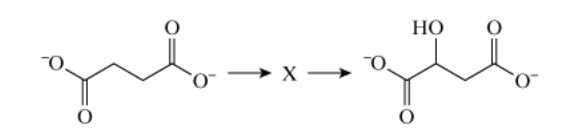
A partial sequence of the reactions in the citric acid cycle is shown.
Which compound is the intermediate X?
A. Succinate
B. Fumarate
C. Malate
D. Oxaloacetate
B
In the pentose phosphate pathway, which enzyme catalyzes the production of 6-phosphogluconolactone?
A. Glucose 6-phosphate dehydrogenase
B. 6-Phosphogluconolactonase
C. Phosphogluconate dehydrogenase
D. Glycerol 3-phosphate dehydrogenase
A
A partial DNA sequence of the coding strand of a gene is shown.
5′–GACATGGACTCGCTA–3′
Which sequence corresponds to the mRNA for this DNA sequence?
A. 5′–GACAUGGACUCGCUA–3′
B. 5′–CUGUACCUGAGCGUA–3′
C. 5′–UAGCGAGUCCAUGUC–3′
D. 5′–AUCGCUCAGGUACAG–3′
A
Which technique CANNOT be used to analyze gene expression?
A. Western blotting
B. Northern blotting
C. Southern blotting
D. Reverse transcription PCR
C
The most effective method for producing an increase in the total amount of water lost through the skin during a certain period would be:
A. inhibiting kidney function.
B. decreasing salt consumption.
C. increasing water consumption.
D. raising the environmental temperature.
D
The lipases catalyze the hydrolysis of fats and other carboxylic acid esters. The lipases illustrate the fact that:
A. some enzymes are molecules other than proteins.
B. most enzymes interact with only one specific substrate molecule.
C. some enzymes interact with several different substrate molecules that have similar chemical linkages.
D. some enzymes interact with many biologically active substrate molecules of dissimilar structures and linkages.
C
Which of the following recombinant processes depends on the F factor plasmid?
A. Transformation
B. Transduction
C. Conjugation
D. Translocation
C
If some but not all of the offspring from repeated matings of the same pair of fruit flies show the recessive traits of vestigial wings (vv) and ebony color (ee), which of the following could have been the genotypes of the individuals mated?
A. One VVEE, one vvee
B. Both VvEe
C. One vvEE, one VVee
D. Both vvee
B
Inflation of the lungs in mammals is accomplished by:
A. diffusion of gases.
B. active transport of gases.
C. positive pressure pumping action.
D. negative pressure pumping action.
D
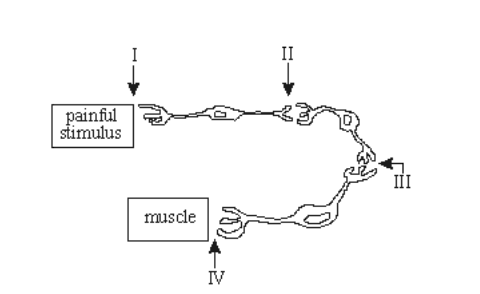
The above diagram represents the neural pathway that causes an individual to retract a stubbed toe. If one were to modify this diagram to represent the pathway involved in feeling pain in the stubbed toe, where could additional neurons be placed?
A. At II and III
B. At II and IV
C. At III and IV
D. At I and IV
A. At II and III
Which of the following characteristics clearly marks fungi as eukaryotes?
A. They have cell walls.
B. They contain ribosomes.
C. They contain mitochondria.
D. They exhibit sexual reproduction.
C
In mammals, which of the following events occurs during mitosis but does NOT occur during meiosis I?
A. Synapsis
B. The splitting of centromeres
C. The pairing of homologous chromosomes
D. The breaking down of the nuclear membrane
B
All of the following are functions of mammalian skin EXCEPT:
A. sensation.
B. respiration.
C. protection from disease.
D. protection against internal injury.
B
Inbreeding can reduce the fitness of a population in the short term because it causes an increase in the:
A. Genetic diversity of the population.
B. levels of aggression in the population.
C. rate of spontaneous mutations.
D. incidence of expression of deleterious recessive traits.
D
The enzyme pepsin, which catalyzes the hydrolysis of proteins in the stomach, has a pH optimum of 1.5. Under conditions of excess stomach acidity (pH of 1.0 or less), pepsin catalysis occurs very slowly. The most likely reason for this is that below a pH of 1.0:
A. pepsin is feedback-inhibited.
B. pepsin synthesis is reduced.
C. the peptide bonds in pepsin are more stable.
D. the three-dimensional structure of pepsin is changed.
D
An intravenous infusion causes a sharp rise in the serum level of albumin (the major osmoregulatory protein in the blood). This will most likely cause an:
A. increase in the immune response.
B. increase in tissue albumin levels.
C. outflow of blood fluid to the tissues.
D. influx of tissue fluid to the bloodstream.
D
Would an increase in the level of plasma aldosterone be expected to follow ingestion of excessive quantities of NaCl?
A. No; aldosterone causes Na+ reabsorption by kidney tubules.
B. No; aldosterone causes Na+ secretion by kidney tubules.
C. Yes; aldosterone causes Na+ reabsorption by kidney tubules.
D. Yes; aldosterone causes Na+ secretion by kidney tubules.
A
The liver is different from many other organs in that it can at least partially regenerate following illness or damage. This regeneration is accomplished primarily through:
A. fission.
B. meiosis.
C. mitosis.
D. cell growth.
C
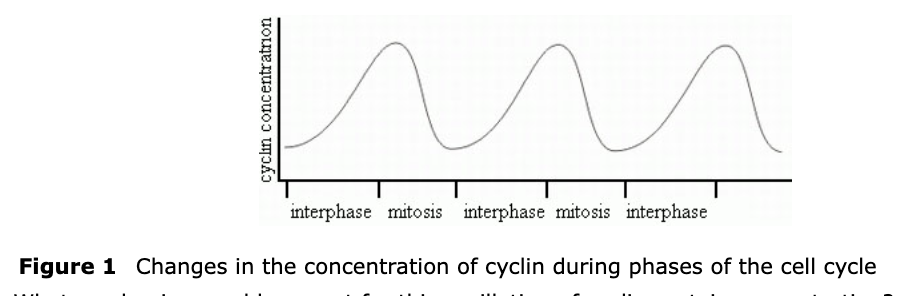
The concentration of the protein cyclin rises and falls during the cell cycle as shown in Figure 1
What mechanism could account for this oscillation of cyclin protein concentration?
A. Replication of the cyclin gene during S phase of interphase
B. Segregation of chromosomes carrying the cyclin genes during mitosis
C. Translation of cyclin mRNA in interphase and proteolysis of cyclin protein in mitosis
D. Translation of cyclin mRNA in mitosis and proteolysis of cyclin protein in interphase
C
Aldosterone stimulates Na+ reabsorption by the kidneys. What changes in blood volume and pressure would be expected as a result of aldosterone deficiency?
A. Increased volume and increased pressure
B. Increased volume and decreased pressure
C. Decreased volume and increased pressure
D. Decreased volume and decreased pressure
D
The sequence of events in the human menstrual cycle involves close interaction among which organs?
A. Hypothalamus-thyroid-ovary
B. Hypothalamus-pituitary-ovary
C. Pituitary-thyroid-ovary
D. Pituitary-adrenal glands-ovary
B
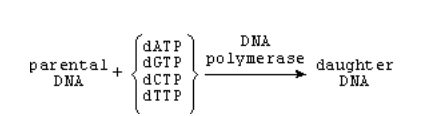
DNA polymerase catalyzes the replication of chromosomal DNA in bacteria as shown below.
A double-stranded DNA molecule contains bases with a ratio of (A + T)/(G + C) = 3:1. This molecule is replicated with DNA polymerase in the presence of the four deoxynucleoside triphosphates with a molar ratio of (A + T)/(G + C) = 1:1. What is the expected ratio of (A + T)/(G + C) in the double-stranded daughter DNA molecule?
A. 1:3
B. 1:1
C. 2:1
D. 3:1
D
In which organelle of a eukaryotic cell is the pyrimidine uracil, as part of uridine triphosphate (UTP), incorporated into nucleic acid?
A. The nucleus
B. The Golgi bodies
C. The ribosomes
D. The endoplasmic reticulum
A
Of the following tissues, which is NOT derived from embryonic mesoderm?
A. Circulatory
B. Bone
C. Dermal
D. Nerve
D
Which of the following changes would NOT interfere with the repeated transmission of an impulse at the vertebrate neuromuscular junction?
A. Addition of a cholinesterase blocker
B. Addition of a toxin that blocks the release of acetylcholine
C. An increase in acetylcholine receptor sites on the motor end plate
D. Addition of a substance that binds to acetylcholine receptor sites
C
Muscles with striated fibers are the primary muscle type in:
A. the heart.
B. the uterus.
C. arteries and veins.
D. the small intestine.
A
What is the net volume of fresh air that enters the alveoli each minute, assuming that the breathing rate is 10 breaths/min, the tidal volume is 800 mL/breath, and the nonalveolar respiratory system volume (dead space) is 150 mL?
A. 65 mL
B. 95 mL
C. 6500 mL
D. 7850 mL
C
Which statement below most accurately describes the roles of the proteins actin and myosin during muscular contraction?
A. Both actin and myosin shorten, causing the muscle tissue to which they are attached to contract.
B. Both actin and myosin catalyze the reactions that result in muscle contraction.
C. Actin molecules are disassembled by myosin, leading to a shortening of muscle sarcomeres.
D. Bridges between actin and myosin form, break, and re-form, leading to a shortening of muscle sarcomeres.
D
In almost all vertebrates, when the optic cup fails to develop in the embryo, the lens also fails to form. This constitutes evidence that:
A. the process of neurulation follows gastrulation.
B. the eye develops early in vertebrate morphogenesis.
C. cells may induce neighboring cells to differentiate.
D. cell differentiation is an “all or none” phenomenon.
C
If a person’s gallbladder is removed, the person should restrict the consumption of:
A. proteins.
B. polysaccharides.
C. triglycerides.
D. lactose.
C
The posttranslational modification of some of the eukaryotic cell’s most abundant proteins is thought to affect the ability of those proteins to condense DNA into 30‑nm fibers. Given this, these proteins are most likely:
A. tubulins.
B. histones.
C. transcription activators.
D. DNA polymerase subunits.
B
When viewing an X ray of the bones of a leg, a doctor can tell if the patient is a growing child, because the X ray shows:
A. cartilaginous areas in the long bones.
B. bone cells that are actively dividing.
C. the presence of haversian cells.
D. shorter-than-average bones.
A
In eukaryotic cells, the process of incorporating uridine nucleotides into nucleic acid polymers occurs in which of the following structures of the cell?
A. Nucleus
B. Lysosome
C. Ribosome
D. Golgi bod
A
The outer layers of human skin are composed of dead cells impregnated with keratin and oil, which make the epidermis relatively impermeable to water, yet humans sweat freely in hot temperatures. This occurs because:
A. the salt in sweat allows it to diffuse through the skin.
B. sweat glands have special channels through the skin.
C. an osmotic gradient in sweat moves it through the skin.
D. sweating occurs in only those areas of the body where the skin is water permeable.
B
The normal path of sperm movement from the male testis to the point of fertilization in the female is:
A. epididymis, vas deferens, urethra, vagina, cervix, uterus, fallopian tube.
B. epididymis, vas deferens, ureter, cervix, uterus, fallopian tube.
C. epididymis, vas deferens, urethra, vagina, uterus, ovary.
D. interstitial cells, epididymis, vas deferens, vagina, uterus, ovary.
A
When muscles in the skin contract and cause the hair of an animal to “stand on end,” the skin could be functioning as a regulator of:
A. pH.
B. salt excretion.
C. body temperature.
D. skeletal muscle tone.
C
Albumin is the major blood osmoregulatory protein. The most likely effect of a sharp rise in the level of serum albumin is:
A. a drop in blood pressure.
B. an increase in immune response.
C. an efflux of albumin into the interstitial fluids.
D. an influx of interstitial fluid into the bloodstream.
D
If chromosomal duplication before tetrad formation occurred twice during spermatogenesis, while the other steps of meiosis proceeded normally, which of the following would result from a single spermatocyte?
A. One tetraploid sperm
B. Four diploid sperm
C. Four haploid sperm
D. Eight haploid sperm
B
During prokaryotic protein synthesis, translation begins as soon as the newly synthesized mRNA strand begins to extend from the DNA strand. This situation differs from that in eukaryotes, because eukaryotes:
A. carry out translation without using ribosomes.
B. transcribe mRNA molecules without using DNA.
C. destroy most mRNA as soon as it is synthesized.
D. localize the processes of transcription and translation in the nucleus and cytoplasm, respectively.
D
After the gall bladder is removed from a patient, the patient will most likely have reduced ability to digest:
A. protein.
B. starch.
C. sugar.
D. fat.
D
In a particular species of plant, tall vine depends on a dominant gene (T), and a pink flower is the result of the heterozygous condition of the genes for red and white flowers (Rr). What fraction of the offspring from the cross of a tall, pink plant (heterozygous for height) with a short, pink plant would be expected to be pink AND tall?
A. 3/4
B. 1/2
C. 3/8
D. 1/4
D
Consider an organism that has three pairs of chromosomes, AaBbCc, in its diploid cells. How many genotypically different kinds of haploid cells can it produce?
A. 4
B. 8
C. 16
D. 32
B
In the human "knee-jerk" reflex, the knee is struck and the lower leg jerks forward. Which of the following represents the complete pathway that the nerve impulse travels in effecting this response?
A. Sensory neuron, motor neuron
B. Sensory neuron, brain, motor neuron
C. Sensory neuron, associative neuron, brain, associative neuron, motor neuron
D. Sensory neuron, associative neuron, motor neuron, associative neuron, motor neuron
A
In horses, the genes for red coat color and for white coat color are codominant. Heterozygous horses have roan-colored coats. Consider a roan-colored colt that has a white mother. What could be said about the coat color of the colt’s father?
A. It must be red.
B. It must be roan.
C. It could be either red or roan.
D. It could be either red or white.
C
Synthesis of antibody proteins in eukaryotic cells is associated with what organelle?
A. Nucleus
B. Mitochondrion
C. Endoplasmic reticulum
D. Golgi apparatus
C
Actin filaments within cells can be identified experimentally by the use of a labeled molecule that binds specifically to actin and not to other cell substances. Which of the following would be best to use as the labeled molecule?
A. ATP
B. Myosin
C. Albumin
D. Myoglobin
B
Suppose that in a randomly mating population of mammals, 160 of its 1,000 members exhibit a specific recessive trait that does not affect viability of the individual. How many individuals in this population are heterozygous carriers of the gene that causes this trait?
A. 160
B. 400
C. 480
D. 600
C
Which of the following structures is derived from the same germ cell layer as the heart?
A. Eye
B. Bone
C. Spinal cord
D. Liver
B
An organism is likely to be a bacterium rather than a virus if it:
A. reproduces via fission.
B. has a rigid outer covering.
C. lacks a nuclear membrane.
D. contains both RNA and protein.
A
HIV (human immunodeficiency virus) is a retrovirus, an RNA virus that can insert itself into the human genome. This virus can reproduce in host cells because it contains:
A. enzymes that destroy T cells.
B. viral DNA that is compatible with human DNA.
C. core proteins rather than DNA.
D. reverse transcriptase.
D
A wound that penetrates the rib cage and lets air into the right pleural cavity stops air flow into the right lung because the:
A. lung cannot be expanded.
B. rib cage cannot be expanded.
C. diaphragm cannot be lowered.
D. air dries and stiffens the lung.
A