Unit 1 - A&P I
 Call Kai
 Learn
Learn Practice Test
 Spaced Repetition
 Match
Match Flashcards
 Knowt Play
1/48

There's no tags or description
Looks like no tags are added yet.
Name | Mastery | Learn | Test | Matching | Spaced | Call with Kai | Chat |
|---|
No analytics yet
Send a link to your students to track their progress
49 Terms
Anterior
In-front of

Posterior
In back of
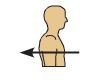
Superior
Above

Inferior
Below

Cranial
Toward the head

Caudal
Toward the tail

Ventral
Belly side

Dorsal
Back

Medial
Toward mid line
Lateral
Away from the mid line
Proximal
Closer to attachment
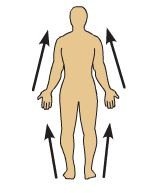
Distal
Further form attachment

Transverse plane
Cuts body into a superior and inferior section

Coronal
Cuts body into Anterior and posterior section

Sagittal
cuts body into a right an left section

Mid-Sagittal
Cuts body into a equal right and left portion

Superficial
Closer to the surface

Deep
Further from the surface

Homeostasis
The body's process of self-regulation to maintain a stable internal environment
Effector
An organ (like a muscle or gland), a cell, or a molecule that produces a response to a stimulus or signal.
Abdominal Region/Cavity

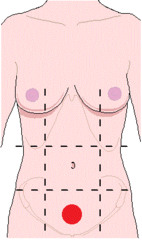
Hypogastric Region
below the umbilical region (stomach)
Hypochondriac regions
to the right and left of the epigastric region (below ribs)

Visceral
pertaining to the internal organs

Cephalic
pertaining to the head

Pelvic Region/Cavity
Enclosed by pelvis

Epigastric Region
pertaining to above the stomach

Positive Feedback
Feedback that tends to magnify stimulus to complete a process or increase its output. Less common.
Negative Feedback
A type of regulation that responds to a change in conditions by initiating responses that will counteract the change. Maintains homeostasis
Parietal
pertaining to the outer wall of the body cavity

Thoraric Cavity/Region
chest cavity

Spinal
pertaining to the spine

iliac
pertaining to the ilium (Hip bone)

Pleura
double-layered membrane surrounding each lung

Sensor/Receptor
detects changes in variable
Umbilical Region
Region of the navel (belly button)

Lumbar
lower back

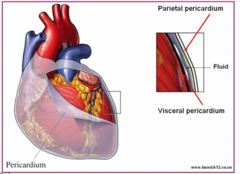
Pericardium
Double-layered membrane surrounding the heart.
Urinary System
Cleanses the blood. Rids the body of wastes. Maintains salt and water balance.
integumentary system
Consists of the skin, mucous membranes, hair, and nails. External body coverings
endocrine system
Controls the body through hormones, affected by removal of adrenal gland
reproductive system
Reproduce offspring
digestive system
Breaks down food into absorbable units that enter the blood for distribution to body cells.
respiratory system
Brings oxygen into the body. Gets rid of carbon dioxide.
lymphatic system
Defense against infection and disease
cardiovascular system
Blood vessels transport blood, which carries oxygen, carbon dioxide, nutrients, wastes, etc. The heart pumps blood. Regulates water and acid-base balance of blood
skeletal system
Protects and supports body organs and provides a framework the muscles use to support movement. Made up of bones and joints
Muscular System
enables movement of the body and internal organs, also generates body heat
nervous system
the network of nerve cells and fibers that transmits nerve impulses between parts of the body. Brain, spinal cord, nerves