L18 - Transamination and Deamination Reactions
 Call Kai
 Learn
Learn Practice Test
 Spaced Repetition
 Match
Match Flashcards
 Knowt Play
1/17

There's no tags or description
Looks like no tags are added yet.
Name | Mastery | Learn | Test | Matching | Spaced | Call with Kai | Chat |
|---|
No analytics yet
Send a link to your students to track their progress
18 Terms
The four AAs important in the transport and distribution of N group & in the Urea cycle
A, E, Q, D; They can also be easily converted to TCA intermediates
Pyruvate is the α-ketoacid of what AA
A
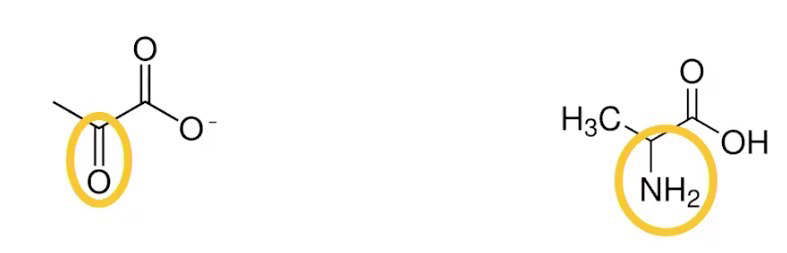
Oxaloacetate is the α-ketoacid of what AA
D
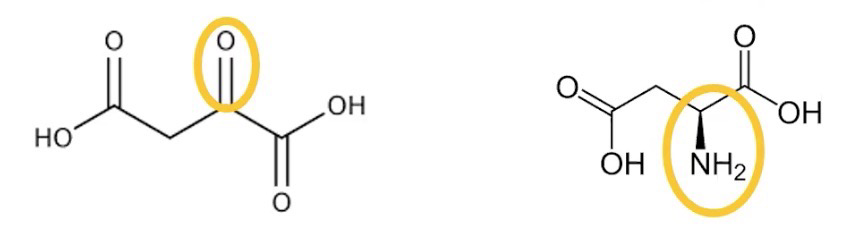
α-Ketoglutarate is the α-ketoacid of what AA
E

Transamination
Removal of nitrogen from AAs; required for AA catabolism; catalyzed by aminotransferases or transaminases
α-amino group of AA is transferred to α-keto acid (Usually α-KG)
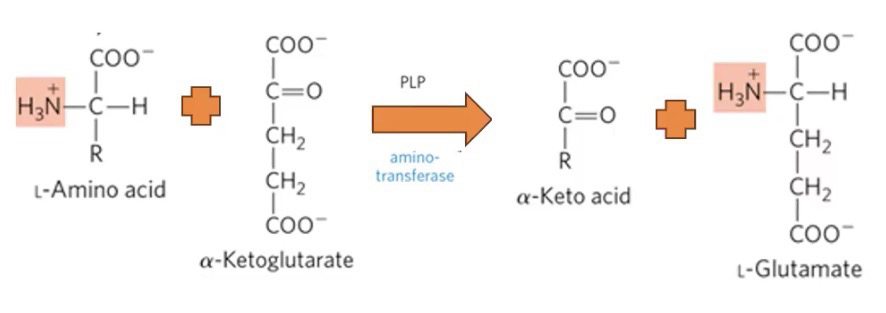
Pyridoxal Phosphate (PLP)
Essential coenzyme for transamination; derived from Vitamin B6
Is converted to pyridoxamine phosphate (PMP) during the process
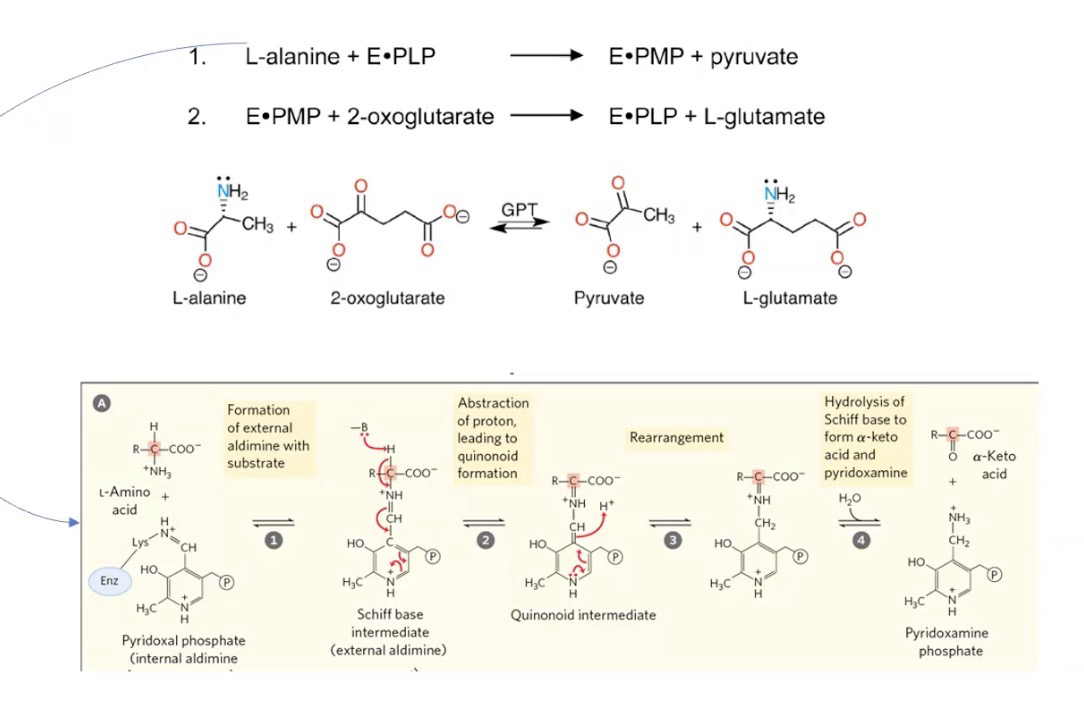
Can interact with enzyme to form internal aldimine
Can interact with donating AA to form external aldimine
α-KG then comes in to grab the amino group

Why is the amino group never released into the cytosol during transamination
Releasing amino group causes formation of toxic ammonia
Transamination pathway
L-alanine + E(PLP) → E(PMP) + pyruvate
E(PMP) + 2-oxoglutarate → E(PLP) + L-glutamate
Reversible
Two important Aminotransferase enzymes
Alanine Aminotransferase (ALT) : L-A + α-KG ←→ pyruvate + E
Aspartate Aminotransferase (AST): D + α-KG ←→ OAA + E
Reversible
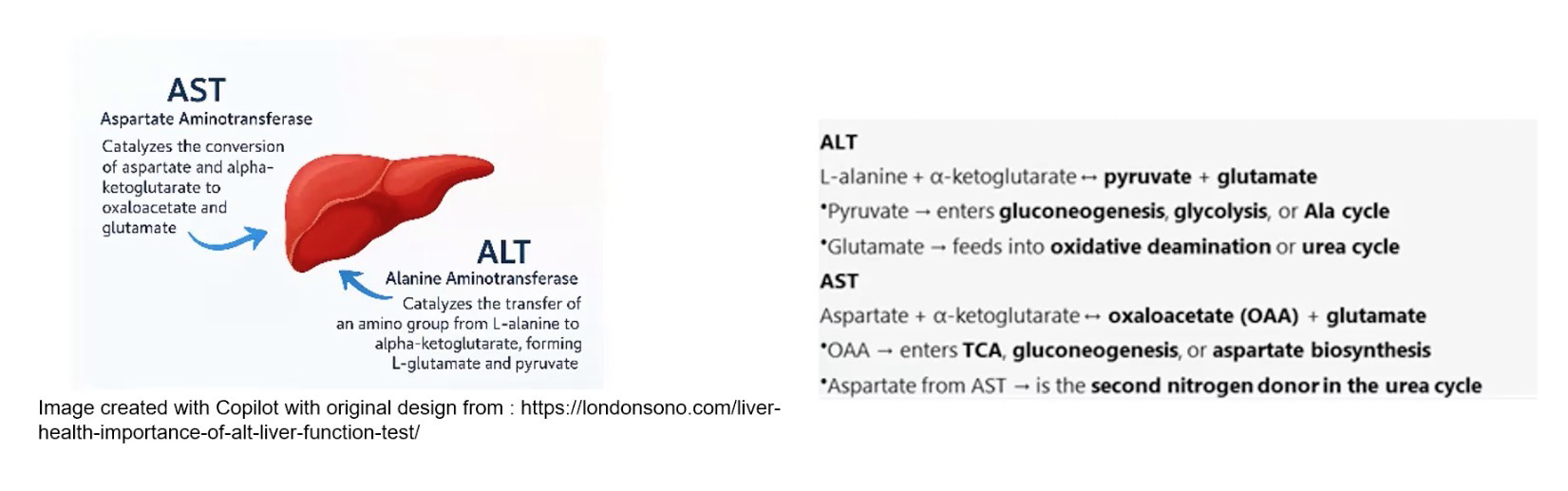
How can ALT and AST indicate liver damage
High serum levels of ALT and AST indicates cirrhosis or some type of liver damage, causing these liver specific enzymes to leak
What AAs cannot enter transamination; why?
Any AAs with a secondary amino group; primary amines are required for transamination
Hydroxyproline, P for example
K and T cannot undergo transamination because the end products would form toxic metabolites
Is there any net deamination in transaminase reactions?
No because α-KG ends up becoming aminated to glutamate
How are glutamate levels controlled in the liver? Why does this need to happen?
Amino groups are collected from AA in the form of L-Glutamate; having an excess can cause complications
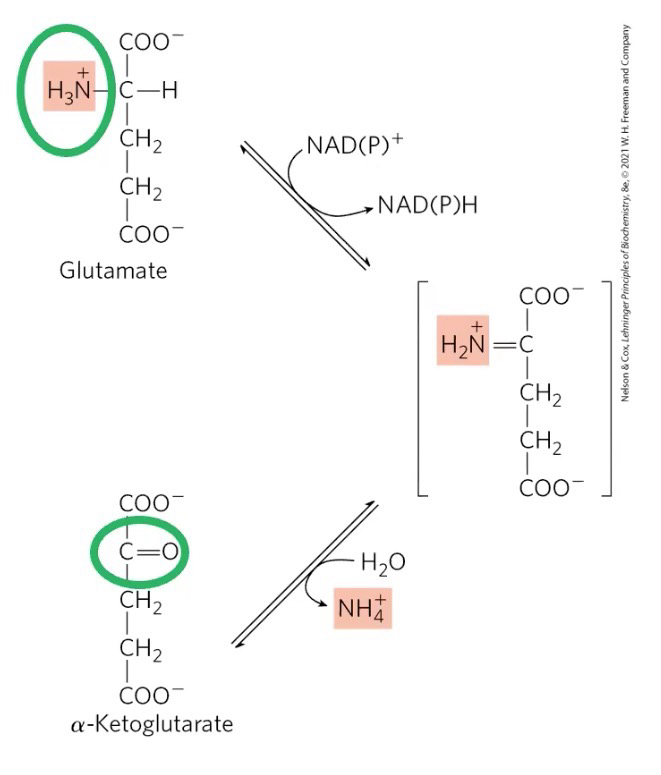
Glutamate dehydrogenase (GDH) uses NAD+ in oxidative deamination to form α-KG + NADH + NH4+
E → α-KG + NADH + NH4+ via GDH
Ammonia then directly enters Urea cycle via CPS-I (Or another cycle) to avoid toxic buildup
Reversible

Glutamate dehydrogenase (GDH) Pathway
Major route for oxidative deamination; regenerates α-KG and provides ammonia for reutilization or urea cycle; occurs in mitochondria
E + NAD(P)+ → Intermediate + NAD(P)H
Intermediate + H2O → α-KG + NH4+
Reversible
How transamination and deamination is connected within different tissue types; what is this system referred to as?
Glucose-alanine cycle in muscle
Glutamine synthetase converts ammonia in tissues to prevent toxic buildup; then transported to liver to be converted to glutamate for usage
This is called transdeamination

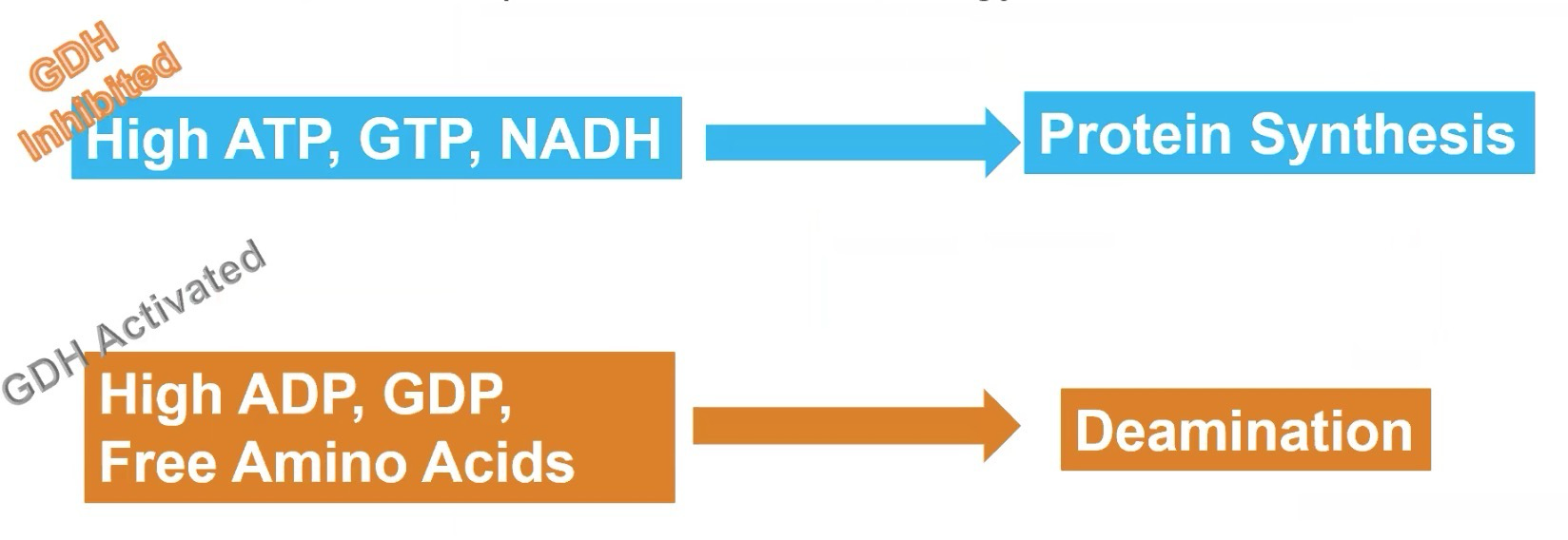
Regulation of GDH
Allosterically regulated
High energy status (ATP, GTP, NADH) causes inhibition to allow protein synthesis
Low energy status (ADP, GDP) or in the presence of free AAs causes activation and allows deamination to occur
Glutaminase
Another deamination route
Q + H2O → E + NH3
Asparaginase
Another deamination route
L-Asparagine (N) + H2O → L-Aspartate (D) + NH3