2.3 - Cell cycle & division
 Call Kai
 Learn
Learn Practice Test
 Spaced Repetition
 Match
Match Flashcards
 Knowt Play
1/30

There's no tags or description
Looks like no tags are added yet.
Name | Mastery | Learn | Test | Matching | Spaced | Call with Kai | Chat |
|---|
No analytics yet
Send a link to your students to track their progress
31 Terms
How does eukaryotic DNA manage to fit into the nucleus?
It is cut into shorter lengths & each length is tightly wrapped up with histone proteins to form chromatin
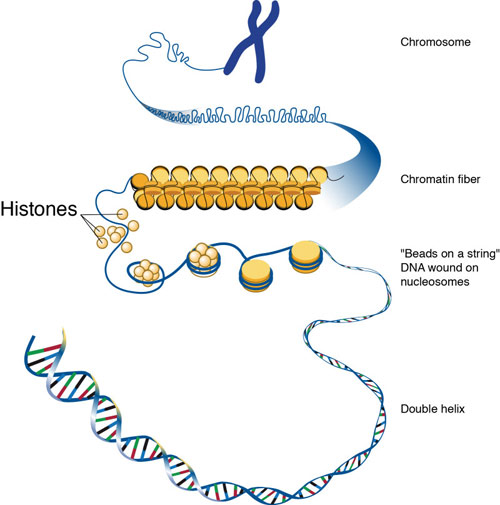
What does the chromatin form following replication?
The chromatin coils up even tighter to form X-shaped, visible chromosomes during mitosis
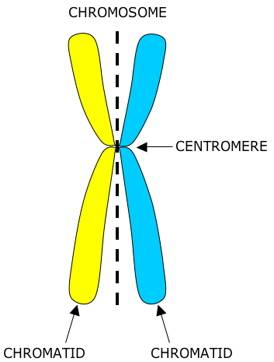
What are the two arms of a chromosome called & what are they joined by?
The two identical arms of the chromosome are called chromatids & are joined at the centromere
What is the cell cycle & what are the 3 main stages?
A regulated process where cells divide into 2 identical daughter cells:
interphase
mitosis
cytokinesis
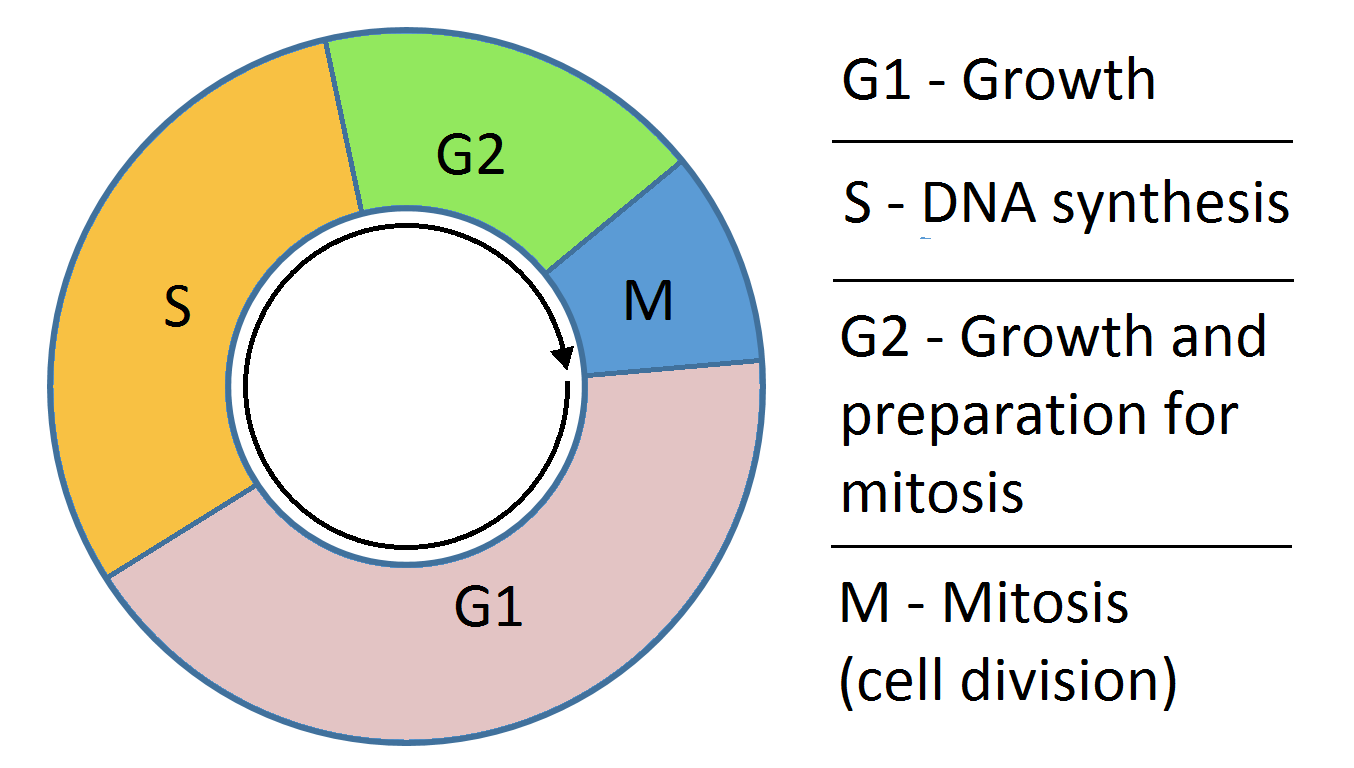
What are the sub-divisions of interphase?
G1 phase: growth (organelles replicated & cell size doubles)
S phase: DNA & histone synthesis
G2 phase: spindle fibres synthesised, ready for mitosis
What is the purpose of mitosis?
Growth
Repair & replacement
Asexual reproduction
Artificial cloning
What are the stages of mitosis?
Prophase
Metaphase
Anaphase
Telophase
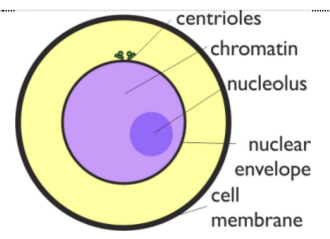
What happens during interphase before mitosis?
No chromosomes visible
DNA, histones & centrioles are all replicated
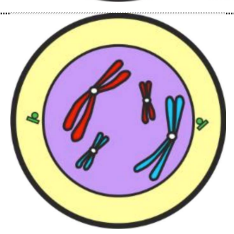
What happens during prophase in mitosis?
Chromosomes condense & become visible
Centrioles appear at opposite poles of cell
Nucleolus breaks down
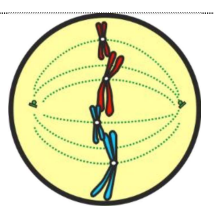
What happens during metaphase in mitosis?
Nuclear envelope disappears
Chromosomes align along the equator of the cell
Spindle fibres connect centrioles to chromosomes by their centromeres
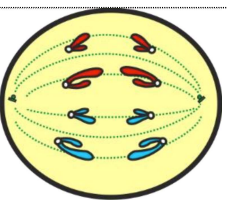
What happens during anaphase in mitosis?
Centromeres split, allowing chromatids to separate
Chromatids are pulled to opposite poles of cell
What happens during telophase in mitosis?
Spindle fibres disperse
Nuclear envelopes form
Chromatids uncoil & become too thin to see
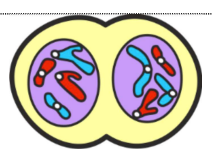
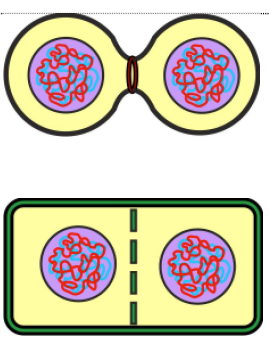
What happens during cytokinesis (animal & plant cells) in mitosis?
Animal cells:
a ring of actin filaments forms around the equator of the cell, tightens to form a cleavage furrow & splits the cell in two
Plant cells:
vesicles move to the equator, line up & fuse to form a cell plate
What is meiosis?
A form of cell division that occurs twice, producing four genetically different haploid cells (gametes)
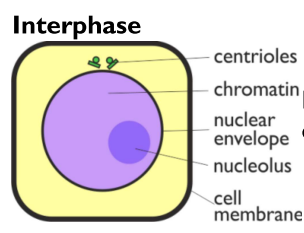
What happens during interphase I in meiosis?
DNA, histones & centrioles are all replicated
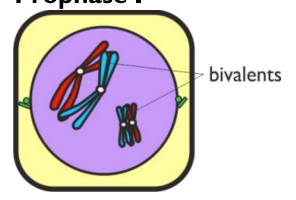
What happens during prophase I in meiosis?
Chromosomes condense & homologous chromosomes join together to form bivalents
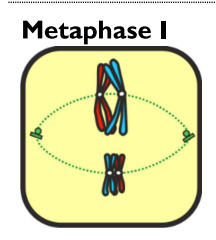
What happens during metaphase I in meiosis?
Bivalents line up on the equator of the cell
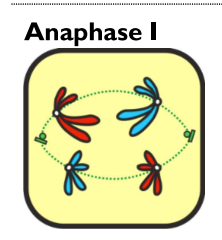
What happens during anaphase I in meiosis?
Bivalents separate & homologous chromosomes move to opposite poles
Chromatids do not separate
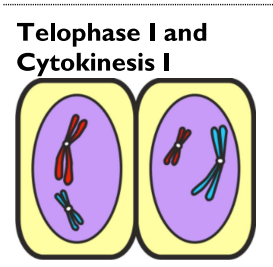
What happens during telophase I & cytokinesis I in meiosis?
Two nuclei form with replicated, uncoiled chromosomes
Cells divide, but remain joined
What happens during interphase II in meiosis?
Meiosis division II proceeds immediately without any interphase
There is no replication of DNA
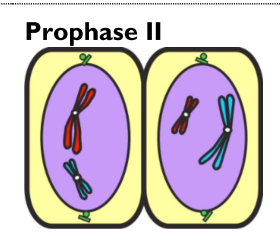
What happens during prophase II in meiosis?
Centrioles move to form new poles at 90° to original poles
Chromosomes already condensed
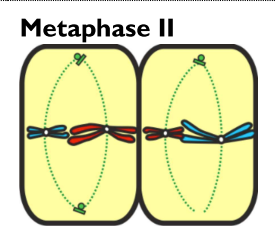
What happens during metaphase II in meiosis?
Chromosomes line up on the new equator
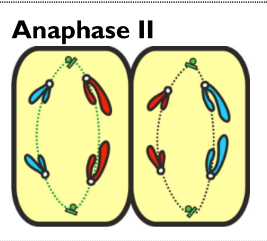
What happens during anaphase II in meiosis?
Centromeres finally split, separating chromosomes
Chromatids move to opposite poles of the cell
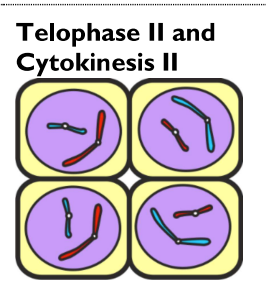
What happens during telophase II & cytokinesis II in meiosis?
Nuclear envelopes form around each set of chromosomes
Cells divide, but remain joined to form a tetrad
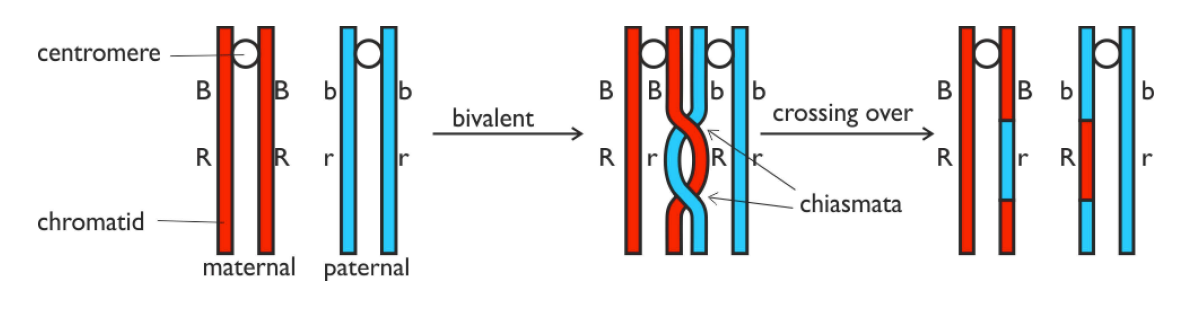
What is crossing over & how does it produce genetic variation?
While paired in a bivalent during prophase I, homologous chromosomes exchange corresponding segments at the chiasmata
Produces new combinations of alleles
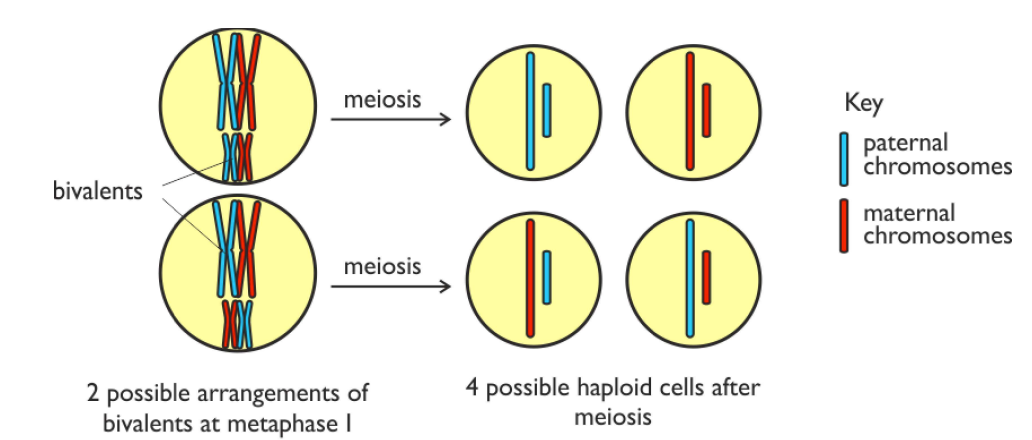
What is independent assortment & how does it produce genetic variation?
Homologous pairs of chromosomes align randomly during metaphase I
Leads to different combinations of chromosomes in gametes
What are chromosome mutations?
Large-scale changes to the structure or number of chromosomes
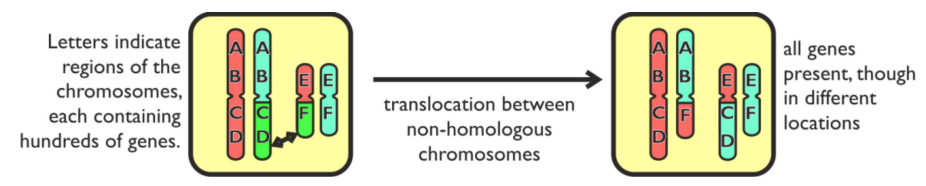
What is a translocation mutation?
One part of a chromosome is swapped with a part of a different chromosome
Swapped parts can be unequal in size & between non-homologous chromosomes
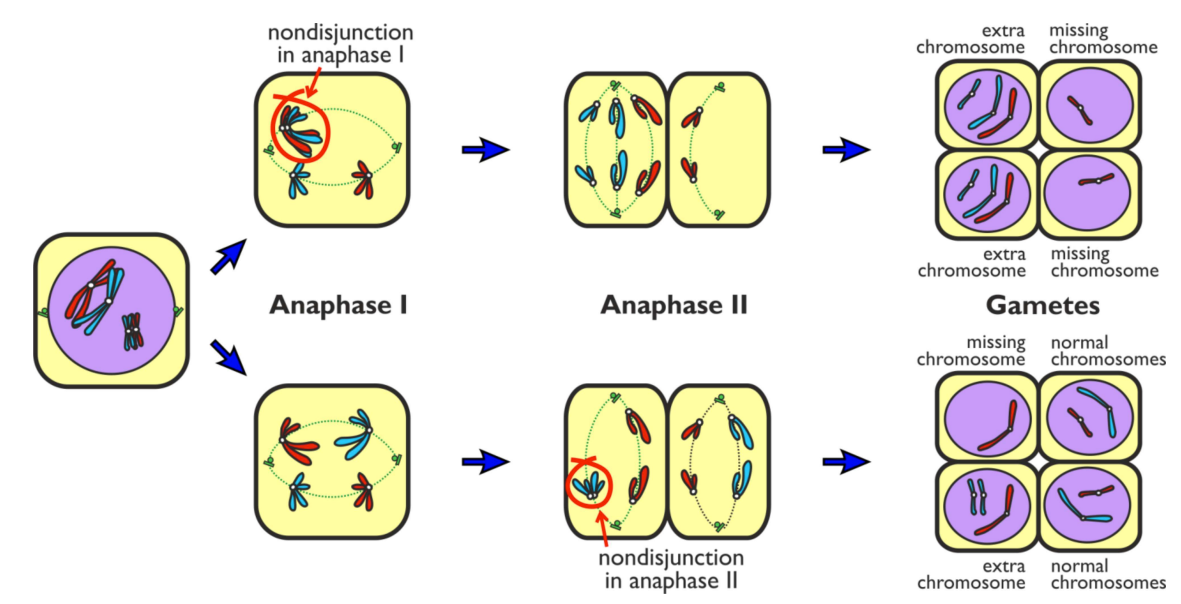
What is a non-disjunction mutation?
Chromosomes fail to separate correctly during anaphase in meiosis → gametes may end up with one extra copy or no copies of a particular chromosome
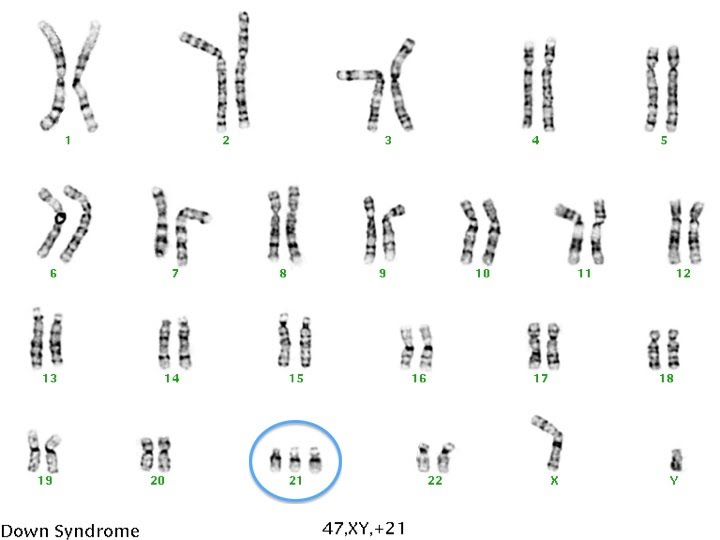
How can non-disjunction lead to polysomy?
If a gamete with an extra chromosome is fertilised by a normal gamete, the zygote will show trisomy (three chromosome copies, instead of two) → e.g. Down’s syndrome (caused by trisomy 21)
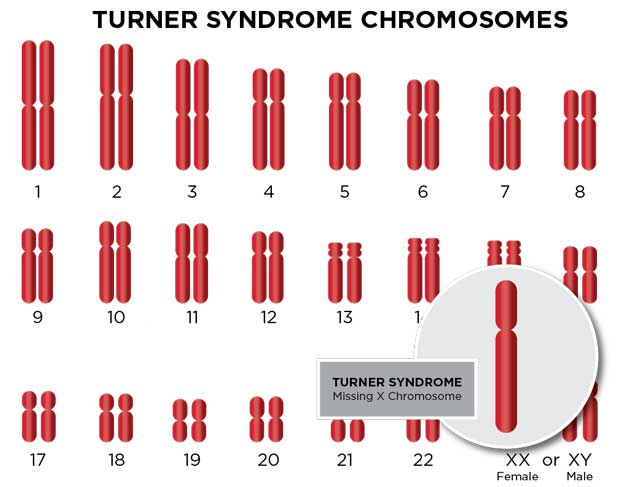
How can non-disjunction lead to monosomy?
If a gamete with a missing chromosome is fertilised by a normal gamete, the zygote will show monosomy (one chromosome copy, instead of two) → e.g. Turner’s syndrome (X0)