18- Impact Factor vs CiteScore | Key Differences Explained
 Call Kai
 Learn
Learn Practice Test
 Spaced Repetition
 Match
Match Flashcards
 Knowt Play
1/10

Earn XP
Description and Tags
Source: https://www.youtube.com/watch?v=xRnuDccxv-c
Name | Mastery | Learn | Test | Matching | Spaced | Call with Kai |
|---|
No analytics yet
Send a link to your students to track their progress
11 Terms
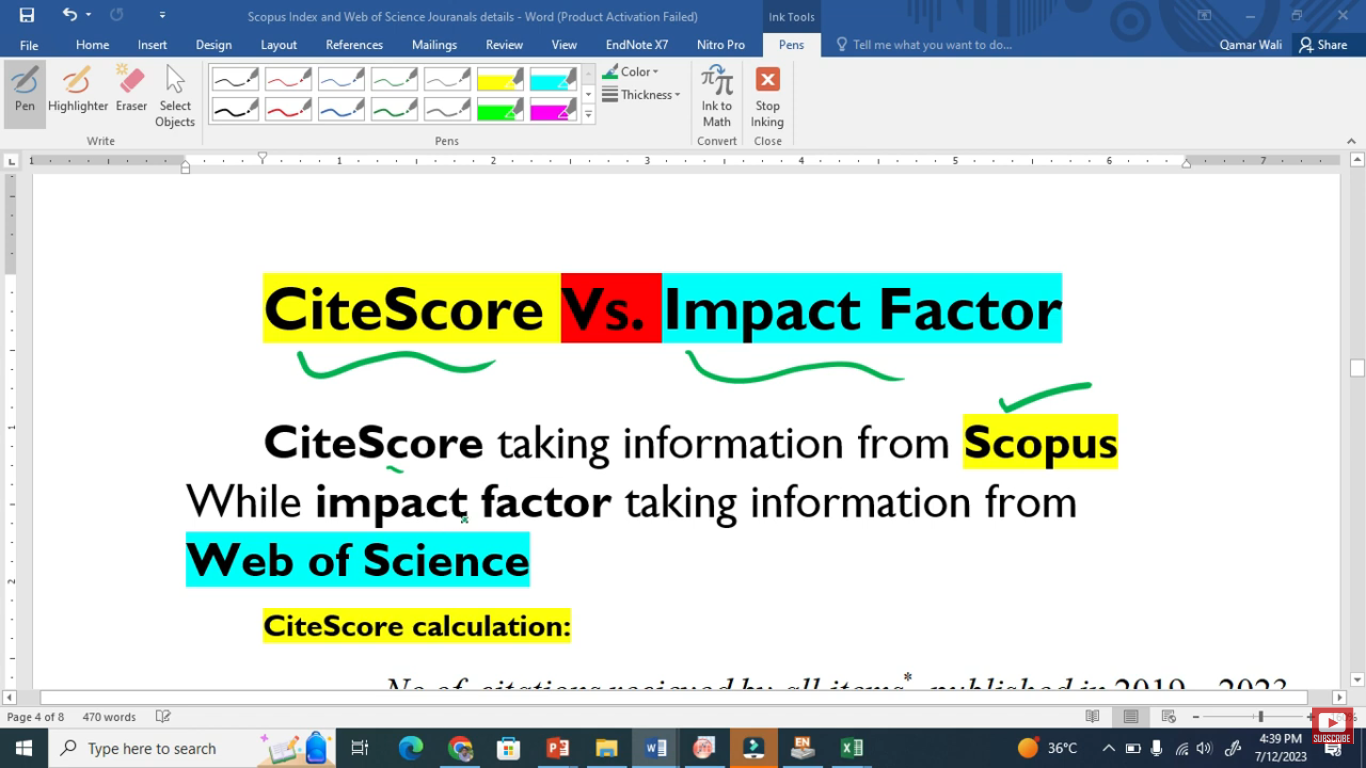
Which database serves as the exclusive data source for the calculation of CiteScore?
A. PubMed
B. Google Scholar
C. Scopus
D. Web of Science
Answer: C. Scopus
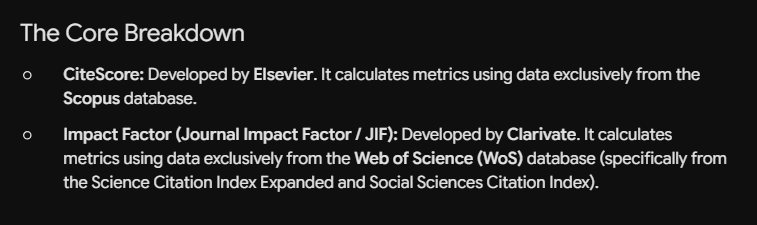
Explanation: CiteScore is a metric developed by Elsevier and is calculated based specifically on the citations and documents indexed within the Scopus database.
Regarding the calculation window, how many years of publication data are typically included in the standard CiteScore metric?
A. 5 years
B. 4 years
C. 2 years
D. 3 years
Answer: B. 4 years
Explanation: As of the 2020 methodology update, CiteScore calculates citations received in a 4-year period to documents published in those same 4 years.
In the calculation of the Journal Impact Factor (JIF), which document types are strictly counted in the denominator as 'citable items'?
A. All indexed documents
B. Articles and reviews
C. Editorials and letters
D. Conference proceedings only
Answer: B. Articles and reviews
Explanation: JIF defines the denominator by including only 'citable items,' which primarily consist of original research articles and review papers.
What is a primary difference in how CiteScore and JIF handle 'front matter' (editorials, letters, news items) in their calculations from 2016 to 2020?
A. CiteScore includes them in the denominator.
B. CiteScore only counts them in the numerator.
C. Both metrics exclude them entirely.
D. JIF includes them in the denominator.
Answer: A. CiteScore includes them in the denominator.
Explanation: CiteScore includes all document types in both the numerator and denominator, whereas JIF excludes front matter from the denominator while counting citations to them in the numerator.
Which of the following describes the 'CiteScore Tracker' feature?
A. Annual definitive reports
B. Historical trend analysis
C. Monthly metric updates
D. Real-time citation counts
Answer: C. Monthly metric updates
Explanation: CiteScore Tracker provides monthly updates throughout the year to show how a journal's metric is trending before the final annual value is fixed.
Which organization is responsible for the Journal Citation Reports (JCR), where the Impact Factor is published?
A. Elsevier
B. Springer Nature
C. Wiley-Blackwell
D. Clarivate
Answer: D. Clarivate
Explanation: Clarivate Analytics (formerly Thomson Reuters) owns the Web of Science and publishes the JCR annually.
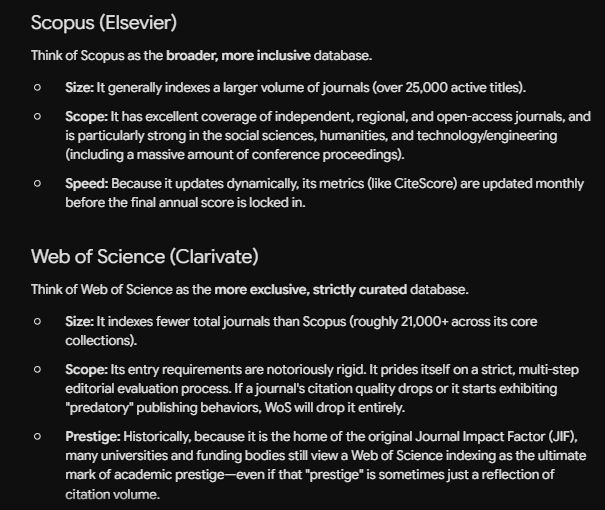
Why is CiteScore generally considered to have a broader coverage than the Journal Impact Factor?
A. It covers older archives.
B. Scopus is a free database.
C. Scopus indexes more journals.
D. It uses more citation types.
Answer: C. Scopus indexes more journals.
Explanation: The Scopus database indexes significantly more journals (over 25,000) compared to the Core Collection of Web of Science used for JIF.
How does the inclusion of all document types in the CiteScore denominator affect the resulting score compared to JIF for a journal with many editorials?
A. CiteScore will be lower.
B. CiteScore will be higher.
C. The scores will be identical.
D. JIF will be lower.
Answer: A. CiteScore will be lower.
Explanation: Because CiteScore includes 'non-citable' items like editorials in the denominator (the divisor), the final score is usually lower than a JIF that excludes them.
If a researcher wants to evaluate a journal in the Arts and Humanities, which metric would they have found historically missing until recently?
A. Journal Impact Factor
B. CiteScore
C. SNIP
D. h-index
Answer: A. Journal Impact Factor
Explanation: Until 2023, Clarivate did not assign a JIF to journals in the Arts and Humanities Citation Index (AHCI); CiteScore has provided metrics for these journals for much longer.
The following image is very important: