California DMV Motorcycle Written Knowledge Test - Part 2
 Call Kai
 Learn
Learn Practice Test
 Spaced Repetition
 Match
Match Flashcards
 Knowt Play
1/24

Earn XP
Description and Tags
(This is only a flashcard set, this will not function on Multiple Choice mode, so make sure to select only flashcards for practice AND set visible flashcards to "99" to get all 25 questions on learn mode/test mode for best studying experience). To help with your M1 permit in California. Always get the knowledge test out of the way first so you can insure your bike and practice in town. You should read the California Motorcycle Handbook on top of that. Study these sets and all parts a week before your scheduled test date and memorize everything or else you'll stress yourself out studying last minute and which will lower your chances of passing. You got this.
Name | Mastery | Learn | Test | Matching | Spaced | Call with Kai | Chat |
|---|
No analytics yet
Send a link to your students to track their progress
25 Terms
In a normal turn lean your:
A) Body more than your motorcycle
B) Motorcycle more than your body
C) Motorcycle and your body at the same angle
C) Motorcycle and your body at the same angle
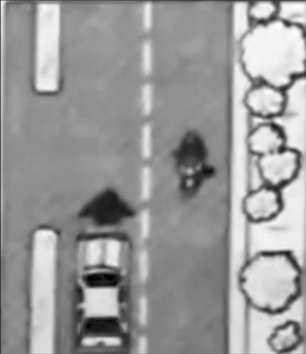
You are preparing to move to the left lane as pictured below the spot the vehicle is passing beside you it is best to:
A) Turn your head to the left
B) Look in the left mirror
C) Slow and look in the left mirror
A) Turn your head to the left
On a wet road it will usually be most slippery:
A) In the left wheel track
B) On loose gravel
C) In the center portion of the lane
C) In the center portion of the lane
If your throttle sticks:
A) Squeeze the clutch and use the engine cut off switch
B) Shift to neutral and apply both brakes
C) Downshift and apply both brakes
A) Squeeze the clutch and use the engine cut off switch
To ride over an object on the road:
A) Stay seated until you have crossed the object
B) Rise slightly off the seat
C) Edge across the object
B) Rise slightly off the seat
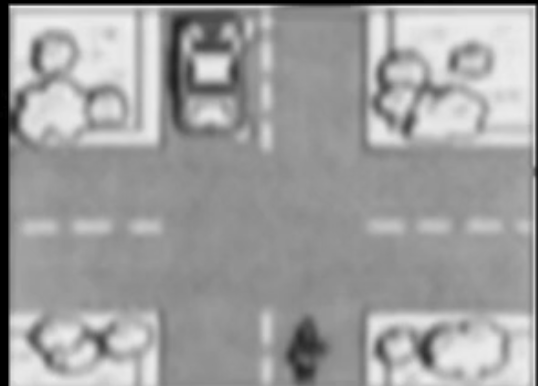
In the picture below, the car is waiting to enter the intersection. Usually it is best for you to:
A) Slow and maintain the center lane position
B) Slow and increase space
C) Speed up and move left to get through the intersection quickly
B) Slow and increase space
The single most important thing you can do to improve your chances of surviving a collision is to:
A) Wear a securely fastened helmet
B) Be familiar with the motorcycle
C) Ride in the center portion of the lane
A) Wear a securely fastened helmet
You are being pursued by a police vehicle with its lights and siren activated. You have deliberately ignored the officers warning to stop and have sped away. During the pursuit a person is killed, you are subject to:
A) A fine of not less than ten thousand dollars
B) Imprisonment in a state prison for six years
C) Being jailed in the county jail for not more than one year
B) Imprisonment in a state prison for six years
just don’t get caught.
If you must stop quickly while turning and you are unable to straighten the motorcycle first, apply the:
A) Front brake and increase your lean angle
B) Brakes harder as the lean is reduced
C) Breaks first and then lean away from the turn
B) Brakes harder as the lean is reduced
Of the following, which one gives the most eye and face protection while riding:
A) A windshield
B) Goggles
C) A face shield
C) A face shield
To cross tracks that run parallel to your course:
A) Edge gradually across
B) Move away then turn and cross at an angle of at least 45 degrees
C) Move into the opposite lane to cross at a 90 degree angle
B) Move away then turn and cross at an angle of at least 45 degrees
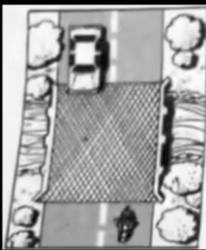
To ride over metal bridge gratings as pictured below:
A) Ride straight across
B) Cross at a sharp angle without changing lanes
C) Weave zigzag across
A) Ride straight across
When you are being followed too closely it is usually best to:
A) Move closer to the vehicle ahead
B) Move to the right portion of the lane
C) Drop back farther from the vehicle ahead
C) Drop back farther from the vehicle ahead
To see better when following a vehicle at night:
A) Increase your following distance and use your low beam
B) Drop farther back and use your high beam
C) Use the headlights of the vehicle ahead
C) Use the headlights of the vehicle ahead

In the picture shown it is usually best to ride in which position:
A) Position one
B) Position two or three
C) Position three
B) Position two or three
The ability to think clearly and ride safely is affected by as little as:
A) 6 drinks
B) Three drinks
C) One drink
C) One drink
A group of riders move from a staggered formation into a single file when:
A) Traffic is heavy
B) Turning corners
C) Riding at night
B) Turning corners
If you have a flat tire while riding hold the handle grips firmly and:
A) Use the brake of the good tire or avoid braking
B) Gently apply both brakes
C) Use only the brake that controls the flat tire
A) Use the brake of the good tire or avoid braking
With a properly adjusted mirror you can see:
A) The line beside you
B) Everything behind and to the side of you
C) Part of the lane beside you and behind you
C) Part of the lane beside you and behind you
When carrying loads:
A) Fasten the load against the frame on the back of the seat
B) Keep the load low and as far forward as possible
C) Keep the load behind the rear axle
B) Keep the load low and as far forward as possible
On a pave to two-lane road sand and gravel are most likely to collect:
A) Near the center of the road
B) Near the sides of the road
C) In the left wheel track
B) Near the sides of the road
When swerving it is important to:
A) Always brake before swerving
B) Swerve in the direction the hazard is traveling
C) Separate braking from swerving
C) Separate braking from swerving
When carrying a passenger:
A) Your motorcycle will react the same
B) It takes longer to brake and accelerate
C) Let some air out of the tires for better traction
B) It takes longer to brake and accelerate
When following a vehicle you should try to:
A) Ride in the right portion of the lane
B) Ride where the driver can see you in the rear mirror
C) Ride in the left portion of the lane
B) Ride where the driver can see you in the rear mirror
To predict how a hazard may affect you it's important to:
A) Watch for brake lights or turn signals
B) Adjust speed to get around the hazard
C) Know the speed distance and direction that the hazard is moving
C) Know the speed distance and direction that the hazard is moving