OM and Eyes Review
 Call Kai
 Learn
Learn Practice Test
 Spaced Repetition
 Match
Match Flashcards
 Knowt Play
1/33

There's no tags or description
Looks like no tags are added yet.
Name | Mastery | Learn | Test | Matching | Spaced | Call with Kai | Chat |
|---|
No analytics yet
Send a link to your students to track their progress
34 Terms
In the microbiology lab, ______ can reveal vellular changes associated with infections or malignancy
Cytology
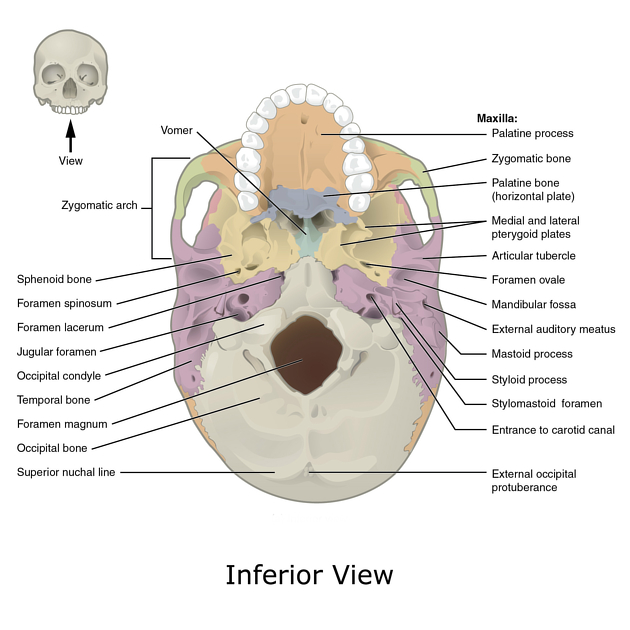
Which bone of the skull is twice as thick as the others?
Occipital
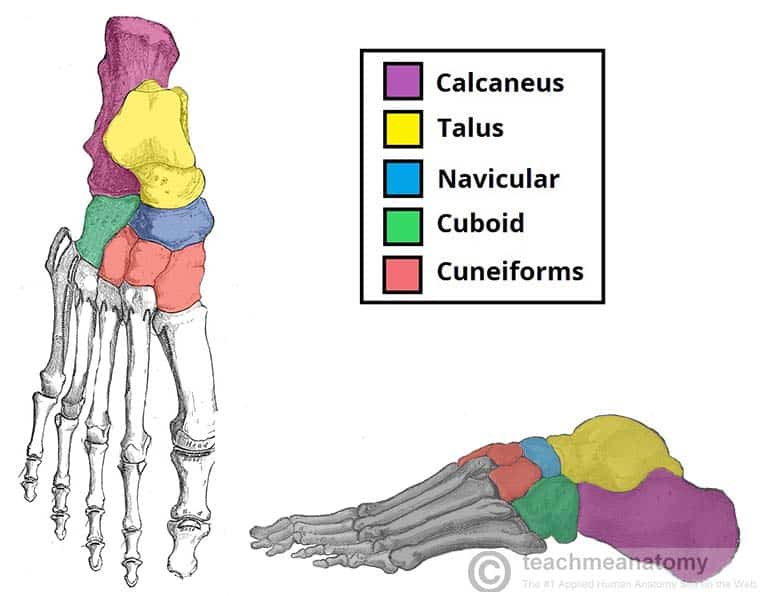
Distinguish between the talus and calcaneus of the foot
The abbreviation CA means…
Cancer
dis-
dis- -> to free from
dys- -> painful, bad
Distinguish Apert and Crouzon syndrom
Apert syndrome and Crouzon syndrome are both genetic disorders causing premature fusion of skull bones (craniosynostosis) and midface hypoplasia. The main difference is that Apert syndrome includes severe fusion of the fingers and toes (syndactyly) and often intellectual disability, whereas Crouzon syndrome does not involve fused fingers/toes and typically preserves normal intelligence
In Apert syndrome, the fingers and toes cannot be pulled A-PART because they are fused together.
The _____ nerve enters the mandible on the deep surface of the ramus, providing sensation to the teeth
Inferior alveolar nerve
The _______ bone of the skull has openings at its base for the carotid arteries and jugular veins called the carotid foramen and jugular foramen
temporal
Term that refers to a malignant glandular tumor
Adenocarcinoma
The action that mydriatic agents and cycloplegics do NOT share is which of the following?
dilation of the pupil
paralysis of the sphincter muscle of the iris
paralysis of the accommodation mechanism (ciliary body)
Paralysis of the accommodation mechanism (ciliary body)
**only cycloplegics paralyze the accommodation mechanism
The acronym CIS means
carcinoma in situ
Which of the following ophthalmic meds are contraindicated in glaucoma patients because they can cause an increase in IOP?
miotics
mydriatics
cycloplegics
steroidal anti-inflammatories
Cycloplegics (becuase they relax the ciliary body, causing the iris tissue to bunch up when the pupil dilates, which blocks fluid drainage)
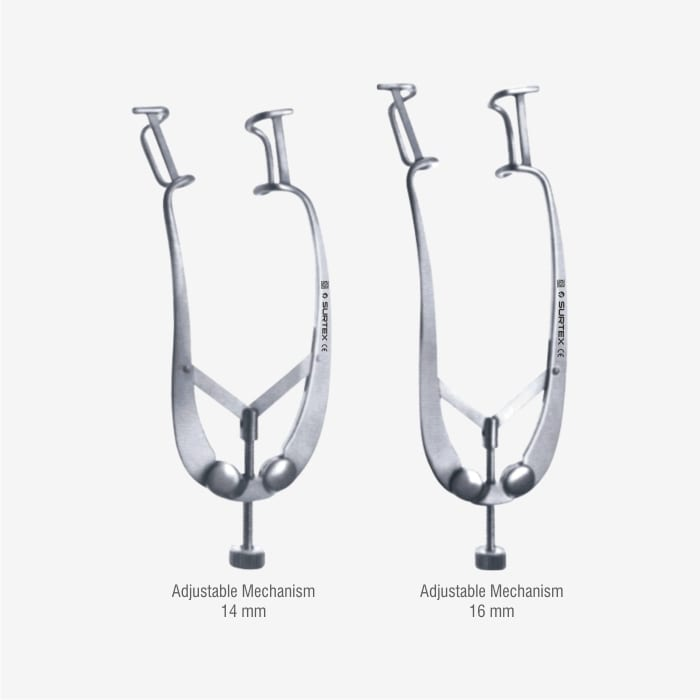
Castroviejo eye speculum
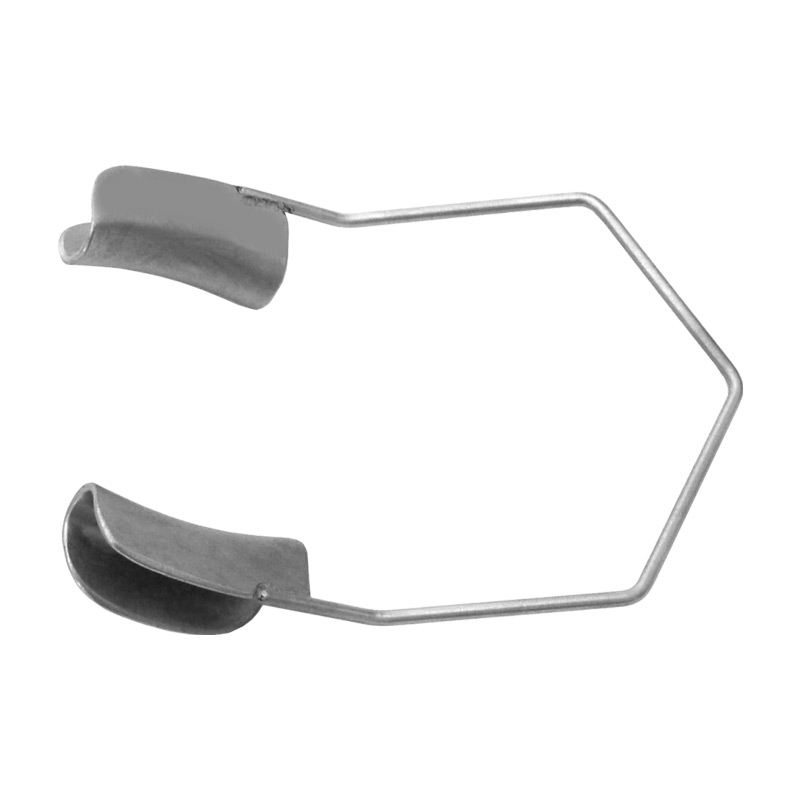
Barraquer eye speculum
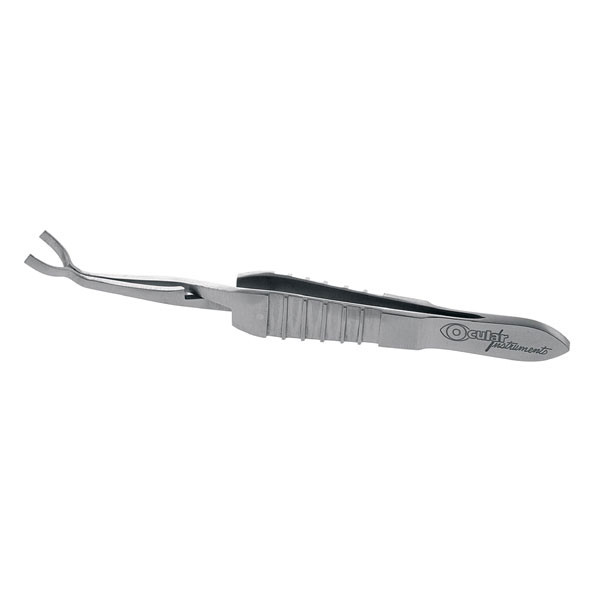
Landers vitrectomy lens forceps
A benign epithelial neoplasm characterized by a branching or lobular tumor is called a ______
Papilloma
Distinguish between recession and resection (surgical correction to restore proper eye alignment)
Recession – weakens an overactive muscle
Resection – strengthens a weak muscle
Recession: Detaching an eye muscle and reattaching it farther back on the eyeball to weaken that muscle.
Resection: Removing a portion of the eye muscle and sewing the remaining ends back together to strengthen and shorten it.
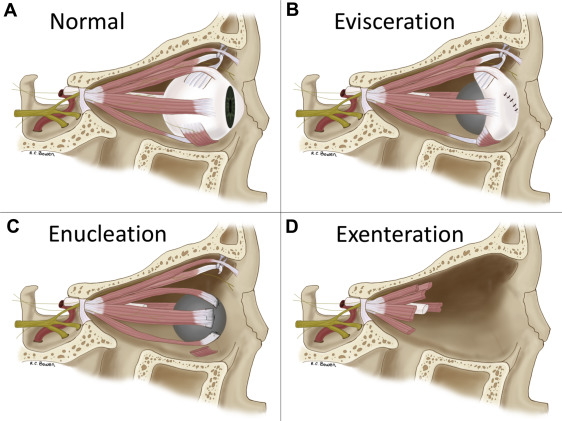
Distinguish between evisceration, enucleation, and exteneration
Evisceration
Removal of the contents of the eye within the scleral shell
Sclera (white of the eye) remains intact
Eye muscles remain attached to the sclera
Cosmetic prosthesis is placed
Preserved sclera and muscles help provide prosthesis mobility and improved cosmetic appearance
Enucleation
Complete removal of the eyeball (globe)
Eye muscles and orbital contents remain intact
Exteneration
Removal of:
Entire globe (eyeball)
Extraocular muscles and supporting orbital structures
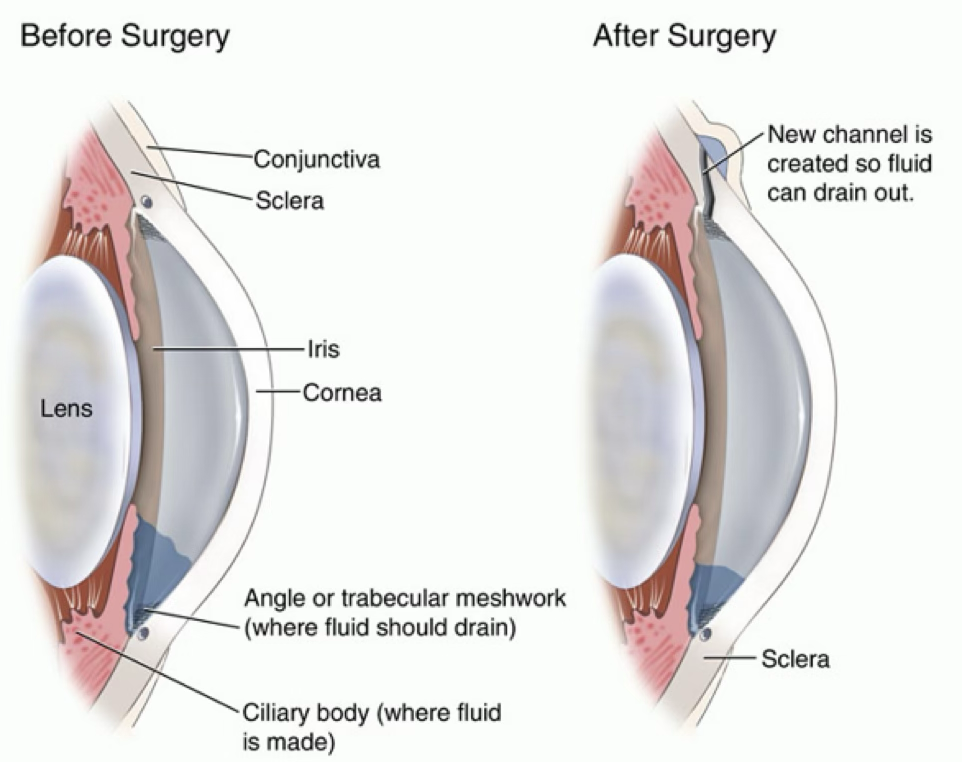
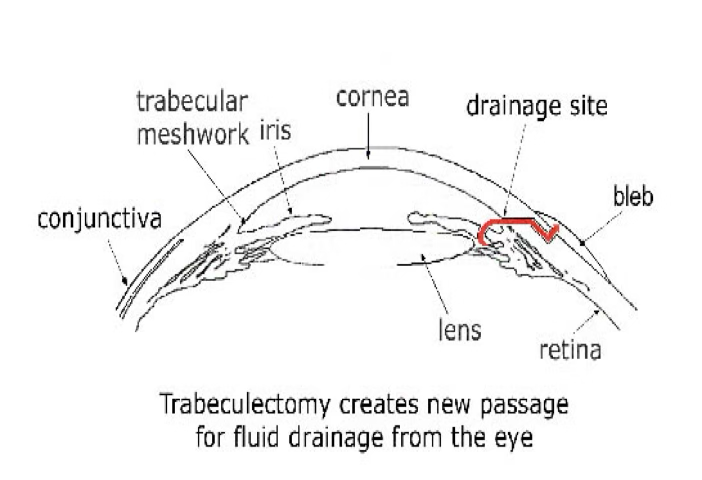
Trabeculectomy
Surgical procedure used to treat glaucoma
Removes part of the trabecular meshwork and adjacent tissue
Creates a new drainage pathway for aqueous humor
Reduces elevated intraocular pressure (IOP)
What type of needle is used for corneal suturing?
Spatula micropoint
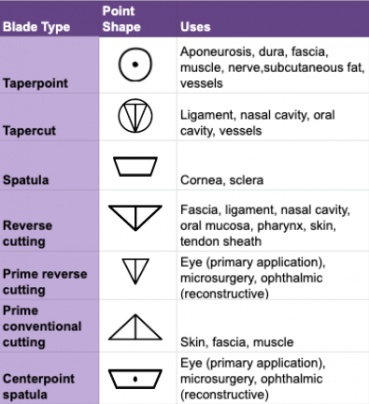
An injection of either C3F8 or SF6 may be injected intra-ocularly to create retinal pressure to allow for resorption of subretinal fluid and scar formation near the end of what procedure?
Scleral buckling
Wihch suture type allows for scleral passage in both correction and retinal detachment procedures?
Spatulated
5-FU and Mitomycin are ________ that prevent postoperative fibrosis/scarring after iridectomy
anti-metabolites
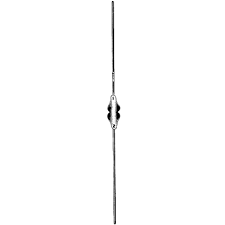
Bowman lacrimal probe
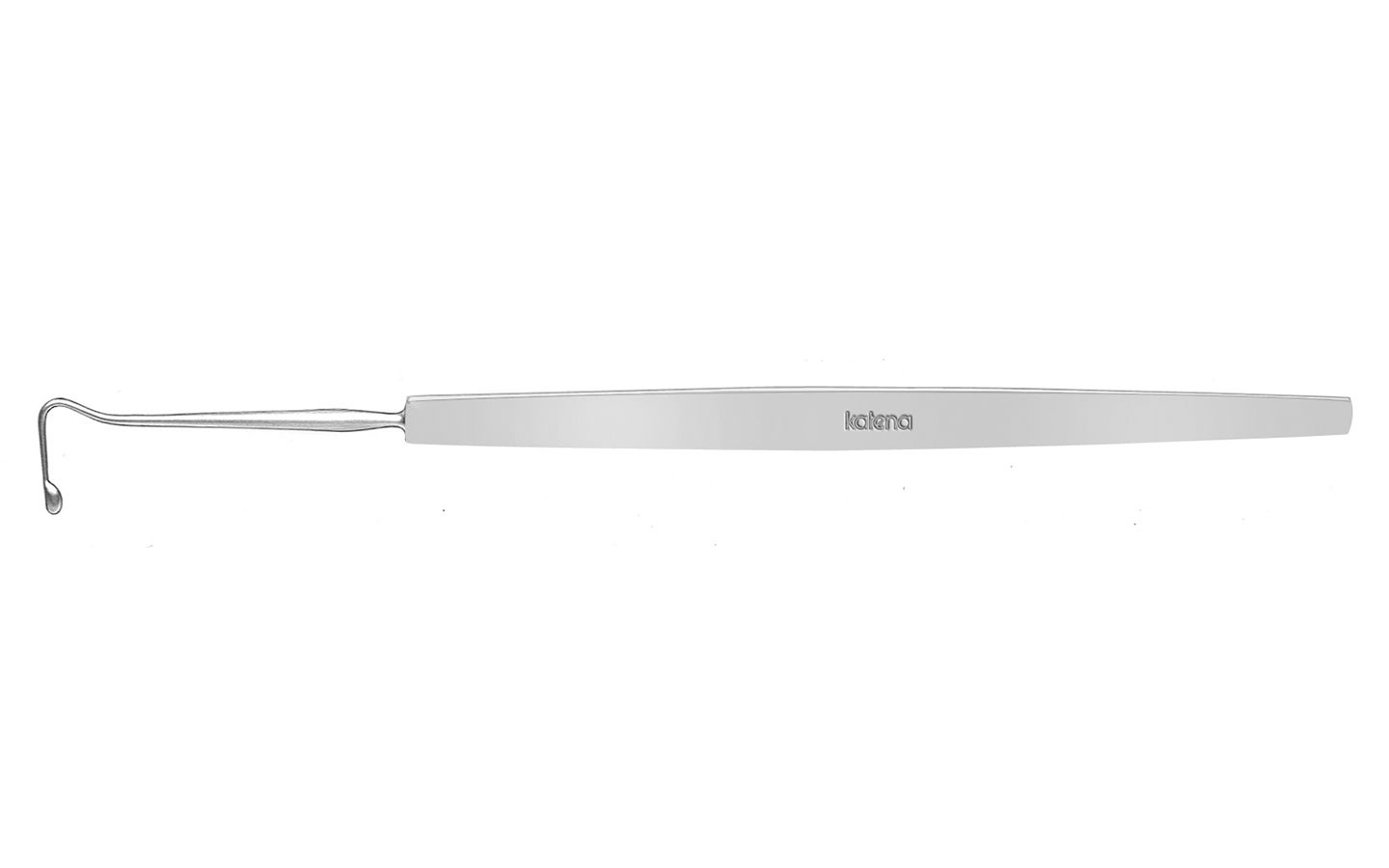
Jameson muscle hook (used to isolate extraocular muscle(s) in strabismus repair)
The most common suture used in intraocular lens fixation
Polypropylene
Discern between intracapsular and extracapsular cataract extraction
In extracapsular cataract extraction, only the lens is removed.
In intracapsular cataract extraction, the entire capsule is removed.
Extracapsular cataract extraction (ECCE) and intracapsular cataract extraction (ICCE) are two surgical methods for removing cloudy lenses from the eye, differing mainly by whether the supportive outer casing (capsule) is left behind. ECCE keeps the back part of the capsule intact to hold a fake lens, while ICCE removes the entire lens and capsule together
Which type of cataract extraction procedure is self-sealing, meaning it requires no suture to close the corneal incision?
Extracapsular cataract extraction
Cryothermy uses _____ while diathermy uses _____ to seal retinal tears
cold, heat
Atropine class and function
Anticholinergic, mydriatic
Celestone classification and generic name
Anti-inflammatory, betamethasone