LU 1.2 Emergency Triage
 Call Kai
 Learn
Learn Practice Test
 Spaced Repetition
 Match
Match Flashcards
 Knowt Play
1/20

There's no tags or description
Looks like no tags are added yet.
Name | Mastery | Learn | Test | Matching | Spaced | Call with Kai | Chat |
|---|
No analytics yet
Send a link to your students to track their progress
21 Terms
What are the general concepts of triage ?
triage is a brief assessment
it determines the time and sequence in which patients should be seen in the ED
to manage patient flow, task, resources and space
emphasizes on the most experienced rather than most senior
What are the aims of emergency triage ?
to identify urgent and life threatening conditions for early interventions
to ensure patients are treated in order according to their clinical urgency
to ensure treatment is appropriate and timely
Triage is divided into 2 main category which are …
Pre-Hospital Triage
Emergency Department Triage
Pre-Hospital Triage is divided into 2 categories which are …
Trauma / Multiple Casualty Triage
Disaster / Mass Casualty Triage
Emergency Department Triage is divided into 2 categories which are ….
Primary triage (Uses a triage scale of between 3 to 5 patient acuity
Secondary triage (more detailed medical screening examination)
What is Trauma / Multiple Casualty Triage ?
the number of patients and severity of their injuries do not exceed the capability of the facility and staff
patients with life-threatening problems and those sustaining multiple-system injuries are treated first
What is Disaster / Mass Casualty Triage ?
the number of patients and severity of their injuries exceed the capability of the facility and staff
the patients with the greatest chance of survival and requiring the least expenditure of time, equipment, supplies and personnel are treated first
What are the criteria used in trauma/ multiple casualty triage?
findings from the primary survey
mechanism of injury (ejection from vehicle, fall>20 feet, high speed auto crash)
anatomic criteria (pelvic fracture, flail chest, 2 or more proximal bone fractures)
medical criteria (age <5, >55, systolic BP <90)
What does the tag colour mean during disaster ?
red : emergent (limmediate care for life threatening situation)
yellow : urgent (delay care, injuries not life-threatening)
green : non urgent (little or no care needed)
black : dead / unsalvageable (no care, mortal injuries, cannot be saved)
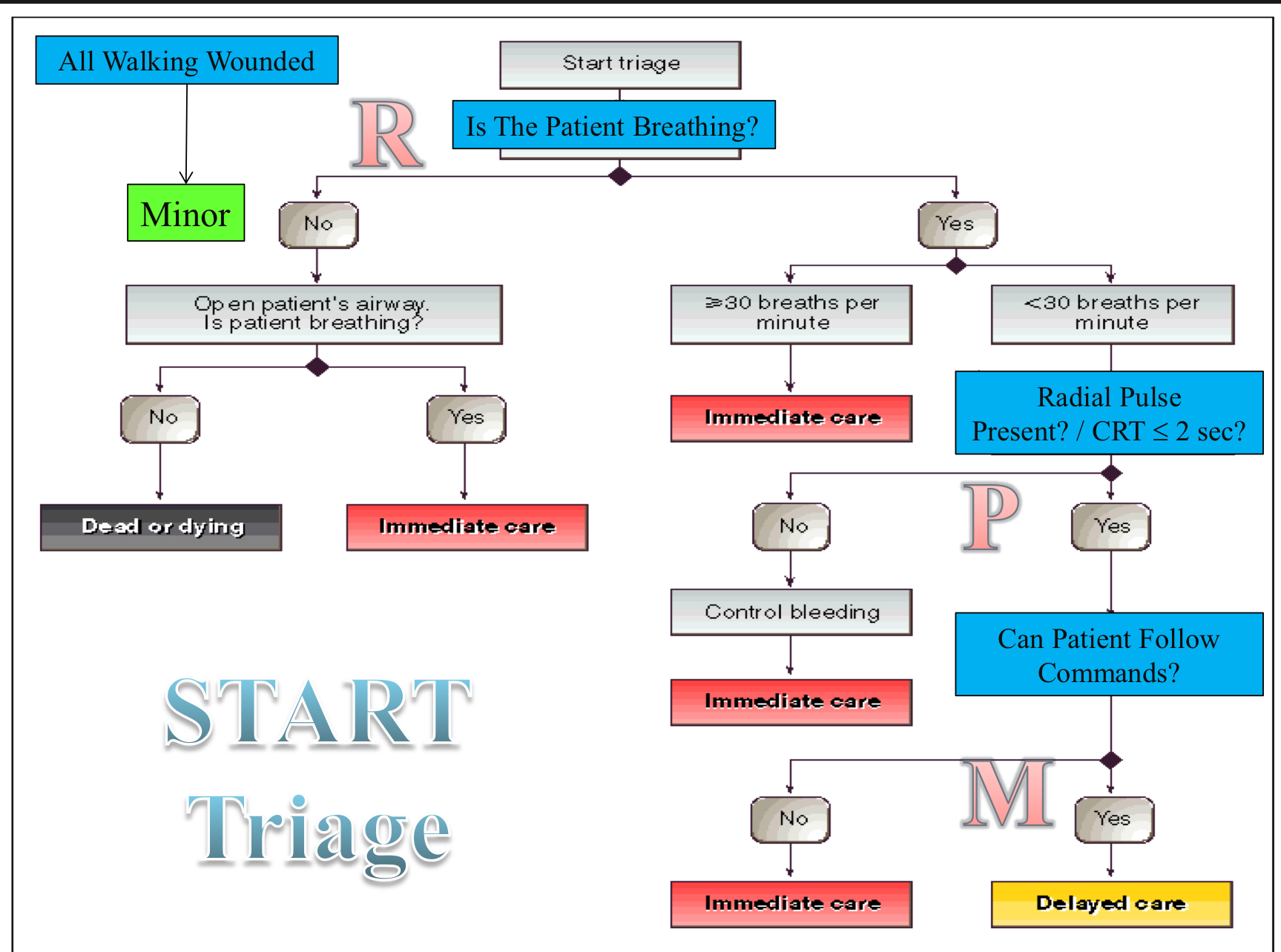
What is START Triage and how do you do the assessment ?
Simple Triage And Rapid Treatment
Assessment based on RPM (Respiratory, Perfusion, Mental status)
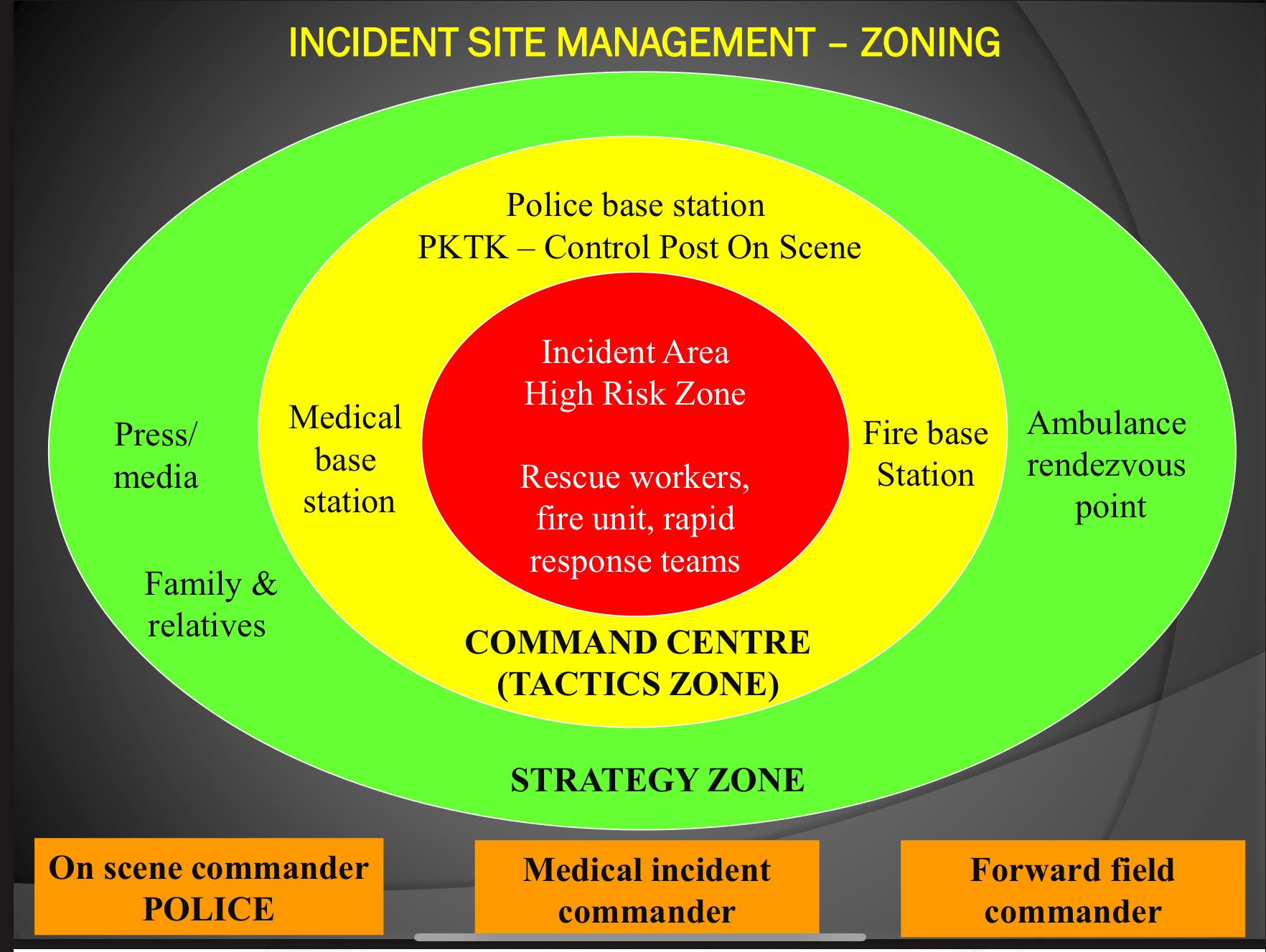
Who are in the incident site management in each zone ?
Incident area (high risk zone)
command centre (tactics zone)
strategy zone
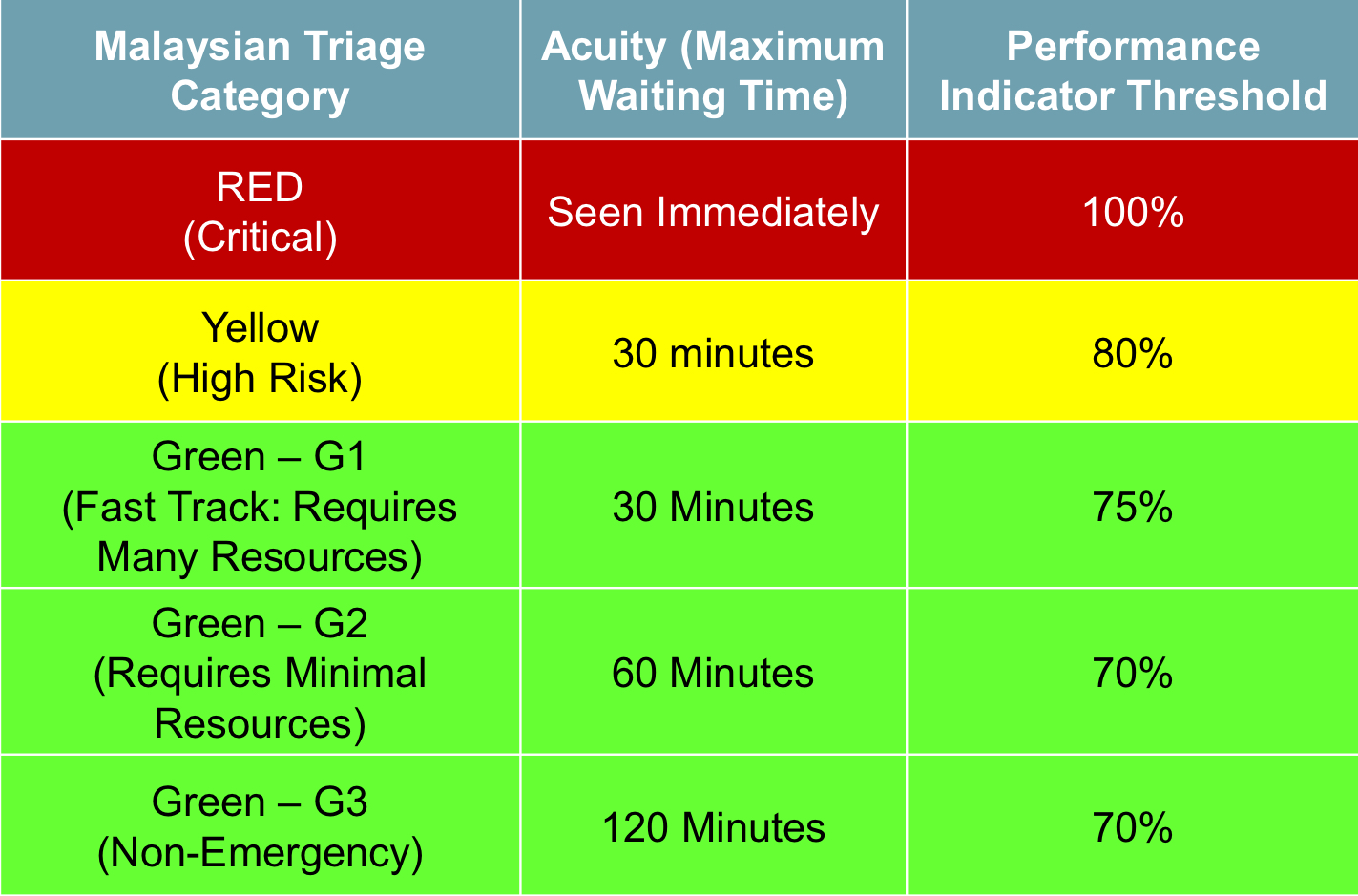
What is the primary triage category in emergency department ?
What are the Triage essentials ?
visual
verbal and listen
touch and smell
intuition
What are the ideal Triage interview components ?
chief complaint
history of current complaint
name, age, gender
mode of arrival
LMP (including gravida, para and abortion history if appropriate)
assessment data (Vital signs)
fall risk
pain assessment
What is the triage interview method based on SOAPIE ?
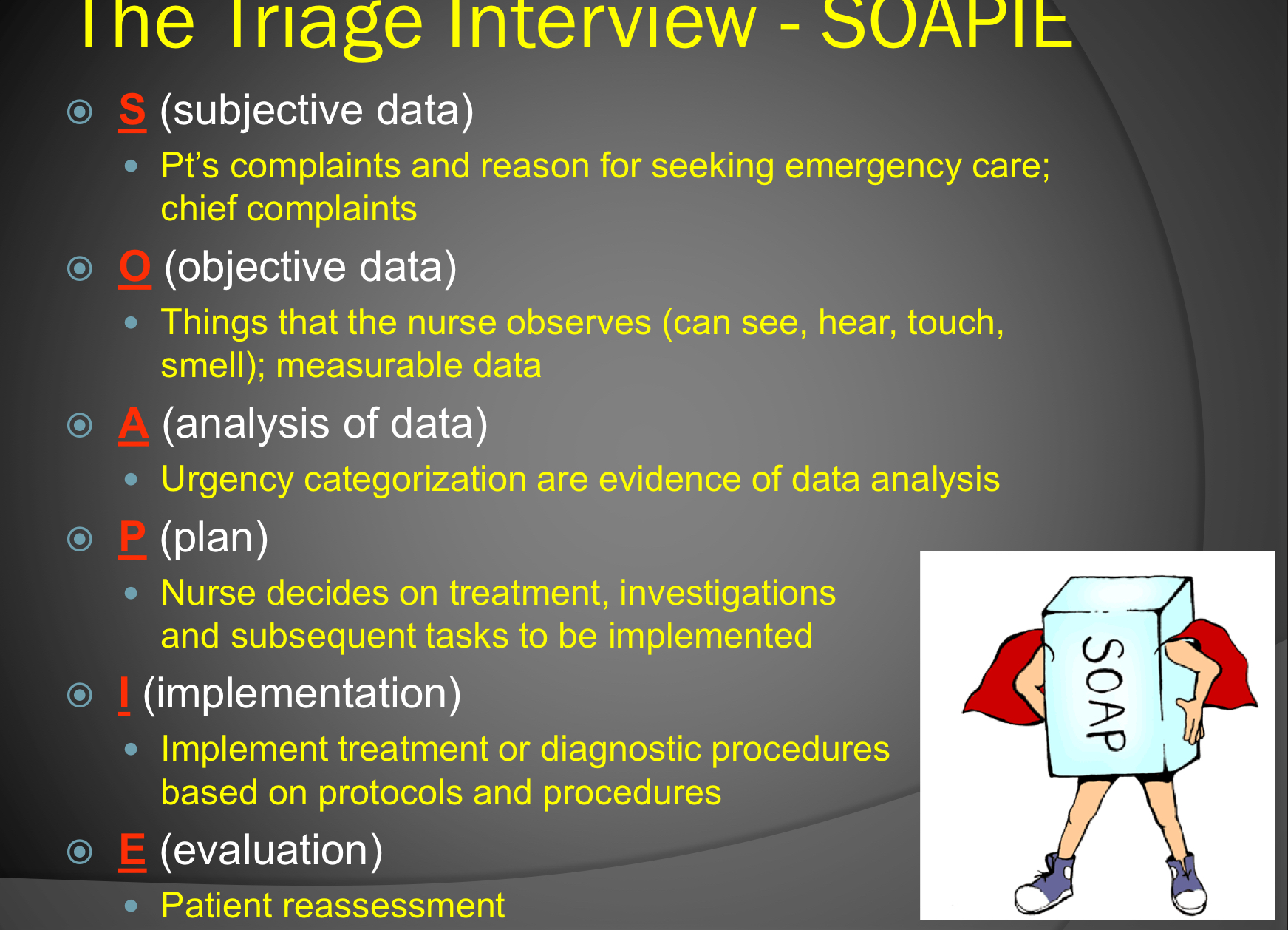
What is the triage interview method used to do thorough evaluation of a symptom ?
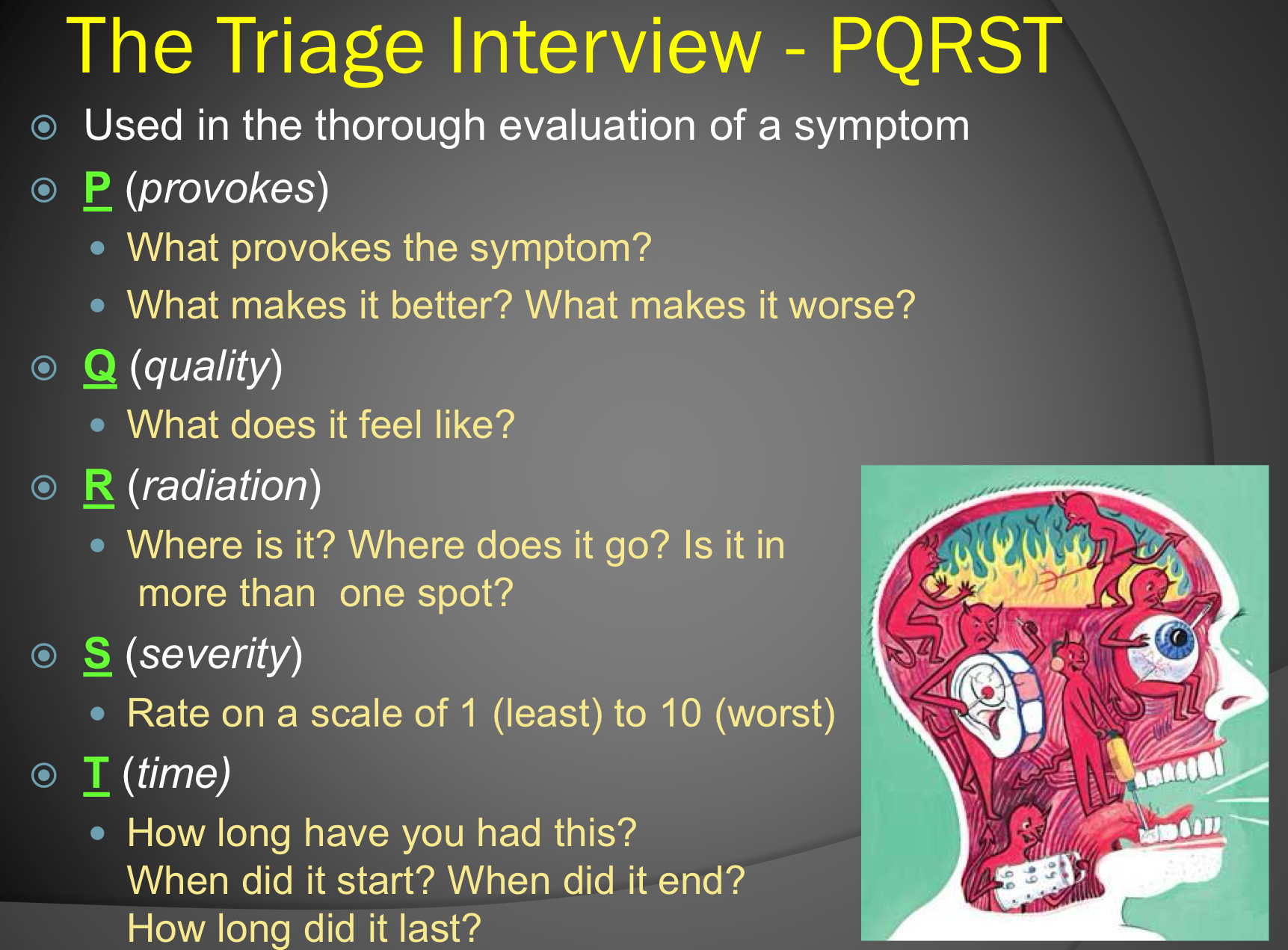
What is the triage “pearls” / golden rule ?
patient should not wait longer than 5 minutes after ED arrival until being evaluated by Triage
it is important for patient to be reassessed regularly because patient’s condition may change at any time
What is Medical screening examination (MSE) ?
it is secondary triage
perfomed on all patients who present to ED and request medical care
usually performed by a doctor, trained ED nurse or medical assistant
What is the purpose of Medical Screening examination (MSE) ?
to categorize patients into degree of urgency to be seen in ED
to identify those patients who do not have emergency medical conditions and potentially can be referred to out-patient clinics
What is Medical screening examination (MSE) consists of ?
to determine
i) vital signs
ii) mental status
iii) general appearance
iv) ability to walk
v) focused physical examination
What are the pitfalls( what not to do) of ED triage ?
failure to recognize and attend to a patient who complains of severe pain
failure to take adequate vital signs
failure to adequately document the triage
failure to re-triage patients initially assigned to waiting room