suspensions
 Call Kai
 Learn
Learn Practice Test
 Spaced Repetition
 Match
Match Flashcards
 Knowt Play
1/32

There's no tags or description
Looks like no tags are added yet.
Name | Mastery | Learn | Test | Matching | Spaced | Call with Kai |
|---|
No analytics yet
Send a link to your students to track their progress
33 Terms
define suspension
A suspension is a dispersion in which solid drug particles are dispersed throughout a liquid medium
Are suspensions homogeneous?
No, 2 phase systems are not homogeneous. Can have uniformity still.
How big are coarse suspension
particle diameter > 1 µm
How big are colloidal suspensions?
particle diameter ≤ 1 µm
How big are nanosuspensions?
< 100 nm (0.1 µm)
define sediment
particles in a suspension settle due to gravity over time
Settling of a suspension is normal and expected. It does not indicate…
poor quality
poor stability
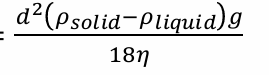
s𝑒𝑑𝑖𝑚𝑒𝑛𝑡𝑎𝑡𝑖𝑜𝑛 𝑟𝑎𝑡𝑒 (c𝑚/𝑠𝑒𝑐) =
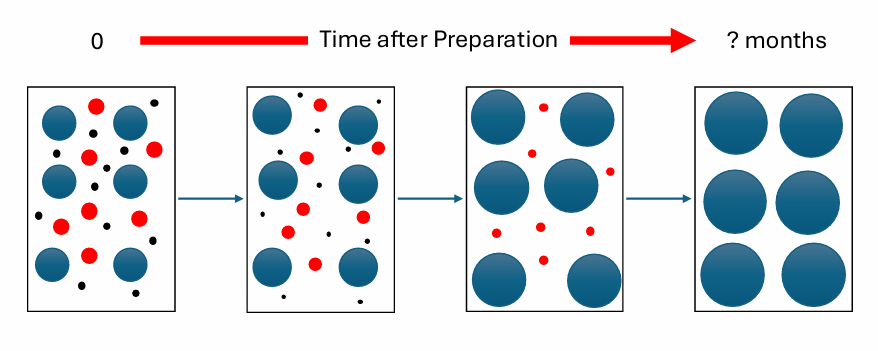
What is this process called?
ostwald ripening
Define Ostwald ripening
small particles get smaller and eventually disappear
large particles get larger
Can you prevent ostwald ripening?
No, it occurs in all suspensions and can’t be prevented. We can prevent cementation from occurring.
Why is cementation uncommon for manufactured suspensions?
They are formulated so that particles in the sediment don’t touch each other.
the expiration date of manufactured suspensions accounts for particle redispersion
How do you help prevent cementation in manufactured suspensions?
do not add anything (solvents, other drugs, salts etc) to a suspension
store the suspension according to the label instructions
If you are compounding a suspension, what is the best thing you can do to account for cementation and poor redispersion after sedimentation?
don’t compound large batches of suspensions
assign short BUD
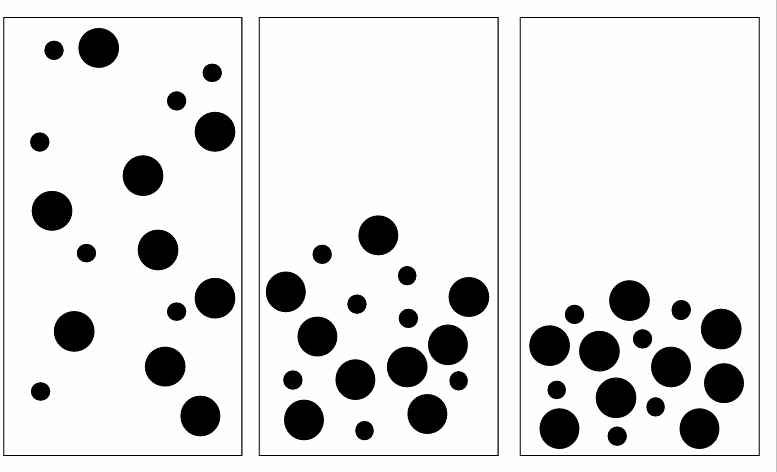
Even after particles have fully settled, the particles are not touching each other. Why?
This prevents cementation
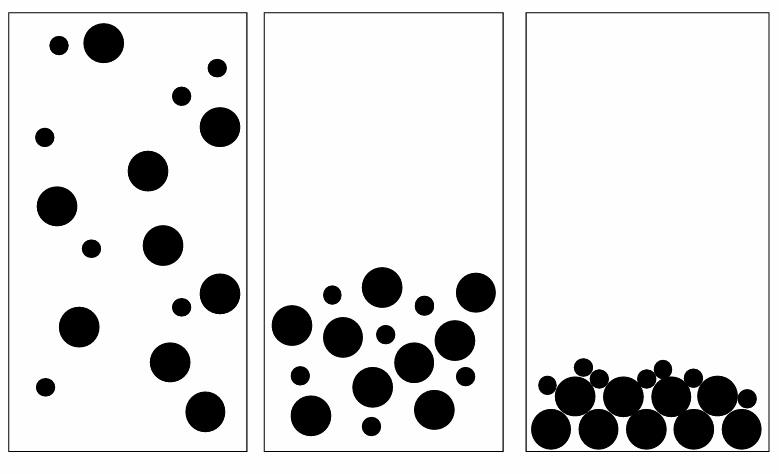
What is wrong with this photo?
This is an example of a poor suspension because the particles are touching each other. Eventually, this will lead to cementation.
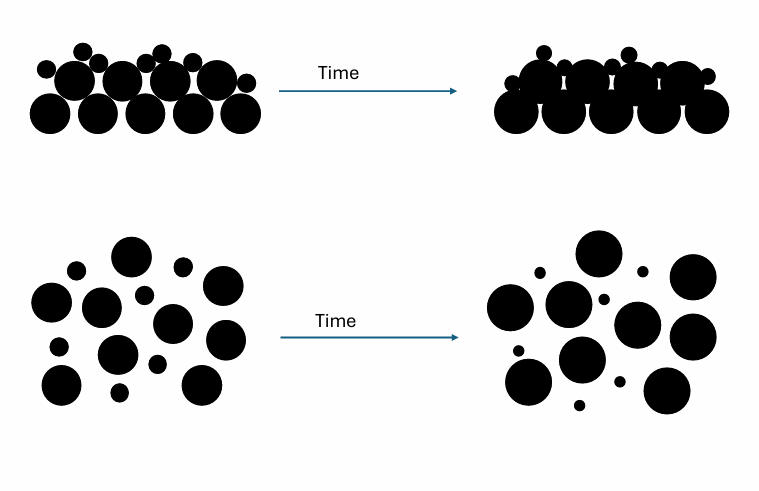
Which is an example of cementing and which is an example of a good suspension?
the top one is cementing and the bottom one is ideal because there is space between the particles
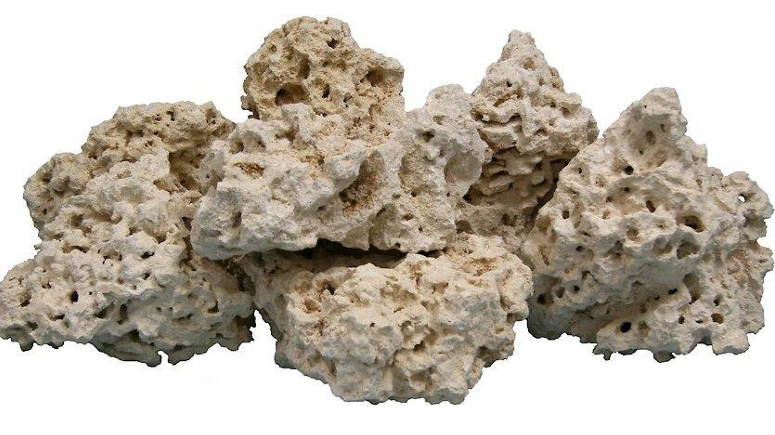
This is an example of what?
cementation
What are some advantages of suspensions?
dose is easily customized by choosing volume to administer
helps with low water solubility (don’t need cosolvents)
What are some disadvantages of suspensions
stability is lower/ shorter shelf life b/c of 2 phase system
packaging and transport are more expensive
Define suspending agents
increases viscosity to reduce sedimentation rate
Define gel forming solids
Small particles naturally form a viscous 3-dimensional network in water
The 3-dimensional gel network enhances viscosity above any dissolved polymers
The 3-dimensional gel network can include drug particles and modify particle-particle interactions
enhance dispersibility and reduce risk of cementation
list examples of gel forming solids
colloidal silicon dioxide
microcrystalline cellulose
bentonite
aluminum magnesium silicate/ veegum
define ionic modifier
ions in the liquid phase modify particle- particle interactions to reduce contact between particles in the sediment
Why use ionic modifiers?
particle particle interactions determine the ability of the particles to be dispersed by shaking (dispersibility/ redispersibility). Particle particle interactions determine risk of cementation
list examples of ionic modifiers
salts (NaCl, NaSO4, NaH2PO4)
define wetting agents
improve the water-particle interaction to help the liquid phase spread across the surface of the particles
list examples of wetting agents/ surfactants
polysorbate 20, 40, 60, 80
docusate sodium
poloxamer 188, 407
How else can glycerin be used?
to help in the initial dispersion of particles
How to shake a suspension?
make sure the cap is on tight
invert the bottle
shake vigorously until the solid is uniformly dispersed
compounding suspensions, remember…
assign short BUD
follow established formulation exactly
How to store suspensions
tightly capped
room temp unless instructed otherwise
away from sunlight
how to dispose of suspension?
drug take back sites