Cave Paintings Quiz 1
 Call Kai
 Learn
Learn Practice Test
 Spaced Repetition
 Match
Match Flashcards
 Knowt Play
1/14

There's no tags or description
Looks like no tags are added yet.
Name | Mastery | Learn | Test | Matching | Spaced | Call with Kai | Chat |
|---|
No analytics yet
Send a link to your students to track their progress
15 Terms
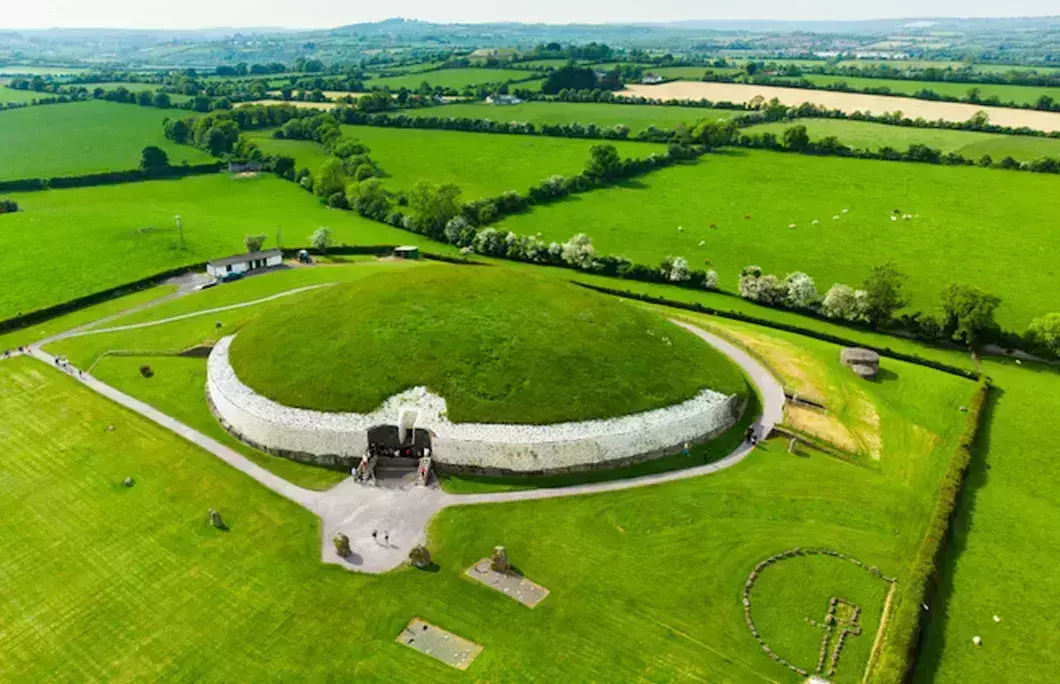
Newgrange, ca. 3300-2900 BCE

Beaker with animal decoration, Susa, ca. 4000 BCE

Warka Vase, ca. 3200-3000 BCE

Statuettes of two worshippers ca. 2700 BCE

Stele of the Vultures, ca. 2600-2500 BCE
Newgrange broad identification
Irish neolithic tomb
Beaker w/ animal decoration broad identification
Iranian neolithic painted ceramic funerary beaker
Warka Vase broad identification
Mesopotamian carved alabaster vessel
Statuettes of two worshippers broad identification
Sumerian alabaster votive statuettes
Stele of the vultures broad identification
Sumerian limestone stele
Newgrange observation + interpretation/significance
Corbeled arch - overlapping horizontal courses of stone until they meet at the top. The top of the structure is built in the shape of a triangle, an early form of an arch. This made the weight pressing down from the soil more evenly distributed, allowing the area underneath to be hollow. This allowed the tomb itself to exist.
Beaker with animal decorations observation + interpretation/significance
The walls of the beaker are extremely thin and can hold about a gallon of water. This hints at the fact that it was not used as an everyday drinking vessel. Instead, it was used more as a funerary or ritual vessel instead.
Big animal horns are also shown, something that appears again and again in neolithic art. The ibex is completely framed within lines, hinting at an idea of constraint.
Warka vase observation + interpretation/significance
There are a bunch of naked men waiting to hand the goddess Inanna her offerings. It depicts some sort of festival, where her husband returns allowing plants and livestock to flourish and bring food to all. This is a symbol of fertility, something that is incredibly common in neolithic artwork. The reed bundles seen in the background are Inanna’s iconography, a symbol that is closely associated with her.
Statuettes of two worshippers observation + interpretation/significance
The eyes of the statuettes are made out of lapis lazuli. This is a material that doesn’t come from around that area, but instead from Afghanistan, making it a symbol of high class. They were sacrifices to the gods, so they were carefully buried instead of being tossed away.
It depicts both men and women. The men have beards, which are signs of power.
Stele of the vultures observation + interpretation/significance
It depicts an all powerful king trampling over dead people on one side, but on the other it shows a huge god with a bunch of dead people in a net. It symbolizes their idea that even though the king is powerful, he still needs to have their divine power backing him up. It plays into the idea of legitimacy that was prevalent back then.