experiment 3 - biosynthesis and distillation of ethanol
 Call Kai
 Learn
Learn Practice Test
 Spaced Repetition
 Match
Match Flashcards
 Knowt Play
1/22

There's no tags or description
Looks like no tags are added yet.
Name | Mastery | Learn | Test | Matching | Spaced | Call with Kai | Chat |
|---|
No analytics yet
Send a link to your students to track their progress
23 Terms
Draw ethanol
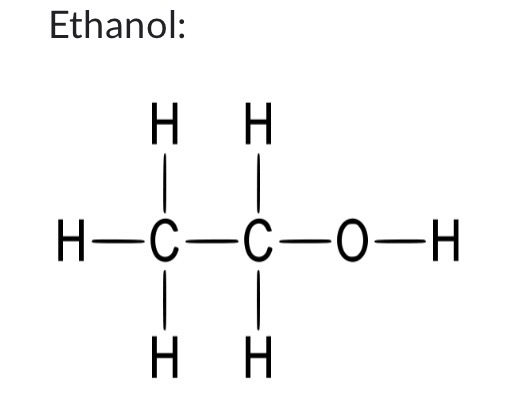
What’s the overalll reaction for fermentation to ethanol

What is ethanol best known as (not in lab manual)
A type of alcohol in beverages, solvent for thermometers and as fuel
What are the three fold representations of matter (not on lab manual)
Macroscopic
Microscopic
Symbolic level
In terms of the three folds of matter representation describe ethanol on all levels (not in lab manual)
Macro - bottle of alcohol
Micro - distillation process of ethanol and water
Symbolic - using chemical symbols, formulas and equations to describe the reaction
What occurs when you ferment sugar
Sucrose converts to ethanol and carbon dioxide, carried out by yeast and tap water
What is fermentation to ethanol
Series of reactions, each requiring an enzyme as a catalyst, certain ions and co catalysts
Distillation
Process used for the separation of components of a liquid mixture, exploiting difference in boiling points of the components
boiling liquid and condensing vapours at different temperatures results in seperation of liquids
yields one theoretical plate
2 differences between distillation of a pure vs mixture liquid
pure liquid has constant boiling temperatures while mixture has constantly rising temperature
Pure liquid distillation also gives pure distillate where as mixture has changing composition of the distillate
Fractional distillation
vapour has to rise through a fractioning column before entering the distillation head
The fractionating column has a large internal surface area for the recondensation and redistillation of vapour
Yields a seperation of several theoretical plates
What’s the standard yeast viable that should be resulted from the experiment
12-14%
Formula for % atom economy (AE)
AE% = ( molar mass of product / molar mass of all reactant) 100
Formula for RME
Based on mass
RME = (actual mass of desired product / total mass of reactants) 100
Based on yield and atom economy
RME = atom economy x percent yield / 100
Steps to calculating mols of ethanol and yeast viable
Convert sugar mass → mols
Mols sugar x 4/1 = mols ethanol (mol ratio)
Mols ethanol → grams of ethanol
Yeast viable = (grams of ethanol / vol h2O (mL) ) x 100
The maximum ethanol production possible during fermentation of 55g of sucrose in 250mL of water is…
29.6g
The maximum ethanol production possible during the fermentation of 75 g of sucrose in 250 ml of water is:
30.0g
When making a graph for boiling points, density and ethanol content what is on each axis
X - %ethanol
Y left side - boiling point celcius
Y right side - density g/ml
A 210 ml sample of the original ferment was collected which had a density of 0.979 g/ml. The ethanol content (in grams) of this sample is:
29.4g
A 38.0 ml sample of the simple distillate was collected which had a density of 0.969 g/ml. The ethanol content (in grams) in the simple distillate is:
7.98g
A 6.0 ml sample of the second fraction of fractional distillation was collected which had a density of 0.960 g/ml. The ethanol content (in grams) in the fractional distillate sample is:
1.62g
When is ethanol content highest
First fraction collected from fractional distillation
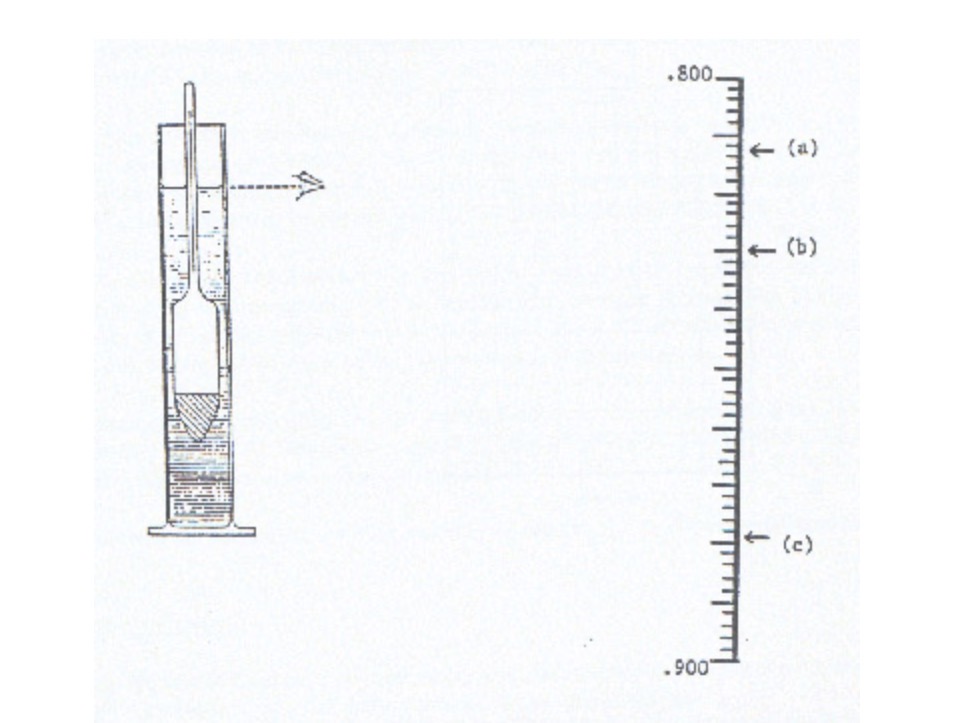
According to the diagram, reading the hygrometer what’re the density indicated at position a, b and c
A- 0.813g/ml
B- 0.830g/ml
C-0.879g/ml
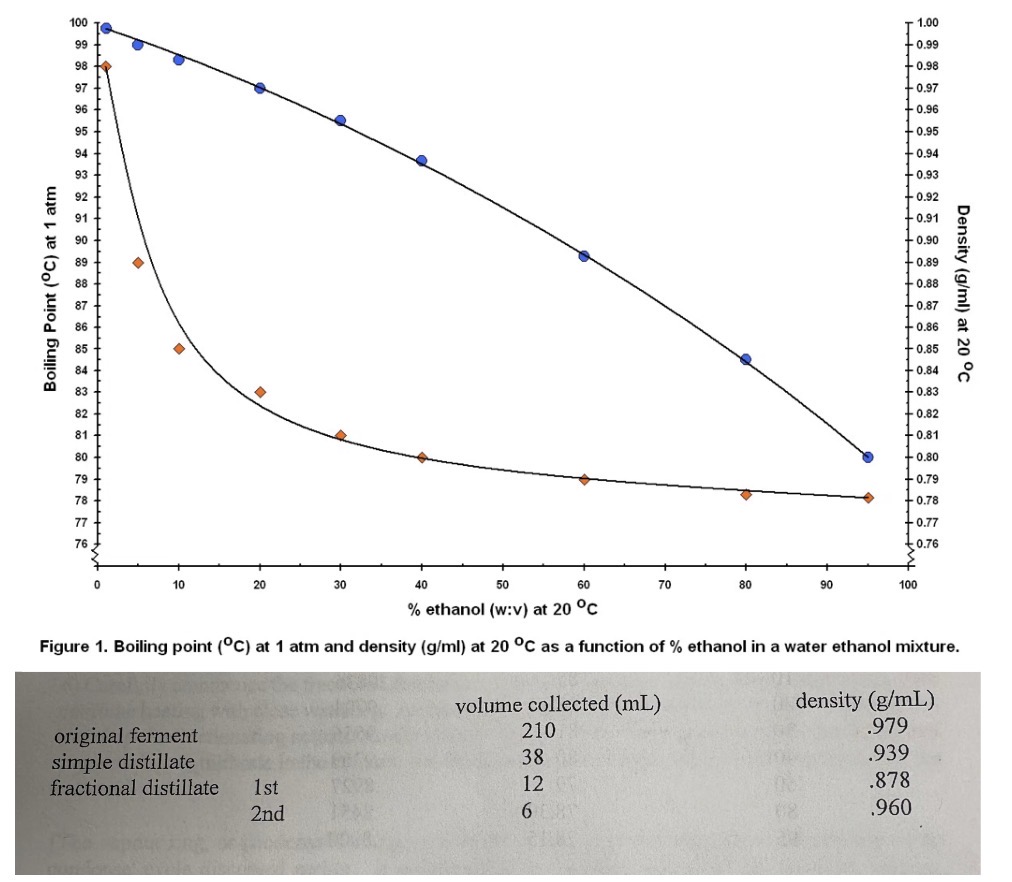
Using the information, determine ethanol content in % and in g for each fraction collected. Assuming starting amount of 55g of sucrose, calculate yield and RME for ethanol in each of the ferment, simple distillate and combined fractional distillates. Also comment on ethanol content as a function of the distillation procedures employed
Idk… let’s figure it out tgt…