Herpetology Final
 Call Kai
 Learn
Learn Practice Test
 Spaced Repetition
 Match
Match Flashcards
 Knowt Play
1/73

There's no tags or description
Looks like no tags are added yet.
Name | Mastery | Learn | Test | Matching | Spaced | Call with Kai | Chat |
|---|
No analytics yet
Send a link to your students to track their progress
74 Terms
Herps are _________ if __________ are NOT included
polyphyletic, mammals and birds
Which group represents a monophyletic clade?
Amphibians
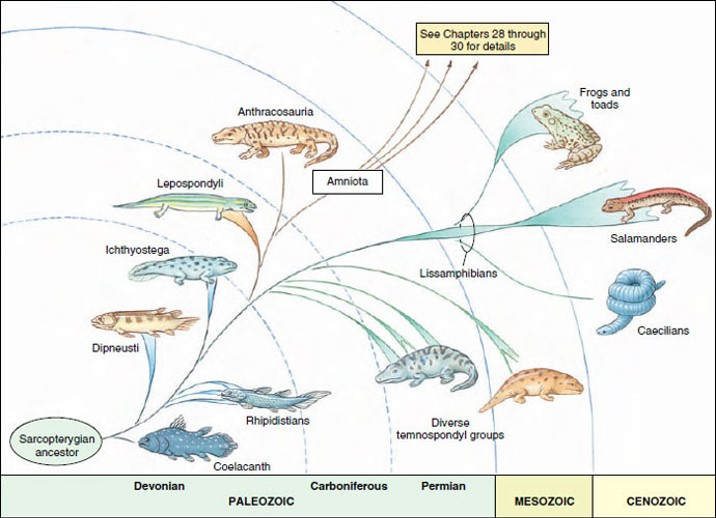
Which of these is an amphibian?
Temnospondyls
Which species would you be least willing to lick?
Taricha Newt
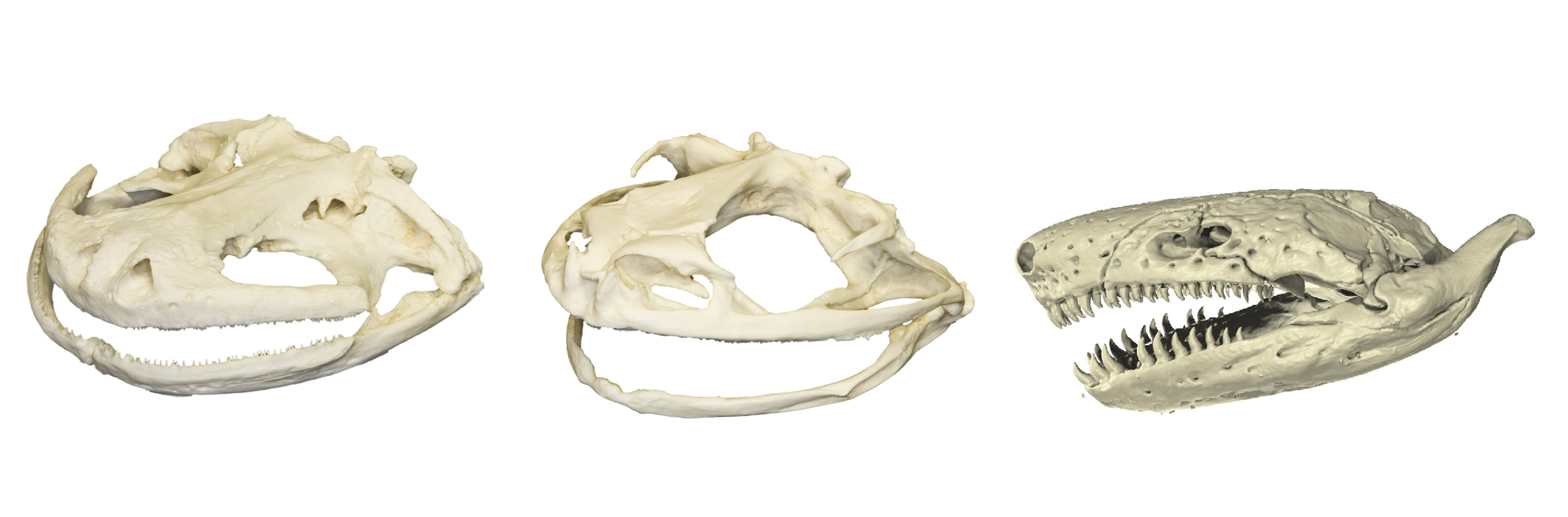
The skulls below (not to scale) belong (in the order from left to right) to:
Salamander, frog, caecilian
Which amphibians can you find in tropical australia?
frogs
Species that reproduce via spermatophores are considered to have ....
Internal fertilization
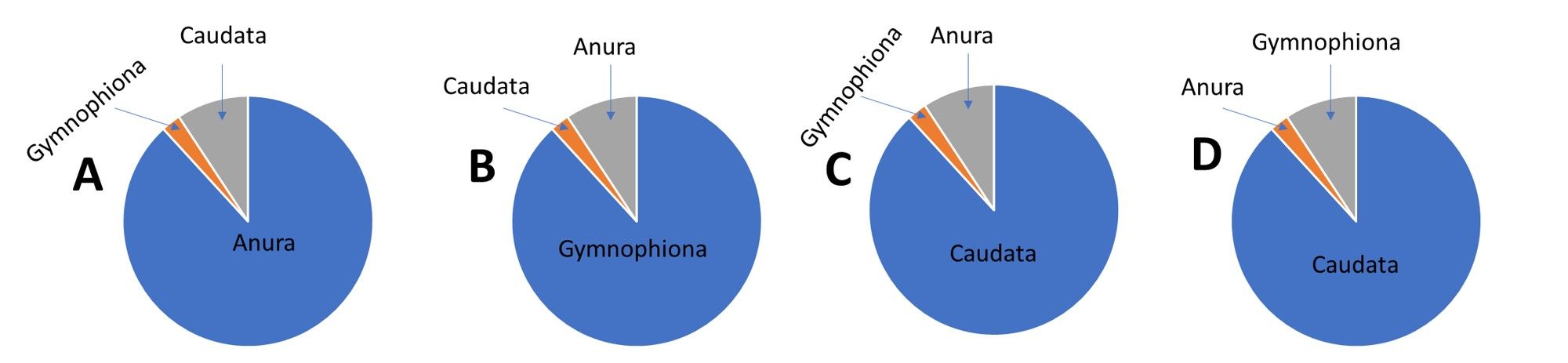
Which graph correct depicts the proportions of amphibian species that belong to each of the three major groups?
graph A
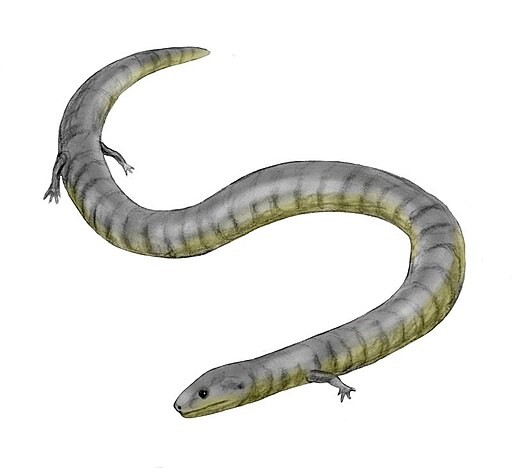
What evolutionary trend is this reconstruction of an extinct, primitive species of a caecilian demonstrating?
That ancestral caecilians had legs
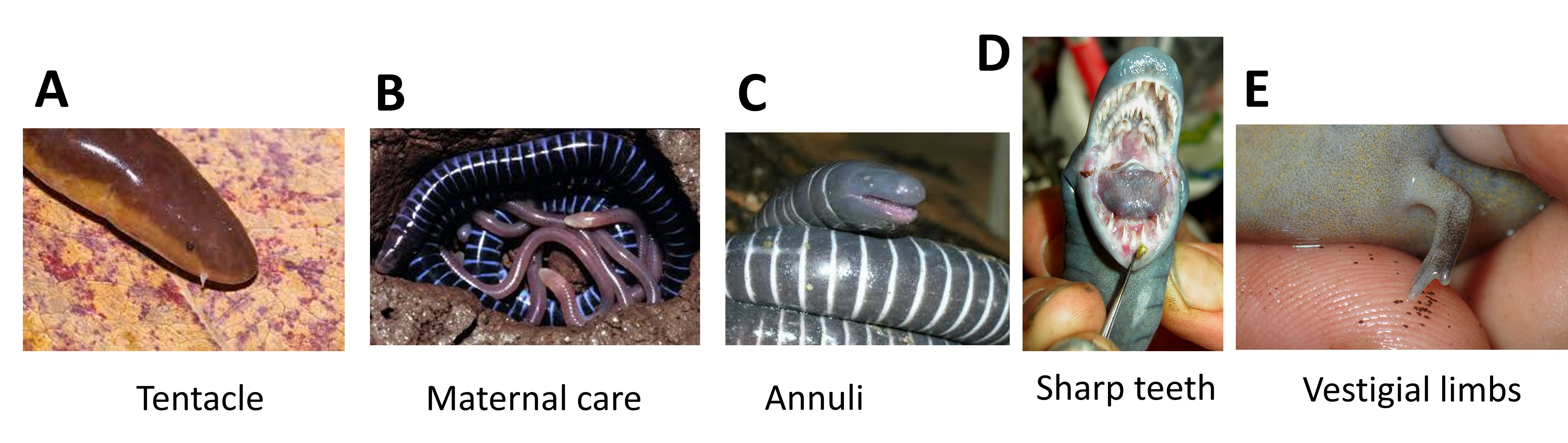
What picture is NOT showing a typical characteristic of extant (living) caecilians?
E - vestigial limbs
What habitat would you NOT expect to find a caecilian?
Arboreal
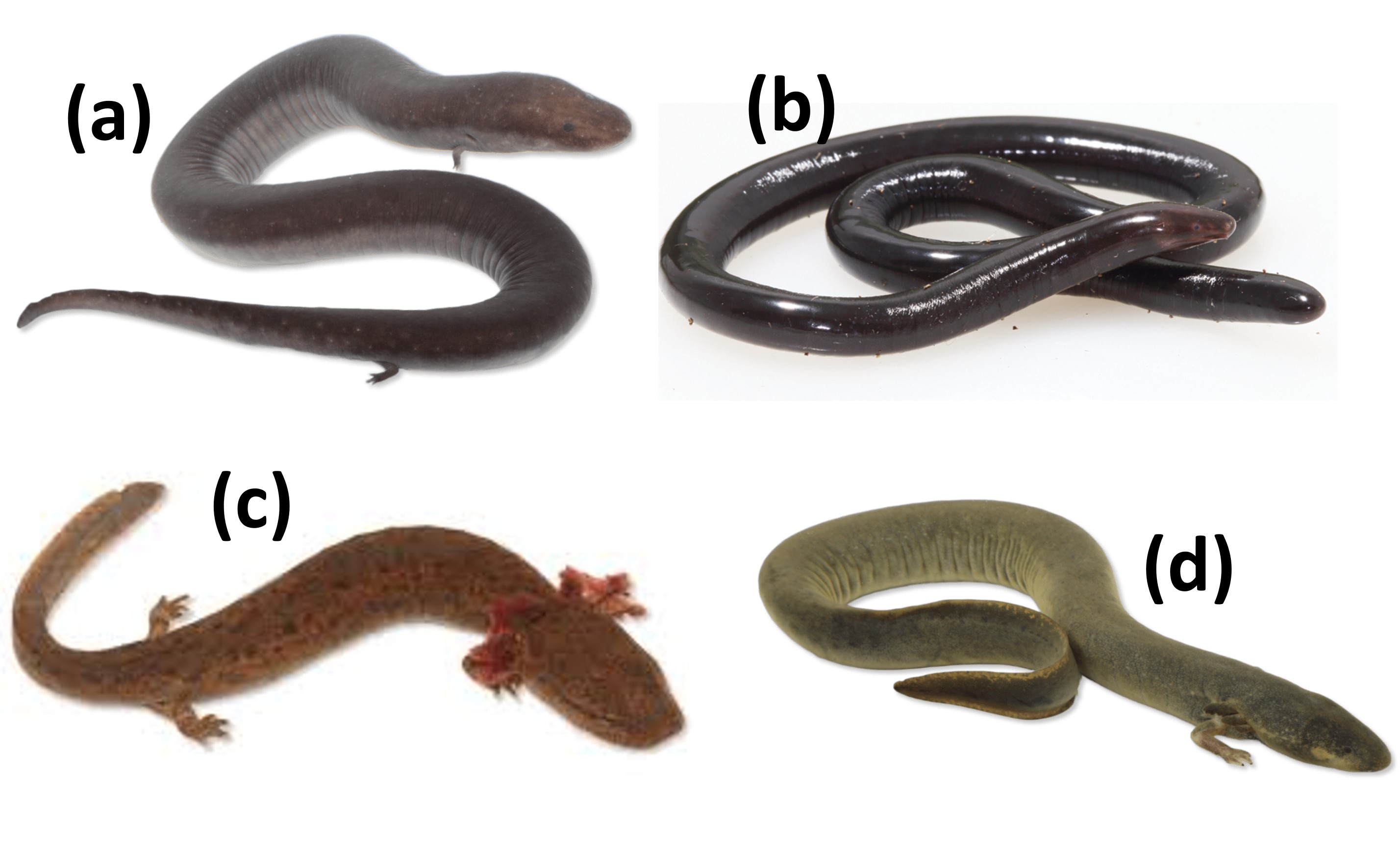
What amphibian is shown on each picture?
(a) amphiuma, (b) caecilian, (c) mudpuppy, (d) siren
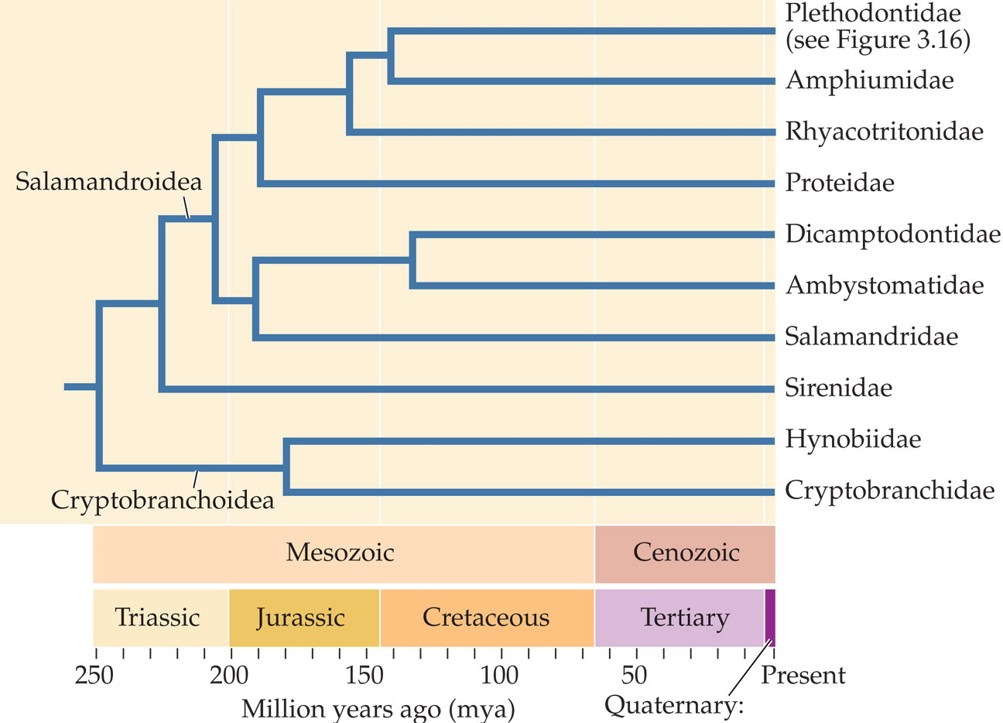
By which time period were all extant (living) families of salamanders already present?
Cretaceous
Where would you find the highest species richness of salamanders?
Atlantic Northeast
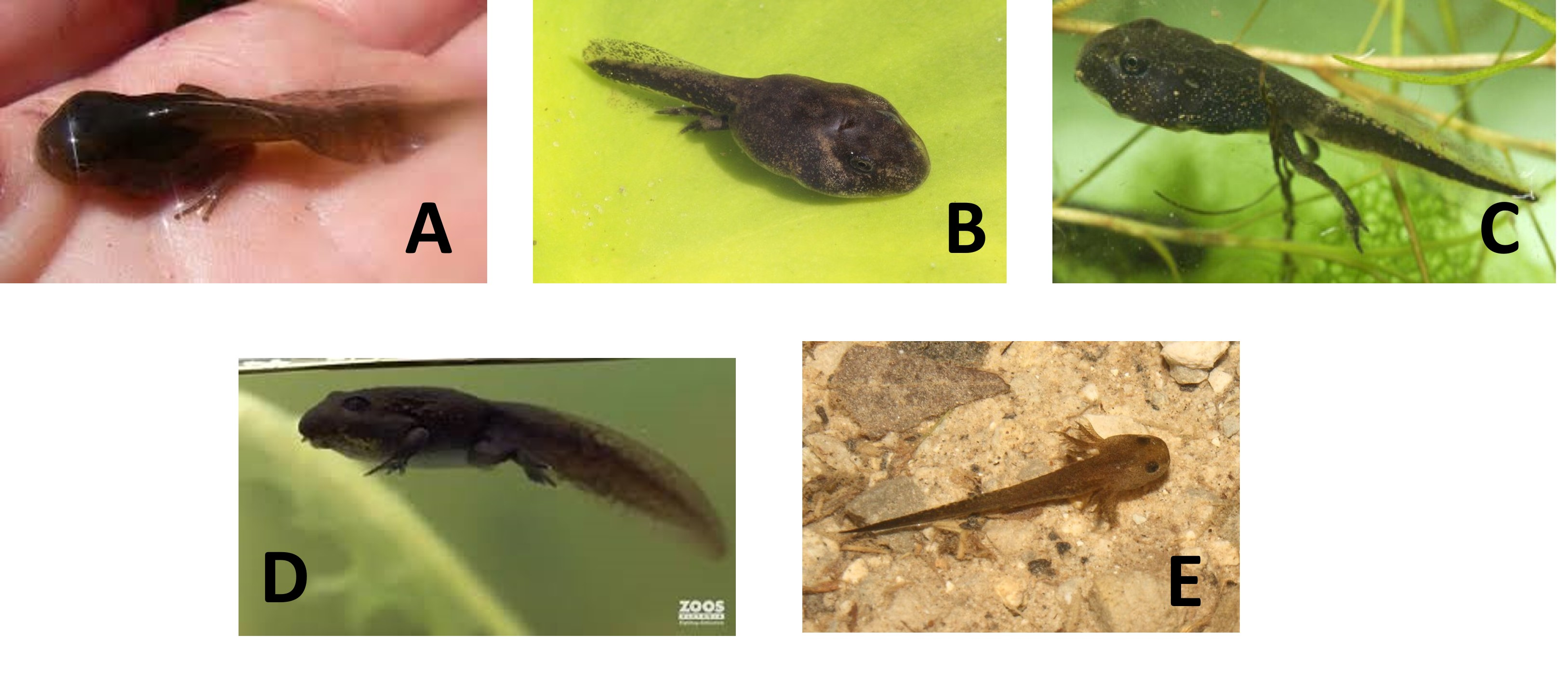
Which of these is a salamander larva?
E
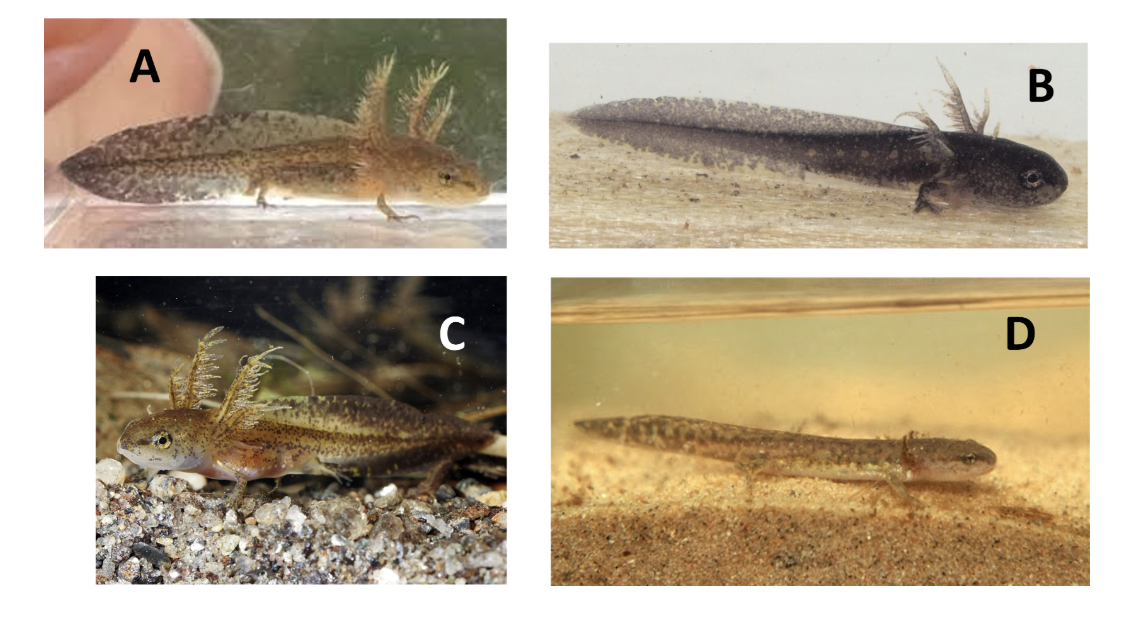
Which salamander larva would you expect to live in most oxygenated water?
D
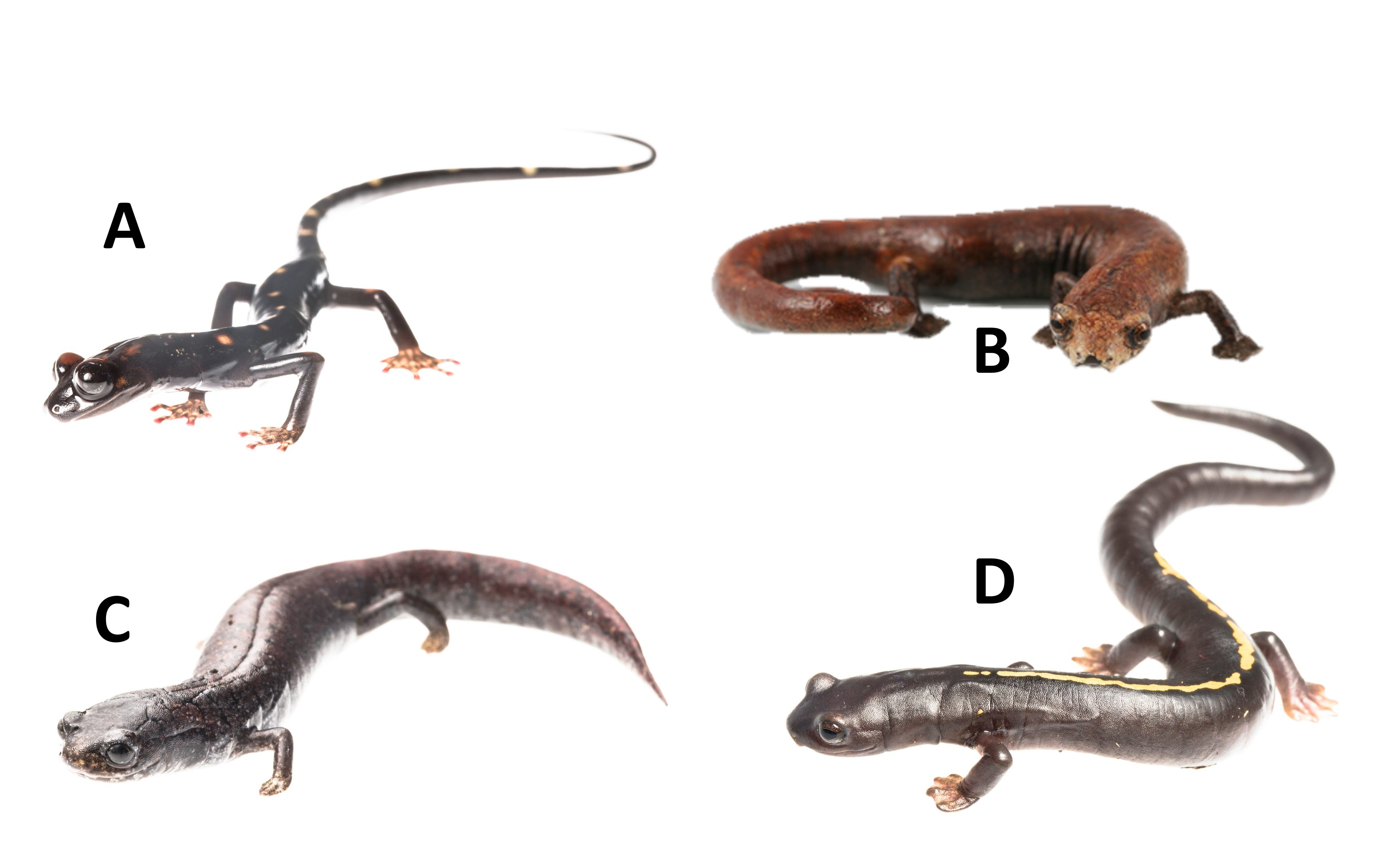
Below are pictures of four poorly known Guatemalan salamanders. Which one would you expect to be most likely aquatic?
C
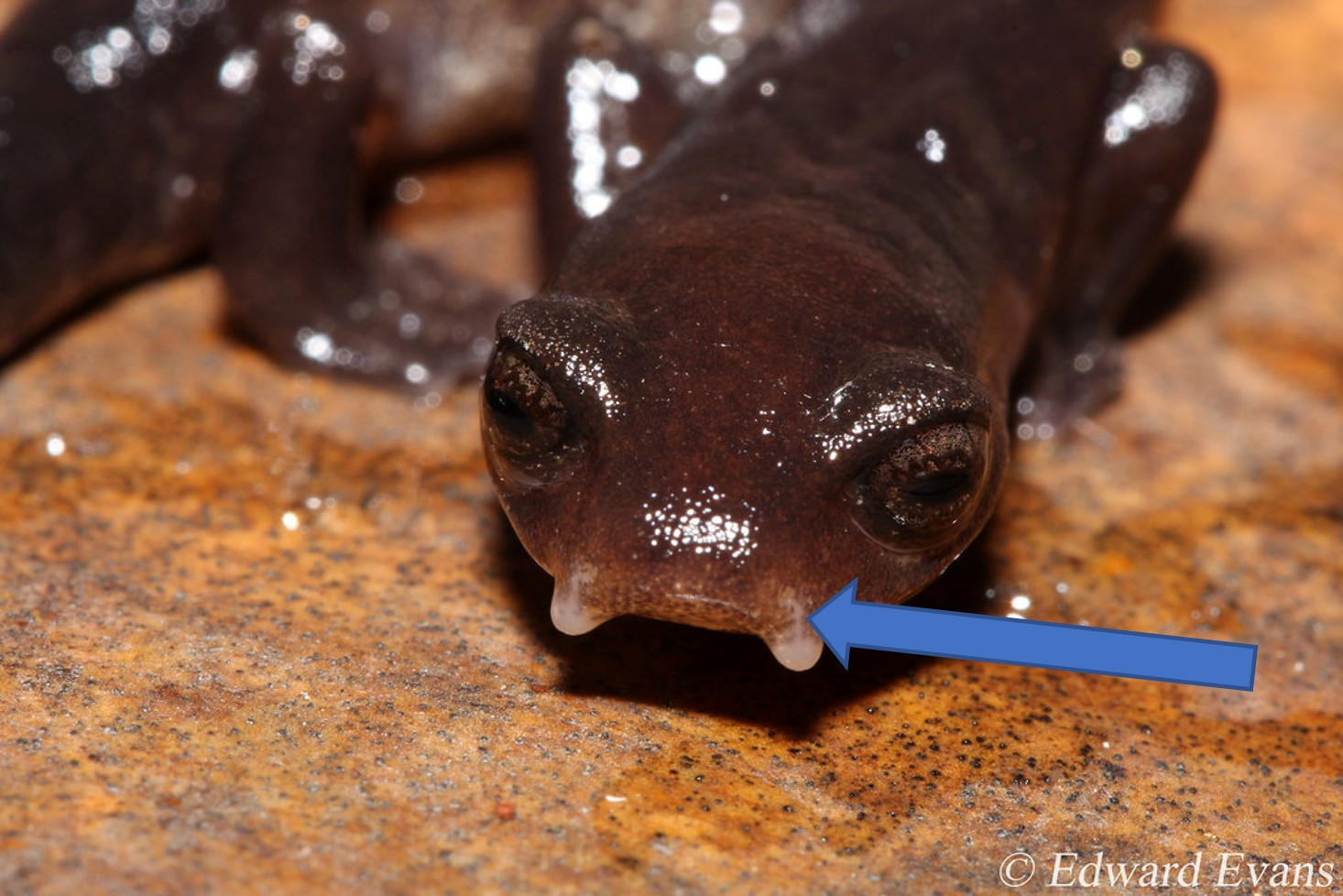
What is the structure on a salamander indicated with an arrow?
Nasolabial groove
This salamander family doesn’t have lungs, all members have labionasal grooves, and most members have direct development. What family is it?
Plethodintidae
This salamander family can be found only in North America, has external fertilization, and adults are fully aquatic?
Sirenidae

What do these three species of salamanders have in common?
They inhabit dark environments such as caves
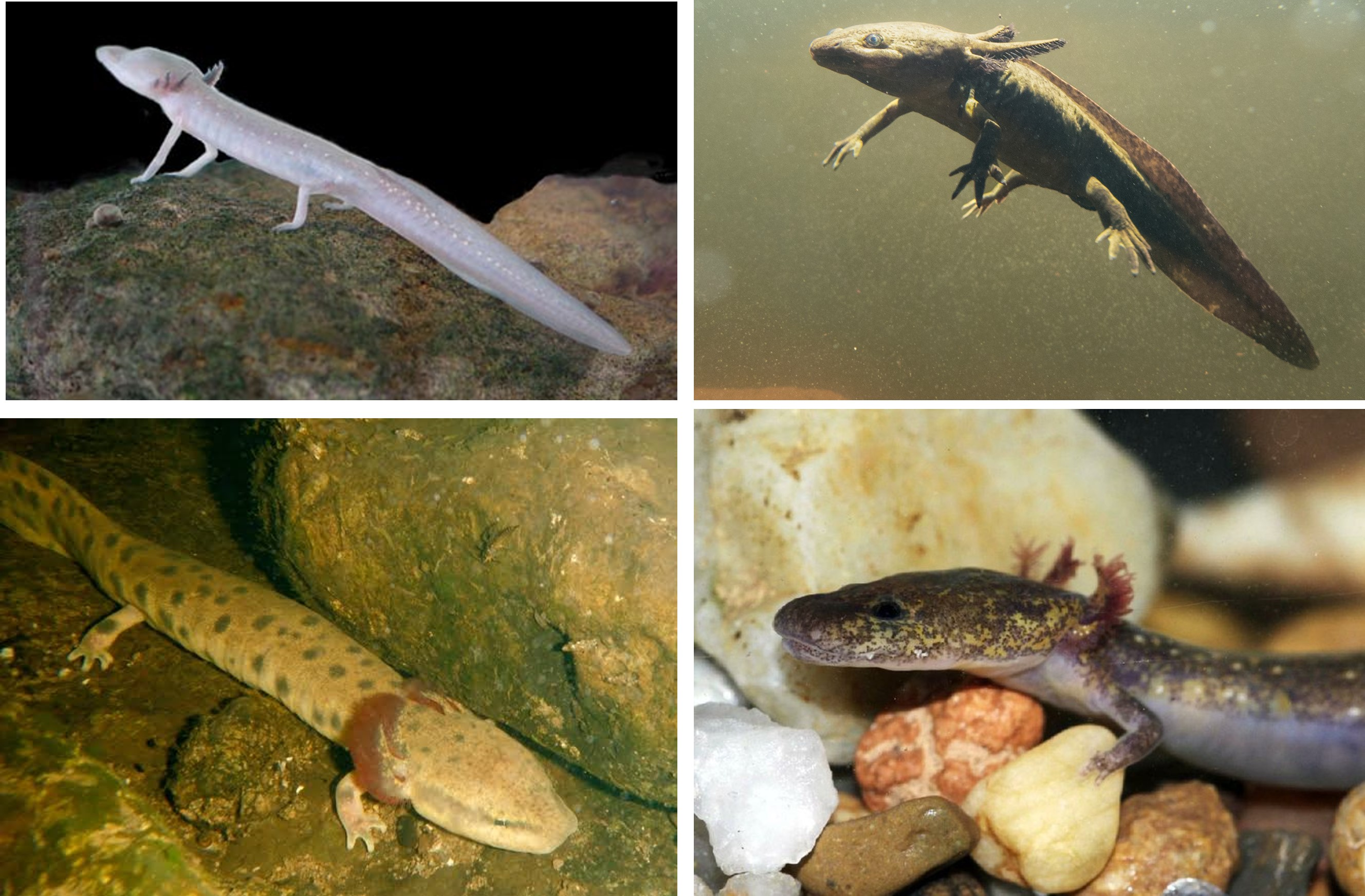
What do these four species of salamanders have in common?
They are paedomorphic
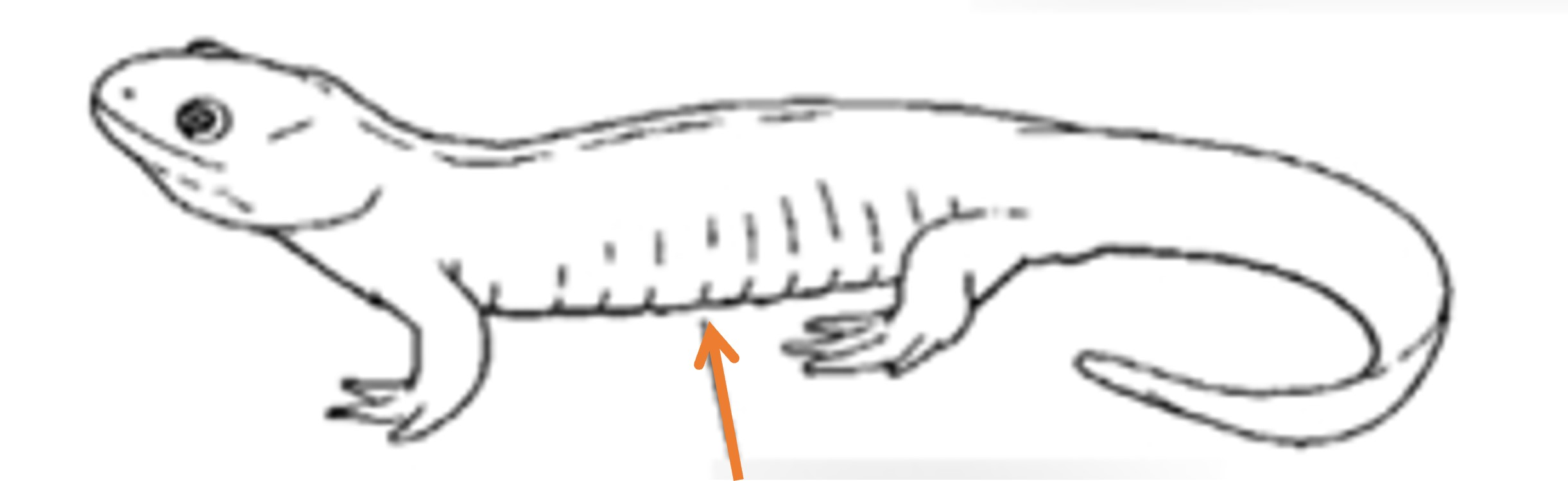
What structure is the arrow pointing to?
Costal grooves
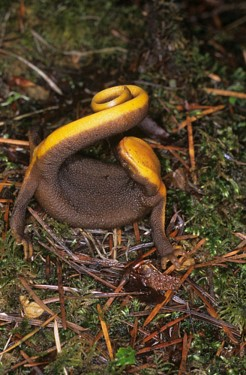
What is this salamander doing?
Being defensive
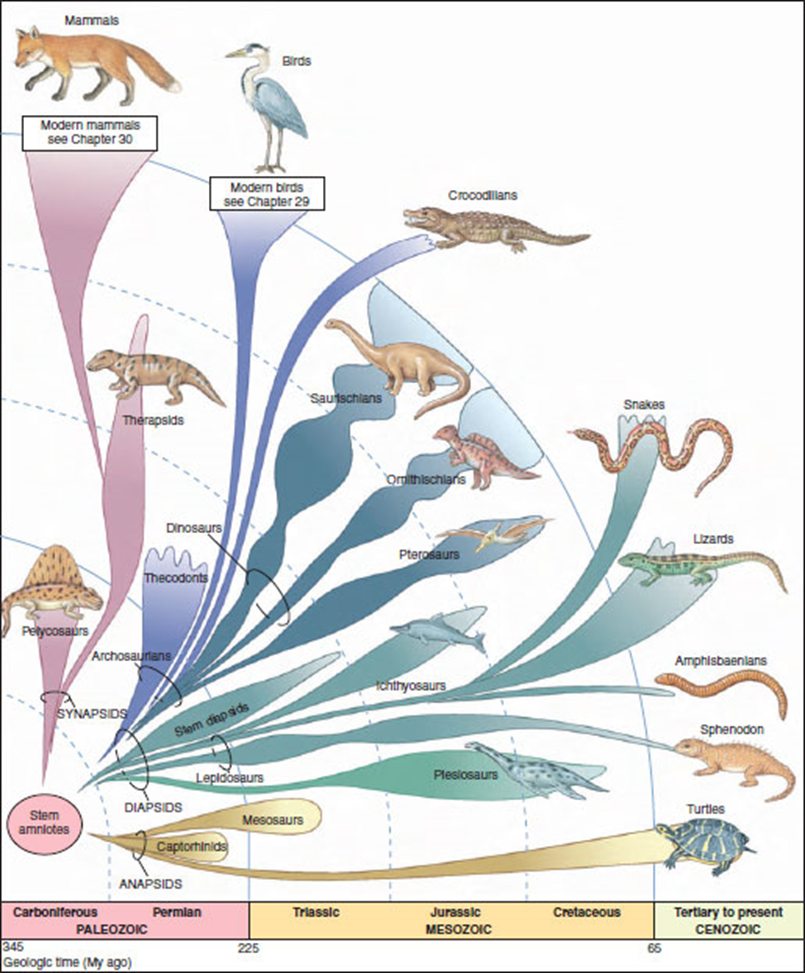
Which group does NOT represent a monophyletic clade?
Dinosaurs + plesiosaurs
What habitat would you NOT expect to find frogs?
Salt water
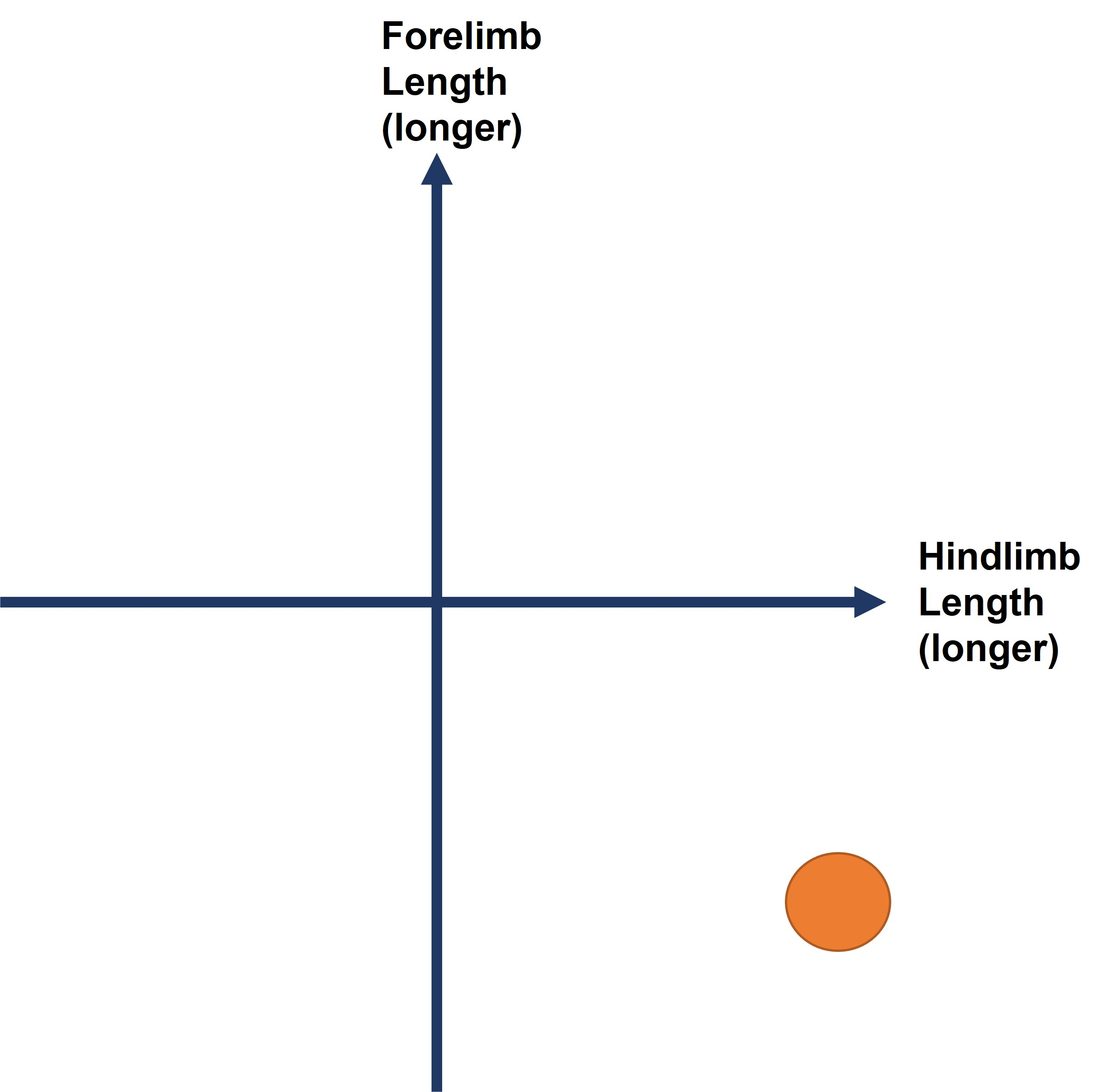
What locomotion mode would you expect for a frog indicated by the orange circle?
Swimmer
Which of the following four reproductive strategies is most common in frogs?
Direct development
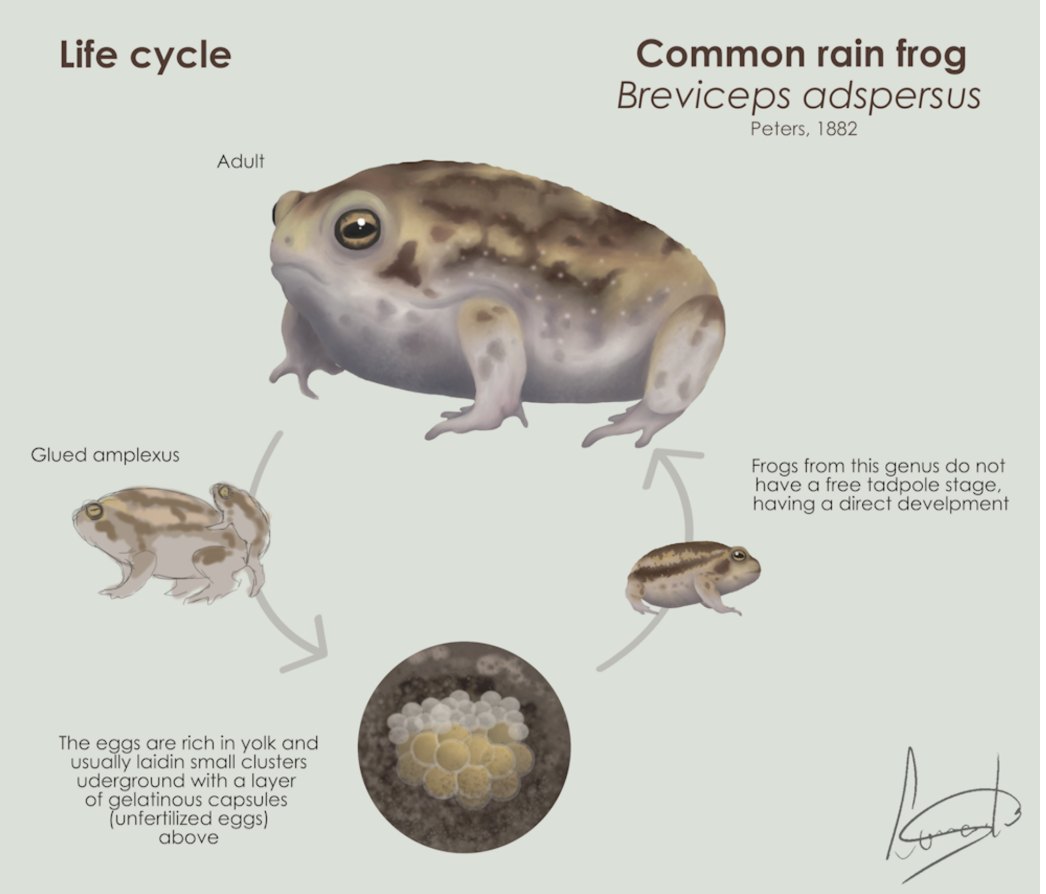
This image shows a life cycle of the common rain frog. Which aspect of its life cycle is incorrect?
Viviparity
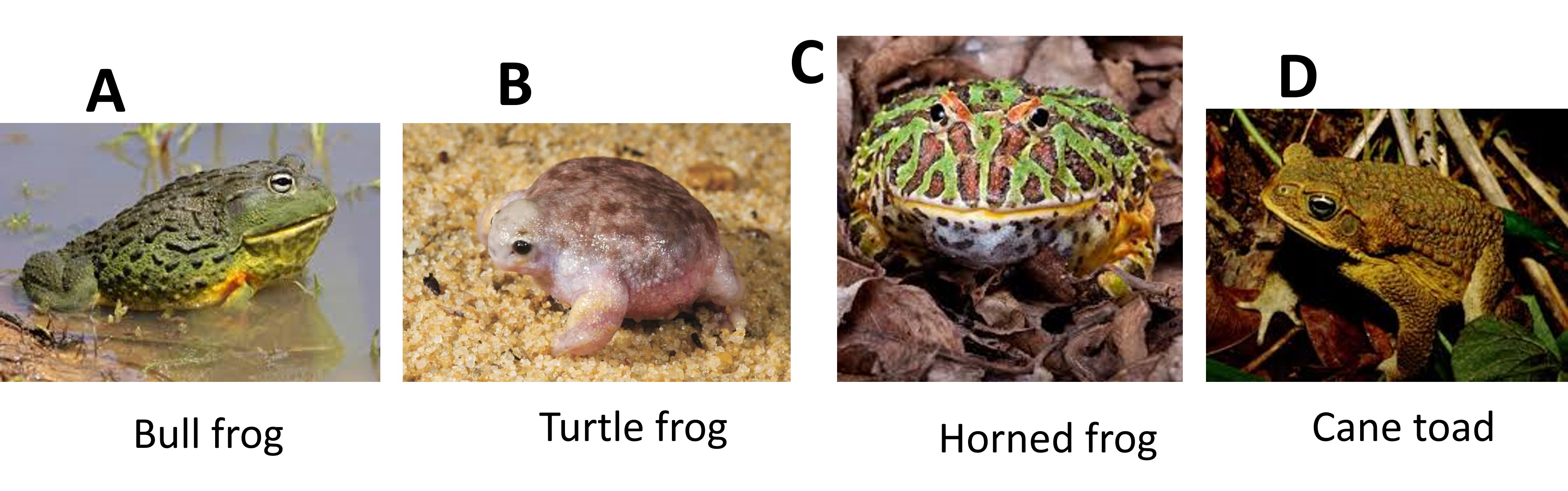
Which species of a frog bellow would you most likely expect to feed on termites?
B. Turtle frog
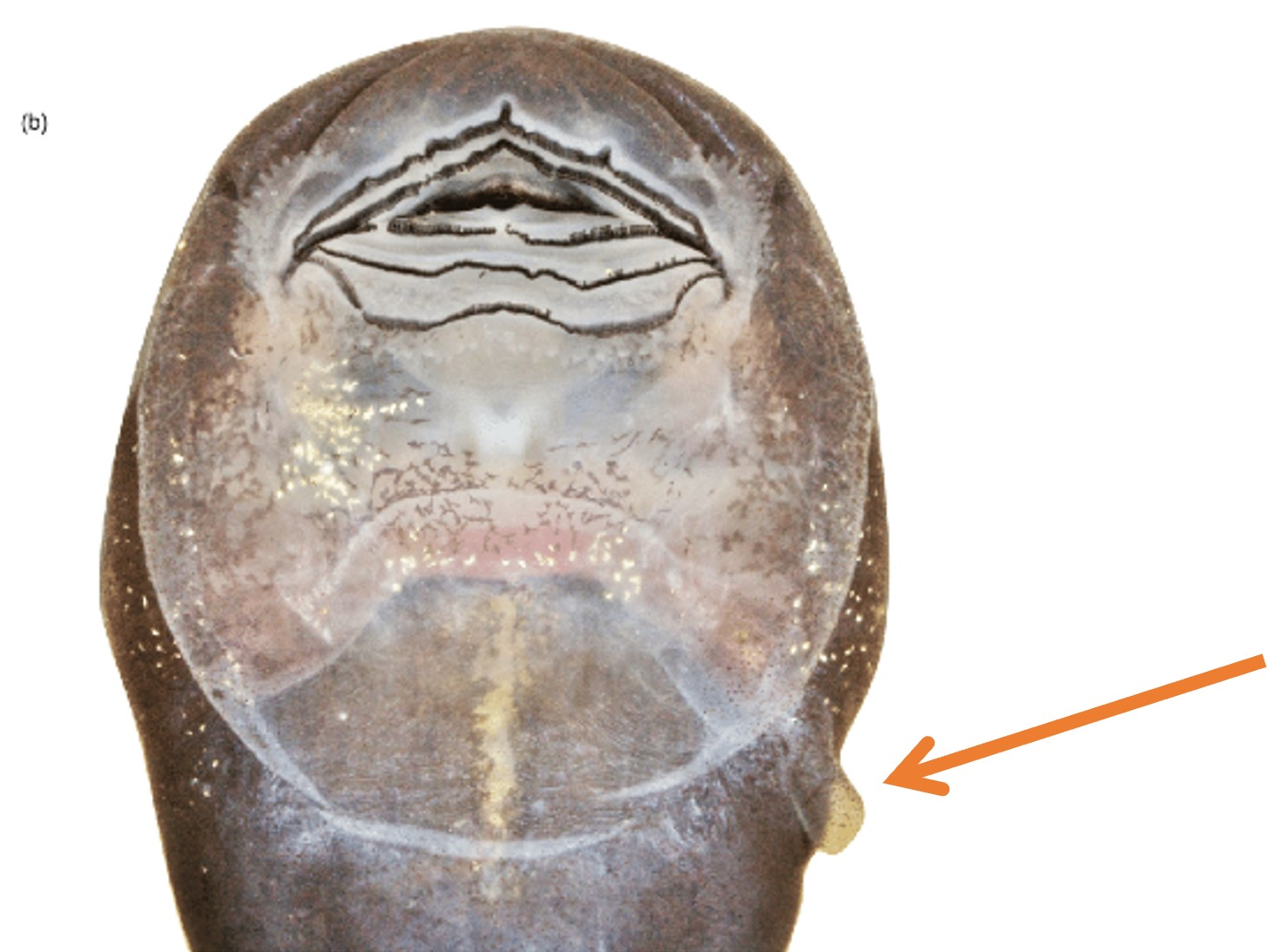
What structure is the arrow pointing to?
Spiracle
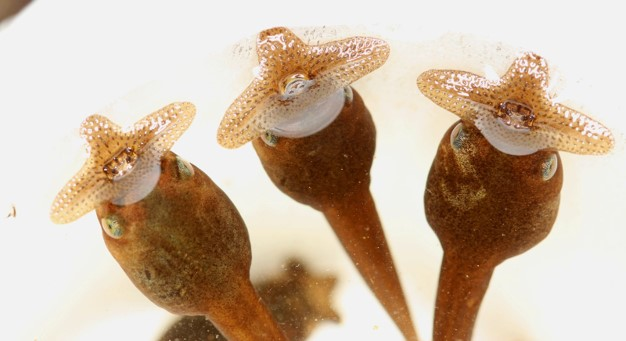
These tadpoles have been recently discovered in Vietnam. What feeding strategy would you expect this tadpole to have?
Skim material from the surface of the water
Which developmental stage in frogs is very short because during this stage frogs are especially vulnerable to predation?
Metamorphic climax
What male is a female frog most likely to choose?
Male that calls louder, more frequently, and longer
Which of the following do frogs NOT use vocalization for?
Females to warn tadpoles about predators
Which of the following statements is INCORRECT about amplexus?
Internal fertilization occurs during amplexus
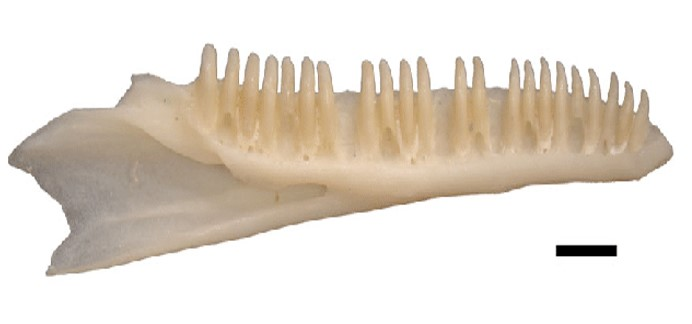
What type of teeth are these?
Pleurodont, the most ancestral and most common type of teeth
Which of the following does NOT provide strength, protection, or rigidity to reptilian skin
Alfa-keratins
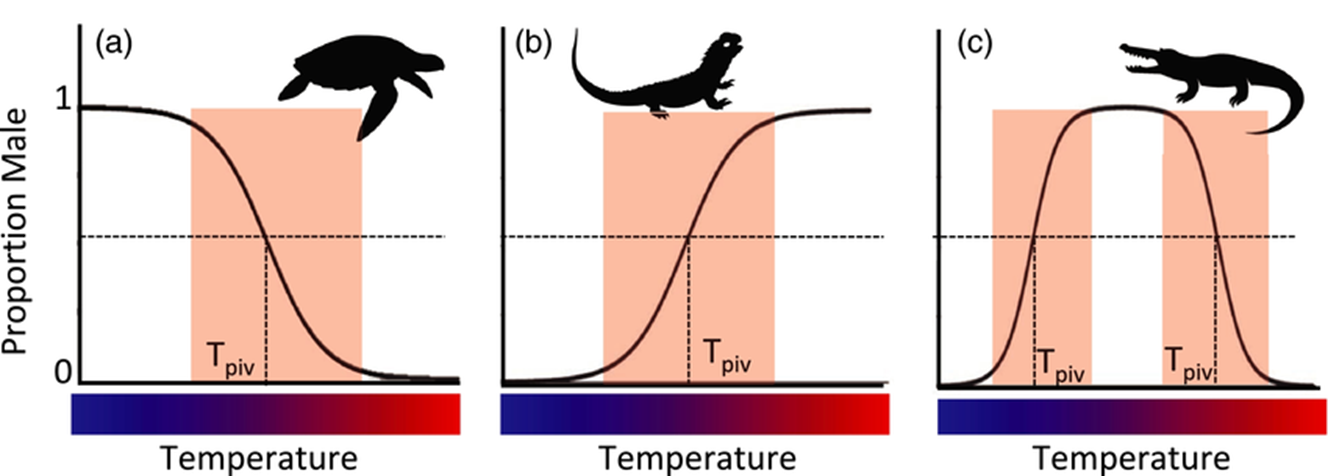
Based on the following graph showing patterns in temperature sex determination, which group will result in fewer females in response to raising global temperatures?
Lizards
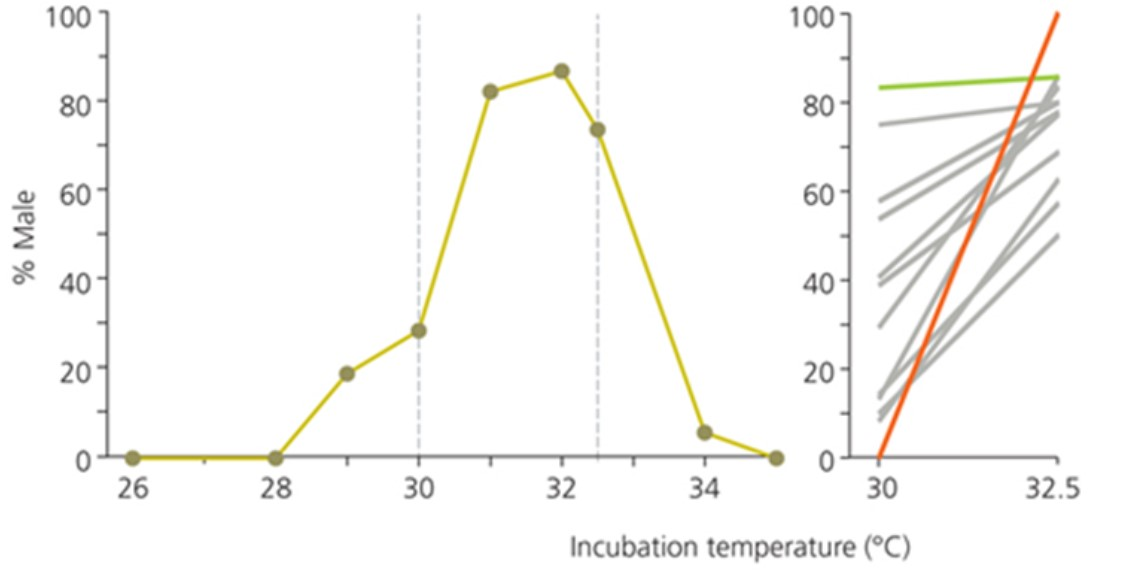
This graph shows temperature sex determination in geckos. The graph on the right shows how temperature affects sex ratio depending on different fathers. Each line represent a single male individual whose offspring were split in half and each half of clutch raised in either 30C or 32.5 C. What is this graph telling us?
For some males, incubation temperature matters very little
Which of the following does NOT represent one of the 4 orders of reptiles?
snakes
Which time period represents the "age of reptiles"?
Mesozoic
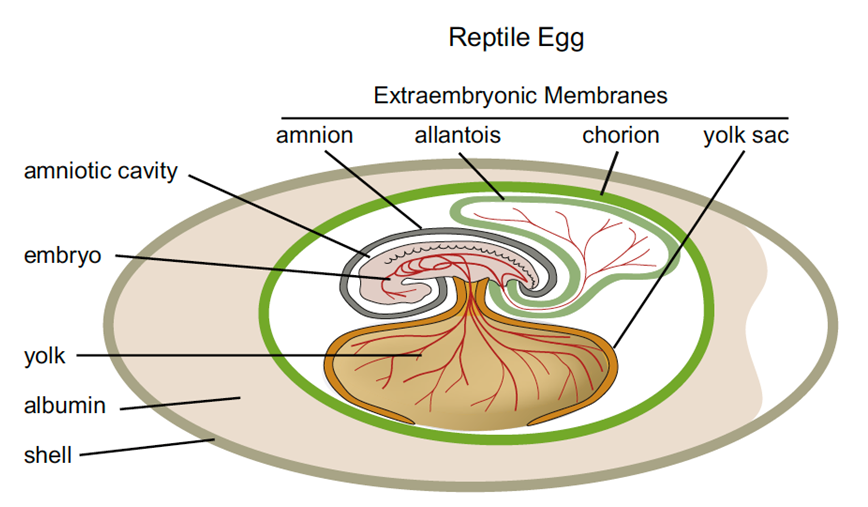
Which of the following part of the reptile egg can be also found in amphibians?
yolk
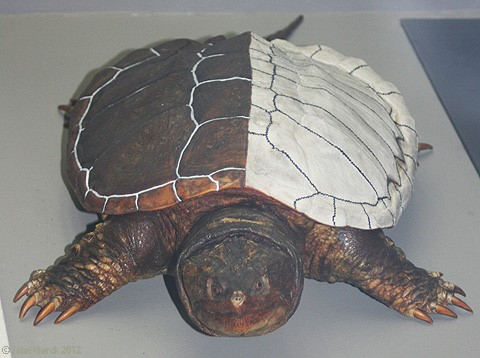
What is this image showing?
Keratinous (left) versus bony elements (right) of the shell in a snapping turtle
Which characteristic does NOT appear in turtles?
Viviparity
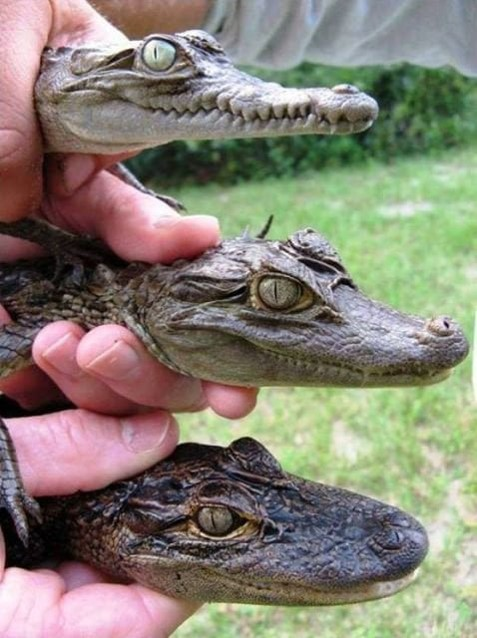
From top to bottom, this picture shows
Crocodile, caiman, alligator
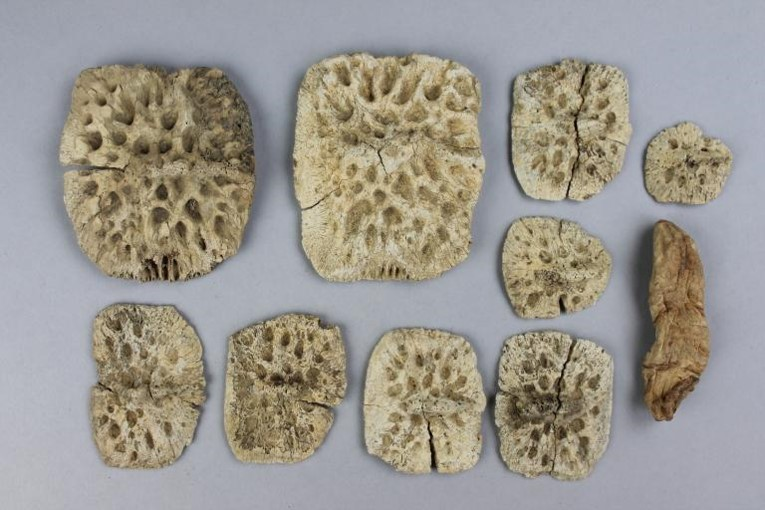
What crocodilian feature is this picture showing?
Osteoderms
What are these bumps on the surface of this crocodile tongue for?
Salt glands that excrete excess salt
Which group shows the most elaborate maternal care?
Crocodiles
Which group is characteristic for regular cycles of skin shedding in which the outer layers of the epidermis are shed at one time?
Lepidosaurs
In which group males do NOT have a phallus but only shallow paired outpocketings?
Tuatara
Which of the following statements about turtle reproduction is false?
All turtle species provide extended parental care, guarding the nest and assisting hatchlings to water
Fossil Rhynchocephalia were found
all around the world
The biggest threat to tuataras is (are)
invasive species and climate change
Eggs of which clade are most sensitive to desiccation?
Geckos
Which clade(s) does herbivory occur in?
Turtles and lizards
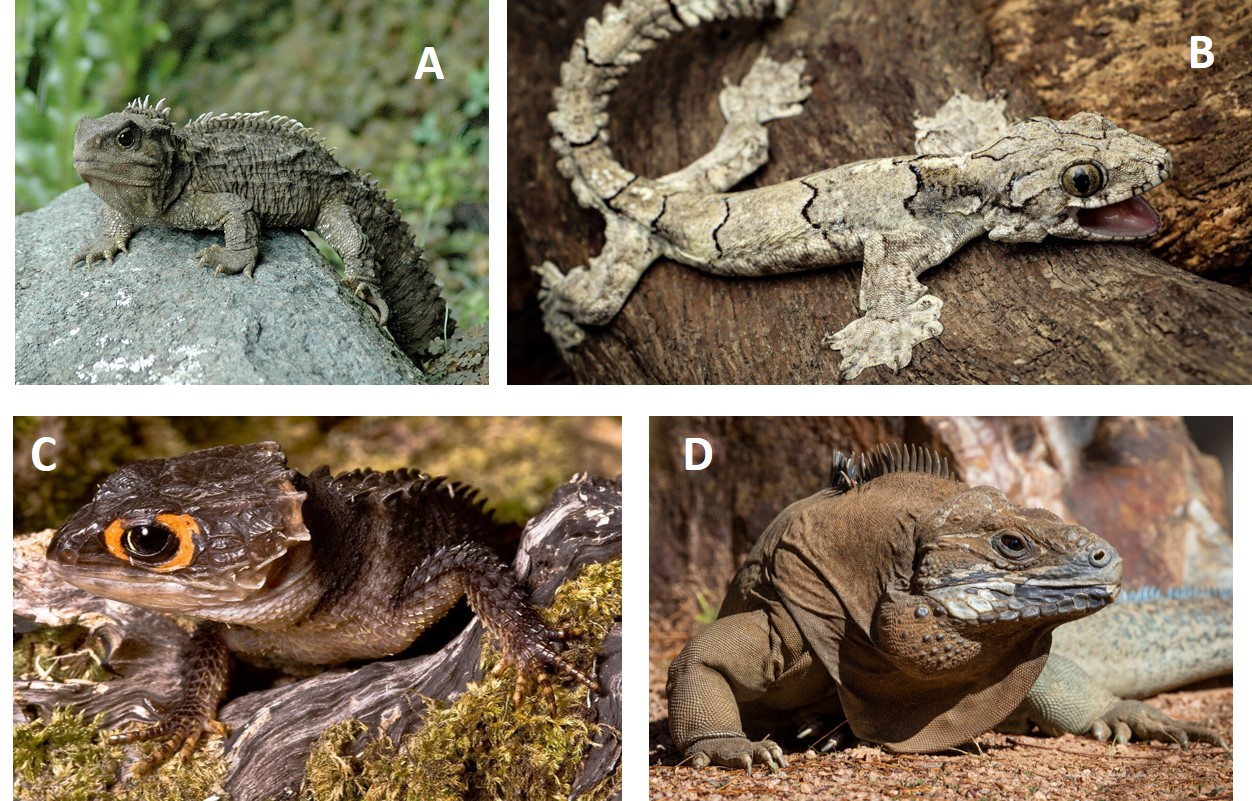
Which of these is not a squamate?
A
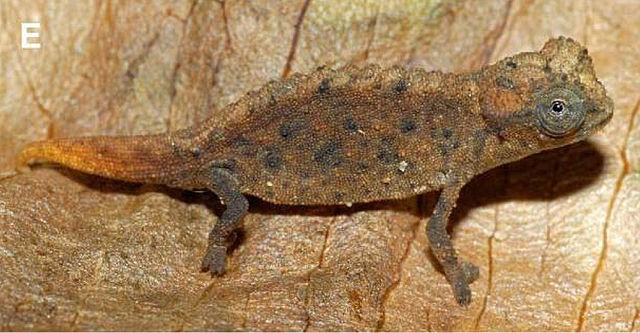
This is Brookesia micra. What is this species of a chameleon renown for?
It is the smallest known reptile
Which group is ecdysis characteristic for?
squamates
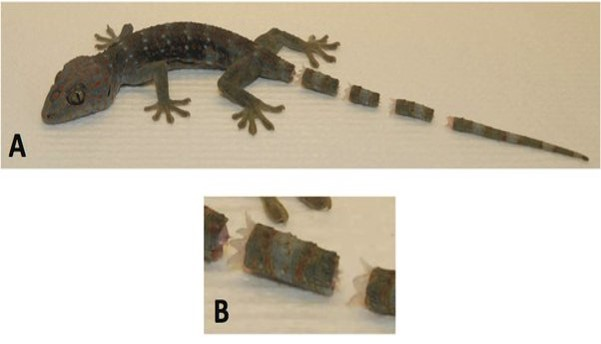
Which of the following statements is NOT correct with respect to the image below?
The tail breaks between individual vertebrae
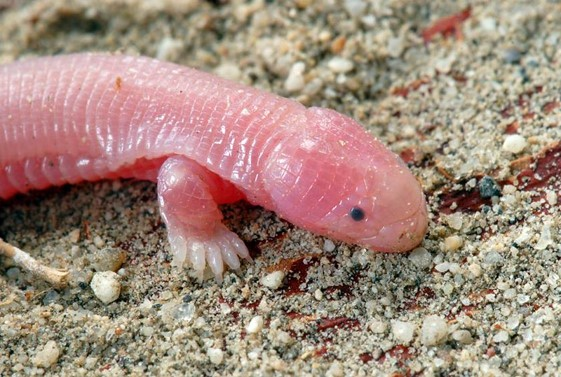
What is unusual about Five-toed Worm Lizard Bipes biporus with respect to evolution of body elongation and limb reduction?
It has forelimbs but not hind limbs
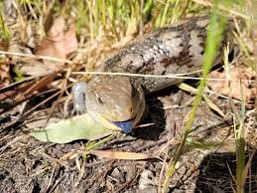
This skink is touching the ground with its tongue? What is the reason?
It is detecting surface odors using the vomeronasal system
What reproductive trait likely facilitated evolution of viviparity in squamates as opposed to crocodiles and turtles?
Embryonic development of squamates is initiated right after fertilization
How do eggs of squamates differ from eggs of crocodiles and turtles?
Squamate eggs grow or swell as they take up water and develop
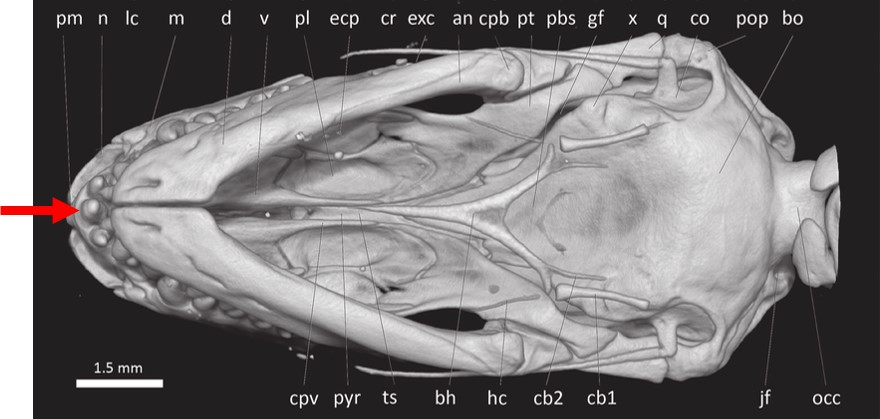
The presence of a a single medial tooth in the upper jaw of this skulls indicates that this is a skull of a(n):
Amphisbaenian
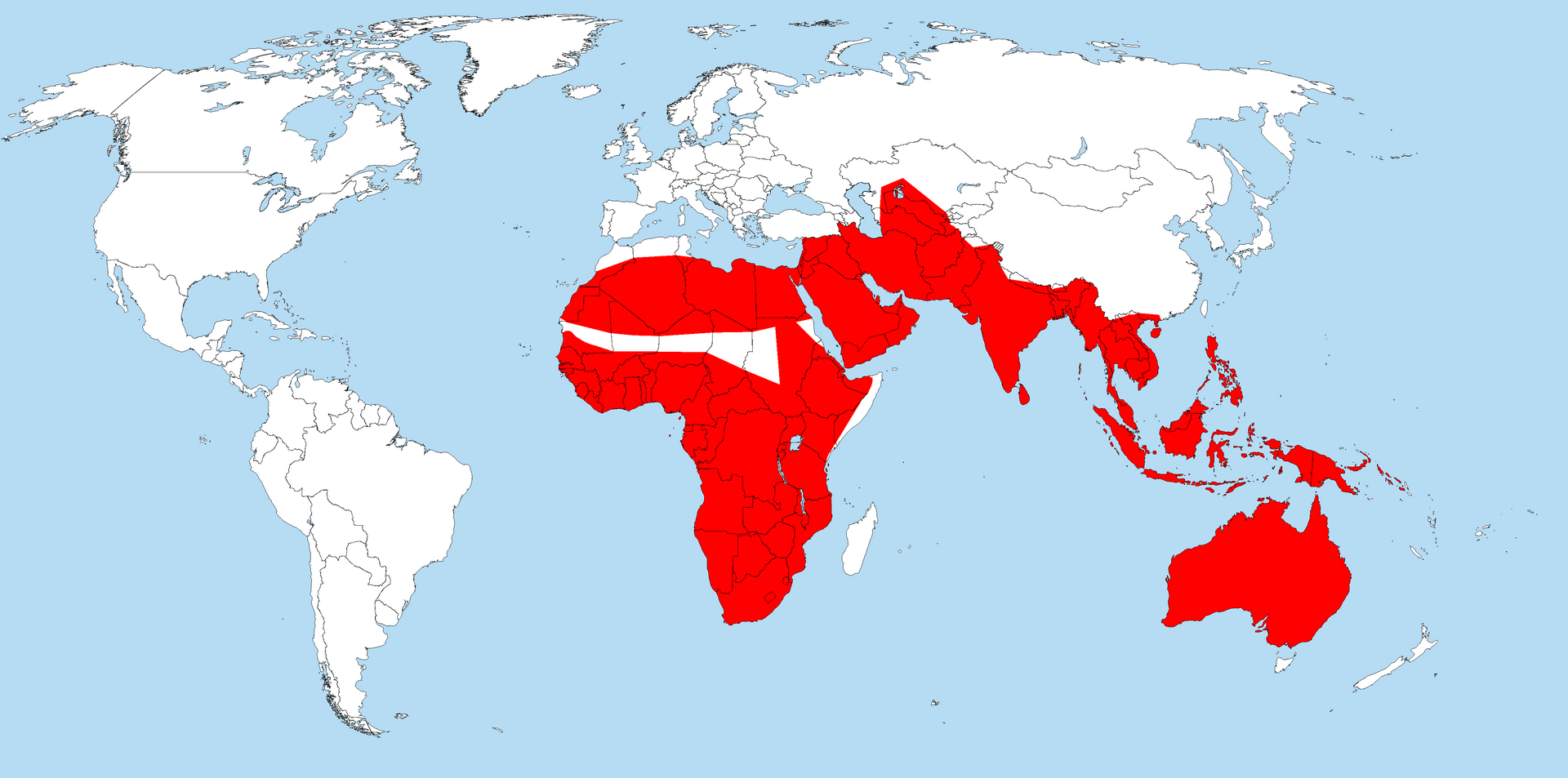
This map shows the distribution of which widespread squamate family?
Varanidae (monitor lizards)
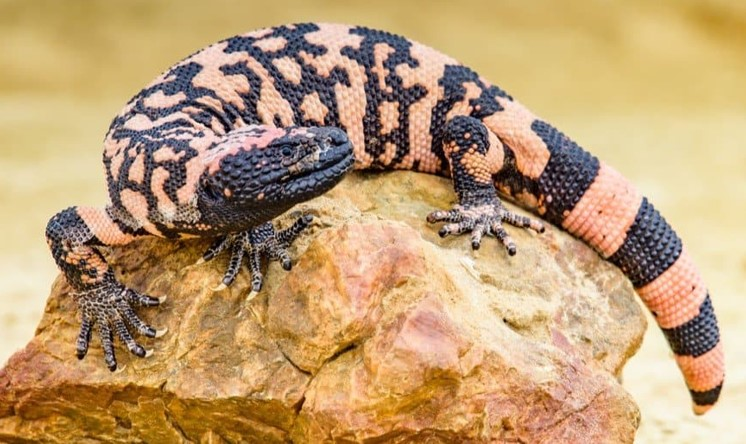
What is unique about this animal?
It has venom glands
In which squamate family is herbivory common?
Iguanidae (Iguanas)
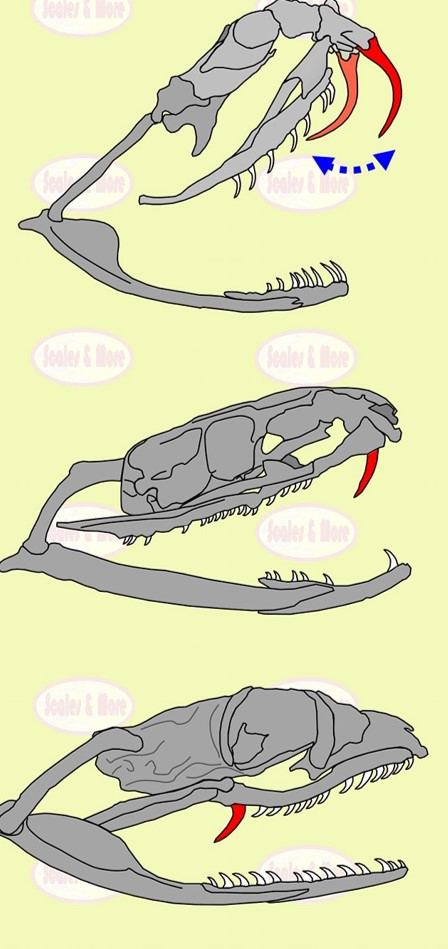
From top to bottom, these pictures show
Solenoglyphous, proteroglyphous, and opisthoglyphous snakes, respectively
What organ is the arrow pointing at?
Anterior glottis, a small opening which opens into the trachea
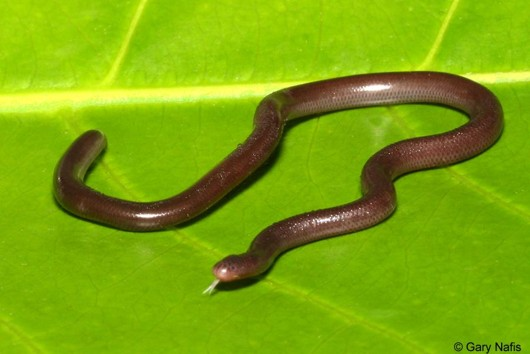
Which of these traits is NOT characteristic for Scolecophidia (blind snakes)
They have hemotoxic venom
What do Boidae and Pythonidae have in common?
They have vestigial hind limbs
Which core innovation is characteristic for Caenophidia (=advanced snakes)
Advanced venom system
In Ohio, most snakes belong to the family
Colubridae