1.1 Structure of Water
 Call Kai
 Learn
Learn Practice Test
 Spaced Repetition
 Match
Match Flashcards
 Knowt Play
1/14

There's no tags or description
Looks like no tags are added yet.
Name | Mastery | Learn | Test | Matching | Spaced | Call with Kai | Chat |
|---|
No analytics yet
Send a link to your students to track their progress
15 Terms
what type of molecule is water
POLAR
-one end of the molecule is slightly positive while the other end is slightly negative
what bonds are form a water molecule
polar covalent bonding
-covalent=electrons shared
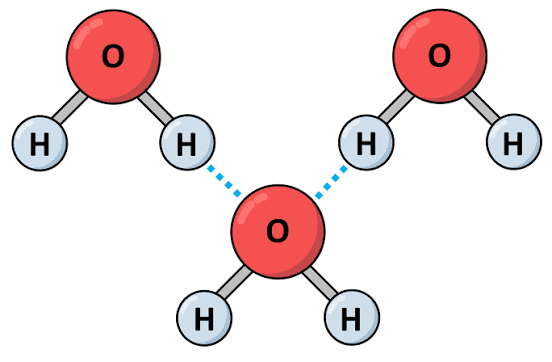
describe hydrogen bonding
the negative oxygen end of one water molecules is attracted to the positive hydrogen end of another water molecule
waters high specific heat means…
water resists temperature change
-result of hydrogen bonds
reasons why waters high specific heat is important
large bodies of water temp. remains relatively constant -moderate temp. in coastal areas
favorable environment for marine life -organisms made primarily up of water resist changes in their own temp.
how does water react when it is hot outside
water absorbs the heat -hydrogen bonds must be broken
how does water react when it is cold outside
water releases heat -hydrogen bonds form between slower moving water molecules
waters heat of vaporization (liquid to gas)
water has high heat of vaporization -result of hydrogen bonds-must break before water can evaporate
waters evaporative cooling
high energy molecules leave liquid phase —> reduces average kinetic energy —> lowers temp. of remaining liquid
how does waters evaporative cooling help environment
1.Keeps bodies of water from evaporating
2.Organisms regulate body temp. (sweating)
cohesion
tendency of molecules to stick together because of hydrogen bonds water——-water
adhesion
hydrogen bonding between water and molecules of diff. substances water—different substance
surface tension
how difficult it is to break the surface of a liquid -water has high surface tension
why is water as a solid less dense than its liquid form
water freezes —→ hydrogen bonds stabilize, molecules spread apart—→ crystal lattice
how does water being less dense in solid form benefit organisms
life can exist under the frozen surfaces
when hydrogen bonds form, it releases heat and helps insulate the water beneath the ice