STS topic 1 part 2
 Call Kai
 Learn
Learn Practice Test
 Spaced Repetition
 Match
Match Flashcards
 Knowt Play
1/20

There's no tags or description
Looks like no tags are added yet.
Name | Mastery | Learn | Test | Matching | Spaced | Call with Kai | Chat |
|---|
No analytics yet
Send a link to your students to track their progress
21 Terms
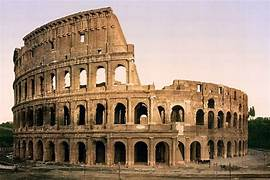
Roman Architecture
most visual contribution of the ancient Rome Empire. Roman architecture was still regarded as pioneering since the Romans were able to adapt new building and engineering technology. In this manner, they were able to preserve great and elaborate architectural designs because they could produce sturdier and stronger infrastructures. Their known architectures were churches (cathedrals and basilicas), aqueducts, coliseums, amphitheaters, and residential houses
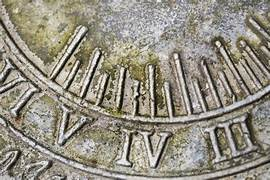
Roman Numerals
although other number systems had been established before Roman numeral, these old systems could not keep up with high calculation requirements. Because of this, romans devised their own number system specifically to address the need for a standard counting method that would meet their increasing communication and trade concerns.
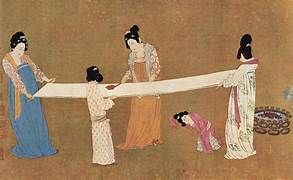
SIlk
it is one of the things that connected Far East China to the world. Chinese developed the technology to harvest the silk and process it to produce paper and clothing. Silk production resulted in the creation of a product for trade. The silk trade opened China to the outside world, making way for cultural, economic, and scientific exchanges. It bridged the gap between the western world and the middle kingdom.
Tea Production
it is a beverage produced by pouring hot or boiling water over crushed or shredded dried tea leaves. It was believed that the first tea was drunk by a Chinese emperor. It was developed when an unknown Chinese inventor created a machine that was able to shred tea leaves into strips. This machine was done using wheel-based mechanism attached to a wooden/ceramic pot.
Great Wall of China
only man-made structure that could be seen from outer space, the Great Wall of China is said to be the largest and most extensive infrastructure that the nation built. It was constructed to keep to keep our foreign invaders and control the borders of China. Made with stone, brick, wood, earth, and other materials, it showcased the extent of Chinese engineering at that time.
Gunpowder
originally, it was developed by Chinese alchemists who aimed to achieve immortality. They mixed charcoal, sulfur, and potassium nitrate, but instead of creating an elixir of life, they accidentally invented a black powder that could actually generate large amounts of heat and gas in an instant. It is widely used to propel bullets from guns and cannons which cause countless deaths.
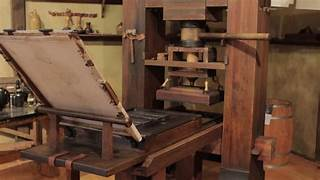
Printing Press
after developing woodlock printing, Johan Gutenberg was able to invent the printing press, amore reliable way of printing using a cast type. He utilized wooden machines that extracted juices from fruits, attached to them a metal impression of the letters, and pressed firmly the cast metal into a piece of paper, which then made an exact impression on paper.
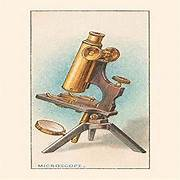
Microscope
due to more people that transferred to polluted and populated urban areas, it resulted to more people getting sick and needing medical attention. The experts must understand the sickness through investigation thus they need a device that could magnify things invisible to the eye. The same with the eyeglasses, Zacharias Janssen was able to develop the first compound microscope. With this, they can observe organisms that were normally by the naked eye.
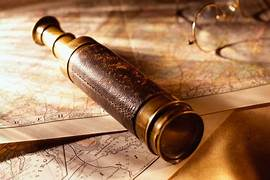
Telescope
since Middle Age is considered as Age of Exploration, the need for nautical inventions was high. Considering the vast and empty oceans that separated lands, ship captains needed to see far and wide for them to navigate or to avoid dangers at sea. This helps in the observation of remote objects. Together with the telescope is the compass, oars, and rudders made sea travelling easier.
War Weapons
since war is widespread in this period, all sides must develop weaponries not only as offensive tools but also as defensive instruments. For open-area, people developed cross bows and long bows so that they could attack the enemies at long ranges, keeping themselves safe because of walls and fortresses. While in close-range hand-to-hand combat, soldiers should wear something to protect themselves by iron body armors.
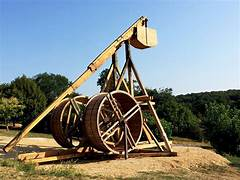
Trebuchet
was used by the French to pull down ropes or pivoting, and to counterbalance weight.
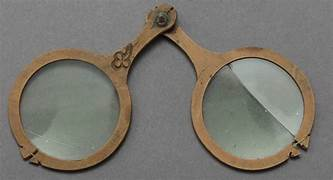
Spectacle Lens
replaced the magnifying glasses in terms of usage, to view small letters on writings
Wind Mill
were used as mills proper, for grinding corn into flour
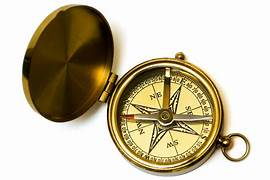
Magnetic compass
important advance in navigation because it allowed mariners to determine their direction even if clouds obscured their usual astronomical cues such as the North Star. It uses a magnetic needle that can turn freely so that it always points to the north pole of the Earth's magnetic field. Knowing where north is allows the other directions to be determined as well.
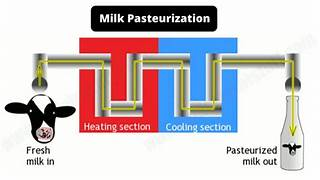
Pasteurization
the challenge to keep manufactured food from deteriorating was greater for dairy products, especially milk, since they spoil faster. Louis Pasteur, a French biologist, microbiologist, and chemist found a way to solve the problem. He invented pasteurization, the process of heating dairy products to kill harmful bacteria that causes spoilage.
Leonardo Da Vinci
he was interested in astronomy, geology, anatomy and mechanics. He is the first Modern Anatomist. He dissected bodies and discovered maxillary sinus, the moderator band and the heart and ventricles of. brain, making precise anatomical drawings.
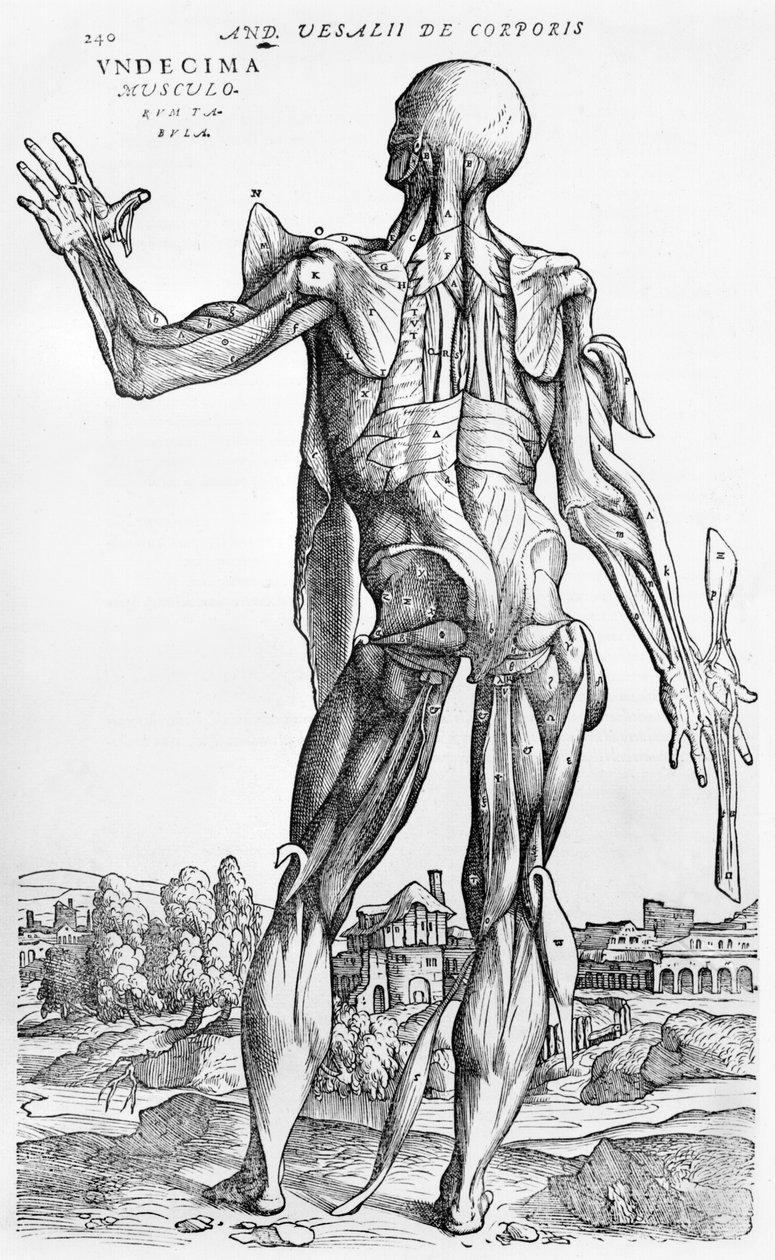
Andreas Vesalius
he published the book "On the Fabric of the Human Body" he was a surgeon and anatomist who laid out in detail the first scientifically accurate description of human anatomy. He is considered as founder of modern medicine.
Gabriel Fahrenheit
inventor of first mercury thermometer
Robert Hooke
conducted experiments in artificial respiration using a dog proving that air is essential to respiration. He also made the description of cell.
Calculator
circumstances in the modern times required a faster way to compute more complicated equations. Computing devices must also be easy to carry since they would be utilized on a day-to-day basis. The creation of modern calculators did not only pave the way for easier arithmetic calculations, but also resulted in the development of more complex processing.
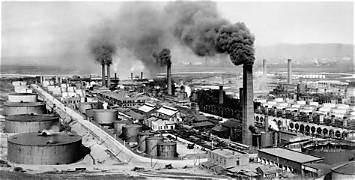
Petroleum Refinery
at first, people used animal oils for generating light to illuminate their homes. However, the production of animal oils could not keep up with the demand. Because of this, Samuel Kier was able to invent kerosene by refining petroleum. Kerosene was later on referred to as the "illuminating oil" because it was used at first to provide lighting to homes.