Topic 3.2: Musculoskeletal - Vertebral column
 Call Kai
 Learn
Learn Practice Test
 Spaced Repetition
 Match
Match Flashcards
 Knowt Play
1/28

There's no tags or description
Looks like no tags are added yet.
Name | Mastery | Learn | Test | Matching | Spaced | Call with Kai | Chat |
|---|
No analytics yet
Send a link to your students to track their progress
29 Terms
basic subdivisions and regions of vertebral column (5)
Cervical
Thoracic
Lumbar
Sacrum
Coccyx
major functions of vertebral column (3)
Structure → eg. thoracic cage (ribs) comes off thoracic region
Movement
Protection → eg. spinal cord
changes to curvature form embryonic stage to adulthood
During embryonic stages: primary curvatures = kyphotic
Adulthood: secondary curvatures = lordotic -> develop in cervical and lumbar regions
atypical or abnormal curvatures - excessive lordosis
increased curvature in lumbar region
atypical or abnormal curvatures - excessive kyphosis
increased curvature in thoracic region
atypical or abnormal curvatures - scoliosis
increased lateral curvature
major anatomic landmarks of typical vertebra - list (4)
vertebral body
vertebral arch
spinous and transverse processes
articular processes
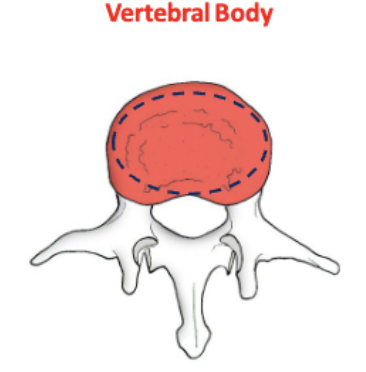
major anatomic landmarks of typical vertebra - vertebral body (3)
weight bearing
articulate superiorly and inferiorly
epiphyseal ring
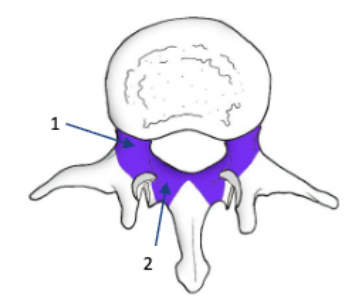
major anatomic landmarks of typical vertebra - vertebral arch (3)
pedicles and lamina
forms vertebral foramen
protects spinal cord
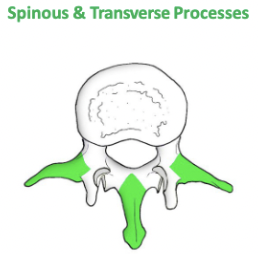
major anatomic landmarks of typical vertebra - spinous and transverse processes (2)
Levers for muscle. attachment
Levers for ligamentous attachment
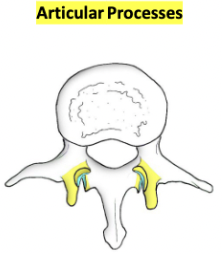
major anatomic landmarks of typical vertebra - articular processes (2)
Projections with articular facets
Articulate superiorly and inferiorly -> joints
function of spinous processes of thoracic vertebrae
extend inferiorly to limit motion
spinous processes of thoracic vs lumbar vertebrae
Spinous processes of lumbar vertebrae is larger than that of thoracic vertebrae because it has more muscle attachment
more muscle and stronger muscles
vertebral foramen - structure
vertebral body and arching off of pedicle and lamina (vertebral arches) creates empty space for spinal cord
vertebral column - def
collection of spaces
stacking of vertebrae results in spinal cord transversing vertebral canal
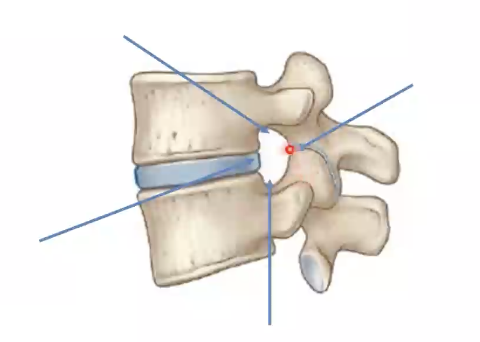
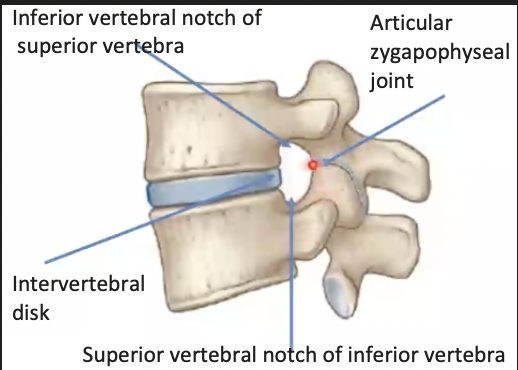
superior and inferior vertebral notches - structure
incomplete holes above or below pedicle -> forms intervertebral foramen when vertebra stacked
Intervertebral foramen allow spinal nerve roots, dorsal root ganglia and vessels to pass through
vertebral foramen vs superior and inferior vertebral notches - difference
foramen is a empty space within one vertebrae
notch is an empty space created by the articulation of two vertebrae where each has an incomplete hole and stacking together forms an intervertebral forament
labels
intervetrabal joints - def
secondary cartilaginous joint
composed of two components → outer and inner
intervertebral joints - outer component (3)
annulus fibrosus
attaches to epiphyseal ring of vertebra above and below → keeps them together
concentric lamellae of college allows movement in all directions but also restricts excessive rotation
intervertebral joints - inner component (4)
nucleus pulposus
Surrounded by annulus fibrosis laterally
Gelatinous consistency -> can become deformed to absorb shocks and disperses compressive forces without being compressible
Keeps vertebra apart -> helps resist compressive forces
water content of intervertebral joints over time
reduces → increased incidence of spinal injuries and pain
zygapophyseal joints - def
plane joints (synovial) between inferior and superior articular processes that allow gliding motions to occur
zygapophyseal joints - factor affecting movement and examples (2)
dependent on orientation of articular surface involved
Lumbar vertebra involved in a lot of anterior and posterior movement -> restricted by thoracic cage
Thoracic vertebra allow rotation and some lateral flexion -> restricted by thoracic cage
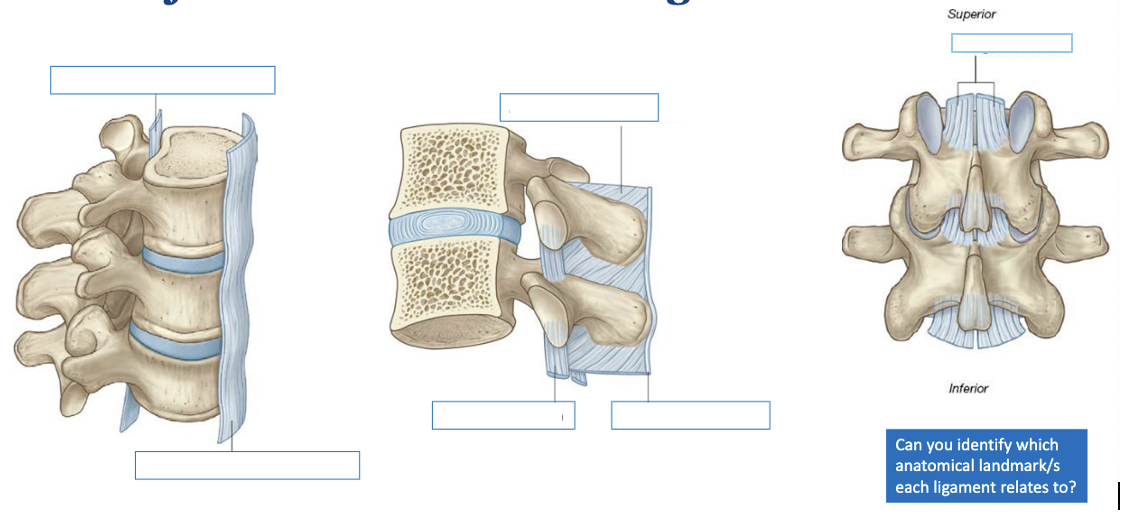
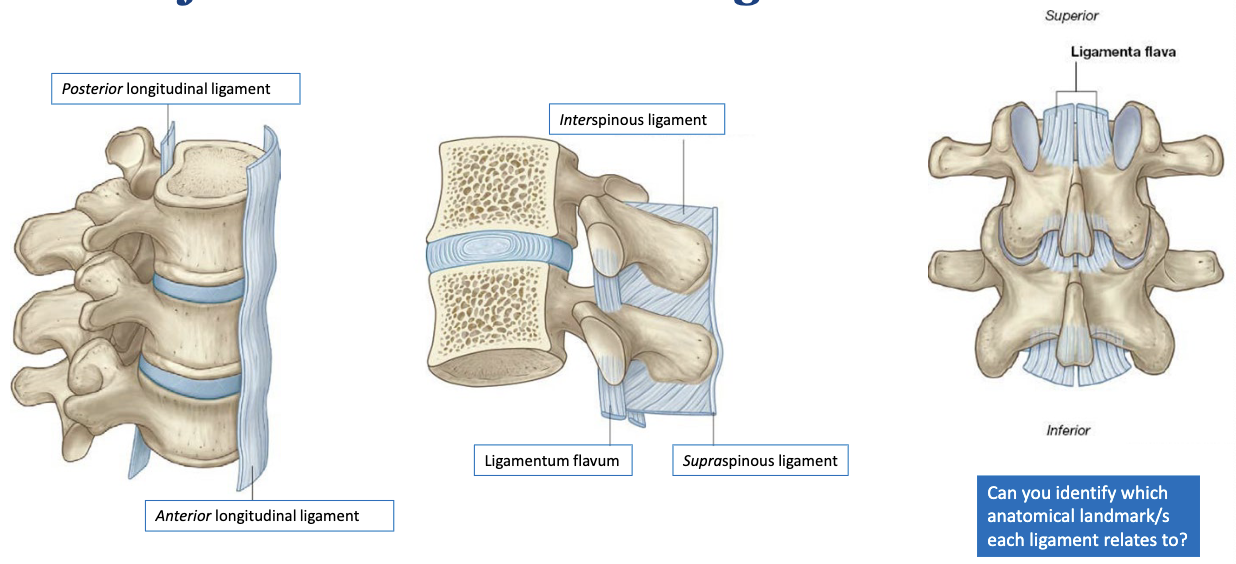
major vertebral column ligaments
anterior longitudinal ligament
posterior longitudinal ligament
interspinous ligament
supraspinous ligament
ligamentum flavum
extrinsic muscles of back - feature
attach to and act on back
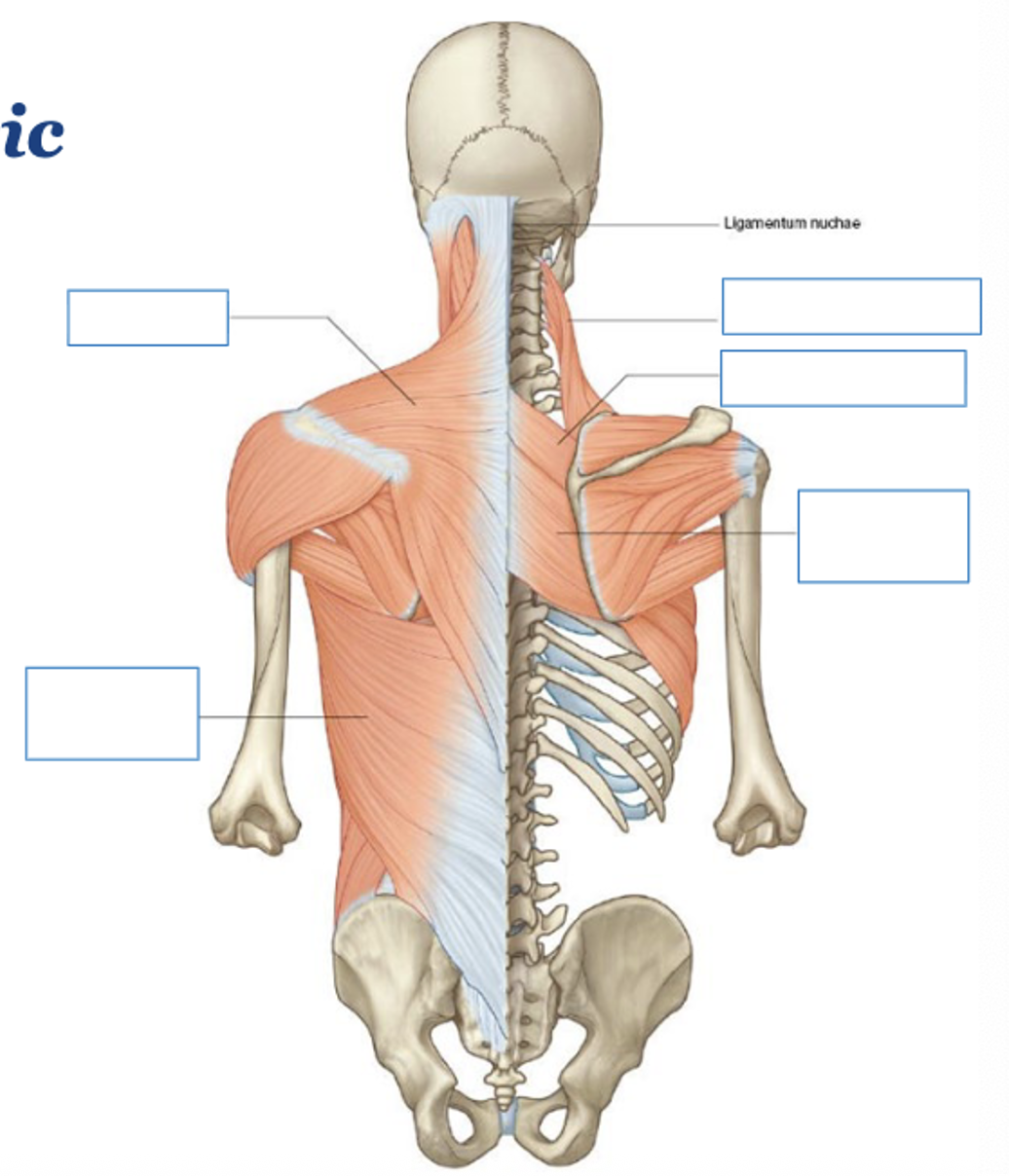
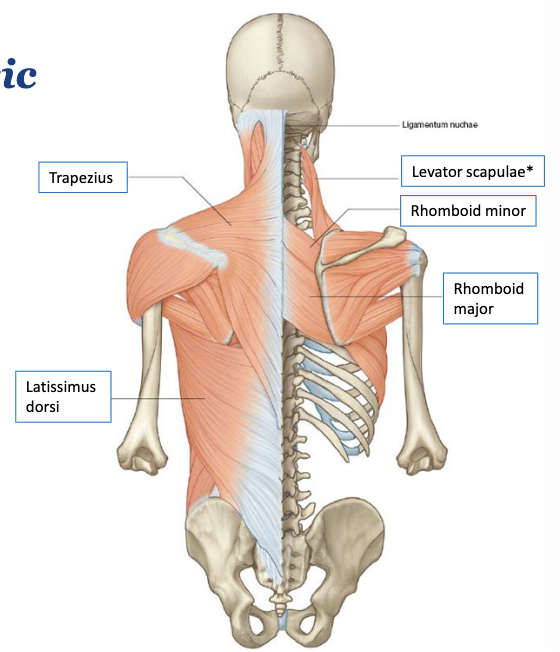
extrinsic muscles of back - list (5)
Trapezius
Levator scapulae
Rhomboid minor
Rhomboid major
Latissimus dorsi
intrinsic muscles of back - feature
primarily attach to and act on back
intrinsic muscles of back - list (2)
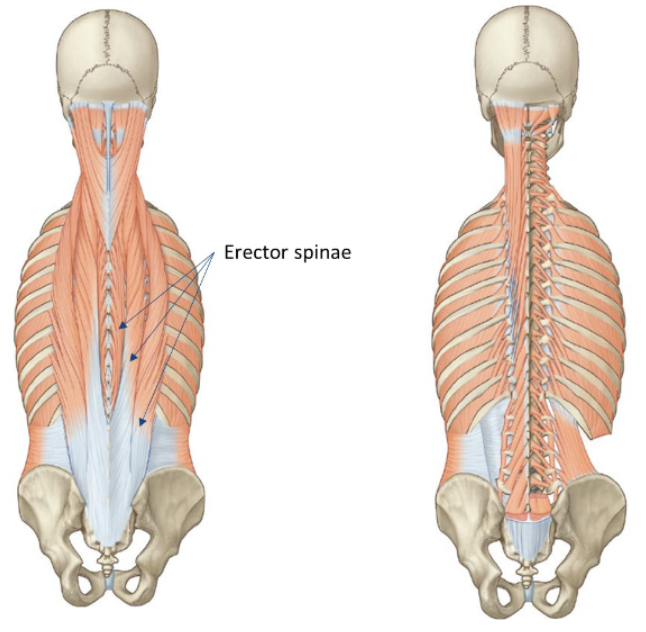
erector spinae → prime movers of back esp. in sagittal plane
Concentrically extend the trunk
Eccentrically control trunk flexion
Commonly implicated with postural issues
transverse spinalis → group of short muscles deep to erector spinae
Control more fine movements at vertebral segments
Importantascular in rehab for improving segmental movements -> esp. multifidus in lumbar spine