Topics 7-10

0.0(0)
Studied by 5 people
call kaiCall Kai
Locked
learnLearn
examPractice Test
spaced repetitionSpaced Repetition
heart puzzleMatch
flashcardsFlashcards
GameKnowt Play
Card Sorting

1/85

encourage image

There's no tags or description

Looks like no tags are added yet.

Last updated 10:28 PM on 7/5/26
Name
Mastery
Learn
Test
Matching
Spaced
Call with Kai
Chat

No analytics yet

Send a link to your students to track their progress

86 Terms

1
New cards

How many bones in the fingers?

14 finger bones

3 on digits

2 on pollex

2
New cards

What bones make up the pectoral girdle?

The pectoral girdle is made up of the scapula and the clavicle
3
New cards
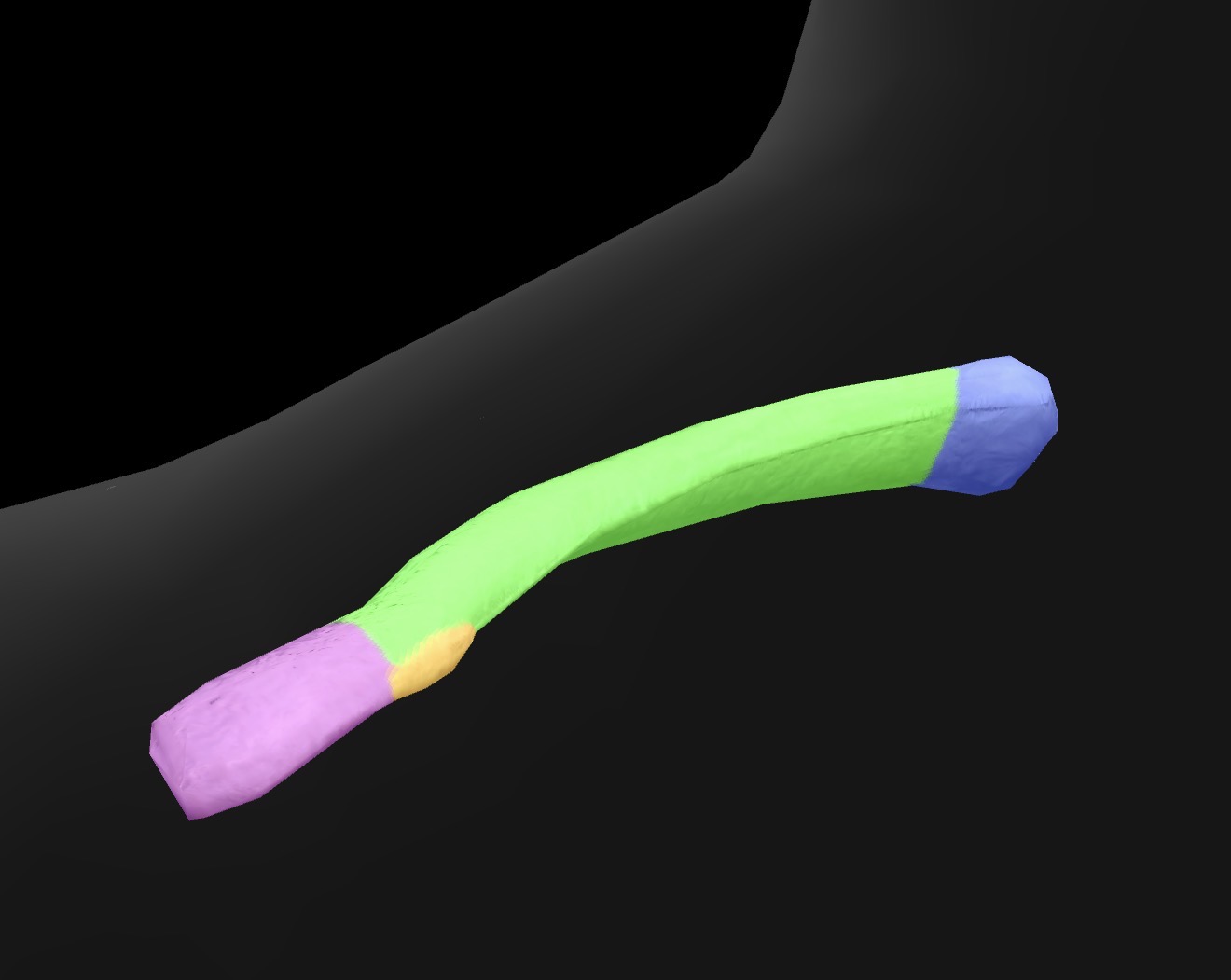
<p>What bone is this, what joints does it form?</p>

What bone is this, what joints does it form?

Clavicle

Forms sternoclavicular (SC) and acromioclavicular (AC) joints

MOST COMMONLY FRACTURED BONE

<p>Clavicle</p><p>Forms sternoclavicular (SC) and acromioclavicular (AC) joints</p><p>MOST COMMONLY FRACTURED BONE</p>
4
New cards
<p>What is this bone? What are the landmarks?</p>

What is this bone? What are the landmarks?

Scapula

<p>Scapula</p>
5
New cards
<p>What bone is this? What are the bone landmarks?</p>

What bone is this? What are the bone landmarks?

Scapula

<p>Scapula</p>
6
New cards
term image
knowt flashcard image
7
New cards
term image
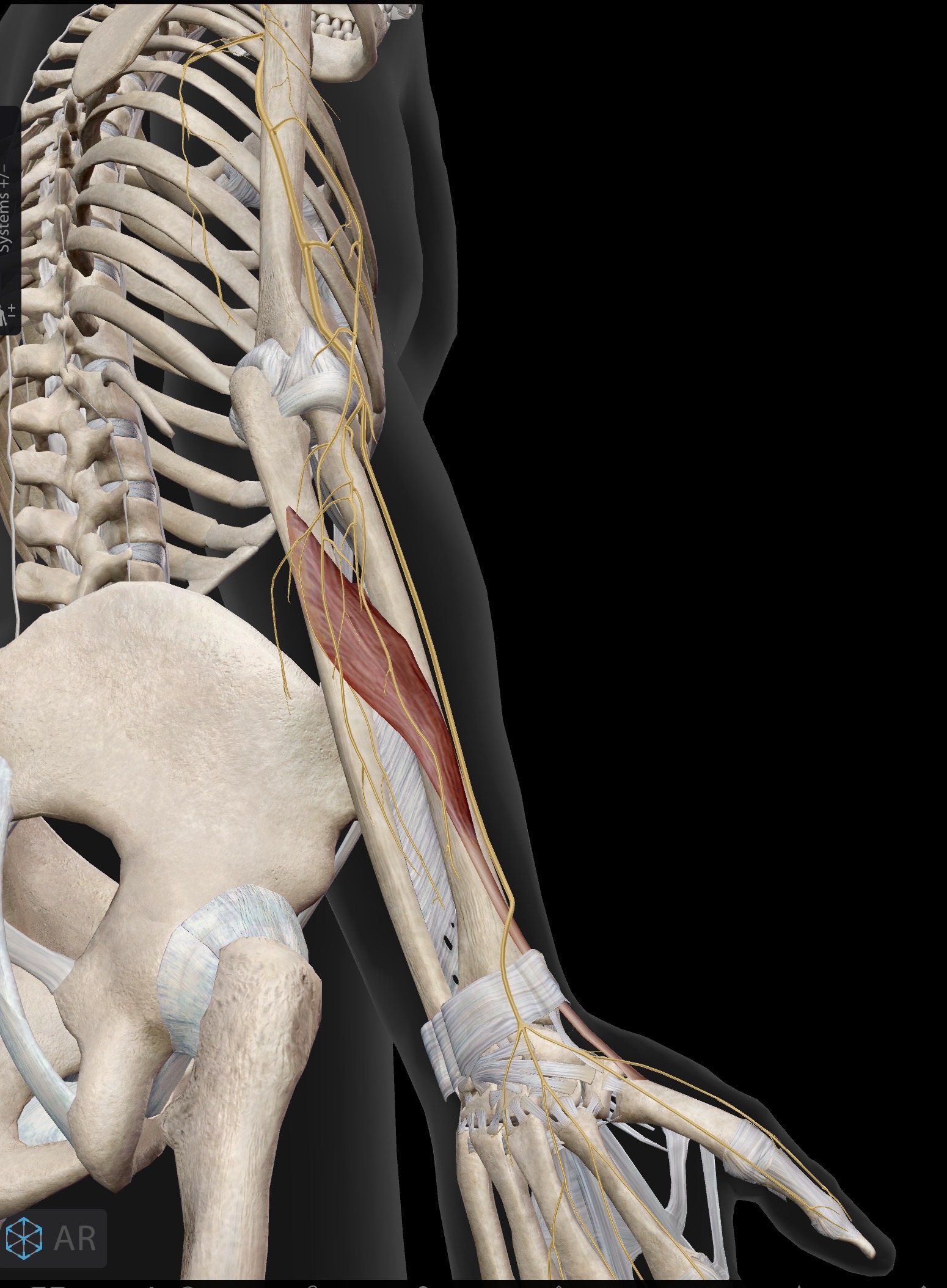
knowt flashcard image
8
New cards
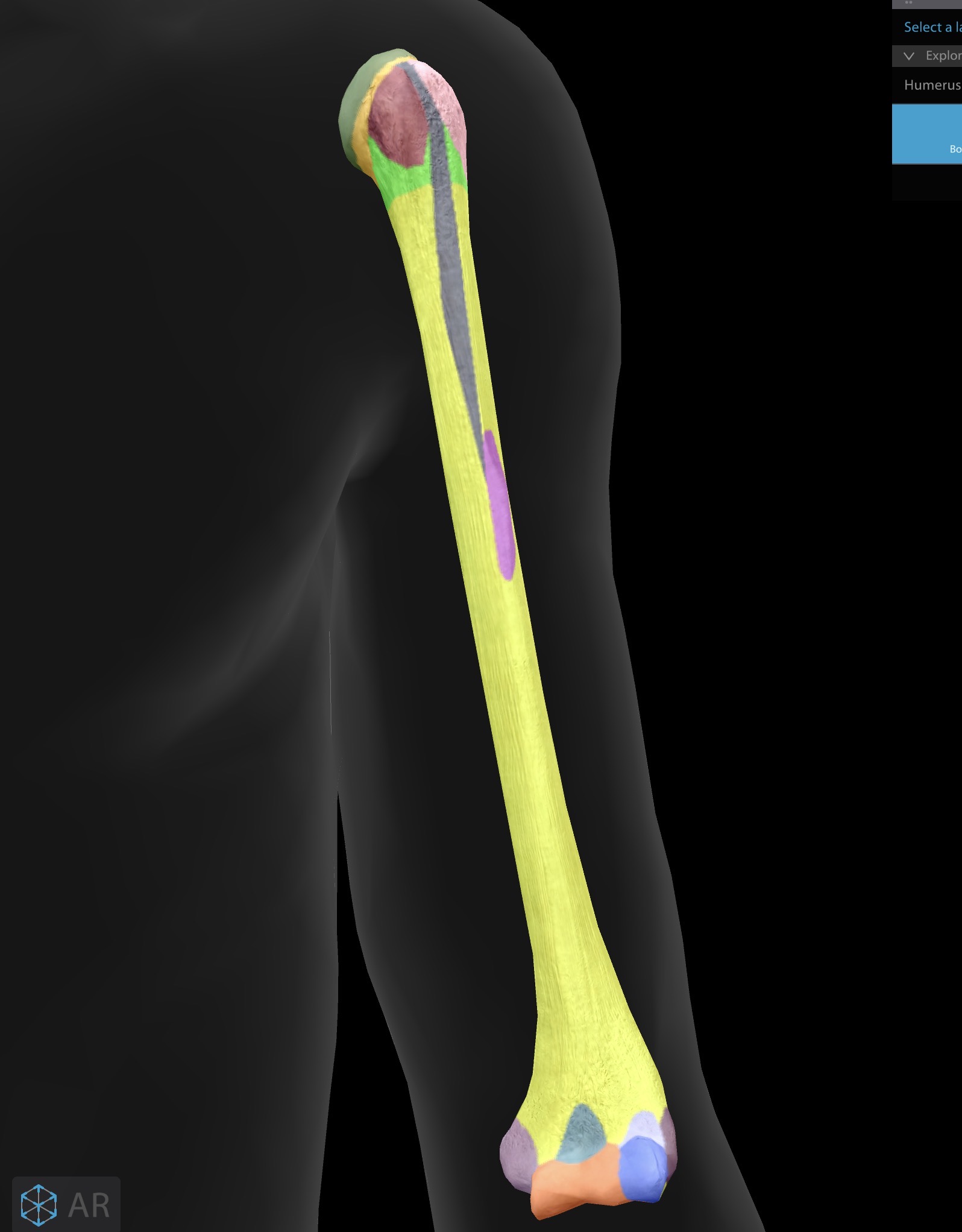
<p>What bone is this? What are the bone landmarks?</p>

What bone is this? What are the bone landmarks?

Humerus

<p>Humerus</p>
9
New cards
<p>What are the joints involving the pectoral girdle? What kind of joints are they (structural and functional type)? What bones do they involve?</p>

What are the joints involving the pectoral girdle? What kind of joints are they (structural and functional type)? What bones do they involve?
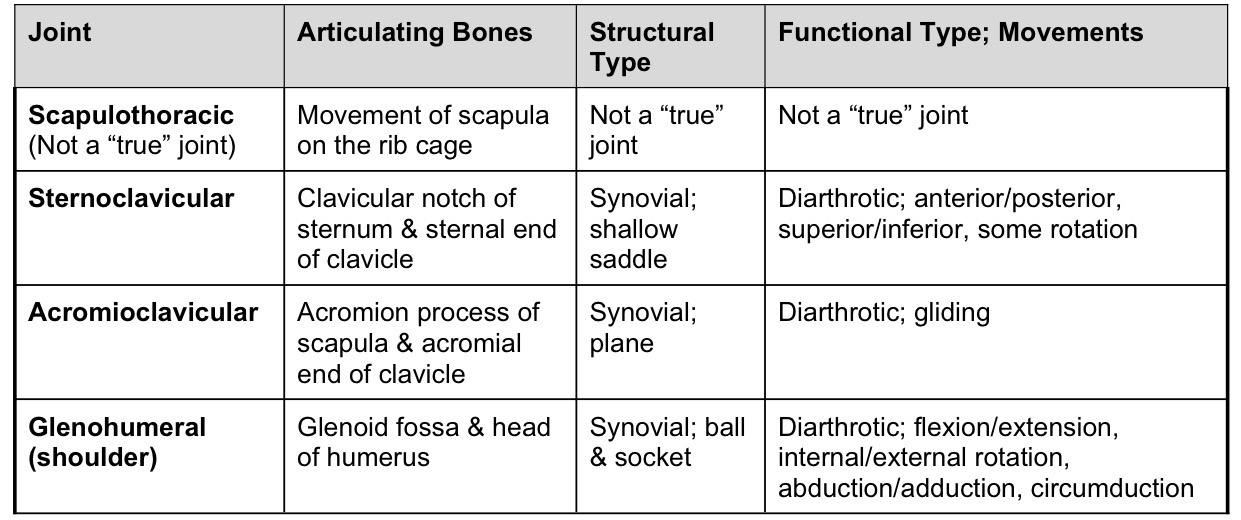
knowt flashcard image
10
New cards
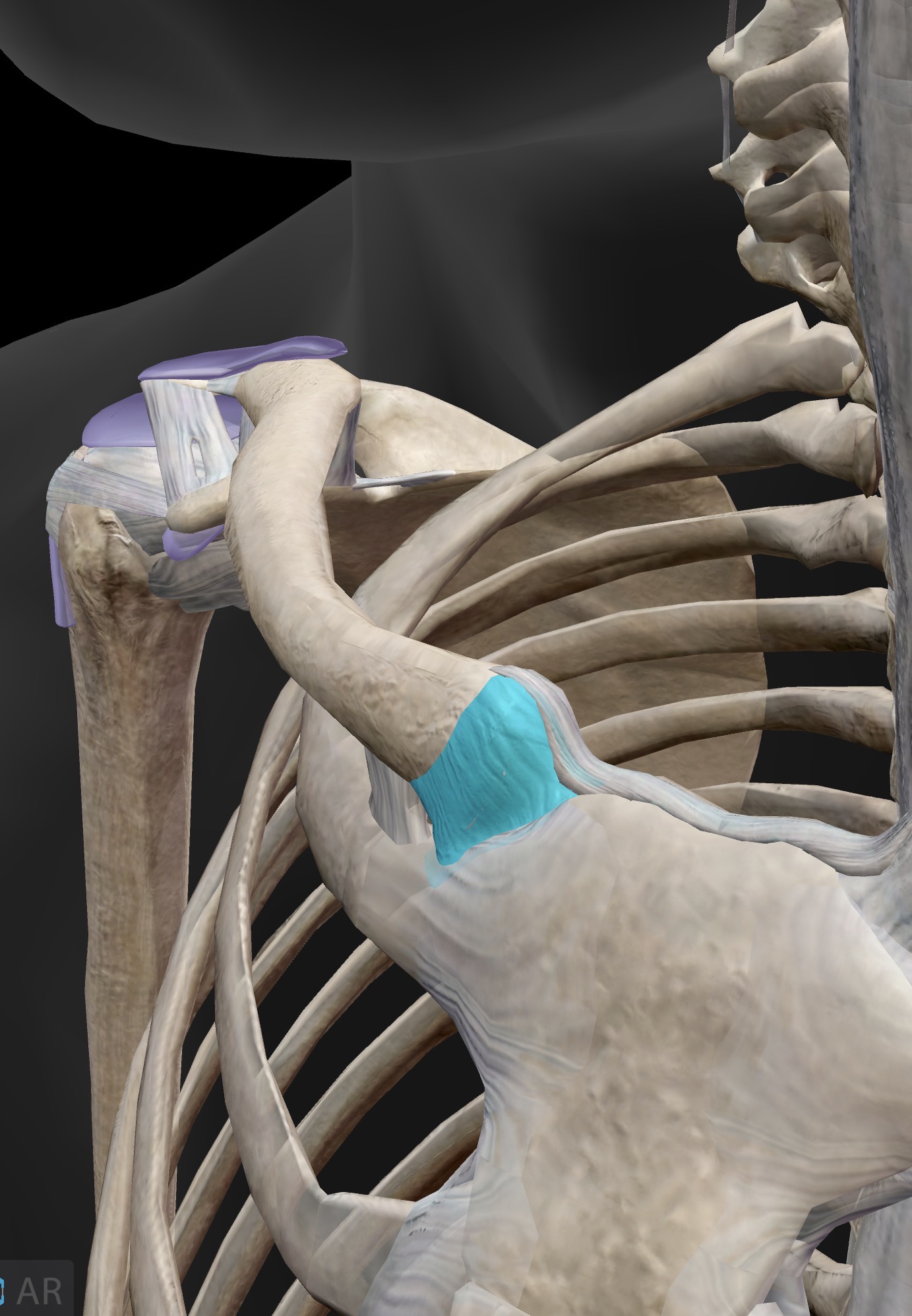
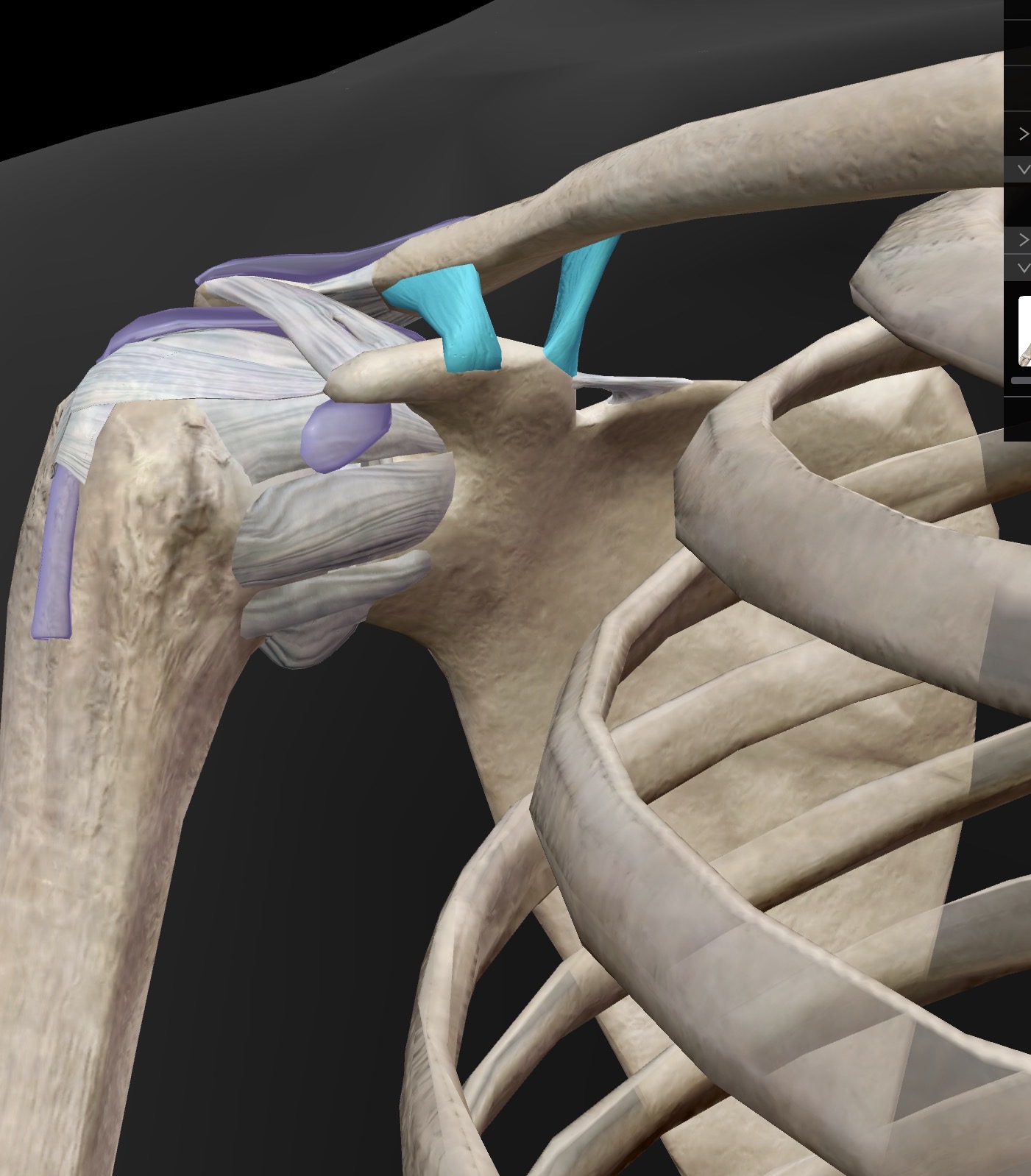
<p>What ligament is this? What does it connect?</p>

What ligament is this? What does it connect?

Trapezoid and conoid coracoclavicular ligaments

Conoid - coracoid process to the conoid tubercle of clavicle

Trapezoid - coracoid process to the shaft of clavicle

<p>Trapezoid and conoid coracoclavicular ligaments</p><p>Conoid - coracoid process to the conoid tubercle of clavicle</p><p>Trapezoid - coracoid process to the shaft of clavicle</p>
11
New cards
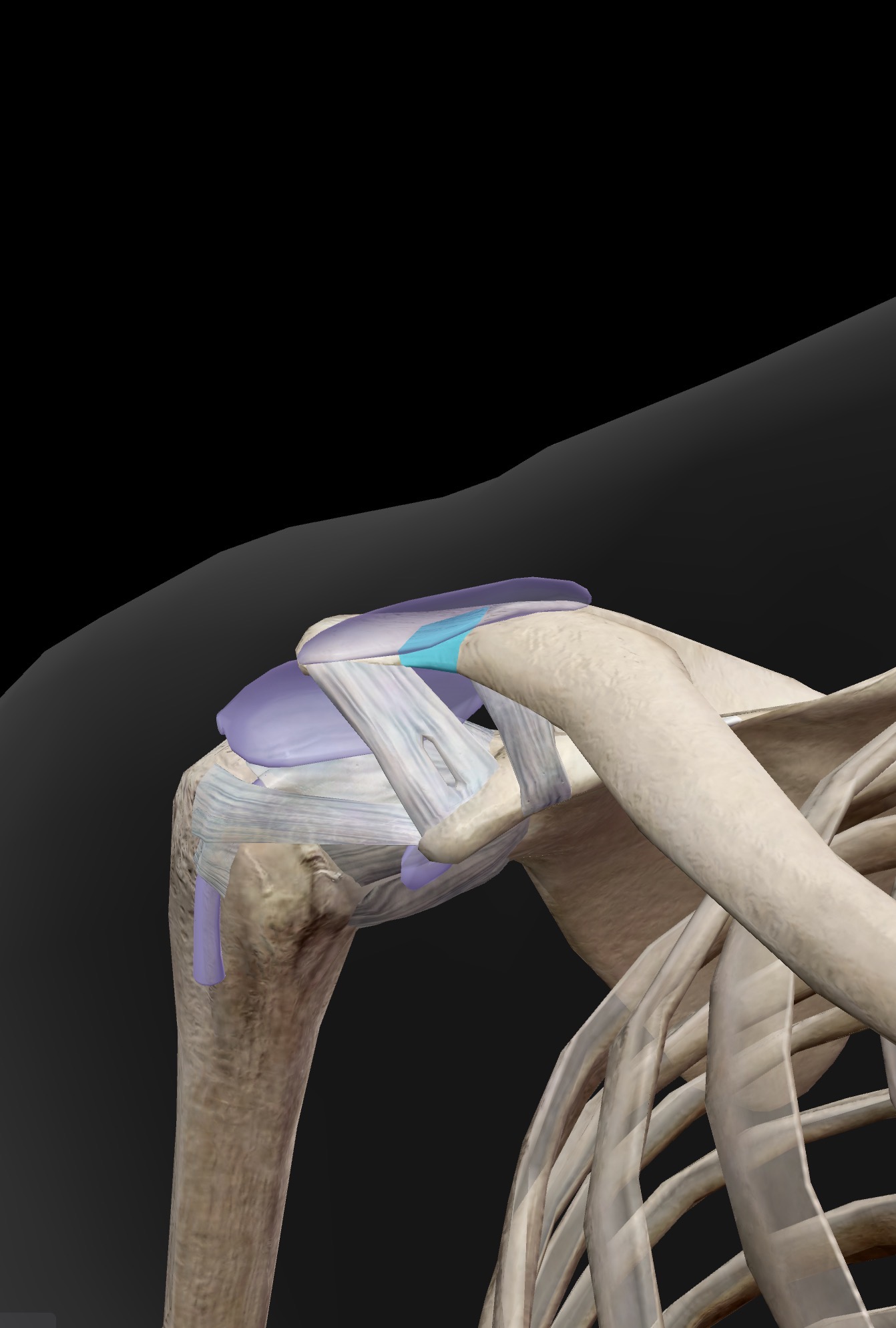
<p>What ligament is this? What does it connect?</p>

What ligament is this? What does it connect?

Sternoclavicular ligament - sternum to the Sternal end of clavicle.
12
New cards
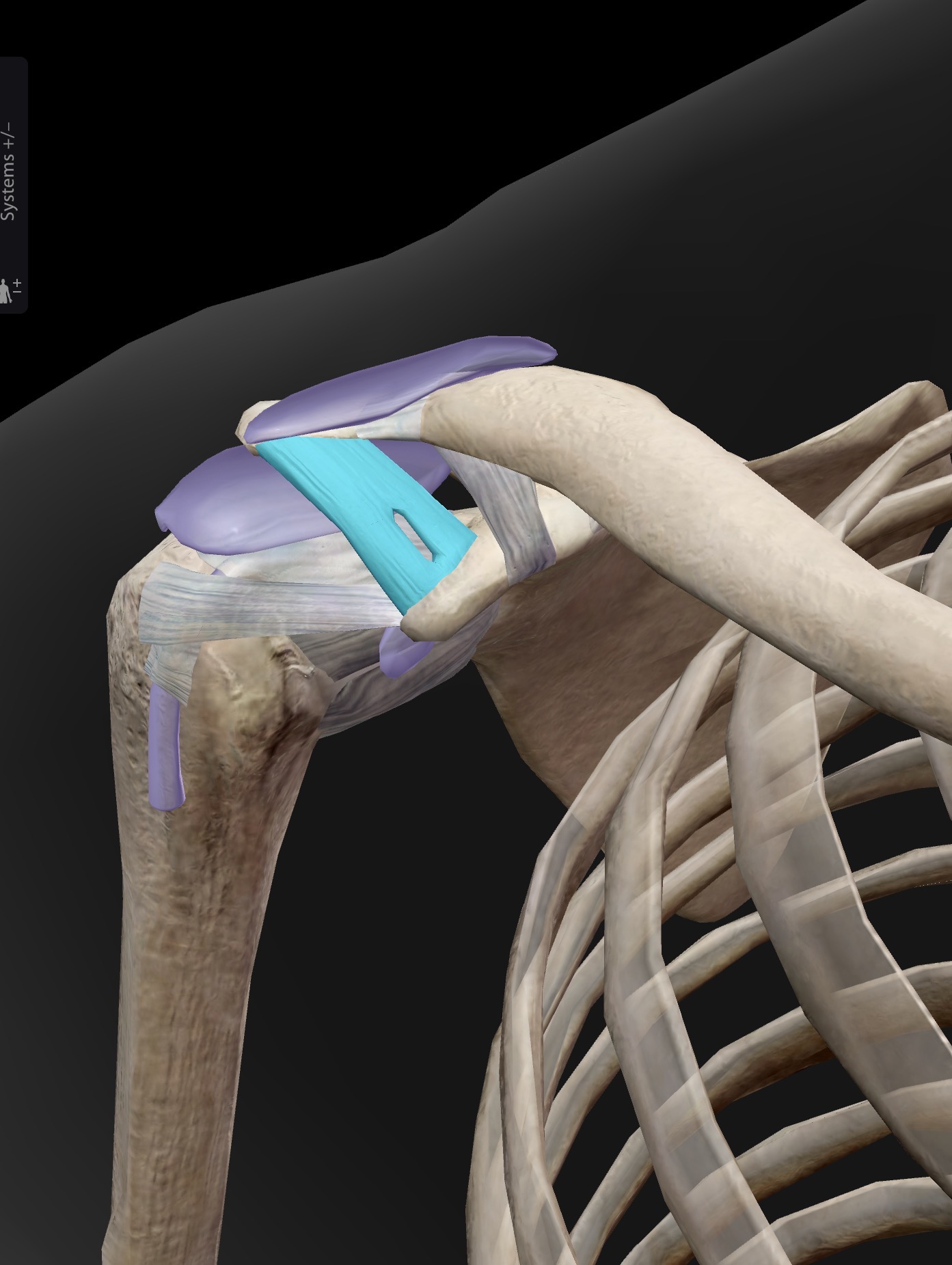
<p>What ligament is this? What does it connect?</p>

What ligament is this? What does it connect?

Acromioclavicular - acromion to the acromial end of the clavicle
13
New cards
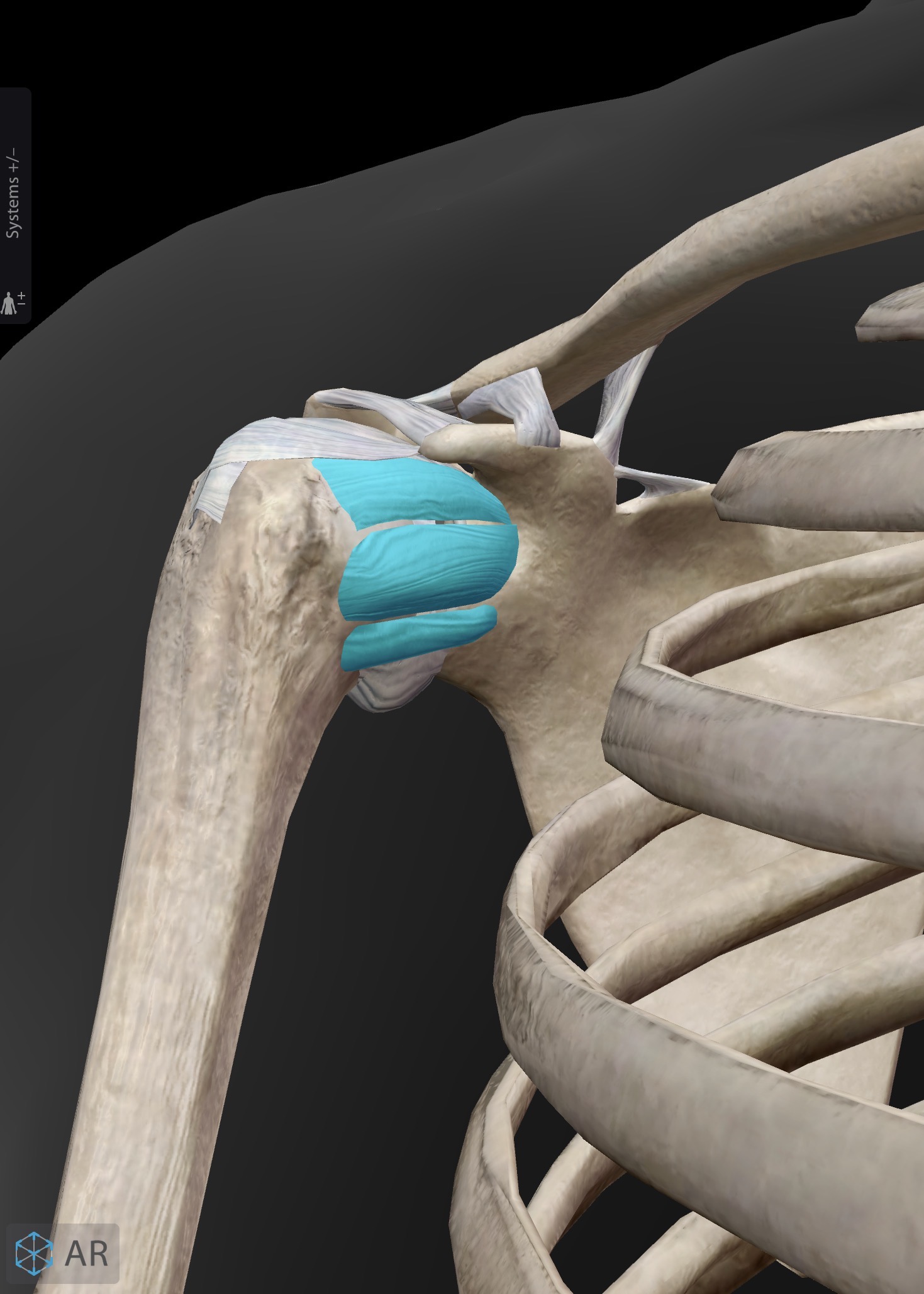
<p>What ligament is this? What does it connect?</p>

What ligament is this? What does it connect?

Coracoacromial ligament - coracoid process to the acromion
14
New cards
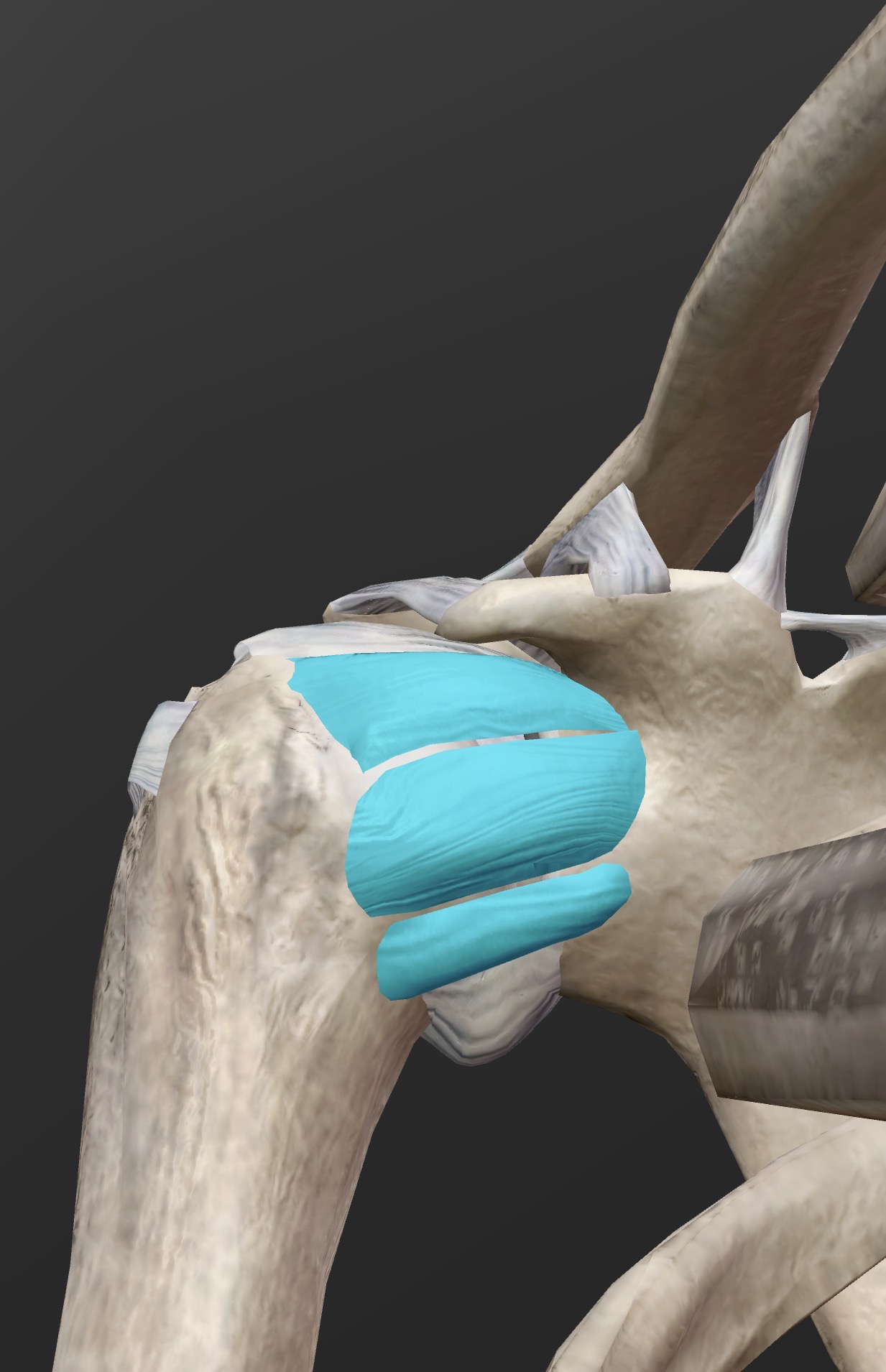
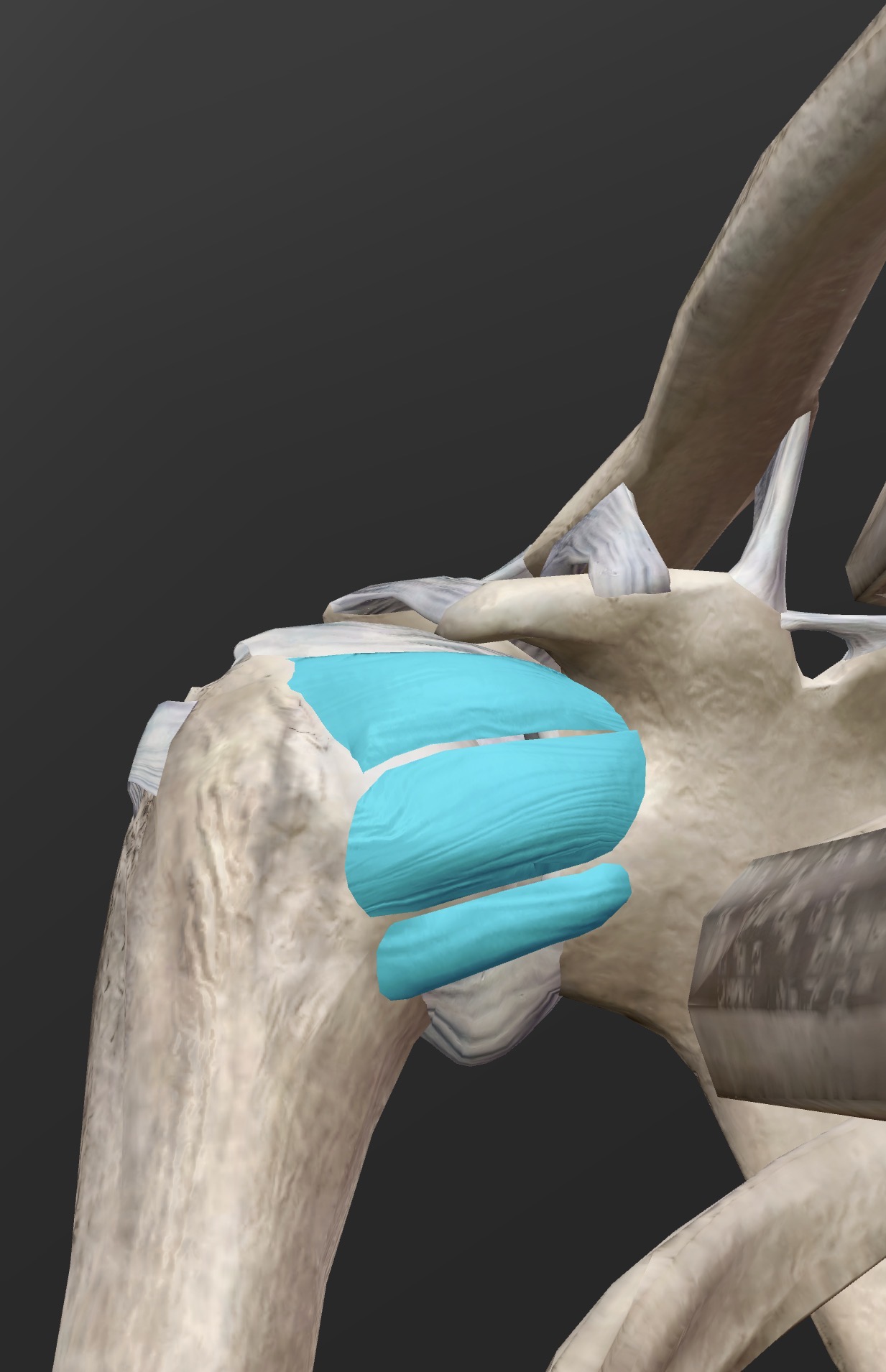
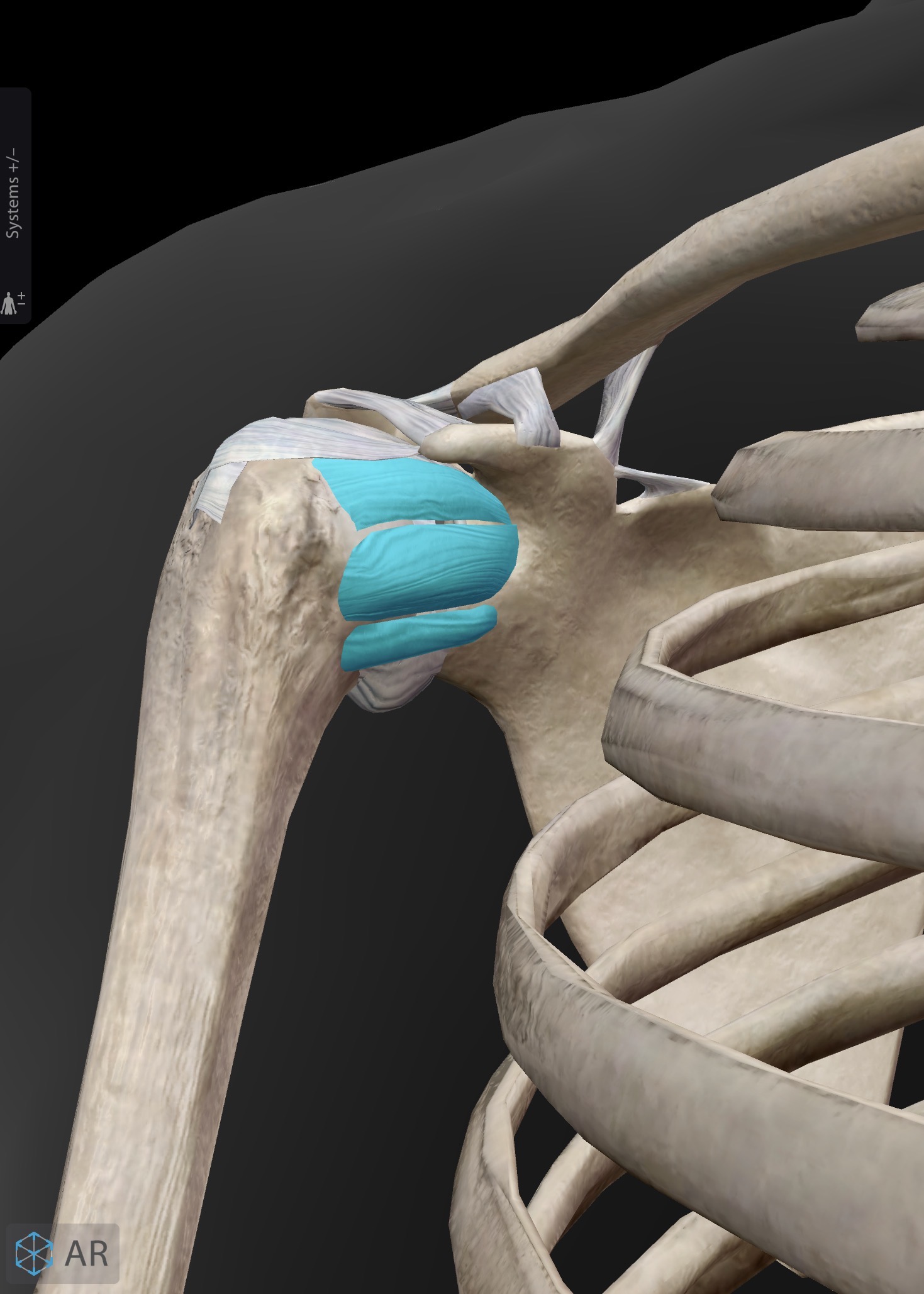
<p>What ligament is this? What does it connect?</p>

What ligament is this? What does it connect?

Glenohumeral (superior, middle, inferior) ligaments - edge of the anterior aspect of the glenoid fossa to the humerus
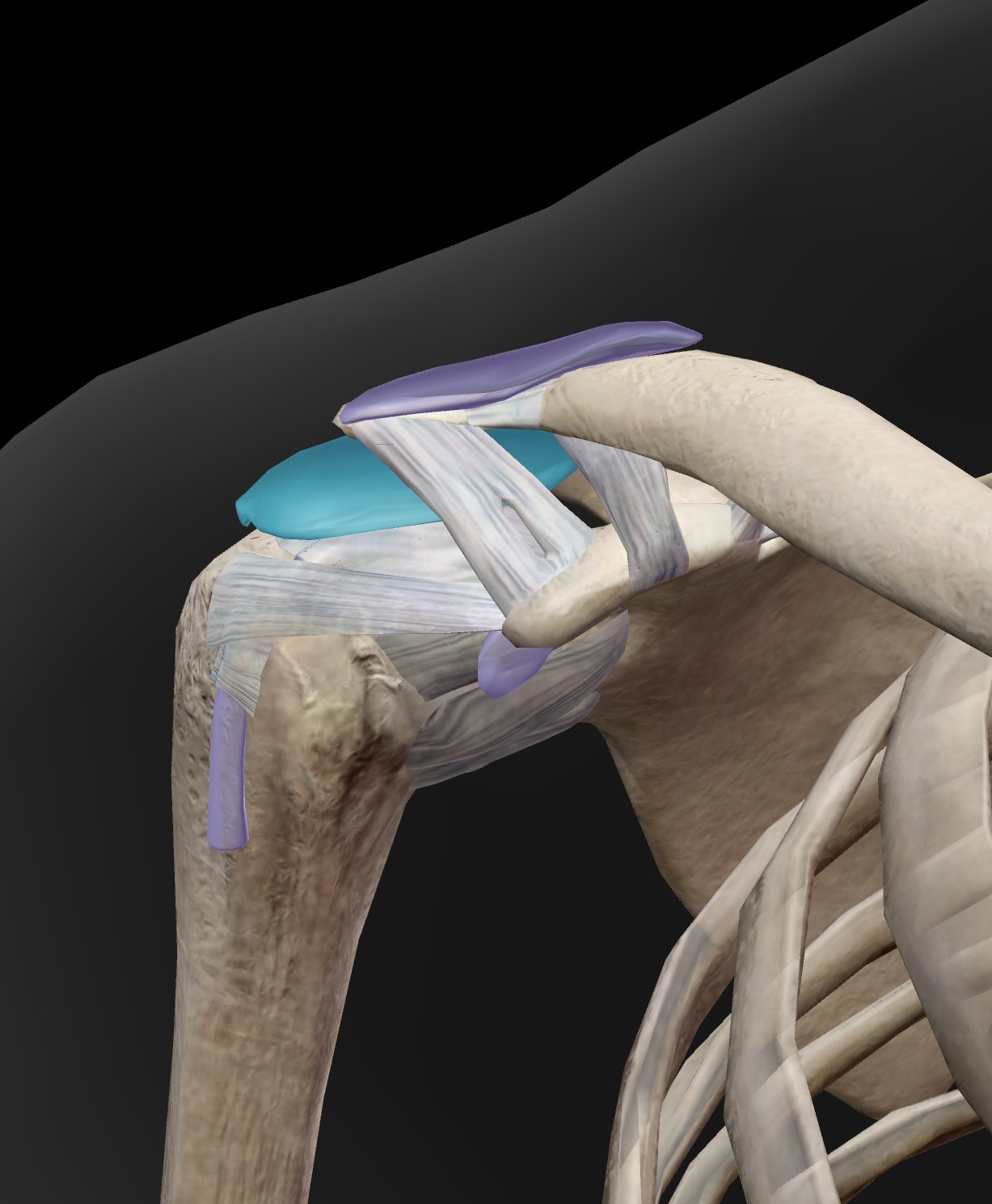
<p>Glenohumeral (superior, middle, inferior) ligaments - edge of the anterior aspect of the glenoid fossa to the humerus</p>
15
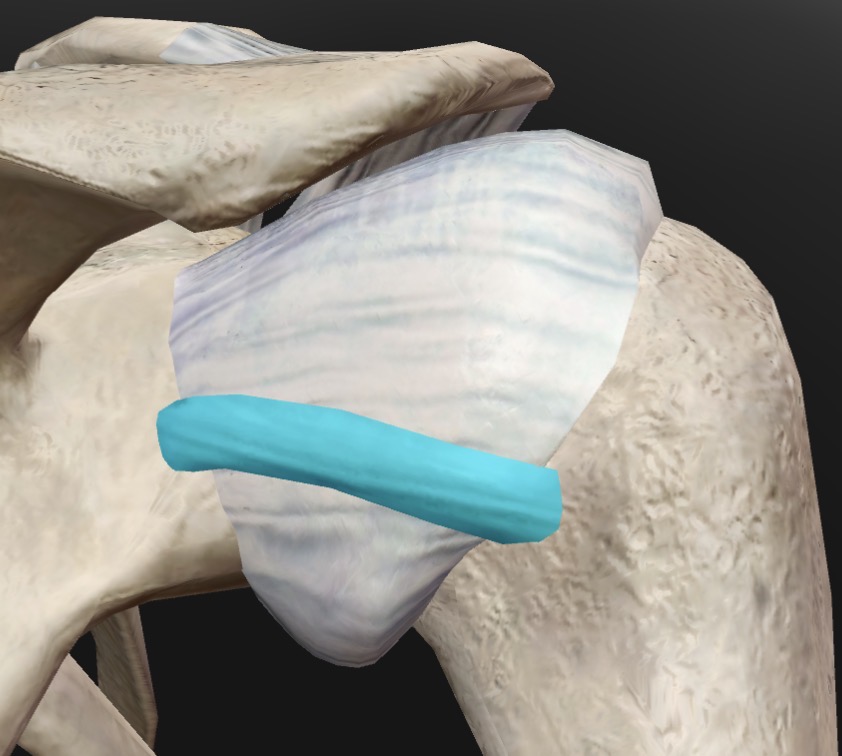
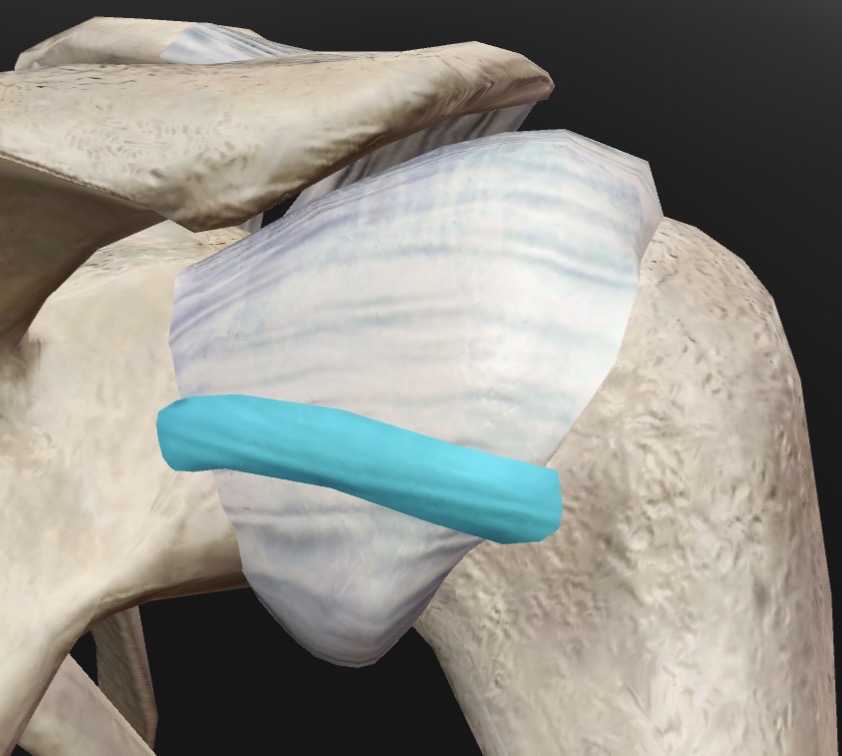
New cards
<p>What is this bursa called? What does it help?</p>

What is this bursa called? What does it help?

Subacromial bursa - helps protect the supraspinatus tendon

16
New cards
term image

Glenoid labrum - A fibrocartilage rim around the glenoid fossa/cavity that helps to deepen the joint, therefore helping to stabilize it

<p>Glenoid labrum - A fibrocartilage rim around the glenoid fossa/cavity that helps to deepen the joint, therefore helping to stabilize it</p>
17
New cards

What are the movements of the scapulothoracic joint?
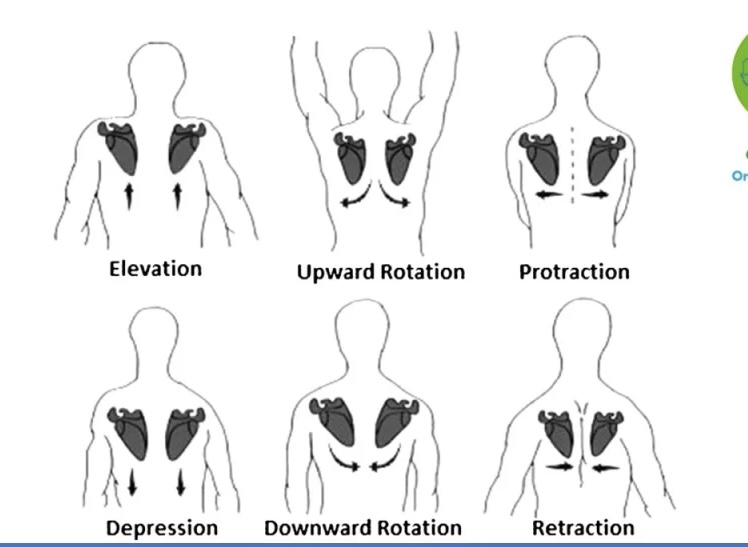
knowt flashcard image
18
New cards

What are the movements of the glenohumeral joint?
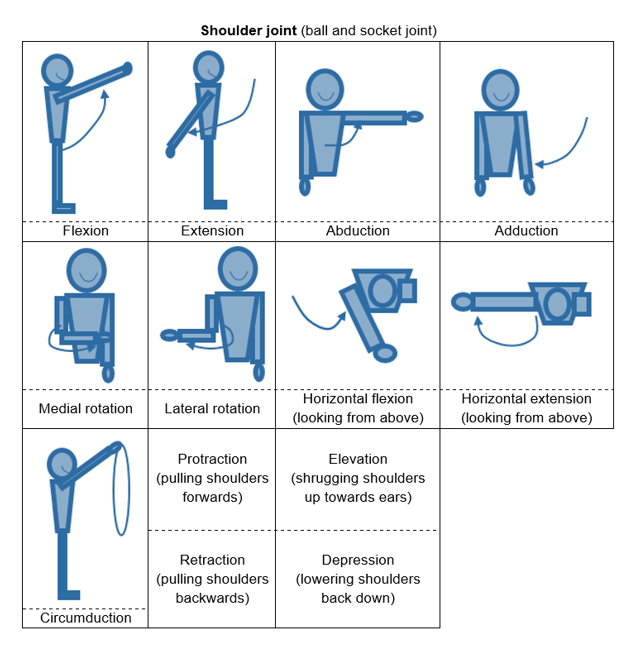
knowt flashcard image
19
New cards
term image
knowt flashcard image
20
New cards
term image
knowt flashcard image
21
New cards
term image
knowt flashcard image
22
New cards
term image
knowt flashcard image
23
New cards
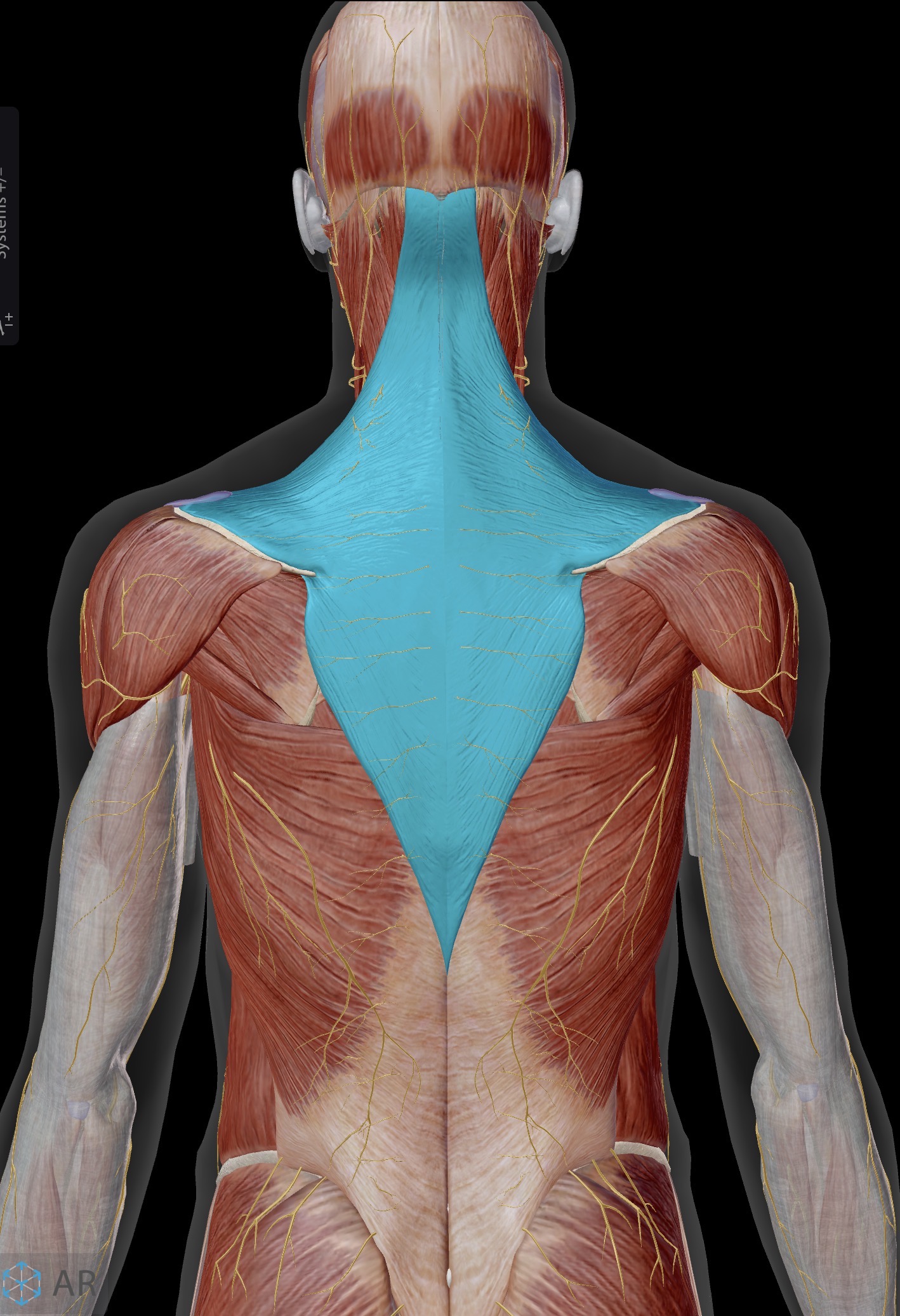
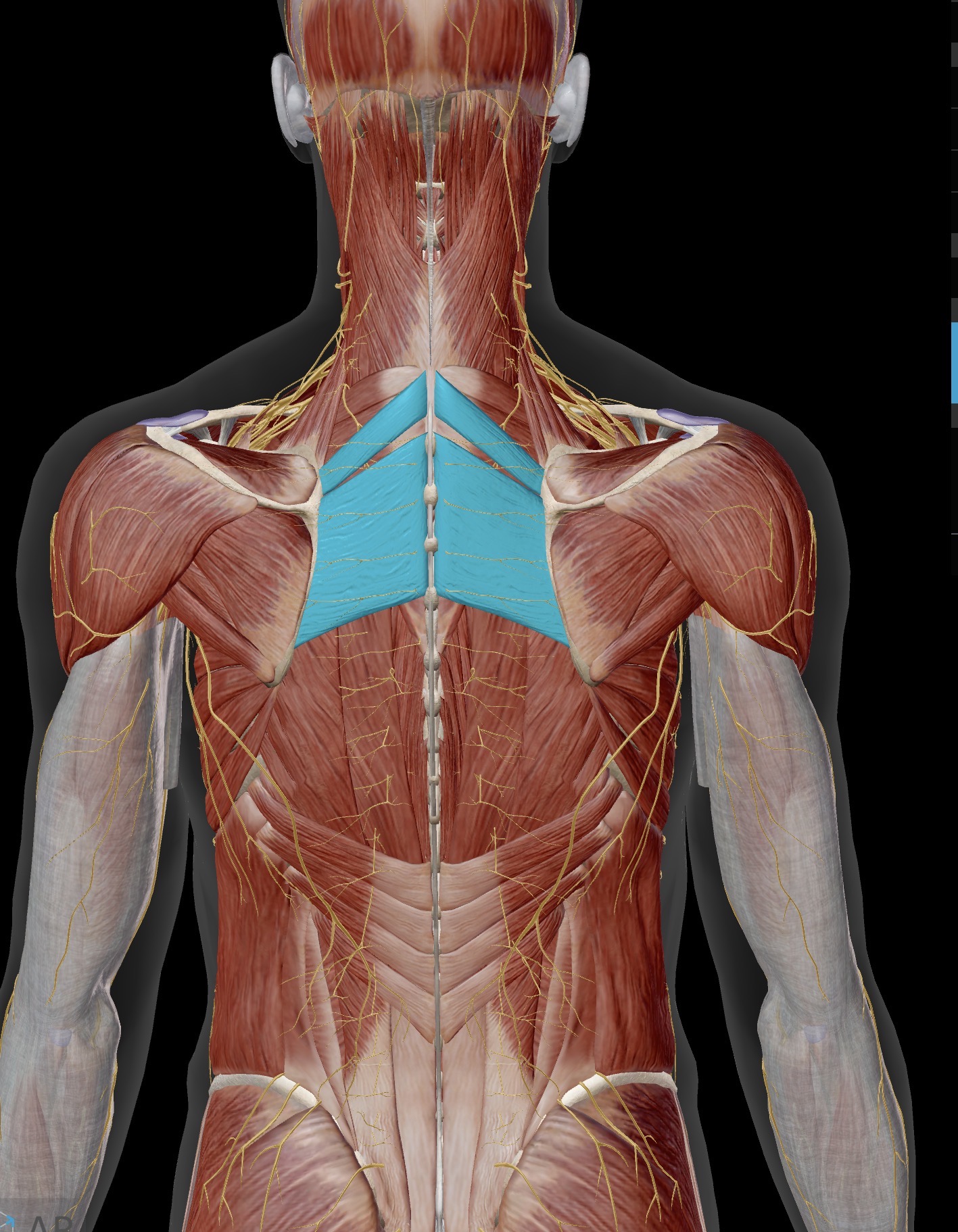
<p>Name the muscle and corresponding letter ( O = origin, I = insertion, A = actions, IN = innervation)</p><p>O</p><p>I</p><p>A</p><p>IN</p>

Name the muscle and corresponding letter ( O = origin, I = insertion, A = actions, IN = innervation)

O

I

A

IN

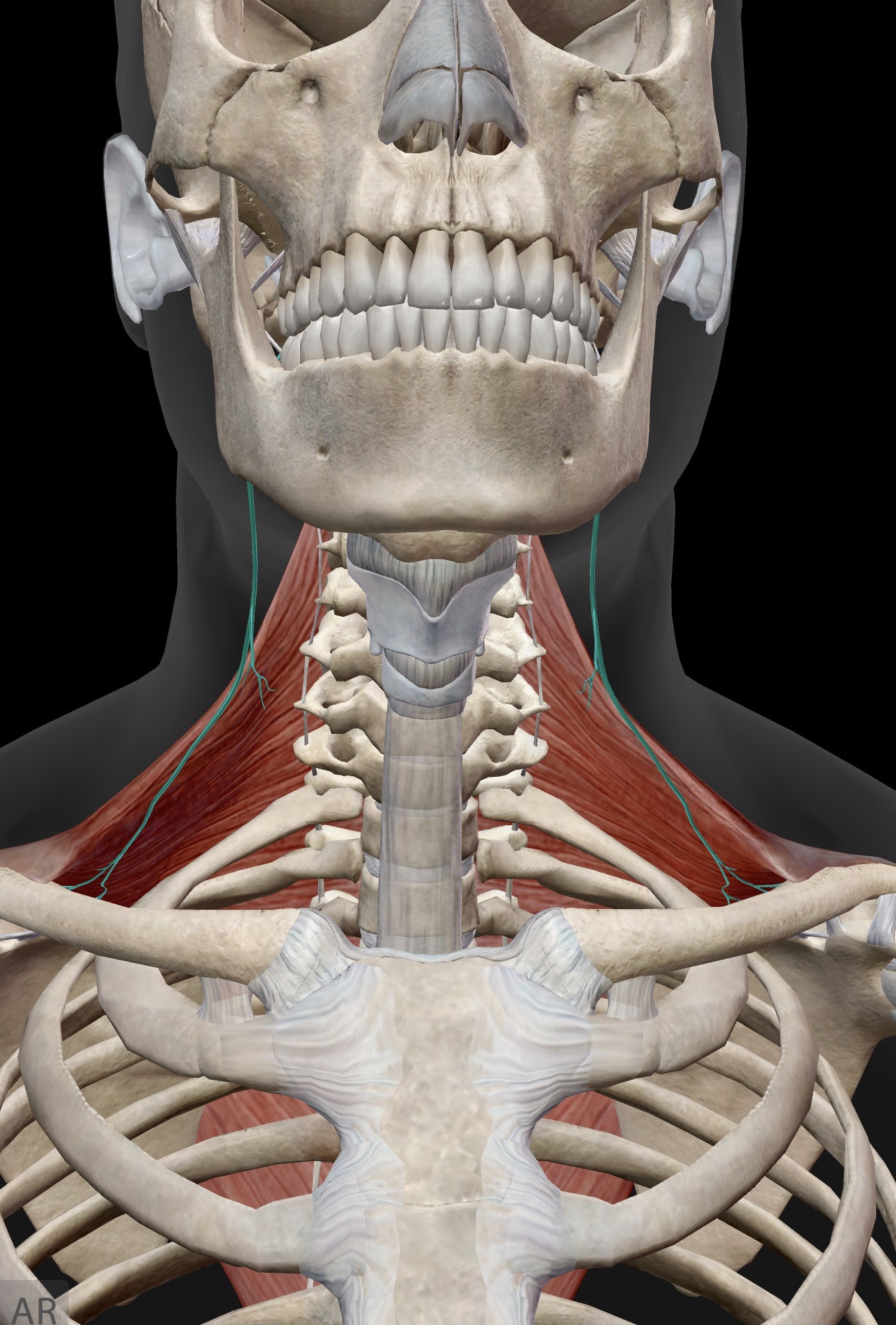
Trapezius

O: External occipital protuberance and all the spinous processes from the first cervical to last thoracic vertebrae (C1-T12)

I: U-shaped insertion along the spine of scapula, acromion and lateral portion of clavicle.

A:

Upper fibers of trapezius: Elevation, lateral/upward rotation of scapula (tip glenoid up); can also extend head if the scapulae are fixed

Middle fibers of trapezius: Retract scapula

Lower fibers of trapezius: Depression and lateral/upward rotation of scapula (tip glenoid up)

IN: Cranial nerve Xl (spinal accessory nerve)
24
New cards
<p>Name the muscle and corresponding letter ( O = origin, I = insertion, A = actions, IN = innervation)</p><p>O</p><p>I</p><p>A</p><p>IN</p>

Name the muscle and corresponding letter ( O = origin, I = insertion, A = actions, IN = innervation)

O

I

A

IN

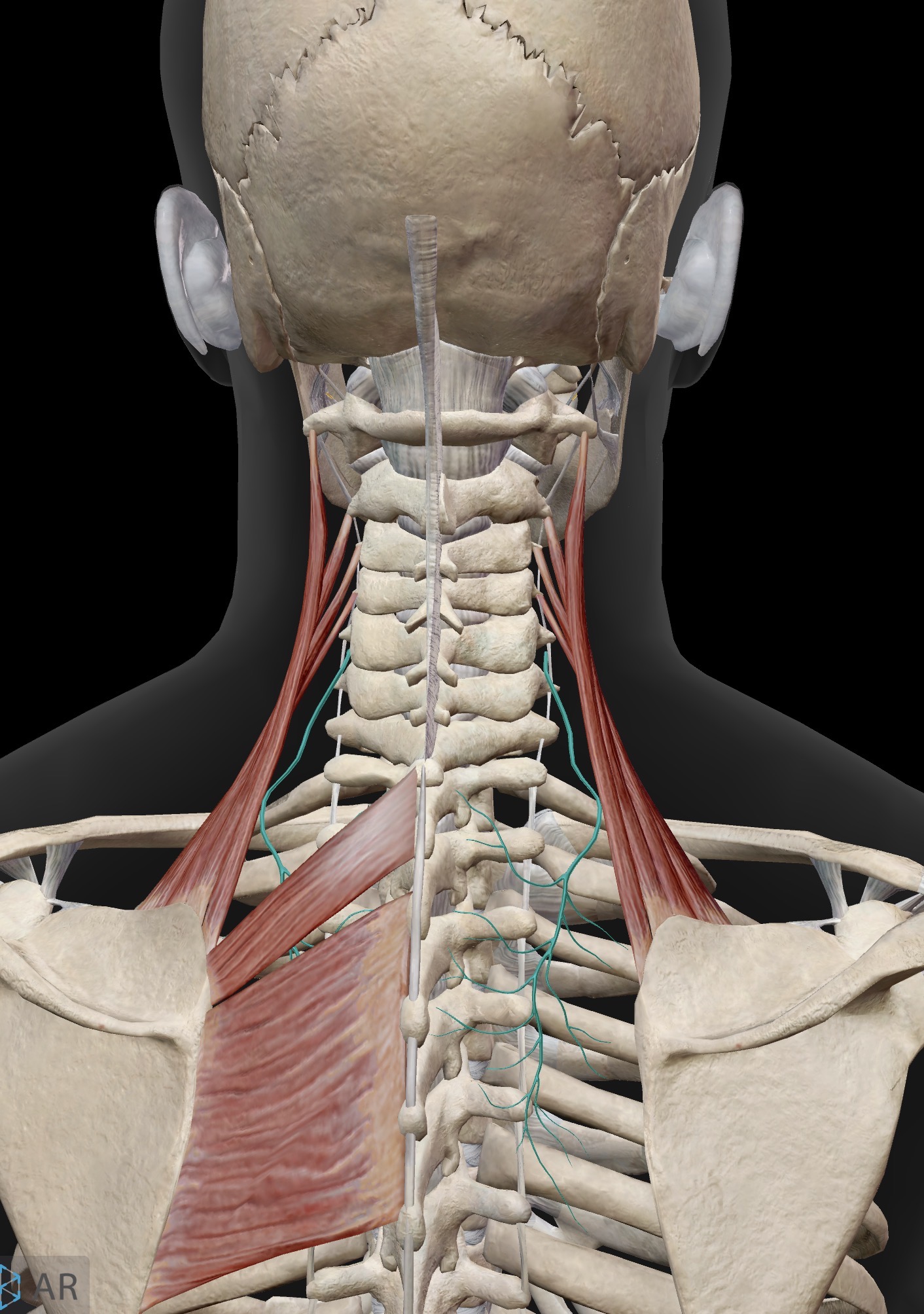
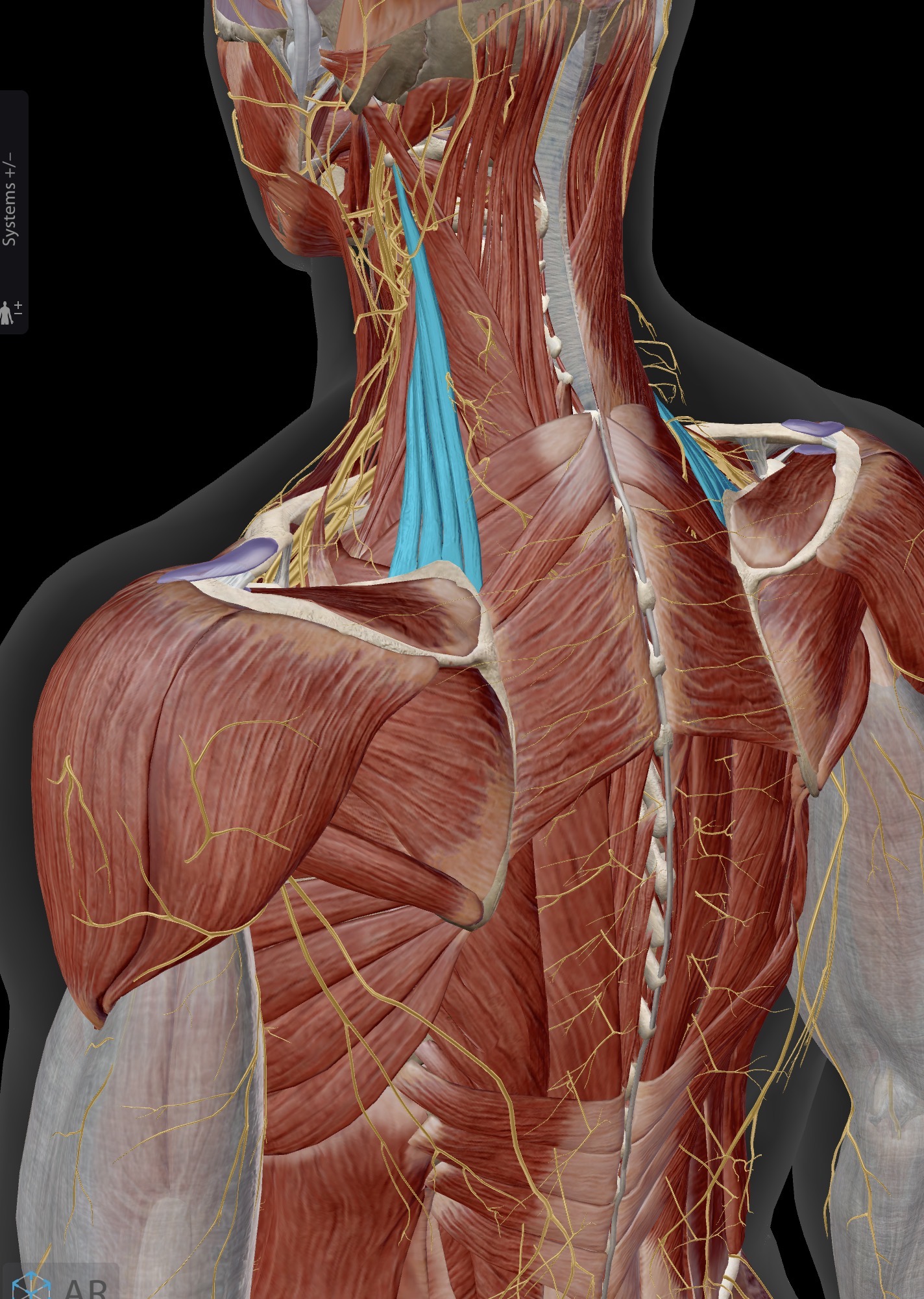
Rhomboids (Rhomboideus major and minor)

O: Spinous processes of upper cervical vertebrae

I: Medial border of the scapula on the posterior aspect

A: Retraction and downward/medial rotation of the scapula

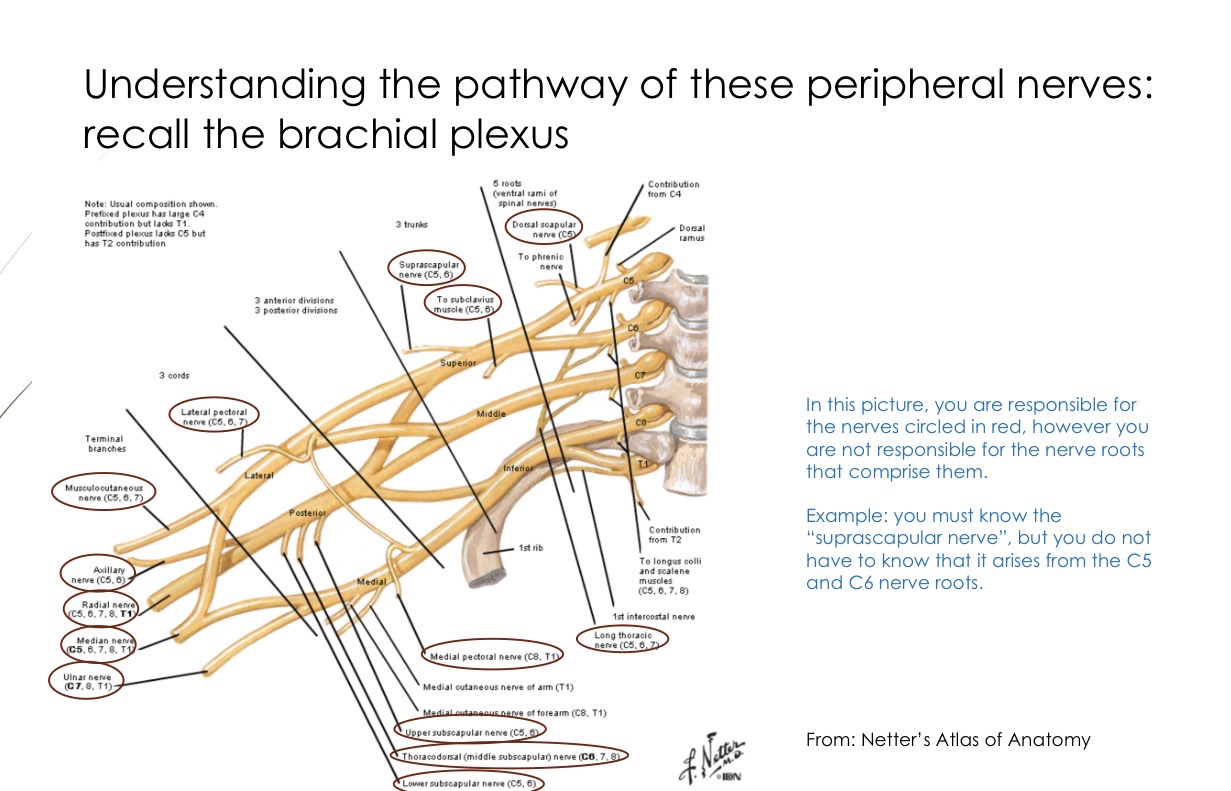
IN: Dorsal scapular nerve (C5)
25
New cards
<p>Name the muscle and corresponding letter ( O = origin, I = insertion, A = actions, IN = innervation)</p><p>O</p><p>I</p><p>A</p><p>IN</p>

Name the muscle and corresponding letter ( O = origin, I = insertion, A = actions, IN = innervation)

O

I

A

IN

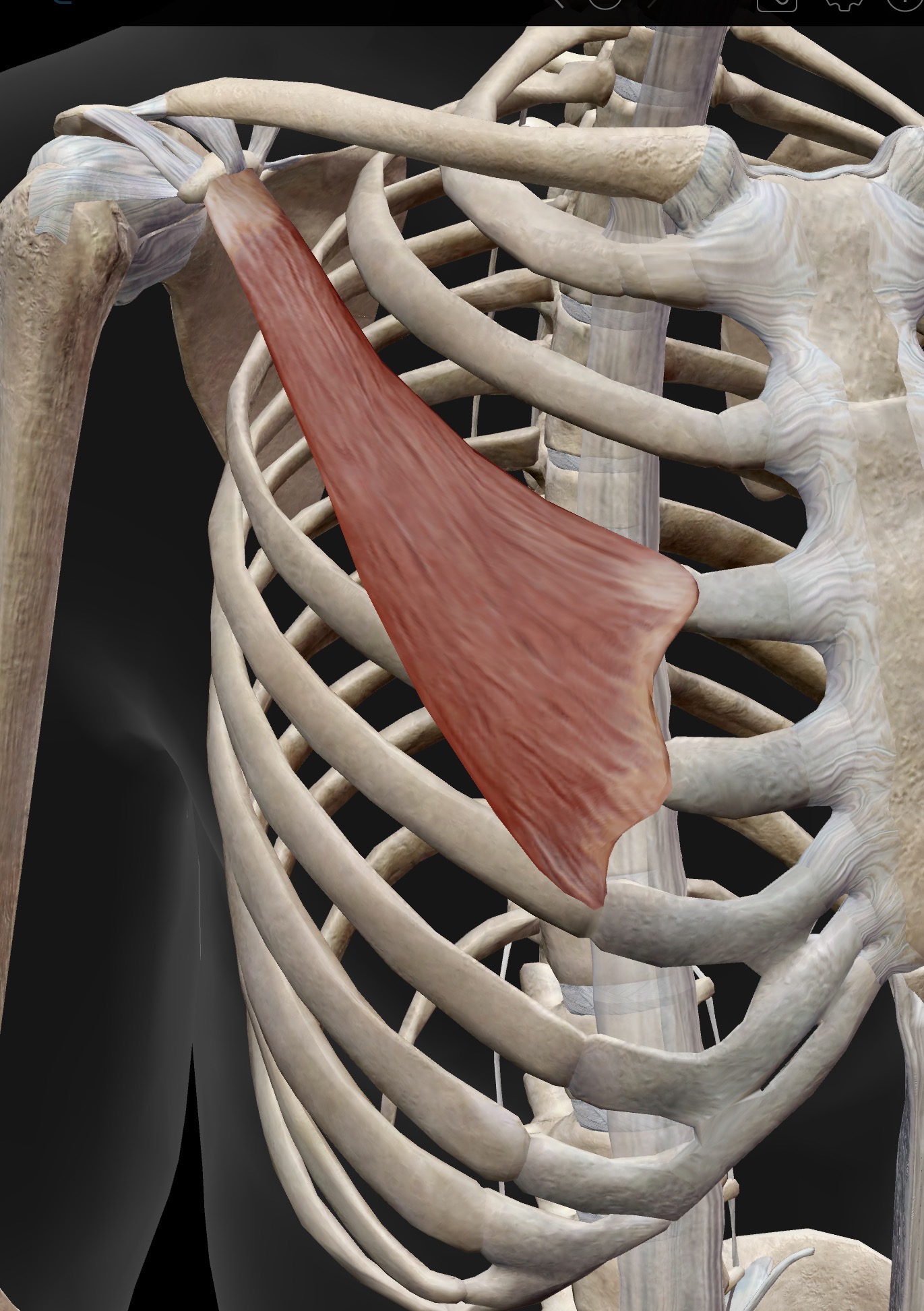
Levator scapulae

O: Transverse processes of upper cervical vertebrae

I: Superior angle of scapula

A: Elevation and downward/medial rotation of the scapula (tips glenoid down)

  • Synergist to upper trapezius

  • When scapula is fixed, forms ipsilateral neck side flexion

IN: Dorsal scapular nerve (C5)
26
New cards
<p>Name the muscle and corresponding letter ( O = origin, I = insertion, A = actions, IN = innervation)</p><p>O</p><p>I</p><p>A</p><p>IN</p>

Name the muscle and corresponding letter ( O = origin, I = insertion, A = actions, IN = innervation)

O

I

A

IN

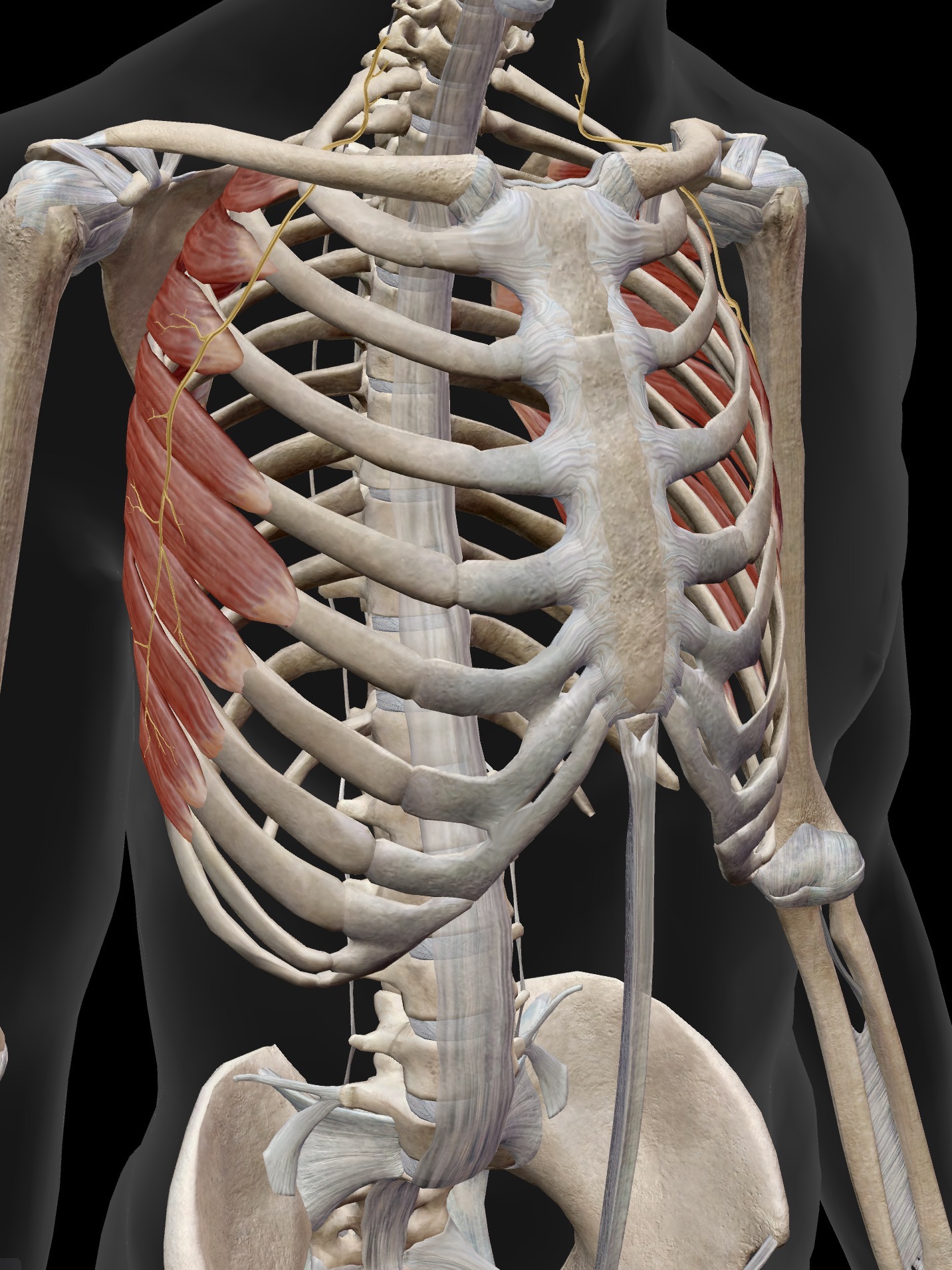
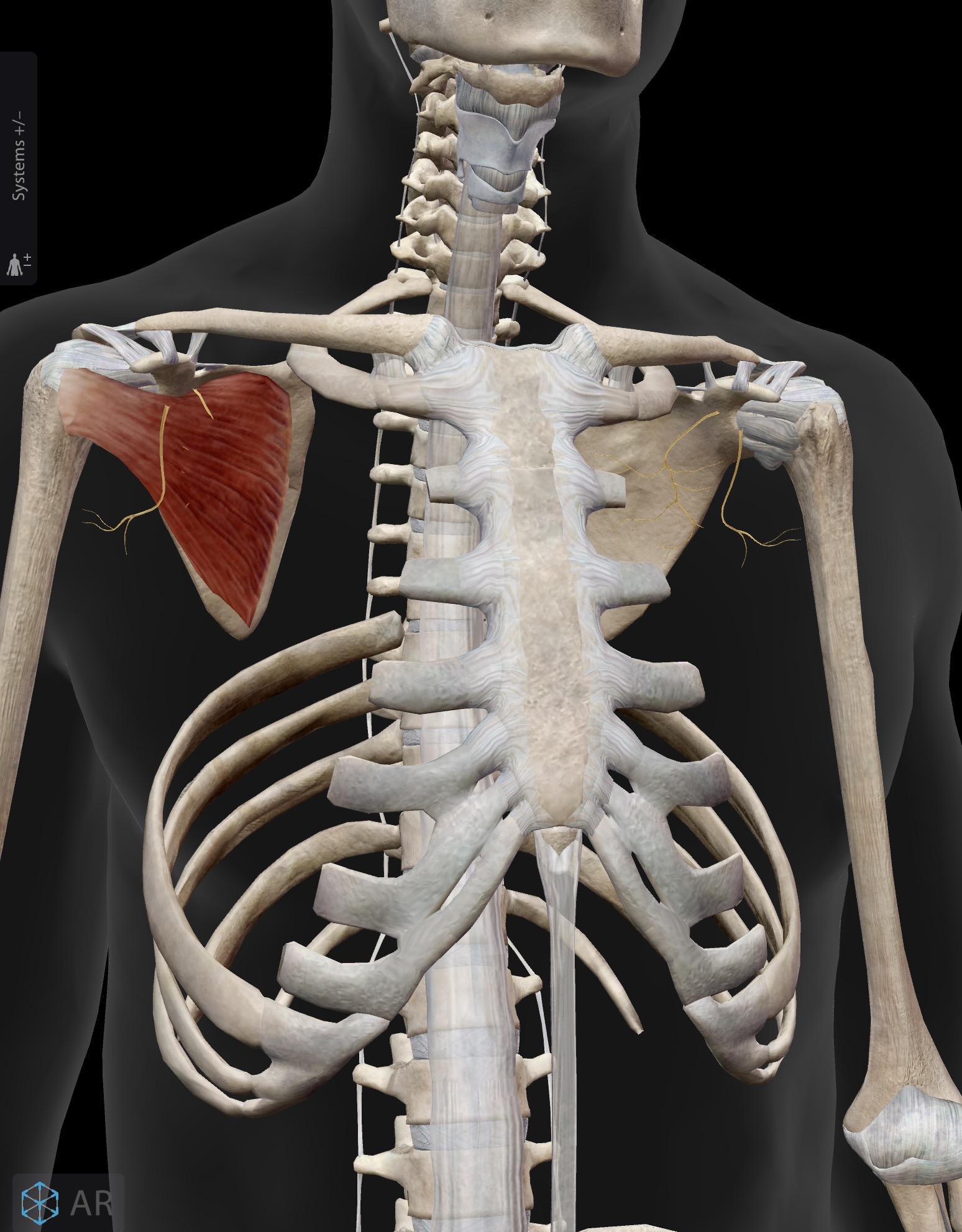
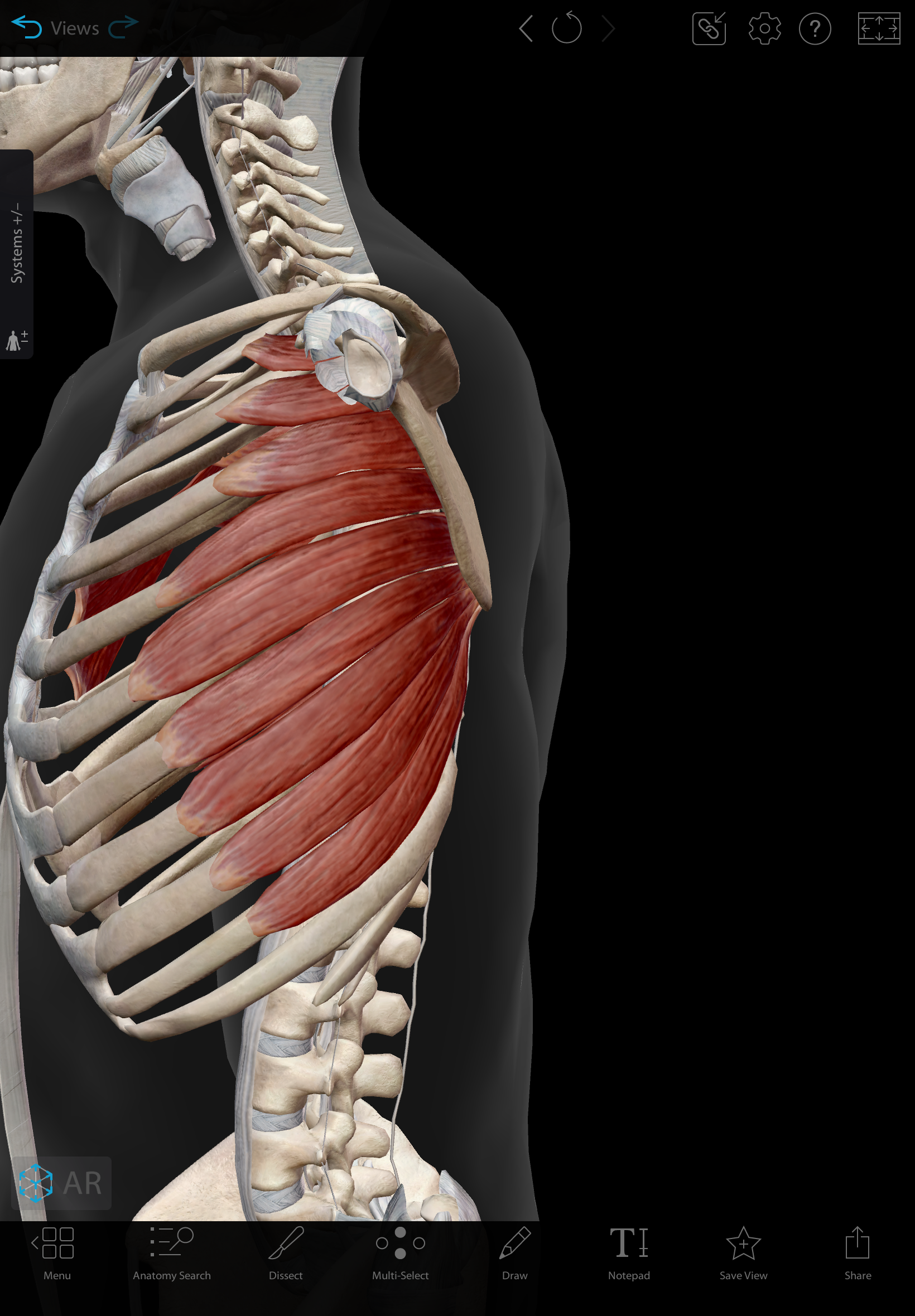
Pectoralis minor

O: Anterior surfaces of ribs 3-5 (near the costocartilage joints)

I: Coracoid process of scapula (PBC)

A: Depression, protraction and medial/downward rotation of scapula (tips glenoid down). When scapula is fixed, can raise ribs 3-5 as done with forced inspiration

IN: Medial pectoral nerve (C8, T1)
27
New cards
<p>Name the muscle and corresponding letter ( O = origin, I = insertion, A = actions, IN = innervation)</p><p>O</p><p>I</p><p>A</p><p>IN</p>

Name the muscle and corresponding letter ( O = origin, I = insertion, A = actions, IN = innervation)

O

I

A

IN

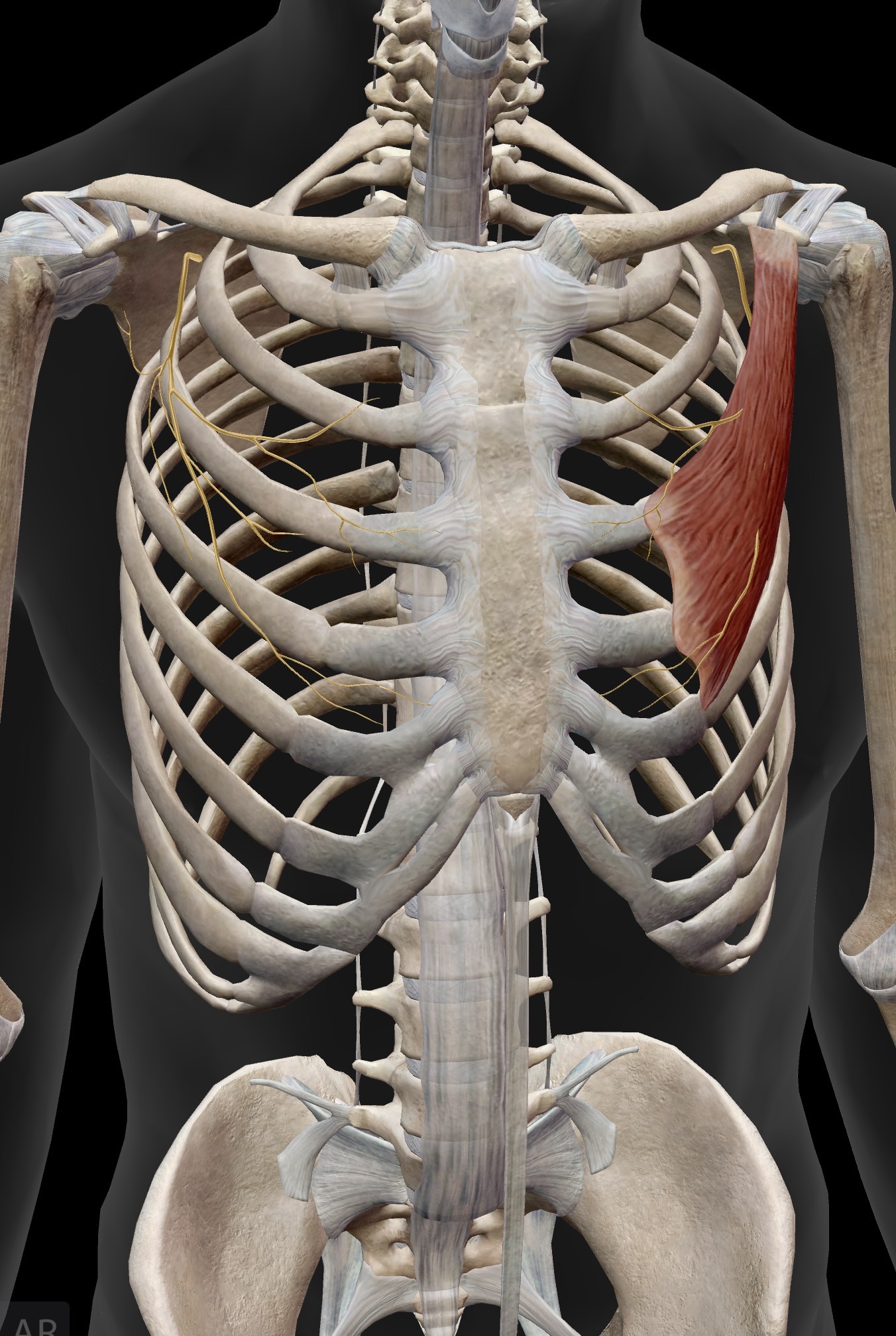
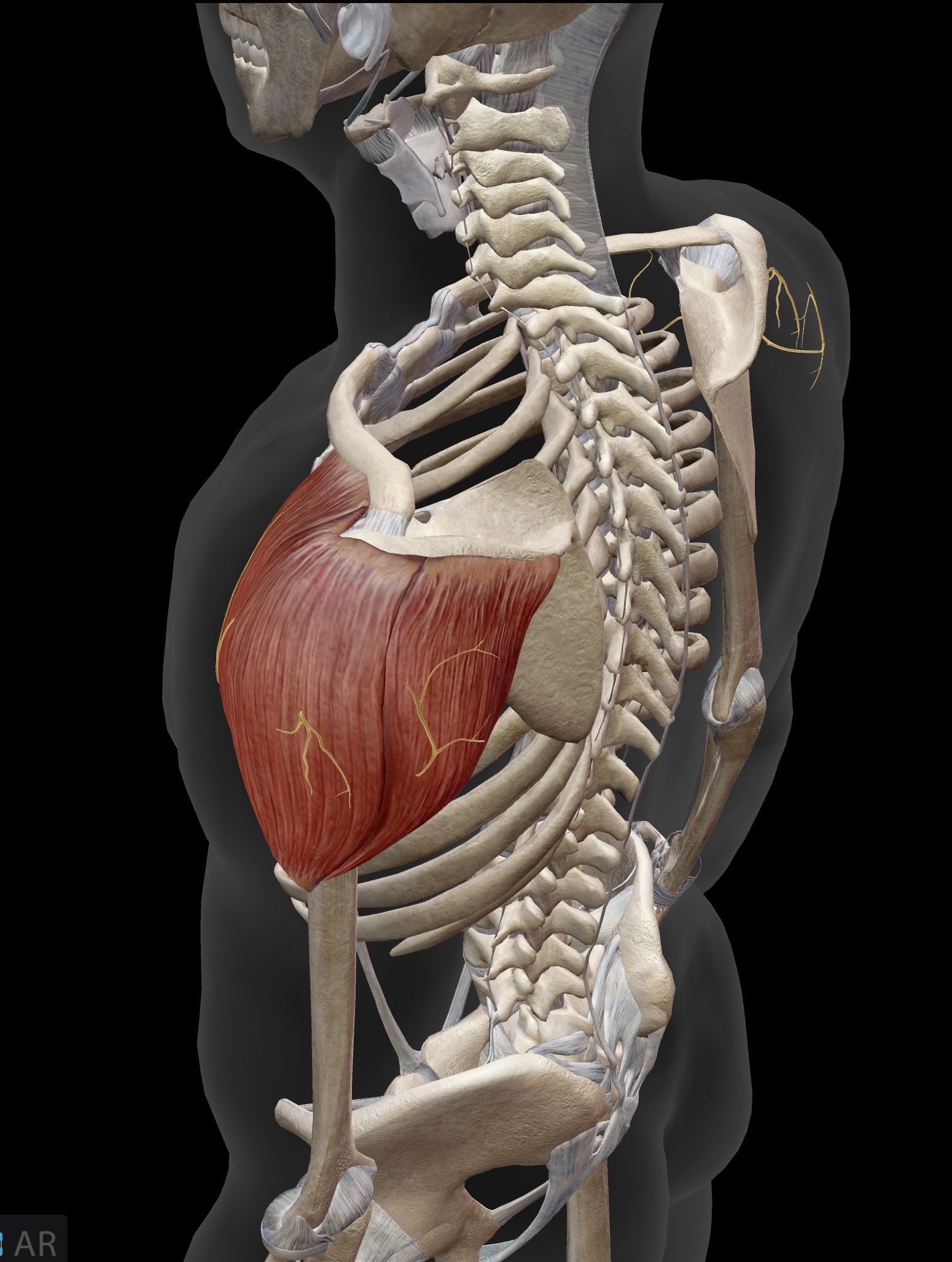
Serratus anterior

O: Outer surfaces of ribs 1-8 or 9

I: Medial border of the scapula, on the anterior aspect (rhomboids inserts the medial border as well, but along the posterior aspect .

A: Protraction and lateral/upward rotation of the scapula (tips glenoid up), keeps scapula stable against ribs.

*known as boxers muscle because its important in horizontal arm movements such as punching/pushing.

IN: Long thoracic nerve (C5-C7)

28
New cards
term image
knowt flashcard image
29
New cards
term image
knowt flashcard image
30
New cards
term image
knowt flashcard image
31
New cards
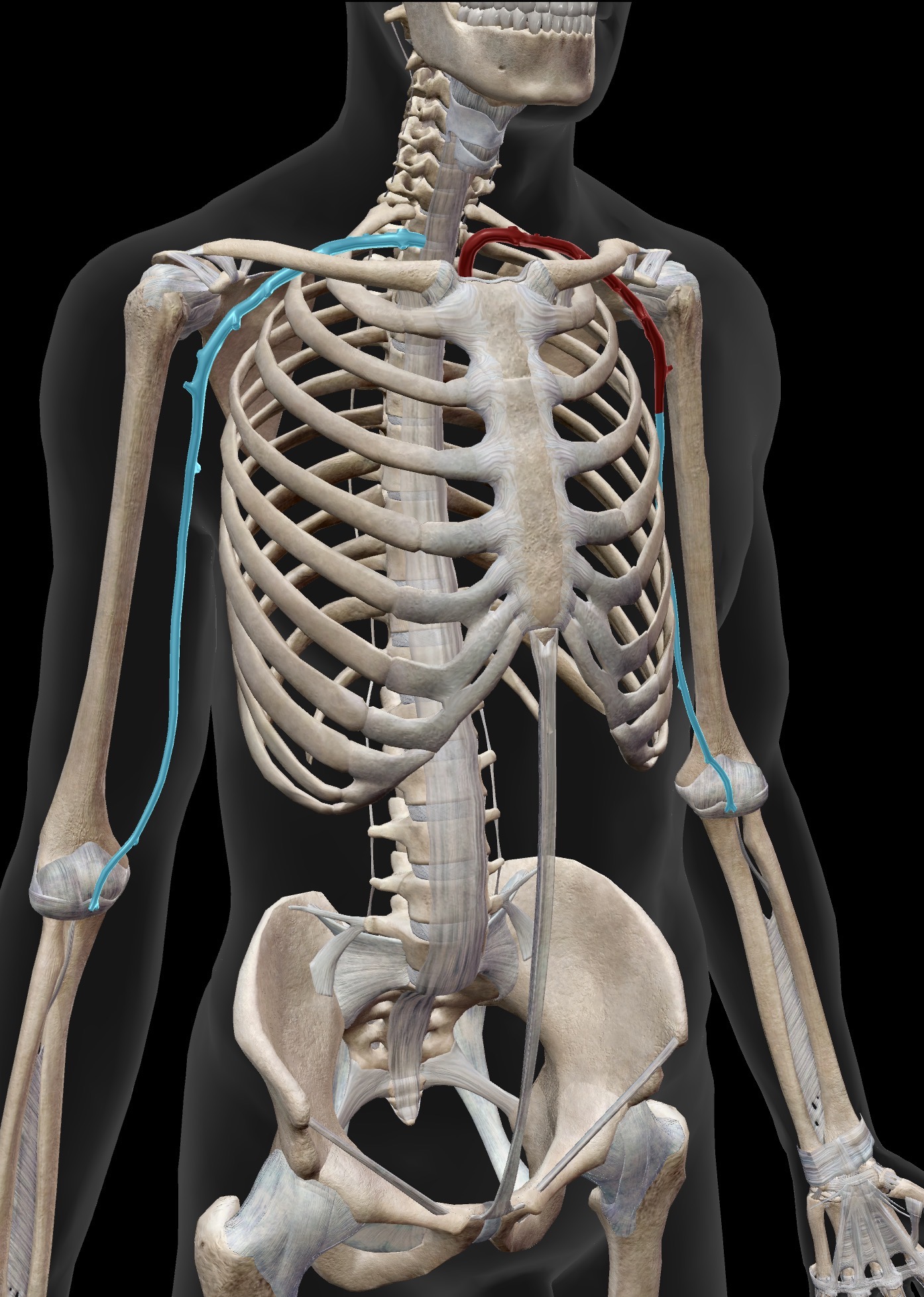
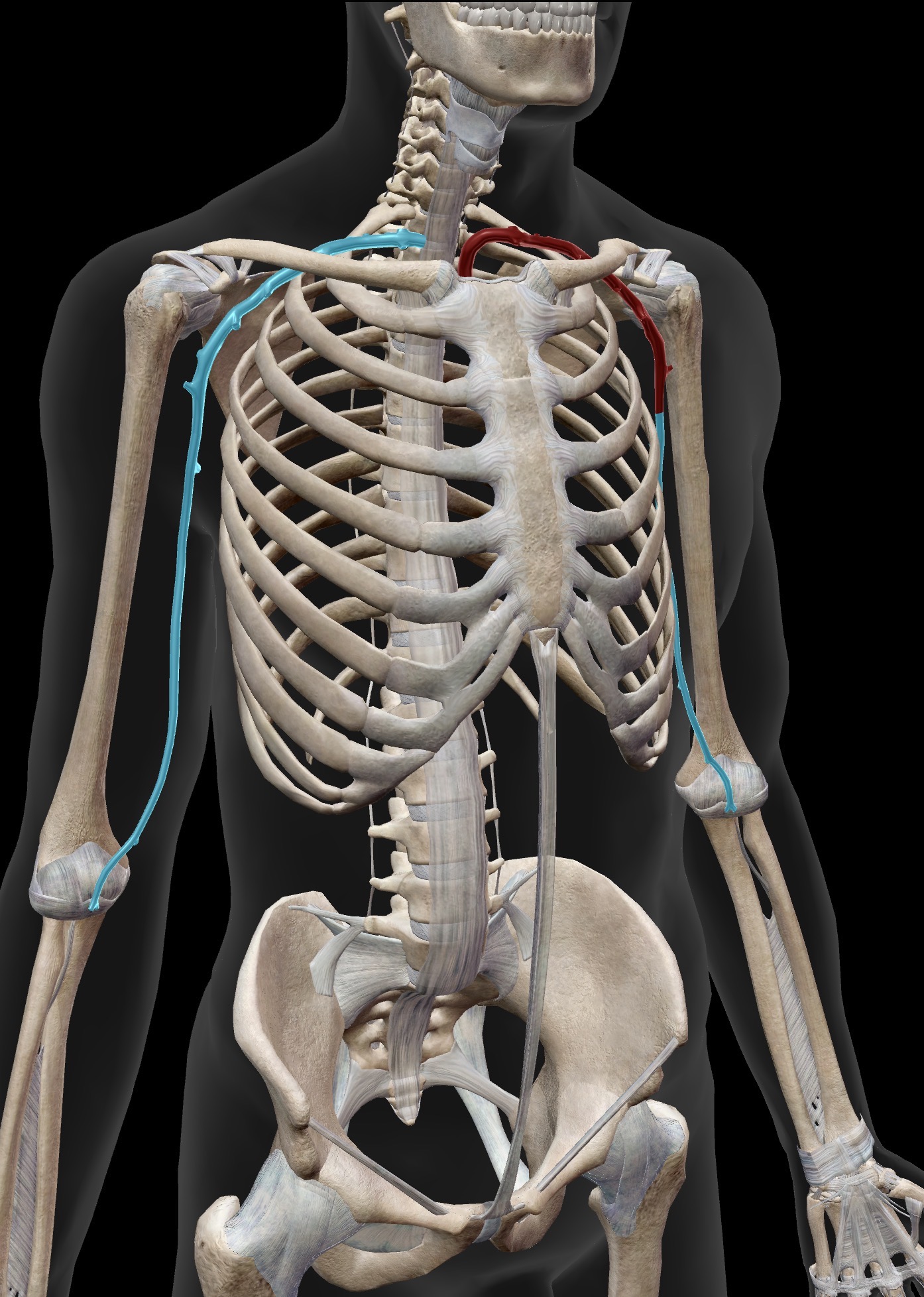
<p>What nerve is this? What does it innervate in the pectoral girdle?</p>

What nerve is this? What does it innervate in the pectoral girdle?

CN XI spinal accessory nerve

Trapezius
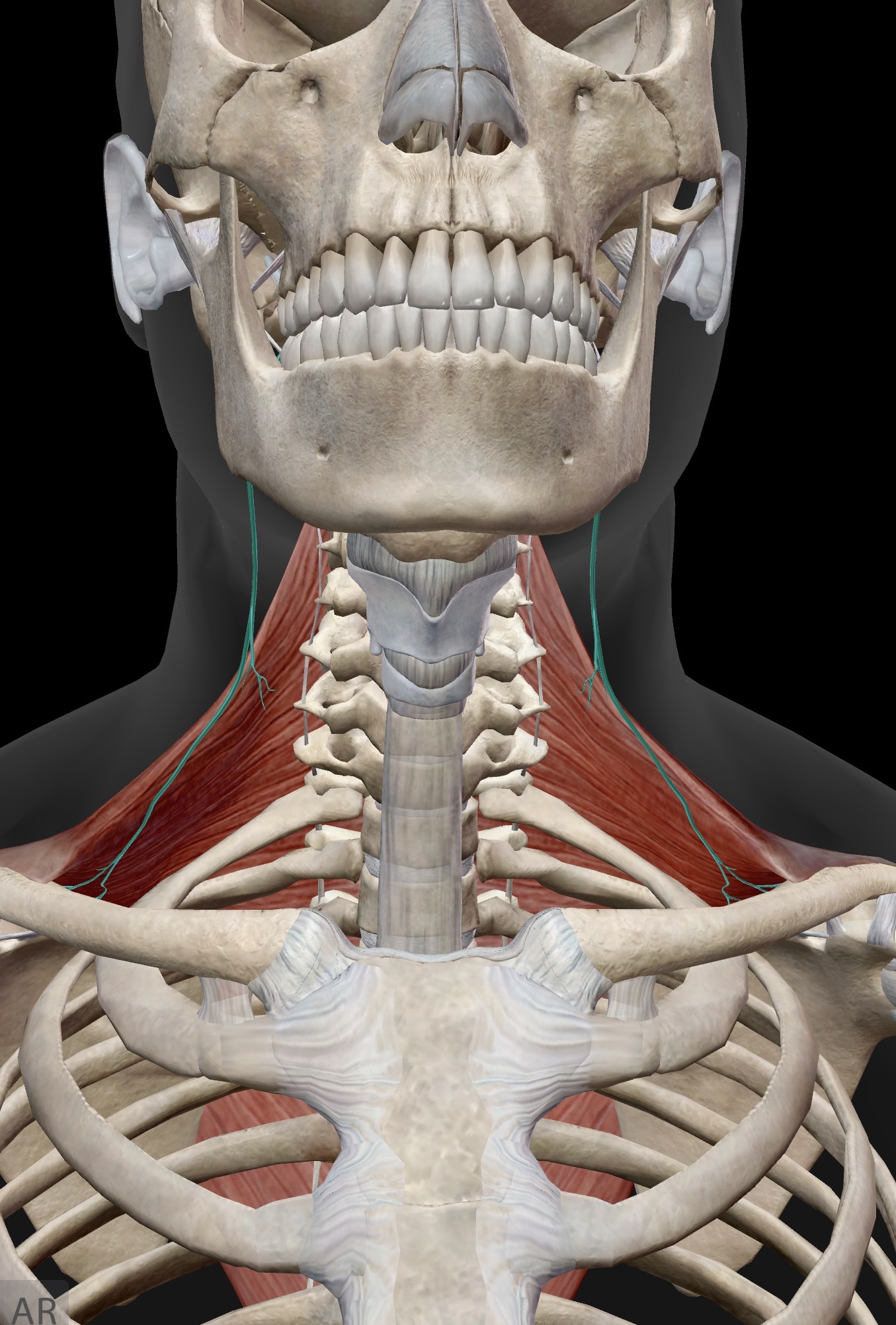
<p>CN XI spinal accessory nerve</p><p>Trapezius</p>
32
New cards
<p>What nerve is this? What does it innervate in the pectoral girdle?</p>

What nerve is this? What does it innervate in the pectoral girdle?

Dorsal scapular nerve

Innervates levator scapulae and rhomboids
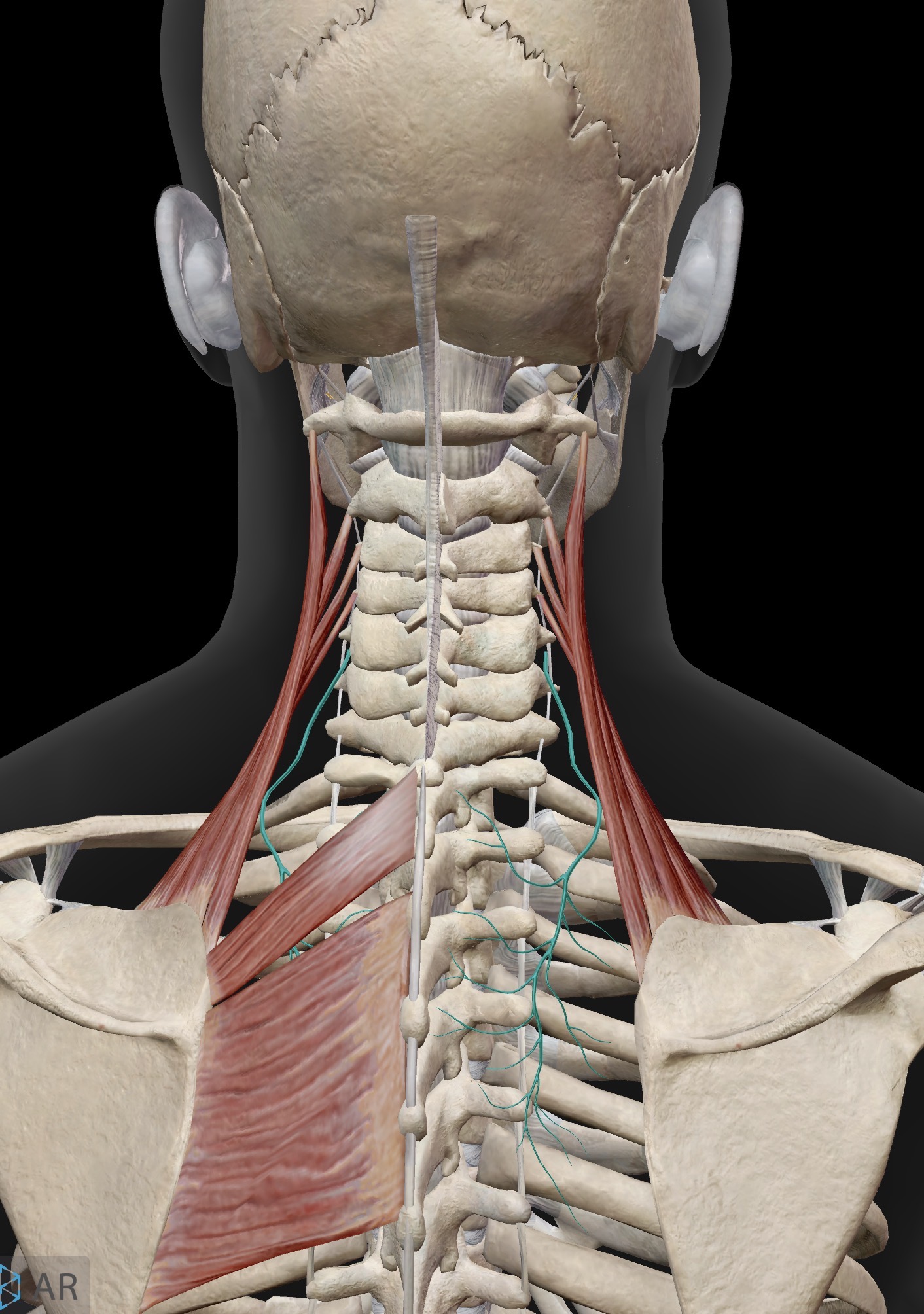
<p>Dorsal scapular nerve</p><p>Innervates <strong>levator scapulae </strong>and <strong>rhomboids</strong></p>
33
New cards
<p>What nerve is this? What does it innervate in the pectoral girdle?</p>

What nerve is this? What does it innervate in the pectoral girdle?

Medial pectoral nerve

Innovates pectoralis minor
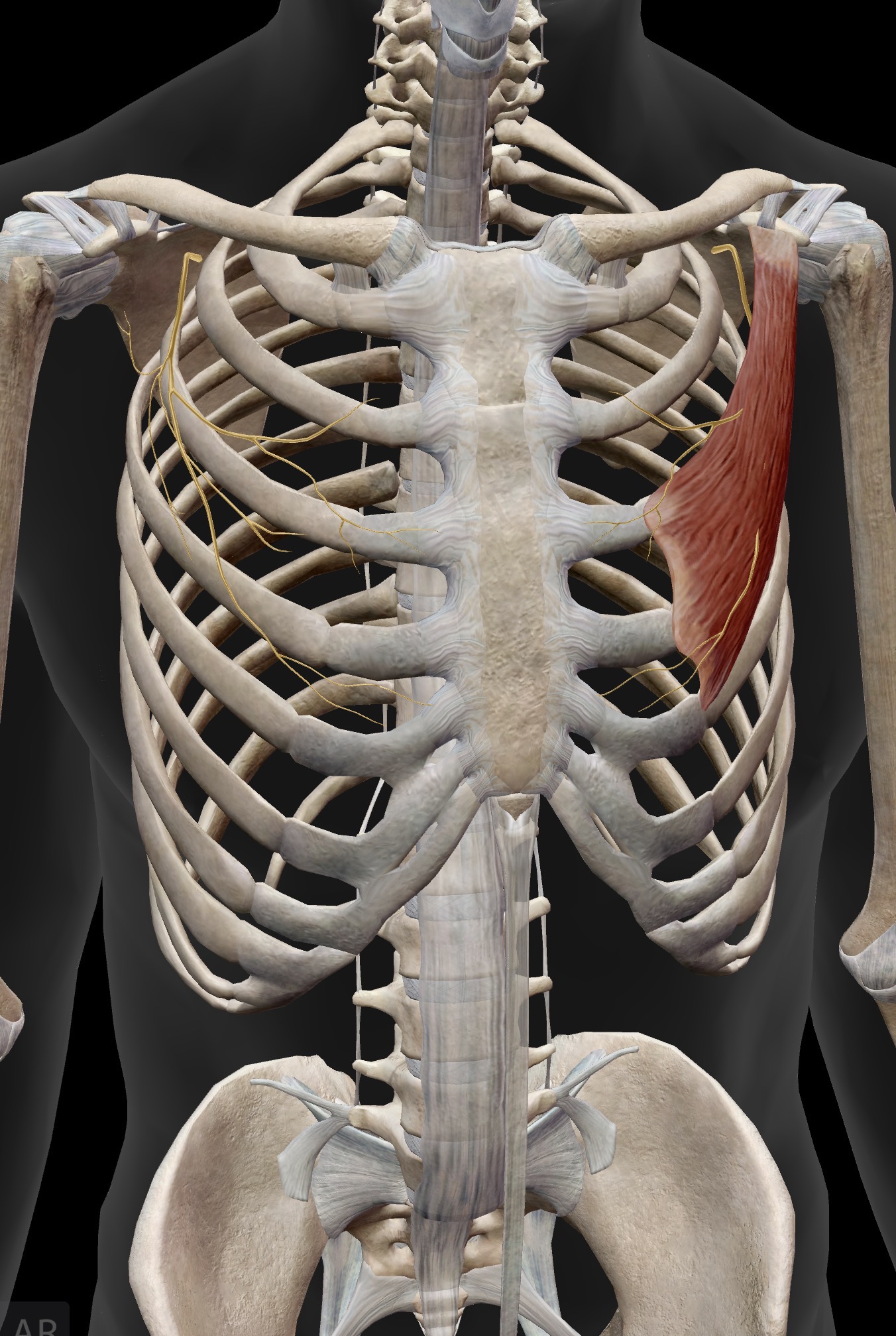
<p>Medial pectoral nerve</p><p>Innovates pectoralis minor</p>
34
New cards
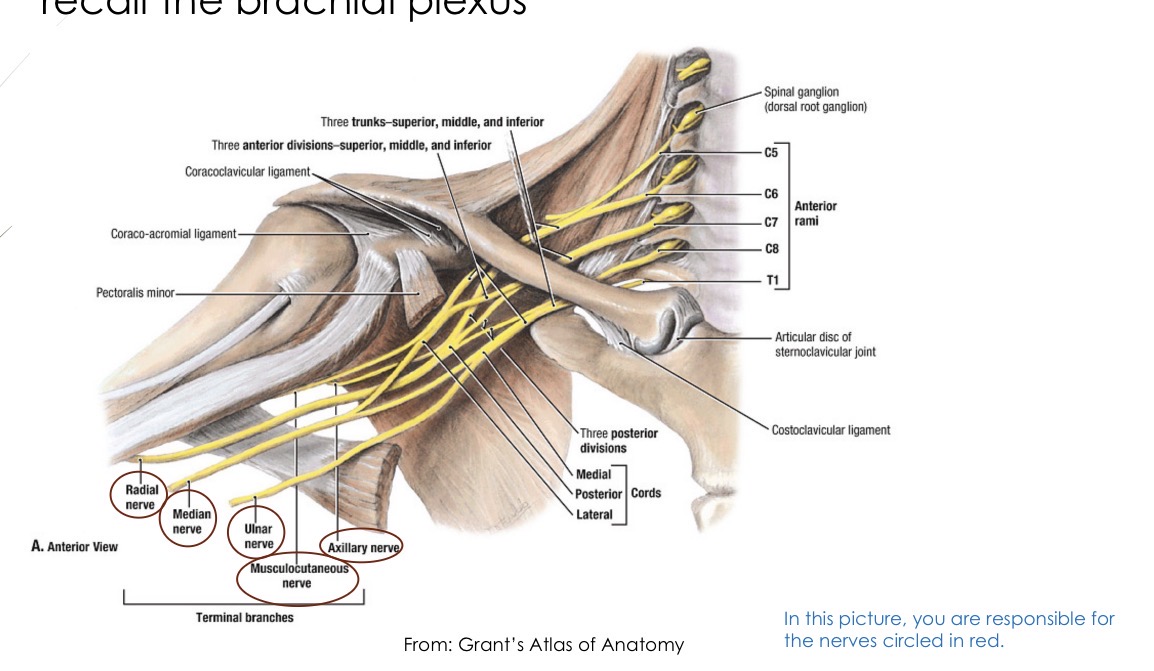
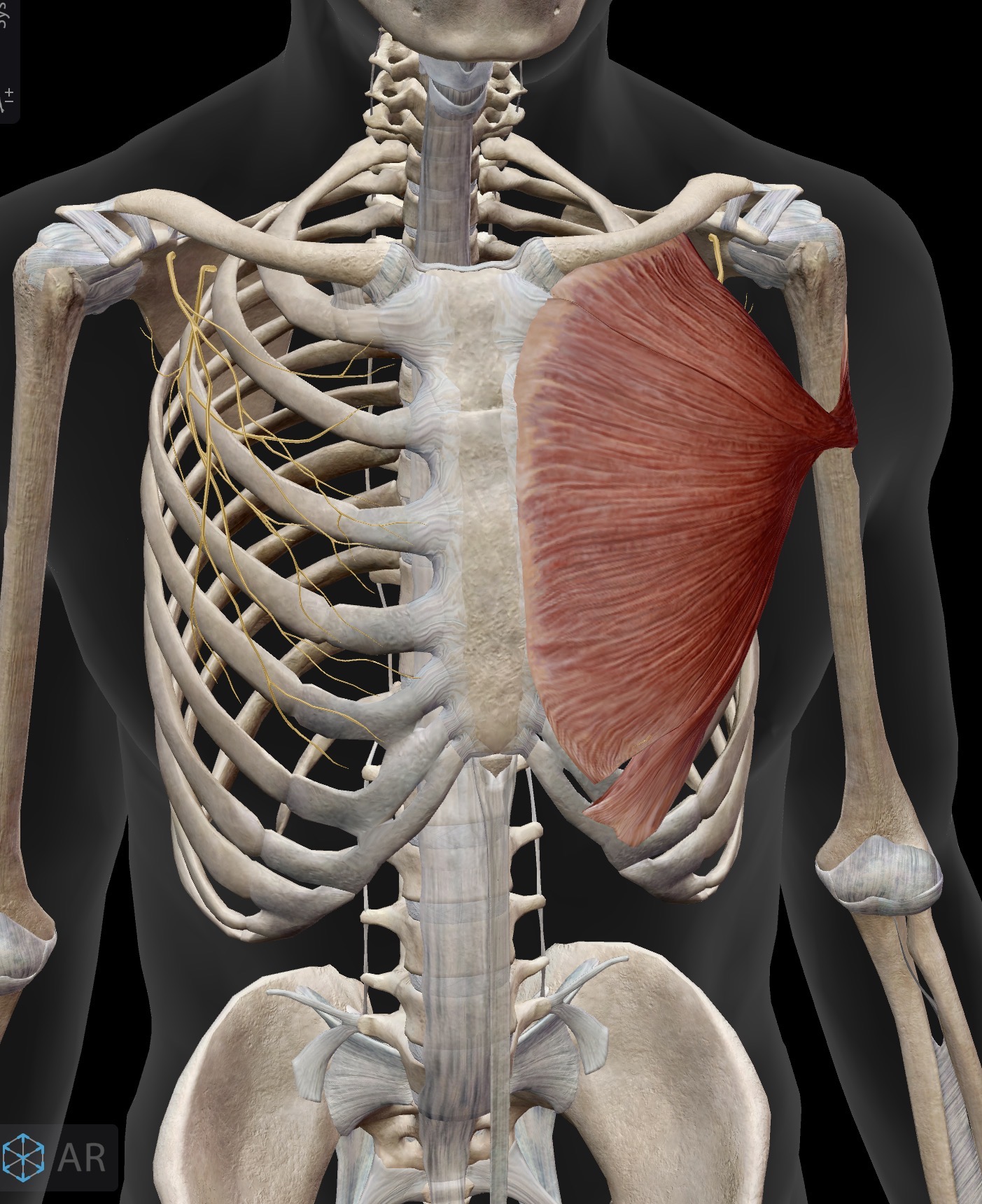
<p>What nerve is this? What does it innervate in the pectoral girdle?</p>

What nerve is this? What does it innervate in the pectoral girdle?

Long thoracic nerve

Innervates the serratus anterior
35
New cards
<p>Name the muscle and corresponding letter ( O = origin, I = insertion, A = actions, IN = innervation)</p><p>O</p><p>I</p><p>A</p><p>IN</p>

Name the muscle and corresponding letter ( O = origin, I = insertion, A = actions, IN = innervation)

O

I

A

IN

Pectoralis major

O: 2 heads: 1. Sternal head - Sternum 2. Clavicular head - medial portion of the clavicle

I: Proximal, anterior humerus (“lady between 2 majors”)

A: Both heads together. Adduction and internal rotation of the humerus, horizontal adduction of the humerus

Clavicular head: Assists with flexing the arm when the arm is extended

Sternal head: Assists with extending arm when arm is flexed (helps return flexed arm to the side

IN: Medial pectoral nerve (C8, T1) and lateral pectoral nerve (C5-C7)

<p>Pectoralis major</p><p>O: 2 heads:       1. Sternal head - Sternum         2. Clavicular head - medial portion of the clavicle </p><p>I: Proximal, anterior humerus (“lady between 2 majors”)</p><p>A: Both heads together. Adduction and internal rotation of the humerus, horizontal adduction of the humerus</p><p>Clavicular head: Assists with flexing the arm when the arm is extended</p><p>Sternal head: Assists with extending arm when arm is flexed (helps return flexed arm to the side</p><p>IN: Medial pectoral nerve (C8, T1) and lateral pectoral nerve (C5-C7)</p>
36
New cards
<p>Name the muscle and corresponding letter ( O = origin, I = insertion, A = actions, IN = innervation)</p><p>O</p><p>I</p><p>A</p><p>IN</p>

Name the muscle and corresponding letter ( O = origin, I = insertion, A = actions, IN = innervation)

O

I

A

IN

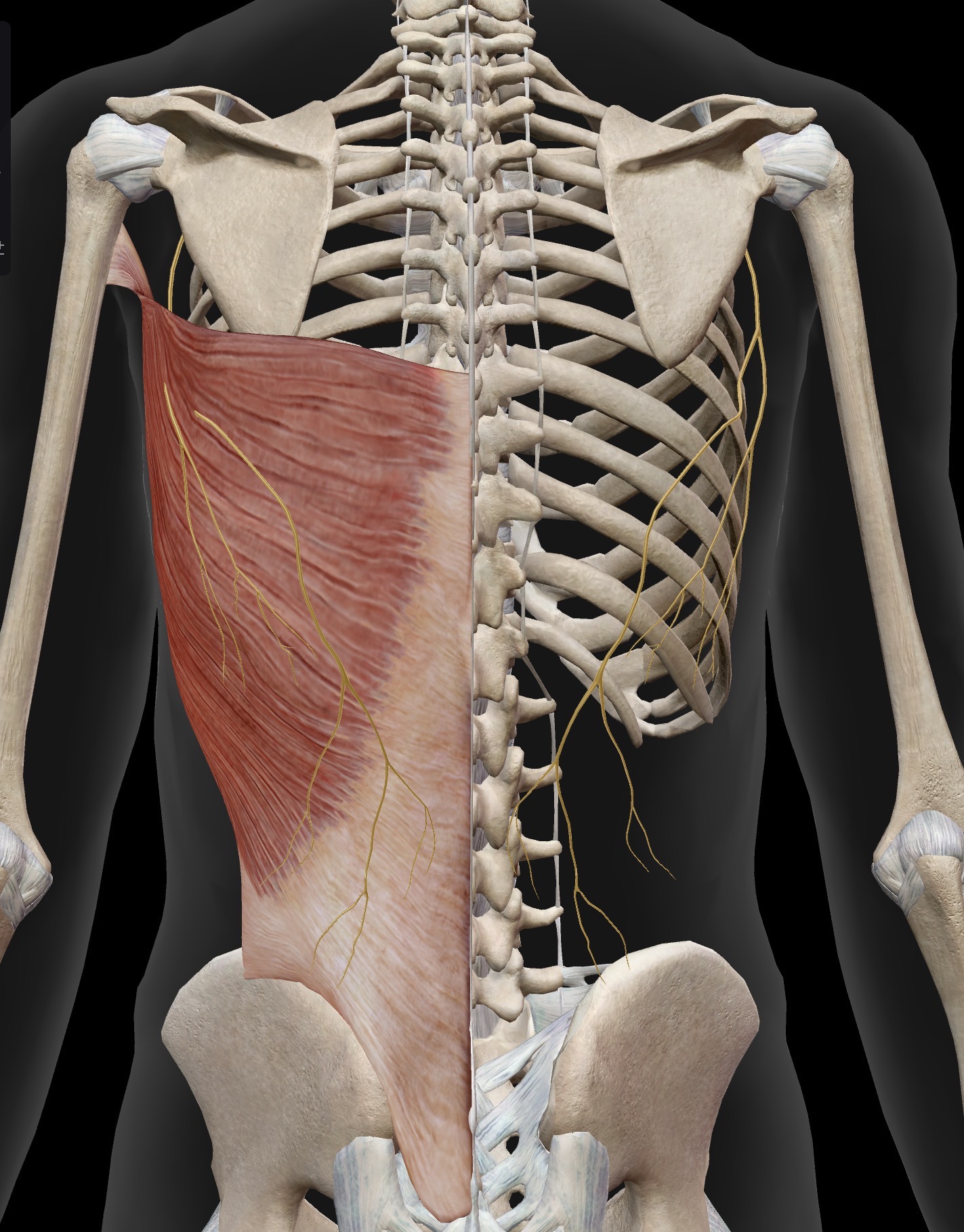
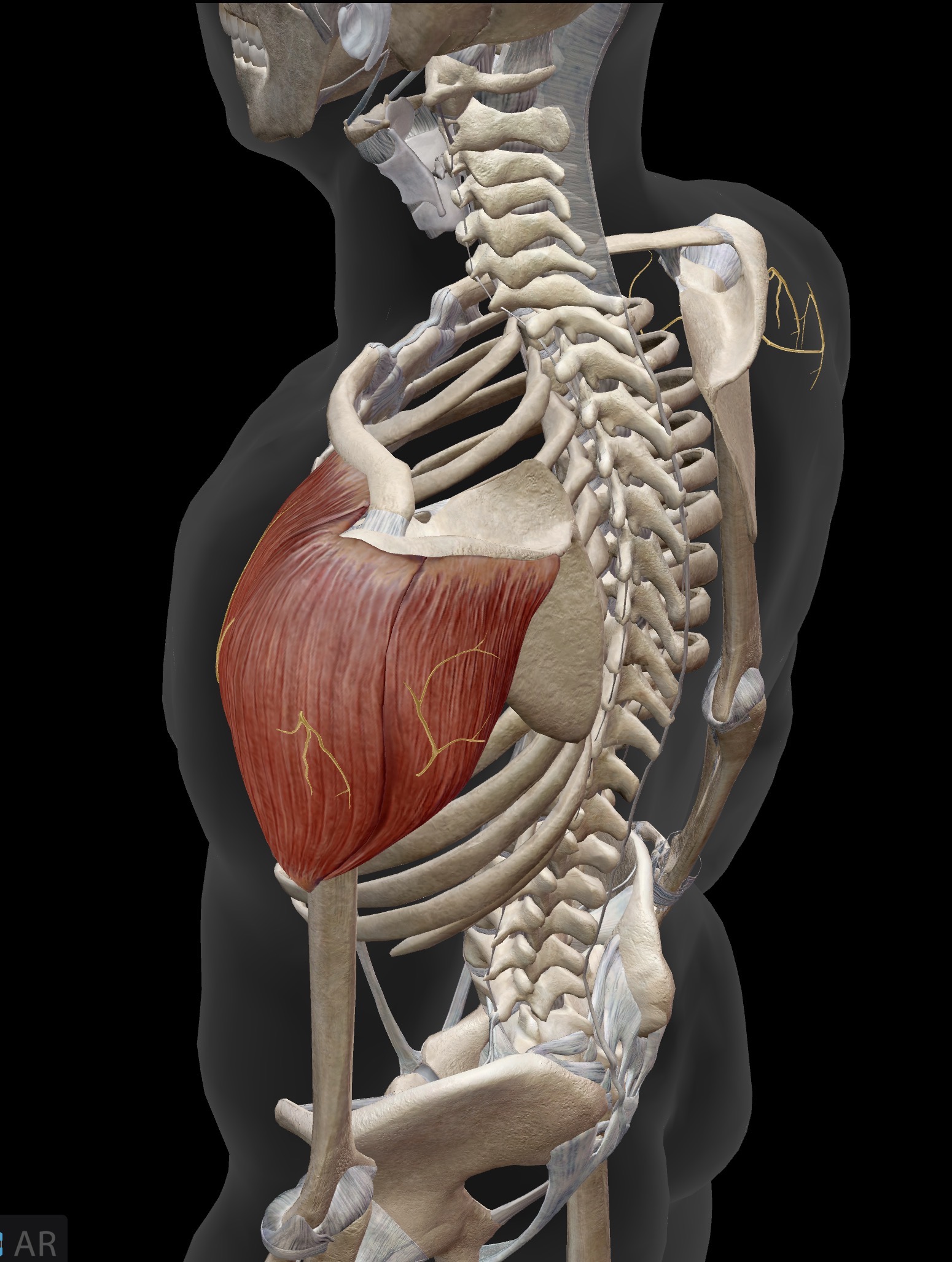
Latissimus dorsi

O: Spinous processes from T7 to end of the sacrum, iliac crest, fascia of back

I: Proximal, anterior humerus (“lady between 2 majors”)

A: Extension, adduction and internal rotation of the humerus. Prime mover of extension

*”swimmers muscle” (bring arm back during front stroke)

*If the arms are fixed overhead, lats pull the rest of the body upward as in “chin-up”

IN: Thoracodorsal nerve (C6-C8)
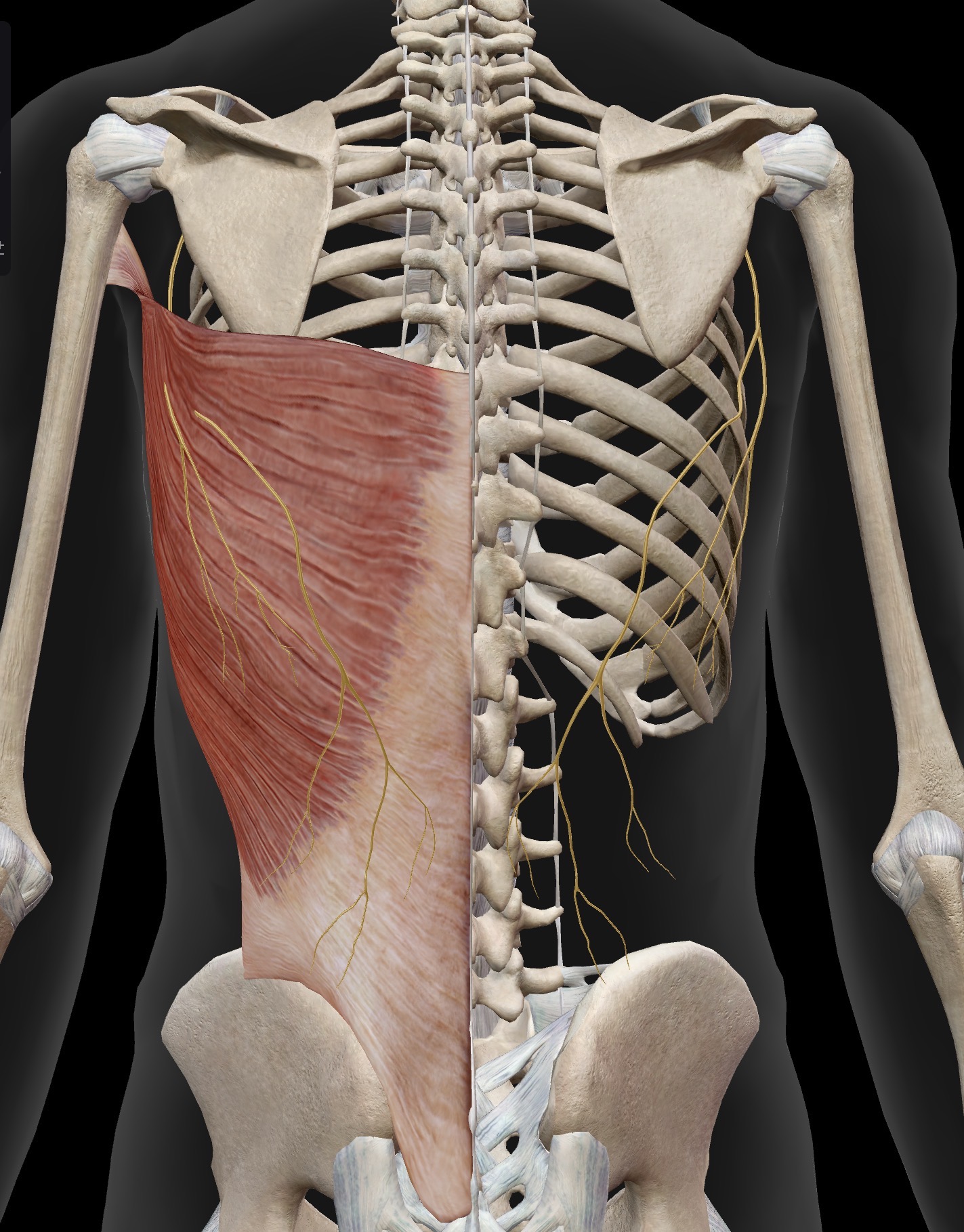
<p>Latissimus dorsi</p><p>O: Spinous processes from T7 to end of the sacrum, iliac crest, fascia of back</p><p>I: Proximal, anterior humerus (“lady between 2 majors”)</p><p>A: Extension, adduction and internal rotation of the humerus. Prime mover of extension</p><p>*”swimmers muscle” (bring arm back during front stroke)</p><p>*If the arms are fixed overhead, lats pull the rest of the body upward as in “chin-up”</p><p>IN: Thoracodorsal nerve (C6-C8)</p>
37
New cards
<p>Name the muscle and corresponding letter ( O = origin, I = insertion, A = actions, IN = innervation)</p><p>O</p><p>I</p><p>A</p><p>IN</p>

Name the muscle and corresponding letter ( O = origin, I = insertion, A = actions, IN = innervation)

O

I

A

IN

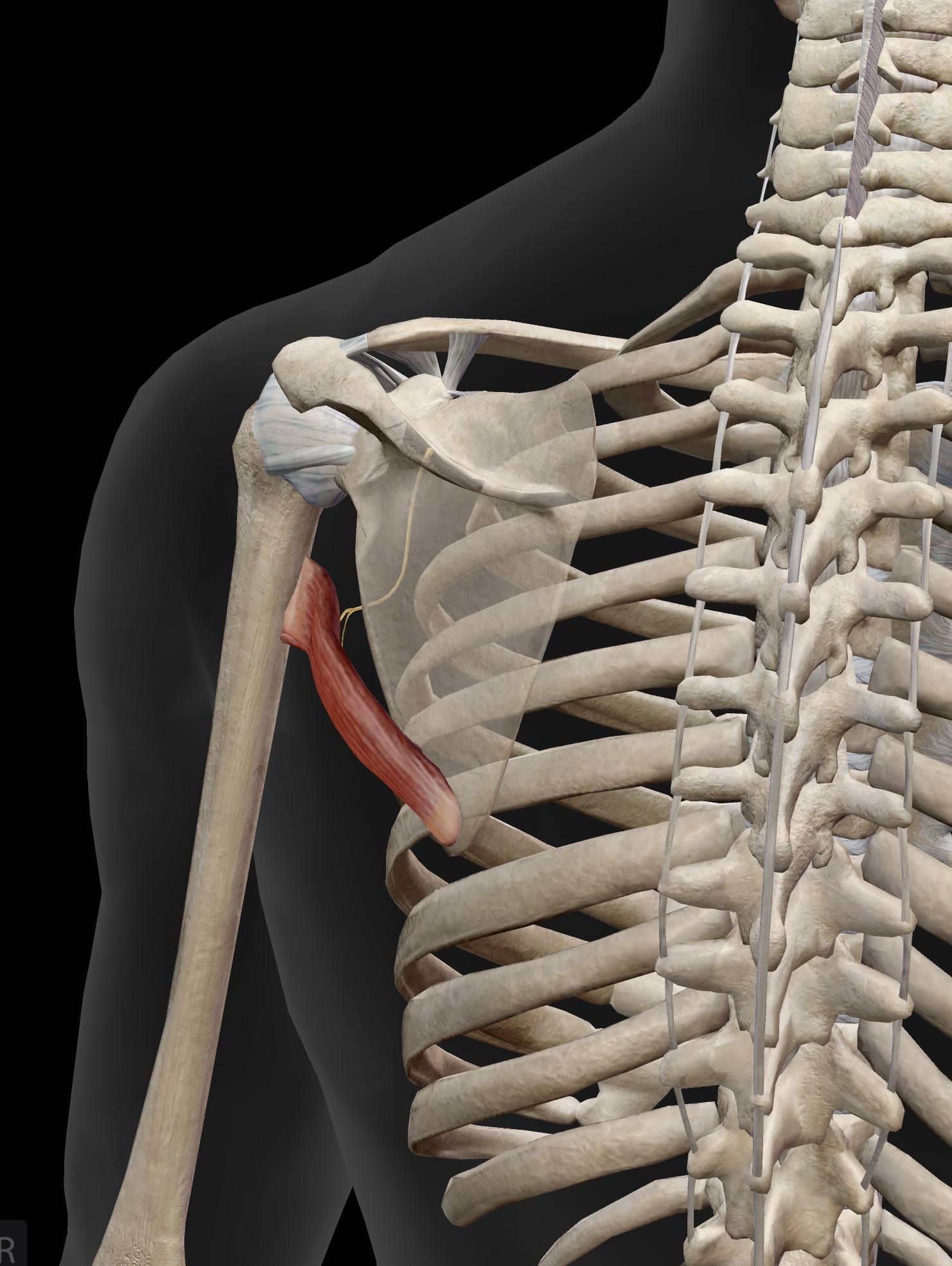
Teres major

O: Inferior angle of the scapula

I: Proximal, anterior humerus (“lady between two majors”)

A: Extension, adduction and internal rotation of the humerus (synergist to latissimus dorsi at the glenohumeral joint)

IN: Lower subscapular nerve (C5, C6)
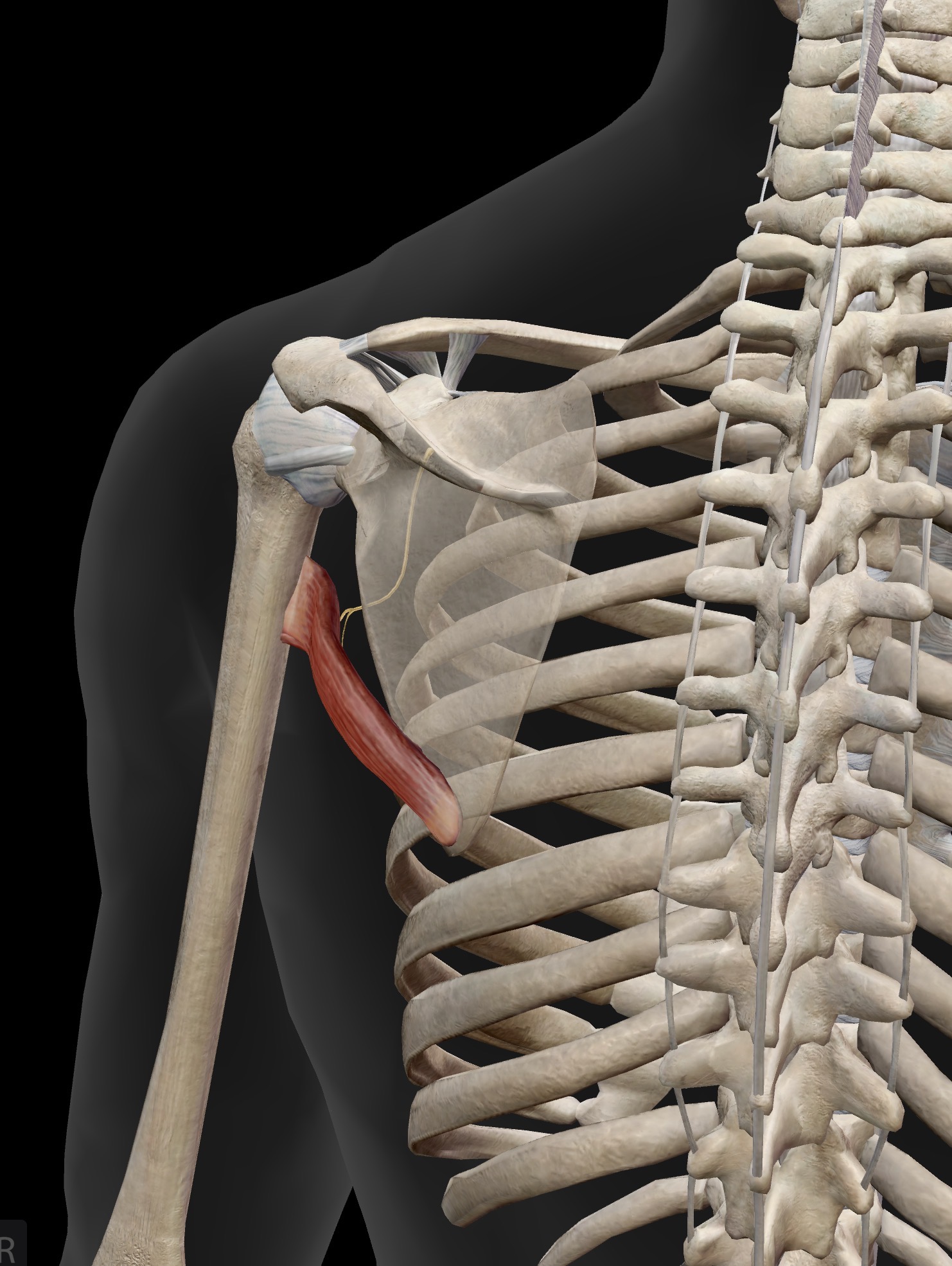
<p>Teres major</p><p>O: Inferior angle of the scapula</p><p>I: Proximal, anterior humerus (“lady between two majors”)</p><p>A: Extension, adduction and internal rotation of the humerus (synergist to latissimus dorsi at the glenohumeral joint)</p><p>IN: Lower subscapular nerve (C5, C6) </p>
38
New cards
<p>Name the muscle and corresponding letter ( O = origin, I = insertion, A = actions, IN = innervation)</p><p>O</p><p>I</p><p>A</p><p>IN</p>

Name the muscle and corresponding letter ( O = origin, I = insertion, A = actions, IN = innervation)

O

I

A

IN

Deltoid

O: U-shaped origin along spine scapula, acromion and lateral portion of clavicle

I: Deltoid tuberosity of humerus (lateral humerus)

A: All heads (but primarily middle head): Abduction of the humerus. Prime mover of abduction

Anterior head: Along with abduction, assists with flexion and internal rotation of humerus.

Posterior head: Along with abduction, assists with extension and external rotation of the humerus

IN: Axillary nerve (C5, C6)
<p>Deltoid</p><p>O: U-shaped origin along spine scapula, acromion and lateral portion of clavicle</p><p>I: Deltoid tuberosity of humerus (lateral humerus)</p><p>A: All heads (but primarily middle head): Abduction of the humerus. Prime mover of abduction</p><p>Anterior head: Along with abduction, assists with flexion and internal rotation of humerus.</p><p>Posterior head: Along with abduction, assists with extension and external rotation of the humerus</p><p>IN: Axillary nerve (C5, C6)</p>
39
New cards
<p>Name the muscle and corresponding letter ( O = origin, I = insertion, A = actions, IN = innervation)</p><p>O</p><p>I</p><p>A</p><p>IN</p>

Name the muscle and corresponding letter ( O = origin, I = insertion, A = actions, IN = innervation)

O

I

A

IN

Subscapularis

O: subscapular fossa

I: lesser tubercle of humerus

A: Internal rotation of the humerus. Also, like all rotator cuff muscles, helps stabilize the humeral head in the glenoid fossa

IN: Upper and lower subscapular nerves (Both C5, C6)

prime mover of internal rotation of the humerus
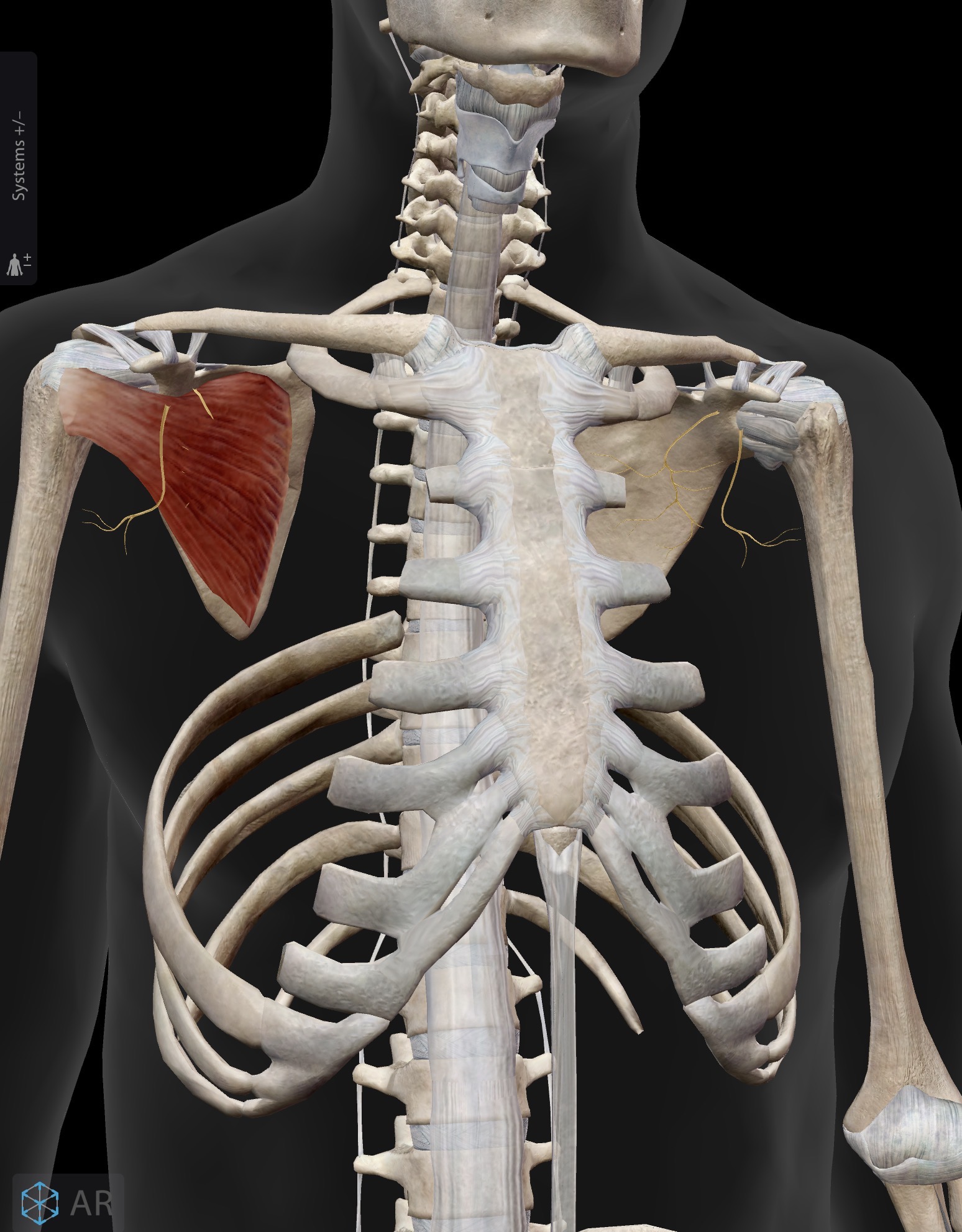
<p>Subscapularis</p><p>O: subscapular fossa</p><p>I: lesser tubercle of humerus</p><p>A: Internal rotation of the humerus. Also, like all rotator cuff muscles, helps stabilize the humeral head in the glenoid fossa</p><p>IN: Upper and lower subscapular nerves (Both C5, C6)</p><p><em>prime mover of internal rotation of the humerus</em></p>
40
New cards
<p>Name the muscle and corresponding letter ( O = origin, I = insertion, A = actions, IN = innervation)</p><p>O</p><p>I</p><p>A</p><p>IN</p>

Name the muscle and corresponding letter ( O = origin, I = insertion, A = actions, IN = innervation)

O

I

A

IN

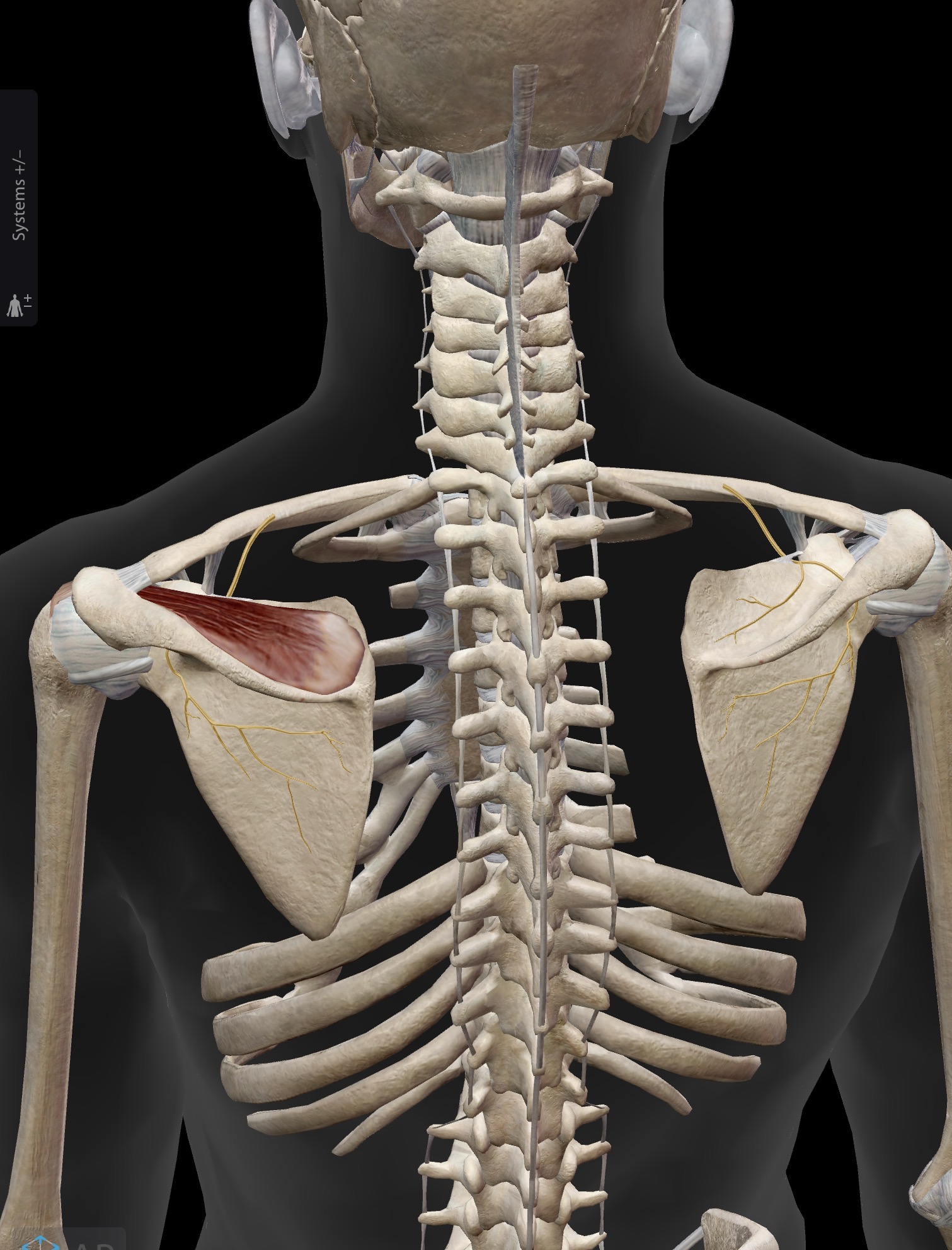
Supraspinatus

O: Supraspinous fossa

I: greater tubercle of humerus (superior aspect)

A: Assists deltoid in abduction of the humerus, especially first 15o of abduction (Synergist to deltoids in abduction of humerus at glenohumeral joint). Also, like all rotator cuff muscles, helps stabilize the humeral head in the glenoid fossa

IN: Suprascapular nerve
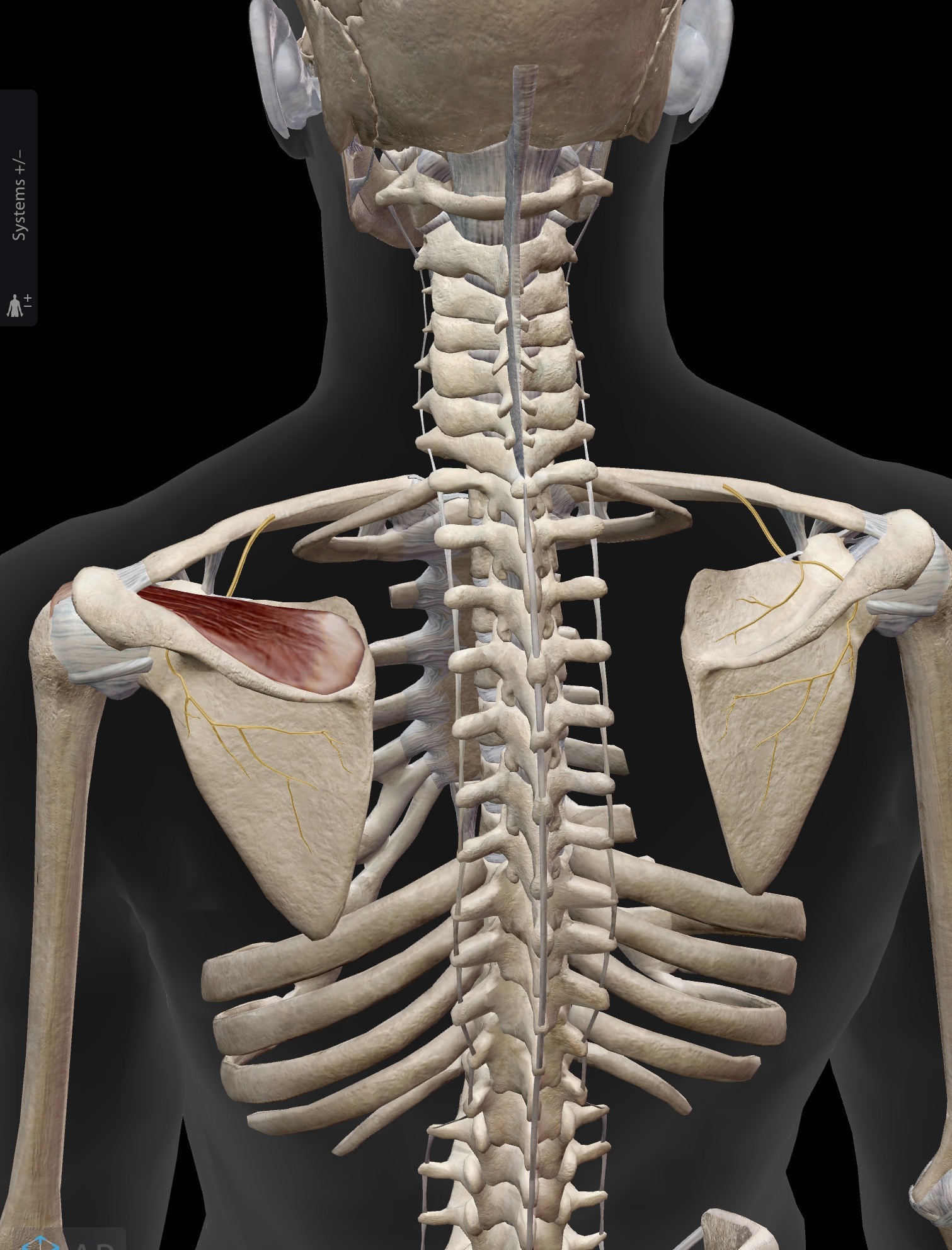
<p>Supraspinatus</p><p>O: Supraspinous fossa</p><p>I: greater tubercle of humerus (superior aspect)</p><p>A: Assists deltoid in abduction of the humerus, especially first 15<sup>o</sup> of abduction (Synergist to deltoids in abduction of humerus at glenohumeral joint). Also, like all rotator cuff muscles, helps stabilize the humeral head in the glenoid fossa</p><p>IN: Suprascapular nerve</p>
41
New cards
<p>Name the muscle and corresponding letter ( O = origin, I = insertion, A = actions, IN = innervation)</p><p>O</p><p>I</p><p>A</p><p>IN</p>

Name the muscle and corresponding letter ( O = origin, I = insertion, A = actions, IN = innervation)

O

I

A

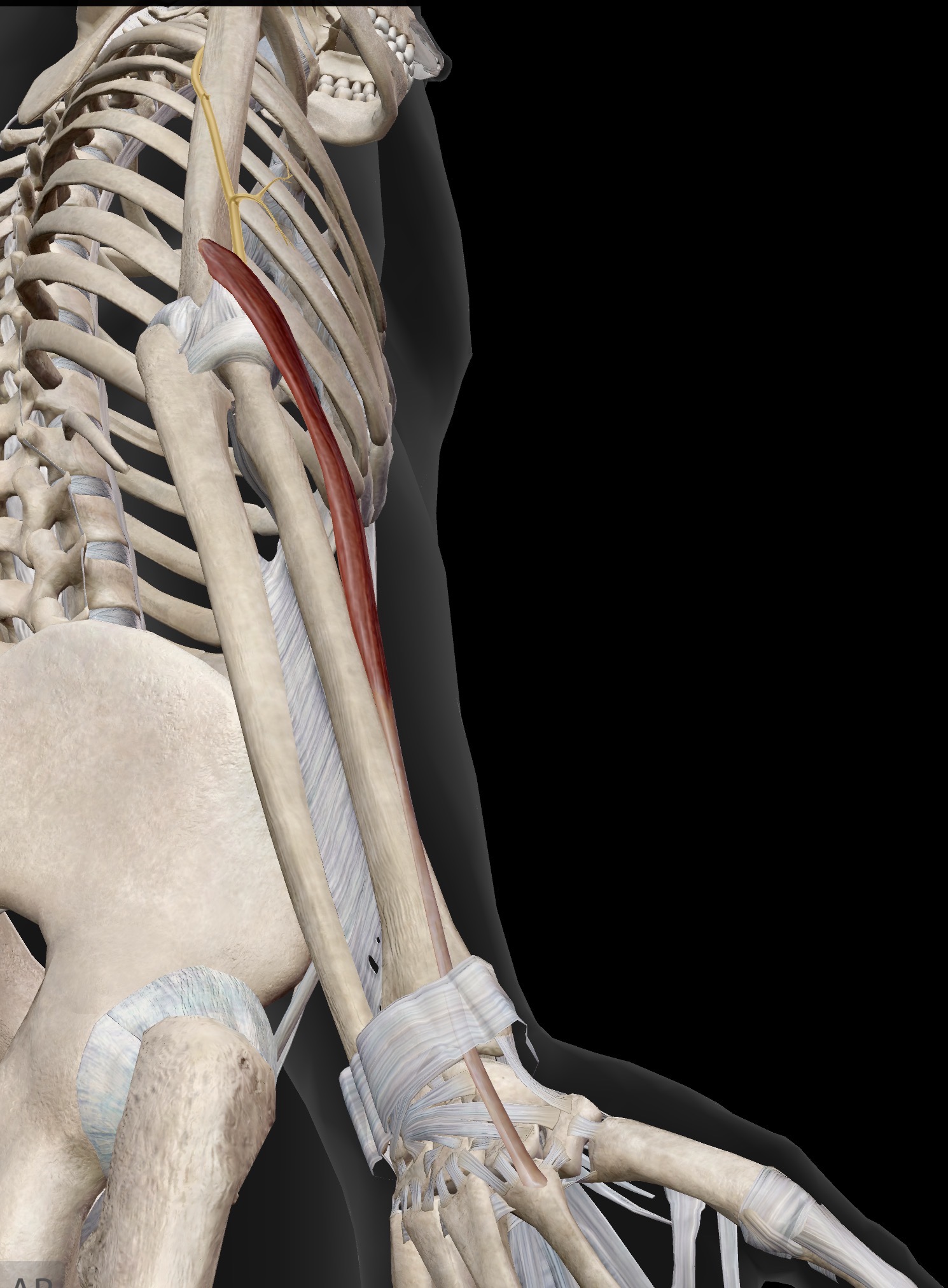
IN

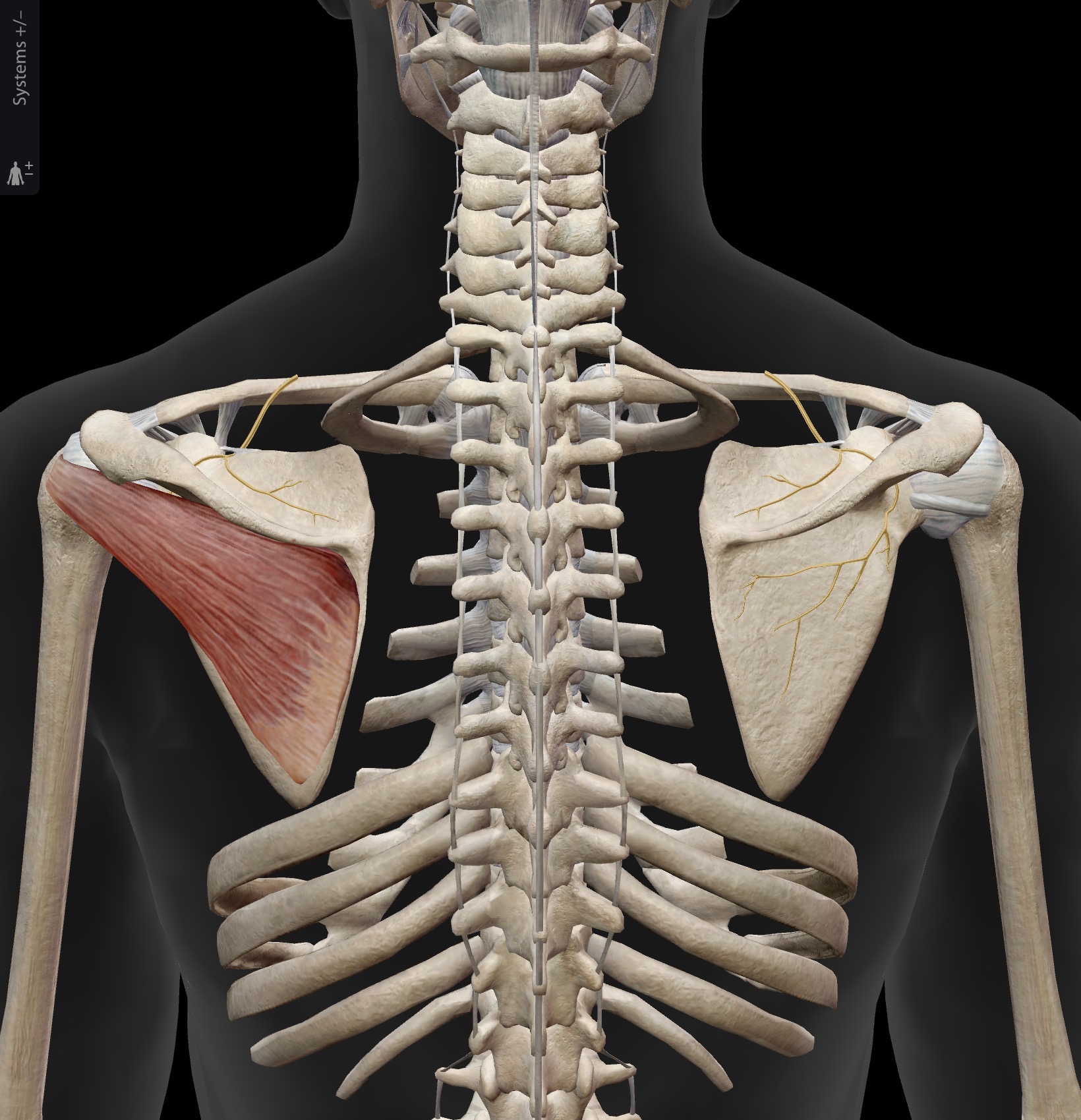
Infraspinatus

O: Infraspinous fossa

I: greater tubercle of humerus. Posterior to insertion of Supraspinatus.

A: External rotation of the humerus. Also, like all rotator cuff muscles, helps stabilize the humeral head in the glenoid fossa

IN: suprascapular nerve (C5, C6)
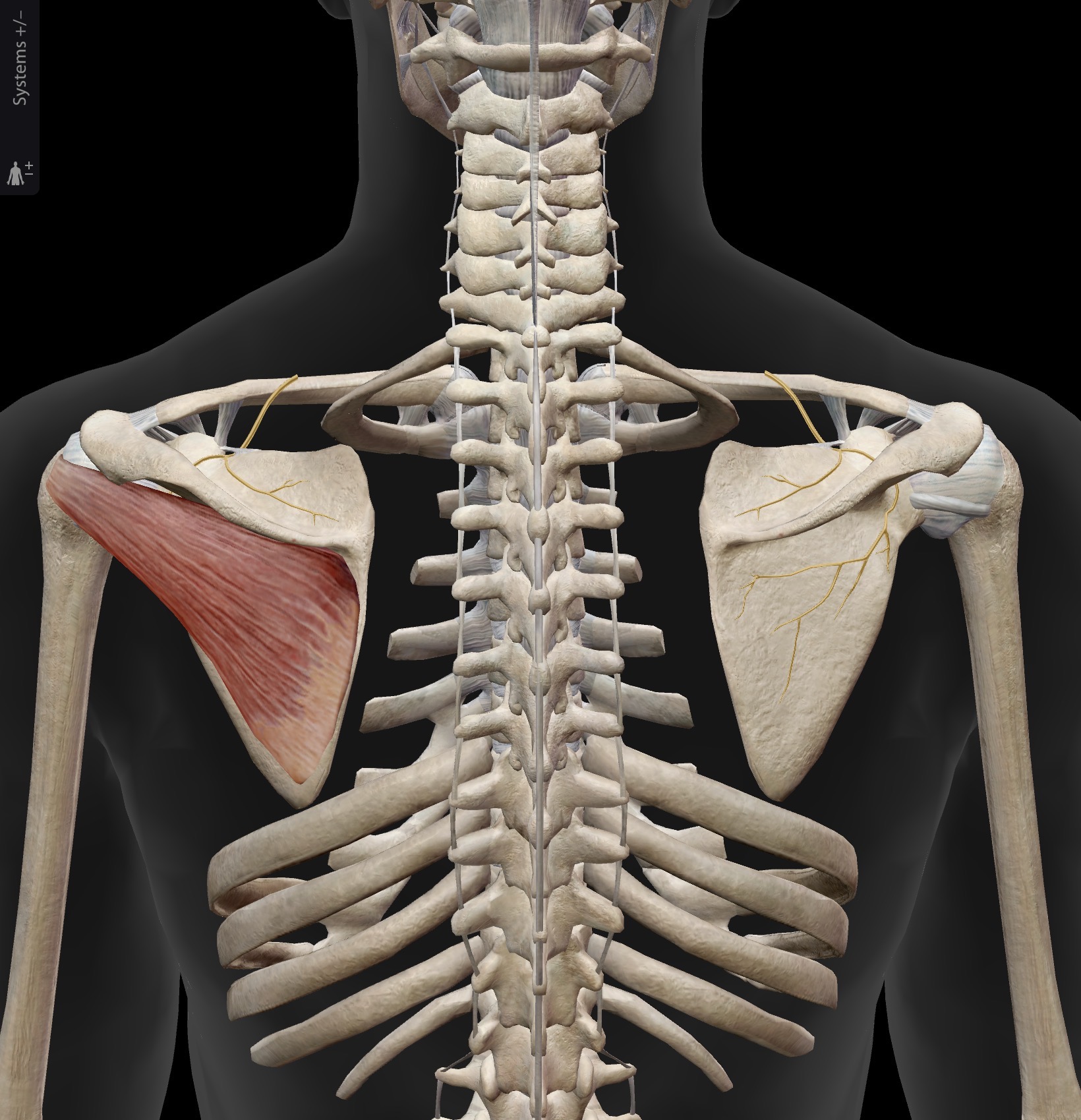
<p>Infraspinatus</p><p>O: Infraspinous fossa</p><p>I: greater tubercle of humerus. Posterior to insertion of Supraspinatus.</p><p>A: External rotation of the humerus. Also, like all rotator cuff muscles, helps stabilize the humeral head in the glenoid fossa</p><p>IN: suprascapular nerve (C5, C6)</p>
42
New cards
<p>Name the muscle and corresponding letter ( O = origin, I = insertion, A = actions, IN = innervation)</p><p>O</p><p>I</p><p>A</p><p>IN</p>

Name the muscle and corresponding letter ( O = origin, I = insertion, A = actions, IN = innervation)

O

I

A

IN

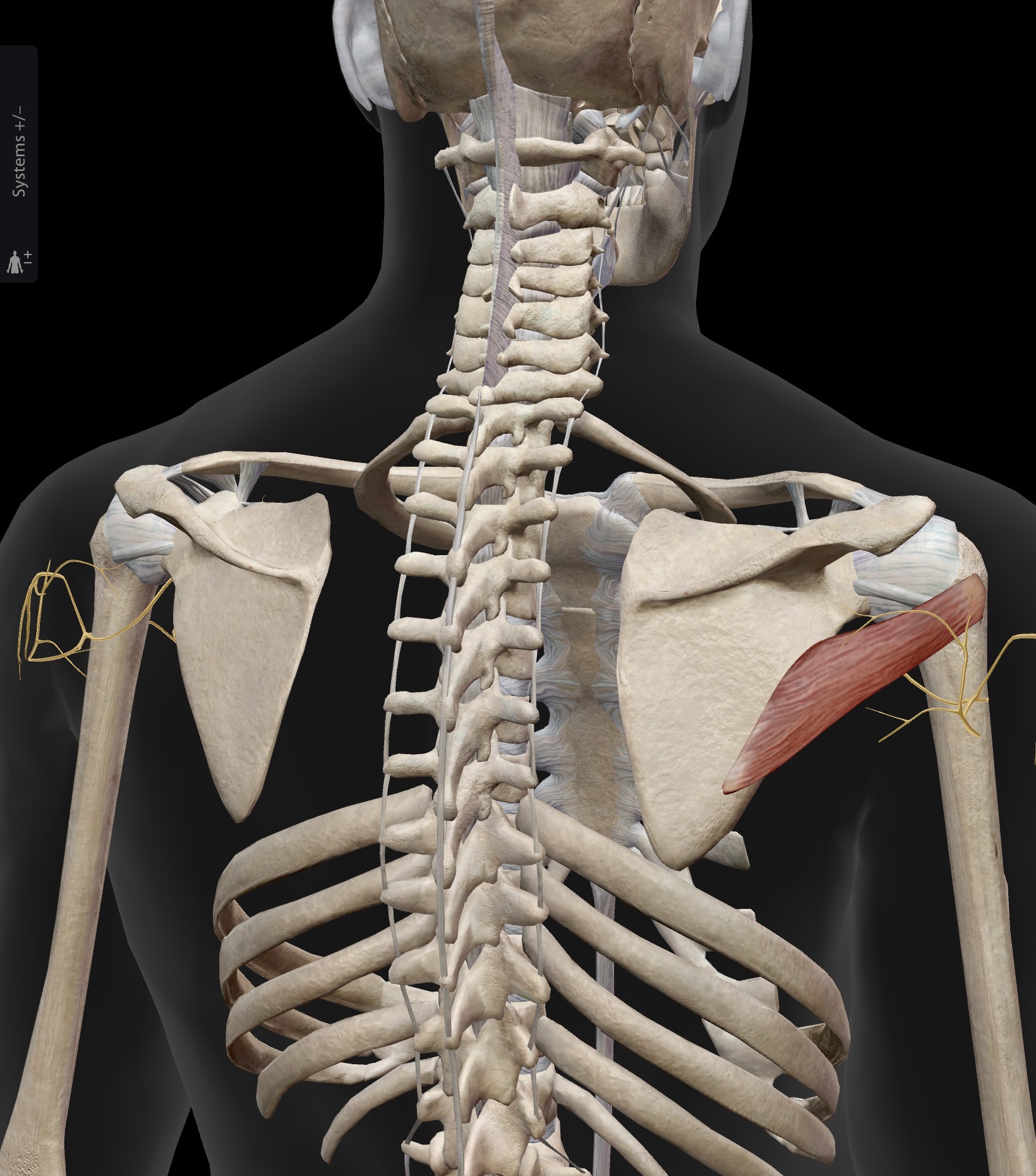
Teres minor

O: Upper portion of lateral border of the scapula (superior to teres major origin)

I: Greater tubercle of the humerus. Inferior to insertion of infraspinatus

A: External rotation of the humerus (synergist to infraspinatus in this action). Also, like all rotator cuff muscles, helps stabilize the humeral head in the glenoid fossa

IN: Axillary nerve (C5, C6)
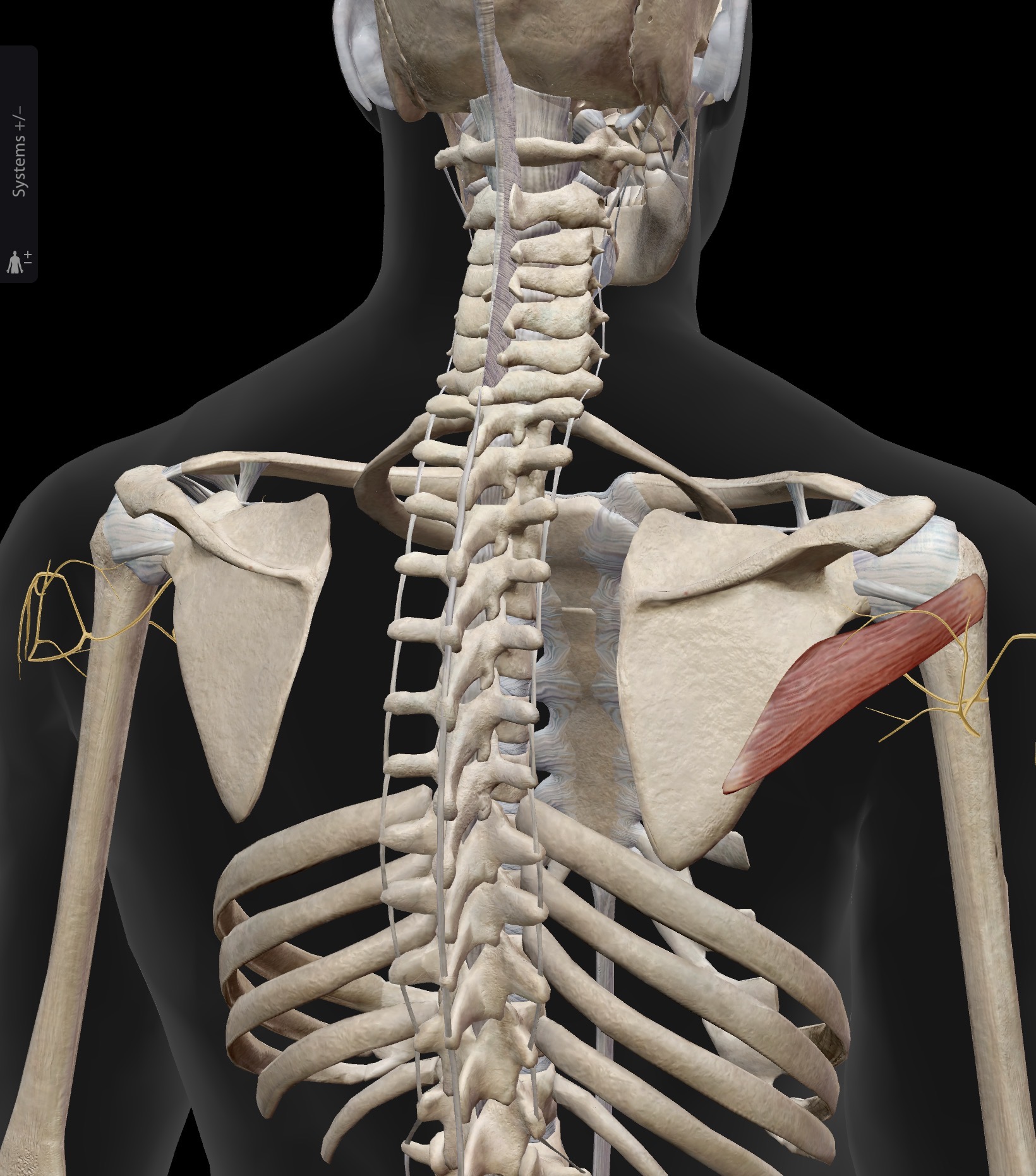
<p>Teres minor</p><p>O: Upper portion of lateral border of the scapula (superior to teres major origin)</p><p>I: Greater tubercle of the humerus. Inferior to insertion of infraspinatus</p><p>A: External rotation of the humerus (synergist to infraspinatus in this action). Also, like all rotator cuff muscles, helps stabilize the humeral head in the glenoid fossa</p><p>IN: Axillary nerve (C5, C6)</p>
43
New cards
term image
knowt flashcard image
44
New cards
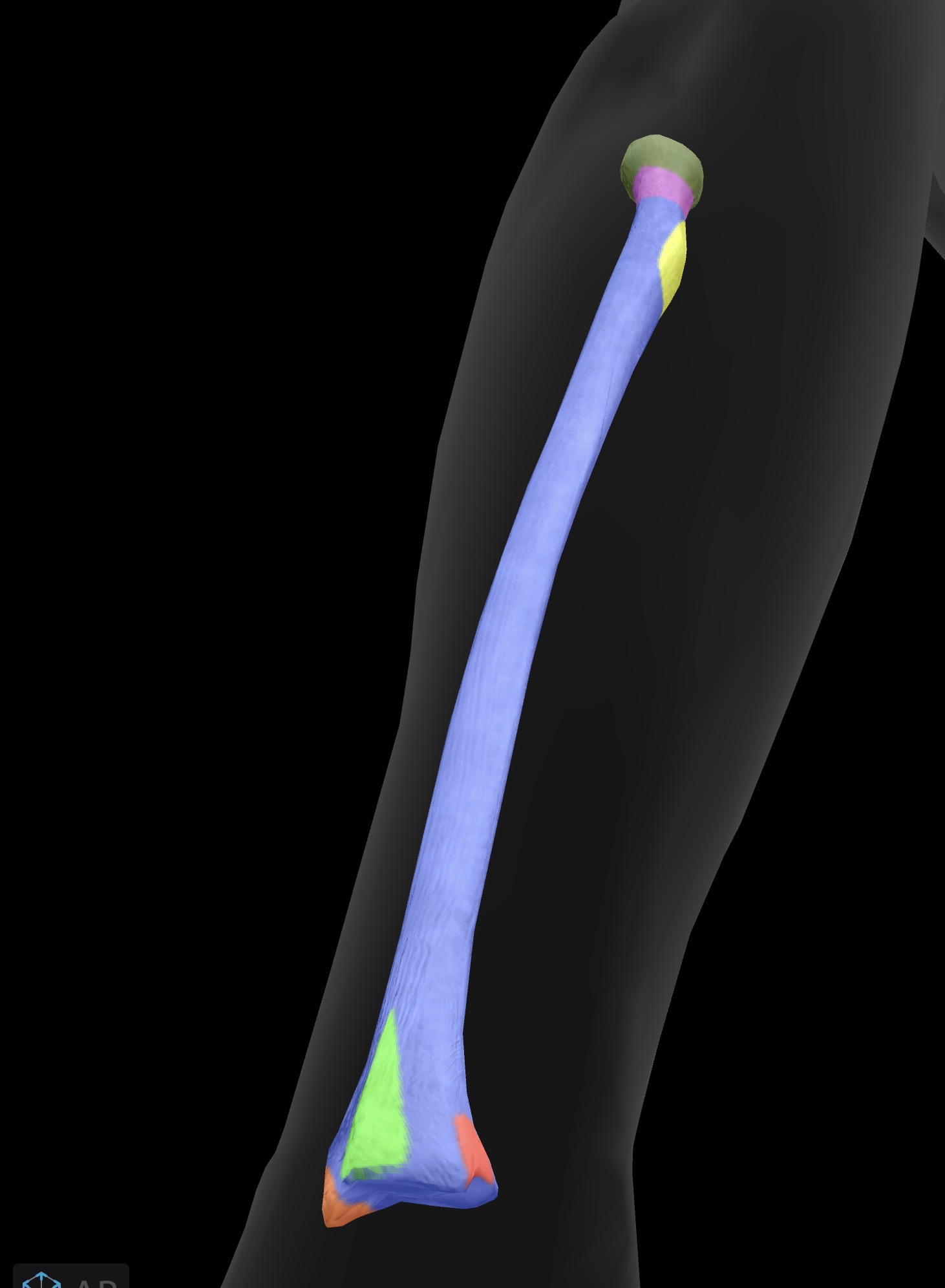
<p>What bone is this? What are the landmarks?</p>

What bone is this? What are the landmarks?

Radius

<p>Radius</p>
45
New cards
<p>What bone is this? What are the landmarks?</p>

What bone is this? What are the landmarks?

Ulna

<p>Ulna</p>
46
New cards
<p>What bone is this? What are the landmarks?</p>

What bone is this? What are the landmarks?

Ulna

<p>Ulna</p>
47
New cards
term image
knowt flashcard image
48
New cards
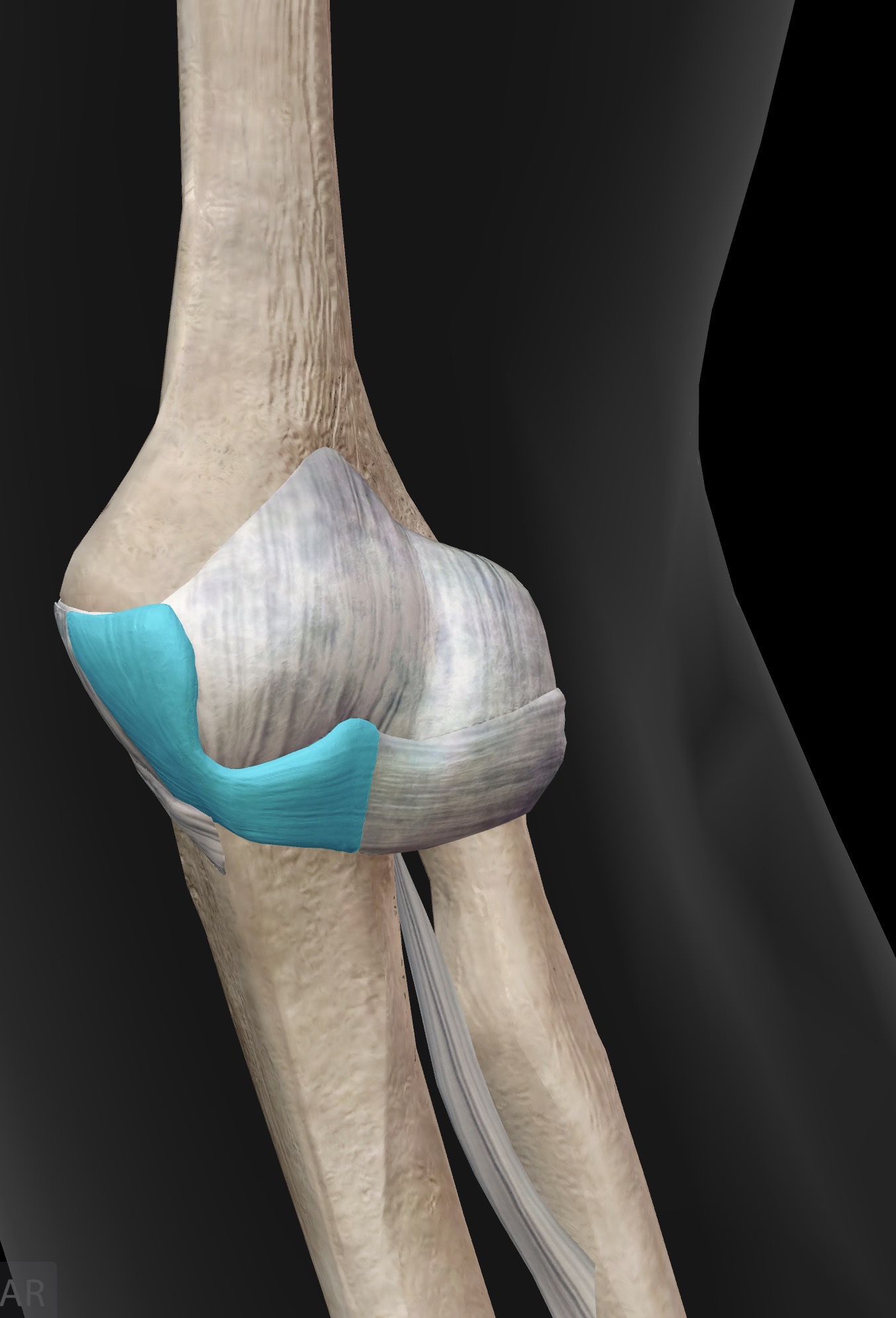
<p>What ligament is this? What does it do?</p>

What ligament is this? What does it do?

Annular ligament

Secures the head of the radius to the radial notch on the ulna

<p>Annular ligament</p><p>Secures the head of the radius to the radial notch on the ulna</p>
49
New cards
<p>What ligament is this? What does it do?</p>

What ligament is this? What does it do?

Ulnar (medial) collateral

Medial epicondyle of humerus to parts of proximal ulna

Tommy John surgery
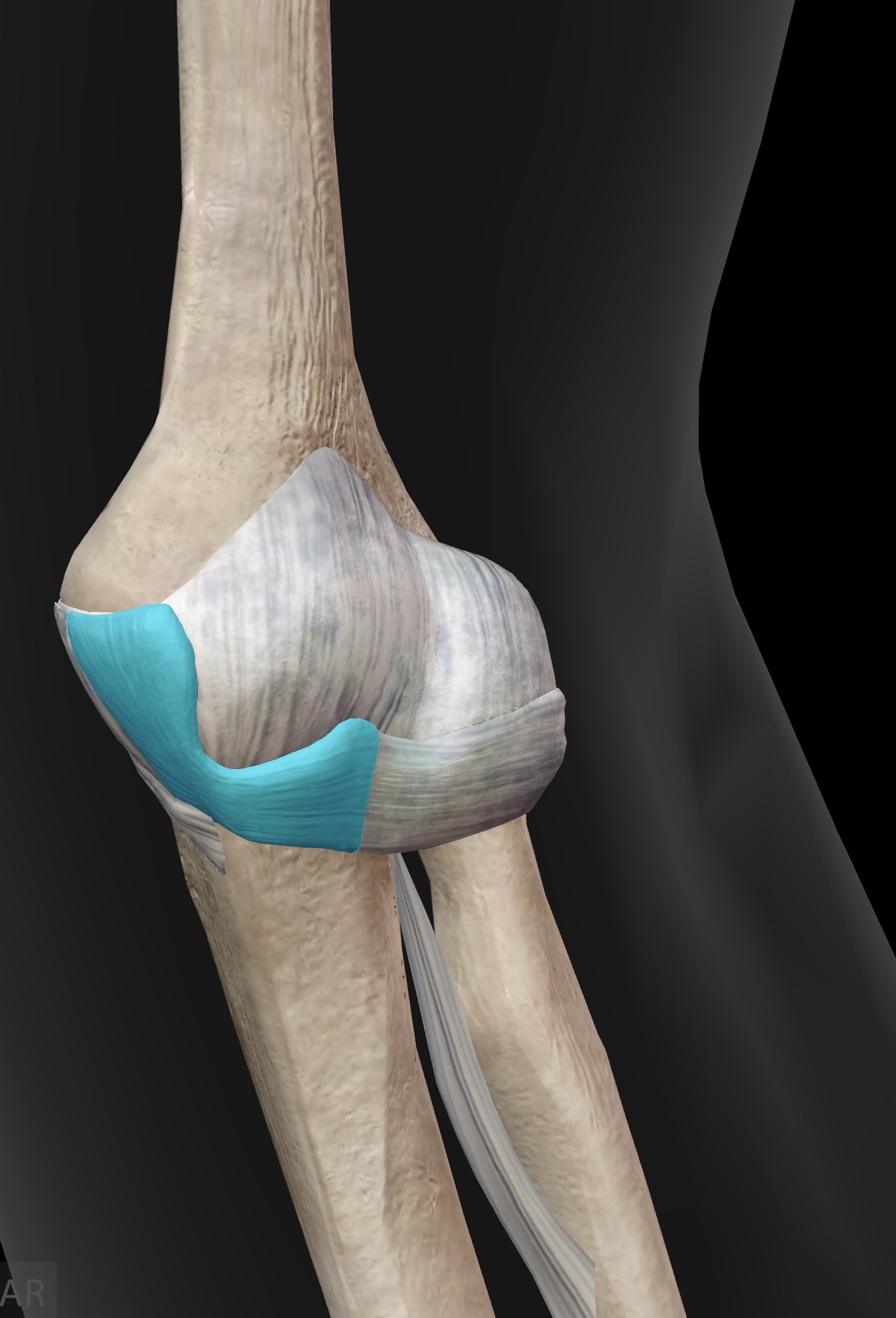
<p>Ulnar (medial) collateral</p><p>Medial epicondyle of humerus to parts of proximal ulna</p><p>Tommy John surgery </p>
50
New cards
<p>What ligament is this? What does it do?</p>

What ligament is this? What does it do?

Radial (lateral) collateral

Lateral epicondyle of humerus to annular ligament and radial notch of ulna
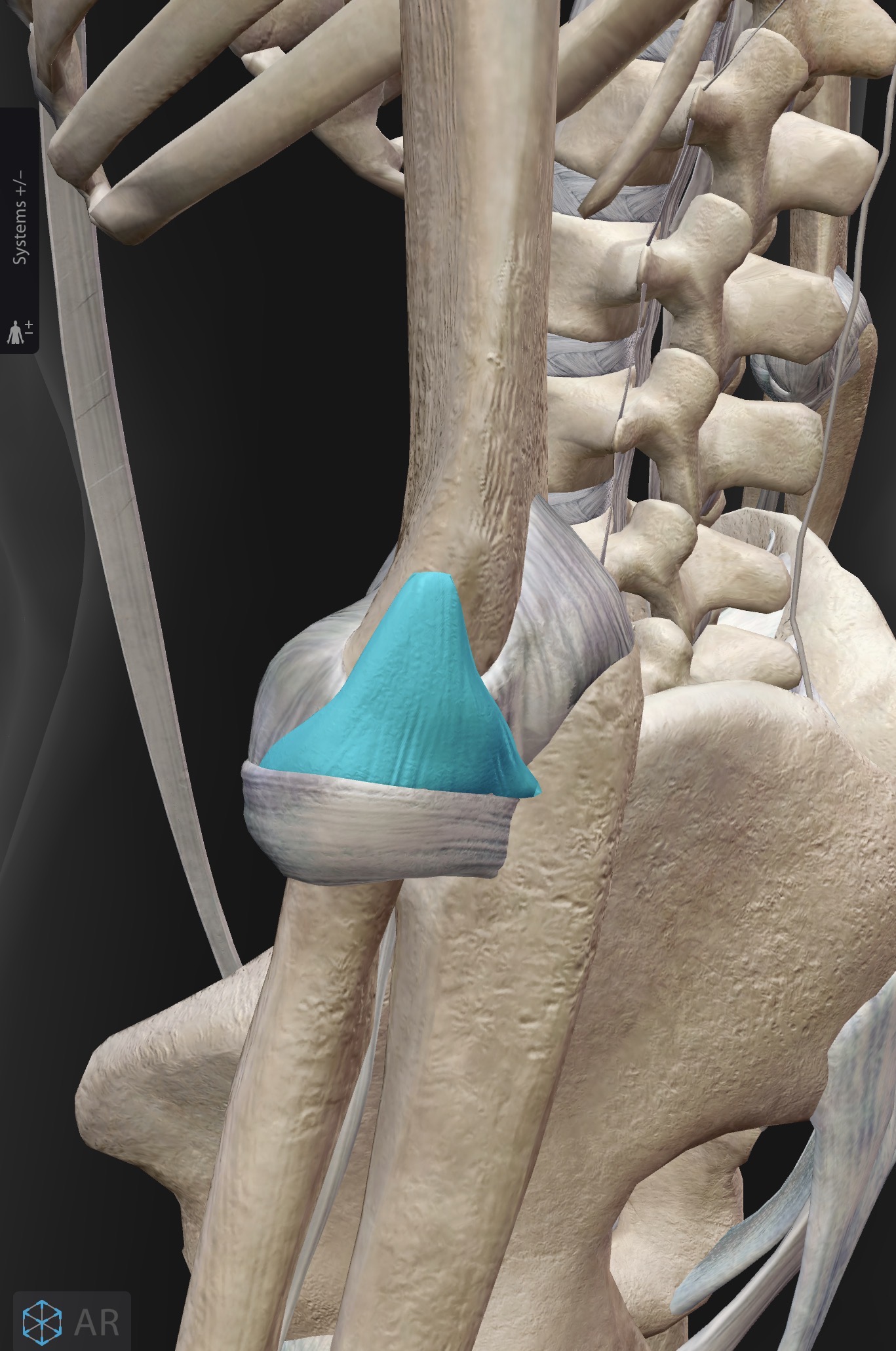
<p>Radial (lateral) collateral</p><p>Lateral epicondyle of humerus to annular ligament and radial notch of ulna</p>
51
New cards
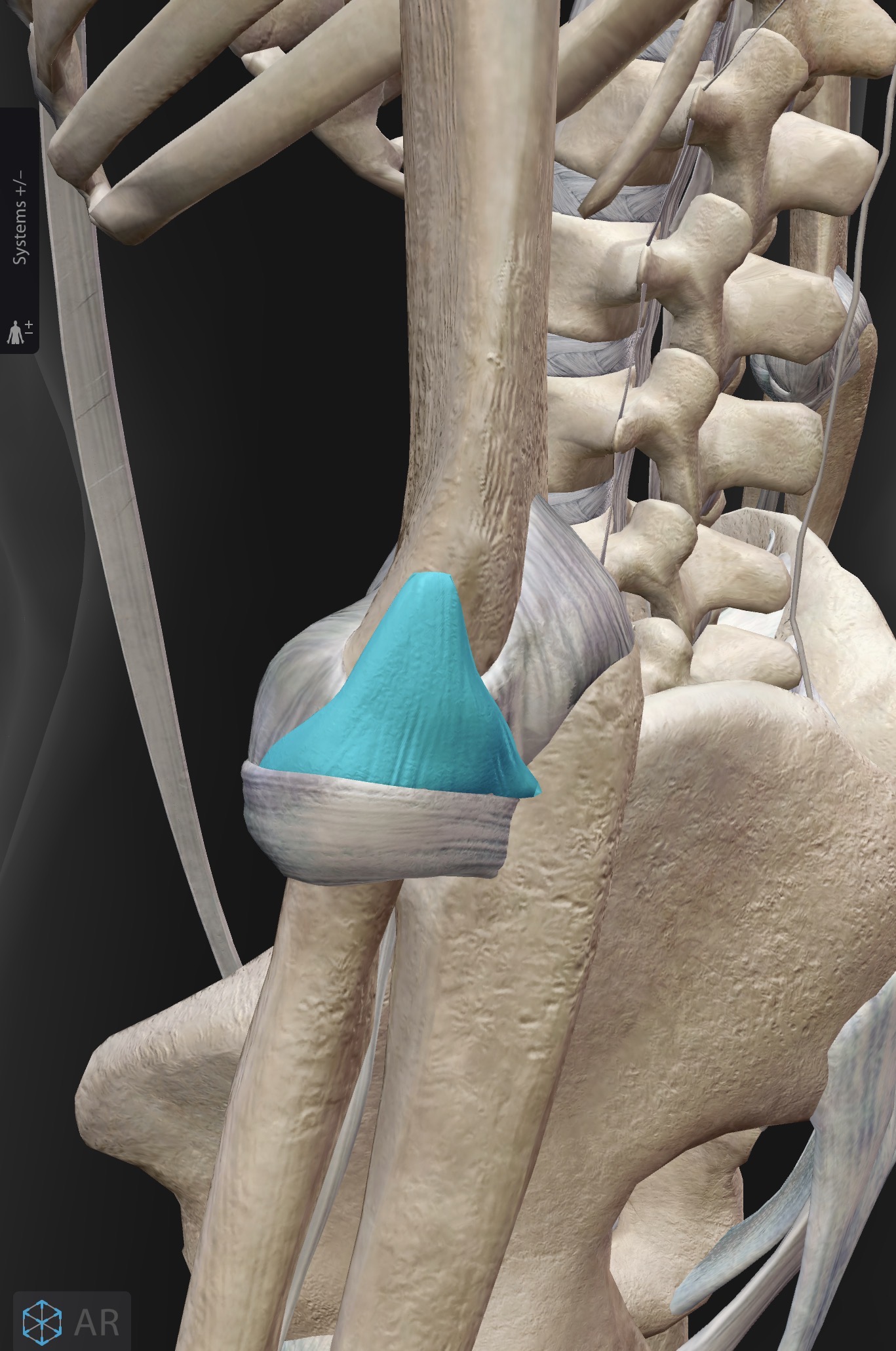
<p>What is this bursae called?</p>

What is this bursae called?

Olecranon bursa
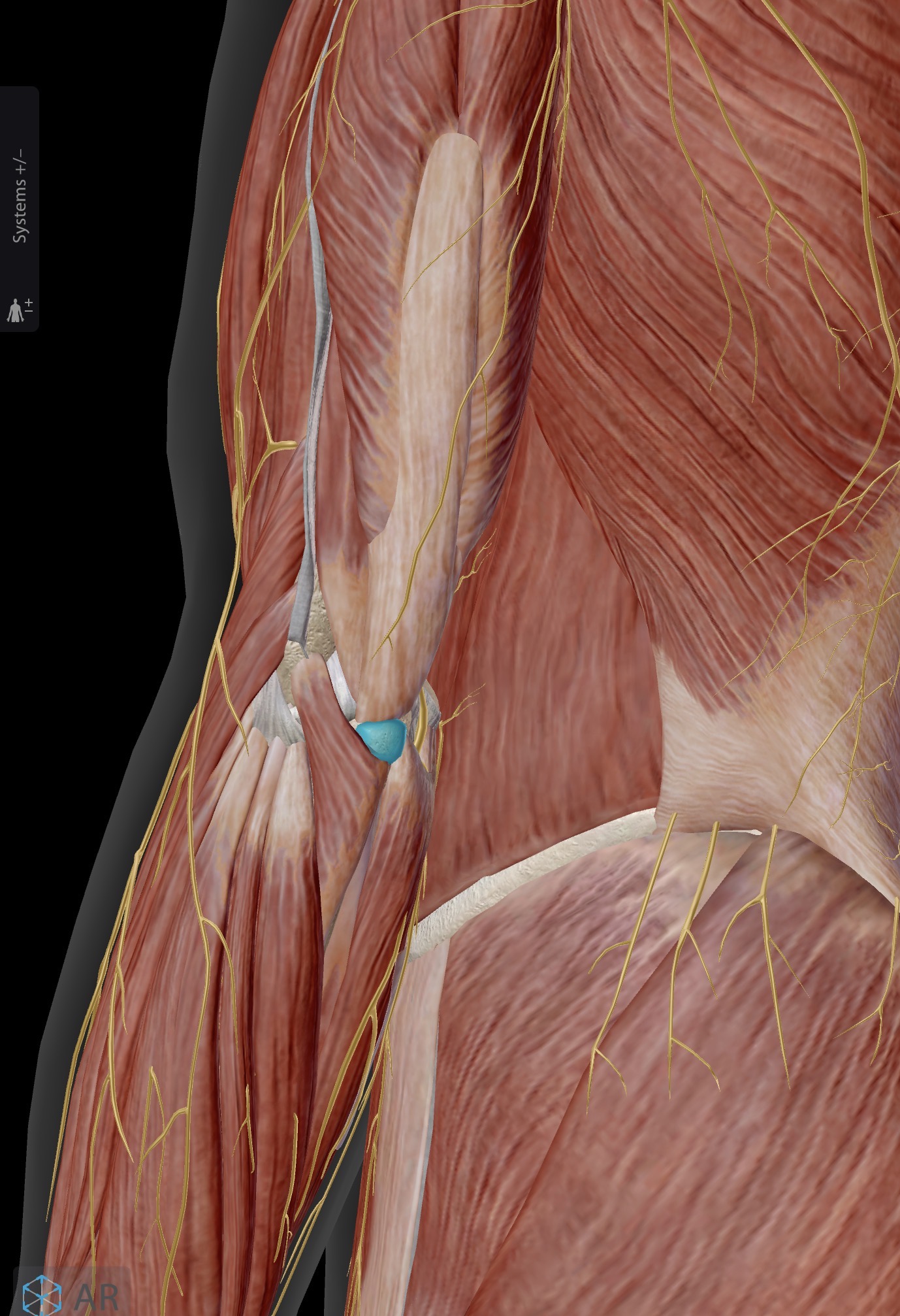
<p>Olecranon bursa</p>
52
New cards
<p>Name the muscle and corresponding letter ( O = origin, I = insertion, A = actions, IN = innervation)</p><p>O</p><p>I</p><p>A</p><p>IN</p>

Name the muscle and corresponding letter ( O = origin, I = insertion, A = actions, IN = innervation)

O

I

A

IN

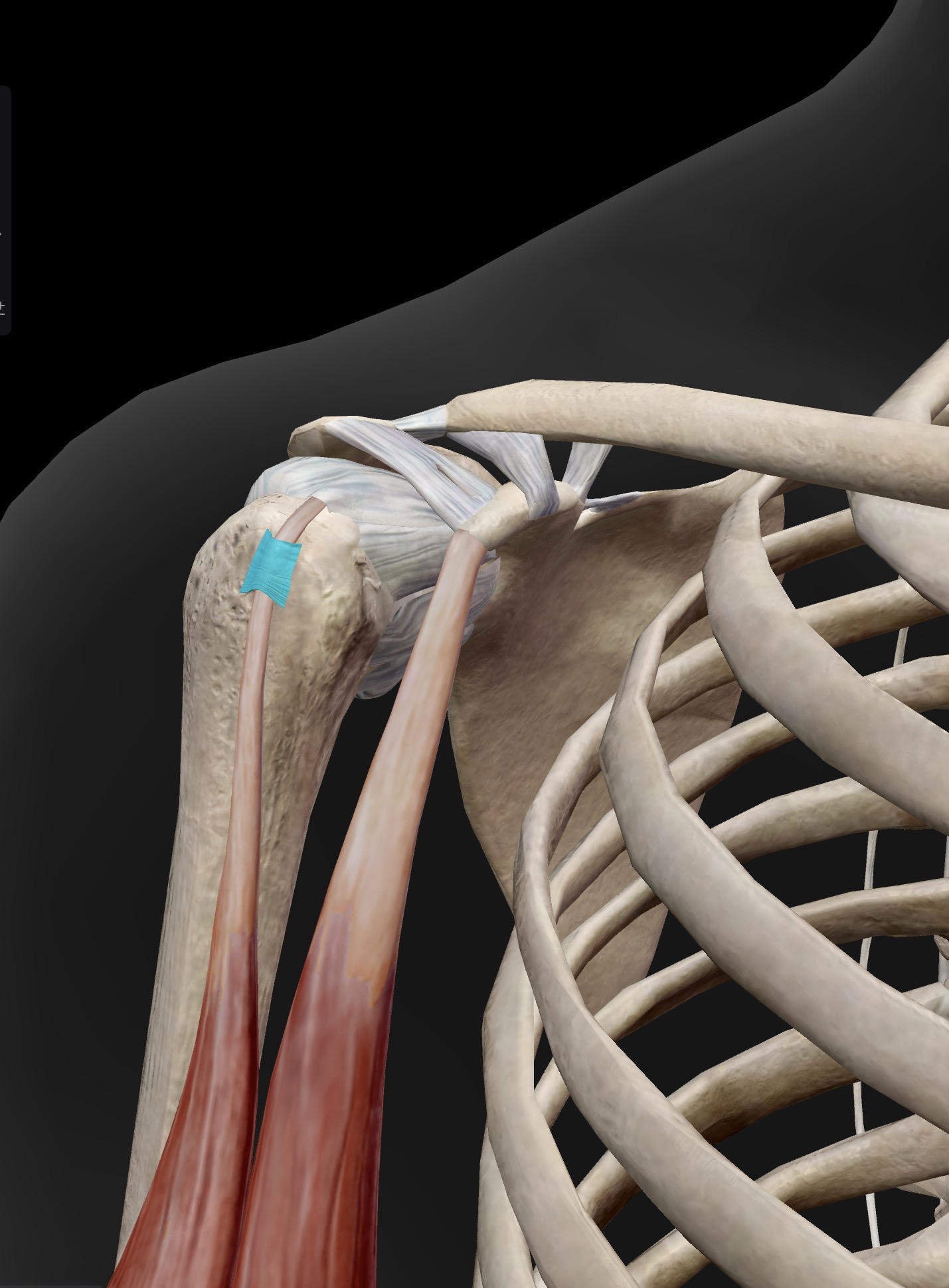
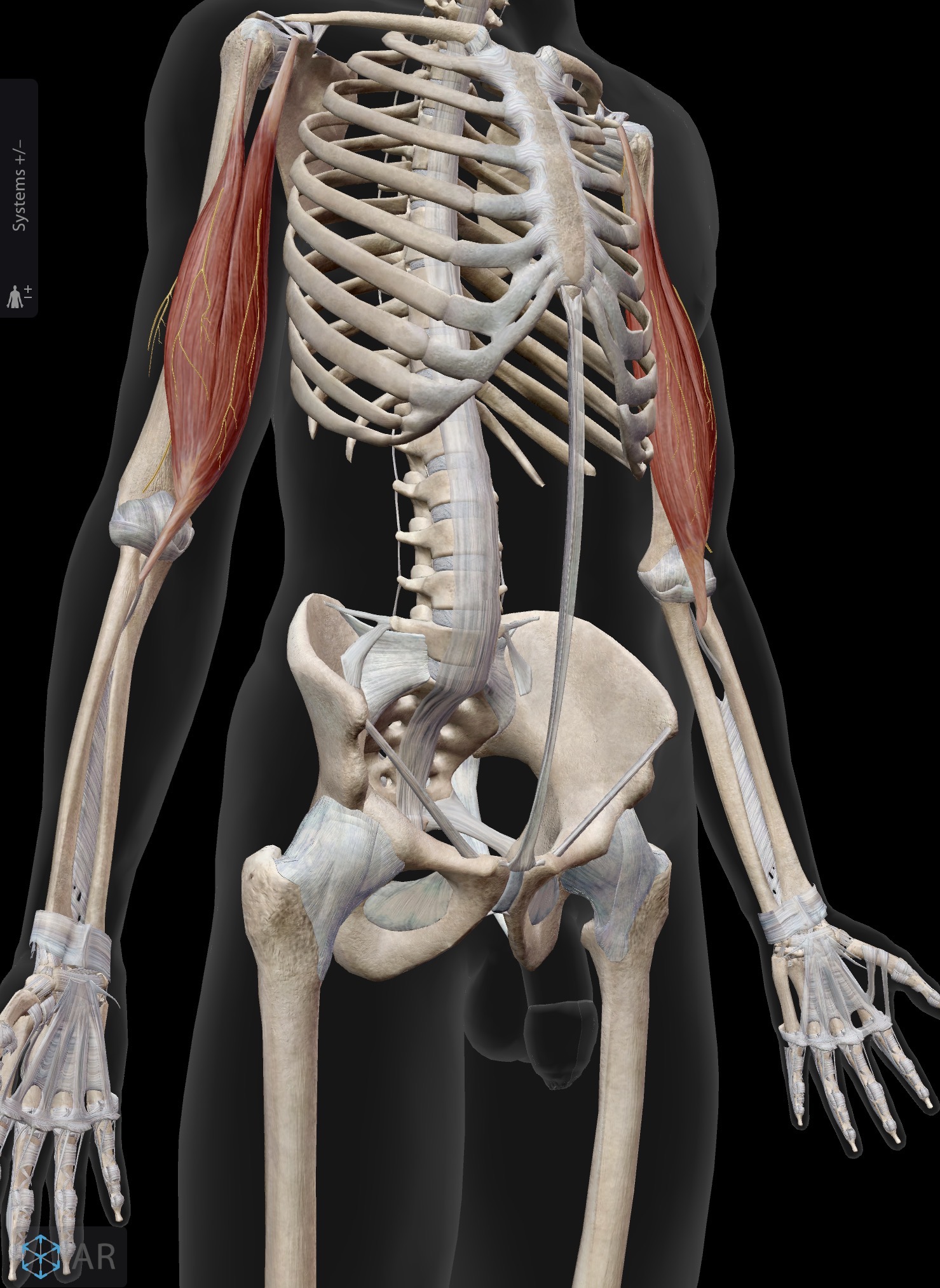
Biceps brachii

O: 2 heads

long head - supraglenoid tubercle

Short head - coracoid process (PBC - method of remembering 3 muscles that attach here Pectoralis minor, biceps brachii, coracobrachialis

I: Radial tuberosity of radius

A: Flexion of forearm at elbow joint. With brachialis, prime mover/agonist of elbow flexion. Supination of the forearm at radioulnar joints.

Flexion of the humerus at shoulder (glenohumeral) joint (weakly).

IN: Musculocutaneous (C5-C7)

  • Biceps brachii is the strongest supinator of forearm at 90 degrees of elbow flexion

  • because biceps is both a supinator of the forearm and a flexor of the elbow, if the forearm is pronated, biceps doesn’t work as well to flex the elbow

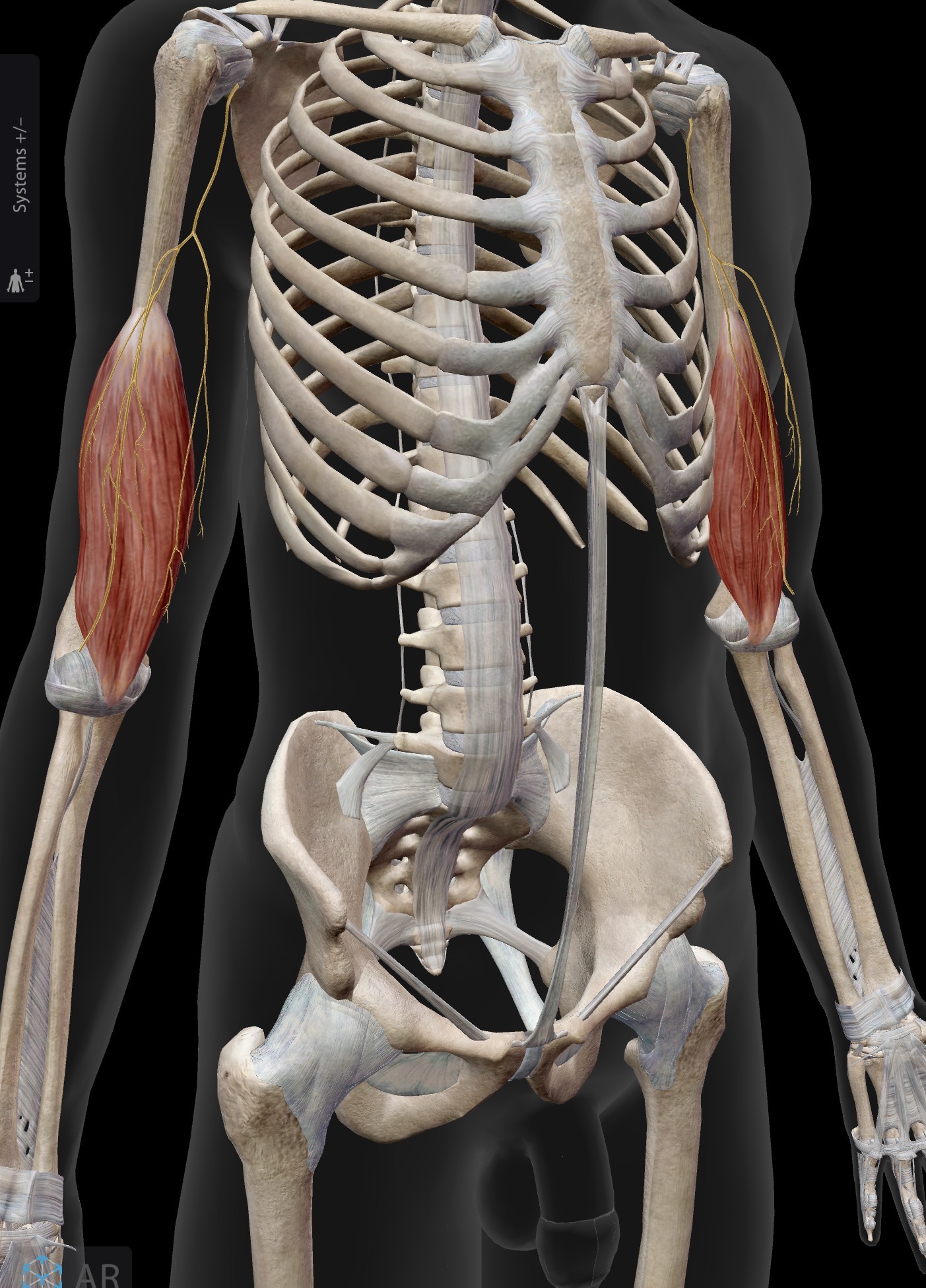
<p>Biceps brachii</p><p>O: 2 heads</p><p>long head - supraglenoid tubercle</p><p>Short head - coracoid process (PBC - method of remembering 3 muscles that attach here <strong>Pectoralis minor, biceps brachii, coracobrachialis</strong></p><p><strong>I: Radial tuberosity of radius</strong></p><p>A: Flexion of forearm at elbow joint. With brachialis, prime mover/agonist of elbow flexion. Supination of the forearm at radioulnar joints.</p><p>Flexion of the humerus at shoulder (glenohumeral) joint (weakly).</p><p>IN: Musculocutaneous (C5-C7)</p><ul><li><p>Biceps brachii is the strongest supinator of forearm at 90 degrees of elbow flexion</p></li><li><p>because biceps is both a supinator of the forearm and a flexor of the elbow, if the forearm is pronated, biceps doesn’t work as well to flex the elbow</p></li></ul><p></p>
53
New cards
<p>Name the muscle and corresponding letter ( O = origin, I = insertion, A = actions, IN = innervation)</p><p>O</p><p>I</p><p>A</p><p>IN</p>

Name the muscle and corresponding letter ( O = origin, I = insertion, A = actions, IN = innervation)

O

I

A

IN

Brachialis

O: Distal half of anterior surface of the humerus

I: Coronoid process of ulna and ulnar tuberosity

A: Flexion of the forearm at the elbow joint

*Along with biceps, prime mover/agonist of elbow flexion

IN: Musculocutaneous nerve (C5-C7)
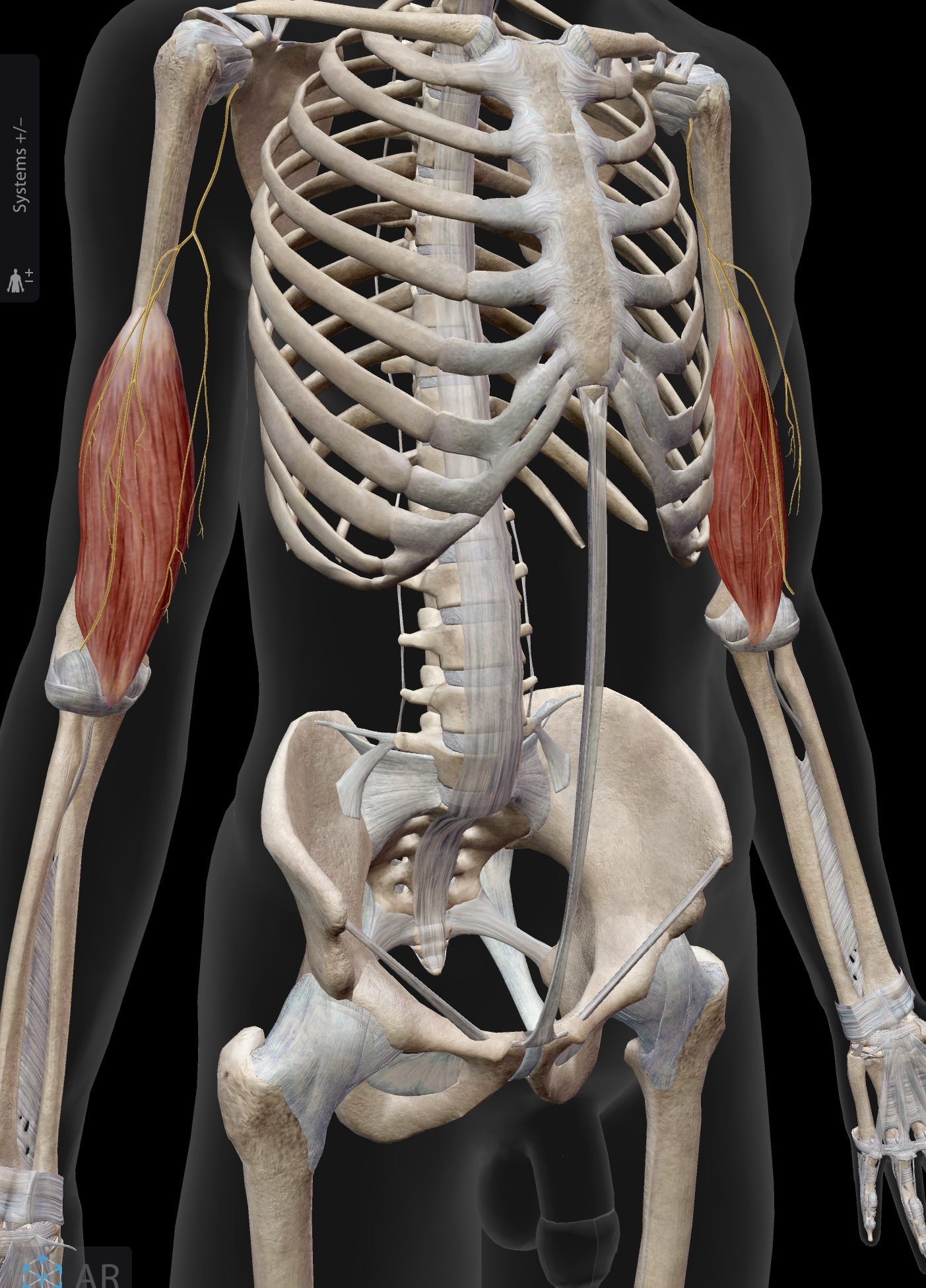
<p>Brachialis</p><p>O: Distal half of anterior surface of the humerus</p><p>I: Coronoid process of ulna and ulnar tuberosity</p><p>A: Flexion of the forearm at the elbow joint</p><p>*Along with biceps, prime mover/agonist of elbow flexion</p><p>IN: Musculocutaneous nerve (C5-C7)</p>
54
New cards
<p>Name the muscle and corresponding letter ( O = origin, I = insertion, A = actions, IN = innervation)</p><p>O</p><p>I</p><p>A</p><p>IN</p>

Name the muscle and corresponding letter ( O = origin, I = insertion, A = actions, IN = innervation)

O

I

A

IN

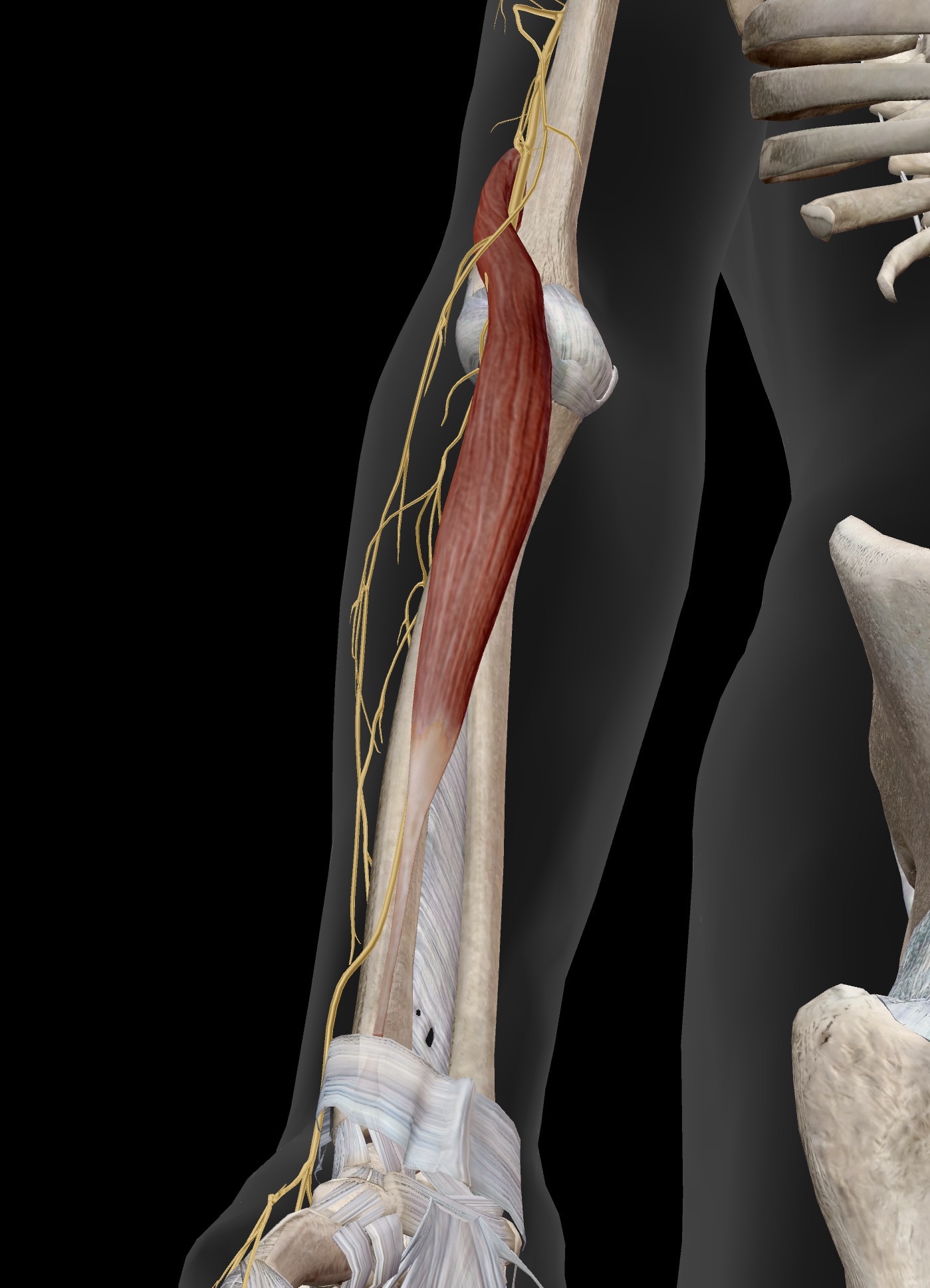
Brachioradialis

O: Lateral, distal humerus

l: Styloid process of radius

A: Flexion of the forearm at the elbow, especially at “neutral” pronation/supination. “beer-drinking muscle”

IN: Radial nerve (C5-C8, T1)

synergist to biceps brachii and brachialis for elbow flexion
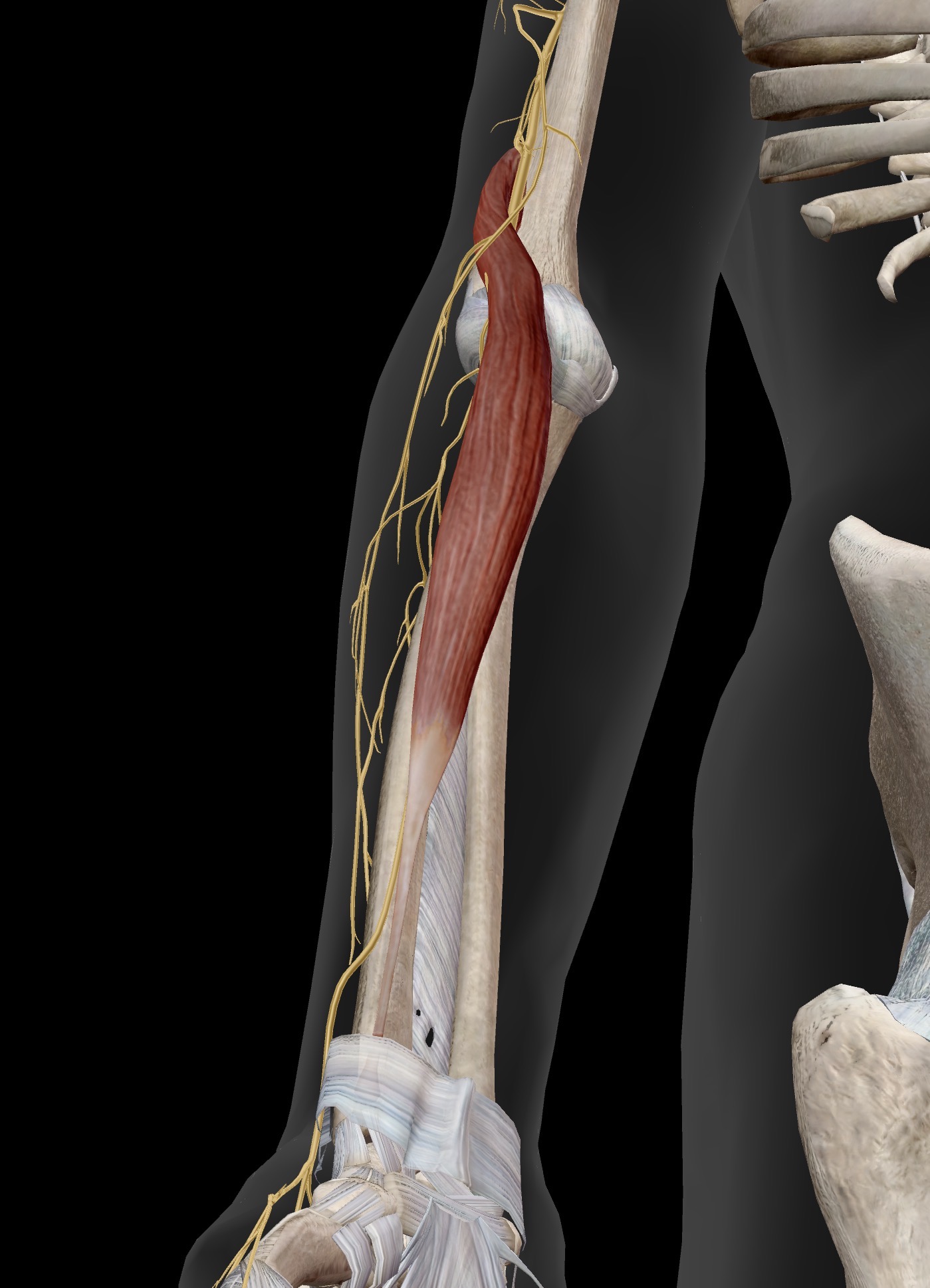
<p>Brachioradialis</p><p>O: Lateral, distal humerus</p><p>l: Styloid process of radius</p><p>A: Flexion of the forearm at the elbow, especially at “neutral” pronation/supination. “beer-drinking muscle”</p><p>IN: Radial nerve (C5-C8, T1)</p><p><em>synergist to biceps brachii and brachialis for elbow flexion</em></p>
55
New cards
<p>Name the muscle and corresponding letter ( O = origin, I = insertion, A = actions, IN = innervation)</p><p>O</p><p>I</p><p>A</p><p>IN</p>

Name the muscle and corresponding letter ( O = origin, I = insertion, A = actions, IN = innervation)

O

I

A

IN

Triceps brachii

O: 3 heads

Long head - Infraglenoid tubercle

Lateral head - Posterior humerus

Medial head - Posterior humerus

I: Olecranon process

A:

All heads - extension of forearm at elbow. Prime mover/agonist of elbow extension

Long head - extension of humerus at shoulder (glenohumeral) joint

IN: Radial nerve (C5-C8, T1)

<p>Triceps brachii</p><p>O: 3 heads</p><p>Long head - Infraglenoid tubercle</p><p>Lateral head - Posterior humerus</p><p>Medial head - Posterior humerus</p><p>I: Olecranon process</p><p>A:</p><p>All heads - extension of forearm at elbow. Prime mover/agonist of elbow extension</p><p>Long head - extension of humerus at shoulder (glenohumeral) joint</p><p>IN: Radial nerve (C5-C8, T1)</p>
56
New cards
<p>Name the muscle and corresponding letter ( O = origin, I = insertion, A = actions, IN = innervation)</p><p>O</p><p>I</p><p>A</p><p>IN</p>

Name the muscle and corresponding letter ( O = origin, I = insertion, A = actions, IN = innervation)

O

I

A

IN

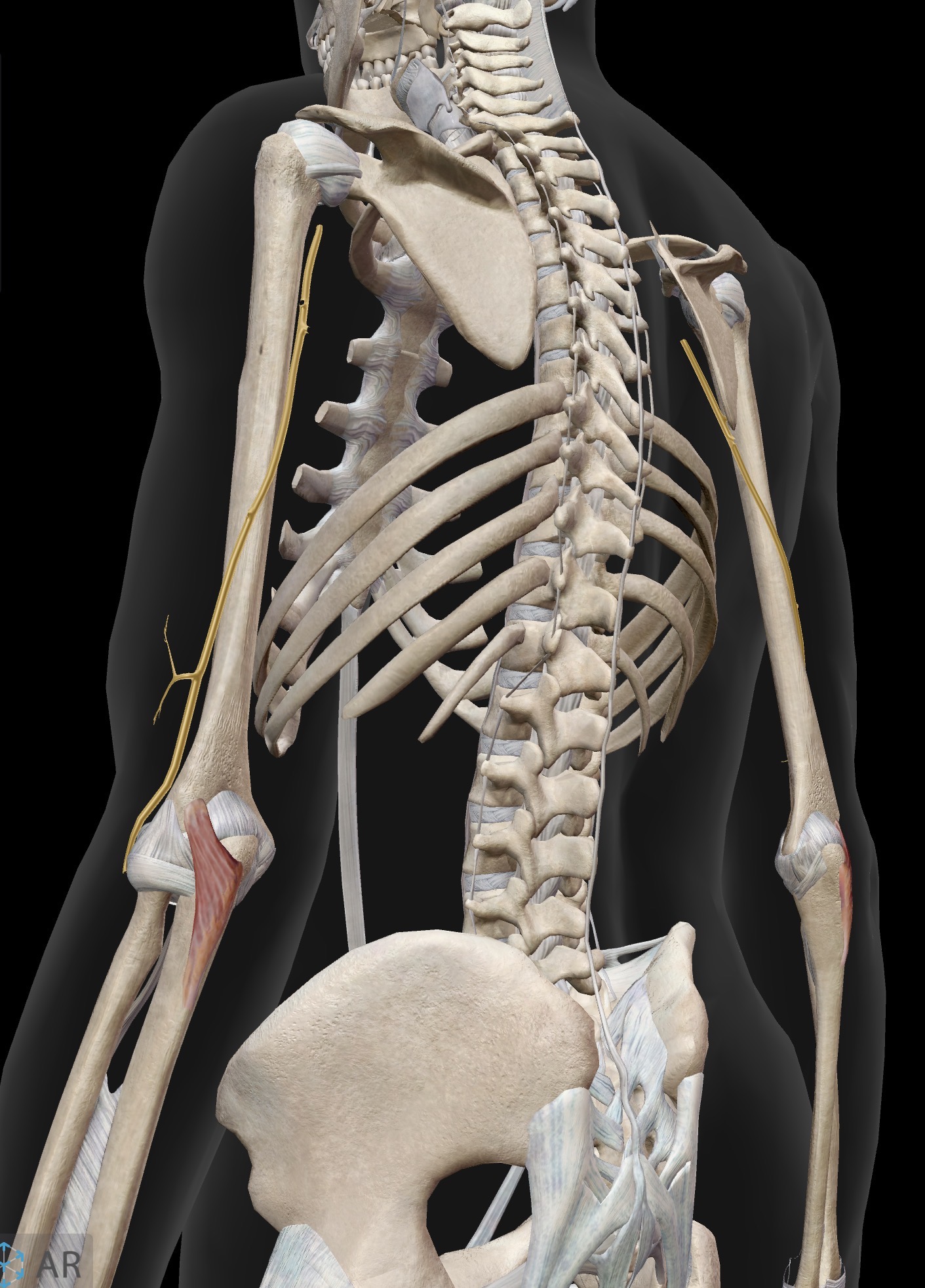
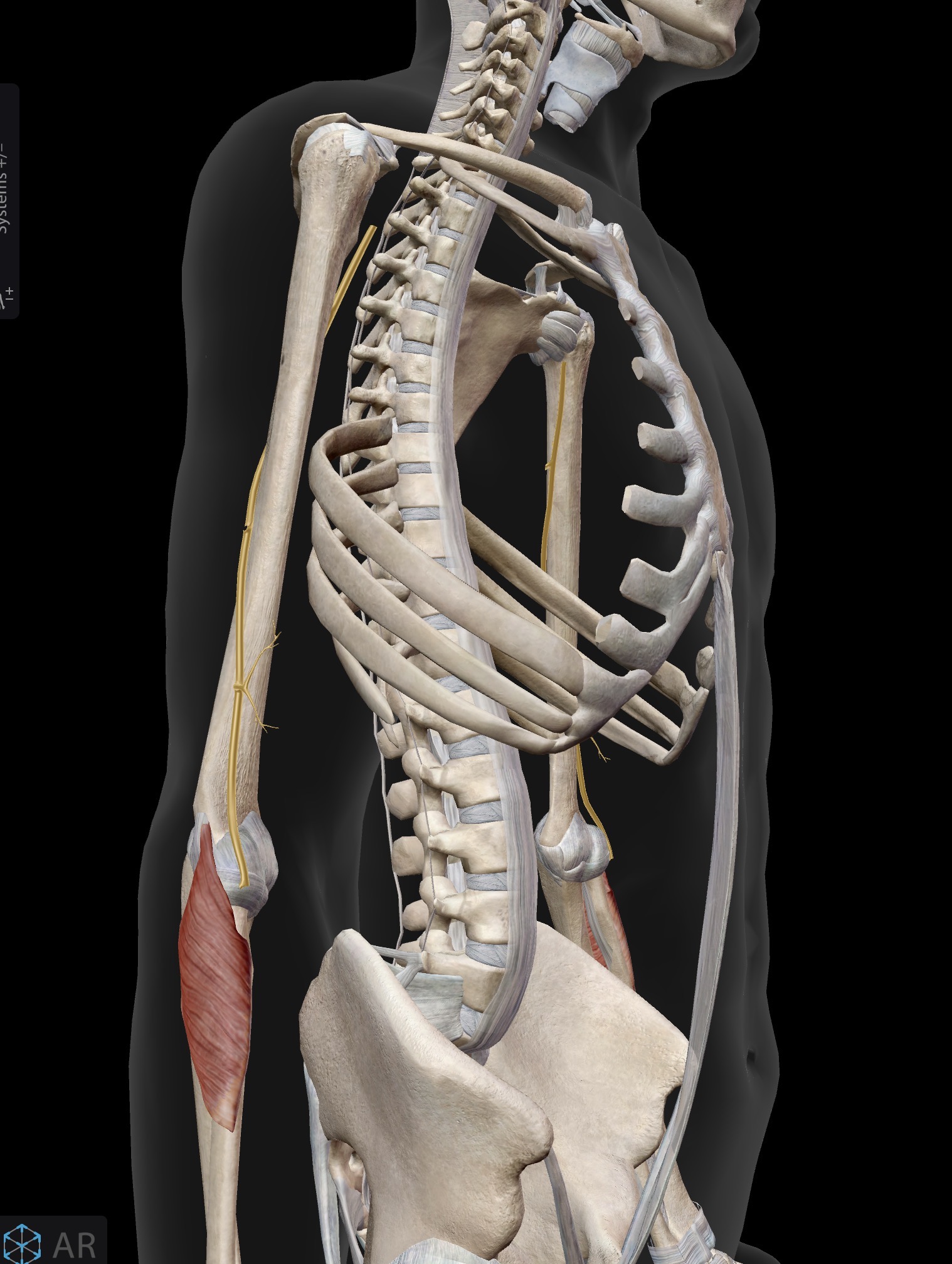
Anconeus

O: Lateral epicondyle of humerus

I: Olecranon process of ulna (inferior to insertion of triceps)

A: Extension of forearm at elbow joint (end of range extension). Synergist to triceps for elbow extension.

IN: Radial nerve (C5-C8, T1)
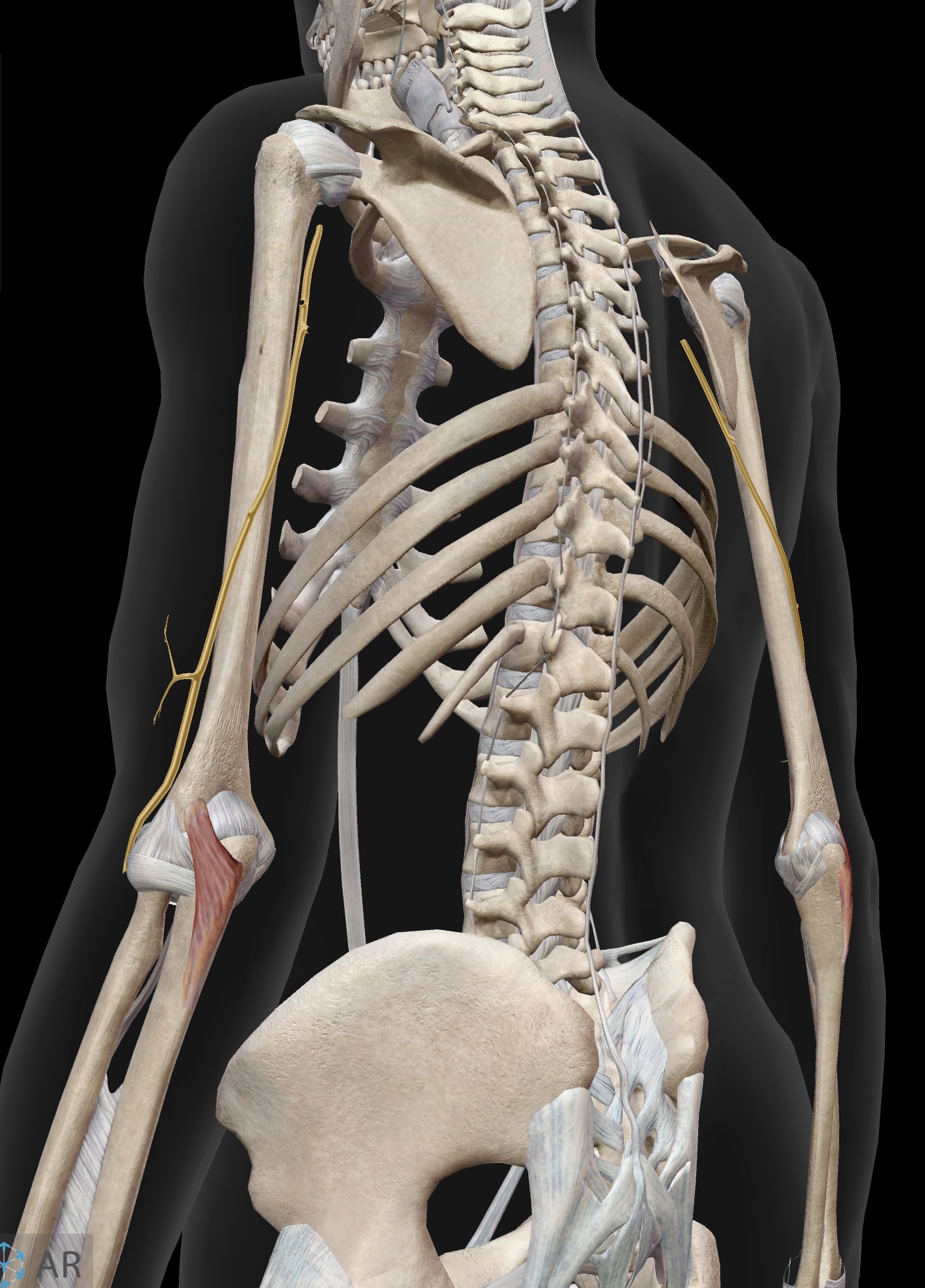
<p>Anconeus</p><p>O: Lateral epicondyle of humerus</p><p>I: Olecranon process of ulna (inferior to insertion of triceps)</p><p>A: Extension of forearm at elbow joint (end of range extension). Synergist to triceps for elbow extension.</p><p>IN: Radial nerve (C5-C8, T1)</p>
57
New cards
<p>Name the muscle and corresponding letter ( O = origin, I = insertion, A = actions, IN = innervation)</p><p>A</p><p>IN</p>

Name the muscle and corresponding letter ( O = origin, I = insertion, A = actions, IN = innervation)

A

IN

Supinator

A: Supinates forearm at radioulnar joints (synergist to biceps brachii for supination of the forearm at the radioulnar joints)

IN: Radial nerve (C5-C8, T1)
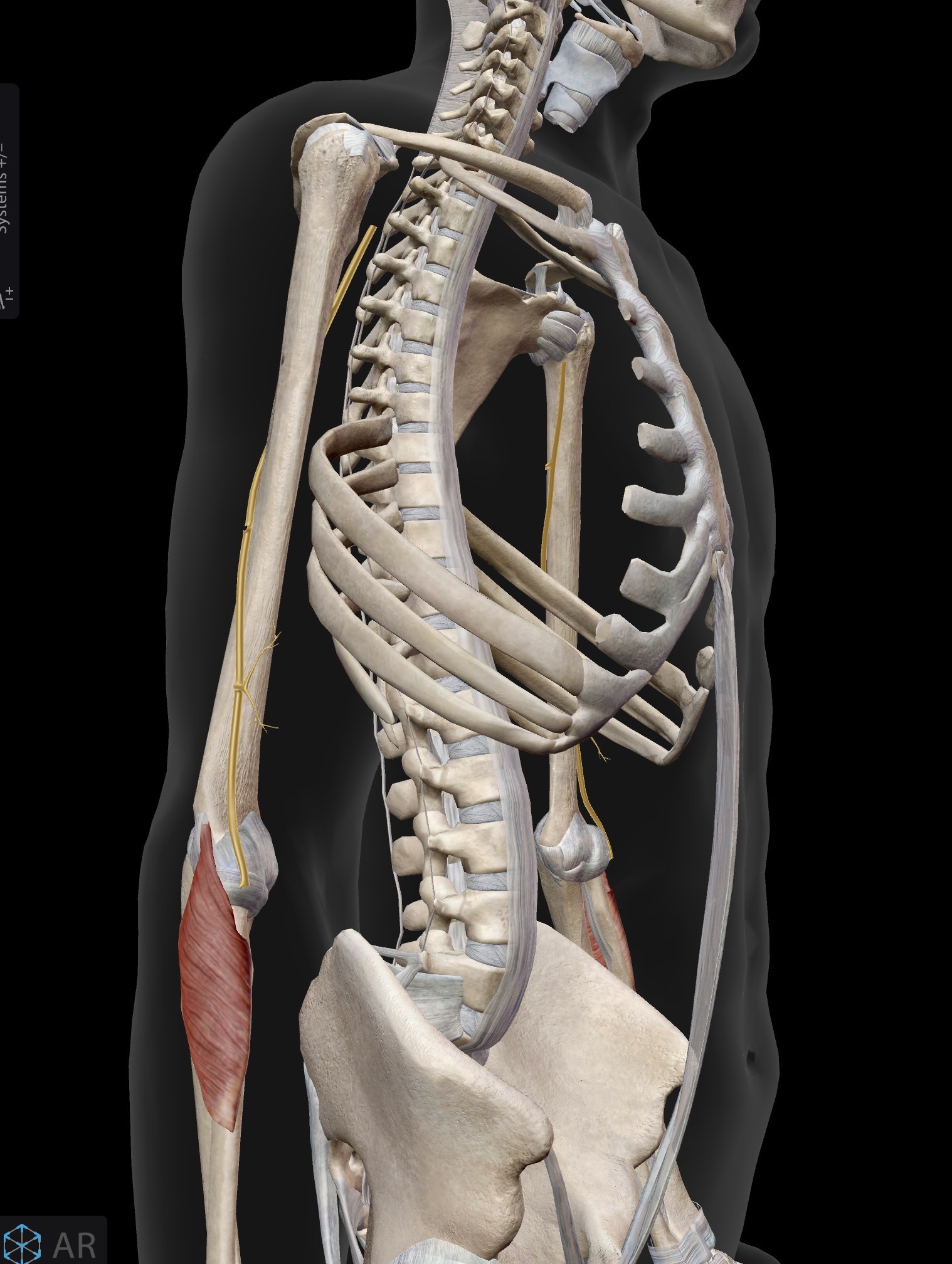
<p>Supinator</p><p>A: Supinates forearm at radioulnar joints (synergist to biceps brachii for supination of the forearm at the radioulnar joints)</p><p>IN: Radial nerve (C5-C8, T1)</p>
58
New cards
<p>Name the muscle and corresponding letter ( O = origin, I = insertion, A = actions, IN = innervation)</p><p>O</p><p>I</p><p>A</p><p>IN</p>

Name the muscle and corresponding letter ( O = origin, I = insertion, A = actions, IN = innervation)

O

I

A

IN

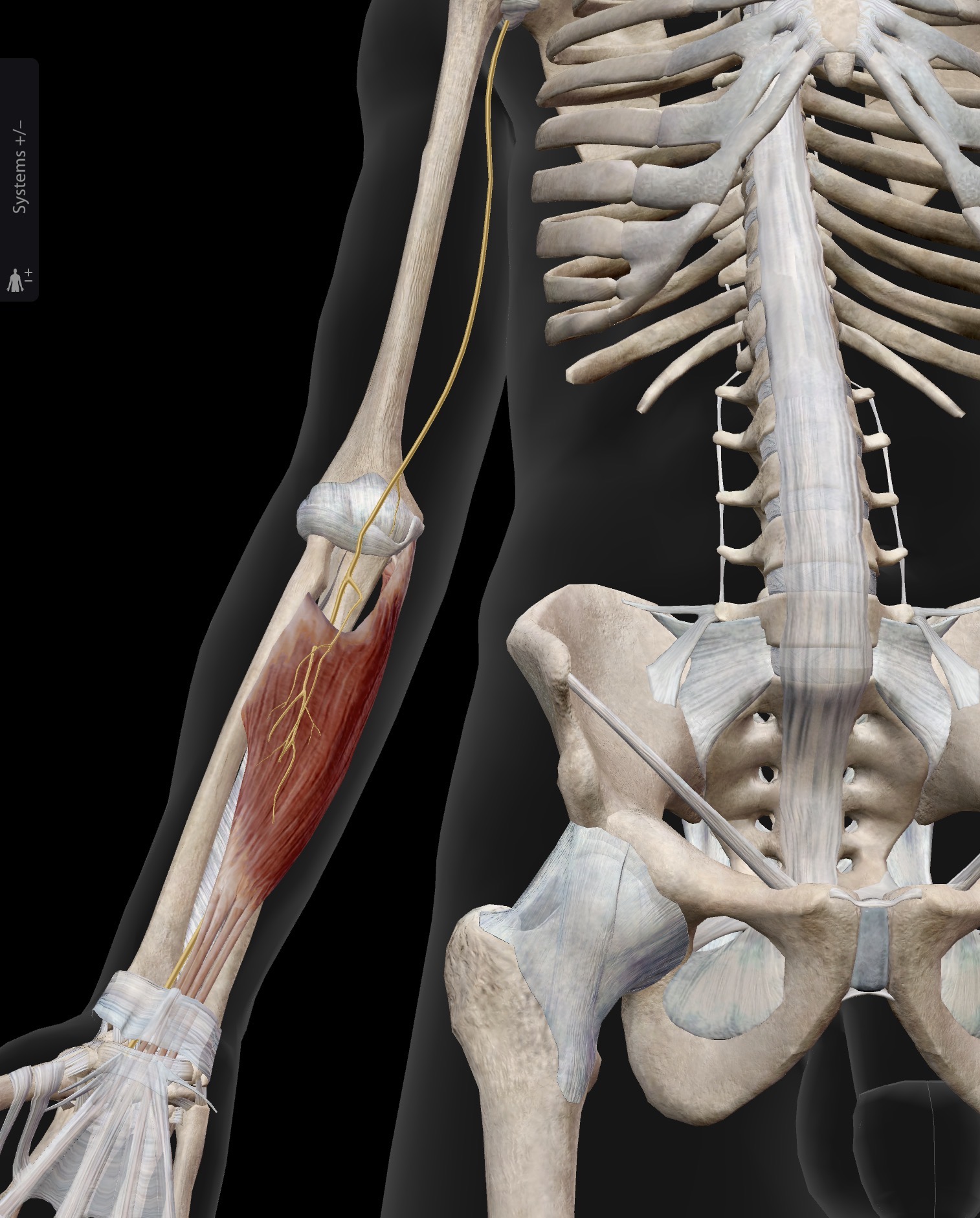
Pronator Teres

O: Medial epicondyle of humerus (common flexor origin)

I: Middle of the lateral aspect of the radius

A: Main action: pronates forearm at radioulnar joint

IN: Median nerve (C5-C8, T1)
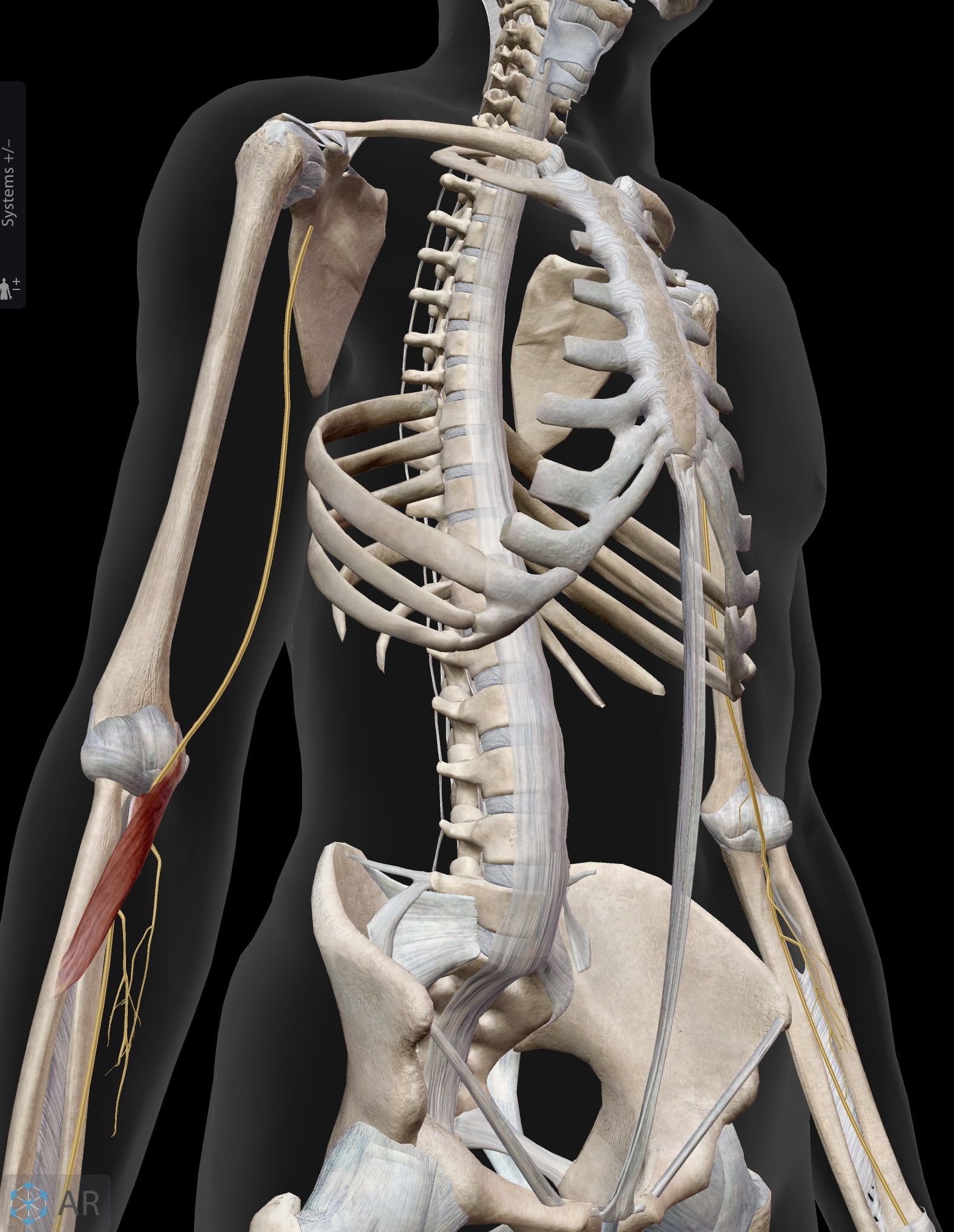
<p>Pronator Teres</p><p>O: Medial epicondyle of humerus (common flexor origin)</p><p>I: Middle of the lateral aspect of the radius</p><p>A: Main action: pronates forearm at radioulnar joint</p><p>IN: Median nerve (C5-C8, T1)</p>
59
New cards
<p>Name the muscle and corresponding letter ( O = origin, I = insertion, A = actions, IN = innervation)</p><p>O</p><p>I</p><p>A</p><p>IN</p>

Name the muscle and corresponding letter ( O = origin, I = insertion, A = actions, IN = innervation)

O

I

A

IN

Pronator quadratus

O: Distal ¼ of ulna

I: Distal ¼ of radius

A: Pronation of forearm

IN: Median nerve (C5-C8, T1)
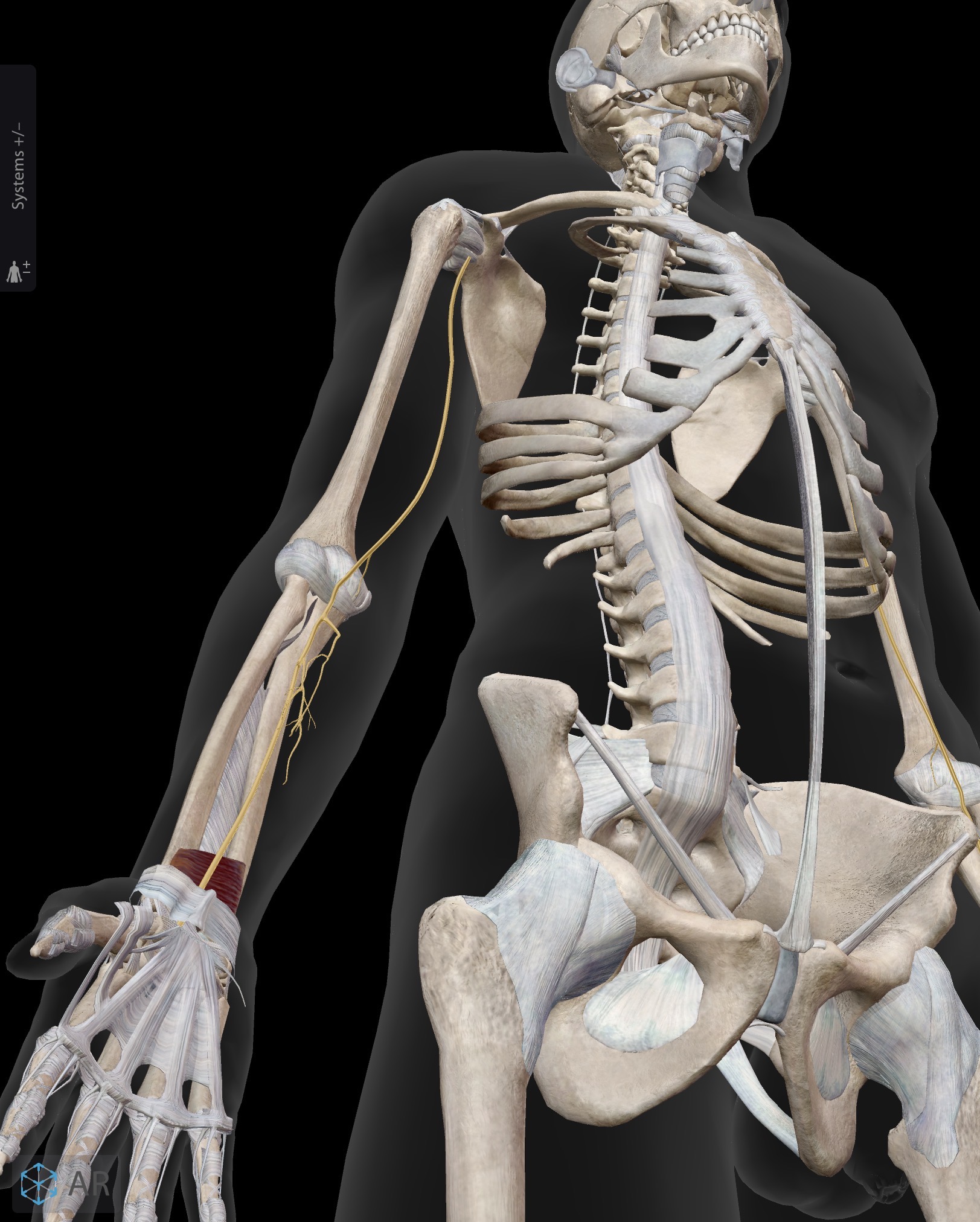
<p>Pronator quadratus</p><p>O: Distal ¼ of ulna</p><p>I: Distal ¼ of radius</p><p>A: Pronation of forearm</p><p>IN: Median nerve (C5-C8, T1)</p>
60
New cards
term image
knowt flashcard image
61
New cards
term image
knowt flashcard image
62
New cards
term image
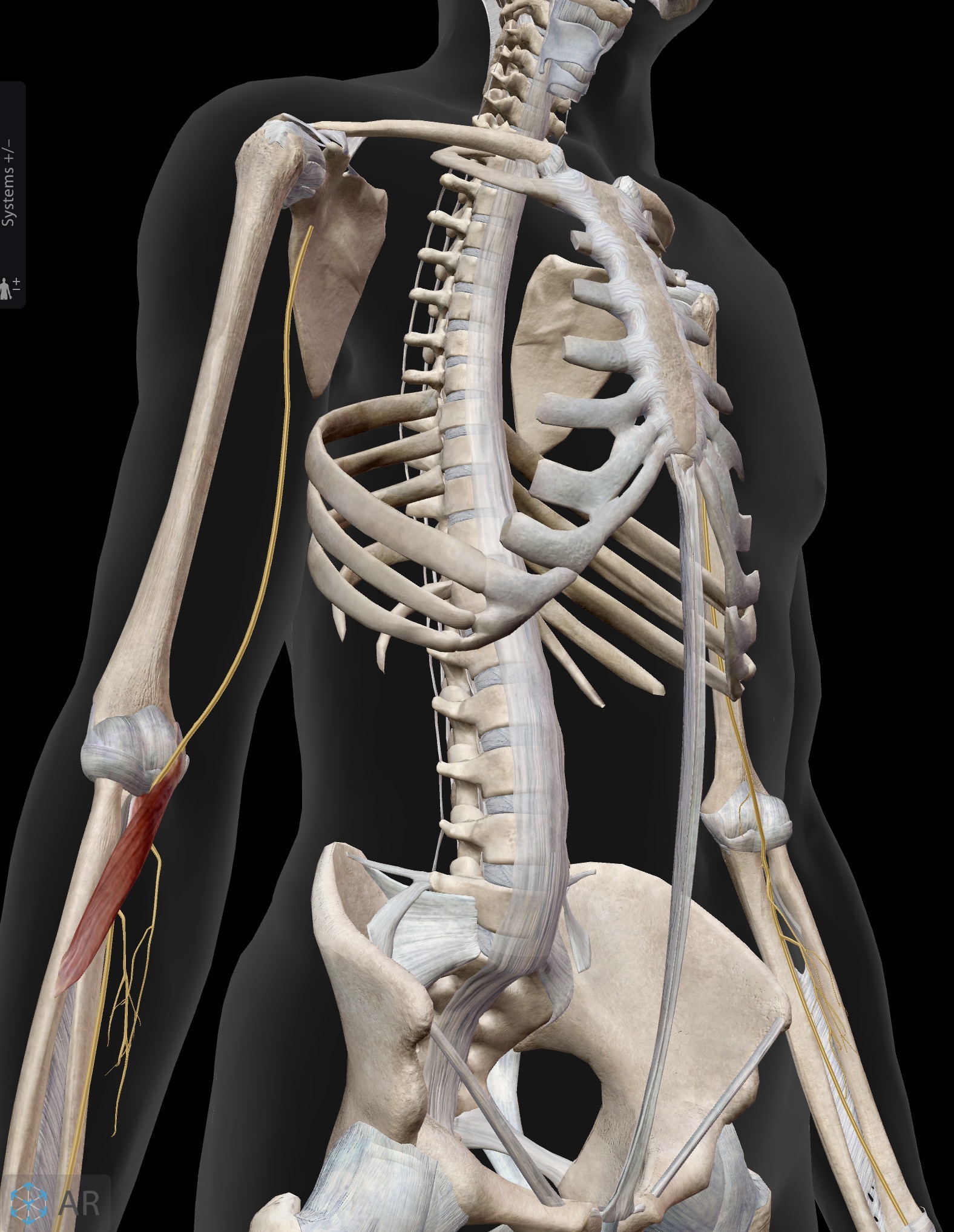
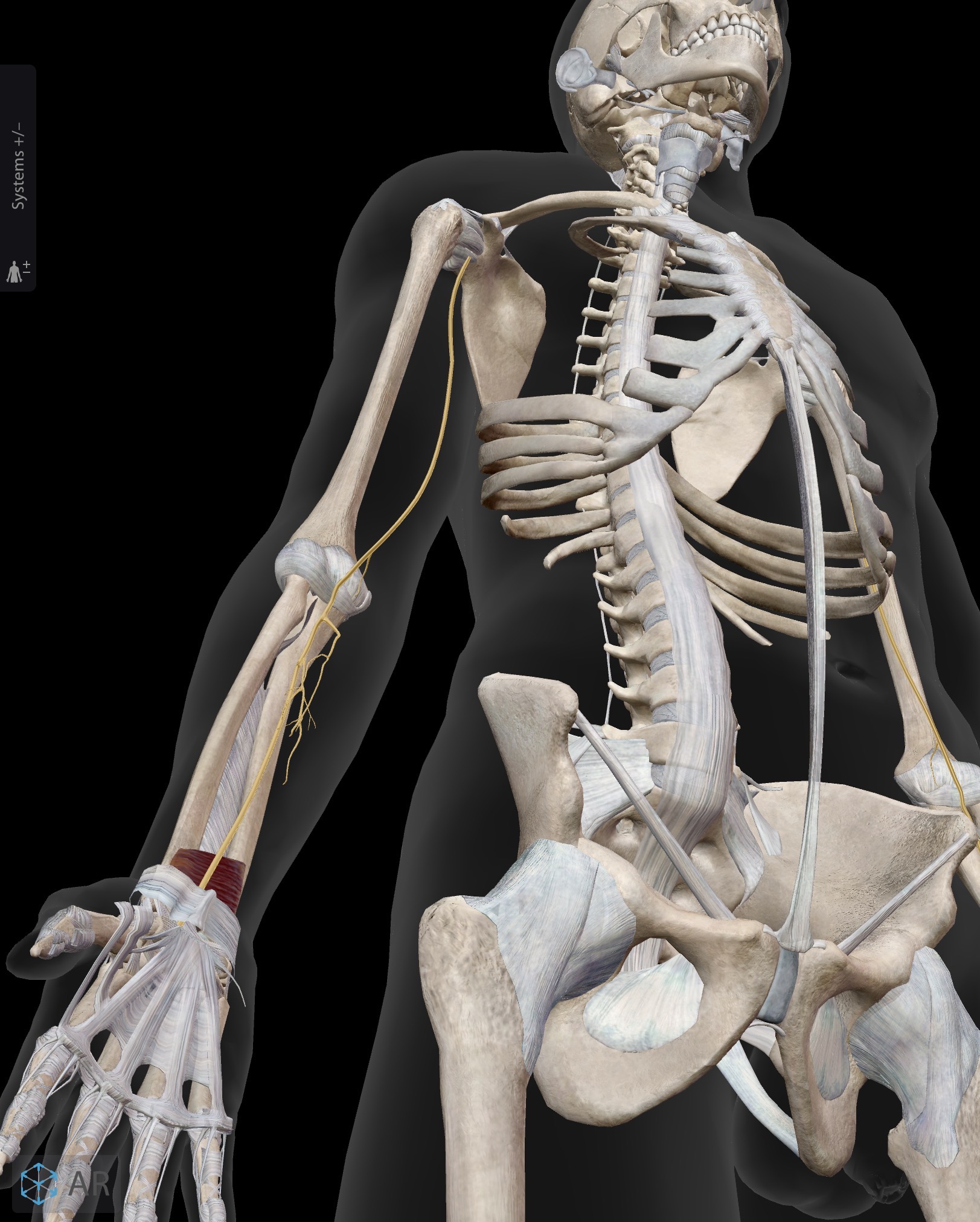
knowt flashcard image
63
New cards
<p>What ligament is this? What does it do?</p>

What ligament is this? What does it do?

Ulnar (medial) collateral

Styloid process of ulna to medial carpal bones
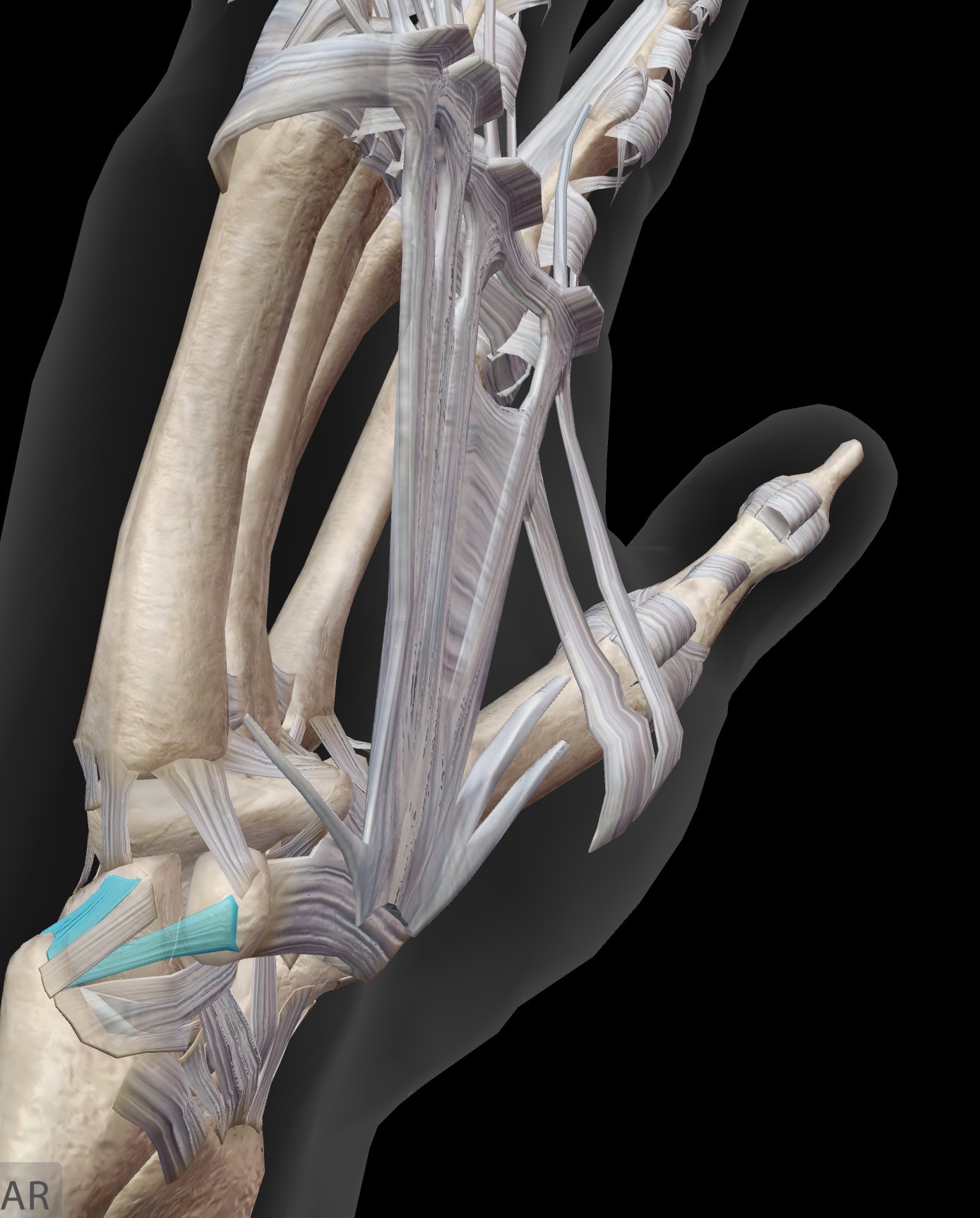
<p>Ulnar (medial) collateral</p><p>Styloid process of ulna to medial carpal bones</p>
64
New cards
<p>What ligament is this? What does it do?</p>

What ligament is this? What does it do?

Radial (lateral) collateral

Styloid process of radius to lateral carpal bones/lateral bones of proximal hand
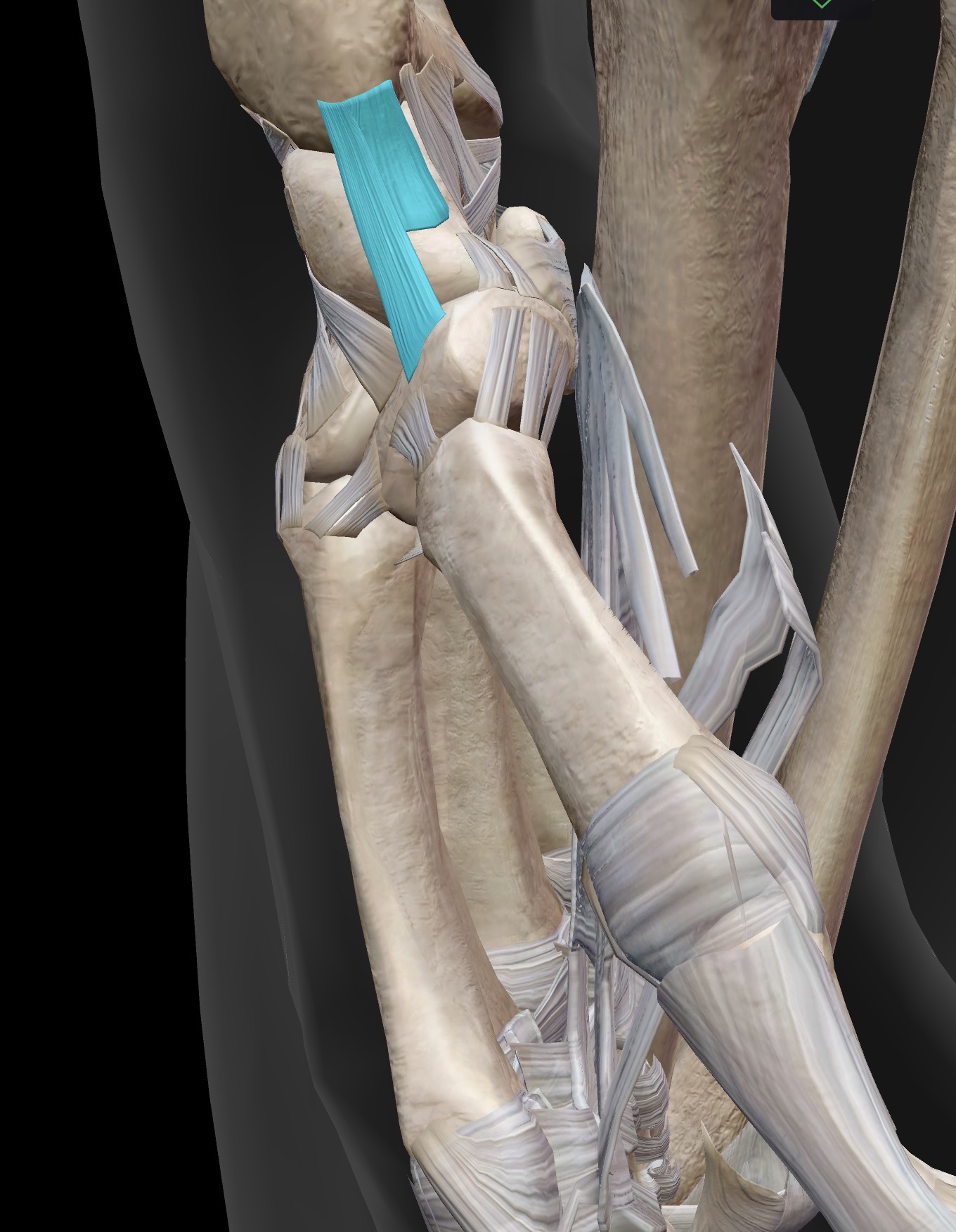
<p>Radial (lateral) collateral</p><p>Styloid process of radius to lateral carpal bones/lateral bones of proximal hand</p>
65
New cards
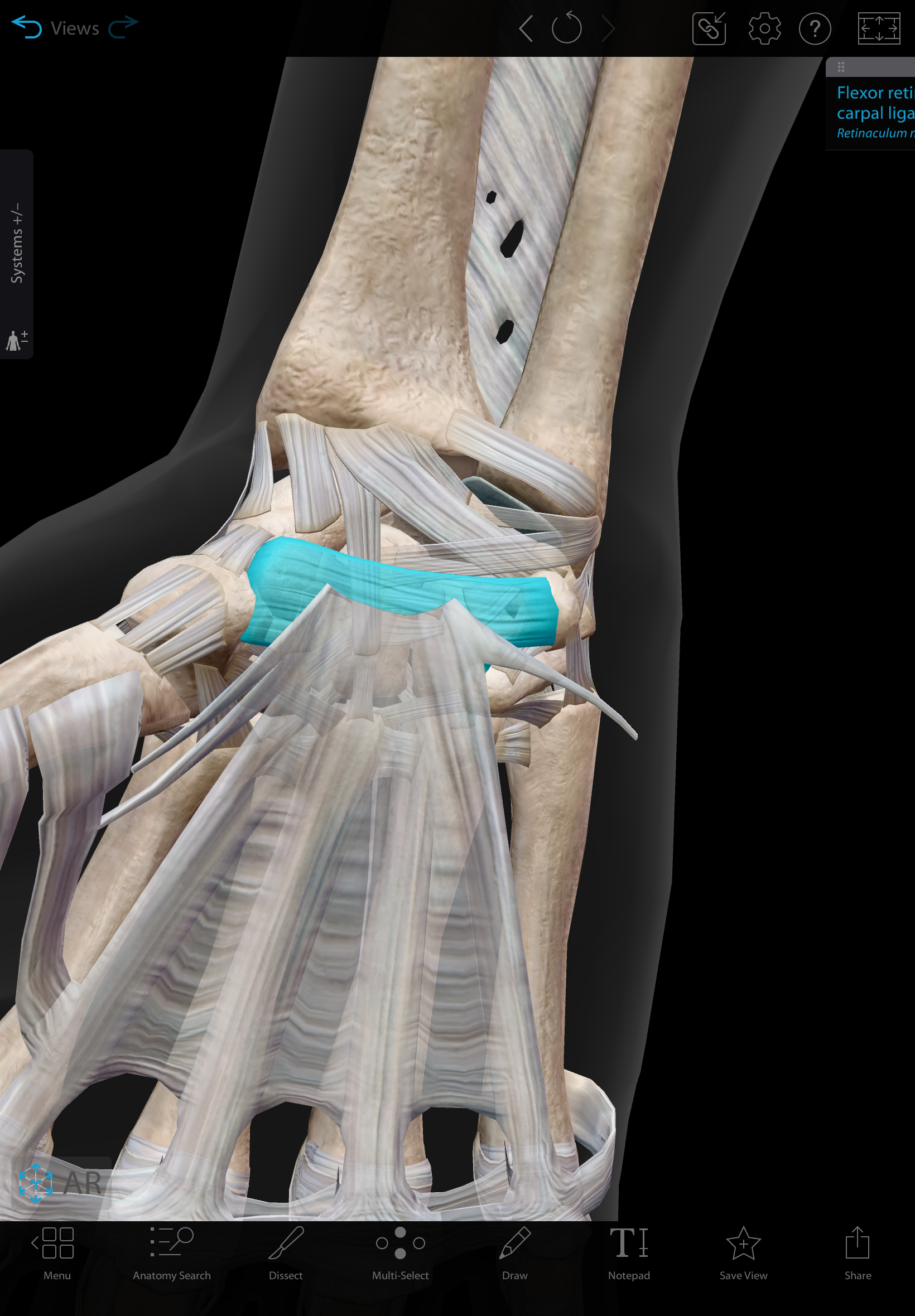
<p>What ligament is this? What does it do?</p>

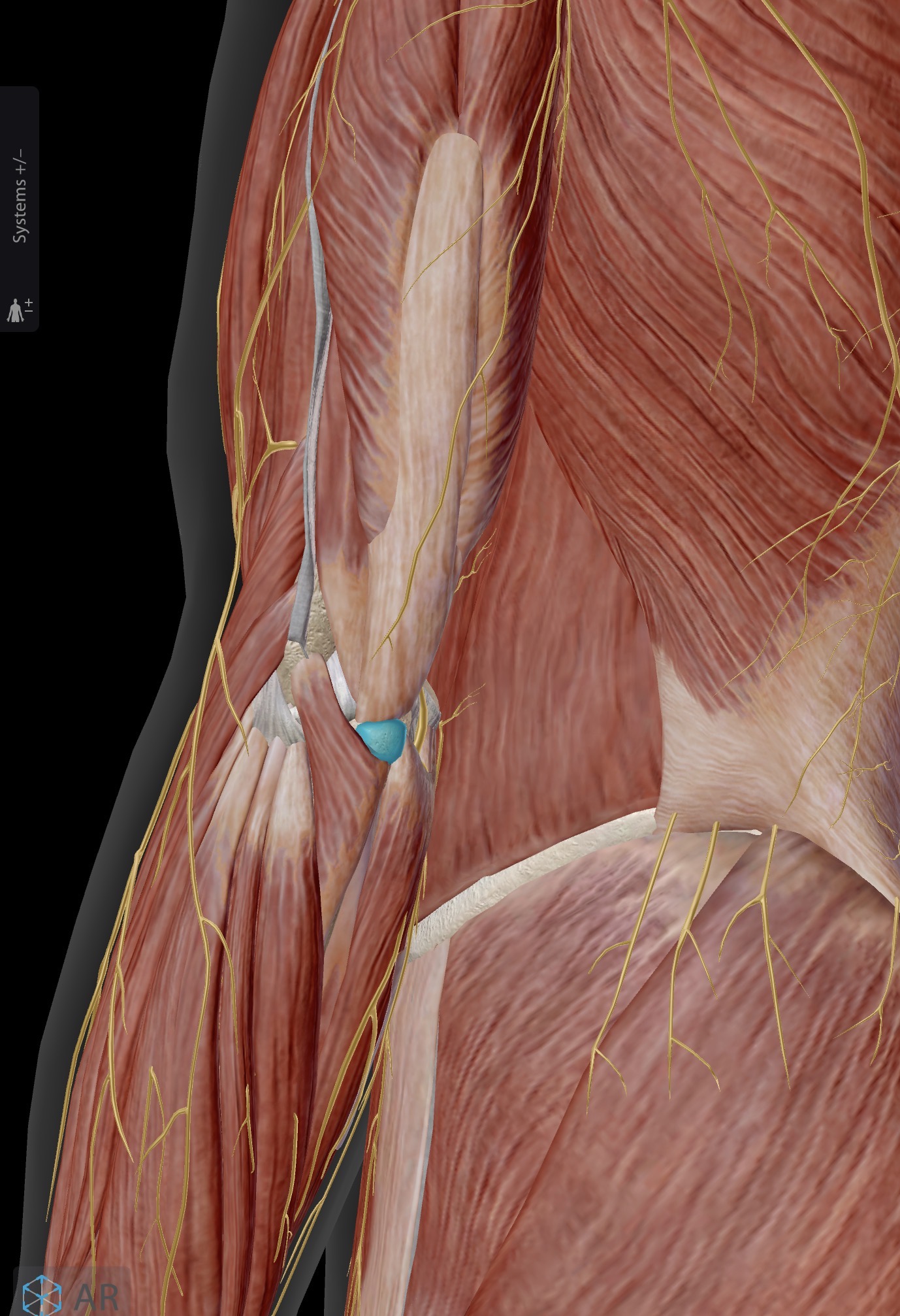
What ligament is this? What does it do?

Flexor retinaculum

Connective tissue sheet connecting the distal forearm to the palm. Attaches to the pisiform and hook of the hamate on the medial side and the scaphoid and trapezium on the lateral side.
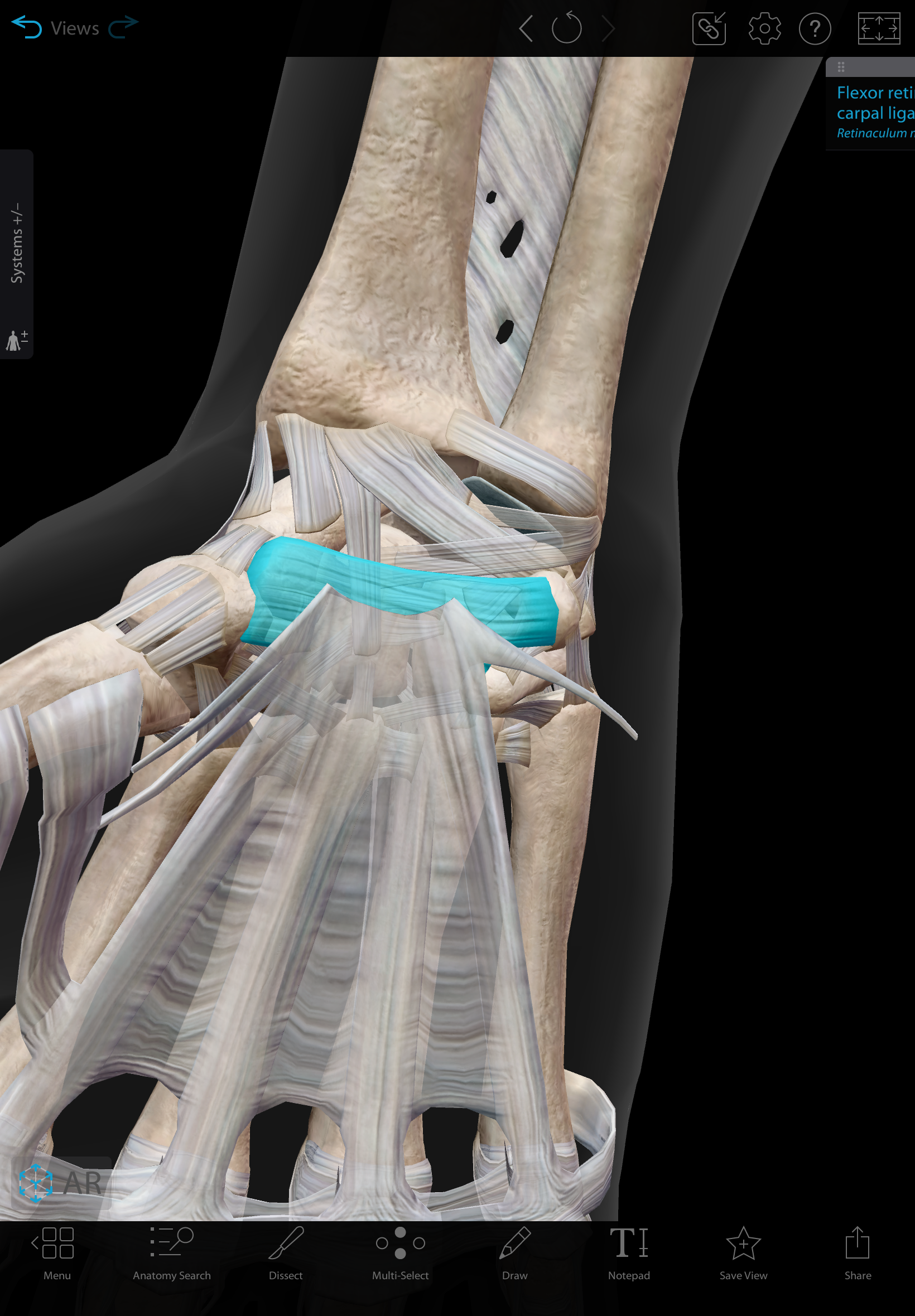
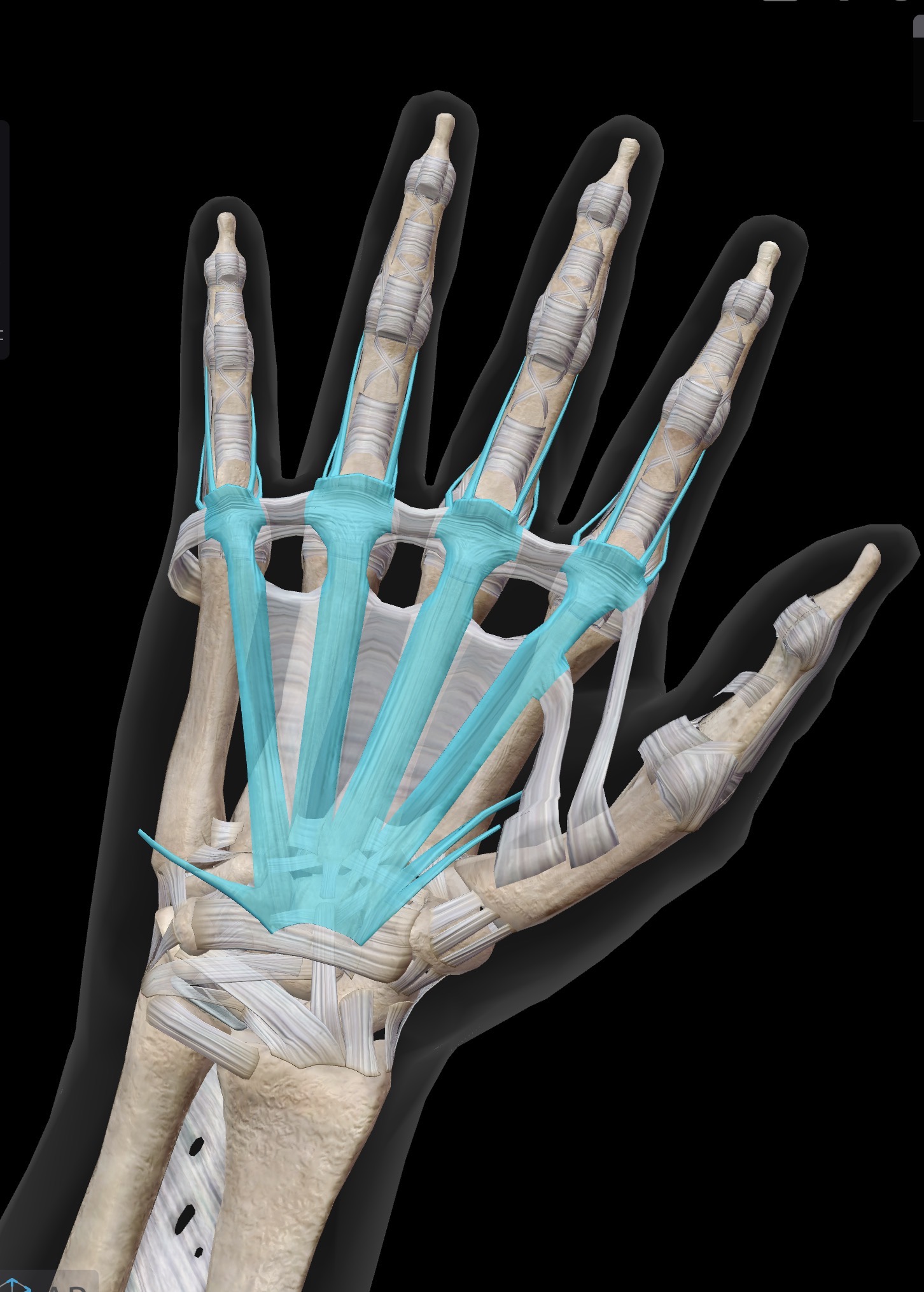
<p>Flexor retinaculum</p><p>Connective tissue sheet connecting the distal forearm to the palm. Attaches to the pisiform and hook of the hamate on the medial side and the scaphoid and trapezium on the lateral side.</p>
66
New cards
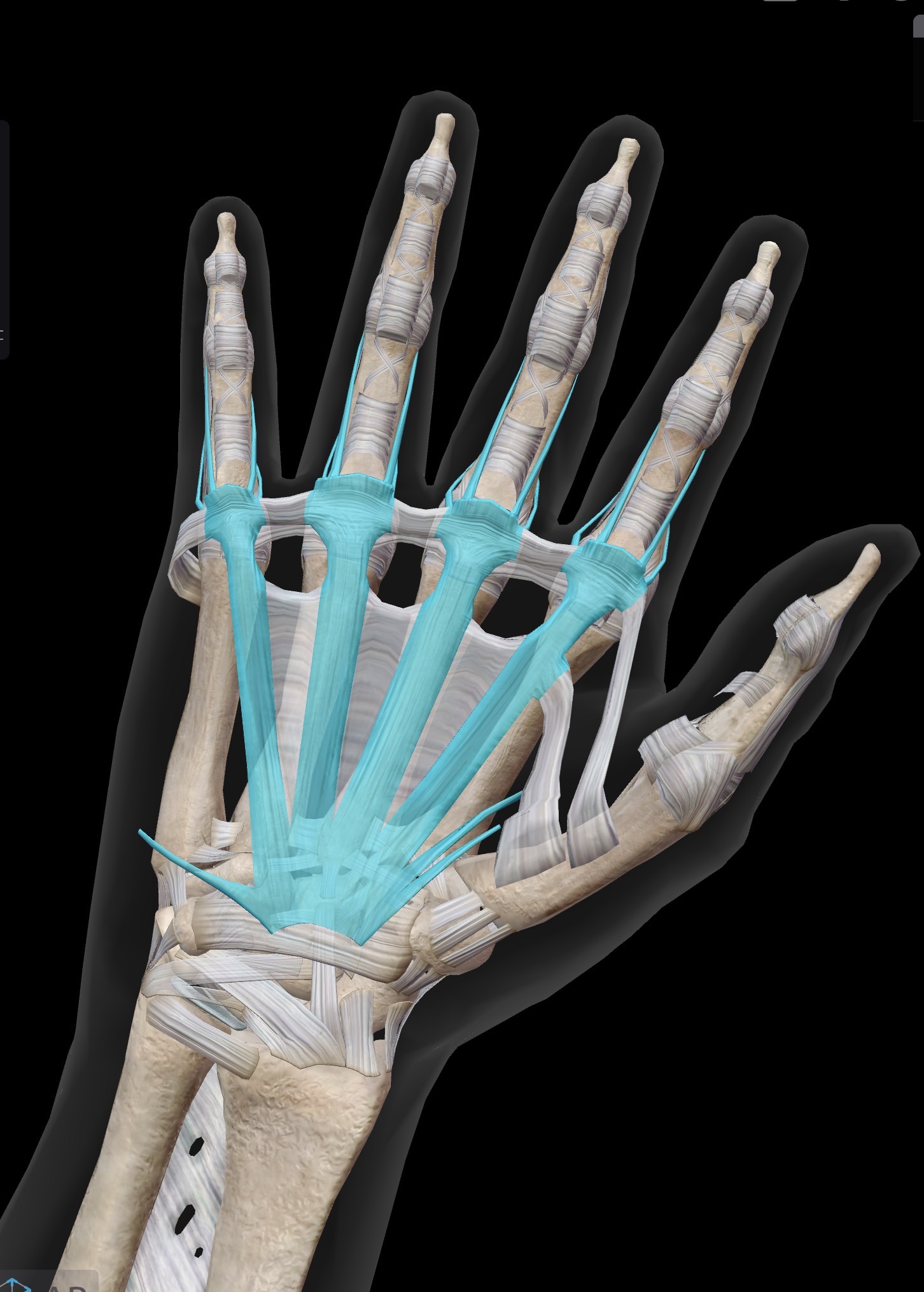
term image

Palmar aponeurosis

<p>Palmar aponeurosis</p>
67
New cards

What are the two extrinsic muscle compartments in the hand?

Anterior/posterior flexor compartment
68
New cards
<p>Name the muscle and corresponding letter ( O = origin, I = insertion, A = actions, IN = innervation)</p><p>O</p><p>I</p><p>A</p><p>IN</p>

Name the muscle and corresponding letter ( O = origin, I = insertion, A = actions, IN = innervation)

O

I

A

IN

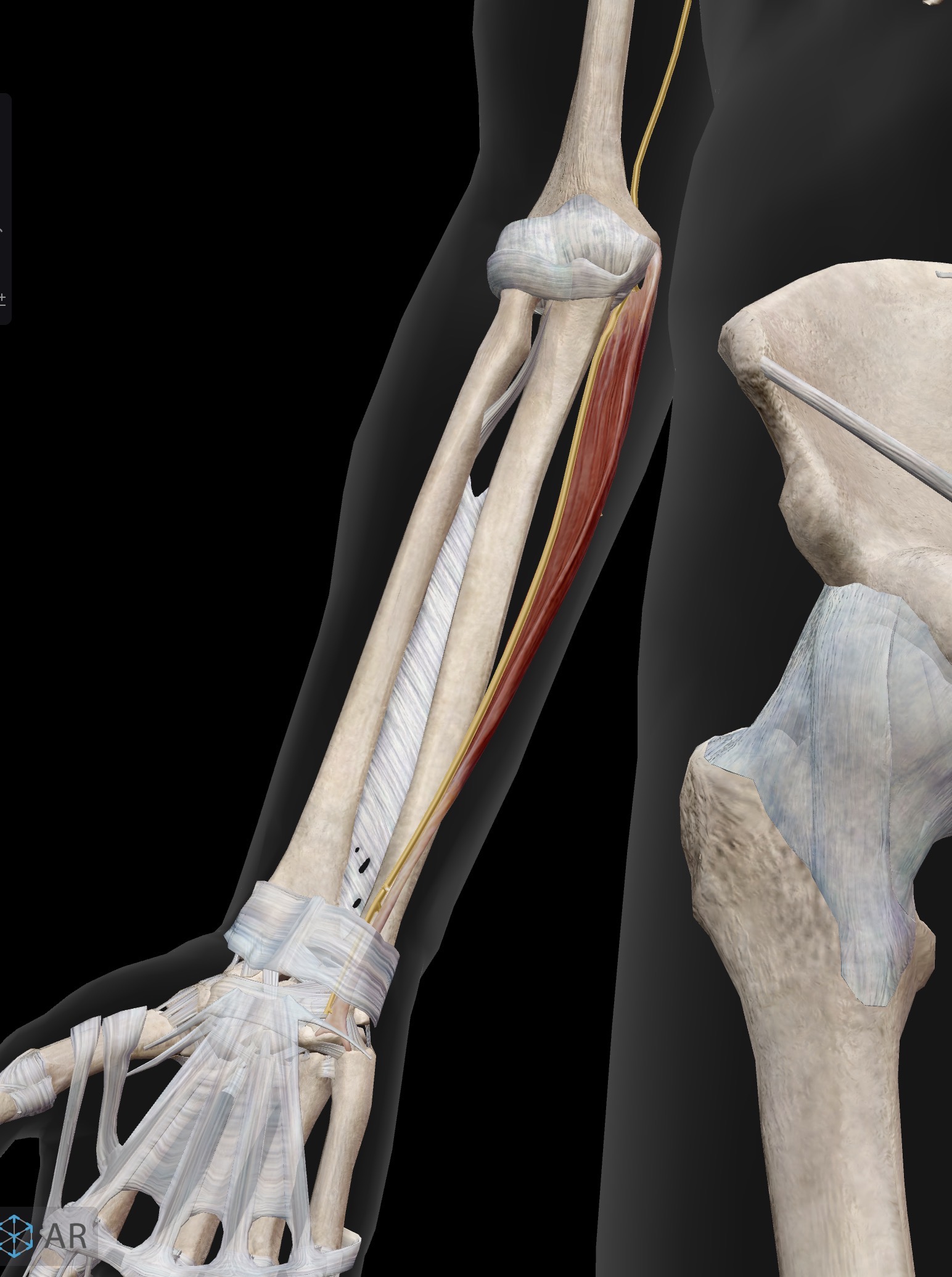
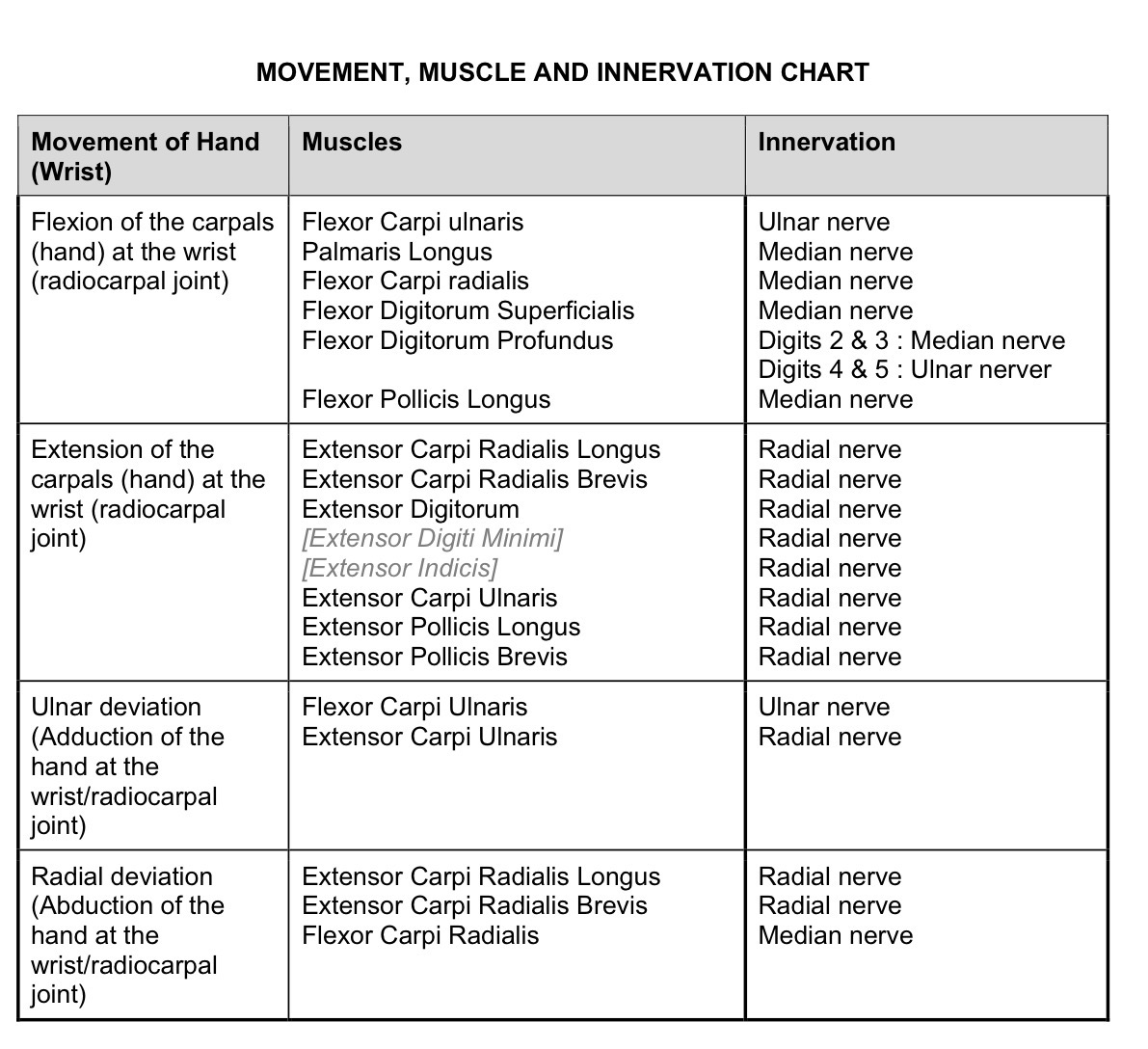
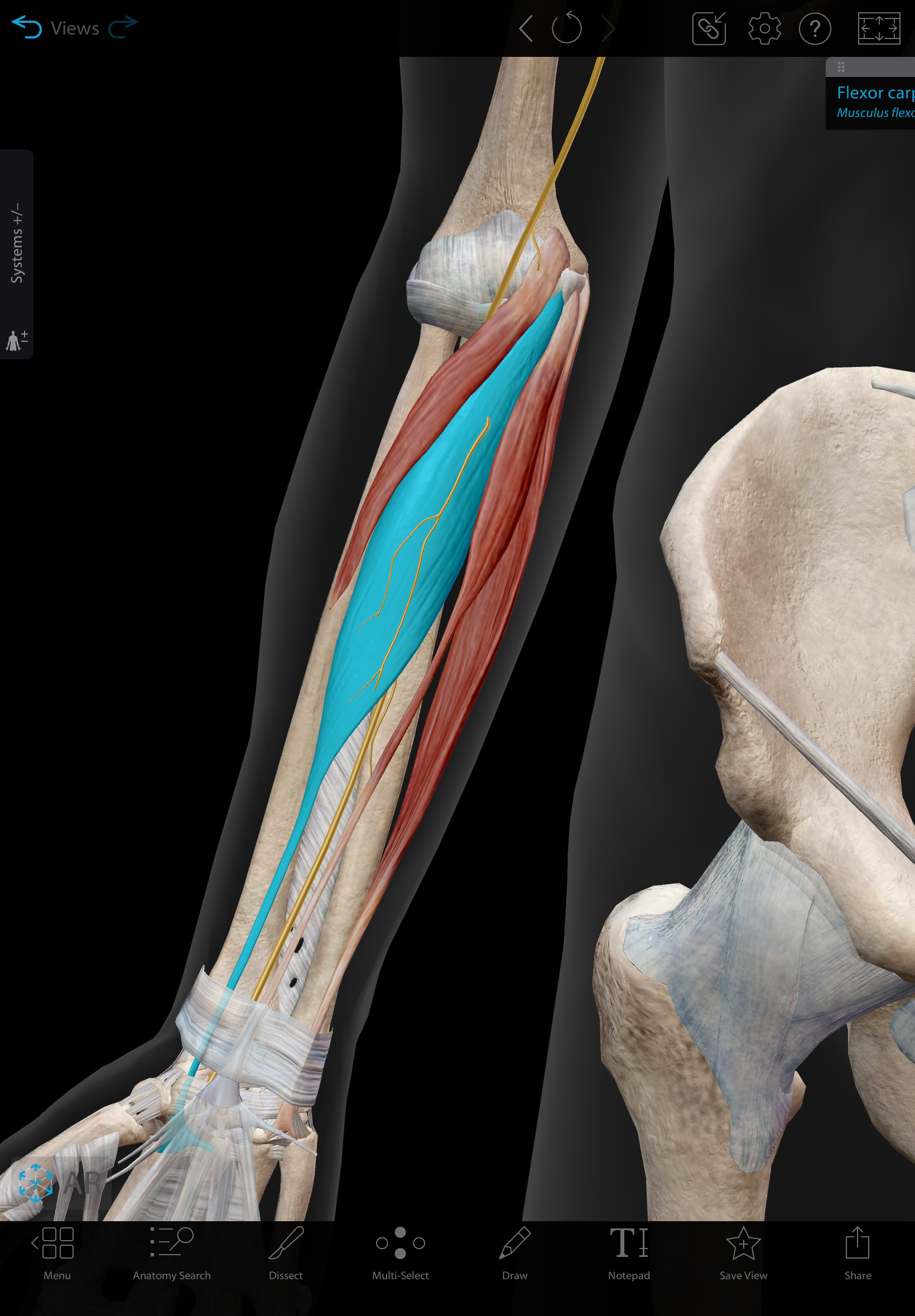
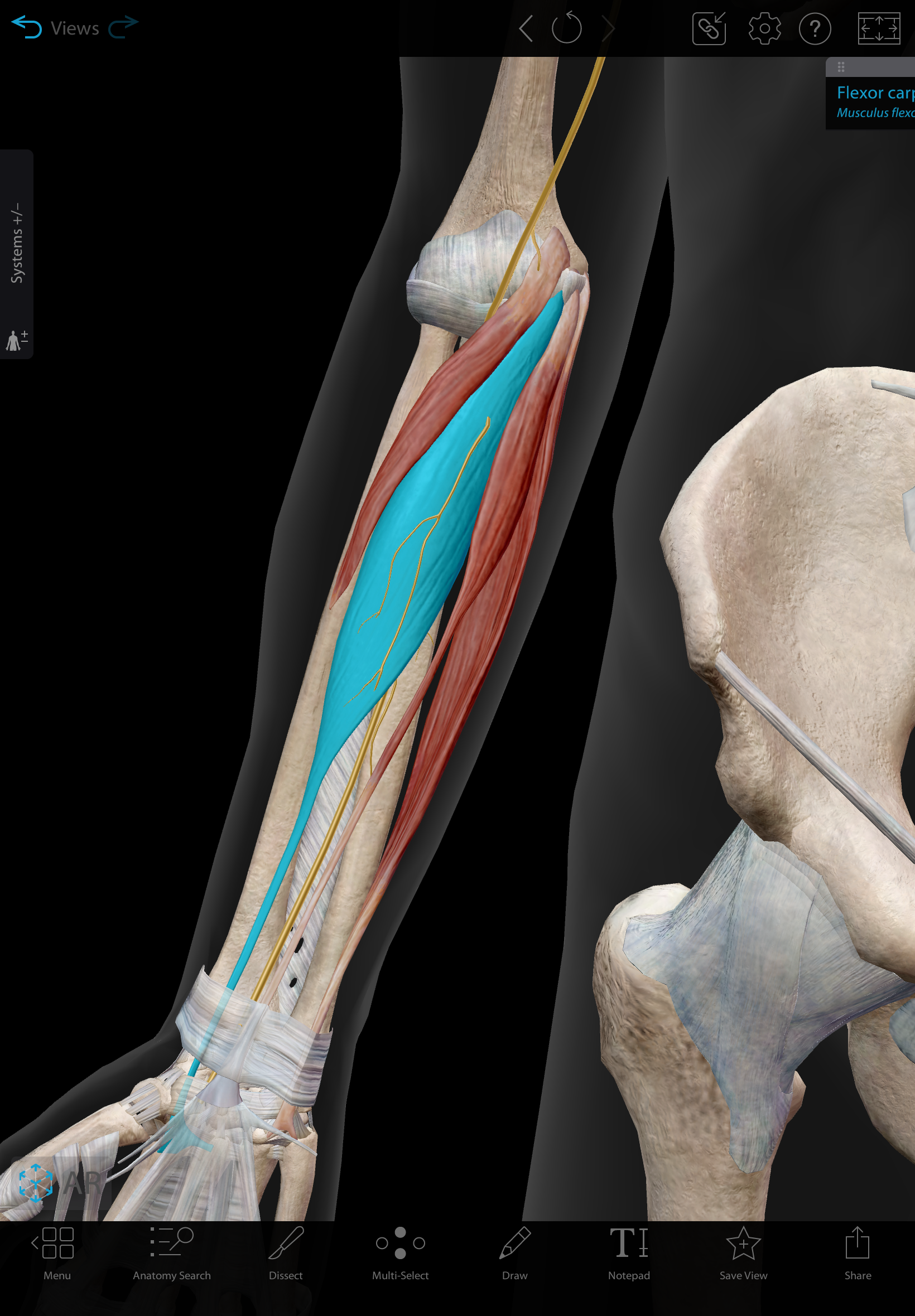
Flexor carpi radialis

O: Medial epicondyle of the humerus (common flexor origin)

I: Bases of the second and third metacarpals (on the palmar aspect)

A: Flexion and radial deviation (Abduction) of the hand at the wrist joint

IN: Median nerve (C5-C8, T1)
<p>Flexor carpi radialis</p><p>O: Medial epicondyle of the humerus (common flexor origin)</p><p>I: Bases of the second and third metacarpals (on the palmar aspect)</p><p>A: Flexion and radial deviation (Abduction) of the hand at the wrist joint</p><p>IN: Median nerve (C5-C8, T1)</p>
69
New cards
<p>Name the muscle and corresponding letter ( O = origin, I = insertion, A = actions, IN = innervation)</p><p>O</p><p>I</p><p>A</p><p>IN</p>

Name the muscle and corresponding letter ( O = origin, I = insertion, A = actions, IN = innervation)

O

I

A

IN

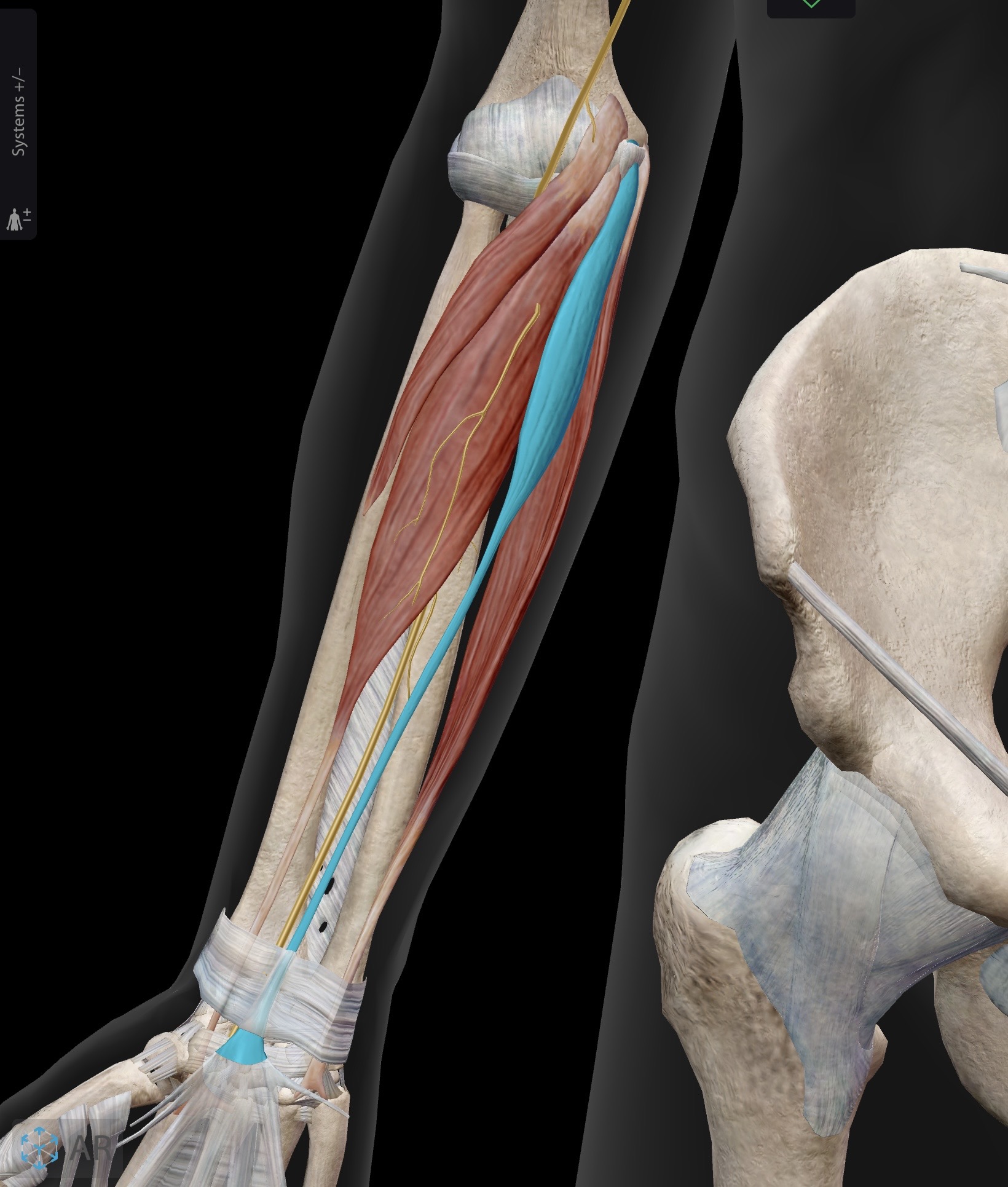
Palmaris longus

O: Medial epicondyle of humerus (common flexor origin)

I: palmar aponeurosis (palmar fascia) and flexor retinaculum (transverse carpal ligament)

A: Flexion of the hand at the wrist joint

IN: Median nerve (C5-C8, T1)
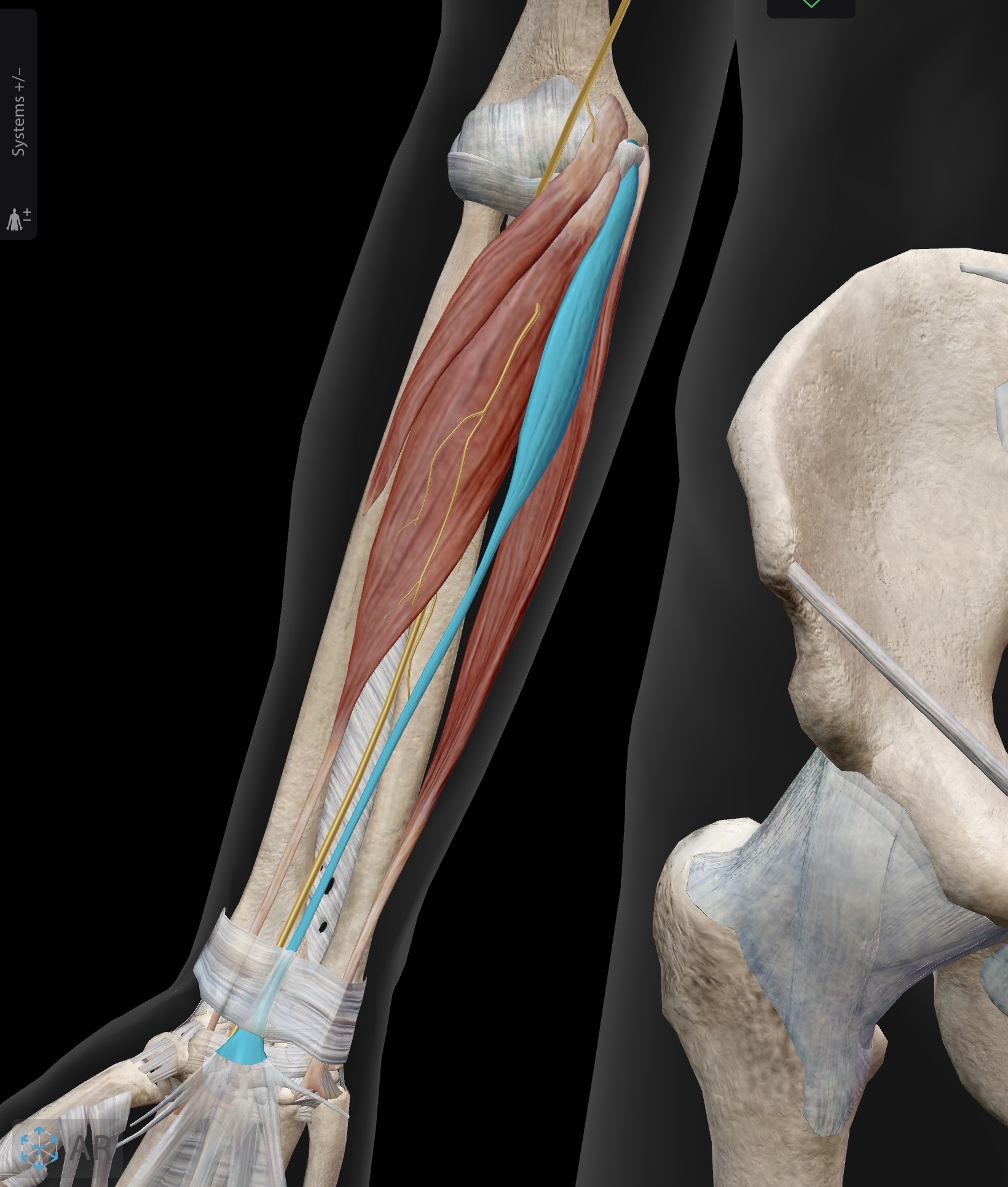
  • Not everyone has palmaris longus muscle
<p>Palmaris longus</p><p>O: Medial epicondyle of humerus (common flexor origin)</p><p>I: palmar aponeurosis (palmar fascia) and flexor retinaculum (transverse carpal ligament)</p><p>A: Flexion of the hand at the wrist joint</p><p>IN: Median nerve (C5-C8, T1)</p><ul><li><p>Not everyone has palmaris longus muscle</p></li></ul><p></p>
70
New cards
<p>Name the muscle and corresponding letter ( O = origin, I = insertion, A = actions, IN = innervation)</p><p>O</p><p>I</p><p>A</p><p>IN</p>

Name the muscle and corresponding letter ( O = origin, I = insertion, A = actions, IN = innervation)

O

I

A

IN

Flexor carpi ulnaris

O: Medial epicondyle of the humerus (common flexor origin)

I: Pisiform, hook of the hamate and base of 5th metacarpal

A: Flexion and ulna deviation (adduction) of the hand at the wrist joint

IN: Ulnar nerve (C8, T1)
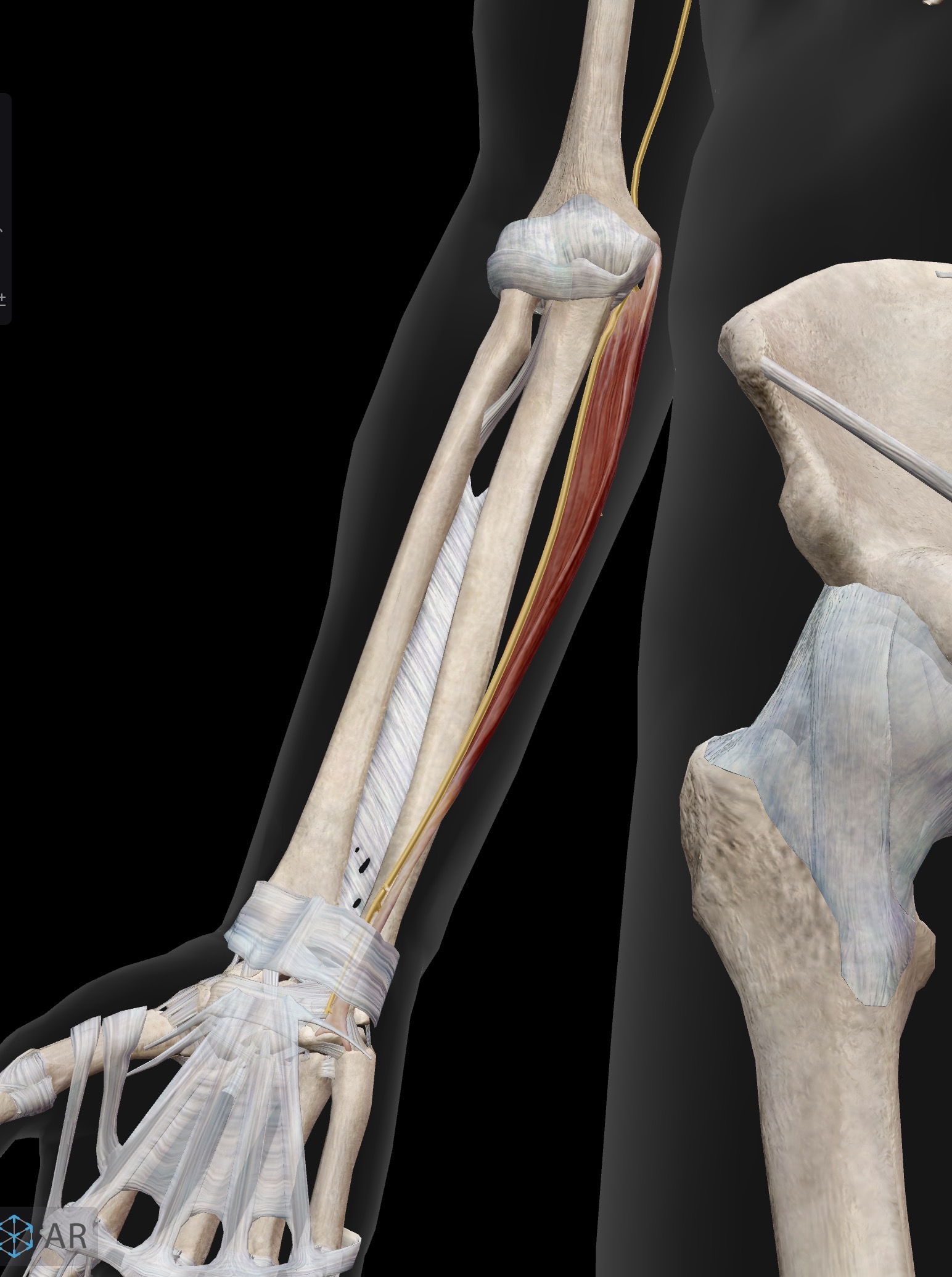
<p>Flexor carpi ulnaris</p><p>O: Medial epicondyle of the humerus (common flexor origin)</p><p>I: Pisiform, hook of the hamate and base of 5th metacarpal</p><p>A: Flexion and ulna deviation (adduction) of the hand at the wrist joint</p><p>IN: Ulnar nerve (C8, T1)</p>
71
New cards
<p>Name the muscle and corresponding letter ( O = origin, I = insertion, A = actions, IN = innervation)</p><p>O</p><p>I</p><p>A</p><p>IN</p>

Name the muscle and corresponding letter ( O = origin, I = insertion, A = actions, IN = innervation)

O

I

A

IN

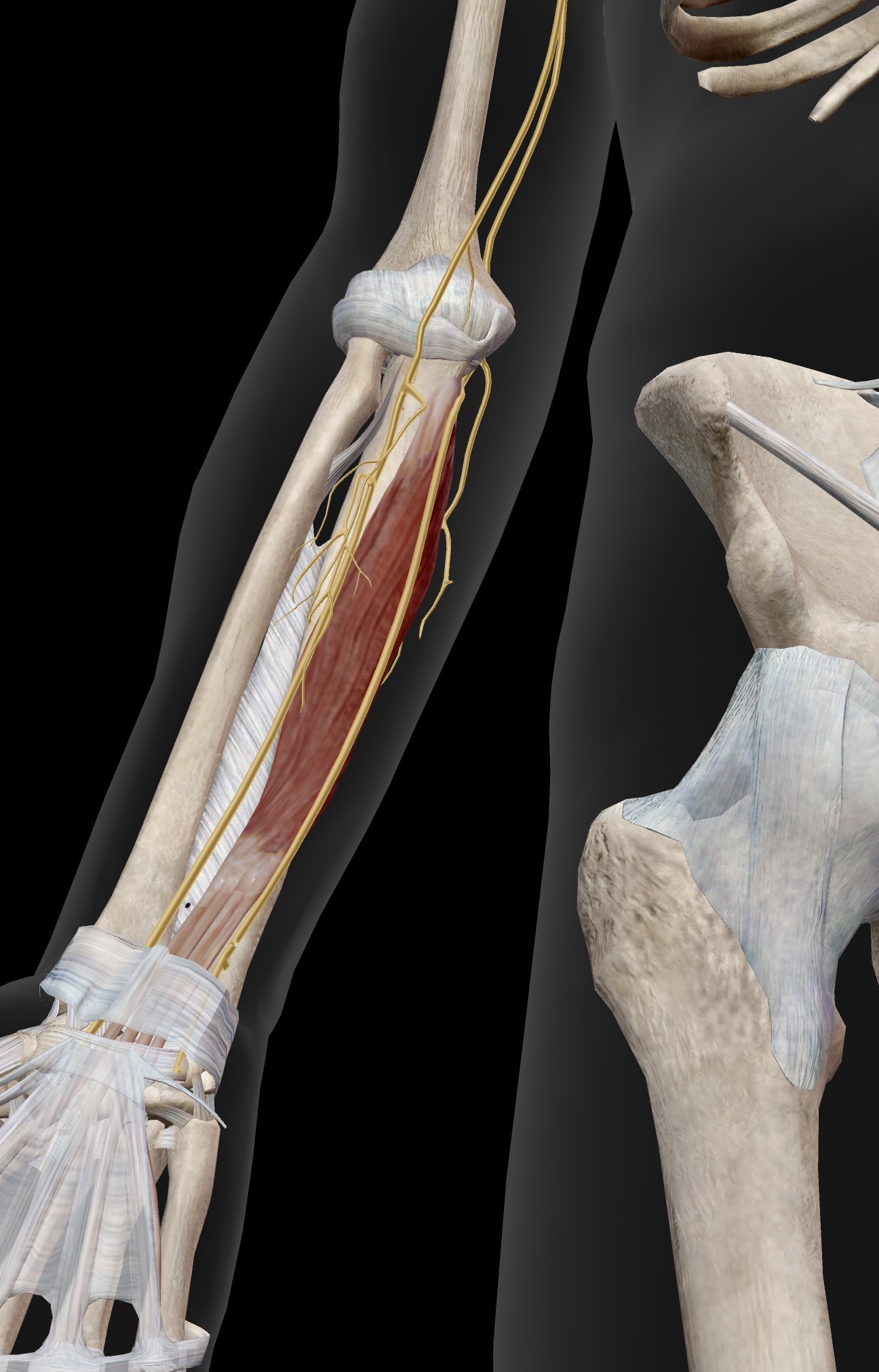
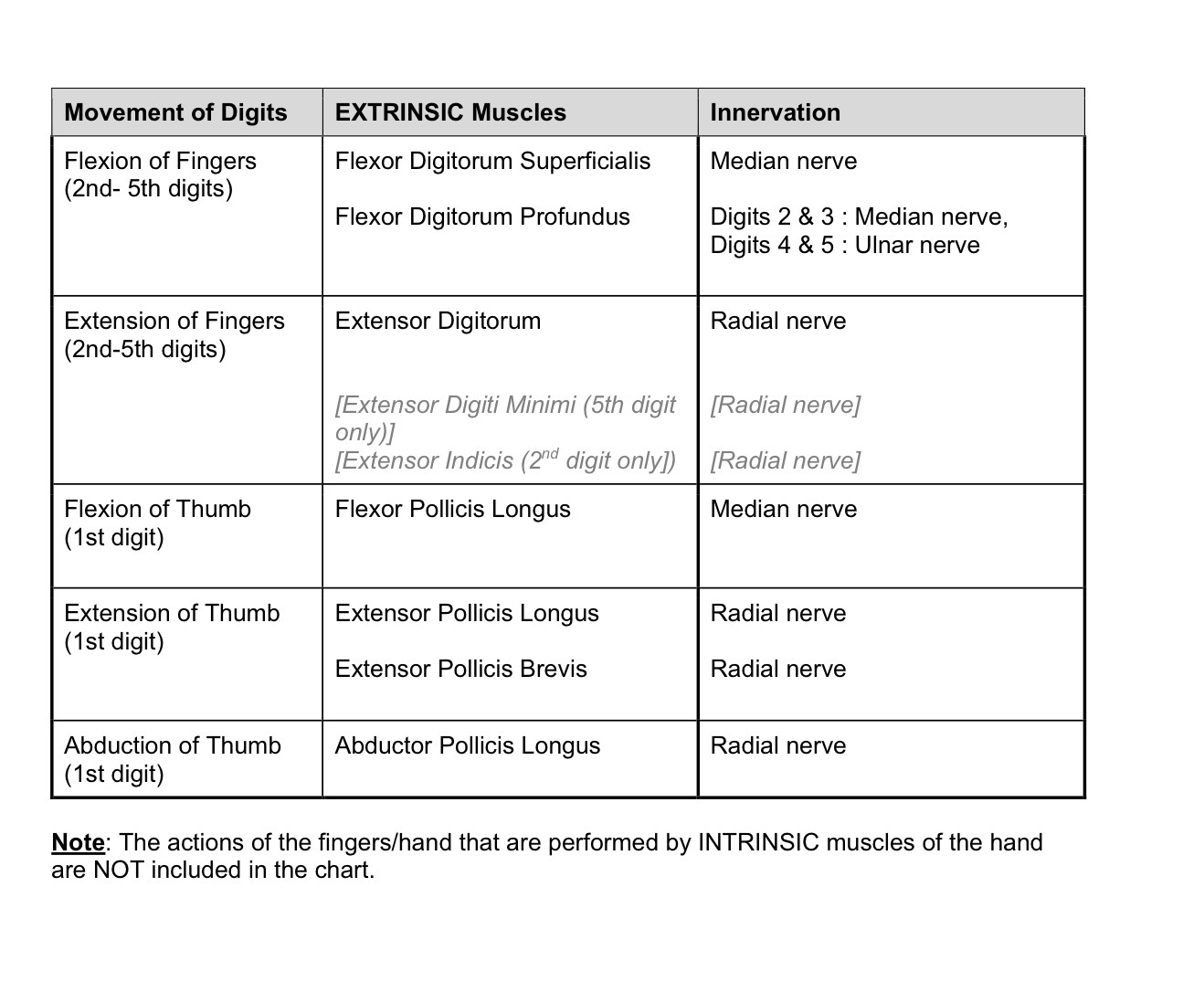
Flexor Digitorum superficialis

O: Medial epicondyle of the humerus (common flexor origin)

I: Middle phalanges of 2nd to 5th fingers (on the palmar aspect)

A: Flexion of digits 2-5 MCPs and proximal interphalangeal joints (PIPs). Flexion of the hand at the wrist joint.

IN: Median nerve (C5-C8, T1)
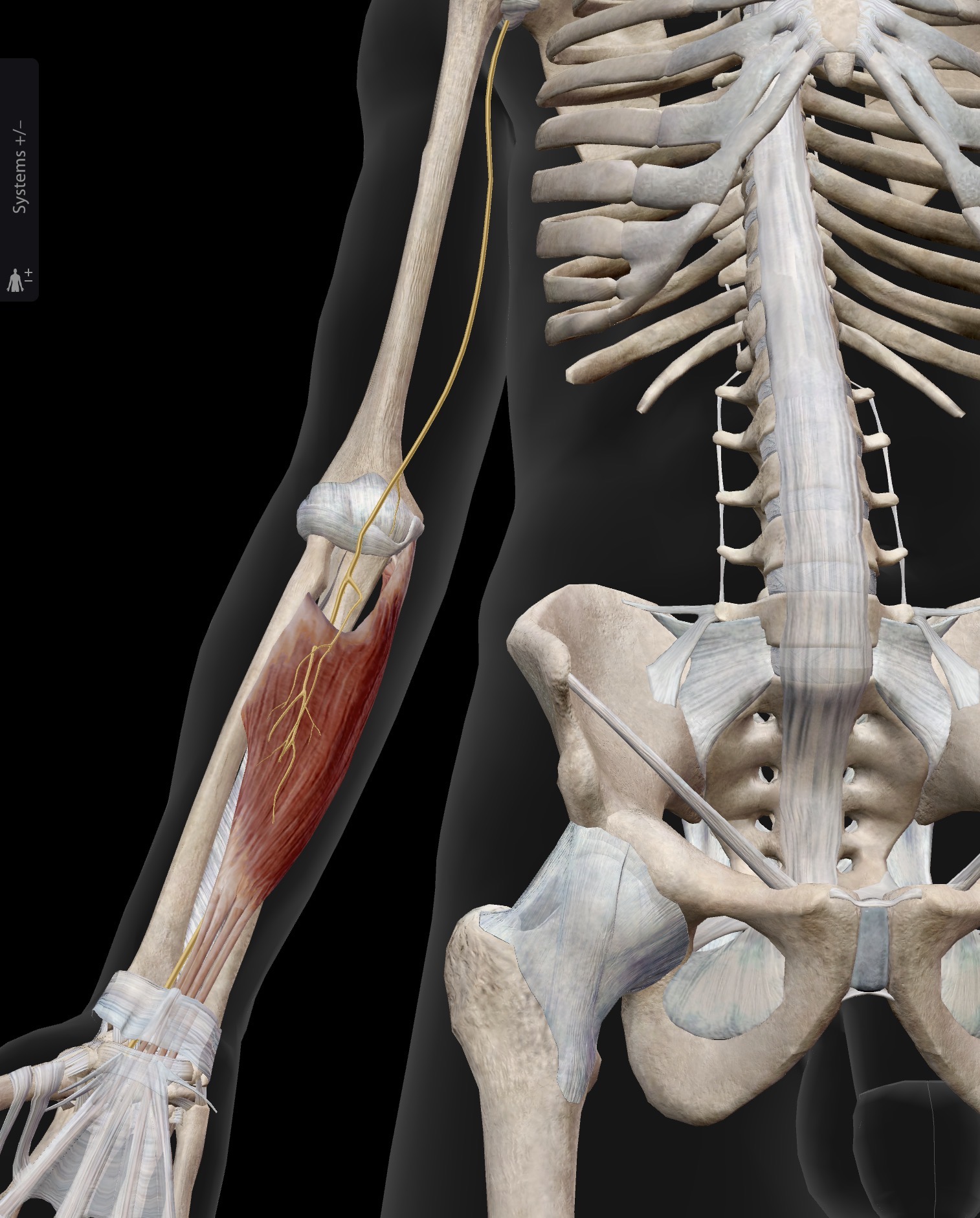
<p>Flexor Digitorum superficialis</p><p>O: Medial epicondyle of the humerus (common flexor origin)</p><p>I: Middle phalanges of 2nd to 5th fingers (on the palmar aspect)</p><p>A: Flexion of digits 2-5 MCPs and proximal interphalangeal joints (PIPs). Flexion of the hand at the wrist joint.</p><p>IN: Median nerve (C5-C8, T1)</p>
72
New cards
<p>Name the muscle and corresponding letter ( O = origin, I = insertion, A = actions, IN = innervation)</p><p>O</p><p>I</p><p>A</p><p>IN</p>

Name the muscle and corresponding letter ( O = origin, I = insertion, A = actions, IN = innervation)

O

I

A

IN

Flexor digitorum profundus

O: Most of the anterior surface of the ulna, except distal portion

I: Bases of the distal phalanges of 2nd to 5th fingers

A: Flexion of the fingers (including the distal phalanges). Flexion of the hand at the wrist joint.

IN: Digits 2 and 3: Median nerve (C5-C8, T1)

Digits 4 and 5: Ulnar nerve (C8, T1)
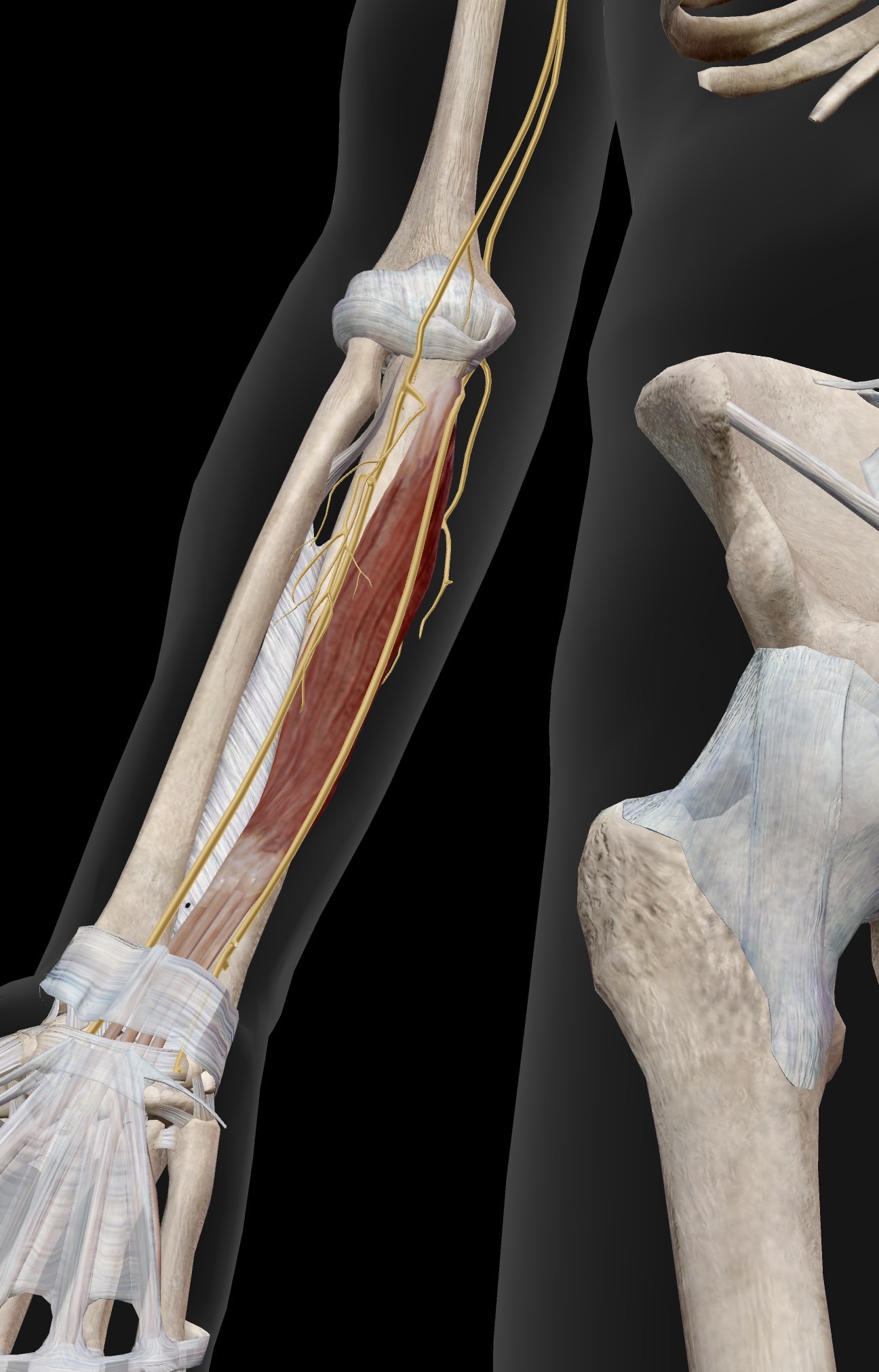
<p>Flexor digitorum profundus</p><p>O: Most of the anterior surface of the ulna, except distal portion</p><p>I: Bases of the distal phalanges of 2nd to 5th fingers</p><p>A: Flexion of the fingers (including the distal phalanges). Flexion of the hand at the wrist joint.</p><p>IN: Digits 2 and 3: Median nerve (C5-C8, T1)</p><p>Digits 4 and 5: Ulnar nerve (C8, T1)</p>
73
New cards
<p>Name the muscle and corresponding letter ( O = origin, I = insertion, A = actions, IN = innervation)</p><p>O</p><p>I</p><p>A</p><p>IN</p>

Name the muscle and corresponding letter ( O = origin, I = insertion, A = actions, IN = innervation)

O

I

A

IN

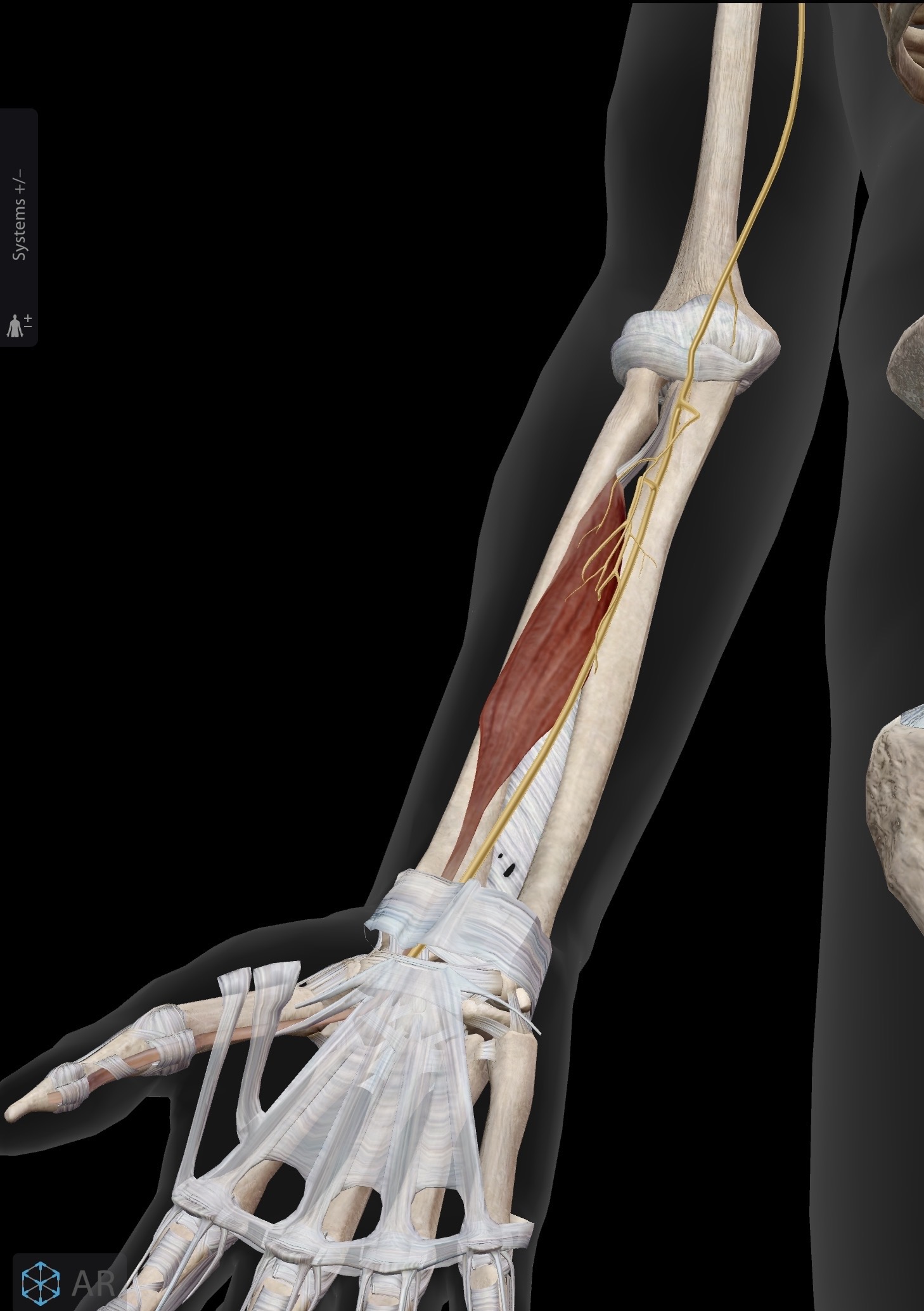
Flexor pollicis longus

O: middle portion of the radius

I: Base of distal phalanx of the thumb

A: Flexion of the thumb at the MCP and IP joints. Flexion of the hand at the wrist joint.

IN: median nerve (C5-C8, T1)
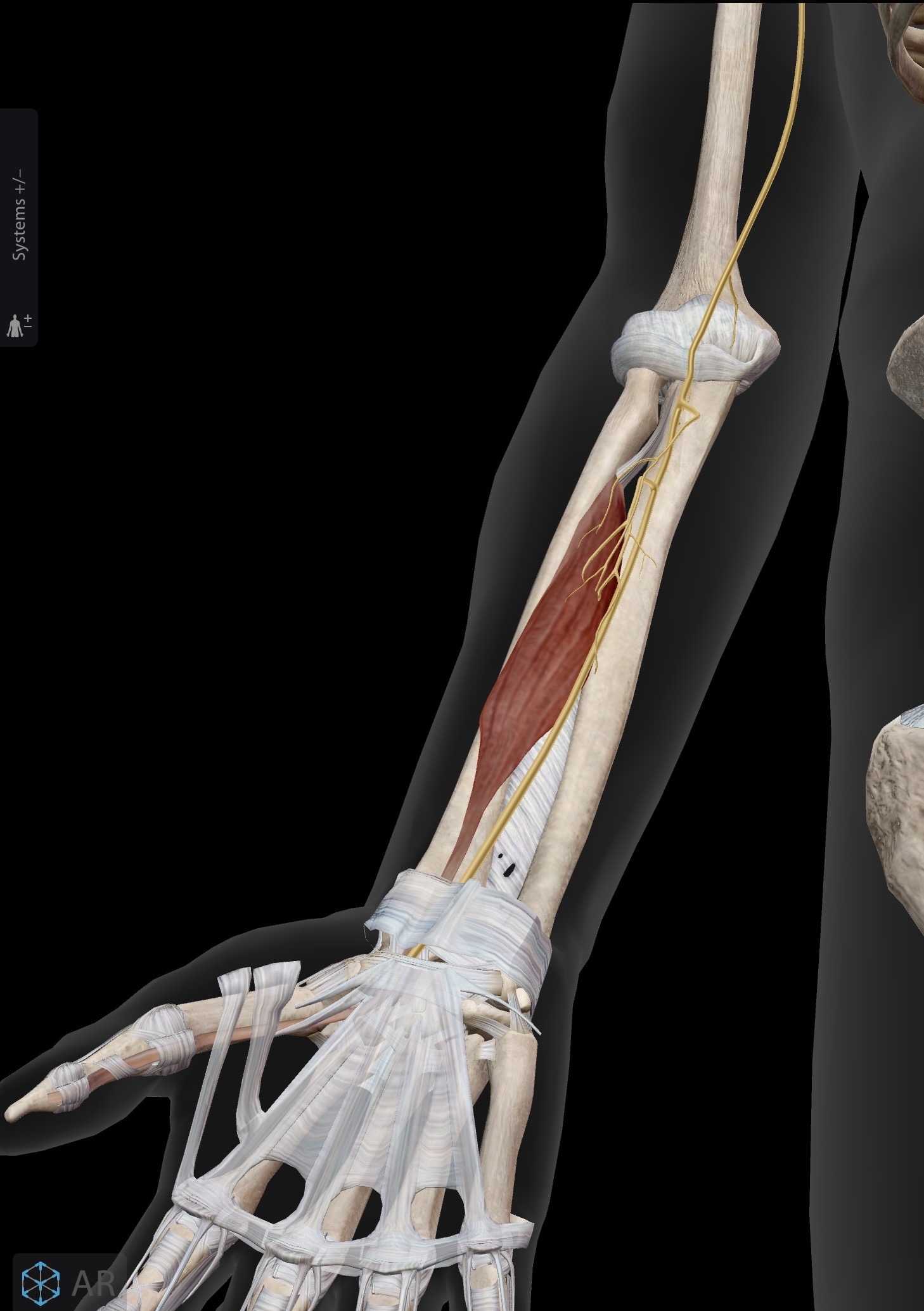
<p>Flexor pollicis longus</p><p>O: middle portion of the radius </p><p>I: Base of distal phalanx of the thumb</p><p>A: Flexion of the thumb at the MCP and IP joints. Flexion of the hand at the wrist joint.</p><p>IN: median nerve (C5-C8, T1)</p>
74
New cards
<p>Name the muscle and corresponding letter ( O = origin, I = insertion, A = actions, IN = innervation)</p><p>O</p><p>I</p><p>A</p><p>IN</p>

Name the muscle and corresponding letter ( O = origin, I = insertion, A = actions, IN = innervation)

O

I

A

IN

Extensor carpi radialis longus

O: Just superior to the lateral epicondyle of the humerus

I: Base of second metacarpal on dorsal surface

A: Extension and radial deviation (abduction) of hand at the wrist.

IN: Radial nerve (C5-C8, T1)
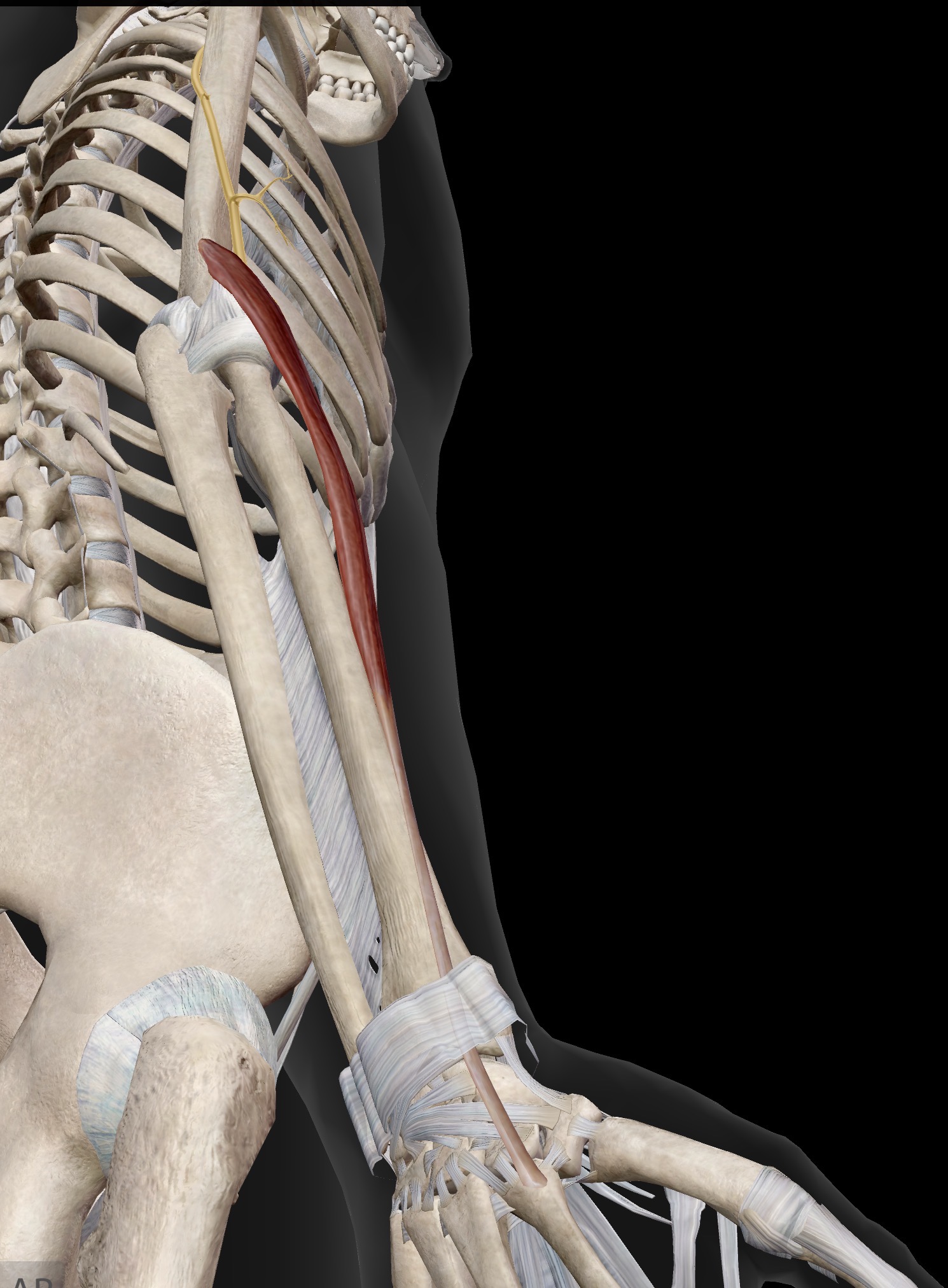
<p>Extensor carpi radialis longus</p><p>O: Just superior to the lateral epicondyle of the humerus</p><p>I: Base of second metacarpal on dorsal surface</p><p>A: Extension and radial deviation (abduction) of hand at the wrist.</p><p>IN:  Radial nerve (C5-C8, T1)</p>
75
New cards
<p>Name the muscle and corresponding letter ( O = origin, I = insertion, A = actions, IN = innervation)</p><p>O</p><p>I</p><p>A</p><p>IN</p>

Name the muscle and corresponding letter ( O = origin, I = insertion, A = actions, IN = innervation)

O

I

A

IN

Extensor carpi radialis Brevis

O: Lateral epicondyle of the humerus (common extensor origin)

I: Base of third metacarpal on dorsal surface

A: Extension and radial deviation (abduction) of hand at the wrist joint.

IN: Radial nerve (C5-C8, T1)

Muscle most commonly involved muscle with “tennis elbow” (lateral epicondylitis)
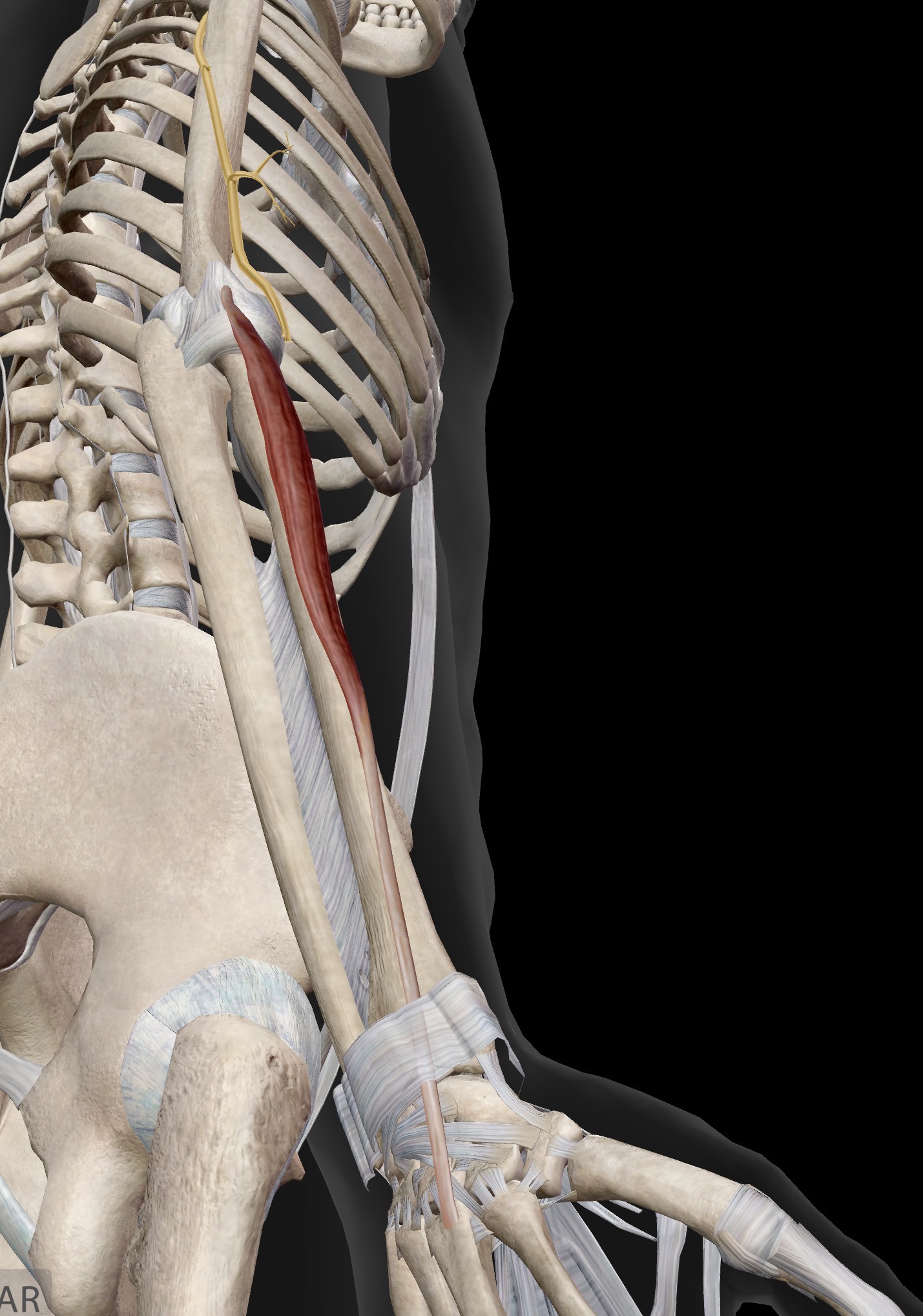
<p>Extensor carpi radialis Brevis</p><p>O: Lateral epicondyle of the humerus (common extensor origin)</p><p>I: Base of third metacarpal on dorsal surface</p><p>A: Extension and radial deviation (abduction) of hand at the wrist joint.</p><p>IN: Radial nerve (C5-C8, T1)</p><p><em>Muscle most commonly involved muscle with “tennis elbow” (lateral epicondylitis)</em></p><p></p>
76
New cards
<p>Name the muscle and corresponding letter ( O = origin, I = insertion, A = actions, IN = innervation)</p><p>O</p><p>I</p><p>A</p><p>IN</p>

Name the muscle and corresponding letter ( O = origin, I = insertion, A = actions, IN = innervation)

O

I

A

IN

Extensor digitorum

O: Lateral epicondyle of humerus (common extensor origin)

I: Bases of middle and distal phalanges of the 2nd-5th digits (dorsal surfaces)

A: Extension of the fingers at the MCP, PIP, and DIP joints. Extension of the hand at the wrist joint.

IN: Radial nerve (C5-C8, T1)
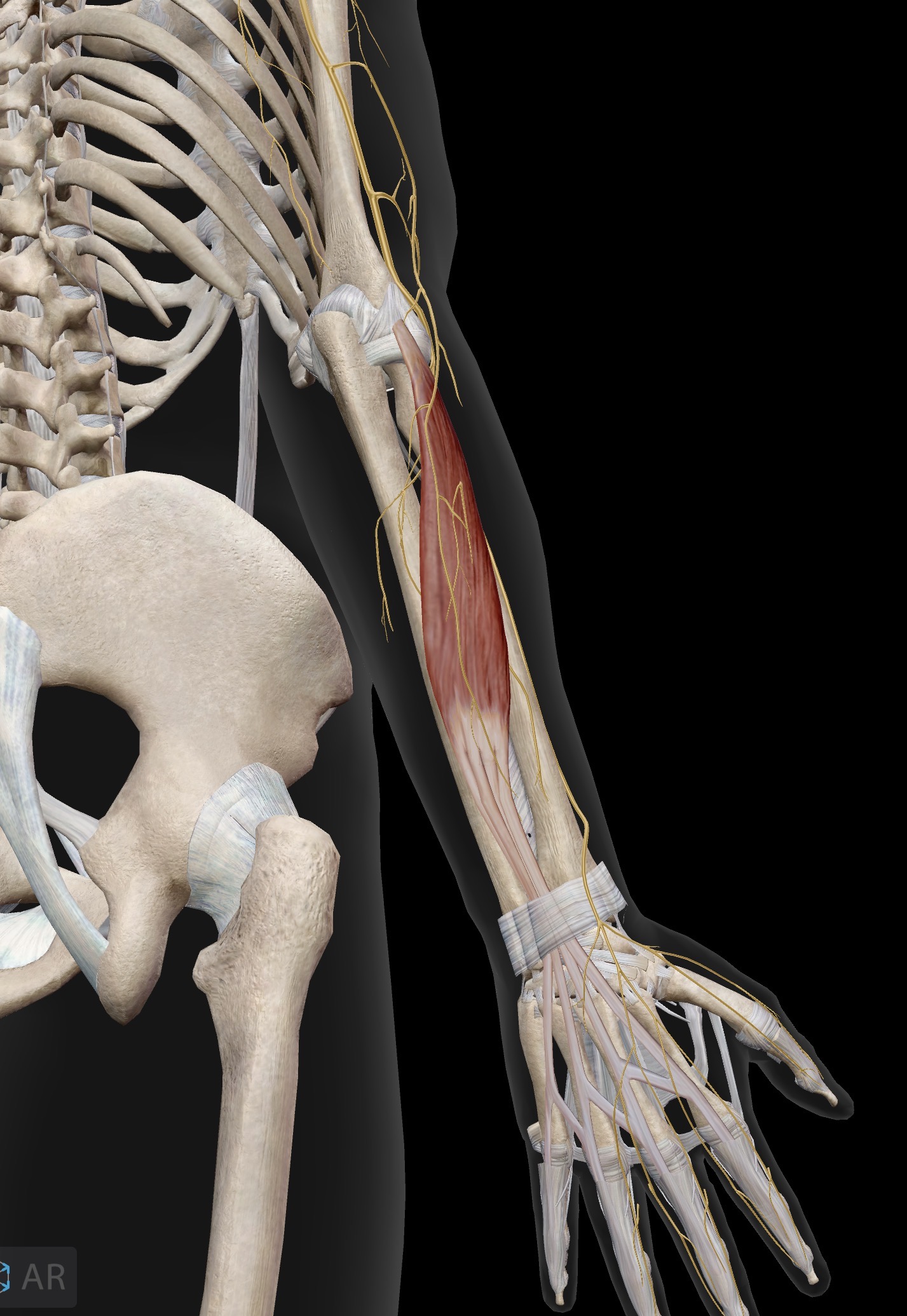
<p>Extensor digitorum</p><p>O: Lateral epicondyle of humerus (common extensor origin)</p><p>I: Bases of middle and distal phalanges of the 2nd-5th digits (dorsal surfaces)</p><p>A: Extension of the fingers at the MCP, PIP, and DIP joints. Extension of the hand at the wrist joint.</p><p>IN: Radial nerve (C5-C8, T1)</p>
77
New cards
<p>Name the muscle and corresponding letter ( O = origin, I = insertion, A = actions, IN = innervation)</p><p>O</p><p>I</p><p>A</p><p>IN</p>

Name the muscle and corresponding letter ( O = origin, I = insertion, A = actions, IN = innervation)

O

I

A

IN

Extensor carpi ulnaris

O: Lateral epicondyle of humerus (Common extensor origin)

I: Fifth metacarpal on the medial aspect

A: Extension and ulnar deviation (adduction) of hand at the wrist joint.

IN: Radial nerve (C5-C8, T1)
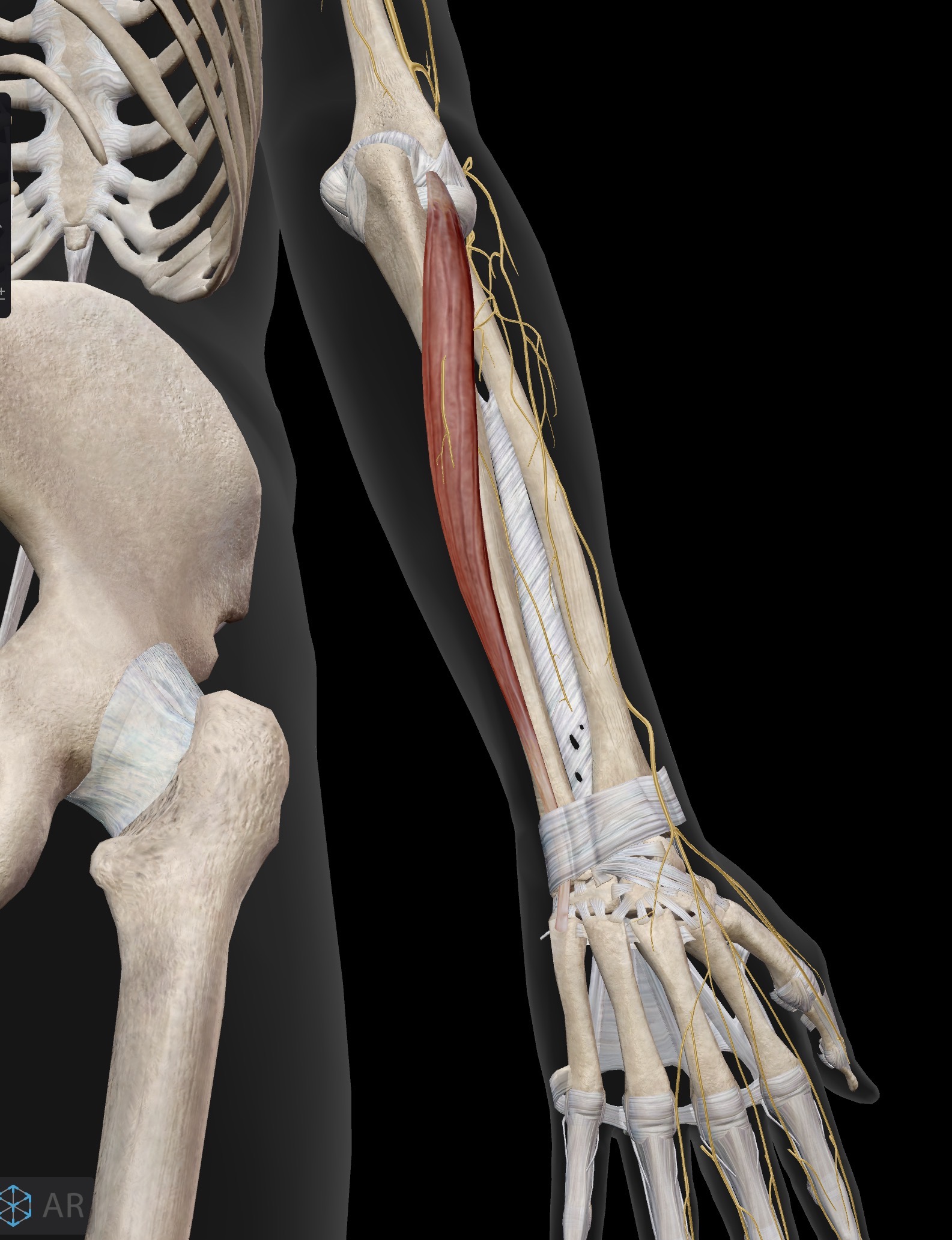
<p>Extensor carpi ulnaris</p><p>O: Lateral epicondyle of humerus (Common extensor origin)</p><p>I: Fifth metacarpal on the medial aspect</p><p>A: Extension and ulnar deviation (adduction) of hand at the wrist joint.</p><p>IN: Radial nerve (C5-C8, T1)</p>
78
New cards
<p>Name the muscle and corresponding letter ( O = origin, I = insertion, A = actions, IN = innervation)</p><p>O</p><p>I</p><p>A</p><p>IN</p>

Name the muscle and corresponding letter ( O = origin, I = insertion, A = actions, IN = innervation)

O

I

A

IN

Abductor pollicis longus (APL)

I: Base of first metacarpal on the radial side

A: Abduction and extension of thumb at the carpometacarpal (CMC) joint.

IN: Radial nerve (C5-C8, T1)

  • Abductor pollicis longus is 1 of 3 muscles known as “outcroppers” since they emerge from behind the superficial posterior compartment
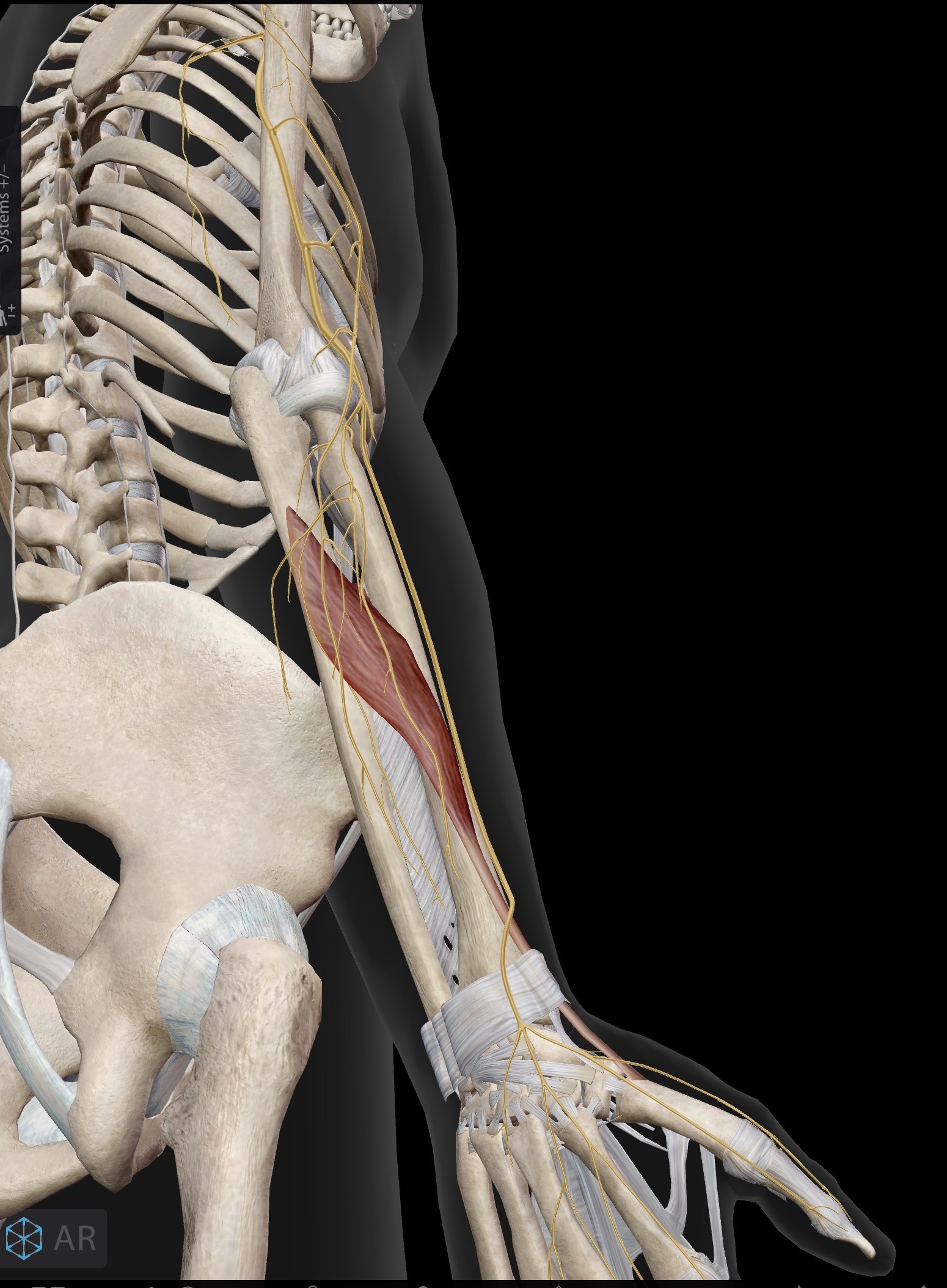
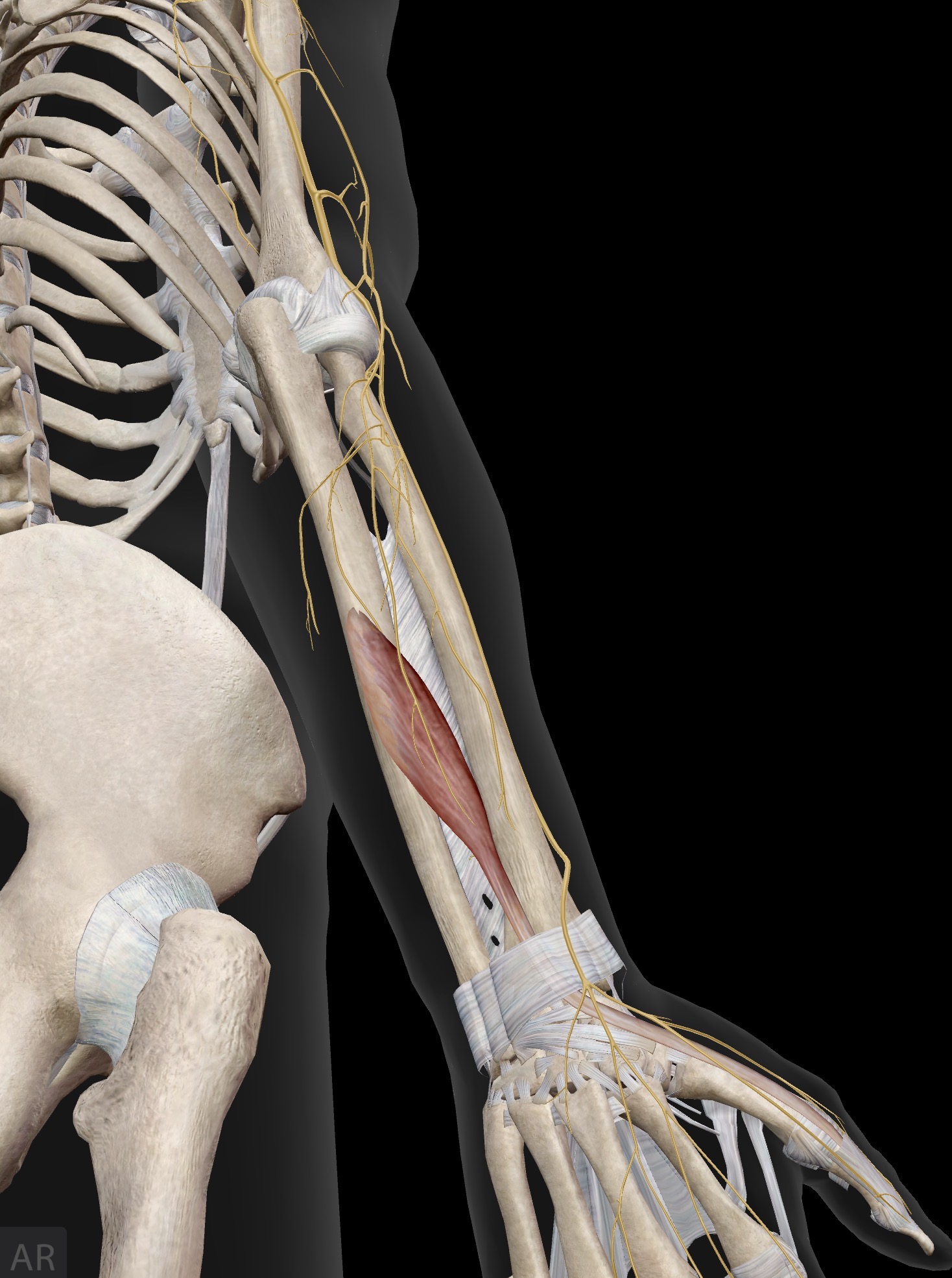
<p>Abductor pollicis longus (APL)</p><p>I: Base of first metacarpal on the radial side</p><p>A: Abduction and extension of thumb at the carpometacarpal (CMC) joint.</p><p>IN: Radial nerve (C5-C8, T1)</p><ul><li><p>Abductor pollicis longus is 1 of 3 muscles known as “outcroppers” since they emerge from behind the superficial posterior compartment</p></li></ul><p></p>
79
New cards
<p>Name the muscle and corresponding letter ( O = origin, I = insertion, A = actions, IN = innervation)</p><p>O</p><p>I</p><p>A</p><p>IN</p>

Name the muscle and corresponding letter ( O = origin, I = insertion, A = actions, IN = innervation)

O

I

A

IN

Extensor pollicis Longus (EPL)

I: Base of distal phalanx of the thumb

A: Extension of the thumb at interphalangeal joint, the MCP joint and the CMC joint

IN: Radial nerve (C5-C8, T1)

extensor pollicis longus is 1 of 3 muscles known as “outcroppers” since they emerge from behind the superficial posterior compartment
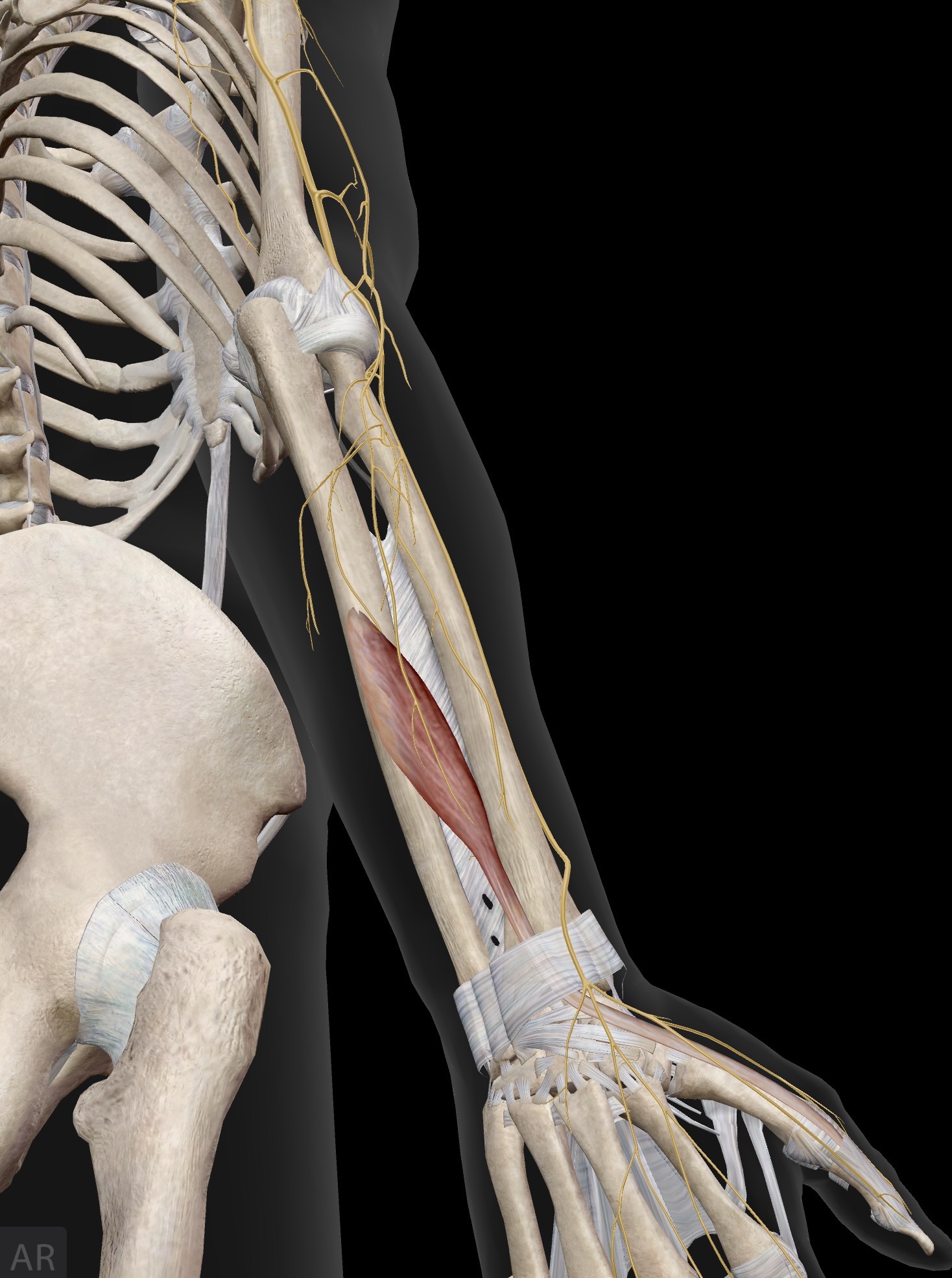
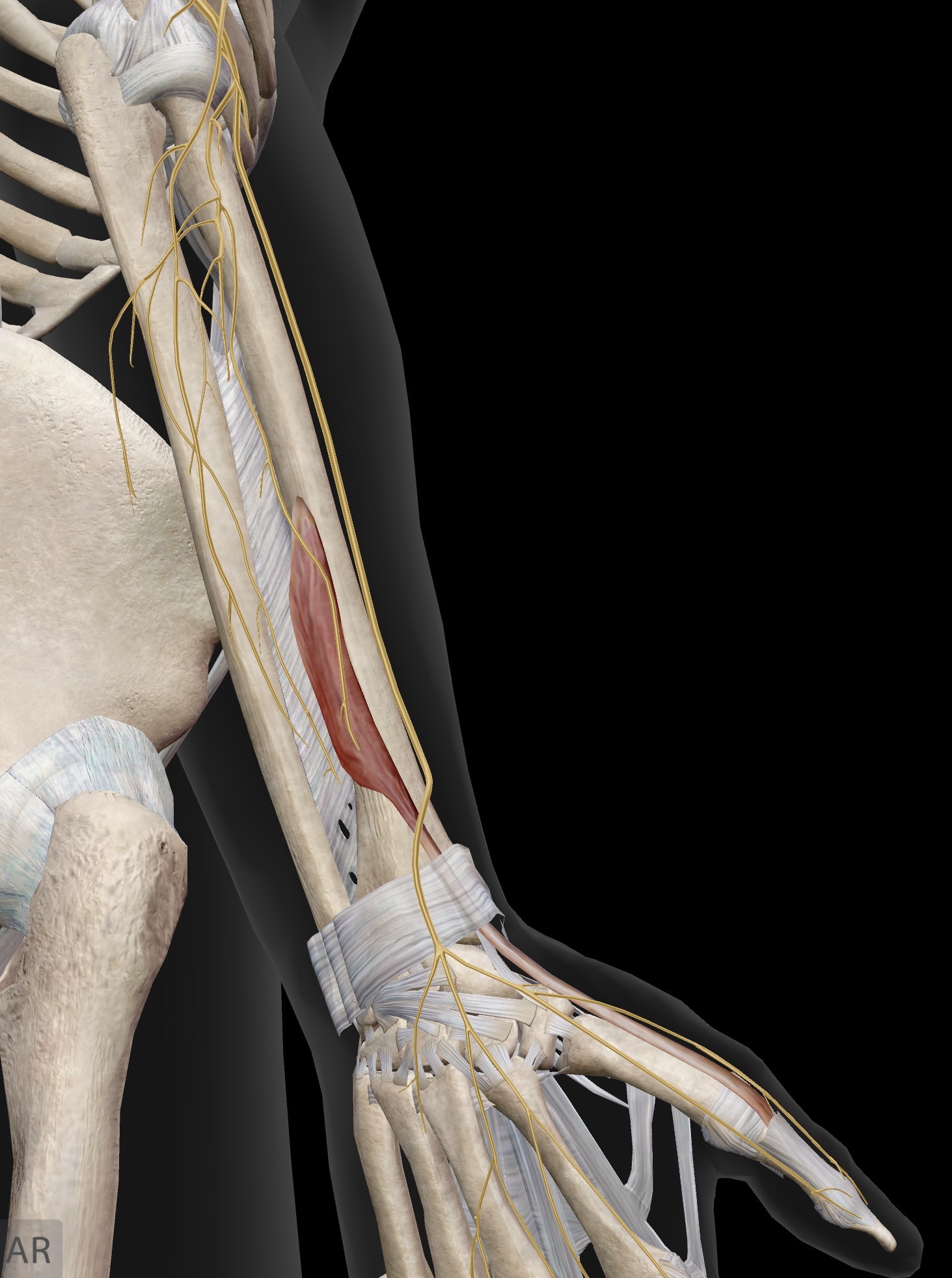
<p>Extensor pollicis Longus (EPL)</p><p>I: Base of distal phalanx of the thumb</p><p>A: Extension of the thumb at interphalangeal joint, the MCP joint and the CMC joint</p><p>IN: Radial nerve (C5-C8, T1)</p><p><em>extensor pollicis longus is 1 of 3 muscles known as “outcroppers” since they emerge from behind the superficial posterior compartment</em></p><p></p>
80
New cards
<p>Name the muscle and corresponding letter ( O = origin, I = insertion, A = actions, IN = innervation)</p><p>O</p><p>I</p><p>A</p><p>IN</p>

Name the muscle and corresponding letter ( O = origin, I = insertion, A = actions, IN = innervation)

O

I

A

IN

Extensor pollicis brevis (EPB)

O: Middle portion of the radius (on the posterior aspect)

I: Base of proximal phalanx of thumb

A: Extension of the thumb at the MCP joint and CMC joint

IN: Radial nerve (C5-C8, T1)
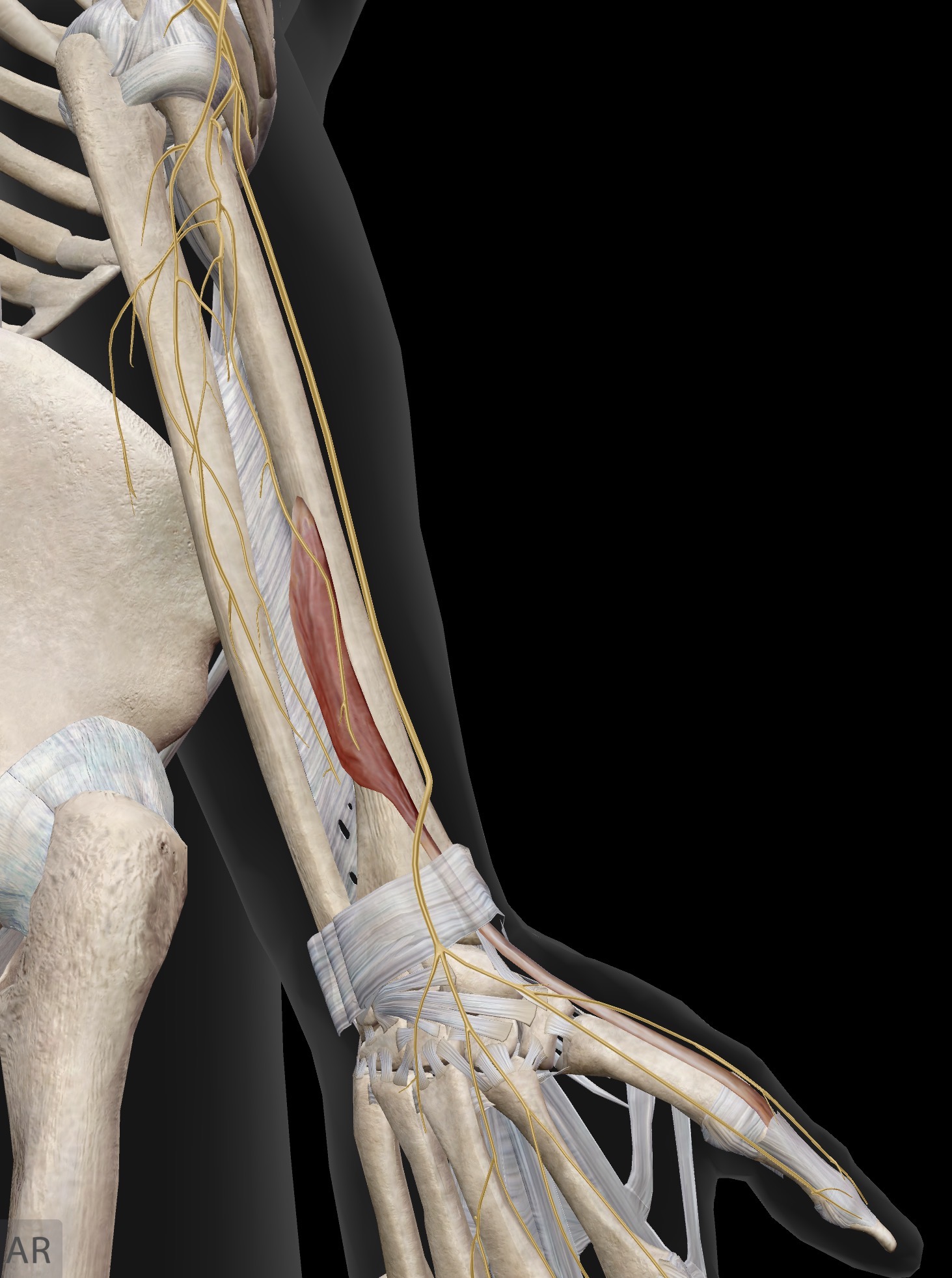
<p>Extensor pollicis brevis (EPB)</p><p>O: Middle portion of the radius (on the posterior aspect)</p><p>I: Base of proximal phalanx of thumb</p><p>A: Extension of the thumb at the MCP joint and CMC joint</p><p>IN: Radial nerve (C5-C8, T1)</p>
81
New cards

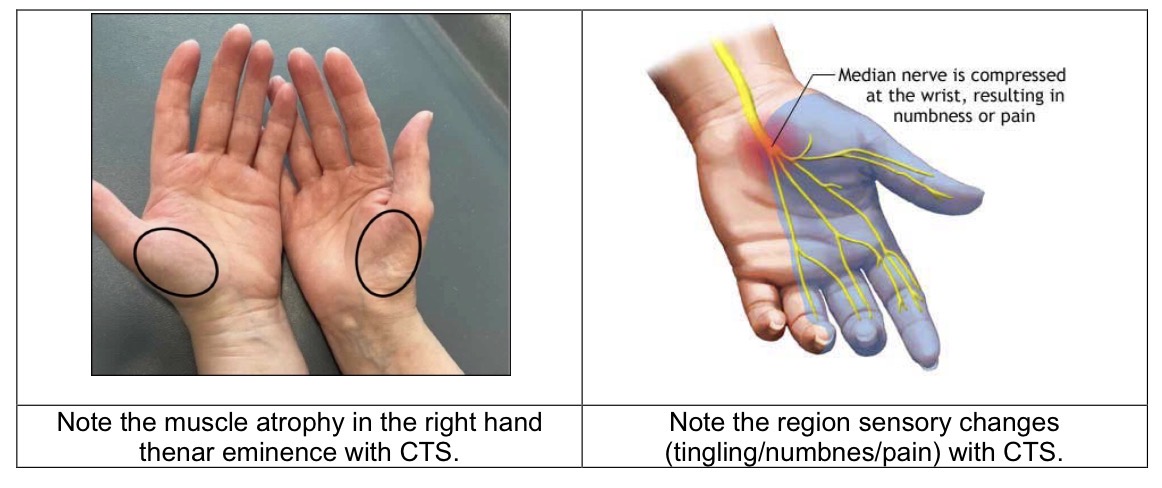
What is carpal tunnel syndrome?

Is a condition that results from the compression of the median nerve as it travels through the “carpal tunnel”

The carpal tunnel is a pathway through the wrist that is formed by the flexor retinaculum/transverse carpal ligament (the “roof” of the tunnel), and the carpal bones (the “floor” of the tunnel)

If a person has swelling within the carpal tunnel, this can press on the median nerve, causing “carpal tunnel syndrome”

The common symptoms of carpal tunnel syndrome include sensation changes to the area of skin supplied by the median nerve, and the muscle weakness in the muscles supplied by the median nerve within the hand.

such changes include

  • Atrophy

  • Tingling/numbness

    • 2nd and 3rd digit and half of the 4th digit

  • Burning sensation/pain

82
New cards
term image
knowt flashcard image
83
New cards
term image
knowt flashcard image
84
New cards
term image
knowt flashcard image
85
New cards
term image
knowt flashcard image
86
New cards

What is dislocation vs subluxation?

Subluxation is a partial or incomplete dislocation of dislocation where joint surfaces are still partially in contact whereas a dislocation is a complete separation of the articular surfaces