Cyanobacteria
 Call Kai
 Learn
Learn Practice Test
 Spaced Repetition
 Match
Match Flashcards
 Knowt Play
1/26

Earn XP
Description and Tags
know synapomorphies for endophytes, streptophytes, know why cloctophytes are importants, why are dinoflagellates are imporatnt, phyocoplast vs phragmoplast, difference between primary and secondaary
Name | Mastery | Learn | Test | Matching | Spaced | Call with Kai | Chat |
|---|
No analytics yet
Send a link to your students to track their progress
27 Terms
What do clades represent?
Synapomorphy
What is eukarya?
Eukaryotes; cells with nuclei and 3 RNA polymerase
What is bacteria?
Prokaryotes; cells without nuclei and peptidoglycan in cell walls, 1 RNA polymerase
What is archaea?
Prokaryotes; cells w/o nuclei or peptidoglycan in cell walls, 3 RNA polymerase
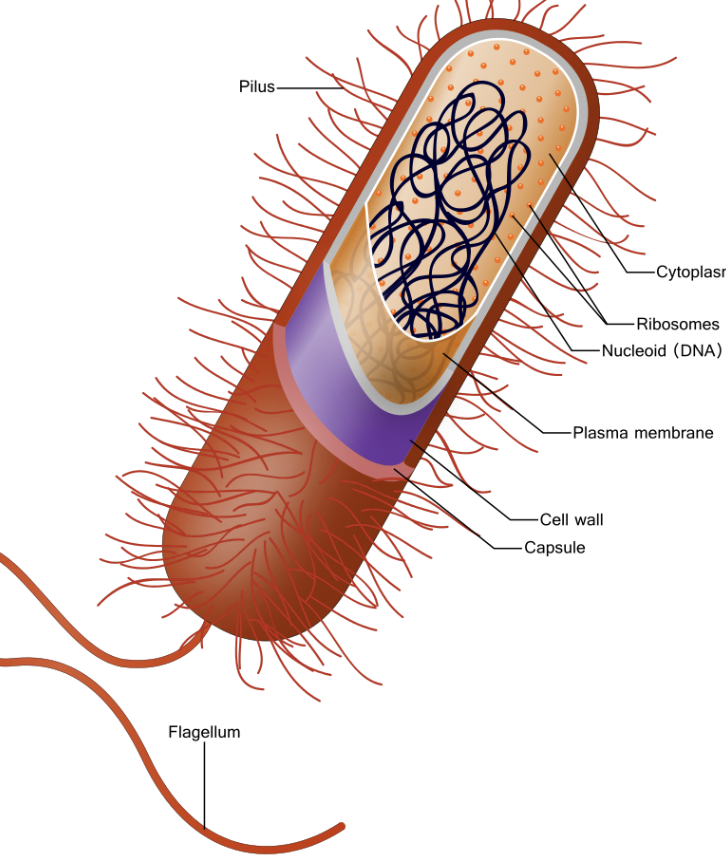
What are features of bacteria?
Cell wall, capsule, plasma membrane, nucleoid, ribosomes, cytoplasm, flagellum, pilus
What is the photosynthesis equation?
6CO2 (from air or water) + 6H2O (+ sunlight) → glucose + 6O2
What are the light reactions?
Membranes harvest light energy to synthesize ATP and NADPH
What is cyanobacteria?
Ubiquitous photosynthetic prokaryotes (no nucleus, circular chromosomes); first organisms to do oxygenic photosynthesis (typical carbon-fixing type prevalent today)
How did oxygenic photosynthesis affect evolutionary history?
Oxygen rich atmosphere favored organisms that could utilize oxygen which set the stage for the rise of eukaryotes
What does cyanobacteria do?
Fix nitrogen gas from atmosphere: N2 → NH4, NO2-, NO3-; ammonia, nitrite, nitrate = fertilizer
What process is cyanobacteria needed for?
Synthesis of amino acids and nucleic acids
What is primary endosymbiosis?
Produced the first photosynthetic eukaryotes The eukaryotic chloroplast originated from symbiotic cyanobacteria. It has membranes similar to both cyanobacteria and eukaryotes. Chloroplasts are now considered an organelle
What is the evidence of primary endosymbiosis?
The phylogenetic history of the separate genome present in chloroplasts
Where did the domestication of cyanobacterial cells occur?
An ancestor of red algae, green algae, and land plants
What is secondary endosymbiosis?
When a eukaryotic cell engulfs and keeps another eukaryotic cell that already has a primary plastid. Over time, the engulfed cell turns into a permanent organelle
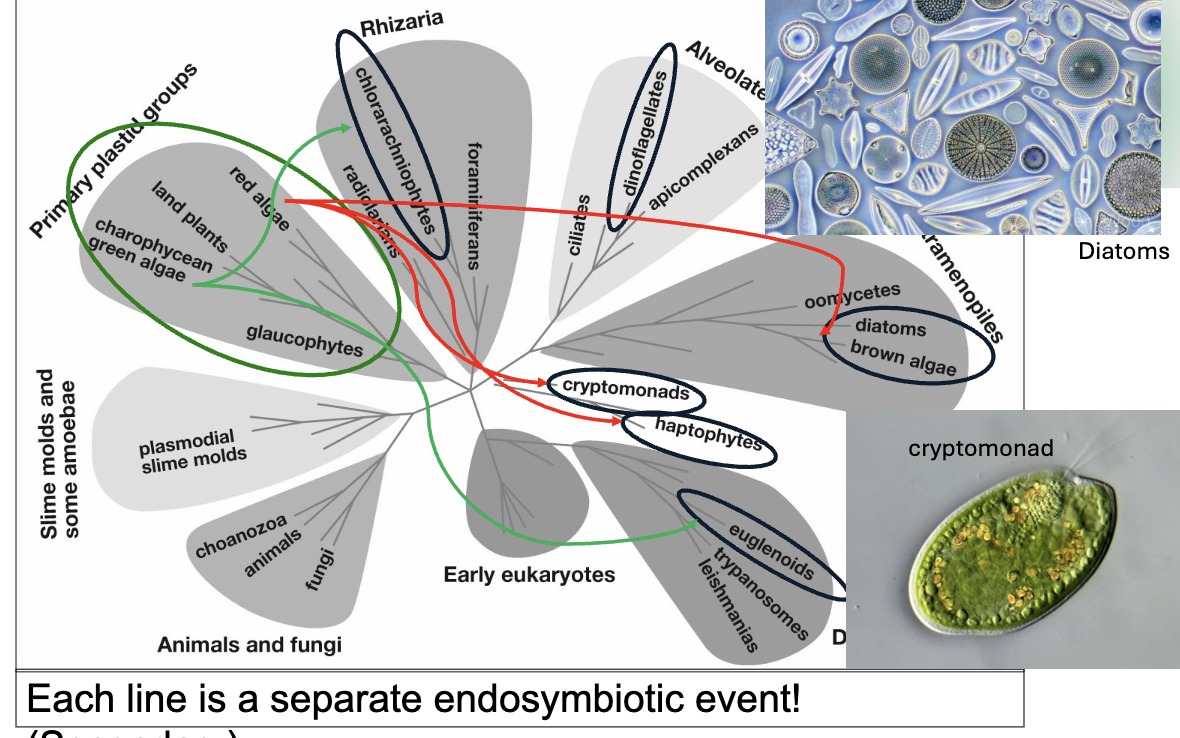
What is special about dinoflagellates?
They have captured chloroplasts from many algae (tertiary endosymbiosis)
What is a plant?
Clade with chloroplasts derived from primary endosymbiosis
How did algae evolve?
Early splits from the plant phylogenetic tree that have led to aquatic lineages

What are phragmoplasts?
Thought to help algae grow 3-dimensionally; create cell plates with plasmodesmata
What are red algae?
Vary from single-celled to elaborately branched multicellular organisms.
Cell walls: cellulose
Photosynthetic pigment: chlorophyll a
Red color: phycoerythrin pigments that absorb green and blue light
What is a green plant?
Chloroplasts with chlorophyll a and b, store carbohydrates as starch which has 2 main types of polysaccharide
What makes up the Streptophyte clade?
Some, but not all, green algal lineages plus land plants
When did branched apical growth evolve?
Chara were considered to be sister to land plants, which also have branched apical growth. Phylogenies indicate this feature may have evolved twice, or been lost a few times
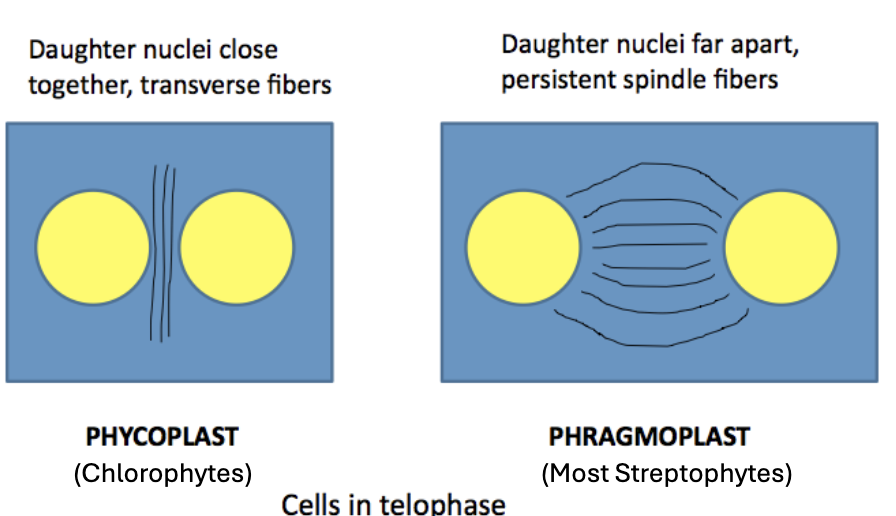
What is the difference between phycoplast and phragmoplast?
The orientation of their microtubules relative to the plane of cell division during telophase and cytokinesis. Phycoplast’s microtubules run parallel to the plane where the new cell wall forms. Found in many green algae (chlorophytes). Helps organize cells division after the cell’s nucleus has split. Phragmoplast’s microtubules run perpendicular to the plane of cell division. Found in land plants (most streptophytes). Helps new cells grow outwards.
What is parenchyma?
The basic tissue type in the streptophytes with cells linked by plasmodesmata
What important characters evolved in the algae-like ancestors of land plants?
Oogamy and apical growth
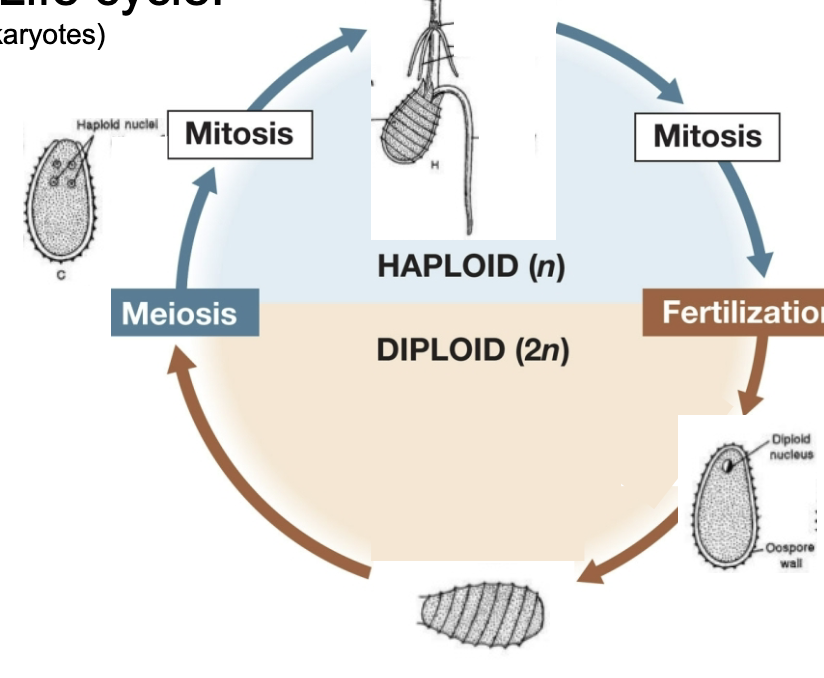
What is the life cycle of green algae-like streptophytes?
Oogamy; In Chara and Coleochaete, the plants are primarily haploid. Fusion of egg and sperm produces a diploid cell, the zygote, which immediately undergoes meiosis, resulting in 4 haploid spores.