Learning 2026
 Call Kai
 Learn
Learn Practice Test
 Spaced Repetition
 Match
Match Flashcards
1/13

Earn XP
Description and Tags
A variety of factoids on subjects I am interested in!
Name | Mastery | Learn | Test | Matching | Spaced | Call with Kai | Chat |
|---|
No analytics yet
Send a link to your students to track their progress
14 Terms

Spiny Flower Mantis
Pseudocreobotra wahlbergii
A species of mantis known for its distinctive spiny appearance and flower-like coloration, which acts as camouflage to evade predators. Considerably smaller than some of it’s counterparts.
Hailing from sub-Saharan Africa, this mantis is known for blending in with it’s local flora.
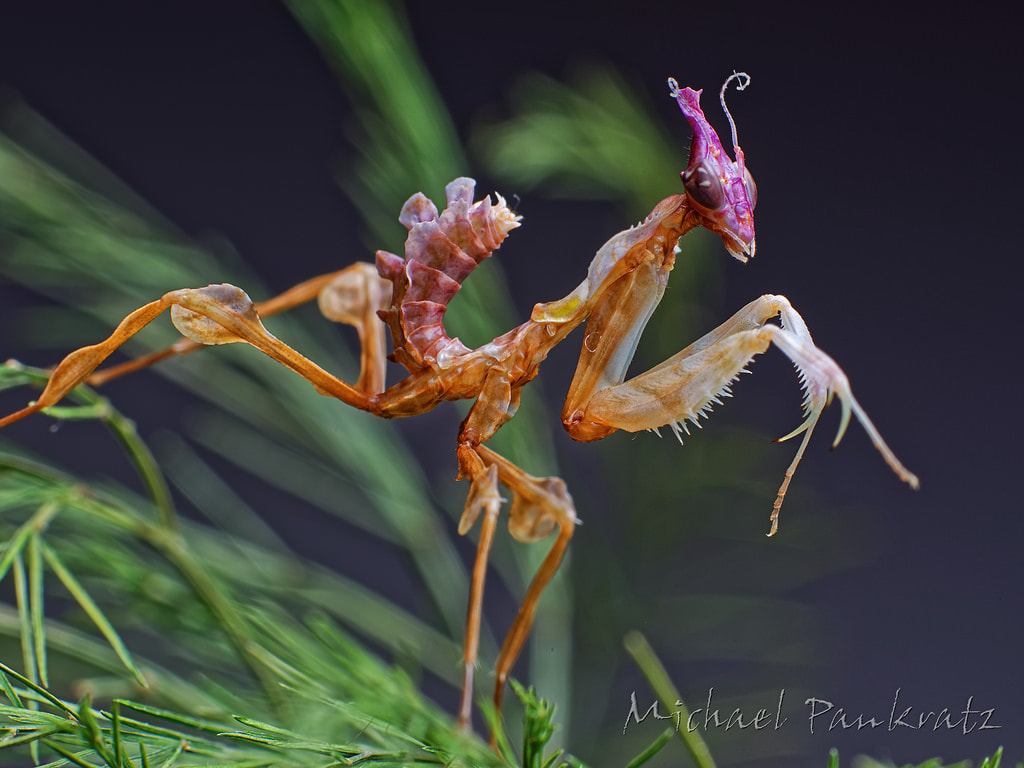
Devil's Flower Mantis
A striking mantis species known for its unique floral mimicry, enhancing its camouflage in its natural habitat.
Idolomantis diabolica
Adult females, larger than males, can be five inches long, making it one of the largest types of mantis varieties.
A defining characteristic is its defensive display, in which it raises its forelegs to reveal a stark black-and-white underside and appears larger than it truly is.

Ghost Mantis
Phyllocrania paradoxa
An African mantis species remarkable for its leaflike body. It even has pigment variations that resemble the veins of a leaf, perfecting its disguise against birds and other would-be predators.
The mantis can change its color after a few molts if it moves from a brown environment to a green one, and vice versa.
It's considered a miniature species, rarely growing more than two inches long.
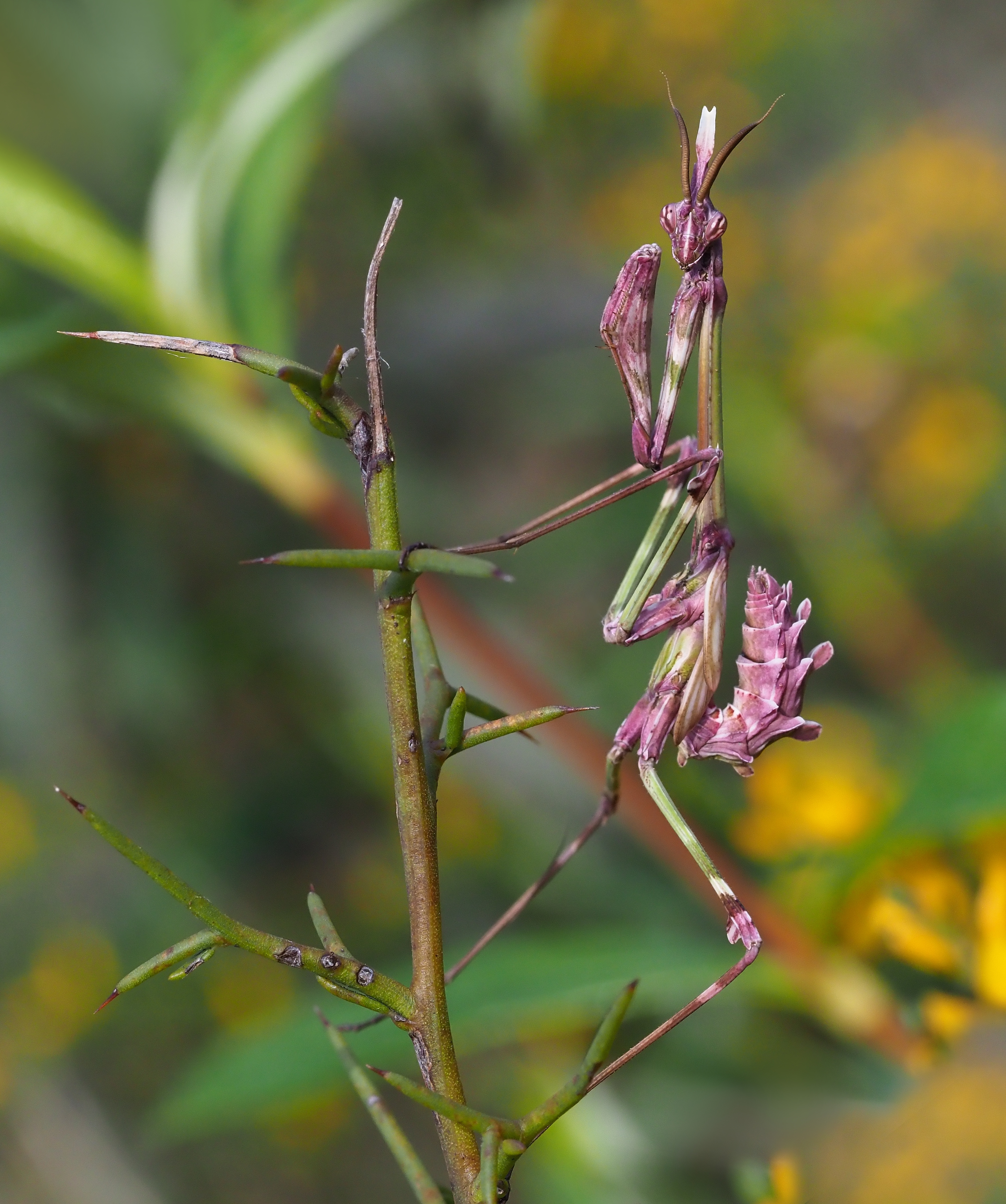
Conehead Mantis
A mantis species recognized for its elongated head shape, resembling a cone.
Known for its impressive camouflage and ability to mimic the appearance of twigs and leaves in its habitat.
It can grow to over four inches and is a prodigious predator capable of taking down prey its size.

Malaysian Orchid Mantis
Hymenopus coronatus
A visually striking mantis species known for its orchid-like appearance, enhancing its disguise among flowers. Its long limbs and flattened body mimic the shape and colors of orchid petals, making it a master of camouflage in its tropical habitat.
This mantis can grow up to three inches long and is predominantly found in Southeast Asia, where it blends seamlessly with its surroundings to ambush prey.
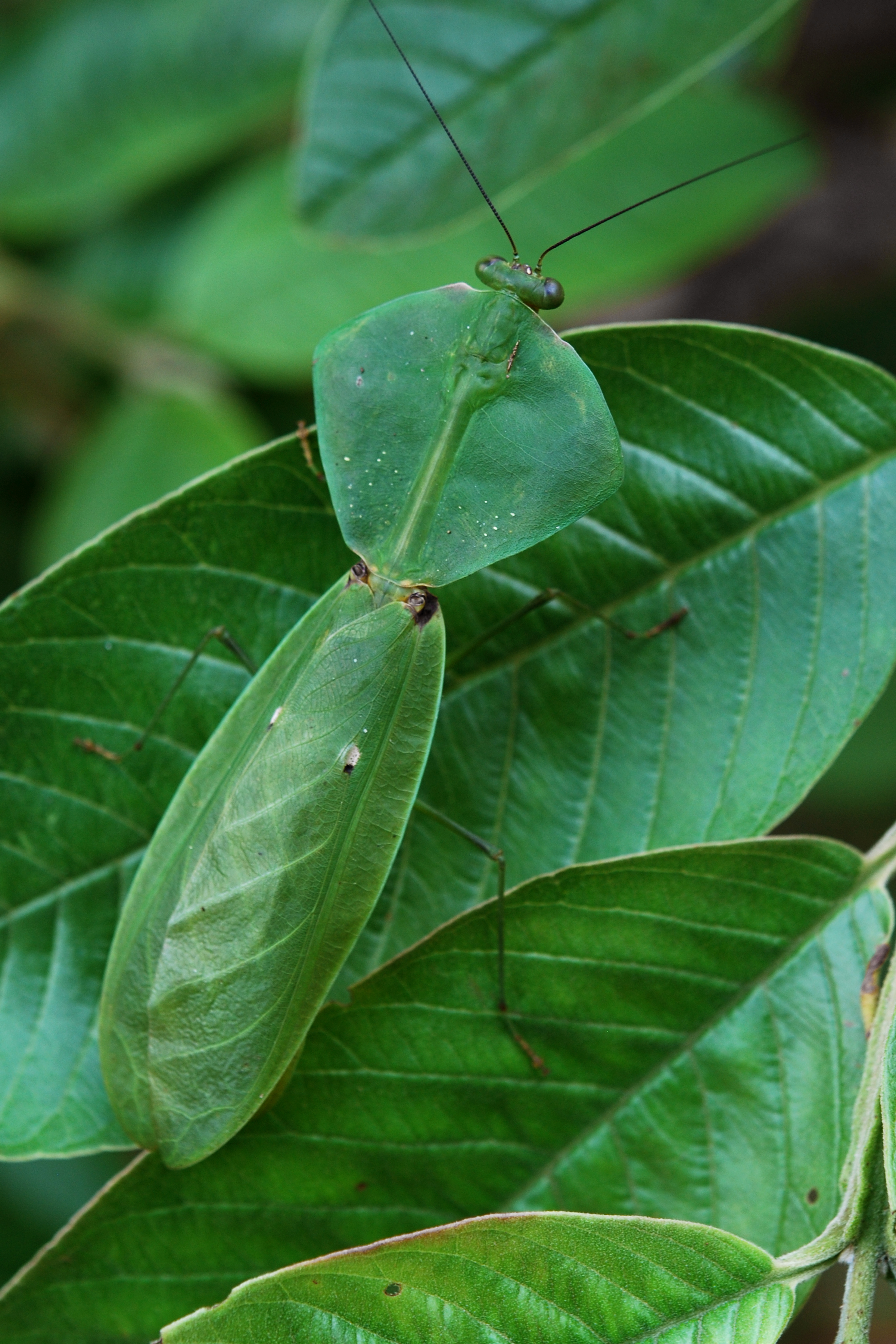
Shield Mantis
Choeradodis rhombicollis
is a species of mantis known for its incredible camouflage that resembles leaves or twigs, making it an effective predator.
Unlike some species, the shield mantis doesn't devote its entire body to the disguise. Instead, its upper leafy look hides an ordinary undercarriage
can also vibrate and shake its body to replicate a leaf moving in the wind.
This large mantis adopts a "sit and wait" hunting tactic and can feed on prey as large as lizards and hummingbirds.

Dead Leaf Mantis
Dettamantis tenuior
A species of mantis that effectively resembles dead leaves, providing excellent camouflage among its surroundings.
It's also unique in that it displays sexual dimorphism—where the males and females of the species look different—to a greater extent than other types of praying mantises.
Smaller males have a flattened thorax and resemble a flat leaf.
Larger females look like a curled leaf, and flash prominent orange warning colors under their unusable wings.

Dragon Mantis
Stenophylla cornigera
A species of mantis known for its striking appearance, characterized by elongated, horn-like projections on its head and vibrant coloration.
Dragon mantises are skilled hunters, utilizing their swift movements and strong claws to capture prey.
This nocturnal species navigates by moonlight.
Outer layer of a tree trunk
the bark, which protects the tree from environmental factors and pests.
Cambium
The cambium is a thin layer of actively dividing cells in a plant located between the bark and the wood, responsible for growth in diameter by producing new phloem and xylem cells.
Pholem
A type of tissue in vascular plants that transports nutrients and food produced by photosynthesis from the leaves to other parts of the plant.
A layer of cells located outside the cambium that supports the plant's growth.
Xylem
A type of tissue in vascular plants responsible for transporting water and dissolved minerals from the roots to the rest of the plant.
It also provides structural support to the plant, helping it maintain its shape and resist mechanical stress.
Layer of cells located inside the cambium.

What country does this flag represent?
Sweden