IB BIOLOGY SL - Unit 9: Evolution | Quizlet
 Studied by 10 people
 Call Kai
 Learn
Learn Practice Test
 Spaced Repetition
 Match
Match Flashcards
 Knowt Play
1/34

Earn XP
Description and Tags
D4.1, A4.1, A3.1
Name | Mastery | Learn | Test | Matching | Spaced | Call with Kai |
|---|
No study sessions yet.
35 Terms
Natural selection
A process in which individuals who have certain inherited traits tend to survive and reproduce at higher rates than other individuals because of those traits
Required for natural selection
- Variation in heritable traits within a population
- Overproduction of offspring + competition for resources within a population (not all individuals survive/reproduce at same rate)
- Individuals with traits best suited are more likely to survive/reproduce
- Surviving passes traits to offspring, increasing the traits in the population over time
Melanistic Moth in Great Britain (IB Example)
Dark colour trait increased during the industrial revolution due to soot and smog (increased rates of pollution), then decreased after (when less pollution)
Sexual dimorphism
When sexes of same species have different morphological characteristics, including characteristics not directly involved in reproduction
Fitness consequences
- Failing to find a mate = dying young(for sexually reproducing organisms)
- Finding mates
- Survival + reproduction
Special cases of natural selection
- Intrasexual selection (within)
- Intersexual selection (between)
Intrasexual selection
Males compete among themselves for access to females
Intersexual selection
Males advertise for mates, females choose
Evolution
Change in frequency of heritable characteristics in a population over time
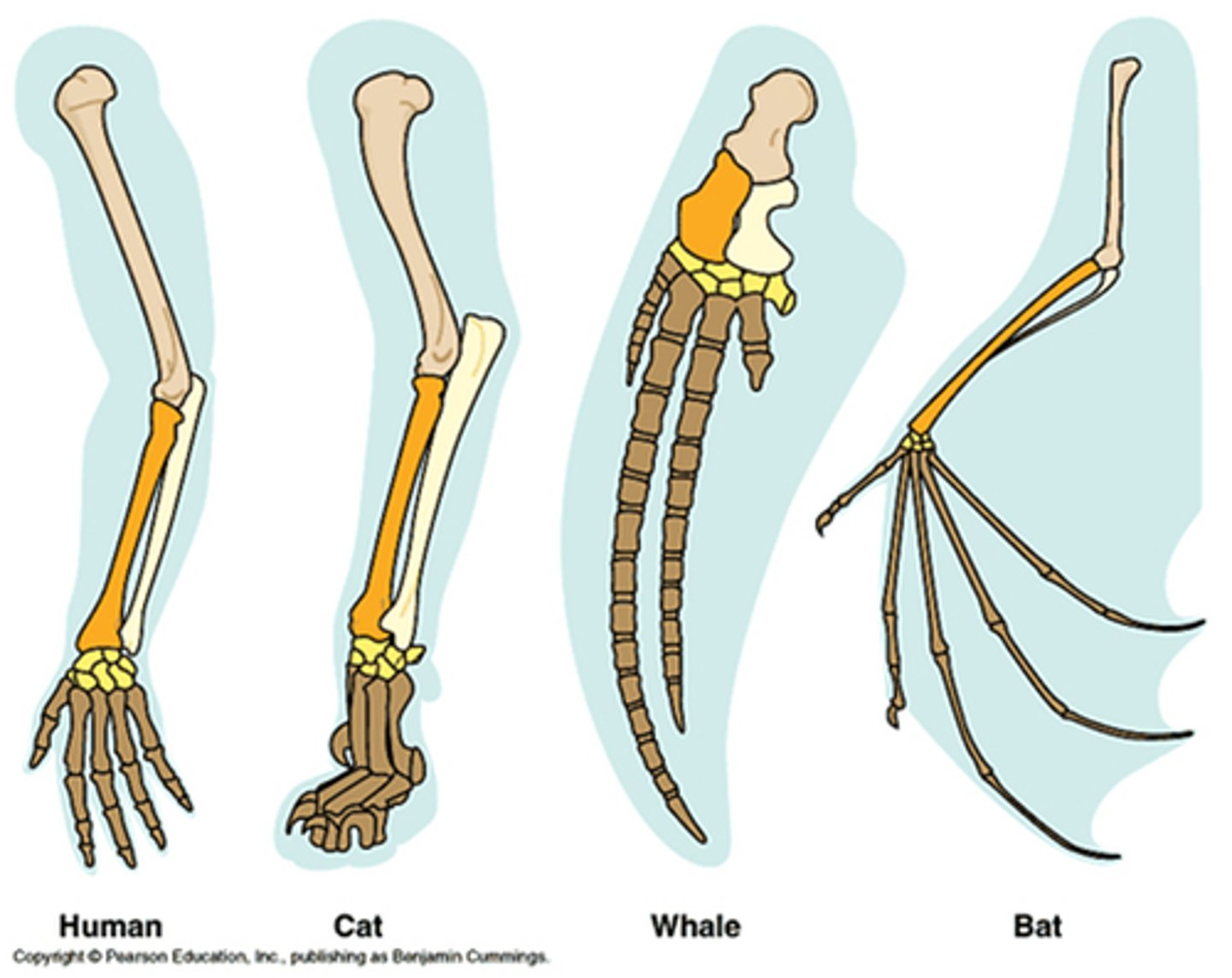
Pentadactyl limb (example of a homologous structure)
Limb with 5 digits found in amphibians, reptiles, birds, and mammals
Homologous structure
Physical features that are similar in structure due to shared ancestry, that may or may not be similar in function, are produced through divergent evolution
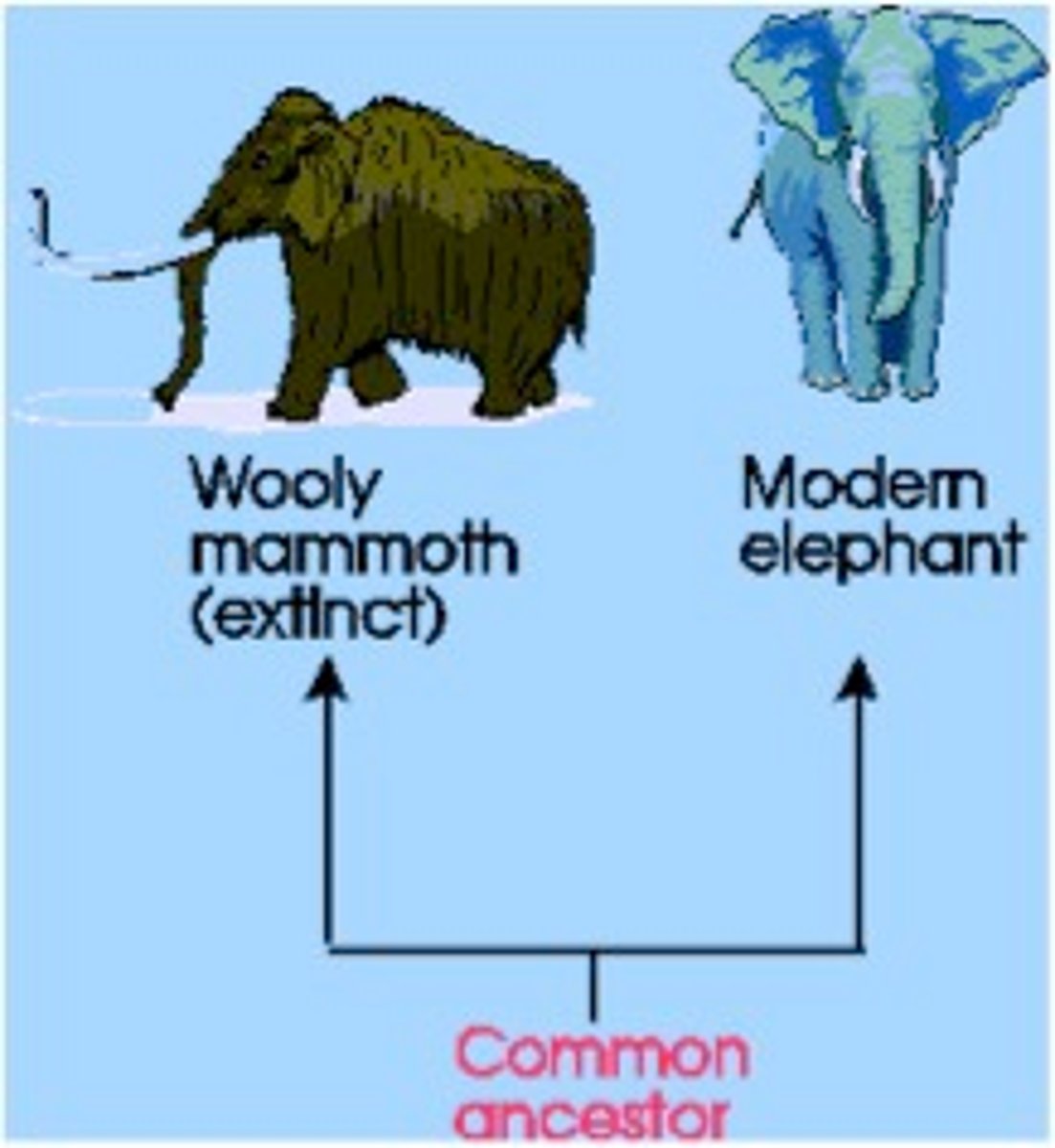
Divergent evolution
When a species gradually diverges into two or more separate species, which start from the same foundations but experience different selective pressures
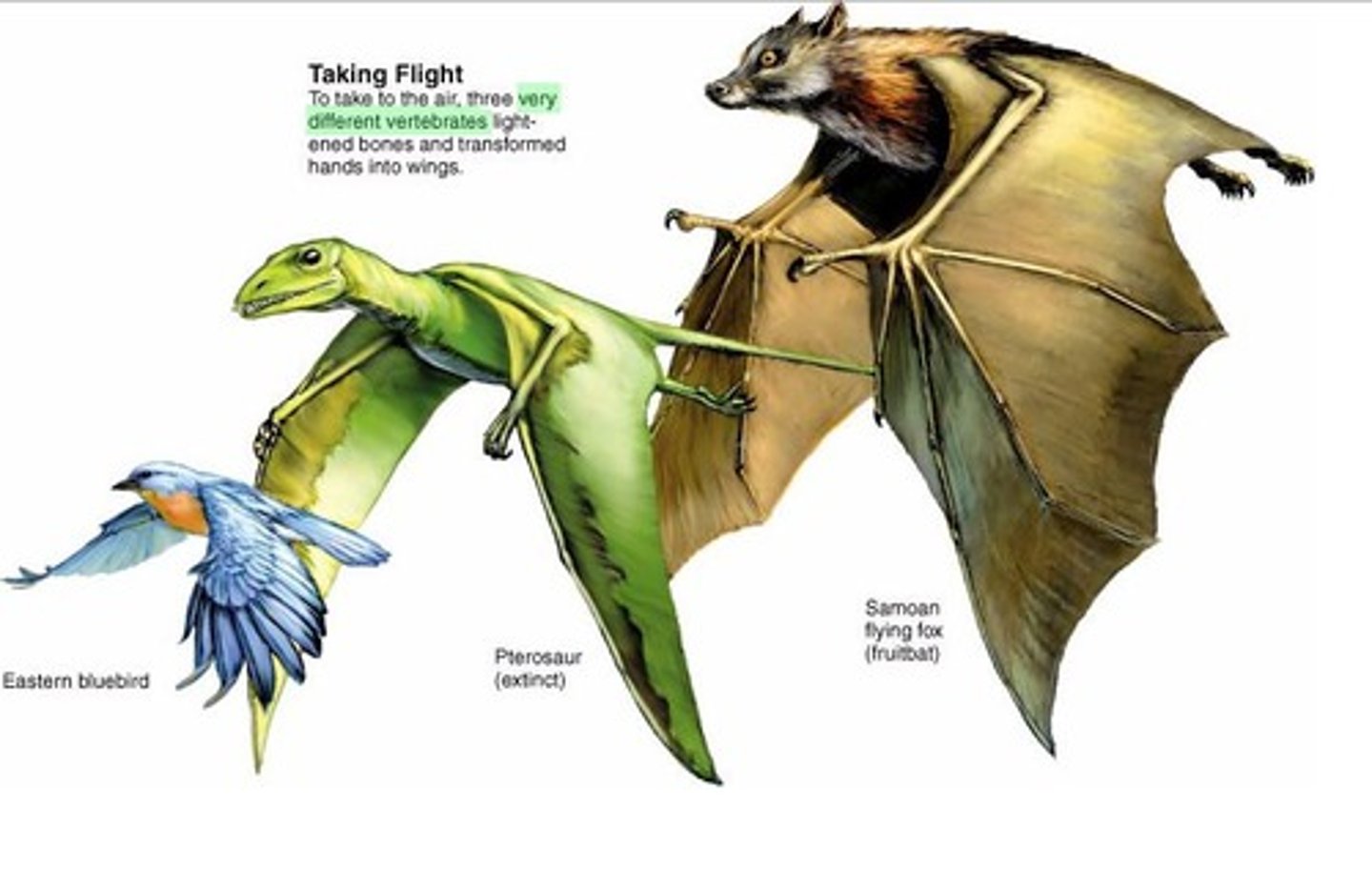
Analogous structures
Body parts that are different in underlying structure but similar in function due to a similar environment and/or similar selective pressure, produced through convergent evolution
Convergent evolution
Organisms that are not closely related evolve structures used for similar purposes because of similar environments/selective pressures
How homologous structures provide evidence of evolution
Species adapting to environment/different selective pressures + common ancestry
How analogous structures provide evidence of evolution
Same selective pressures are encouraging traits in different species
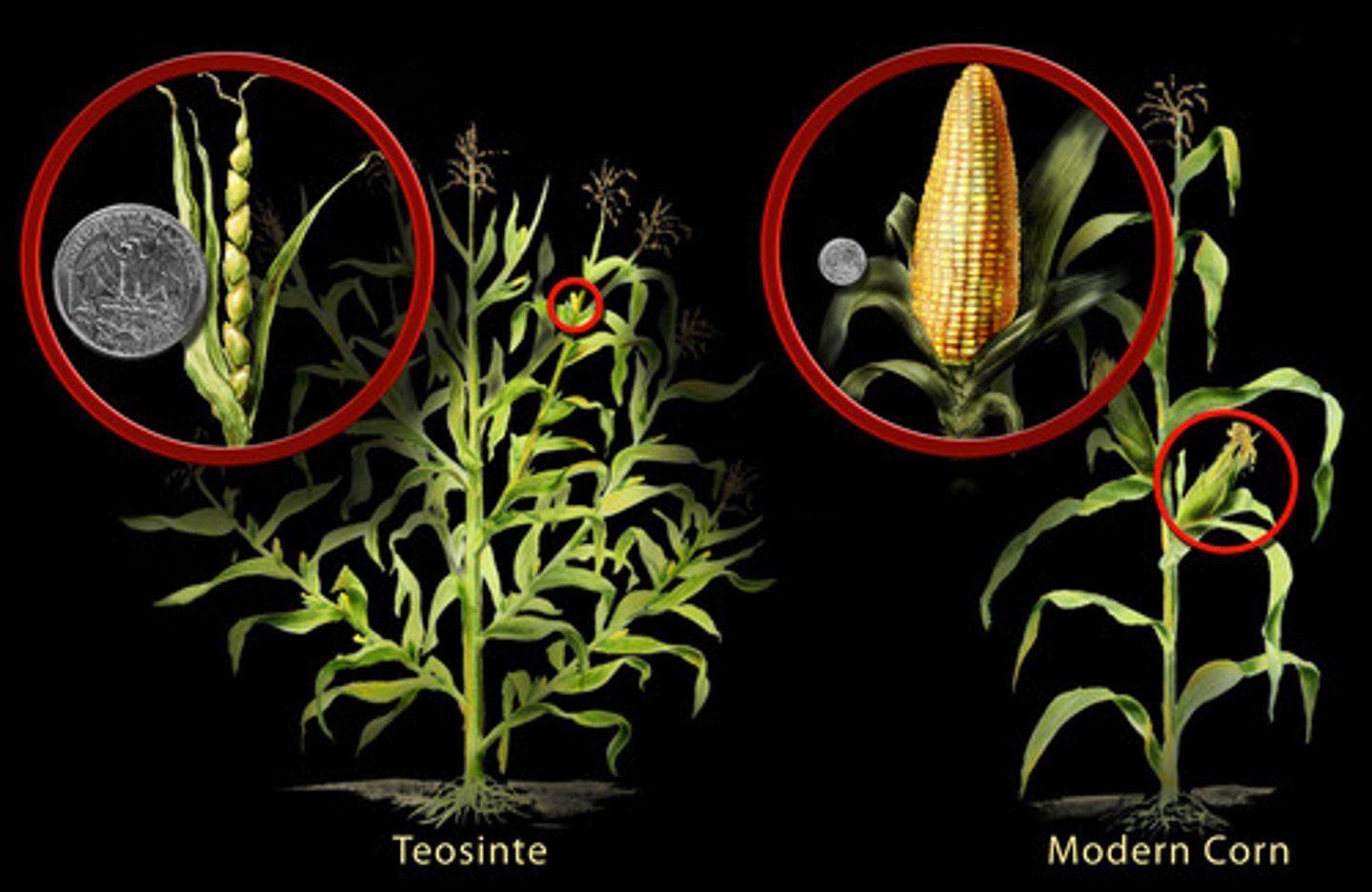
Selective breeding
Form of artificial selection (ex. wild plant modified into modern corn plant)
Molecular evidence for evolution
DNA, RNA, and amino acid sequences reflect the shared ancestry of life and can help determine how closely related different organisms are through patterns
Species
Group of organisms with potential to interbreed and produce fertile offspring (having the same number/type of chromosomes)
Speciation
Process by which a new species forms, occurring when an existing species splits into two separate species (increases the total number of species on Earth)
How species split into two separate species
- Reproductive isolation
- Diverge
- Incapable of producing fertile offspring
- Natural selection
- Mutations
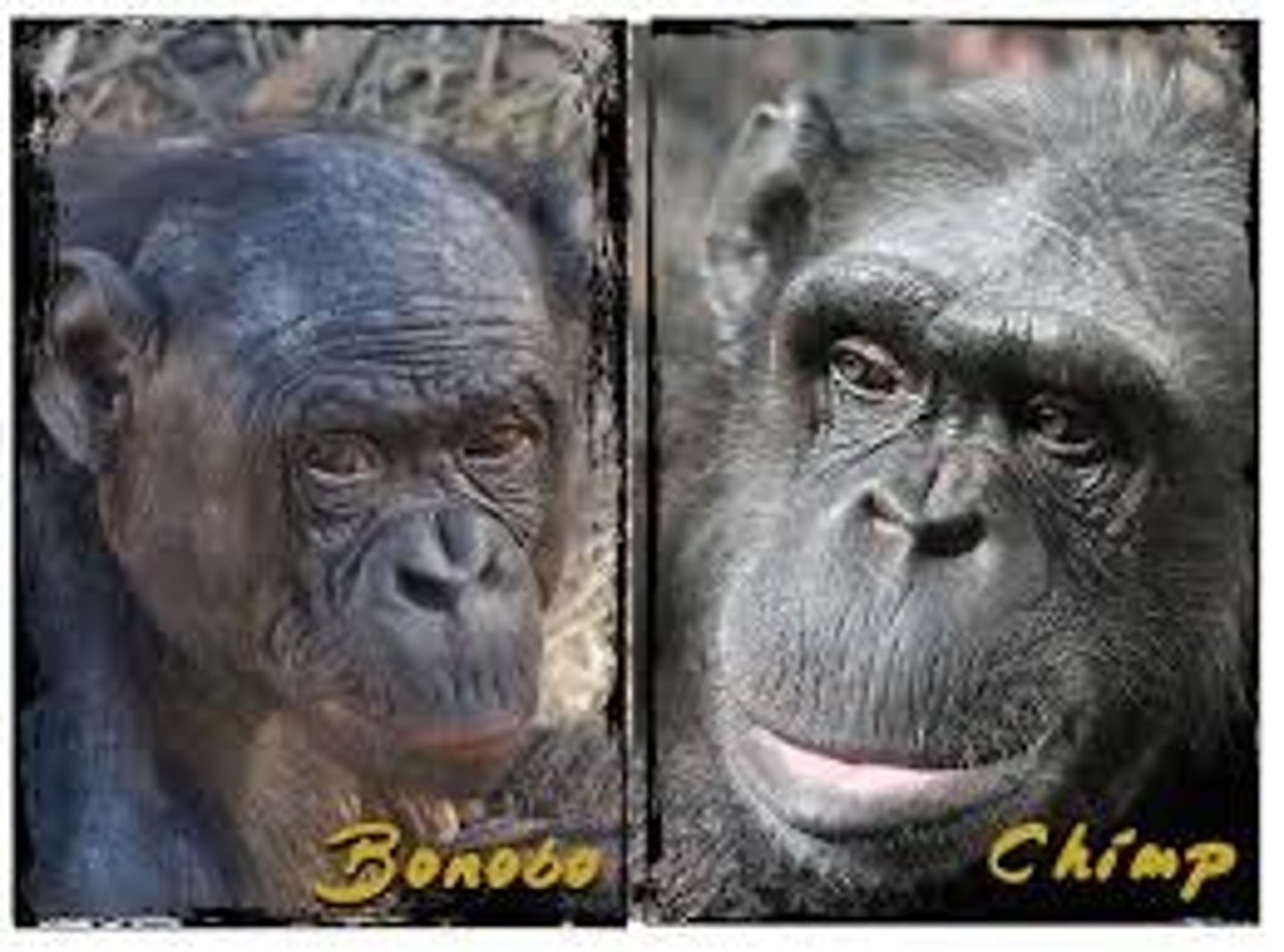
Chimps and Bonobos (speciation example)
Barrier of Congo River differed the biotic factor of competition between the two, which increased competition for resources in the chimp habitat that created different selective pressures/divergence (+ became more aggressive)
Genome
All the genetic material of an organism (in base pairs)
- Human = 46 chromosomes
- Chimp = 48 chromosomes
Patterns in chromosomes
Banding patterns, length, area where centromere is
How species can be compared
Genome size, number of chromosomes, number of genes
Whole genome sequencing
Determining the entire base sequence of an organism's DNA (for humans, including mitochondria)
Current uses of genome sequencing
- Understanding evolutionary relationships
- Conserving biodiversity
- Controlling infectious diseases
Future uses of genome sequencing
Advancing personalized medicine
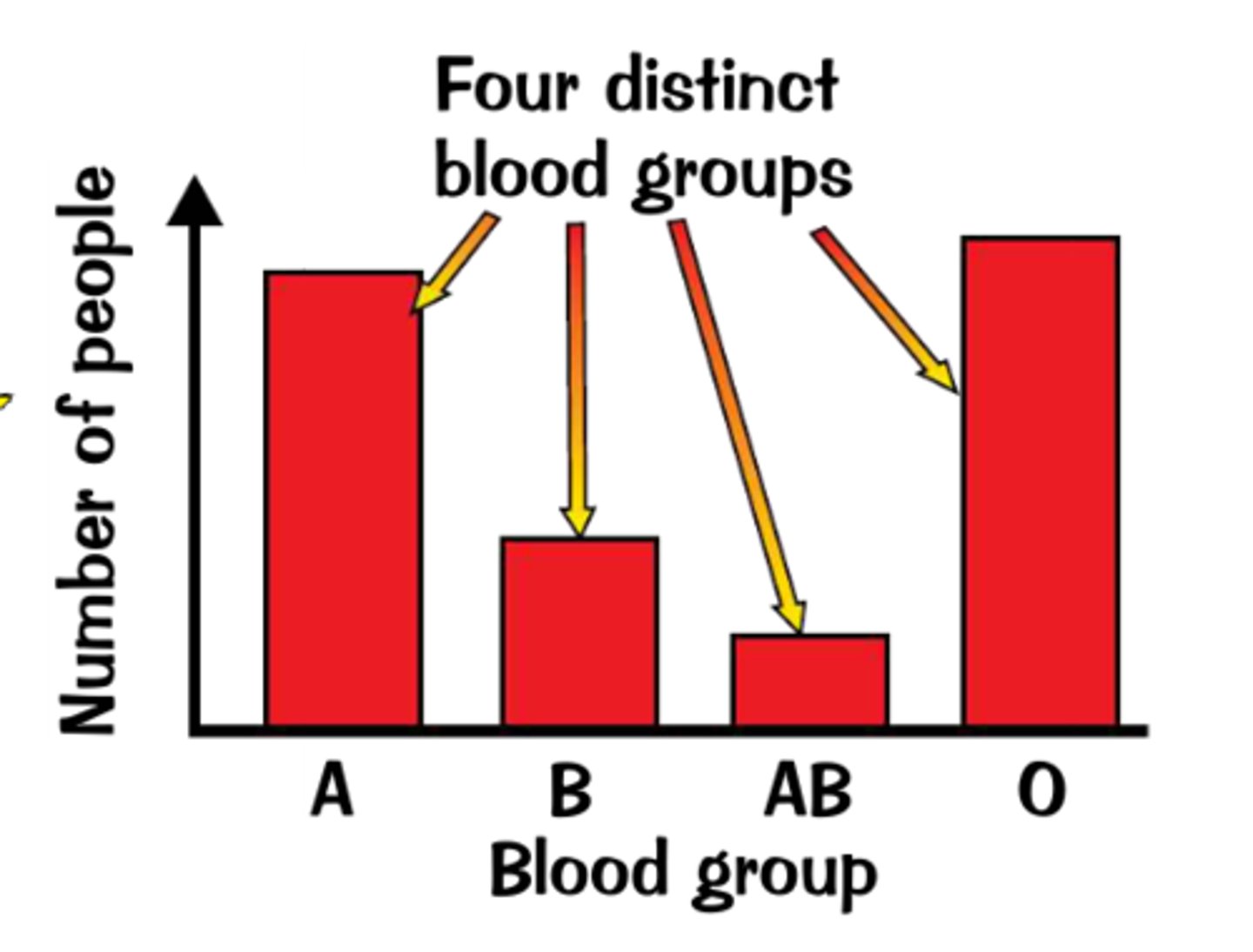
Discontinuous variation
Describes traits with distinct, separate categories (ex. blood type) and no intermediates, typically controlled by one/few genes with minimal environmental influence
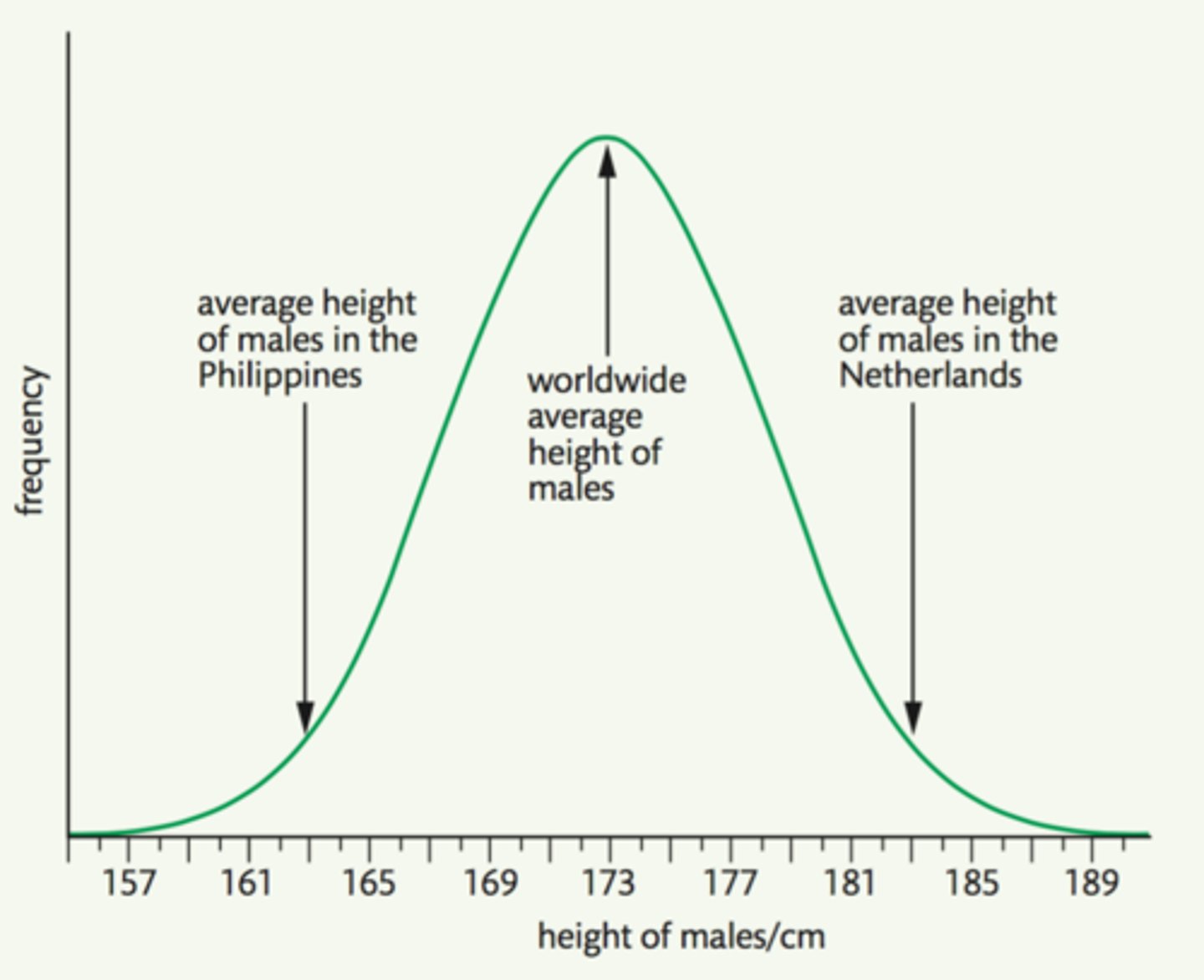
Continuous variation
Describes traits with a wide, gradual range of phenotypes (ex. height, skin color, weight) rather than distinct categories, resulting from polygenic inheritance (multiple genes) and significant environmental influence
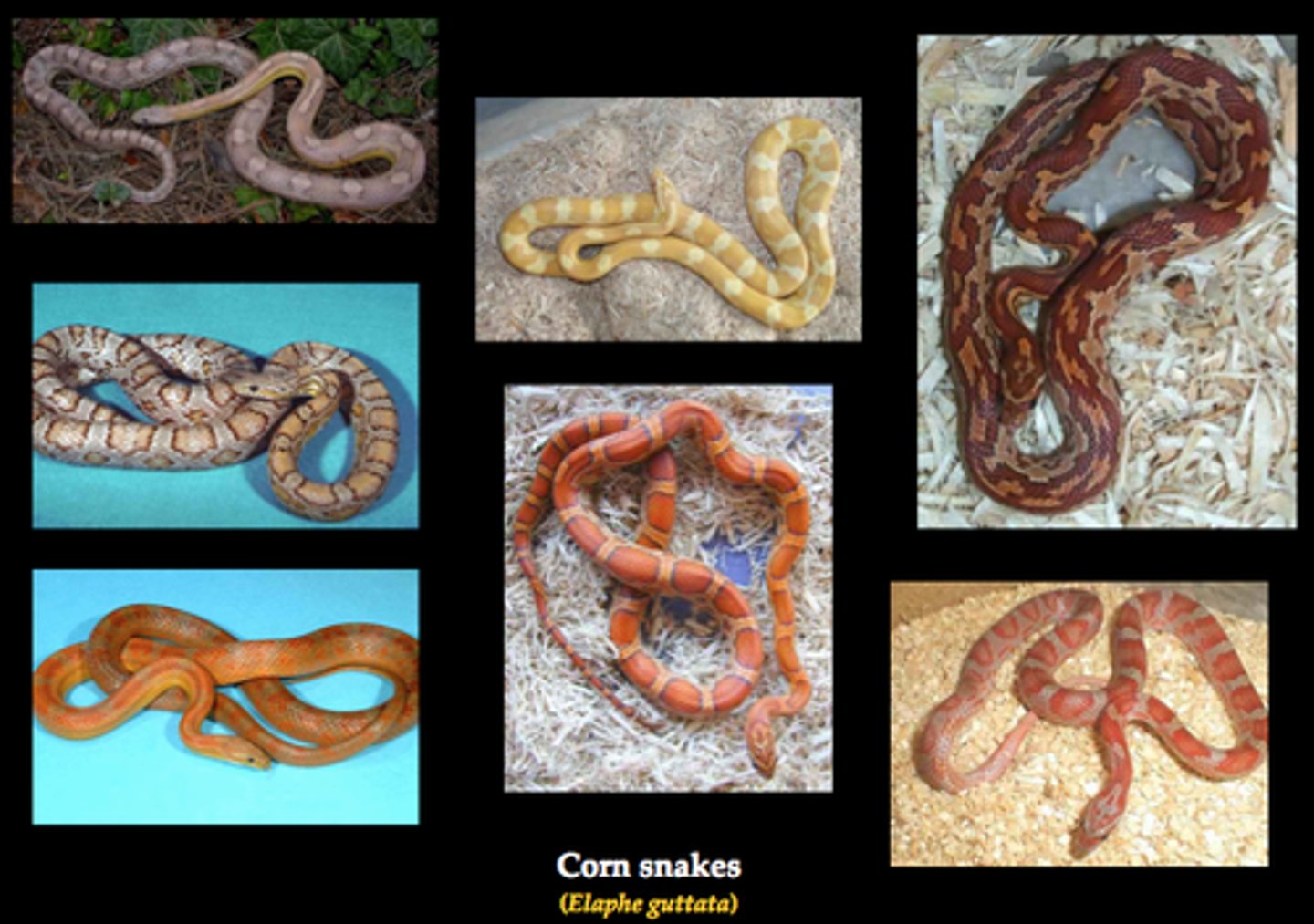
Morphological species
Group of organisms with shared physical characteristics
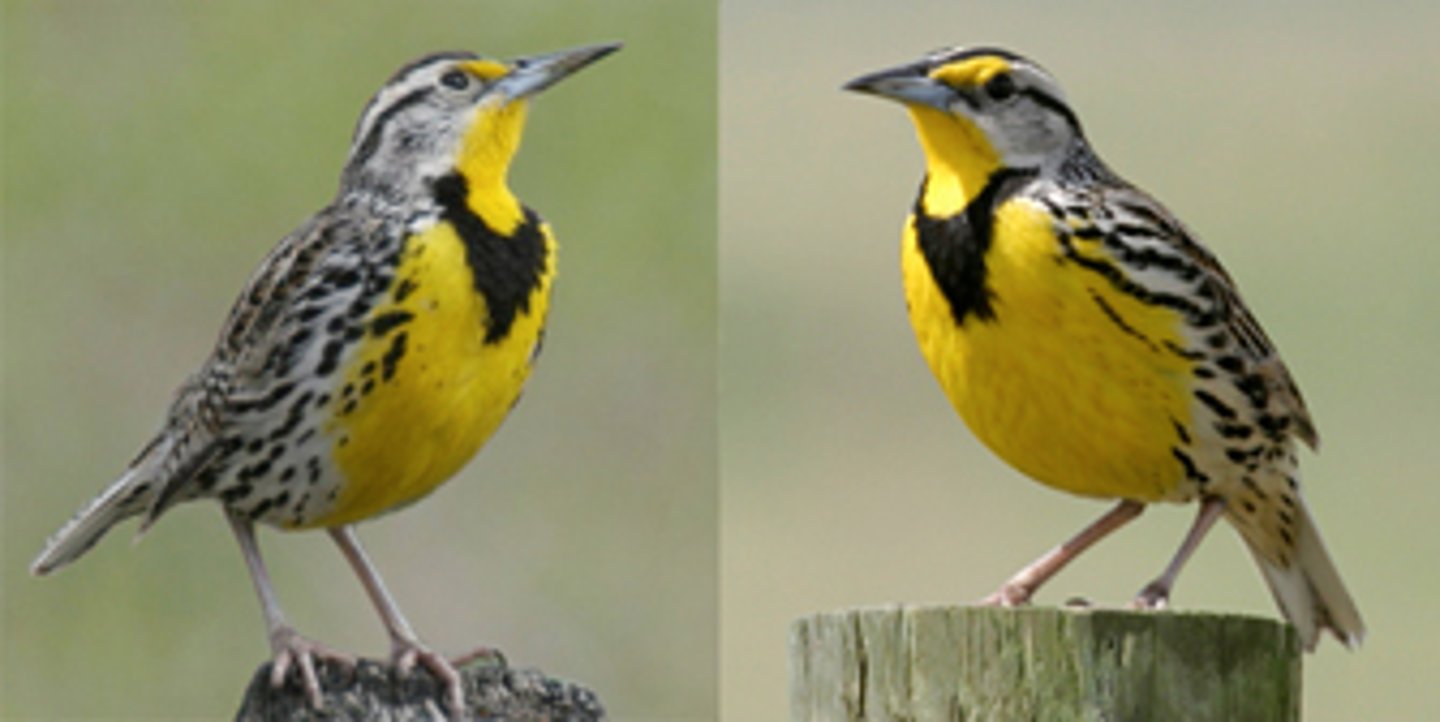
Biological species
Group of organisms that can potentially breed and form fertile offspring
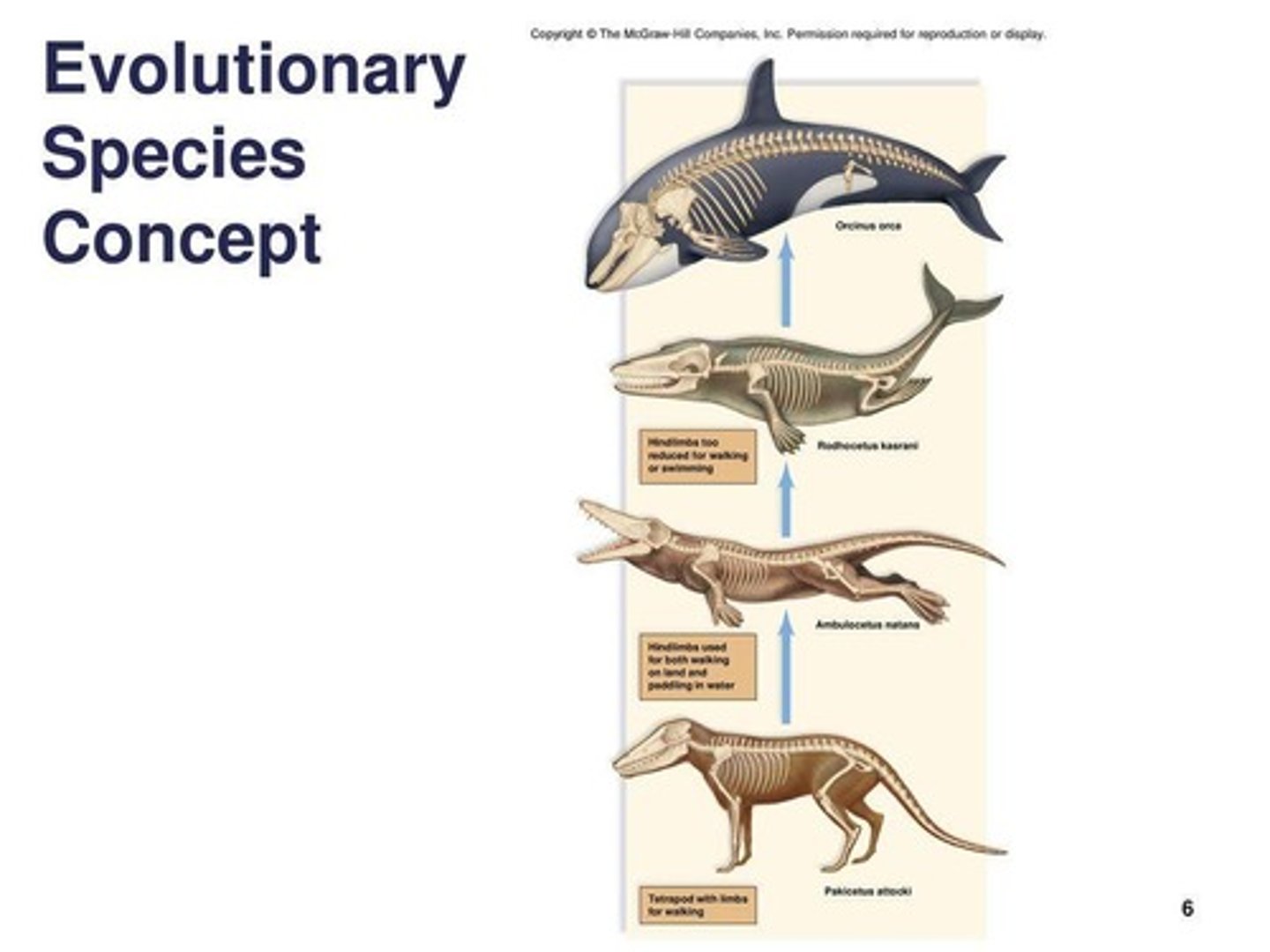
Evolutionary species
Group of organisms that forms an independently evolving unit
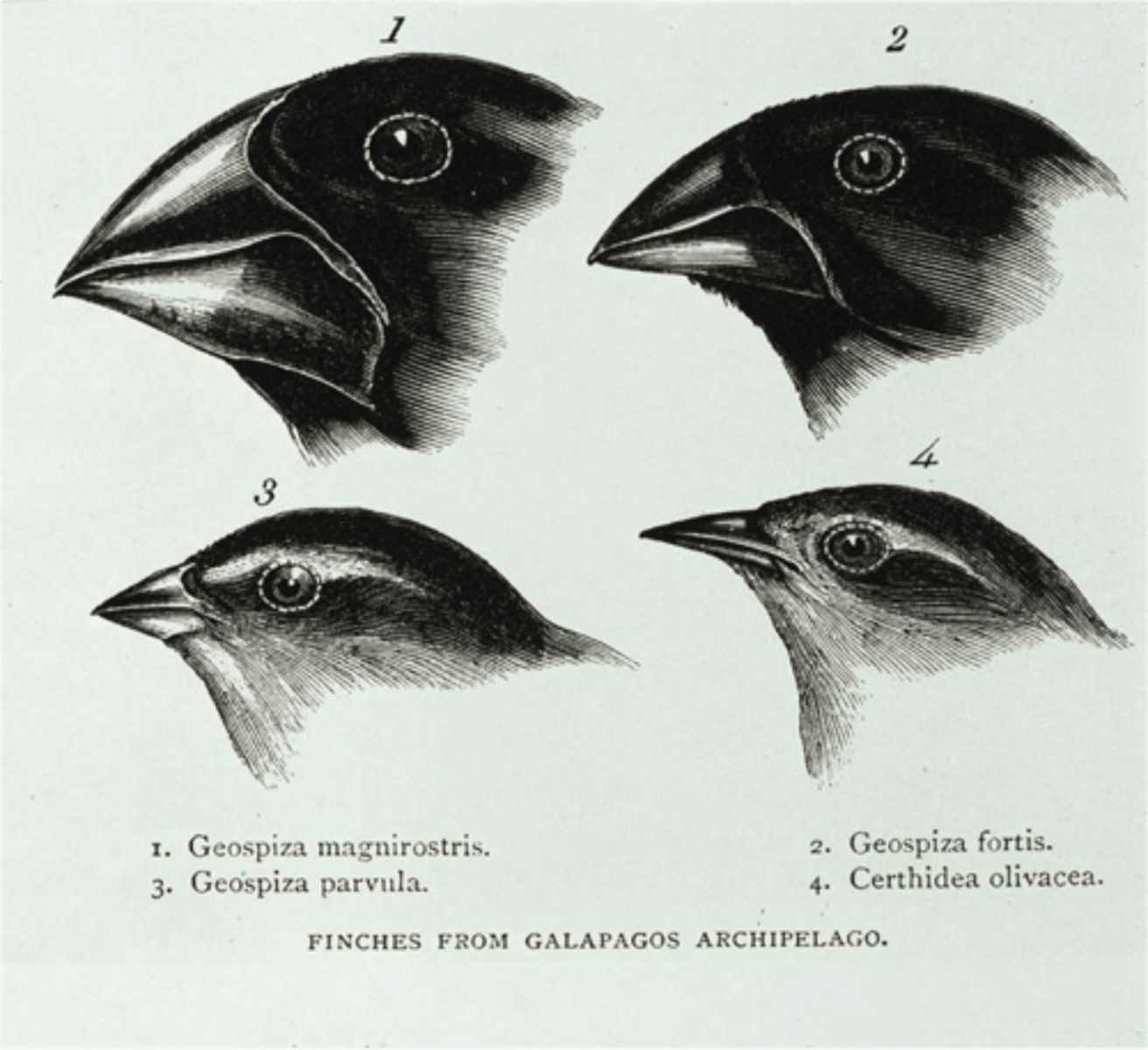
Ecological species
Group of organisms that shares a common niche
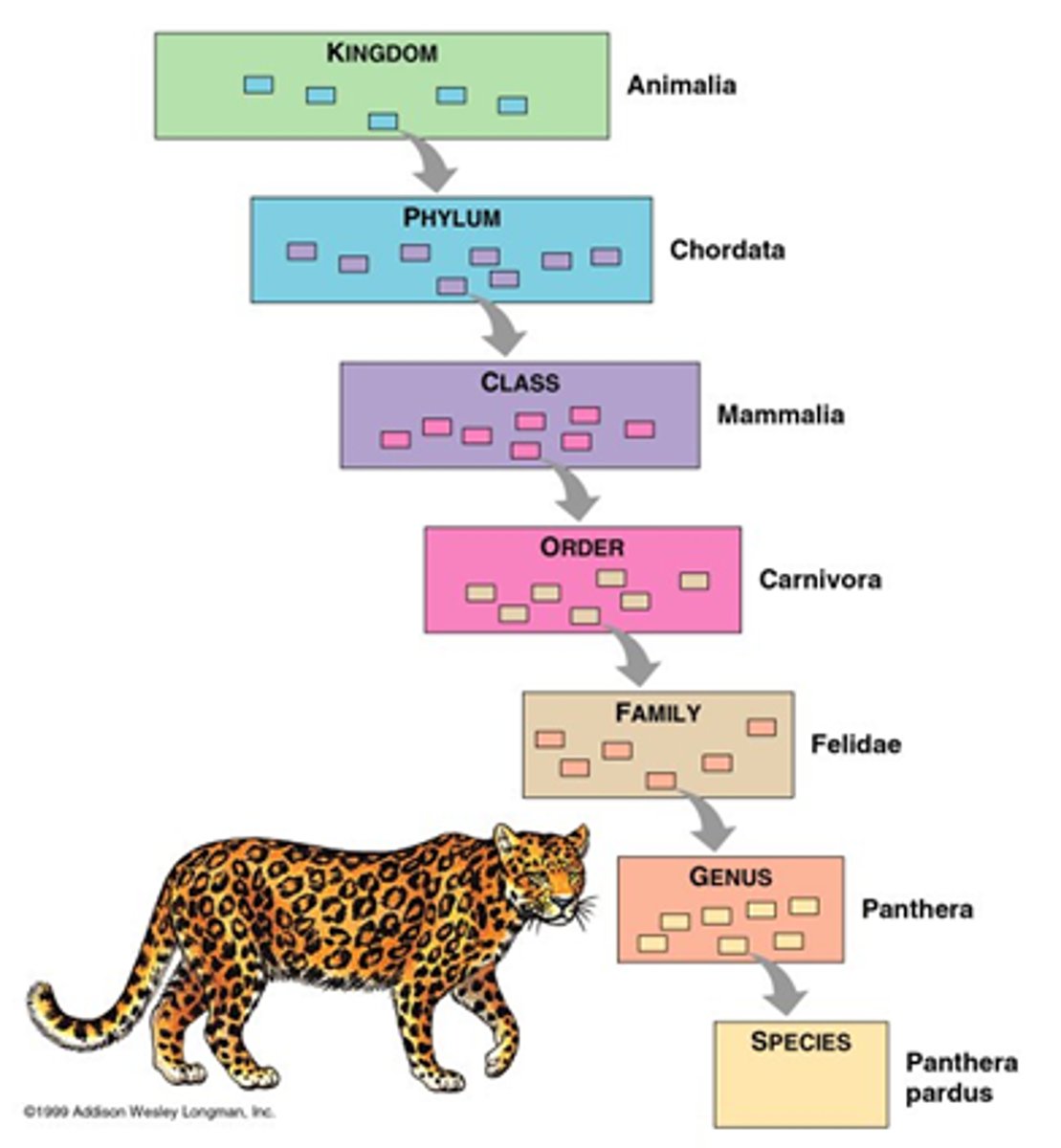
Taxonomic level
Dear King Philip Came Over From Great Spain