Materials Yr 1
 Call Kai
 Learn
Learn Practice Test
 Spaced Repetition
 Match
Match Flashcards
 Knowt Play
1/17

Earn XP
Description and Tags
Name | Mastery | Learn | Test | Matching | Spaced | Call with Kai | Chat |
|---|
No analytics yet
Send a link to your students to track their progress
18 Terms
What is a ‘composite’?
mixture of 2 or more materials
tough matrix
strong filler
good strength to weight ratio
Name 3 composites?
fibreglass reinforced plastics (GRP)
carbon fibre - epoxy resin
concrete
What is an ‘electronic material’?
crystalline structure
specific electrical characteristics
semi-conductive
Name 2 electronic materials
silicon & germanium chips
What are the general characteristics of ‘metals’?
strong
ductile
electrical conductor
thermal conductor
non-transparent (opaque)
shiny
What are the general characteristics of ‘ceramics’?
strong
brittle
electrical insulator
thermal insulator
may be transparent
heat resistant
What are the general characteristics of ‘polymers’?
weak
very ductile
electrical insulator
thermal insulator
range of transparency
low densities
What are the different properties of materials?
physical
mechanical
chemical
economical
electrical
acoustic
What are ‘physical properties’? Give examples
inherent property derived from internal atomic arrangements
e.g
density
shape/structure
size
porosity
moisture content
What are ‘mechanical properties’?
reaction of a material to the application of external forces
What are ‘chemical properties’?
interaction of a material with the elements in its working environment
What are ‘economical properties’?
viability of a material to be manufactured into useful products
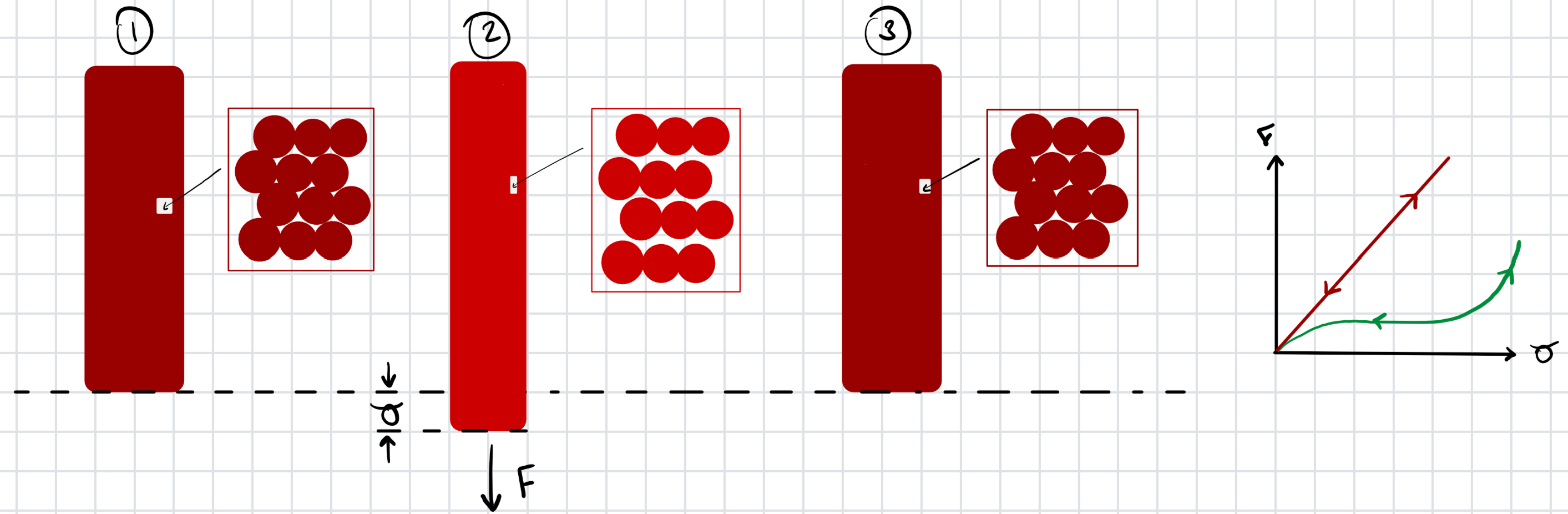
What happens in ‘elastic deformation’?
initial
small load - bonds stretch
unload - returns to initial
REVERSIBLE!!
Linear elastic
Non-linear elastic
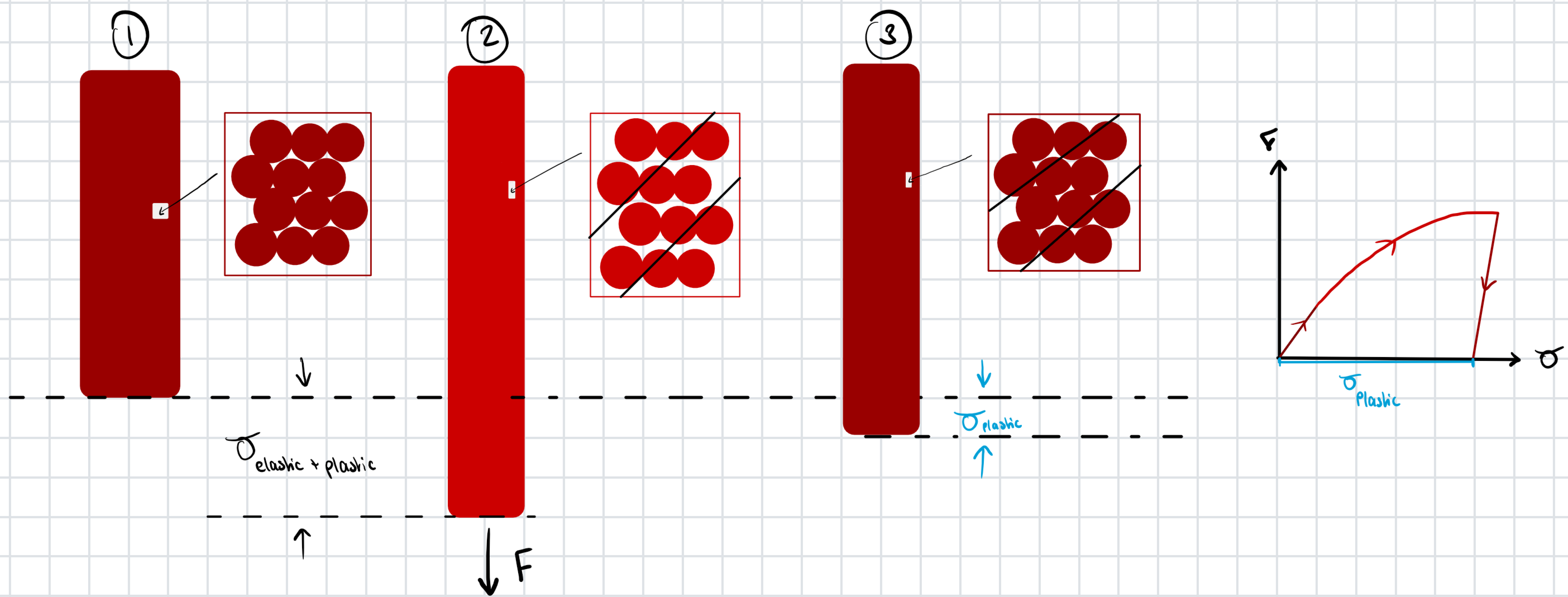
What happens in ‘plastic deformation’?
initial
small load - bonds stretch & planes shear
unload - planes still sheared
PERMANENT!!
Linear elastic
Plastic stress
What are the different ‘types of loading’?
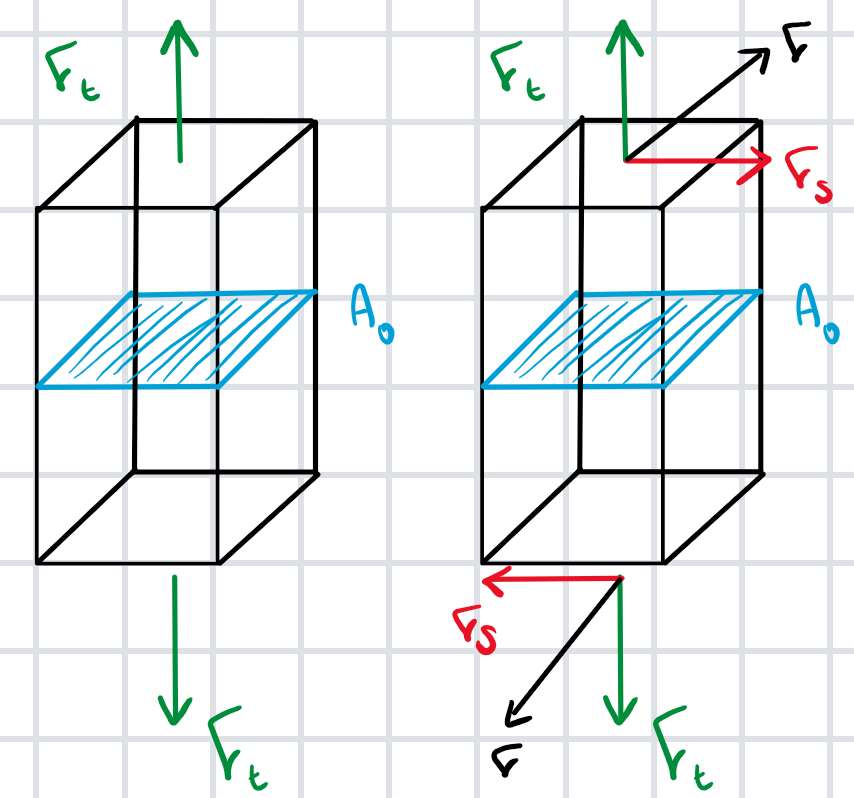
Tensile
Compressive
Shear
Torsion
What is ‘stress’?
the magnitude of the applied force as experienced by the sample
σ=AF
σ= Stress (Pa or Nm-2)
F= Force or load (N)
A= Cross sectional area (m2)
What are the different ‘types of stress’?
Engineering: used for engineering applications
σe=A0F
A0= original cross sectional area
True
σt=AtF
At= instantaneous cross sectional area
What are the different types of ‘engineering stress’?
Tensile
σ=A0Ft
Shear
τ=A0Fs