Danny AP Calculus
 Call Kai
 Learn
Learn Practice Test
 Spaced Repetition
 Match
Match Flashcards
 Knowt Play
1/178

There's no tags or description
Looks like no tags are added yet.
Name | Mastery | Learn | Test | Matching | Spaced | Call with Kai | Chat |
|---|
No analytics yet
Send a link to your students to track their progress
179 Terms
A correspondence that associates with each element of the domain one and only one element of the range
Function
What does f(a)=b indicate?
b is the value of f at a
What are elements in the domain called!
Input
What are elements in the range called?
Outputs
What is a function often represented by?
Equation, graph, or table
A function that never takes on the same value twice
One to one function
For one to one functions, f(x1) ? f(x2) when x1 ≠ x2
≠
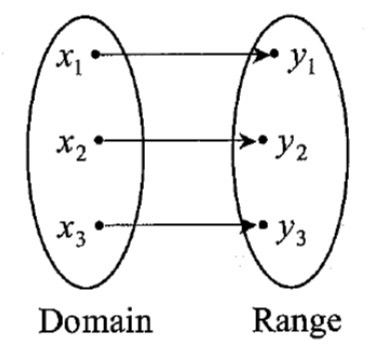
Is this a function and if so it is one to one?
Yes, yes
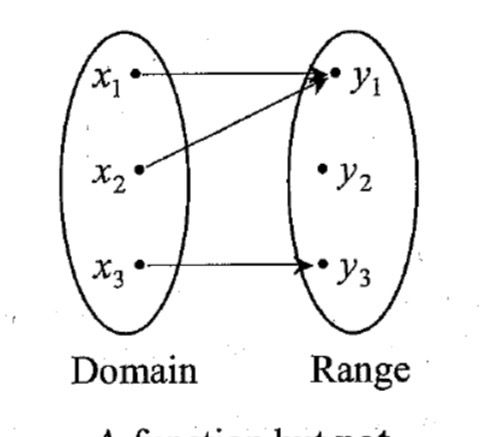
Is this a function and if so is it one to one?
Yes, no
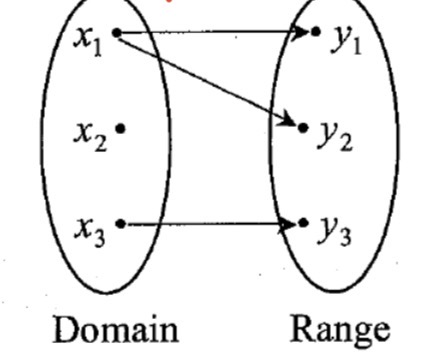
Is this a function or a relation?
Relation
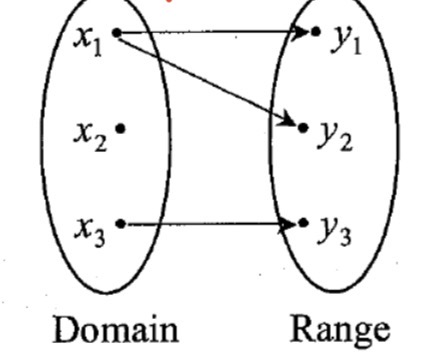
Why is this a relation?
x1 goes to both y1 and y2
An equation defines y as a function of x if and only if:
Every vertical line in the coordinate plane intersects the graph of the equation only once
A function, y, is a one to one function of x if and only if:
Every horizontal line in the coordinate plane intersects the function at most only once
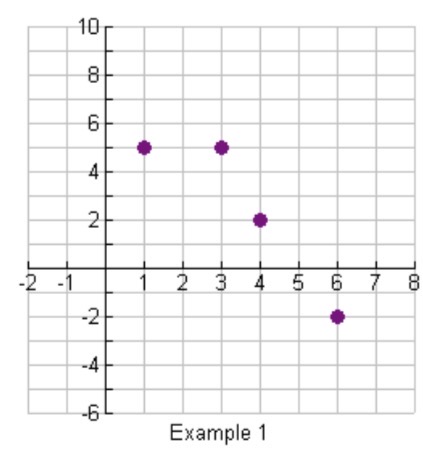
Is this graph continuous or discrete?
Discrete
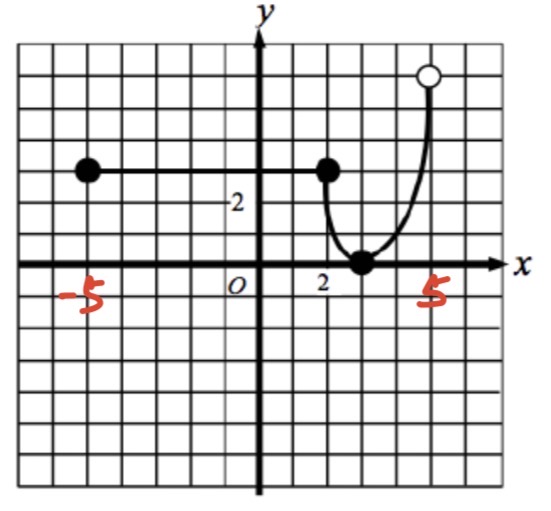
Is this graph continuous or discrete?
Continuous
How to solve quadratic inequality?
Convert to general form, sketch graph, determine if above or below x axis
Two functions f and g with the same domain can be combined to yield what?
Their sum and difference
f(x) + g(x) can be written as:
(f+g)(x)
f(x) - g(x) can be written as:
(f-g)(x)
f(x)g(x) can be written as:
(fg)(x)
f(x) / g(x) can be written as:
(f/g)(x)
(f/g)(x) is defined for what?
All x in the shared domain except those values for which g(x) is 0
What is the composition of f with g written as?
f(g(x))
What is f(g(x)) read as?
f of g of x
The function obtained by replacing x wherever it occurs in f(x) by g(x):
f(g(x))
(f(g(x) is also written as:
(f。g)(x)
What is the domain of (f。g)(x)?
Set of all x in the domain of g for which g(x) is in the domain of f
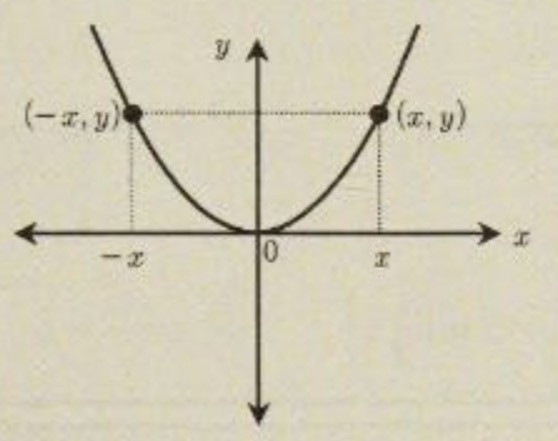
Even functions:
f(x)=f(-x)
Even functions are symmetric about:
y-axis
Graph of even functions:
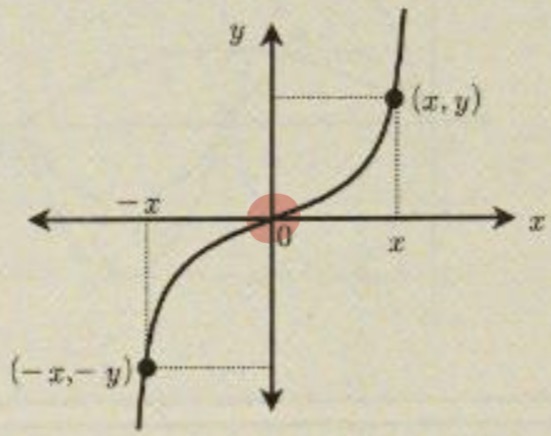
Odd functions:
f(-x) = -f(x)
Odd functions are symmetric about:
Origin
Graph of odd functions:
cos(-theta) = +cos(theta) or -cos(theta)
+cos(theta)
sin(-theta) = +sin(theta) or -sin(theta)
-sin(theta)
tan(-theta) = +tan(theta) or -tan(theta)
-tan(theta)
Domain and range of the inverse function of f which has domain of x and range of y:
y and x
Inverse of f(x)=y
f-1(y)=x
f-1(f(x)) = ?
x
f(f-1(x)) = ?
x
Inverse functions are basically what?
Switching the x and y values
The switching of x and y values produces what?
Reflection across y=x
What must we ensure when finding the inverse of a function?
Restrict new domain to old range
What should we do when inverting a not one-to-one function?
Restrict its domain to a one-to-one portion
Absolute value function:
f(x) = |x| = {x if x>/= 0, -x if x<0}
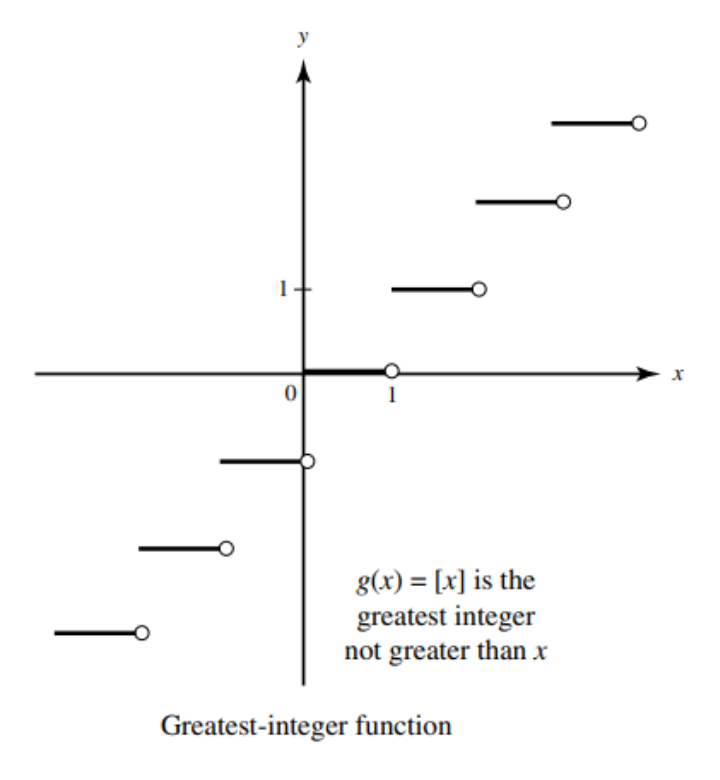
Greatest integer function:
g(x) = [x] is the greatest integer not greater than x
Graph of greatest-integer function:
What is the domain of polynomial functions?
All real numbers
Standard form:
ax+by=c
Slope intercept form:
y=mx+b
Point slope form:
y-y1=m(x-x1)
How to find distance between 2 points?
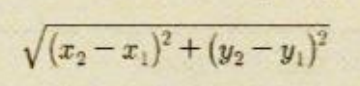
How to find midpoint between 2 points?
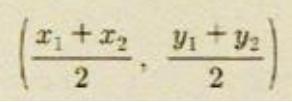
If the slopes of two lines are m1 and m2, the two lines are parallel if and only if:
m1=m2
If the slopes of two lines are m1 and m2, the two lines are perpendicular if and only if:
m1 x m2 = -1
Axis of symmetry of quadratic function:
The line x=-b/2a
If the multiplicity is 1, the graph:
Crosses x-axis at root
If multiplicity is even, the graph:
Touches x-axis at root and turns around
What is the point where the graph of even multiplicity touches the x-axis at root and turns around called?
Tangent point
If the multiplicity is odd and greater than 1, the graph:
Touches and crosses the x-axis at its root
What is the point of multiplicity that is odd and greater than 1 called?
Inflection point
Form of rational functions:
f(x) = p(x) / q(x) where p(x) and q(x) are polynomials
Domain of f(x) = p(x) / q(x)
All real numbers for which q(x) is not equal to 0
Vertical asymptote of y=n(x) / d(x)
x=k for which d(k)=0
Horizontal symptote if leading coefficient of numerator is less than that of denominator:
y=0
Horizontal symptote if leading coefficient of numerator is equal to that of denominator:
y= ratio of leading coefficients
Horizontal symptote if leading coefficient of numerator is greater than that of denominator:
No horizontal symptote
How to graph rational functions?
Plot asymptotes and intercepts, plot several points on each side of vertical asymptotes, draw curve through points
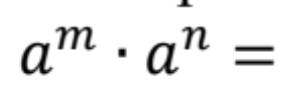
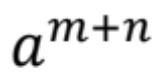
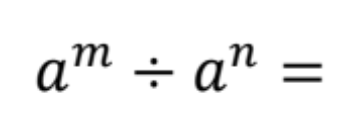
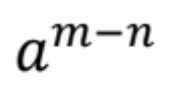
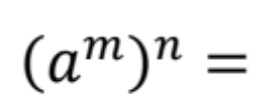
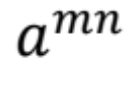
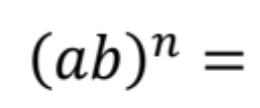
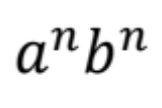
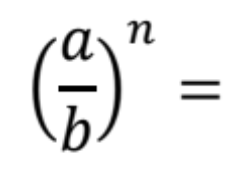
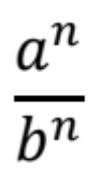
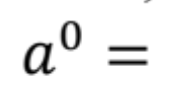
1
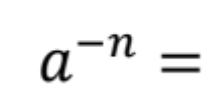
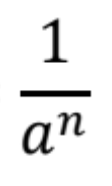
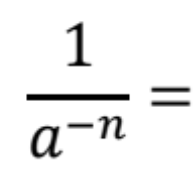
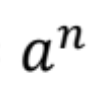
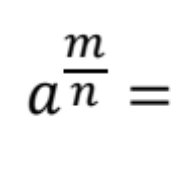
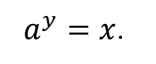
Inverse function of f(x)=a^x:
f-1(x) = loga(x)
What is loga(x) called?
Logarithmic function with base a

Domain and range of logarithmic parent functions:
Domain: all positive real numbers, range: all real numbers
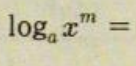
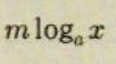
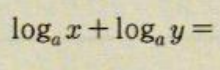
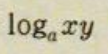
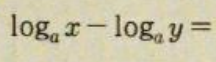
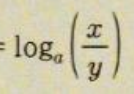
Change of base rule:
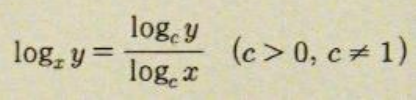
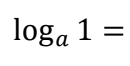
0
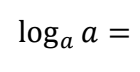
1
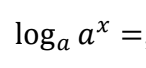
x
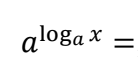
x
sin(theta) =
y/r
cos(theta) =
x/r
tan(theta) =
y/x
csc(theta) =
1/sin(theta)
sec(theta) =
1/cos(theta)
cot(theta) =
1/tan(theta)
30 60 90 triangles:
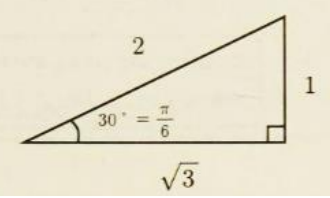
45 45 90 triangle:
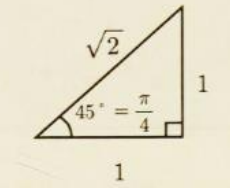
Graph of sin(theta) as a circle:
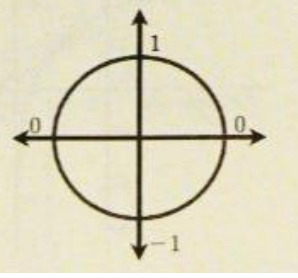
Graph of cos(theta) as a circle:
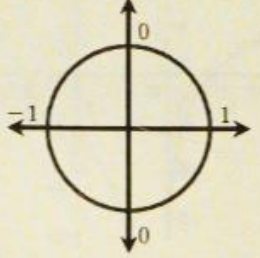
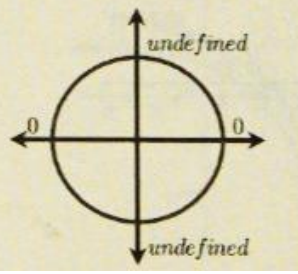
Graph of tan(theta) as a circle: