small intestines
 Call Kai
 Learn
Learn Practice Test
 Spaced Repetition
 Match
Match Flashcards
 Knowt Play
1/20

There's no tags or description
Looks like no tags are added yet.
Name | Mastery | Learn | Test | Matching | Spaced | Call with Kai | Chat |
|---|
No analytics yet
Send a link to your students to track their progress
21 Terms

what is the red structure
duodenum
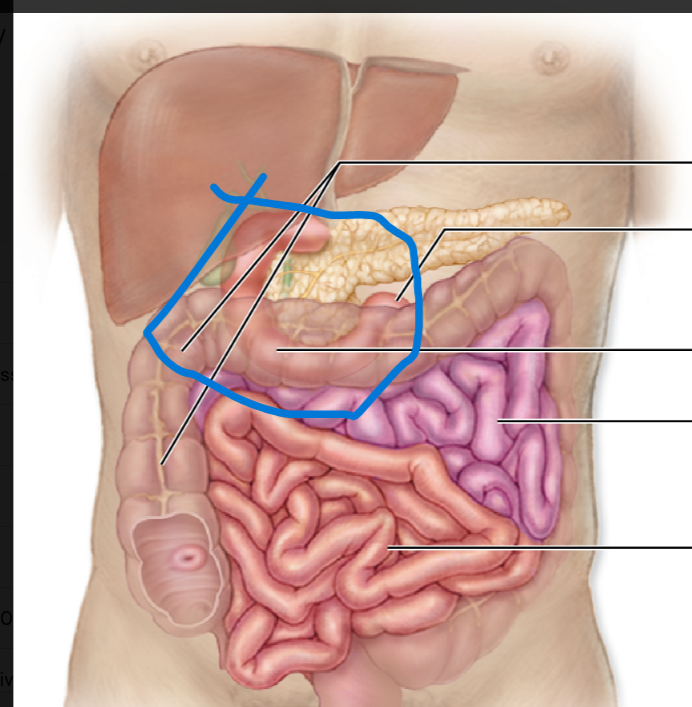
what is the blue structure
duodenum

what is the blue structure
major duodenal papilla
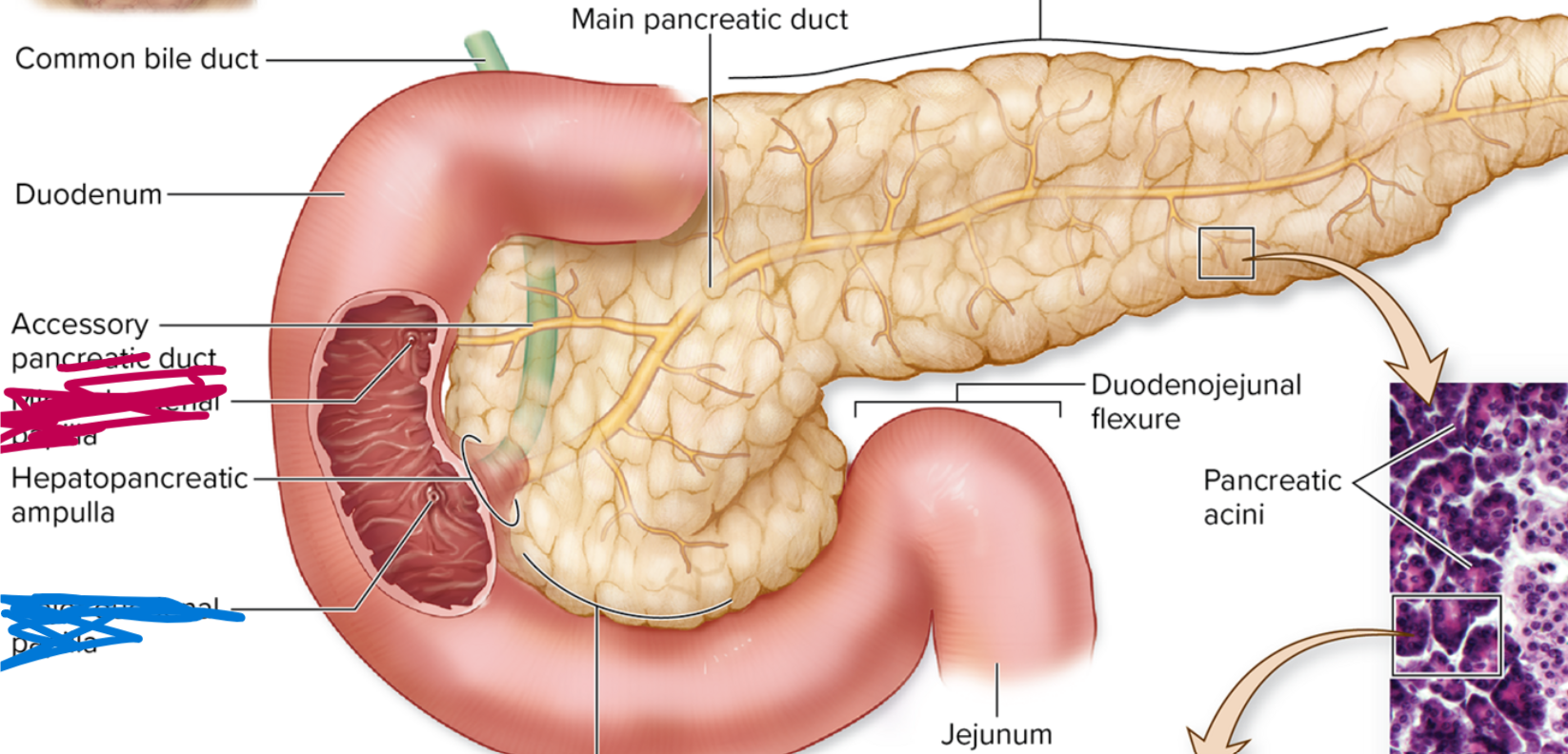
what is the red structure
minor dueodenum papilla

what is the white structure
mesentary

what is the red structure
ilium

what is the blue structure on the small intestine
jejunum
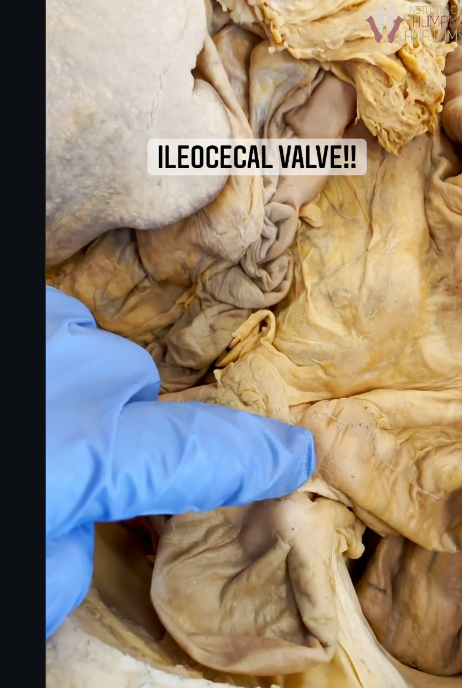
what is this structure on the small intestine
ileocecal valve
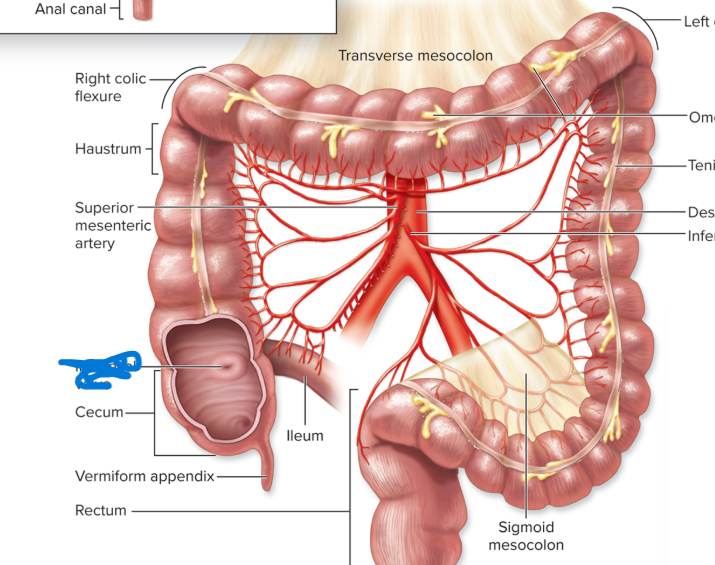
what is this structure on the small intestine
Ileocecal valve
Mesentery proper — location and function
Location: Fan-shaped fold of peritoneum attaching to the posterior abdominal wall.
Function: Suspends and anchors the jejunum and ileum while housing blood vessels, nerves, and lymphatic channels.
Regional distinctions of the small intestine
Duodenum: First section; receives chyme, bile, and pancreatic enzymes.
Jejunum: Middle section; primary area for chemical digestion and nutrient absorption.
Ileum: Final section; ends at the ileocecal valve and delivers residue to the cecum.
Secretions entering through the major duodenal papilla
Bile: Produced by the liver / stored in the gallbladder (emulsifies fats).
Pancreatic juice: Produced by the pancreas (contains digestive enzymes and bicarbonate buffer).
Ileocecal valve — location and function
Location: At the junction where the terminal ileum joins the cecum of the large intestine (lower right quadrant of the abdomen).
Function: Controls the passage of digestive residue into the large intestine and prevents reflux into the ileum.
Ileum — location and function
Location: Final and longest segment of the small intestine, situated mainly in the lower abdominal and pelvic cavity, ending at the ileocecal valve.
Function: Continues absorption of nutrients and vitamins (e.g., Vitamin B12 and bile salts) and transfers remaining material into the large intestine.
Jejunum — location and function
Location: Middle portion of the small intestine, positioned in the upper and central abdominal cavity between the duodenum and ileum, suspended by the mesentery proper.
Function: Primary site for chemical digestion and nutrient absorption.
Anatomical path of pancreatic juice into the digestive tract
Pancreas → Pancreatic duct → Major duodenal papilla → Duodenum
Anatomical path of bile into the digestive tract
Liver/Gallbladder → Bile duct → Major duodenal papilla → Duodenum
Major duodenal papilla — location and function
Location: An elevation/opening on the inner (medial) wall of the descending portion of the duodenum.
Function: Serves as the entry site where bile and pancreatic juice are discharged into the duodenum.
Duodenum — location and function
Location: First and shortest region of the small intestine, starting at the pyloric sphincter, curving in a C-shape around the head of the pancreas, and connecting to the jejunum.
Function: Receives chyme from the stomach along with bile and pancreatic juice to continue digestion.
Three regions of the small intestine in sequential order
duodenum
Jejunum
Ileum
Function: Function together to finish chemical digestion and absorb nutrients into the bloodstream and lymphatic system.
Small intestine — location and function
Location: Coiled tube occupying much of the central and lower abdominal cavity, extending from the pylorus of the stomach to the cecum.
Function: Completes chemical digestion and absorbs up to 90%90%90% of nutrients, along with water, electrolytes, and vitamins.