Exam 1 (Ch 1&2) Lecture
 Call Kai
 Learn
Learn Practice Test
 Spaced Repetition
 Match
Match Flashcards
 Knowt Play
1/128

There's no tags or description
Looks like no tags are added yet.
Name | Mastery | Learn | Test | Matching | Spaced | Call with Kai | Chat |
|---|
No analytics yet
Send a link to your students to track their progress
129 Terms
Anatomy
study of the structure of body parts and their relationships to one another
physiology
study of the function of body; how body parts work to carry out life-sustaining activities
gross macroscopic anatomy
study of large body structures visible to the naked eye
regional anatomy
looks at all structures in a particular area of the body
system anatomy
looks at just one system
surface anatomy
looks at internal structures that can be seen through skin
microscopic anatomy
structures too small to be seen with the naked eye
palpate
feel organs with hands
auscultate
listen to organs with a stethoscope
study of physiology is based on
organ systems
principal of complementarity means
function always reflects structure
Organize the body smallest to largest
atom
molecule
cells
tissue
organ
organ system
organism
Name 11 organ systems
integumentary
skeletal
muscular
nervous
endocrine
cardiovascular
lymphatic
respiratory
digestive
urinary
reproductive
What makes up the Integumentary System?
hair, skin, nails
What makes up the skeletal System?
joint and bones
What makes up the muscular System?
skeletal muscles
What makes up the nervous System?
brain, spinal cord, nerves
What makes up the endocrine System?
glands and hormones
What makes up the cardiovascular System?
heart, blood vessels, capillaries
What makes up the lymphatic System?
red bone marrow, thymus, lympathic vessels, thoracic duct, spleen, lymph nodes
What makes up the respiratory System?
nasal cavity, pharynx, larynx, trachea, lung, bronchus
What makes up the digestive System?
oral cavity, esophagus, large intestine, liver, stomach, small intestine, rectum, anus
What makes up the urinary System?
kidney, ureter, urinary bladdar, erethra
What makes up the reproductive System?
prostate, penis, testis, scrotum, dectus deferens, mammary glands, uterus, vagina, ovary, uterine tube
Necessary life functions
maintaining boundaries, movement, responsiveness, digestion, metabolism,exretion, reproduction, growth
Interrelationships
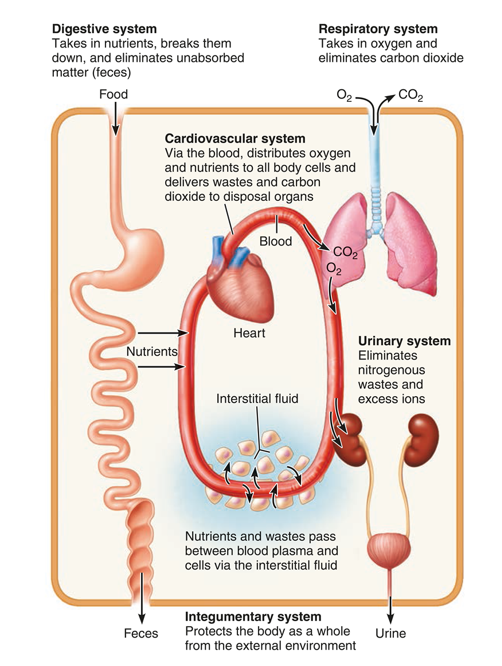
survival needs
nutrients, oxygen, water, normal body temp, appropriate atmosphere pressure
homeostasis
the maintance of relatively stable internal conditions despite continuous changes in the environment
homeostasis is a ____ feedback
negative
negative feedback
Response reduces or shuts off the original stimulus
Variable changes in opposite direction of initial change, bringing it back to its set point
positive feedback
–Response enhances or exaggerates the original stimulus
–Variable changes in the same direction of initial change
axial part
head neck trunk
appendicular part
legs and arms
Anterior Anatomical
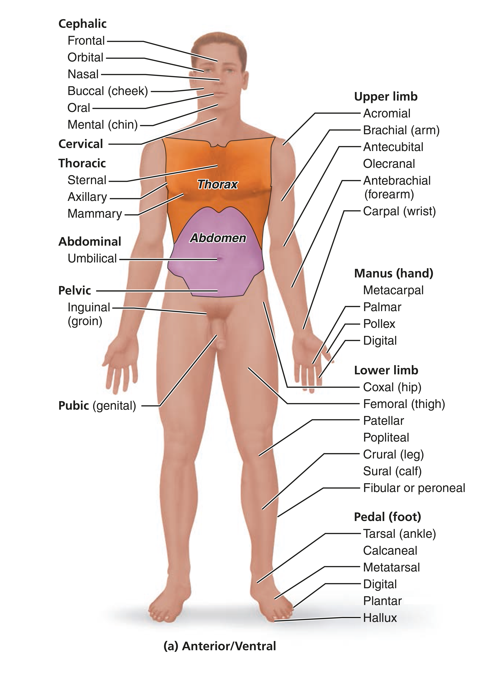
Posterior Anatomical

sagittal body plane
–Vertical plane that divides the body into right and left parts
Frontal coronal plane
–Vertical plane that divides the body into anterior (front) and posterior parts (back)
Transverse plane
Horizontal plane that divides the body into superior (top) and inferior parts (bottom)
oblique section
cuts in the body at angles
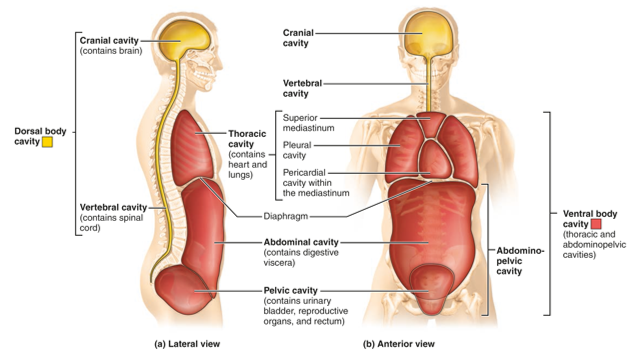
Dorsal body cavity contains which sub cavities
cranial cavity
vertebral cavity
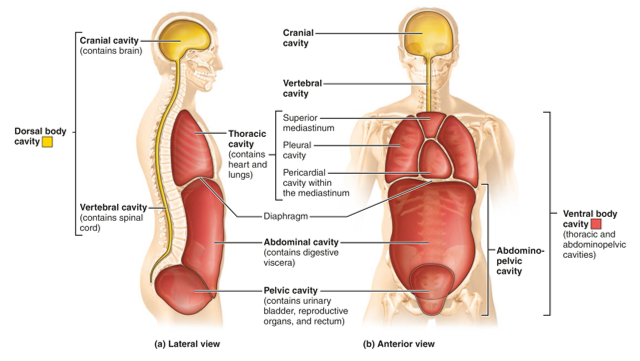
ventral body cavity contains 2 sub- divisions
thoracic cavity (two pleural cavities and mediastinum
abdominopelvic cavity

Membrane in ventral body cavity
serosa- –Thin, double-layered membranes that cover surfaces in ventral body cavity
▪Parietal serosa lines cavity walls
▪Visceral serosa covers organs (viscera) in the cavity
Pleura
–Parietal pleurae line pleural cavities; visceral pleurae cover the lungs; contain pleural fluid
peritoneum
–Parietal peritoneum lines the walls of the abdominopelvic cavity; visceral peritoneum covers most of the organs in that cavity and contains peritoneal fluid
pericardium
–Parietal pericardium lines the pericardial cavity; visceral pericardium covers the heart; contains pericardial fluid
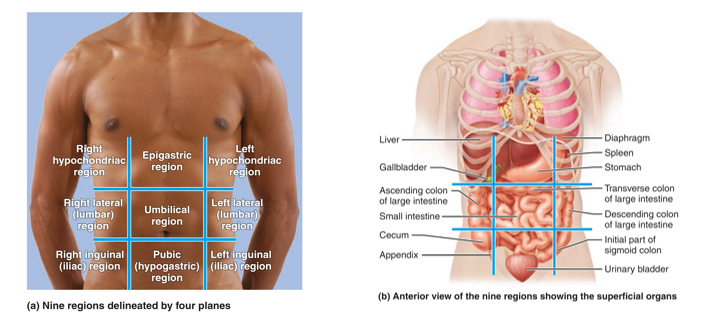
Nine Abdominopelvic Regions
matter
anything that has mass and occupies space
States of matter
solid- definite shape and vol
liquid- changeable shape, definite vol
gas- changeable shape and vol
energy
the capacity to do work or put matter into motion
Kinetic vs. potential
kinetic- energy in motion
potential- stored energy
chemical energy
stored in bonds of chemical substances
electrical energy
results from movement of changed particles
mechanical energy
directly involved in moving matter
radiant or electromagnetic energy
travels in waves
all matter is composed of
elements
four elements make up 96% of the human body
carbon, oxygen, nitrogen, hydrogen
elements composing the human body: Oxygen symbol and function
O, need for the production of cellular energy ATP
elements composing the human body: Carbon symbol and function
C, component of all organic molecules including carbohydrates, lipids, proteins, and nucleic acids
elements composing the human body: Hydrogen symbol and function
H, a component of all organic molecules, as an ion H influences pH of body fluids
elements composing the human body: Nitrogen symbol and function
N, A component of proteins and nucleic acids
elements composing the human body: Calcium symbol and function
Ca, found as a salt in bones and teeth, ionic formed is required for muscle contraction conduction of nerve impulses and blood clotting.
elements composing the human body: Phosphorous symbol and function
P, part of calcium phosphate salts in bones and teeth, also present in nucleic acids, and part of ATP and phospholipids
elements composing the human body: Oxygen symbol and function
O, both organic and inorganic molecules, needed for the production of ATP
elements composing the human body: Potassium symbol and function
K, major positive ion in cells, necessary for muscle contraction and nerve impulses
elements composing the human body: Sulfur symbol and function
S, component of proteins (muscles)
elements composing the human body: sodium symbol and function
Na, major positive ion found in extracellular fluids, important for water balance conduction of nerve impulses and muscle contraction
elements composing the human body: Chlorine symbol and function
Cl, ionic form is most abundant negative ion in extracellular fluids
elements composing the human body: magnesium symbol and function
Mg, present in bone and important cofactor in metabolic reactions
elements composing the human body: Iodine symbol and function
I, needed to make functional thyroid hormones
elements composing the human body: iron symbol and function
Fe, component of hemoglobin and some enzymes
atoms
unique building blocks of each element
proton
positive charge, weigh one amu
electron
negative charge, weigh 0
neutron
no charge, weigh 1 amu
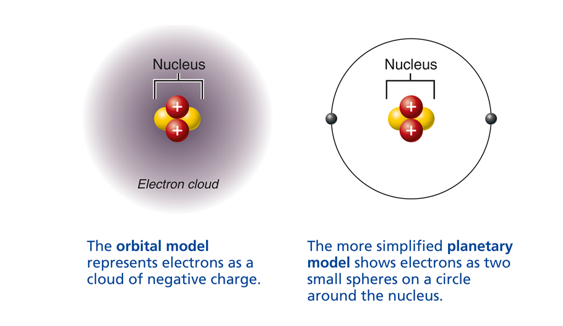
planetary model vs. orbital model
planetary- simplified and outdated because it incorrectly depicts electrons in orbits, fixed circular paths
Orbital model: current model used that depicts orbitals, probable regions where an electron is most likely to be located (rather than fixed orbits)
atomic number
number of protons, subscript left of element bottom
mass number
total protons and neutrons, subscript left of element top
isotopes
different number of neutrons
atomic weight
average mass of all isotopes of an atom
radioisotopes
isotopes that decompose to more stable forms
molecule vs. compound
molecule- two or more atoms bonded together (O2)
can be heterogeneous or homogeneous
compound- two or more different atoms bonded together (H2O)
can be only homogeneous
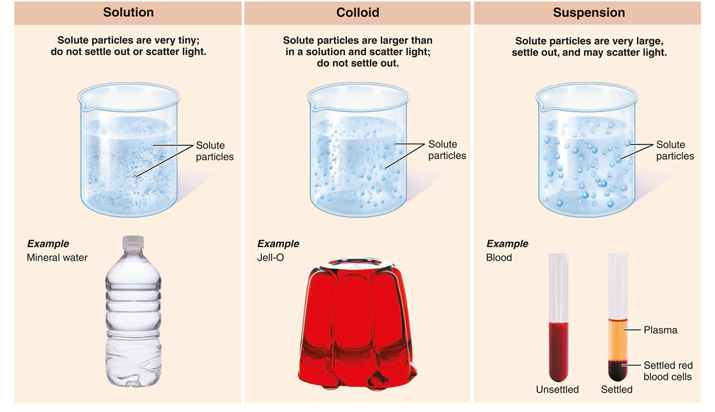
mixture def and kinds
mixture- two or more components that are physically intermixed
kinds: solutions, colloids, suspensions
solutions
homogeneous mixtures, particles are evenly distributed
solvent vs. solute
solvent- greatest amount, doing the dissolving
solute- smallest amount, being dissolved
universal solvent
water
molarity
is a number of moles of solute per liter of solvent
Avogadro’s number
6.02×10²³
Colloids (emulsions)
heterogeneous mixtures (particles are not evenly distributed)
ex. cytosol of cell
suspensions
heterogeneous mixtures that contain large visible solutes that do not settle
can separate
free radicals
highly reactive atoms containing one or more unpaired electrons in the outermost shell causing the atoms to gain or loose or share electrons with other atoms to gain stability
ionic bonds
atoms that have gained or lost electrons to become charged
anion- negative
cation- positive
covalent bonds
formed by sharing valence electrons between 2 atoms
polar- unequal sharing
dipole- 2 different charges (water)
electronegative
nonpolar- equal sharing
hydrogen bonds
attractive forces between electropositive hydrogen of one molecule and an electronegative atom of another molecule
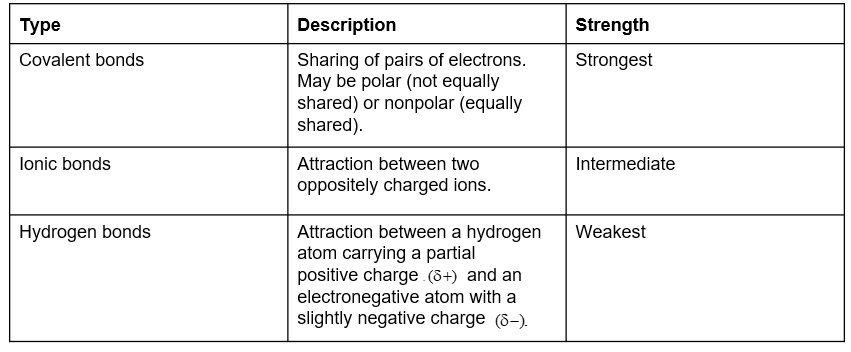
which bonds are strongest or weakest
covalent > Ionic > Hydrogen
synthesis and anabolic
atoms or molecules that are combining to form bigger
building processes
decomposition and catabolic
breakdown of molecules into smaller parts
bond breaking processes
exchange or displacement reactions
bonds are made and broken
Redox LEO GER
reduction- gain electrons
oxidation- lose electrons
exergonic vs. endergonic
exergonic- net release of energy, give off, exit
catabolic and oxidative
endergonic- net absorption of energy, use up, enter
anabolic
catalysts
increase the rate of reaction without being chemically change or being part of product
enzyme