Bacteria
 Call Kai
 Learn
Learn Practice Test
 Spaced Repetition
 Match
Match Flashcards
 Knowt Play
1/64

There's no tags or description
Looks like no tags are added yet.
Name | Mastery | Learn | Test | Matching | Spaced | Call with Kai | Chat |
|---|
No analytics yet
Send a link to your students to track their progress
65 Terms
Binary Fission
The way that prokaryotic cells divide; DNA replication leads directly to cytokinesis with no agglomeration into chromosomes first
Coccus

Diplococci

Diplococci Encapsulated

Staphylococci
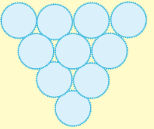
Streptococci
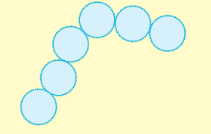
Sarcina
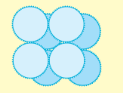
Tetrad

Coccobacillus

Bacillus

Diplobacilli

Palisades

Streptobacilli

Hypha

Stalk

Enlarged Rod Fusobacterium
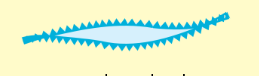
Vibrio
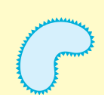
Comma Form
Also called bdellovibrio

Club Rod
Also called corynebacteriaceae

Helical Form

Corkscrew Form

Spirochete

Filamentous

Flagella
Rotating organelle used by motile bacteria
Pleomorphic
Does not have a fixed cell shape but instead alters their morphology in response to environmental conditions
Gram Staining
Type of differential stain in which bacteria must first be heat fixed so that the bacteria are able to hold the primary stain and keep the bacteria in place) before sequentially treating them with 4 different reagents
Cationic Stain
Primary Stain; usually crystal violet or methylene blue) that is taken up by both gram + and - bacteria; cells are usually incubated with the dye for at least one minute
Crystal Violet
A type of dye that disassociates into CV+ and Cl- ions in an aqueous solution; the ions penetrate through the cell wall and CV+ associates with the - charged functional groups in cell walls
Mordant
Usually gram’s iodide solution; contains anions that complex with the positively charged primary stain inside of gram pos cell walls, preventing easy removal of primary stain when cells are washed with a decolorizer; usually incubated for at least a minute
Decolorizer
Often ethanol or acetone; used to wash the primary stain off of the surface of any gram-negative bacteria; which cannot remove any primary stain molecules that were fixed inside gram pos cell walls by the mordant; alcohol dissolves the outer membrane of gram neg bacteria, removing any primary stain on gram neg cells
Counterstain
Often safranin, basic fuchsin, or carbol fuchsin; stains both cells but is not visible on gram pos cells bc of the primary stain
Exotoxins
What do most gram positive bacteria produce?
Phenol
What type of disinfectants are gram + bacteria most susceptible to?
purple
what color are gram +
Gram positive
lacks periplasmic space
periplasmic space
space btw the cytoplasm and outer membranes
gram positive
lack an outer membrane
Gram negative
Have thinner walls of peptidoglycan and two membranes with a periplasmic space in between
Gram negative
reddish-pink
Gram negative
More difficult to kill bc of more complex cell membrane structure
Acid-fast
Type of bacteria that are hard to classify with a gram stain; stain either weakly gram pos or neg
Acid-fast
Type of bacteria that have thinner layers of peptidoglycan comprising the cell wall and an outer lipid membrane coating the cell wall (in addition to the bilayer beneath cell wall that constitutes the cytoplasmic membrane that all bacteria have)
Gram negative
Have an outer phospholipid bilayer rich in lipopolysaccharide
Acid-fast
Type of bacteria with a complex layer beyond cell walls; directly above the peptidoglycan wall is an arabinogalactan (structural polysaccharide) that is covalently bound to a layer of mycolic acids that comprise the inner leaflet of the outermost lipid bilayer
acid fast
type of bacteria in which the outer leaflet of the outermost lipid bilayer contains free mycolic acids, phospholipids, and glycolipids; also contains surface and porin proteins that span the outer membrane and facilitate transport
L-form, L-phase
type of bacteria that lack cell walls; can arise from gram pos or neg bacteria
Conjugation
a method of horizontal gene transfer in which a bacterium can transfer some of its own DNA into other bacteria via pilus; seen with penicillin binding proteins, where a bacterium with the protein can give it to another bacteria
Transduction
a method of horizontal gene transfer in which a bacteriophage infects a bacterium and takes some of its DNA after replication; the replicated bacteriophages infect other bacteria and insert the previous bacteria’s DNA into another bacteria
Transformation
a method of horizontal gene transfer in which after the process of lysis or death, a bacterium can take some of the DNA fragments left behind of the other dead bacteria
Flagellin
Protein that is found in helical filaments that make up the flagella
Gram positive
Type of bacteria that have 2 protein rings in the peptidoglycan wall and membrane that act as bearings for the shaft of the flagellum
Gram negative
Type of bacteria the have 4 basal protein rings for flagella; L in lipopolysaccharide layer, P in peptidoglycan layer, M ring in cell membrane, and S ring attached directly to the cytoplasm
Chemiosmosis (protons), sodium-pump
How are most bacterial flagella driven?
Monotrichous
Only one flagellum, on one pole of the cell; Vibrio cholera
Amphitrichous
A single flagellum on each pole of the cell; Alcaligenes faecalis
Cephalotrichous
More than one flagella on each pole of the cell, sometimes no distinction is made btw this and amphitrichous
Lophotrichous
More than one flagella on one pole of the cell: Helicobacter pylori
Peritrichous
Many flagella are distributed across the surface of the cell and are not necessarily localized to the poles of the cell; Escherichia Coli
Atrichous
Lacking flagella entirely; Lactobacillus delbrueckii
Atrichous

Monotrichous

Amphitrichous

Peritrichous
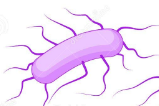
Lophotrichous
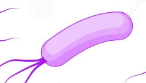
Cephalotrichous