Federal Wetland Regulation and Legislation
 Call Kai
 Learn
Learn Practice Test
 Spaced Repetition
 Match
Match Flashcards
 Knowt Play
1/31

There's no tags or description
Looks like no tags are added yet.
Name | Mastery | Learn | Test | Matching | Spaced | Call with Kai | Chat |
|---|
No analytics yet
Send a link to your students to track their progress
32 Terms
1800's Regulations
- Swamp Land Acts
- Rivers and Harbors Act
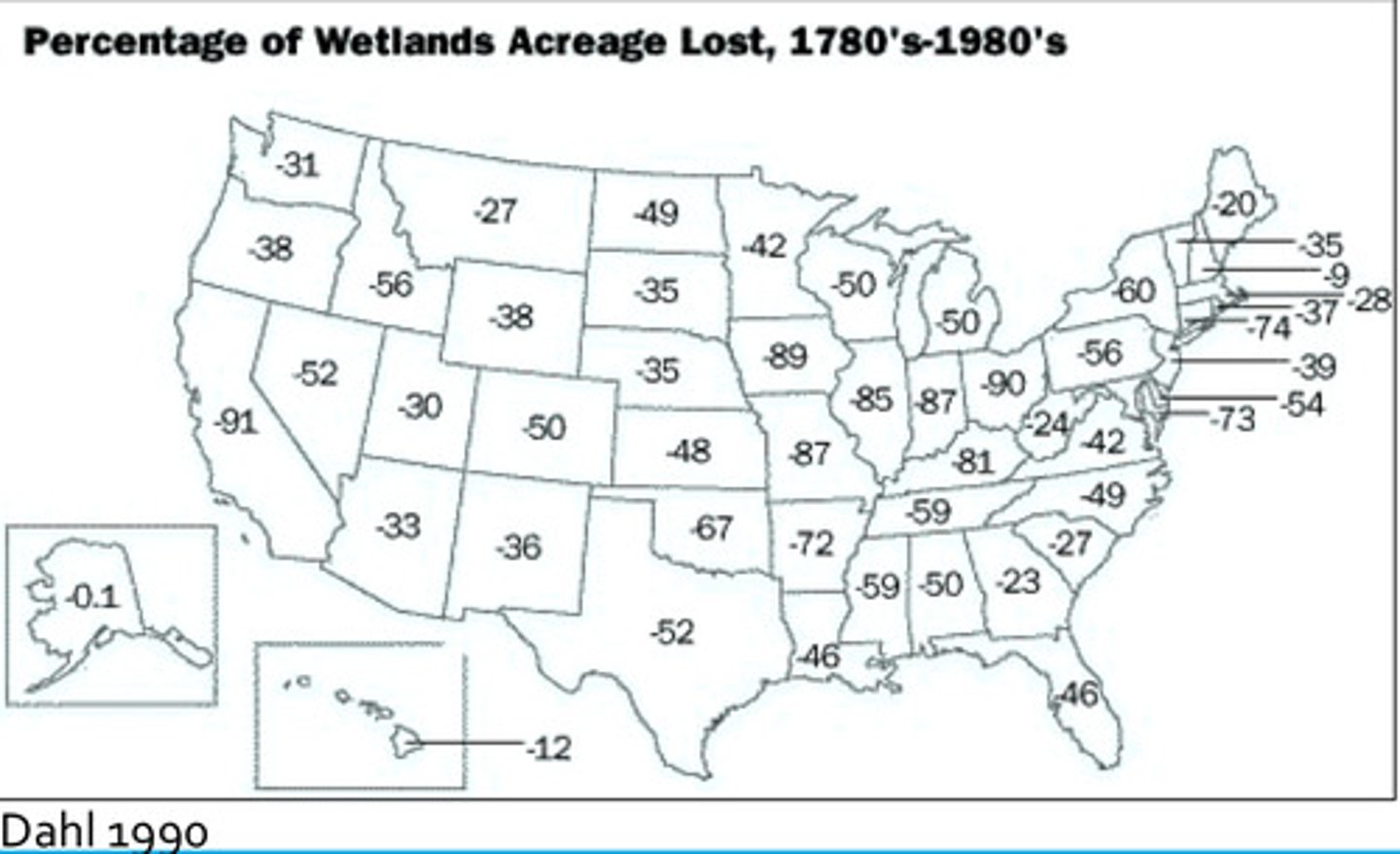
Swamp Land Acts (1849, 1850, 1860)
- drive to expand West
- paid to drain = incentivized wetland draining for agriculture
- affected federally, state, and privately owned wetlands
- severe decrease in wetlands
Rivers and Harbors Act: Section 10 (1899)
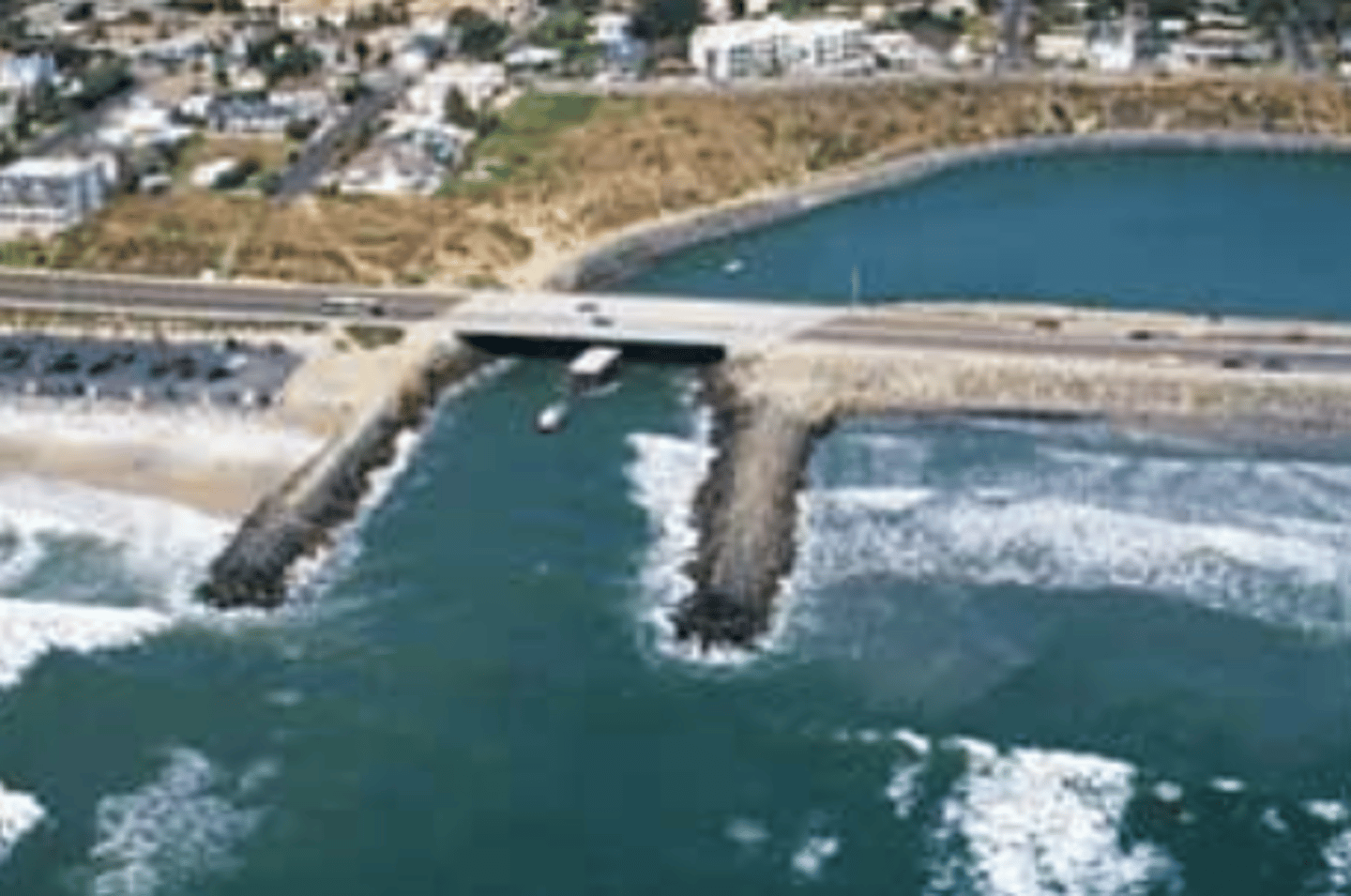
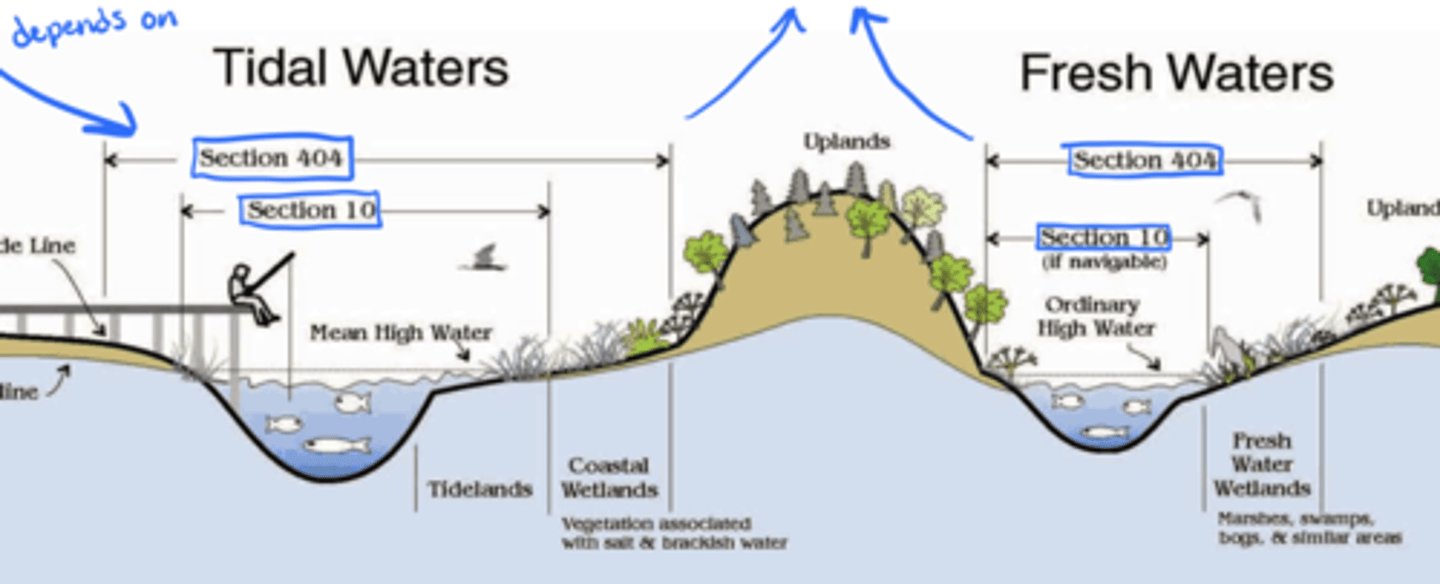
- Regulates work in, over, and under waters listed as "navigable waters of the United States."
ex) dredging, filling, jetties, beach nourishment, etc.
- Permit required = given by USACE
Federal Organizations' sides
Drain wetlands = USACE, SCS (NRCS), BOR
Protect wetlands = DOI, USFWS
Pre-1970's Regulations
- Fish and Wildlife Coordination Act (USFWS)
- Land and Water Conservation Fund Act (USFWS, BLM USFS, NPS)
Fish and Wildlife Coordination Act (USFWS) (1967)
- protects fish and wildlife when federal actions result in impact of a natural stream or body of water
- Regulated USFWS involvement in water resource projects
Land and Water Conservation Fund Act (USFWS, BLM USFS, NPS) (1968)
Idea: funds for acquisition of land and water (and easements)
Main focus: recreation, protection of parks and wildlife areas
Source of funds: fees from offshore oil and gas drilling
70's Regulation
- Federal Water Pollution Control Act Amendments (1972) -> Clean Water Act (1977)
Clean Water Act: Section 404 (1977)
- requires permit to dredge and fill "waters of United States"
- protects wetlands and provides a definition of them
Dredge definition
scooping up wetland soil and removing it or moving it
Fill definition
"any material which replaces an aquatic area with dry land or of changing the bottom elevation of a waterbody"
- discharge of dredge material
CWA Permit purpose
slow development (takes time to get permit approved, can get denied)
Denied CWA permit if...
Discharge of dredged or fill prohibited if:
- a practicable alternative exists that is less damaging to the aquatic environment
- the nation's waters would be significantly degraded
Post-1970's Regulation
- variety of laws to protect wetlands (land use, water quality, wildlife)
- jurisdiction spread over several agencies (unclear at times)
Mitigation def
action that lessens impacts on wetlands
How to get approved for a CWA permit
Applicants must show that they have:
1. Taken steps to avoid wetland impacts
2. Minimized potential impacts on wetlands
3. Provided compensation (mitigation) for any remaining unavoidable impacts through the restoration or creation of wetlands
Timeline of Defining Waters of the United States (WOTUS)
- (1972) FWCPAA: "navigable waters of US"
- (1974-1975) US vs. Holland, NRDC vs. Calloway: added adjacent wetlands to def
- (1977) CWA Amendments: isolated wetlands and other waters not part of a tributary system to navigable
- (1986) Migratory Bird Rule: legal basis for regulation of isolated wetlands
- (2001) SWANCC vs USACE: wetlands needed a connection to navigable waters, isolated wetlands no longer protected
- (2006) Rapanos vs US, Carabell vs USACE: tributaries must have continuous "significant nexus" to navigable waters (no longer protects tributaries on the other side of dams)
- (2015) Obama Clean Water Rule: protects navigable waters, tributaries, and isloted waters with significant nexus
- (2020) Trump replaces with Navigable waters protection rule = against wetlands and tributaries
- (2021) Biden reinstates Obama's rules
- (2023) Sackett vs EPA: wetlands must have continuous surface connection to navigable waters
How many significant changes have occurred to WOTUS aka CWA?
10 events
Where are we now federally?
- (2023) Sackett vs EPA: wetlands must have continuous surface connection to navigable waters
- no federal protection (no permits) of isolated wetlands and non-navigable tributaries and their wetlands
- 63% of US wetlands unprotected
- will become less protected under Trump administration
Where are we at the state level?
- 24 states use direct federal CWA (no further state wetland protections)
- CT has regulations to protect wetlands
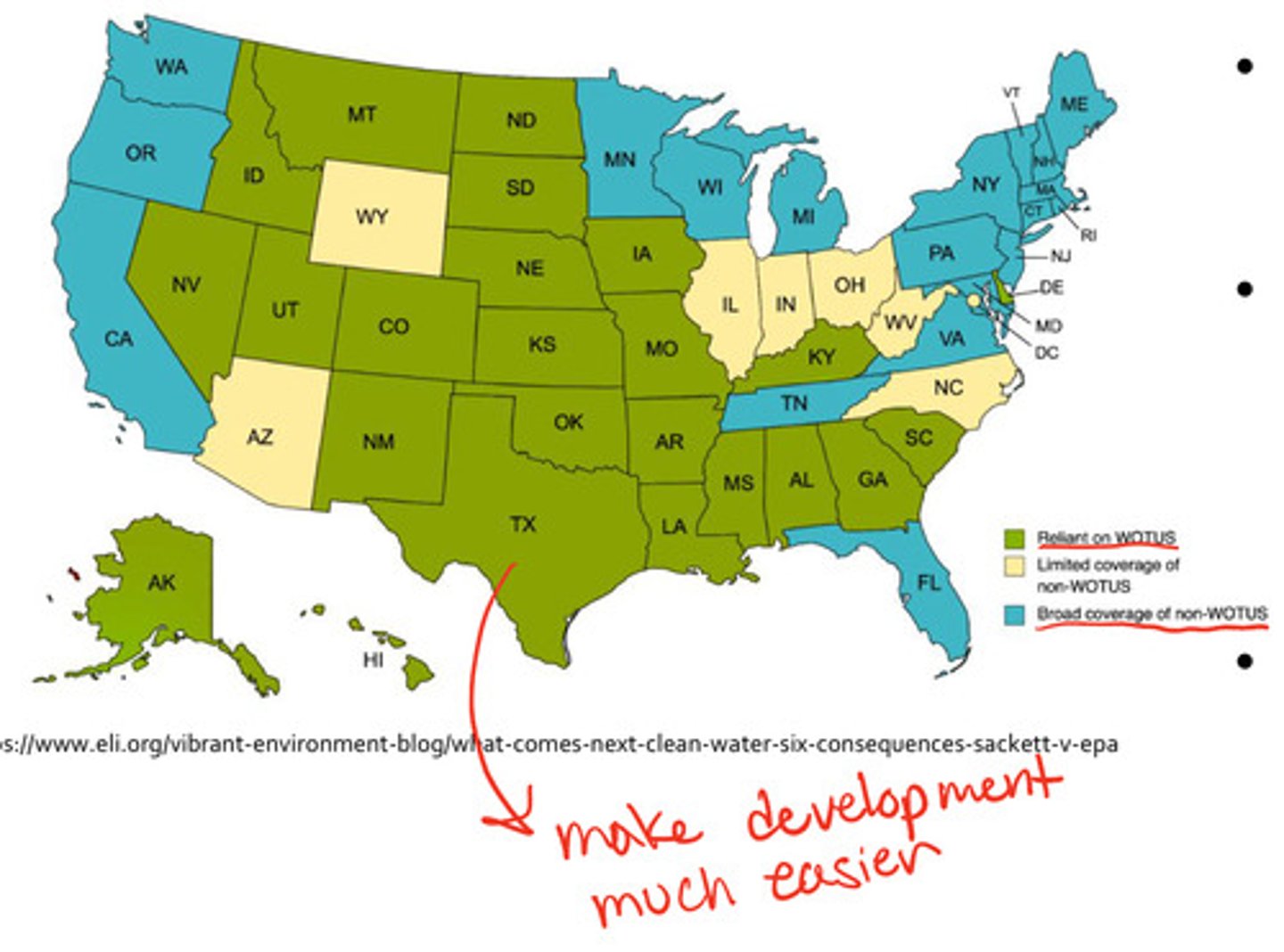
Practice question: What supreme court cases redefined WOTUS to only include wetlands with continuous surface water connection to navigable water ways?
Sackett vs. EPA (2023)
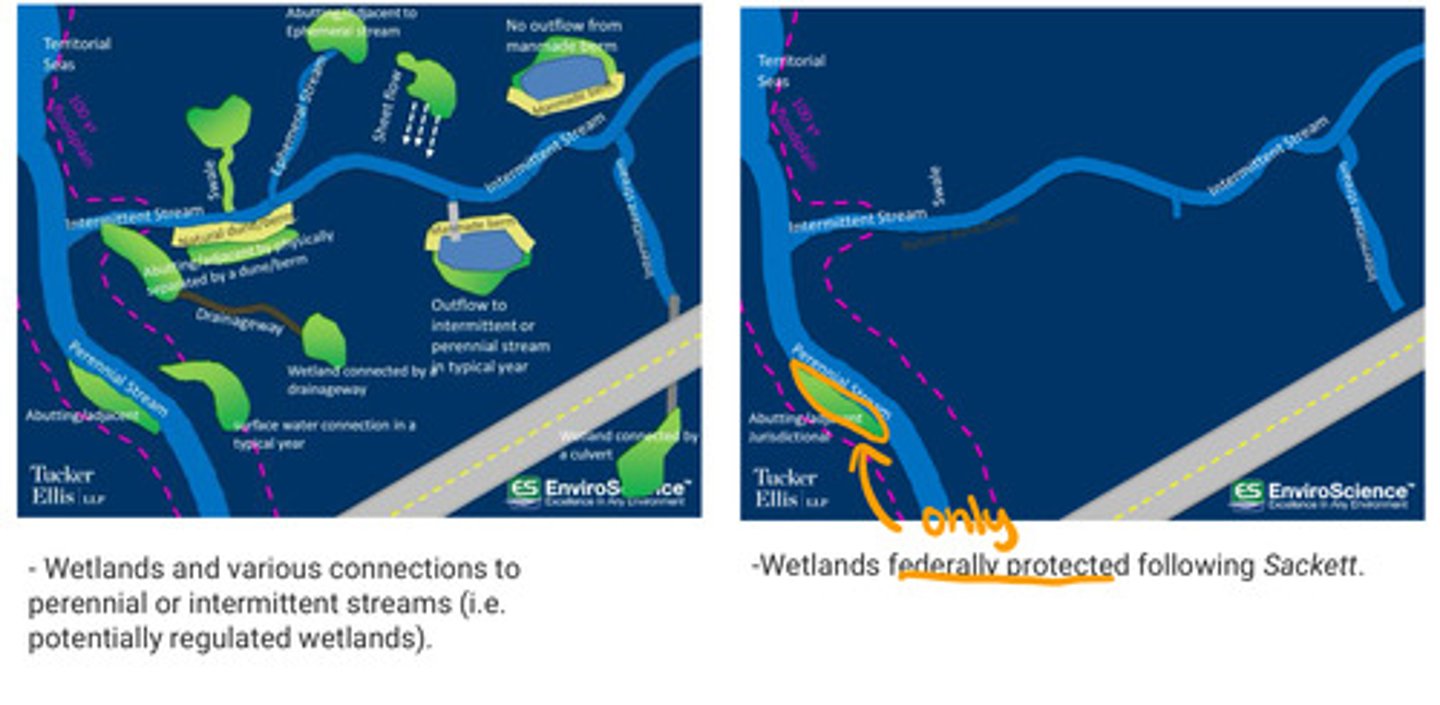
2 Conditions must be met to allow CWA jurisdiction following Sackett vs. EPA (2023)
1. must be adjacent to a "WOTUS" (relatively permanent navigable water)
2. must have continuous surface connection making it difficult to determine where the water ends and the wetland begins
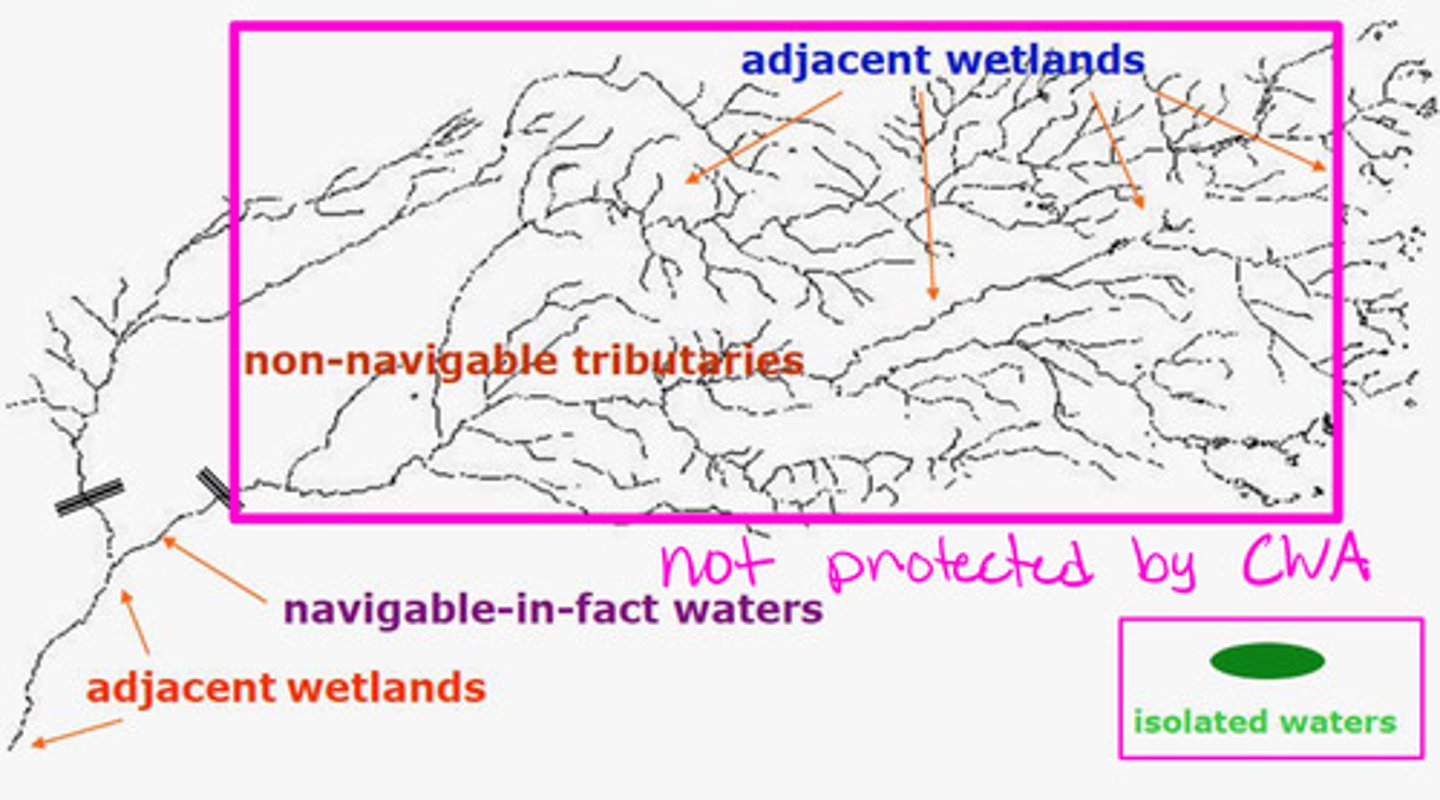
Image of protected wetlands following Sackett
"No-Net Loss" Policy (1988, 1998, 2002)
US federal goal to preserve wet lands states:
- replace each impacted wetlands with a replacement wetlands of the same size and with similar wetland functions and values
- a call to mitigation
- First Bush pres.
Wetland Mitigation due to Development
- have to mitigate (create, restore, or enhance) same or larger area of wetlands than they are disturbing
- has lead to net gain in wetlands (but gain in low functioning, while loss of high functioning)
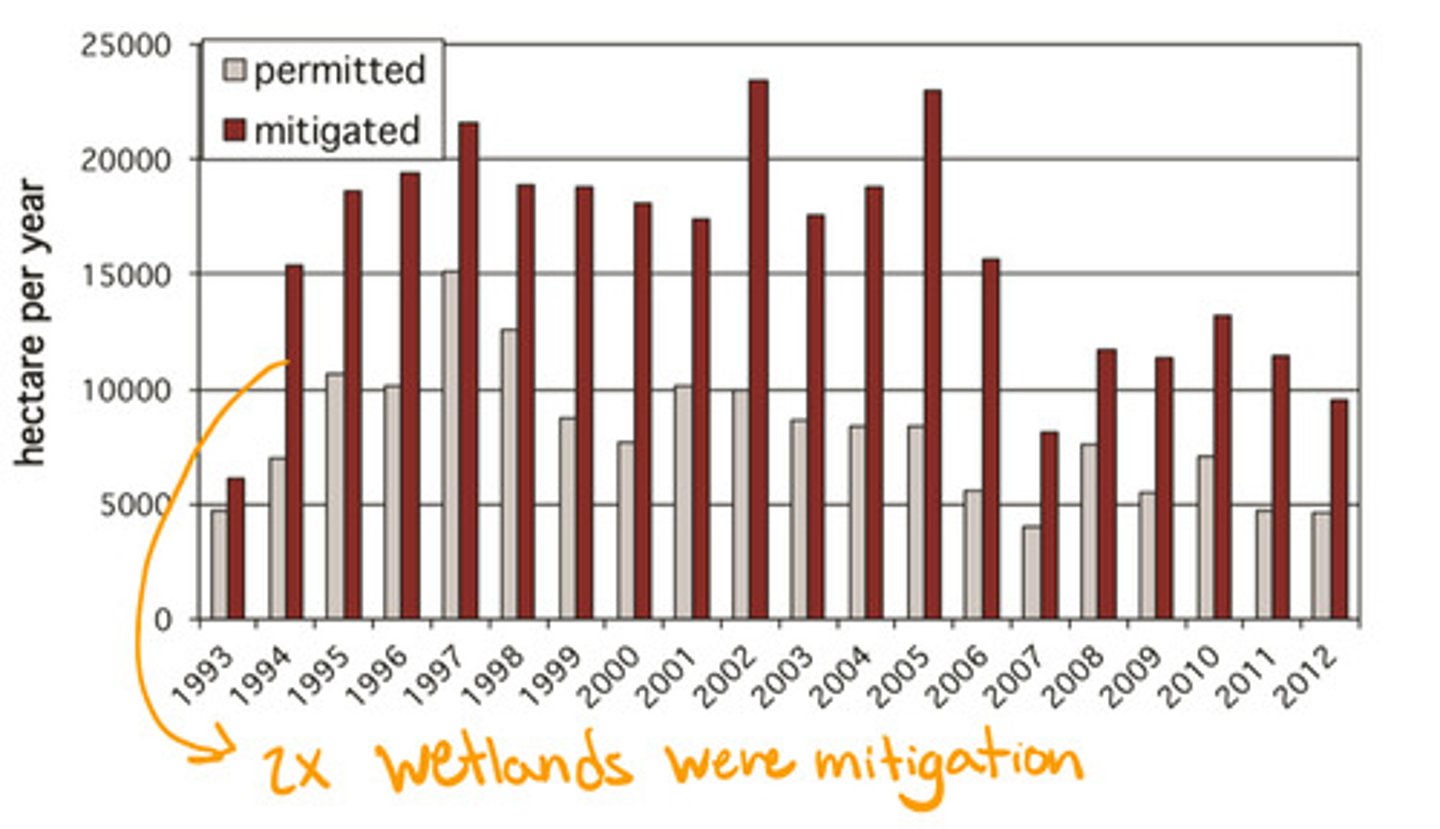
Require mitigation size ratio
2:1 = 2 ha restored/created for every ha lost to development
(ponds and open water systems are the easiest to create, tho lowest quality style wetland)
Replacement Wetland qualities
- never as good as the original soon to be destroyed wetland
- functions don't translate very easily from one wetland to the next (different levels of impacts)
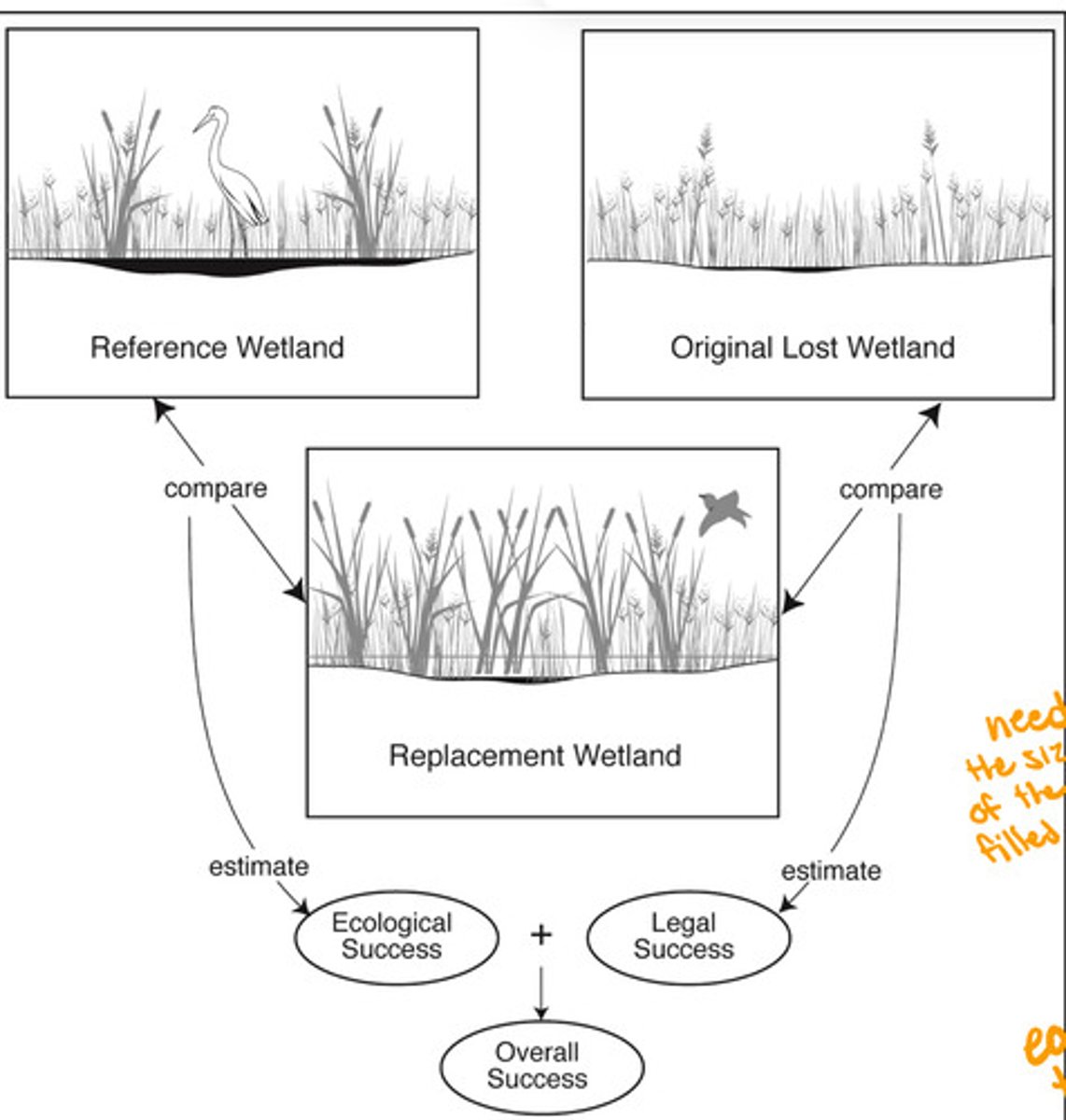
Wetland Mitigation Banking
- developers have to buy credits from these banks to help with a large wetland mitigation project to make up for their disturbance of another wetland
- hopefully takes place in same watershed as development
- success rate is pretty low (hard to recreate quality ecosystem services so quickly)
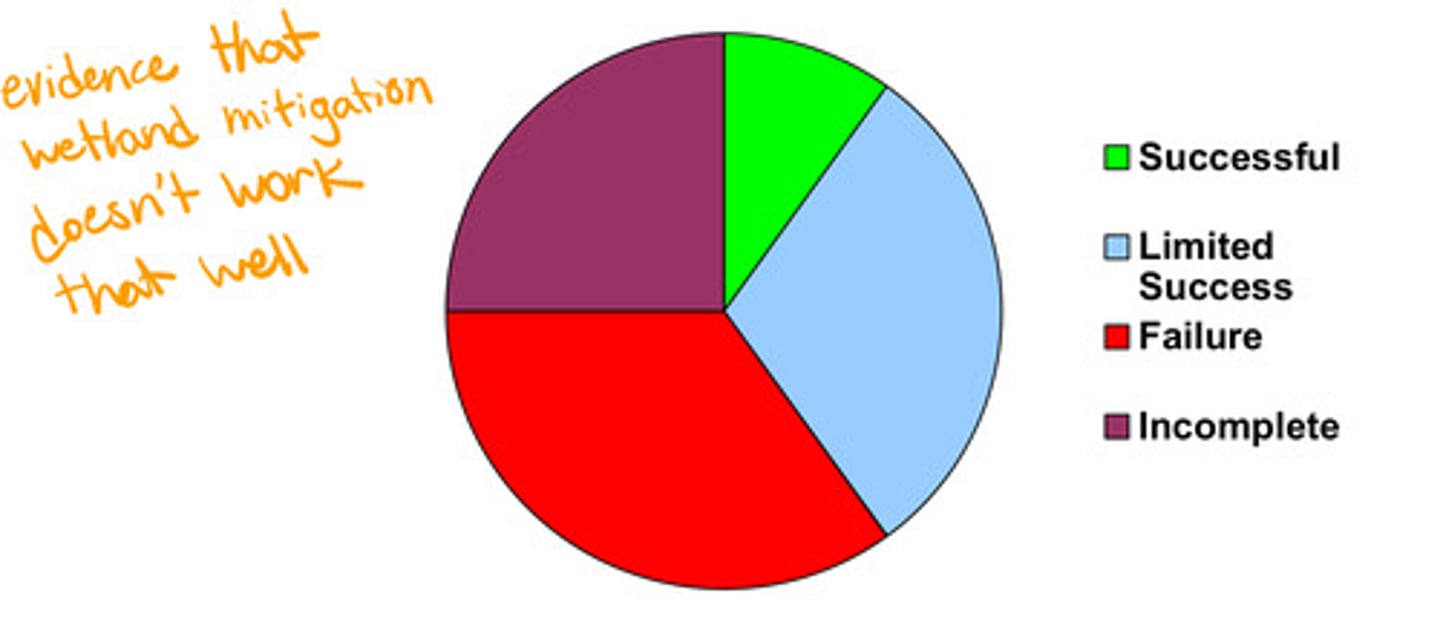
Wetland Mitigation Banks Pros and Cons
Pros:
- create/conserve larger wetland complexes
- can conserve natural wetlands
- more efficient use of time and $
Cons:
- promotes higher loss of isolated wetlands
- leads to reduced wetland area within certain watersheds (bc non strict reg)
- lower quality and dif services than og wetlands lost
CT Mitigation: Audubon CT in-lieu fee (ILF) program
- est. 2013
- allows permittees to pay a fee that goes towards mitigation (but don't do it themselves)
- local conservation organizations can apply for and recieve grant funding to protect and enhance wetlands (derived from fee money)
Mitigation Recommendations
1. Define natural communities and reference conditions
2. Monitor all biota structure and function
3. Identify landscape-scale sustainability
4. Give more credits for achieving success criteria and fewer for task completion
5. Encourage better coordination btwn agencies, banks, and personnel of both
6. Increase compliance responsibilities of the regulatory agencies
Swampbuster
Restricts the conversion of wetlands to cropland under US Food Security Act