HA&P Integumentary System Ch. 6
 Call Kai
 Learn
Learn Practice Test
 Spaced Repetition
 Match
Match Flashcards
 Knowt Play
1/42

There's no tags or description
Looks like no tags are added yet.
Name | Mastery | Learn | Test | Matching | Spaced | Call with Kai | Chat |
|---|
No analytics yet
Send a link to your students to track their progress
43 Terms
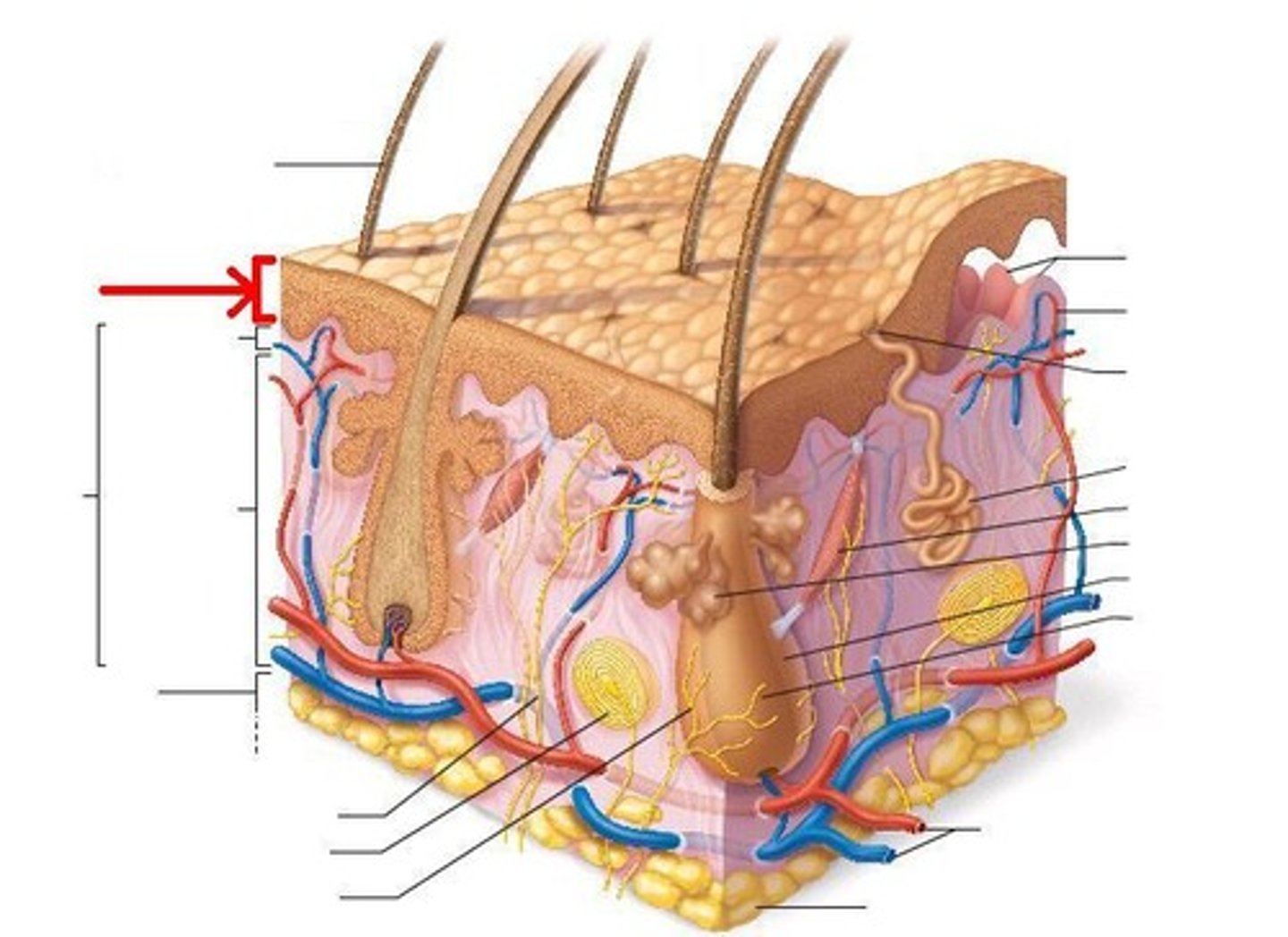
Epidermis
Superficial layer of the skin. Composed of keratinized, stratified squamos epithelium. Provides a thick, water-proof, protective covering over the underlying layers of the skin.
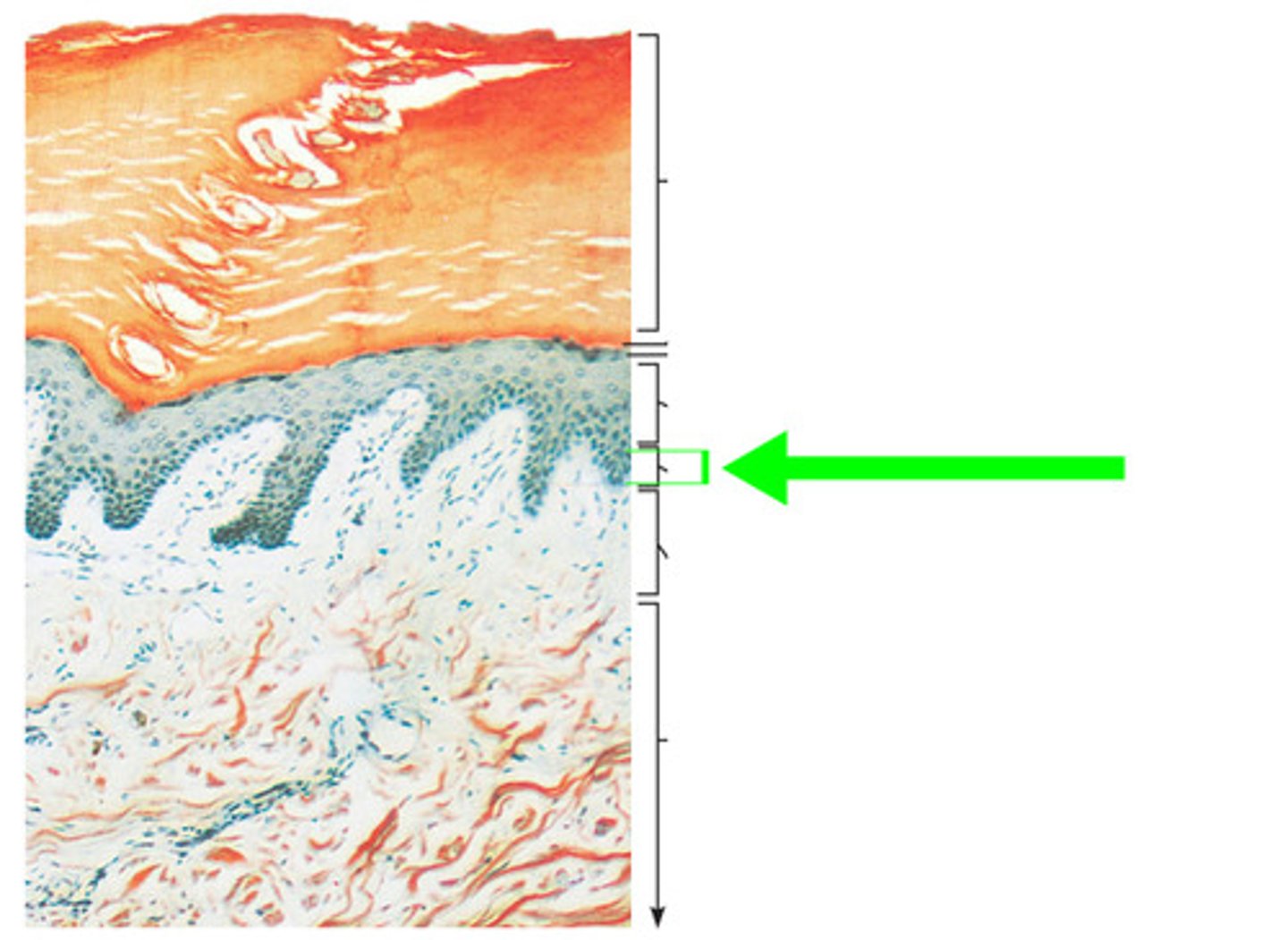
Stratum Basale
The cells of the skin reproduce here, basement of the epidermis
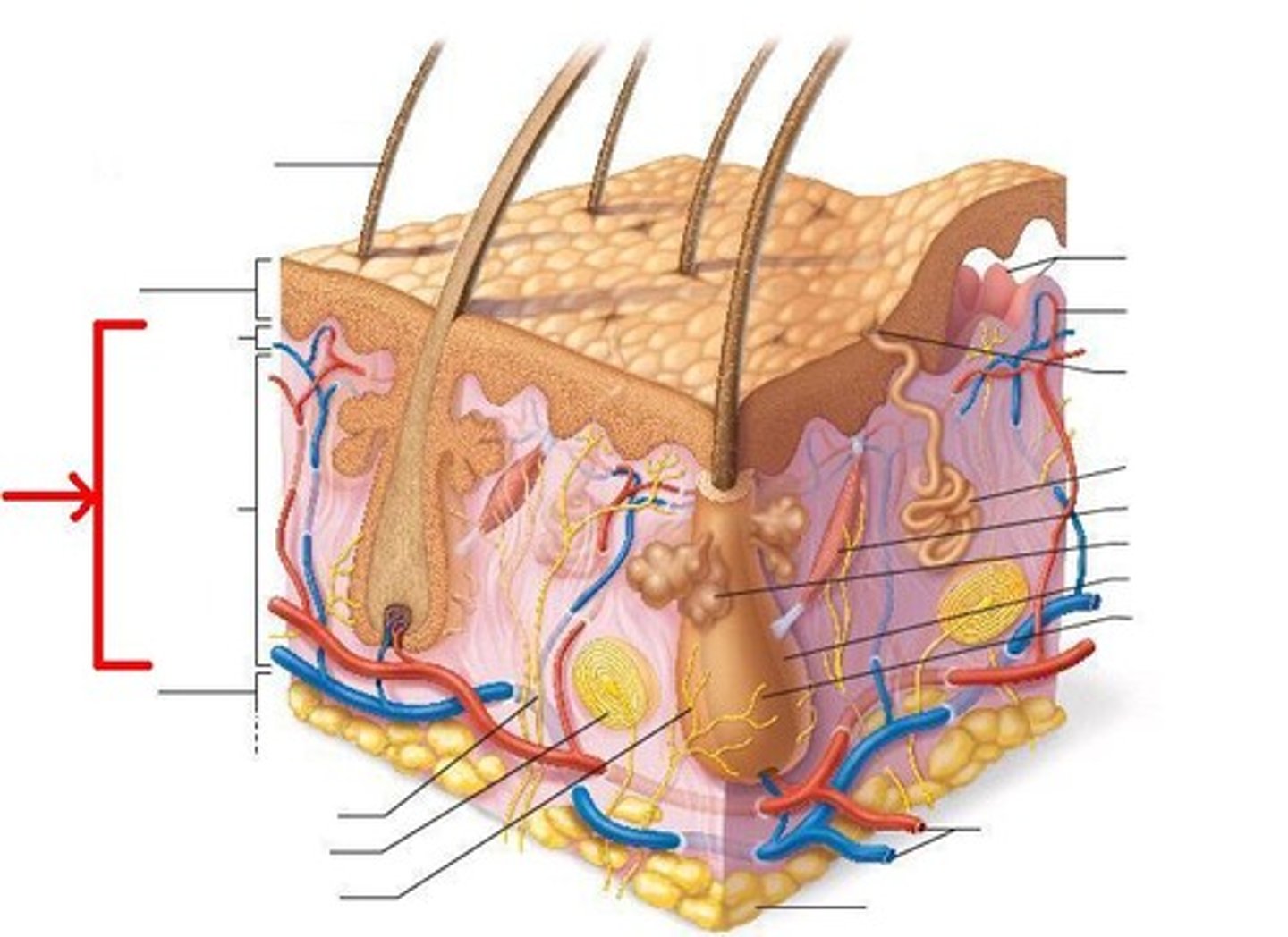
Dermis
Composed of connective tissue. Contains blood vessels, nerve endings, and epidermally derived cutaneous organs such as sweat glands, sebaceous glands, and hair follicles
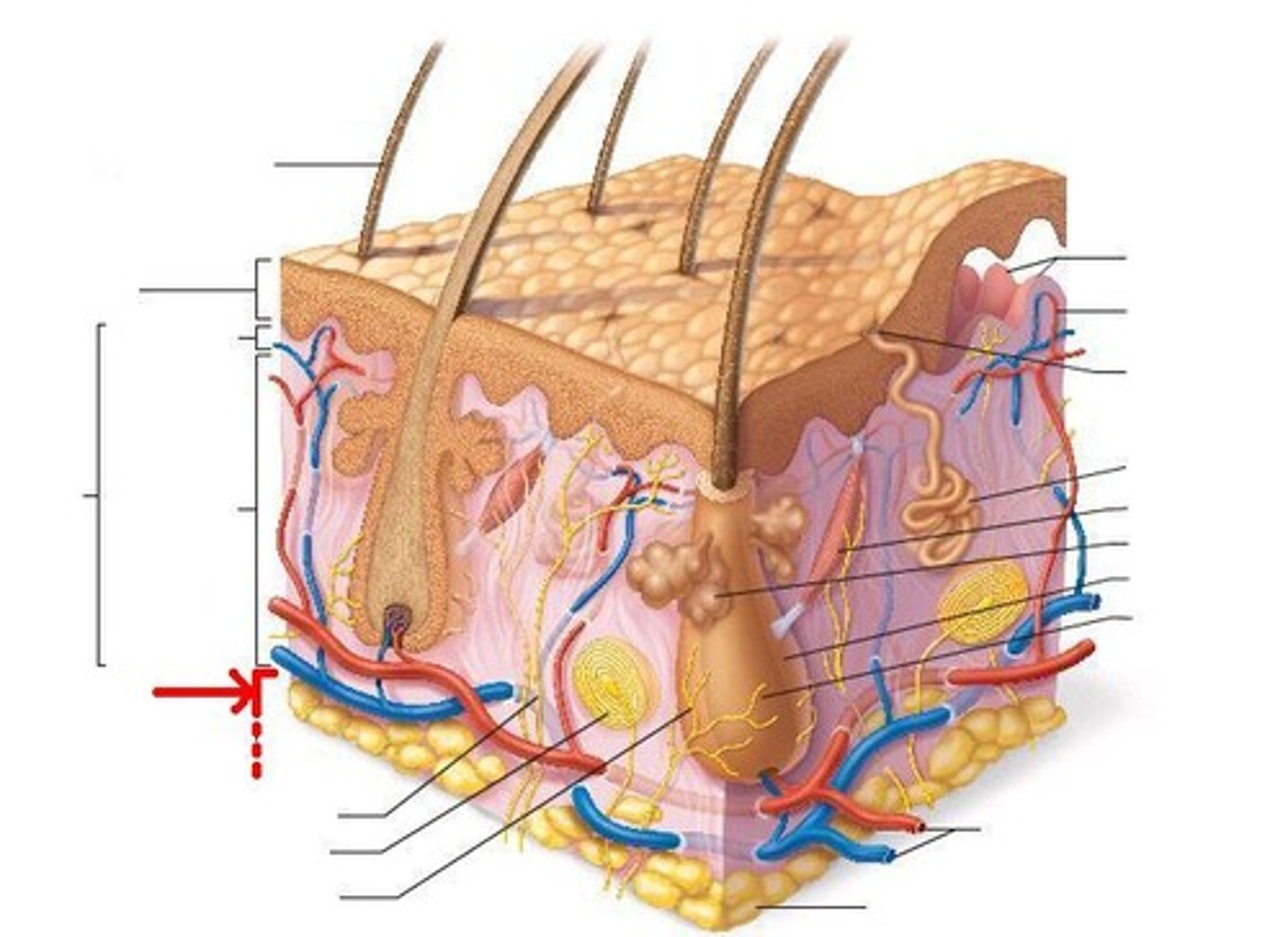
Hypodermis (Subcutaneous Layer)
Composed of adipose and aerolar connective tissue. The fat layer provides mechanical cushioning and a thermal insulation layer for underlying organs
Stratum Corneum
The layer of skin that contains cells whose cytoplasm is filled with keratin, superficial layer of epidermis
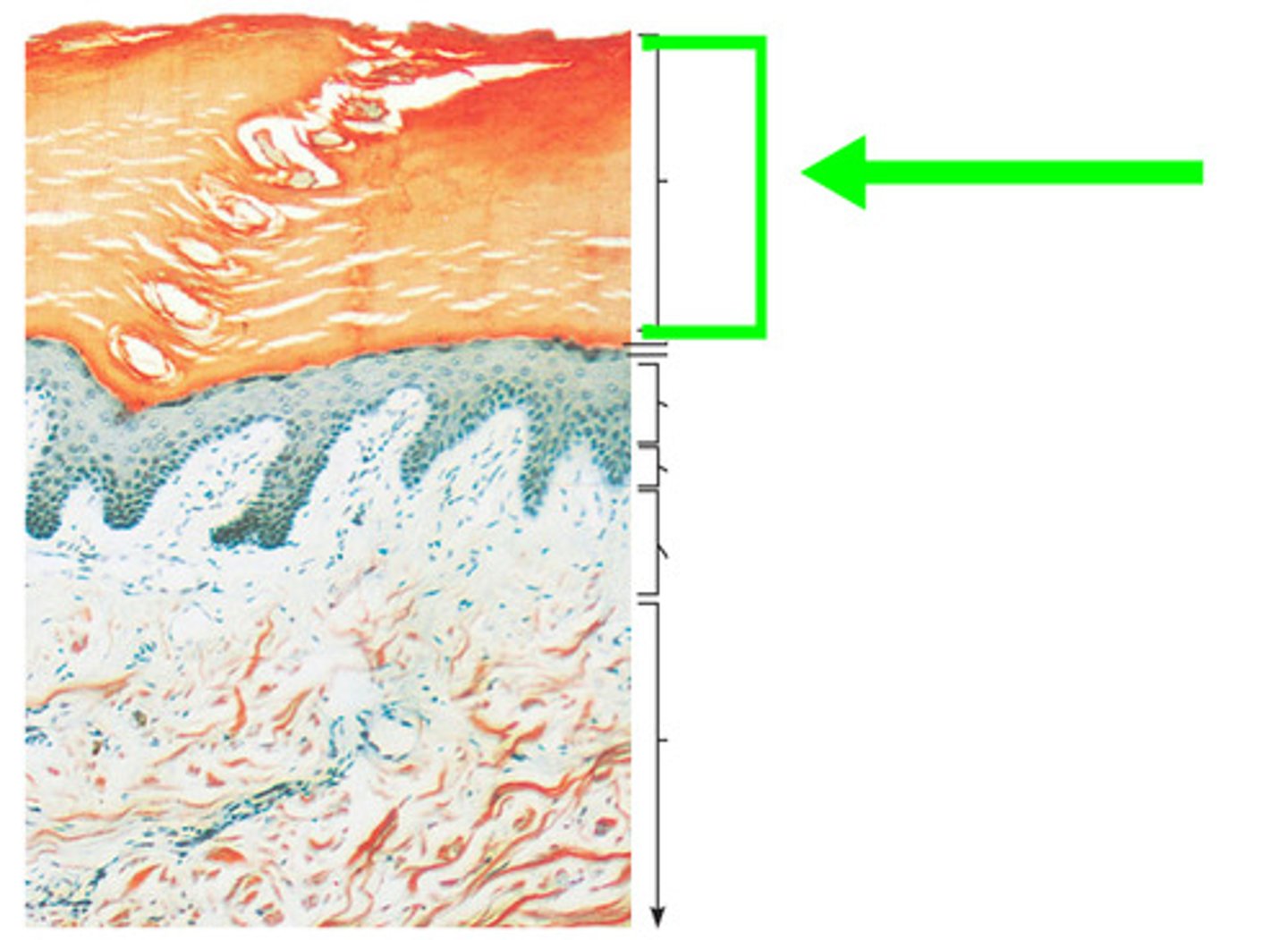
Stratum Lucidum
a thin, clear layer of dead skin cells in the epidermis named for its translucent appearance under a microscope found in thick skin
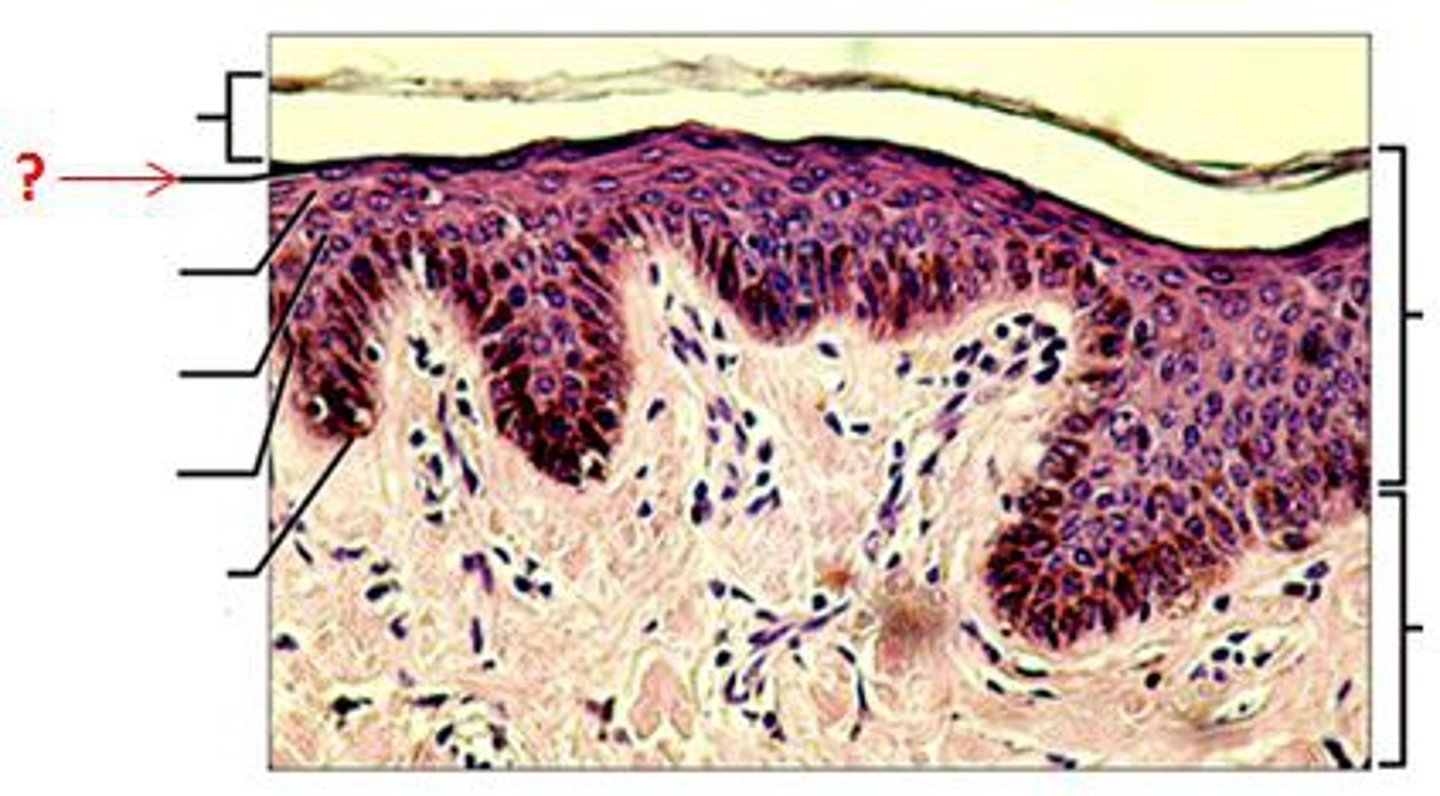
Stratum Granulosum
is a thin layer of cells in the epidermis. Keratinocytes migrating from the underlying stratum spinosum become known as granular cells in this layer.
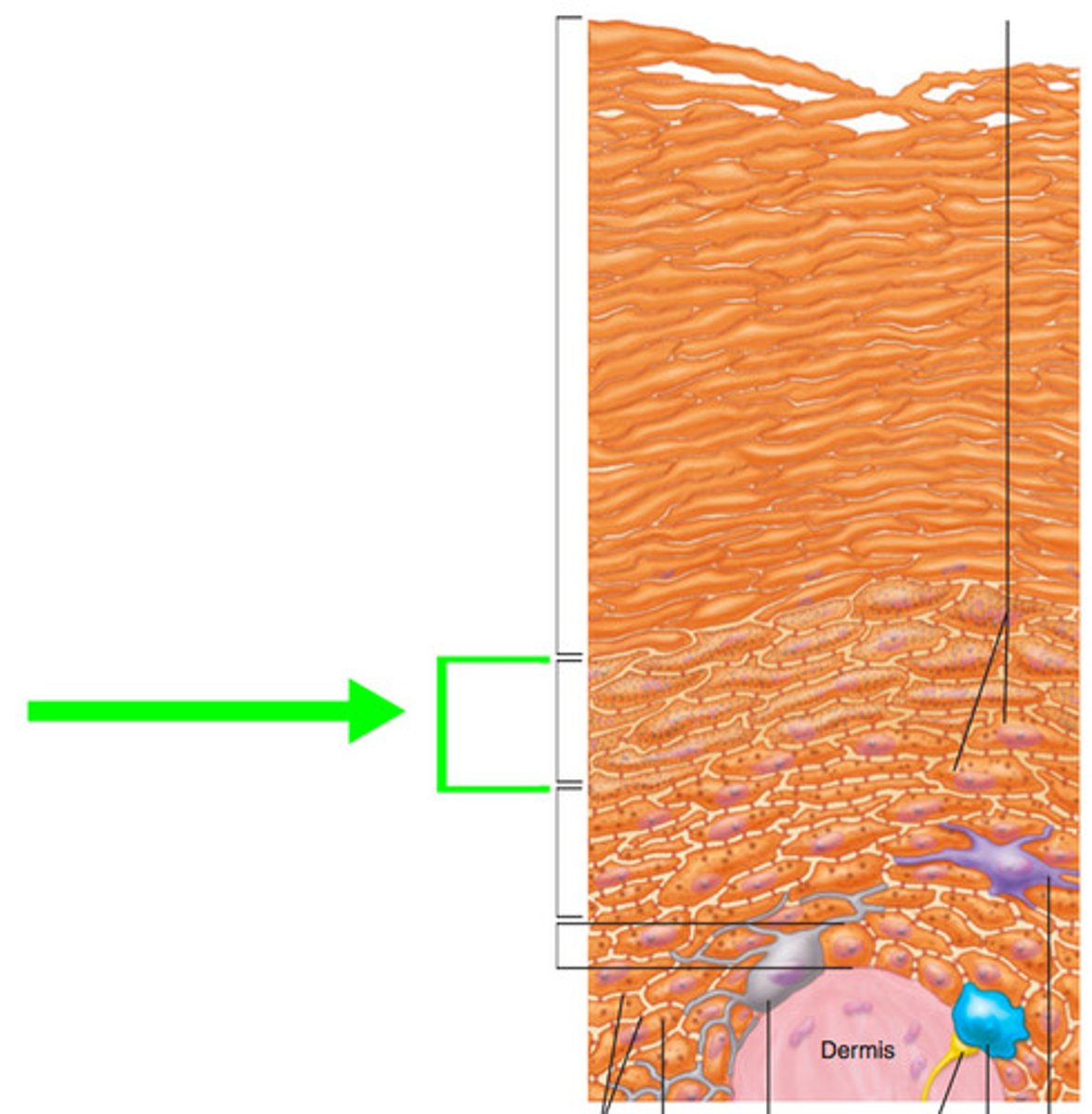
Stratum Spinosum
is a layer of the epidermis found between the stratum granulosum and stratum basale. Held together by desmosomes
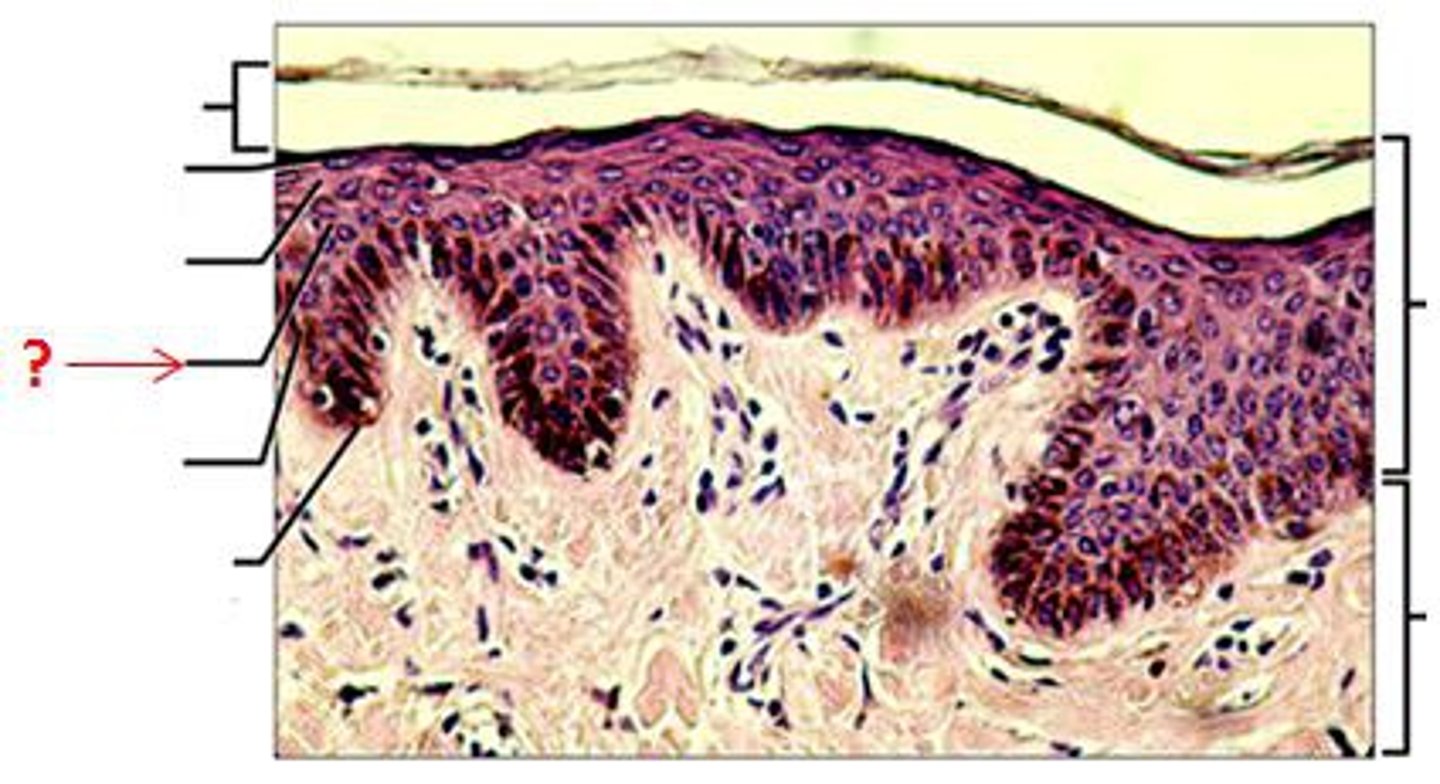
Mucous membranes are located in the
lining of cavities and tubes that have openings to the outside
Function of synovial membranes
to secrete a fluid that reduces friction
Functions of skin
regulate temperature, form a protective covering for underlying structures, sensory structure, ets
Melanocytes
The cell that produces melanin. Found in the deeper layer of skin
Melanin
The pigment that helps protect the deepest layers of the epidermis and the dermis
Vitamin D
The vitamin produced by the skin
Accessory organs of the skin
Sweat glands, finger and toe nails, and sebaceous glands
Pigments responsible for hair color
Trichosiderin, melanin, and carotene
What type of glands are sebaceous glands?
Glands that are associated with blackheads and may be connected to hair follicles
Lunula
The growing portion of the nail
Where are apocrine sweat glands most numerous?
The palm and soles
What sets occur in wound healing
inflammation, scab formation, scarring
Location of serous membrane
lining of internal areas like the intestines
Cutaneous Membrane
aka the skin
Location of basement membrane
Lies between the epidermis and the dermis
What determines skin color?
Genetic determination of melanin distribution
Why do goose bumps happen?
arrector pili muscles contract
Mucous Membrane
Secretes mucus
Describe a First Degree Burn
Burns in which the damaged areas are the epidermis only. Causes redness, swelling, and pain.
Describe a Second Degree Burn
Burns that damages the epidermis and the upper layer of the dermis. Causes blistering of skin and takes longer to heal
Describe a Third Degree Burn
The most severe of all, damages epidermis, dermis, and often the subcutaneous layer.
Why was the girl relatively pain free?
The burned area of the patient's body damaged her nerves so she cannot feel the pain
Why was the patient's blood pressure so low and her heart rate so high upon arrival at the emergency room?
Burns kill not just by damaging tissue but by allowing this leakage of fluid and salts. If more than a fifth of the blood volume is lost to the circulation, insufficient blood returns to the heart for it to maintain blood pressure
Why is it important to immediately administer intravenous fluids to the girl?
The patient needs intravenous fluids to replace the fluid lost from her bloodstream. If she doesn't receive IV fluids, she may go into hypovolemic shock, a condition in which the blood pressure is so low that her organs do not receive sufficient blood flow to survive.
What is a "broad-spectrum" antibiotic, and why did she need it? Is healthy skin normally colonized by bacteria?
A broad-spectrum antibiotic is a medication given to treat and / or prevent infections from a wide variety of bacteria. Angela's third-degree burns place her at considerable risk for infection because she no longer has a protective covering against bacterial invasion. The skin is normally colonized with bacteria (the so-called "normal flora"). On intact skin, these bacteria cause no problem, and may, in fact, protect us from more dangerous microorganisms. In damaged skin, however, these normally harmless bacteria can cause severe blood-borne infections. For this reason, broad-spectrum antibiotics are given both topically over the skin and by intravenous injection
Why was skin-grafting necessary in this patient? (Why not just let the skin heal on its own?)
The damaged skin would've taken too long to heal and would cause infections (which is the main reason people die from their burn injuries) the skin graft would heal faster
Describe the series of events that occur in skin which is healing with the help of a skin-graft.
The stem cells and shit
Why are bedridden patients at risk for developing decubitus ulcers?
Ulcers occur when a part of the body has too much pressure and the blood flow decreases. Bedridden patients do not move so they are more likely to put more pressure on their body.
Where on the body do such ulcers most commonly occur?
The most common locations for these ulcers are over the scapular spines, elbows, sacrum, greater trochanters, medial and lateral malleoli, and heels
Why did the patient lose so much weight despite being on a very high-calorie diet?
The pati body is undergoing a major inflammatory and healing response which requires a substantial calorie intake to provide the energy necessary for this response. It is not unusual for a severe burn victim to require two to three times his/her normal calorie intake during the healing phase.
What long-term problems may the patient have as a result of extensive scar tissue formation over her trunk and her right elbow?
Long-term scarring over the patient's trunk may make it difficult for her to expand her thorax during inhalation. The proliferation of scar tissue around her elbow may limit mobility at this joint.
Negative Feedback
the tendency of an organism or cell to regulate its internal environment and maintain equilibrium, usually by a system of feedback controls, so as to stabilize health and functioning". Generally, the body is in homeostasis when its needs are met and its functioning properly
Hypothalamus
Main sensory receptor that detects temperature
Vasodialation
Pores that either shrink or enlarges depending on temperature (Heat=large, Cold=small)
Still learning (2)
You've started learning these terms. Keep it up!