Chemistry Unit 2 Test
 Call Kai
 Learn
Learn Practice Test
 Spaced Repetition
 Match
Match Flashcards
 Knowt Play
1/96

Earn XP
Description and Tags
All the topics on UNit 2 Objectives.
Name | Mastery | Learn | Test | Matching | Spaced | Call with Kai | Chat |
|---|
No analytics yet
Send a link to your students to track their progress
97 Terms
Democritus's contribution to atomic theory? 5th century BCE
Developed the first idea of atoms. If a substance is cut in half continuously, they would eventually reach a a point of atomos. Matters of different materials were different. Atoms are in constant motion
Dalton’s contribution to atomic theory? 1808
Very precise experiments. Atoms are indivisible spheres, compounds are combinations of different atoms. Mathematical proportions.
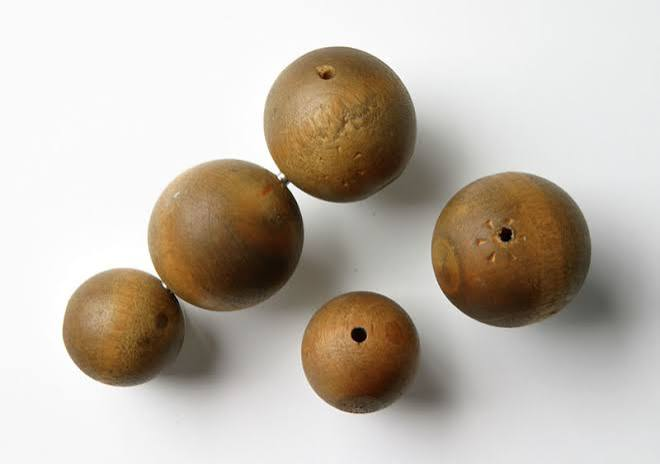
Atomos
Indivinsible
J.J Thomson’s contribution to atomic theory? 1897
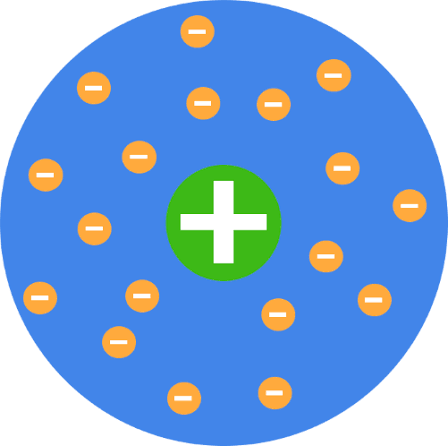
Developed the plum pudding model. Proved electrons, and subatomic particles.
Atomic Theory
The scientific framework stating that all matter is made of tiny indivisible particles called atoms.
Rutherford’s contribution to the atomic theory? 1911
Student of JJ Thomson. Discovered protons. Found nucleus. “Atom is empty with a dense nucleus and electrons around it.
Bohr’s contribution to atomic theory? 1913
Student of Rutherford. Proved electrons are in energy orbits. Developed Planetary model.
Shrodinger’s contribution to atomic theory?
Developed the quantum mechanical model. Electrons move as waves.The electron cloud of probability.
Chadwick’s contribution to the atomic theory?1932
Student of rutherford. Discovered neutrons. Neutrons in nucleus, same mass as protons and no charge.
What was the summary of Gold Foil Experiment?
Some alpha particles bounced off rather than through the thin gold foil, proving a greater source of positive charged particles which he named protons. This led to the famous nucleus.
How did the gold foil experiment look like?

Planetary/Bohr Model Rationale?
Electrons closer to nucleus, less energy. Farther from nucleus, more energy. Electrons should always be losing energy for balance.
Excitation
Absorbing energy, jumping up the electron rings of an atom.
Emmision
Releasing energy, to give off energy and jump back down to ground state. Releases light only! photons.
Ground State
The state which is stable and is the lowest possible energy ring.
Excited State
Unstable, the state which is temporary and absorbed energy.
Photon
Fundamental, Quantum of electromagnetic energy.
Fluorescence
The process of emitting energy and releasing light.
Quantum Mechanical Model
This model shows how electrons do not move in orbits, but as waves. The cloud of probability. Electrons should be in ground state
Plum Pudding JJ Thomson
Atomos Democritus

Atomic Theory John Dalton
Nuclear model Rutherford
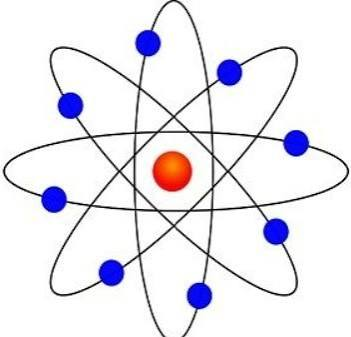
Planetary Model, Bohr Model Neils Bohr

Quantum Mechanical Model/ Electron Cloud Model Shrodinger

Quantum model + discovery of neutrons

KMT
-Kinetic Molecular Theory
Gas state of matter
-Properties are constant random motion with indefinite shape.
Liquid state of matter
-Properties are constant flowing/Tumbling and contact with indefinite shape. Disorderly
Solid state of matter
-Properties are Tightly packed orderly, vibrating and definite shape.
The higher the temperature….
…..The faster the particles are.
Relaxation
The vague process of releasing of energy and electrons dropping down.
Excitation, Can absorb energy from…
….light, heat or electricity.
Can energy be destroyed?
Energy cant be destroyed, it is released as a photon. This is visible.
Important rule on electrons and their energy state!
-‘If an atom is completely isolated and cold, then they will eventually come back to ground state. Excited State is only temporary“
What are the visible lights?
ROYGBIV
Important rule in wavelength and energy!
-”Wavelength and energy are opposities.”
Low energy=
=long wavelengths
high energy=
short wavelengths
Radio light
-Has the lowest light energy in order.
TV
-Has a light energy higher than radio but lower than microwave.
Microwaves.
-Has a light energy higher than TV but lower than infared radiation
Infared Radiation
-Has a light energy higher than microwaves but lower than visible light.
Visible Light
Has a light energy higher than infrared radiation but lower than Ultraviolet.
Ultraviolet
-Has a light energy higher than visible light but lower than X-ray.
X-Ray
-Has the highest light energy out of all.
EMR Electromagnetic Radiation
Light, Light energies with different wavelengths.
Nanometer
10-9 scientific notation, measures light.
Does the electron energy level change matter?
-The lower a electron falls energy levels, the higher light energy that comes out.
Hyphen Notation
Name-Mass, Uranium-235
Isotopic Notation
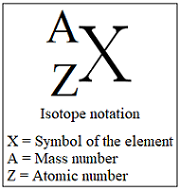
Periodic table

Synthethic Elements are written…
(Mass)
Ion
Atom or molecule that has a net electrical charge because it has gained or lost one or more electrons.
Proton determines the…
…determines what element it is.
Electron determines..
…determines what charge it has.
Neutrons determine the…
….what Isotope it is.
What is an isotope?
Forms of the same chemical element that have same # of protons but different # of neutrons.
How are Isotopes written?
they are written name-mass
Standard Atom
-Neutral and normal!
Pure Isotope
-Neutrons diff, still neutral
Pure Ion
Has a charge P=N
Isotope Ion
-Has a charge P not equal to Neutrons.
Exact Numbers in sig figs..
They have 0 uncertainty, infinite sig figs so we don count them.
Periodicity
Predictable Pattern
1800 Dimitri Mendeleev…
…Made the periodic table. Specific behaviors and characteristics repeat
Periodic table Period-
Rows.
Periodic table groups-
-Columns
Metals
Shiny, Malleable, Good Conductors of electricy.
Metalloids
Shiny or dull, Brittle, Semi conductor of electricity.
Where are transition metals?
Groups 3-12
Where are Non-Metals?
To the right of the table.
Where are metalloids?
They are the stair case.
Valence Electrons
Electrons in the furthest level of atom.
where are noble gasses?
Group 18
Where are halogens?
Group 17
Octet rule
Atoms are most stable when they have 8 electrons. They take the fastest path to getting those 8 electrons on their valence shell.
Ionic Bond
Electrons transferred, Metal and Non metal, Opposites attract, High conductivity.
Covalent bonds
Electrons shared, Non metals, Both Nuclei hold tight to electrons. Gas or Liquid, No electricity.
Binary Compound
Compound with 2 different elements
Polyatomic Ions
Group of 2 or more atoms covalently bonded that carry net charge.
hepta-
-means 7
Ionic Compound
Metal & Non metal
Covalent Compound
Nonmetal & Nonmetal
How to name metal in Ionic compound that only makes 1 +ion.
Name of the element- , These metals are groups 1,2,13
How to name metal in Ionic Compound that makes more than 1 ion?
Name(Roman Numeral)-
How to name non metal in Ionic Compound that only has single ion?
(element)-ide
How to name a non metal in Ionic Compound that is a polyatomic ion?
To name, (Ion), -ate, -ite
How to name the first non metal of the Covalent Compound?
To name, Prefix for subscript, with element (Dinitrogen)
How to name the second non metal in a covalent compound?
To name, Prefix-Element,- ide
Important rule about the prefix for the first element in a covalent compound.
If Prefix is mono for first element, then do not write it.
Ammonium Nitrate, and Amonium Carbonate are the…
..The only exceptions for not being covalent even though they are non metal. They go as Ionic Compound.
Polyatomic Ions are…
….nonmetals covalently bonded.
When forming compounds, or bonds, metalloids act like….
……they act like nonmetals.
Binary Acids
Hydro-name-Ic acid (hydrogen and nonmetal)
Oxyacids
-ate anions become -ic acid (hydrogen, oxygen and another element)
Oxyacids 2-
-ite anions become ous acid