microevolution
 Call Kai
 Learn
Learn Practice Test
 Spaced Repetition
 Match
Match Flashcards
 Knowt Play
1/54

There's no tags or description
Looks like no tags are added yet.
Name | Mastery | Learn | Test | Matching | Spaced | Call with Kai | Chat |
|---|
No analytics yet
Send a link to your students to track their progress
55 Terms
darwins two major points
common ancestry: organisms on the earth today descended from ancestral species
natural selection: a population of organisms can change over generations if individuals having certain heritable traits leave more offspring than others
what is the result of darwins points?
adaptations: an accumulation of inherited characteristics that enhance an organism’s ability to survive and reproduce in specific environments
evolution
genetic composition of a population changing over time
common ancestry
all organisms are related, descended from a common ancestor
as descendants moved into various habitats, they accumulated diverse adaptations that fit their specific ways of life
natural selection
differential success of reproduction
occurs through an interaction between the environment and the variation in a population
the product of natural selection is the adaptation of a population to its environment
how does natural selection occur?
all organisms tend to over reproduce
environmental factors screen the populations traits, favoring some over others
different reproductive success: organisms with favorable traits produce more offspring than those without the traits
the favoured trait dominates the next generation
artificial selection
selective breeding of domesticated animals and plants
what evidence is there to support evolution?
direct observation of evolutionary change
homology
fossil record
biogeography
math
direct observation of evolutionary change
insecticide resistance: DDT
antibiotic resistance
HIV drug resistance
response to changing food sources
homology
similarity in characteristics resulting from common ancestry
what are the three types of homology?
anatomical homology
embryological homology
molecular homology
anatomical homology
animals grouped into the same taxonomic level share similar structures
embryological homology
similarities in the embryological development of closely related organisms that will develop into homologous structures
molecular homology
all living things have dna and rna, by comparing the proteins of organisms, we can predict how similar the dna is and how closely related the organisms are
homologous structures
structures with underlying similarities even though they are adapted for different functions
created by divergent evolution
vestigial organs
structures of little importance to an animals survival
appendix
convergent evolution
the independent evolution in different lineages due to similar selection pressure → analogous structures
fossil record
natural history of life on earth
how do we date fossils?
the age of rocks where the fossil was found
the rate of decay of isotopes including carbon 14
geographical data
biogeography
scientific study of the geographic distribution of species
species are more closely related to other species from the same area
endemic species
islands have many endemic species
species found nowhere else in the world
microevolution
change in the genetic makeup of a population from generation to generation
individual organisms don’t evolve, populations do
the characteristics of an individual affect its chances of survival and reproductive success
in an evolving population, some characteristics become more common while others decline
species
group of organisms that can breed and produce fertile offspring
population
group of individuals in an area belonging to the same species
gene pool
all alleles at all gene loci in all individuals of the population → all alleles available to a population
alleles
alt version of a gene, may be dominant/recessive
genotypes
the genetic makeup of a trait
homozygous
having two identical alleles for a given gene
heterozygous
having two different alleles for a given genes
phenotype
the physical appearance of a trait
allele frequency
number of times that allele occurs in the population/total number of alleles in the population
discrete characters
classified on an either or basis; usually controlled by a single gene
quantitative characters
characters that vary along a continuum; usually controlled by two or more genes
average heterozygosity
the average % of loci that are heterozygous
what are sources of genetic variation?
variation originates when mutation, gene duplication, or other processes produce new alleles and new genes
new alleles can arise from a mutation
rapid reproduction
even though mutation rates are low in prokaryotic cells (less than 1 in 100,000 genes) their short generation spans allow mutations to quickly generate genetic variation
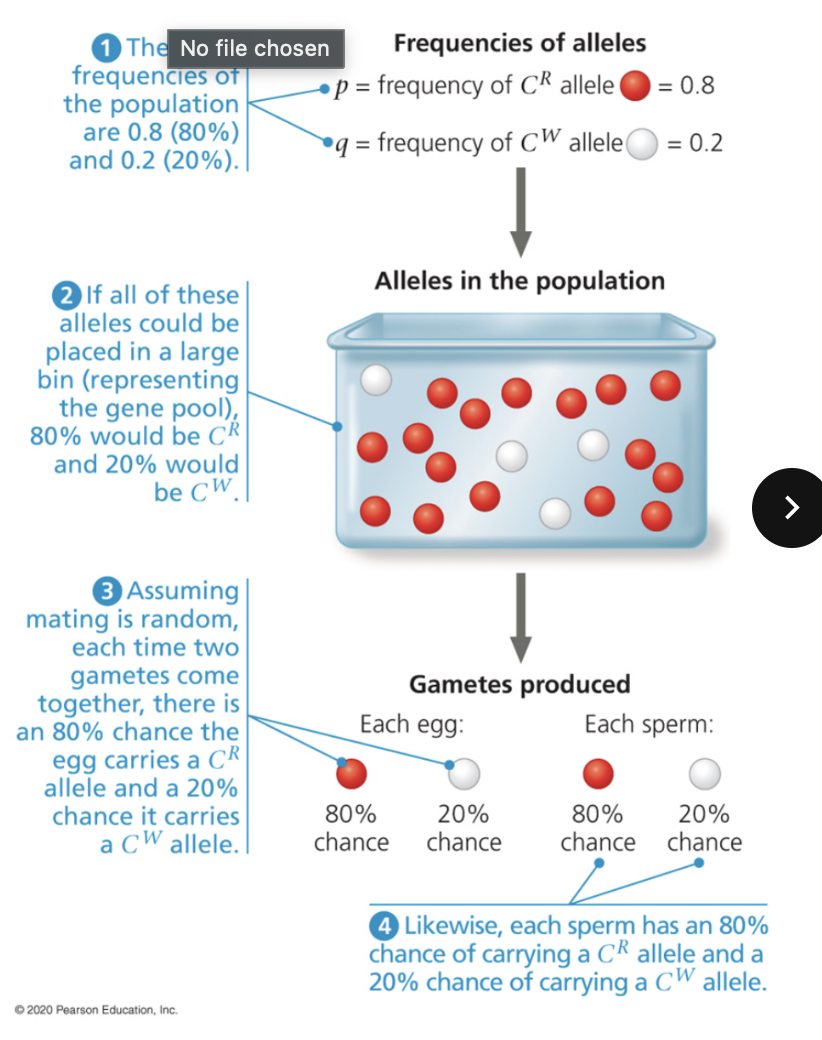
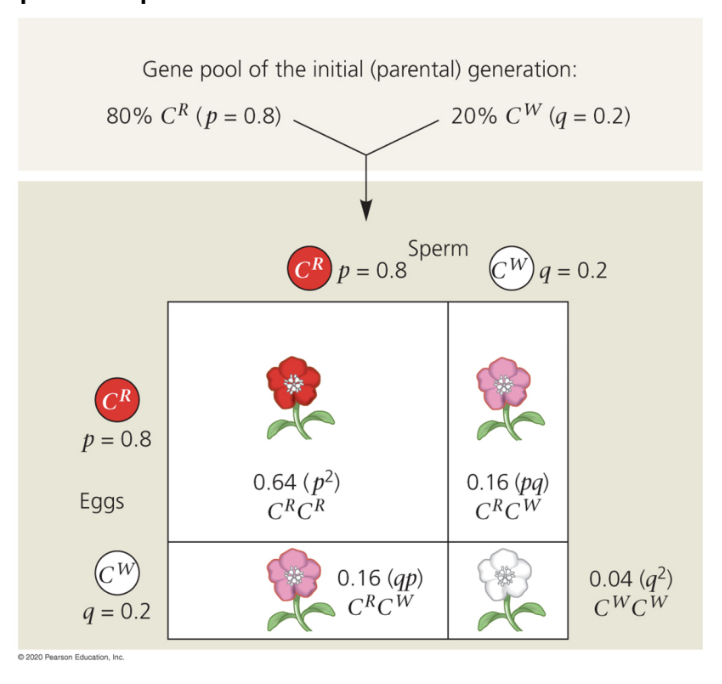
hardy weinberg equation (genotypic frequency)
p2 + 2pq + q2 = 1
allele frequency equation
p + q = 1
what are the variables for calculating the hardy weinberg equation?
p = frequency of the dominant allele
q = frequency of the recessive allele
what are the three major factors that alter allele frequencies and cause most evolutionary change?
natural selection
genetic drift
gene flow
natural selection - altering a population’s genetic composition
differential reproductive success will increase the frequency of some alleles while decreasing others
genetic drift - altering a population’s genetic composition
change in allele frequency simply due to chance
reduces variation in a population through loss of alleles
small populations are more likely to feel the effects of genetic drift
what are the two situations that increase the likelihood of genetic drift occuring?
bottleneck effect
founder effect
gene flow
bottleneck effect
occurs when a populations numbers have been greatly reduced by a random event; the new population doesnt have allele frequencies that reflect the original population
founder effect
occurs when a few individuals become separated from a larger population and establish a new population; this new population will not have allele frequencies that reflect the original population
what are the effects of genetic drift?
genetic drift is significant in small populations
genetic drift can cause allele frequencies to change at random
genetic drift can lead to a loss of genetic variation within populations
genetic drift can cause harmful alleles to become fixed
gene flow
migration of fertile individuals between populations
a population may gain or lose alleles this way
reduces differences between populations
natural selection - adaptive evolution
favours some alleles over others → natural selection not random
natural selection consistently increases the frequencies of alleles that provide a reproductive advantage → adaptive evolution
relative fitness
the contribution an individual makes to the gene pool of the next generation relative to the contributions of other individuals
balancing selection
when natural selection maintains stable numbers of two or more phenotypes in a population by preserving variation at some loci
heterozygote advantage
frequency dependent selection
heterozygote advantage
individuals that are heterozygous at a particular locus have greater fitness than the individuals that are homozygous
frequency dependent selection
when the fitness of an organism depends on how common it is in the population
sexual selection
individuals with certain inherited characteristics are more likely than other individuals of the same sex to obtain mates
results in sexual dimorphism: a difference in secondary sex characteristics between males and females of the same species
intrasexual selection
selection within the same sex
intersexual selection
individuals of one sex are choosy when selecting their mates