Geology Midterm 2
0.0(0)
Studied by 2 people Call Kai
 Learn
Learn Practice Test
 Spaced Repetition
 Match
Match Flashcards
 Knowt Play
Card Sorting
1/112

Earn XP
Description and Tags
Last updated 1:04 AM on 3/14/23
Name | Mastery | Learn | Test | Matching | Spaced | Call with Kai | Chat |
|---|
No analytics yet
Send a link to your students to track their progress
113 Terms
1
New cards
Mineral
* A mineral is any naturally formed chemical substance having a definite chemical composition (but not fixed) and a characteristics crystal structure - Inorganic
\
* A mineral cannot be broken into different mineral substances using traditional methods
\
* Sodium chloride is the most known mineral
\
* A mineral cannot be broken into different mineral substances using traditional methods
\
* Sodium chloride is the most known mineral
2
New cards
Mineraloids
amorphous (without a clearly defined shape or form) naturally occurring substances
\
does not demonstrate crystallinity.
\
ex. Obsidian
\
does not demonstrate crystallinity.
\
ex. Obsidian
3
New cards
Opal
* amorphous substance formed through the precipitation of silica (bacteria); note the "play of color"
\
* Most frequent of the mineraloids
\
* Most frequent of the mineraloids
4
New cards
Mineral Physical Properties
Color, Hardness, Luster, Crystal Faces and Form, Twinning, Transparency
5
New cards
Color
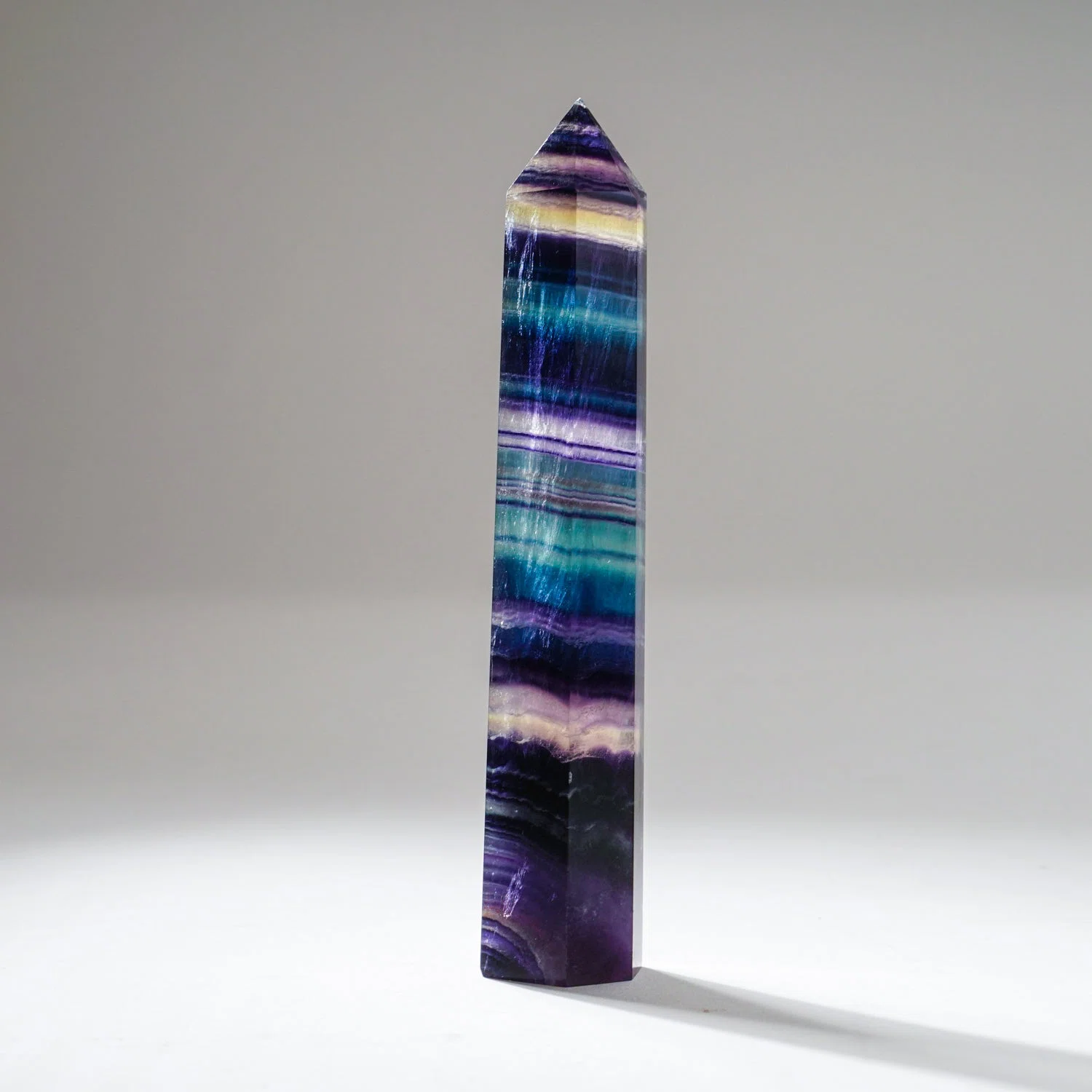
highly variable mineral property, and the variability is given by the impurities in the mineral mass; impurity proportion is strongly controlled by the amount of available ions in the surrounding environment and crystal structure flexibility.
\
* Although probably the most deceiving physical property of the minerals, some of the minerals have well-defined color when pure
* Impurities can significantly affect mineral color.
\
Ex. Fluorite
\
* Although probably the most deceiving physical property of the minerals, some of the minerals have well-defined color when pure
* Impurities can significantly affect mineral color.
\
Ex. Fluorite
6
New cards
Hardness
is the property that refers to the force that is necessary to scratch a mineral's surface; this property strongly depends on the nature of the bonds in the crystal structure. A relative hardness scale is currently used by geologists; it is known as the Mohs hardness scale. The scale consists of 10 minerals, each of them having a number from 1 - 10.
7
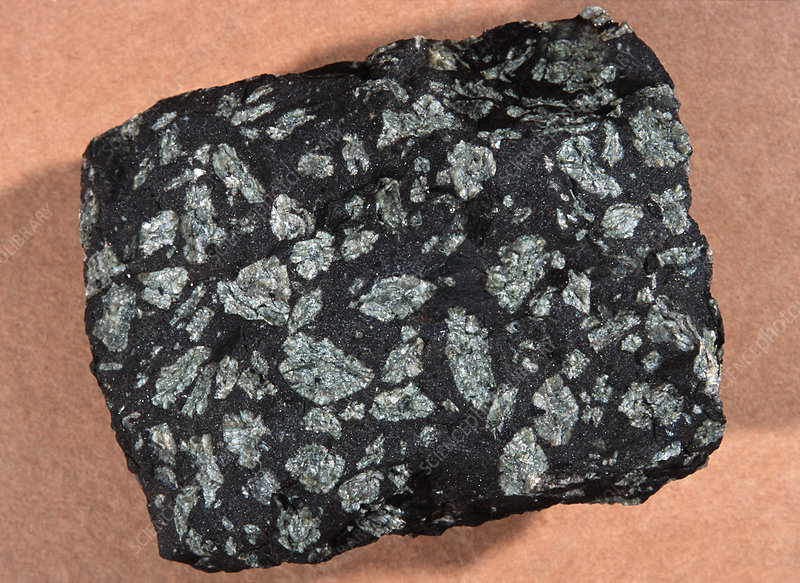
New cards
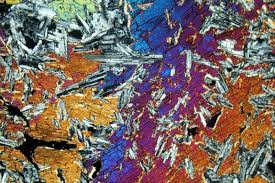
Luster
is the property that qualitatively describes the light reflection and mineral faces and can be separately applied for individual minerals and aggregates of minerals
\
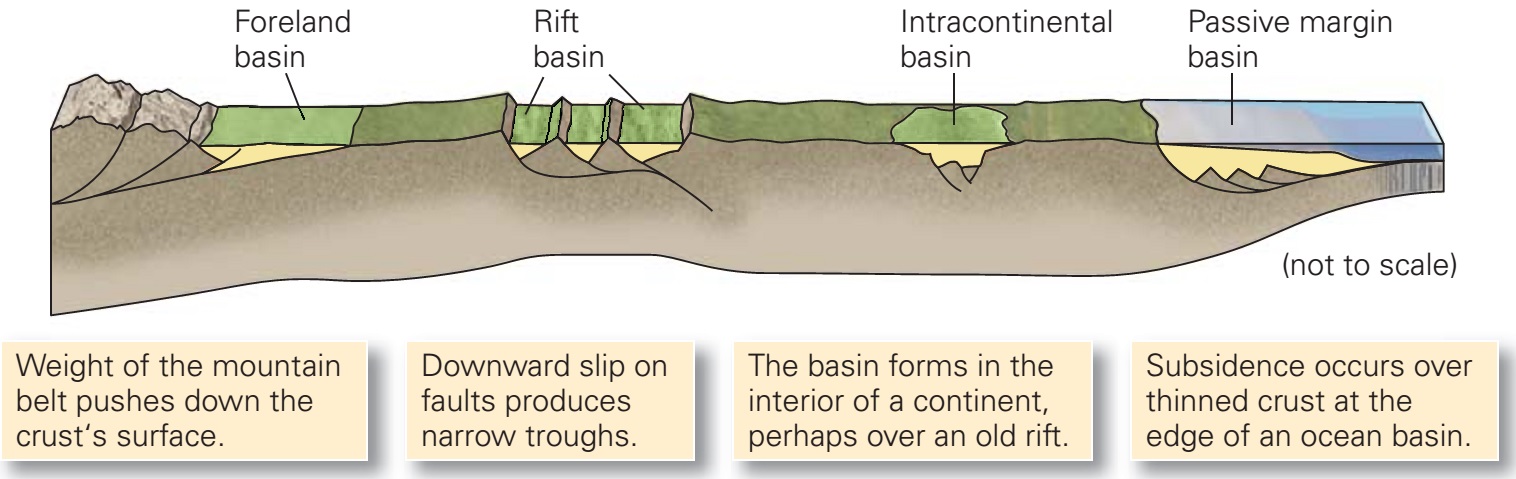
Terms: Metallic, Vitreous, Dull, Silky, Greasy
\
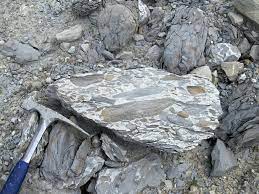
Terms: Metallic, Vitreous, Dull, Silky, Greasy
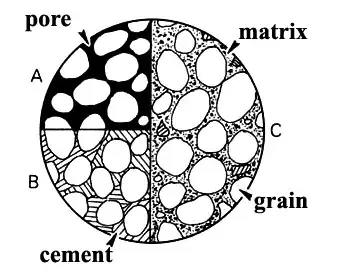
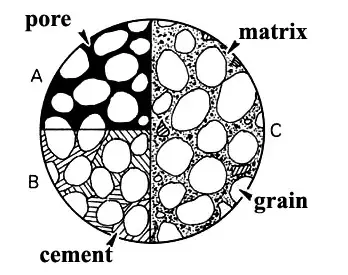
8
New cards
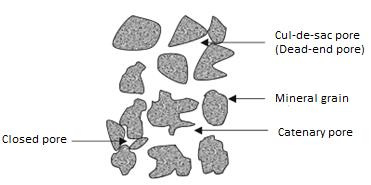
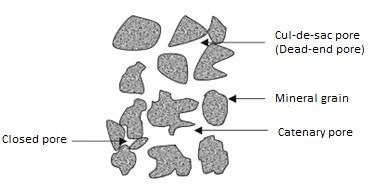
Crystal Faces and Form
help us characterize the degree of development of mineral shape. It is a practical property from which we can generally infer the space available at the time of mineral formation and the crystallization speed.
9
New cards
3 Categories of Crystal Faces
Euhedral, Subhedral, Anhedral
10
New cards
Twinning
phenomenon generated during the crystal growth and occurs only in certain mineral species. It represents the intergrowth between two or more crystals of the same mineral; characteristic twins are frequently used for a rapid identification of certain minerals
\
\-Classification: Simple Twins, Multiple (polysynthetic) twins
\
Ex. Feldspar, Staurolite
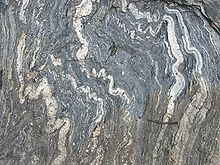
\
\-Classification: Simple Twins, Multiple (polysynthetic) twins
\
Ex. Feldspar, Staurolite
11
New cards
Transparency
qualitatively describes how minerals let the light pass through them. Transparent, Translucent and Opaque.
12
New cards
Van der Waal Bonds
weak intermolecular interactions observed in condensed phases like solid and liquid
\
\-weakest
\
\-weakest
13
New cards
J.J. Thomson
discovered the first subatomic particle named the electron
14
New cards
Proton
heavy particle with positive charge; conventionally we consider its mass 1 and the electrical charge +1
15
New cards
Neutron
has the mass approx. equal to that of a proton, but it is electrically neutral; conventionally we consider its mass 1 and the electrical charge 0
16
New cards
2 Parts of an Atom
The Nucleus: comprises most atoms mass and is very small when compared to the atom volume; for this reason, the atom appears rather empty. It consists of a number of particles, but the protons and neutrons are very important in atom characterization.
\
The Electron cloud: consists of electrons, which gravitate around the nucleus at high speeds; electrons are arranged in layers and orbitals. An electron is a negatively charged particle, and it is approx. 2,000 times smaller than a proton or neutron; conventionally we consider an electron's mass 0 and its electrical charge -1
\
The Electron cloud: consists of electrons, which gravitate around the nucleus at high speeds; electrons are arranged in layers and orbitals. An electron is a negatively charged particle, and it is approx. 2,000 times smaller than a proton or neutron; conventionally we consider an electron's mass 0 and its electrical charge -1
17
New cards
Cations
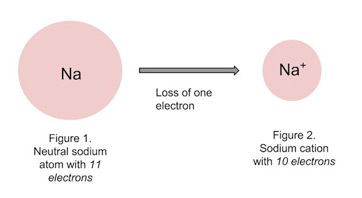
positively charged ions that achieved the stable electron structure on the valence layer by losing one or more electrons
18
New cards
Anions
are negatively charged ions that achieved the stable electrons structure on the valence layer by accepting one or more electrons
19
New cards
Ionic Bonds
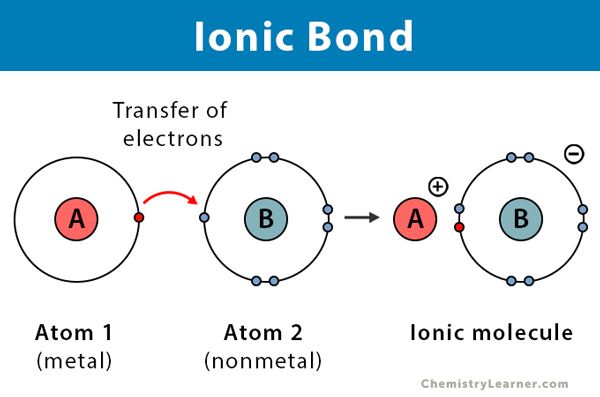
occur between atoms that tend to achieve a stable structure on the valence layer through opposite processes; it happens between metals and non-metals
\
\-weaker
\
\-weaker
20
New cards
Covalent Bond
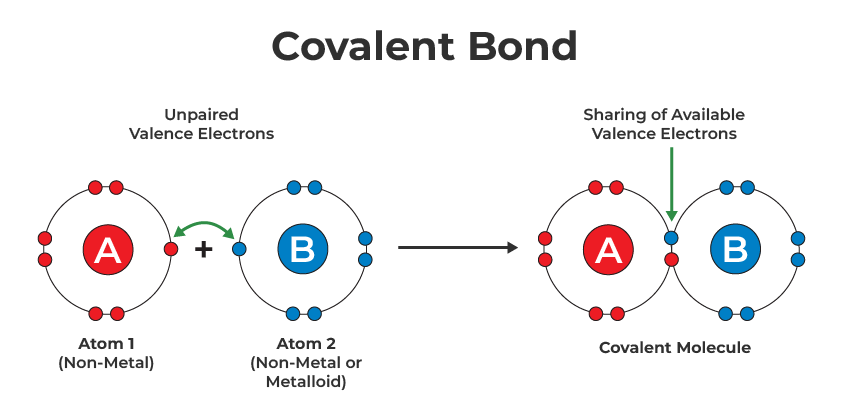
occur between atoms that tend to achieve a stable structure on the valence layer through opposite processes; it happens between non-metals and non-metals
\
\-stronger than ionic bonds.
\
\-stronger than ionic bonds.
21
New cards
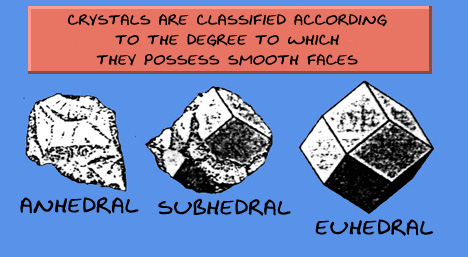
Euhedral
full developed shape with planar and acute corners
22
New cards
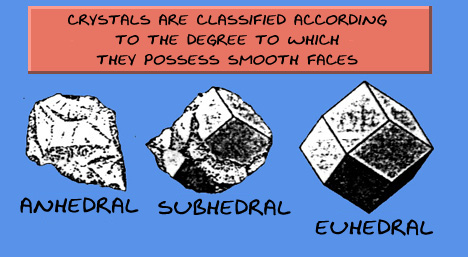
Subhedral
the general shape of a mineral can be recognized but is not perfect, which are more or less undulated faces and rounded corners
23
New cards
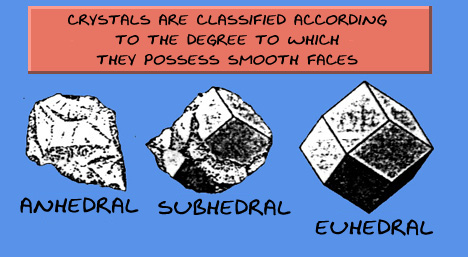
Anhedral
irregular shape, having no resemblance with the ideal mineral form
24
New cards
Galena
\-lead sulfide
\
\-PbS
\
\-cubical shape
\
\-grey with metallic structure
\
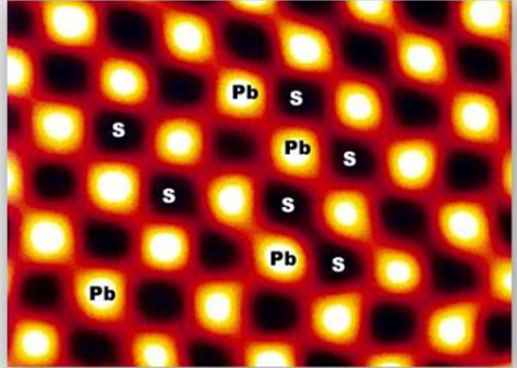
\-High Magnification reveals the galena’s mineral surface has a regular, repeatable pattern consisting of alternating bright and dark spots
\
\-PbS
\
\-cubical shape
\
\-grey with metallic structure
\
\-High Magnification reveals the galena’s mineral surface has a regular, repeatable pattern consisting of alternating bright and dark spots
25
New cards
Diamond
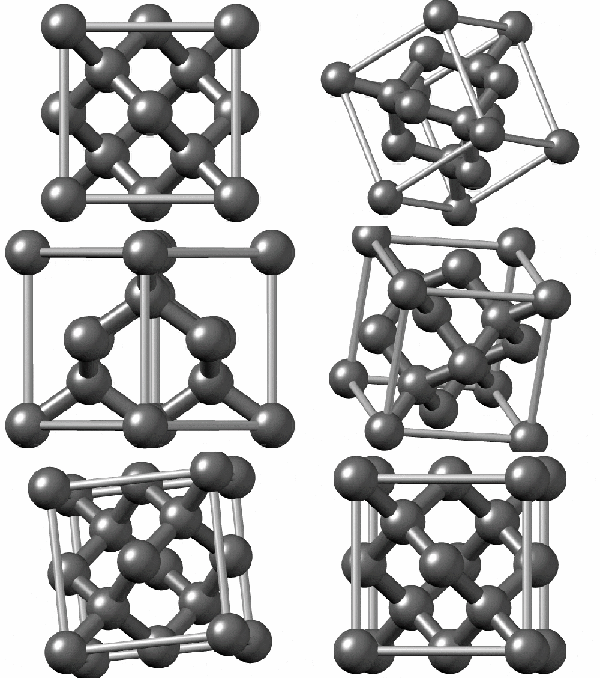
has a crystal structure in which the atoms of carbon are situated in the corners of a tetrahedron, each atom being convalently bonded by the other four. This crystal structure is the toughest in the mineral world.
\
\-Diamond forms in natural conditions under extremely high pressure, and it transported to the Earth's surface through high energy volcanic eruptions
\
\-Diamond forms in natural conditions under extremely high pressure, and it transported to the Earth's surface through high energy volcanic eruptions
26
New cards
Graphite
presents a planar structure consisting of parallel layers that contain hexagons defined by atoms of carbon; the bonds between the carbon atoms situated in the hexagon corners are covalent; adjacent layers are bonded by van der Waals forces, which are the weakest binds in the mineral world.
\
\-Graphite is the final product of organic matter decay during burial, and is formed after all elements are expelled.
\
\-Graphite is the final product of organic matter decay during burial, and is formed after all elements are expelled.

27
New cards
Native Elements
\-*Pure Elements*
\
\-This groups consists of free, uncombined elements which are subdivided into 3 categories
\
\-Metals, Semimetals, non-metals
\
\-This groups consists of free, uncombined elements which are subdivided into 3 categories
\
\-Metals, Semimetals, non-metals
28
New cards
*Sulfides and Sulfosalts*
* Sulfides are minerals formed by a metallic element and sulfur. Sulfur can be replaced by tellurium or arsenic to result tellurides and arsenide's respectively.
\
* Often present metallic lusters (e.g. Galena) and can be dense (e.g. galena, molybdenite)
\
* Some are non-metallic (e.g. Orpiment, Realgar)
\
* Sulfosalts are mixed sulphides in which a semi-metallic element is presented together with a metallic one
\
Ex. Galena, Cinnabarite, Chalcopyrite, Stibinite, Pyrite, Realgar, Orpiment, Stephanite, P
\
* Often present metallic lusters (e.g. Galena) and can be dense (e.g. galena, molybdenite)
\
* Some are non-metallic (e.g. Orpiment, Realgar)
\
* Sulfosalts are mixed sulphides in which a semi-metallic element is presented together with a metallic one
\
Ex. Galena, Cinnabarite, Chalcopyrite, Stibinite, Pyrite, Realgar, Orpiment, Stephanite, P
29
New cards
*Oxides and Hydroxides*
* Oxides are compounds formed from various metallic elements and oxygen (O) and in which the oxygen plays the role of an anion
\
* The oxides occur in a variety of environments; being often encountered in all the 3 rock families: igneous, metamorphic, and sedimentary
\
* Symmetry. Crystallized in the cubic and hexagonal crystal systems
\
* Aluminum oxides can accept impurities and are transformed into different mineral varieties: sapphire has a higher larger amount of iron and titanium and red ruby is richer in chromium
\
Ex. Magnetite has excellent magnetic properties and uraninite is radioactive and an important source of Uranium.
\
\-Hydroxides are minerals in which the anion consists of the (OH)- radical
\
* The oxides occur in a variety of environments; being often encountered in all the 3 rock families: igneous, metamorphic, and sedimentary
\
* Symmetry. Crystallized in the cubic and hexagonal crystal systems
\
* Aluminum oxides can accept impurities and are transformed into different mineral varieties: sapphire has a higher larger amount of iron and titanium and red ruby is richer in chromium
\
Ex. Magnetite has excellent magnetic properties and uraninite is radioactive and an important source of Uranium.
\
\-Hydroxides are minerals in which the anion consists of the (OH)- radical
30
New cards
*Carbonates, Nitrates, Borates*
* Carbonates, nitrates and borates - minerals that contain radicals CO3 (carbonate), NO2 (Nitrate), and borate (BO3) respectively
\
* Carbonates: The most common is calcite (CaCO3). Carbonate minerals are usually present as well-developed rhombohedral crystals. Commonly present bright colors.
\
* Most are formed in the sedimentary environments. Consist of pure carbonates = most shells of various organisms consist of aragonite; frequently recrystallizes after organisms death to calcite.
\
* Carbonates: The most common is calcite (CaCO3). Carbonate minerals are usually present as well-developed rhombohedral crystals. Commonly present bright colors.
\
* Most are formed in the sedimentary environments. Consist of pure carbonates = most shells of various organisms consist of aragonite; frequently recrystallizes after organisms death to calcite.
31
New cards
*Sulfates, Chromates, Molybdates, Tungstate's*
* Sulphates, chromates, molybdates, and tungstates - minerals in which the metallic elements are combined with the radicals SO4 (sulfate), CrO4 (chromate), MoO4 (molybdate) and WO4 (tungstate)
\
* Most common is gypsum (CaSO4)
\
* Most form in sedimentary domain: evaporite rocks contain large amounts of sulphate minerals
\
* Commonly they are soft, light minerals and are present in pale colors
\
* Most common is gypsum (CaSO4)
\
* Most form in sedimentary domain: evaporite rocks contain large amounts of sulphate minerals
\
* Commonly they are soft, light minerals and are present in pale colors
32
New cards
3 Categories of Native Elements
Metals, Semimetals, Non-metals
33
New cards
Metals
Characteristics: dense, soft, opaque, malleable, ductile
\
* Common Habits: massive, dendritic, wire-like
\
* Isometric crystals
\
* Electricity conductors
\
Ex. Gold, Silver, Platinum
\
* Common Habits: massive, dendritic, wire-like
\
* Isometric crystals
\
* Electricity conductors
\
Ex. Gold, Silver, Platinum
34
New cards
Semimetals
(Sb, As); poor electricity conductors. Commonly occur in nodular masses
\
\-less frequent then metals
\
Ex. Arsenic, Antimony
\
\-less frequent then metals
\
Ex. Arsenic, Antimony
35
New cards
Non - metals
Nonmetals (S,C); transparent to translucent. Do not conduct electricity. Have the trend to form distinct often large-sized crystals
\
\-Ex. Sulphur, Carbon
\
\-Ex. Sulphur, Carbon
36
New cards
Isolated Tetrahedra (Neosilicates)
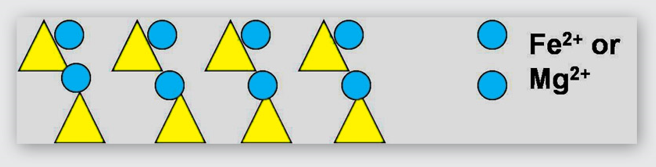
\-Consist of isolated tetrahedra, which are bonded only with cations through ionic bonds; there are no bonds between the silica tetrahedra in the nesosilicate minerals
\
Ex. Olivine (Most frequent mineral in the Earth’s mantle), Zircon
\
\-THERE ARE NO SHARED ELECTRONS IN TETRAHEDRA OXYGEN ATOMS
\
Ex. Olivine (Most frequent mineral in the Earth’s mantle), Zircon
\
\-THERE ARE NO SHARED ELECTRONS IN TETRAHEDRA OXYGEN ATOMS
37
New cards
Single Chain (INOSILICATES)
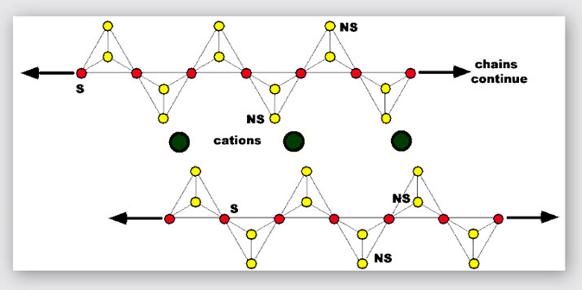
\-Their structure shows that each silica tetrahedron shares 2 oxygen atoms with similar structure resulting in a linear arrangement; the bonds between the adjacent silica tetrahedra are covalent
\
\-Cations are linked to the remaining, not-shared oxygen atoms through ionic binds
\
\-Prismatic Habit
\
Ex. Spodumene, diopside
\
\-Cations are linked to the remaining, not-shared oxygen atoms through ionic binds
\
\-Prismatic Habit
\
Ex. Spodumene, diopside
38
New cards
Double Chain (Sorosilicates)
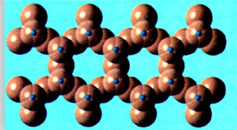
\-have a structure consisting of bonded silica tetrahedra that alternatively share 2 or 3 oxygen atoms, resulting in a double-chain structure; all the bonds between the adjacent silica tetrahedra are covalent
\
\-The double chains are linked to the cations through ionic bonds
\
Ex. Epidote
\
\-The double chains are linked to the cations through ionic bonds
\
Ex. Epidote
39
New cards
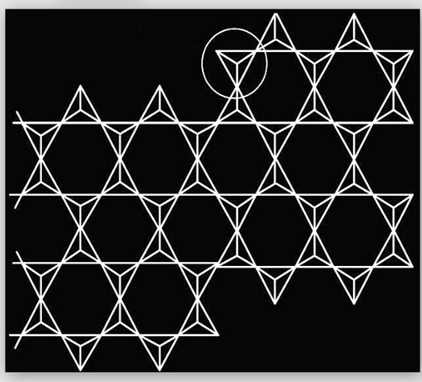
Sheet Chain (Pyllosilicates)
\-Silica tetrahedra present 3 shared oxygen atoms
\
\-The cations are situated between the sheets of silica tetrahedra, are linked to them with ionic bonds
\
\-Cleavage surfaces are parallel to the silica tetrahedra sheets, and the minerals of this group often present foliated habit
\
Ex. muscovite, white mica, biotite, black mica
\
\-The cations are situated between the sheets of silica tetrahedra, are linked to them with ionic bonds
\
\-Cleavage surfaces are parallel to the silica tetrahedra sheets, and the minerals of this group often present foliated habit
\
Ex. muscovite, white mica, biotite, black mica
40
New cards
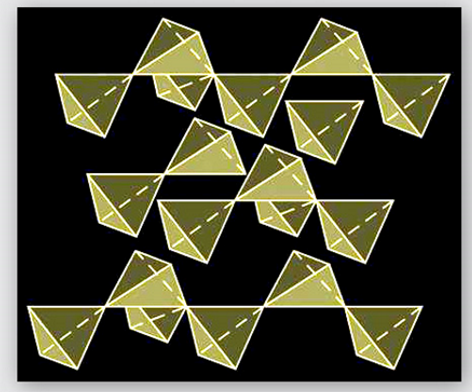
Framework (Tectosilicates)
\-All the oxygen atoms in their structure are covalently bonded with oxygen atoms of the adjacent tetrahedra
\
\-Crystal structures are extremely flexible, being capable of accommodating cations with large ionic radii (Na, K, Ca)
\
\-The minerals of this group are the most frequently found in the Earth’s crust and are common rock-forming minerals
\
Ex. Quartz, Albite, Anorthite, Orthoclase
\
\-Crystal structures are extremely flexible, being capable of accommodating cations with large ionic radii (Na, K, Ca)
\
\-The minerals of this group are the most frequently found in the Earth’s crust and are common rock-forming minerals
\
Ex. Quartz, Albite, Anorthite, Orthoclase
41
New cards
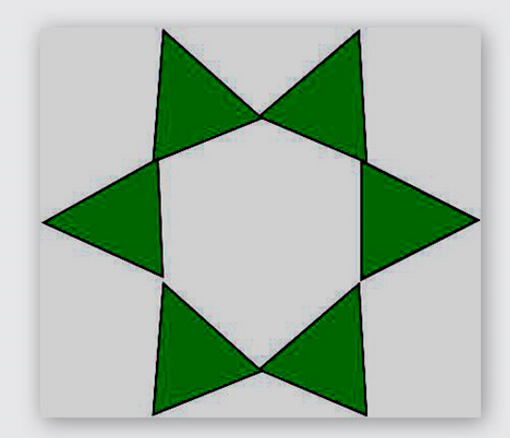
Ring Silicates (Cyclosilicates)
\-Ring silicates, present in their structure 3,4, or 6 silica tetrahedra that share 2 atoms of oxygen and form a ring-like structure
\
\-These are rare minerals on Earth, and occur only as accessory minerals in some igneous and metamorphic rocks
\
Ex. Beryl, Cordierite, Dioptas, Tourmaline
\
\-These are rare minerals on Earth, and occur only as accessory minerals in some igneous and metamorphic rocks
\
Ex. Beryl, Cordierite, Dioptas, Tourmaline
42
New cards
What are the 2 Types of Igneous Rocks?
Intrusive and Extrusive
43
New cards
Intrusive Igneous Rocks
magma cools and crystallizes within the Earth’s crust
\
form through the magma solidification beneath the Earth's surface; the cooling process is very slow. Their mass consists of large-sized minerals that can be observed with the unaided eye. Ex. Granite.
\
form through the magma solidification beneath the Earth's surface; the cooling process is very slow. Their mass consists of large-sized minerals that can be observed with the unaided eye. Ex. Granite.
44
New cards
Extrusive Igneous Rocks
magma cools and crystallizes at the surface of the Earth
\
form through the lava crystallization at the Earth's surface through fast cooling; the minerals in their mass are so small they can be observed only in thin sections under the microscope. Sometimes the cooling process is extremely fast and the atoms and ions in the lava composition do not have time to form nuclei of crystallization; the resulting rock is amorphous and with glassy appearance. Ex. Basalt.
\
form through the lava crystallization at the Earth's surface through fast cooling; the minerals in their mass are so small they can be observed only in thin sections under the microscope. Sometimes the cooling process is extremely fast and the atoms and ions in the lava composition do not have time to form nuclei of crystallization; the resulting rock is amorphous and with glassy appearance. Ex. Basalt.
45
New cards
4 Crystal Sizes of Igneous Rocks
Phaneritic, Aphanitic, Glassy, Fragmental
46
New cards
Crystal Size: Phanertic
\-characterized by the fact that the crystals can be seen with the unaided eye or a magnifier
\
\-characterized by the occurrence of small-sized minerals, which can be seen with the unaided eye; such texture indicates slow magma cooling and characterizes the intrusive rocks. Ex. Granite.
\
E.g. Hand Lens
\
\-Indicative for Slow Cooling
\
Ex. Granite and Granodiorite
\
\-characterized by the occurrence of small-sized minerals, which can be seen with the unaided eye; such texture indicates slow magma cooling and characterizes the intrusive rocks. Ex. Granite.
\
E.g. Hand Lens
\
\-Indicative for Slow Cooling
\
Ex. Granite and Granodiorite
47
New cards
Crystal Size: Aphanitic
\-characterized by presence of small-sized crystals, which cannot be see with the unaided eye
\
\-characterized by the presence of small-sized minerals, which are not visible with the unaided eye, but are visible when thin sections through these rocks are analyzed under the microscope; this texture indicates faster magma cooling because the minerals did not have the time to grow. Ex. Extrusive rocks, Basalt.
\
\-Indicative for rapid cooling
\
Ex. Banded Rhyolite
\
\-characterized by the presence of small-sized minerals, which are not visible with the unaided eye, but are visible when thin sections through these rocks are analyzed under the microscope; this texture indicates faster magma cooling because the minerals did not have the time to grow. Ex. Extrusive rocks, Basalt.
\
\-Indicative for rapid cooling
\
Ex. Banded Rhyolite
48
New cards
Crystal Size: Glassy
\-indicates that the molten material crystallized very rapidly and there was no time for elements to arrange themselves into solid crystalline compounds
\
indicative of the fastest cooling process of the molten matter at the Earth's surface. Nucleation process does not start in the case of these rocks and, as a result, they are in amorphous state. Only some extrusive rocks have such texture, for example, obsidian.
\
\-the results is the non-crystalline glass
\
Ex. Obsidian and Snowflake Obsidian
\
indicative of the fastest cooling process of the molten matter at the Earth's surface. Nucleation process does not start in the case of these rocks and, as a result, they are in amorphous state. Only some extrusive rocks have such texture, for example, obsidian.
\
\-the results is the non-crystalline glass
\
Ex. Obsidian and Snowflake Obsidian
49
New cards
Crystal Size: Fragmental
consist of pyroclastic material ejected as lava from a volcano and which falls down at Earth’s surface as partly consolidated rocks
\
shows the transitions between rock families; rocks with fragmental texture are formed through the consolidation of the pyroclastic material ejected during volcanic eruptions. Ex. Tuff. This texture occurs in rocks with mixed, igneous and sedimentary rock characteristics, because the material that forms the rocks is of volcanic origin but it accumulates through sedimentary processes
\
\-Mixed Characteristics: igneous and sedimentary
\
shows the transitions between rock families; rocks with fragmental texture are formed through the consolidation of the pyroclastic material ejected during volcanic eruptions. Ex. Tuff. This texture occurs in rocks with mixed, igneous and sedimentary rock characteristics, because the material that forms the rocks is of volcanic origin but it accumulates through sedimentary processes
\
\-Mixed Characteristics: igneous and sedimentary
50
New cards
Phaneritic Rock Textures
Poikilitic, Granular, Prophyritic,
51
New cards
Dike - Igneous Bodies of Rock
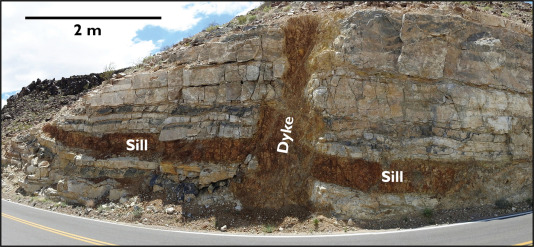
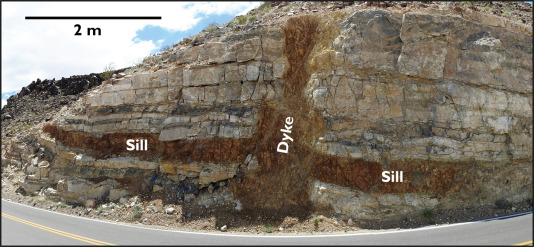
An igneous dike is a type of intrusion formed when magma (molten rock) fills a fracture in older rocks. Dikes are tabular intrusions that crosscut existing rocks such as bedded sedimentary rocks, deformed metamorphic rocks, or older intrusions. Dikes are typically oriented in a vertical or near vertical position.
52
New cards
Sill - Igneous Bodies of Rocks
\-parallel with preexisting rocks
\
flat intrusion of igneous rock that forms between preexisting layers of rock. Sills occur in parallel to the bedding of the other rocks that enclose them, and, though they may have vertical to horizontal orientations, nearly horizontal sills are the most common.
\
flat intrusion of igneous rock that forms between preexisting layers of rock. Sills occur in parallel to the bedding of the other rocks that enclose them, and, though they may have vertical to horizontal orientations, nearly horizontal sills are the most common.
53
New cards
Volcanic Igneous Rocks
\-journey of intrusive igenous rocks ends in the crust where they cool and crystallize
\
\-Influenced by various volcanic processes, which can affect their form and texture
\
\-2 Types of Extrusive (Volcanic) Igneous Rocks: Lava Flows, Pyroclastic Flows
\
\-Influenced by various volcanic processes, which can affect their form and texture
\
\-2 Types of Extrusive (Volcanic) Igneous Rocks: Lava Flows, Pyroclastic Flows
54
New cards
Lava Flows
aphanitic igneous rocks
55
New cards
Pyroclastic Flows
fragmental igneous rocks
56
New cards
Vesicular Basalt
vesicles are preserved gas cavities
\
occurs often in basalts that trap gases from the surrounding environment; this results in the rock's sponge-like appearance
\
occurs often in basalts that trap gases from the surrounding environment; this results in the rock's sponge-like appearance
57
New cards
Pillow Basalts
Basalt lava flows with bulbous appearance that form from underwater eruptions
\
occur in the case of submarine eruptions; lavas cannot flow due to the higher water column pressure, resulting in the formation of characteristic quasi-spherical structures; the pillow basalts are used to document the submarine lava flows.
\
occur in the case of submarine eruptions; lavas cannot flow due to the higher water column pressure, resulting in the formation of characteristic quasi-spherical structures; the pillow basalts are used to document the submarine lava flows.
58
New cards
Volcanic Bombs
large-sized rock fragments, which are ejected during the volcanic eruptions
59
New cards
2 Major Characteristics of Sedimentary Rocks
\-The clastic sedimentary rocks are composed predominantly of silicate fragments (clasts), such as **individual silicate minerals** (quartz, feldspar) and **rock (lithic) fragments**.
\
\-Clasts undergo **weathering** & **erosion**, **transport**, **deposition** and **lithification** to form a clastic sedimentary rock (the process of formation is extremely complex).
\
\-Clasts undergo **weathering** & **erosion**, **transport**, **deposition** and **lithification** to form a clastic sedimentary rock (the process of formation is extremely complex).
60
New cards
Weathering
**represents the physical and chemical alteration of rocks exposed to the atmospheric influences on the Earth’s surface.**
\
* result in the break-up of the pre-existing rocks and clast formation.
\
* The most weathered rocks, which generate clastic sediments, are the silicate-rich igneous, metamorphic and sedimentary rocks. Notably, clasts can be produced even by rocks rich in minerals prone to dissolution.
\
* result in the break-up of the pre-existing rocks and clast formation.
\
* The most weathered rocks, which generate clastic sediments, are the silicate-rich igneous, metamorphic and sedimentary rocks. Notably, clasts can be produced even by rocks rich in minerals prone to dissolution.
61
New cards
Physical Weathering
**bedrock is broken into smaller fragments and the composition of the minerals remains unchanged.**
\
Earth's surface are broken down into smaller pieces by forces like wind, water, and even glaciers
\
Earth's surface are broken down into smaller pieces by forces like wind, water, and even glaciers
62
New cards
Chemical Weathering
* Chemical and mineralogical composition of the bedrock minerals is changed during the chemical weathering; this is due to the chemical reactions between the water and dissolved ions and pre-existing minerals, and results in the formation of new minerals and rocks. Ex. Rust - Oxidation
63
New cards
Sediment Transport (4 Types)
\
•**Eolian transport** (transport media = wind);
\
•**Glacier transport** (transport media = ice);
\
•**Stream and river transport** (transport media = continental water);
\
•**Wave and current transport** (transport media = oceanic water).
\
* encompasses a set of processes that result in the clast transportation from the regions where they formed into a sedimentary basin.
\
* Sediment transport is subdivided function of the transport media.
\
* Eolian transport has the air as transport media. Streams and rivers account for the transport of the largest amounts of sediments; the media is represented by the running water. Glacier transport has ice as transport media; it is the slowest kind of clast transport, which can last thousands to hundred thousand years.
•**Eolian transport** (transport media = wind);
\
•**Glacier transport** (transport media = ice);
\
•**Stream and river transport** (transport media = continental water);
\
•**Wave and current transport** (transport media = oceanic water).
\
* encompasses a set of processes that result in the clast transportation from the regions where they formed into a sedimentary basin.
\
* Sediment transport is subdivided function of the transport media.
\
* Eolian transport has the air as transport media. Streams and rivers account for the transport of the largest amounts of sediments; the media is represented by the running water. Glacier transport has ice as transport media; it is the slowest kind of clast transport, which can last thousands to hundred thousand years.
64
New cards
Lithification
is the conversion of sediment into rock.
\
\-**Compaction**, Cementation, Recrystallization
\
* represents a set of processes that happen after deposition, which lead to the sediment transformation into sedimentary rock.
\
* The processes are more complex in the sediments that contain dead organic matter, which through the process of decay, releases additional ions and reactive substances in the sediment pores, therefore increasing fluid chemical reactivity.
\
\-**Compaction**, Cementation, Recrystallization
\
* represents a set of processes that happen after deposition, which lead to the sediment transformation into sedimentary rock.
\
* The processes are more complex in the sediments that contain dead organic matter, which through the process of decay, releases additional ions and reactive substances in the sediment pores, therefore increasing fluid chemical reactivity.
65
New cards
Compaction
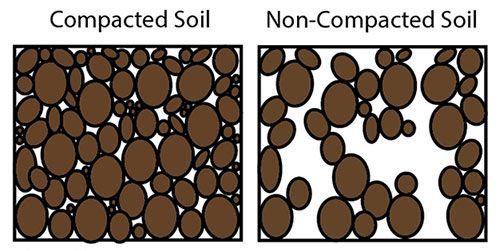
reduction in volume of sediments resulting from weight of newly deposited sediments above.
66
New cards
Cementation
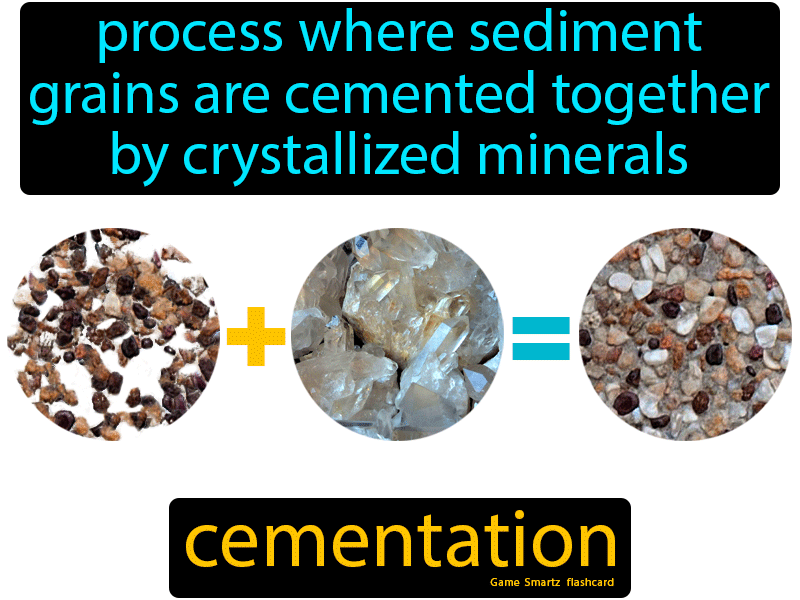
precipitated minerals bind together the grains of a sediment, converting it into a sedimentary rock.
67
New cards
Recrystallization
formation of new crystalline mineral grains in a rock.
\
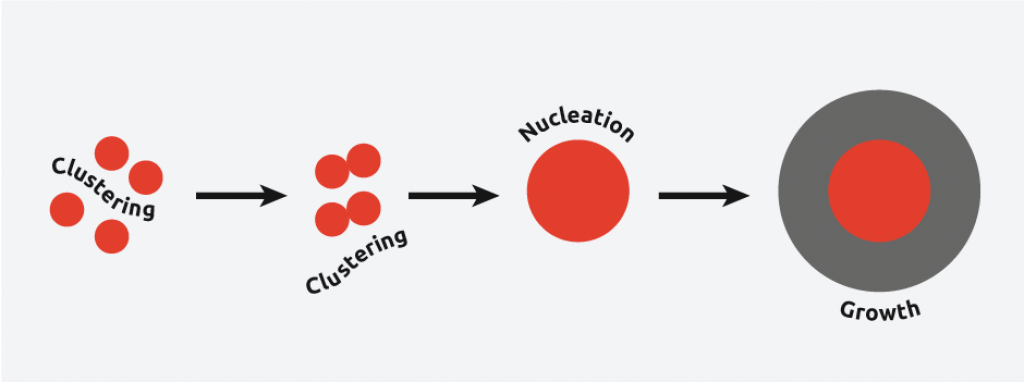
* Mineral formation begins with the occurrence of numerous small structures known as centers of crystallization, or nuclei of crystallization, through a process known as nucleation. The centers or nuclei of crystallization represent the earliest stage in the formation of the crystal structures, and their formation depends on the original molten matter's chemical composition, its temperature and cooling rate
\
* Mineral formation begins with the occurrence of numerous small structures known as centers of crystallization, or nuclei of crystallization, through a process known as nucleation. The centers or nuclei of crystallization represent the earliest stage in the formation of the crystal structures, and their formation depends on the original molten matter's chemical composition, its temperature and cooling rate
68
New cards
Molten Matter Solidification
* Igneous rocks form through the molten matter solidification in the Earth's interior or at its surface
* The molten matter beneath the Earth's surface is known as ***magma,*** and when it reaches to the surface is referred to as lave; both magma and lava are vicious mixtures of substances in liquid, solid and gaseous state
* Magma originates from the mantle and lower crust, where the rocks start to melt at approximately 700 degrees Celsius, and its temperature is between 700 and 1300 degree Celsius
* Magma's chemical composition and temperature change continuously due to the interactions with the rocks in the surrounding environment and separation of various fractions in its composition
* Solidification process is the transformation of matter from the liquid into solid state.
\
* The rate of heat loss during the process of magma or lava solidification determines the general appearance of an igneous rocks. Adjacent nuclei with similar incipient crystal structures will fuse, resulting in the formation of larger minerals and the process continues slowly during magma cooling. As a result, the minerals are larger and appear in the entire rock mass; they can be easily observed with the unaided eye in hand specimens.
* The molten matter beneath the Earth's surface is known as ***magma,*** and when it reaches to the surface is referred to as lave; both magma and lava are vicious mixtures of substances in liquid, solid and gaseous state
* Magma originates from the mantle and lower crust, where the rocks start to melt at approximately 700 degrees Celsius, and its temperature is between 700 and 1300 degree Celsius
* Magma's chemical composition and temperature change continuously due to the interactions with the rocks in the surrounding environment and separation of various fractions in its composition
* Solidification process is the transformation of matter from the liquid into solid state.
\
* The rate of heat loss during the process of magma or lava solidification determines the general appearance of an igneous rocks. Adjacent nuclei with similar incipient crystal structures will fuse, resulting in the formation of larger minerals and the process continues slowly during magma cooling. As a result, the minerals are larger and appear in the entire rock mass; they can be easily observed with the unaided eye in hand specimens.
69
New cards
**Igneous Rocks Classifications According to Crystallinity and Grain Size**
* Texture defines the geometrical relationships between the crystalline components (minerals), amorphous components (glass), and gaseous components that can occur in cavities (vacuoles) in the rock mass
* Textures are important because they help us in understanding the process of magma cooling and its transformation into rocks
* Crystallinity refers to the ration between large-sized minerals and amorphous mass (glass) in the composition of an igneous rock. Igneous rocks are subdivided into 3 categories:
\
Holohyalline, Holocrystalline, Hypohyaline
* Textures are important because they help us in understanding the process of magma cooling and its transformation into rocks
* Crystallinity refers to the ration between large-sized minerals and amorphous mass (glass) in the composition of an igneous rock. Igneous rocks are subdivided into 3 categories:
\
Holohyalline, Holocrystalline, Hypohyaline
70
New cards
Holohyalline
rocks consist entirely of amorphous substance (glass); extrusive rocks are included in this category
71
New cards
Holocrystalline
* rocks consist of minerals only; no glass occurs in their mass; this category includes only intrusive rocks
72
New cards
Hypohyaline
* rocks contain both large-sized minerals and glass in their mass; the proportion between the crystalline and amorphous components is variable; both intrusive and extrusive rocks are included in this category
73
New cards
Granular Texture
* Rocks with granular texture consist of minerals, which are relatively uniform in size; it documents a slow and continuous process of magma cooling

74
New cards
porphyritic texture
Rocks with porphyritic texture consist of large-sized euhedral and subhedral minerals, which belong to one or more mineral species, and are developed in a microcrystalline mass.
\
\-he porphyritic texture documents 2 distinct crystallization phases; phenocrysts (large crystal surrounded by small crystals) formed first through a process of slow crystallization; ground mass formed in the second phase through rapid cooling process, which is often induced by the ascending magma movement
\
\-he porphyritic texture documents 2 distinct crystallization phases; phenocrysts (large crystal surrounded by small crystals) formed first through a process of slow crystallization; ground mass formed in the second phase through rapid cooling process, which is often induced by the ascending magma movement
75
New cards
poikilitic texture
* contain smaller minerals enclosed in larger minerals; this texture documents 2 crystallization phases. The smaller minerals form in a first phase, leaving a relatively homogenous magma; larger minerals form during a second phase, which is characterized by slow cooling.
76
New cards
pyroclastic material
is andesitic or rhyolitic in composition and, according to their size, they are classified as: volcanic bombs, lapilli, and ash; a more general term is applied to the pyroclastic rocks is that of tuff. Volcanic ash is the finest material ejected during volcanic eruptions and it is paramount in stratigraphy
\
* Such material is released in the Earth's atmosphere during volcanic eruptions, which according to the geological time scale, are brief events; it is spread over vast areas by winds and air currents and the volcanic ash layer resulted from these events can be used as a marker in correlations. The unconsolidated pyroclastic material is known as tephra.
\
* Such material is released in the Earth's atmosphere during volcanic eruptions, which according to the geological time scale, are brief events; it is spread over vast areas by winds and air currents and the volcanic ash layer resulted from these events can be used as a marker in correlations. The unconsolidated pyroclastic material is known as tephra.
77
New cards
Silica-rich lavas
* The fundamental difference between the lava flows and pyroclastic rocks is that the former contains molten matter in its mass and the latter consists only of fragments of rocks and finer material detached from the volcano mountain during the eruption events and devoid molten matter
* Silica-rich lavas are more viscous than those rich in iron and magnesium. The silica-rich lavas have the distinct tendency to trap more gases in their mass, which results in explosive volcanic eruptions that produce significant amounts of pyroxlastites.
* The iron and magnesium-rich lavas flow more readily, and this results in the formation of lava flows
* Silica-rich lavas are more viscous than those rich in iron and magnesium. The silica-rich lavas have the distinct tendency to trap more gases in their mass, which results in explosive volcanic eruptions that produce significant amounts of pyroxlastites.
* The iron and magnesium-rich lavas flow more readily, and this results in the formation of lava flows
78
New cards
sedimentary basins
A sedimentary basin is an area of the earth's crust that is underlain by a thick sequence of sedimentary rocks.
\
\-A sedimentary basin may occur as part of a mountain chain, beneath a continental peneplain, or in an ocean.
\
\-A sedimentary basin may occur as part of a mountain chain, beneath a continental peneplain, or in an ocean.
79
New cards
Clastic Rocks
* Clastic rocks are formed through accumulation of fragments of pre-existing rocks in sedimentary basin; they are also known as detrital or siliciclastic rocks
* Make up 85% of the total mass of sedimentary rocks
* 4 components of the clastic rocks: clasts, matrix, cement, and pores
* Make up 85% of the total mass of sedimentary rocks
* 4 components of the clastic rocks: clasts, matrix, cement, and pores
80
New cards
Clasts
* are fragments of the pre-existing rocks; the term clast is rather a general one and it is often applied to fragments consisting of one more mineral. Fragments or rocks, which consist of more than one mineral, are known as lithoclasts. The organic debris that contribute to the formation of a detrital rock are known as bioclasts.
81
New cards
Matrix
* refers to the finer clastic material, which often occur in the space between the larger clasts; matrix minerals are small, often microscopical. These minerals are transported from the adjacent sedimentary areas, passing through a similar set of processes as the clasts.
\
* The matrix minerals are allochthonous (having __originated__ at a distance from its present position)
\
* The matrix minerals are allochthonous (having __originated__ at a distance from its present position)
82
New cards
Cement
formed in the space between the clasts through mineral precipitation from solution after the clasts were accumulated as part of the sediment. By contrast to the matrix minerals, cement minerals are formed in situ (same place), so they are autochthonous (indigenous rather than __descended__ from)
83
New cards
Pores
occur in clastic rocks; they are empty spaces between the clasts. The totality of the pores in a rock is referred to as porosity.
\
\-Pore formation begins with the sediment formation through the clast accumulation at the bottom of a sedimentary basin. The sediment is unconsolidated and consists of loose clasts.
\
\-The original porosity in the detrital rocks can be approximately 45% of the sediment volume, and is gradually reduced due to the compaction process generated by the new sediment accumulated above the original layer.
\
\-The pores can be subdivided according to their size in macropores and micropores.
\
\-3 Types
\
\-Pore formation begins with the sediment formation through the clast accumulation at the bottom of a sedimentary basin. The sediment is unconsolidated and consists of loose clasts.
\
\-The original porosity in the detrital rocks can be approximately 45% of the sediment volume, and is gradually reduced due to the compaction process generated by the new sediment accumulated above the original layer.
\
\-The pores can be subdivided according to their size in macropores and micropores.
\
\-3 Types
84
New cards
Catenary Pores
connected with other pores; they allow the fluid flow in the subsurface. A rock with catenary porosity has excellent permeability
85
New cards
Cul-du-sac Pores
allow the fluids to fill them, but do not allow the fluid flow
86
New cards
Closed Pores
do not allow the fluid flow and are rarely filled with economically important fluids (e.g. oil)
87
New cards
Deposition
* begins when the clasts, which are derived from the weathered rocks and transported by air, running water, and ice, enter a sedimentary basin and ends when they settle as loose layers at the bottom of a sedimentary basin. Sediment redistribution is frequent; for example, waves and currents redistribute the clasts in a marine basin
88
New cards
Metamorphic Rocks - Generalities
\-Changes of the preexisting rocks during the metamorphic process are: texture, mineralogical, both textural and mineralogical
\
\-The changes during the metamorphic process is due to the fact that the rocks have the trend to remain in equilibrium with the surrounding environment
\
\-Environment changes > the rocks change
\
\-The changes during the metamorphic process is due to the fact that the rocks have the trend to remain in equilibrium with the surrounding environment
\
\-Environment changes > the rocks change
89
New cards
How do Metamorphic Rocks Form?
\-form through the transformation of the pre-existing rock under the action of high temperatures, high pressures, oriented stress, and chemically reactive fluids
\
\-the transformation of the initial rock into a new rock happens as the rocks remain in solid state, and the changes induced in protolith can be mineralogical, textural, or, more frequently, both mineralogical and textual
\
\-the transformation of the initial rock into a new rock happens as the rocks remain in solid state, and the changes induced in protolith can be mineralogical, textural, or, more frequently, both mineralogical and textual
90
New cards
What factors determine the Metamorphic Rock Formation?
temperature, pressure, oriented stress, and the active fluid in the Earth’s interior
91
New cards
Temperature - Metamorphic Rocks
\-temperature gradually increases from the surface towards the center of the Earth
\
\-The rate at which the temperature increases is known as geothermal gradient
\
\-Geothermal Gradient is variable due to the heterogeneity in the Earth’s composition, radioactive decay process, mitigating molten matter, presence/absence of volatile substance
\
\-Average is 2.6 C/100 m and increases with the increasing depth due to the heat source at the center of the Earth
\
\-Ions are released from the existing minerals, and they can be combined to form new crystal structures and, therefore new mineral species.
\
\-Temperature-induced mineralogical and textural changes are irreversible
\
\-The rate at which the temperature increases is known as geothermal gradient
\
\-Geothermal Gradient is variable due to the heterogeneity in the Earth’s composition, radioactive decay process, mitigating molten matter, presence/absence of volatile substance
\
\-Average is 2.6 C/100 m and increases with the increasing depth due to the heat source at the center of the Earth
\
\-Ions are released from the existing minerals, and they can be combined to form new crystal structures and, therefore new mineral species.
\
\-Temperature-induced mineralogical and textural changes are irreversible
92
New cards
Pressure - Metamorphic Rocks
\-consist of 2 distinct components
\
\-Lithostatic pressure refers to the weight of the layers above a certain point in the Earth’s interior; it gradually increases with the depth and is transmitted through the grain to grain contacts
\
\-Fluid pressure is given by the fluid phases existing in the fractures or rock pores.
\
\-The rate at which the pressure increases towards the Earth’s center is known as geostatic or, more frequently, lithostatic gradient
\
\-Lithostatic pressure refers to the weight of the layers above a certain point in the Earth’s interior; it gradually increases with the depth and is transmitted through the grain to grain contacts
\
\-Fluid pressure is given by the fluid phases existing in the fractures or rock pores.
\
\-The rate at which the pressure increases towards the Earth’s center is known as geostatic or, more frequently, lithostatic gradient
93
New cards
Oriented Status
Results mostly in mineral realignment and formation of surfaces dominated by certain minerals (surfaces of foliation = Foliation in geology refers to repetitive layering in metamorphic rocks.).
\
\-The original protolith texture is often destroyed
\
\-The original protolith texture is often destroyed
94
New cards
Chemically Reactive Fluids
\-Have a major role in the ion and atom changes during the metamorphic processes
\
\-There can be addition, subtraction, and combined addition and subtraction of ions and atoms, resulting in the formation of new mineral species
\
\-Water is the most common fluid in the subsurface conditions, and it can be enriched with dissolved gases (CO2, CH4) or ions (Na, K, Ca)
\
\-A major source of water in the subsurface is represented by the infiltrated water from the active sedimentary basins (lakes, rivers, seas, oceans)
\
\-There can be addition, subtraction, and combined addition and subtraction of ions and atoms, resulting in the formation of new mineral species
\
\-Water is the most common fluid in the subsurface conditions, and it can be enriched with dissolved gases (CO2, CH4) or ions (Na, K, Ca)
\
\-A major source of water in the subsurface is represented by the infiltrated water from the active sedimentary basins (lakes, rivers, seas, oceans)
95
New cards
Upper Limit of Metamorphism
\-The upper limit (shallow) of metamorphism occurs immediately after diagenesis (chemical and physical process); it estimated that it occurs at a temperature of approx. 100 C. The vast majority are formed below this temperature
96
New cards
Lower Boundary of Metamorphism
Metamorphism’s lower boundary (deeper) corresponds to the boundary between the metamorphic and igneous domains, and it occurs below 1200 C, function of rock chemical composition and pressure
\
\-Textural changes in the proximity of the metamorphism’s lower boundary are apparent in the granite-gneiss-migmatite series
\
\-Granite, an igenous intrusive rock. Gneiss is the metamorphic rock that results from the transformation of granite at high temperatures and pressures.
\
\-Textural changes in the proximity of the metamorphism’s lower boundary are apparent in the granite-gneiss-migmatite series
\
\-Granite, an igenous intrusive rock. Gneiss is the metamorphic rock that results from the transformation of granite at high temperatures and pressures.
97
New cards
Partial Melting - Metamorphic Rocks
\-the process of partical melting occurs as the temperature and pressure continue to increase, and textural changes become apparent in the rock mass
\
\-Light-colored and dark-colored minerals separate to form alternating bands where either of these 2 groups dominate; migmatites result from gneiss transformation and have a banded texture
\
\-Light-colored and dark-colored minerals separate to form alternating bands where either of these 2 groups dominate; migmatites result from gneiss transformation and have a banded texture
98
New cards
Migmatites
rocks situated at the boundary between the igneous and metamorphic domains, but there are no arguments to include them with precision in either of them
99
New cards
Regional Metamorphism
\-most widespread kind of metamorphism
\
\-shows significant variability with respect to the temperature, pressure and chemically reactive fluid regime
\
\-metamorphism occurs mostly in the plate collision zones, in the regions of mountain range formations
\
\-Schists are the most frequent metamorphic rocks formed in these conditions.
\
\-The oriented stress is the dominant factor in the regional metamorphism
\
\-regional and local scale
\
\-shows significant variability with respect to the temperature, pressure and chemically reactive fluid regime
\
\-metamorphism occurs mostly in the plate collision zones, in the regions of mountain range formations
\
\-Schists are the most frequent metamorphic rocks formed in these conditions.
\
\-The oriented stress is the dominant factor in the regional metamorphism
\
\-regional and local scale
100
New cards
Contact (Thermal) Metamorphism
\-occurs in the rocks that are in proximity of the igneous intrusions
\
\-the dominant factor in this type of metamorphism is the temperature
\
\-Recrystallization is a frequent phenomenon associated with thermal metamorphism
\
\-marbles are frequent metamorphic rocks that result from the recrystallization of limestones
\
\-local level
\
\-the dominant factor in this type of metamorphism is the temperature
\
\-Recrystallization is a frequent phenomenon associated with thermal metamorphism
\
\-marbles are frequent metamorphic rocks that result from the recrystallization of limestones
\
\-local level