COGSCI180 Brain Basics

0.0(0)
studied byStudied by 1 person
0.0(0)
full-widthCall Kai
learnLearn
examPractice Test
spaced repetitionSpaced Repetition
heart puzzleMatch
flashcardsFlashcards
GameKnowt Play
Card Sorting

1/43

encourage image

There's no tags or description

Looks like no tags are added yet.

Study Analytics
Name
Mastery
Learn
Test
Matching
Spaced
Call with Kai

No study sessions yet.

44 Terms

1
New cards

Anterior

located near or toward the front
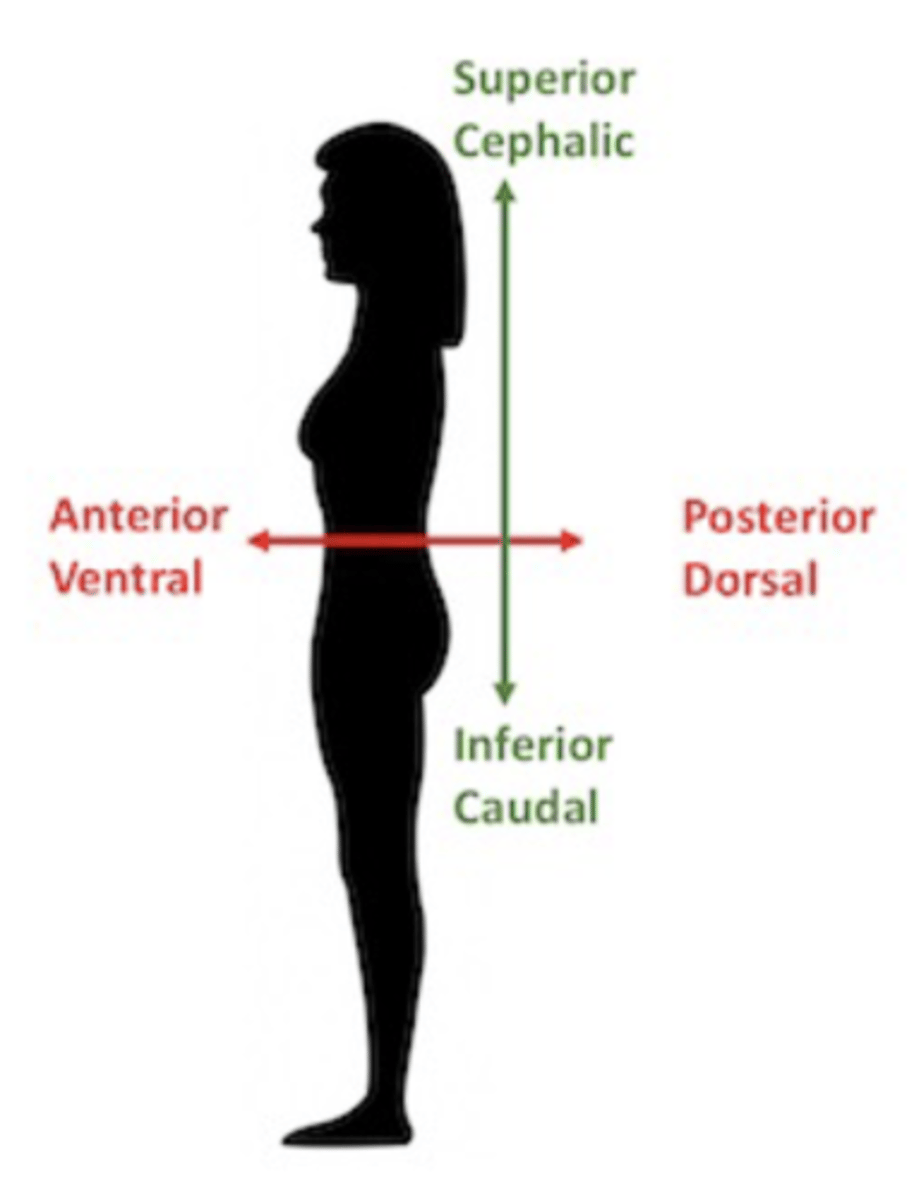
<p>located near or toward the front</p>
2
New cards

Posterior

located near or toward the back
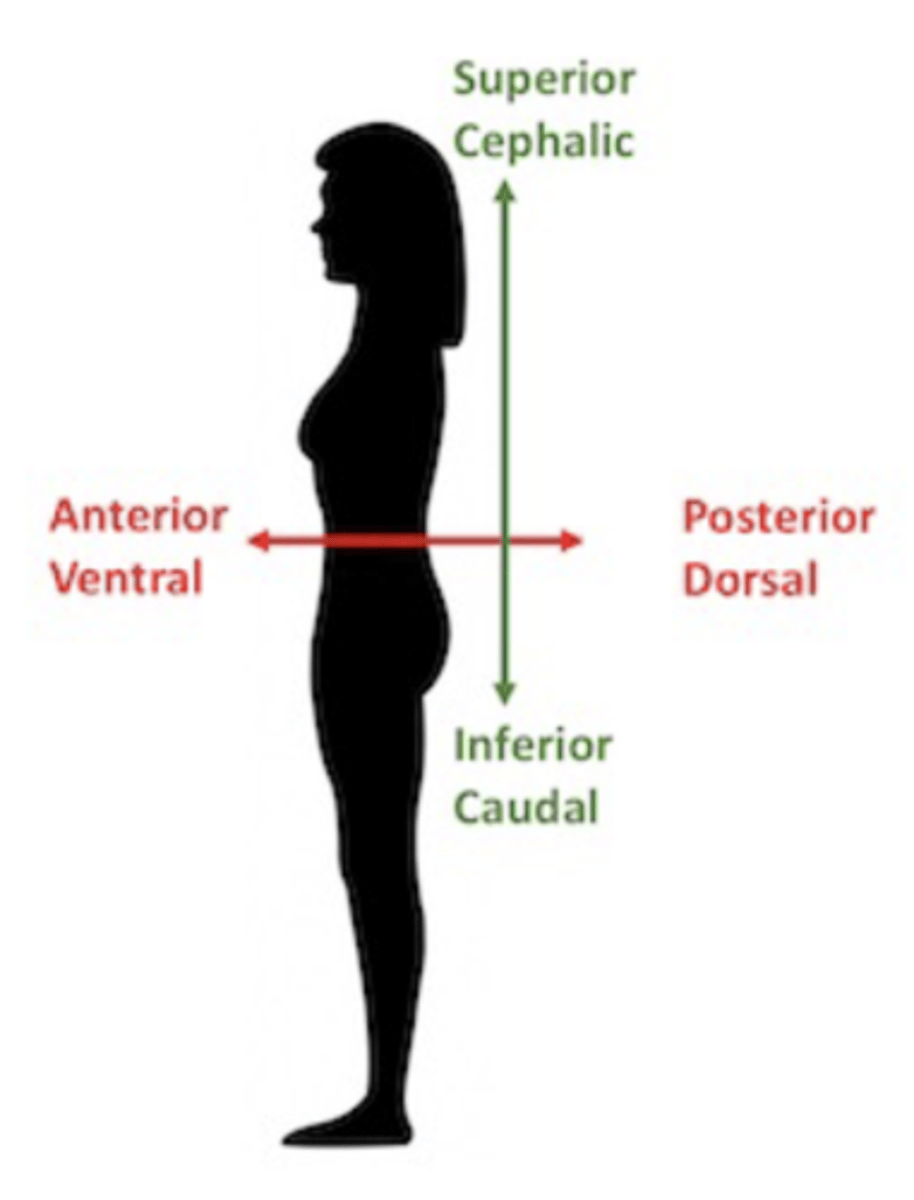
<p>located near or toward the back</p>
3
New cards

Dorsal

in a direction toward the top of the head or the back
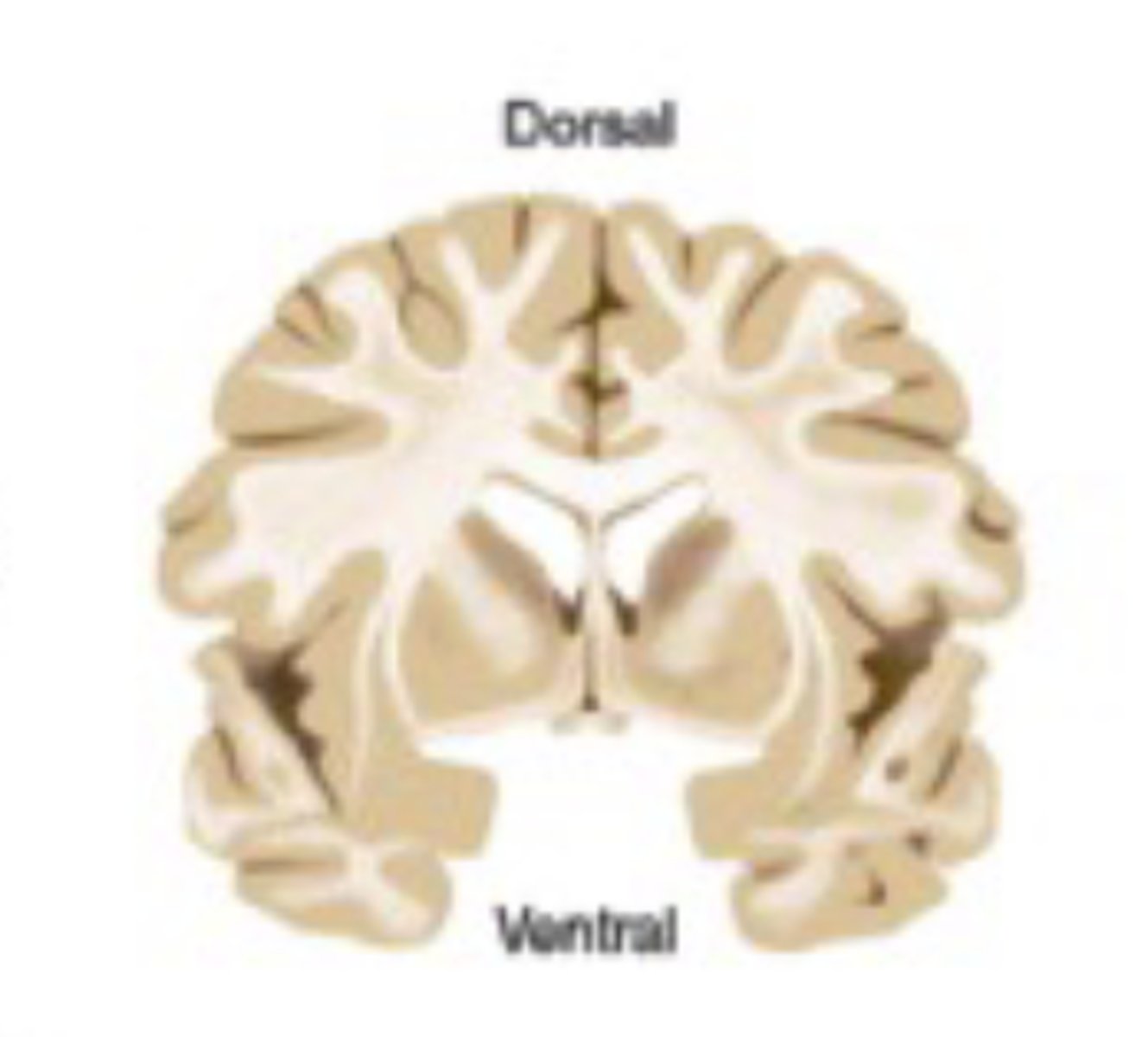
<p>in a direction toward the top of the head or the back</p>
4
New cards

Ventral

in a direction toward the bottom of the skull or the front surface of the body
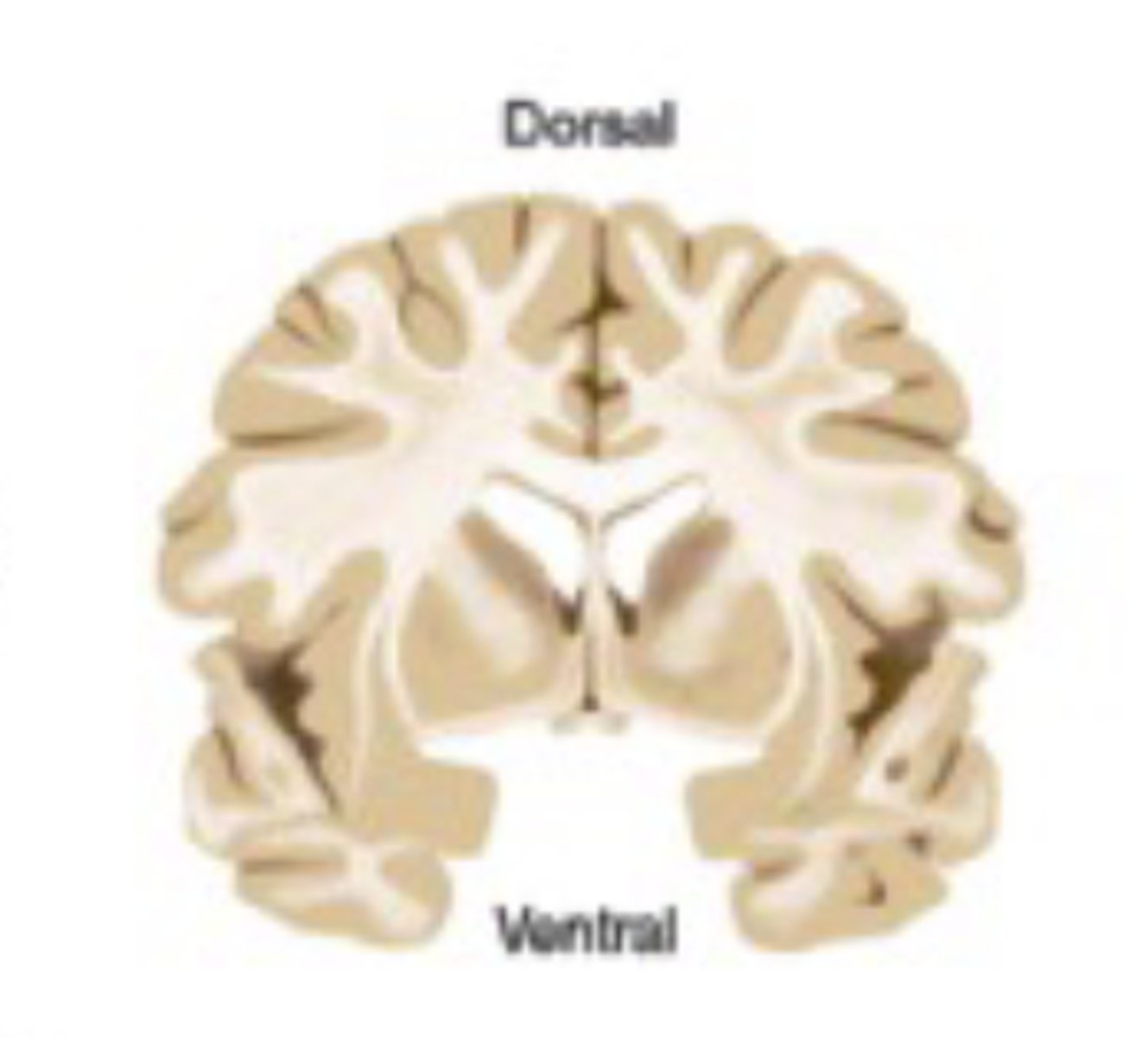
<p>in a direction toward the bottom of the skull or the front surface of the body</p>
5
New cards

Lateral

toward the side of the body, away from the middle
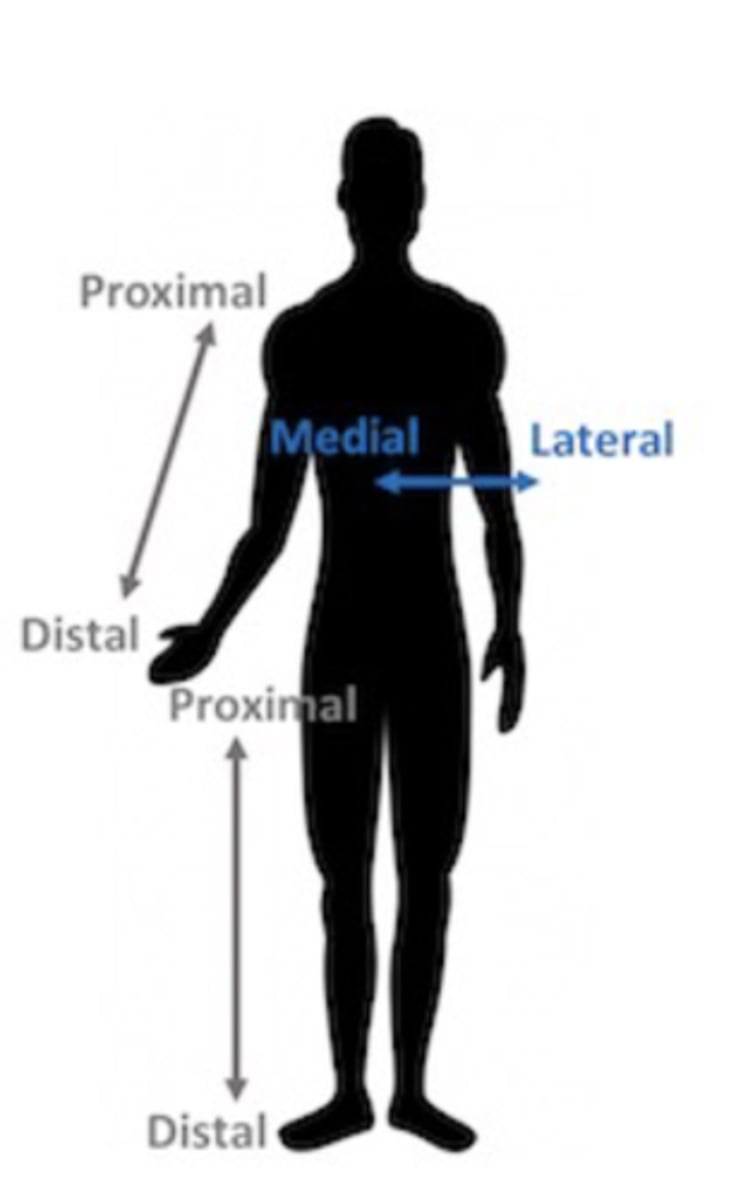
<p>toward the side of the body, away from the middle</p>
6
New cards

Medial

toward the middle of the body, away from the side
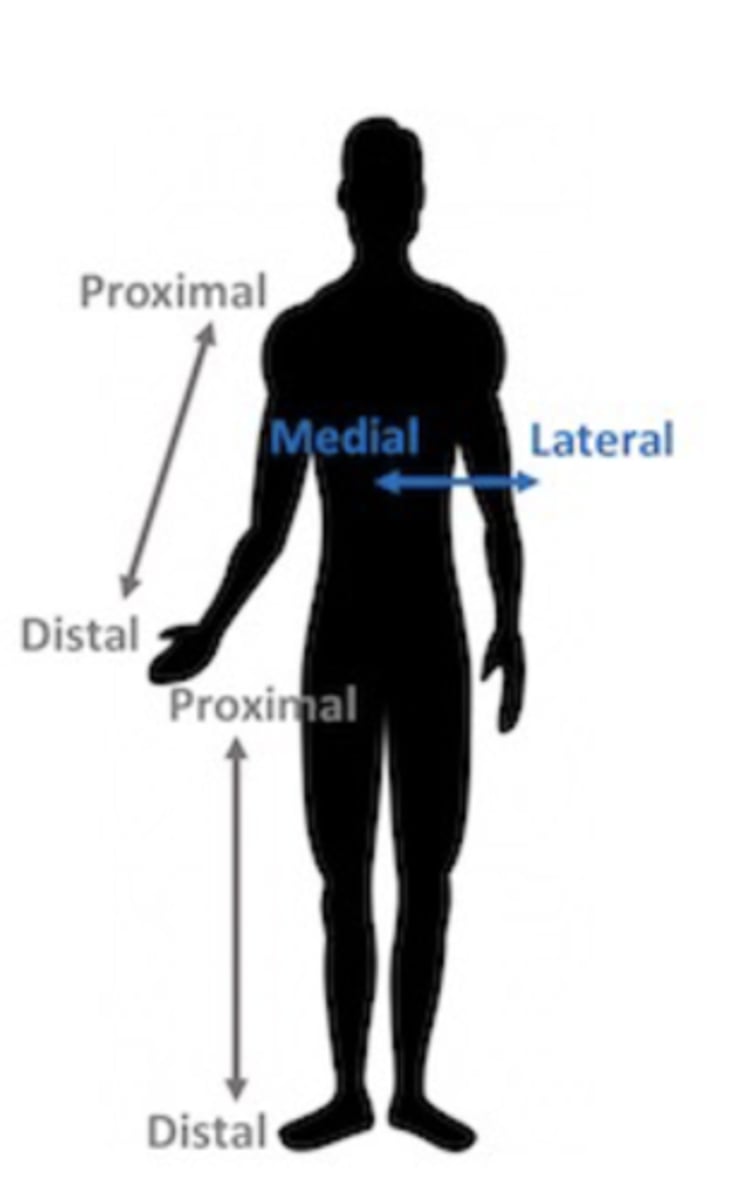
<p>toward the middle of the body, away from the side</p>
7
New cards

Coronal (frontal section)

a slice through the brain parallel to the forehead
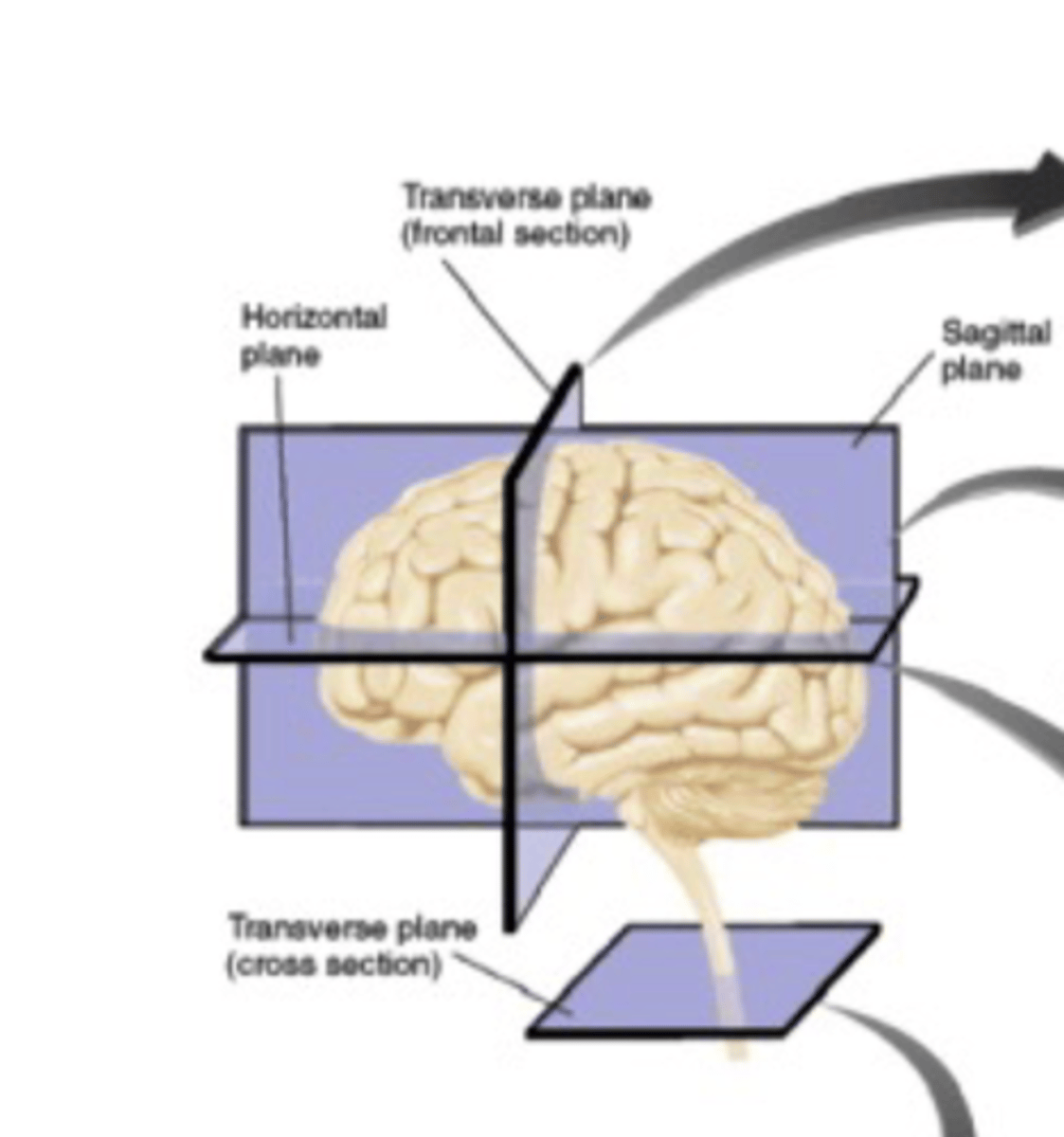
<p>a slice through the brain parallel to the forehead</p>
8
New cards

Sagittal (lateral section)

a slice through the brain perpendicular to the ground and parallel to the temporal lobes
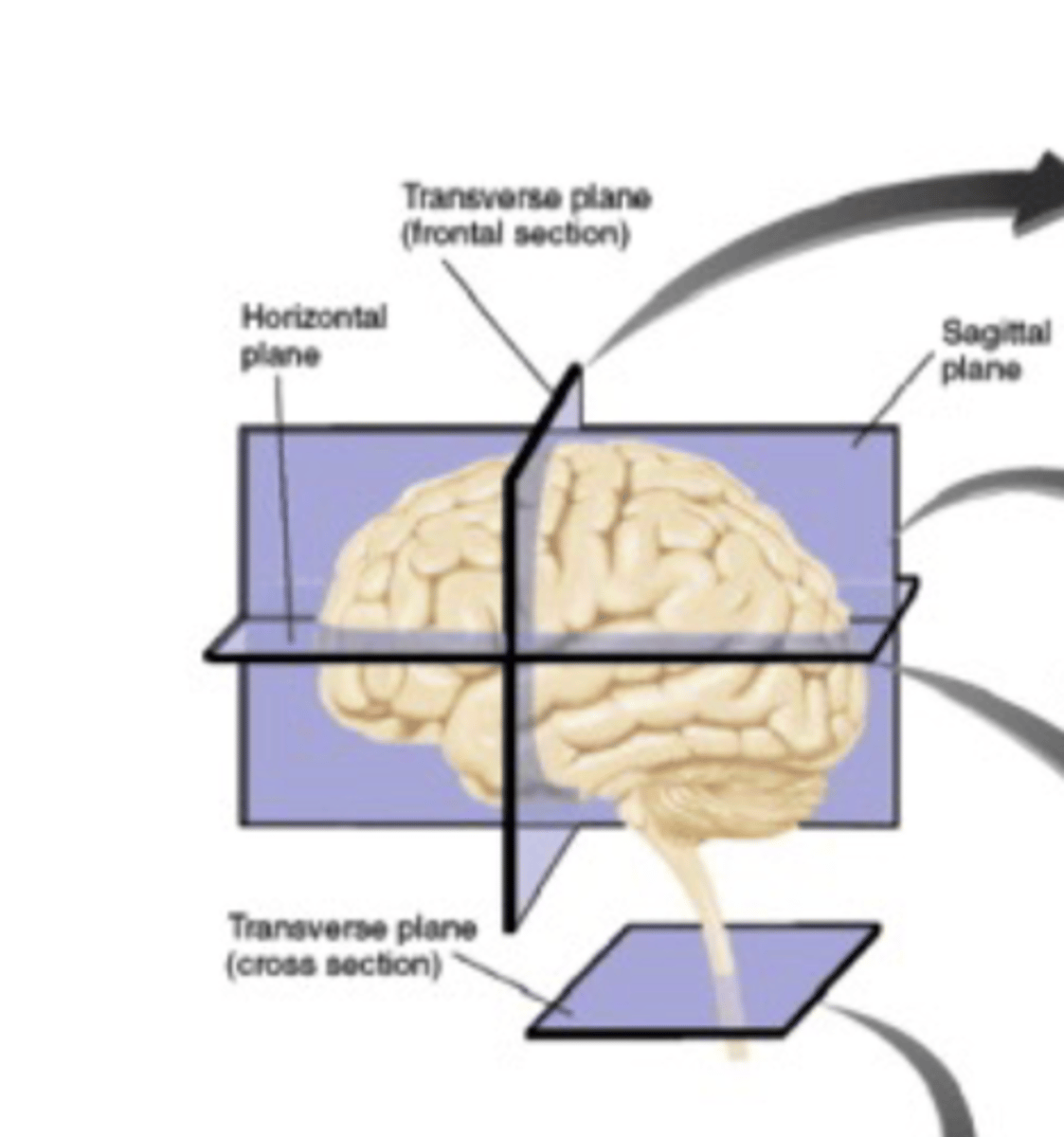
<p>a slice through the brain perpendicular to the ground and parallel to the temporal lobes</p>
9
New cards

Transverse (axial section)

a slice through the brain parallel to the ground
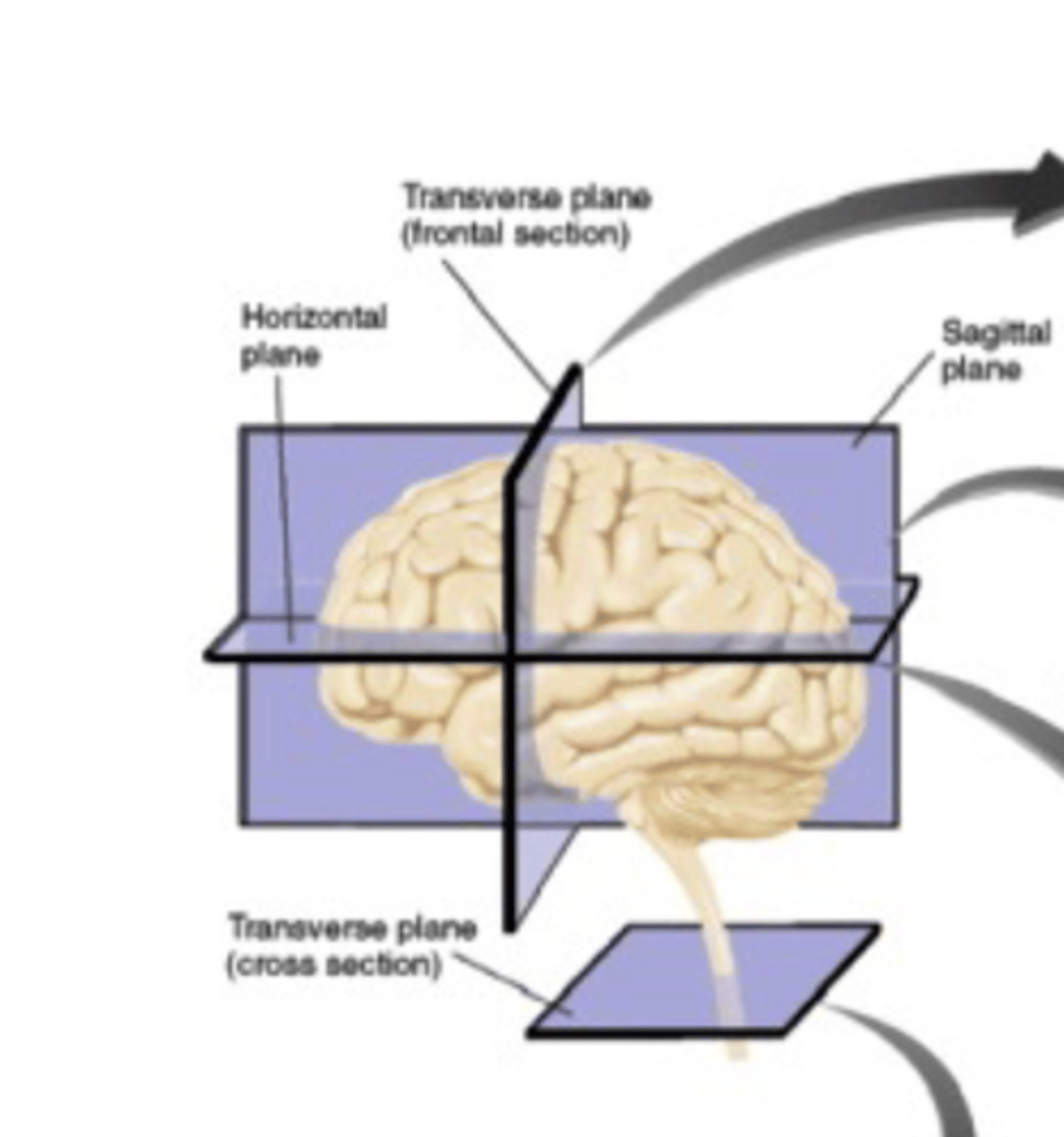
<p>a slice through the brain parallel to the ground</p>
10
New cards

Forebrain

The largest and most complicated region of the brain, including the thalamus, hypothalamus, limbic system, and cerebrum. roughly corresponds to different stages of evolutionary development -- Neocortex: rational or thinking brain
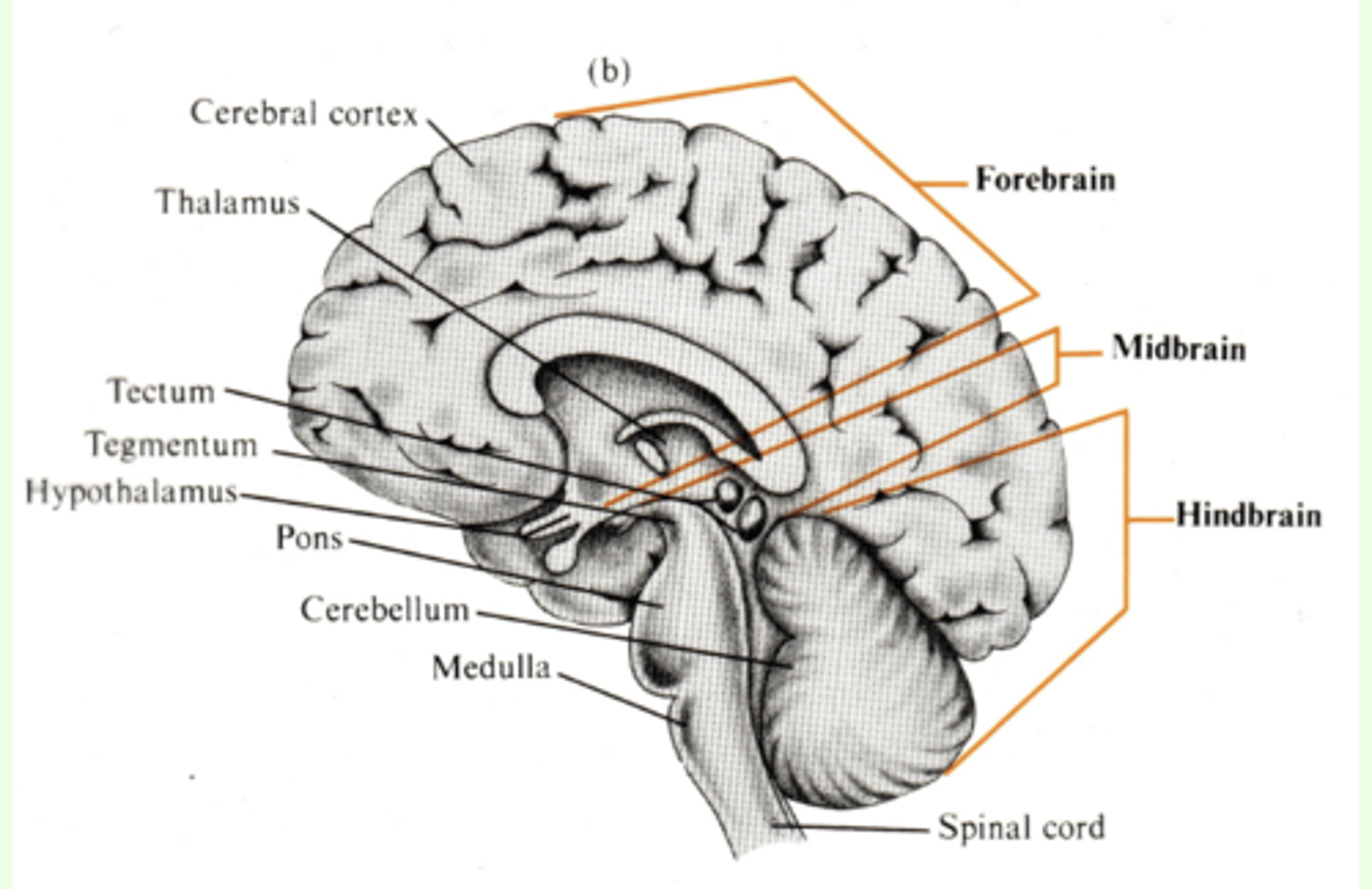
<p>The largest and most complicated region of the brain, including the thalamus, hypothalamus, limbic system, and cerebrum. roughly corresponds to different stages of evolutionary development -- Neocortex: rational or thinking brain</p>
11
New cards

Midbrain

roughly corresponds to different stages of evolutionary development -- Limbic brain: emotional or feeling brain
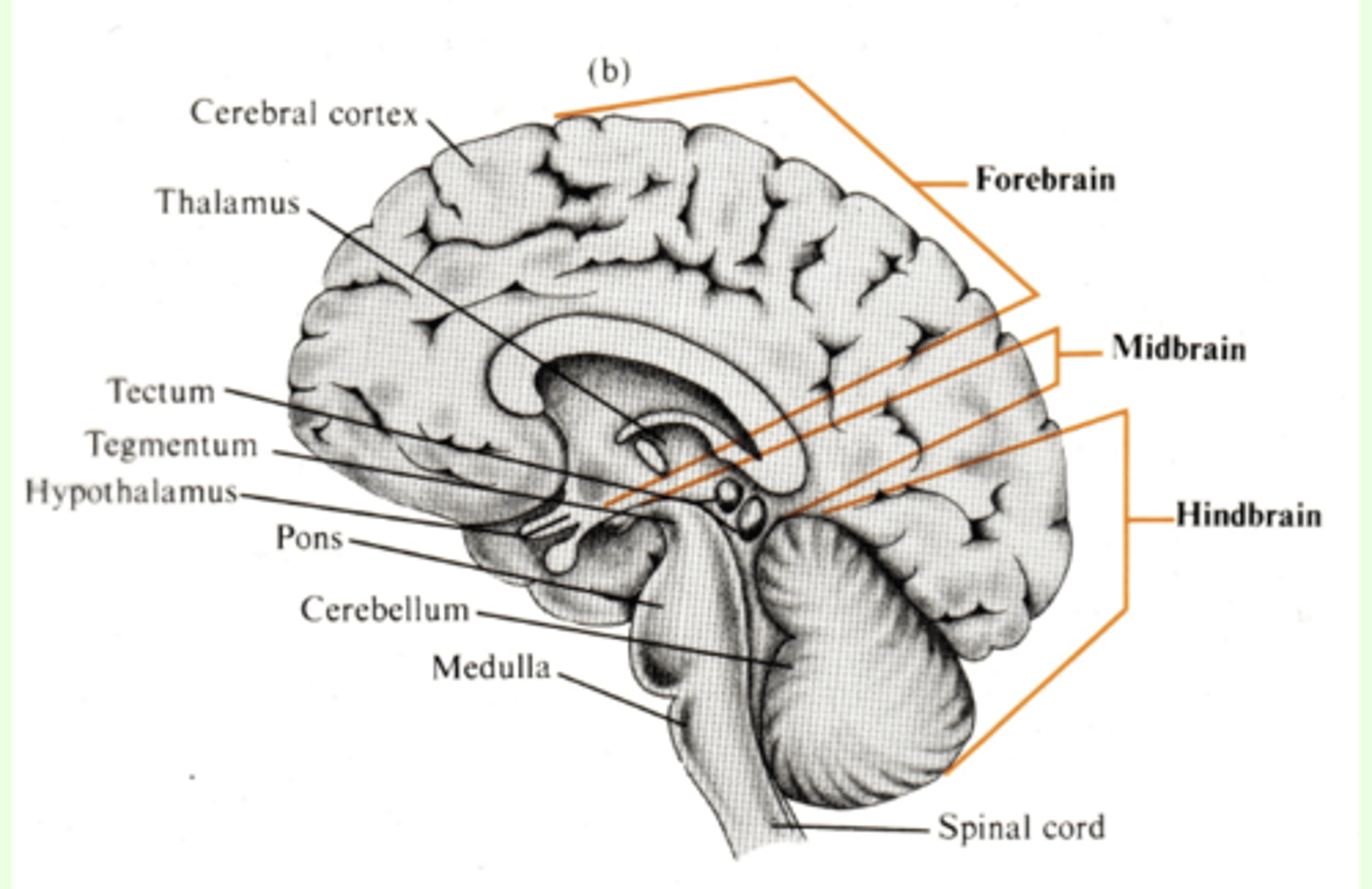
<p>roughly corresponds to different stages of evolutionary development -- Limbic brain: emotional or feeling brain</p>
12
New cards

Hindbrain

roughly corresponds to different stages of evolutionary development -- Reptilian brain: instinctual or dinosaur brain
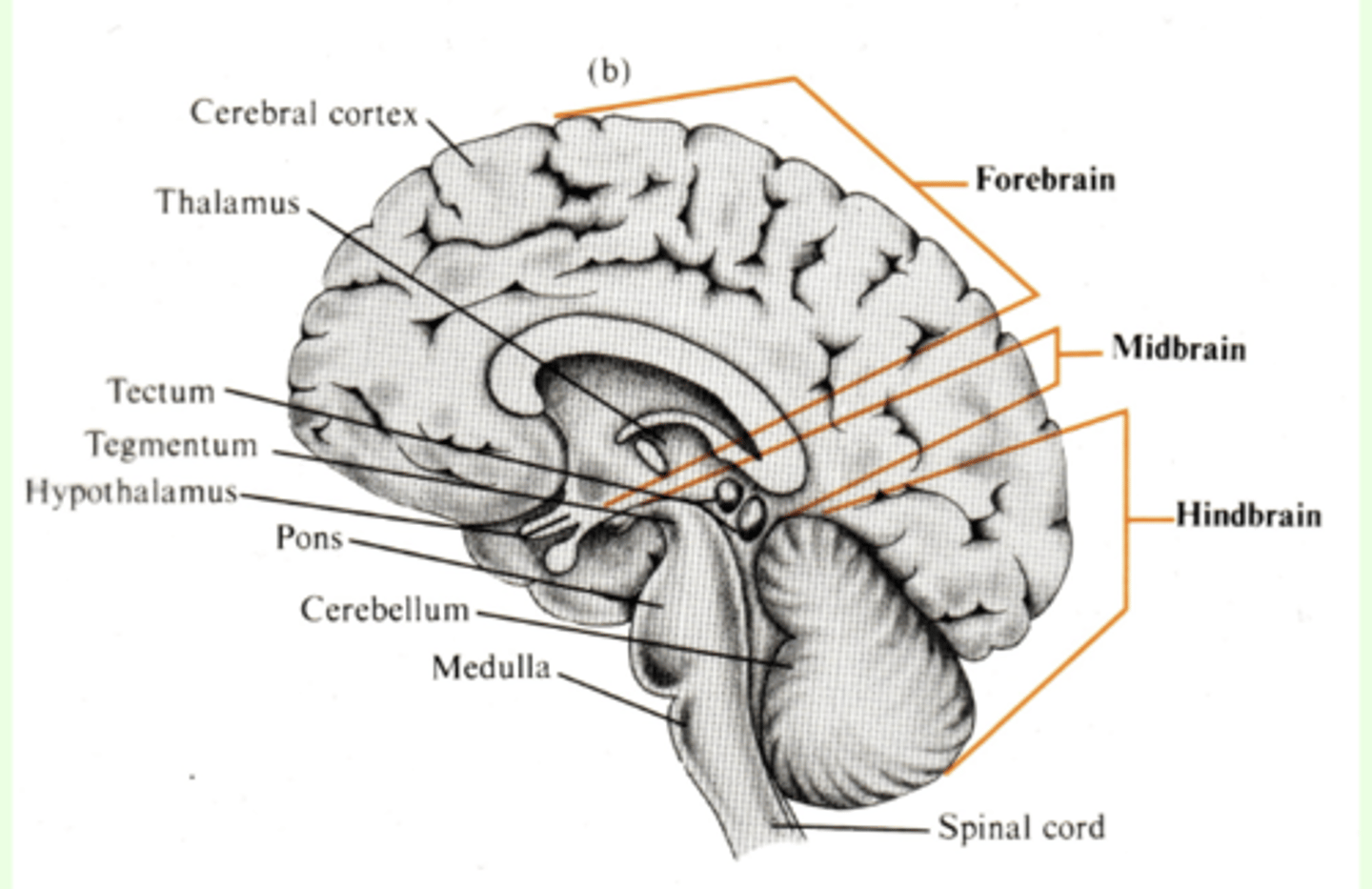
<p>roughly corresponds to different stages of evolutionary development -- Reptilian brain: instinctual or dinosaur brain</p>
13
New cards

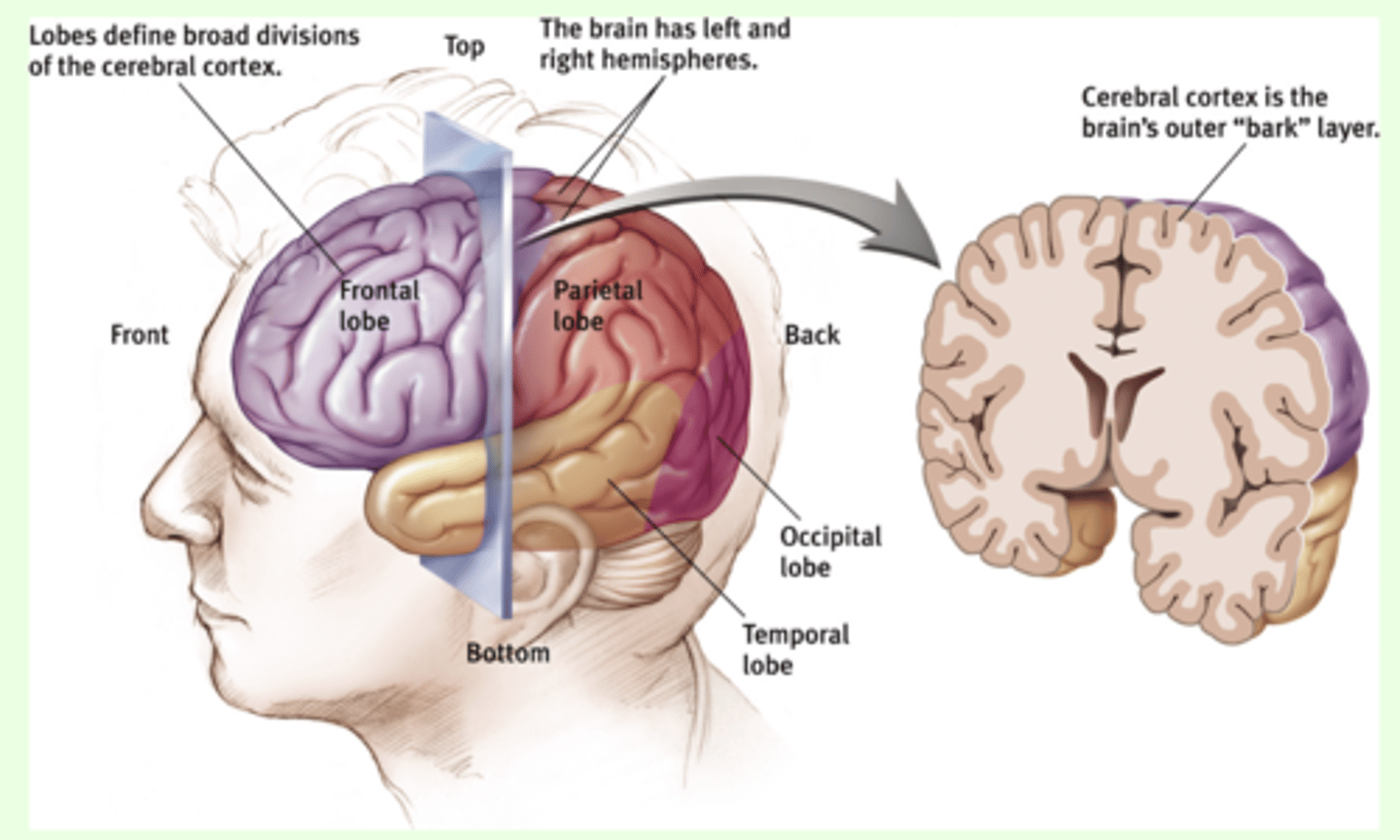
Cerebral Cortex

- part of brain that best distinguishes us from other beasts

- outmost layer of gray matter of the cerebral hemispheres (3mm thick)

- contains 26 billion neurons

- convolutions of the cerebral cortex greatly increase surface area of brain, increasing the amount of info that can be stored

- consists of mainly glia and cell bodies, gives it grayish brown appearance

- contains the four lobes (neocortex) and limbic cortex
<p>- part of brain that best distinguishes us from other beasts</p><p>- outmost layer of gray matter of the cerebral hemispheres (3mm thick)</p><p>- contains 26 billion neurons</p><p>- convolutions of the cerebral cortex greatly increase surface area of brain, increasing the amount of info that can be stored</p><p>- consists of mainly glia and cell bodies, gives it grayish brown appearance</p><p>- contains the four lobes (neocortex) and limbic cortex</p>
14
New cards

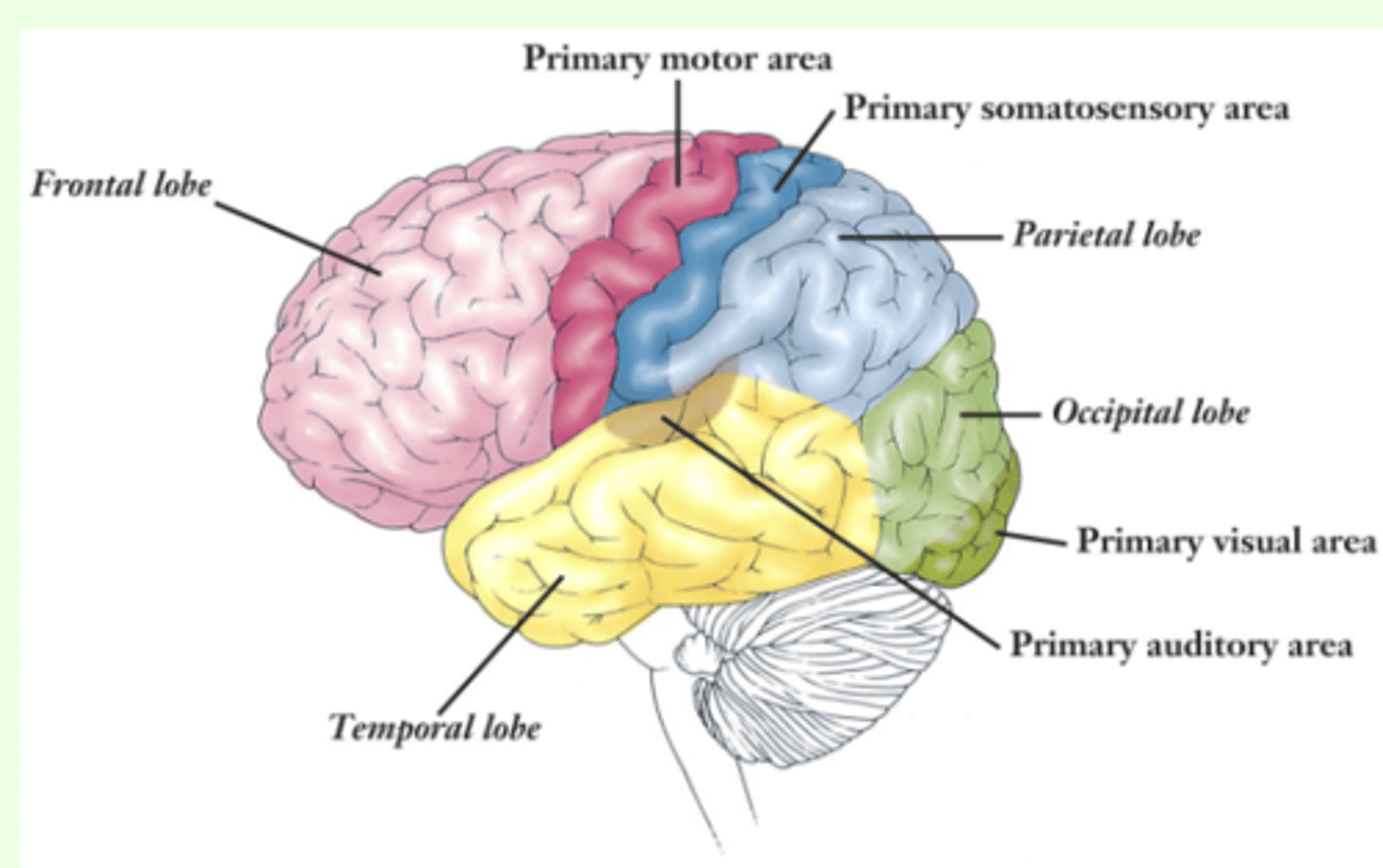
Frontal Lobe

involved in speaking and muscle movements, in making plans and judgements, and in emotional control
<p>involved in speaking and muscle movements, in making plans and judgements, and in emotional control</p>
15
New cards

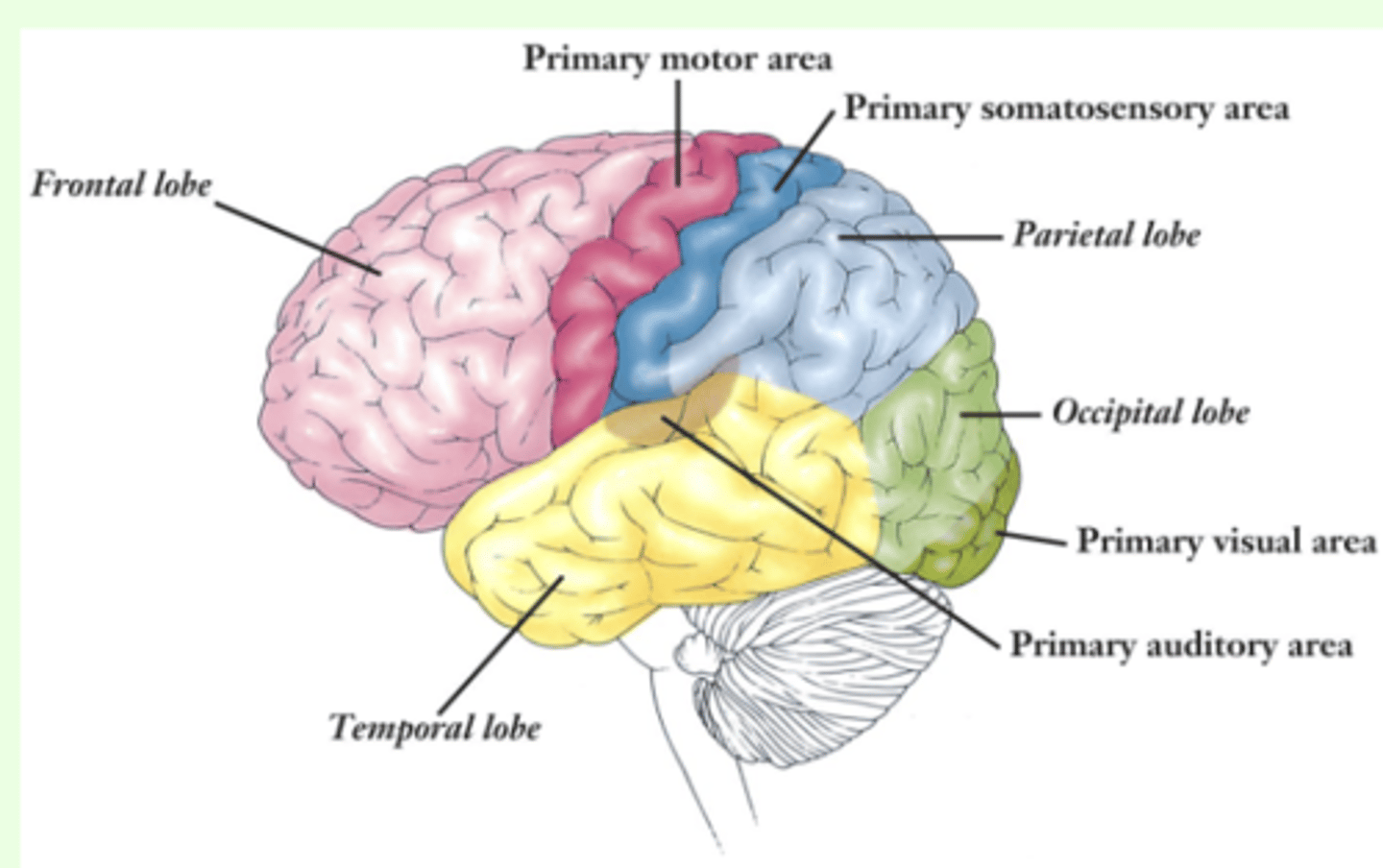
Primary motor cortex

posterior part of frontal lobe that controls voluntary movements
<p>posterior part of frontal lobe that controls voluntary movements</p>
16
New cards

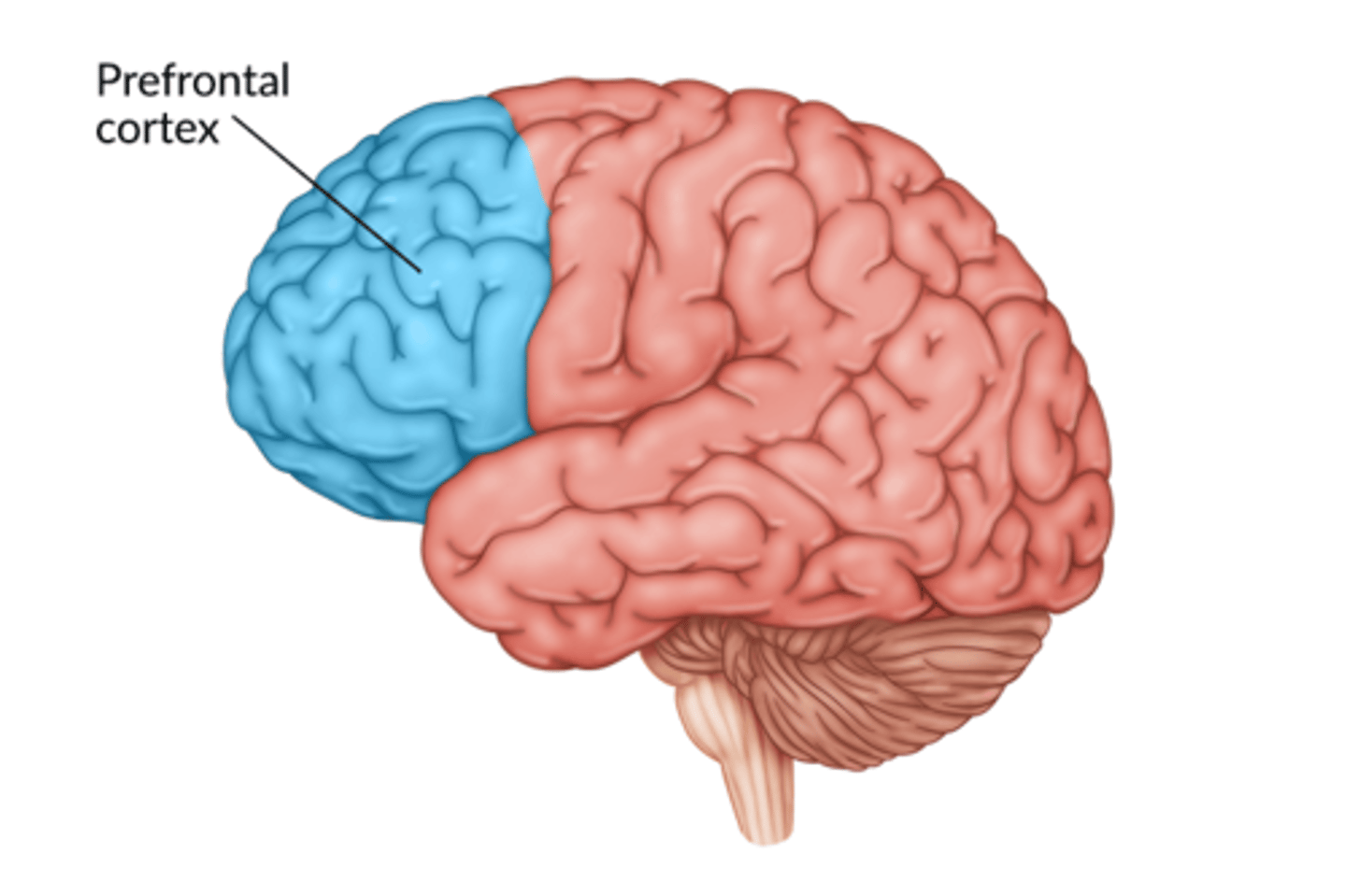
Prefrontal cortex

anterior part of frontal lobe that is involved in formulating plans and making judgements
<p>anterior part of frontal lobe that is involved in formulating plans and making judgements</p>
17
New cards

Parietal lobe

includes primary somatosensory cortex (anterior part of parietal lobe); primarily responsible for receiving and processing sensory input such as touch, pressure, heat, cold, and pain
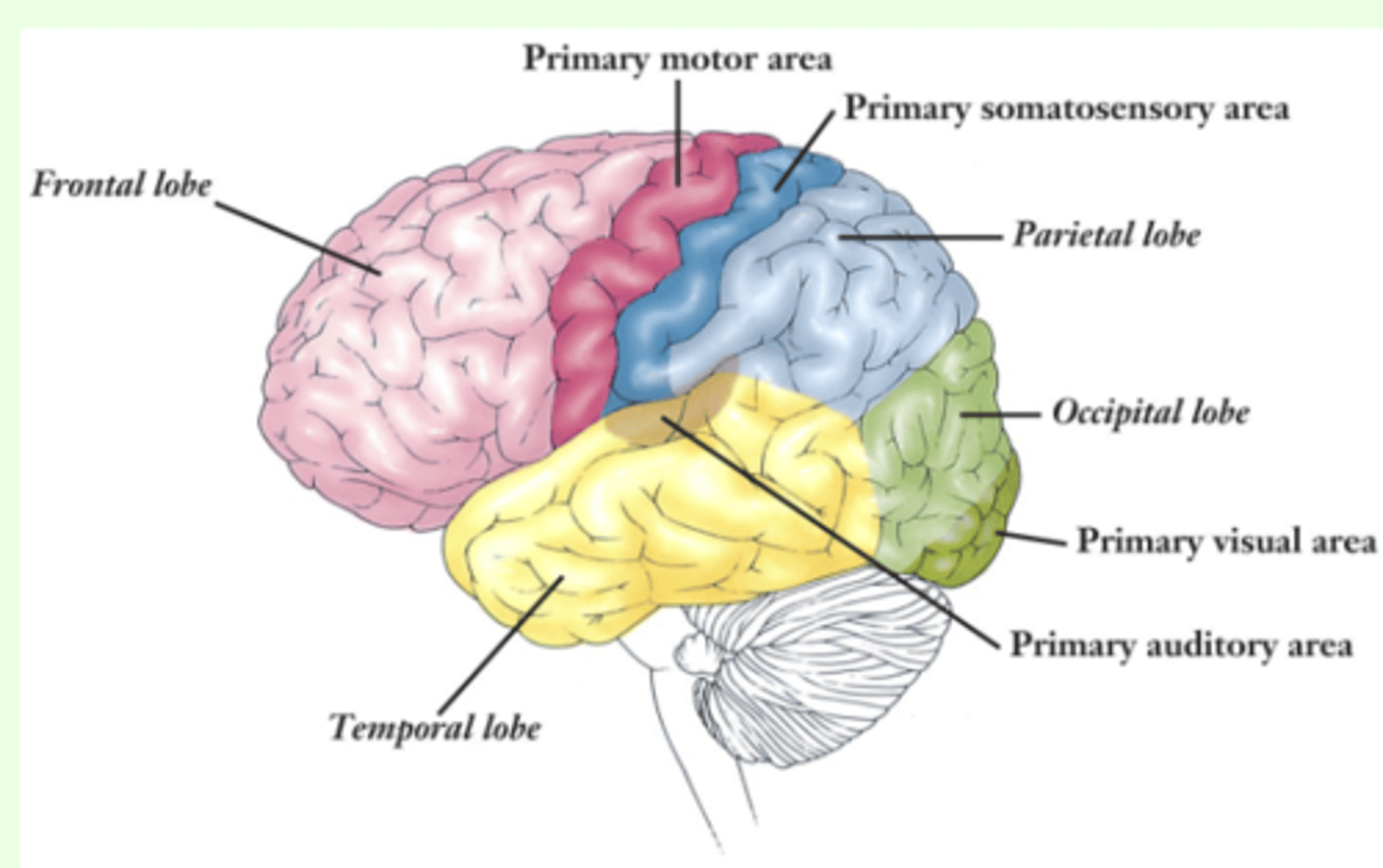
<p>includes primary somatosensory cortex (anterior part of parietal lobe); primarily responsible for receiving and processing sensory input such as touch, pressure, heat, cold, and pain</p>
18
New cards

Occipital lobe

includes primary visual cortex (posterior part of occipital lobe), which receives visual information from the opposite visual field; responsible for visual perception, including color, form and motion
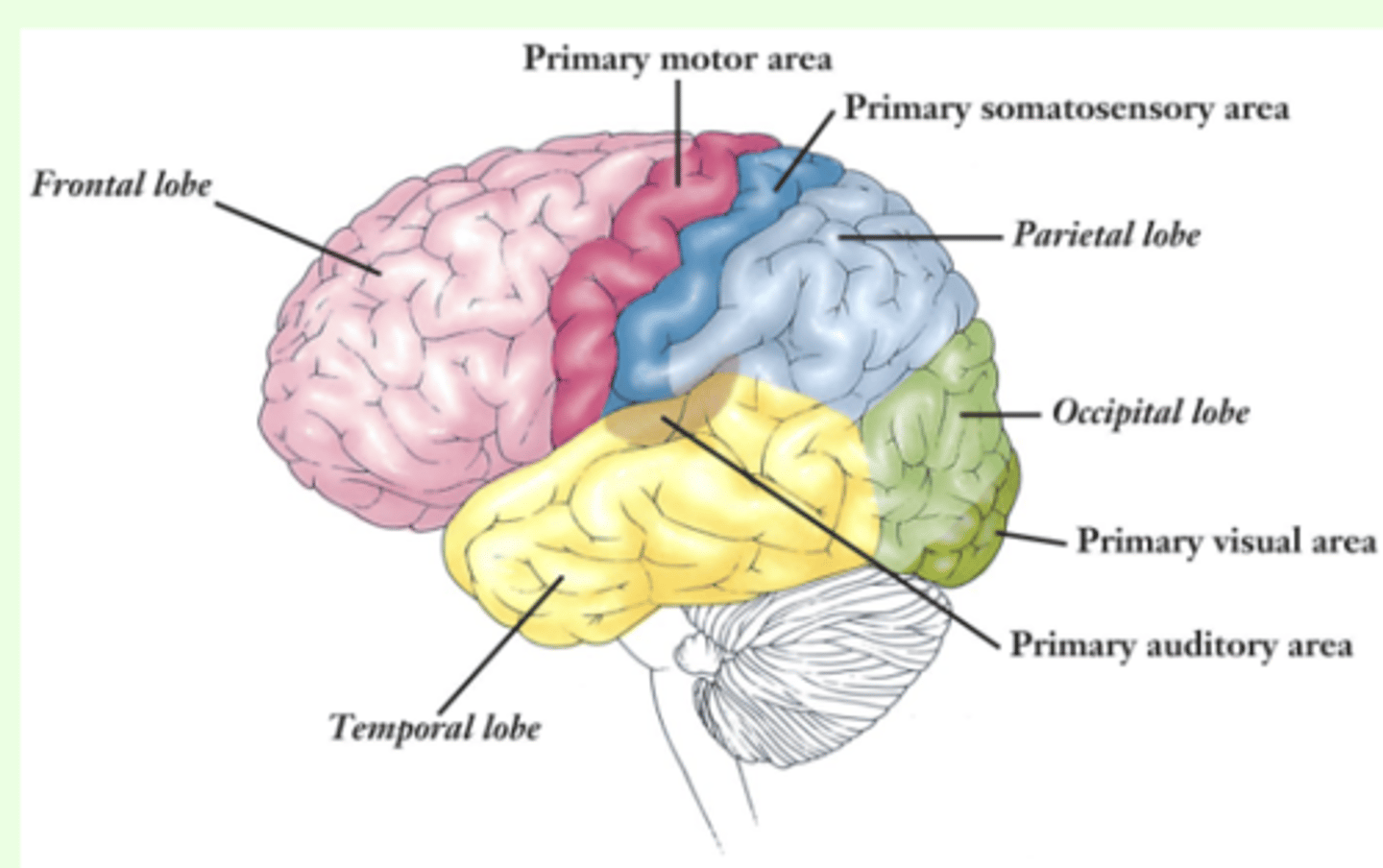
<p>includes primary visual cortex (posterior part of occipital lobe), which receives visual information from the opposite visual field; responsible for visual perception, including color, form and motion</p>
19
New cards

Temporal lobe

includes the primary auditory cortex (superior part of temporal lobe), which receives auditory information; responsible for processing auditory information and with the encoding of memory
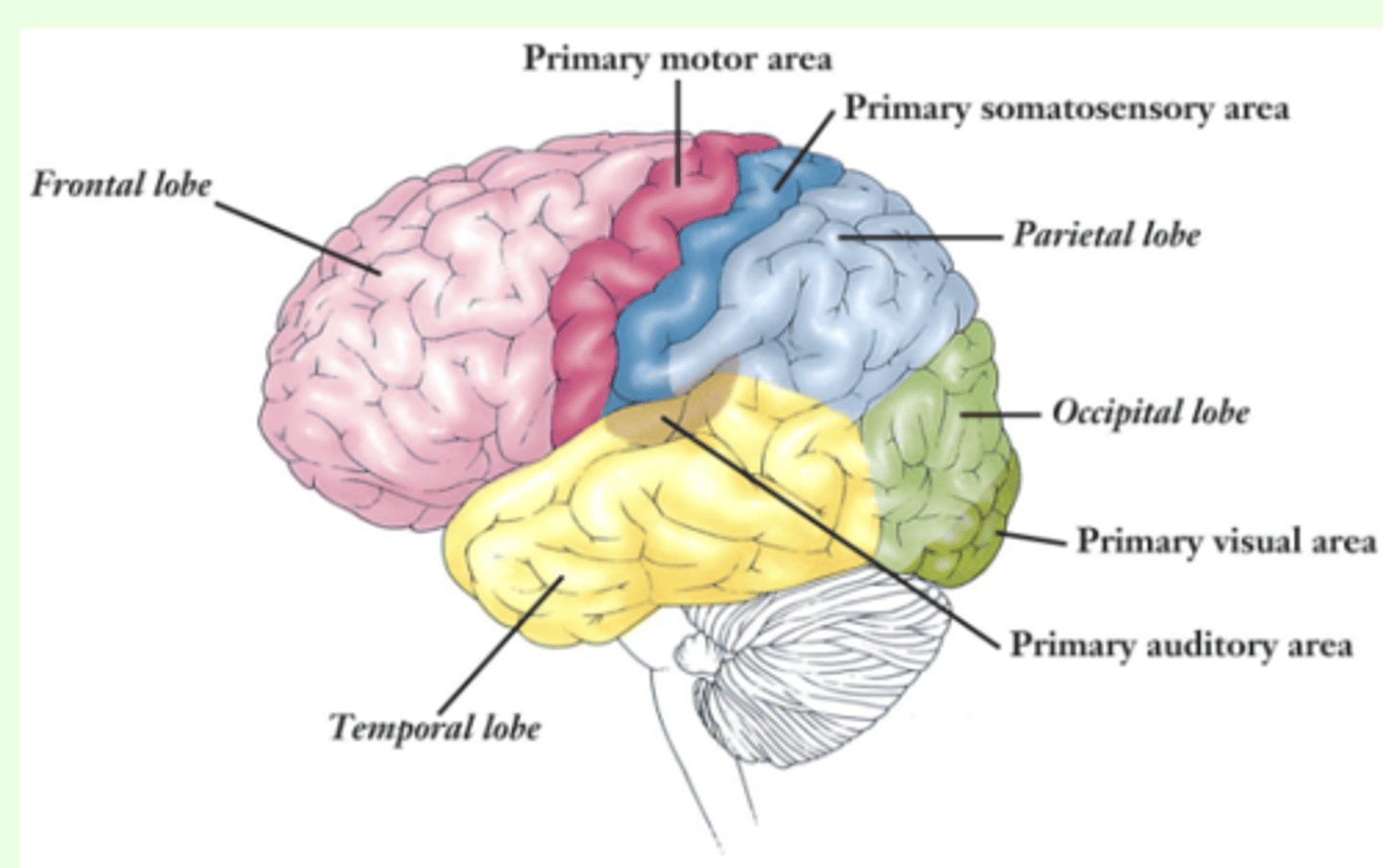
<p>includes the primary auditory cortex (superior part of temporal lobe), which receives auditory information; responsible for processing auditory information and with the encoding of memory</p>
20
New cards

Dorsolateral prefrontal cortex (dlPFC)

working memory, cognitive flexibility, problem solving, and inhibition of rumination and worry
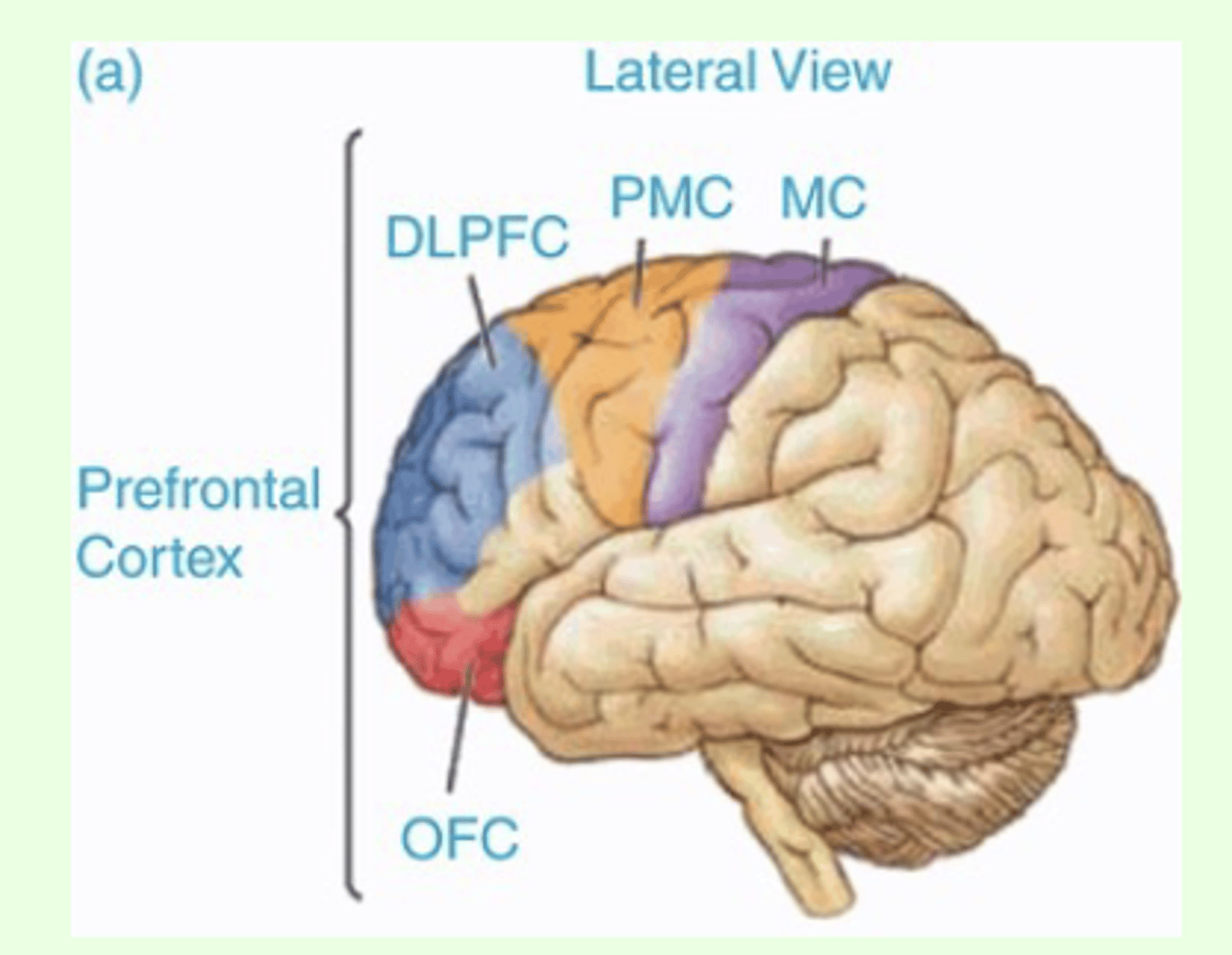
<p>working memory, cognitive flexibility, problem solving, and inhibition of rumination and worry</p>
21
New cards

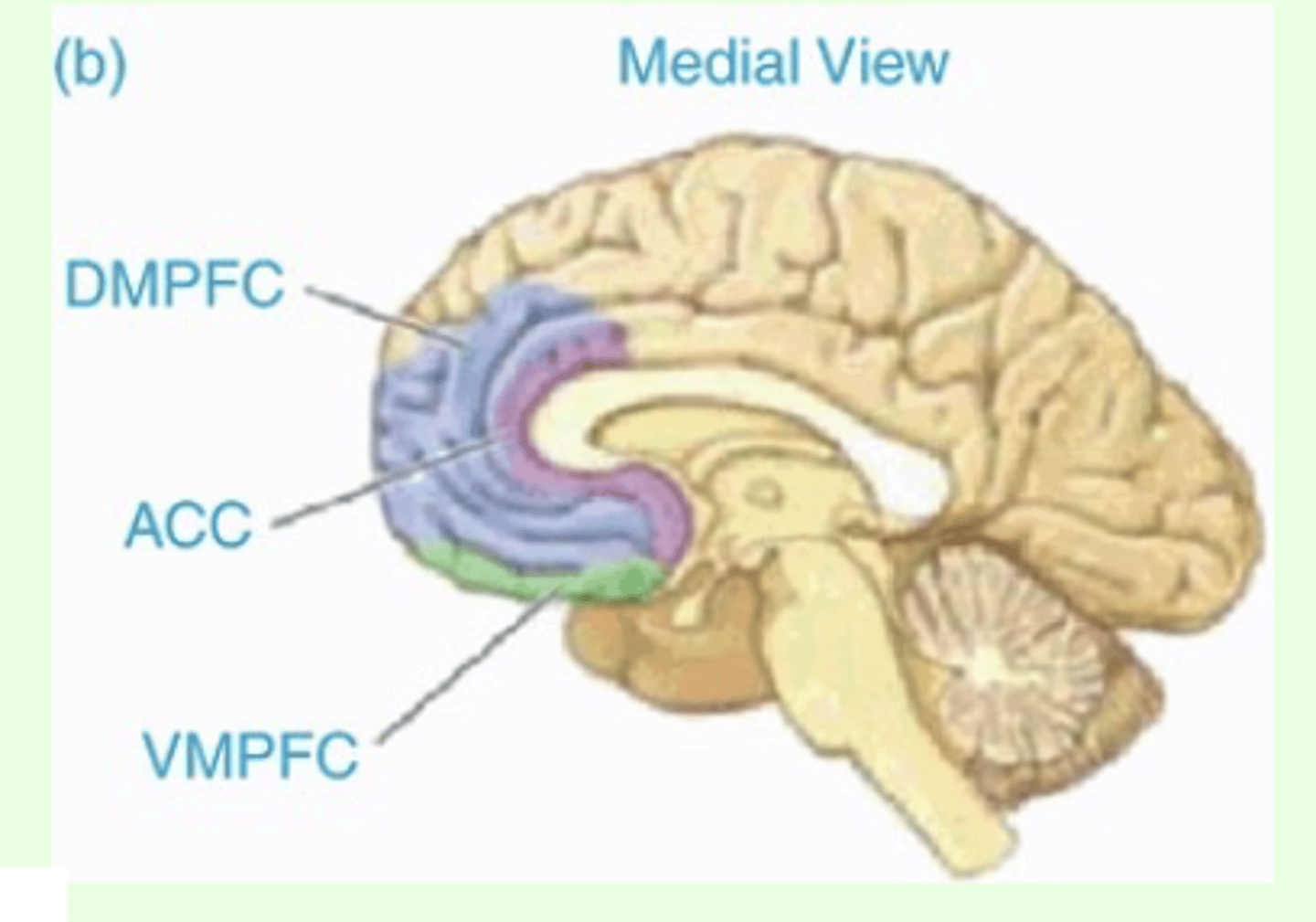
Ventromedial prefrontal cortex (vmPFC)

theory of mind ("mind reading"), self-perception, processing of risk and behavior, behavioral control, and decision making
<p>theory of mind ("mind reading"), self-perception, processing of risk and behavior, behavioral control, and decision making</p>
22
New cards

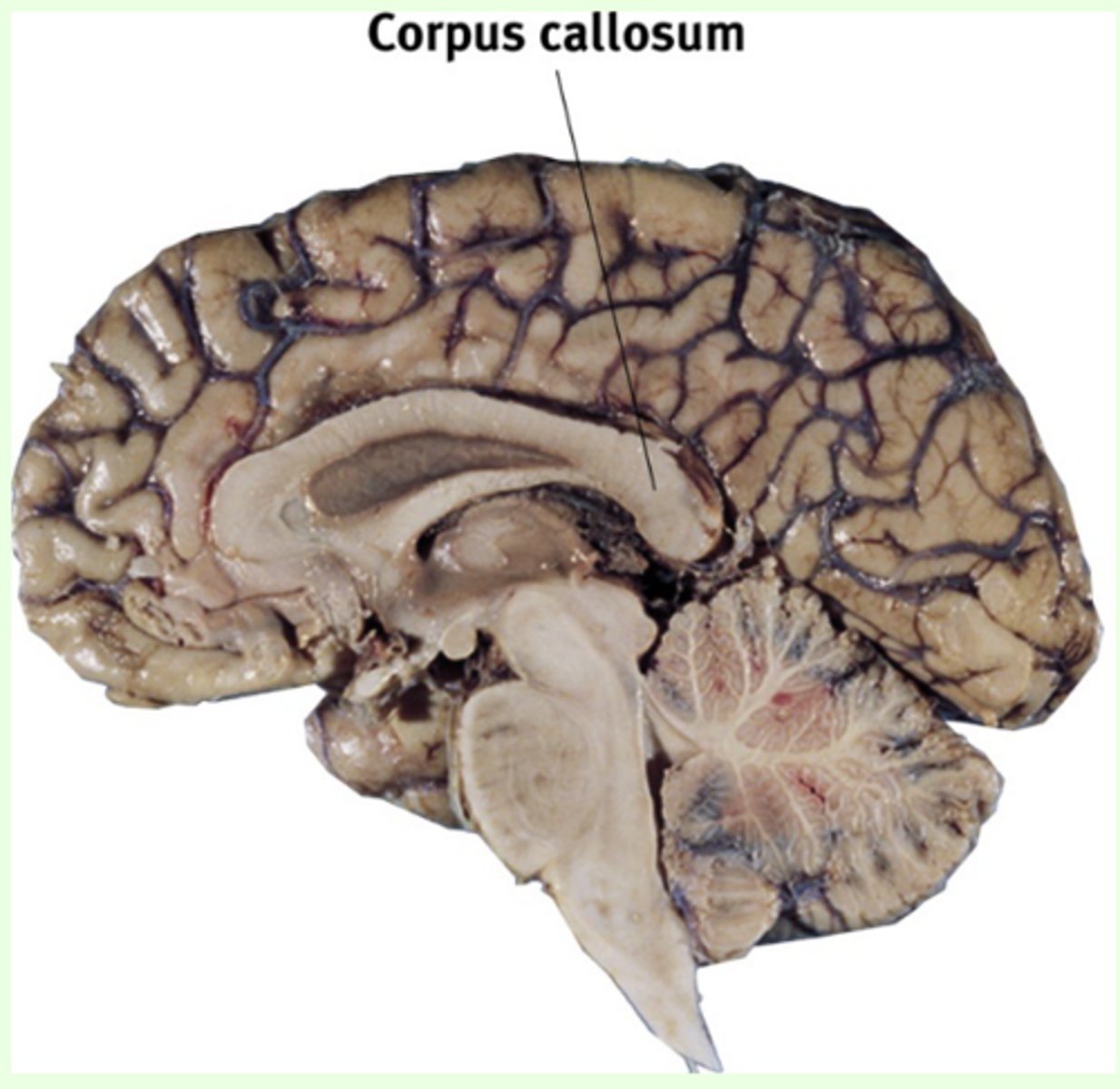
Corpus callosum

a large bundle of axons that interconnects corresponding regions of the association cortex on each side of the brain
<p>a large bundle of axons that interconnects corresponding regions of the association cortex on each side of the brain</p>
23
New cards

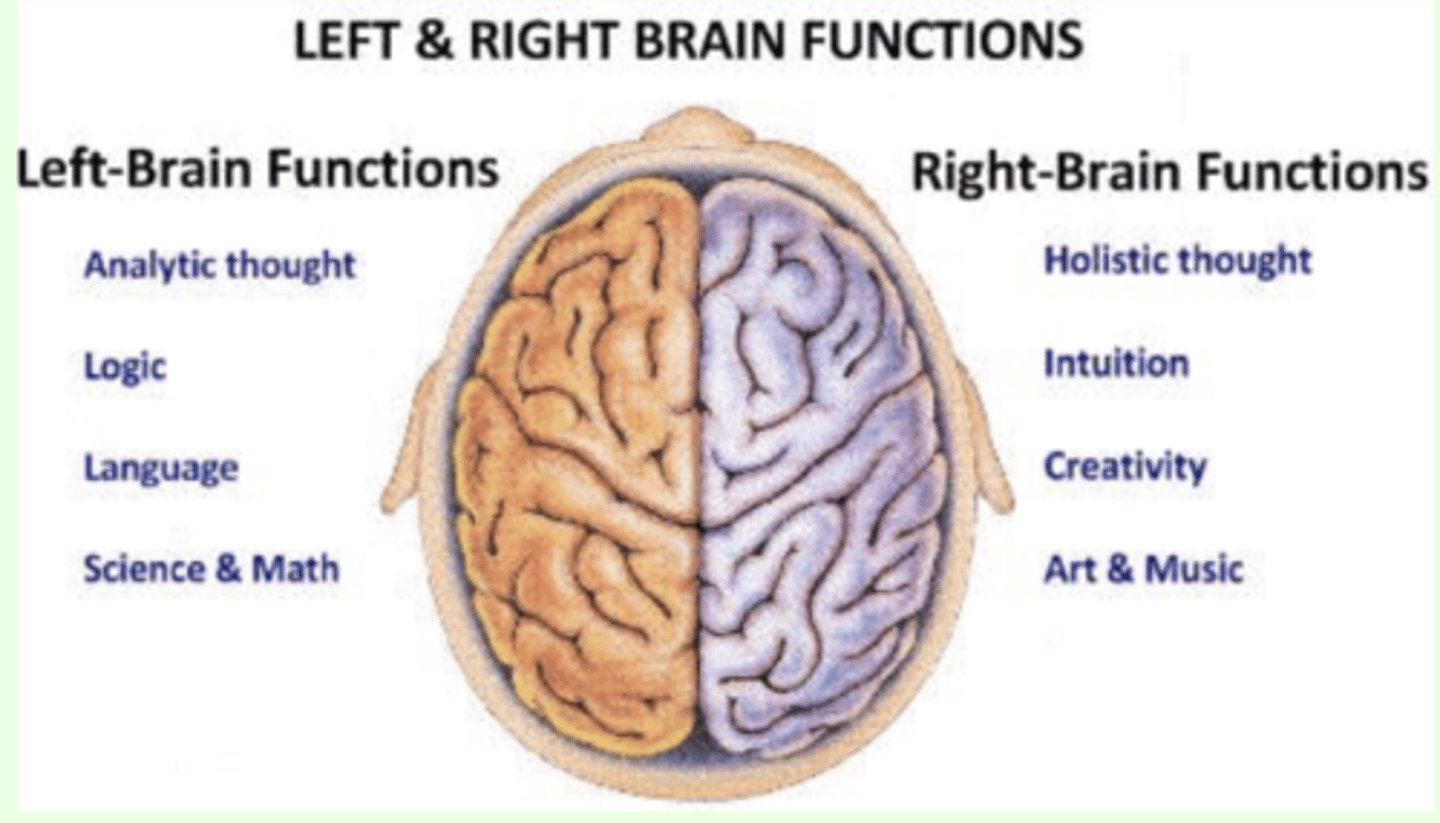
Left cerebral hemisphere

- analysis of information; recognition of serial events

- language

- mathematical computation (logical; linear)

- projects to right side of body
<p>- analysis of information; recognition of serial events</p><p>- language</p><p>- mathematical computation (logical; linear)</p><p>- projects to right side of body</p>
24
New cards

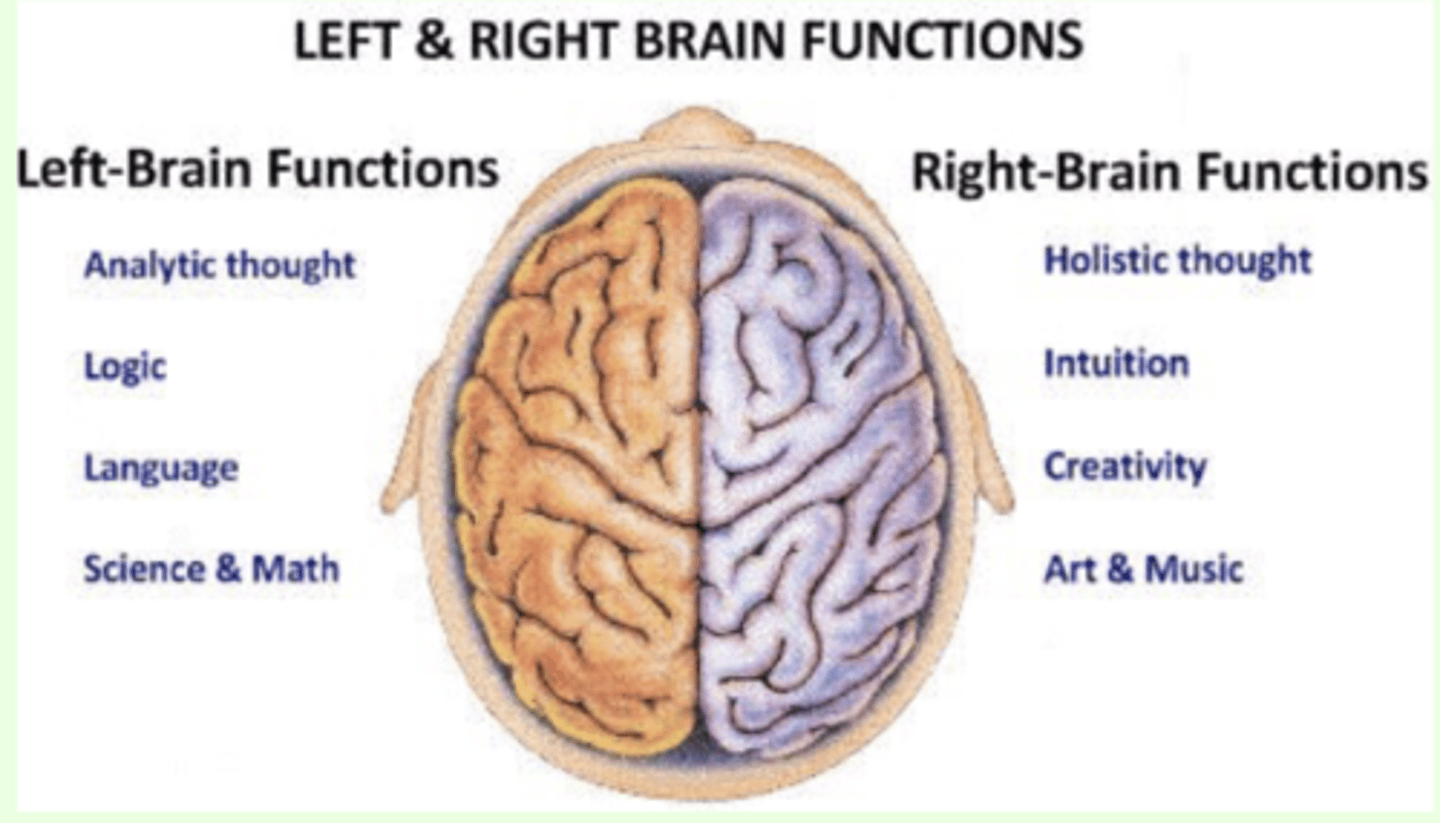
Right cerebral hemisphere

- synthesis of information

- pattern recognition; ability to perceive things as whole

- identification of emotional expression (non-verbal; holistic)

- projects to left side of body
<p>- synthesis of information</p><p>- pattern recognition; ability to perceive things as whole</p><p>- identification of emotional expression (non-verbal; holistic)</p><p>- projects to left side of body</p>
25
New cards

Limbic system

- doughnut-shaped system of neural structures at the border of the brainstem and cerebral hemispheres

- associated with emotions and memory

- includes amygdala and hippocampus
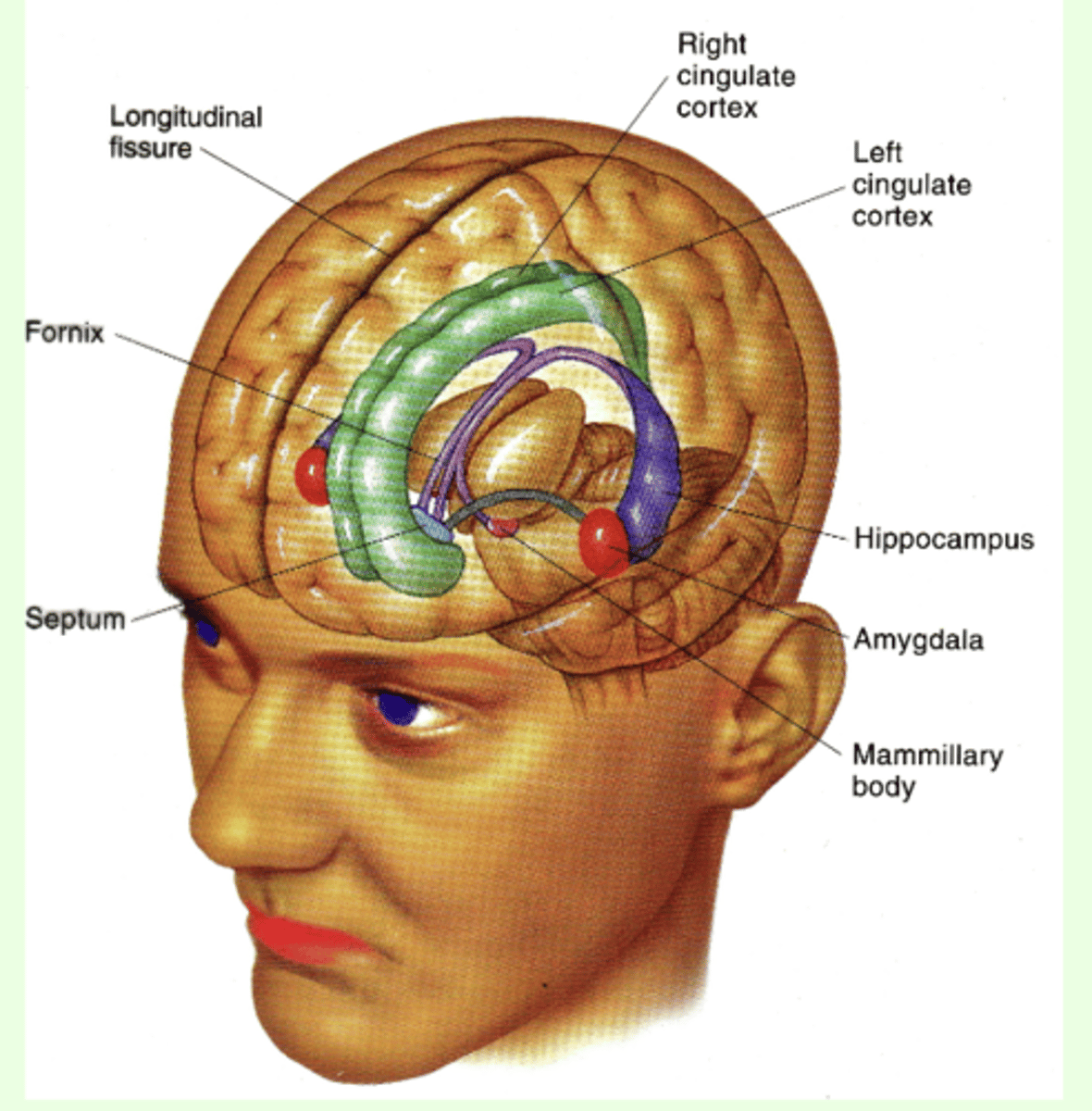
<p>- doughnut-shaped system of neural structures at the border of the brainstem and cerebral hemispheres</p><p>- associated with emotions and memory</p><p>- includes amygdala and hippocampus</p>
26
New cards

Amygdala

- two almond-shaped neural clusters that are components of the limbic system and are linked to emotion, particularly fear and aggression
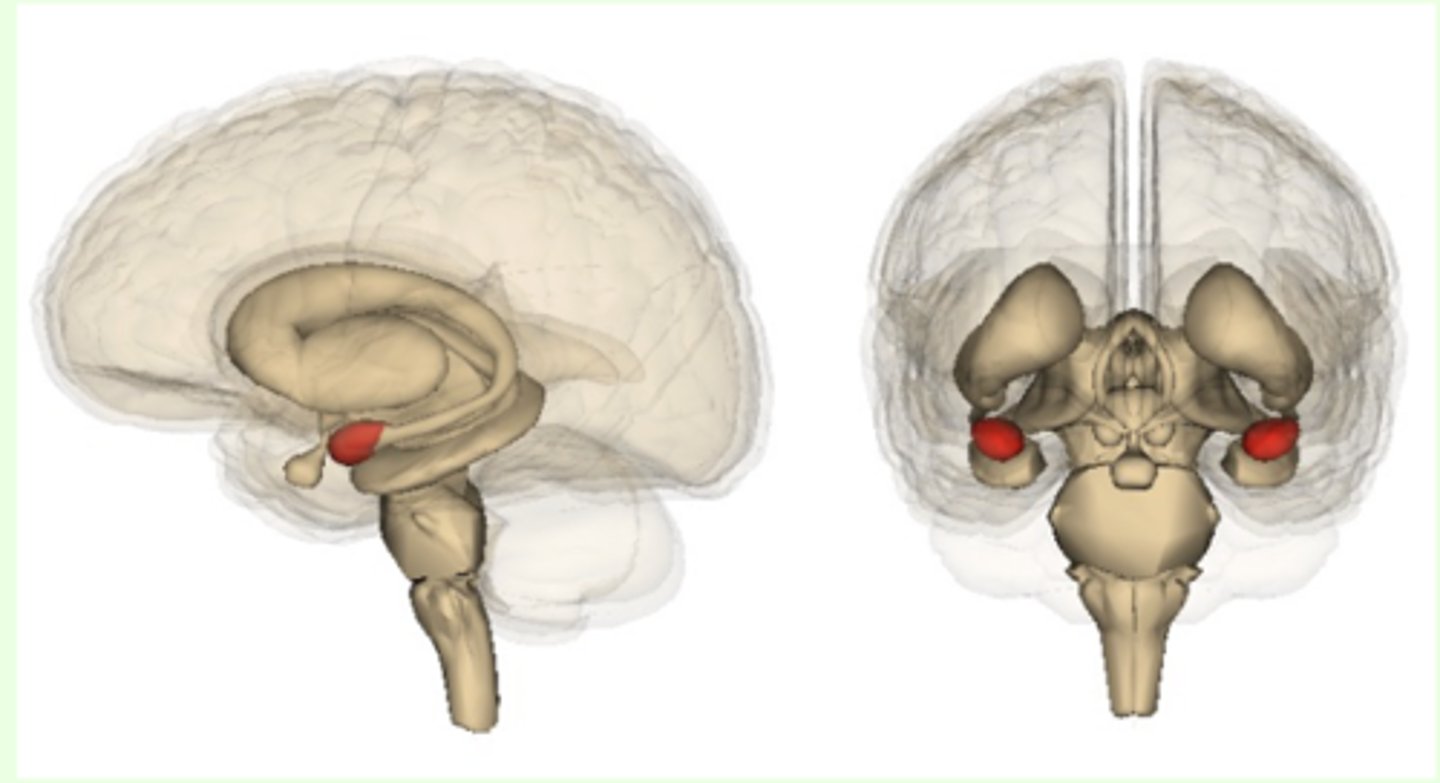
<p>- two almond-shaped neural clusters that are components of the limbic system and are linked to emotion, particularly fear and aggression</p>
27
New cards

Hippocampus

- donut-shaped structure that is important in memory

- anterior hippocampus, the portion closest to the amygdala, is involved in regulating behavioral inhibition in response to different contexts (PTSD may be linked to abnormal activity in this area)

- in limbic system
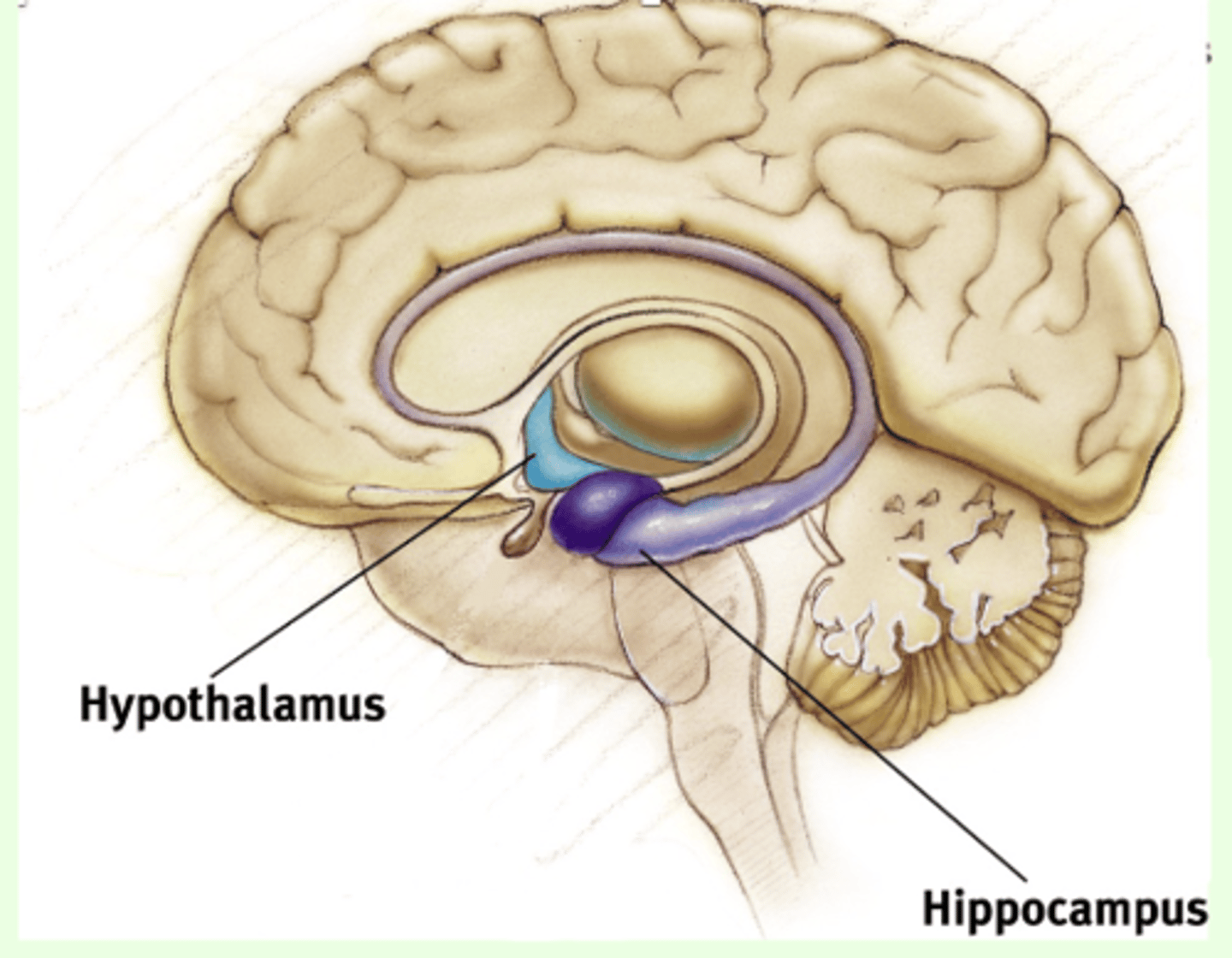
<p>- donut-shaped structure that is important in memory</p><p>- anterior hippocampus, the portion closest to the amygdala, is involved in regulating behavioral inhibition in response to different contexts (PTSD may be linked to abnormal activity in this area)</p><p>- in limbic system</p>
28
New cards

Hypothalamus

- main function is to keep your body in a stable state called homeostasis

- in limbic system
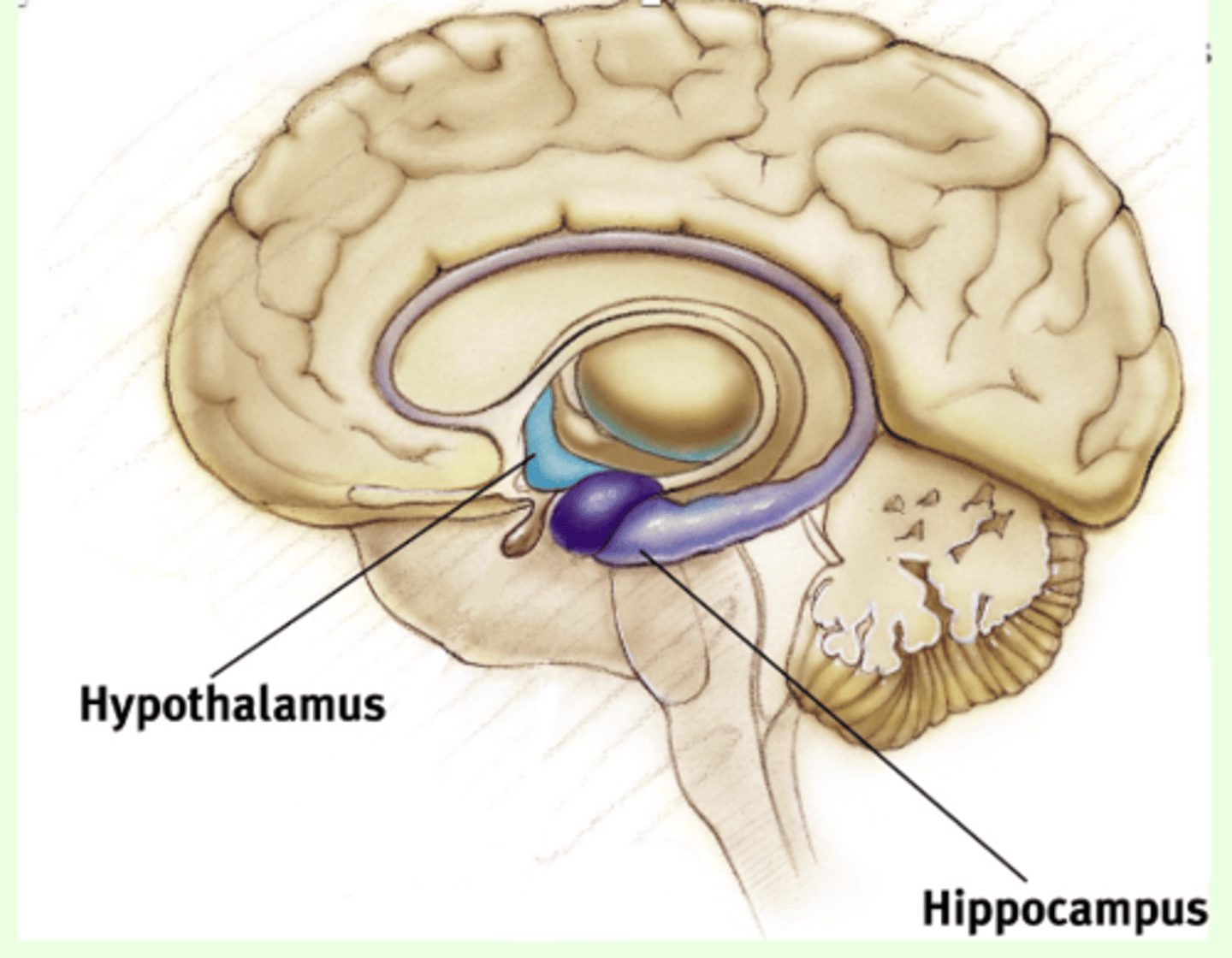
<p>- main function is to keep your body in a stable state called homeostasis</p><p>- in limbic system</p>
29
New cards

Anterior cingulate cortex (ACC)

- forms "collar" around front part of corpus callosum

- functions: integrates cognitive and affective information; awareness and processing of conflicting information; selective attention; pain perception; impulse control
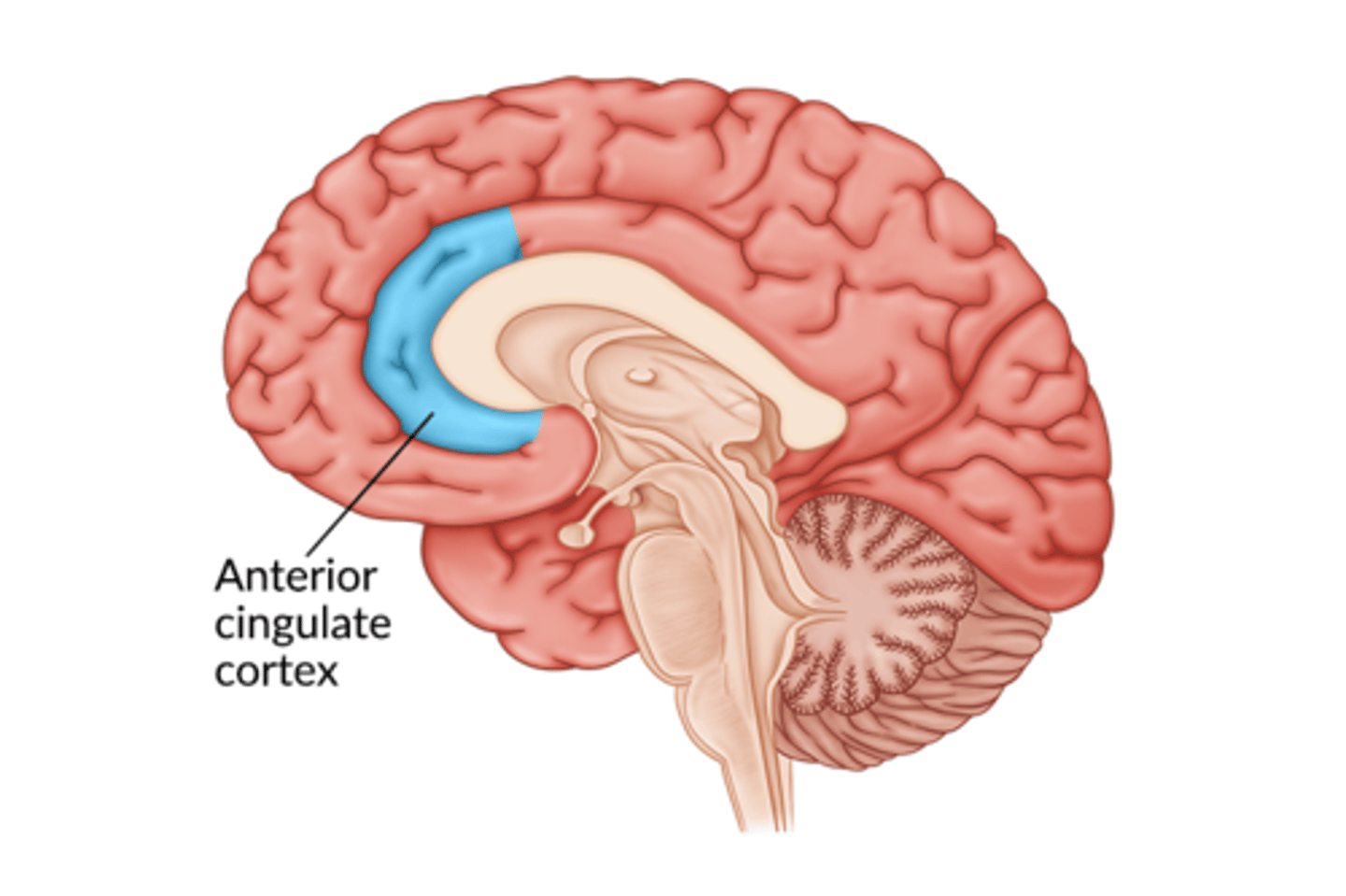
<p>- forms "collar" around front part of corpus callosum</p><p>- functions: integrates cognitive and affective information; awareness and processing of conflicting information; selective attention; pain perception; impulse control</p>
30
New cards

Areas of brain particularly important in regulation of emotion

- amygdala: seat of emotions, particularly negative emotions like fear and aggression

- prefrontal cortex and anterior cingulate cortex: sets goals, makes plans, directs actions, shapes emotions, in part by guiding and sometimes inhibiting the limbic system

- emotional dyscontrol is often associated with an overactive amygdala and an under active PFC/ACC
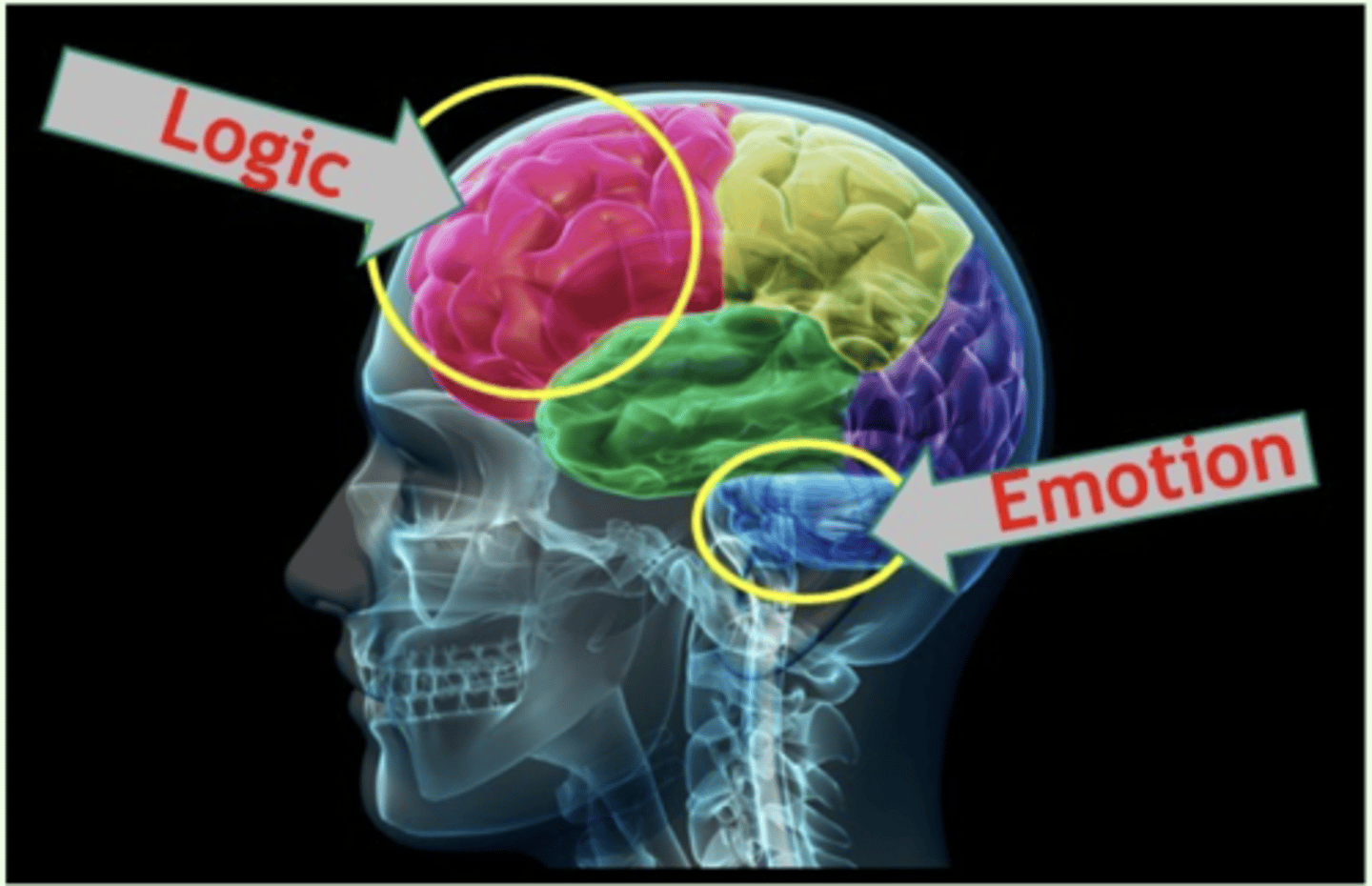
<p>- amygdala: seat of emotions, particularly negative emotions like fear and aggression</p><p>- prefrontal cortex and anterior cingulate cortex: sets goals, makes plans, directs actions, shapes emotions, in part by guiding and sometimes inhibiting the limbic system</p><p>- emotional dyscontrol is often associated with an overactive amygdala and an under active PFC/ACC</p>
31
New cards

Insular cortex

- lies deep within the lateral sulcus (the fissure separating the temporal lobe from the parietal and frontal lobes)

- functions: body awareness, sense of self, emotional experience, empathy and compassion, addiction
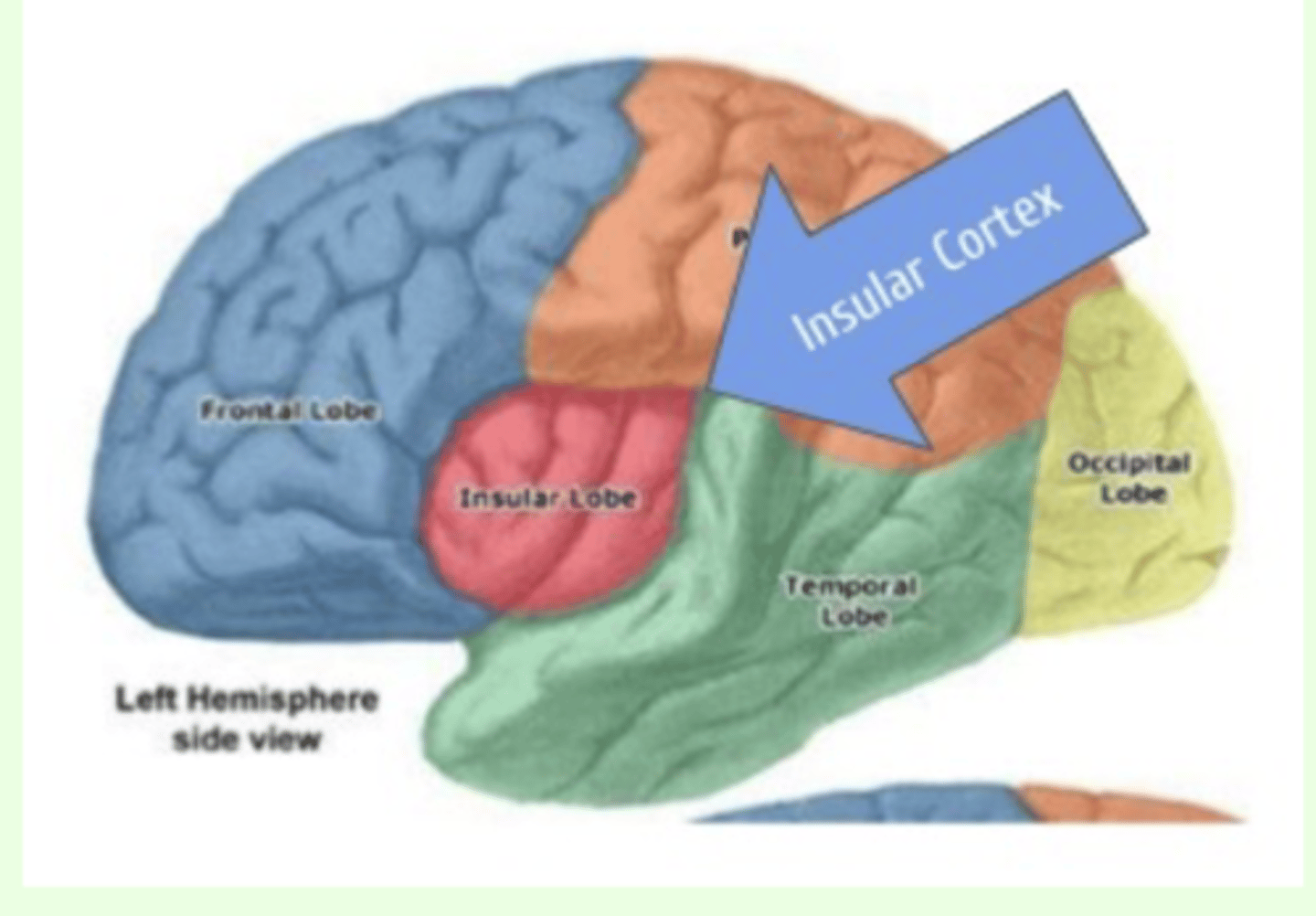
<p>- lies deep within the lateral sulcus (the fissure separating the temporal lobe from the parietal and frontal lobes)</p><p>- functions: body awareness, sense of self, emotional experience, empathy and compassion, addiction</p>
32
New cards

Basal ganglia

- situated at the base of the forebrain and top of the midbrain

- upper part--including the caudate nucleus, putamen, and globus pallidus--is important in action selection, motor sequencing, and motor reward learning

- lower part--particularly the nucleus accumbens--is important in reward learning
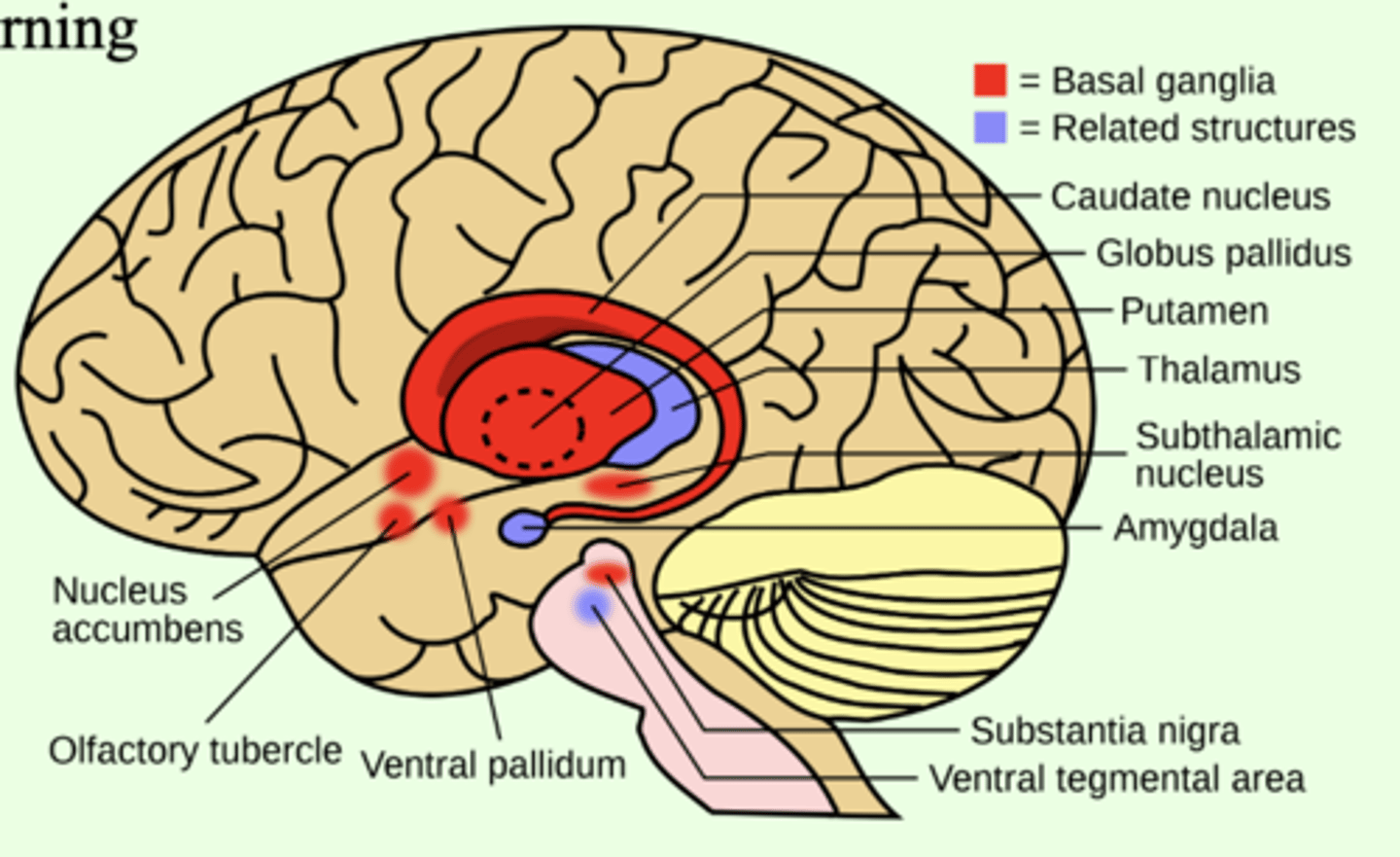
<p>- situated at the base of the forebrain and top of the midbrain</p><p>- upper part--including the caudate nucleus, putamen, and globus pallidus--is important in action selection, motor sequencing, and motor reward learning</p><p>- lower part--particularly the nucleus accumbens--is important in reward learning</p>
33
New cards

Nucleus accumbens

- located in the lower part of the basal ganglia

- reward center of the brain--addiction involves the release of dopamine from the ventral tegmental area (VTA) and substantia nigra into this area

- Parkinson's disease is characterized by loss of dopaminergic neurons in this area
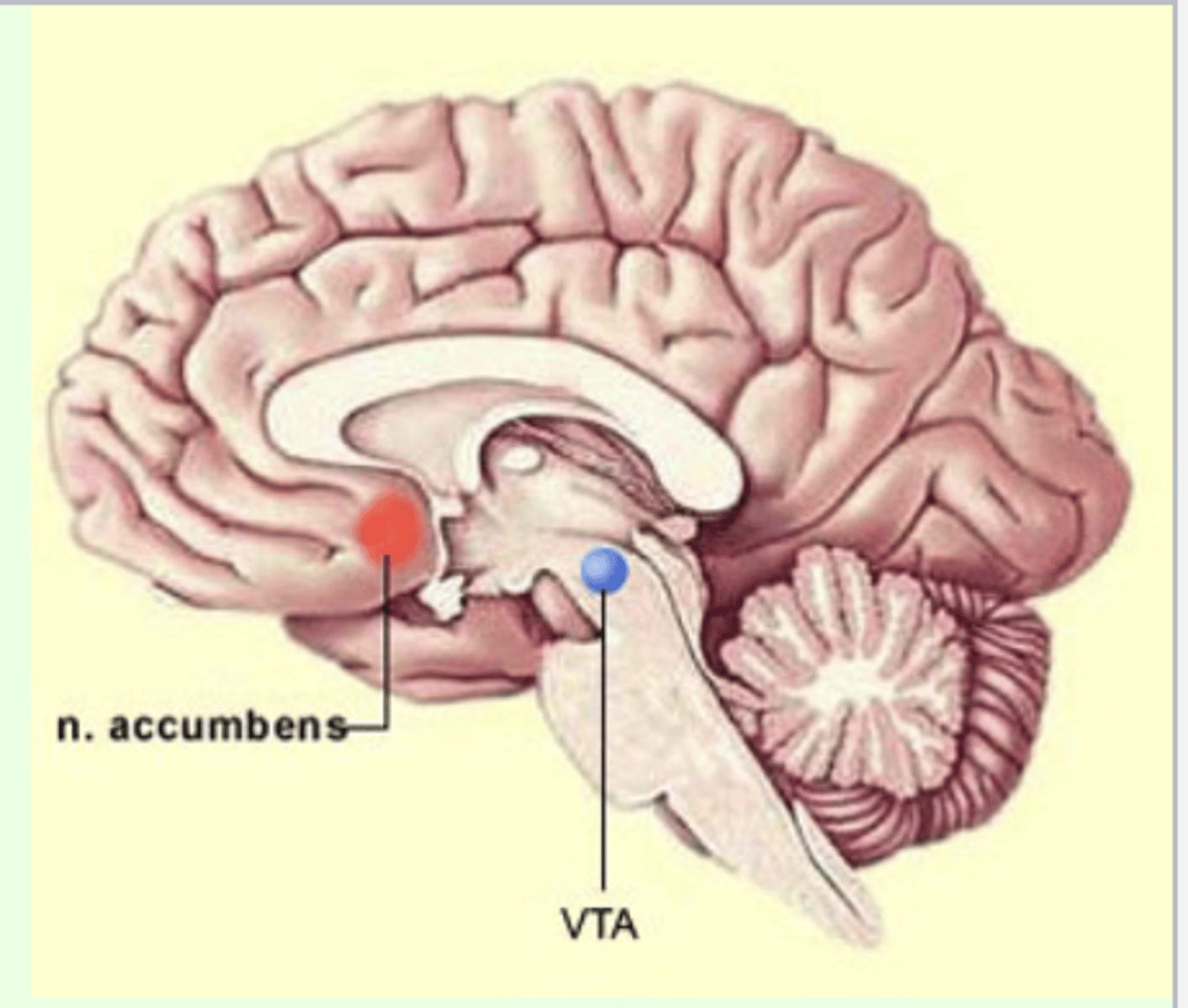
<p>- located in the lower part of the basal ganglia</p><p>- reward center of the brain--addiction involves the release of dopamine from the ventral tegmental area (VTA) and substantia nigra into this area</p><p>- Parkinson's disease is characterized by loss of dopaminergic neurons in this area</p>
34
New cards

Brain stem

- the oldest part and central core of the brain, beginning where the spinal cord swells as it enters the skull

- responsible for automatic survival functions including sleep, arousal, heart rate, breathing, and blood pressure

- the reticular formation innervates the brain stem and plays and important role in arousal
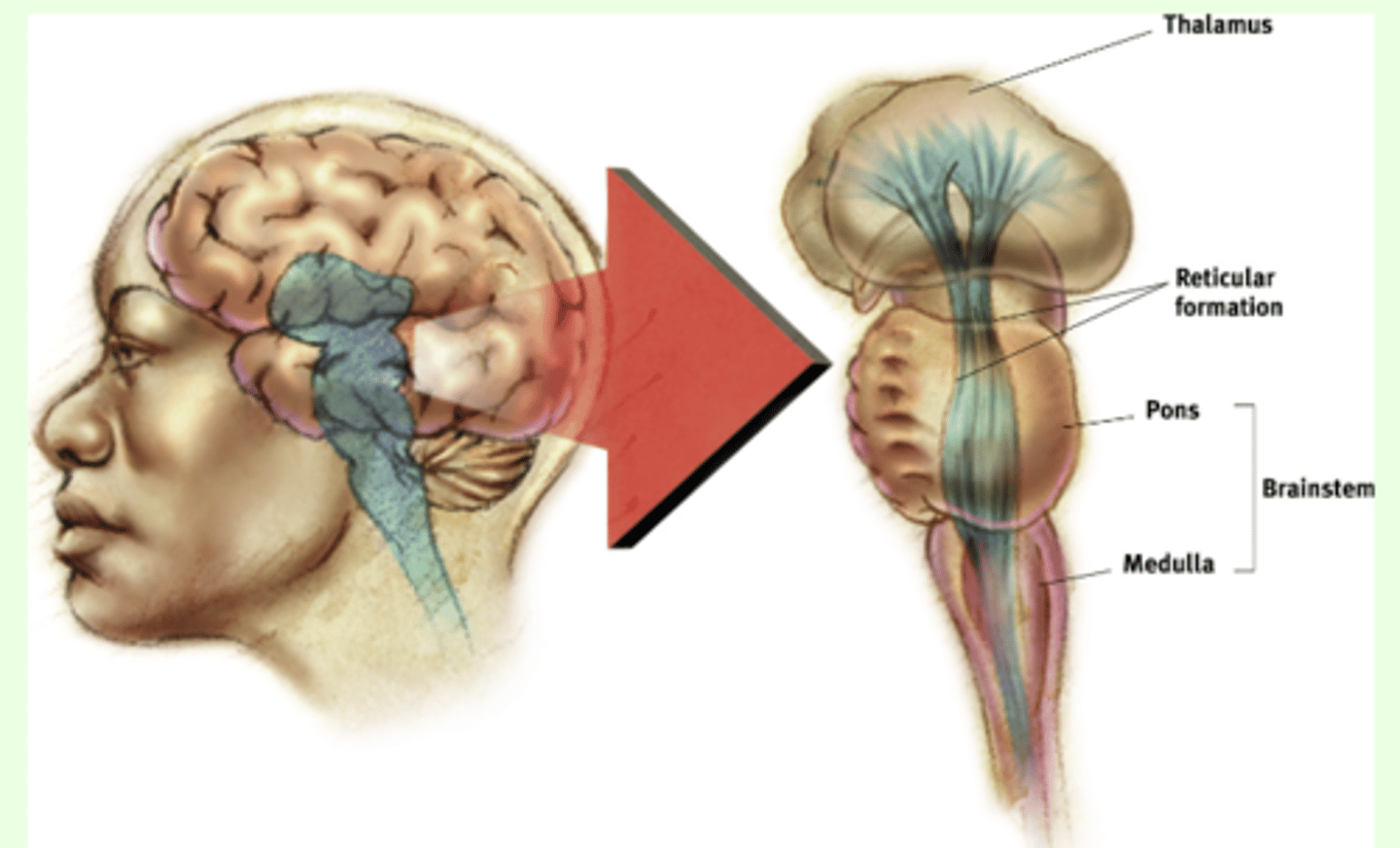
<p>- the oldest part and central core of the brain, beginning where the spinal cord swells as it enters the skull</p><p>- responsible for automatic survival functions including sleep, arousal, heart rate, breathing, and blood pressure</p><p>- the reticular formation innervates the brain stem and plays and important role in arousal</p>
35
New cards

Cerebellum

- the "little brain" attached to the rear of the brainstem

- helps coordinate voluntary movement and balance

- plays a role in higher learning, ranging from advanced social skills to math and music
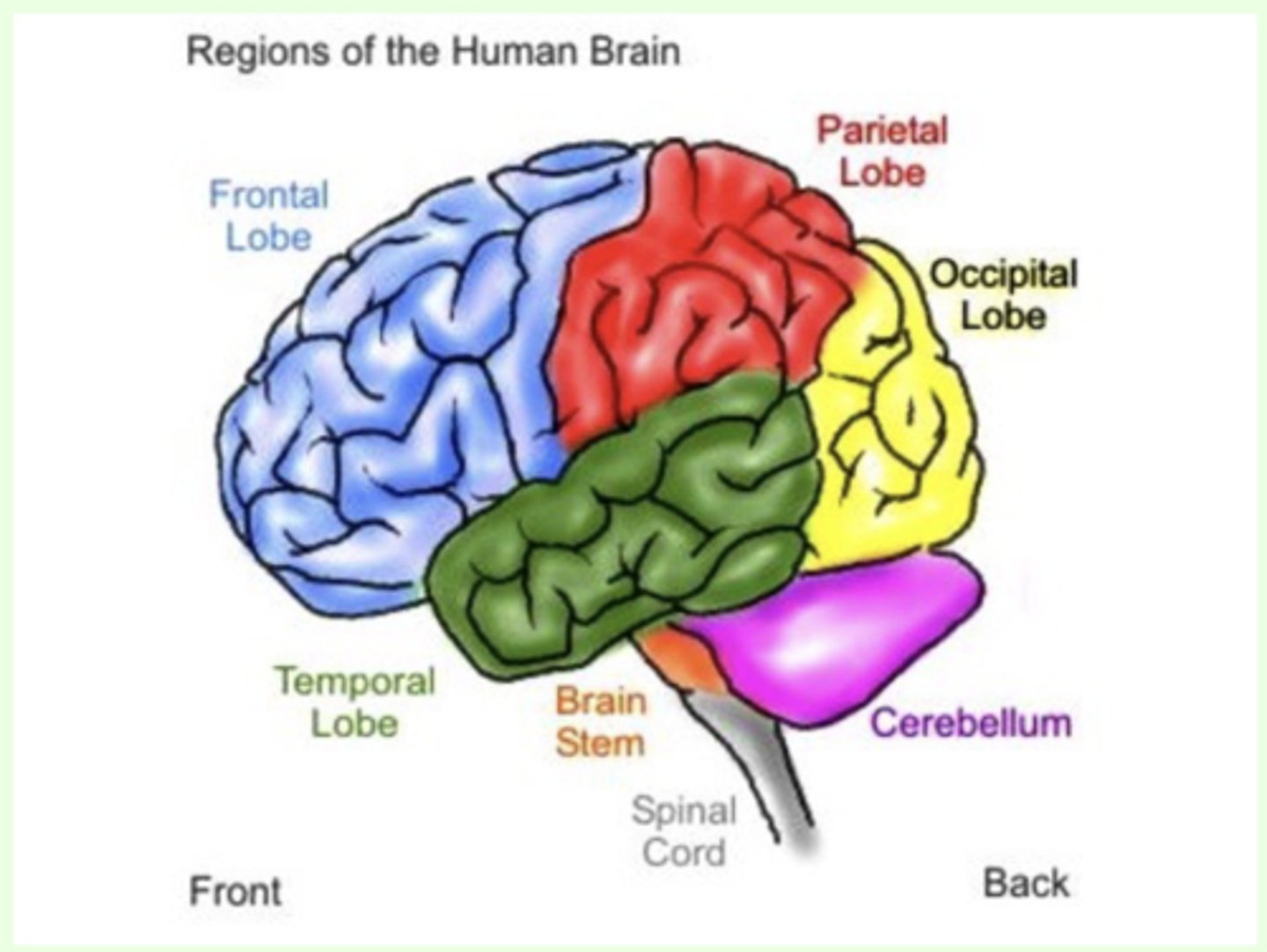
<p>- the "little brain" attached to the rear of the brainstem</p><p>- helps coordinate voluntary movement and balance</p><p>- plays a role in higher learning, ranging from advanced social skills to math and music</p>
36
New cards

Default mode network

brain areas that are active when participants in resting state

- is active when we are not focused on a particular task

- can also be active in certain goal-oriented tasks such as self-referencing, recognition of emotions in other, remembering the past, and imagining the future

- includes posterior cingulate cortex, and precuneus, medial frontal cortex, and temporoparietal junction

- found to be associated with ruminating about the past, worrying about future, thinking abt what other ppl are thinking abt you

- impaired functioning of DMN: early indications of Alzheimer's, autism, schizophrenia, bipolar disorder, depression, PTSD
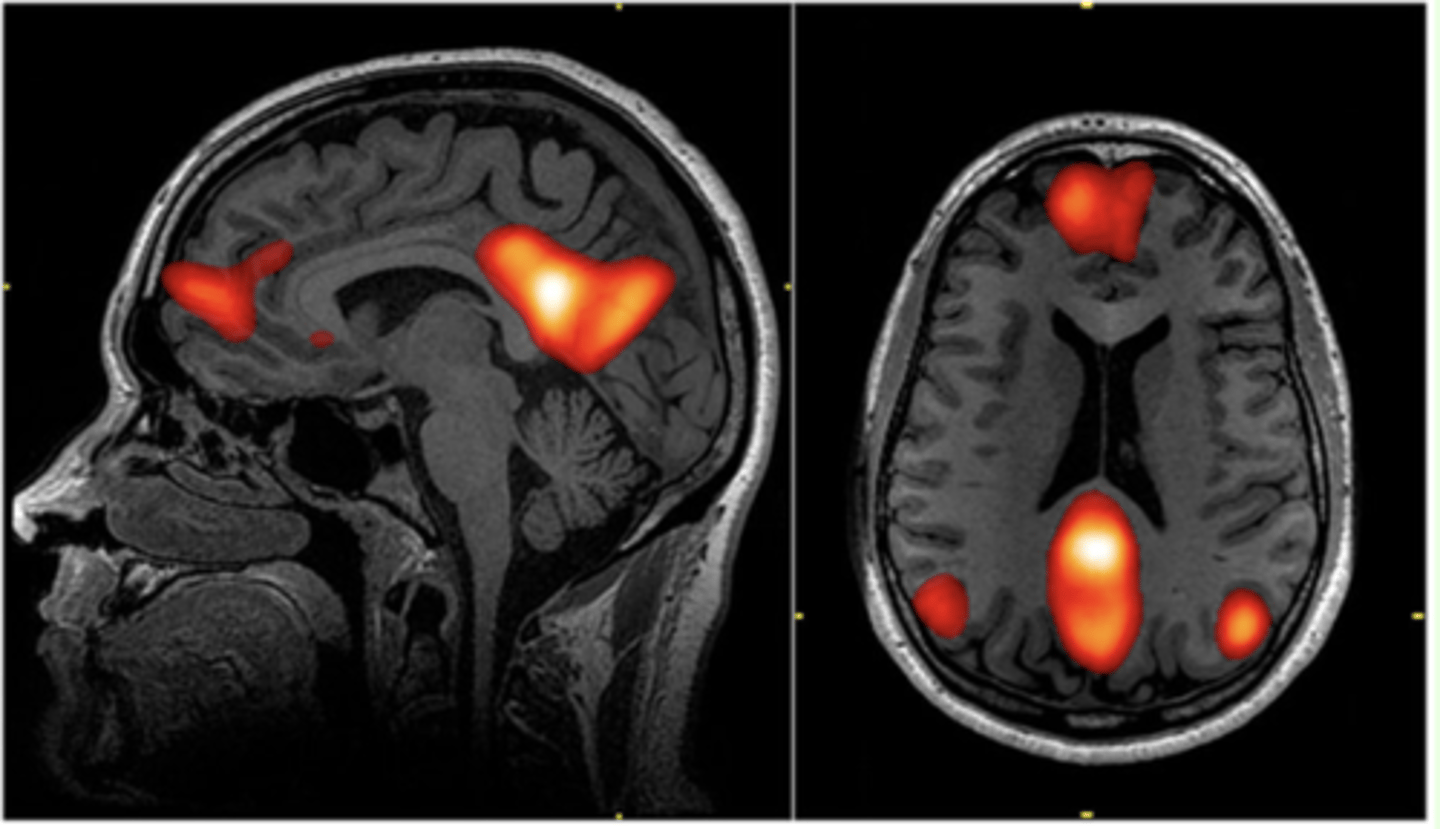
<p>brain areas that are active when participants in resting state</p><p>- is active when we are not focused on a particular task</p><p>- can also be active in certain goal-oriented tasks such as self-referencing, recognition of emotions in other, remembering the past, and imagining the future</p><p>- includes posterior cingulate cortex, and precuneus, medial frontal cortex, and temporoparietal junction</p><p>- found to be associated with ruminating about the past, worrying about future, thinking abt what other ppl are thinking abt you</p><p>- impaired functioning of DMN: early indications of Alzheimer's, autism, schizophrenia, bipolar disorder, depression, PTSD</p>
37
New cards

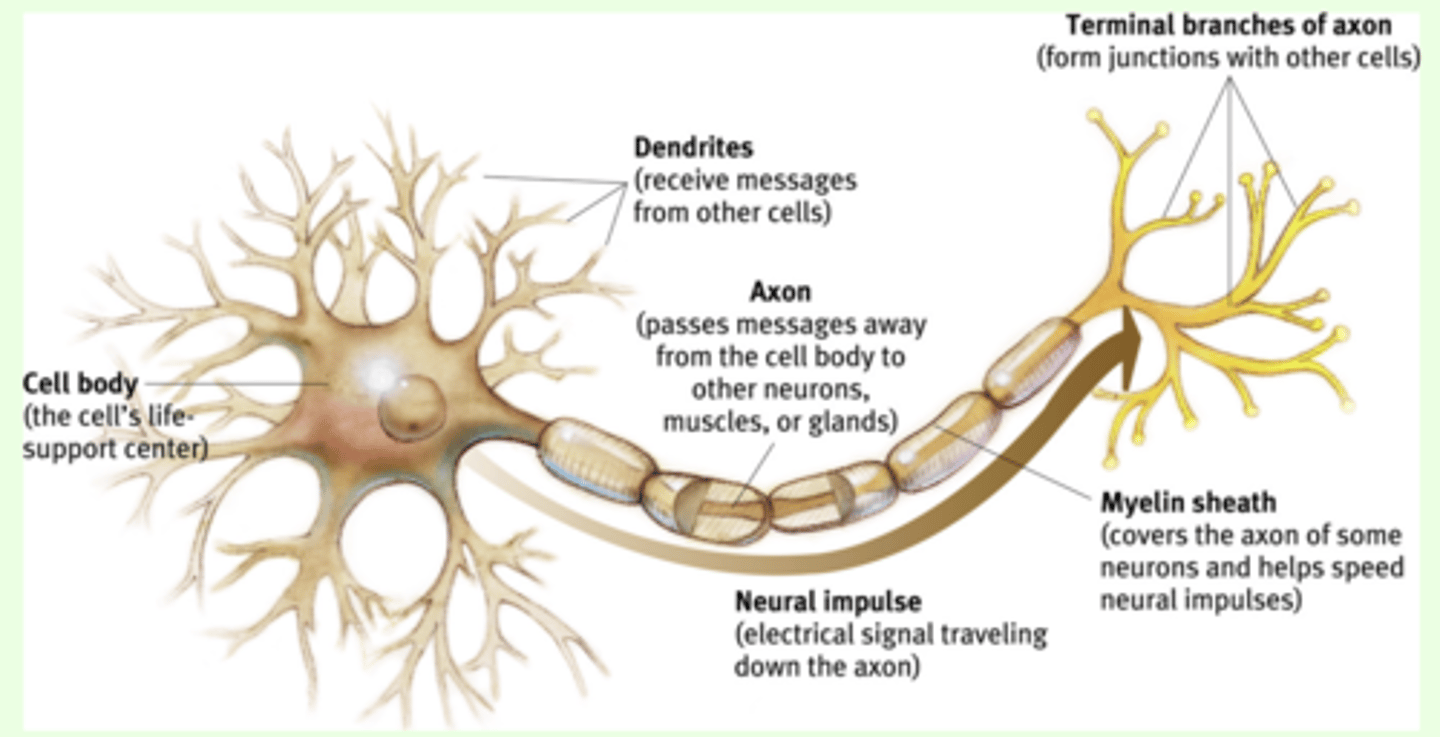
Soma or cell body

the cell body of a neuron, which contains the nucleus
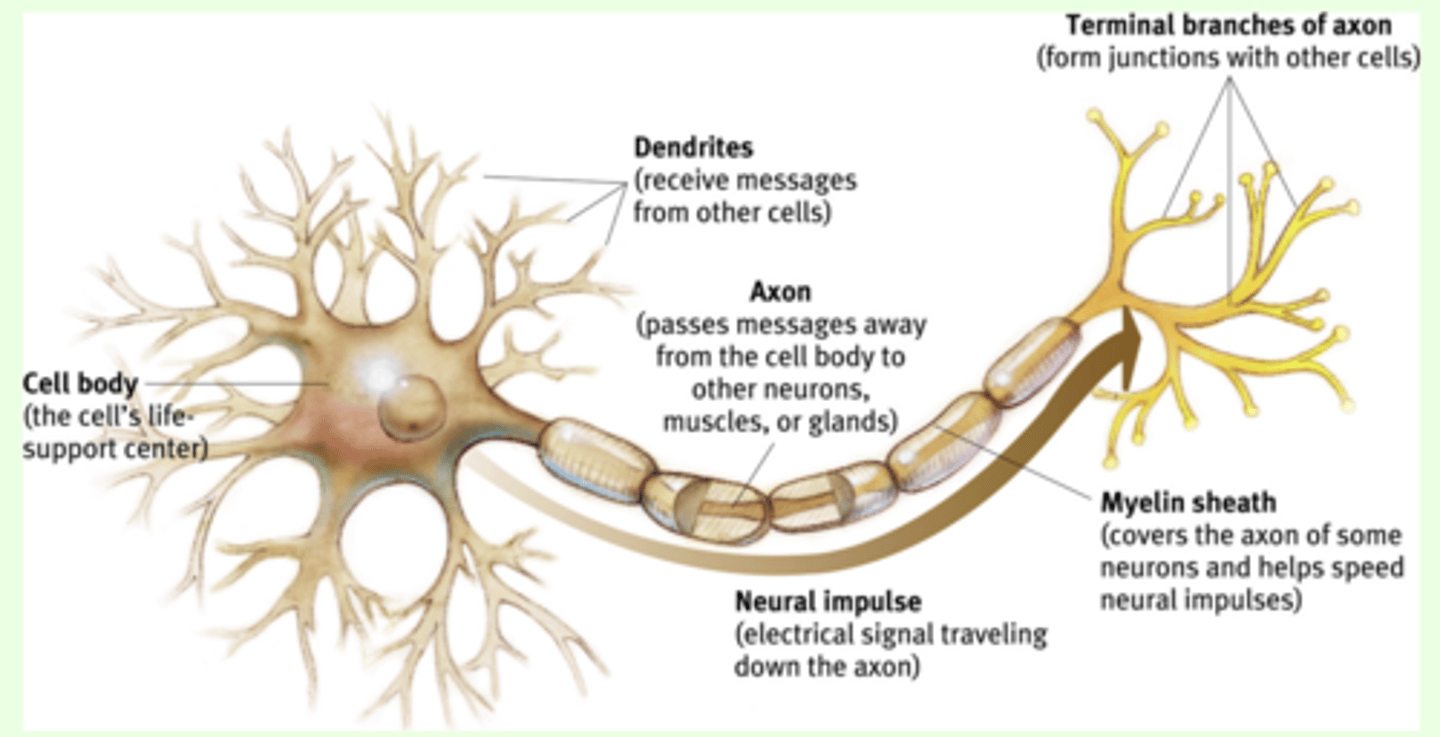
<p>the cell body of a neuron, which contains the nucleus</p>
38
New cards

Dendrite

the branched, treelike extensions attached to the soma of a neuron; receives information from the terminal buttons of other neurons
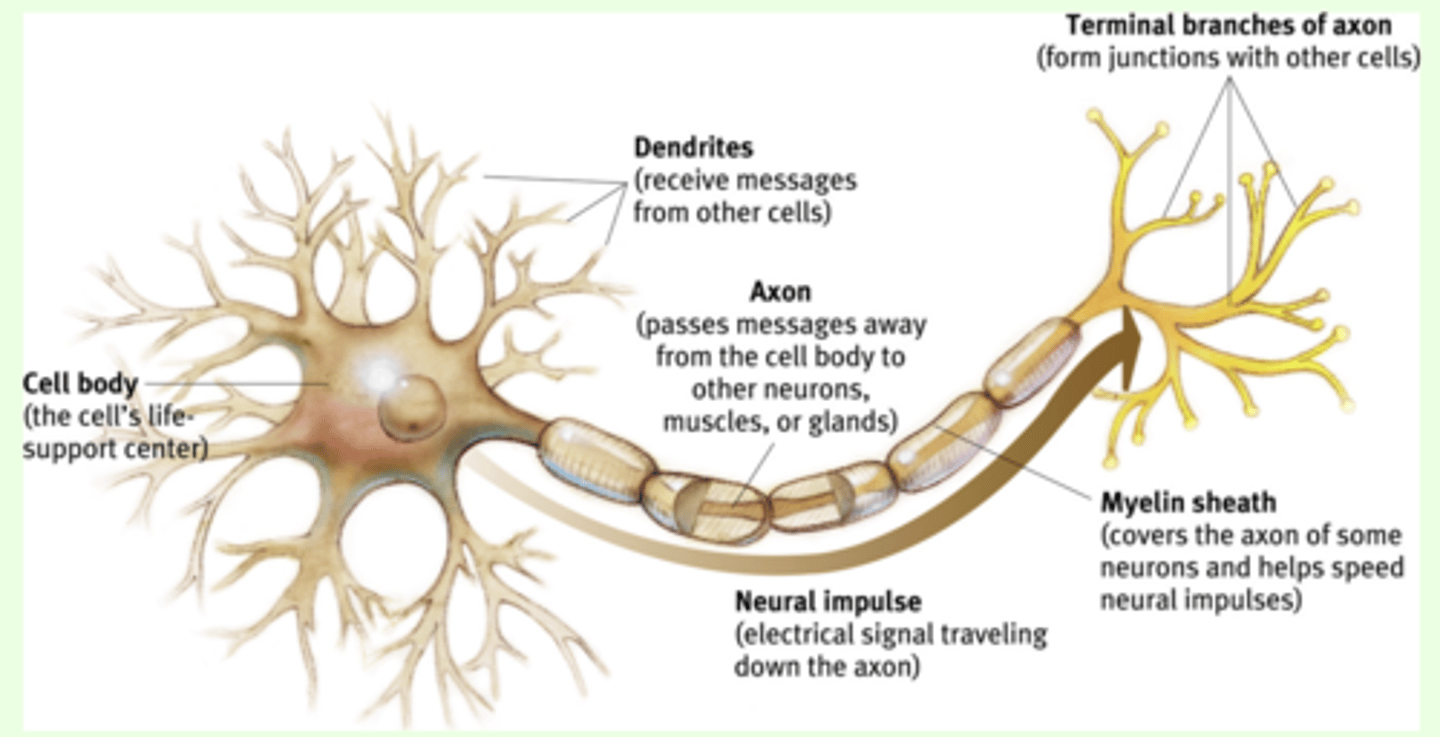
<p>the branched, treelike extensions attached to the soma of a neuron; receives information from the terminal buttons of other neurons</p>
39
New cards

Axon

the extension of a neuron, ending in branching terminal fibers, through which messages pass to other neurons or to muscles or glands
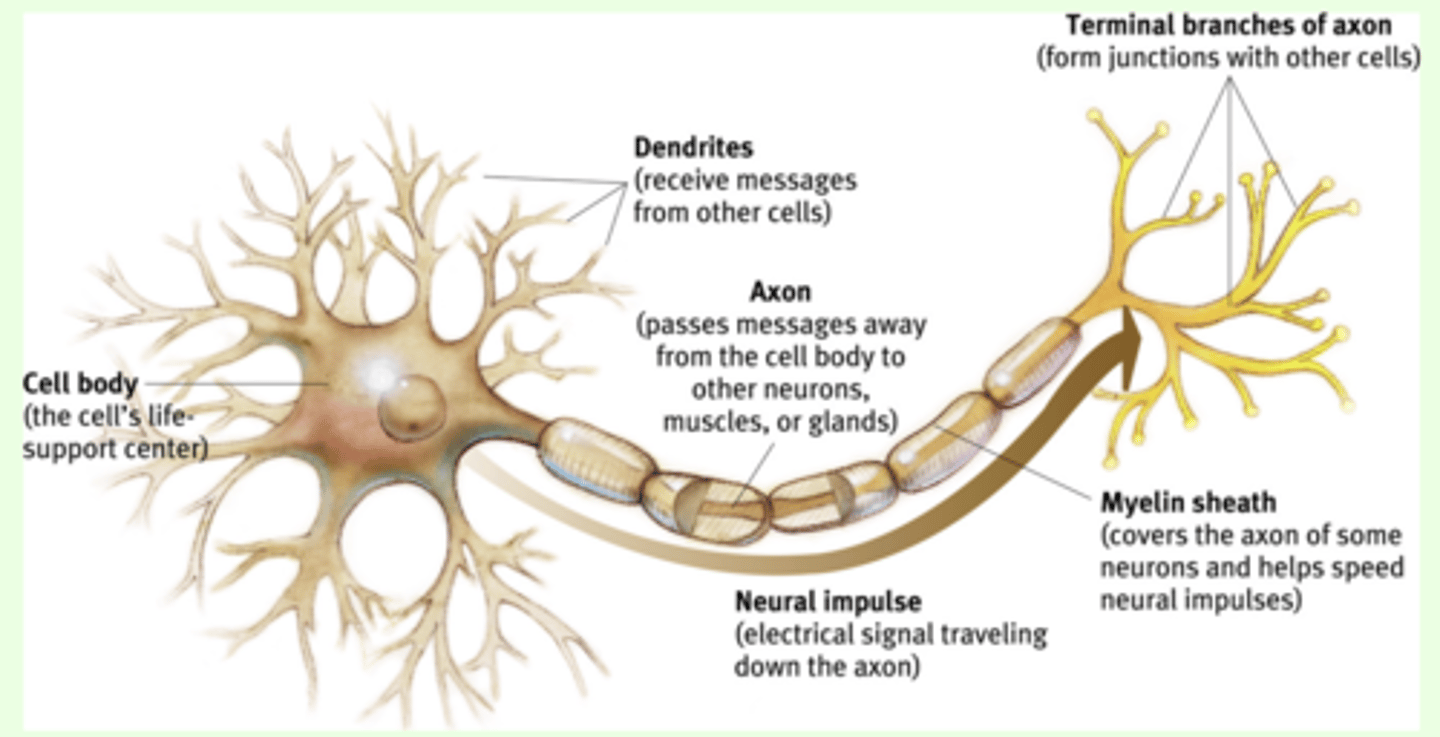
<p>the extension of a neuron, ending in branching terminal fibers, through which messages pass to other neurons or to muscles or glands</p>
40
New cards

Terminal button

the bud at the end of a branch of an axon; forms synapses with other neurons; sends information to those neuron via neurotransmitters
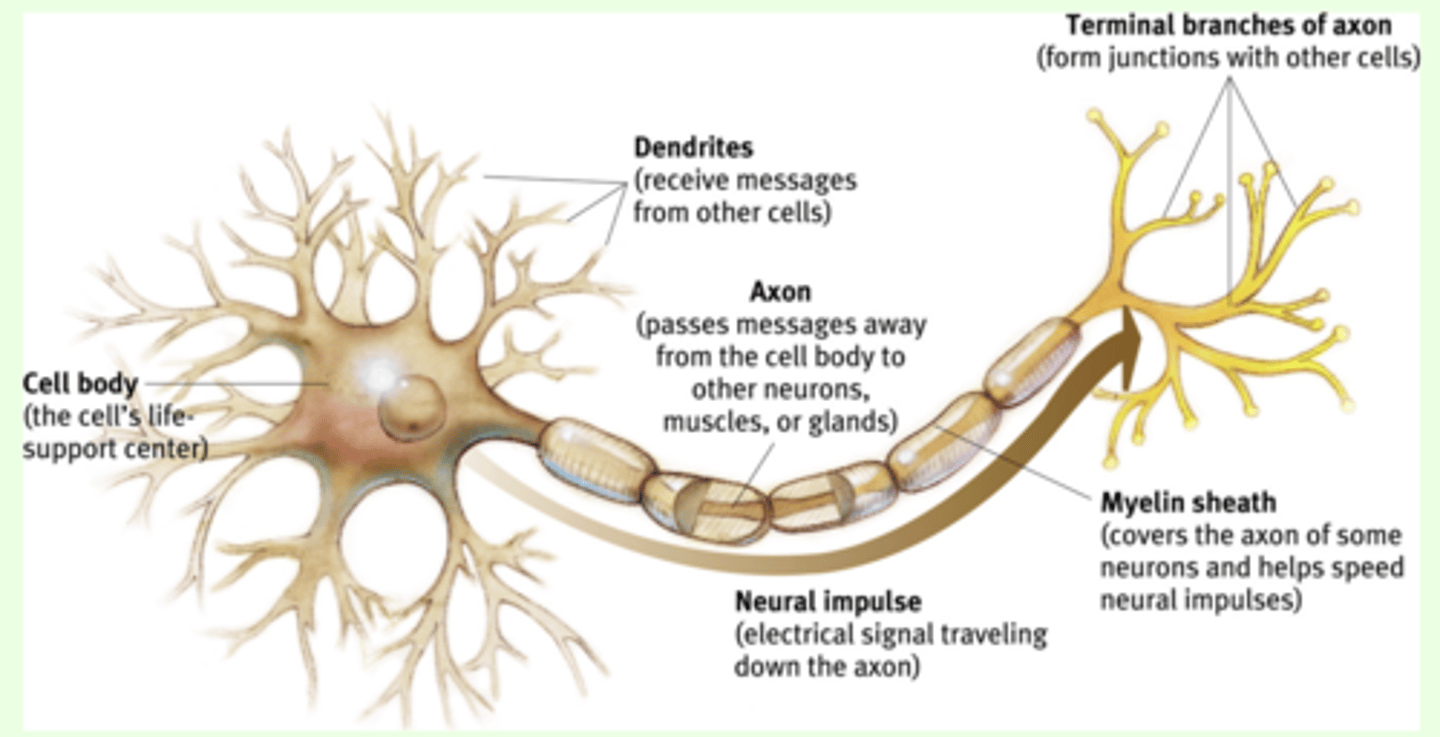
<p>the bud at the end of a branch of an axon; forms synapses with other neurons; sends information to those neuron via neurotransmitters</p>
41
New cards

Neurotransmitter

a chemical that is released by a terminal button; has an excitatory or inhibitory effect on other neurons
<p>a chemical that is released by a terminal button; has an excitatory or inhibitory effect on other neurons</p>
42
New cards

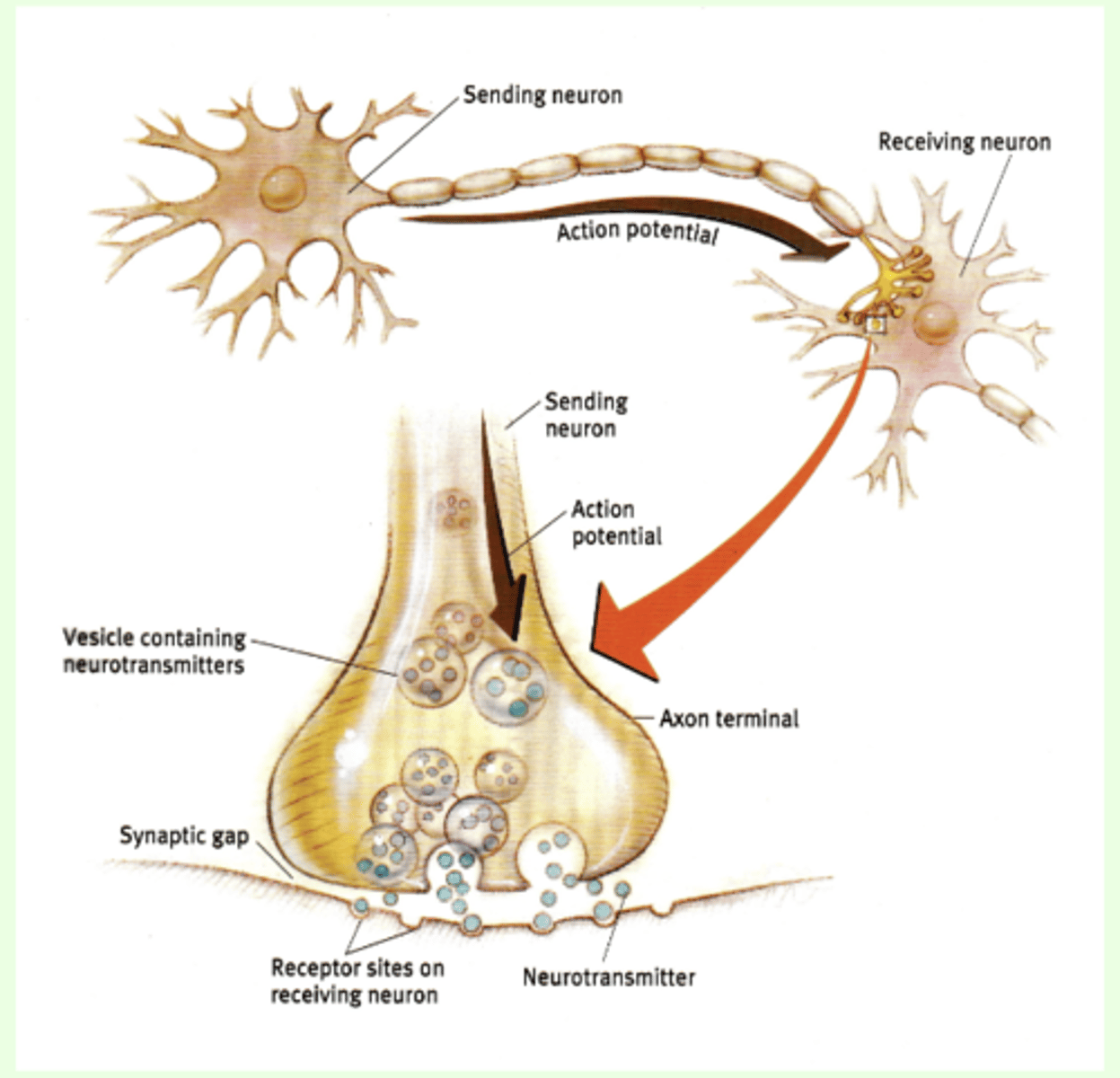
Synapse

junction between terminal button of one neuron and membrane--usually the somatic or dendritic membrane--of another
<p>junction between terminal button of one neuron and membrane--usually the somatic or dendritic membrane--of another</p>
43
New cards

Communication across synaptic gap

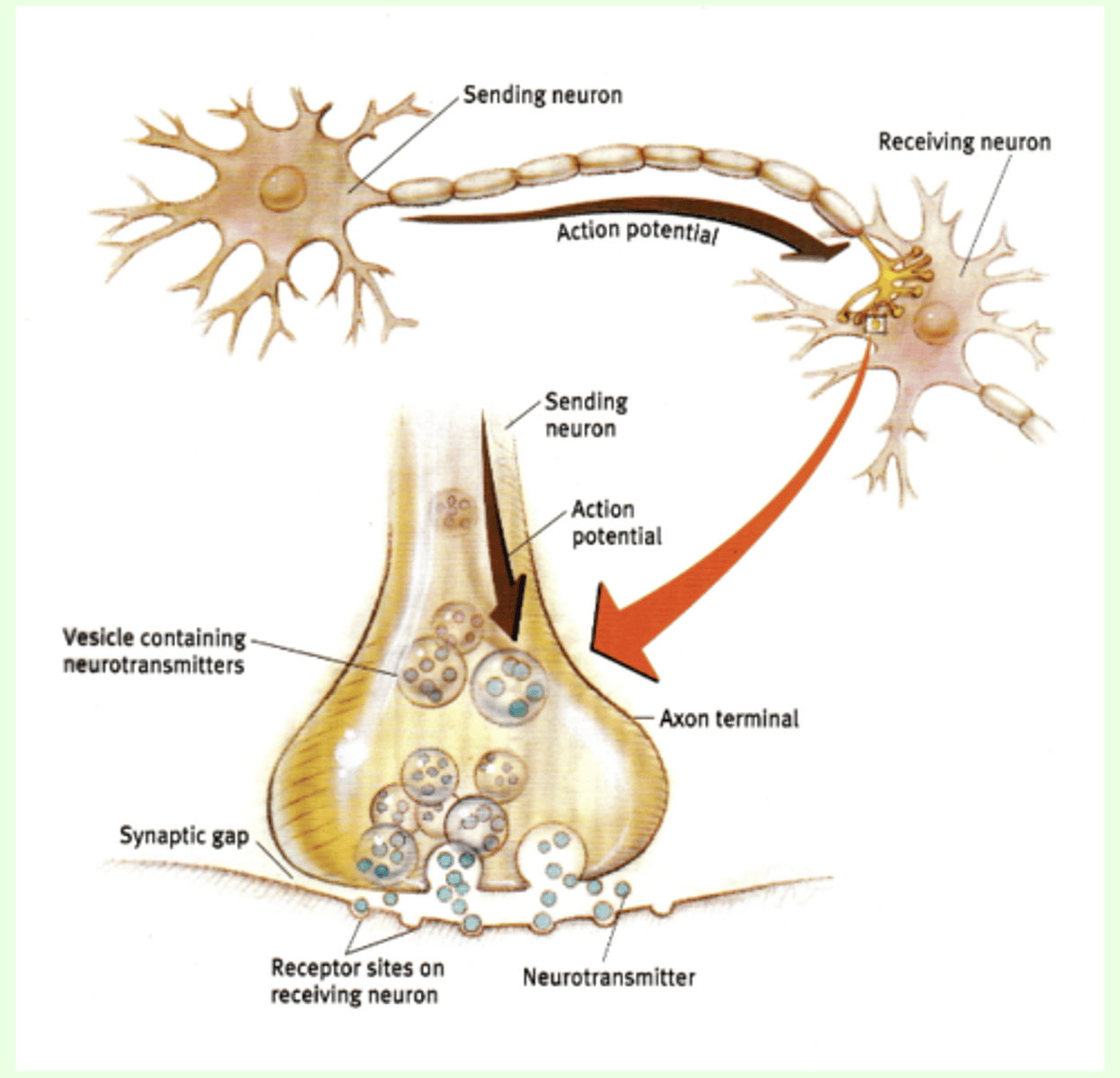
-Terminal buttons contain synaptic vesicles

-When an action potential reaches a terminal button, the vesicles fuse with the presynaptic membrane of the terminal button, break open, and release their neurotransmitter into the synaptic cleft
<p>-Terminal buttons contain synaptic vesicles</p><p>-When an action potential reaches a terminal button, the vesicles fuse with the presynaptic membrane of the terminal button, break open, and release their neurotransmitter into the synaptic cleft</p>
44
New cards

Communication across synaptic gap pt. 2

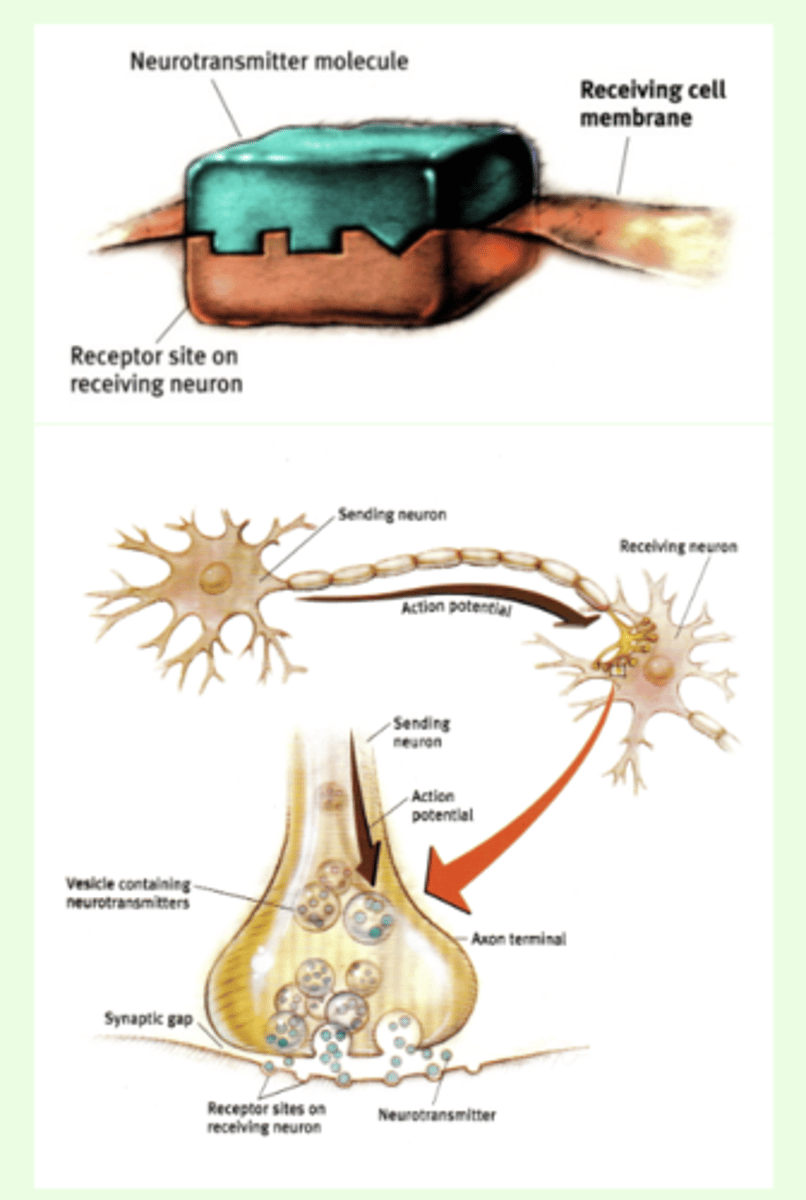
- Neurotransmitters travel across the synaptic gap, bind to receptor sites on the receiving neuron and influence whether a neural impulse will be generated (effect of neurotransmitters may be excitatory or inhibitory)

- Ligands that bind to postsynaptic membrane at binding sites can be a chemical naturally produced by the body like a neurotransmitter or a chemical from the outside like a medication or a poison--or LSD...

- the millisecond-by-millisecond sum of all the excitatory and inhibitory signals a neuron receives determines whether or not it will fire
<p>- Neurotransmitters travel across the synaptic gap, bind to receptor sites on the receiving neuron and influence whether a neural impulse will be generated (effect of neurotransmitters may be excitatory or inhibitory)</p><p>- Ligands that bind to postsynaptic membrane at binding sites can be a chemical naturally produced by the body like a neurotransmitter or a chemical from the outside like a medication or a poison--or LSD...</p><p>- the millisecond-by-millisecond sum of all the excitatory and inhibitory signals a neuron receives determines whether or not it will fire</p>