Bovine Metabolism and Nutrition
 Call Kai
 Learn
Learn Practice Test
 Spaced Repetition
 Match
Match Flashcards
 Knowt Play
1/83

There's no tags or description
Looks like no tags are added yet.
Name | Mastery | Learn | Test | Matching | Spaced | Call with Kai | Chat |
|---|
No analytics yet
Send a link to your students to track their progress
84 Terms
List neurological and muscular dysfunctions of hypomagnesaemia
- Hyperirritability
- Muscle stiffness
- Incoordination
- Convulsions
Discuss the aetiology of hypomagnesaemia
- True veterinary emergency
- Subclinical disease to sudden death
- Associated with low [Mg] in the cerebrospinal fluid and blood
- Common in 4-6yr old beef cows
- Risk factors may include soil K : Ca + Mg ratio > 0.07-0.08, weather, plant species and lactating cows
- Amount and concentration of Mg in the extracellular fluid is dependent on GI absorption and subsequent urine excretion
List clinical signs of hypomagnesaemia
- Characterised by tetany and convulsions
- Occurs most commonly in animals grazing fresh, lush, rapidly growing pastures, often heavily fertilised with nitrogen and/or potassium
- Cow is found dead, often after inclement and/or stormy weather, with disturbed soil around its limbs, indicating paddling/seizure activity
- Cows become irritable, aggressive, and show signs of muscle twitching
Discuss subclinical hypomagnesaemia
- Associated with an increased incidence of milk fever (hypocalcaemia), lowered milk production, weight loss, and diarrhoea
- No apparent clinical signs until acute disease is precipitated by adverse factors
Discuss acute cases of grass tetany
- Initially hyperaesthesia with ear twitching, teeth grinding, salivating, frothing at the mouth, muscle tremors and aggression
- Progress to incoordination with a "staggering" gait, tetanic muscle spasms and recumbency
- HR and RR are markedly increased, with the absolute intensity of the heart sounds being greatly increased
- Recumbent cattle are often convulsing or have periodic seizures
- During convulsive episodes paddling movements of the limbs, opisthotonos, nystagmus, chomping of the jaws, frothing at the mouth, pricking of the ears, retraction of the eyelids and exophthalmos
Discuss subclinical/chronic cases of grass tetany
- Within 6 weeks of calving, associated with a long-term Mg deficiency
- Thin, rough-coated with reduced DM intake and poor milk yield
- Nervous and reluctant to be herded or milked
- Udder oedema may be present
- Pallor of mucous membranes due to anaemia
Discuss diagnosis of hypomagnesaemia
- Clinical signs and history
- Confirm with serum or urine sample
- Use Grass Tetany Index (GTI)
- Sample vitreous or aqueous humour post-mortem
Discuss treatment of hypomagnesaemia
- Slow IV Ca + Mg solution
- Subcutaneous Mg sulphate, reduce the risk of relapse
- Consider light sedation
- Cow turned into sternal recumbency and left undisturbed
- Follow up with 100 g MgO daily for the first 1-2 days, then 50 g for another 5+ days
Discuss prevention of hypomagnesaemia
- Total diet should contain 2.5 g/kg DM of magnesium
- Start Mg supplementation at least 2-3wks prior to calving
- Consider individual drenching, incorporating MgO into concentrate mix, dusting of pastures, treating hay with MgO (50 g/cow/day), soluble Mg salts in drinking water, intra-ruminal Mg bullets or lick blocks
Compare and contrast hypomagnesaemia and hypocalcaemia
- Convulsions + tetany (Mg) vs dull + depressed (Ca)
- Beef (Mg) vs dairy (Ca)
- True emergency (Mg)
- Herd outbreak (Mg) vs sporadic cases (Ca)
- No hormonal control (Mg)
- Rapid death (Mg)
- High heart rate loud (Mg) vs soft (Ca)
- No body reserves (Mg)
Discuss milk tetany
- Uncommon
- Condition in 2-4 month-old veal calves fed high-milk diets with little or no other feed
- Hypersensitivity with neurological signs
Discuss transit tetany/recumbency
- During or immediately after prolonged transportation and stress
- Well-fed cows during late pregnancy
- Present with recumbency and gastro-intestinal stasis, may proceed coma and death
- Risk factors include heavy body condition, advanced pregnancy, heavy feeding prior to transport, deprivation of feed and/or water for more than 24 hrs during transport, unrestricted access to water and exercise immediately after arrival
Discuss treatment and management of transit tetany
- May respond to intravenous infusions with calcium, magnesium, phosphorus and dextrose
- Several days prior to transport feed moderately on a restricted diet containing adequate Ca and Mg
- Longer journeys provide adequate rest periods during which cattle are being fed and watered
Discuss phosphorus deficencies
- Depraved appetite leads to bone chewing (increased botulism risk)
- Herbage P is lowest in the dry season when feed is poor
- Supplement in wet season when demand highest with high levels of energy and protein for fast growth and high production
List disorders of hypophosphataemia
- Periparturient hypophosphataemia (PPH)
- Osteomalacia and deprived appetite (adults)
- Rickets (calves)
- Poor milk yield, ill-thrift and infertility
- 'Physiological' hypophosphataemia (in cows at peak lactation)
Discuss periparturient hypophosphataemia
- Postparturient haemoglobinuria or a complication of hypocalcaemia
- Concurrent low serum [P] is common in cows with milk fever and recovers rapidly following treatment with Ca
Discuss osteomalacia
- Usually occurs in lactating beef cows on marginal, P-deficient soils
- Excess Ca, iron or aluminium exacerbates any P deficiency
- Presents with weight loss, osteoporosis and depraved appetite (pica), animals are ill-thriven, may be slab-chested, have gait abnormalities and suffer pathological fractures
- Pica (eating bones or licking rocks/dirt) is characteristic
- Supplement accordingly
Discuss rickets
- Younger animals in which the epiphyses have not yet fused
- Due to primary P deficiency, inadequate vitamin D or certain feeds that are P deficient
- Causes widening of the metaphyses, particularly of the metacarpal and metatarsal bones, causing moderate lameness
Discuss the downer cow
- Present as peri-parturient cow in sternal recumbency, unable to rise
- Primary concern is direct complications of prolonged recumbency, especially local tissue injury from compression of the limbs (compartment syndrome) and musculoskeletal damage due to struggling to rise
- More than 3-6 hours results in ischaemic necrosis and muscle/nerve damage in the underlying hindlimb, may be irreversible after 12 hours
- Perform clinical (especially udder, vaginal and rectal exam) and musculoskeletal exam
- Depressed or hyperaesthetic cows have a poor prognosis
Discuss management of downer cows
- Treat adequately for hypocalcaemia, hypomagnesaemia and hypophosphataemia
- Move onto a surface that provides good and secure footing
- Ensure dry, clean comfortable lying area (either indoors or outside)
- Turn the animal over every 3-6 hours to prevent pressure damage, may be lifted several times daily for as long as practical
- Providing ad lib good-quality food and fresh water
- Stripping of all four quarters
Discuss parturient hypocalcaemia (milk fever)
- Development of paresis and severe hypocalcaemia around calving (within 24hrs)
- Weakness, recumbency, depression of consciousness, and ultimately death
- Marked difference in incidence between herds due to breed (especially Jerseys), management and control practices/procedures
- Increased risk in older cows is associated with decreased capacity to mobilise Ca from bone
Discuss subclinical hypocalcaemia
- Episodes of subclinical hypocalcaemia, lasting 1-2 days, may occur 2-3 times, at an interval of ~9 days, during first few weeks of lactation
- May cause decreased DMI, increased risk of secondary disease conditions, decreased milk production and fertility later on in lactation
Discuss non-parturient hypocalcaemia
- Recumbency due to hypocalcaemia, but not associated with calving
- Consequence of a sudden drop in appetite (e.g. mild rumen acidosis, mastitis, oestrus activity), diarrhoea in cows grazing lush pasture or oat crops, with transport or in cows nursing multiple calves
Describe the pathogenesis of hypocalcaemia
- Ionised Ca concentration [Ca2+] in the blood must be maintained at a relatively constant value
- During the dry period Ca requirement is minimal (10-12 g Ca/day)
- Around calving there is a sudden increase in requirements producing colostrum (2-3 g Ca/kg) or milk (1.22-1.45 g Ca/kg) must withdraw 20-40 g Ca from her Ca pools each day
- When not available in the plasma pool, there is a need to withdraw/mobilise Ca from the bone, or increase the rate of Ca absorption from the diet
- These processes take 2-3 days to become fully active hypocalcaemia results if they fail
Describe calcium homeostasis
Control via interaction of three hormones;
- Parathyroid hormone (PTH)
- 1,25-dihydroxycholecalciferol (1,25DHD)
- Calcitonin

Discuss stage 1 hypocalcaemia
- Progressive over a period of 12-24 hrs
- Hyperaesthesia, with teeth grinding and muscle tremors of head and neck, stiffness of the limbs (tetany), straight hocks and 'paddling' of the feet when walking
- Sometimes aggressive
- Cows show ataxia and are reluctant to walk
- T normal to slightly elevated, HR normal or slightly increased, rumen stasis
- Increasing difficulty for affected animal to get back on its feet
Discuss stage 2 hypocalcaemia
- Commonly last from 1-12 hours
- Unable to stand, but animal remains in sternal recumbency
- Depression, dry muzzle, cold extremities, often lateral bend (S-shaped kink) in the neck then the head becomes averted against the chest
- Eyes usually dry, pupils dilated, pupillary light reflex reduced or absent
- T often sub-normal, HR slightly elevated (80-90 bpm), but intensity of heart sounds is markedly reduced
- Rumen stasis and secondary bloat are common, faeces dry, commonly covered with a thin layer of mucus
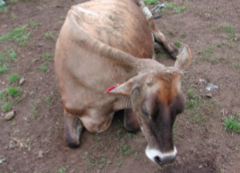
Discuss stage 3 hypocalcaemia
- Will not survive for more than a few hours without effective treatment
- Lateral recumbency, progressive loss of consciousness, coma and death
- HR significantly increased (120 bpm), heart sounds almost inaudible
- Often severely bloated and may regurgitate rumen contents, risk of aspiration pneumonia
- Rumen tympany and/or paralysis of respiratory muscles causes death in untreated animals
Discuss diagnosis of hypocalcaemia
- Response to treatment diagnostic aid
- May be confirmed by measuring serum [Ca], reduction is usually proportional to the severity of the condition
- Hypophosphataemia is frequently observed in blood samples collected from cows with milk fever
Discuss treatment of hypocalcaemia
- Animals in lateral recumbency should first be moved into sternal recumbency
- Ca borogluconate (1 g Ca/45 kg BW, IV or SC, administered over 5-10 minutes, warmed to body temperature)
- May be cardiotoxic, HR slows down and intensity of sounds increases, if arrhythmia becomes marked stop the i/v infusion (if severe 10% Mg sulphate (100-400 mL) IV may be life-saving)
- Cows often urinate and/or defaecate, passing firm faeces, immediately after getting up
Discuss prevention of hypocalcaemia
- Restrict the amount of green pasture offered to springing cows in the last 2 wks prior to calving
- Providing ad lib low-potassium hay, high fibre intake increases salivation, moves bicarbonate from the bloodstream into rumen, increasing blood acidity and absorption of Ca from the gut and resorption from bone
- Supplementing with magnesium over this period (e.g. magnesium oxide sprinkled over the supplementary feed at a rate of 50 g/cow/day)
- Feeding pre-partum cows diets that contain low Ca levels (i.e. 20 mg/kg/day) will stimulate PTH secretion
- Supplementation with a calcium and phosphorous binder (synthetic zeolite) can bind Ca and P in the rumen making it unavailable
- Provision of oral Ca at calving, dosing with large amounts of very soluble Ca (i.e. 150 g of calcium chloride daily, in the form of drenches, gels or boluses)
- Supplementing with vitamin D prior to calving increases intestinal absorption of Ca, injecting vitamin D3 (250 mg cholecalciferol) intramuscularly 2-8 days prior to calving markedly reduces the incidence of milk fever
Discuss dietary cation-anion difference (DCAD)
- Described in terms of mEq/kg of Na+ and K+ (increase), S2- and Cl- (decrease)
- Feeding anionic salts induces a strong ion acidosis (metabolic acidosis) in blood plasma
- Compensated metabolic acidosis facilitates mobilisation of Ca from bone into the blood
- Lowering blood pH allows PTH to act on its receptor (bone), release of cations (mainly Ca) from bone
- Feed low-potassium cereal hays or maize silage, ~3 kg concentrates to increase ME content of the diet with DCAD as low as possible by appropriate ration manipulation followed by anionic salts (CaCl2, MgCl2, NH4Cl, CaSO4, MgSO4, (NH4)2SO4) or use a masking agent
Discuss the transition period
- 3 weeks prior to 3-5 weeks after calving
- Increased nutritional demand and decreased dry matter intake
- In response to negative energy balance (NEB), body fat is mobilised into the bloodstream in the form of NEFAs
- Cows are predisposed to accumulate fat (as triglycerides) within the liver when large amounts of NEFAs are released from adipose (fat) tissue
- Metabolic disorders with secondary reproductive disorders [RFM, metritis], lameness, displaced abomasum, mastitis and other infectious diseases
Discuss dried-off cows (>3 weeks away from calving)
- Ideally BCS required for calving (i.e. 5 out of 8, consider post-partum anoestrus)
Discuss transition cows
- Late pregnancy, cow has to meet her own requirements (maintenance) plus the nutrient costs associated with her rapidly growing foetus(es) and udder
- Late gestation, growth of the conceptus (foetus plus membranes) equates to ~25% of the total energy requirements of the cow
Discuss DMI and energy balance in the peri-parturient period
- 550 kg Holstein-Friesian cow in her last month of pregnancy, at least 8-10 kg DM of feed per day, with a ME density of at least 10 MJ/kg DM
- During the 2-3 week period prior to calving DMI is significantly reduced/depressed
- Feed intake after calving is depressed more in cows that were over-fat at calving, they are likely to be in a greater NEB than cows of a lower BCS and fed the same diet
List the main goals of the nutritional and environmental management during the transition period
1. To reduce ruminal disruption, cows are very vulnerable to SARA resulting from supressed appetites and sudden introduction of grain
2. To minimize macromineral deficiencies (Ca, Mg, P), often associated with excess potassium which reduces the capacity of the cow to maintain serum Ca and Mg levels
3. To minimize lipid mobilisation disorders, largely influenced by a failure to provide sufficient or effective energy sources around calving
4. To avoid immune suppression, often associated with lack of energy and protein intakes, micronutrients are also required Cu, Se, Zn, I, Vit D, Vit E
Discuss energy metabolism in the pregnant and lactating cow
- In the rumen dietary carbohydrates are converted to volatile fatty acids (VFAs)
- Glucose needs to be synthesised from non-sugar sources (gluconeogenesis)
- Fatty acids are derived from the diet (VFAs), or through mobilisation of acetate in adipose tissue
- Supply of glucose (i.e. as the precursor of oxalo-acetate) is critical for the effectiveness of the oxidation of fatty acids or are metabolised into ketone bodies

Discuss fatty liver
- NEFAs accumulate when the uptake by the liver exceeds their rate of oxidation in the tricarboxylic acid (TCA).Krebs cycle or exceeds their removal as ketone bodies
- Large amounts of hepatic triglyceride lead to hepatic dysfunction via fatty liver-related syndrome

Discuss assessment of cows energy status
- Body condition scoring
- Changes in body condition score
- Level of milk production
- Fat:protein ratio in the milk
- Metabolic profiling (including NEFAs, ketones and liver function)
- Ketones, beta-hydroxybutyrate (βOHB) after calving
- Non-esterified fatty acids (NEFAs) before calving
Discuss assessment of energy status in early lactation
- High fat % in early lactation suggestive of rapid mobilisation of fat reserves predisposing to Ketosis
- Low fat % (
List requirements for a productive rumen
- Consistent supply of nutrients, including continuous fermentable carbohydrate, availability of ammonia, sulphur and protein with adequate/balance fibre (NDF), starches, sugars and rumen-degradable protein
- Cud chewing and rumination, enough effective fibre required to ensure sufficient saliva production for rumen buffering
- Constant supply of clean, fresh water (i.e. 5 litres per kg of dry matter fed + 1 litre per litre of milk + more during hot weather)
- Diet that doesn't change too drastically or quickly (i.e. 3-6 weeks for papillae to develop and 7-10 days for bugs to adapt)
- Stable rumen pH
- Adequate rumen mat for effective fibre
Discuss the digestion of carbohydrates
- Fibrous component (measured by NDF and ADF) = provide bulk in rumen to promote mixing and rumination
- Non fibre carbohydrates (NFC) = starches and simple sugars that ferment rapidly
- Fermented to Volatile Fatty acids (Acetate, Propionate and Butyrate), methane, carbon dioxide, heat and microbial cells
Discuss the digestion of protein
- Proteins are cleaved to peptides then rapidly degraded to amino acids and ammonia providing the substrates for microbial growth
- High producing cattle benefit from modest amounts of bypass protein, it is cleaved to amino acids in the abomasum and absorbed in the intestine
Discuss the digestion of fats
- Extremely energy dense feeds for ruminants
- Bacteria and protozoa can breakdown fats
- Must limit fats to
List factors affecting dry matter intake (DMI)
- Availability of feed, consider stocking rate and bunk space
- Palatability of feed
- Digestibility of feed
- Gut fill of cow when low quality forages are fed
- Stage of pregnancy, including foetal size and insulin sensitivity
- Stage of lactation, including glucose demand
- Genetic potential of the cow
- Availability of nutrients such as protein and phosphorous
- Hepatic oxidation of fuel causing satiety
Discuss intake regulation
Appetite is the response to nutrient demand generated by the genetic potential to produce and the physiological status of the cow.
If given a high-energy, low fiber diet, cows will eat to meet their energy demand/requirement/target. If given a low-energy, high fiber diet, cow intake will be limited by fill and their capacity to process fiber through the rumen
Discuss hepatic oxidation theory
Feed intake is controlled by a signal to the brain from the liver that is stimulated by the oxidation of fuels.
High propionate in the liver sends satiety signals, cow feels full. This mechanism dominates during the transition period and in late lactation.
Provide values for maximising dry matter intake
- DMI of milking cow = ~3% of body weight
- DMI of high producing cow = >4% body weight
- DMI of precalving cow = ~1.5 - 2% of body weight
- NDF intake is approx. 1% of liveweight as forage NDF and 1.2% as total ration (forage + concentrate) NDF
- DMI is maximised when NDF content is 28-34% of the total diet and forage availability is not limiting
Discuss ration balancing of starches and sugars
- Aim for 25-30% starch, 3-6% sugars and maximum 35-40% non-structural carbohydrates
- Rate of starch breakdown = wheat>triticale>barley>corn>sorghum
- Increasing starch results in an increase in milk protein due to the production of propionate
- Excess starch and sugar without effective NDF can cause acidosis
Discuss maximising metabolisable protein production
- RDP (rumen degradable protein) + UDP (undegraded dietary protein) = crude protein
- MP (metabolisable protein) = microbial protein + UDP
- Microbial protein requires ammonia and amino acids from degradable proteins plus carbohydrates form the digestion of starches, sugars and fibre
- Provides the source of amino acids that will be absorbed and produce milk protein
List additional nutrient requirements
Macro minerals - calcium, magnesium, phosphorous, sodium and sulphur.
Micro minerals - copper, cobalt, selenium, iodine, zinc and chromium.
Fat-soluble vitamins - vitamin A, D and E.
Define energy utilisation
- Gross energy (heat of combustion of feed) less faecal energy = Digestible Energy (DE)
- Digestible energy less urinary and methane energy = Metabolisable Energy (ME)
- Metabolisable energy less heat and losses associated with metabolism = Net Energy (NE)
Provide values for energy use
- Maintenance of 500kg cow = 60MJ, add or subtract 5 MJ for each 50kg lighter or heavier than this
- Exercise = 3 - 5 MJ/km walked, increase maintenance requirements by 20-30%
- Liveweight change = gain +34MJ/kg vs loss -28MJ/kg
- Lactation = 5MJ/litre Friesians or 6 MJ/litre Jerseys
- Pregnancy = 5 months gestation 5MJ, 6 months gestation 8MJ, 7 months gestation 11MJ, 8 months gestation 15MJ and 9 months gestation 20MJ
Discuss feeding management of pastures/crops
- Produce and utilise (harvest) the maximum amount of the highest quality forages possible
- Use high quality species and cultivars
- Attend to soil fertility and soil structure, assess with soil tests and apply appropriate fertilizers
- Avoid soil compaction
- Irrigation, careful and efficient water management to maximise production of forage starches and sugars
- Avoid stock damage through over-grazing or pugging
- Graze at the appropriate stage, keeping leaf yield as high as possible
- Maximise harvest amounts to make efficient gains
Discuss feeding management of silage
- Choose appropriate crop and cultivar for silage production
- Appropriate water and fertiliser to maximise yield
- Harvest at the right stage to maximise grain but harvest before gets hard
- Rapid wilting if harvesting high-moisture crops
- Compact well to ensure silage preservation
- Cover with plastic to prevent aerobic fermentation
- Take care with face management to minimise losses
- Feeding out to reduce wastage
- Carefully and regularly assess smell, chop length, mixing of ingredients, utilisation and bunk space
Discuss feeding management of concentrates
- Reduce effects of slug feeding
- More processing of starchy concentrates, the faster and greater their digestion and absorption
- Timing and frequency of feeding affects digestion, synchronising the feeding of readily available starches and sugars with more slowly degradable high-fibre feeds is beneficial
Discuss assessing nutrition on a dairy
Consider;
- Ration on the nutritionist's computer
- Ration the farmer feeds
- Ration the cows actually eat
Assess;
- Cow outputs
- Cow clinical assessments
- Ration assessment
List parameters of cow outputs
Litres per cow - compare over time, with last year or other herds, examine different stages of lactation especially peak lactation.
Milk composition - milk fat (indicator of rumen health) or protein (indicator adequacy of energy intake).
Blood biochemistry - beta hydroxyl butyrate (indicator of ketosis) or NEFAs (indicator of fat mobilisation).
List common cow signs
- Assess rumen fill, indicator of feed intake
- Assess cud chewing, indicator of fibre intake
- How are the cows behaving?
- Monitor faecal consistency, indicator of fibre digestion
- Body condition score, including loss after calving
- Signs of heat stress
- How do the cows' coats look?
- Enough feed on offer?
- Do first calvers blend with older cows?
Discuss ration assessment
Assess pastures - tropical or subtropical, grass, legume or forage crop with pre grazing and post-grazing residuals.
Feedbunk or feed trough management - space per cow (0.6 - 0.75 m per cow), smell of feed and old feed removed.
Silage and other feedstuff storage
Describe the transition period
- Period 2-3 weeks prior to calving to 3-5 weeks post calving
- Completes transition from a dry pregnant cow (with low feed intakes) to a high producing lactating cow (with high feed intakes)
- Udder development (springing) occurs during this period
List requirements for successful lactation
- Rumen adaptation
- Reduced dry matter intake (i.e. reduced appetite and rumen space)
- Higher demands for calcium
- Impact of lipid mobilisation on liver function
- Demands of the foetus and udder for nutrients
Discuss acidosis
- Sub acute ruminal acidosis (SARA) = increase in rumen acids causing a drop in pH in herds with low fibre/high concentrate diets
- Summer/heat stress with lower grass intakes than expected and continued grain feeding and drooling (loss of bicarbonate buffer)
- Present with decreased intake of feed, diarrhoea, bubbly faeces, decreased cud chewing and low fat tests in fresh cows
List strategies to prevent milk fever
- Low dietary calcium pre-calving
- Feed a Ca/P binder
- Reduce blood pH
- Supplement with Mg
- Inject with Vitamin D3 2-8 days before calving
- Increase energy density of diet pre-calving
- Supplement with calcium after calving
List aims of transition cow diet
- Decrease the risk of milk fever by preparing the cow for the rapid increased demand for calcium
- Increase the energy density of the diet to counter reduced feed intakes associated with advanced pregnancy
- Minimise the risk of retained foetal membranes, left displaced abomasum
- Introduce the cow to post-calving diets to allow rumen microflora time to adapt
- Maximise the cows immune function by ensuring all trace minerals and vitamins are available (including Se, Cu, Co and Cr)
Discuss protein-energy malnutrition
- Protein and energy are present in the diet in suboptimal quantities (incomplete starvation)
- Requirements for maintenance receive the highest priority, growth/reproduction take a lower priority, however, both can be drastically curtailed in order to increase the probability of the animal's survival
Discuss the aetiology of protein-energy malnutrition
- Body stores of lipid and protein must be catabolised to meet all the animal's energy requirements, may be accompanied by the incomplete oxidation of NEFAs and ketone formation (rare)
- Loss of muscle mass and power with lethargy, weakness and recumbency
List clinical signs of protein-energy malnutrition
- One or more heavily pregnant, recumbent cows
- Others in the mob in poor body condition, may be weak or slightly ataxic
- Lumbar processes and ribs readily palpable
- Animals are bright and alert, with normal appetites
- Rumen contractions are often mildly decreased
- Palpation of the abdomen or rectal palpation usually reveals one or more large calves
- Submandibular oedema (hypoproteinemia)
- May be mild to moderate ketonuria

Discuss treatment of protein-energy malnutrition
- Increase the ME and CP content of thediet
- Additional oral treatment with propylene glycol
- Good nursing
- Consider aborting or elective caesarean (prognosis is poor and surviving animals are of little value)
- Prognosis is much poorer if animal is recumbent and unable to stand (should be assessed by using lifting devices)
Discuss pregnancy toxaemia
- Form of hepatic lipidosis
- Commonly very fat beef cows during last two months of gestation
- Net energy deficit in the diet with massive mobilisation of fat from body reserves causing hypoglycaemia, hyperketonaemia and severe fatty infiltration of the liver
List clinical signs of pregnancy toxaemia
- Heavily pregnant, very fat cow/heifer
- Dullness, anorexia, rapid respiration and deterioration of body condition
- Little rumen activity, and faeces are hard, dry and coated in mucus
- Terminal stages, faeces may be foetid and yellowish-coloured, or there may be bloody diarrhoea
- Severe ketonuria
- May be aggressive, have a stumbling or high-stepping gait and difficulty rising
- Death within 3-10 days after becoming recumbent
Discuss diagnosis of pregnancy toxaemia
- Recumbent animals serum [βOHB] are usually much higher than in cases of primary ketosis
- Liver enzymes are commonly elevated
- Packed cell volume (PCV) and serum [Ca] may be decreased
- Most consistent finding is a grossly enlarged, yellow fatty liver
Discuss management of pregnancy toxaemia
- Very poor prognosis if the animal is recumbent
- Intravenous 50% glucose solutions, followed by propylene glycol orally, and the provision of high-quality feed stuffs and concentrates
- Intramuscular anabolic steroid injections (off-label use)
- Emergency caesarean operation could be considered
- Prevention is by providing adequate dietary energy (80-90MJ/day) during late gestation
Discuss fatty liver/fat cow syndrome
- Form of hepatic lipidosis
- Overfeeding animals during the latter part of lactation and the dry period (rare in AUS), significant problem in 'carry-over' (hold-over) cows
List clinical signs of fatty liver/fat cow syndrome
Very heavily conditioned cow around calving is depressed and off her feed, failing to respond to treatment of;
- Peri-parturient hypocalcaemia
- RFM or metritis
- Inappetence
- Severe ketosis
- Diarrhoea
- Displaced abomasum
- Mastitis
+ prominent ketonuria

Discuss treatment of fat cow syndrome
- Twice daily 40% dextrose IV
- Alternate day SC administration of 200 IU protamine zinc insulin
- Daily tube feeding with 5 kg gruel (e.g. lucerne pellets mixed in water)
- Antibiotic therapy as required
- Oral propylene glycol
- Corticosteroid injections
Discuss ketosis/acetonaemia
- High-yielding, lactating dairy cows
- Associated with an inadequate supply of energy to sustain the high milk yield of early lactation
- Between 2 weeks and 2 months after calving
- Present with weight loss, reduced milk yield, hypoglycaemia and presence of ketone bodies in all body tissues/fluids
Compare and contrast primary and secondary ketosis
Primary ketosis - during early lactation in high-yielding cows where the cow cannot consume enough energy to supply her glucose requirements for lactogenesis.
Secondary ketosis - results from any disease that causes a reduction in appetite/food intake during early lactation (e.g. metritis, displaced abomasum or lameness).
Compare and contrast clinical and subclinical ketosis
Clinical ketosis - ketosis with obvious clinical signs, wasting or nervous form.
Subclinical ketosis - ketonuria and ketonaemia in cows that have no outward clinical signs, but may have profound effects on the animals' health, productivity and future fertility.
Describe the aetiology of ketosis
- Early lactation when energy demand for milk production exceed gluconeogenic propionate production in the rumen
- Energy deficit leads to the mobilisation of fat stores, primarily as NEFAs
- When blood glucose is low (due to insufficient ruminal propionate production, pregnancy drain or illness) oxaloacetate levels drop impairing the TCA cycle
- Acetyl-CoA from NEFA oxidation cannot be fully processed and is converted into ketone bodies like acetoacetate and beta hydroxybutyrate
- Excess NEFAs are re-esterified into triglycerides and stored in the liver, contributing to fatty liver syndrome
List the clinical signs of wasting ketosis
- Loss of appetite, and refusal to eat concentrate feeds
- Rapid loss of condition and sudden drop in milk yield (over 2-4 days)
- HR may be slightly lower
- Rumen contractions less frequent, weak, and often incomplete
- Faeces are often dark and form, with a 'waxy' (shiny) appearance
- Smell of ketones on the breath of affected cows
- Urine has a strong positive reaction for ketones with Ketostix® or Multistix® test strip
List the clinical signs of nervous ketosis
- Repeatedly licking at self or sucking on inanimate objects, depraved appetites, and chewing movements accompanied by excessive salivation and teeth grinding
- Hyperaesthetic to touch and sound
- Muscle tremors and a 'staggery' gait
- Sometimes circling or aimless wandering
- May appear blind or head press
- Signs of aggression
Discuss treatment of ketosis
- Dextrose (500 mL of 40-50% solution IV) results in a transient hyperglycaemia
- Gluconeogenic substrate or glucose precursors (e.g. propylene glycol) orally
- Glucocorticoid therapy (e.g. 40 mg dexamethasone, 5 mg flumethasone) stimulates gluconeogenesis
- Vitamin B12, essential for the metabolism of propionate
- Energy supplementation (e.g. propylene glycol, molasses) from 1 week before calving onwards