Na, K, Ca
 Call Kai
 Learn
Learn Practice Test
 Spaced Repetition
 Match
Match Flashcards
 Knowt Play
1/25

There's no tags or description
Looks like no tags are added yet.
Name | Mastery | Learn | Test | Matching | Spaced | Call with Kai | Chat |
|---|
No analytics yet
Send a link to your students to track their progress
26 Terms
What is sodium
it is an extracellular cation
apart of the sodium potassium pump
uses active transport
keeps high sodium outside the cells and low sodium inside the cells
controlled by kidneys
why important?
maintains ECF volume
helps regulate osmotic pressure
makes up abt 90% of solute in ECF
is important for nurve impulse conduction and muscle contraction
hypernatremia
high sodium outside of the cell
causes water to flood out of the cells = cells shrink
causes of hyponatremia
excess h20 loss (excessive sweating, diarrhea, vomiting)
you loose both sodium and water when loosing these and the hormonal response is to drink more water causing you to be hyponatremic
use of diuretic drugs with decreased Na diets
hormonal imbalences
not enough aldosterone
excessive ADH
kidney failure
diuresis
excessive h20 intake
effects of hyponatremia
stomach issues
anorexia
nausea
cramps
neuro issues
headache
confusion
seizures
decreased BP

causes of hypernatremia
insufficient ADH
loss of thirst mechanism
watery diarrhea
prolonged periods of rapid respiration
effects of hypernatremia
thirsty
agitation
edema
high BP
tongue and mucosa dry and sticky
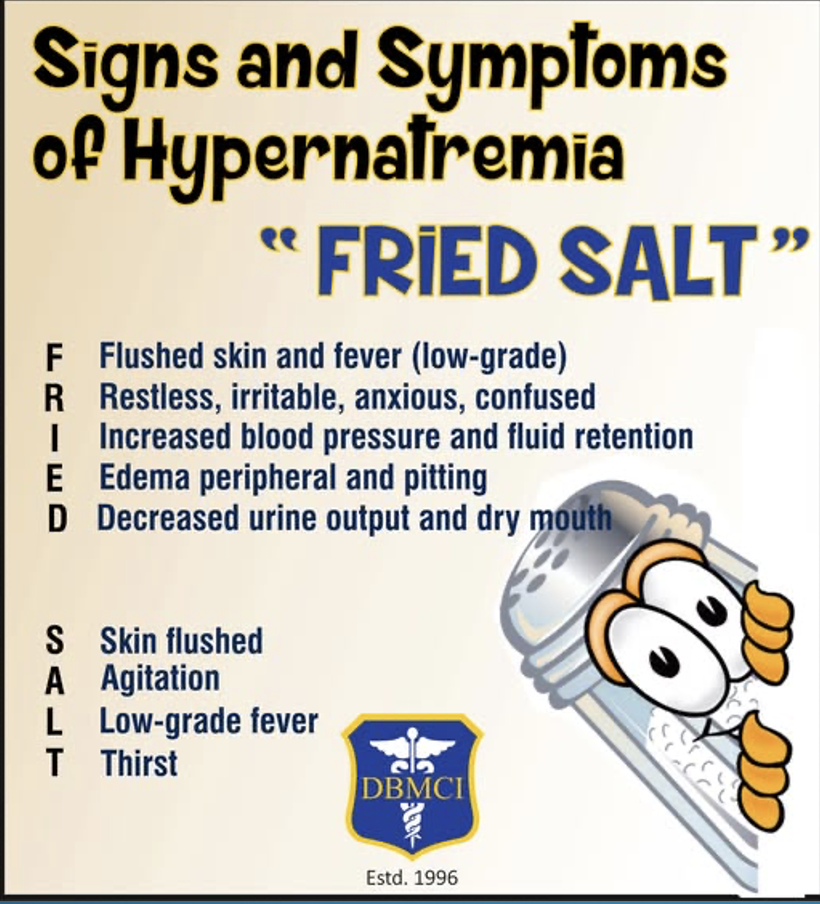
both effects for hypo and hypernatremia
weakness
fatigue
lethargic
Potassium
Major intracellular cation
Much higher concentration inside cells than in blood.
found inside of foods (have to eat to get potassium)
Excreted primarily through the kidneys.
Aldosterone promotes potassium excretion.
Insulin promotes potassium movement into cells
effects of hypokalemia
things arent moving well
constipation
shallow respirations
muscle weakness
anorexia
polyuria
posturial hypotension
alkalosis
effects of hyperkalemia
diarrhea
paralysis/leg tingling
oliguria
acidosis
effects of both hyper and hypokalemia
arrythmias —> cardiac arrest
nausea
causes of hypokalemia
excessive loss due to diarrhea
diuresis associated with some diuretic drug
excessive aldostrone or glucorcoids
decreased dietary intake
treatment of diabetic ketoacidosis
causes of hyperkalemia
renal failure
deficit of aldostrone
leakage of intracellular
crushing injury/burn —> potassium breaks out and leaks into the blood stream
hyperkalemia = ________
ACIDOSIS
calcium
extracellular cation
inside cells more
stored primarily in bone
eleminated by urine and feces
controlled by PTH
calcitonin
affected by VIT D
hypocalcemia
low calcium = increased nerve membrane permiability and excitement
effects of hypocalcemia
muscle twitching/spasms/tentany
tingly fingers
mental confusion and irritability
decreased bp
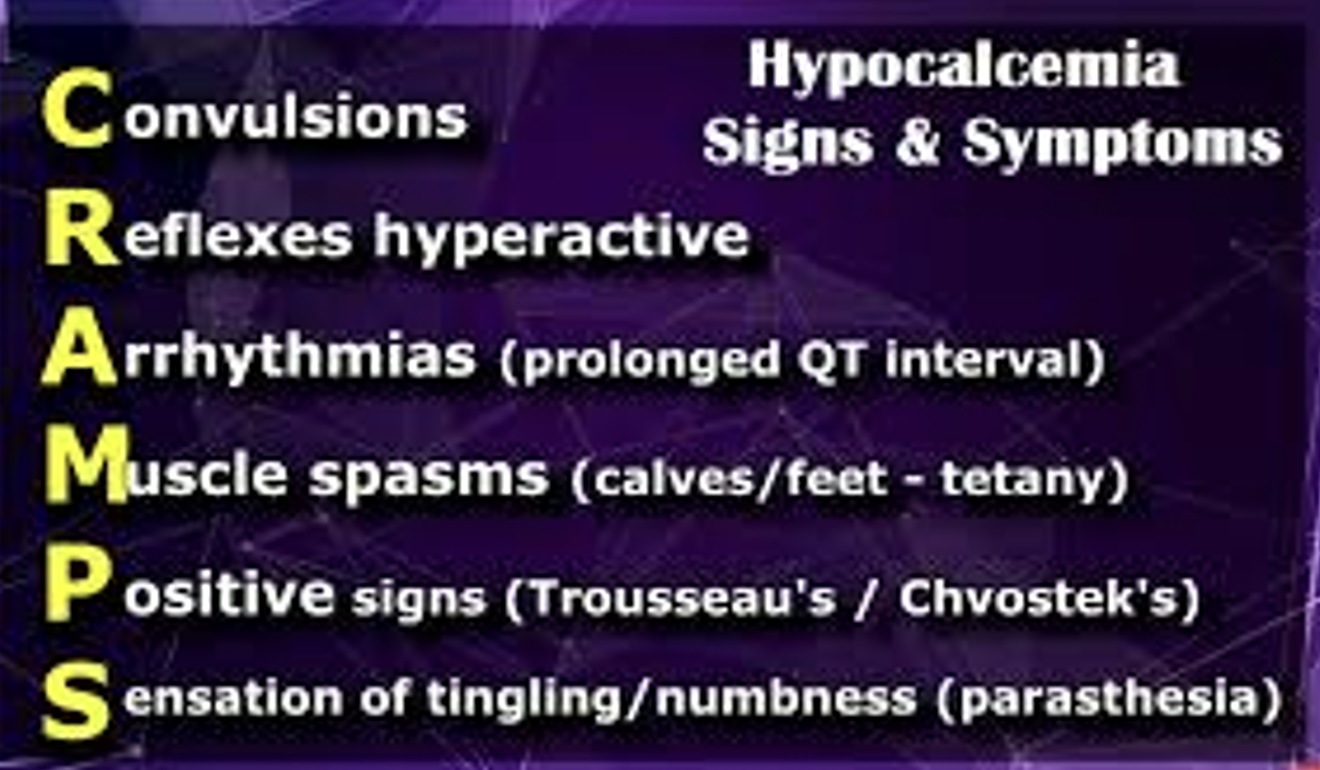
effects of hypercalcemia
too many play ground monitors meaning nothing is moving causing everything to get plugged up
lethargy
anorexia
nausea
constipation
polyuria
thirst
kidney stones
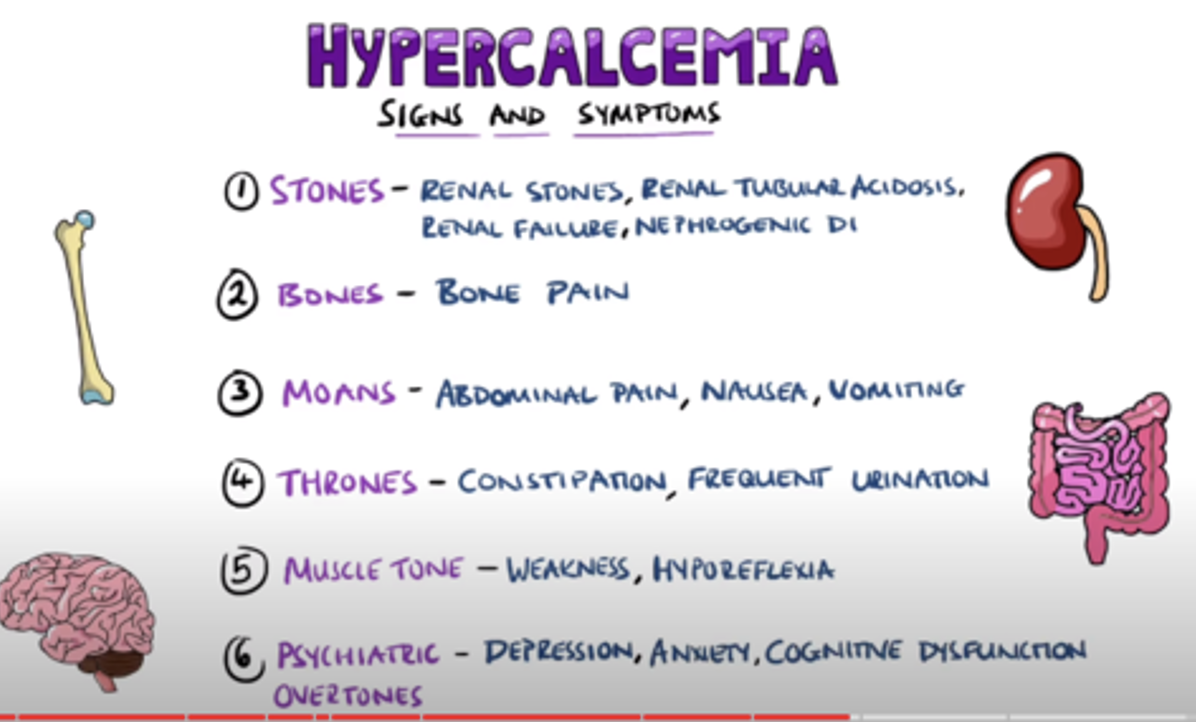
effects of both hyper and hypocalcemia
arrhythmias
causes of hypocalcemia
hypoparathyroidism
decreased parathyroid - decreased Ca absorption
malabsorption
decreased albumin
alakalosis
renal faliure
causes of hypercalcemia
bone destruction
hyperparathyroidism
immobility
increase intake of ca+ due to excessive VIT D
milk-alkali-syndrome
isotonic loss/dehydration
excessive amount of water and na is lost (still equal)
ex: excessive sweating
causes
not enough fluid and electrolyte intake
hemoraging
there is no sodium imbalence
hypertonic loss/dehydration
water loss is greater than electrolyte loss
more solute than water
causes
increased sweatting
hyperventilating
watery diarrhea
there is a sodium imbalence - hypernatremia and hypovolemia
hypotonic loss/dehydration
electrolyte loss is greater than water loss
more h20 than na
causes
kidney disease/failure
kidney no longer keeps fluid instead it dumps everything out
excess h20 intake
chronic malnutrition
there is a sodium imbalence - hyponatremia and hypervolemia
hypervolemia
increase in fluid
increase in blood volume = increase in fluid
more blood
hypovolemia
decrease in fluid
decrease in blood volume = decrease in fluid
less blood